
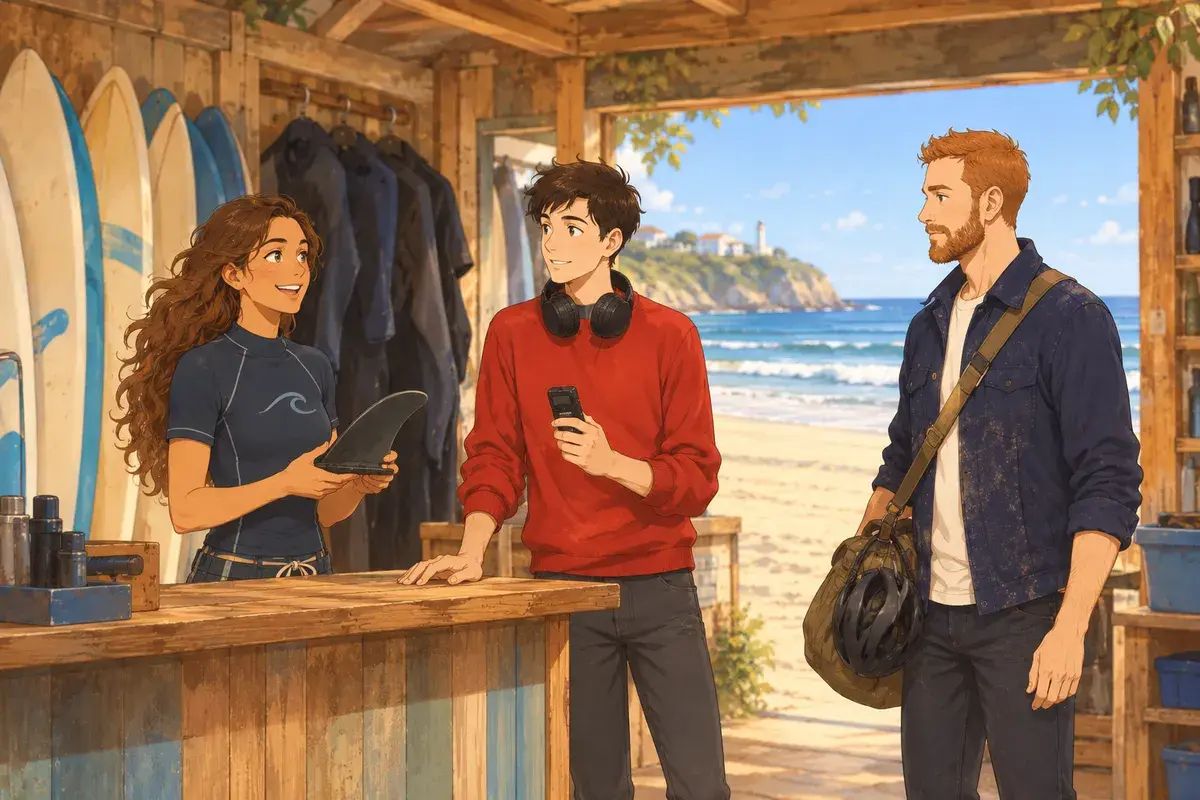
French dialogue with translation · B1 · 18 lines
Je voudrais réserver un cours de surf I'd like to book a surf lesson
Comic · 18 panels
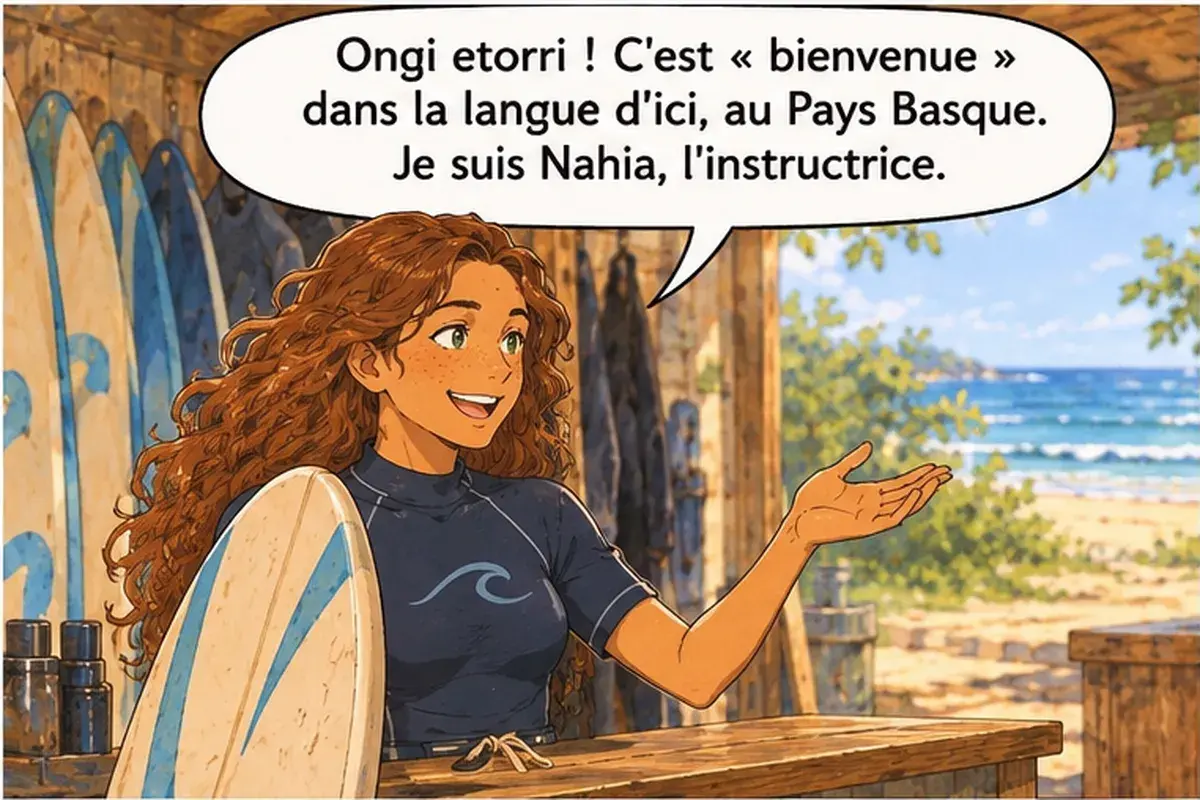
- Nahia
Ongi etorri ! C'est « bienvenue » dans la langue d'ici, au Pays Basque. Je suis Nahia, l'instructrice.
Ongi etorri! That's “welcome” in the local language, here in the Basque Country. I'm Nahia, the instructor (woman speaking).
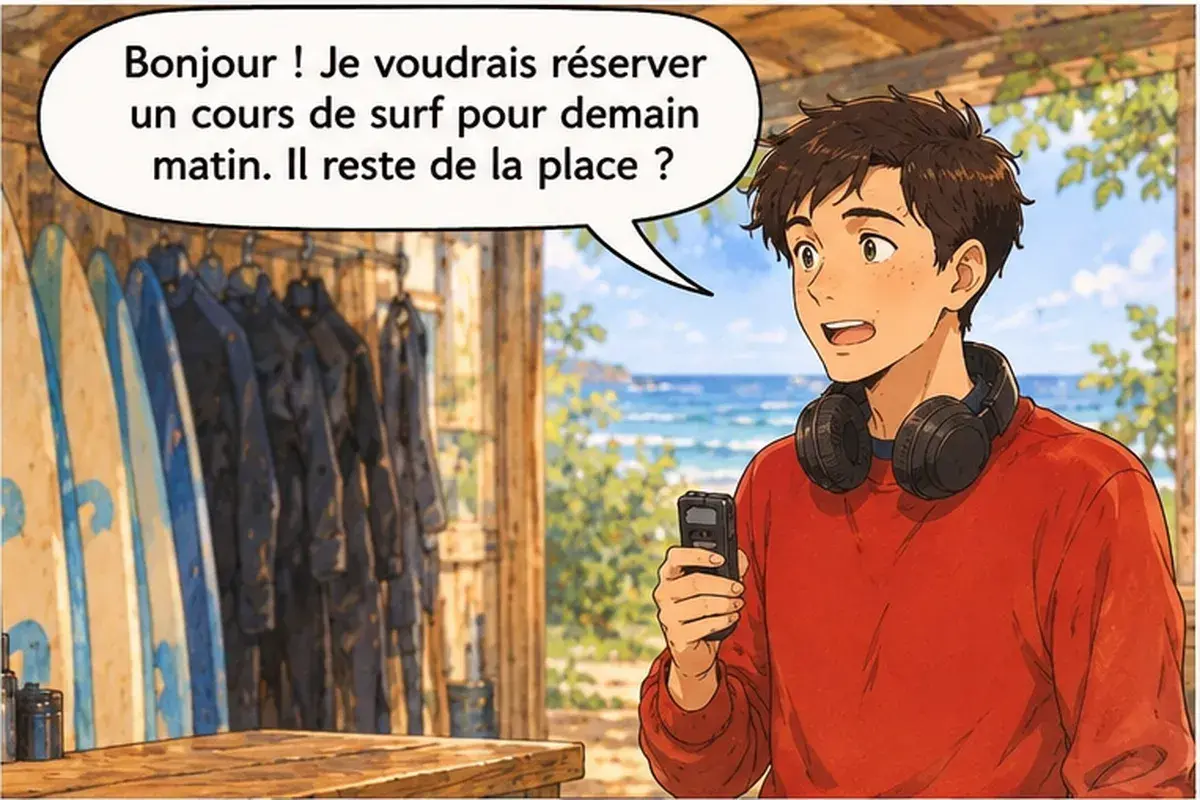
- Pacha
Bonjour ! Je voudrais réserver un cours de surf pour demain matin. Il reste de la place ?
Hello! I'd like to book a surf lesson for tomorrow morning. Are there any spots left?
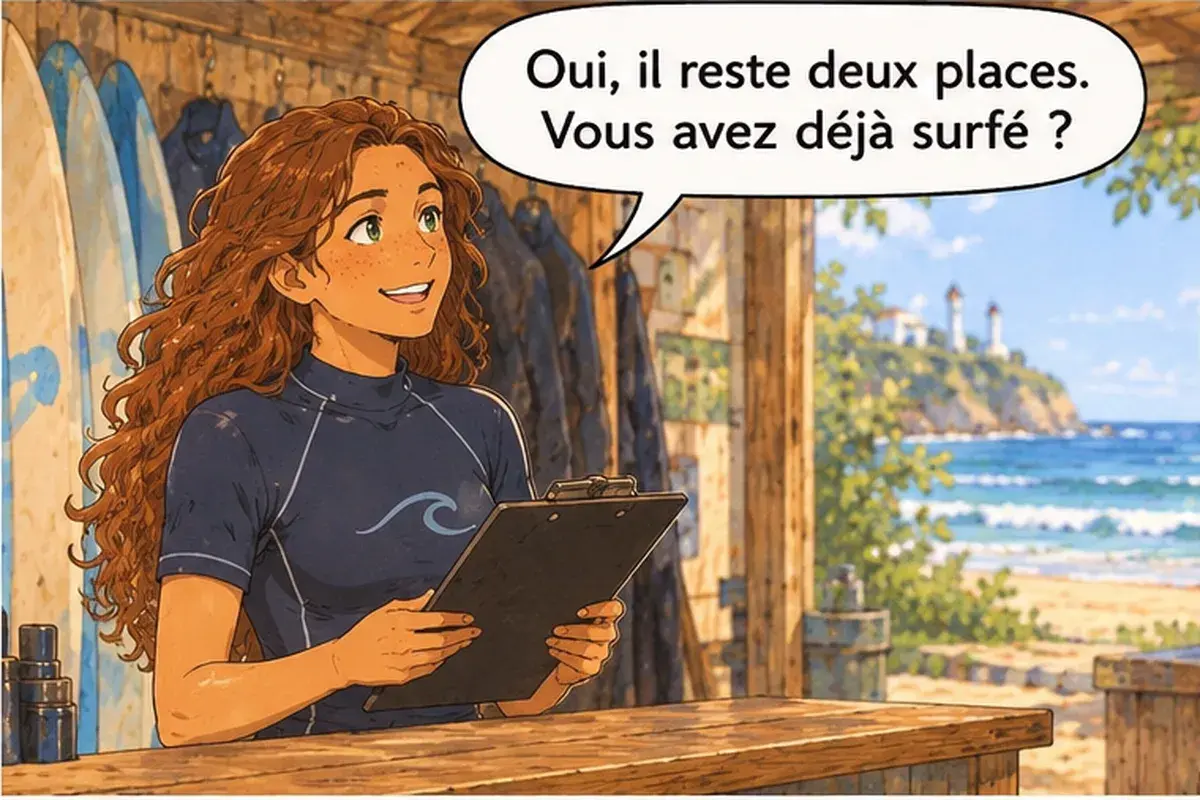
- Nahia
Oui, il reste deux places. Vous avez déjà surfé ?
Yes, there are two spots left. Have you surfed before? (formal)
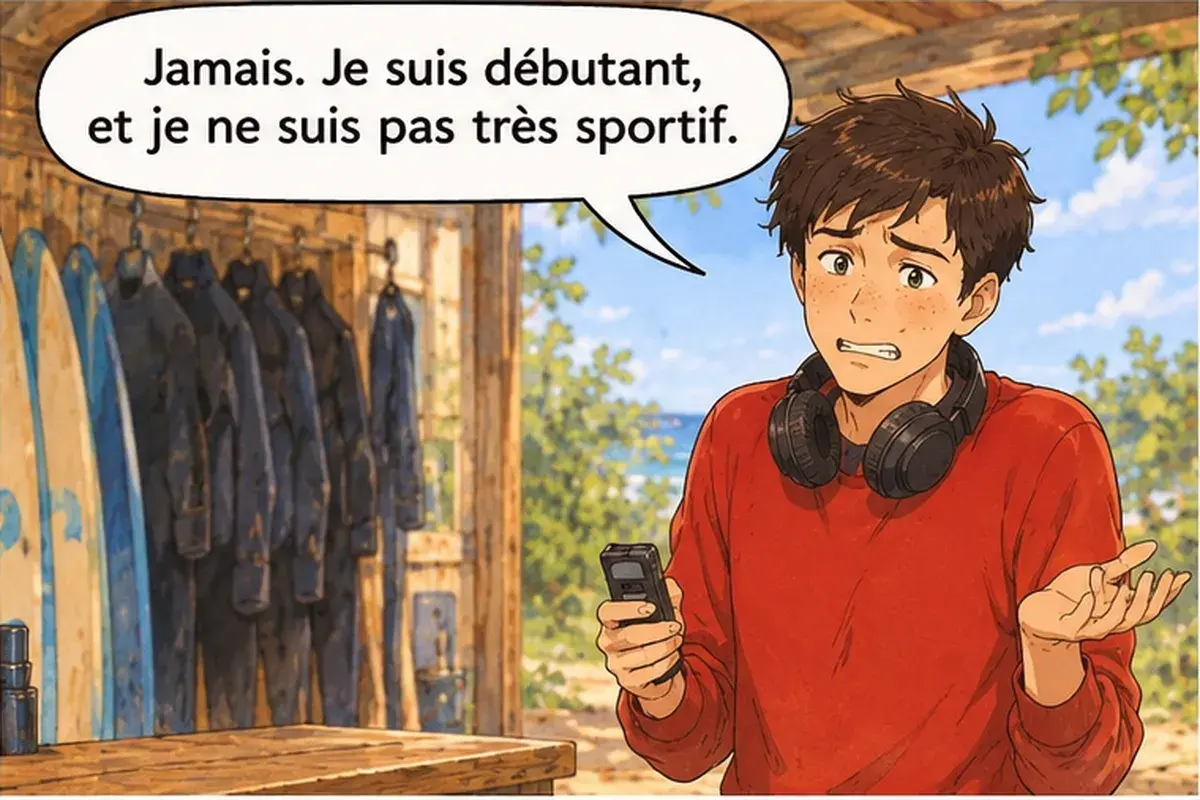
- Pacha
Jamais. Je suis débutant, et je ne suis pas très sportif.
Never. I'm a beginner, and I'm not very athletic (man speaking).
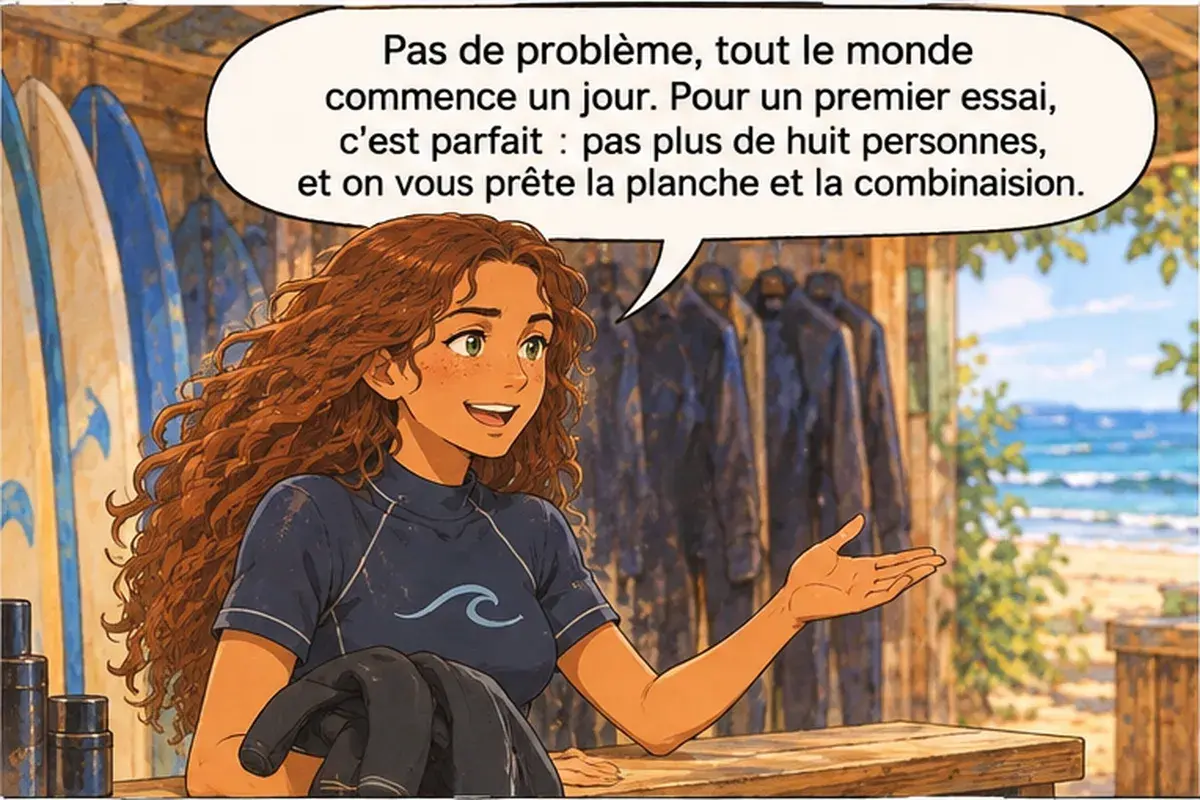
- Nahia
Pas de problème, tout le monde commence un jour. Pour un premier essai, c'est parfait : pas plus de huit personnes, et on vous prête la planche et la combinaison.
No problem, everybody starts someday. For a first try, it's perfect: no more than eight people, and we lend you the board and the wetsuit. (formal)
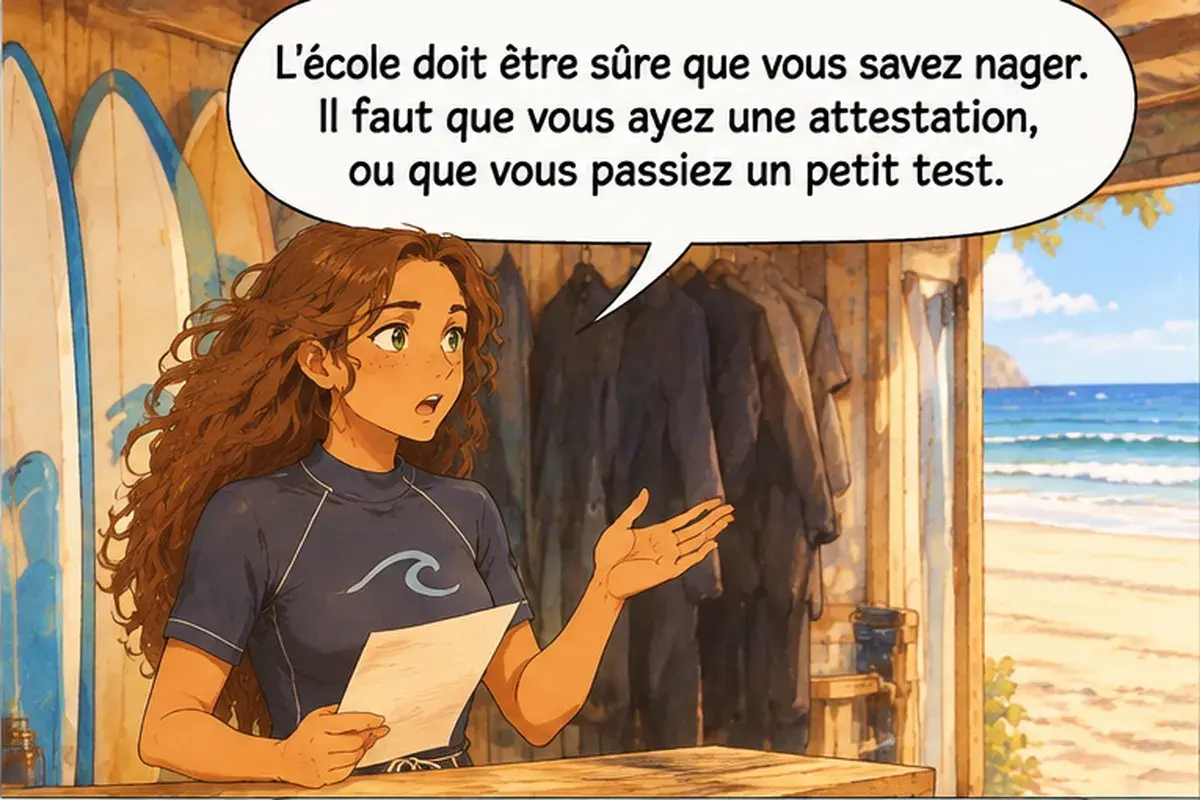
- Nahia
L'école doit être sûre que vous savez nager. Il faut que vous ayez une attestation, ou que vous passiez un petit test.
The school has to be sure that you can swim. You need to have a certificate, or take a quick test. (formal)
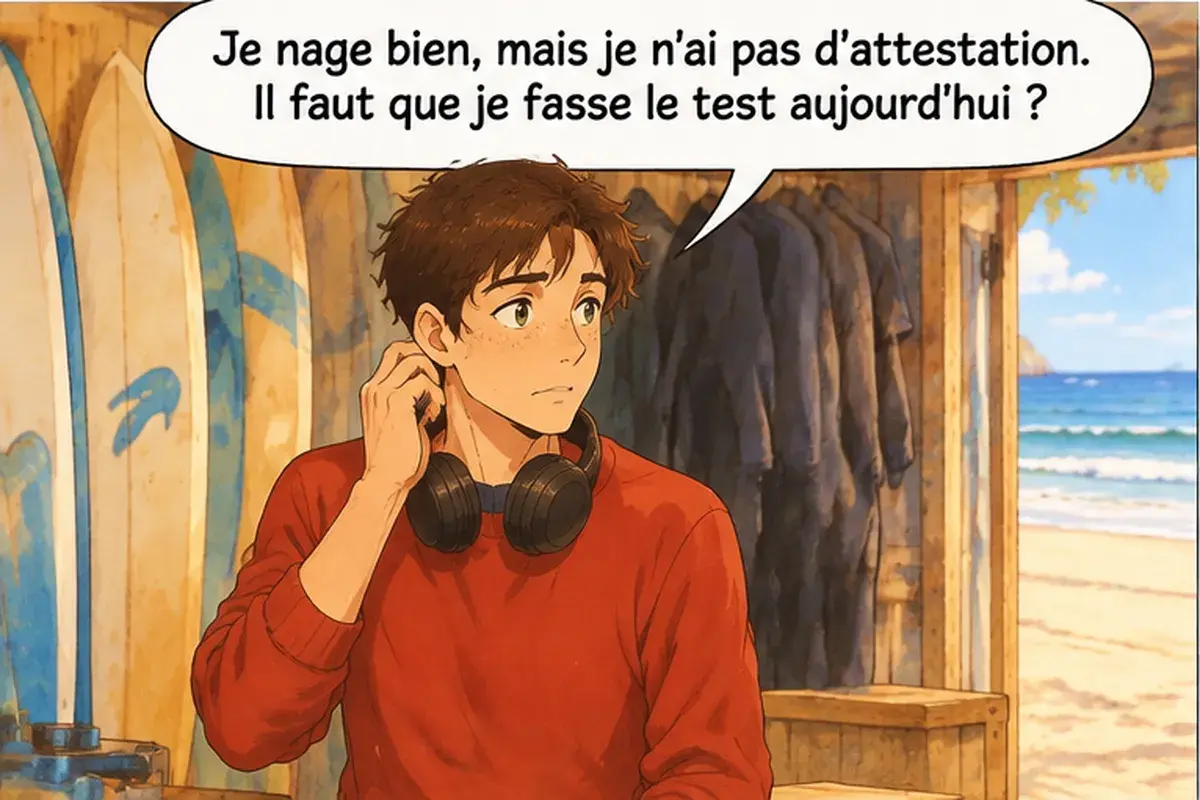
- Pacha
Je nage bien, mais je n'ai pas d'attestation. Il faut que je fasse le test aujourd'hui ?
I swim well, but I don't have a certificate. Do I have to take the test today?
- Nahia
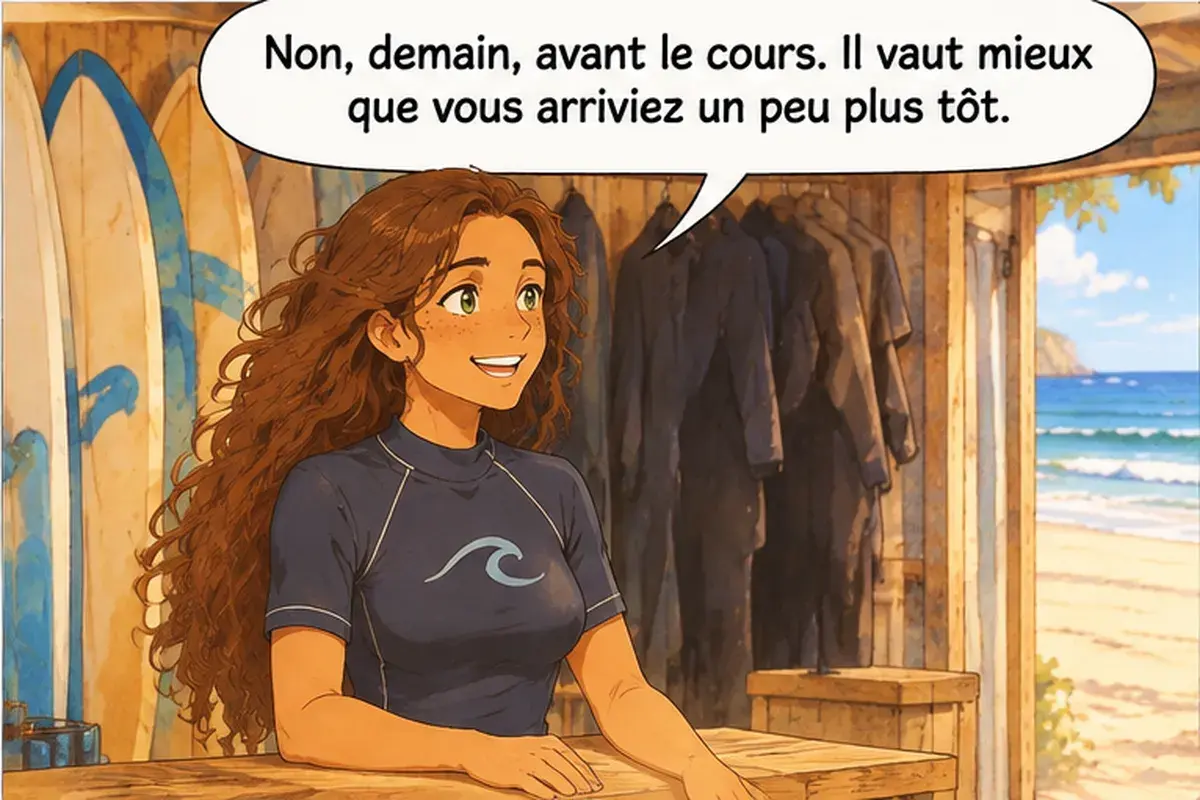
Non, demain, avant le cours. Il vaut mieux que vous arriviez un peu plus tôt.
No, tomorrow, before the lesson. It's better if you arrive a little earlier. (formal)
- Nahia
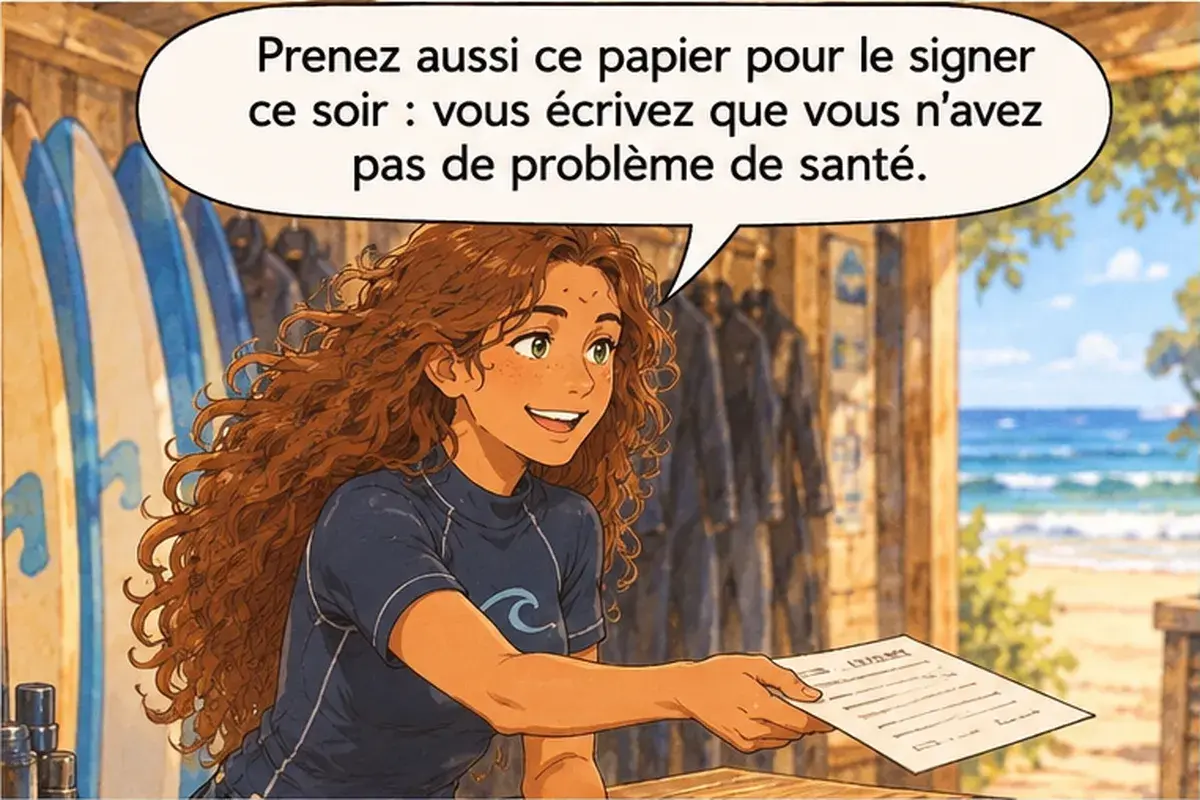
Prenez aussi ce papier pour le signer ce soir : vous écrivez que vous n'avez pas de problème de santé.
Also take this paper to sign it tonight: you write that you have no health problems. (formal)
- Pacha
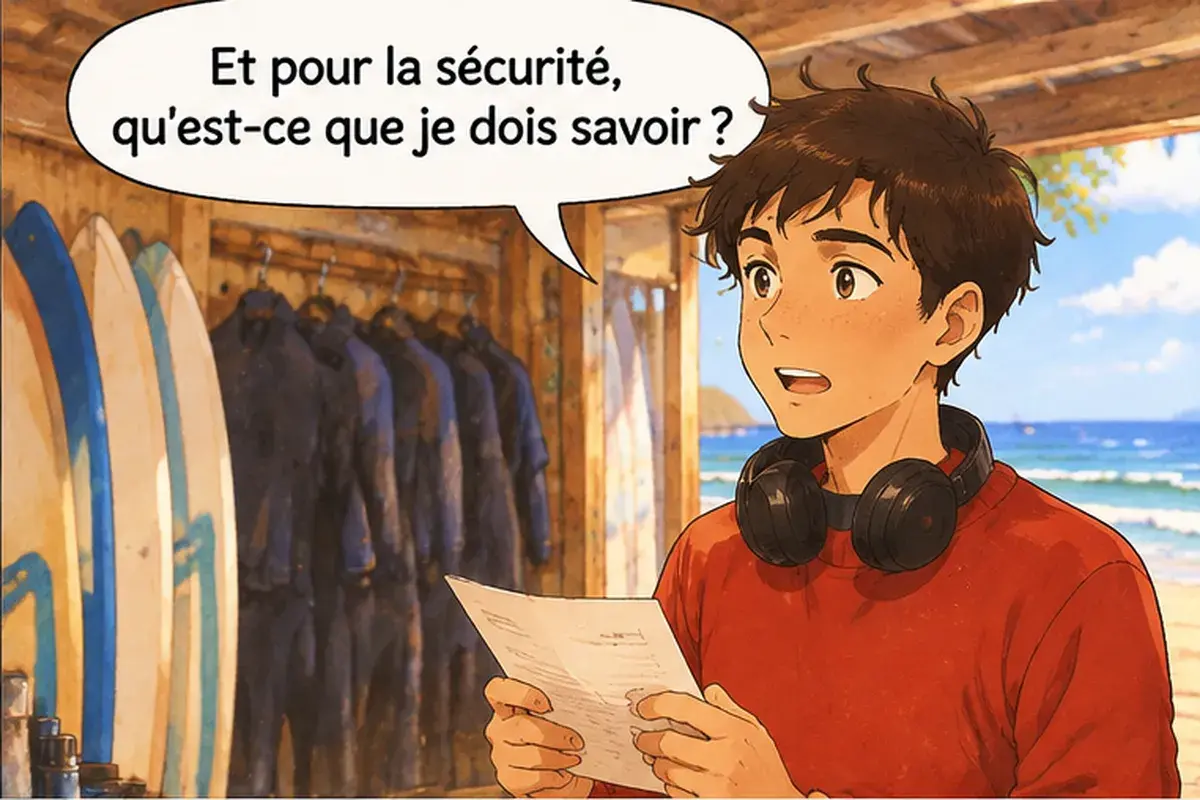
Et pour la sécurité, qu'est-ce que je dois savoir ?
And for safety, what do I need to know?
- Nahia
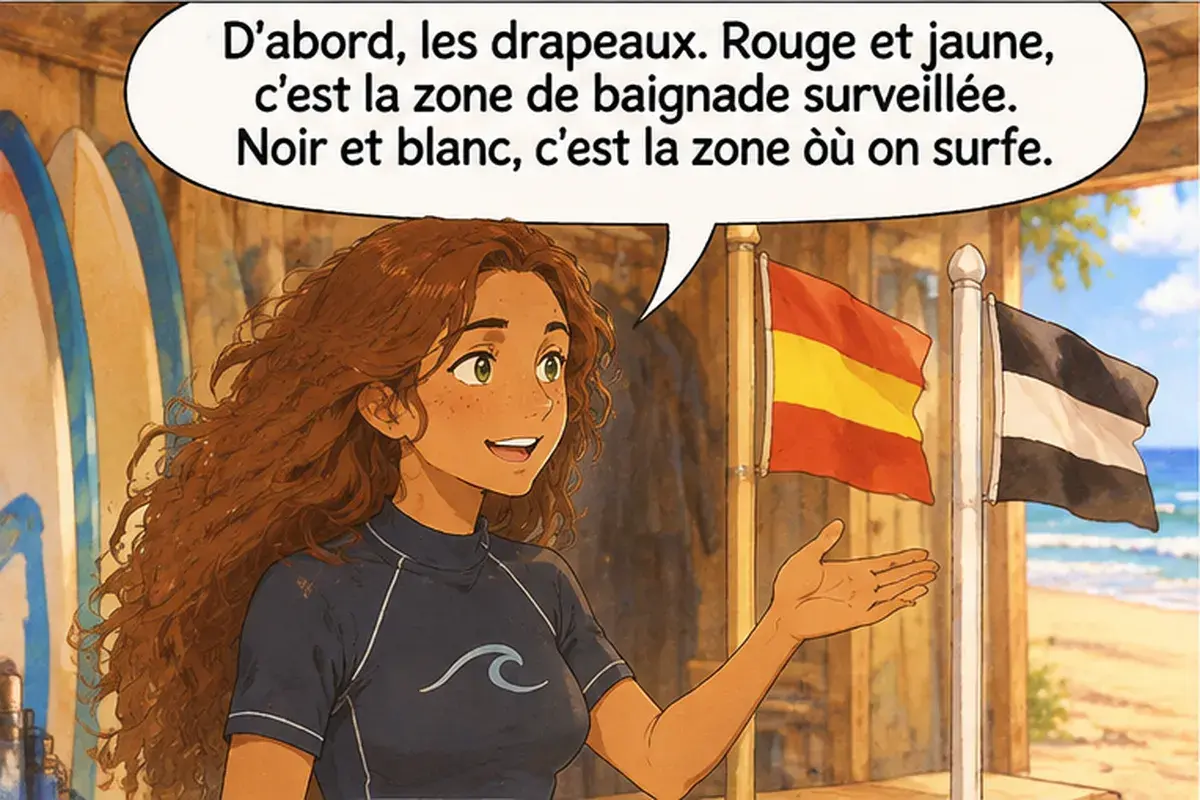
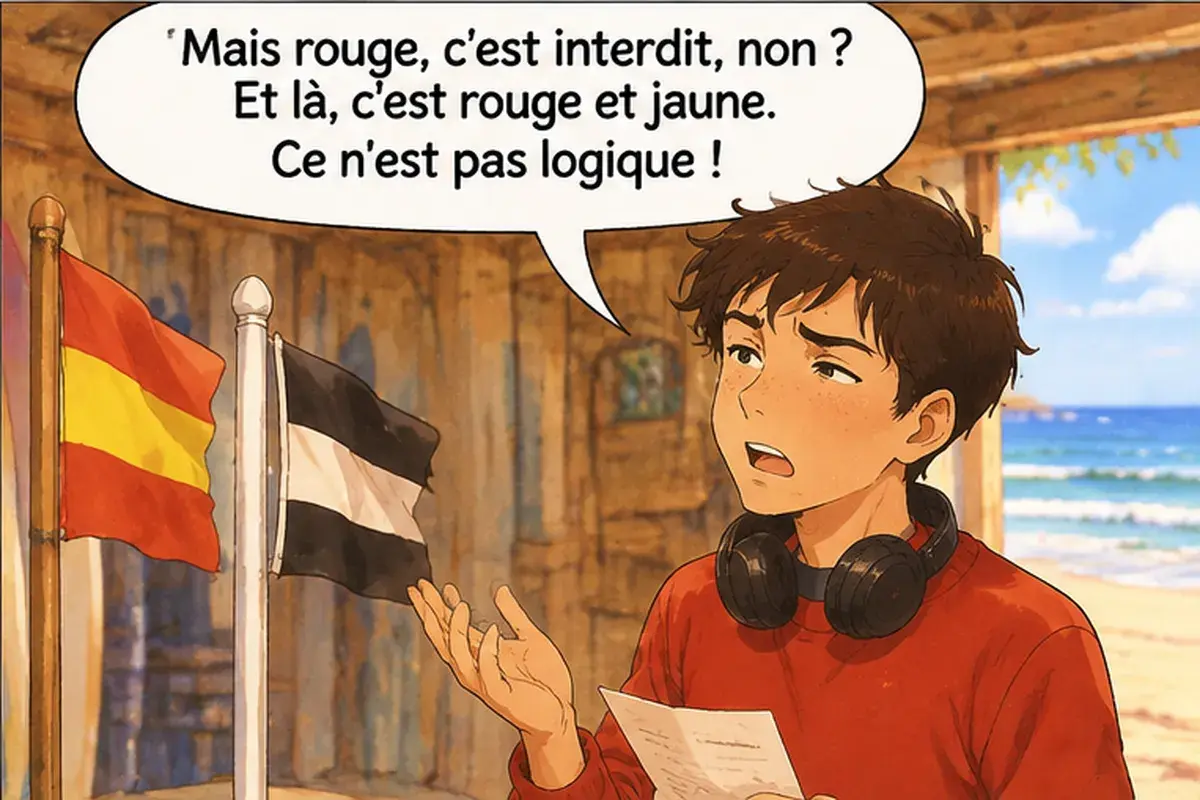
D'abord, les drapeaux. Rouge et jaune, c'est la zone de baignade surveillée. Noir et blanc, c'est la zone où on surfe.
First, the flags. Red and yellow is the supervised swimming area. Black and white is the area where people surf.
- Pacha
Mais rouge, c'est interdit, non ? Et là, c'est rouge et jaune. Ce n'est pas logique !
But red means it's forbidden, doesn't it? And this one is red and yellow. That's not logical!
- Nahia
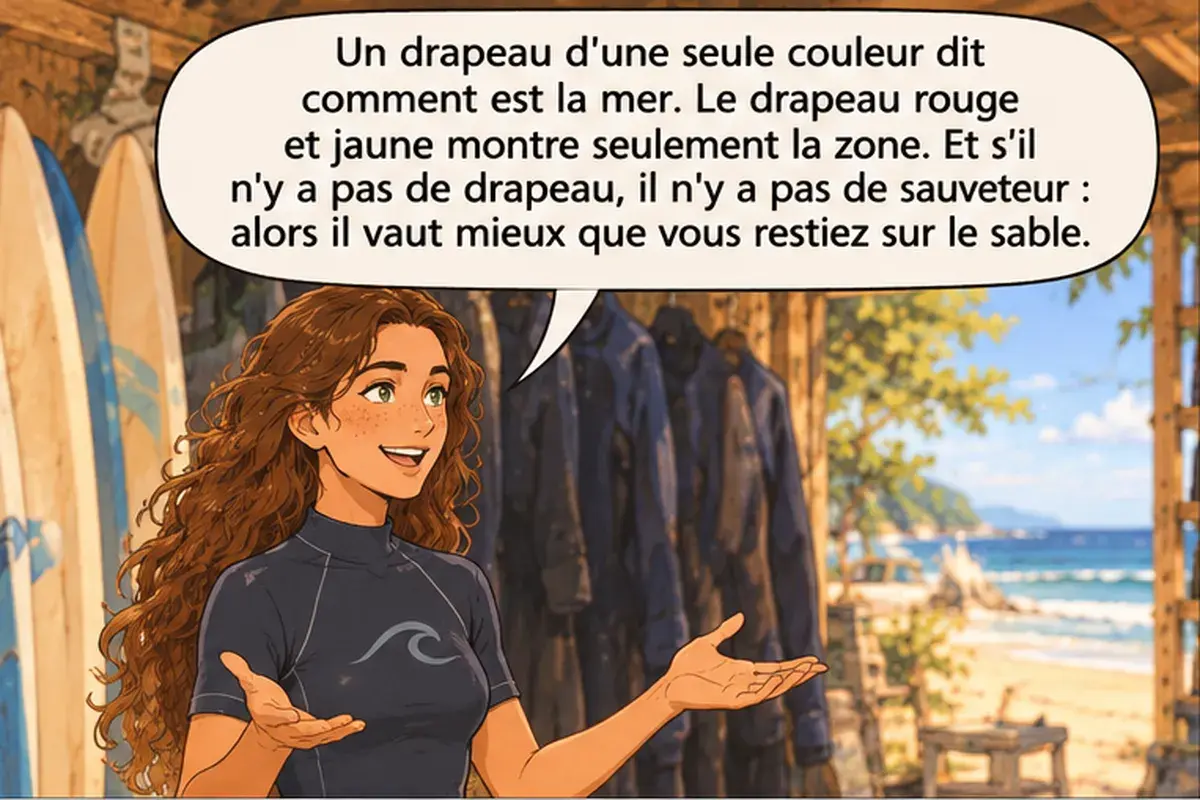
Un drapeau d'une seule couleur dit comment est la mer. Le drapeau rouge et jaune montre seulement la zone. Et s'il n'y a pas de drapeau, il n'y a pas de sauveteur : alors il vaut mieux que vous restiez sur le sable.
A flag of just one color tells you what the sea is like. The red and yellow flag only shows the area. And if there's no flag, there's no lifeguard: so it's better if you stay on the sand. (formal)
- Nahia
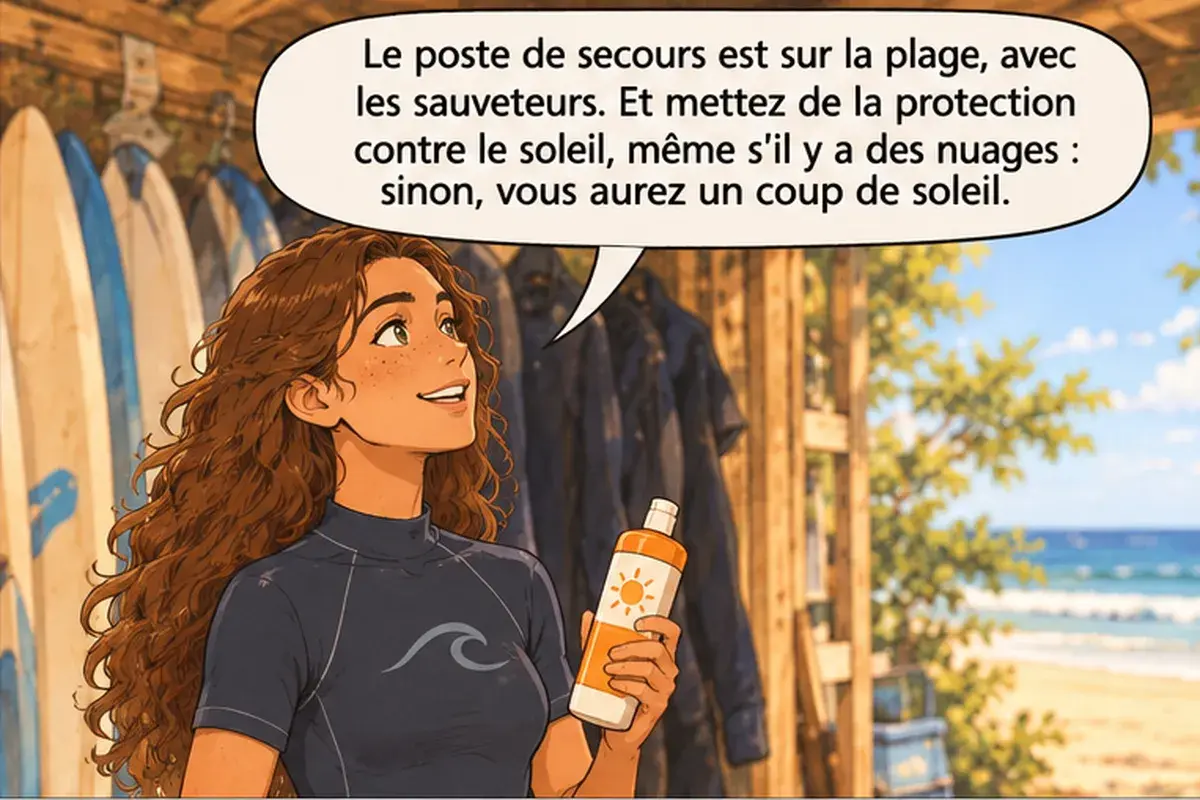
Le poste de secours est sur la plage, avec les sauveteurs. Et mettez de la protection contre le soleil, même s'il y a des nuages : sinon, vous aurez un coup de soleil.
The lifeguard station is on the beach, with the lifeguards. And put on sun protection, even if there are clouds: otherwise, you'll get a sunburn. (formal)

- Hugo
Ça, c'est pour moi : je suis roux. Je garde les sacs et le dictaphone, c'est mon défi du jour.
That one's for me: I'm a redhead (man speaking). I'll watch the bags and the voice recorder, that's my challenge for the day.

- Pacha
Merci, Hugo. Je veux enregistrer la mer pour que Dacha l'entende.
Thanks, Hugo. I want to record the sea so Dacha can hear it.
- Nahia
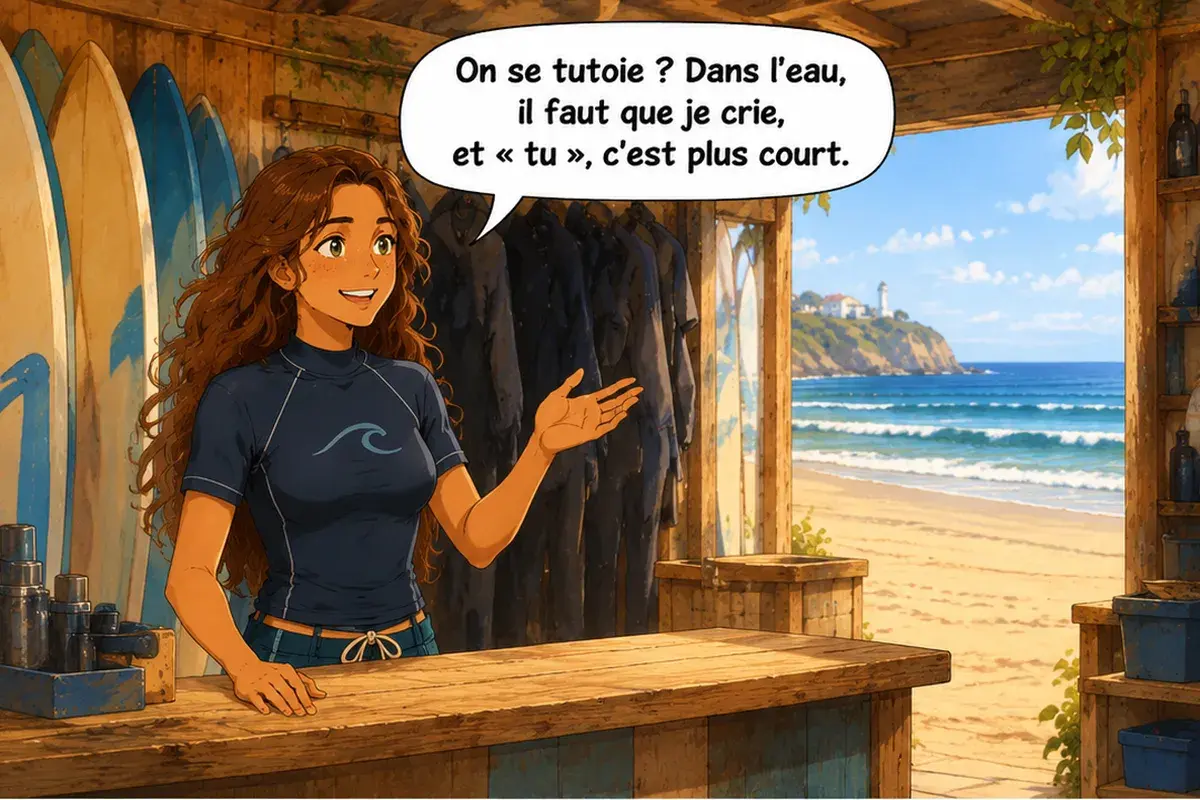
On se tutoie ? Dans l'eau, il faut que je crie, et « tu », c'est plus court.
Shall we use tu with each other? In the water, I'll have to shout, and “tu” is shorter.
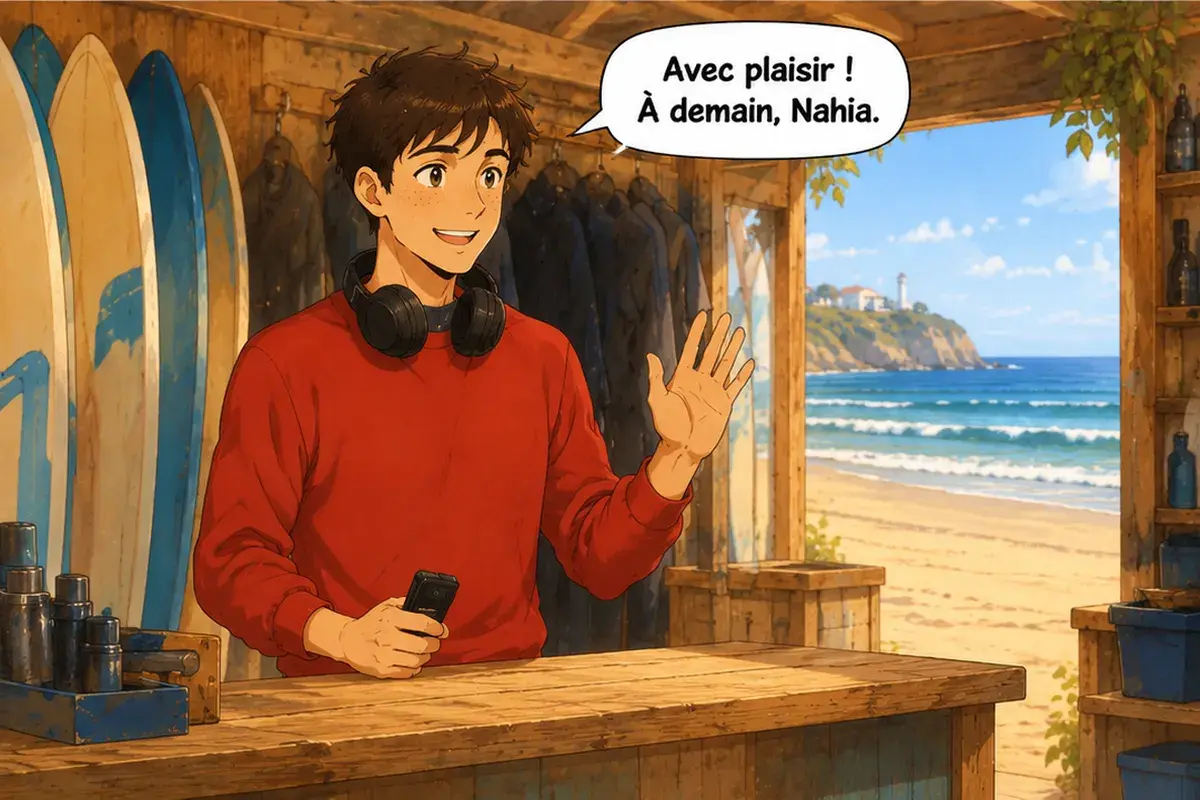
- Pacha
Avec plaisir ! À demain, Nahia.
I'd love to! See you tomorrow, Nahia.
Grammar for this text
- Ongi etorri — Basque for “welcome”; in French it's
bienvenue(A1, unit 1). The region is calledPays Basque, the Basque Country. - Il faut que vous ayez une attestation, ou que vous passiez un petit test — after
il faut que, the verb is in the subjunctive.ayezcomes fromavoir(an exception, explained in the unit's grammar);passiezcomes frompasser, a regular verb.queis repeated before each verb.attestation— “certificate” (A2, unit 9). - Il faut que je fasse le test aujourd'hui ? —
fasseis the subjunctive offaire. The question is asked with rising voice, withoutest-ce que. - Il vaut mieux que vous arriviez un peu plus tôt —
il vaut mieux que+ subjunctive: “it's better if”.vautcomes fromvaloir,arriviezfromarriver. - pour le signer —
pour+ infinitive: one person acts (you sign).lehere means “it” (the paper), not the article. - pour que Dacha l'entende — the people are different (Pacha records, Dacha listens), so
pour que+ subjunctive:entendecomes fromentendre.l'means “it” (the sea). - c'est la zone où on surfe —
oùmeans “where” here;surfecomes fromsurfer: withon, the verb takes theilform. - On se tutoie ? — “Shall we use tu with each other?” (A2, unit 1). Nahia asks to switch from
voustotubecause she'll have to shout in the water.
Words and grammar of the unit: Book a lesson and understand the instructor.
Learn the words from the texts with flashcards
In the app, you can tap any word in a text to see its translation, forms and examples, and new words stick with flashcards. 15 minutes a day.
Start for freeEverything is open for free. No card needed to sign up.