

French story with translation · B1 · 15 lines
Je l'ai reconnue à sa voix I recognized her by her voice
Comic · 15 panels
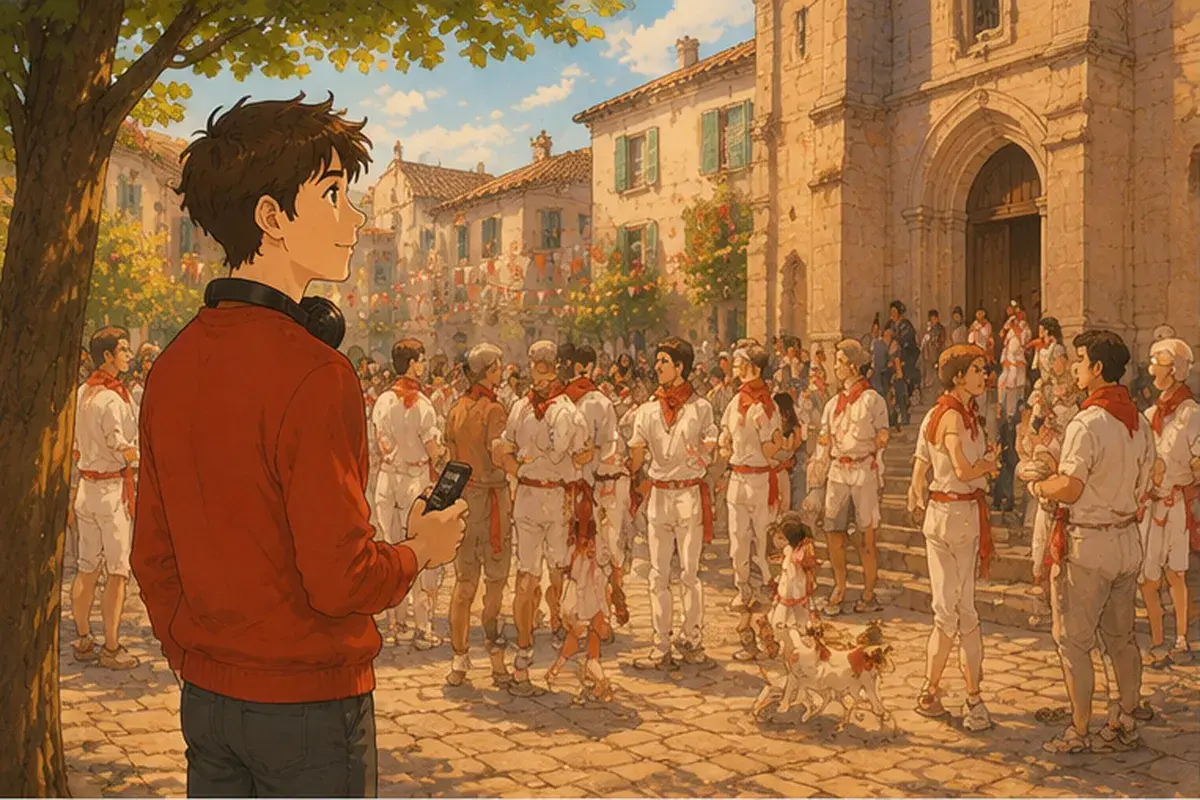
Chaque année, à la fin de l'été, le village célèbre sa fête. C'est un événement populaire : les vieux, les jeunes, les bébés, tout le monde vient et s'habille en blanc, avec un foulard rouge, même un chien.
Every year, at the end of summer, the village celebrates its festival. It's a popular event: old people, young people, babies, everyone comes and dresses in white, with a red scarf, even a dog.
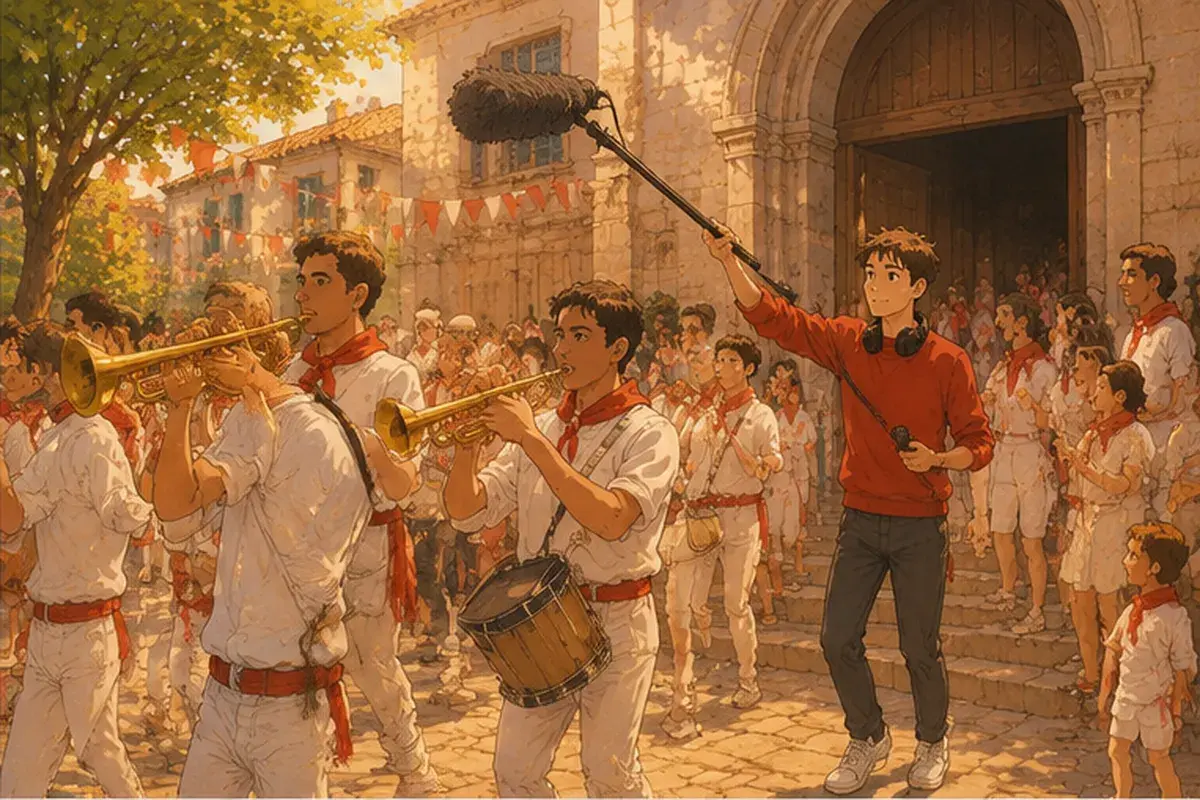
À six heures, le défilé est parti de l'église. La fanfare marchait devant : des trompettes, des tambours, et un refrain que tout le monde chantait sans le connaître.
At six o'clock, the parade left from the church. The brass band marched in front: trumpets, drums, and a chorus that everyone sang without knowing the song.

Moi, je marchais derrière avec mon dictaphone, la perche au-dessus de ma tête. Je traînais un peu, parce que chaque son était un petit cadeau.
I was walking behind with my recorder, the boom pole above my head. I was lagging behind a little, because every sound was a little gift.

Tout à coup, la rue s'est remplie. Il y avait tellement de monde qu'on se déplaçait à petits pas, et personne ne regardait où il mettait les pieds.
Suddenly, the street filled up. There were so many people that we moved along in tiny steps, and no one was looking where they were putting their feet.

Une femme m'a bousculé, j'ai dit « Pardon ! », et quand j'ai regardé devant moi, Hugo et Inès n'étaient plus là.
A woman bumped into me, I said "Sorry!", and when I looked ahead, Hugo and Inès weren't there anymore (man speaking).

Je les ai perdus de vue ! Tout le monde était en blanc, avec un foulard rouge : impossible de reconnaître deux amis dans cette mer blanche.
I lost sight of them! Everyone was in white, with a red scarf: impossible to recognize two friends in that white sea.
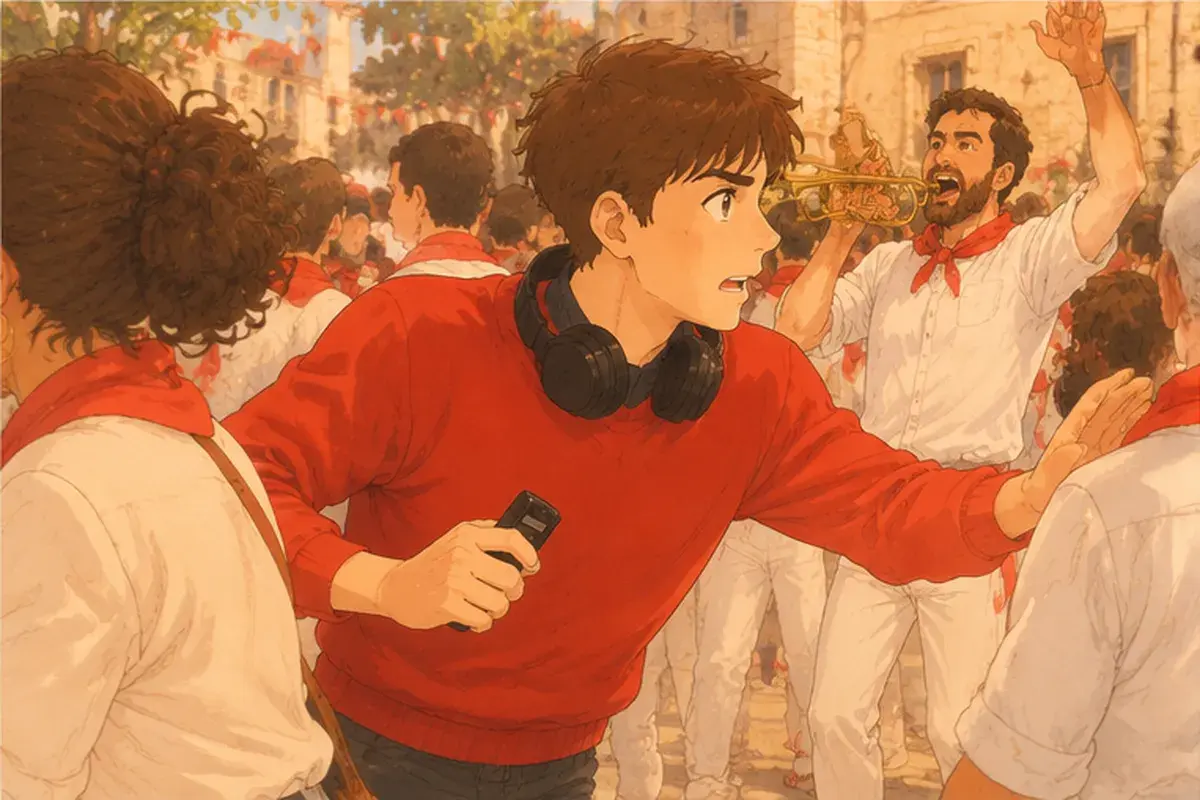
Malgré la foule, j'ai voulu me frayer un chemin vers l'avant. Un homme de la fanfare criait « Laissez le passage ! », mais personne ne pouvait bouger.
Despite the crowd, I wanted to make my way toward the front. A man from the band was shouting "Make way!" (to several people), but no one could move.
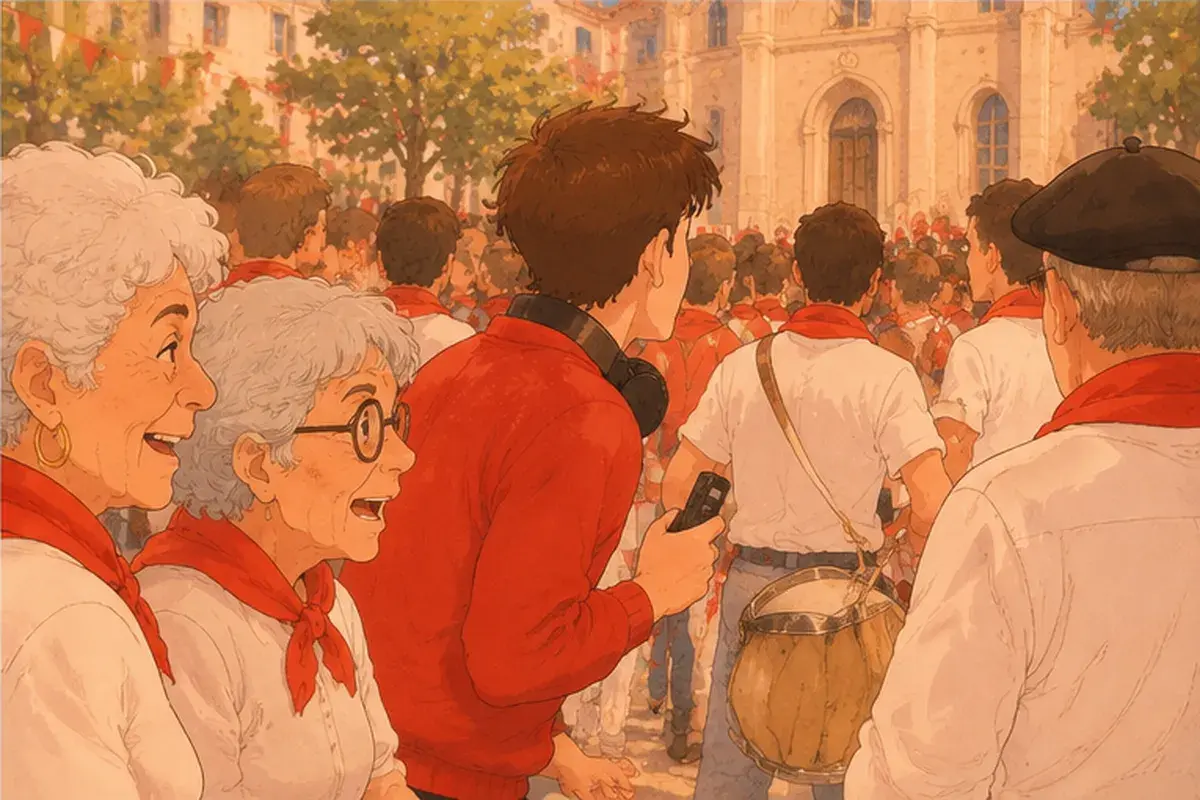
J'ai essayé de me faufiler entre deux grands-mères, puis entre un tambour et un monsieur au béret, mais la fanfare allait plus vite que moi. Impossible de la rattraper.
I tried to squeeze between two grandmothers, then between a drum and a man in a beret, but the band was moving faster than I was. Impossible to catch up with it.

J'ai sorti mon téléphone : pas de réseau. Il y avait trop de monde, et le bruit des tambours couvrait tout.
I took out my phone: no signal. There were too many people, and the noise of the drums drowned out everything.

Puis le cortège est revenu devant l'église et s'est arrêté, et le bruit a baissé : de moins en moins de tambours, de moins en moins de voix. Et là, une voix a parlé dans un mégaphone, beaucoup trop vite.
Then the cortege came back in front of the church and stopped, and the noise died down: fewer and fewer drums, fewer and fewer voices. And then, a voice spoke on a megaphone, much too fast.

« Pacha ! On est devant l'église ! Viens, on t'attend ! » Je n'ai pas eu besoin de chercher qui parlait : personne d'autre ne parle aussi vite qu'Inès.
"Pacha! We're in front of the church! Come on, we're waiting for you!" I didn't need to look for who was talking: no one else talks as fast as Inès.

Puis une deuxième voix, calme et sérieuse, a ajouté : « Nous cherchons un grand garçon avec un dictaphone. Il boit du thé. Merci de ne pas le bousculer. » Toute la place a ri.
Then a second voice, calm and serious, added: "We're looking for a tall guy with a recorder. He drinks tea. Please don't bump into him." The whole square laughed.

Plus tard, j'ai su qu'un homme de la fanfare leur avait prêté son mégaphone. Je me suis faufilé jusqu'à l'église, et ils étaient là, avec deux foulards rouges et un grand sourire.
Later, I found out that a man from the band had lent them his megaphone. I squeezed my way to the church, and they were there, with two red scarves and a big smile (man speaking).

« Tu vois ? a dit Inès. On t'a retrouvé en trente secondes ! — Grâce à ta voix, ai-je répondu. Si tu parlais moins vite, tu serais moins facile à retrouver ! Ta voix, je la reconnais partout. »
"See?" said Inès. "We found you in thirty seconds!" "Thanks to your voice," I answered. "If you talked slower, you'd be harder to find! Your voice, I recognize it anywhere."

Ce soir-là, je n'ai pas dansé, mais mon dictaphone a tout gardé : les trompettes, le refrain, la voix la plus rapide du pays. Le son est fantastique, et la place est devenue magique.
That evening, I didn't dance, but my recorder kept everything: the trumpets, the chorus, the fastest voice in the country. The sound is fantastic, and the square became magical.
Grammar for this text
- Je les ai perdus de vue —
perdre de vuemeans "to lose sight of."les("them") comes beforeai, so the participle agrees with it:perdus(unit 15). - tellement de monde qu'on se déplaçait à petits pas —
tellement de+ noun, thenqu'and the result.se déplaçaitis the imperfect ofse déplacer("to get around"); beforeathe letter c becomesçso it still sounds like s. - me frayer un chemin — "to make your way through" by pushing. me faufiler — "to squeeze through" skillfully and unnoticed:
je me suis faufiléis the passé composé of a reflexive verb. - Laissez le passage ! — the
vouscommand: "make way."passagemeans "way through." - leur avait prêté son mégaphone —
avait prêtéis the past perfect: "had already lent" by that moment (unit 8);leurhere means "them" ("to them"). - personne d'autre ne parle —
personnemeans "no one" (not "person"), which is why there is ane. - je la reconnais partout —
la("her") goes before the verb: "I recognize her everywhere";reconnaisis thejeform ofreconnaître. - tout le monde vient et s'habille en blanc —
s'habillermeans "to get dressed";en blancmeans "in white." - Si tu parlais moins vite, tu serais moins facile à retrouver —
si+ imperfect (parlais) → conditional (serais): "if you talked slower, you'd be harder to find." It's not real: Inès talks fast.
Words and grammar of the unit: Say no and stand your ground.
Learn the words from the texts with flashcards
In the app, you can tap any word in a text to see its translation, forms and examples, and new words stick with flashcards. 15 minutes a day.
Start for freeEverything is open for free. No card needed to sign up.