

French dialogue with translation · B1 · 17 lines
Je viens quand même, mais je ne danse pas I'm coming anyway, but I'm not dancing
Comic · 17 panels
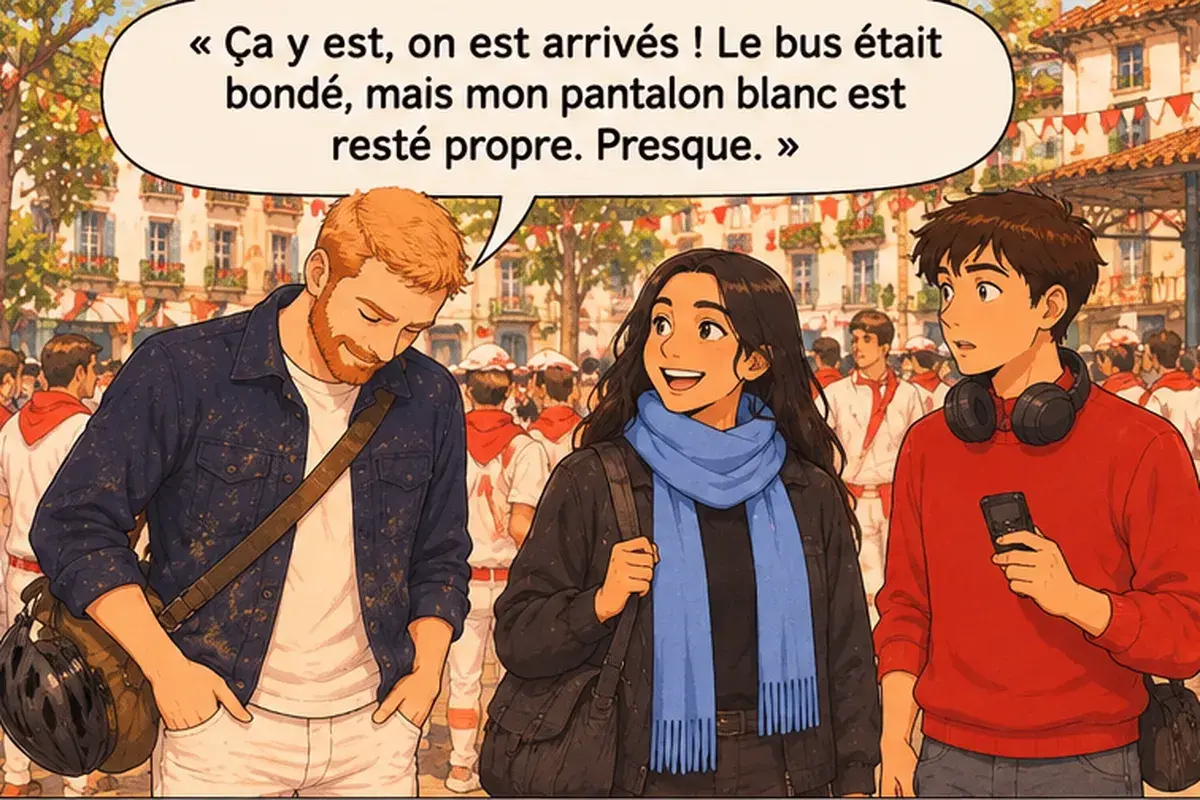
- Hugo
Ça y est, on est arrivés ! Le bus était bondé, mais mon pantalon blanc est resté propre. Presque.
That's it, we're here! The bus was packed, but my white pants stayed clean. Almost.
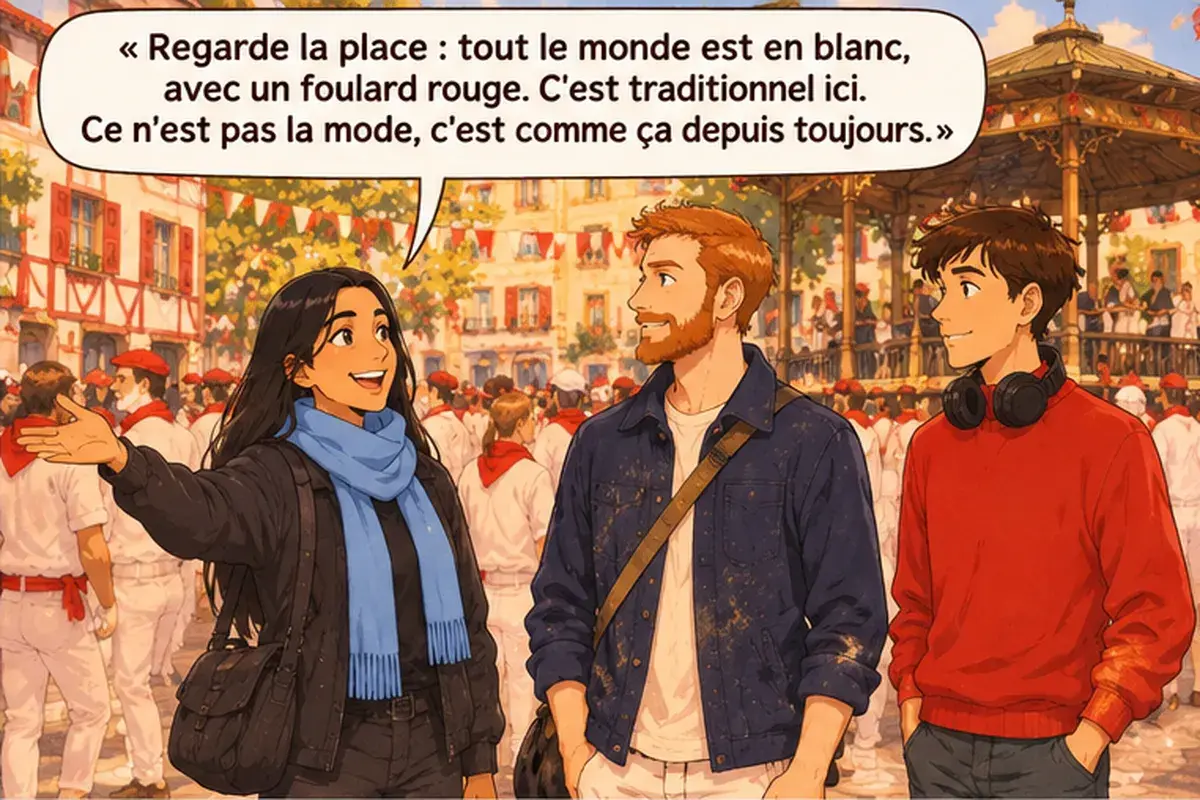
- Inès
Regarde la place : tout le monde est en blanc, avec un foulard rouge. C'est traditionnel ici. Ce n'est pas la mode, c'est comme ça depuis toujours.
Look at the square: everyone's in white, with a red scarf. It's traditional here. It's not fashion, it's just how it's always been.

- Hugo
J'ai acheté un béret. Je ne me déguise pas : je respecte la tradition.
I bought a beret. I'm not dressing up: I'm respecting tradition.
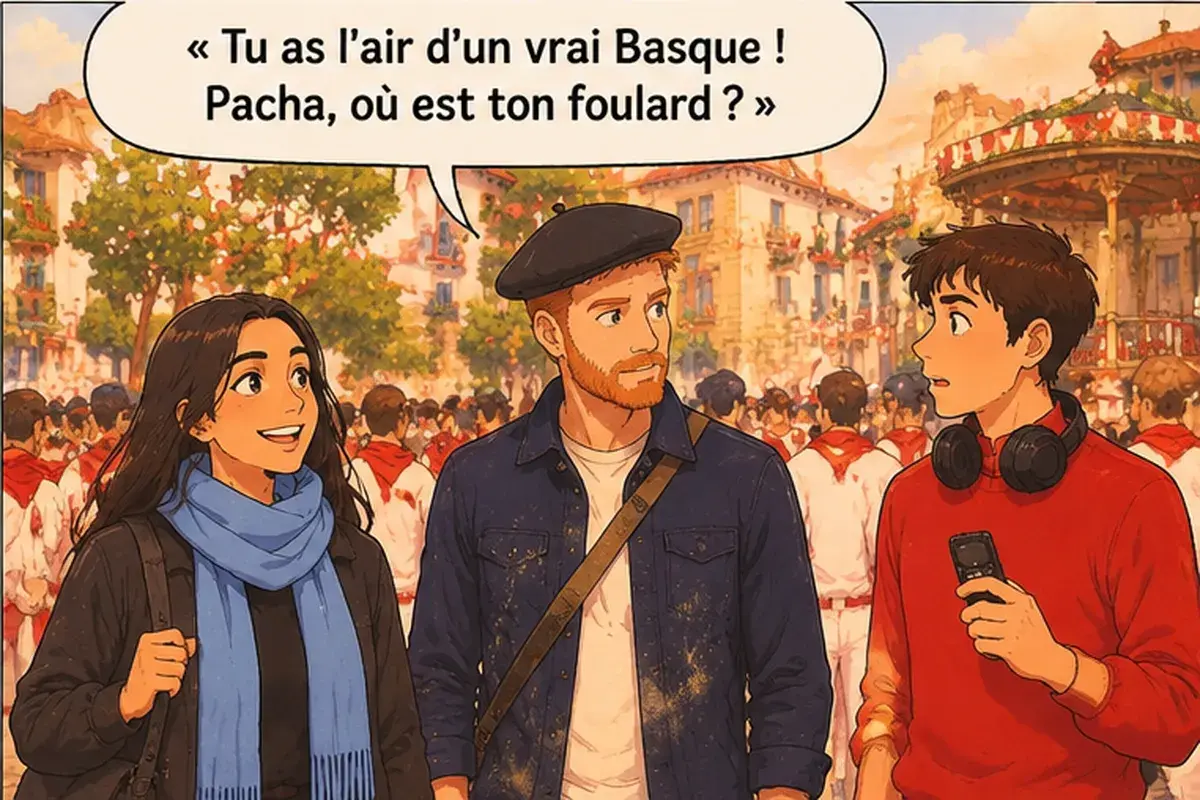
- Inès
Tu as l'air d'un vrai Basque ! Pacha, où est ton foulard ?
You look like a real Basque! Pacha, where's your scarf?
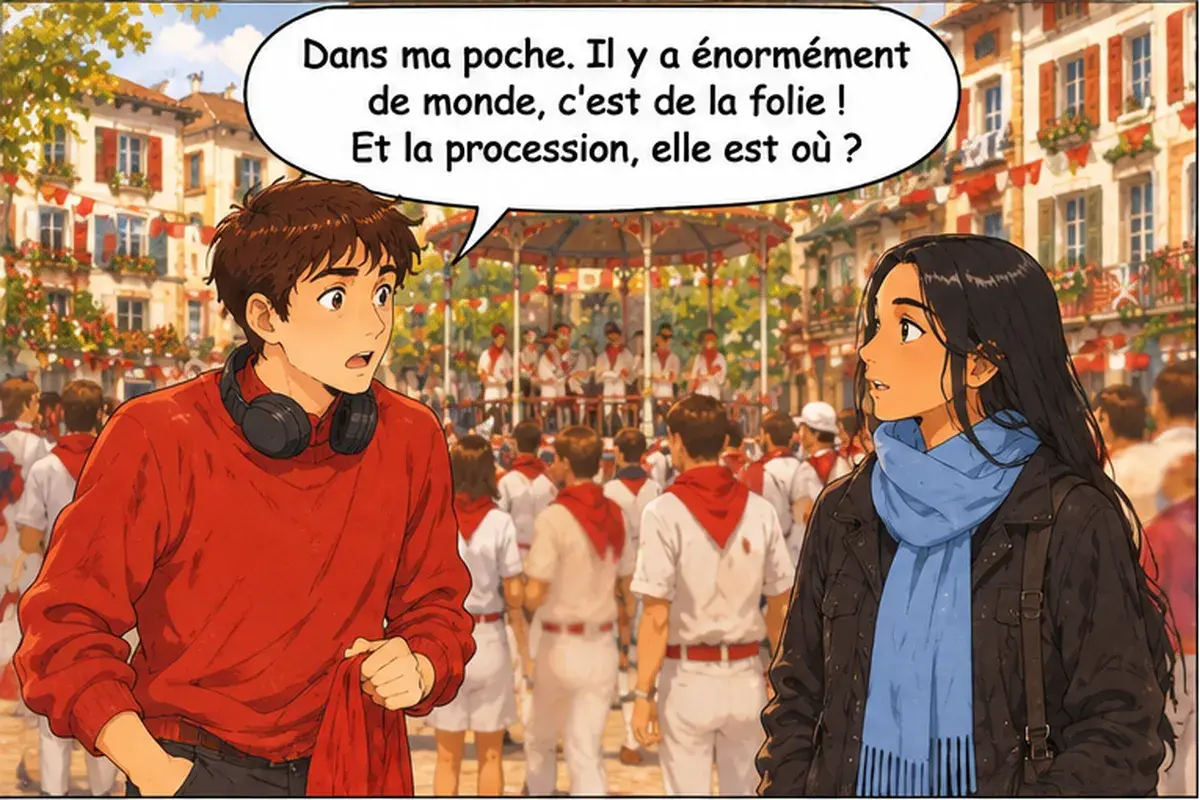
- Pacha
Dans ma poche. Il y a énormément de monde, c'est de la folie ! Et la procession, elle est où ?
In my pocket. There are a huge number of people, it's madness! And the procession, where is it?
- Inès
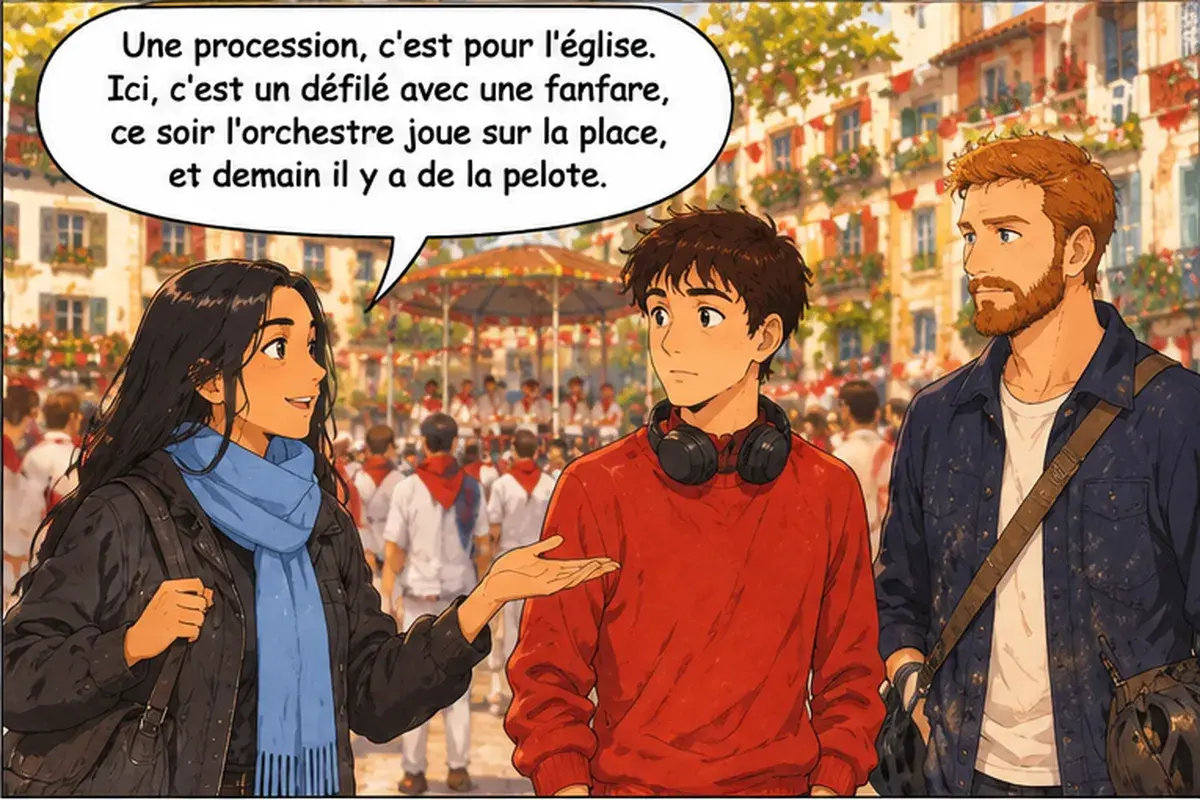
Une procession, c'est pour l'église. Ici, c'est un défilé avec une fanfare, ce soir l'orchestre joue sur la place, et demain il y a de la pelote.
A procession is for church. Here it's a parade with a brass band, tonight the orchestra plays on the square, and tomorrow there's Basque pelota.
- Pacha
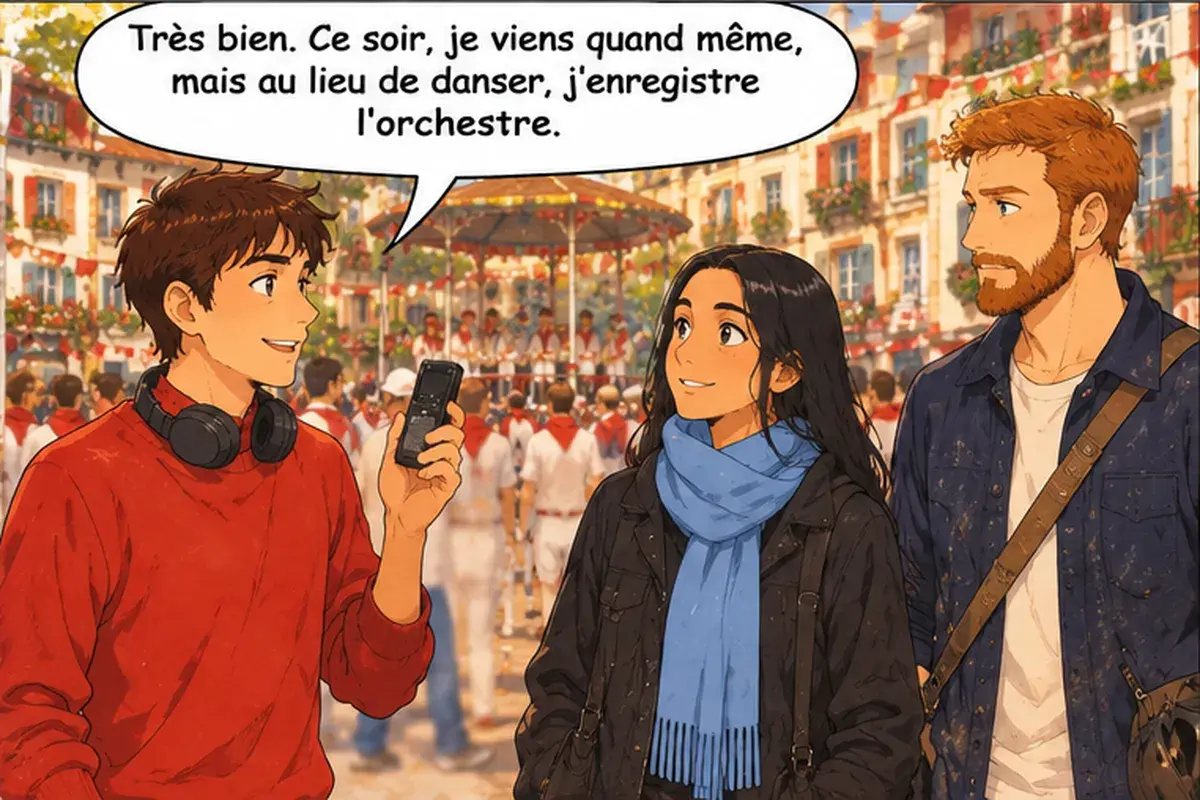
Très bien. Ce soir, je viens quand même, mais au lieu de danser, j'enregistre l'orchestre.
Very good. Tonight I'm coming anyway, but instead of dancing, I'm recording the orchestra.
- Inès
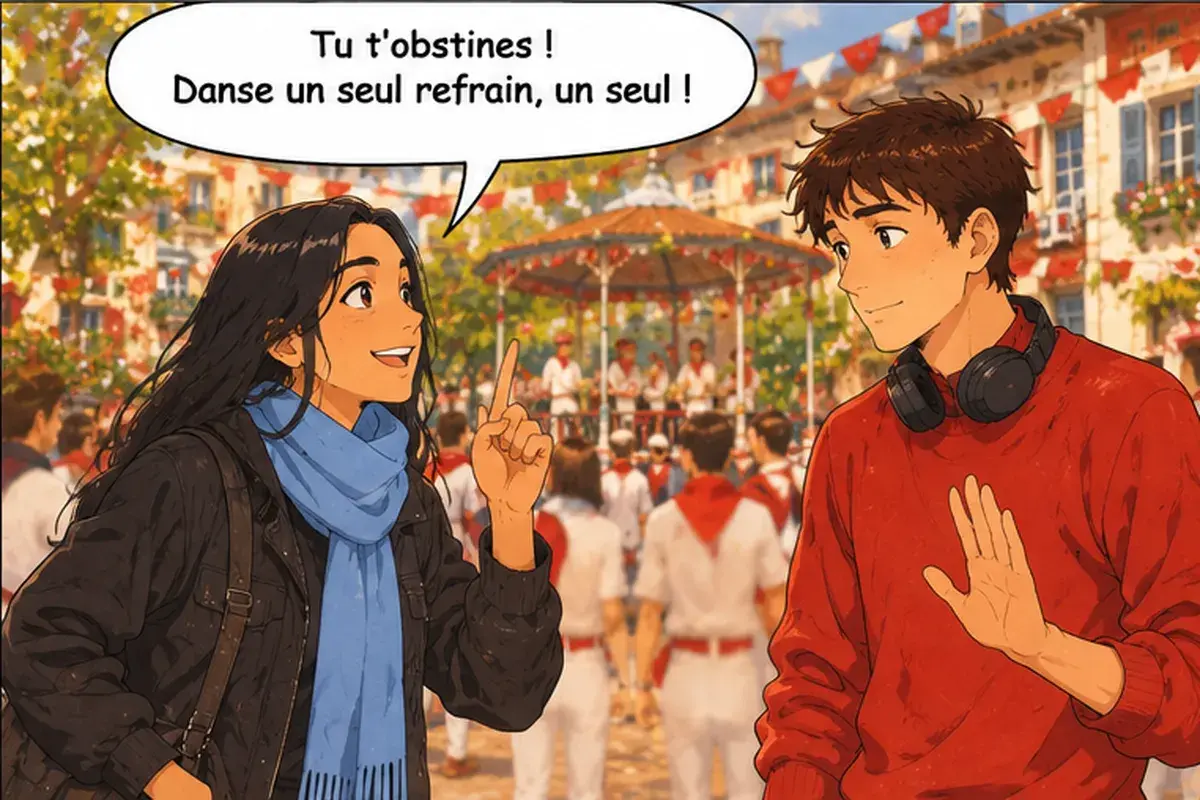
Tu t'obstines ! Danse un seul refrain, un seul !
You're being stubborn! Dance just one chorus, just one!
- Pacha
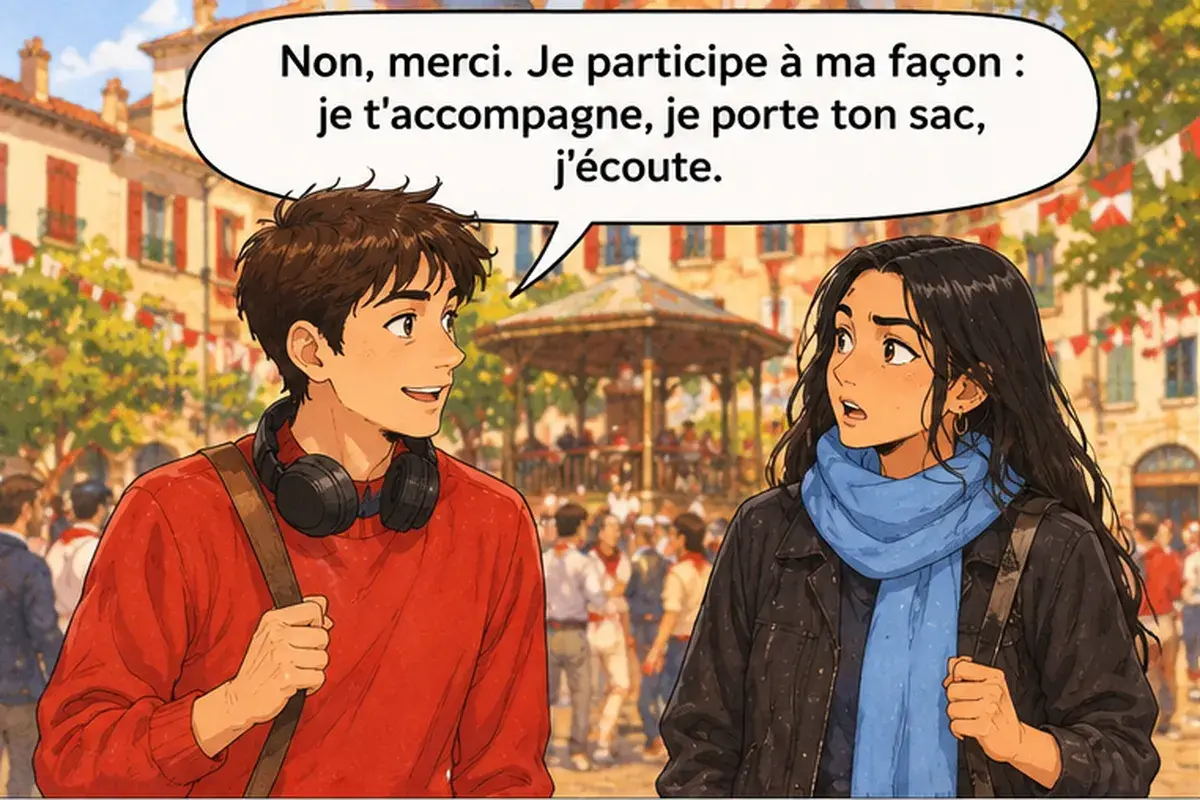
Non, merci. Je participe à ma façon : je t'accompagne, je porte ton sac, j'écoute.
No, thanks. I take part in my own way: I'm coming along with you, I'm carrying your bag, I'm listening.
- Inès
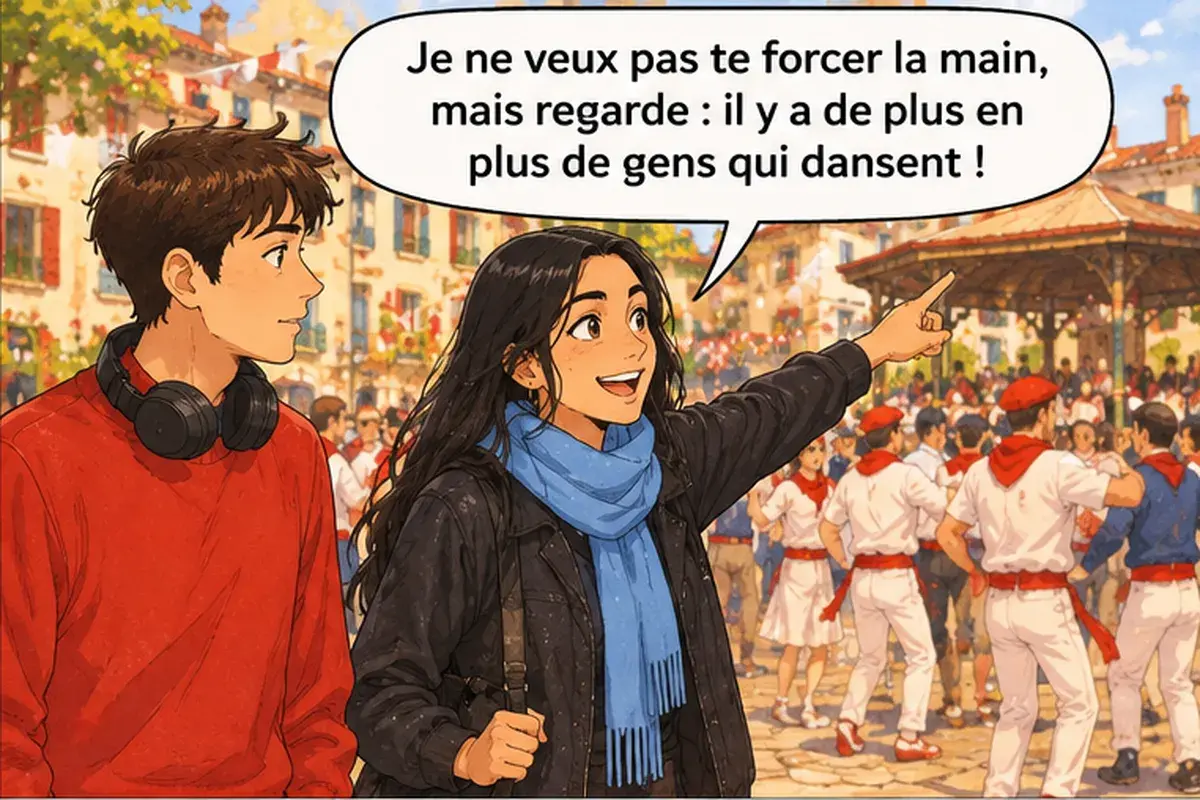
Je ne veux pas te forcer la main, mais regarde : il y a de plus en plus de gens qui dansent !
I don't want to force your hand, but look: more and more people are dancing!
- Hugo
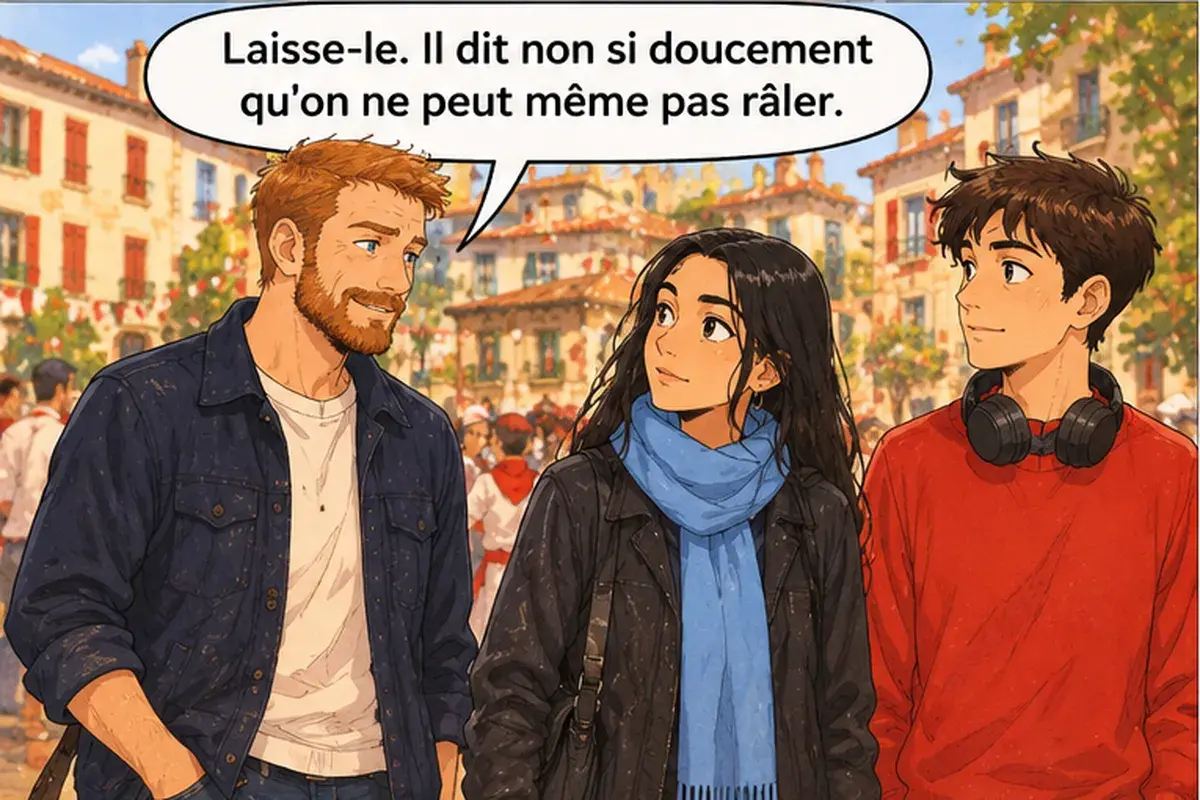
Laisse-le. Il dit non si doucement qu'on ne peut même pas râler.
Leave him alone. He says no so gently that we can't even complain.
- Inès
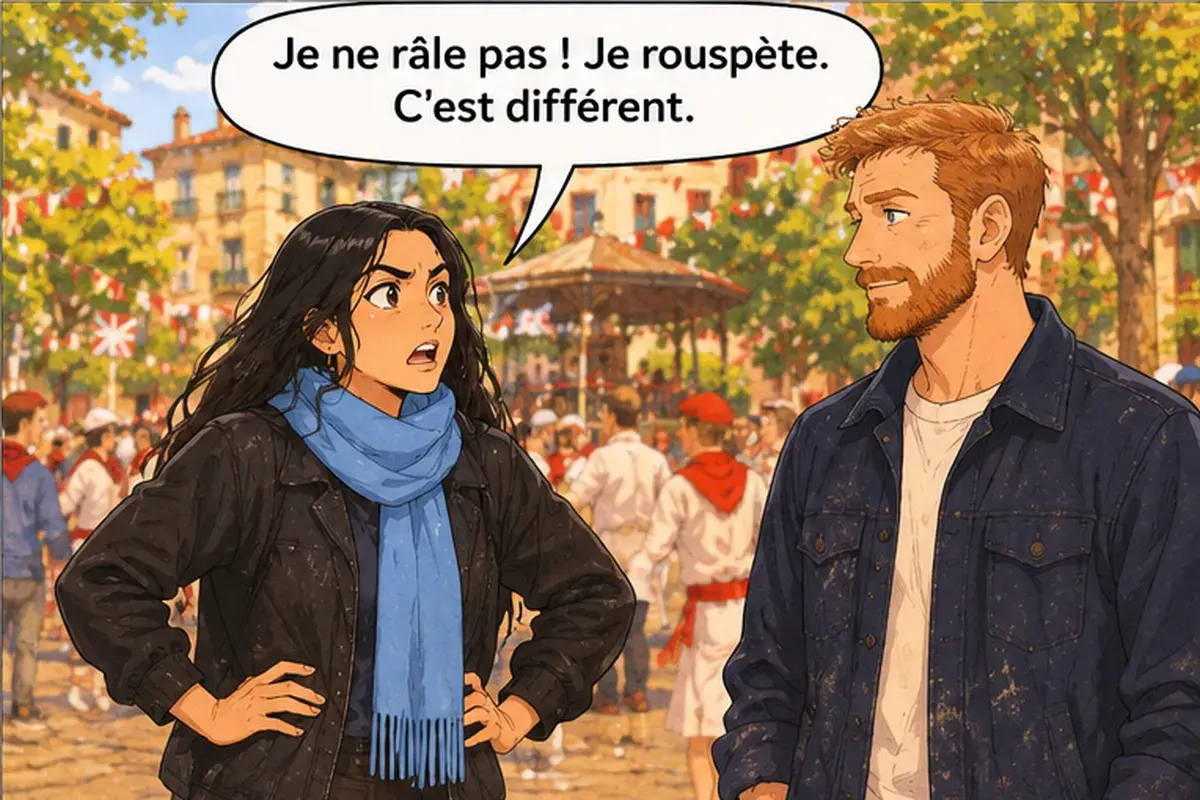
Je ne râle pas ! Je rouspète. C'est différent.
I'm not complaining! I'm grumbling. It's different.
- Hugo
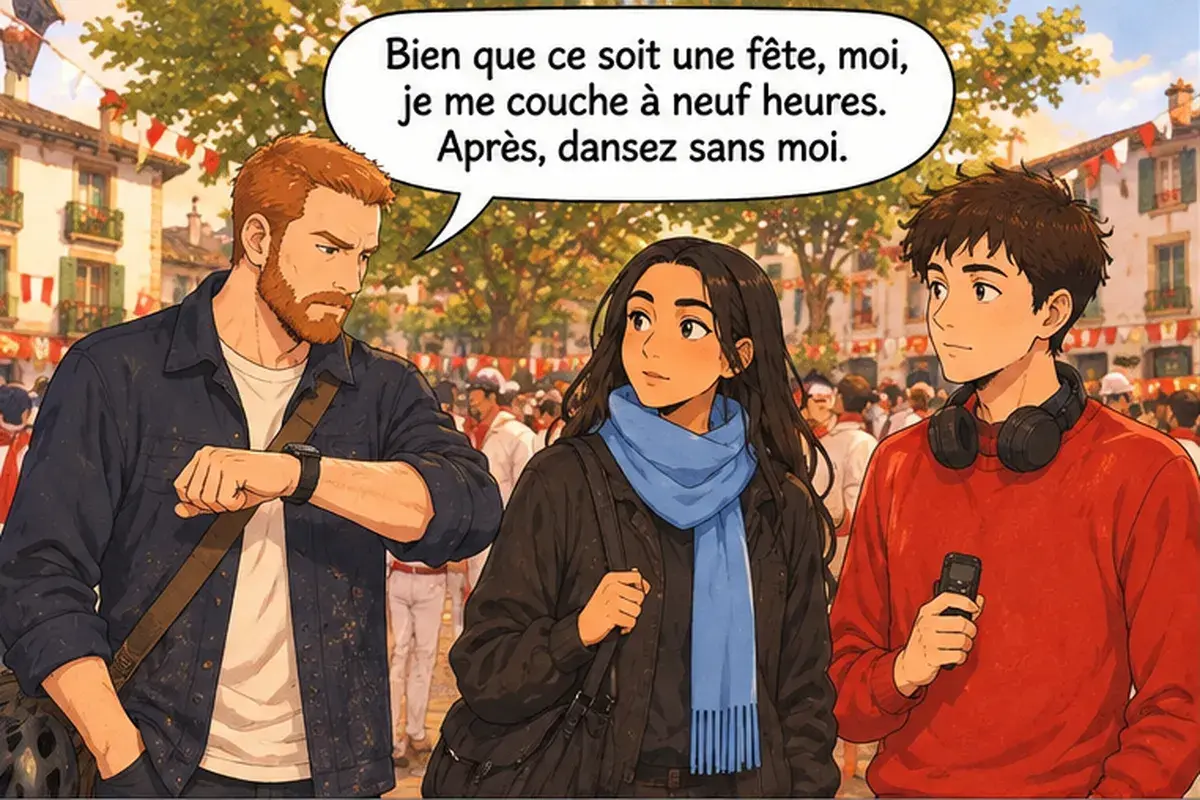
Bien que ce soit une fête, moi, je me couche à neuf heures. Après, dansez sans moi.
Although it's a festival, I go to bed at nine. After that, dance without me (to several people).
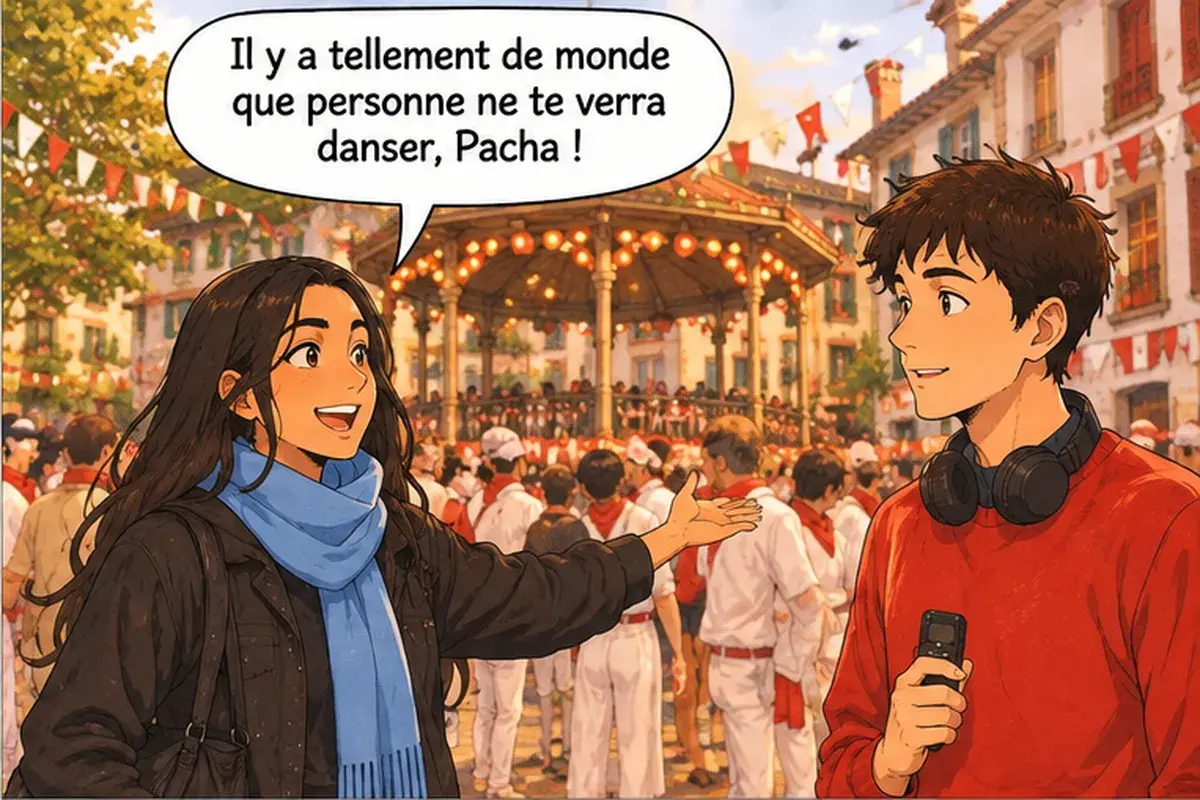
- Inès
Il y a tellement de monde que personne ne te verra danser, Pacha !
There are so many people that no one will see you dance, Pacha!
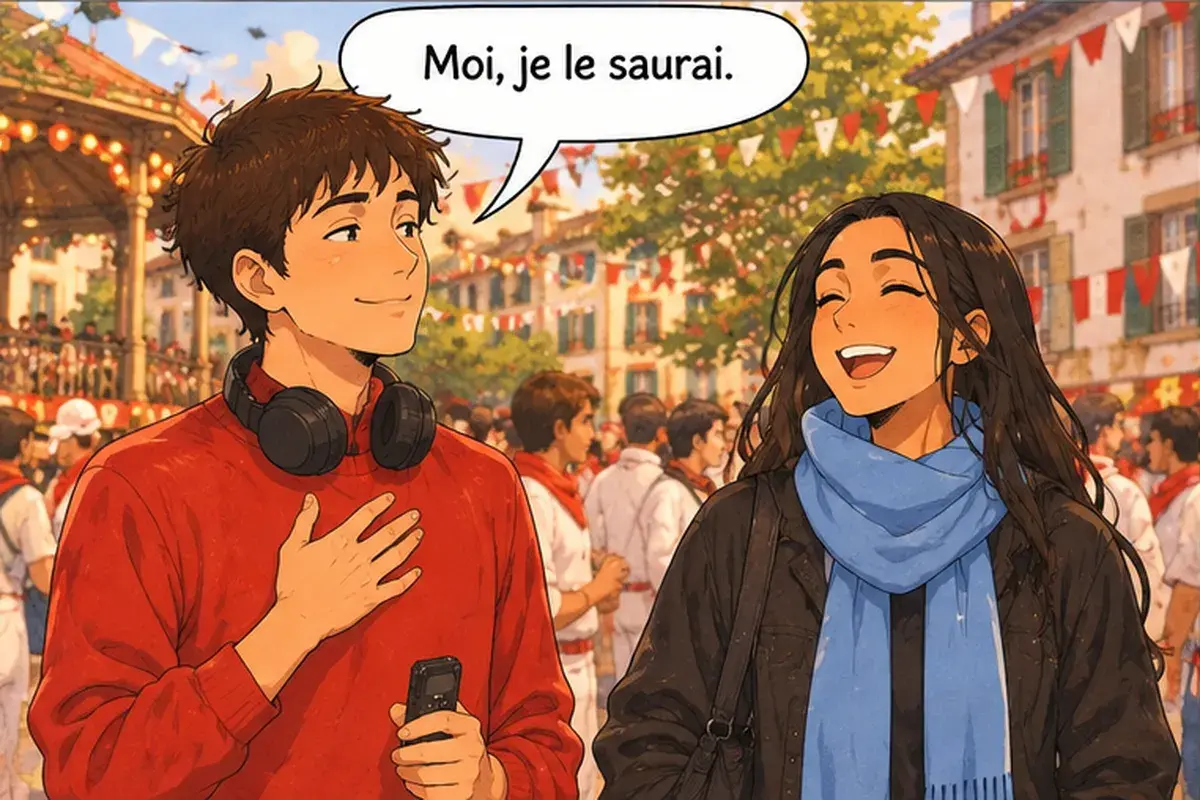
- Pacha
Moi, je le saurai.
I'll know.
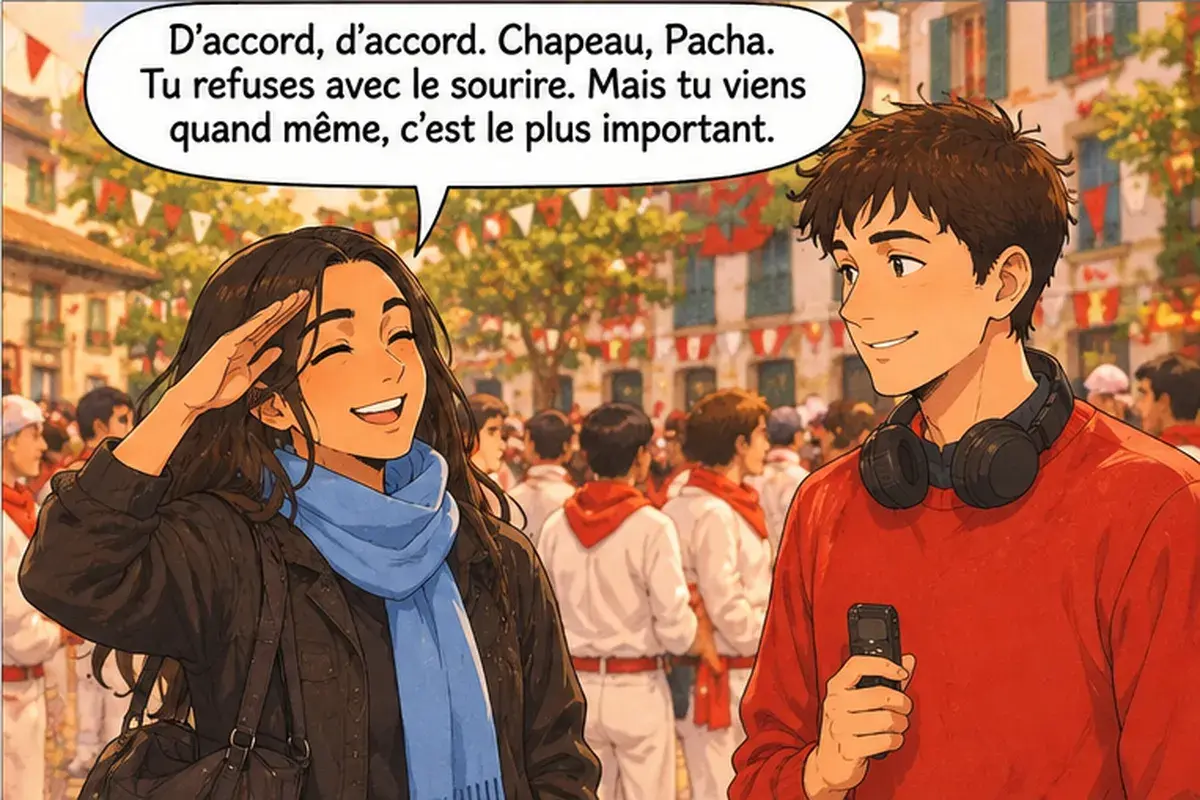
- Inès
D'accord, d'accord. Chapeau, Pacha. Tu refuses avec le sourire. Mais tu viens quand même, c'est le plus important.
All right, all right. Hats off, Pacha. You refuse with a smile. But you're coming anyway, that's the most important thing.
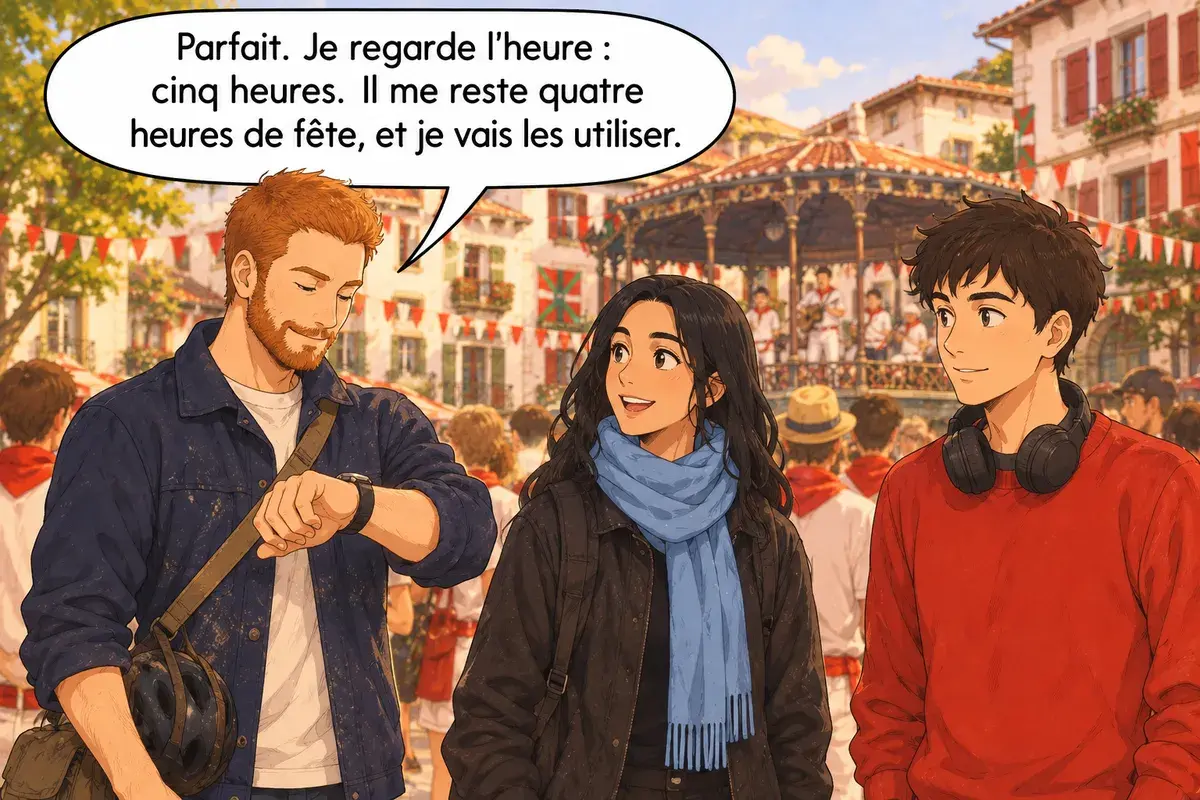
- Hugo
Parfait. Je regarde l'heure : cinq heures. Il me reste quatre heures de fête, et je vais les utiliser.
Perfect. I'm checking the time: five o'clock. I have four hours of festival left, and I'm going to use them.
Grammar for this text
- je viens quand même —
quand mêmemeans "still, anyway" (A1, unit 16) and goes after the verb. It's how you say no and still stay with the group: "I won't dance, but I'm with you." - au lieu de danser —
au lieu de+ infinitive: "instead of dancing." The same person (Pacha) does both things, so you don't needque. - Bien que ce soit une fête — a ready-made phrase meaning "although it's…".
soitis a special form ofêtrethat comes afterbien que(its forms are in unit 21, and the full topic is B2). For now, learn it as one block:bien que ce soit+ noun. - si doucement qu'on ne peut même pas râler — "so gently that…" (
si+ adverb +que).râler("to complain") androuspéter("to grumble") are casual words you hear in the family and among friends;rouspéteris a bit milder. - te forcer la main —
forcer la main à quelqu'unmeans "to pressure someone into agreeing." English has the same idiom: "to force someone's hand."temeans "you." - Tu t'obstines —
t'obstinesis thetuform of the reflexive verbs'obstiner("to be stubborn"):tebecomest'before a vowel. - Chapeau — "Hats off!" Literally it means "hat": you take off your hat to someone brave.
Words and grammar of the unit: Say no and stand your ground.
Learn the words from the texts with flashcards
In the app, you can tap any word in a text to see its translation, forms and examples, and new words stick with flashcards. 15 minutes a day.
Start for freeEverything is open for free. No card needed to sign up.