
French story with translation · B1 · 17 lines
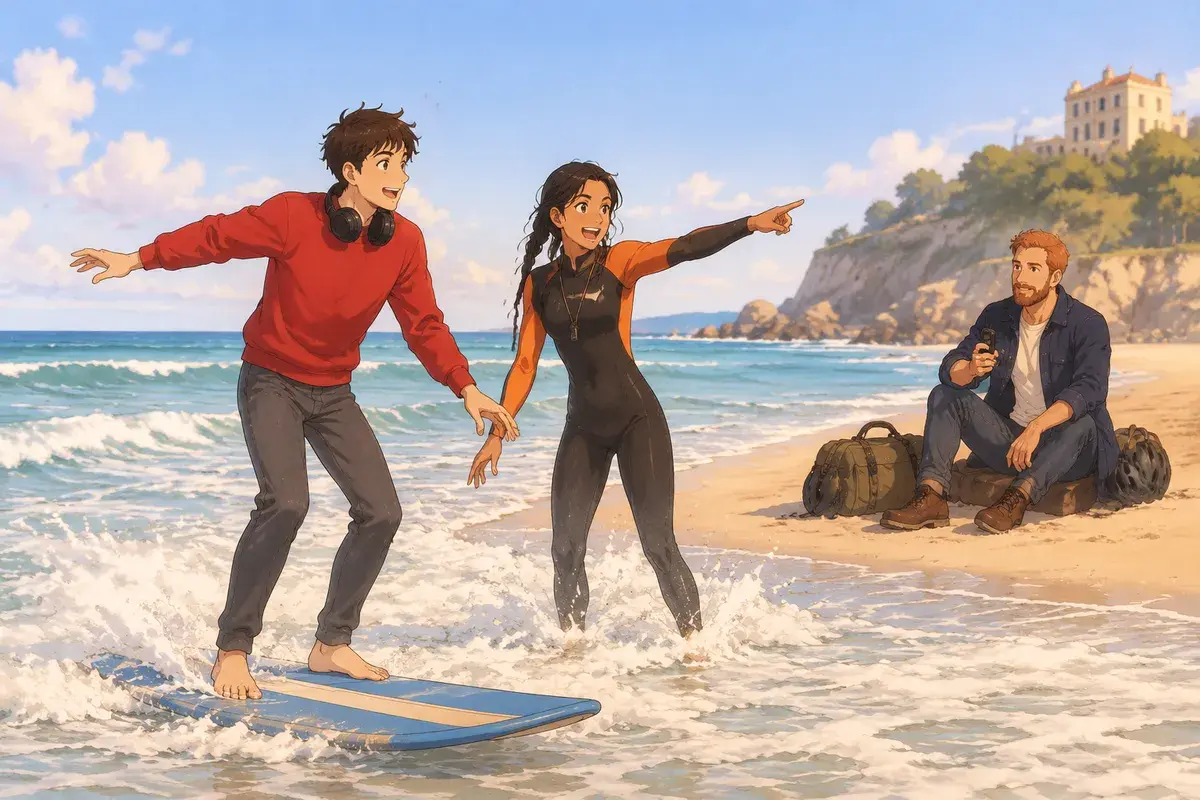
Il faut que tu te lèves ! You have to stand up!
Comic · 17 panels
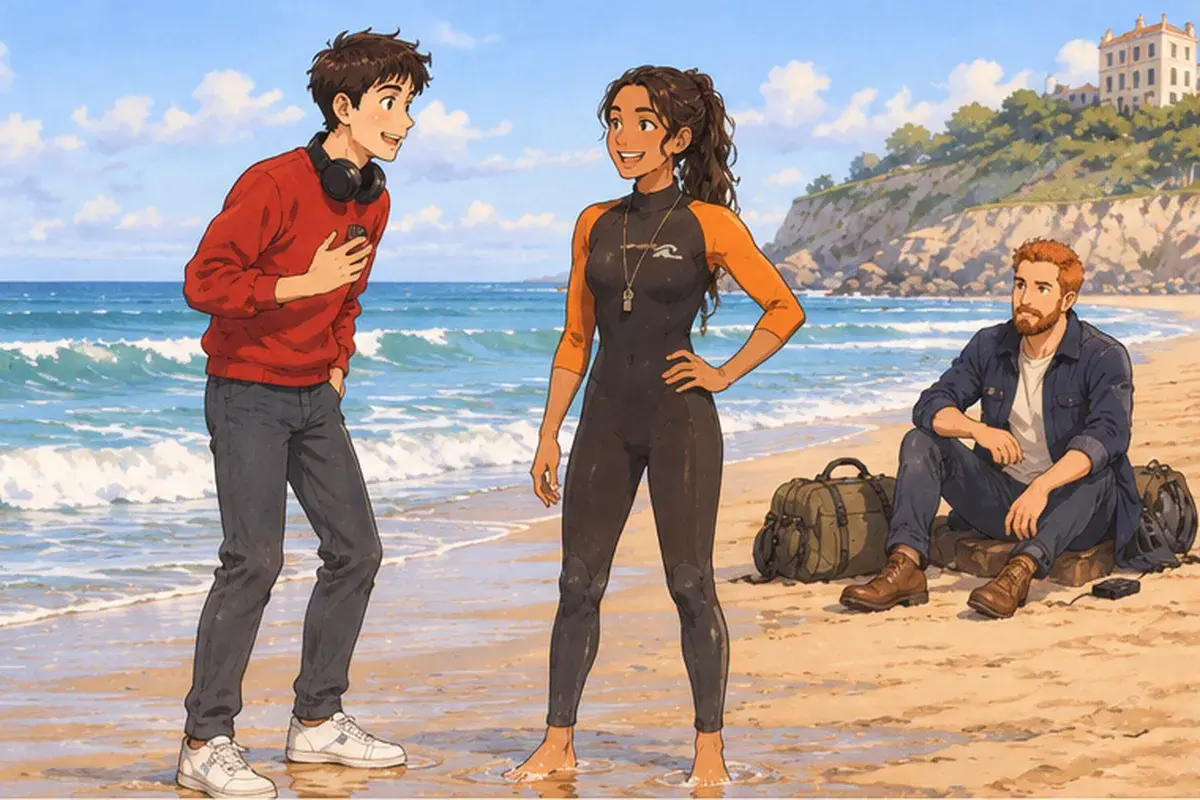
Le lendemain matin, j'ai passé le petit test devant Nahia, et j'ai réussi. Hugo nous regardait de loin, assis sur le sable avec nos sacs et mon dictaphone.
The next morning, I took the little test in front of Nahia, and I passed. Hugo watched us from far away, sitting on the sand with our bags and my voice recorder.
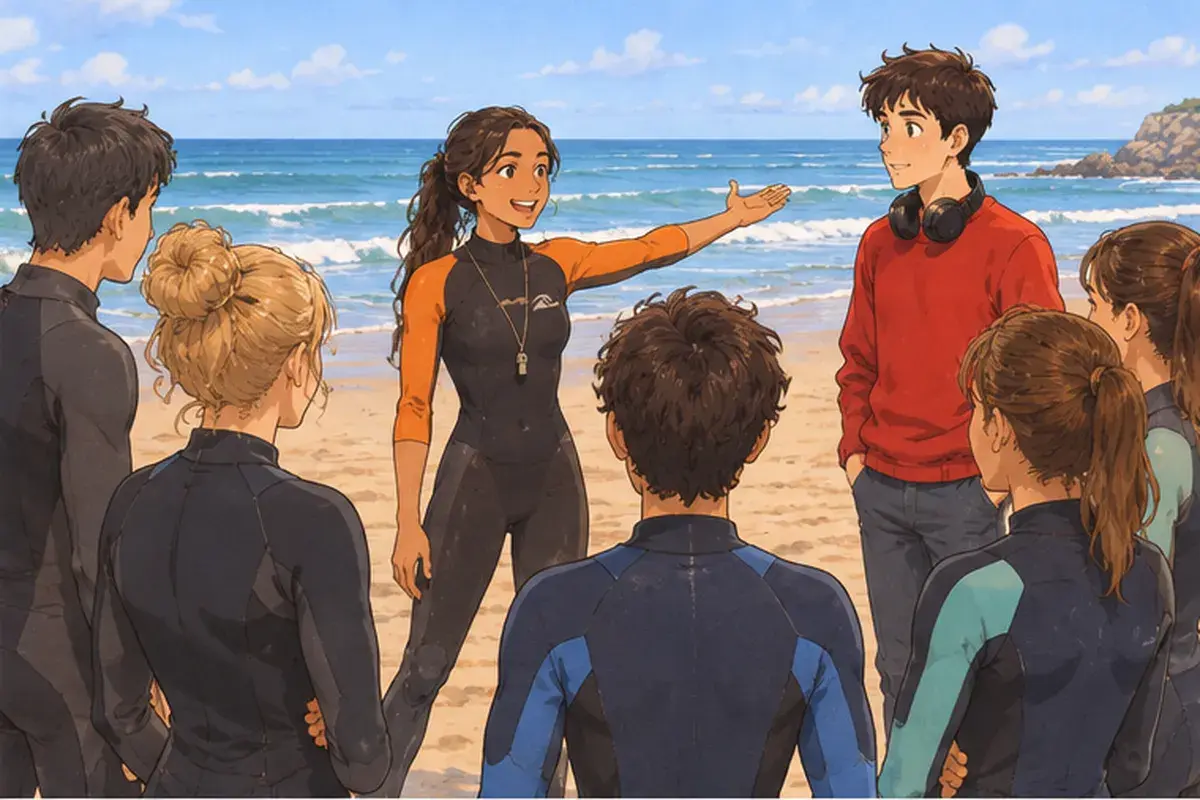
Nous étions sur la Côte des Basques, avec sept autres débutants autour de Nahia. Au poste de secours, le drapeau était orange : mer dangereuse, mais surveillée. « Aujourd'hui, le coefficient est fort, a dit Nahia. Plus il est grand, plus la mer monte, et la plage disparaît presque. »
We were at the Côte des Basques, with seven other beginners around Nahia. At the lifeguard station, the flag was orange: dangerous sea, but supervised. “Today the tide coefficient is high,” Nahia said. “The higher it is, the more the sea rises, and the beach almost disappears.”
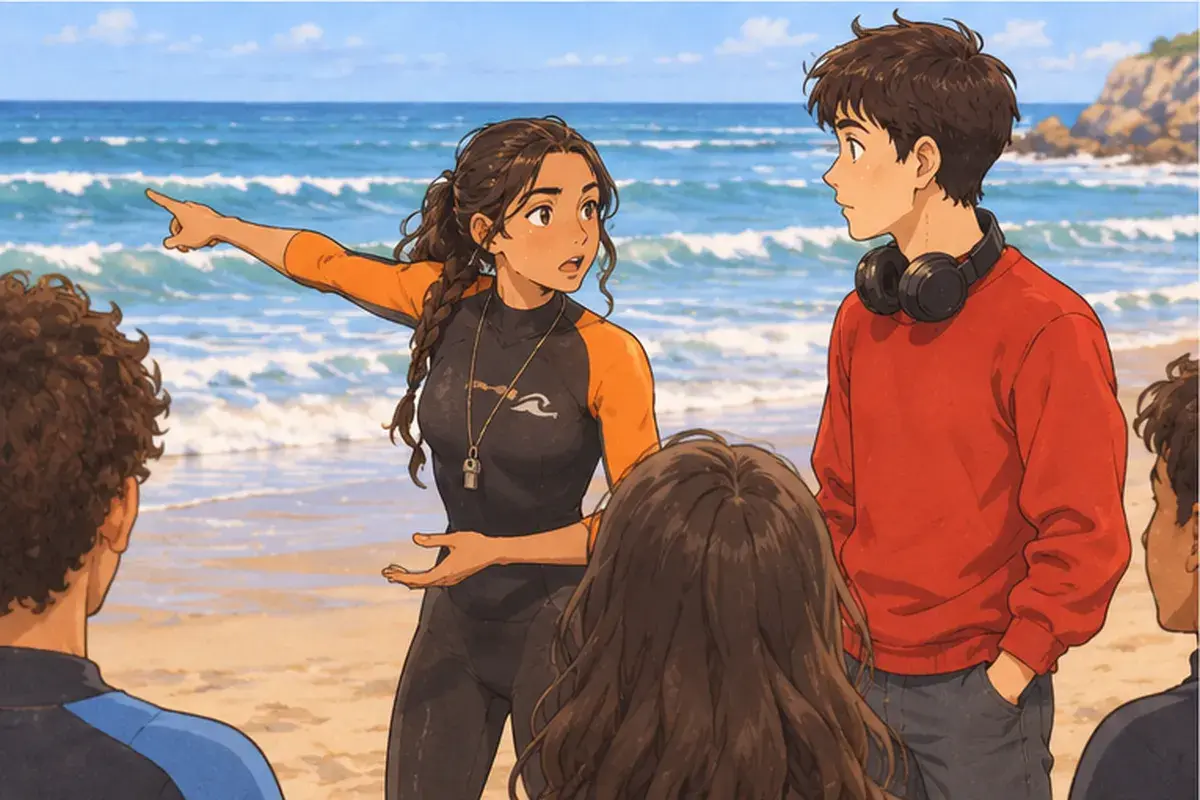
Puis elle a parlé des baïnes, ces trous près du bord où le courant tire vers le large. « Si le courant vous tire, ne résistez pas : flottez sur le dos et appelez un sauveteur. »
Then she talked about the baïnes, those holes near the shore where the current pulls you out to sea. “If the current pulls you, don't resist: float on your back and call a lifeguard.” (to several people)
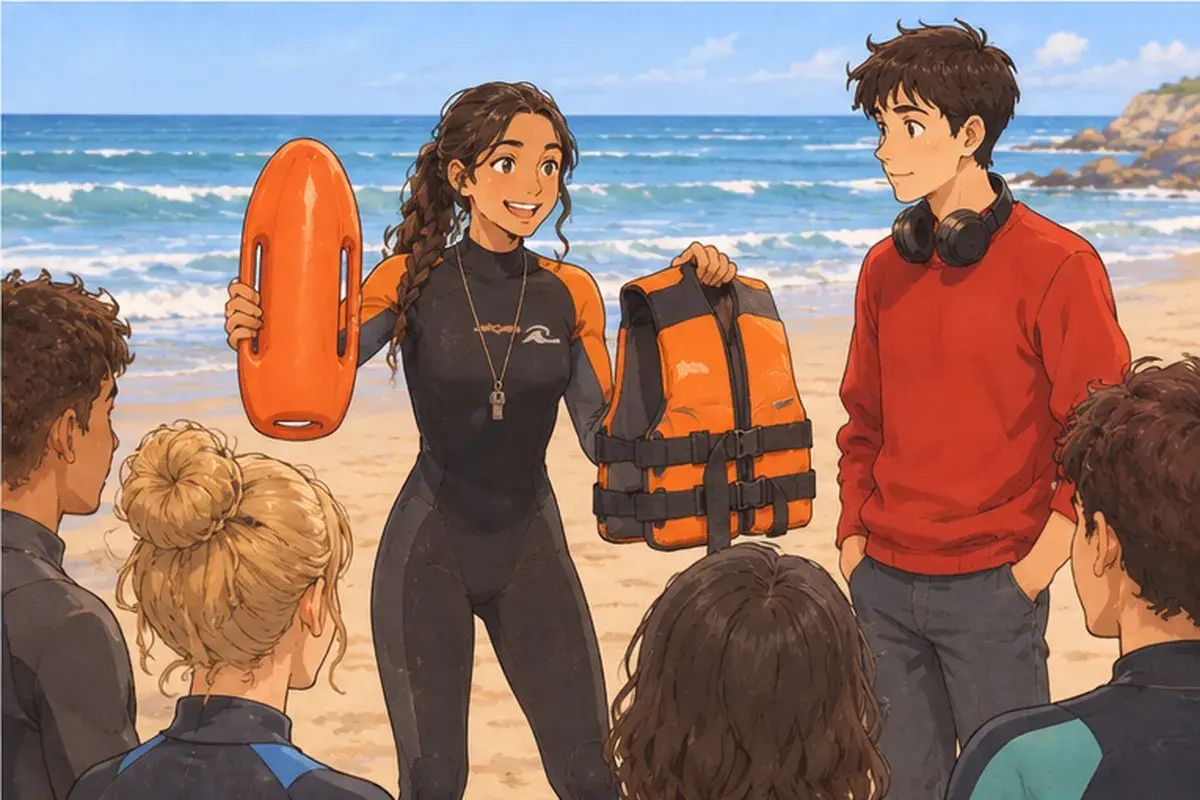
Elle a ajouté : « Les sauveteurs ont des bouées et des gilets de sauvetage, pour qu'il n'y ait jamais de noyade. »
She added: “The lifeguards have buoys and life jackets, so that there's never a drowning.”
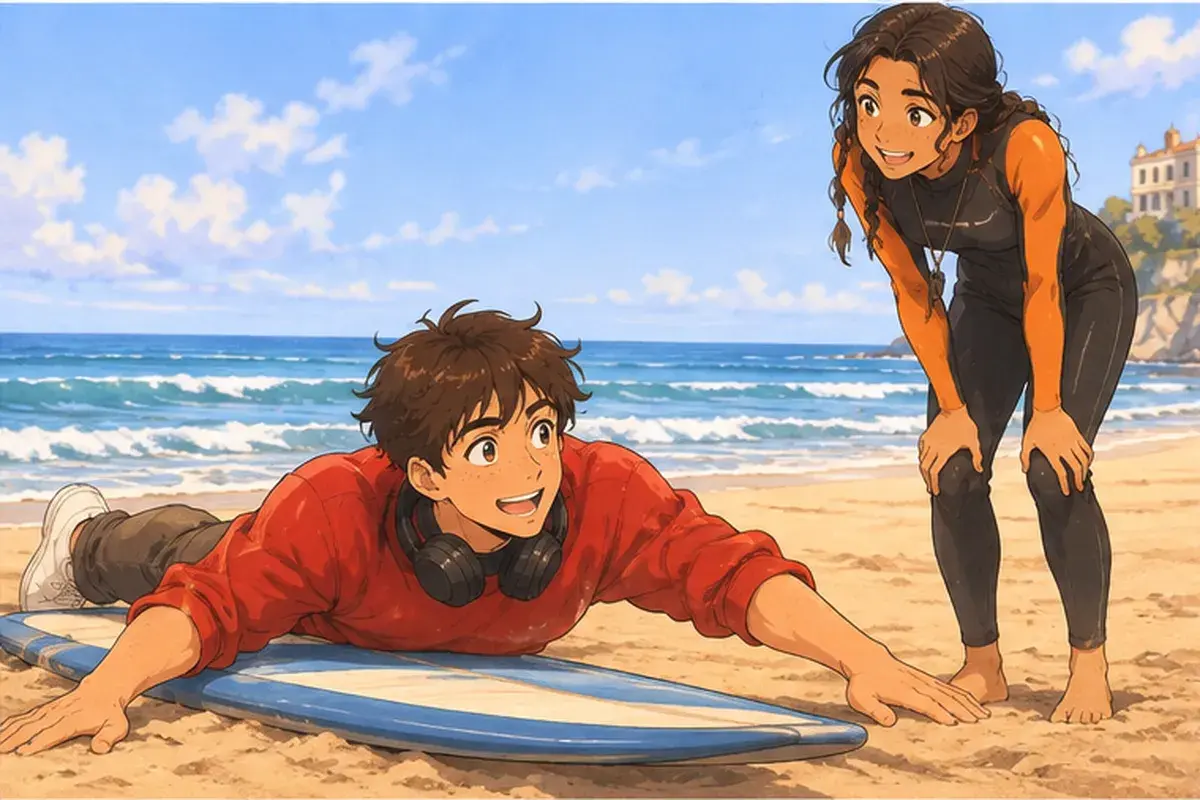
Avant d'entrer dans l'eau, on a pris le matériel dont on avait besoin, puis on s'est entraînés sur le sable. Premier exercice : ramer couché sur la planche. J'avais l'air d'un chien qui nage sur le sable.
Before going into the water, we got the gear we needed, then we practiced on the sand. First exercise: paddling lying on the board. I looked like a dog swimming on the sand.
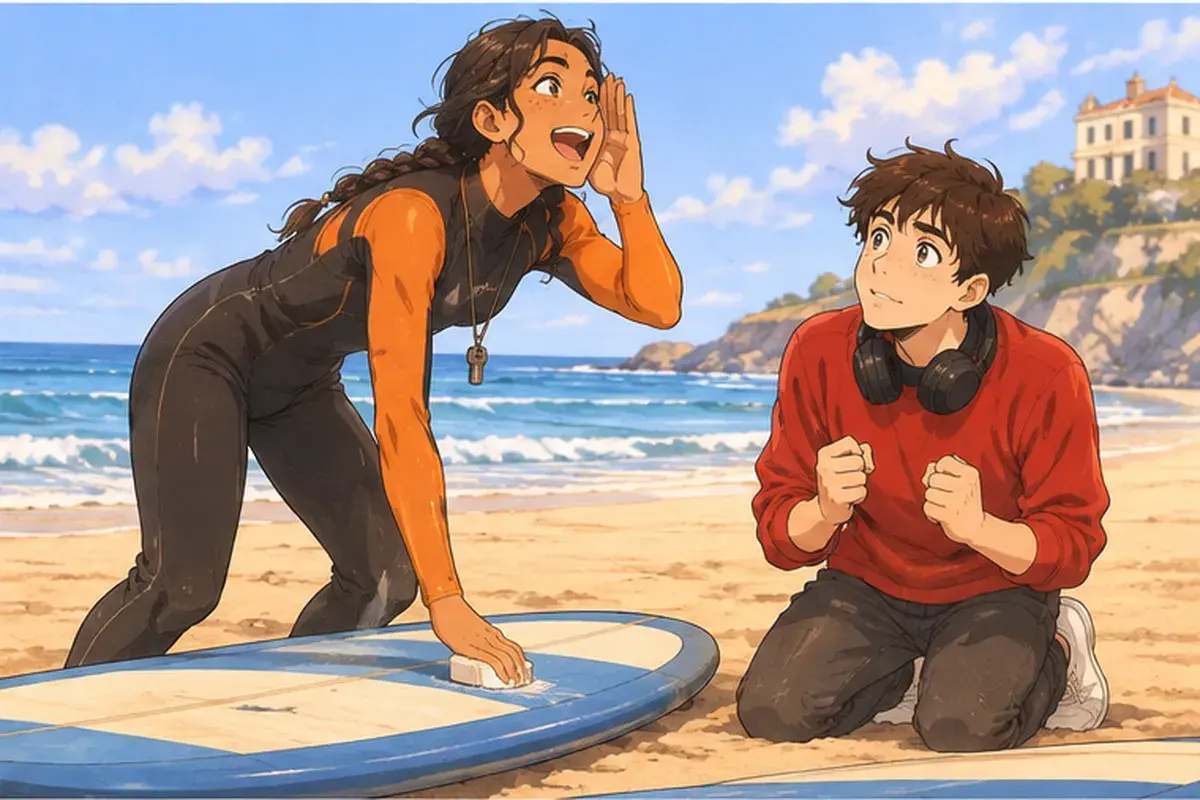
Nahia mettait de la cire sur les planches pour qu'on ne glisse pas. Elle criait : « Les doigts serrés ! Rame avec les épaules, pas seulement avec les bras ! »
Nahia put wax on the boards so we wouldn't slip. She shouted: “Fingers together! Paddle with your shoulders, not just with your arms!”
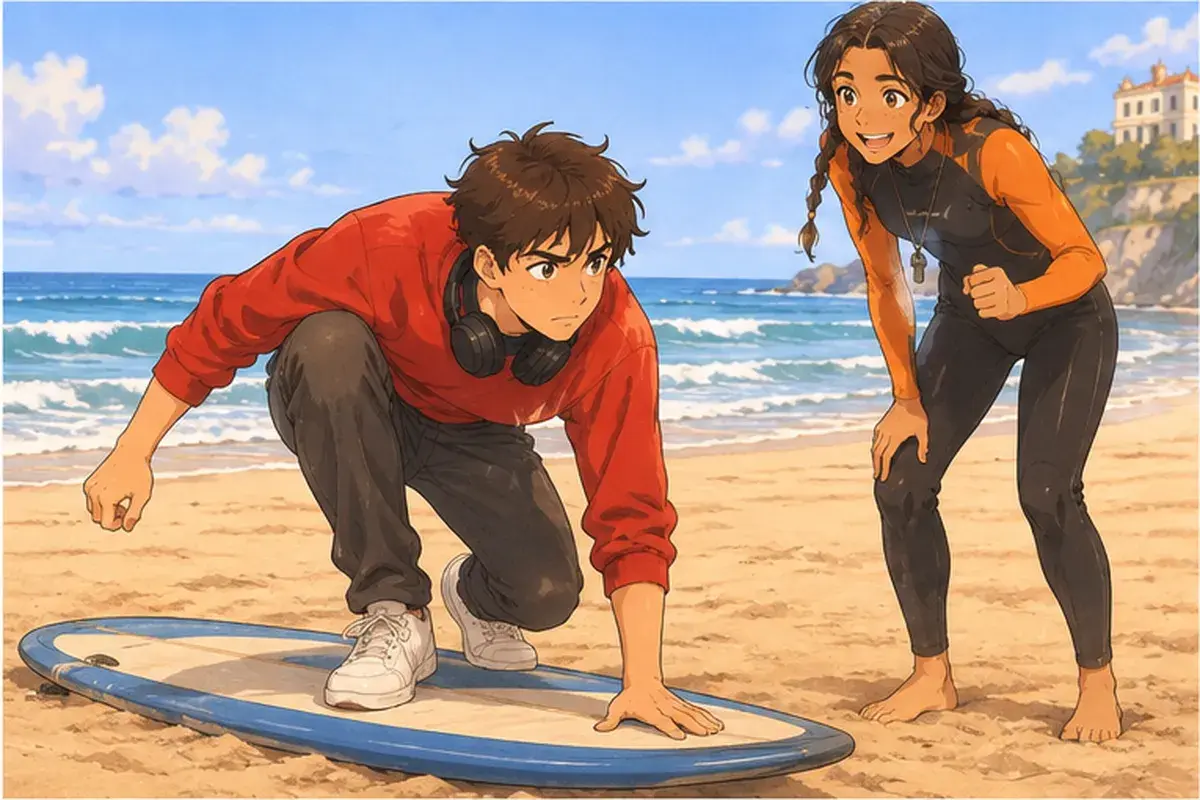
Pour se lever, il faut faire un seul mouvement : une main, un genou, un pied. Sur le sable, je réussissais à chaque fois ; dans l'eau, c'était une autre histoire.
To stand up, you have to make one single movement: one hand, one knee, one foot. On the sand, I managed it every time; in the water, it was a different story.
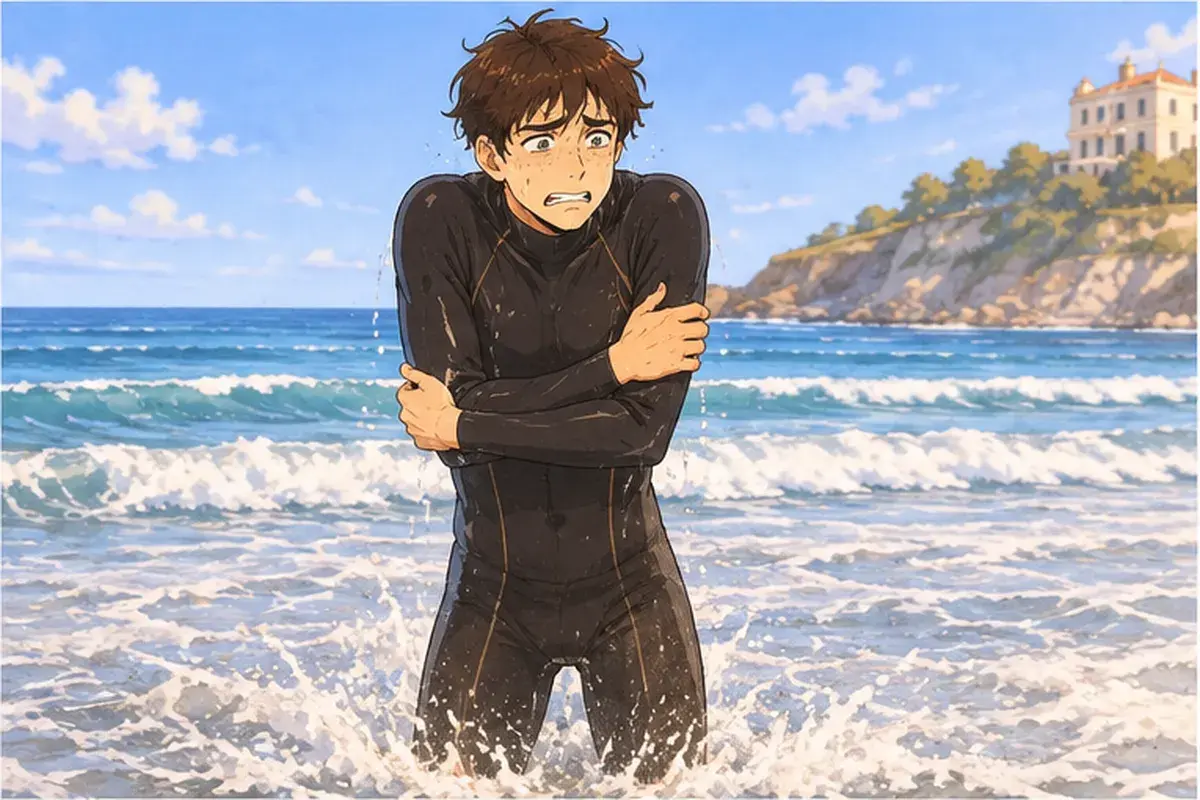
L'eau était froide. Avec la combinaison, ça allait, mais j'ai quand même eu un frisson de la tête aux pieds.
The water was cold. With the wetsuit, it was OK, but I still got a shiver from head to toe.
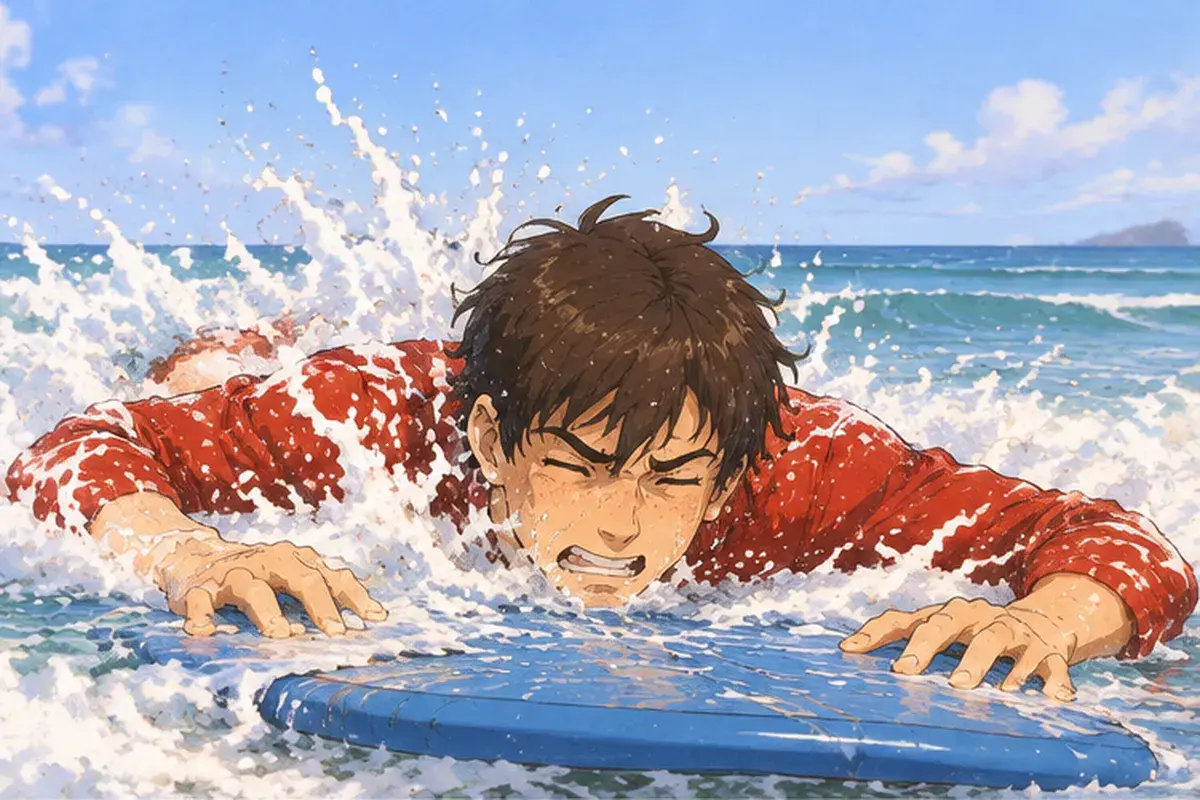
Au premier essai, la vague est passée sous ma planche, et je suis resté couché. Au deuxième, un rouleau m'a retourné, et j'ai bu la tasse : du sel dans le nez, de l'écume dans les yeux.
On the first try, the wave passed under my board, and I stayed lying down (man speaking). On the second, a breaker flipped me over, and I swallowed a mouthful of water: salt in my nose, foam in my eyes.
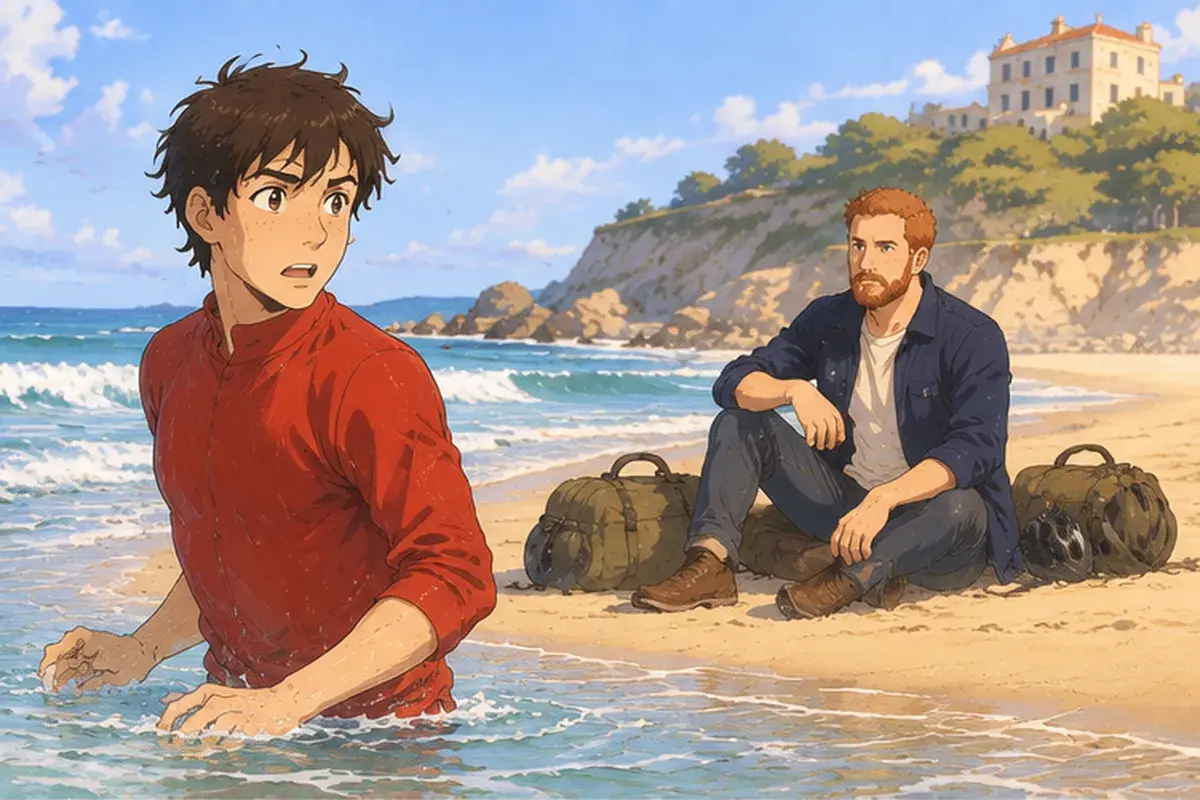
Je me disais : « Il vaut mieux retourner près de Hugo. » Mais Hugo gardait les sacs avec un visage très sérieux : lui avait son défi du jour, et moi, j'avais le mien.
I told myself: “It's better to go back to Hugo.” But Hugo was guarding the bags with a very serious face: he had his challenge for the day, and I had mine.
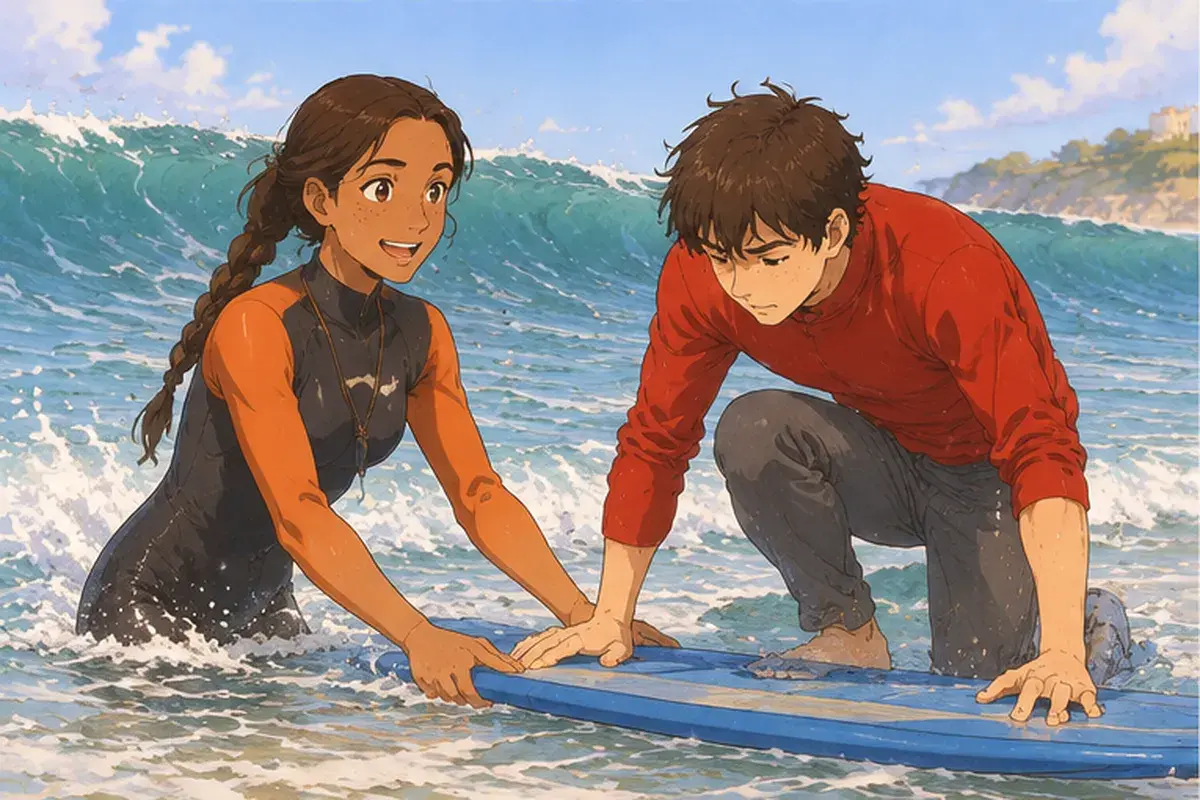
Nahia a tenu la planche pour que je puisse monter dessus : j'avais de l'eau jusqu'au cou. La houle grandissait, et la vague qui arrivait était plus puissante que les autres.
Nahia held the board so I could get on it: I was in water up to my neck. The swell was growing, and the wave coming in was more powerful than the others.
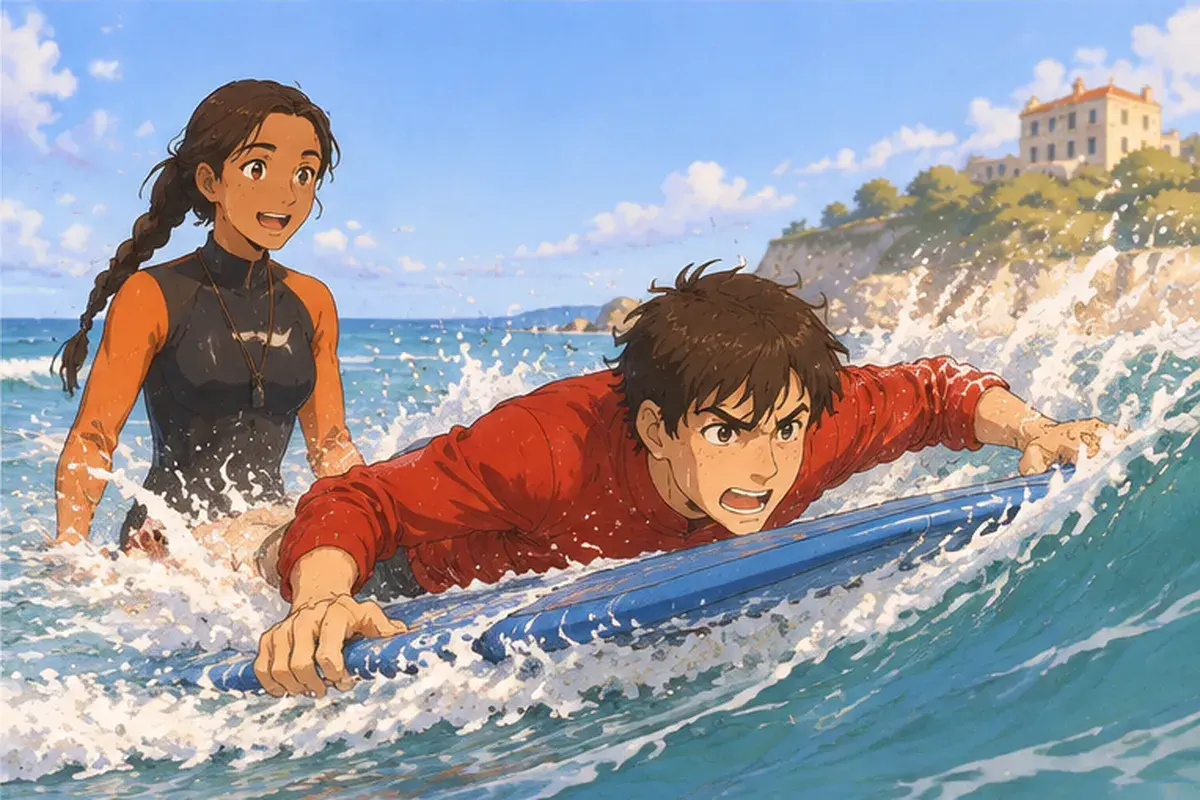
« Rame ! Rame ! Maintenant ! » J'ai ramé de toutes mes forces, la vague m'a attrapé, mais je suis resté couché, les doigts serrés sur la planche.
“Paddle! Paddle! Now!” I paddled with all my strength, the wave caught me, but I stayed lying down, my fingers tight on the board (man speaking).
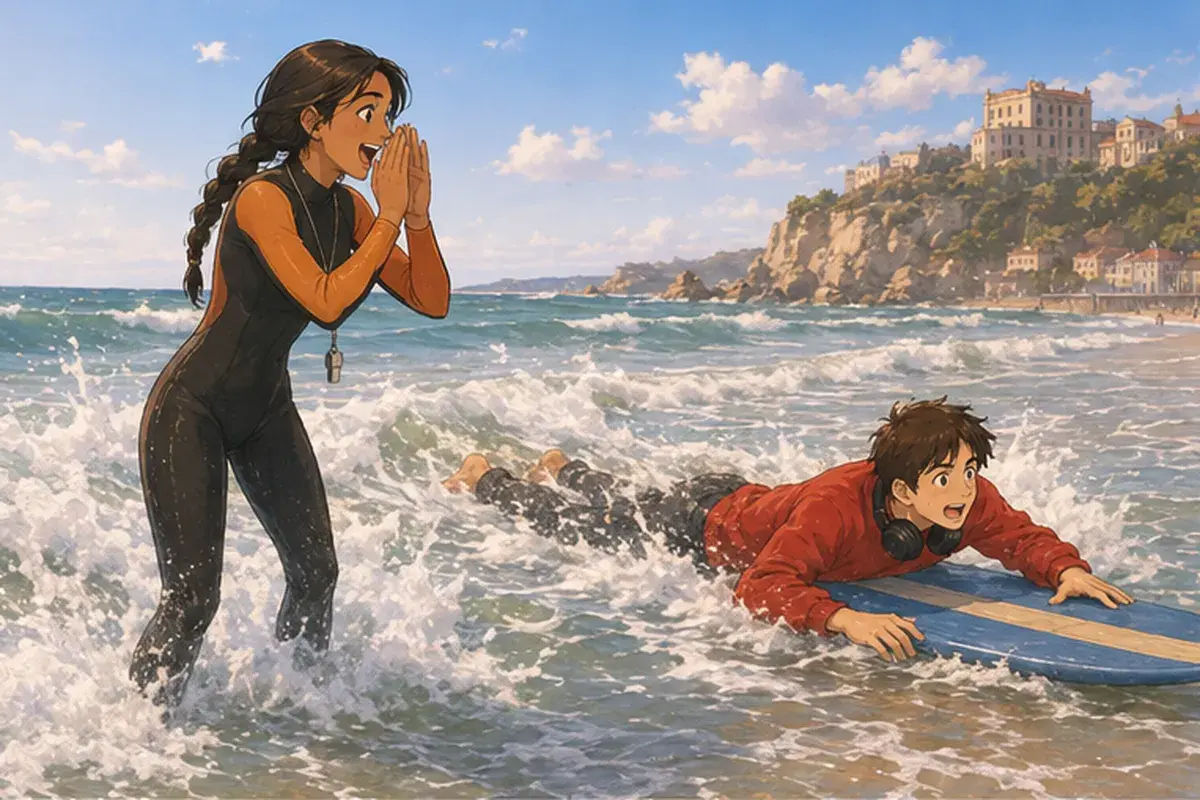
Alors Nahia a crié, très fort, pour que je l'entende malgré le bruit de l'écume : « Il faut que tu te lèves ! »
Then Nahia shouted, very loudly, so I could hear her over the noise of the foam: “You have to stand up!”
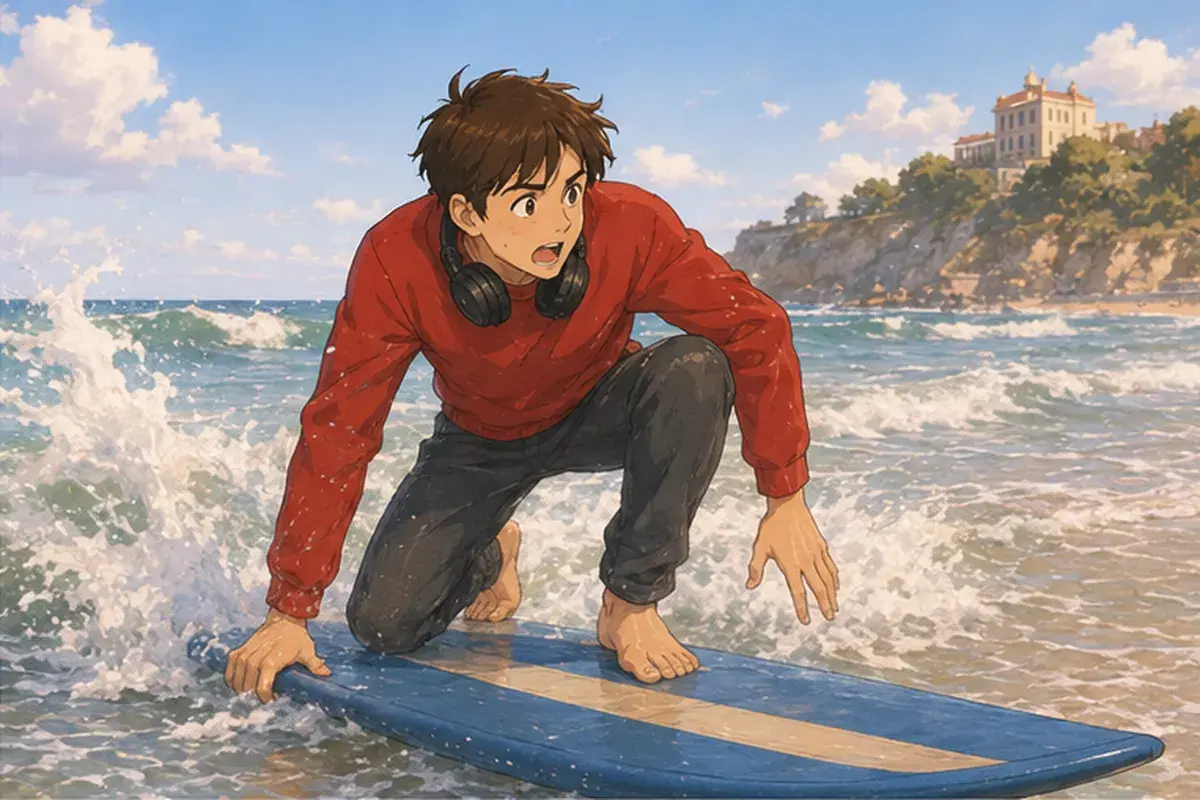
Une main, un genou, un pied. J'avais peur, mais j'ai résisté à l'envie de regarder mes pieds.
One hand, one knee, one foot. I was scared, but I resisted the urge to look at my feet.
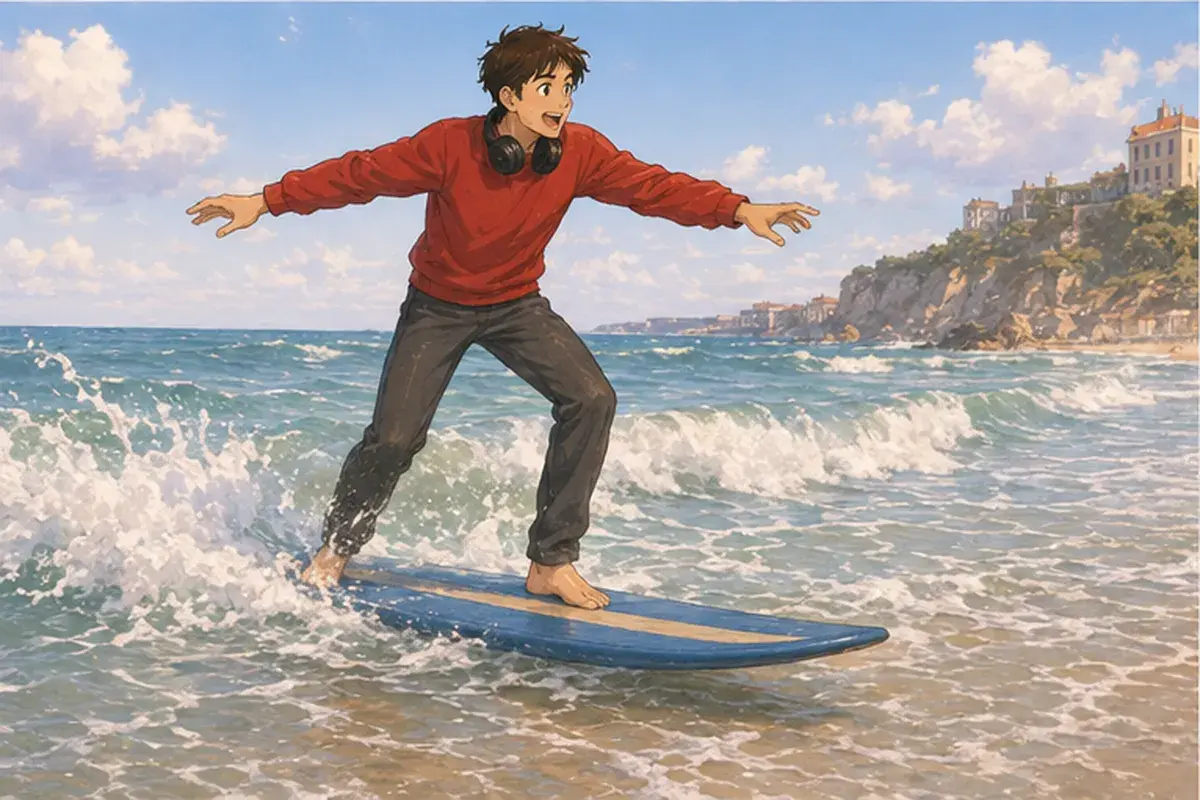
Pendant trois secondes, j'ai gardé l'équilibre. Le vent, l'eau, la vitesse : la sensation était si intense que je n'entendais plus rien.
For three seconds, I kept my balance. The wind, the water, the speed: the sensation was so intense that I couldn't hear anything anymore.
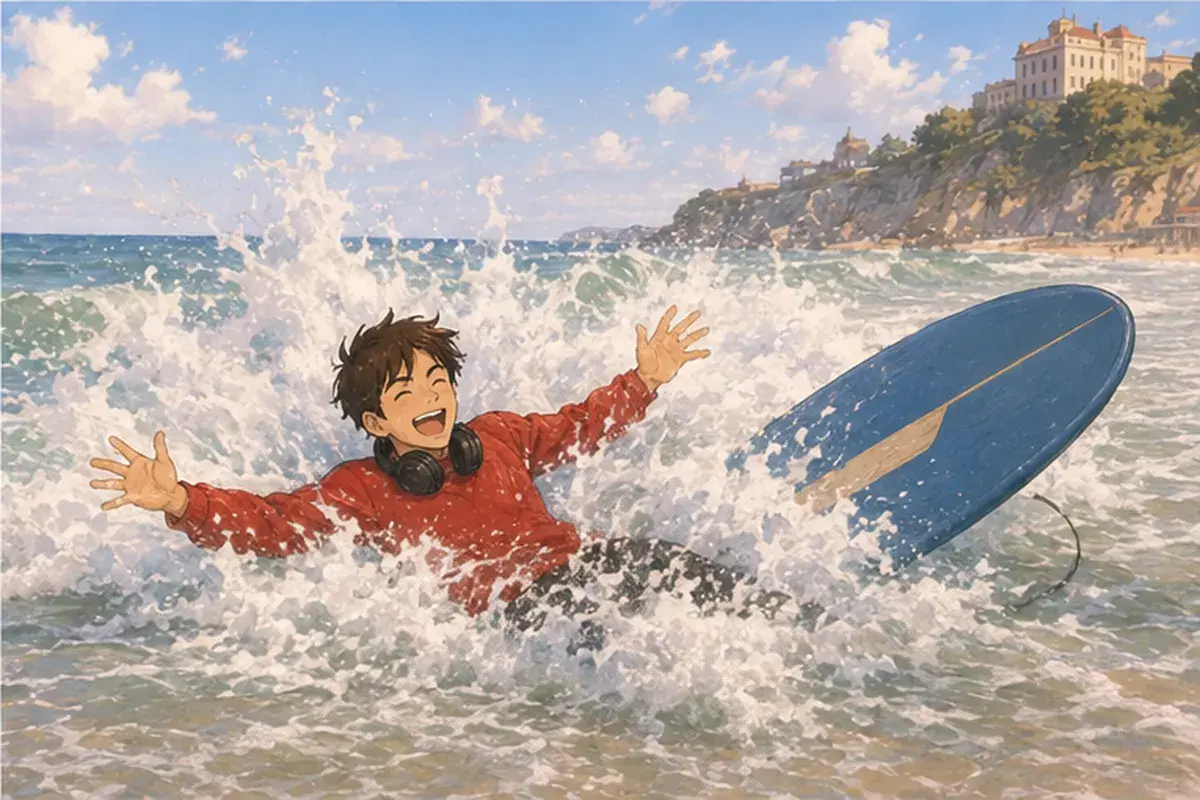
Puis la planche a tourné, j'ai perdu l'équilibre et je suis tombé. Je flottais dans l'écume en riant comme un enfant.
Then the board turned, I lost my balance and I fell (man speaking). I floated in the foam, laughing like a child.
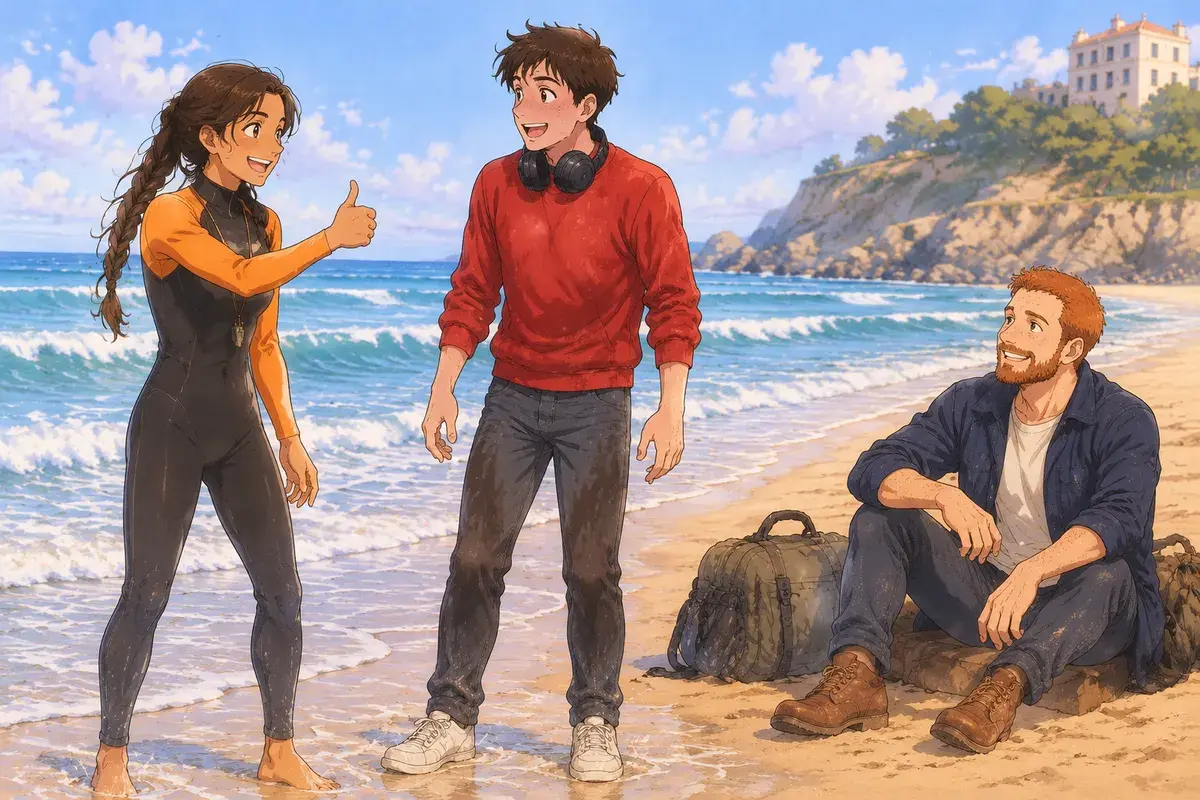
Sur la plage, Nahia m'a dit : « Voilà ! Premier jour, et déjà des progrès ! » Le soir, j'ai envoyé le son de mon cri à Dacha, sans un mot. Elle a répondu : « Encore ! »
On the beach, Nahia told me: “There you go! First day, and already progress!” That evening, I sent the sound of my shout to Dacha, without a word. She answered: “Again!”
Grammar for this text
- il faut que tu te lèves —
il faut que+ subjunctive.lèvescomes fromse lever(“to get up, to stand up”); for regular verbs thetuform is the same as in the present tense. This is the instructor's key sentence: “you have to stand up right now.” - pour que je puisse monter dessus —
pour que+puisse, the subjunctive ofpouvoir(an exception, see the unit's grammar). The people are different: Nahia holds the board, Pacha climbs on. - pour qu'il n'y ait jamais de noyade —
aitis the subjunctive ofavoirinsideil y a:qu'il y ait. The negative isn'… jamais. - pour que je l'entende —
l'means “her” (Nahia), andentendeis the subjunctive ofentendre. - Il vaut mieux retourner près de Hugo — “it's better to go back to Hugo”: Pacha is talking about himself, so
il vaut mieuxis followed by an infinitive, with noque. - on s'est entraînés —
s'entraîner(“to practice, to train”) in the past:onmeans “we” here, so the participle is plural:entraînés. - Rame ! — the
tucommand oframer: “paddle!” Les doigts serrés — “fingers together”;serrésis a past participle used like an adjective. - Plus il est grand, plus la mer monte — “the bigger it is, the higher the sea rises.”
- le drapeau était orange — an orange flag: swimming is dangerous, but the beach is supervised.
orangenever changes:un drapeau orange. - le matériel dont on avait besoin —
dont= “that we needed” (avoir besoin de, unit 16). - jusqu'au cou —
jusqu'à+le=jusqu'au: “up to the neck.”
Words and grammar of the unit: Book a lesson and understand the instructor.
Learn the words from the texts with flashcards
In the app, you can tap any word in a text to see its translation, forms and examples, and new words stick with flashcards. 15 minutes a day.
Start for freeEverything is open for free. No card needed to sign up.