

French dialogue with translation · B1 · 18 lines
On fait la paix ? Shall we make up?
Comic · 18 panels
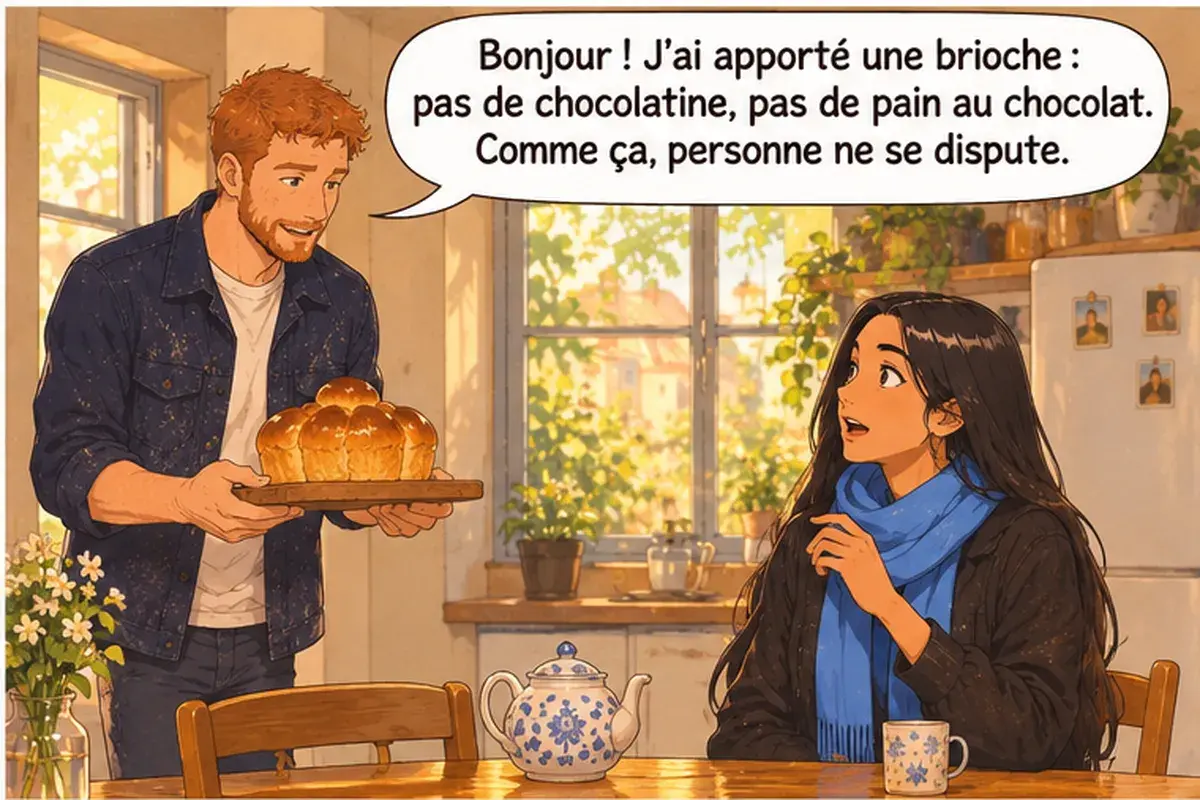
- Hugo
Bonjour ! J'ai apporté une brioche : pas de chocolatine, pas de pain au chocolat. Comme ça, personne ne se dispute.
Good morning! I brought a brioche: no chocolatine, no pain au chocolat. That way, nobody argues.

- Inès
Tu l'as faite toi-même ? Je t'ai entendu partir à quatre heures.
Did you make it yourself? I heard you leave at four.
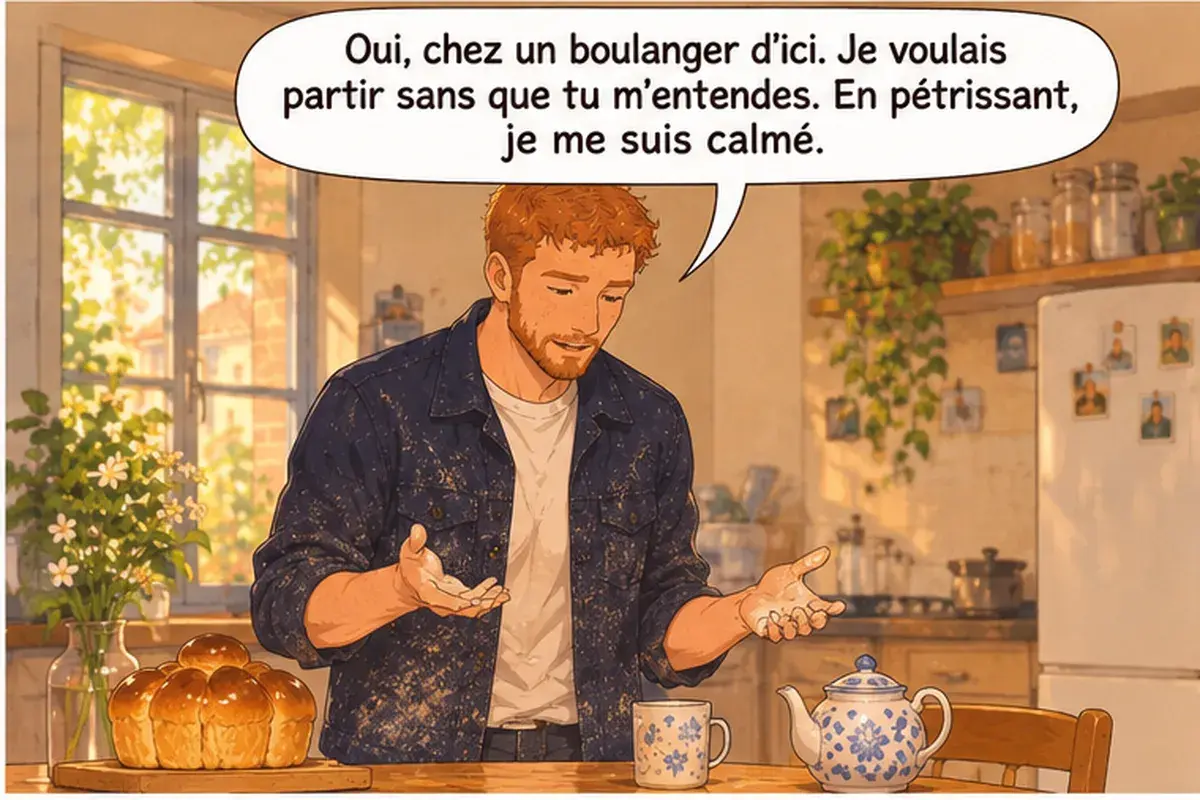
- Hugo
Oui, chez un boulanger d'ici. Je voulais partir sans que tu m'entendes. En pétrissant, je me suis calmé.
Yes, from a local baker. I wanted to leave without you hearing me. By kneading the dough, I calmed down (man speaking).

- Inès
J'ai fait semblant de dormir, mais j'ai écouté l'épisode trois fois.
I pretended to be asleep, but I listened to the episode three times.

- Hugo
Moi aussi, j'ai écouté l'épisode à quatre heures. Sincèrement, j'ai eu des remords : je te fais mes excuses, Inès.
Me too, I listened to the episode at four. Honestly, I felt remorse: I apologize to you, Inès.

- Inès
Je te fais mes excuses aussi. J'avais peur de la grève, mais j'aurais dû demander ton avis avant d'acheter ces billets d'avion.
I apologize to you too. I was afraid of the strike, but I should have asked your opinion before buying those plane tickets.

- Pacha
Je peux vous interrompre ? Alors, on fait la paix, oui ou non ?
Can I interrupt you? So, are we making up, yes or no? (to several people)
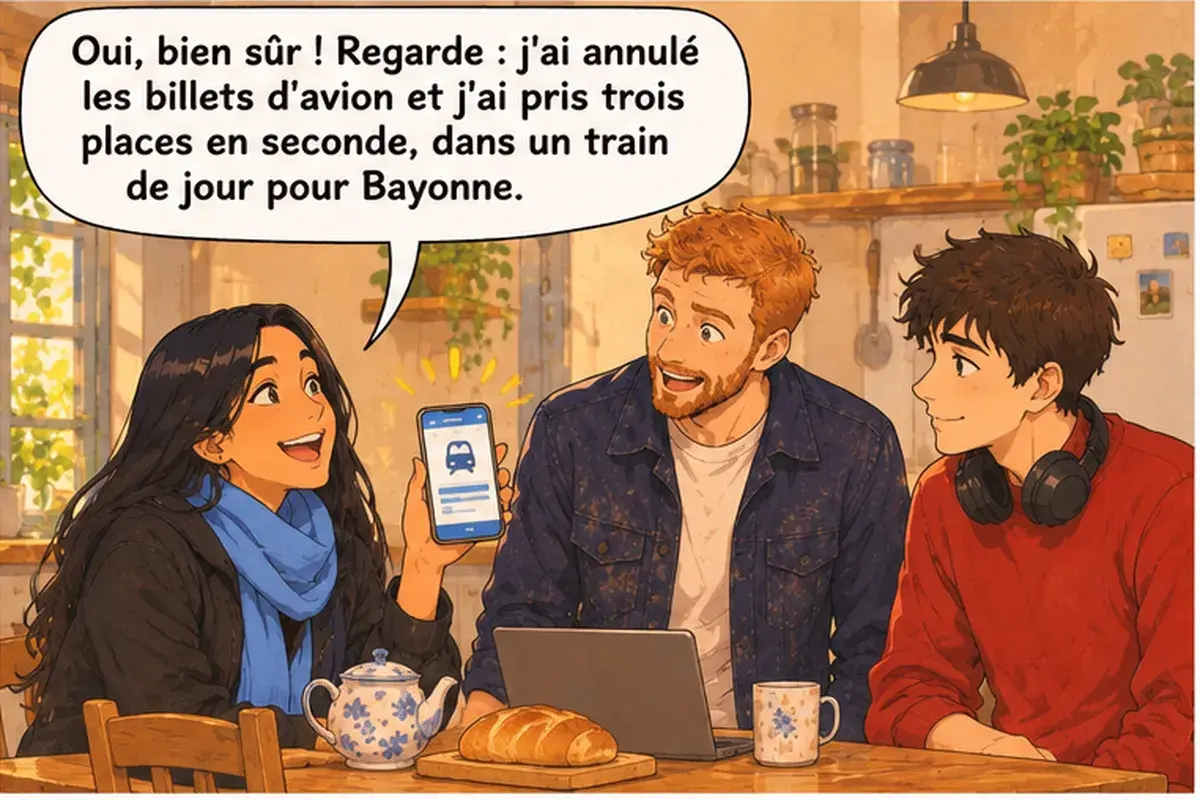
- Inès
Oui, bien sûr ! Regarde : j'ai annulé les billets d'avion et j'ai pris trois places en seconde, dans un train de jour pour Bayonne.
Yes, of course! Look: I canceled the plane tickets and got three seats in second class, on a day train to Bayonne.
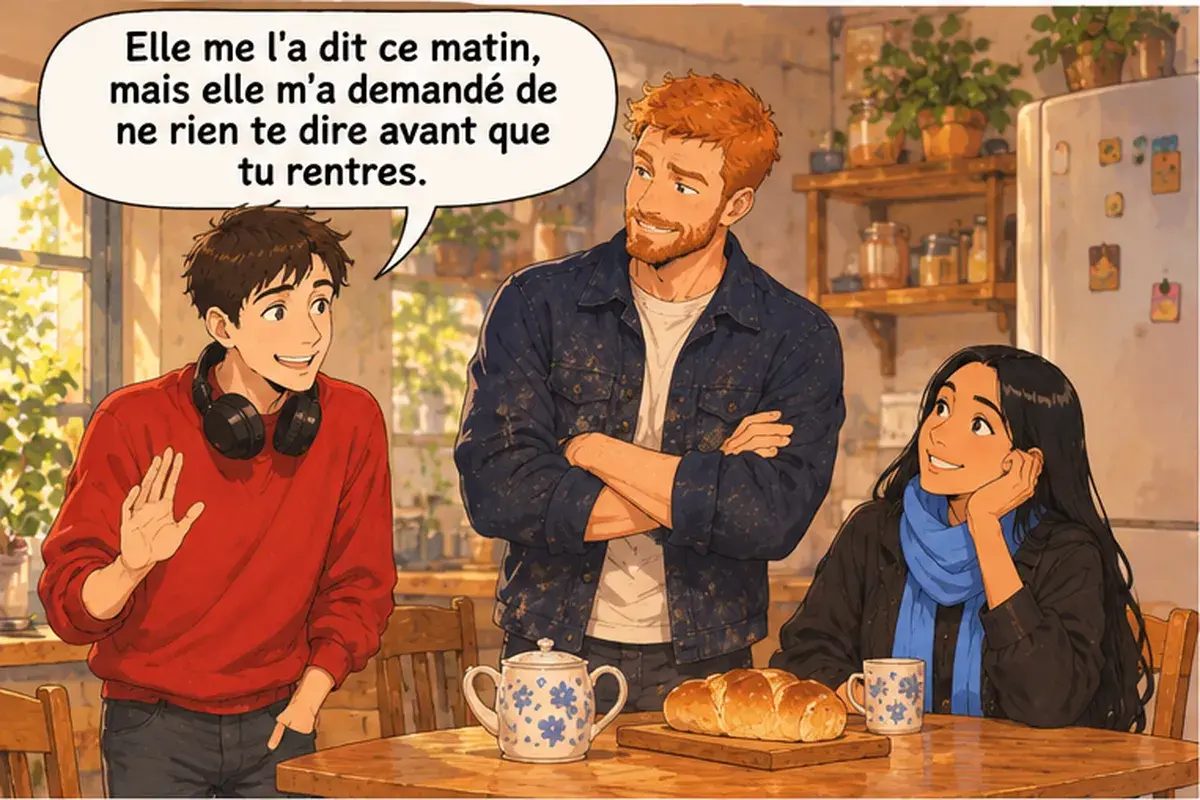
- Pacha
Elle me l'a dit ce matin, mais elle m'a demandé de ne rien te dire avant que tu rentres.
She told me so this morning, but she asked me not to tell you anything before you got back.

- Hugo
Bravo ! Moi, je rêvais d'un train de nuit : un compartiment pour nous trois, avec des couchettes !
Bravo! I was dreaming of a night train: a compartment for the three of us, with couchettes!
- Inès
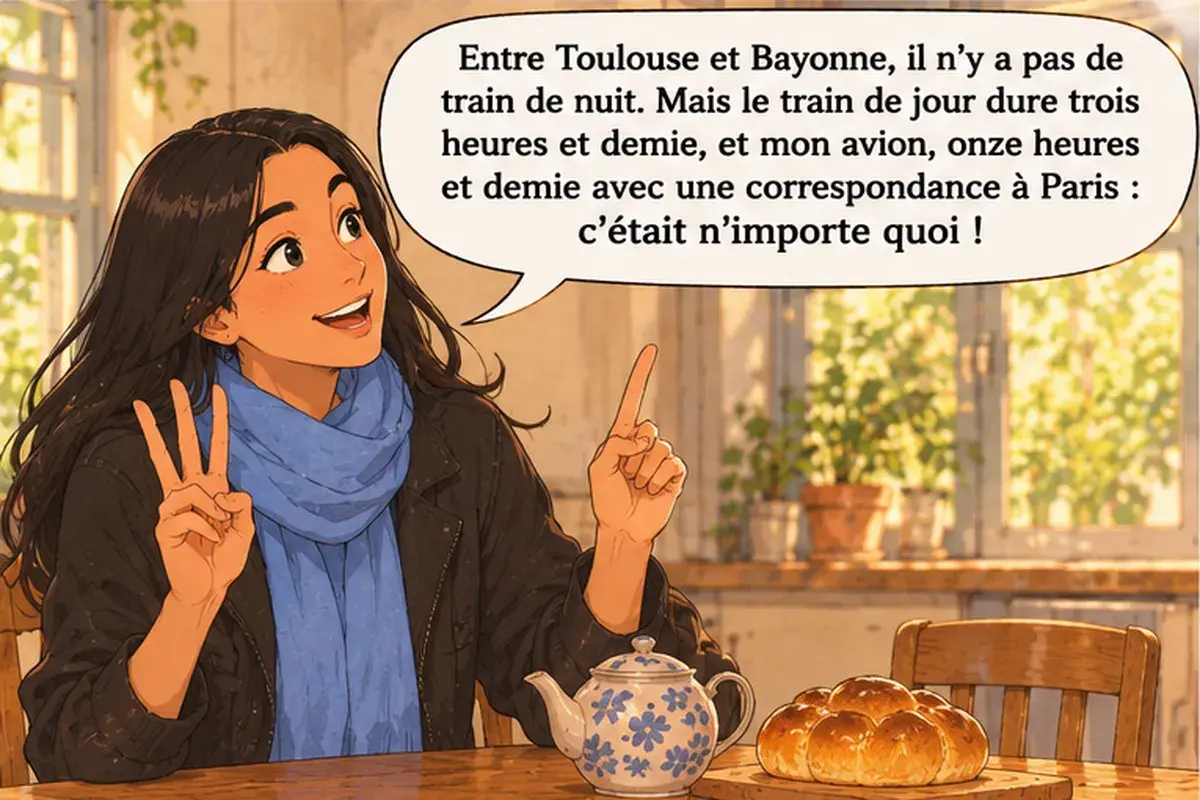
Entre Toulouse et Bayonne, il n'y a pas de train de nuit. Mais le train de jour dure trois heures et demie, et mon avion, onze heures et demie avec une correspondance à Paris : c'était n'importe quoi !
Between Toulouse and Bayonne, there's no night train. But the day train lasts three and a half hours, and my flight, eleven and a half hours with a connection in Paris: that was nonsense!
- Pacha
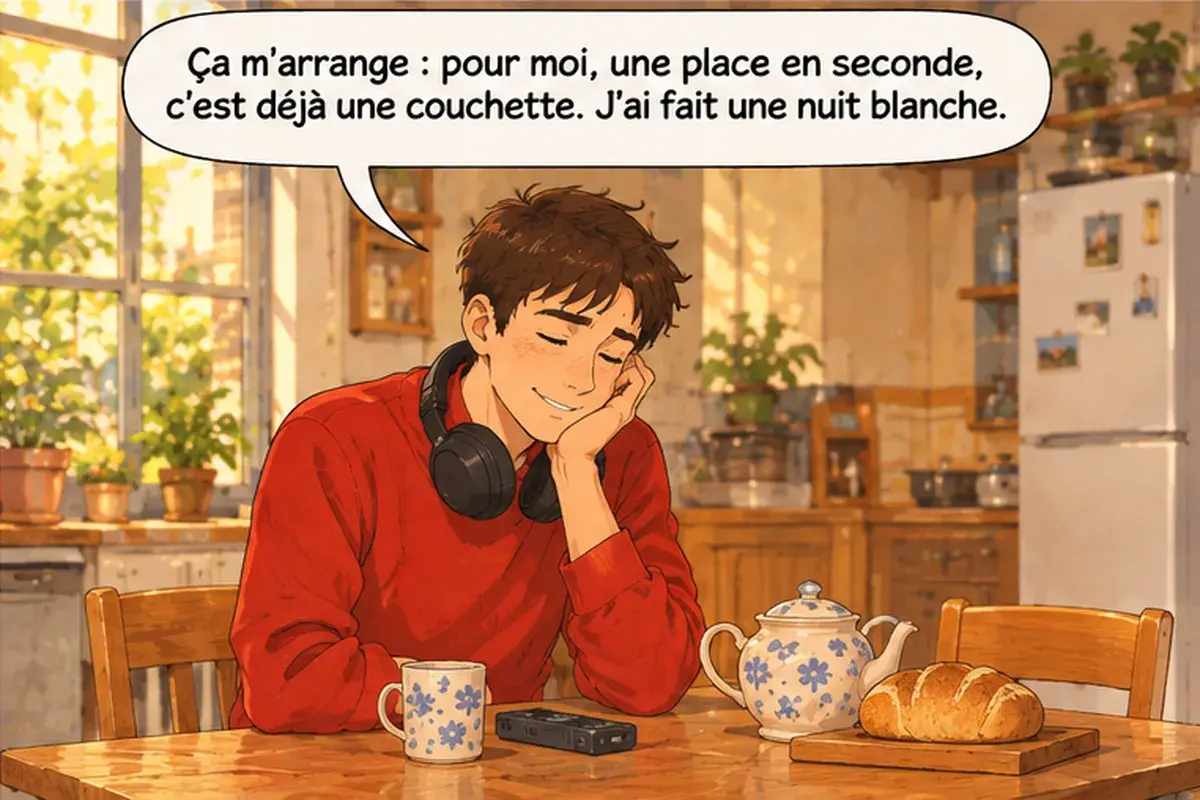
Ça m'arrange : pour moi, une place en seconde, c'est déjà une couchette. J'ai fait une nuit blanche.
That suits me: for me, a seat in second class is already a couchette. I had a sleepless night.

- Hugo
Merci, Inès. Je ne dirai plus « tu es égoïste » : je te le promets.
Thanks, Inès. I won't say "you're selfish" anymore: I promise you.

- Inès
Et moi, plus de billets sans demander ton avis. Je te le promets aussi. Tu m'as manqué.
And as for me, no more tickets without asking your opinion. I promise you too. I missed you.
- Hugo
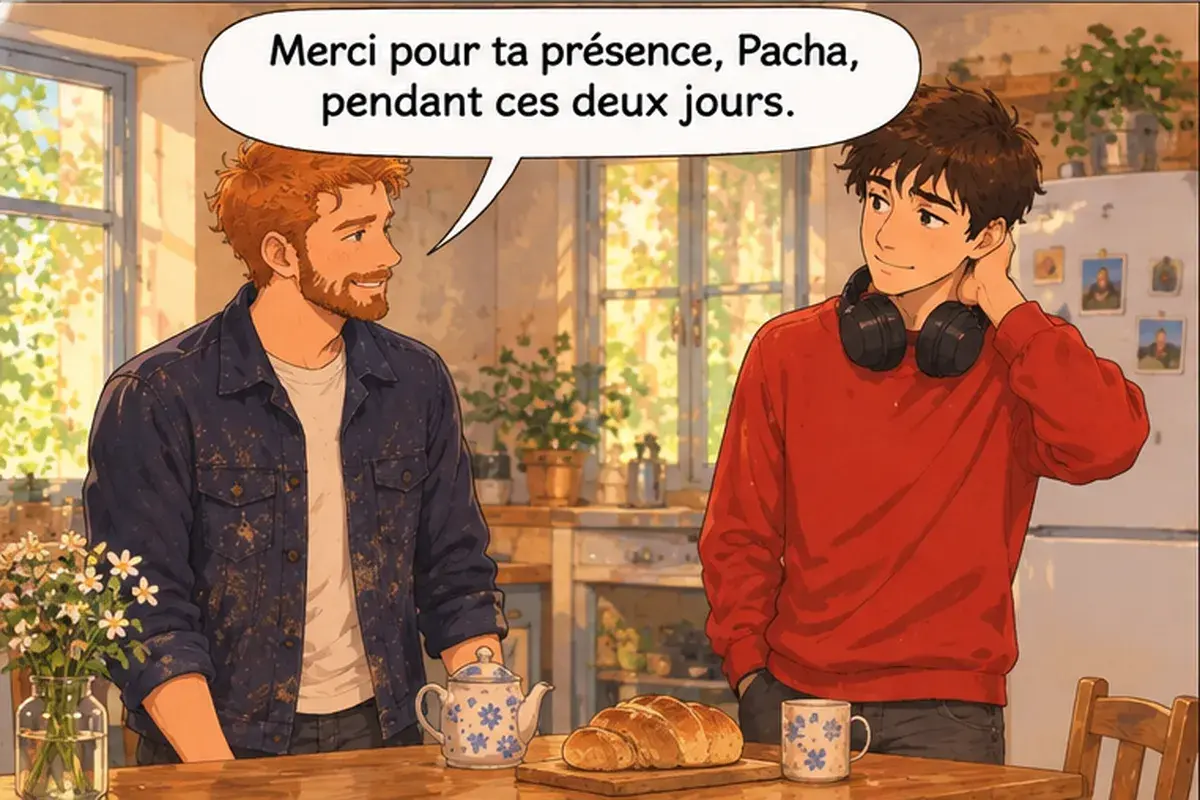
Merci pour ta présence, Pacha, pendant ces deux jours.
Thank you for your presence, Pacha, during these two days.

- Pacha
Je t'en prie. Vous vous rapprochez, et moi, je me rapproche de mon lit.
You're welcome. You're getting closer (to several people), and I'm getting closer to my bed.

- Inès
Pas avant la brioche ! Une brioche, ça console de tout.
Not before the brioche! A brioche consoles you for everything.

- Hugo
Je la découpe en trois morceaux : chacun son morceau, aucune dispute.
I'll cut it into three pieces: everyone gets their own piece, no arguments.
Grammar for this text
- En pétrissant, je me suis calmé — By kneading the dough, I calmed down.
pétrissantcomes frompétrir("to knead"): the en + -ant form,en+-ant, "while kneading." It explains how Hugo calmed down.je me suis calméis the passé composé of a reflexive verb (A2, unit 12). - Je voulais partir sans que tu m'entendes — I wanted to leave without you hearing me. The subjects are different (I and you), so it's not
sans partirbutsans que+ subjunctive.entendesis thetuform ofentendre; for this verb it looks like the normal present.sans queis already negative, so there is none. - j'aurais dû demander ton avis avant d'acheter — I should have asked your opinion before buying.
j'aurais dûmeans "I should have" (devoir): a ready-made way to blame yourself; how it's built comes at B2.avant d'acheter: the subject is the same (I), so it'savant de+ infinitive. - Elle me l'a dit — She told me so. A set pair:
me"me" +l'"it" (=le), both beforea. Next comes avant que tu rentres — before you get back: afteravant queyou use the subjunctive, and forrentrerit looks like the present. - je te le promets — I promise you. Here
lemeans "it", not "him". - je vous en prie — You're welcome, said to someone you don't know well. To a friend who says "thanks," you say
je t'en prie.
Words and grammar of the unit: Apologize and make up.
Learn the words from the texts with flashcards
In the app, you can tap any word in a text to see its translation, forms and examples, and new words stick with flashcards. 15 minutes a day.
Start for freeEverything is open for free. No card needed to sign up.