

French story with translation · B1 · 18 lines
Écoutez jusqu'à la fin, je vous en prie Listen to the end, I beg you (to several people)
Comic · 17 panels
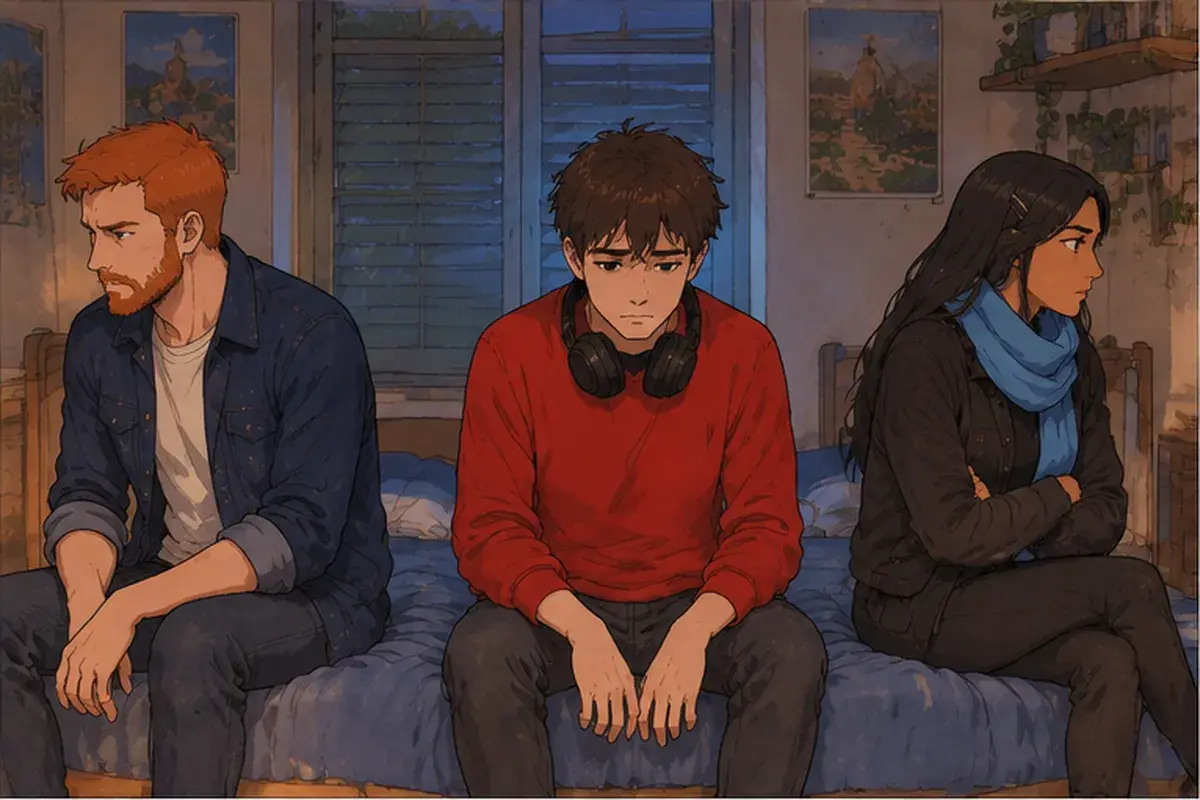
Depuis deux jours, Hugo et Inès ne se parlaient plus, et moi, j'étais au milieu.
For two days, Hugo and Inès hadn't been speaking to each other, and I was stuck in the middle.
Chacun me faisait confiance et me racontait son histoire, et j'avais de la compassion pour les deux. C'était ça, le problème : ils avaient un peu raison tous les deux.
Each of them trusted me and told me their side of the story, and I felt compassion for both. That was the problem: they were both a little bit right.

Cette nuit-là, je n'arrivais pas à dormir. À trois heures, j'ai ouvert mon ordinateur pour reprendre le montage de notre épisode sur le marché de Marseille.
That night, I couldn't sleep. At three, I opened my computer to get back to editing our episode about the Marseille market.

Un montage, c'est facile : on découpe, on efface, on enchaîne. Le plus difficile, c'est de trouver le bon rythme.
Editing is easy: you cut, you delete, you string it all together. The hardest part is finding the right rhythm.

Dans un vieux fichier, il y avait un soir sur un balcon, à Marseille. Hugo expliquait à Inès, très sérieux, comment choisir la bonne poubelle.
In an old file, there was an evening on a balcony in Marseille. Hugo was explaining to Inès, very seriously, how to choose the right trash can.

Inès a ri pendant dix secondes. Je n'avais jamais remarqué qu'un rire pouvait durer aussi longtemps.
Inès laughed for ten seconds. I had never noticed that a laugh could last so long.

Je n'ai pas pu retenir un sourire. J'ai séparé ce rire du bruit de la rue : ce sera le générique de l'épisode.
I couldn't hold back a smile. I separated that laugh from the street noise: it will be the theme music of the episode.

Ensuite, j'ai ajouté des bruitages : un peu de vent et deux coups de klaxon. En écoutant toute la bande-son de l'été, j'ai compris que ces deux-là riaient souvent ensemble.
Then I added sound effects: a little wind and two honks. By listening to the whole soundtrack of the summer, I realized that those two often laughed together.
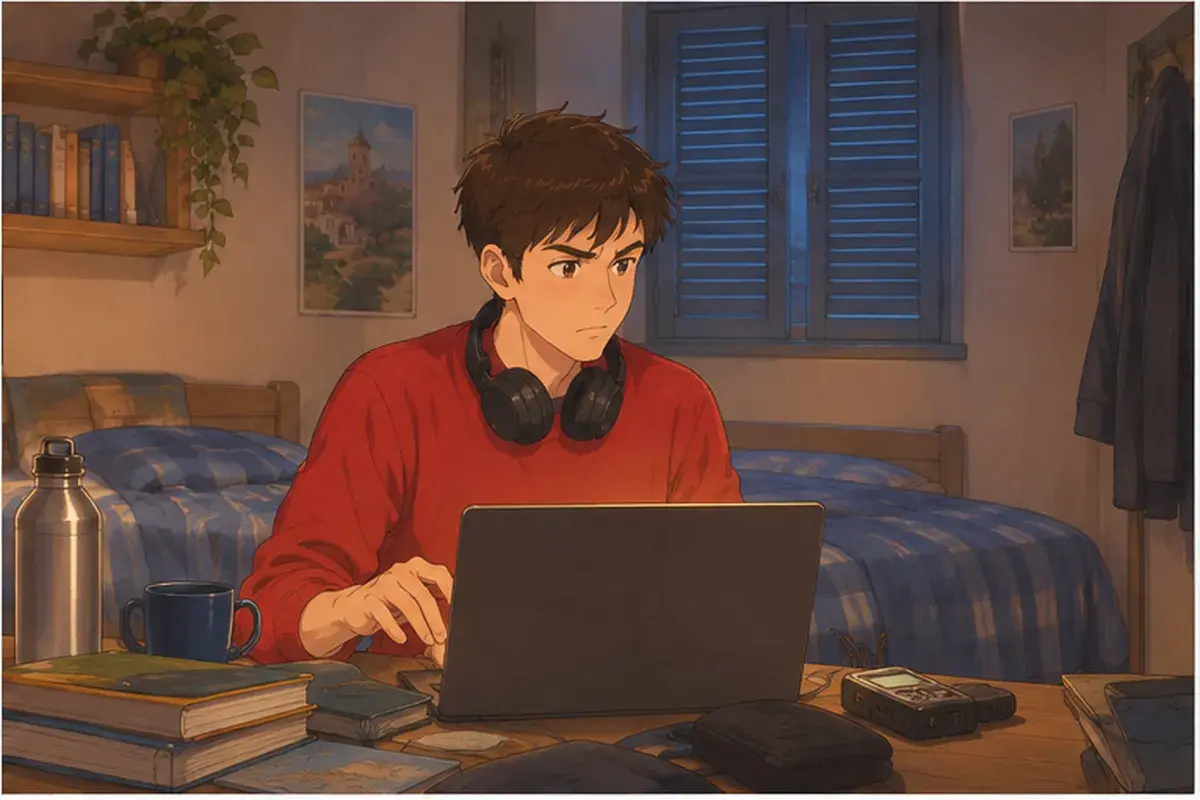
Dans le dossier de l'autre soir, il y avait aussi un fichier de la dispute : mon dictaphone était resté allumé.
In the folder from the other evening, there was also a file of the argument: my voice recorder had stayed on.

J'ai écouté dix secondes, pas plus. Puis je l'ai effacé, sans que personne d'autre l'entende : la mémoire de mon dictaphone est faite pour le rire, pas pour la dispute.
I listened for ten seconds, no more. Then I deleted it, without anyone else hearing it: my voice recorder's memory is made for laughter, not for arguments.
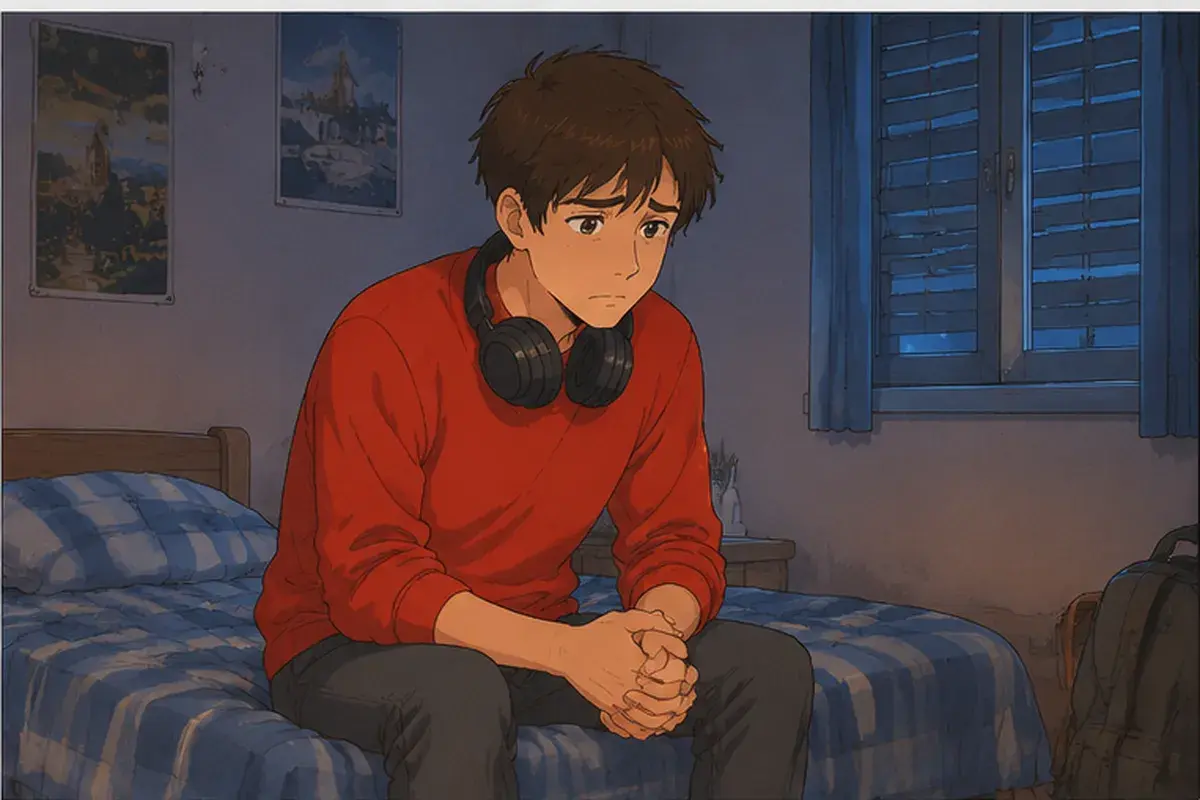
J'avais peur qu'ils se fâchent pour de bon, et que nous nous séparions tous les trois, chacun dans son train. Je voulais qu'ils se réconcilient.
I was afraid they would fall out for good, and that the three of us would split up, each on our own train. I wanted them to make up.
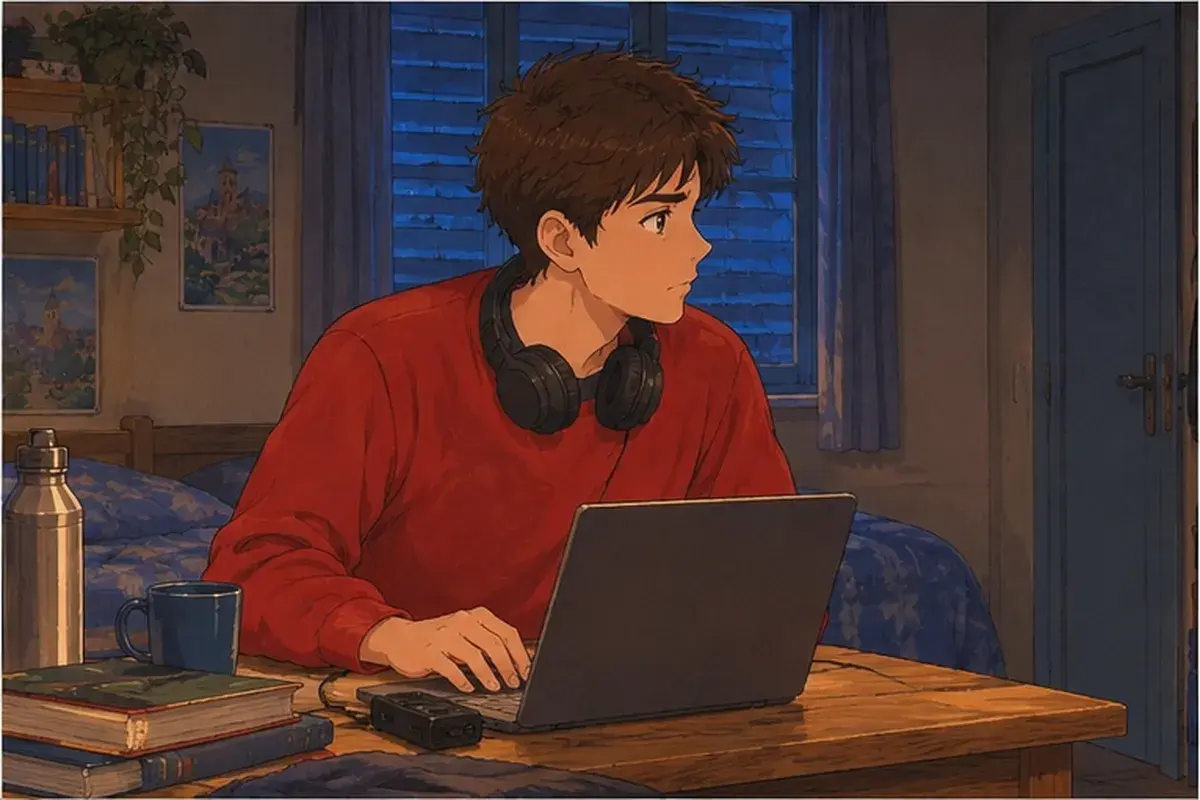
Alors, après le mixage, j'ai exporté l'épisode juste avant que Hugo se lève.
So, after the mixing, I exported the episode just before Hugo got up.

J'ai envoyé le lien aux deux, avec un message : « Écoutez jusqu'à la fin, je vous en prie. Par pitié ! »
I sent the link to both of them, with a message: "Listen to the end, I beg you (to several people). For pity's sake!"
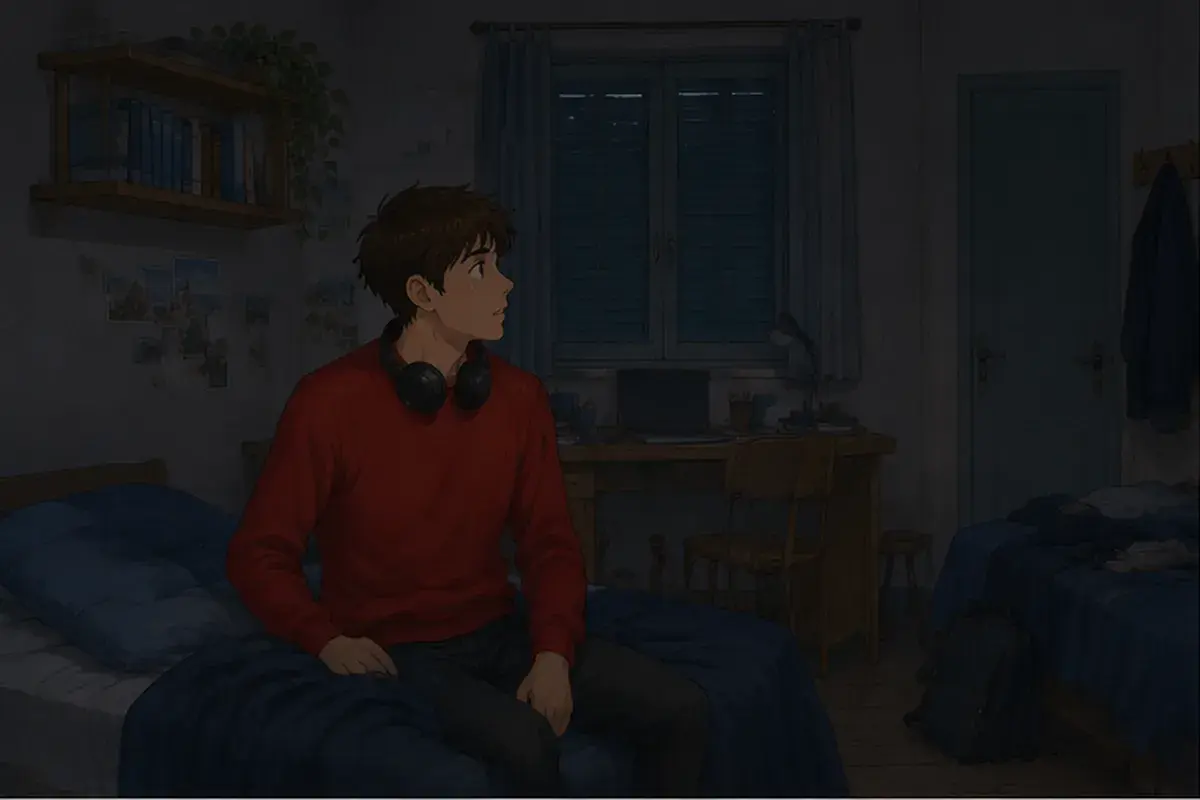
Hugo se lève toujours à quatre heures. J'ai entendu sa porte, puis le silence : il écoutait.
Hugo always gets up at four. I heard his door, then silence: he was listening.
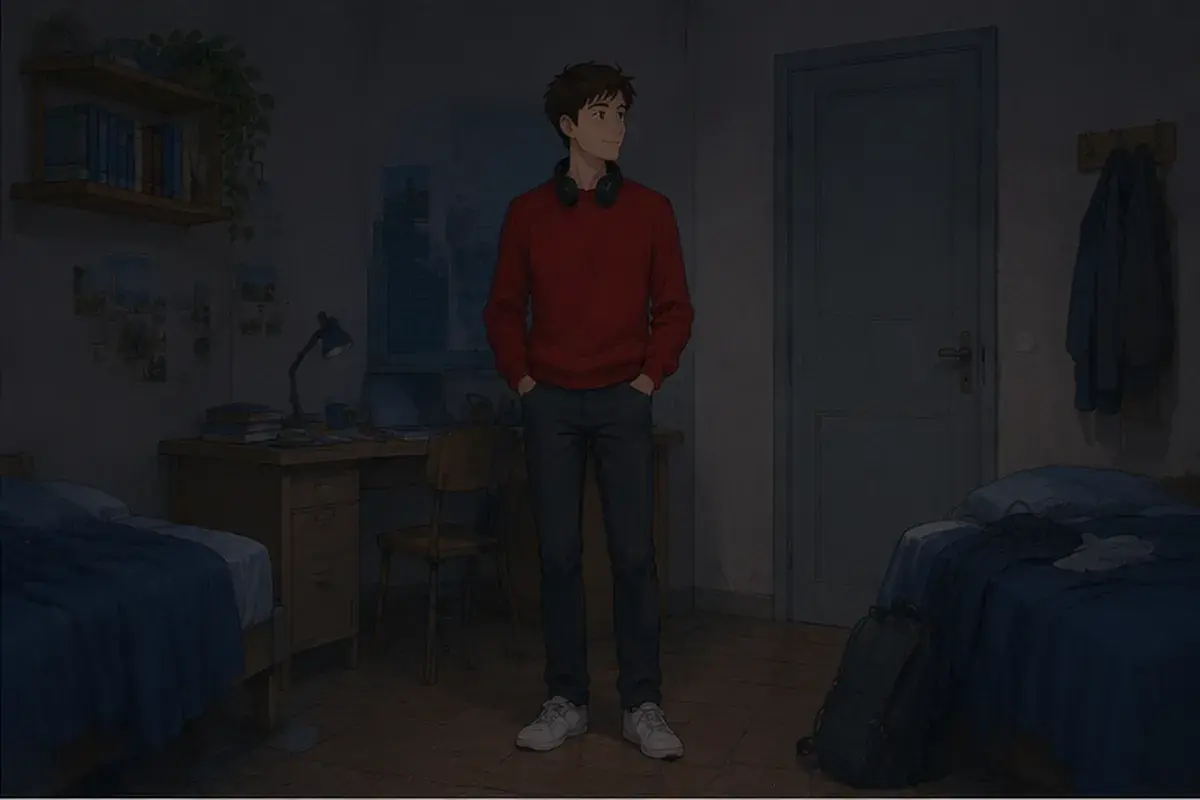
Puis la porte d'entrée s'est fermée, sans un mot. Je savais où il allait : quand Hugo est ému, il fait du pain.
Then the front door closed, without a word. I knew where he was going: when Hugo is moved, he bakes bread.
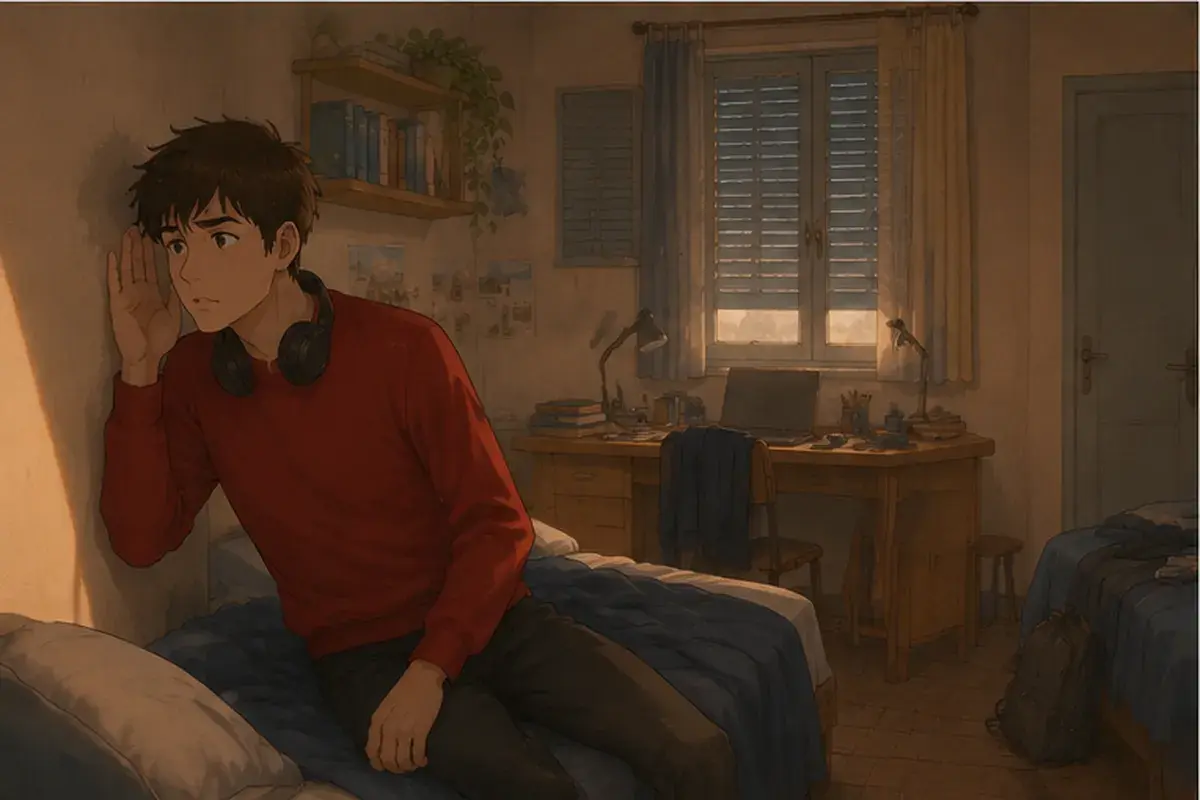
À travers le mur, j'ai entendu Inès. D'abord elle riait, puis elle s'est calmée, puis elle a pleuré un peu.
Through the wall, I heard Inès. First she was laughing, then she calmed down, then she cried a little.
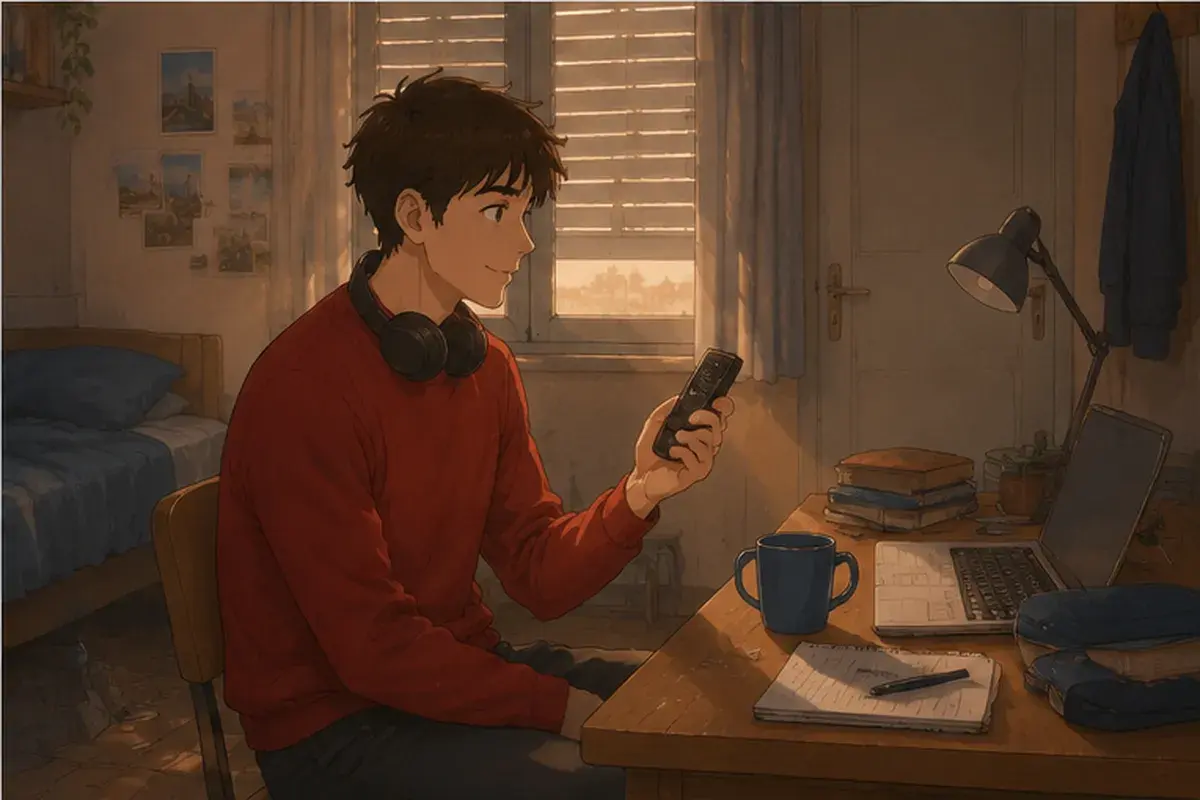
Un micro entend ce que les gens ne savent pas dire : l'affection, la tendresse, la présence de l'autre. Un son peut apaiser mieux qu'une longue explication.
A microphone hears what people can't say: affection, tenderness, the other person's presence. A sound can soothe better than a long explanation.

Je me suis endormi sur mon ordinateur. Quand je me suis réveillé, ça sentait la brioche dans toute l'auberge.
I fell asleep on my computer (man speaking). When I woke up, the whole hostel smelled like brioche.
Grammar for this text
- je n'arrivais pas à dormir — I couldn't sleep.
arriver à+ infinitive means "to manage to." With a negative: "couldn't."arrivaisis the imperfect (A2, unit 4): the night went on for a long time, so it's background, not a single event. - Je n'avais jamais remarqué — I had never noticed.
j'avais remarquéis the past perfect (plus-que-parfait, unit 8): "had already noticed by then." Here: before that night, he hadn't noticed. - Je n'ai pas pu retenir un sourire — I couldn't hold back a smile.
retenirhere means "to hold back";j'ai puis "I was able to" (A2, unit 16). - sans que personne d'autre l'entende — without anyone else hearing it. The subjects are different, so it's
sans que+ subjunctive.personnemeans "no one" (not "person"), andl'means "it" (the file). No secondneis needed:sansis already negative. - En écoutant toute la bande-son — By listening to the whole soundtrack. It's the en + -ant form of
écouter: "by listening."toutemeans "whole" (A2, unit 13). - Écoutez jusqu'à la fin, je vous en prie — Listen to the end, I beg you.
écoutezis the vous command (to several people). Hereje vous en priedoesn't mean "you're welcome" but "I beg you";par pitiémeans "for pity's sake." - ça sentait la brioche — it smelled like brioche.
sentaitis the imperfect ofsentir("to smell"), A2, unit 4. - Chacun me faisait confiance — Each of them trusted me.
faire confiance àmeans "to trust": the person you trust comes afterà, but instead ofà moiyou putmebefore the verb.
Words and grammar of the unit: Apologize and make up.
Learn the words from the texts with flashcards
In the app, you can tap any word in a text to see its translation, forms and examples, and new words stick with flashcards. 15 minutes a day.
Start for freeEverything is open for free. No card needed to sign up.