
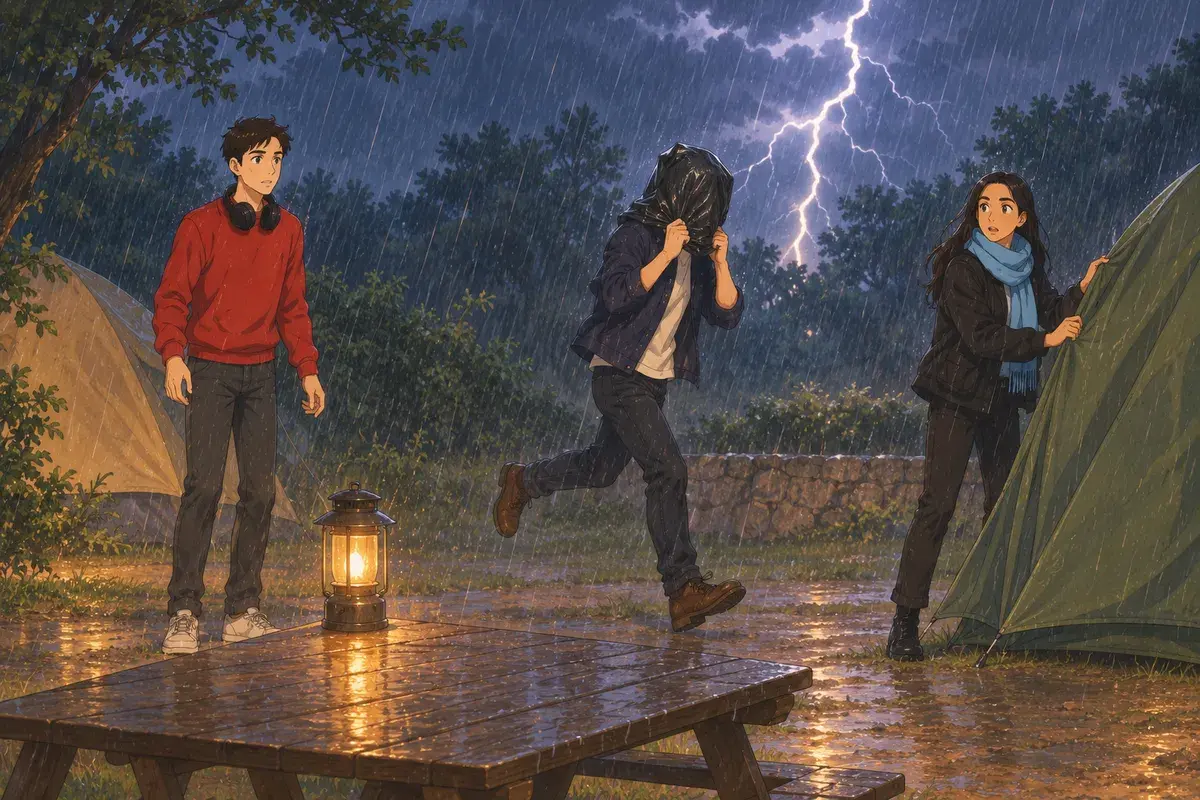
French story with translation · B1 · 18 lines
Il était resté dehors, sur la table It had stayed outside, on the table
Comic · 18 panels
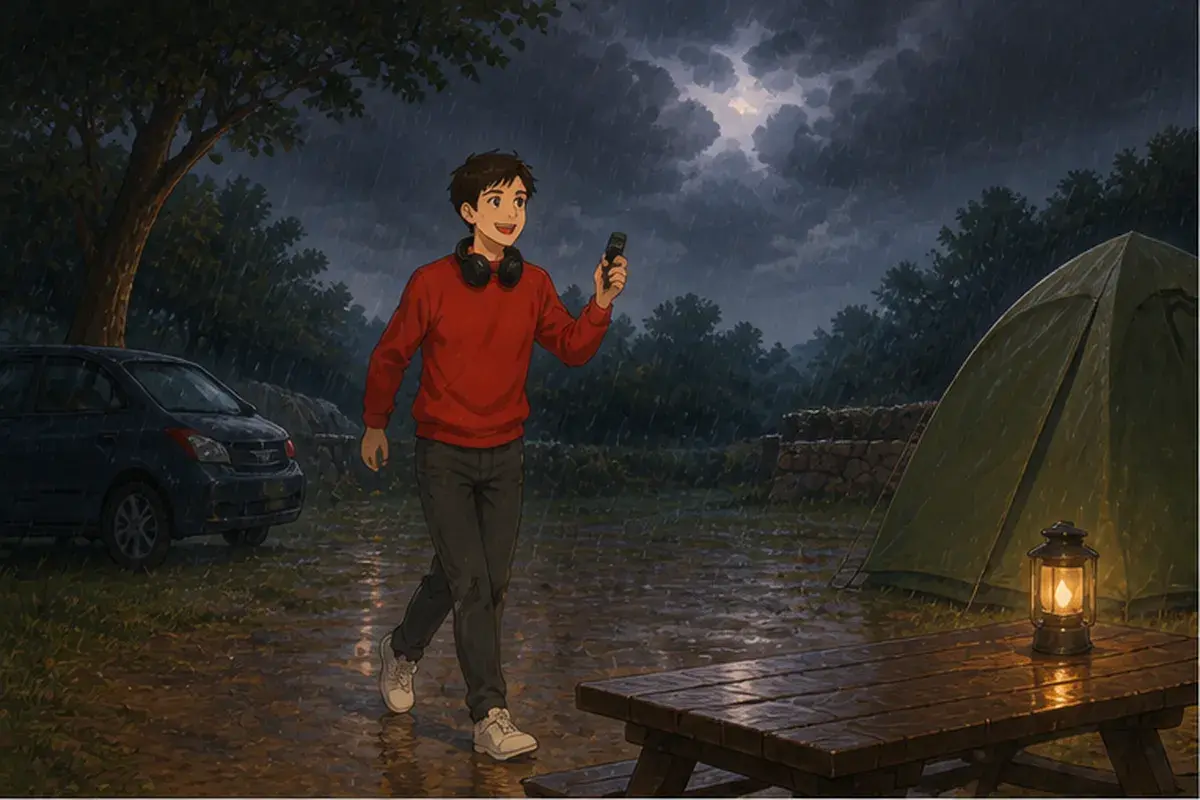
Ce jour-là, nous étions rentrés tard de chez monsieur Etcheverry. J'avais enregistré presque une heure d'interview, et j'étais content comme un enfant.
That day, we had come back late from Monsieur Etcheverry's. I had recorded almost an hour of interview, and I was as happy as a kid (man speaking).
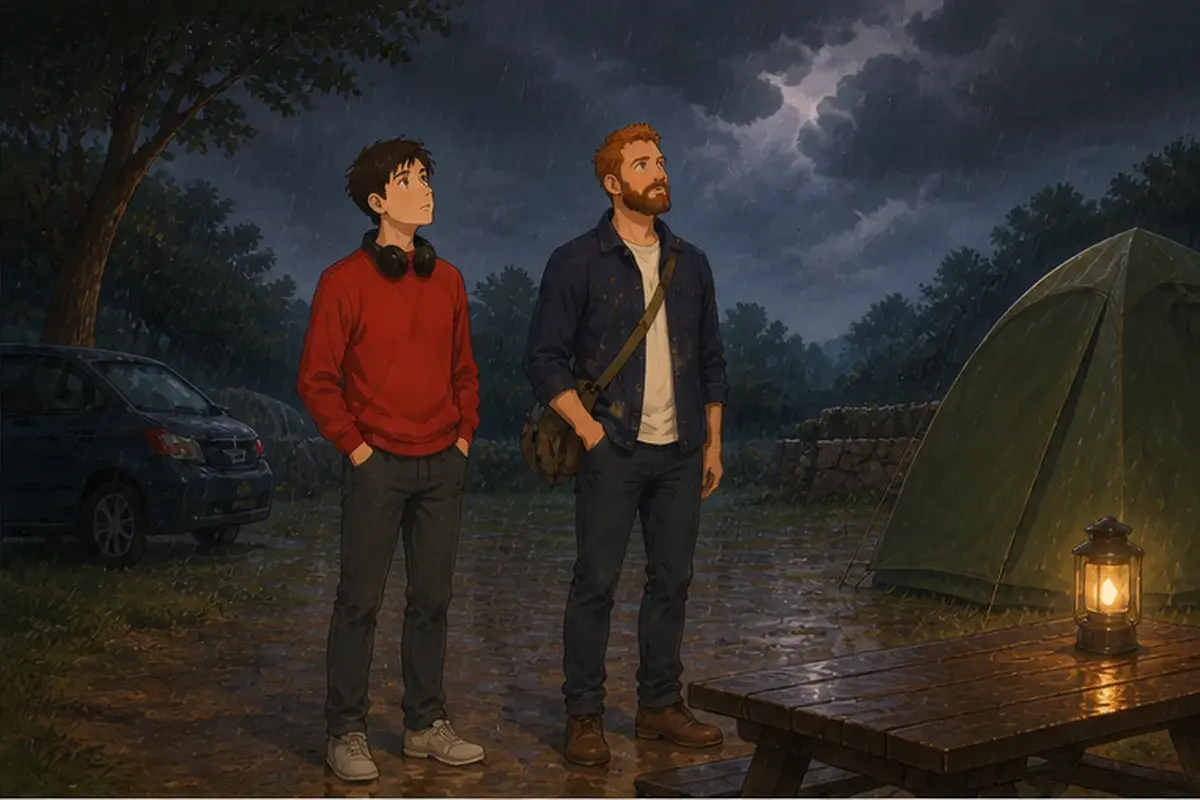
Le soir, au camping, il faisait lourd et le ciel devenait sombre. À l'accueil, on nous avait informés qu'un orage pouvait arriver, mais personne n'y croyait.
In the evening, at the campsite, it was muggy and the sky was getting dark. At the front desk, we had been informed that a storm could come, but nobody believed it.
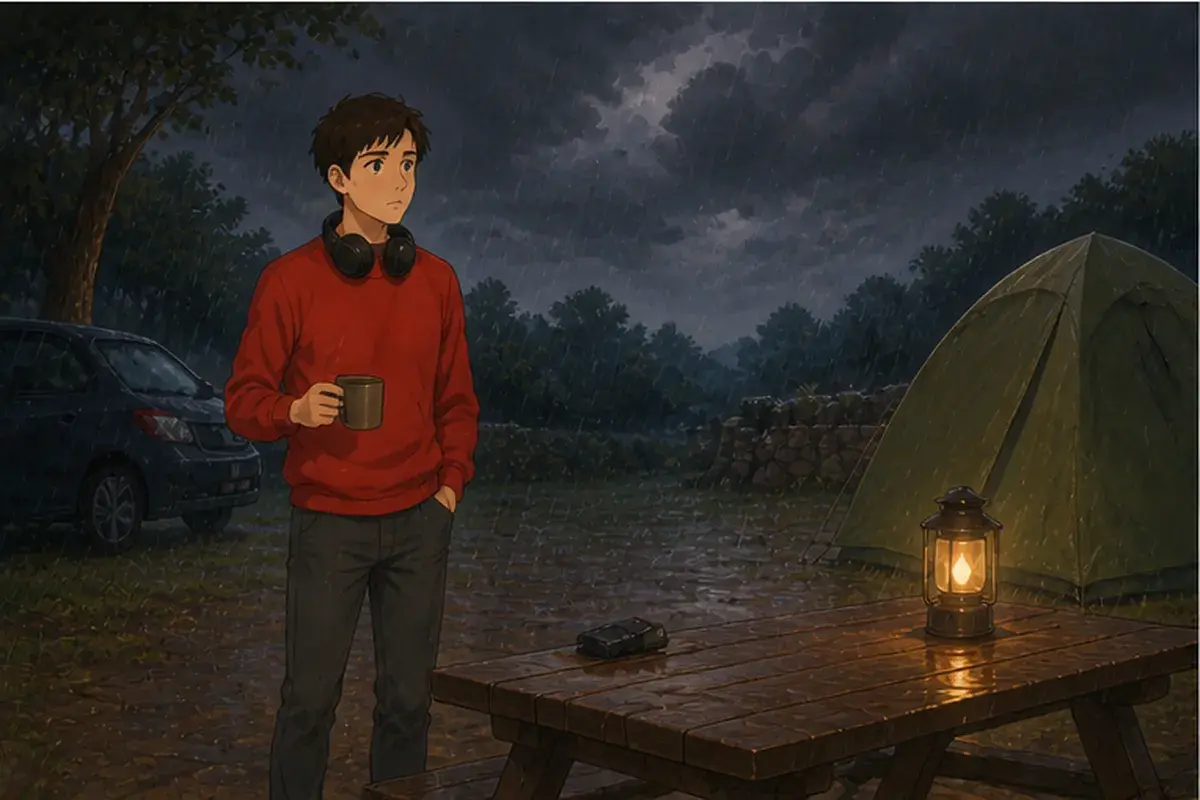
J'avais posé mon dictaphone sur la table, dehors, pour enregistrer les cigales du soir. Sur sa carte mémoire, il y avait aussi toute l'interview, et je n'en avais pas encore fait de copie.
I had put my voice recorder on the table outside, to record the evening cicadas. Its memory card also had the whole interview on it, and I hadn't made a copy yet.
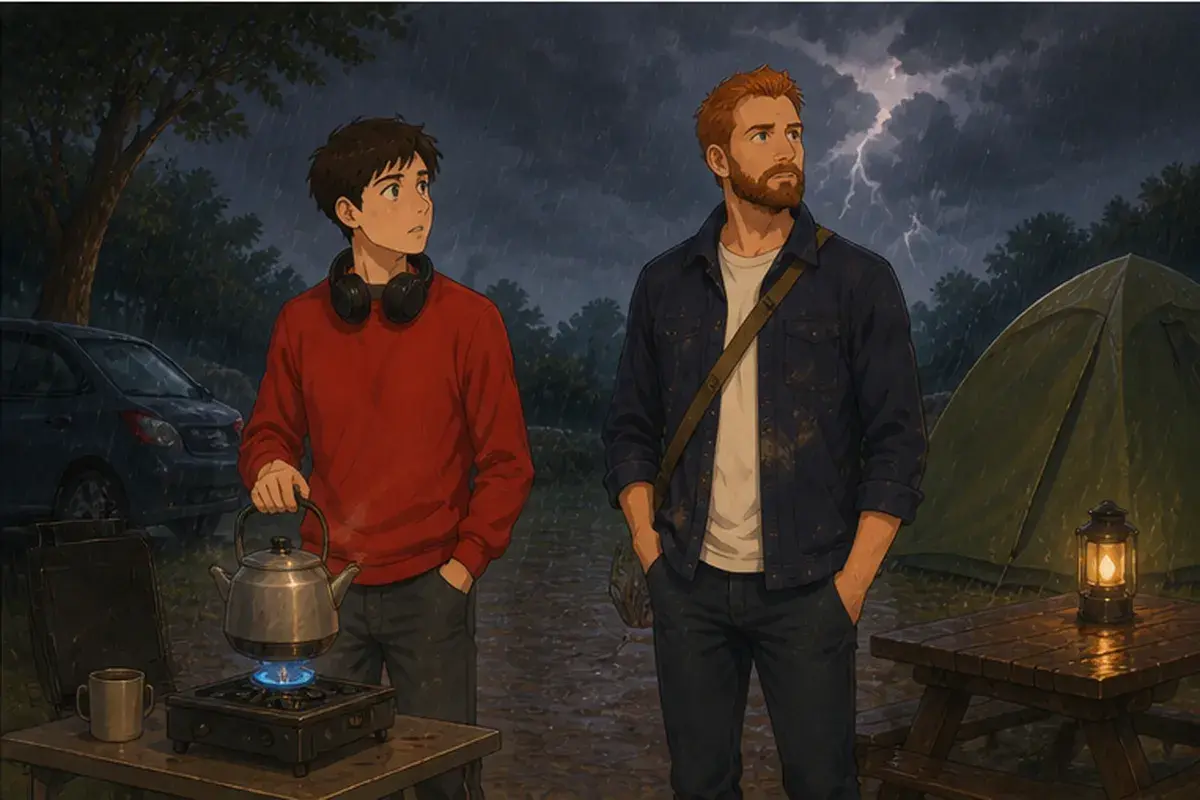
J'étais en train de chauffer l'eau pour mon thé quand j'ai entendu un grondement, très loin. Hugo a regardé le ciel et a dit, très sérieux : « Ça, ce n'est pas un camion. »
I was in the middle of heating water for my tea when I heard a rumble, very far away. Hugo looked at the sky and said, very seriously: "That's not a truck."
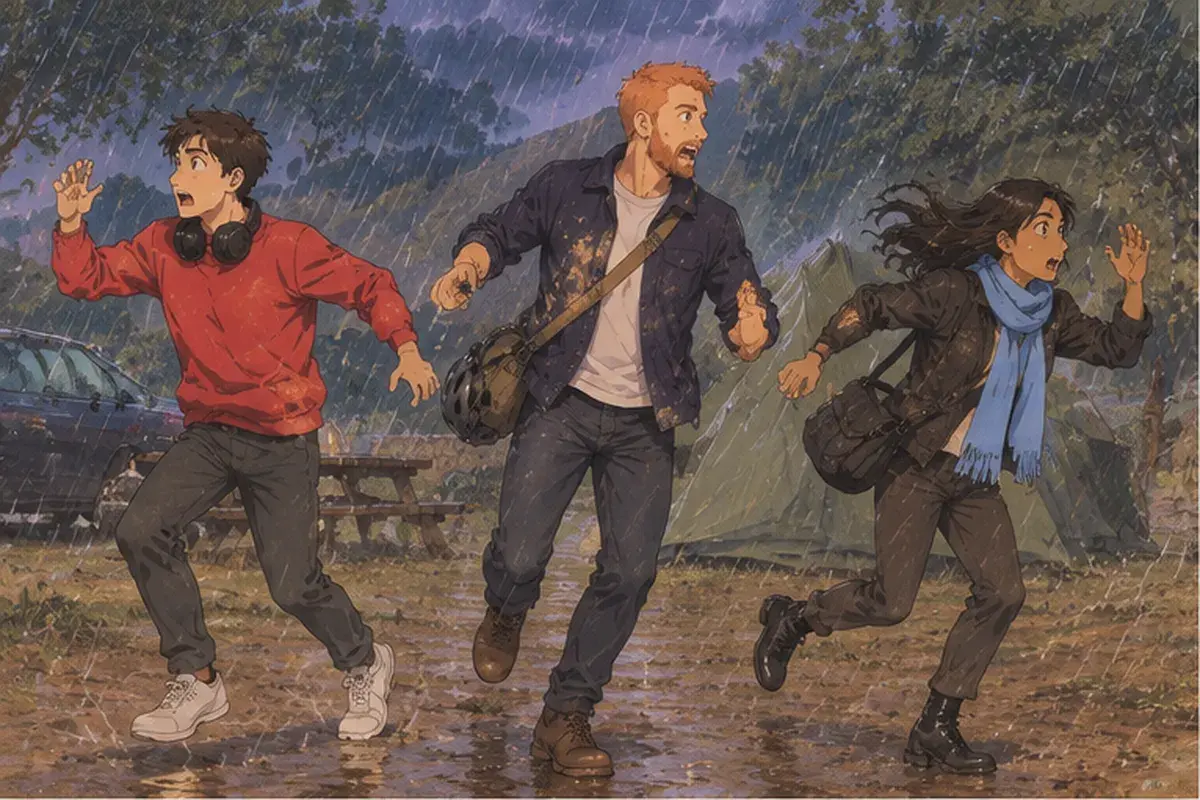
Au moment où la première goutte est tombée, tout le camping a eu la même idée : courir vers sa tente.
The moment the first drop fell, the whole campsite had the same idea: to run to its tent.
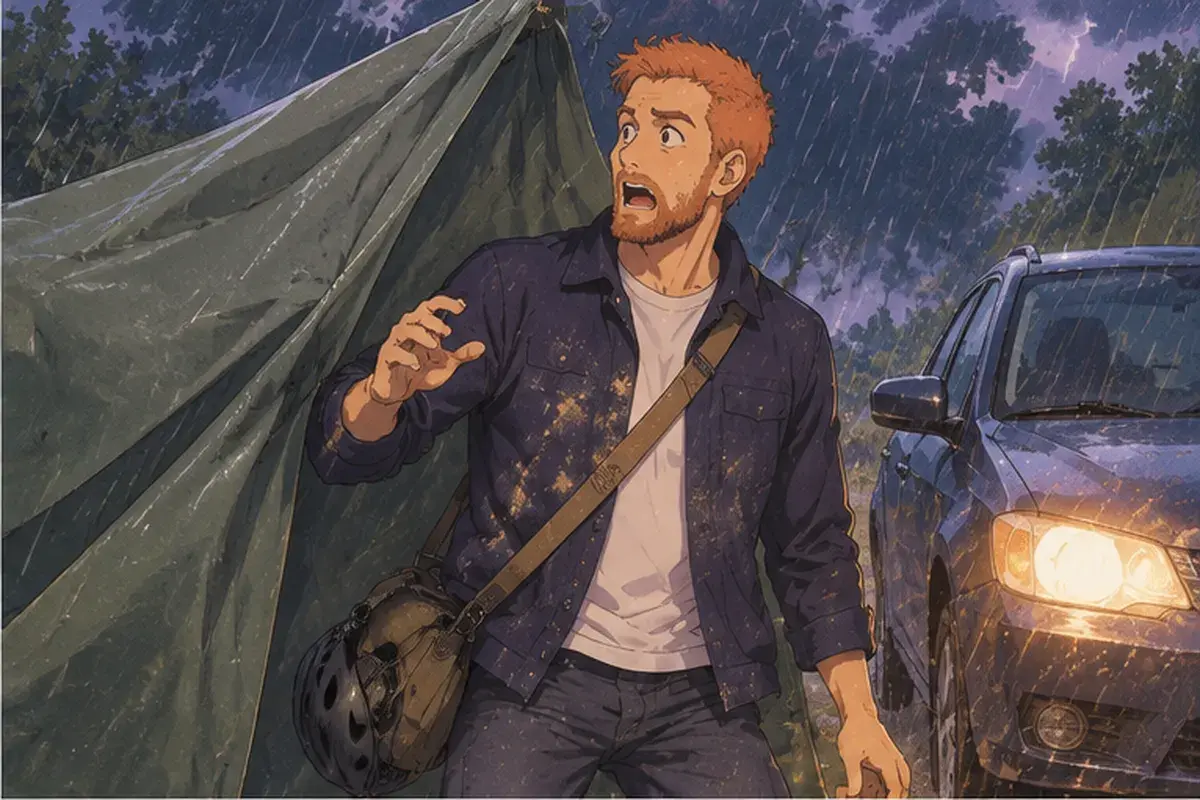
Hugo venait de couvrir nos sacs avec une bâche. Tout à coup, une rafale l'a jetée sur la voiture d'à côté, et l'alarme s'est mise à sonner.
Hugo had just covered our bags with a tarp. Suddenly, a gust of wind threw it onto the car next to us, and the alarm started going off.
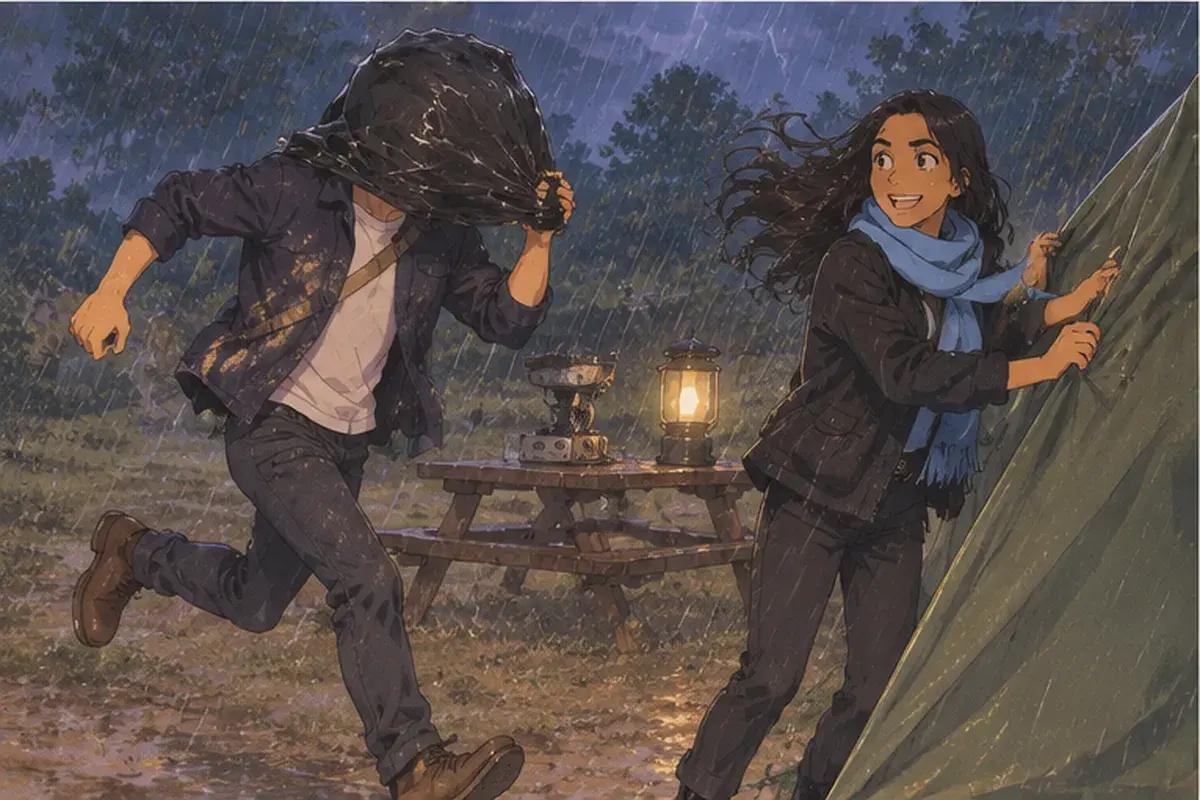
C'était la panique. Hugo courait partout avec un sac poubelle sur la tête en criant « Pas de panique ! », et Inès, qui tenait la tente à deux mains, répétait qu'à Marseille les orages étaient plus beaux.
It was panic. Hugo was running everywhere with a trash bag on his head, shouting "Don't panic!", and Inès, who was holding the tent with both hands, kept saying that storms were more beautiful in Marseille.
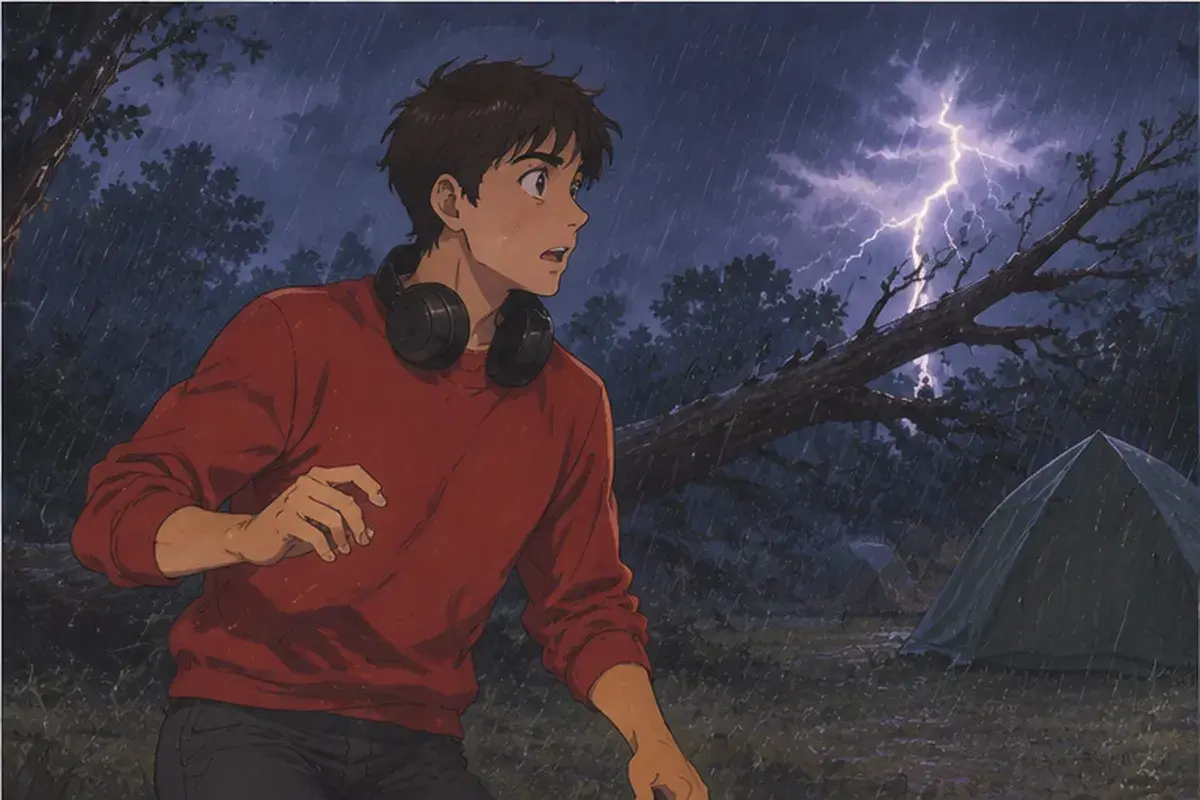
Pendant que nous courions, la foudre est tombée sur un grand arbre, et il n'y a plus eu de lumière : coupure de courant dans tout le camping.
While we were running, lightning struck a big tree, and there was no more light: a power outage in the whole campsite.
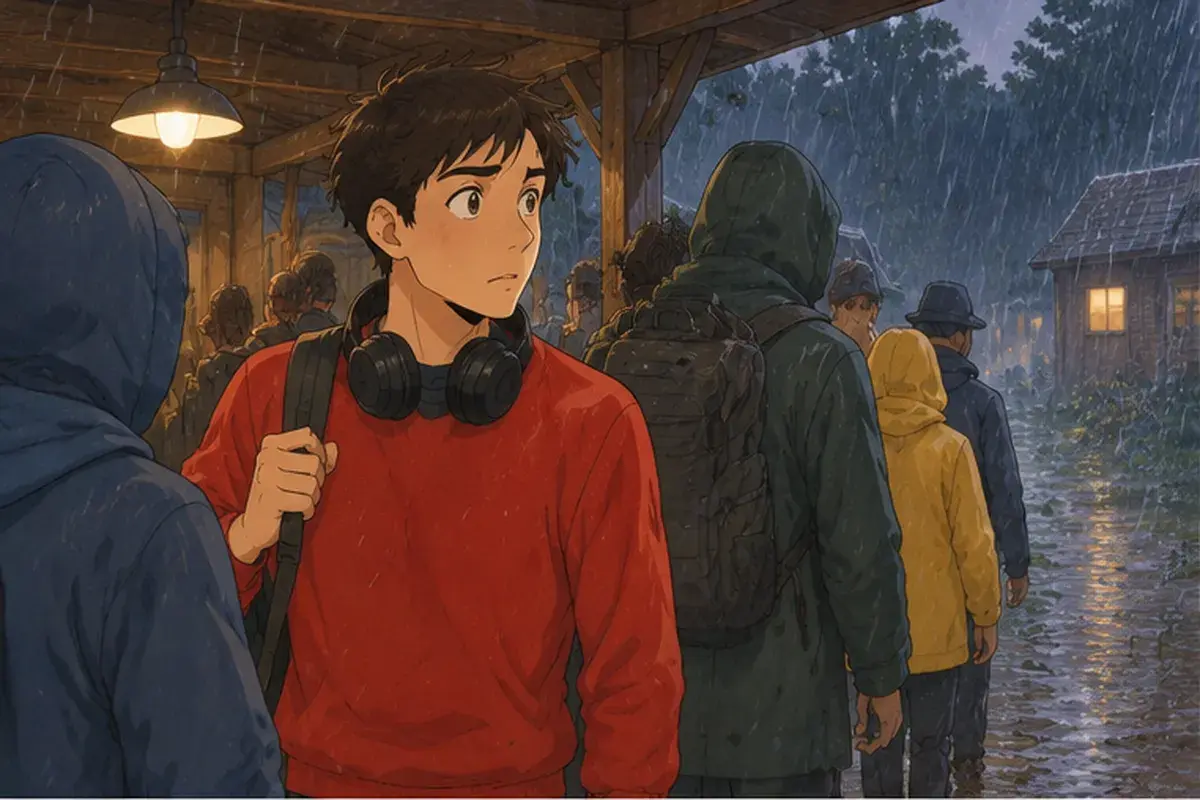
Dans le noir, la grêle a commencé. On s'est mis à l'abri sous le toit de l'accueil. Les gens criaient, un enfant pleurait, et l'eau inondait déjà le chemin.
In the dark, the hail began. We took shelter under the roof of the front desk. People were shouting, a child was crying, and water was already flooding the path.
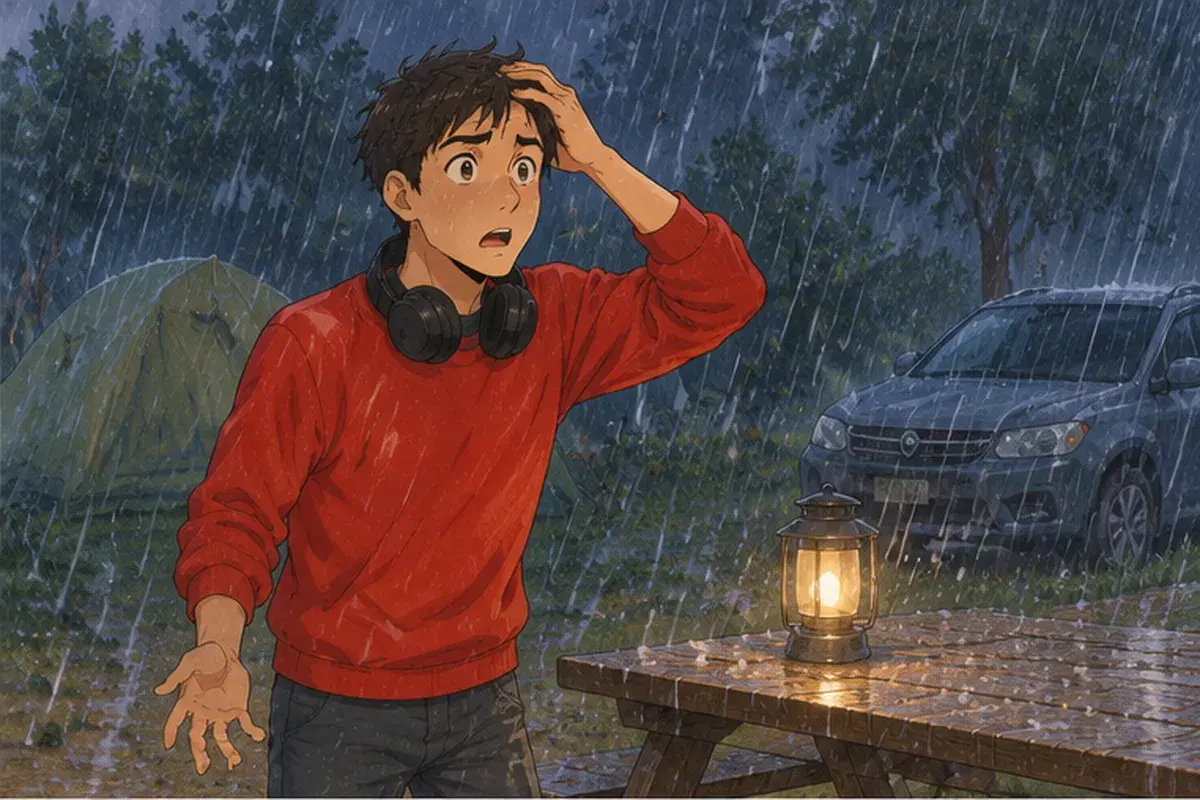
C'est à ce moment-là que j'ai pensé : mon dictaphone ! Il était resté dehors, sur la table, avec toute l'interview.
That's when I thought: my voice recorder! It had stayed outside, on the table, with the whole interview.
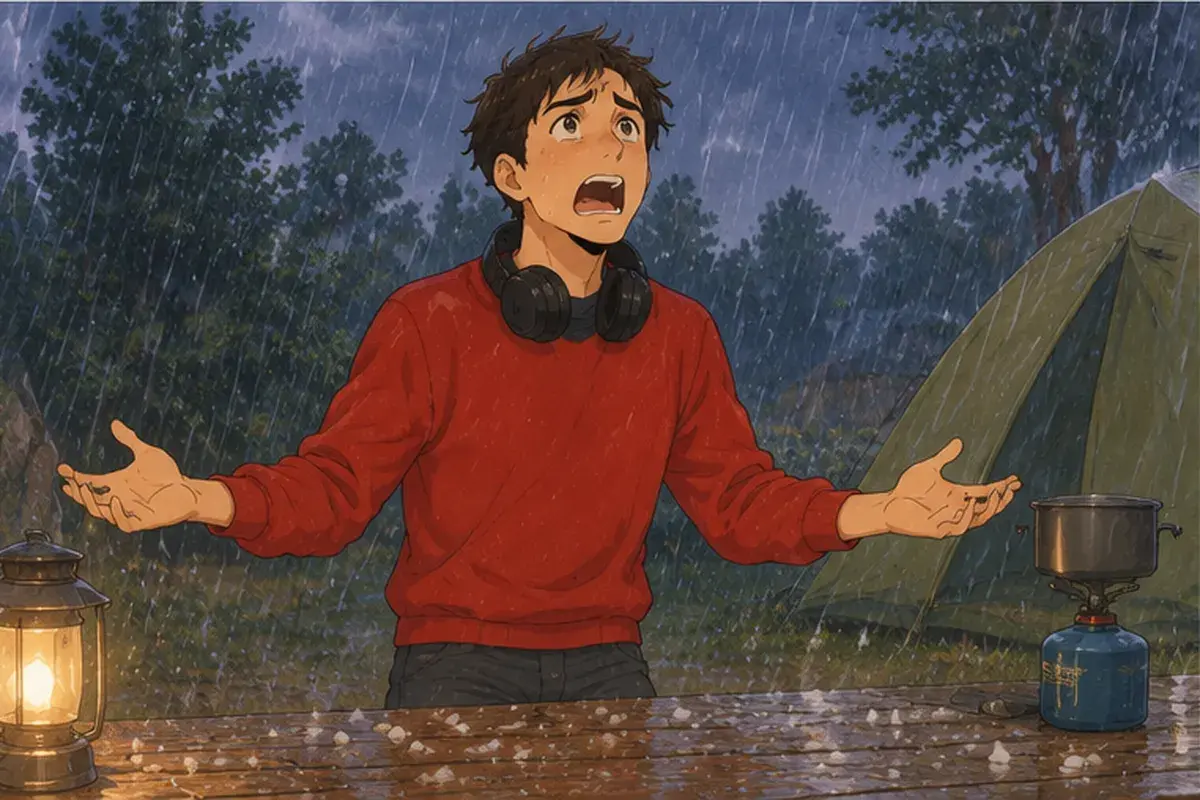
J'ai couru jusqu'à la table sous la grêle. Elle était vide, et j'ai crié : « Je me suis fait voler mon dictaphone ! »
I ran to the table in the hail. It was empty, and I shouted: "I got my voice recorder stolen!"
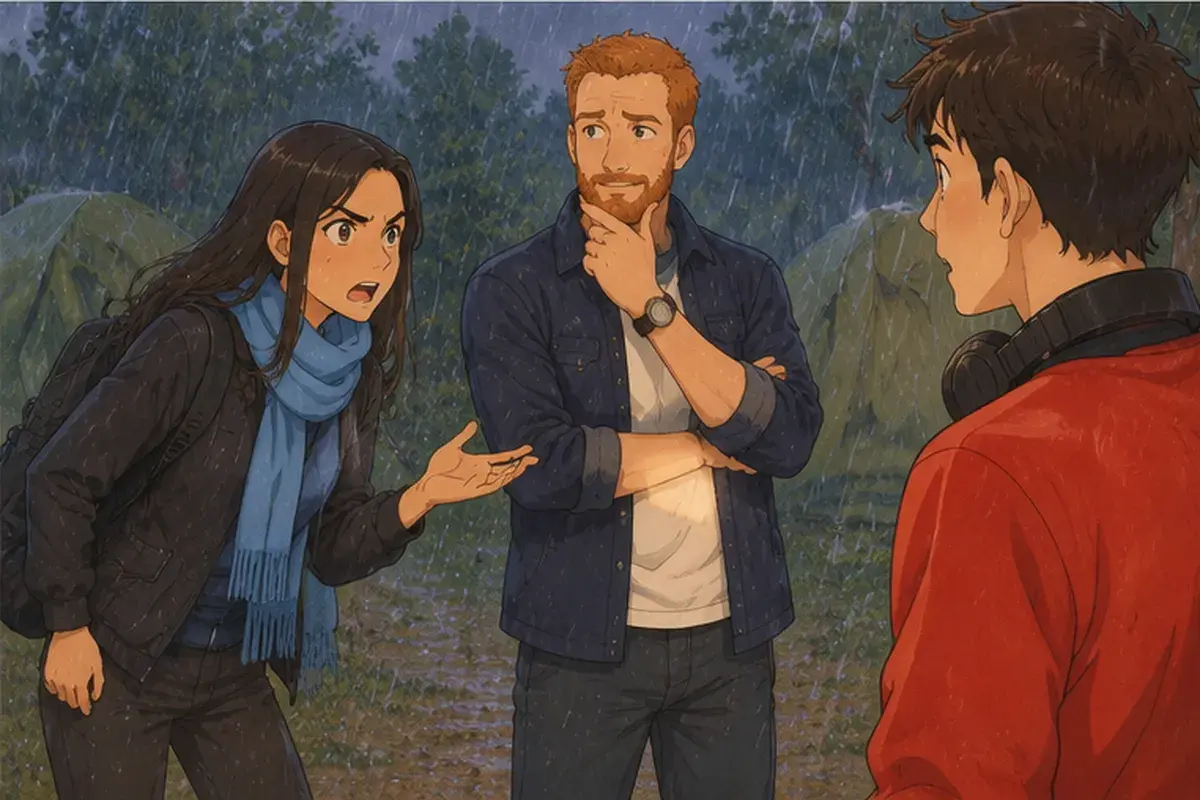
Inès m'a répondu de loin : « Voler ? Qui vole un dictaphone sous la grêle ? » Hugo a ajouté : « Il s'est mis à l'abri, lui aussi, peut-être. »
Inès answered me from far away: "Stolen? Who steals a voice recorder in the hail?" Hugo added: "Maybe it took shelter too."
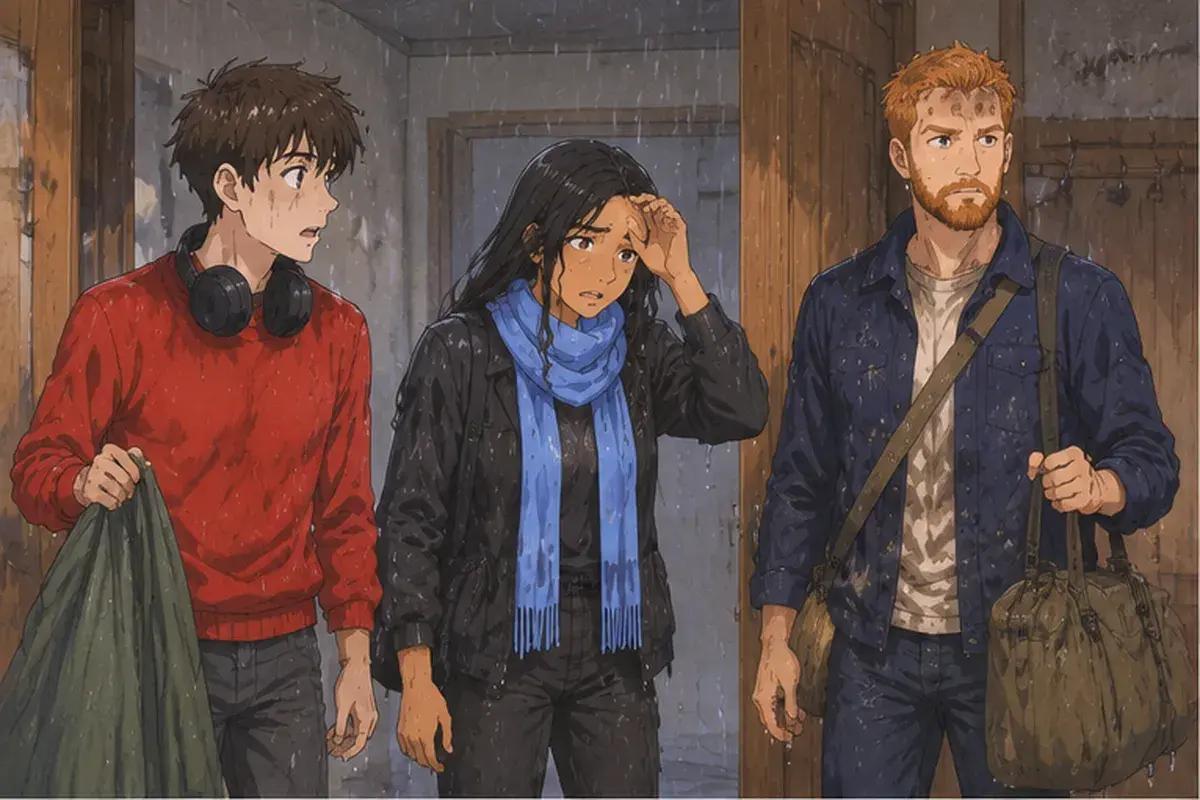
L'orage s'en est allé aussi vite qu'il était venu, mais notre tente était trempée. Nous avons abandonné l'idée de dormir sous la tente, et le gardien nous a ouvert la salle de l'accueil.
The storm went away as fast as it had come, but our tent was soaked. We gave up the idea of sleeping in the tent, and the caretaker opened the front desk room for us.
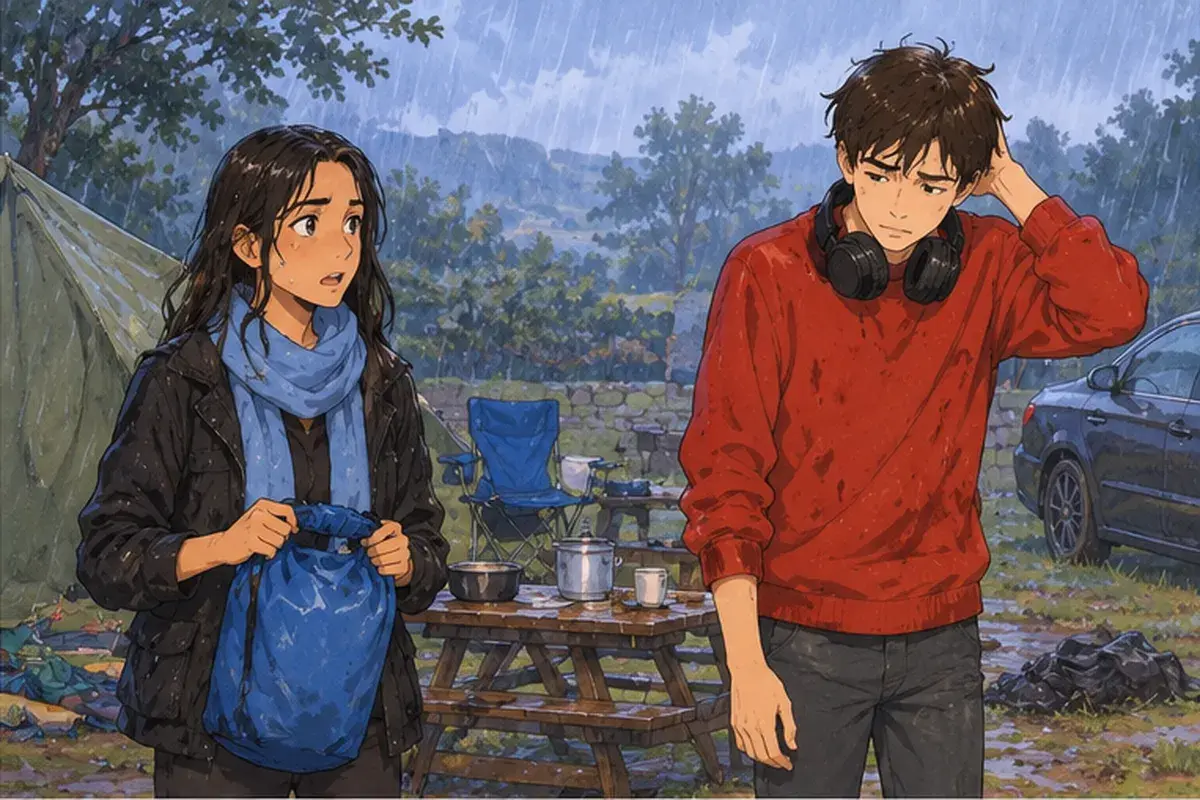
Le lendemain matin, le ciel était tout bleu, mais le camping était en désordre. Rien n'avait échappé à la pluie, sauf le sac étanche d'Inès.
The next morning, the sky was all blue, but the campsite was a mess. Nothing had escaped the rain, except Inès's waterproof bag.

Inès a regardé les dégâts : « C'est une catastrophe ! » Hugo a répondu, toujours aussi sérieux : « Non. Une catastrophe, c'est un pain brûlé. Ça, c'est seulement un désastre. Ça fait partie du voyage. »
Inès looked at the damage: "It's a catastrophe!" Hugo answered, still just as serious: "No. A catastrophe is burnt bread. This is only a disaster. It's part of the trip."
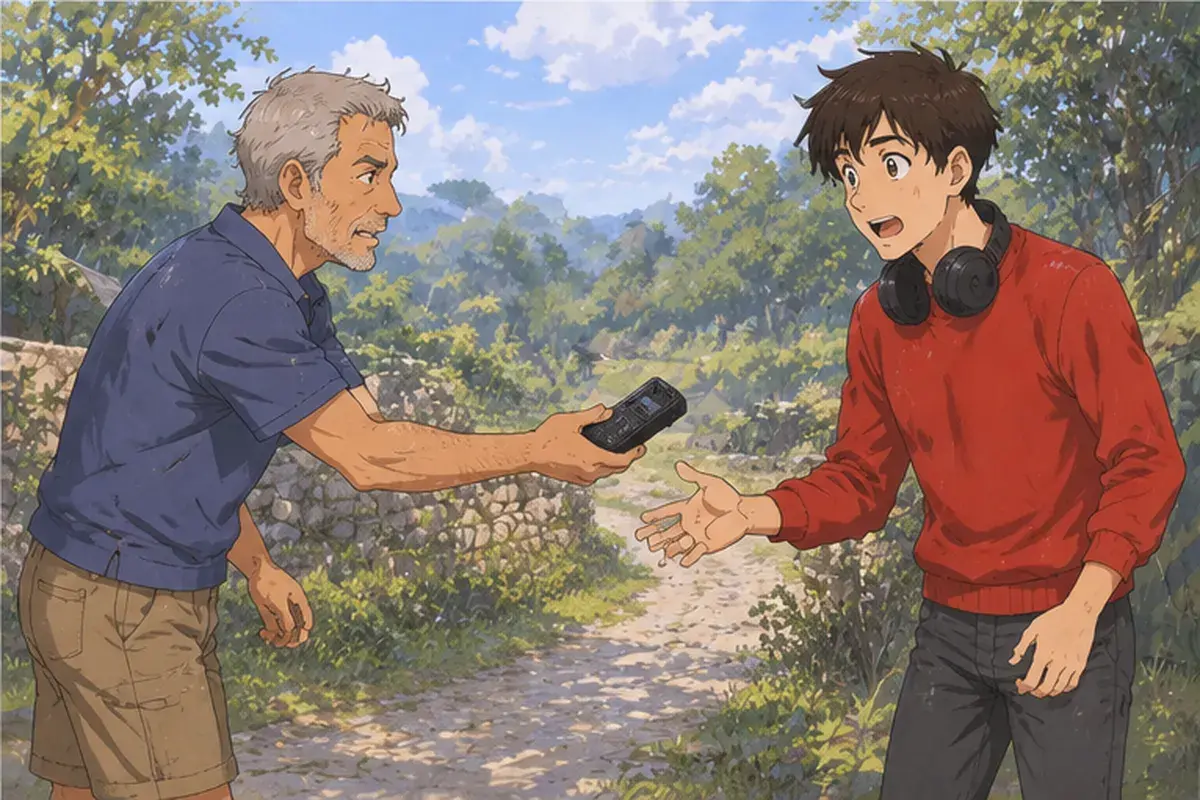
Un voisin est arrivé avec mon dictaphone à la main : « Je l'ai récupéré au bout du chemin, dans une flaque. Hier soir, je l'ai vu passer dans l'eau avec une chaussure ! »
A neighbor came over with my voice recorder in his hand: "I got it back at the end of the path, in a puddle. Last night, I saw it float by in the water with a shoe!"
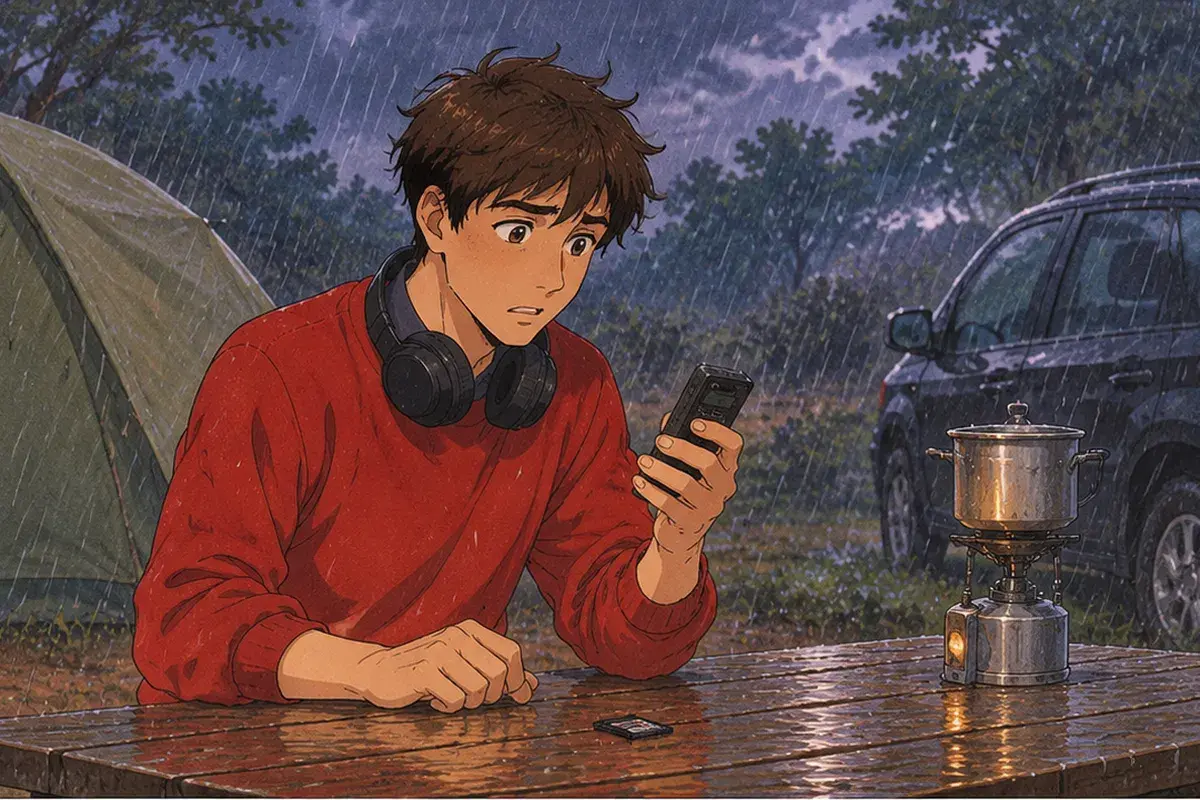
J'ai examiné l'appareil : l'écran restait noir. Mais la carte mémoire était sauvée, et le soir, sur mon ordinateur, j'ai tout retrouvé : l'interview, et même dix minutes d'orage.
I examined the device: the screen stayed black. But the memory card was saved, and that evening, on my computer, I found everything: the interview, and even ten minutes of the storm.

Résultat : un dictaphone mort, mais un orage magnifique. Conséquence : Inès veut commencer l'épisode par le grondement, et moi, je dois téléphoner à l'assurance.
Result: a dead voice recorder, but a magnificent storm. Consequence: Inès wants to start the episode with the rumble, and I have to call the insurance company.
Grammar for this text
- nous étions rentrés tard — we had come back late:
étions rentrésmeans "we had already come back" (before the evening at the campsite began).étions(imperfect ofêtre) +rentrés;rentrerusesêtre, so the participle agrees withnousand gets-s. - J'étais en train de chauffer l'eau pour mon thé quand j'ai entendu un grondement — I was in the middle of heating water for my tea when I heard a rumble. First the action that was going on (
j'étais en train de), then the event (j'ai entendu). More in the grammar section. - Tout à coup, une rafale l'a jetée — suddenly a gust of wind threw it:
tout à coupmeans "suddenly", and an event follows.l'means "it" (the tarp,la bâche), sojetéegets-e.jetéeis the past participle ofjeter. - s'est mise à sonner — started going off:
se mettre à+ infinitive (unit 13).misegets-ebecausel'alarmeis feminine. - Je me suis fait voler mon dictaphone — a ready-made phrase: I got my voice recorder stolen (my voice recorder was stolen from me).
faitalways staysfait, even when a woman speaks:Inès s'est fait voler son sac. Don't mix it up withon a volé mon dictaphone, which means "someone stole my voice recorder". - Rien n'avait échappé à la pluie — nothing had escaped the rain:
échapper à+ something means "to avoid";avait échappéshows that by morning it was already over.riengoes withne. - C'est à ce moment-là que j'ai pensé — that's when I thought: this is the
c'est… queway to stress a moment (unit 7). - s'est mis à l'abri, s'en est allé, fait partie du voyage —
se mettre à l'abriis "to take shelter",s'en alleris "to go away",faire partie deis "to be part of".
Words and grammar of the unit: Tell what happened.
Learn the words from the texts with flashcards
In the app, you can tap any word in a text to see its translation, forms and examples, and new words stick with flashcards. 15 minutes a day.
Start for freeEverything is open for free. No card needed to sign up.