
French dialogue with translation · B1 · 18 lines
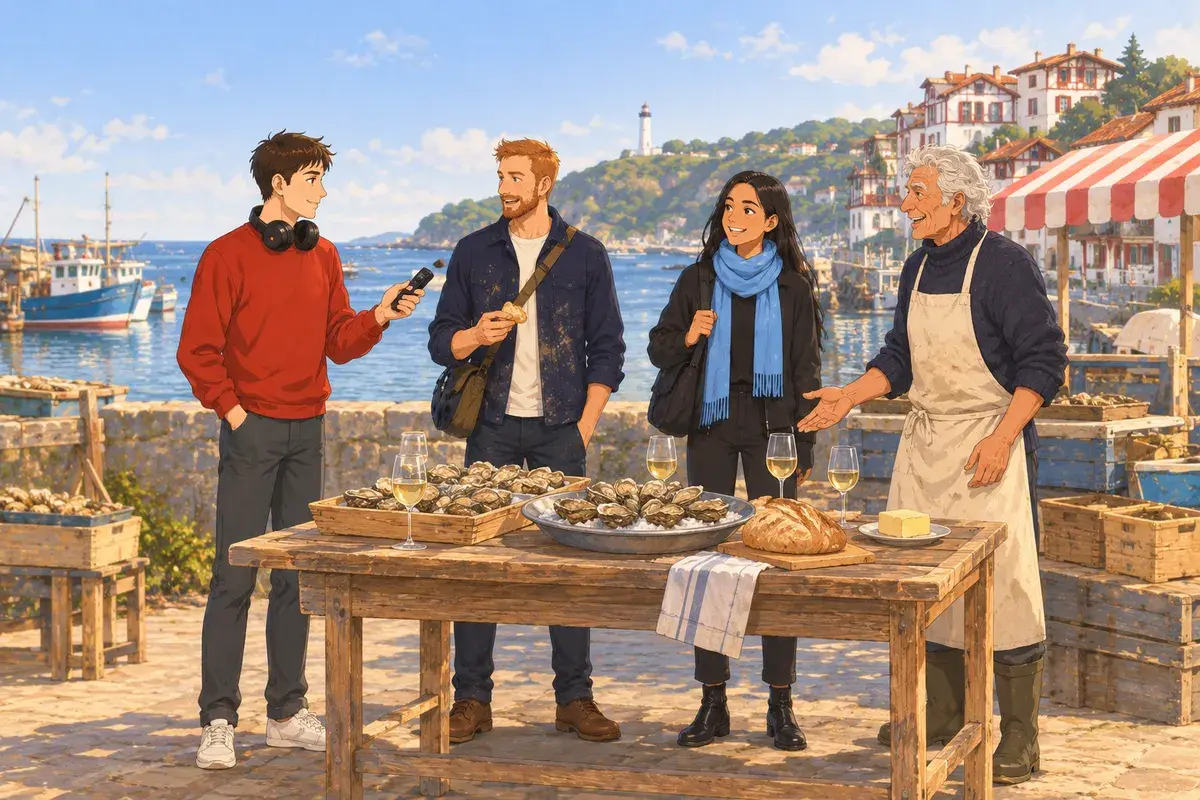
Je voudrais savoir si elle est vraiment vivante I'd like to know if it's really alive
Comic · 18 panels
- Pacha
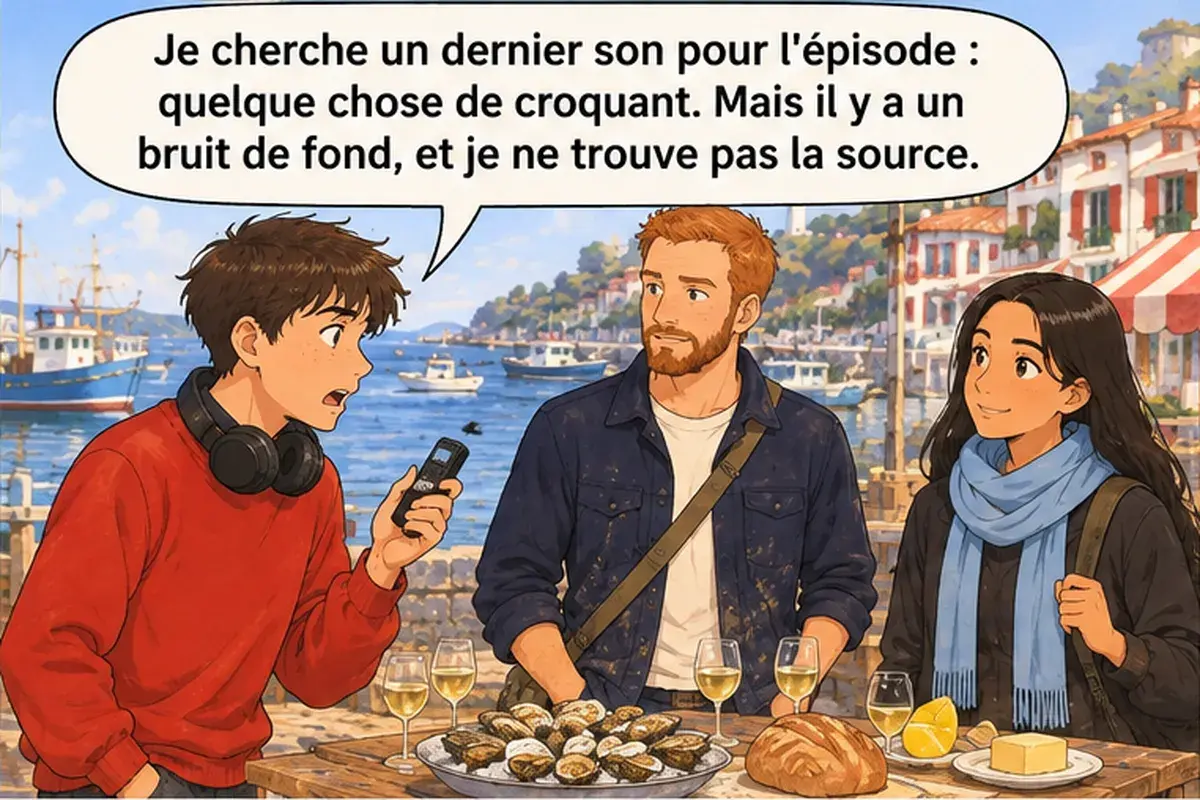
Je cherche un dernier son pour l'épisode : quelque chose de croquant. Mais il y a un bruit de fond, et je ne trouve pas la source.
I'm looking for one last sound for the episode: something crunchy. But there's background noise, and I can't find the source.
- Hugo
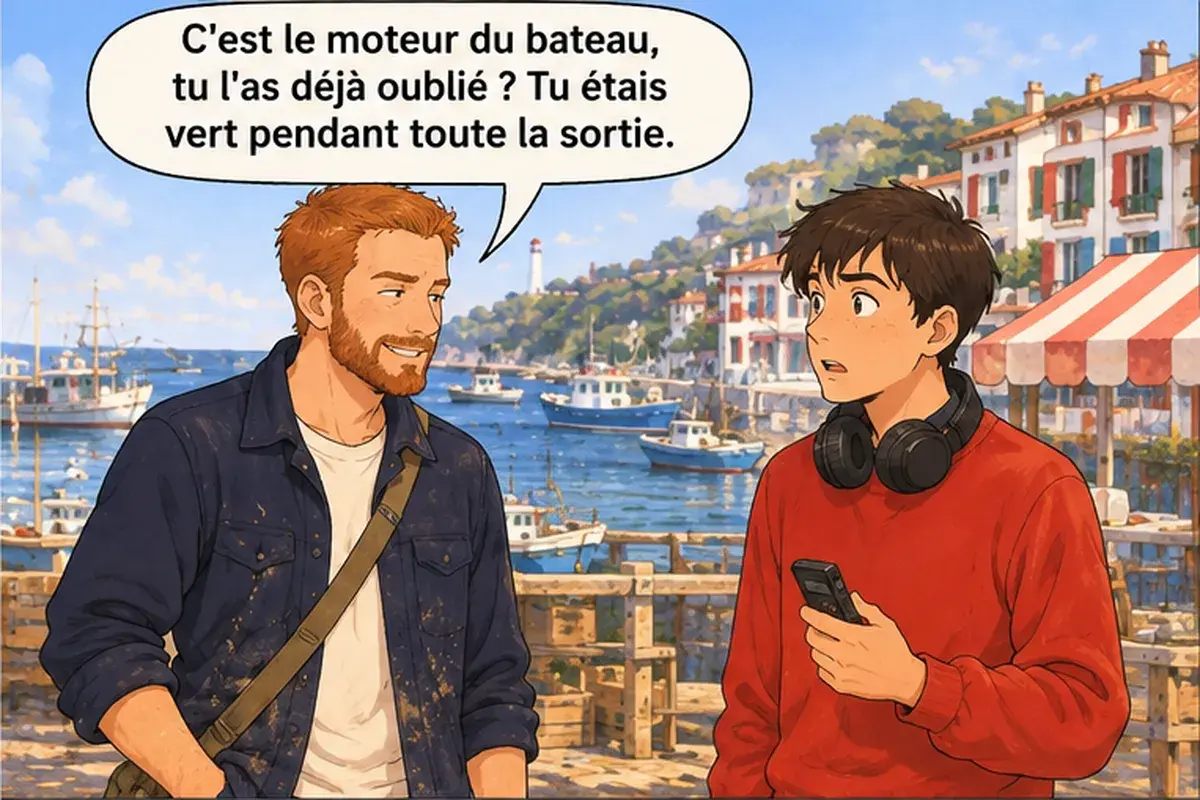
C'est le moteur du bateau, tu l'as déjà oublié ? Tu étais vert pendant toute la sortie.
It's the boat's engine, did you already forget? You were green the whole outing. (to a man)
- Pacha
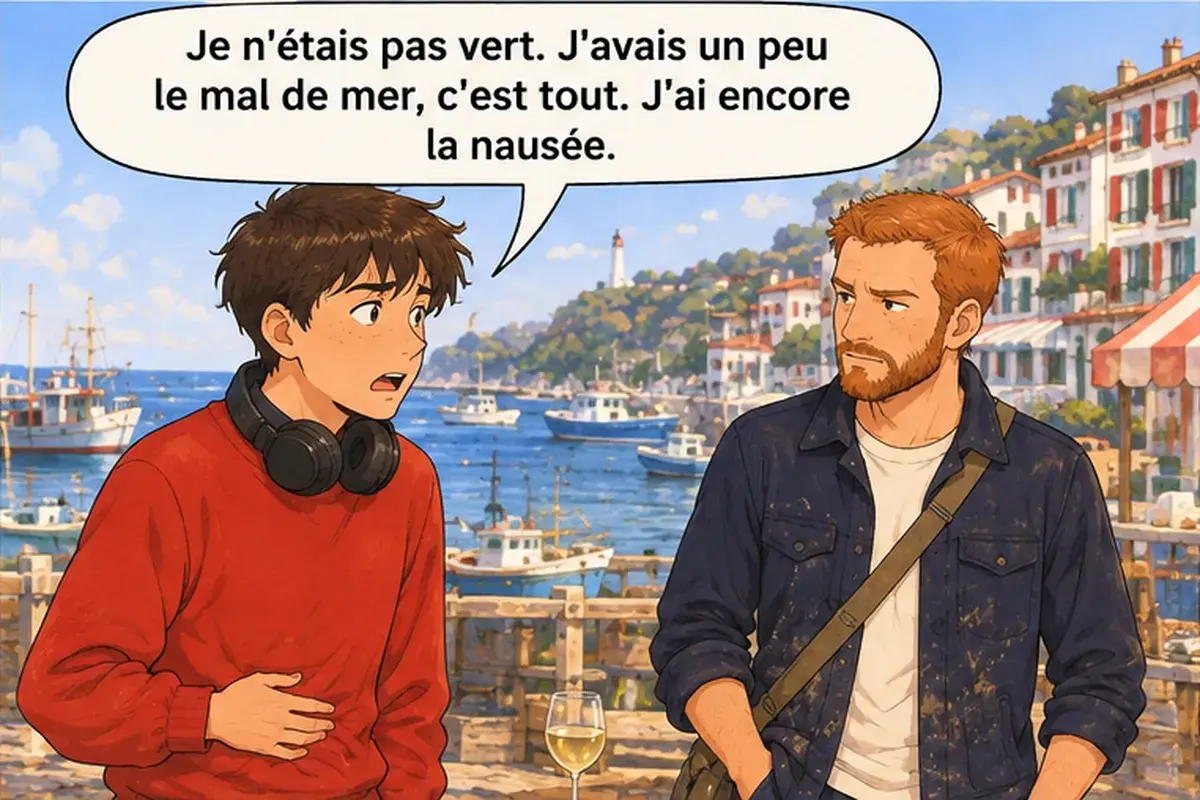
Je n'étais pas vert. J'avais un peu le mal de mer, c'est tout. J'ai encore la nausée.
I wasn't green (man speaking). I was a little seasick, that's all. I still feel nauseous.

- Hugo
Le quai ne bouge pas, Pacha. Papy Yann dirait que la mer n'est pas ton amie.
The dock isn't moving, Pacha. Papy Yann would say the sea isn't your friend.

- Inès
Moi, je suis contente de l'interview. Quand il répondait en trois mots, je le relançais, et il racontait tout.
Me, I'm happy with the interview (woman speaking). When he answered in three words, I would follow up with him, and he would tell everything.
- Monsieur Etcheverry
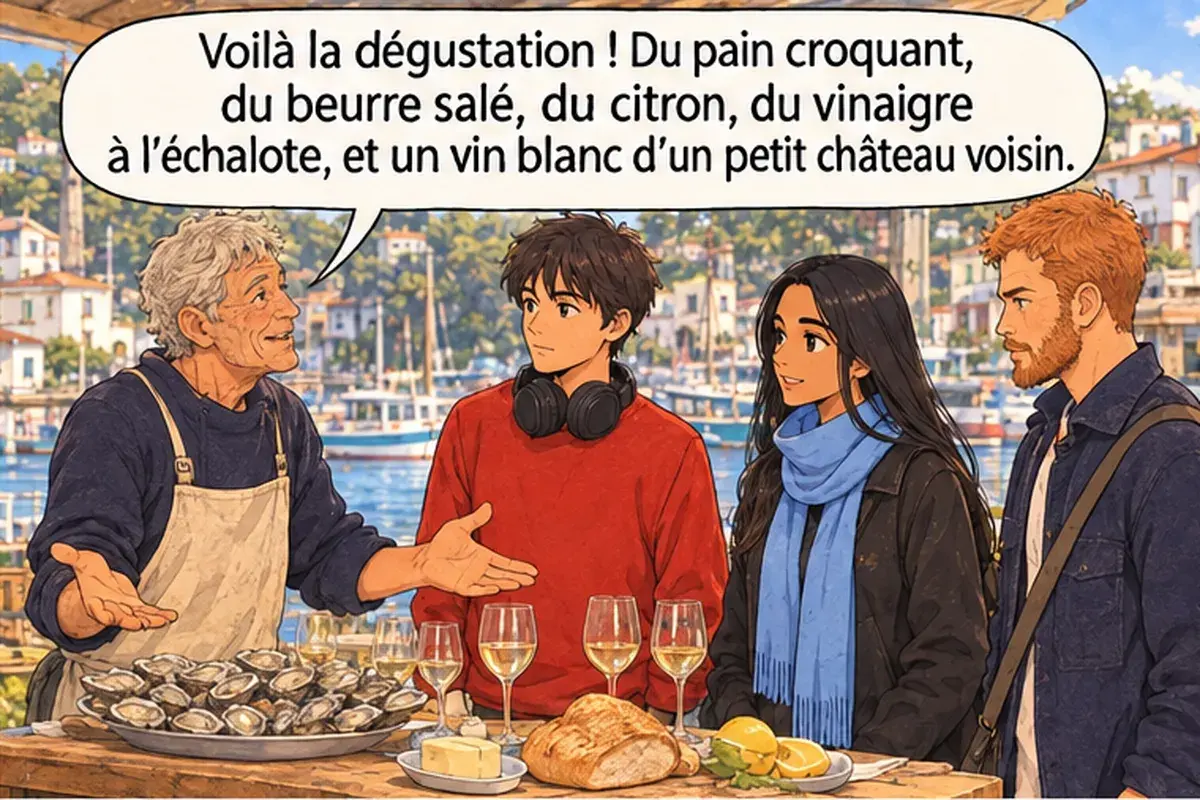
Voilà la dégustation ! Du pain croquant, du beurre salé, du citron, du vinaigre à l'échalote, et un vin blanc d'un petit château voisin.
Here's the tasting! Crunchy bread, salted butter, lemon, shallot vinegar, and a white wine from a small neighboring château.
- Hugo
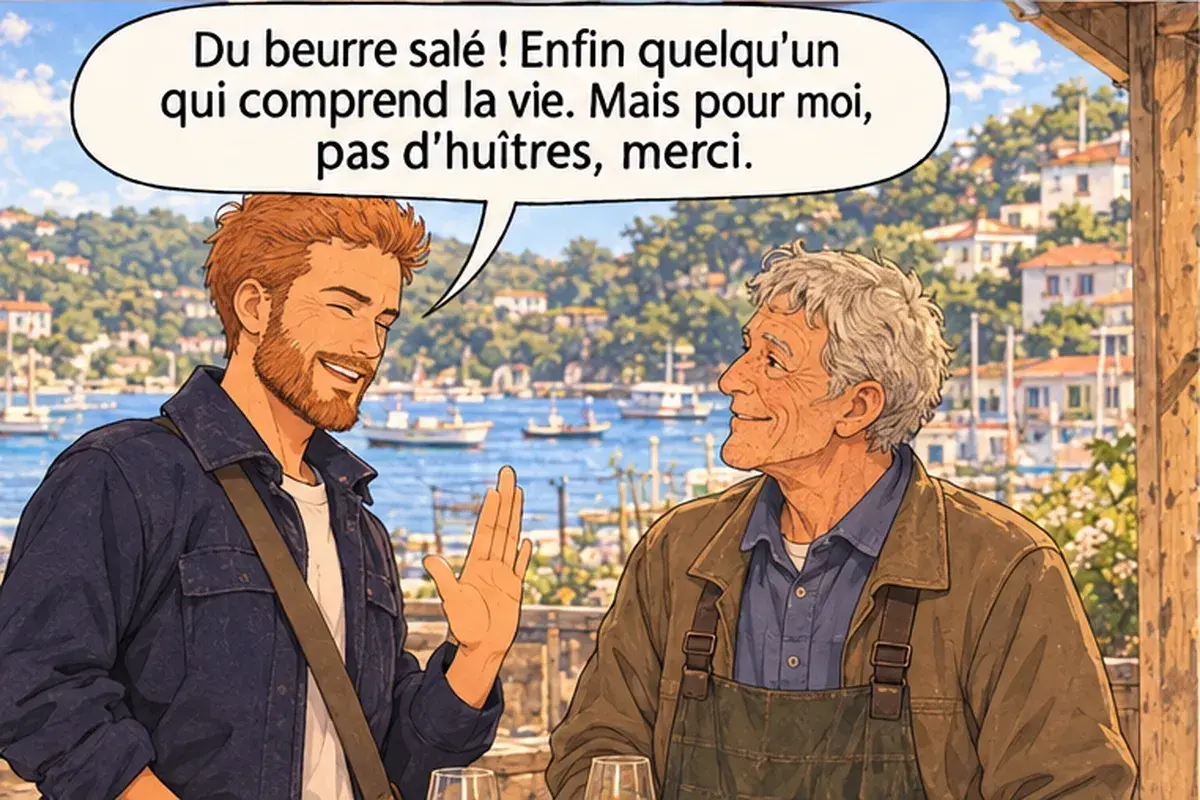
Du beurre salé ! Enfin quelqu'un qui comprend la vie. Mais pour moi, pas d'huîtres, merci.
Salted butter! At last, someone who understands life. But for me, no oysters, thanks.
- Monsieur Etcheverry
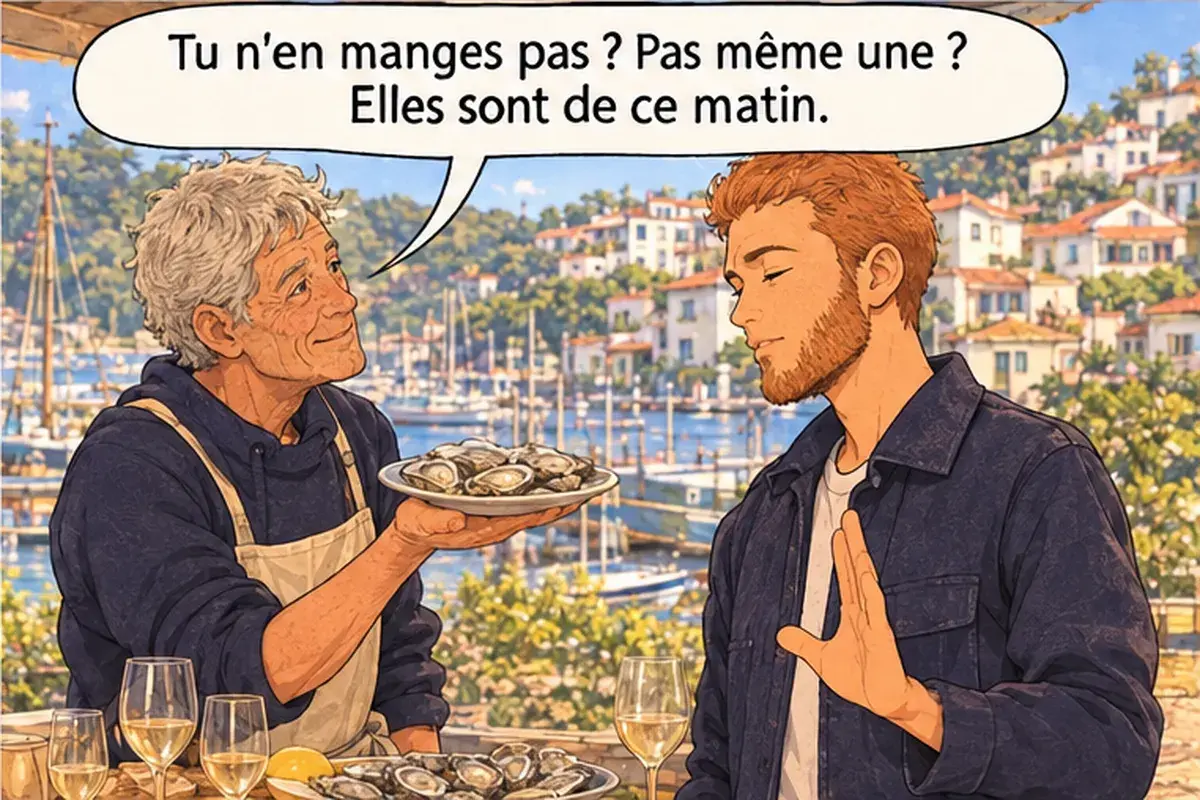
Tu n'en manges pas ? Pas même une ? Elles sont de ce matin.
You don't eat any? Not even one? They're from this morning.
- Hugo
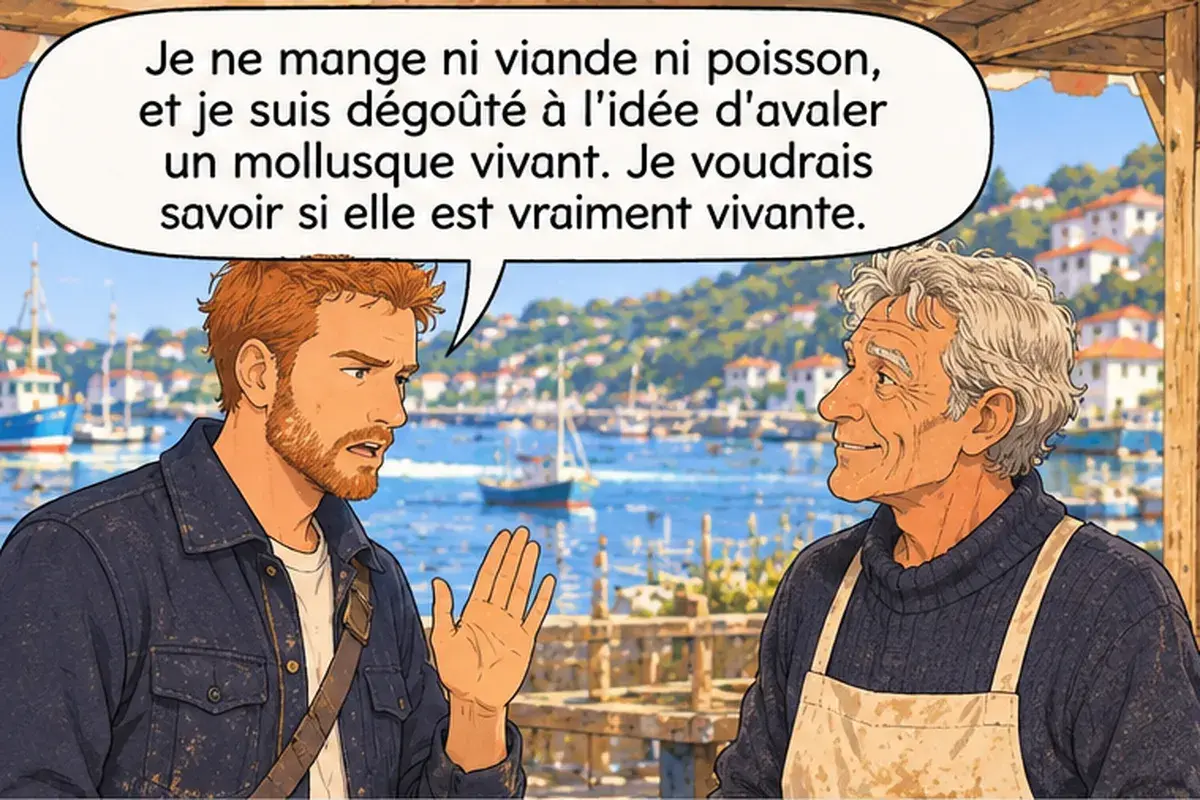
Je ne mange ni viande ni poisson, et je suis dégoûté à l'idée d'avaler un mollusque vivant. Je voudrais savoir si elle est vraiment vivante.
I don't eat meat or fish, and I'm disgusted at the idea of swallowing a living mollusk (man speaking). I'd like to know if it's really alive.
- Monsieur Etcheverry
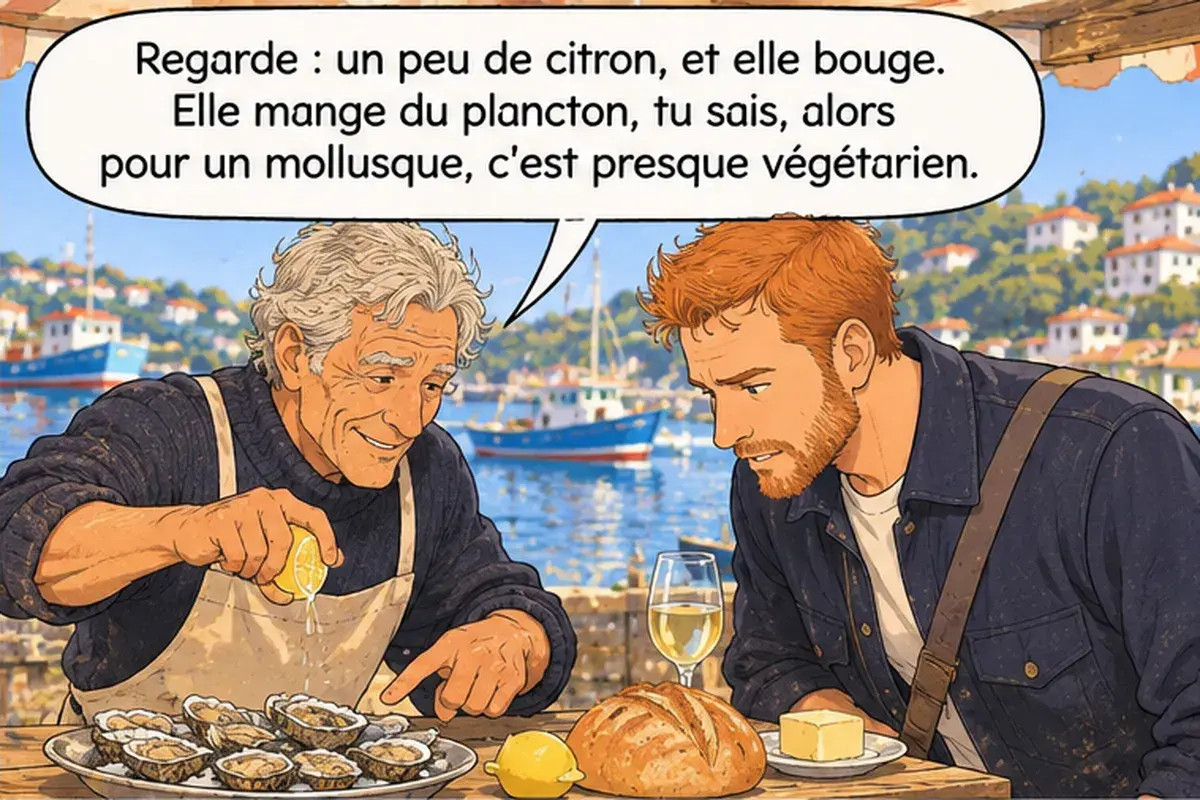
Regarde : un peu de citron, et elle bouge. Elle mange du plancton, tu sais, alors pour un mollusque, c'est presque végétarien.
Look: a little lemon, and it moves. It eats plankton, you know, so for a mollusk, it's almost vegetarian.
- Hugo
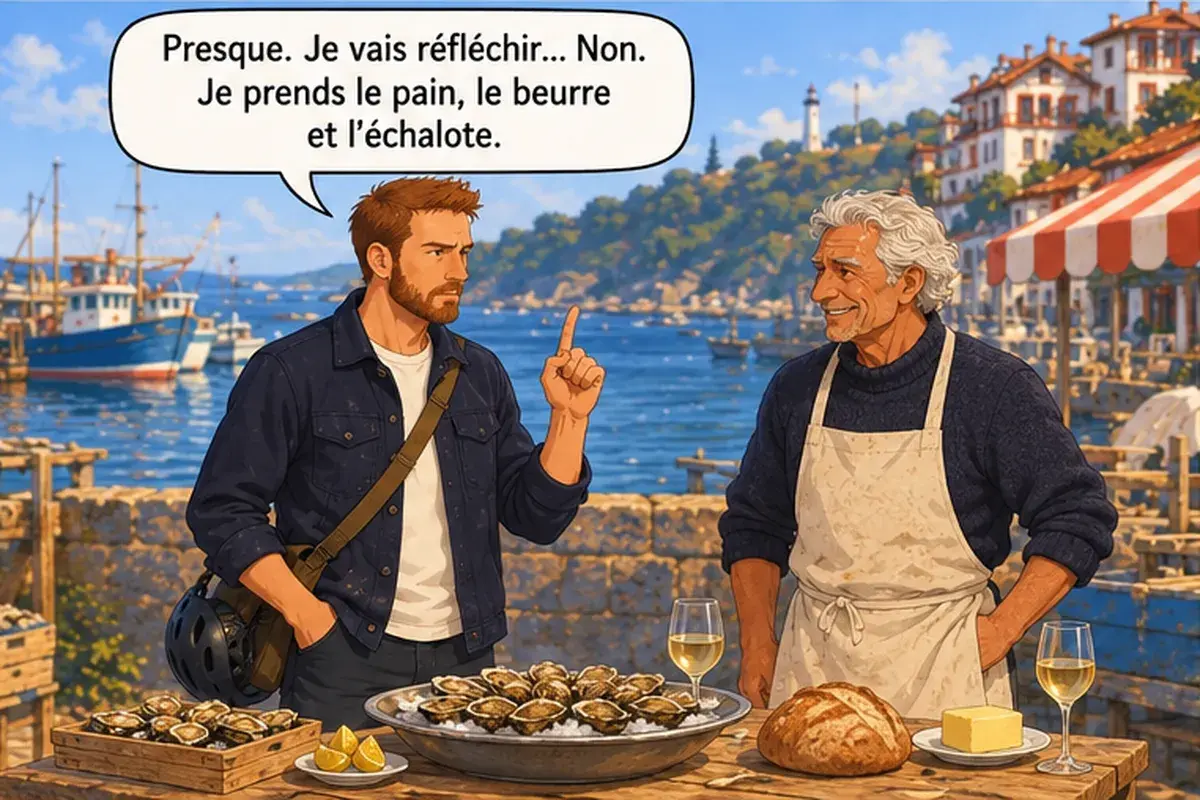
Presque. Je vais réfléchir… Non. Je prends le pain, le beurre et l'échalote.
Almost. I'll think about it… No. I'll take the bread, the butter and the shallot.
- Pacha
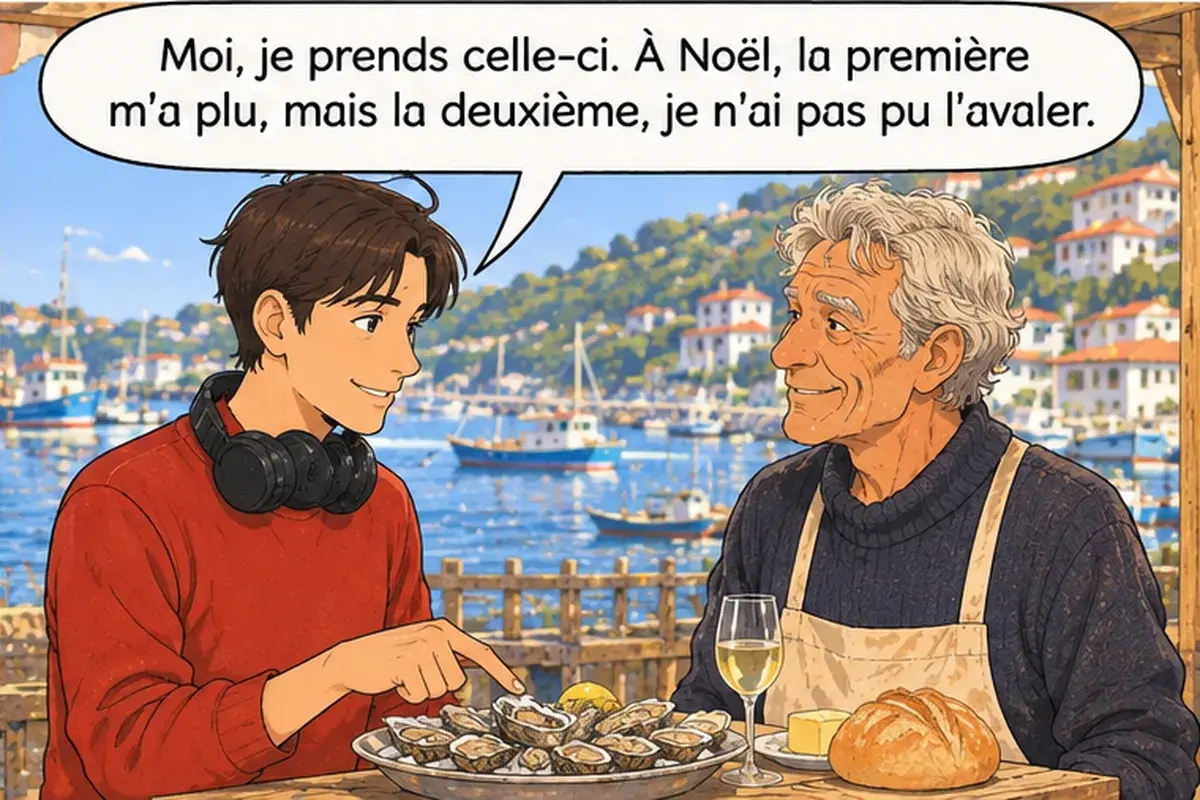
Moi, je prends celle-ci. À Noël, la première m'a plu, mais la deuxième, je n'ai pas pu l'avaler.
Me, I'll take this one. At Christmas, I liked the first one, but the second one, I couldn't swallow.
- Monsieur Etcheverry
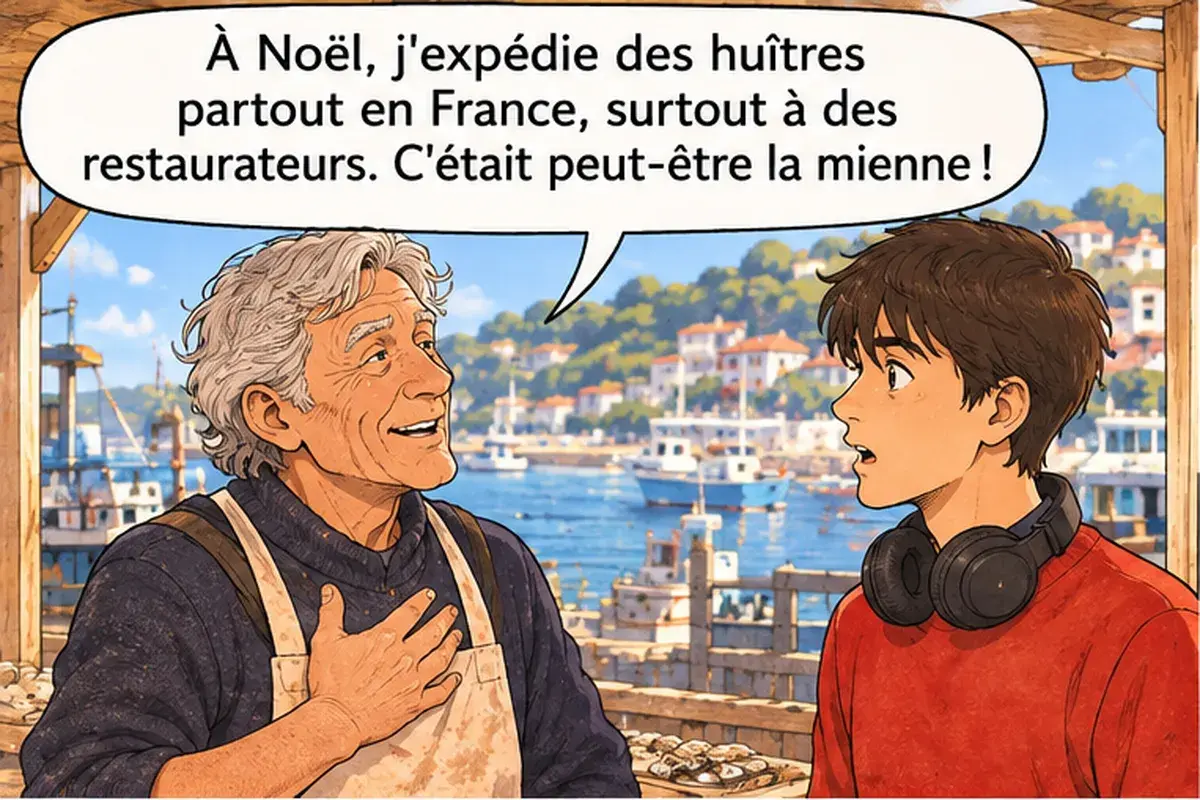
À Noël, j'expédie des huîtres partout en France, surtout à des restaurateurs. C'était peut-être la mienne !
At Christmas, I ship oysters all over France, mostly to restaurant owners. Maybe it was mine!
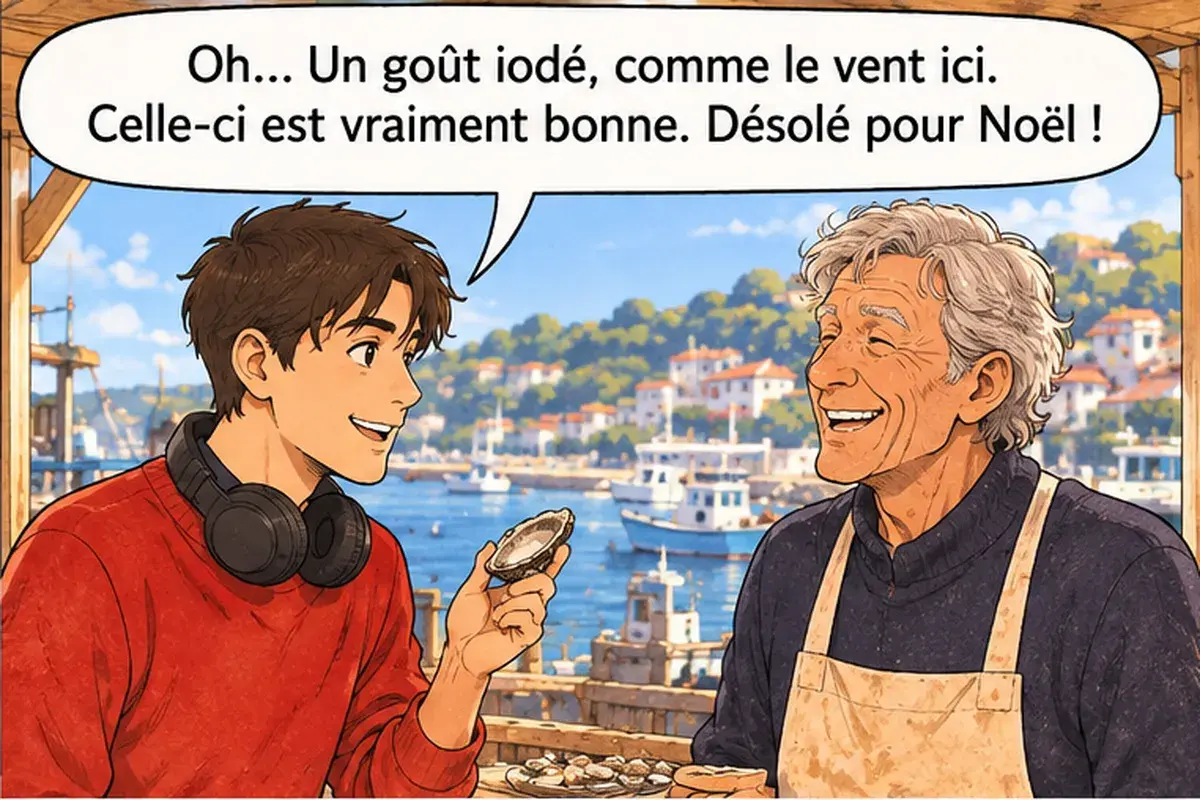
- Pacha
Oh… Un goût iodé, comme le vent ici. Celle-ci est vraiment bonne. Désolé pour Noël !
Oh… A briny taste, like the wind here. This one is really good. Sorry about Christmas! (man speaking)
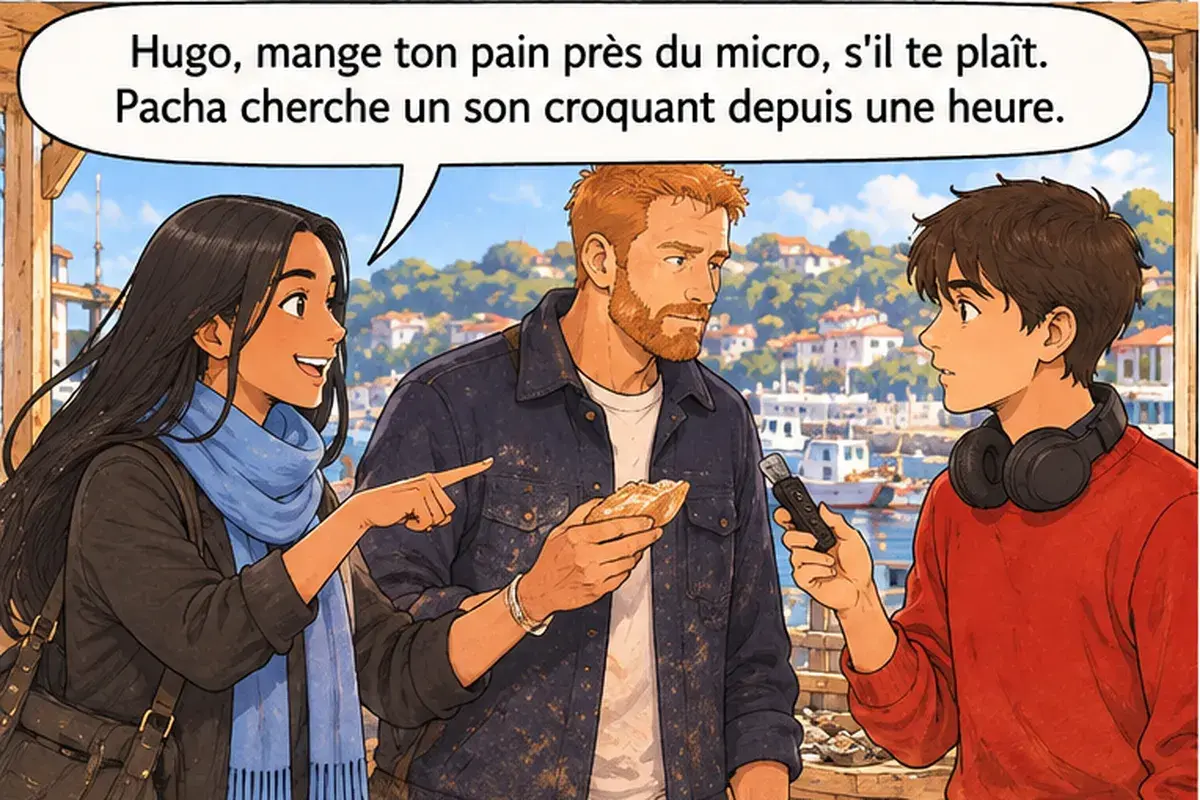
- Inès
Hugo, mange ton pain près du micro, s'il te plaît. Pacha cherche un son croquant depuis une heure.
Hugo, eat your bread close to the mic, please. Pacha has been looking for a crunchy sound for an hour.
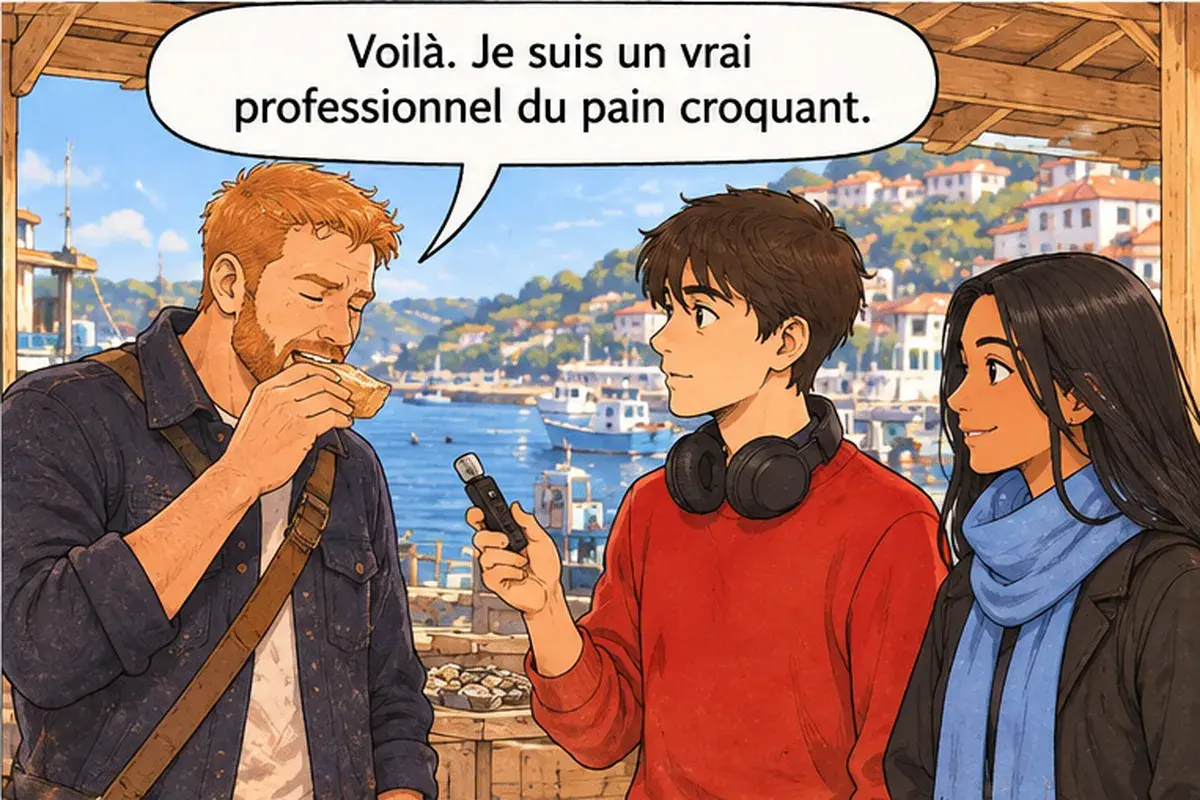
- Hugo
Voilà. Je suis un vrai professionnel du pain croquant.
There you go. I'm a real crunchy-bread professional. (man speaking)
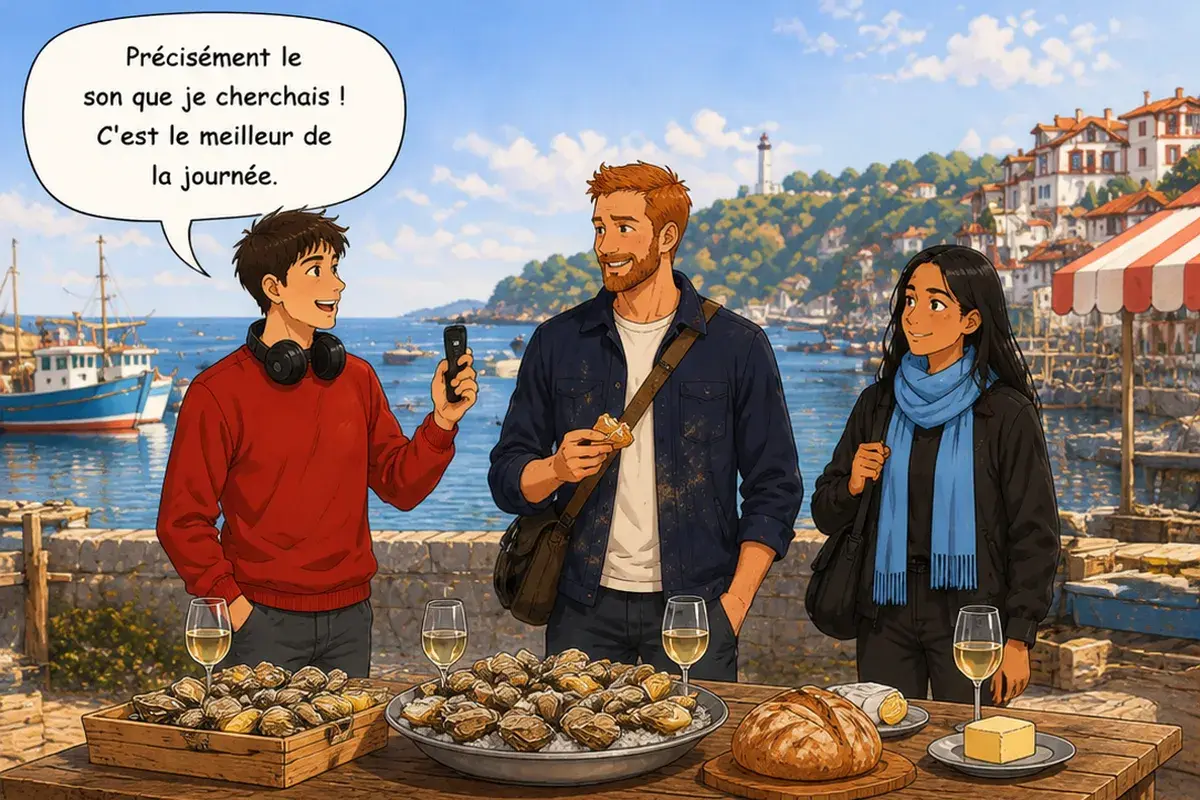
- Pacha
Précisément le son que je cherchais ! C'est le meilleur de la journée.
Exactly the sound I was looking for! It's the best of the day.
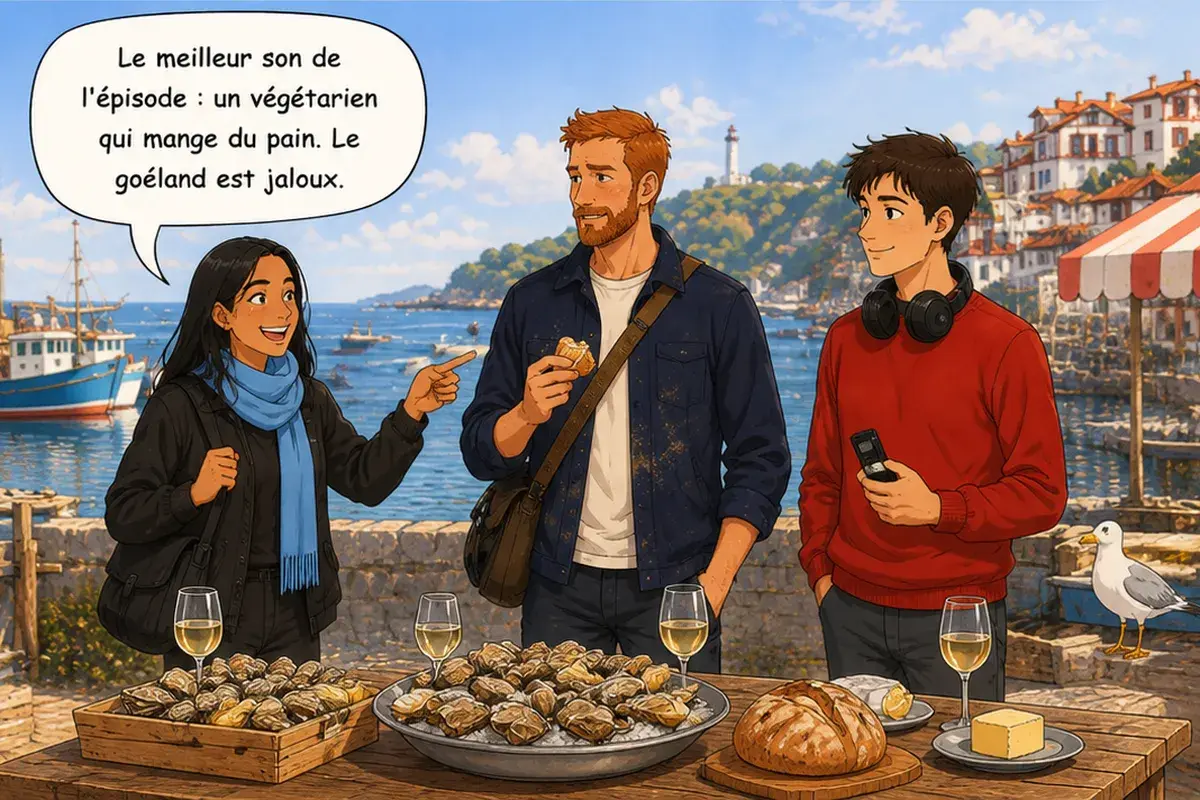
- Inès
Le meilleur son de l'épisode : un végétarien qui mange du pain. Le goéland est jaloux.
The best sound of the episode: a vegetarian eating bread. The seagull is jealous.
Grammar for this text
- Je voudrais savoir si elle est vraiment vivante. — I'd like to know if it's really alive. A question inside a sentence: the direct question
Elle est vivante ?becomessi elle est…afterje voudrais savoir, with normal word order. See the second grammar block for more.je voudraisis a polite "I'd like" (A1, unit 6). - Tu n'en manges pas ? — You don't eat any? Here
enstands for the oysters, it goes before the verb, andne… paswraps around the pair:n'en manges pas. - Je ne mange ni viande ni poisson — I eat neither meat nor fish. With
ni… ni("neither… nor"), there is no article after it and you don't needpas. - Papy Yann dirait que… — Papy Yann would say that…
diraitis the conditional ofdire(B1, unit 3). - je le relançais — I would ask him another question.
relançaisis the imperfect ofrelancer(a past habit: every time), andlemeans "him". - Moi, je prends celle-ci. — Me, I'll take this one.
celle-ci("this one", an oyster) is the feminine form ofcelui-ci(B1, unit 5). la mienne — mine, from the same unit. - la première m'a plu — I liked the first one.
pluis the past participle ofplaire("to please"). je n'ai pas pu l'avaler — I couldn't swallow it.pucomes frompouvoir, andl'means "it".
Words and grammar of the unit: Conduct an interview.
Learn the words from the texts with flashcards
In the app, you can tap any word in a text to see its translation, forms and examples, and new words stick with flashcards. 15 minutes a day.
Start for freeEverything is open for free. No card needed to sign up.