
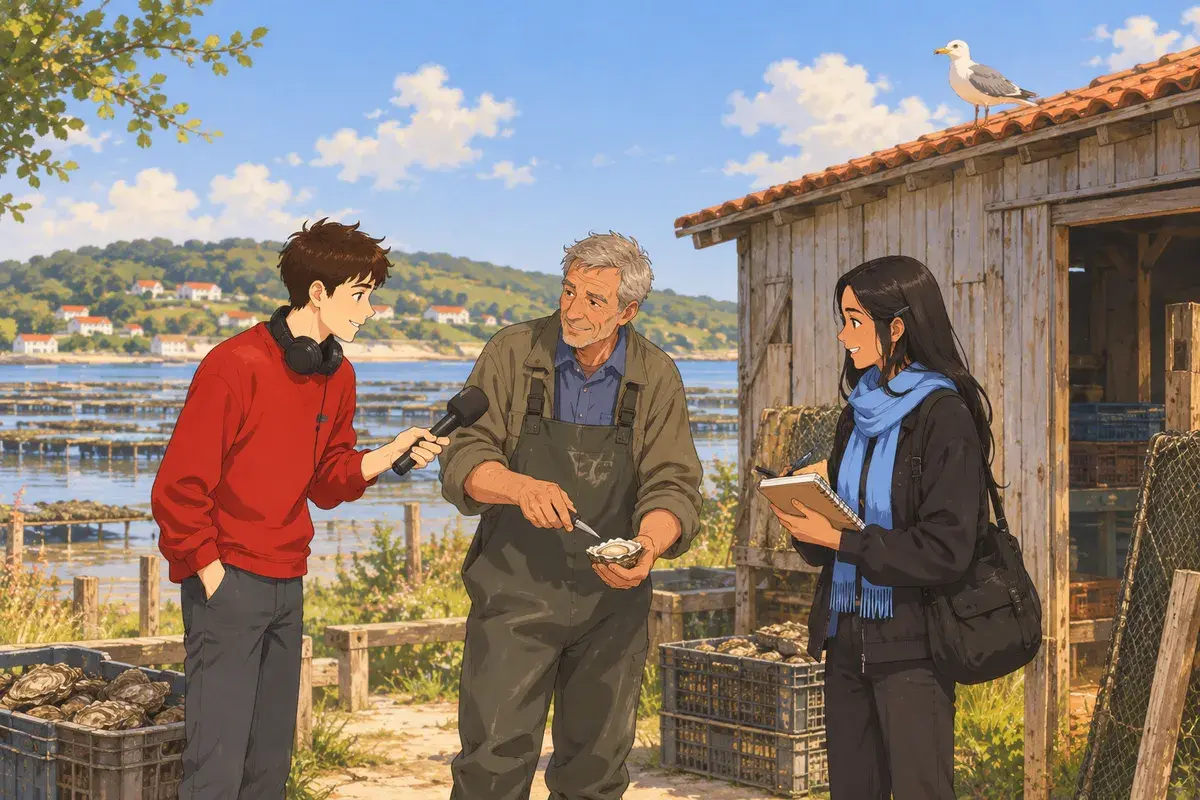
French dialogue with translation · B1 · 18 lines
Depuis quand faites-vous ce métier ? How long have you been doing this job? (formal)
Comic · 18 panels
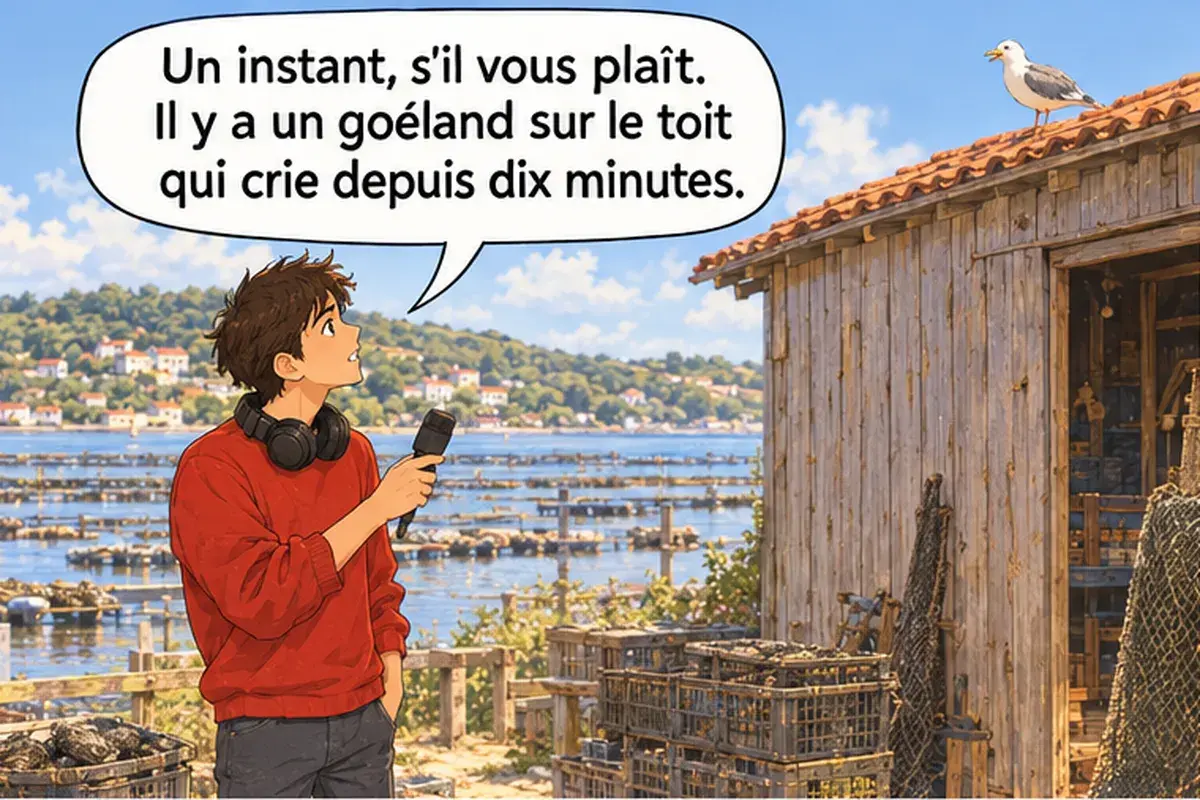
- Pacha
Un instant, s'il vous plaît. Il y a un goéland sur le toit qui crie depuis dix minutes.
Just a moment, please (formal). There's a seagull on the roof that's been screaming for ten minutes.
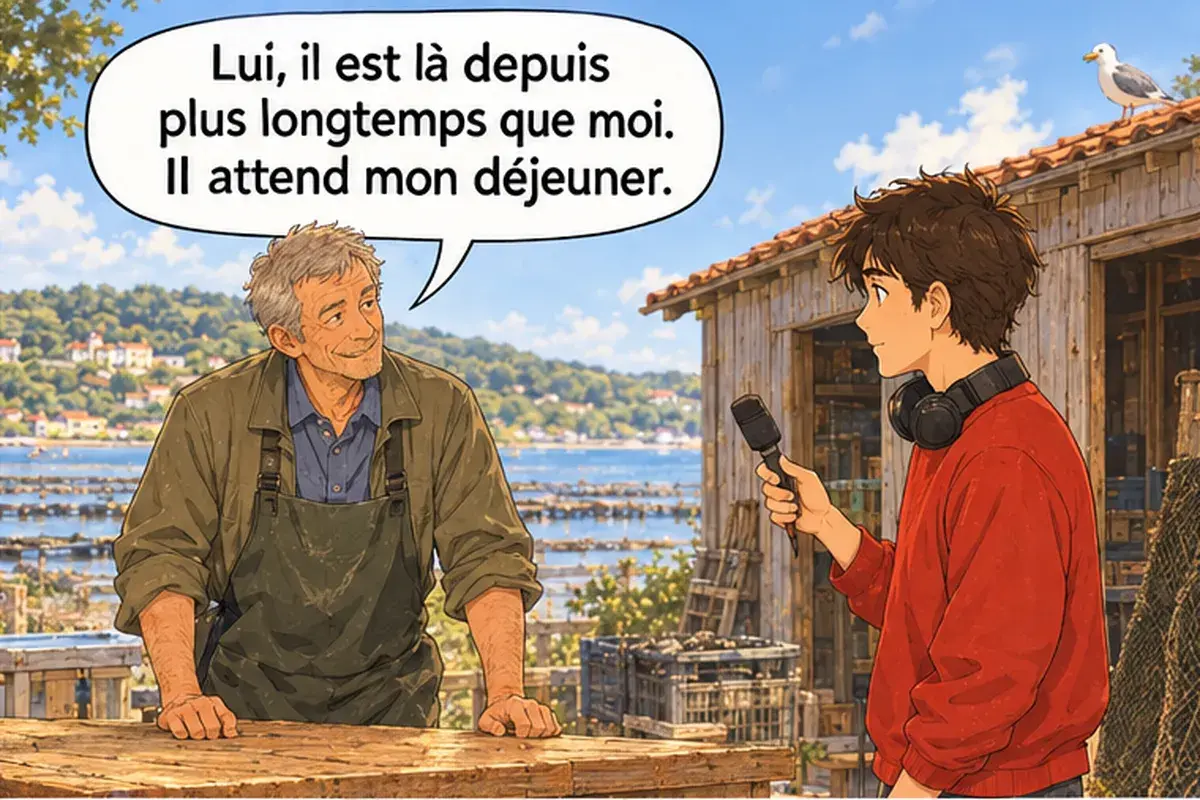
- Monsieur Etcheverry
Lui, il est là depuis plus longtemps que moi. Il attend mon déjeuner.
He's been here longer than I have. He's waiting for my lunch.
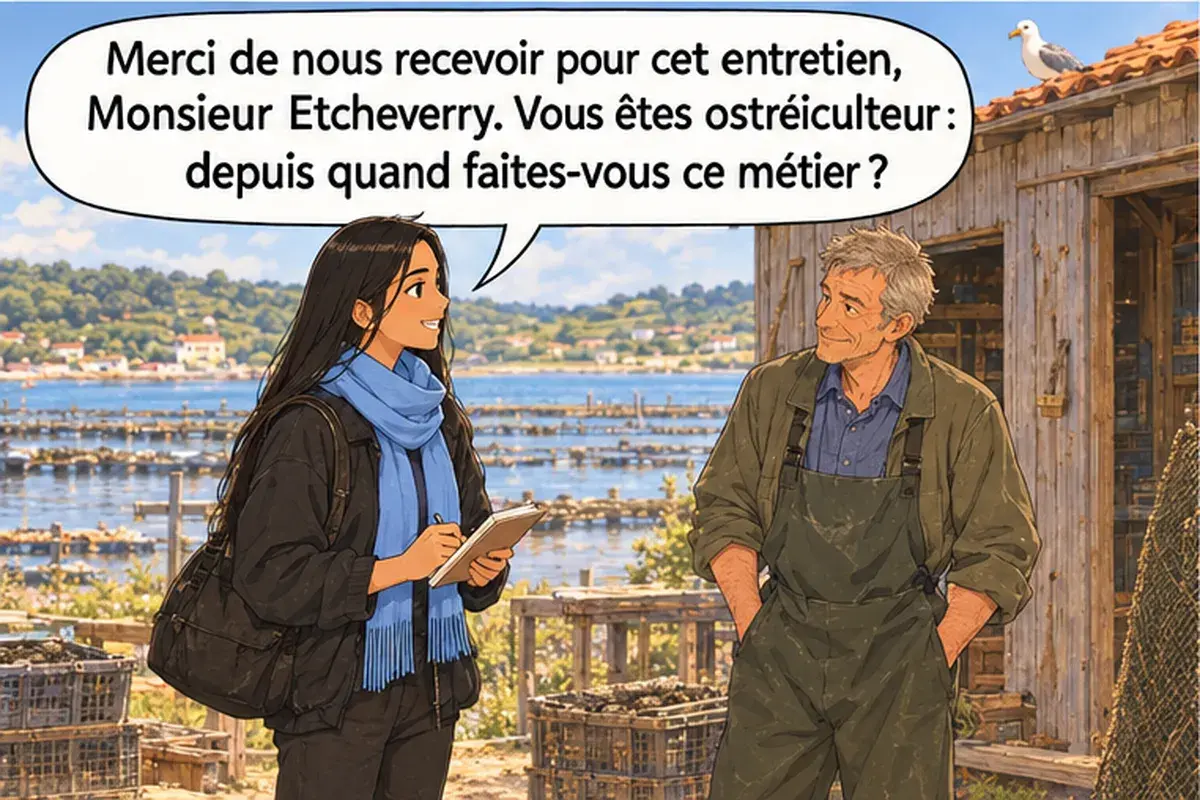
- Inès
Merci de nous recevoir pour cet entretien, Monsieur Etcheverry. Vous êtes ostréiculteur : depuis quand faites-vous ce métier ?
Thank you for having us for this interview, Monsieur Etcheverry. You're an oyster farmer: how long have you been doing this job? (formal)
- Monsieur Etcheverry
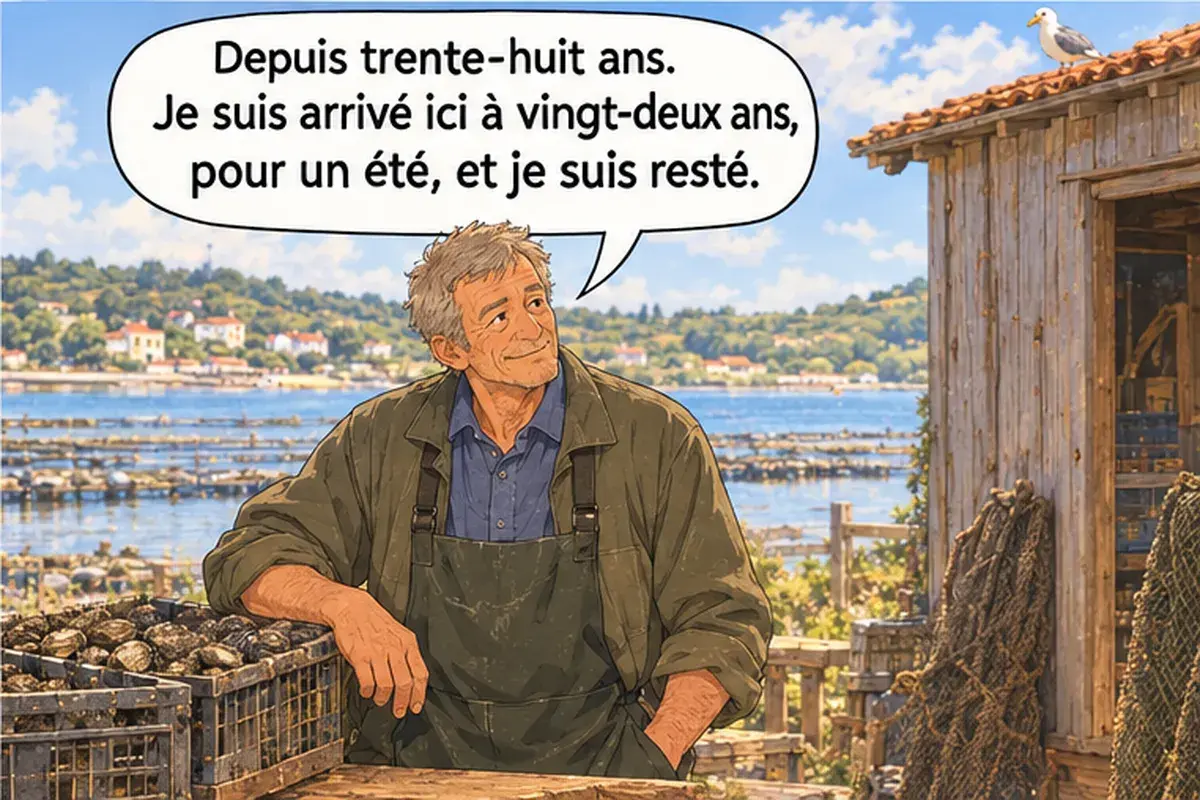
Depuis trente-huit ans. Je suis arrivé ici à vingt-deux ans, pour un été, et je suis resté.
For thirty-eight years. I came here at twenty-two, for one summer, and I stayed (man speaking).
- Inès
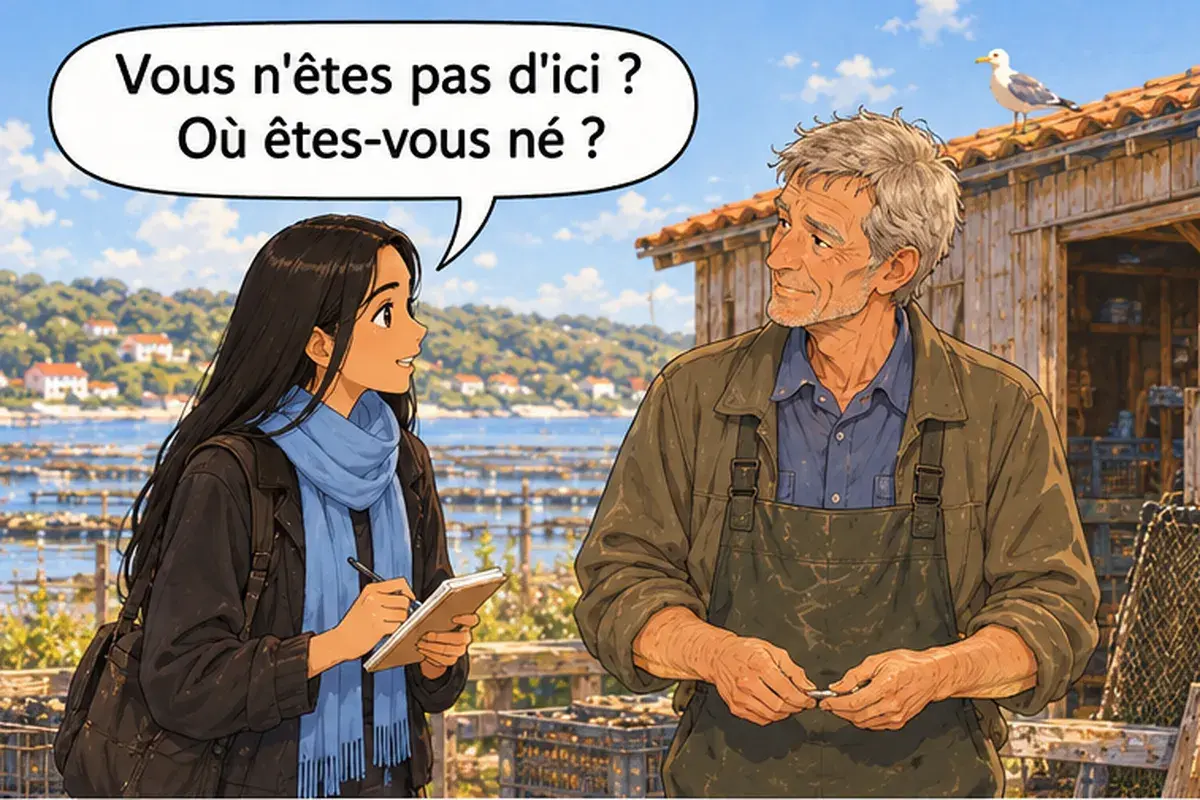
Vous n'êtes pas d'ici ? Où êtes-vous né ?
You're not from here? Where were you born? (to a man, formal)
- Monsieur Etcheverry
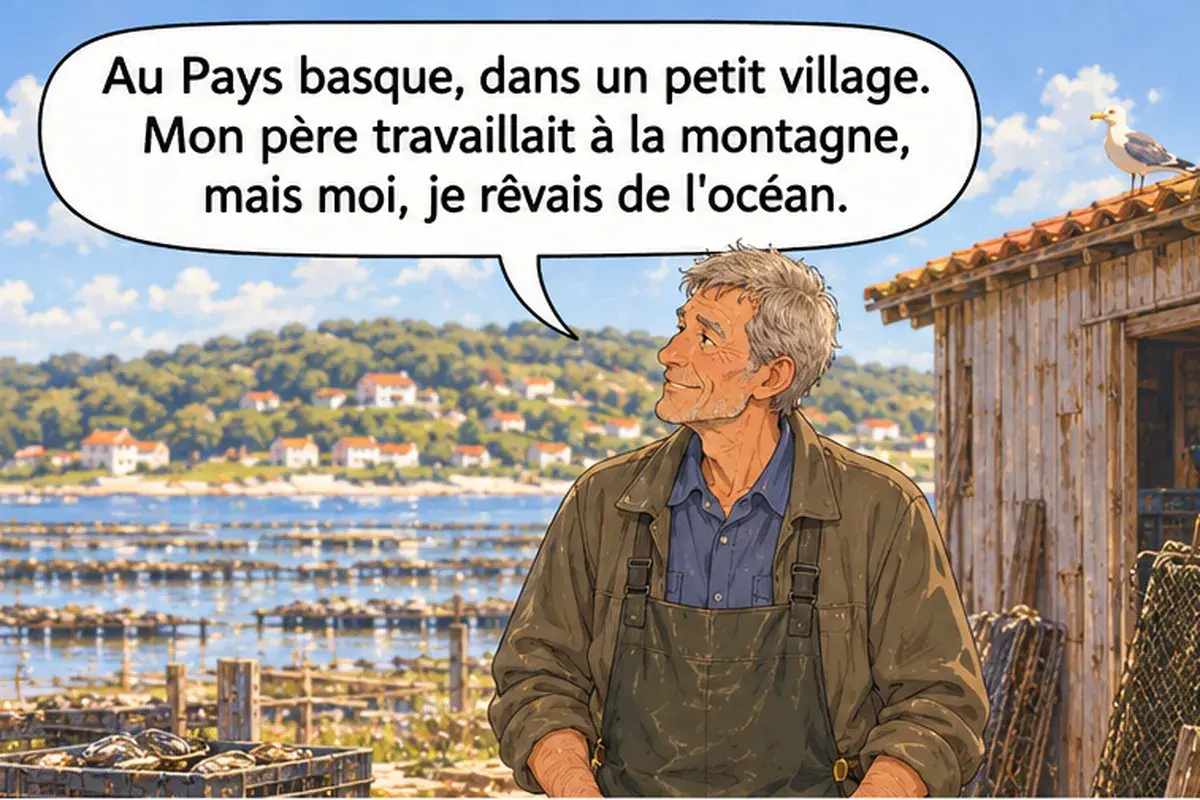
Au Pays basque, dans un petit village. Mon père travaillait à la montagne, mais moi, je rêvais de l'océan.
In the Basque Country, in a small village. My father worked in the mountains, but I dreamed of the ocean.

- Inès
Et pourquoi avez-vous choisi les huîtres ?
And why did you choose oysters? (formal)
- Monsieur Etcheverry
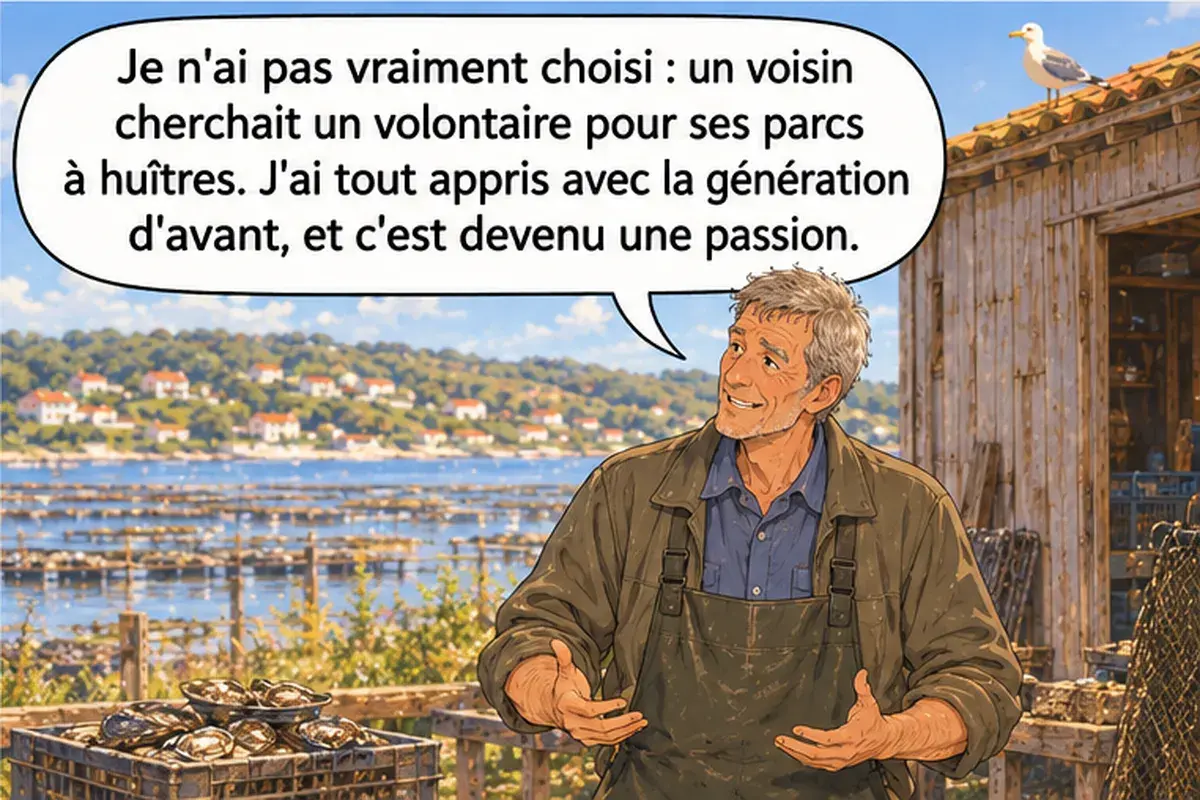
Je n'ai pas vraiment choisi : un voisin cherchait un volontaire pour ses parcs à huîtres. J'ai tout appris avec la génération d'avant, et c'est devenu une passion.
I didn't really choose: a neighbor was looking for a volunteer for his oyster beds. I learned everything from the previous generation, and it became a passion.
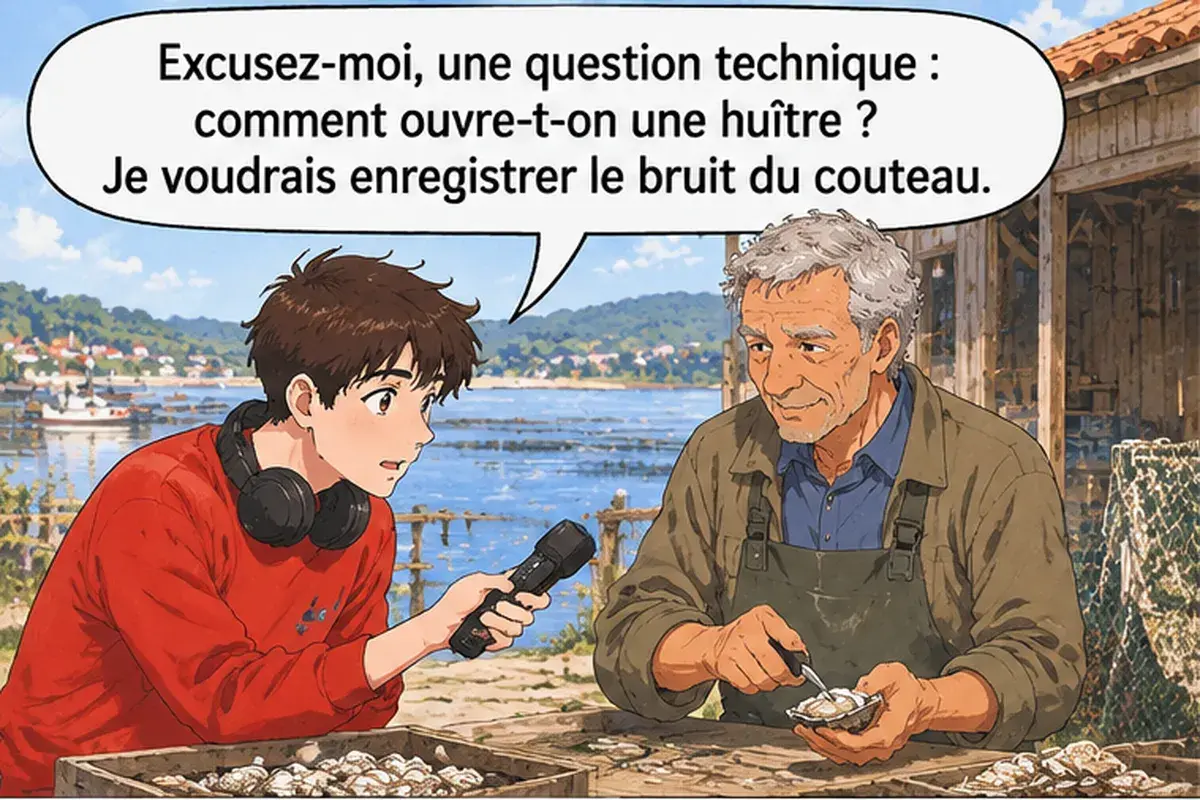
- Pacha
Excusez-moi, une question technique : comment ouvre-t-on une huître ? Je voudrais enregistrer le bruit du couteau.
Excuse me, a technical question: how do you open an oyster? I'd like to record the sound of the knife. (formal)
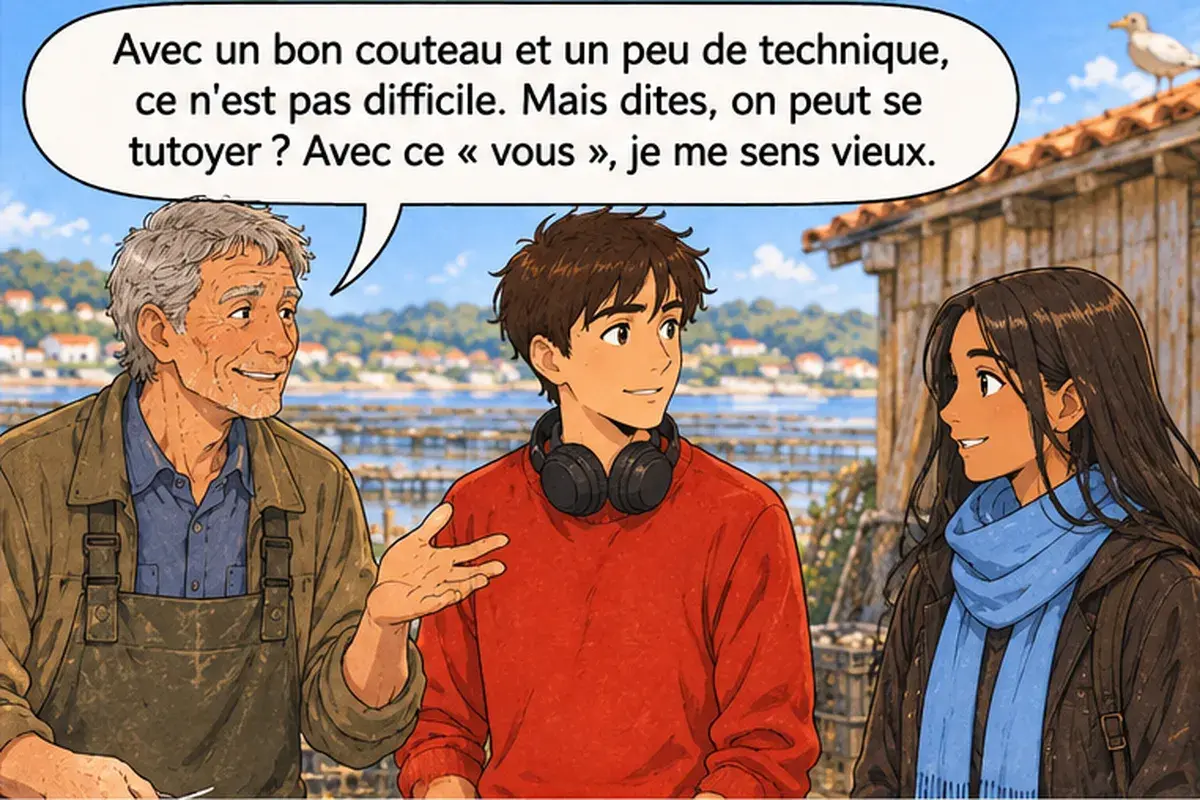
- Monsieur Etcheverry
Avec un bon couteau et un peu de technique, ce n'est pas difficile. Mais dites, on peut se tutoyer ? Avec ce « vous », je me sens vieux.
With a good knife and a little technique, it's not hard. But say, can we use tu with each other? With this "vous," I feel old. (to several people)

- Pacha
D'accord, avec plaisir ! Alors… vous… euh, tu peux parler plus près du micro ?
OK, I'd love to! So… you (formal)… um, can you speak closer to the mic?

- Inès
Et tu peux nous expliquer comment on élève une huître ?
And can you explain to us how you raise an oyster?
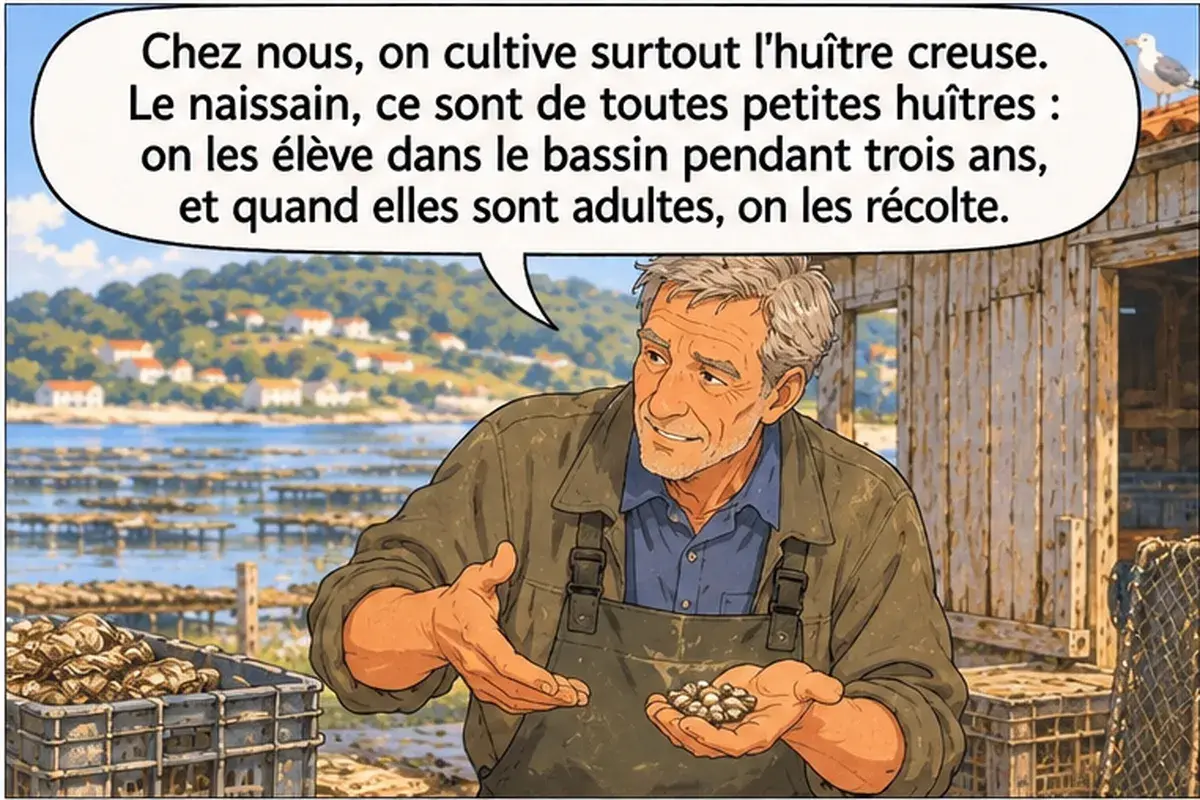
- Monsieur Etcheverry
Chez nous, on cultive surtout l'huître creuse. Le naissain, ce sont de toutes petites huîtres : on les élève dans le bassin pendant trois ans, et quand elles sont adultes, on les récolte.
Around here, we mostly farm the cupped oyster. The spat, that's the very small oysters: we raise them in the bay for three years, and when they're adults, we harvest them.
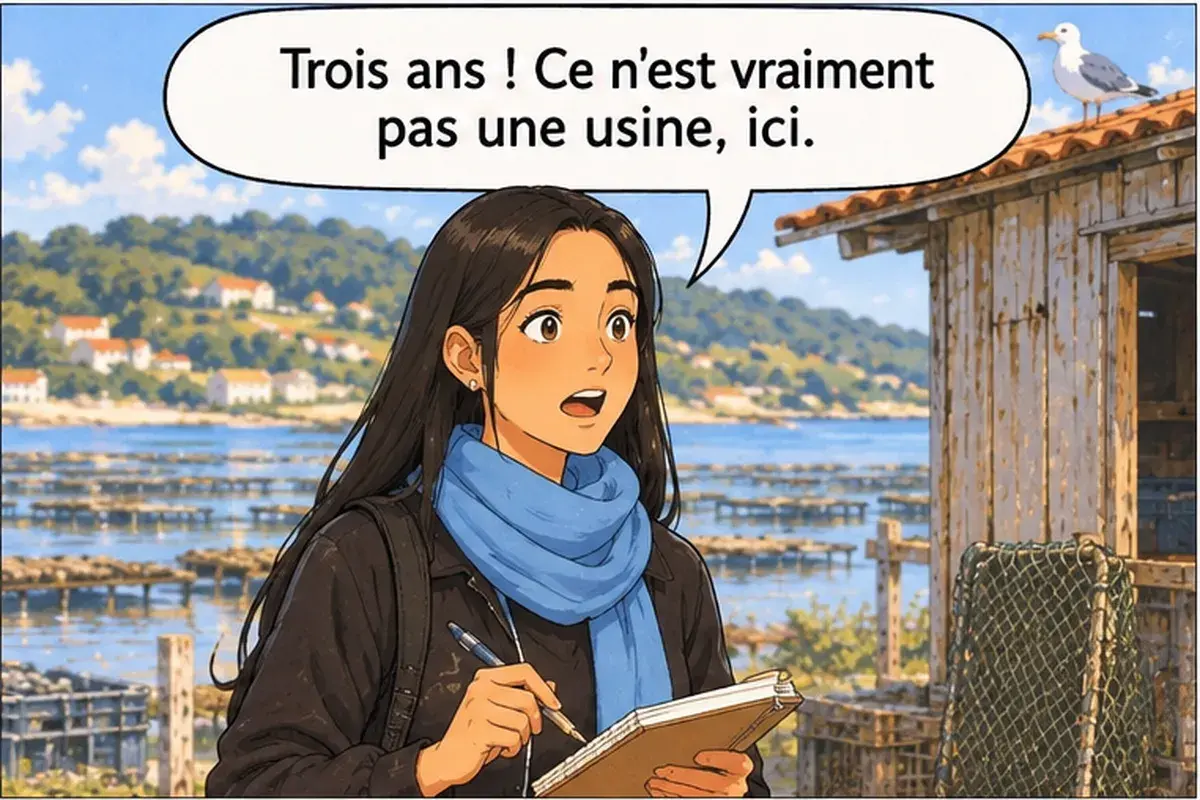
- Inès
Trois ans ! Ce n'est vraiment pas une usine, ici.
Three years! This is really not a factory, here.
- Monsieur Etcheverry
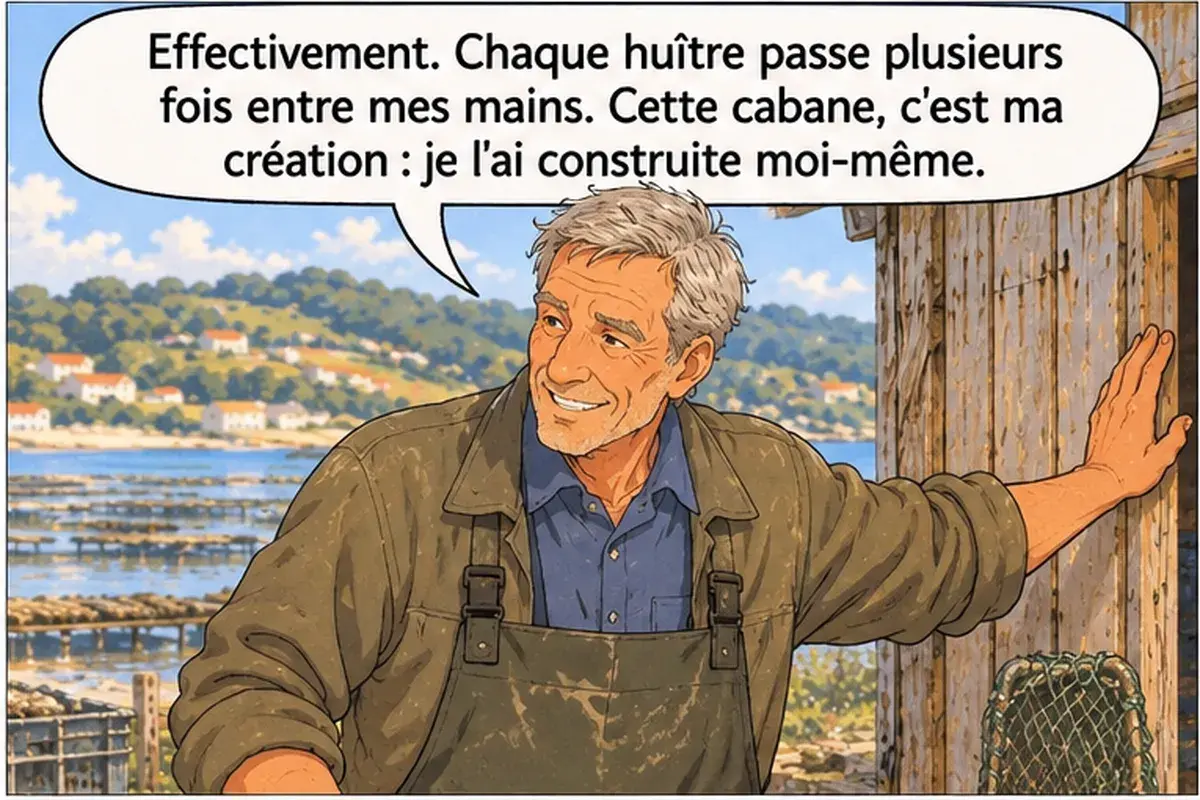
Effectivement. Chaque huître passe plusieurs fois entre mes mains. Cette cabane, c'est ma création : je l'ai construite moi-même.
Indeed. Each oyster passes through my hands several times. This hut, it's my creation: I built it myself.
- Inès
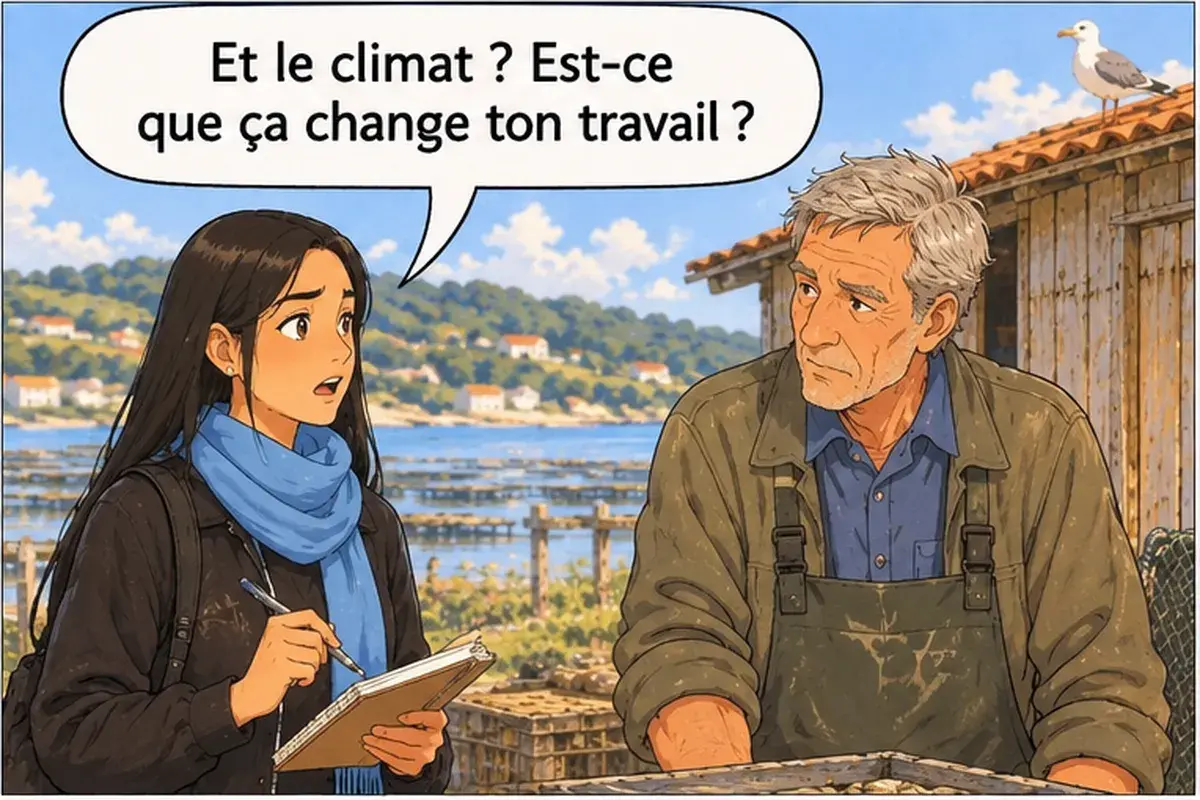
Et le climat ? Est-ce que ça change ton travail ?
And the climate? Does it change your work?
- Monsieur Etcheverry
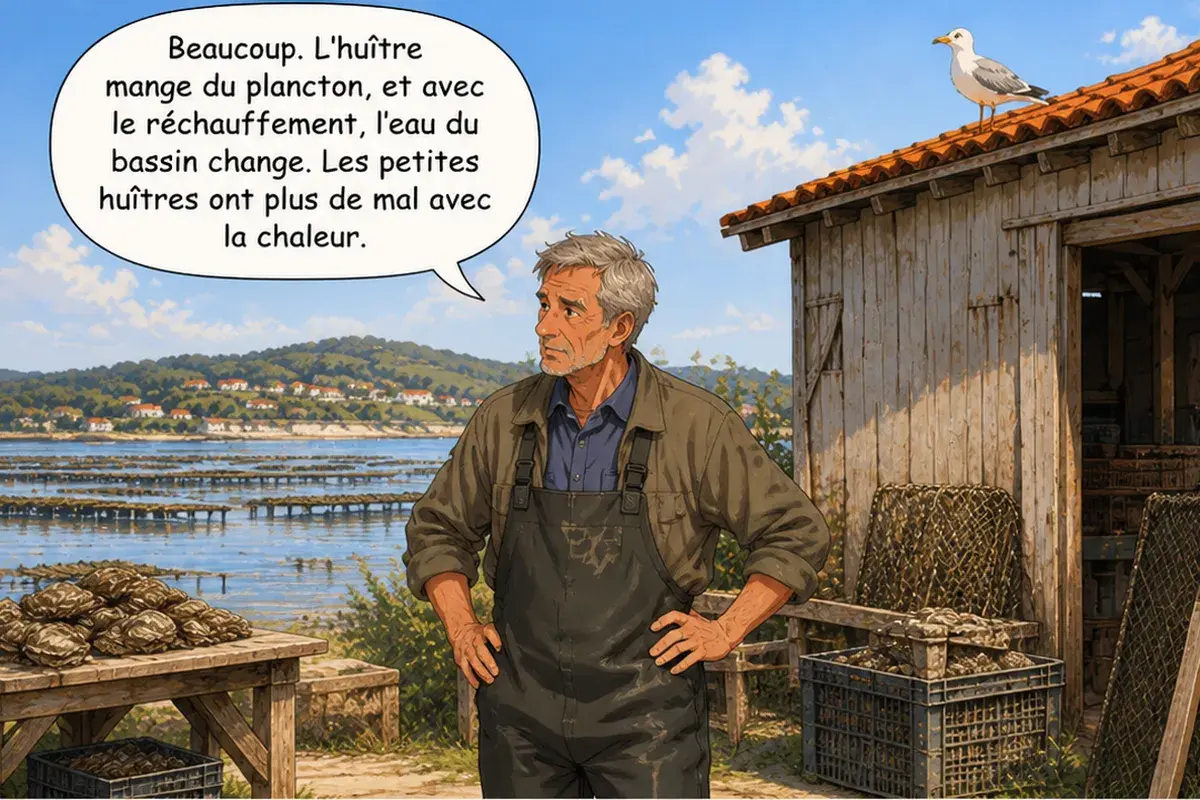
Beaucoup. L'huître mange du plancton, et avec le réchauffement, l'eau du bassin change. Les petites huîtres ont plus de mal avec la chaleur.
A lot. The oyster eats plankton, and with the warming, the water in the bay changes. The small oysters have a harder time with the heat.
- Pacha
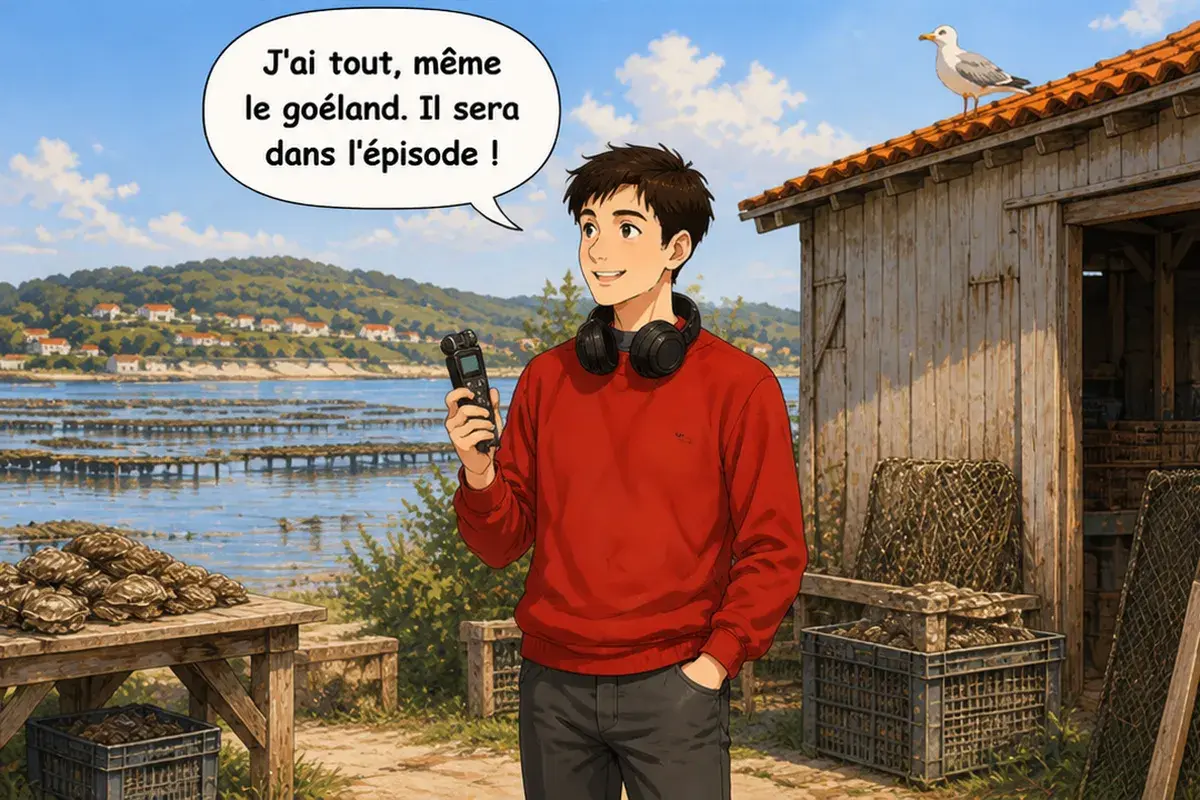
J'ai tout, même le goéland. Il sera dans l'épisode !
I've got it all, even the seagull. It'll be in the episode!
Grammar for this text
- Depuis quand faites-vous ce métier ? — An inverted question:
vous faitesbecomesfaites-vous, with a hyphen between the verb and the pronoun.faitesis the vous form offaire. See the first grammar block for more. - Où êtes-vous né ? — Where were you born? In the passé composé, the helping verb and the pronoun swap places, and the past participle stays at the end.
nécomes fromnaître("to be born"). It works the same way in pourquoi avez-vous choisi les huîtres ? — why did you choose oysters? - comment ouvre-t-on une huître ? — how do you open an oyster? After a verb that ends in a vowel and before
on, French adds-t-. It is only there for the sound. - on peut se tutoyer ? — can we use tu with each other? Usually the older person offers. In vous… euh, tu peux — you… um, you can — Pacha slips and corrects himself. See the third block for more.
- on les élève — we raise them. And on les récolte — we harvest them. Here
lesmeans "them" (the oysters), not the article. Inélever, the secondeis writtenèin the formsje, tu, il, on, ils:on élève, butnous élevons. - je l'ai construite moi-même — I built it myself.
l'means "it" (the cabane), so the past participle is feminine:construite.moi-mêmemeans "myself". - Est-ce que ça change ton travail ? — Does that change your work? After switching to tu, you need neither
votrenor inversion:ton travail,est-ce que.
Words and grammar of the unit: Conduct an interview.
Learn the words from the texts with flashcards
In the app, you can tap any word in a text to see its translation, forms and examples, and new words stick with flashcards. 15 minutes a day.
Start for freeEverything is open for free. No card needed to sign up.