

French story with translation · B1 · 14 lines
Pourquoi la dune avance Why the dune advances
Comic · 14 panels

Bonjour, ici Pacha. Pour ce nouvel épisode de « La France à l'oreille », un peu de science : Inès et moi répondons à la question que je me suis posée toute la nuit au pied de la dune du Pilat. Pourquoi est-ce qu'elle avance ?
Hello, this is Pacha. For this new episode of "La France à l'oreille," a little science: Inès and I answer the question I asked myself all night at the foot of the Dune du Pilat. Why is it advancing?
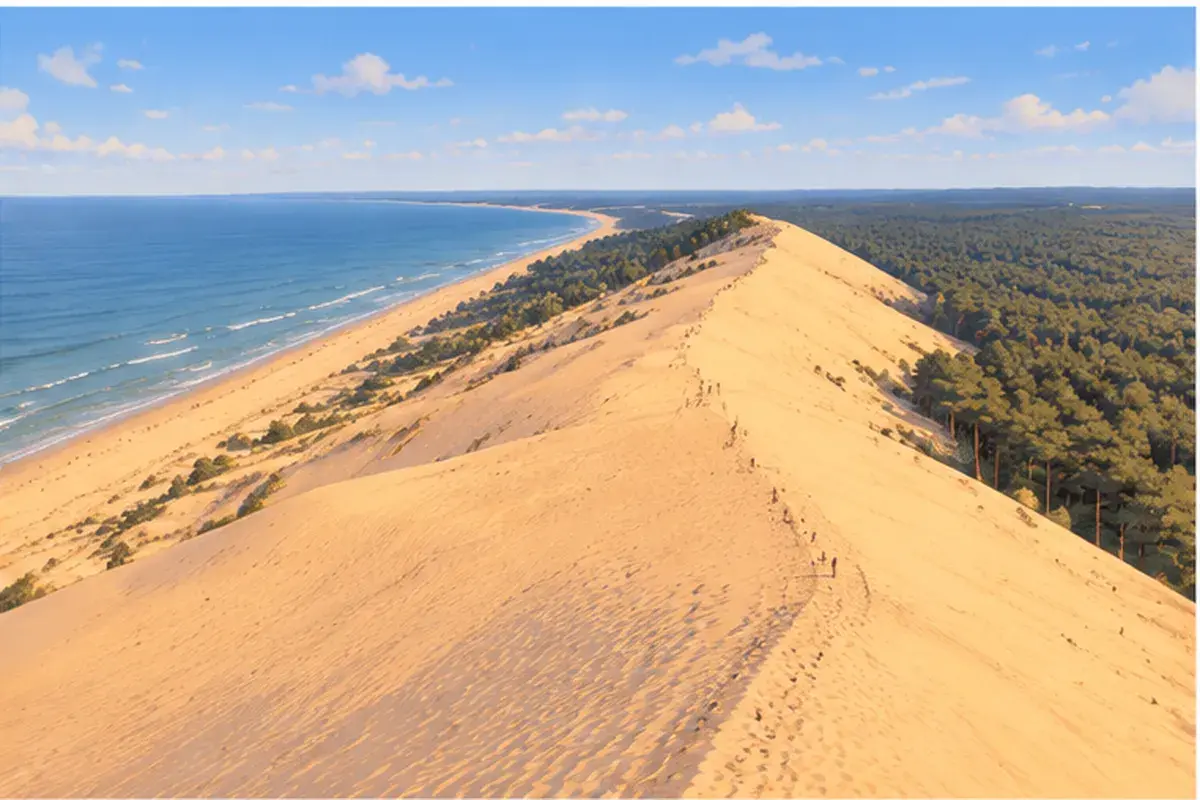
La dune du Pilat est près d'Arcachon. Elle mesure environ deux kilomètres neuf du nord au sud, et six cent seize mètres de large.
The Dune du Pilat is near Arcachon. It measures about two point nine kilometers from north to south and six hundred sixteen meters across.
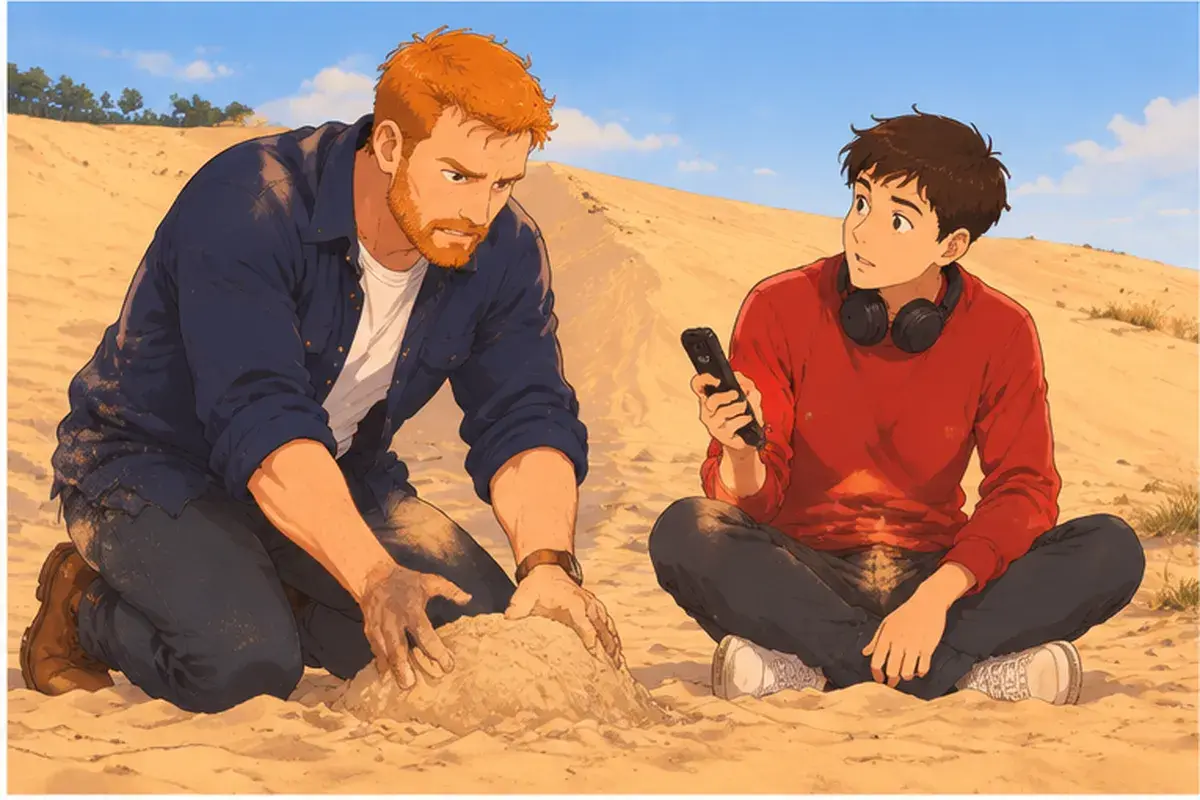
Il y a là environ cinquante-cinq millions de mètres cubes de sable. Hugo dit qu'avec autant de farine, il ferait du pain pour toute la France.
There are about fifty-five million cubic meters of sand there. Hugo says that with that much flour, he would make bread for all of France.
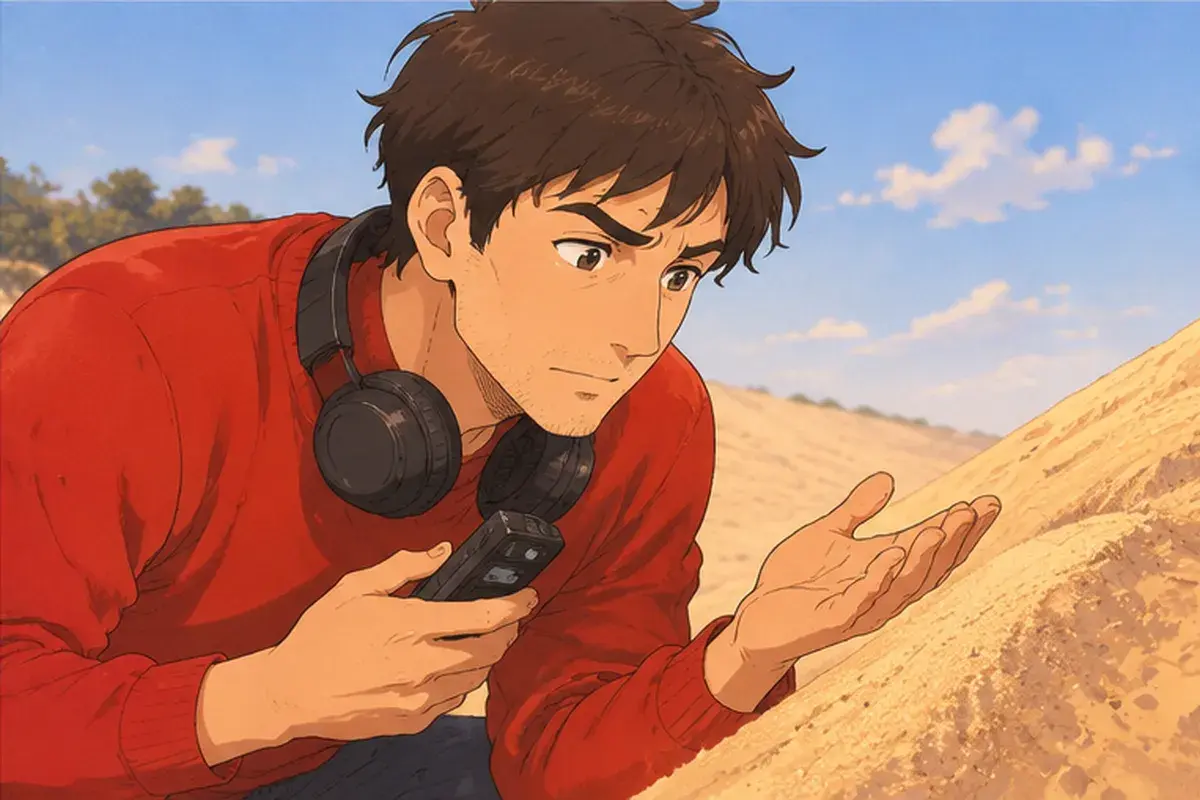
Ma question : comment est-ce que du sable peut avancer ? Il n'a ni jambes ni roues.
My question: how can sand move forward? It has neither legs nor wheels.

Inès l'explique avec le vent. Le vent dominant, celui qui souffle le plus souvent, vient de l'ouest, de la mer. Il prend le sable de la plage et le pousse vers le sommet de la dune.
Inès explains it with the wind. The prevailing wind, the one that blows most often, comes from the west, from the sea. It takes sand from the beach and pushes it toward the top of the dune.
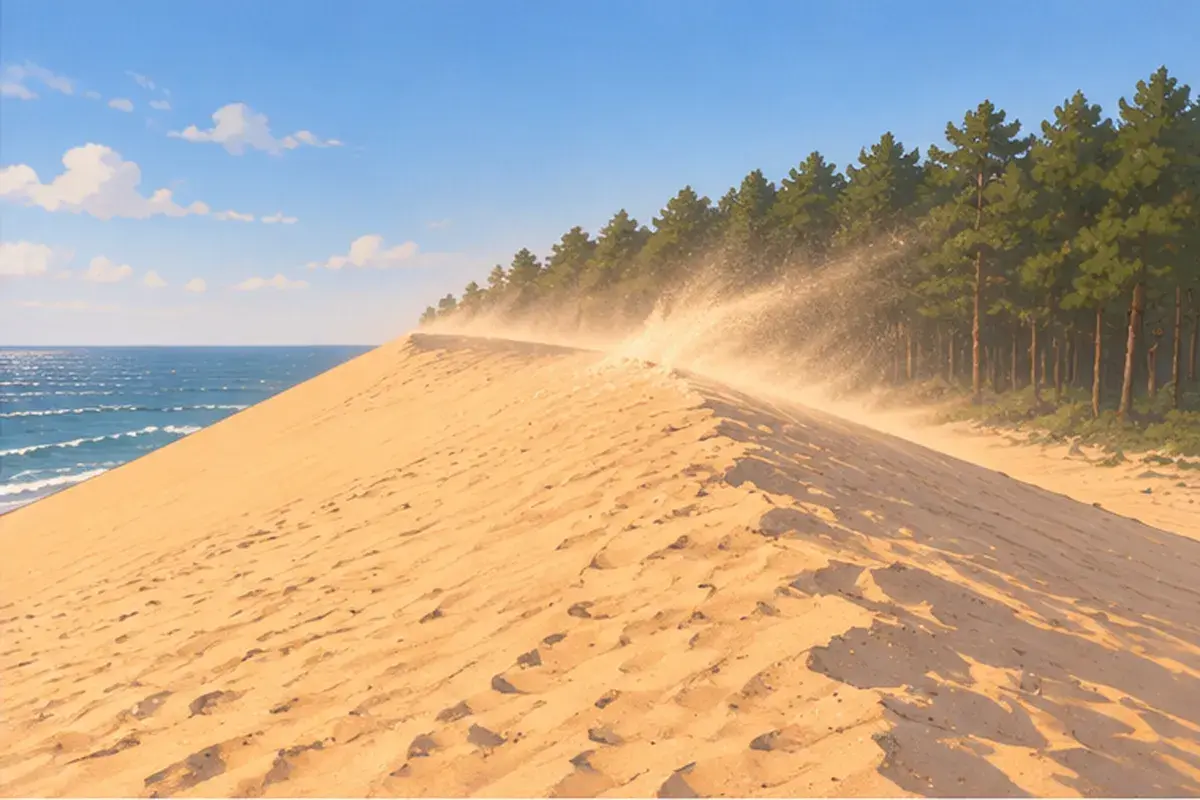
Au sommet, le vent le jette en bas, derrière la dune, vers la forêt. Le sable monte par devant et il tombe par derrière.
At the top, the wind throws it down behind the dune, toward the forest. The sand goes up the front and falls off the back.
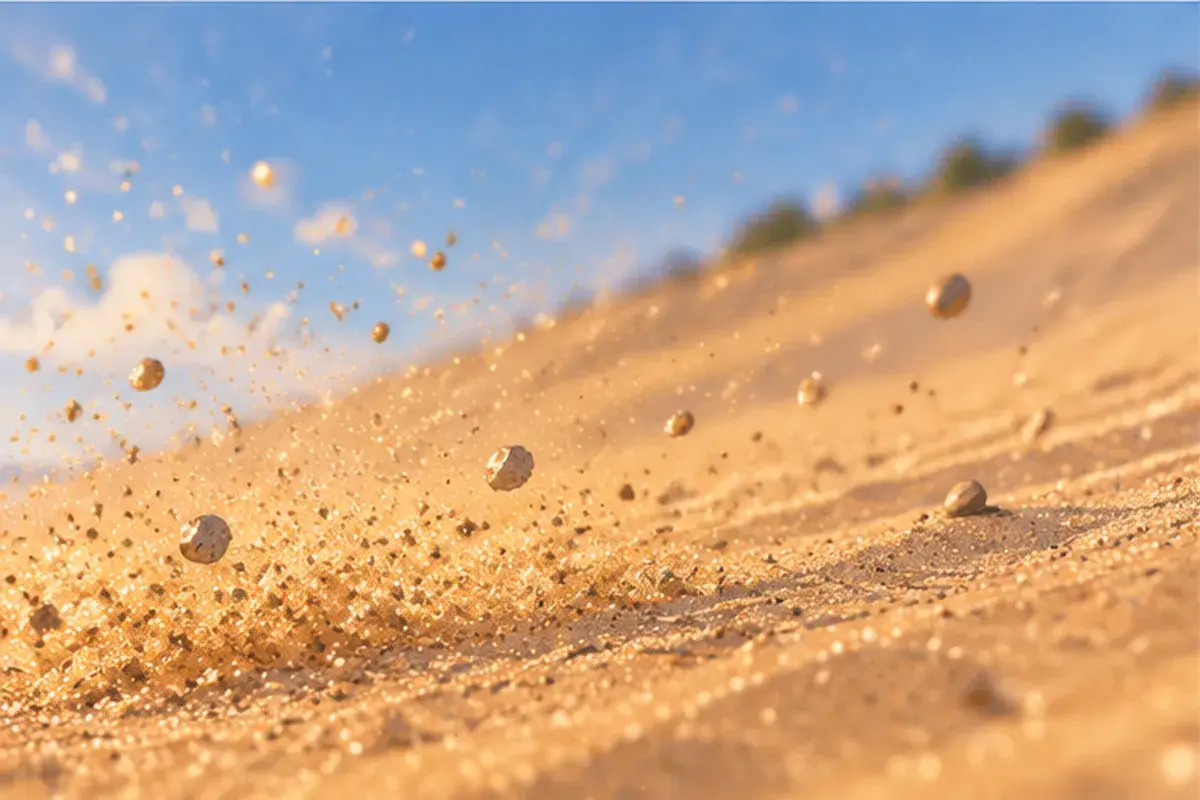
Le sable fait de tout petits pas. Mais il y en a beaucoup, et à la fin, c'est toute la dune qui avance.
The sand takes very tiny steps. But there are a lot of them, and in the end, the whole dune moves forward.

« C'est une espèce de vague, a dit Inès : la mer bouge vite, la dune bouge doucement, mais toutes les deux bougent tout le temps. »
"It's a kind of wave," Inès said: "the sea moves fast, the dune moves slowly, but both are moving all the time."
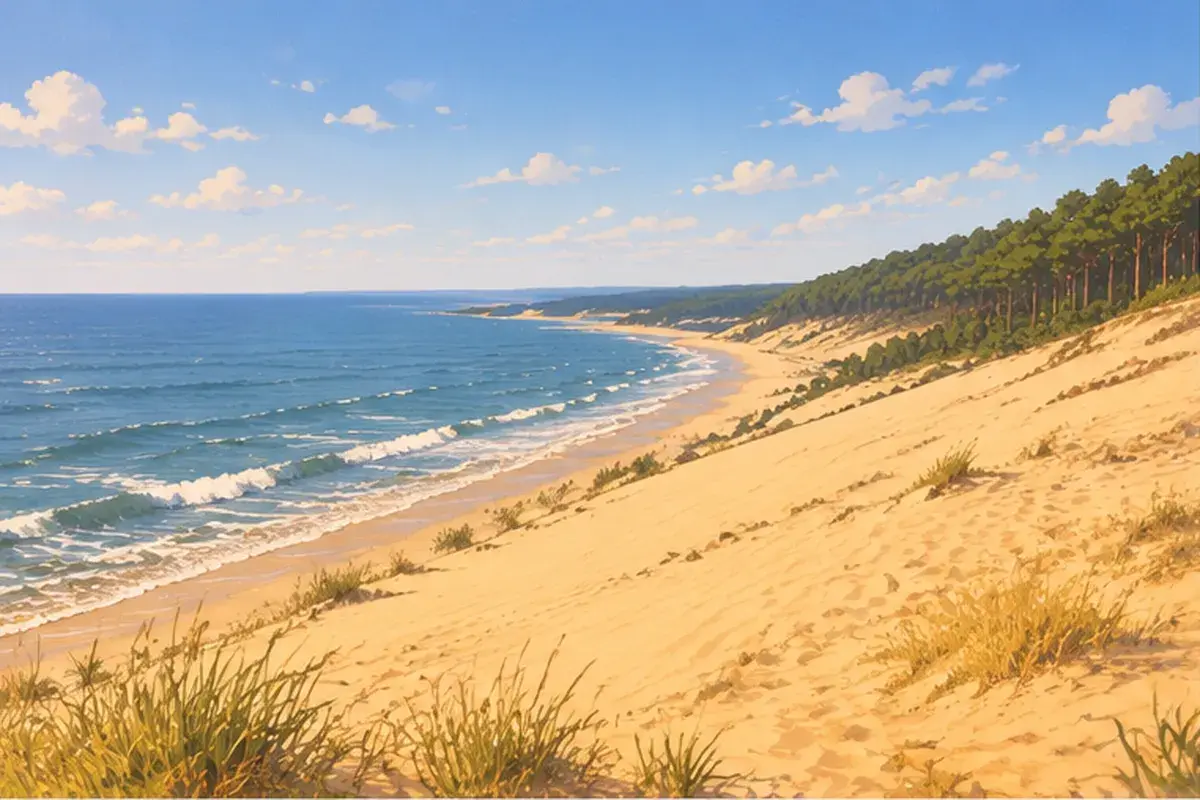
D'où vient tout ce sable ? Le vent et la mer l'apportent sans s'arrêter.
Where does all this sand come from? The wind and the sea bring it without stopping.
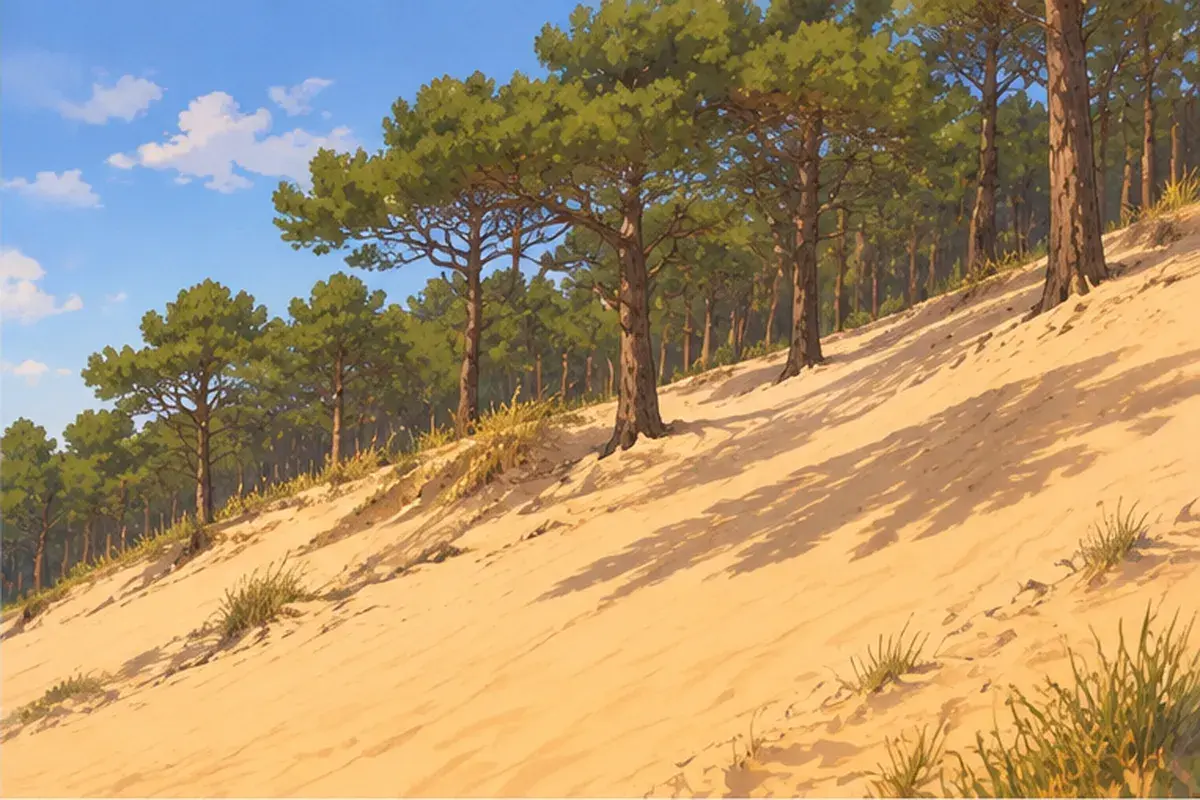
Derrière la dune, il y a la forêt. Le sable recouvre les arbres, d'un à cinq mètres par an.
Behind the dune, there's the forest. The sand covers the trees, by one to five meters a year.
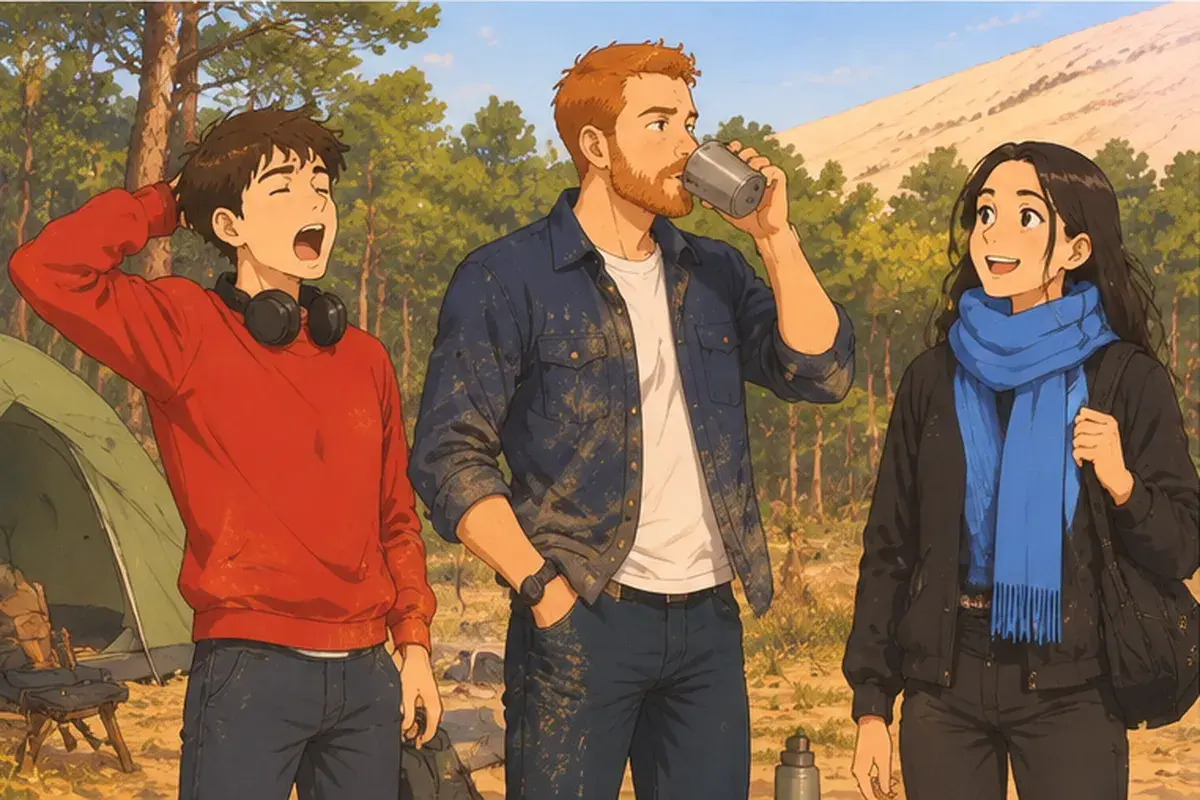
Nous avons dormi près de cette forêt : heureusement, c'est par an, pas par nuit !
We slept near this forest: fortunately, that's per year, not per night!
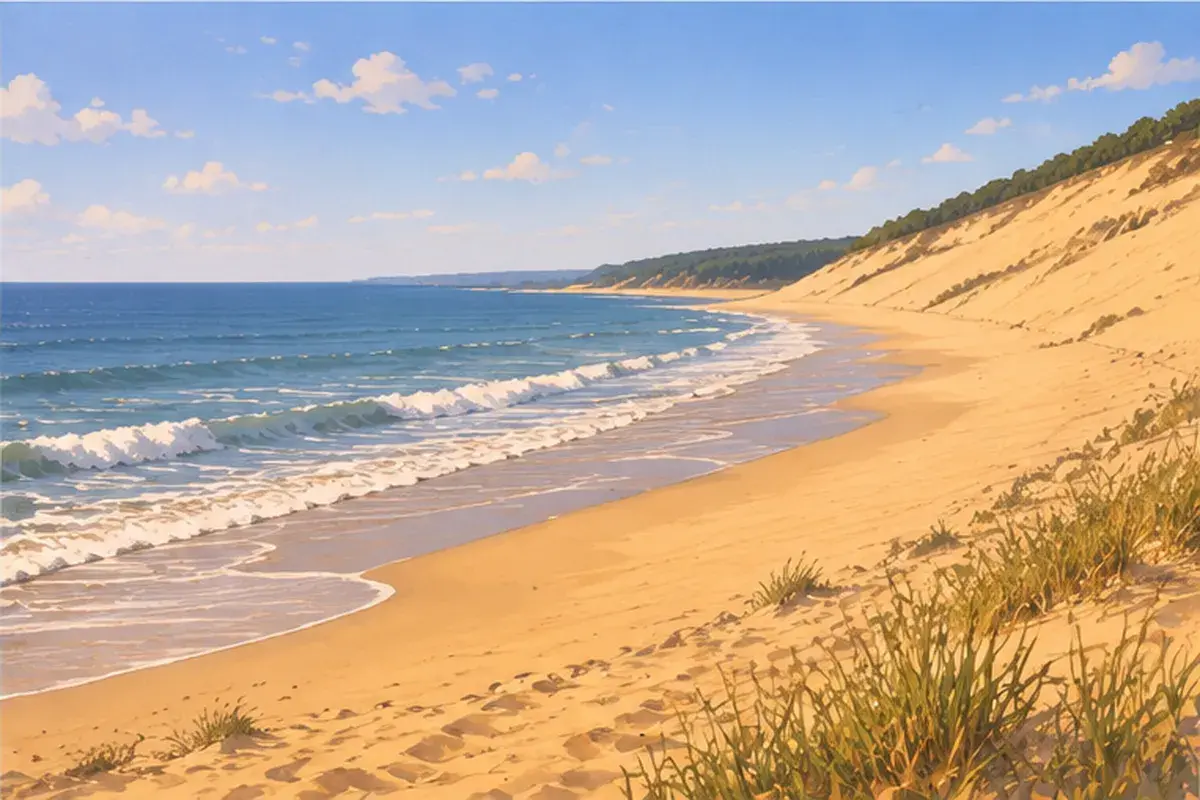
Vers la mer, à l'ouest, la plage change aussi, mais pas de la même façon partout.
Toward the sea, in the west, the beach changes too, but not in the same way everywhere.
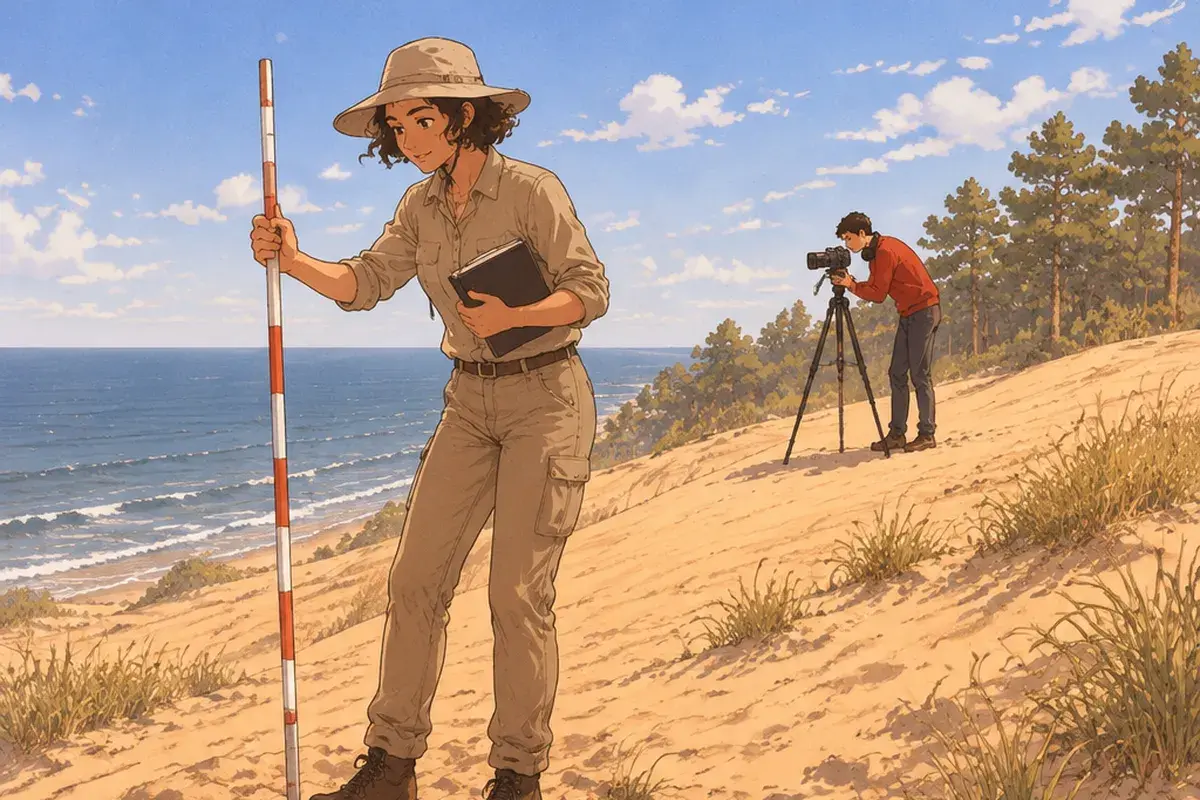
Des chercheurs étudient la dune tout le temps. Elle a été mesurée plusieurs fois par des scientifiques dont le travail est de comparer les mesures : la recherche ne s'arrête jamais.
Researchers study the dune all the time. It has been measured several times by scientists whose job is to compare measurements: research never stops.

J'ai demandé s'il y avait un moyen d'arrêter la dune. Hugo a proposé de la couvrir avec notre toile, mais elle était déchirée : la dune a gagné. À bientôt, et dormez loin de la forêt !
I asked if there was a way to stop the dune. Hugo suggested covering it with our canvas, but it was torn: the dune won. See you soon, and sleep far from the forest! (to several people)
Grammar for this text
- Bonjour, ici Pacha — Hello, this is Pacha. Pacha is the speaker: this is the script of a podcast episode.
- la question que je me suis posée — the question I asked myself.
questands for the question;poséeends in-ebecausequestionis feminine and comes before the verb (unit 15). - Pourquoi est-ce qu'elle avance ? — Why is it advancing? This is a question with
est-ce que. - comment est-ce que du sable peut avancer ? — how can sand move forward? Same pattern:
est-ce que. - il ferait du pain — he would make bread. This is the conditional (unit 3).
- Il n'a ni jambes ni roues — It has neither legs nor wheels.
ni… nimeans "neither… nor" (unit 11). - Le vent dominant, celui qui souffle le plus souvent — The prevailing wind, the one that blows most often.
celui quimeans "the one that" (unit 5);soufflermeans "to blow". - il y en a beaucoup — there are a lot of them.
enstands for "steps" (unit 2). - Elle a été mesurée plusieurs fois — It has been measured several times. This is the passive (unit 15);
mesuréeends in-ebecauseduneis feminine. - des scientifiques dont le travail est de… — scientists whose job is to… Here
dontmeans "whose" (see the grammar of this unit). - sans s'arrêter — without stopping.
sans+ infinitive (unit 14). - Hugo a proposé de la couvrir — Hugo suggested covering it.
lastands for the dune;proposer deis followed by a verb.
Words and grammar of the unit: Return a faulty item.
Learn the words from the texts with flashcards
In the app, you can tap any word in a text to see its translation, forms and examples, and new words stick with flashcards. 15 minutes a day.
Start for freeEverything is open for free. No card needed to sign up.