

French story with translation · B1 · 17 lines
Un toit, c'est un toit A roof is a roof
Comic · 17 panels
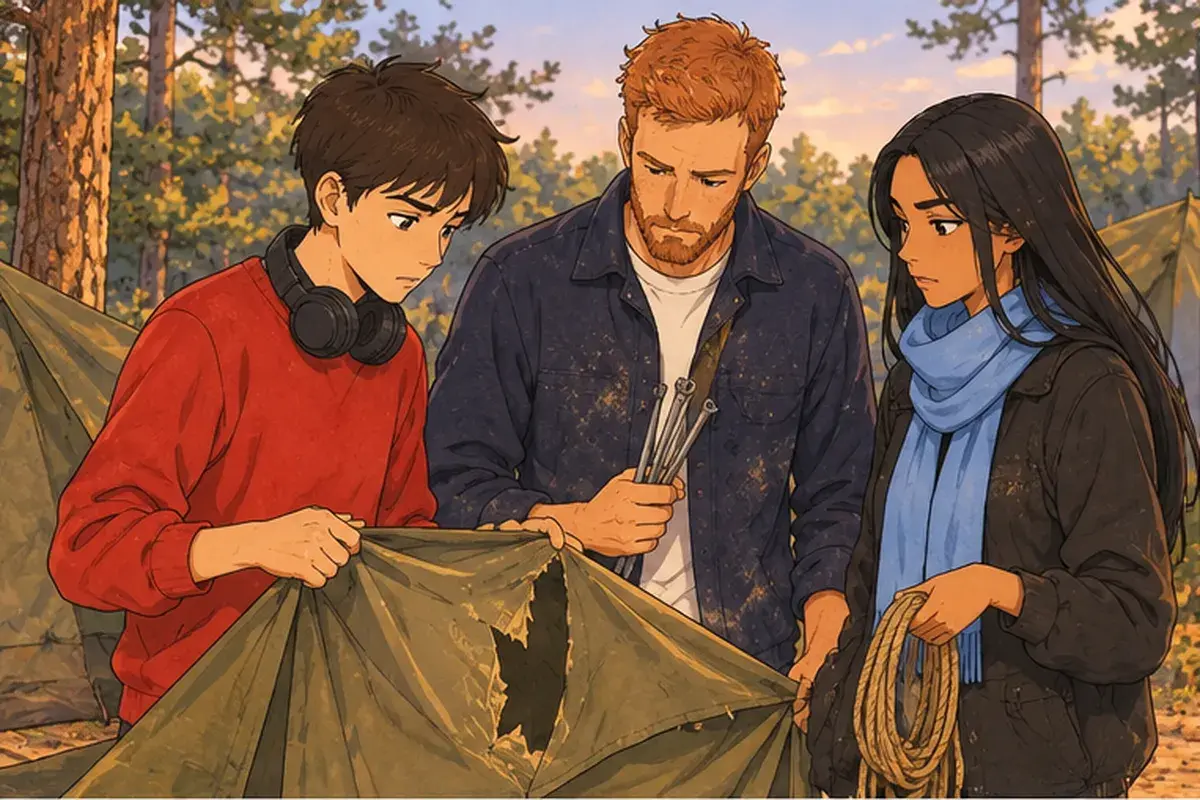
Le soir, tout le camping montait sa tente avec des piquets et des tendeurs. Nous, nous avions une toile déchirée et une nuit à passer dehors.
In the evening, the whole campsite was putting up its tents with stakes and guy lines. We had torn canvas and a night to spend outdoors.
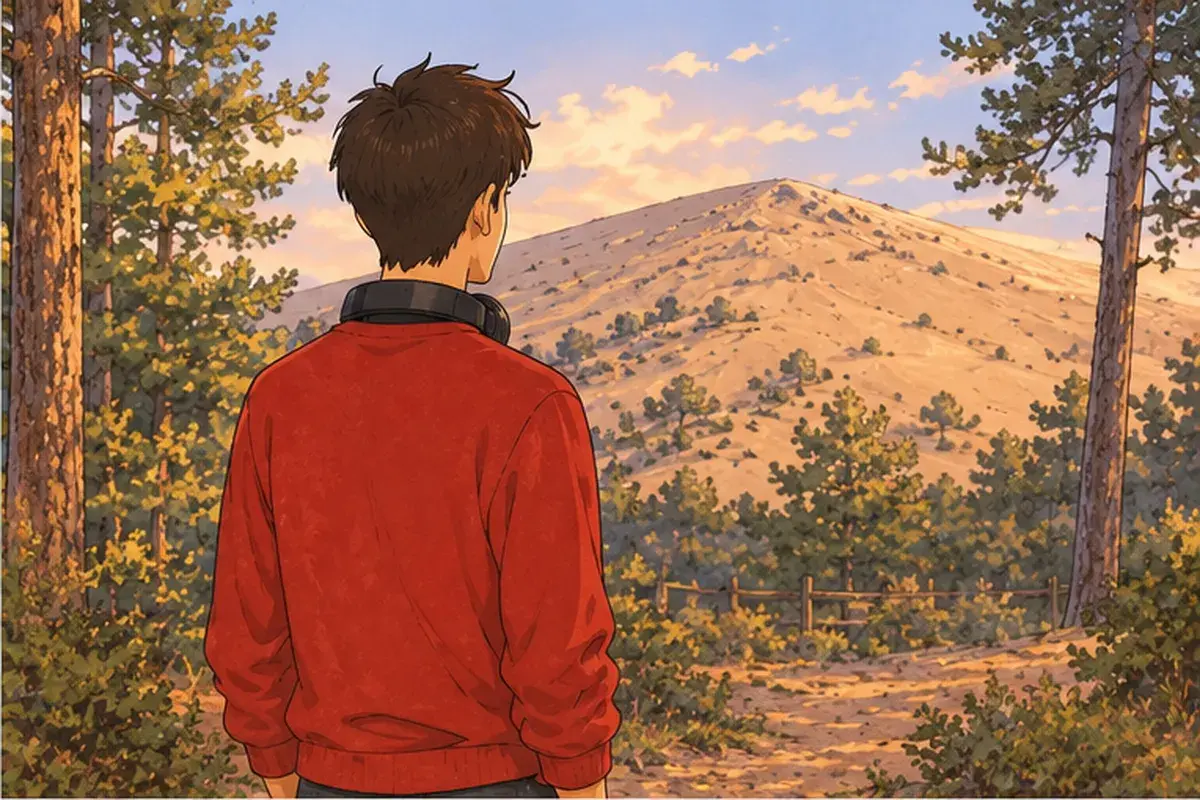
Notre coin était au bord de la forêt, au pied de la grande dune. Autour de nous, il y avait de grands arbres et, entre eux, de jeunes arbres pas encore très grands.
Our spot was at the edge of the forest, at the foot of the big dune. Around us there were tall trees and, between them, young trees that weren't very tall yet.

Inès m'a expliqué qu'un grand incendie avait brûlé cette forêt il y a quelques années. Depuis, les feux de bois sont interdits : une affiche le rappelait à l'entrée du camping.
Inès explained to me that a big fire had burned this forest a few years ago. Since then, wood fires have been banned: a sign at the campsite entrance reminded people of it.
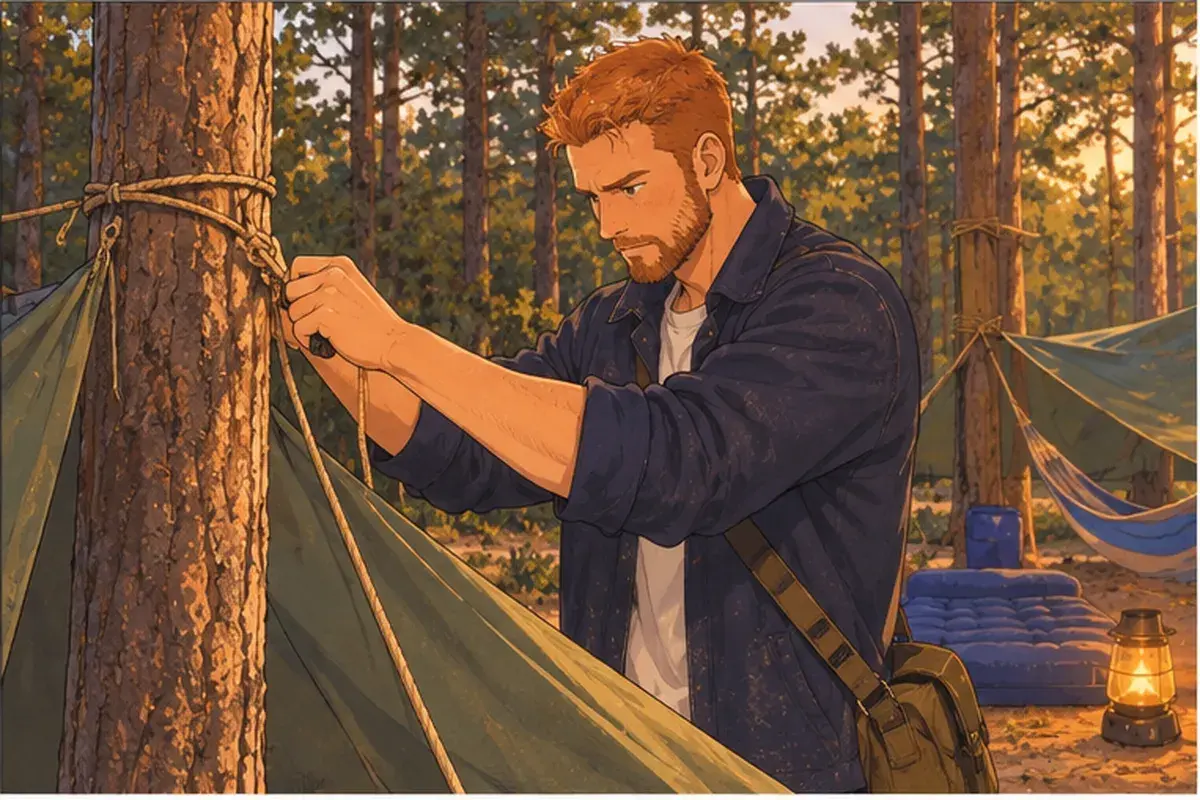
Hugo, lui, ne voyait pas le problème. Il a construit un abri : il a mis notre vieille toile entre deux arbres avec les tendeurs, et les piquets dans le sable. En montant l'abri, il a cassé un piquet, mais il a continué avec les autres, sans un mot.
Hugo, for his part, didn't see the problem. He built a shelter: he put our old canvas between two trees with the guy lines, and the stakes in the sand. While putting up the shelter, he broke a stake, but he kept going with the others, without a word.
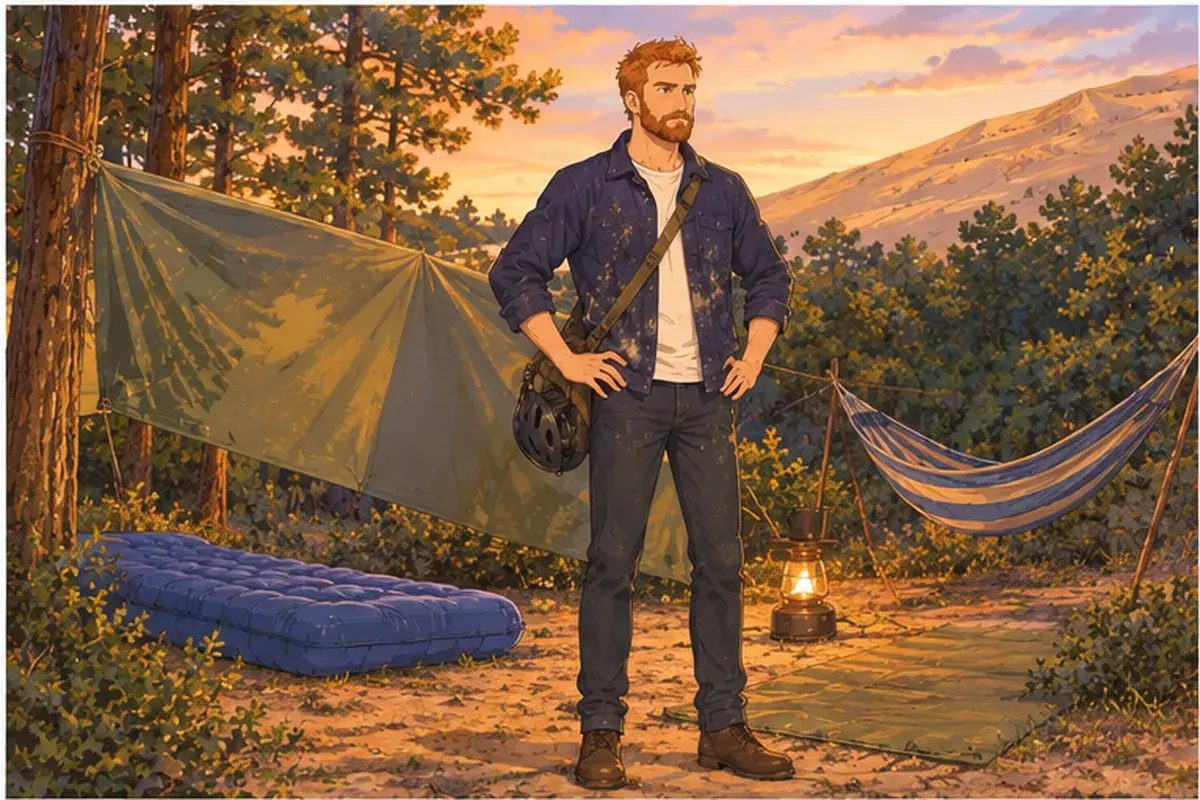
Ce n'était pas très beau, mais il y avait un toit. « Un toit, c'est un toit », a dit Hugo, très sérieux.
It wasn't very pretty, but there was a roof. "A roof is a roof," Hugo said, very seriously.
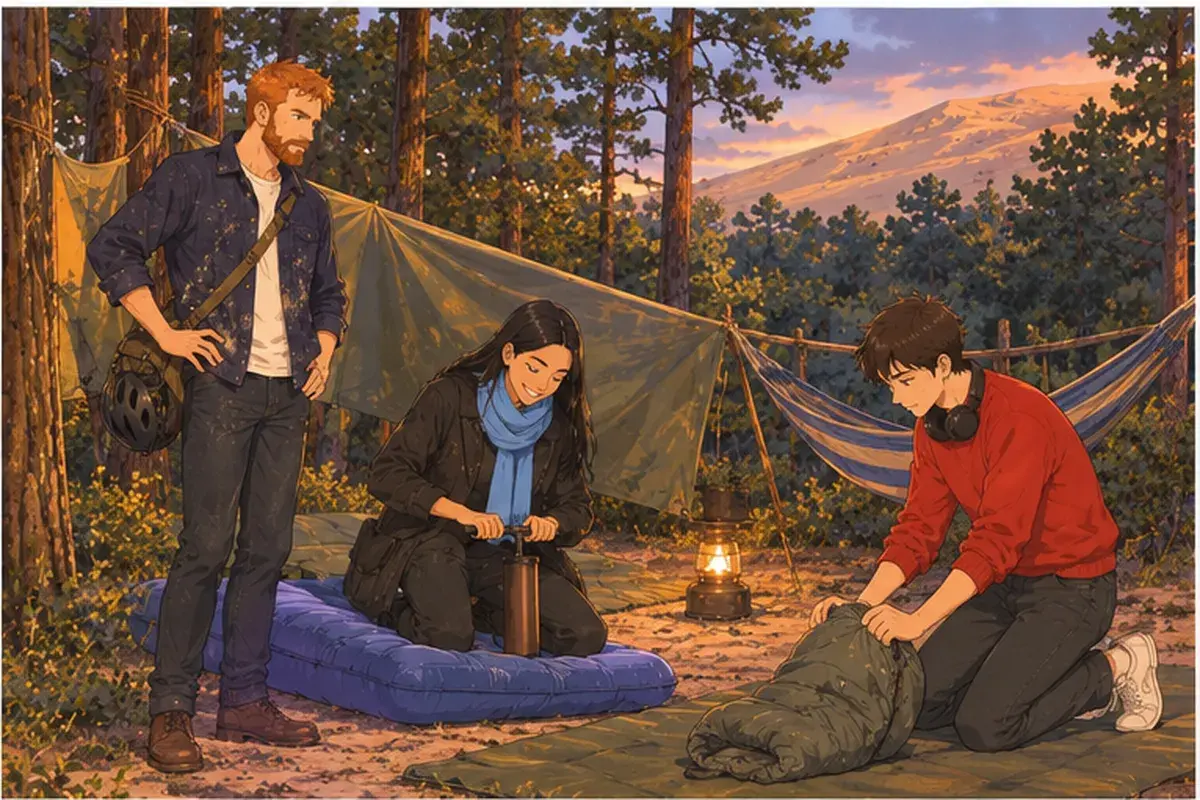
Il a installé son hamac juste à côté. Inès a gonflé son matelas, et moi, j'ai posé mon duvet sur le tapis de sol et j'ai mis mon pyjama.
He set up his hammock right next to it. Inès inflated her mattress, and I put my sleeping bag on the ground mat and put on my pajamas.
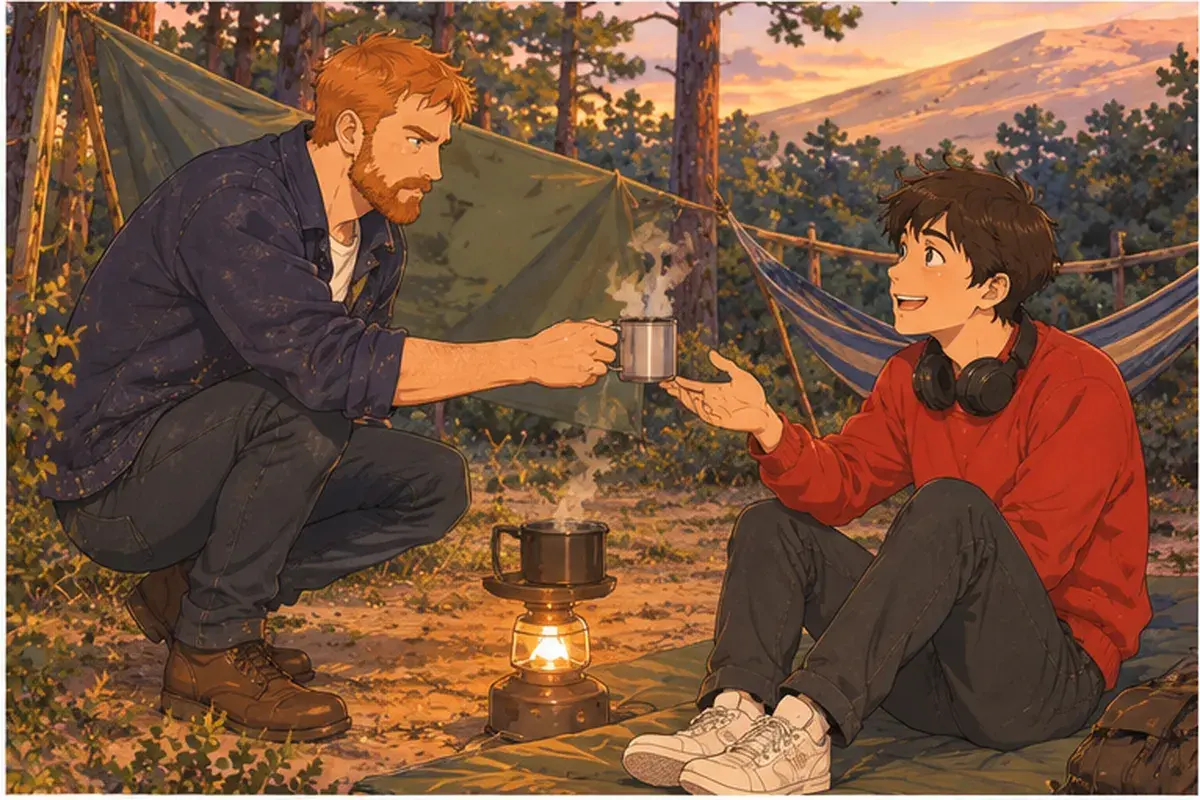
Ensuite, Hugo a chauffé de l'eau sur le réchaud. Il m'a servi mon thé avec autant de sérieux que son pain.
Then Hugo heated water on the camp stove. He served me my tea with as much seriousness as his bread.
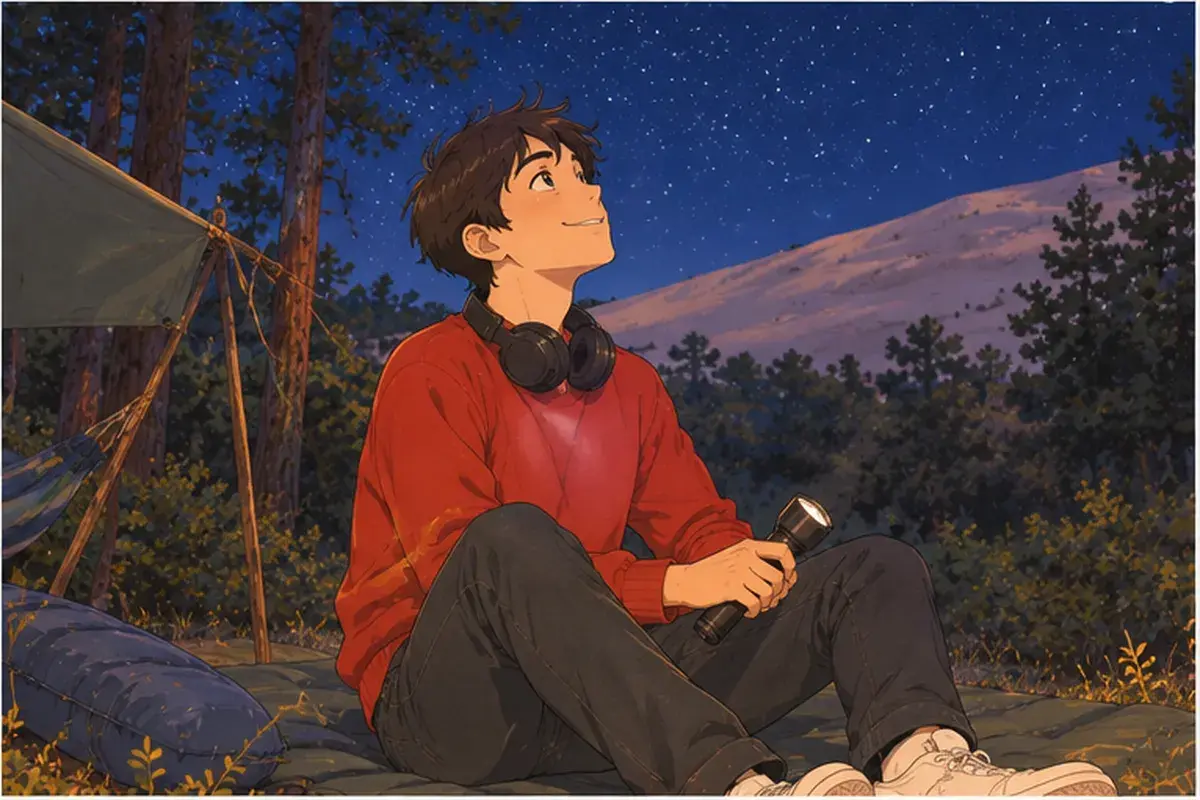
La nuit est tombée vite. J'ai éteint la lampe de poche, et le ciel était couvert d'étoiles : jamais je n'en avais vu autant.
Night fell quickly. I turned off the flashlight, and the sky was covered with stars: I had never seen so many.

Dans le silence, j'entendais de petits bruits : le vent dans les arbres, le sable qui glisse sur la dune et, très loin, la mer.
In the silence, I could hear little sounds: the wind in the trees, the sand sliding down the dune and, very far away, the sea.
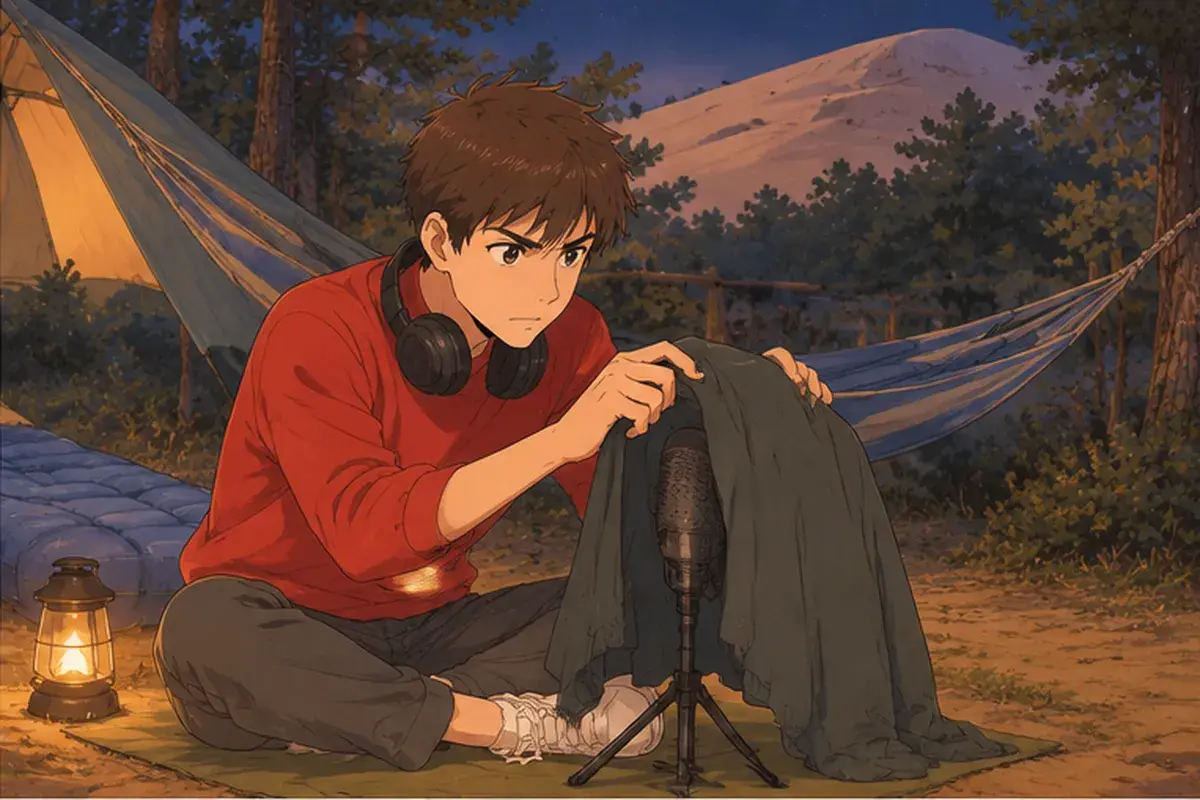
Mon micro est fragile, et la poussière de sable est partout. Alors je l'ai couvert avec un vieux pull.
My microphone is fragile, and sand dust is everywhere. So I covered it with an old sweater.
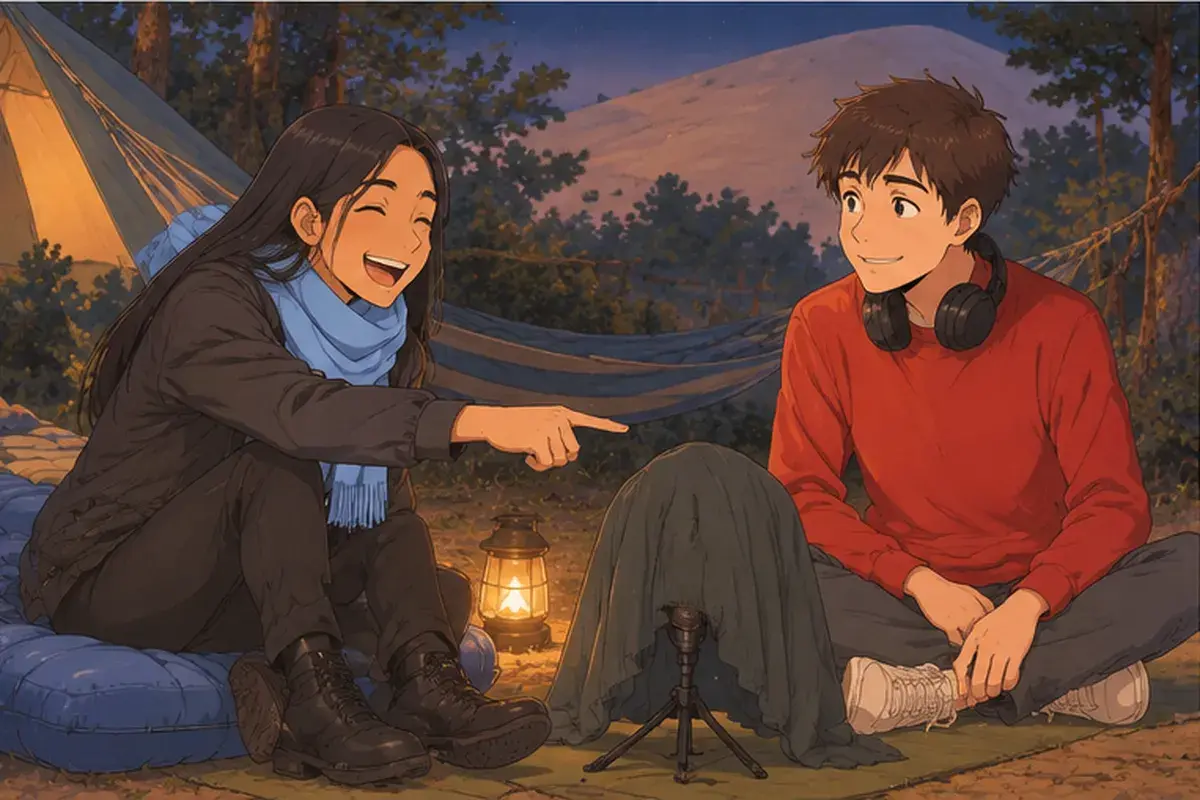
Inès a ri : « Le micro a un pull, et nous, nous n'avons pas de tente ! »
Inès laughed: "The microphone has a sweater, and we don't have a tent!"
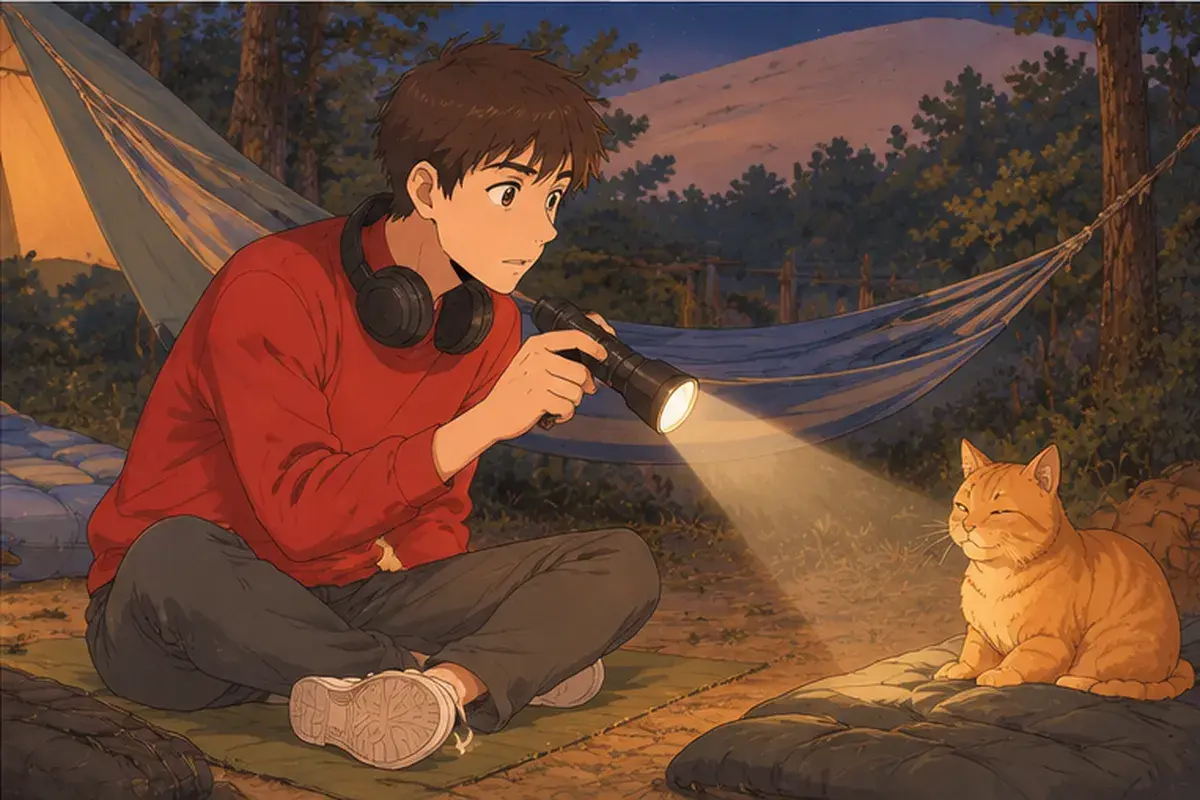
Vers minuit, quelque chose a bougé sur mon duvet. J'ai allumé la lampe : un chat roux, comme Hugo, me regardait sans bouger.
Around midnight, something moved on my sleeping bag. I turned on the light: an orange cat, like Hugo, was looking at me without moving.
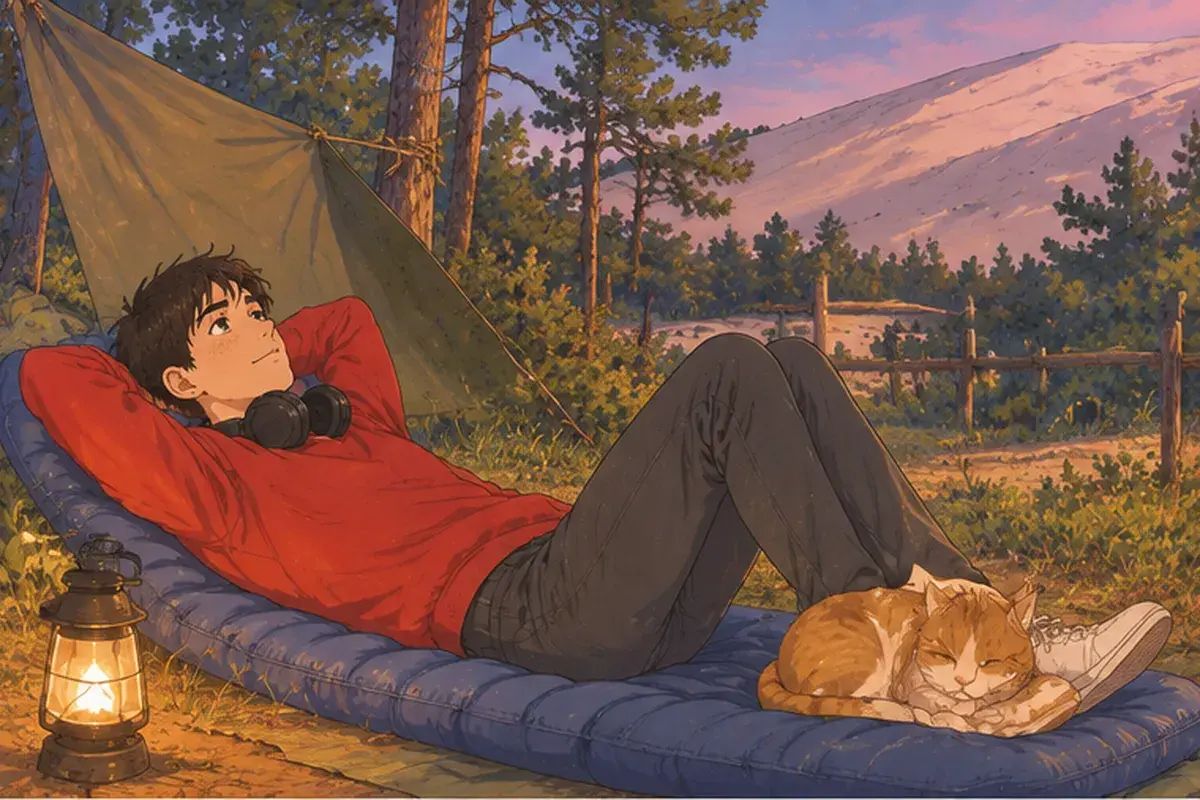
J'avais gardé mes chaussettes, et il s'est couché sur mes pieds, comme chez lui. J'ai pensé au chat de madame Morel, à Paris : lui aussi dort sur les affaires des autres.
I had kept my socks on, and it lay down on my feet, as if at home. I thought of Madame Morel's cat in Paris: it also sleeps on other people's things.
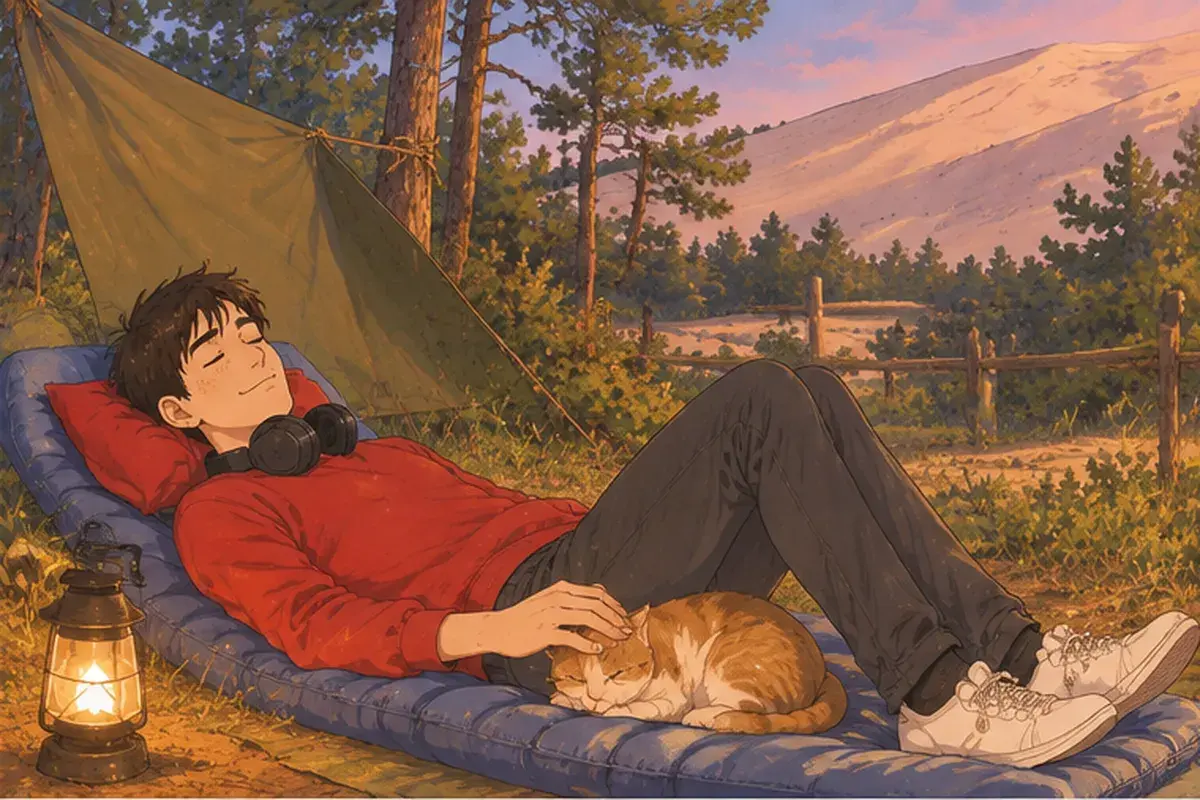
Je n'ai pas voulu le déranger : après tout, c'était son camping.
I didn't want to disturb it: after all, it was its campsite.
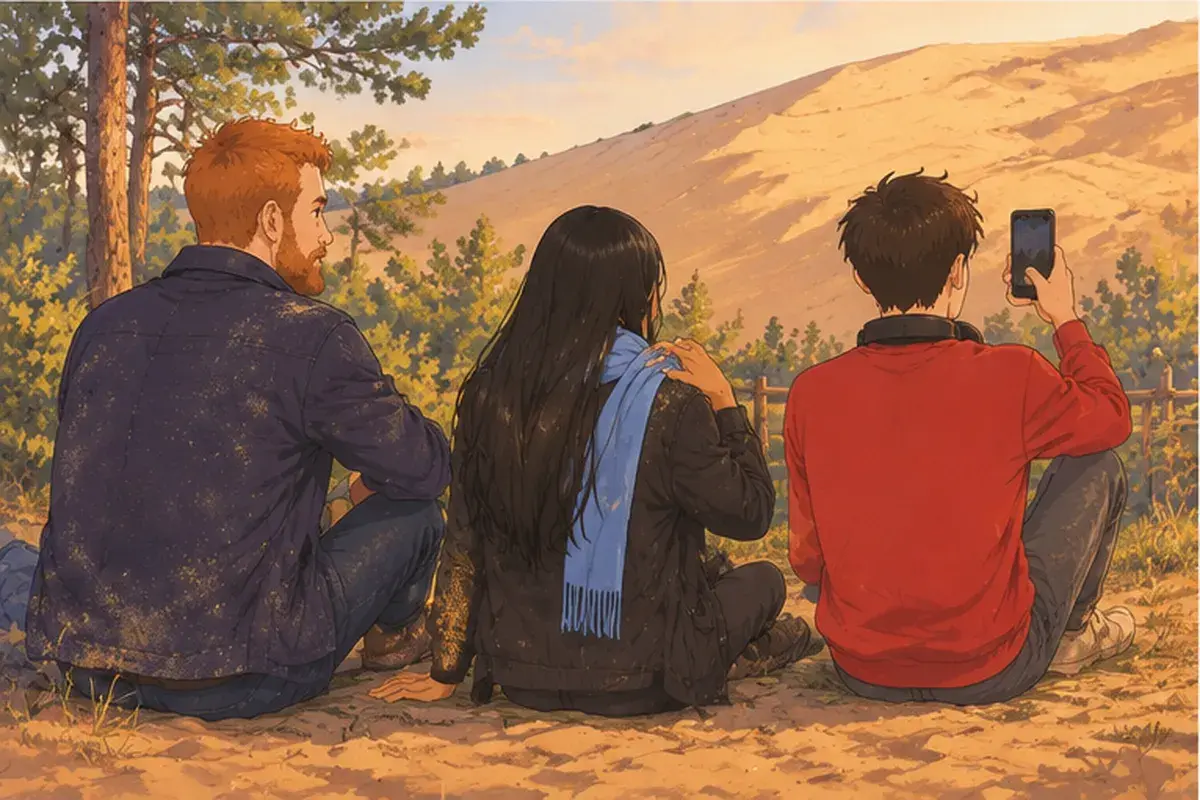
Au matin, la dune est devenue rose, puis jaune. Nous avions du sable dans les cheveux, des feuilles dans les duvets, mal au dos, et de belles photos plein le téléphone.
In the morning, the dune turned pink, then yellow. We had sand in our hair, leaves in our sleeping bags, sore backs, and a phone full of beautiful photos.
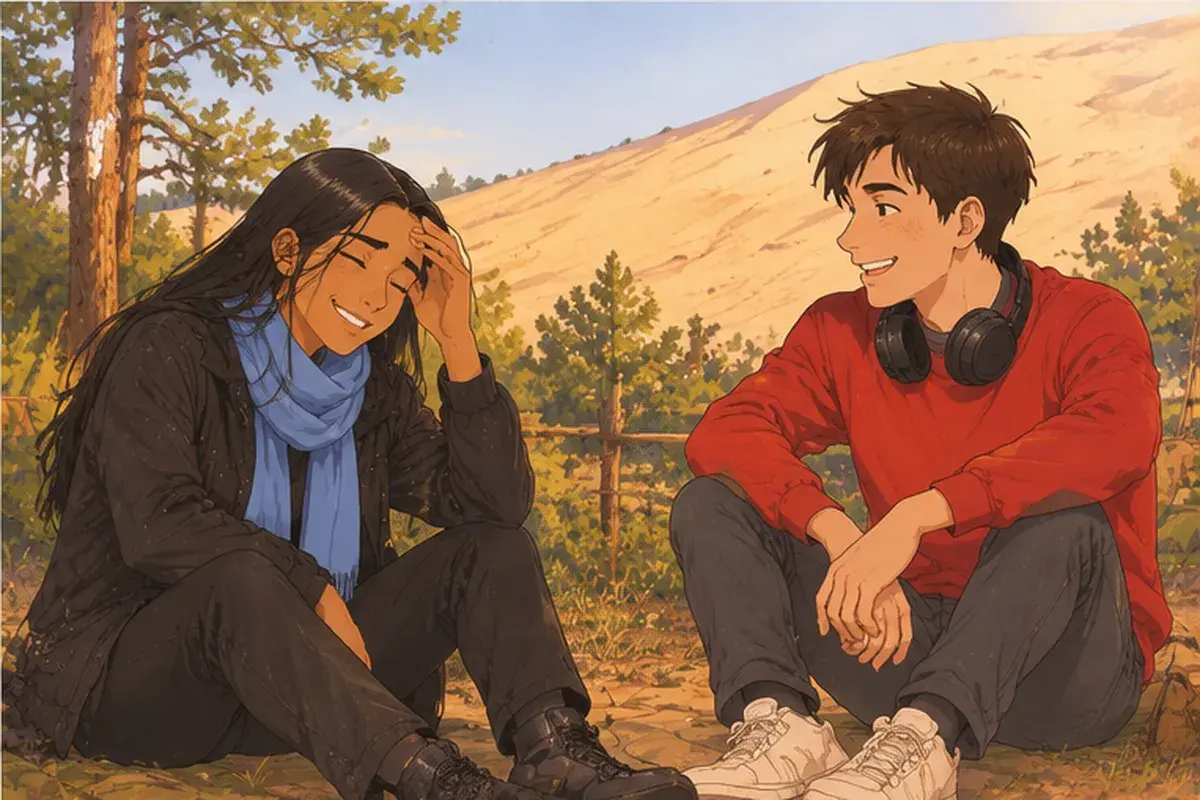
Inès disait qu'une tente défectueuse pouvait gâcher un voyage. Elle avait tort : on s'en est sortis, et cette nuit-là nous a donné le début de notre prochain épisode.
Inès used to say that a defective tent could ruin a trip. She was wrong: we got through it, and that night gave us the start of our next episode.
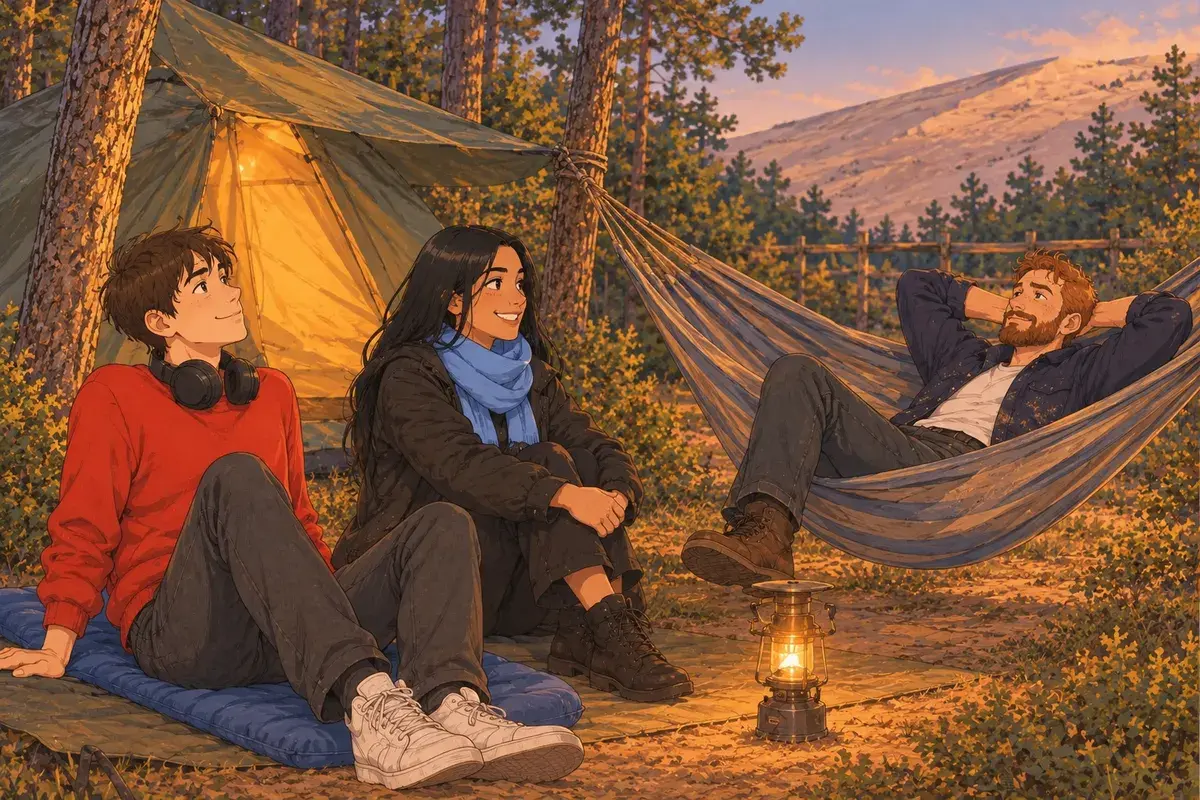
Le lendemain soir, nous avions une tente neuve, avec une couture solide. Hugo, lui, a dormi dans son hamac : il dit qu'on peut très bien se passer de tente quand il ne pleut pas.
The next evening, we had a new tent, with a solid seam. Hugo, for his part, slept in his hammock: he says you can do very well without a tent when it isn't raining.
Grammar for this text
- Inès m'a expliqué qu'un grand incendie avait brûlé cette forêt — Inès explained to me that a big fire had burned this forest.
avait brûléis the past perfect: it happened before that (unit 8).m'a expliqué quereports what someone said (unit 9). - de grands arbres, de jeunes arbres, de belles photos — tall trees, young trees, beautiful photos. Before an adjective,
desbecomesde. More in the unit grammar. - les feux de bois sont interdits — wood fires are banned.
un feu de boisis a fire made of wood; Hugo's camp stove isn't one. - une affiche le rappelait — a sign reminded people of it. Here
lemeans "of that". - jamais je n'en avais vu autant — I had never seen so many.
enstands for "stars";jamaiswithnemeans "never";avais vumeans "had seen". - Un toit, c'est un toit — A roof is a roof. Hugo jokes with a straight face: even old canvas counts as a roof.
- quelque chose a bougé — something moved (
bouger). - Elle avait tort — She was wrong (
avoir tort). - lui aussi dort sur les affaires des autres — it also sleeps on other people's things. Here
desisde + les: Madame Morel's cat does the same. - En montant l'abri, il a cassé un piquet — While putting up the shelter, he broke a stake. This is
en+ the-antform (unit 14); the subject is the same, Hugo. - on s'en est sortis — we got through it.
s'en sortirmeans "to get through, to manage";onmeans "we" here, so the participle ends in-s. You can't dropen. - se passer de tente — do without a tent.
se passer demeans "to do without"; there is no article afterde.
Words and grammar of the unit: Return a faulty item.
Learn the words from the texts with flashcards
In the app, you can tap any word in a text to see its translation, forms and examples, and new words stick with flashcards. 15 minutes a day.
Start for freeEverything is open for free. No card needed to sign up.