
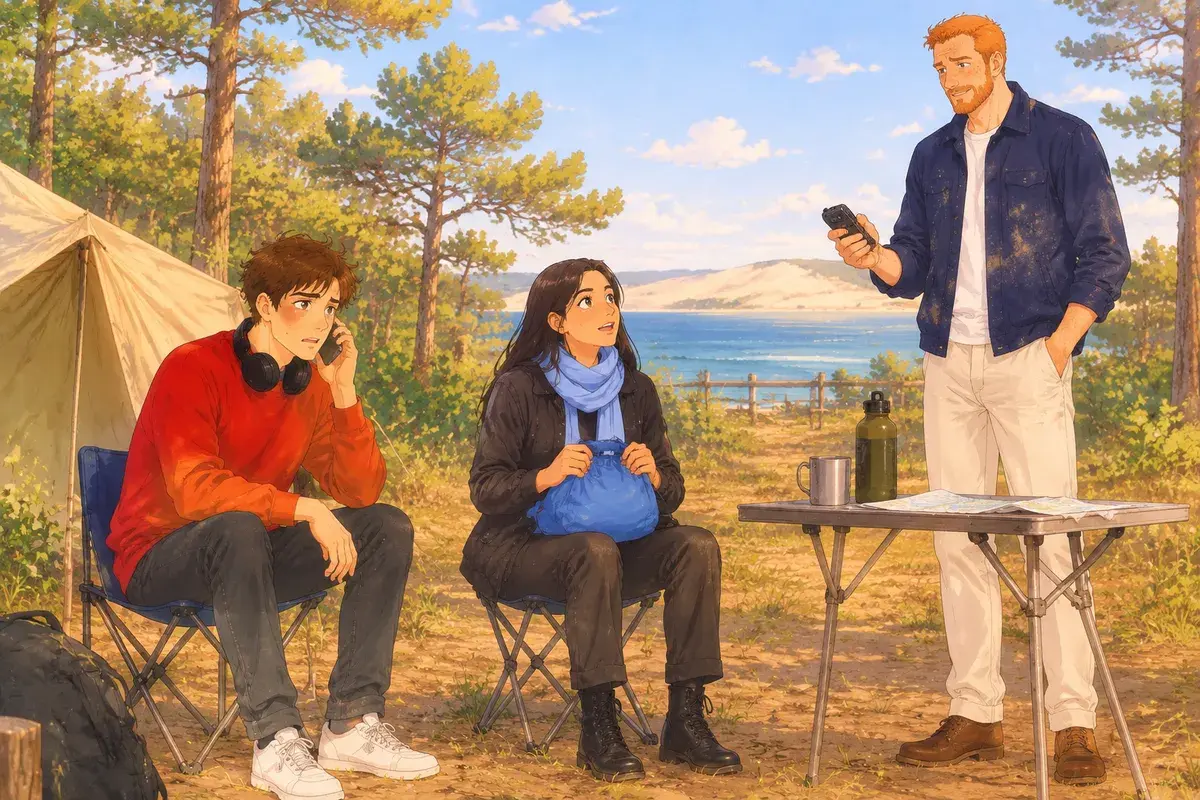
French dialogue with translation · B1 · 18 lines
Racontez-moi dans l'ordre ce qui s'est passé Tell me what happened, in order
Comic · 18 panels
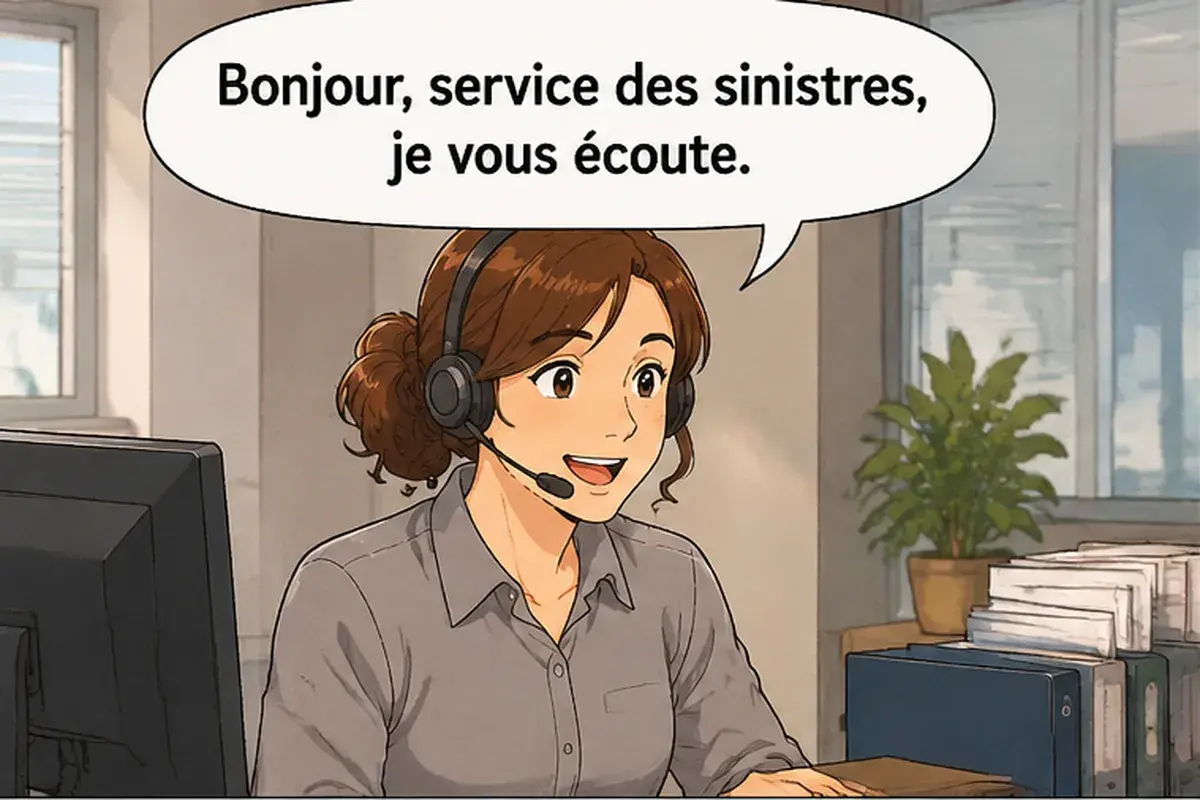
- Employée
Bonjour, service des sinistres, je vous écoute.
Hello, claims department, how can I help you? (formal)
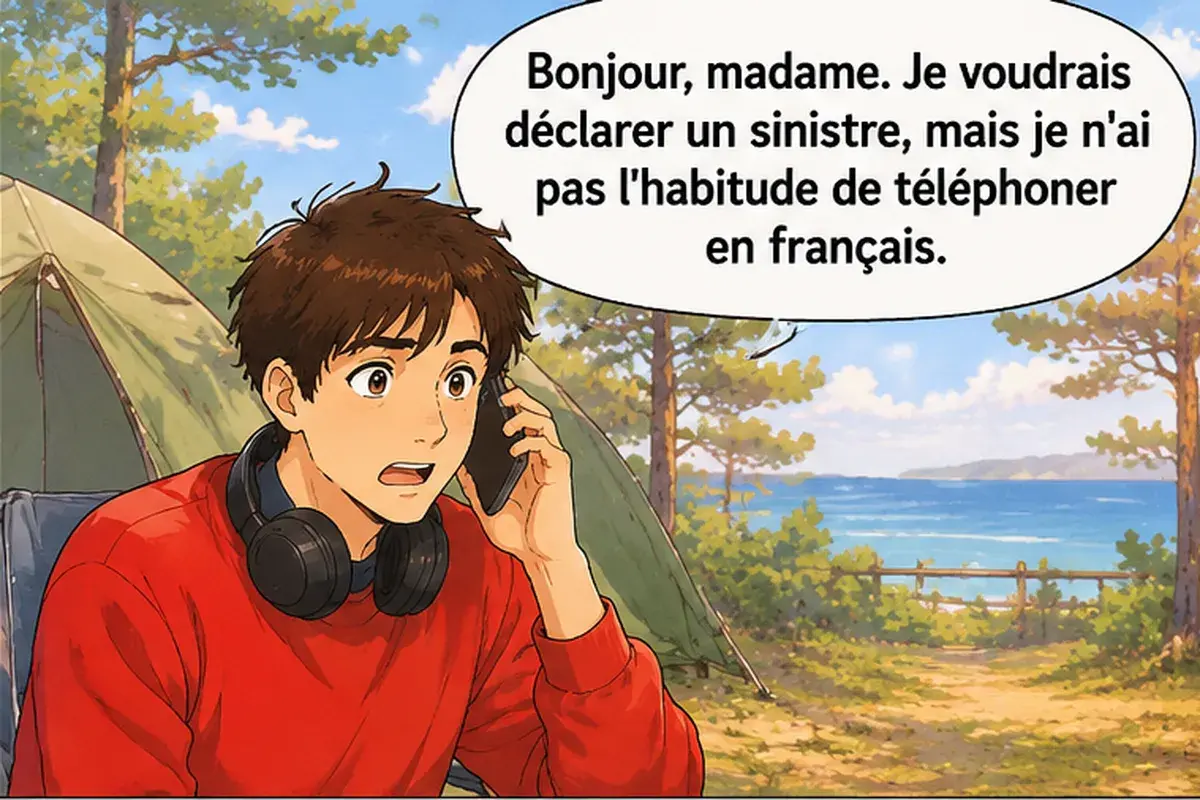
- Pacha
Bonjour, madame. Je voudrais déclarer un sinistre, mais je n'ai pas l'habitude de téléphoner en français.
Hello, ma'am. I'd like to file a claim, but I'm not used to making phone calls in French.
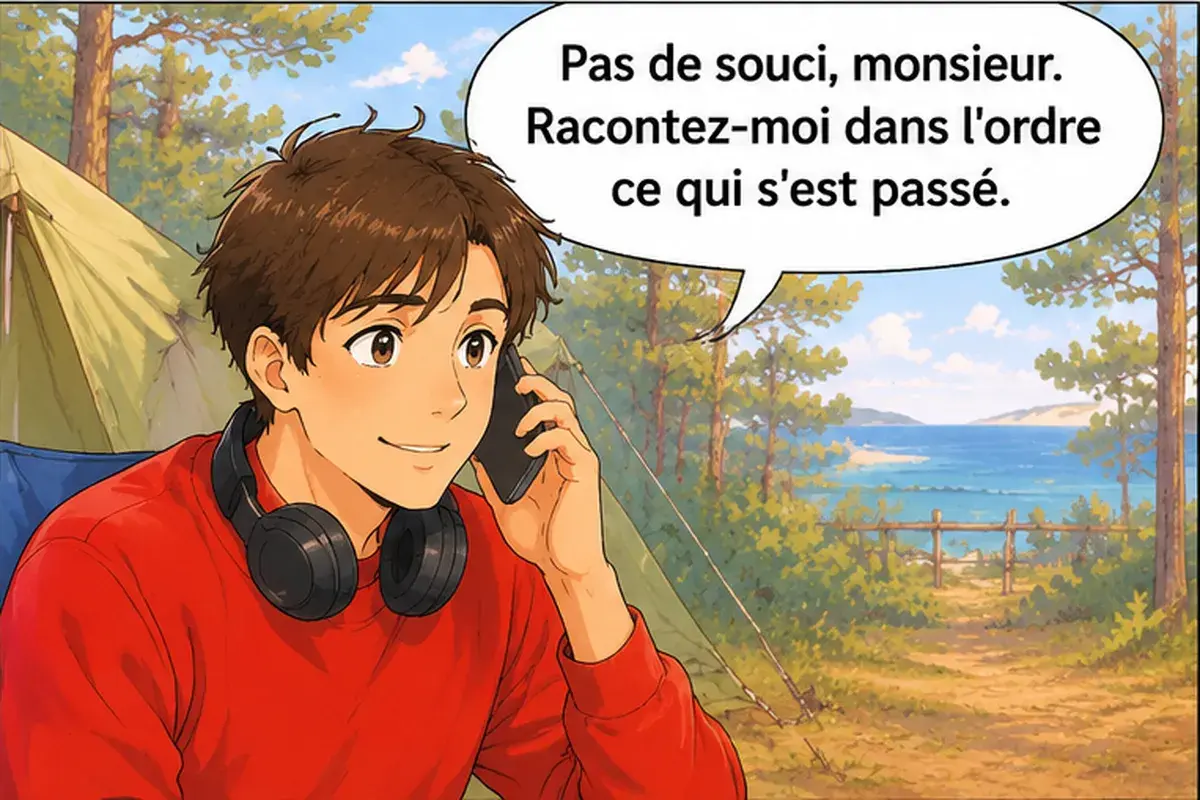
- Employée
Pas de souci, monsieur. Racontez-moi dans l'ordre ce qui s'est passé.
No problem, sir. Tell me in order what happened (formal).
- Pacha
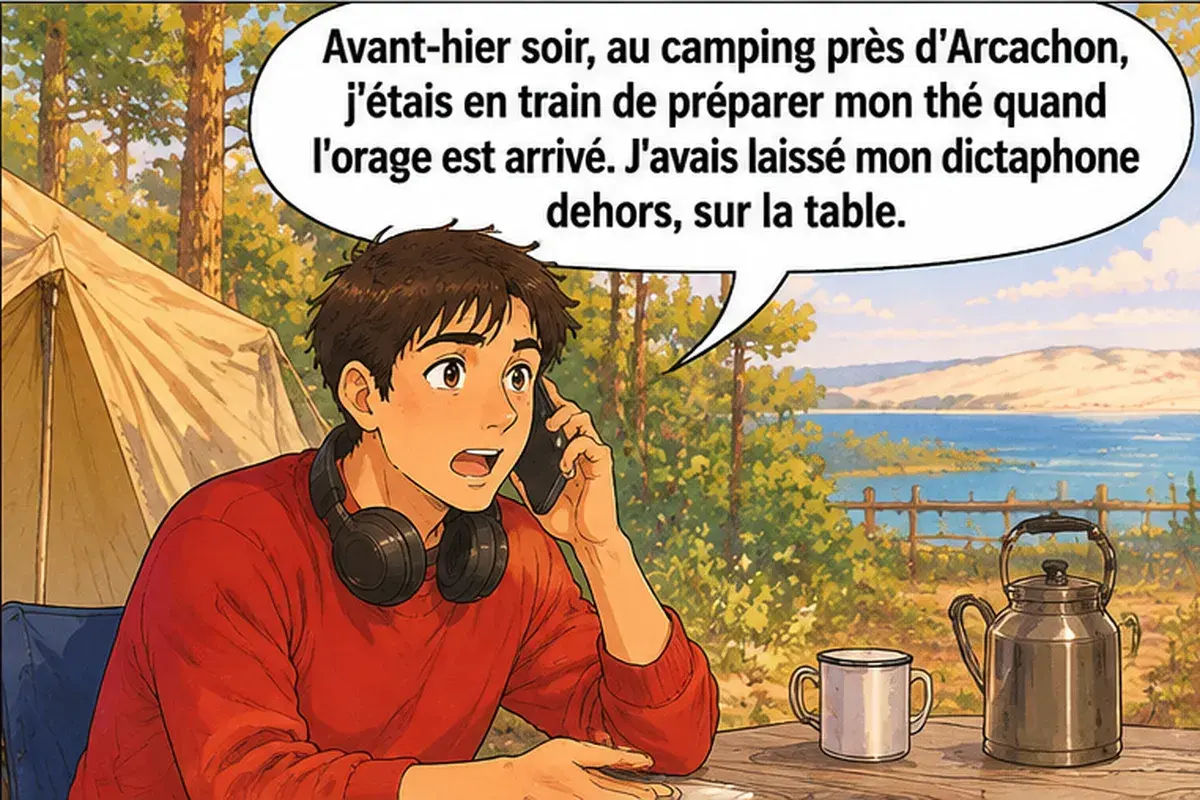
Avant-hier soir, au camping près d'Arcachon, j'étais en train de préparer mon thé quand l'orage est arrivé. J'avais laissé mon dictaphone dehors, sur la table.
The night before last, at the campsite near Arcachon, I was in the middle of making my tea when the storm came. I had left my voice recorder outside, on the table.
- Employée
Et ensuite ?
And then?
- Pacha
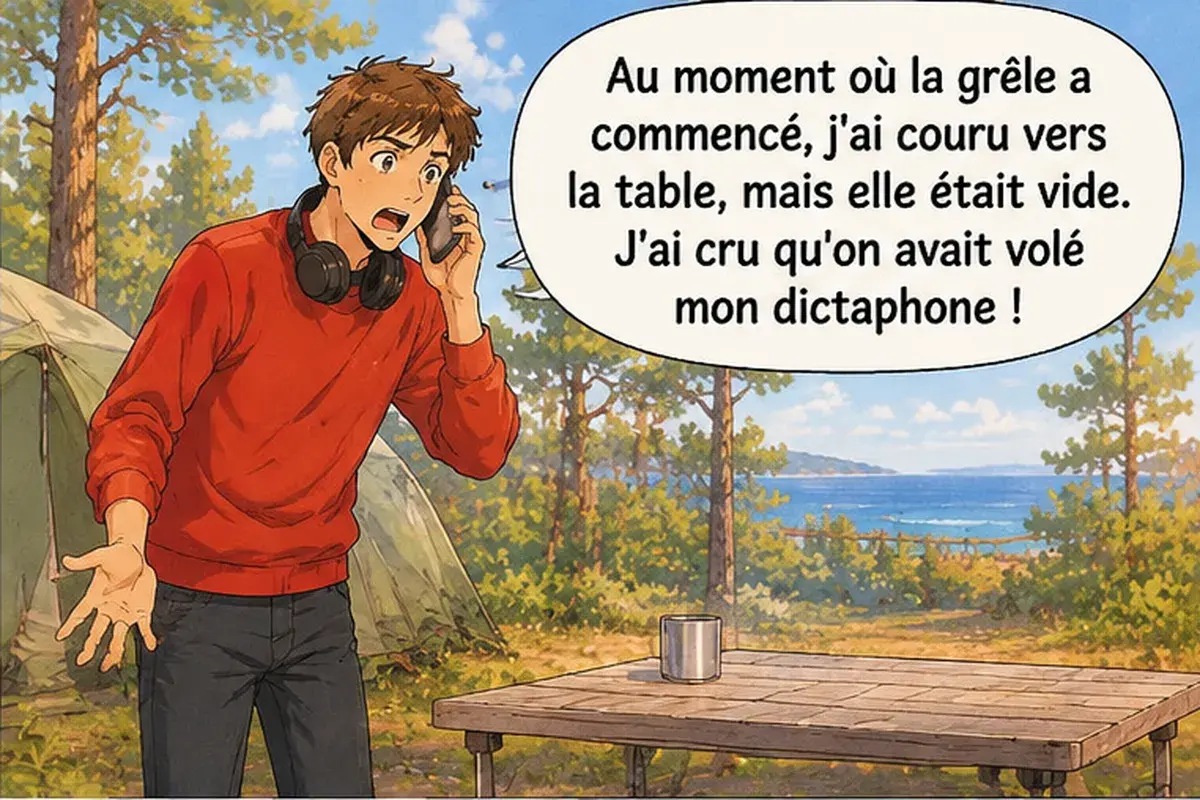
Au moment où la grêle a commencé, j'ai couru vers la table, mais elle était vide. J'ai cru qu'on avait volé mon dictaphone !
The moment the hail began, I ran to the table, but it was empty. I thought someone had stolen my voice recorder!
- Employée
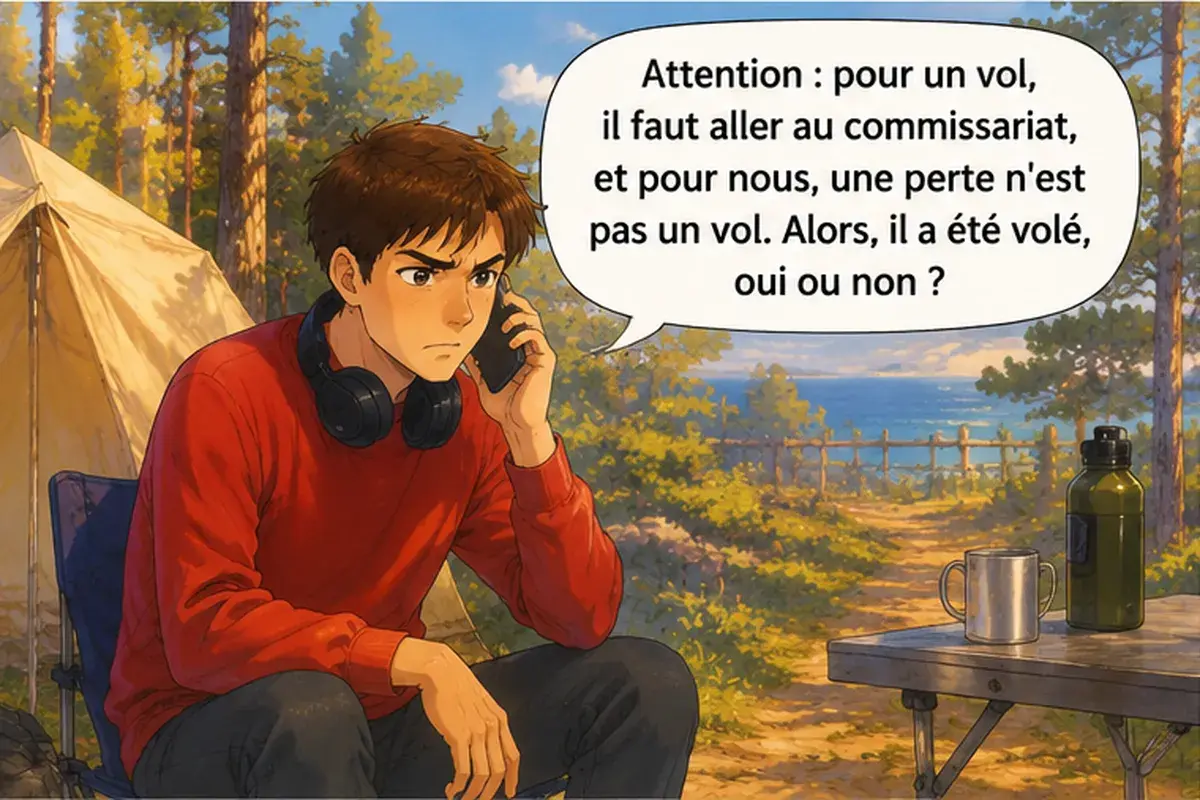
Attention : pour un vol, il faut aller au commissariat, et pour nous, une perte n'est pas un vol. Alors, il a été volé, oui ou non ?
Careful: for a theft, you have to go to the police station, and for us, a loss is not a theft. So, was it stolen, yes or no?
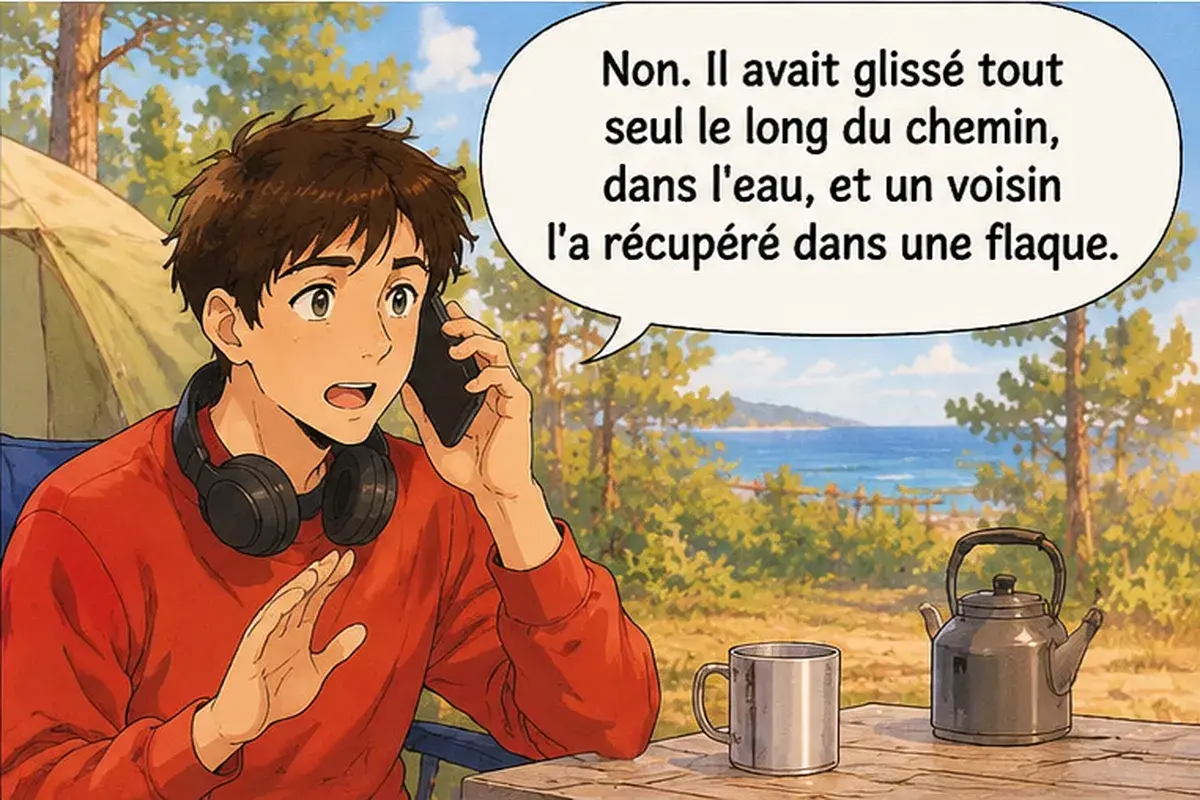
- Pacha
Non. Il avait glissé tout seul le long du chemin, dans l'eau, et un voisin l'a récupéré dans une flaque.
No. It had slid down the path by itself, in the water, and a neighbor picked it up out of a puddle.
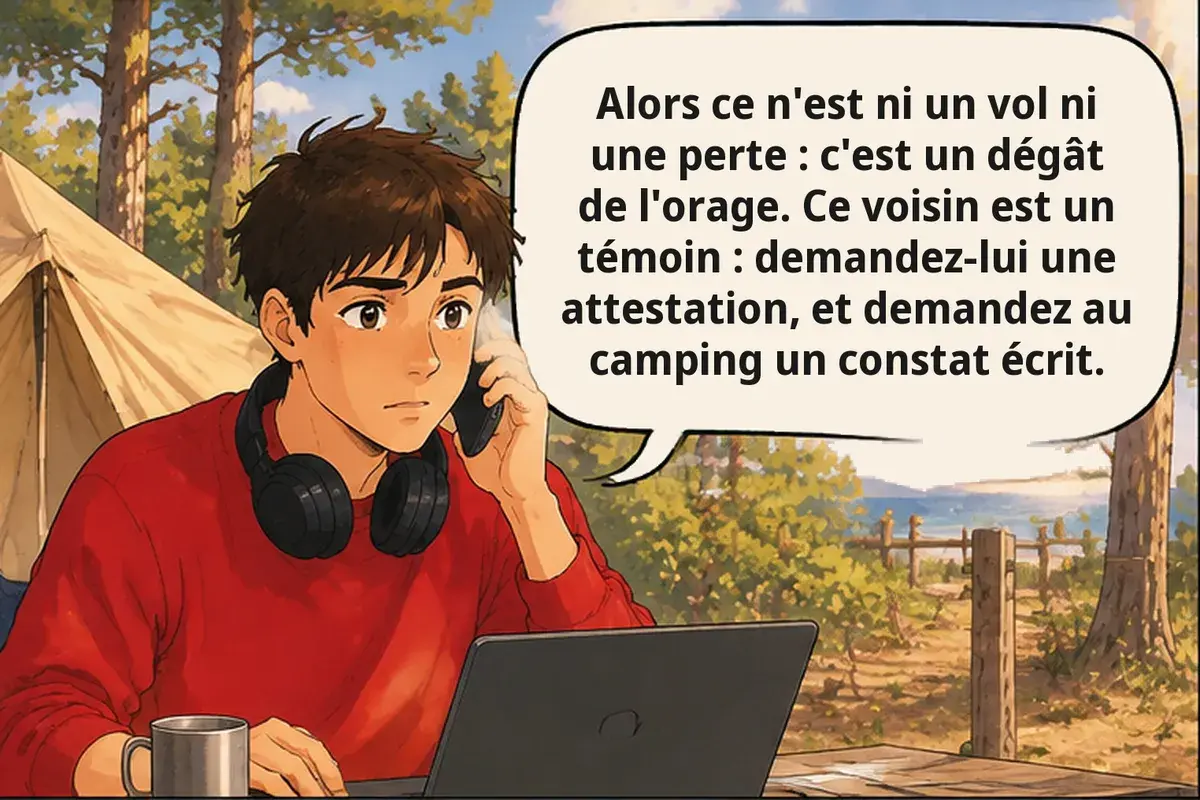
- Employée
Alors ce n'est ni un vol ni une perte : c'est un dégât de l'orage. Ce voisin est un témoin : demandez-lui une attestation, et demandez au camping un constat écrit.
Then it's neither a theft nor a loss: it's storm damage. This neighbor is a witness: ask him for a statement, and ask the campsite for a written report (formal).
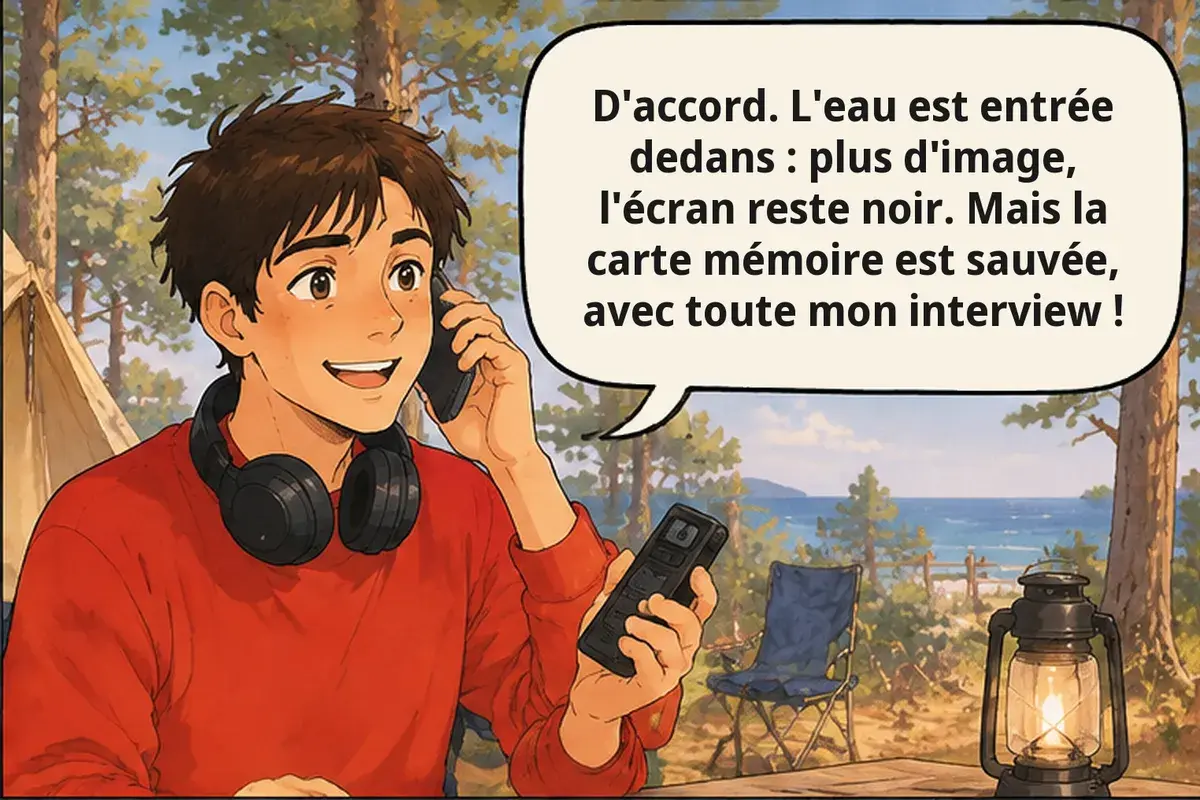
- Pacha
D'accord. L'eau est entrée dedans : plus d'image, l'écran reste noir. Mais la carte mémoire est sauvée, avec toute mon interview !
OK. Water got inside: no more picture, the screen stays black. But the memory card is saved, with my whole interview!
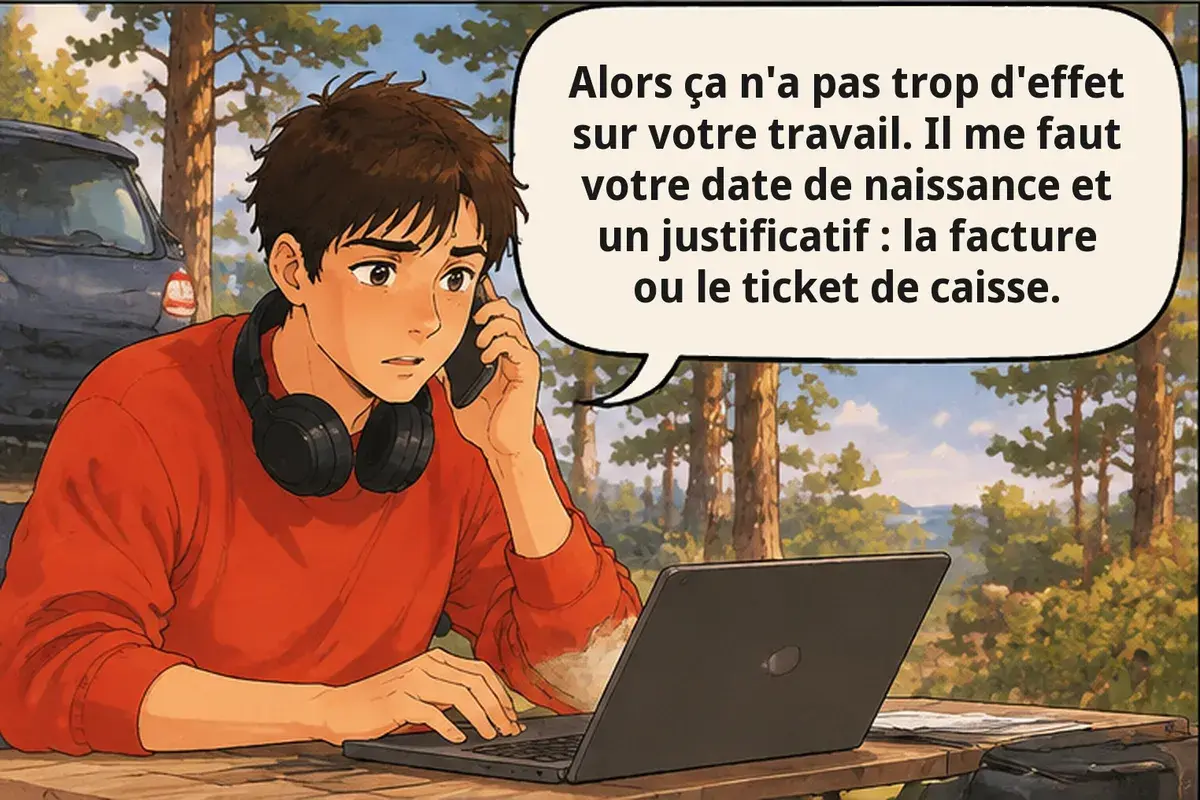
- Employée
Alors ça n'a pas trop d'effet sur votre travail. Il me faut votre date de naissance et un justificatif : la facture ou le ticket de caisse.
Then it doesn't have much effect on your work. I need your date of birth and proof of purchase: the invoice or the receipt (formal).
- Pacha
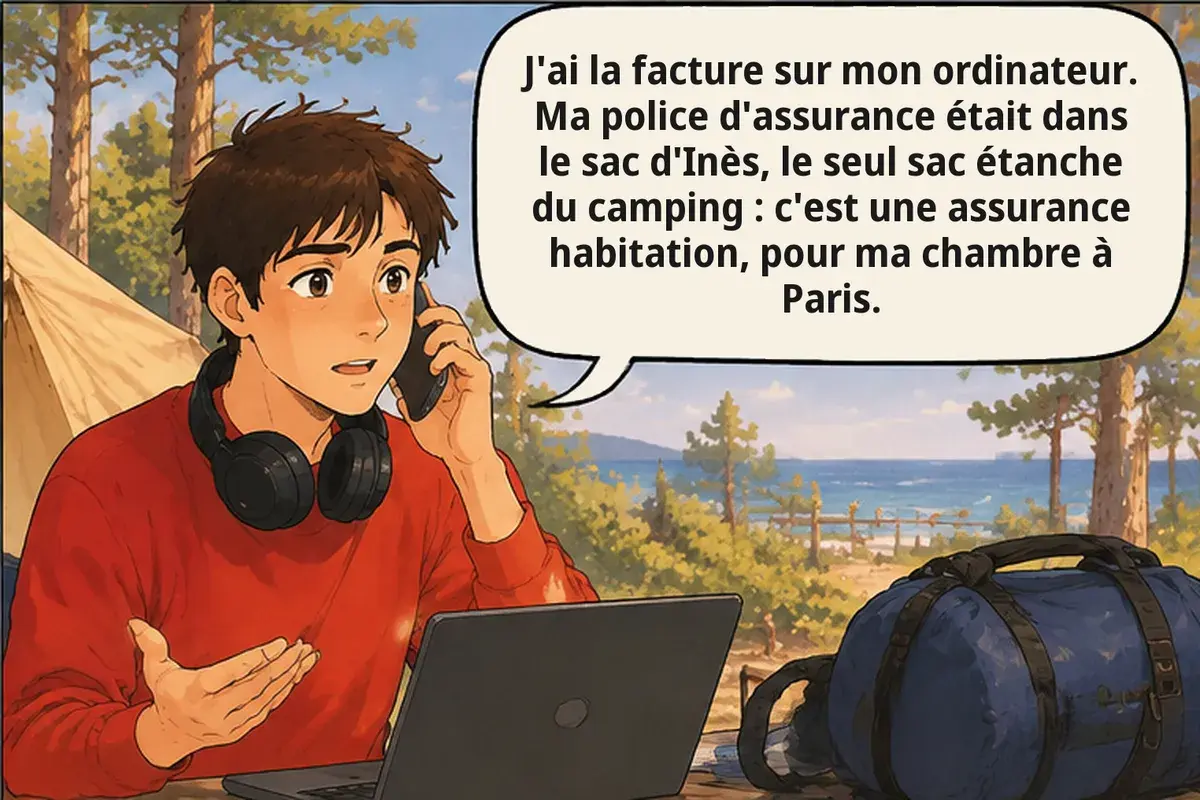
J'ai la facture sur mon ordinateur. Ma police d'assurance était dans le sac d'Inès, le seul sac étanche du camping : c'est une assurance habitation, pour ma chambre à Paris.
I have the invoice on my computer. My insurance policy was in Inès's bag, the only waterproof bag in the campsite: it's home insurance, for my room in Paris.
- Employée
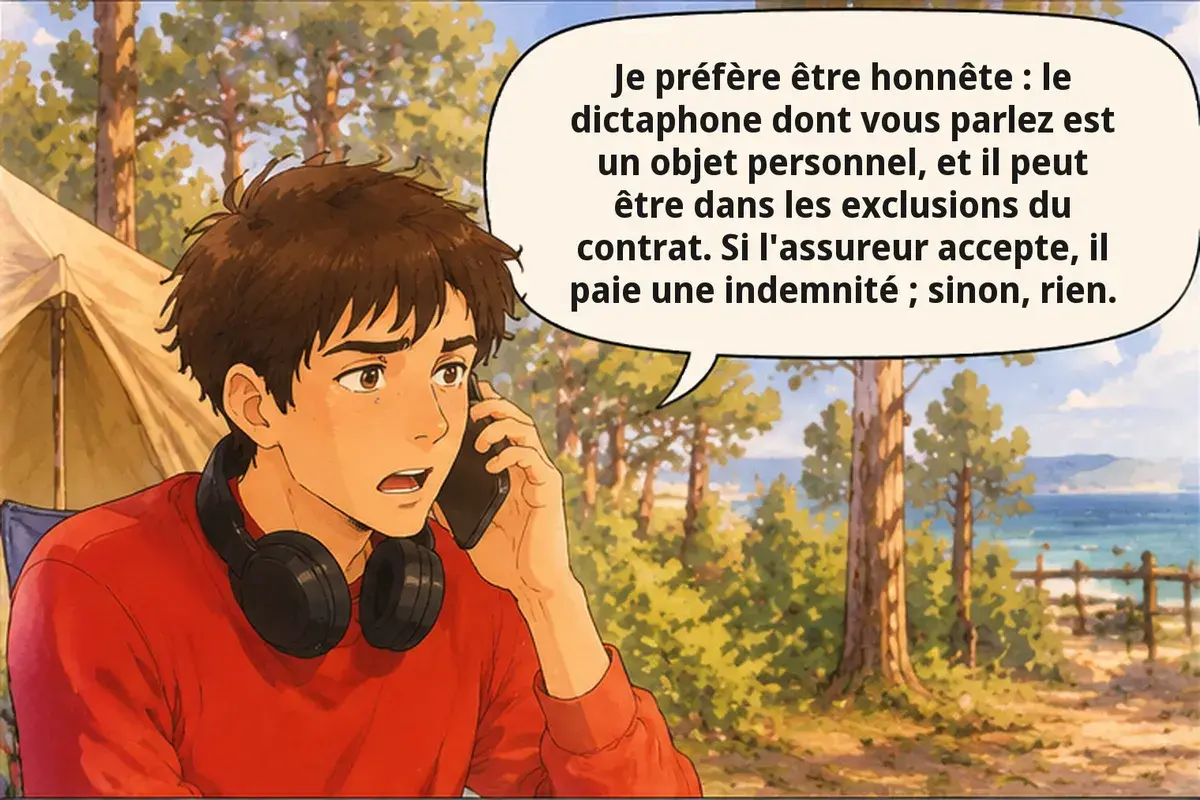
Je préfère être honnête : le dictaphone dont vous parlez est un objet personnel, et il peut être dans les exclusions du contrat. Si l'assureur accepte, il paie une indemnité ; sinon, rien.
I prefer to be honest: the voice recorder you're talking about is a personal item, and it may be among the exclusions of the contract. If the insurance company accepts, it pays compensation; if not, nothing (formal).
- Pacha
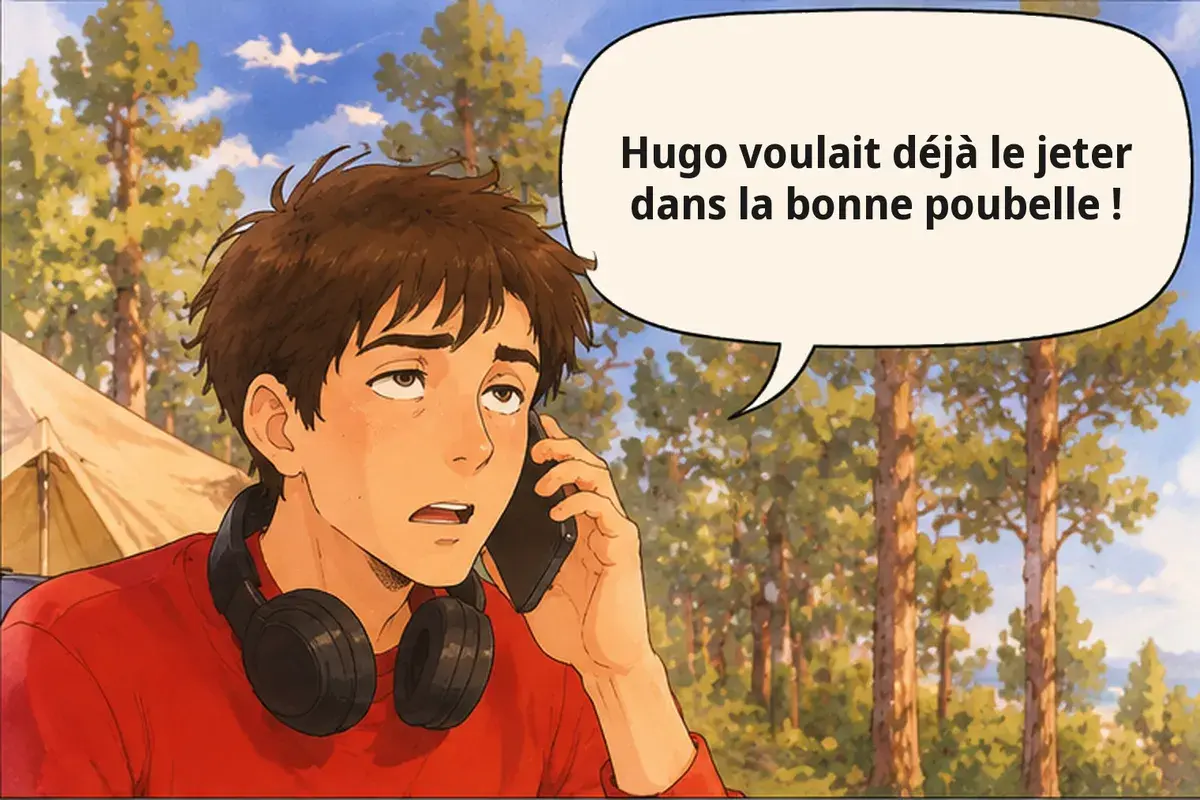
Hugo voulait déjà le jeter dans la bonne poubelle !
Hugo already wanted to throw it in the right trash can!
- Employée
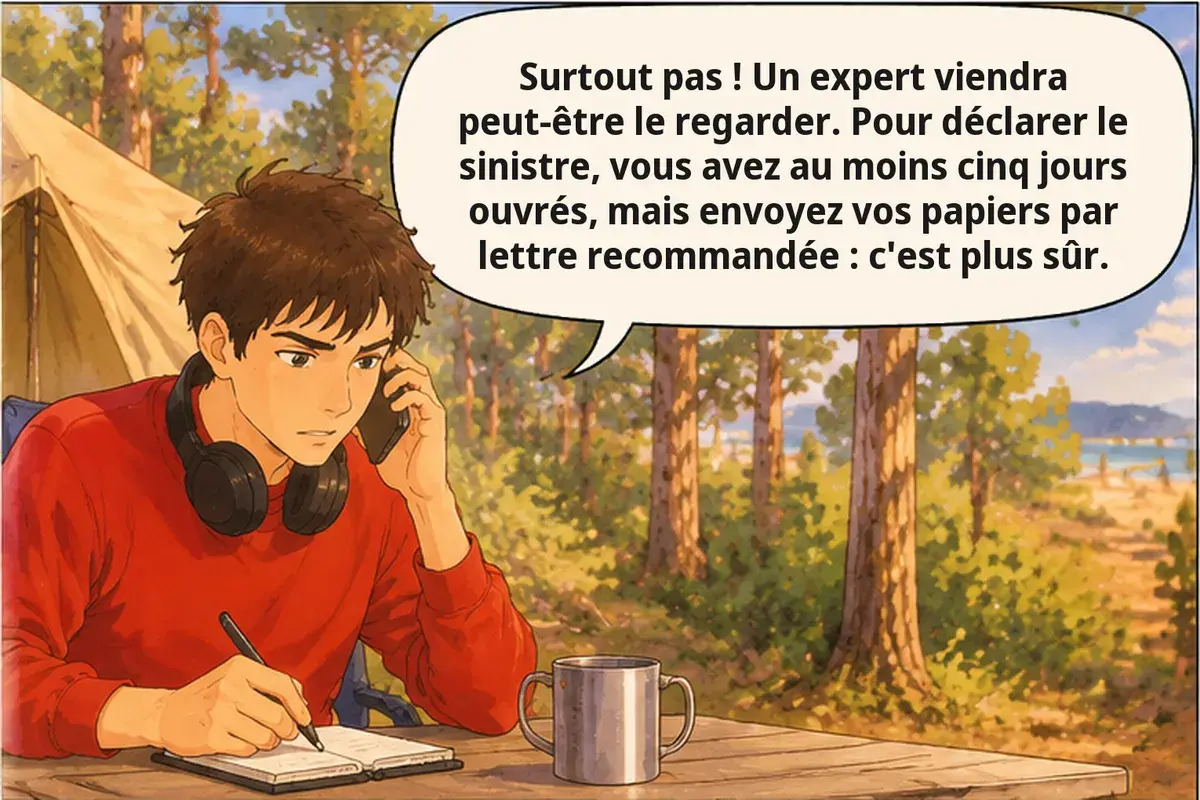
Surtout pas ! Un expert viendra peut-être le regarder. Pour déclarer le sinistre, vous avez au moins cinq jours ouvrés, mais envoyez vos papiers par lettre recommandée : c'est plus sûr.
Absolutely not! An expert may come to look at it. To report the claim, you have at least five business days, but send your papers by certified letter: it's safer (formal).
- Pacha
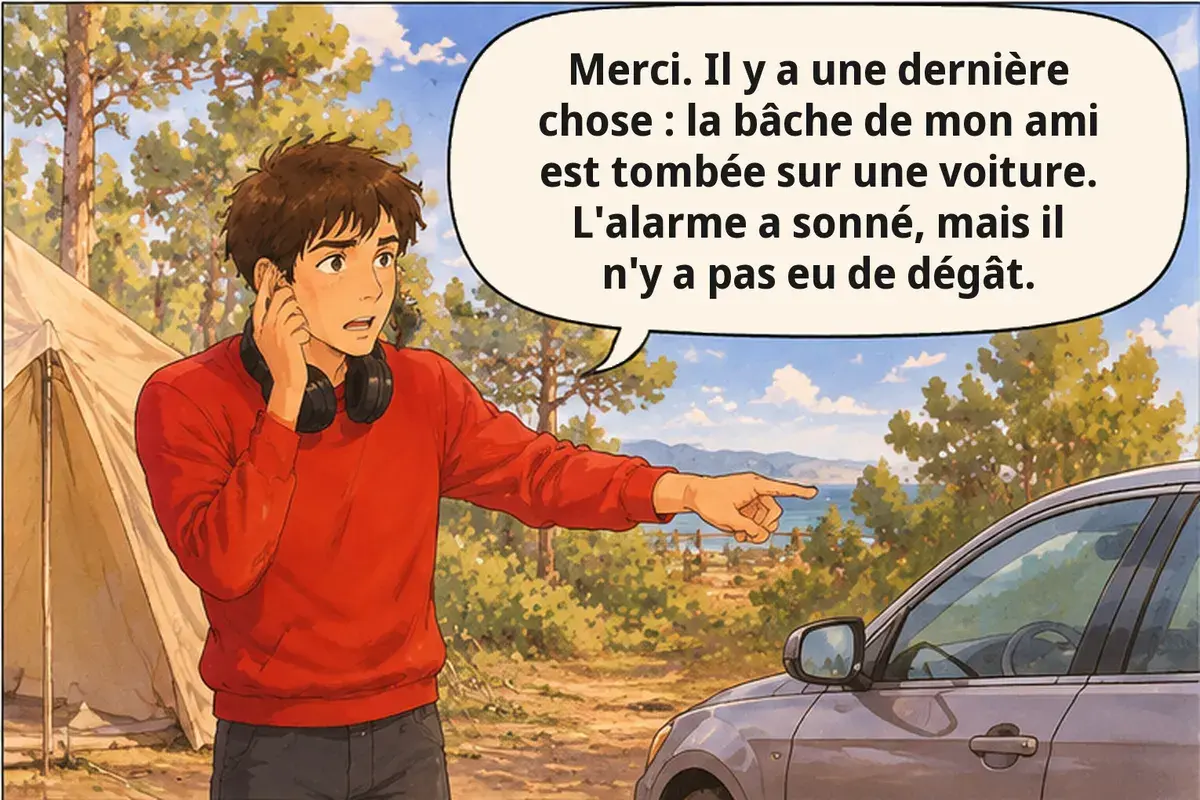
Merci. Il y a une dernière chose : la bâche de mon ami est tombée sur une voiture. L'alarme a sonné, mais il n'y a pas eu de dégât.
Thank you. There's one last thing: my friend's tarp fell on a car. The alarm went off, but there was no damage.
- Employée
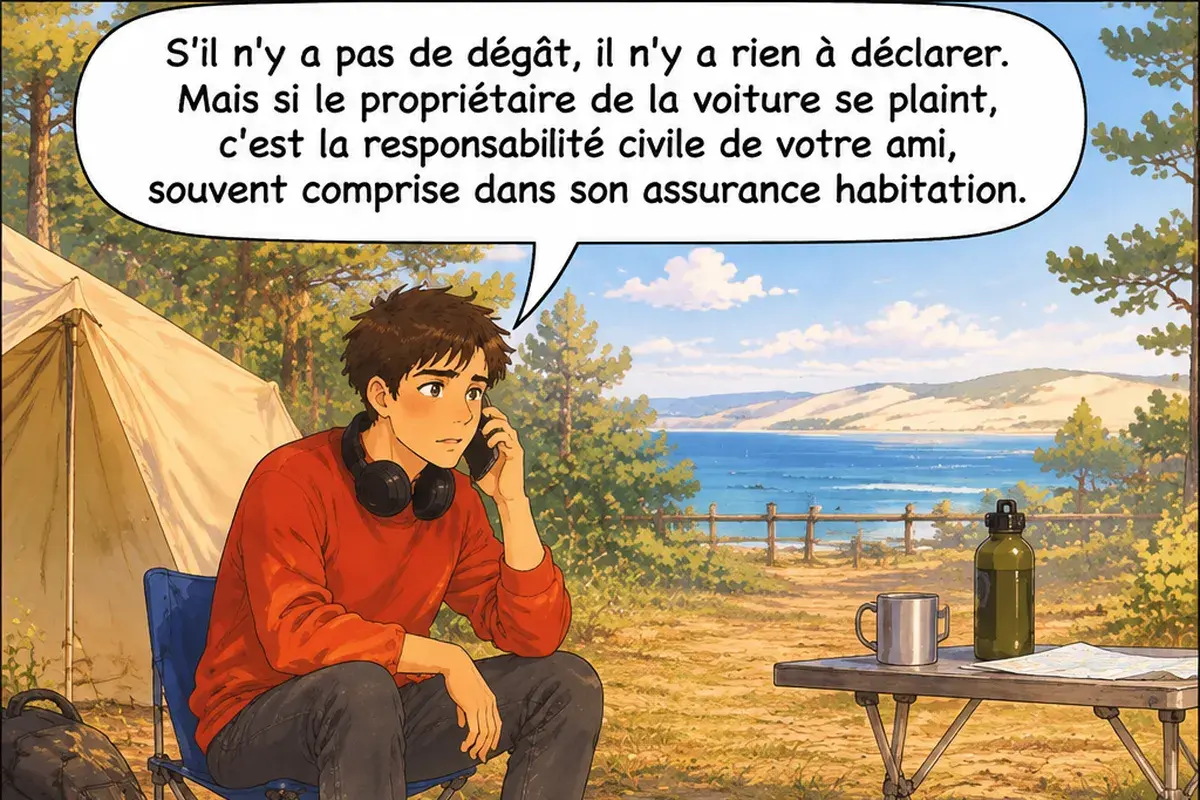
S'il n'y a pas de dégât, il n'y a rien à déclarer. Mais si le propriétaire de la voiture se plaint, c'est la responsabilité civile de votre ami, souvent comprise dans son assurance habitation.
If there's no damage, there's nothing to report. But if the car's owner complains, it's your friend's civil liability, often included in his home insurance (formal).
- Pacha
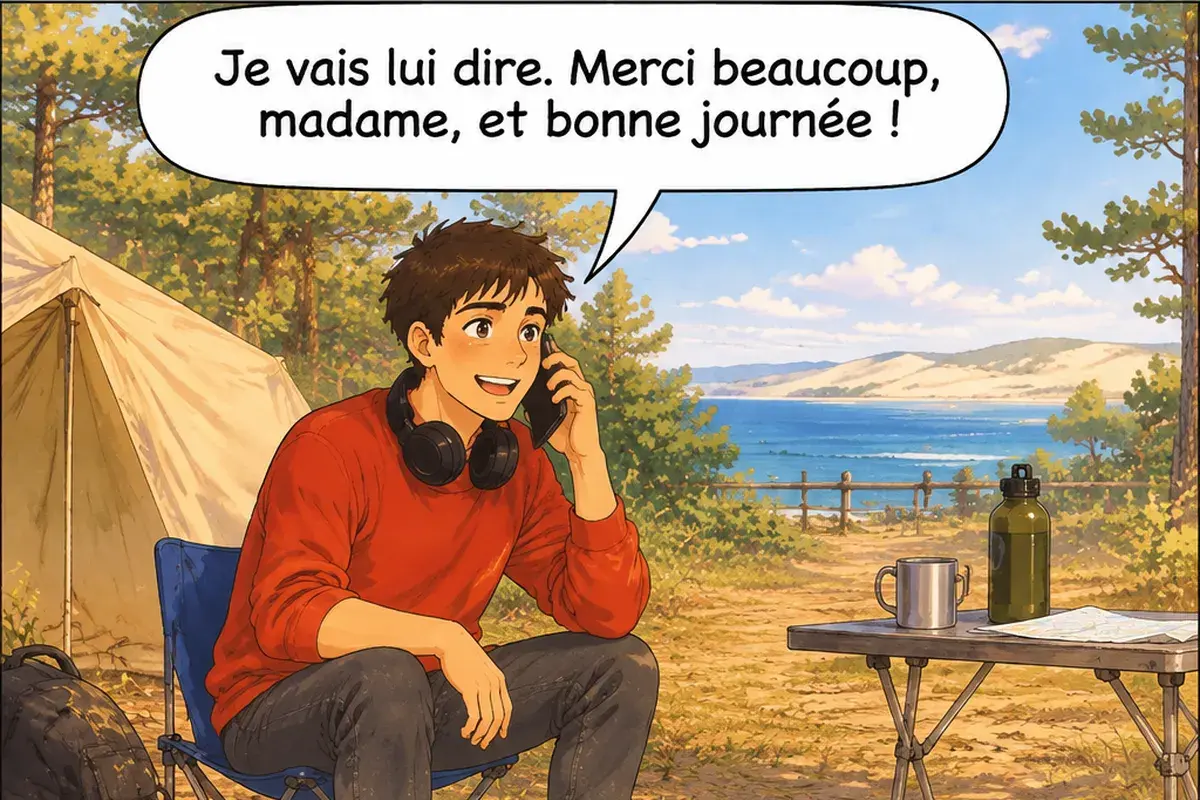
Je vais lui dire. Merci beaucoup, madame, et bonne journée !
I'm going to tell him. Thank you very much, ma'am, and have a nice day!
Grammar for this text
- Je voudrais déclarer un sinistre — I'd like to file a claim:
voudraisis the polite "I'd like" (unit 3).déclarermeans to report something officially.un sinistreis an event the insurance company may pay for (storm, fire, theft). Don't mix it up with the adjectivesinistre, which means "sinister". - j'étais en train de préparer mon thé quand l'orage est arrivé — I was in the middle of making my tea when the storm came: same pattern as in the story, first what was going on, then the event. The insurance company asks for
dans l'ordre, "in order". - J'ai cru qu'on avait volé mon dictaphone — I thought someone had stolen my voice recorder:
cruis the past participle ofcroire("to think, to believe").on avait volémeans "someone had stolen" (earlier): thej'avais faitform. - pour un vol, il faut aller au commissariat — for a theft, you have to go to the police station. The insurance company counts
une perte(a loss) as something different. Here it is neither one nor the other: ni un vol ni une perte — neither a theft nor a loss, withni… ni(unit 11). - Ce voisin est un témoin — this neighbor is a witness:
un témoinis masculine, even for a woman. The insurance company needs a statement from the witness, a written report from the campsite (constat), and the invoice or the receipt (justificatif). - cinq jours ouvrés — five business days: a deadline from the contract, and by law never shorter than five business days. lettre recommandée — certified letter: it is safer.
- la responsabilité civile — civil liability: insurance for when you accidentally damage someone else's things; it is often included in home insurance (
l'assurance habitation). - le dictaphone dont vous parlez — the voice recorder you're talking about:
dontmeans "about which".parler deneedsde, and it hides insidedont(unit 16). - plus d'image — no more picture:
plus de+ a noun with no article.
Words and grammar of the unit: Tell what happened.
Learn the words from the texts with flashcards
In the app, you can tap any word in a text to see its translation, forms and examples, and new words stick with flashcards. 15 minutes a day.
Start for freeEverything is open for free. No card needed to sign up.