

French dialogue with translation · B1 · 18 lines
Elle te manque ? Do you miss her?
Comic · 18 panels

- Pacha
Hugo ? Il est deux heures du matin, et tu ne dors pas ?
Hugo? It's two in the morning, and you're not asleep?

- Hugo
Je sais, moi aussi, je suis surpris. D'habitude, à neuf heures, je dors déjà profondément.
I know, I'm surprised too (man speaking). Usually, at nine, I'm already sound asleep.

- Pacha
Moi, je suis monté sur la terrasse pour enregistrer la ville la nuit. Et toi, qu'est-ce qui t'empêche de dormir ?
Me, I came up to the terrace to record the city at night (man speaking). And you, what's keeping you from sleeping?
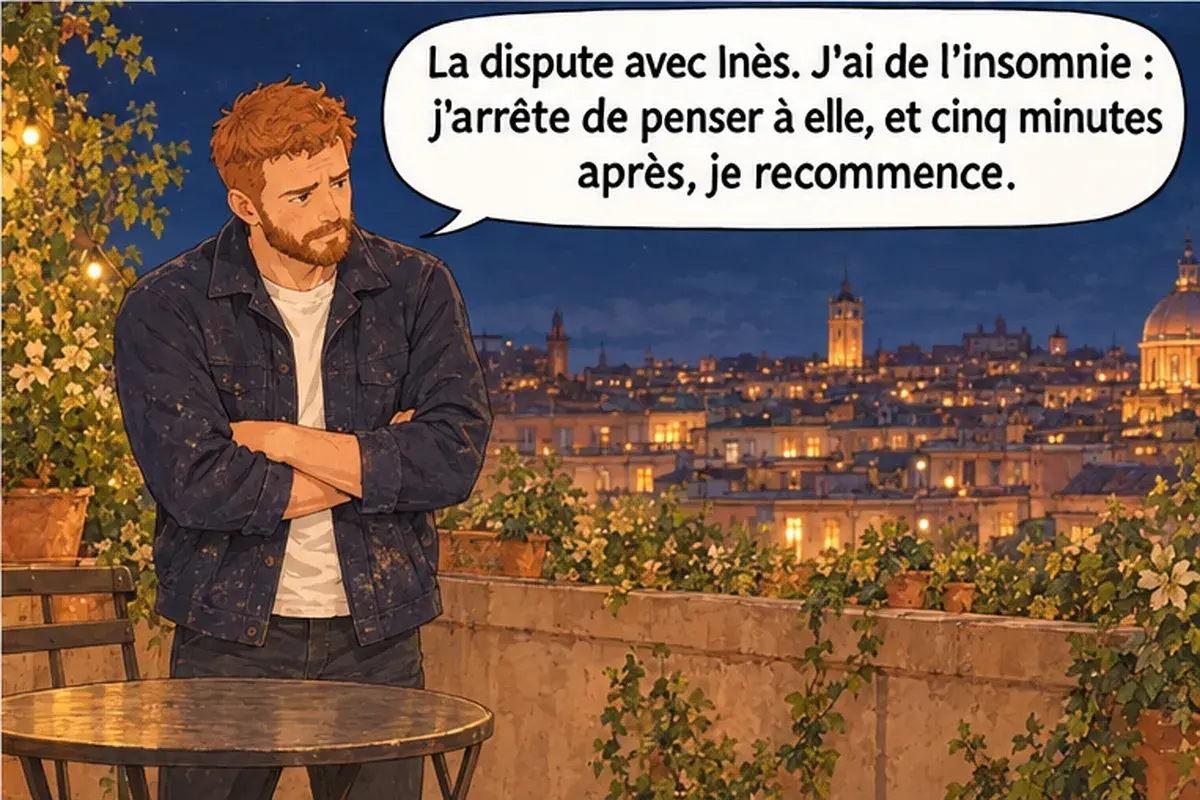
- Hugo
La dispute avec Inès. J'ai de l'insomnie : j'arrête de penser à elle, et cinq minutes après, je recommence.
The fight with Inès. I have insomnia: I stop thinking about her, and five minutes later, I start again.

- Pacha
Elle te manque ?
Do you miss her?

- Hugo
Oui, et ça m'énerve : mon amie me manque, même quand je suis furieux contre elle.
Yes, and it annoys me: I miss my friend, even when I'm furious with her (man speaking).
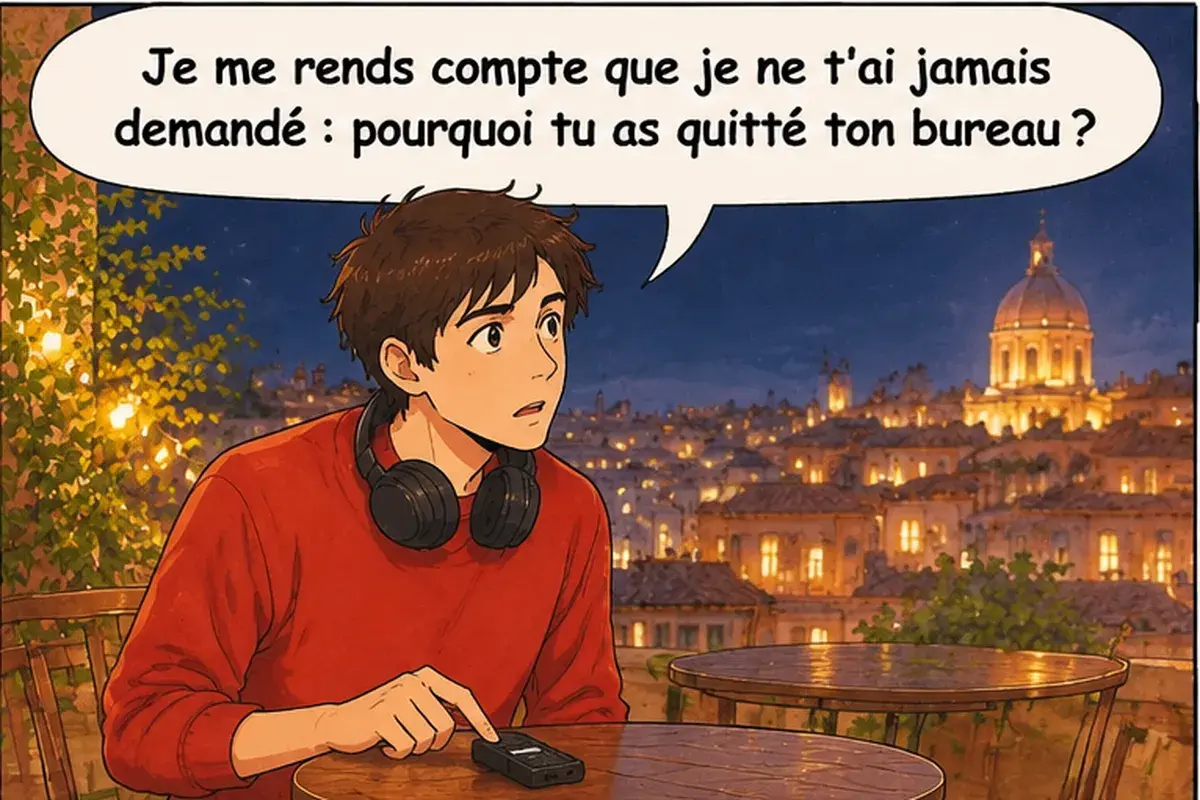
- Pacha
Je me rends compte que je ne t'ai jamais demandé : pourquoi tu as quitté ton bureau ?
I realize I've never asked you: why did you leave your office?
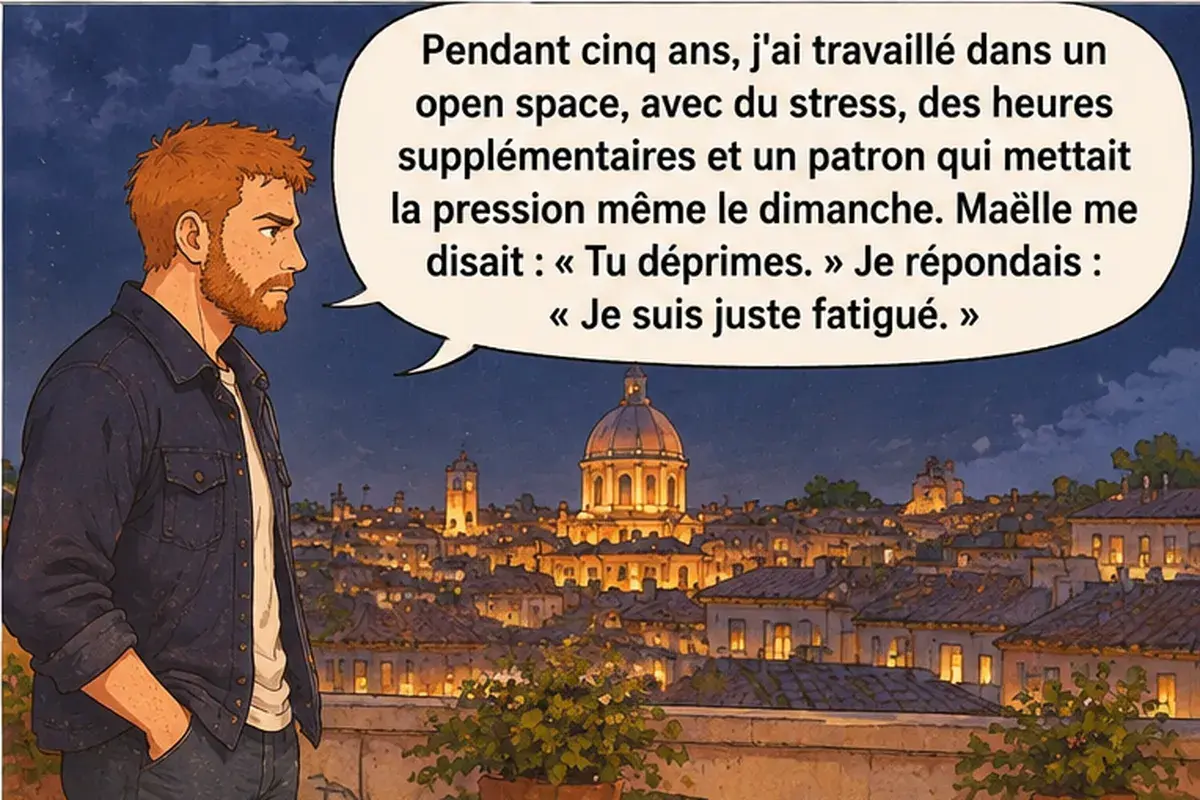
- Hugo
Pendant cinq ans, j'ai travaillé dans un open space, avec du stress, des heures supplémentaires et un patron qui mettait la pression même le dimanche. Maëlle me disait : « Tu déprimes. » Je répondais : « Je suis juste fatigué. »
For five years, I worked in an open space, with stress, overtime and a boss who put pressure on me even on Sundays. Maëlle used to tell me, "You're feeling down." I would answer, "I'm just tired." (man speaking)
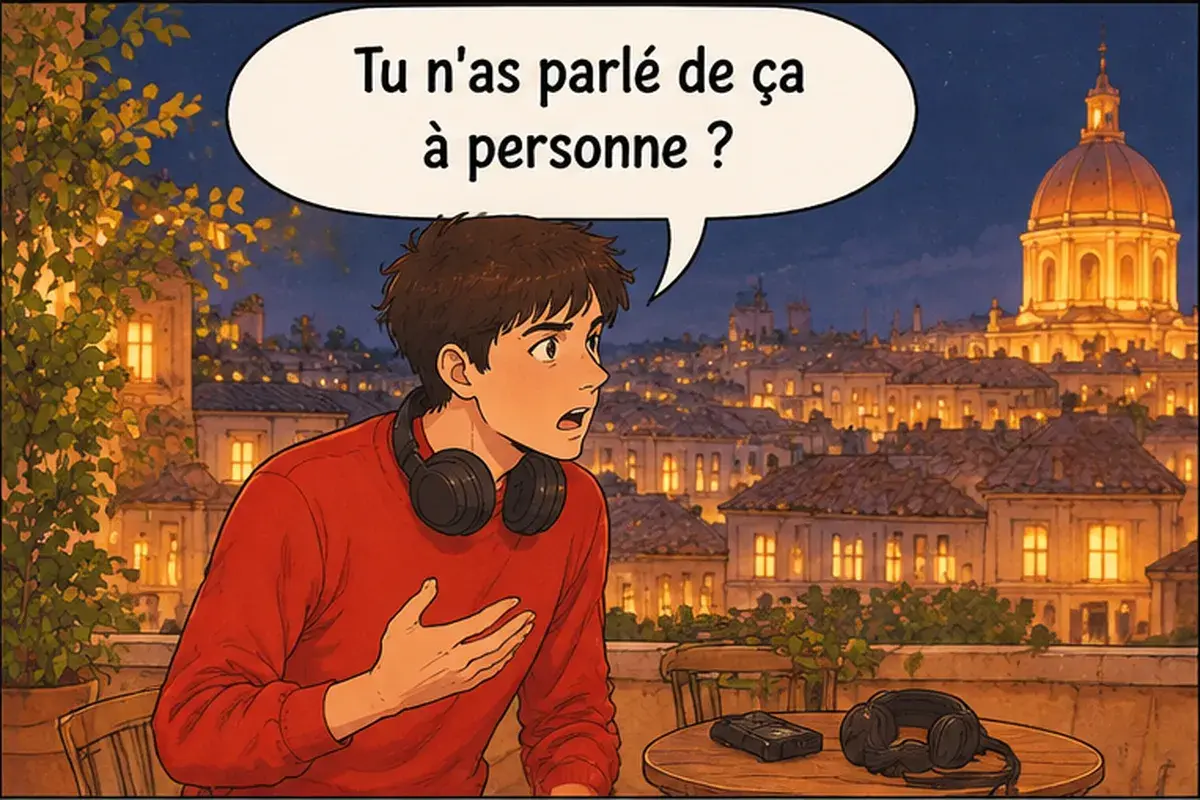
- Pacha
Tu n'as parlé de ça à personne ?
You haven't talked to anyone about this?
- Hugo
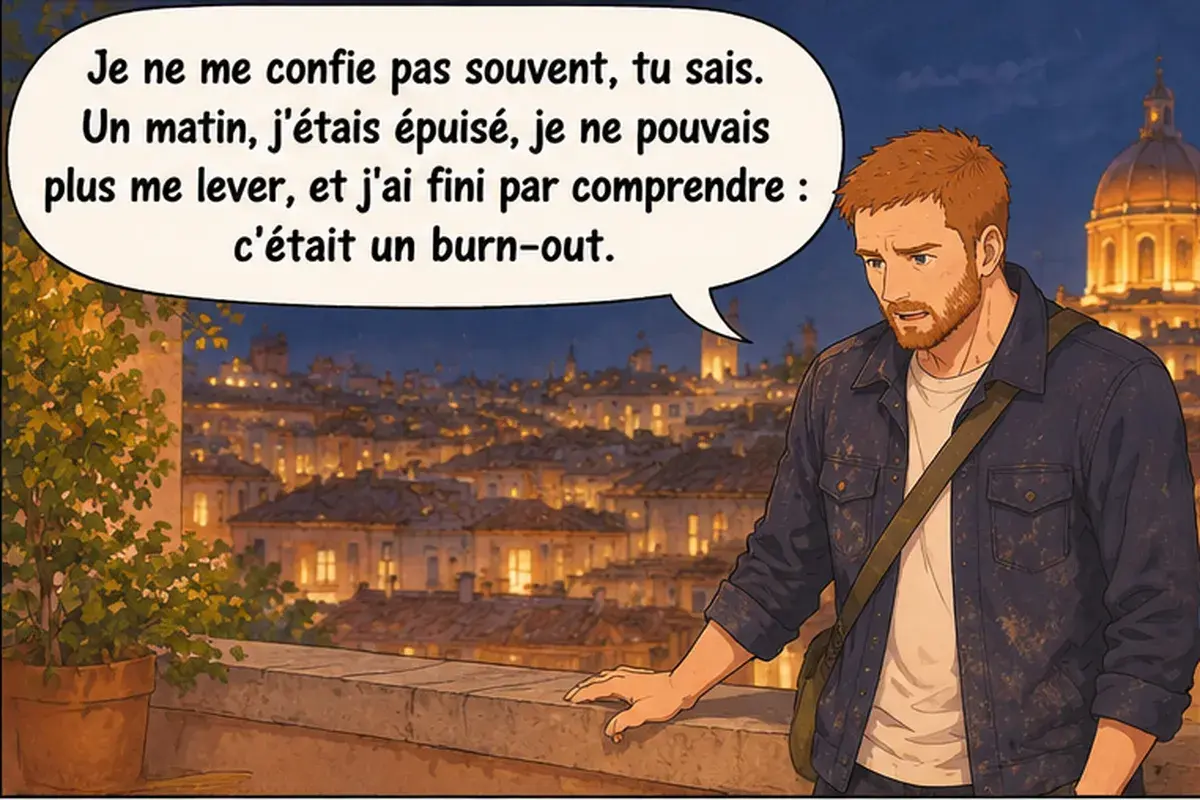
Je ne me confie pas souvent, tu sais. Un matin, j'étais épuisé, je ne pouvais plus me lever, et j'ai fini par comprendre : c'était un burn-out.
I don't open up often, you know. One morning, I was exhausted, I couldn't get up anymore, and I ended up understanding: it was burnout. (man speaking)

- Pacha
Et c'est là que tu as démissionné ?
And that's when you quit?

- Hugo
Pas tout de suite : d'abord, un congé. Je m'ennuyais chez moi, alors un dimanche, je me suis mis à pétrir du pain moi-même.
Not right away: first, some time off. I was bored at home, so one Sunday, I got down to kneading bread myself (man speaking).

- Pacha
Et ça t'a plu ?
And did you like it?

- Hugo
Pendant deux heures, je n'ai pensé à rien. Au bureau, je pensais à tout en même temps ; devant la pâte et le levain, je me suis concentré sur mes mains.
For two hours, I didn't think about anything. At the office, I thought about everything at the same time; in front of the dough and the sourdough starter, I focused on my hands (man speaking).

- Pacha
Et maintenant, tu rêves de quoi ?
And now, what do you dream of?

- Hugo
D'une boulangerie à moi. Au fournil, je me suis habitué au four chaud et à la fatigue, mais jamais à l'open space.
Of a bakery of my own. In the bakery workroom, I got used to the hot oven and the tiredness, but never to the open space (man speaking).

- Pacha
Et ton levain, pendant ton congé ?
And your sourdough starter, during your time off?

- Hugo
Madame Lemaire lui donne à manger à ma place et m'envoie des photos : il a l'air plus heureux sans moi. Allez, allume ton micro : Hugo réveillé à deux heures du matin, Maëlle ne le croira jamais.
Madame Lemaire feeds it for me and sends me photos: it looks happier without me. Come on, turn on your mic: Hugo awake at two in the morning, Maëlle will never believe it.
Grammar for this text
- Elle te manque ? — Do you miss her? The verb
manquerworks backwards: the subject is the person who is missed (elle), and the one who misses her iste. Literally: "she is missing to you." It works the same way in mon amie me manque — I miss my friend. - j'arrête de penser à elle — I stop thinking about her.
arrêter de+ verb means "to stop" (A2, unit 13).penser àmeans "to think about"; for a person you sayà elle,à lui, notlui. - Je me rends compte que — I realize that.
se rendre compte que+ a clause;me rendsis thejeform ofse rendre. - Maëlle me disait : « Tu déprimes. » — Maëlle used to tell me, "You're feeling down."
me disaitis the imperfect ofdire(A2, unit 4): she said it more than once.déprimesis casual, like "you're down": a sister would say it, not a doctor. - j'ai fini par comprendre — I ended up understanding.
finir par+ verb means "in the end", after a long road. Don't mix it up withfinir de, which means "to finish understanding." - je me suis mis à pétrir du pain moi-même — I got down to kneading bread myself.
se mettre à+ verb means "to get down to." In the past it takesêtre:je me suis mis(for a woman:mise).moi-mêmemeans "myself, without help." - Au fournil, je me suis habitué au four chaud — In the bakery workroom, I got used to the hot oven.
s'habituer àmeans "to get used to";à + le = au. In Madame Lemaire lui donne à manger — Madame Lemaire feeds it,luimeans "it" here: Hugo talks about his sourdough starter as if it were a pet.
Words and grammar of the unit: Open up about your feelings.
Learn the words from the texts with flashcards
In the app, you can tap any word in a text to see its translation, forms and examples, and new words stick with flashcards. 15 minutes a day.
Start for freeEverything is open for free. No card needed to sign up.