

French dialogue with translation · B1 · 18 lines
Ça se discute ! That's debatable!
Comic · 18 panels
- Inès
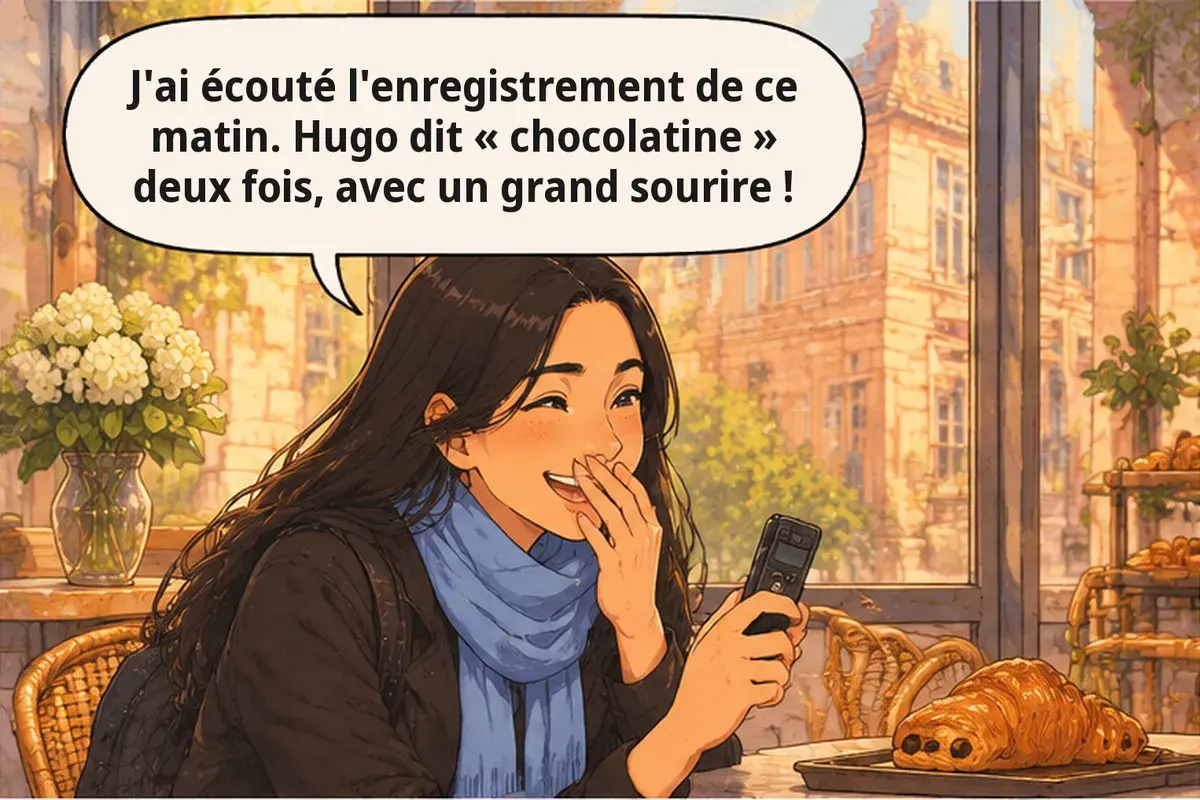
J'ai écouté l'enregistrement de ce matin. Hugo dit « chocolatine » deux fois, avec un grand sourire !
I listened to this morning's recording. Hugo says "chocolatine" twice, with a big smile!

- Hugo
Je répétais les mots de madame, c'est tout. Tu me taquines, mais je n'ai pas changé d'avis : on dit « pain au chocolat ».
I was repeating the lady's words, that's all. You're teasing me, but I haven't changed my mind: we say "pain au chocolat."

- Inès
Mais on est dans le sud-ouest, Hugo ! Ici, la chocolatine, c'est la loi.
But we're in the southwest, Hugo! Here, chocolatine is the law.
- Hugo
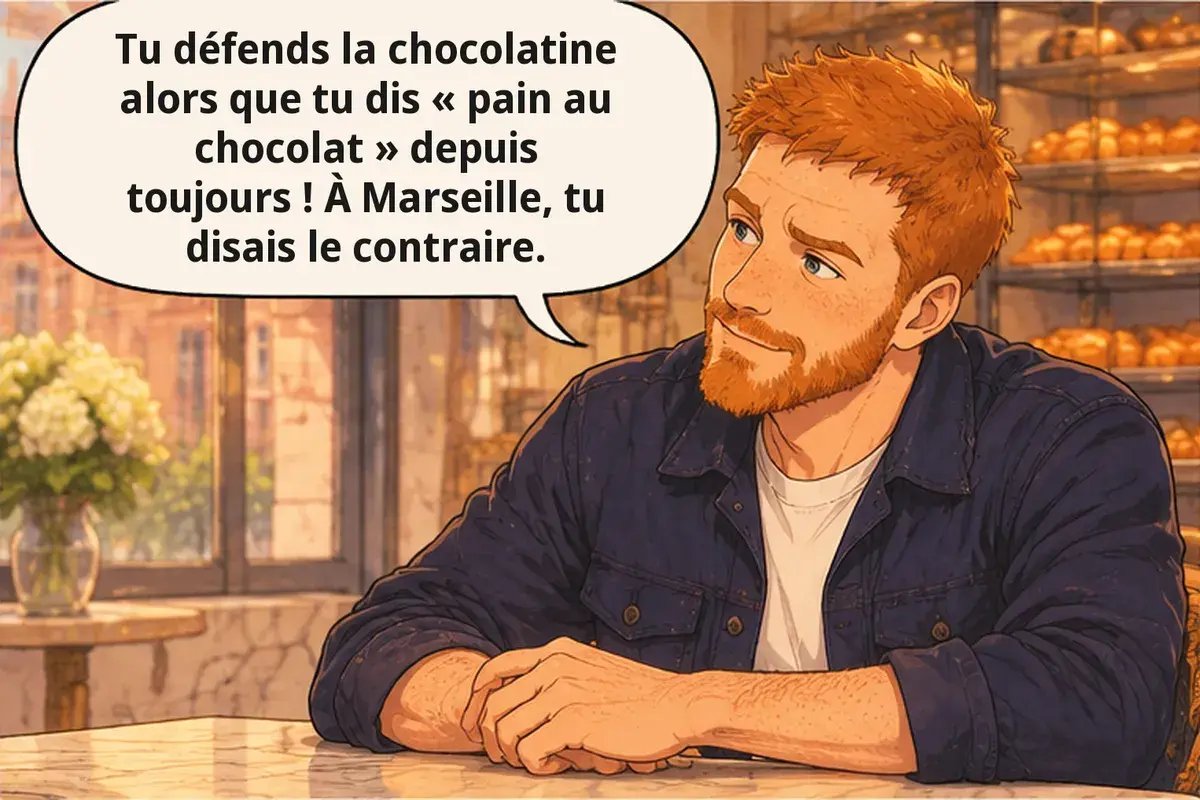
Tu défends la chocolatine alors que tu dis « pain au chocolat » depuis toujours ! À Marseille, tu disais le contraire.
You defend the chocolatine even though you've always said "pain au chocolat"! In Marseille, you used to say the opposite.
- Inès
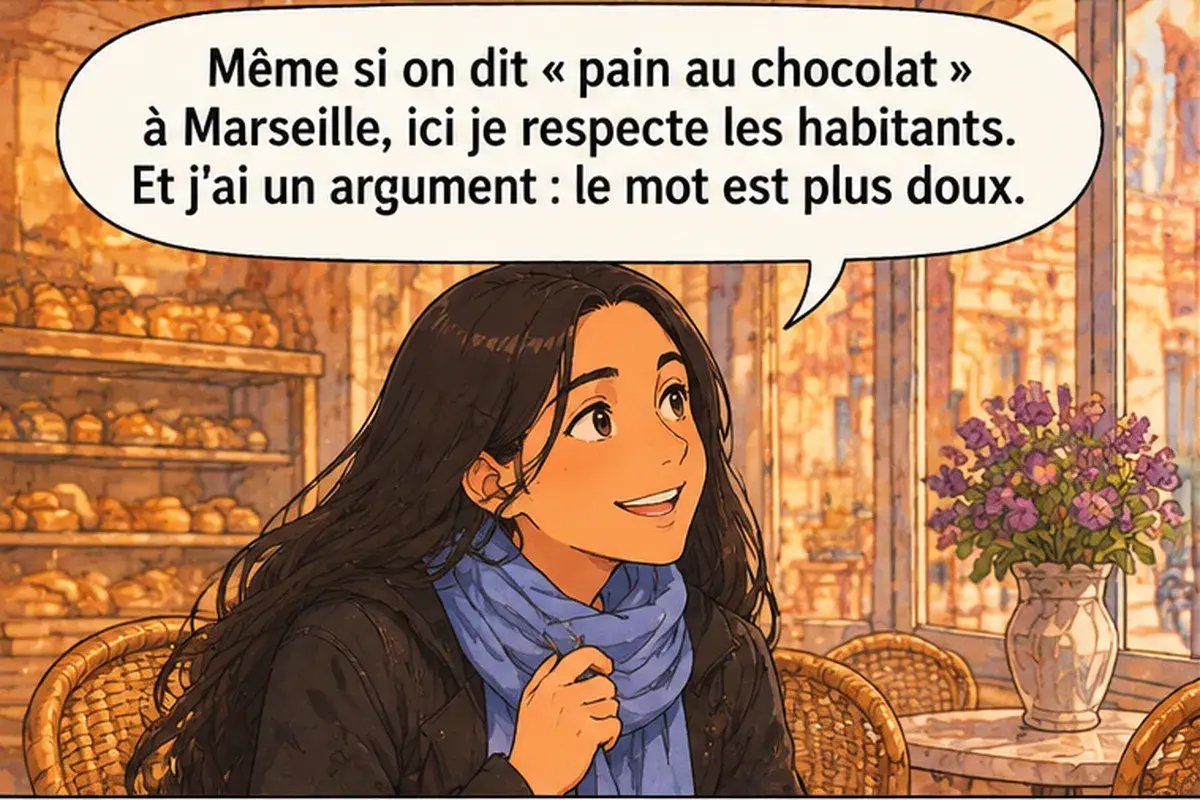
Même si on dit « pain au chocolat » à Marseille, ici je respecte les habitants. Et j'ai un argument : le mot est plus doux.
Even if people say "pain au chocolat" in Marseille, here I respect the locals. And I have an argument: the word is softer.
- Hugo
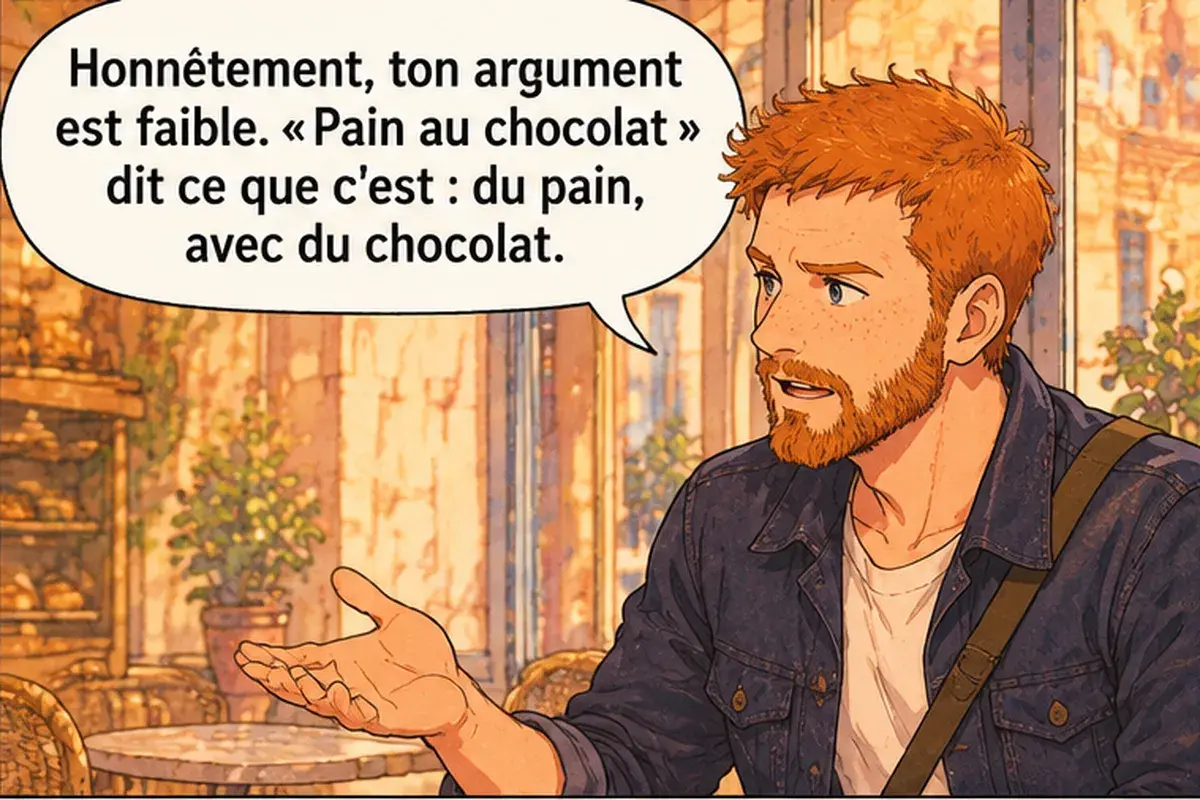
Honnêtement, ton argument est faible. « Pain au chocolat » dit ce que c'est : du pain, avec du chocolat.
Honestly, your argument is weak. "Pain au chocolat" says what it is: bread with chocolate.
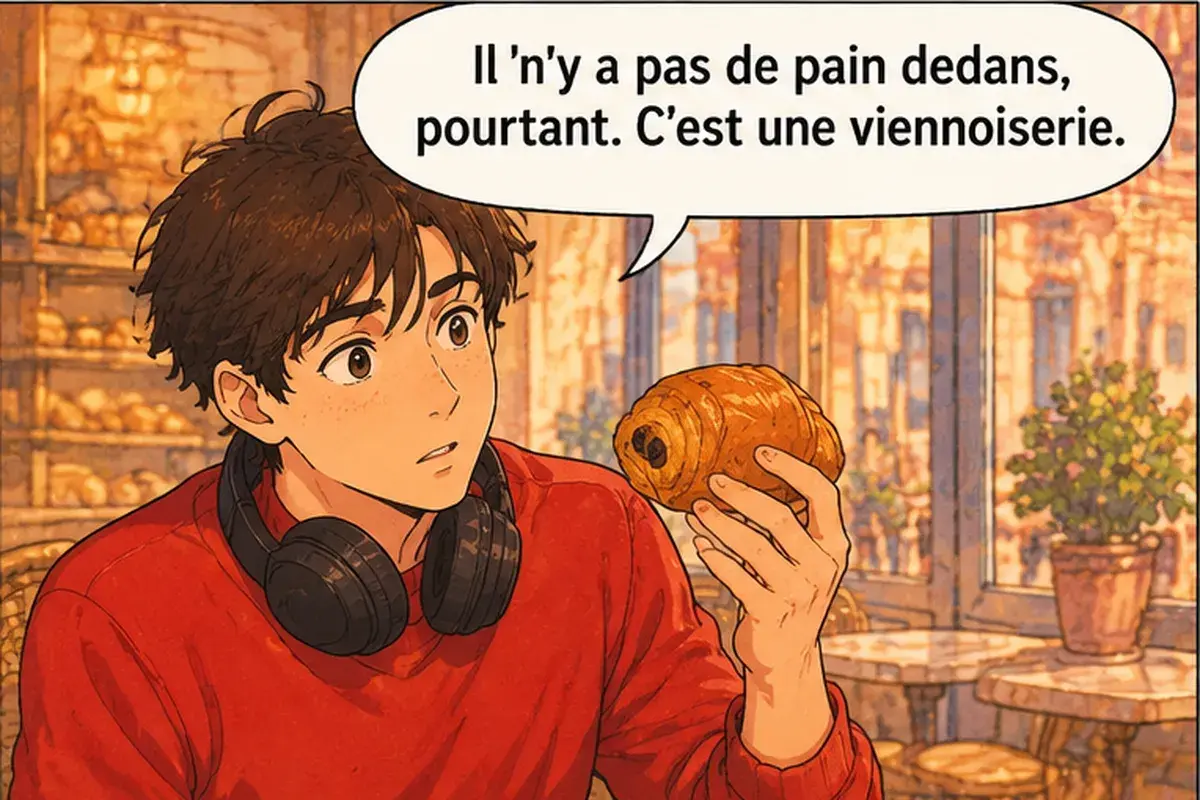
- Pacha
Il n'y a pas de pain dedans, pourtant. C'est une viennoiserie.
And yet there's no bread inside. It's a pastry.
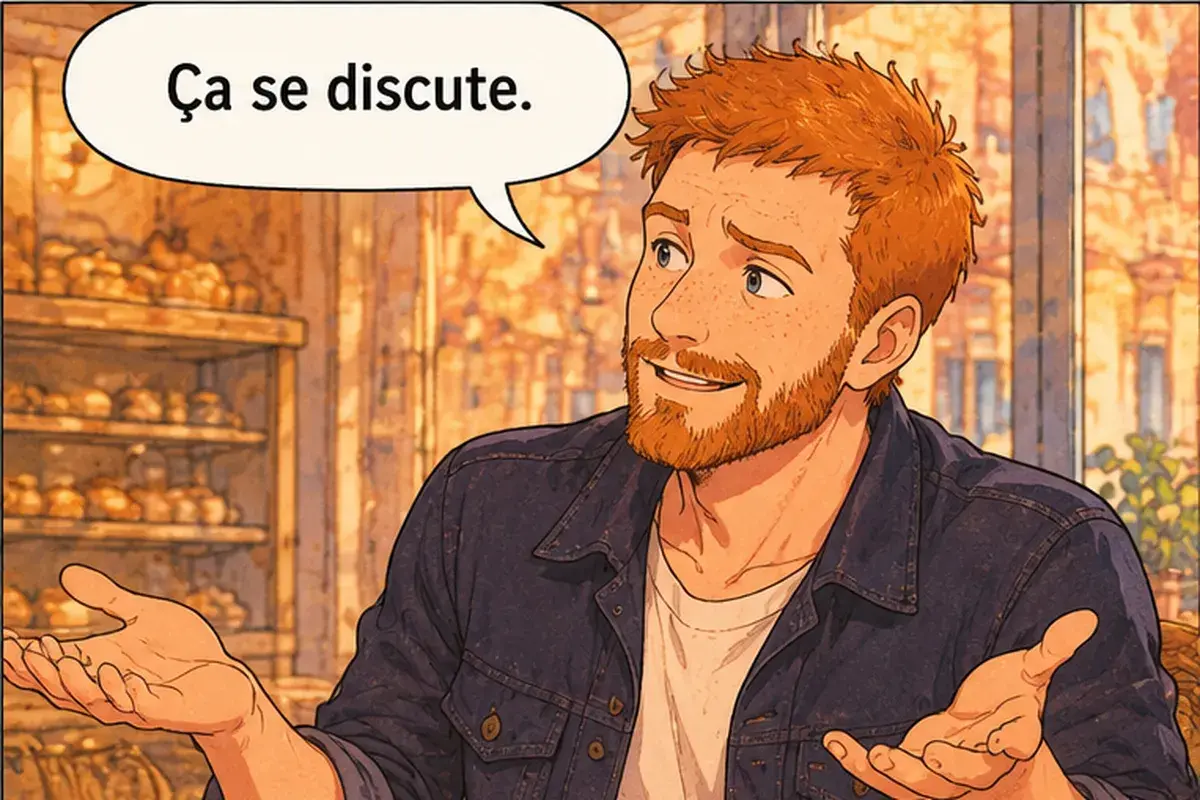
- Hugo
Ça se discute.
That's debatable.
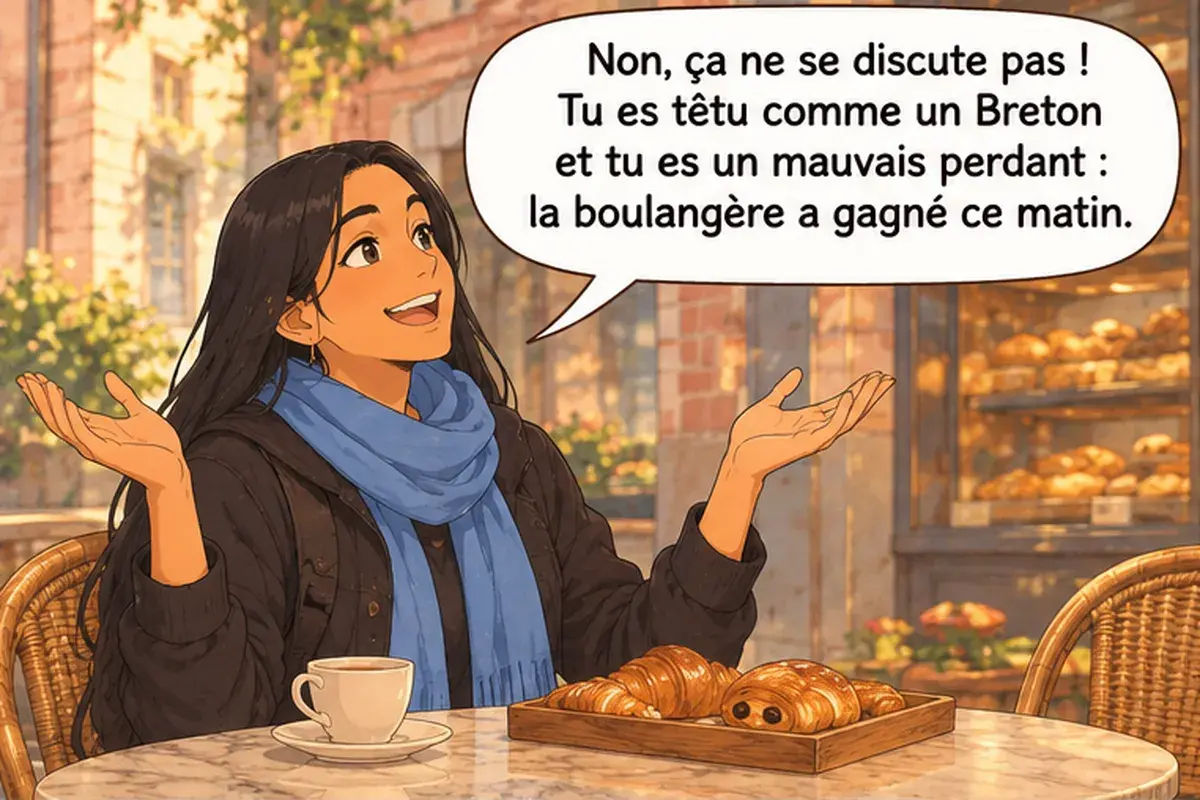
- Inès
Non, ça ne se discute pas ! Tu es têtu comme un Breton et tu es un mauvais perdant : la boulangère a gagné ce matin.
No, it's not debatable! You're as stubborn as a Breton and you're a sore loser: the baker won this morning.
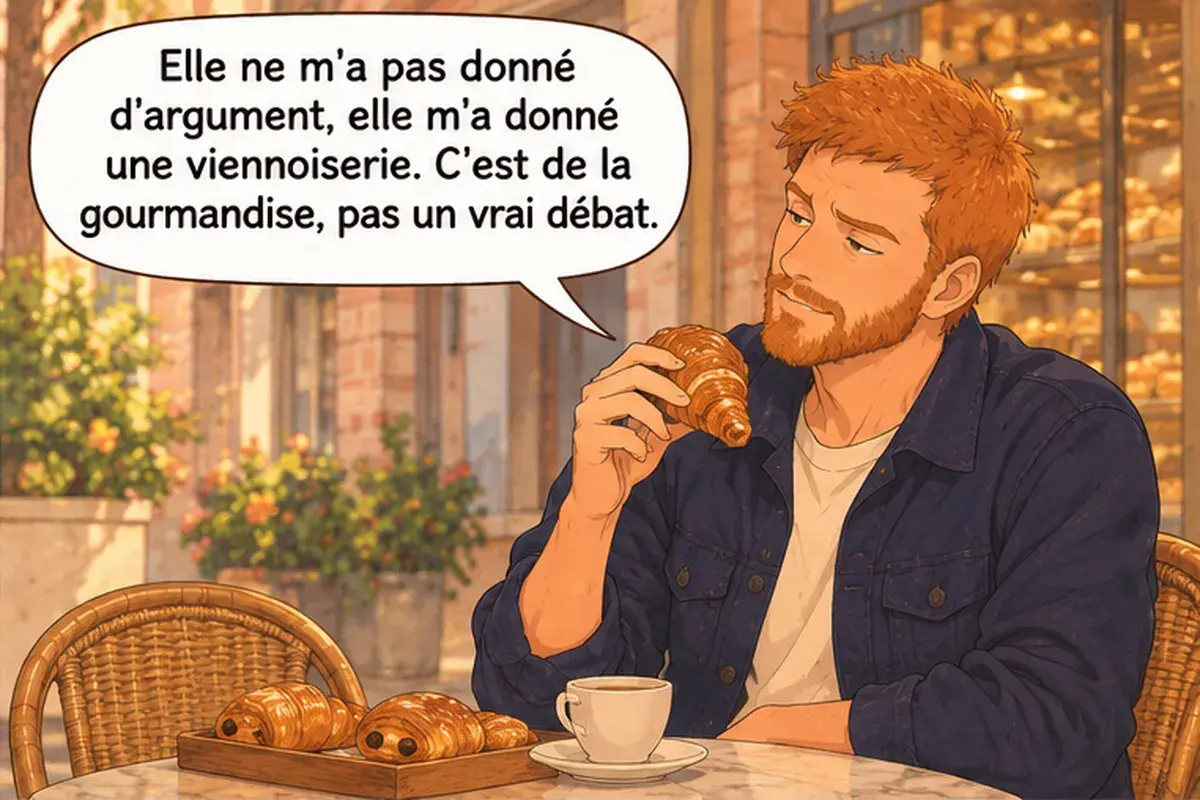
- Hugo
Elle ne m'a pas donné d'argument, elle m'a donné une viennoiserie. C'est de la gourmandise, pas un vrai débat.
She didn't give me any argument, she gave me a pastry. That's just indulgence, not a real debate.
- Pacha
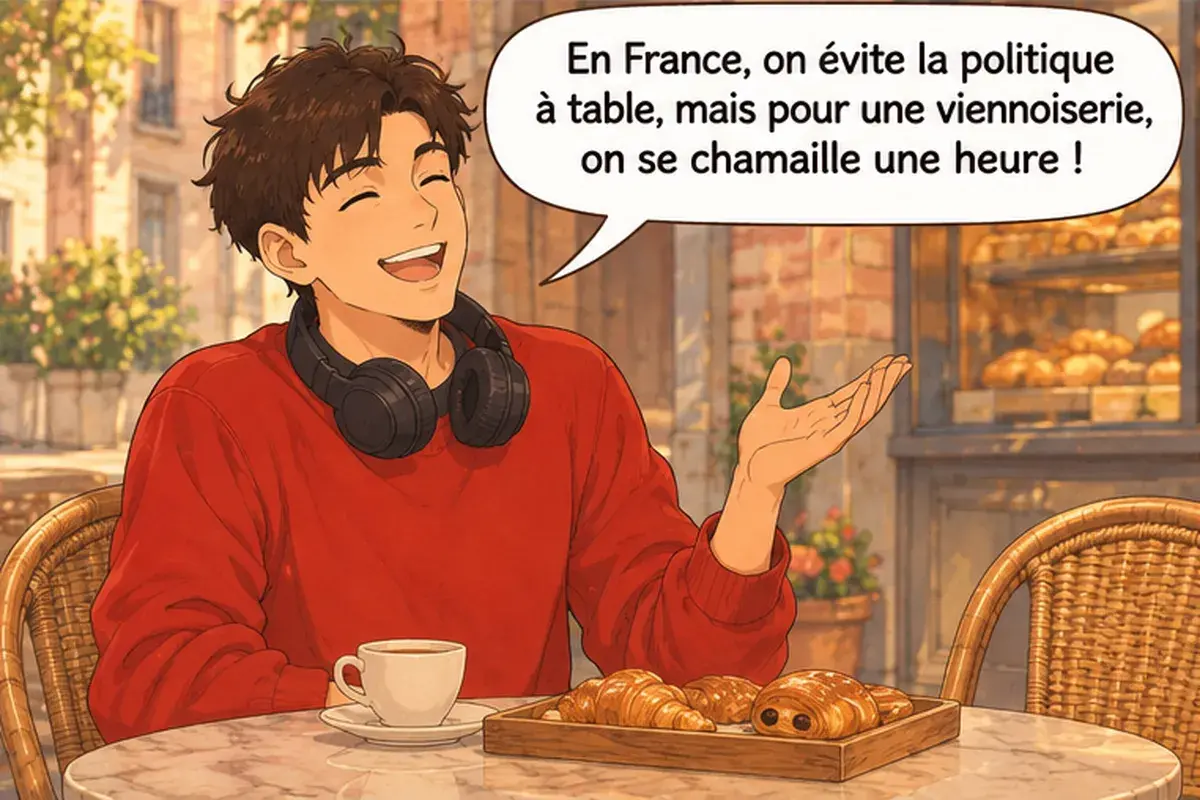
En France, on évite la politique à table, mais pour une viennoiserie, on se chamaille une heure !
In France, people avoid politics at the table, but over a pastry, they bicker for an hour!
- Inès
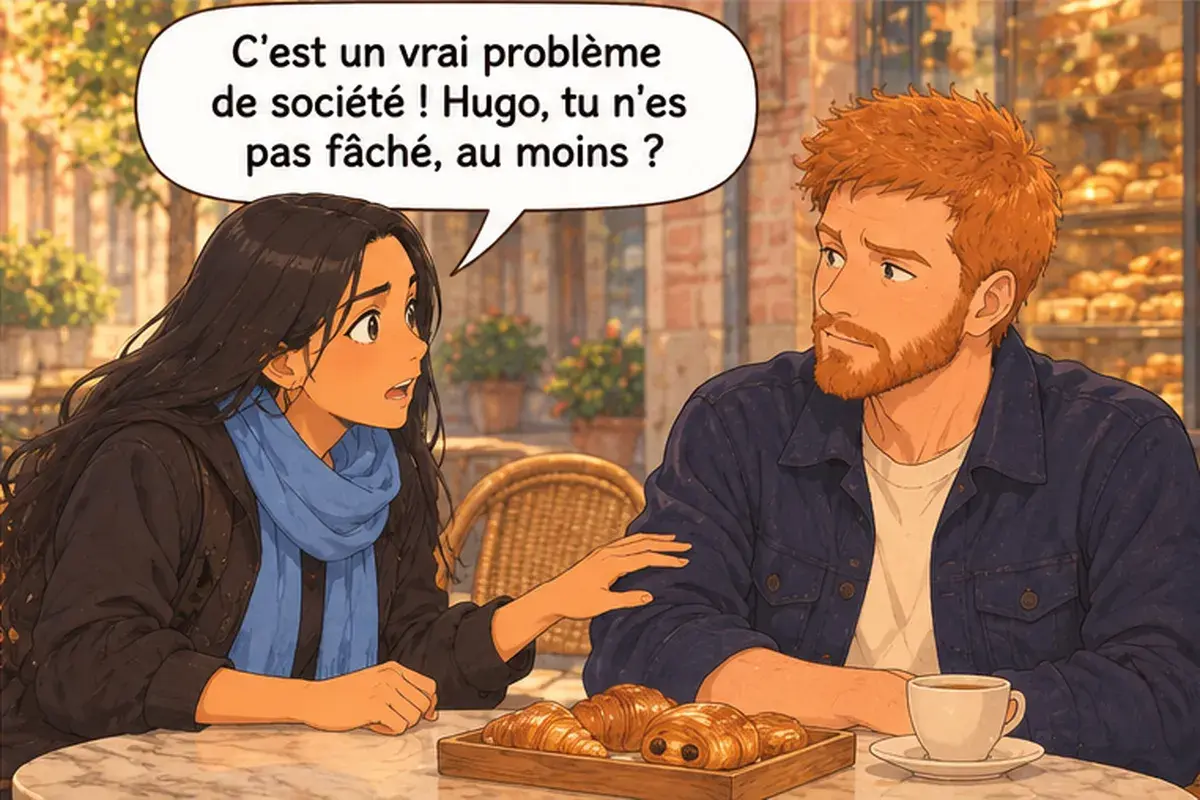
C'est un vrai problème de société ! Hugo, tu n'es pas fâché, au moins ?
It's a real problem for society! Hugo, you're not upset, are you?
- Hugo
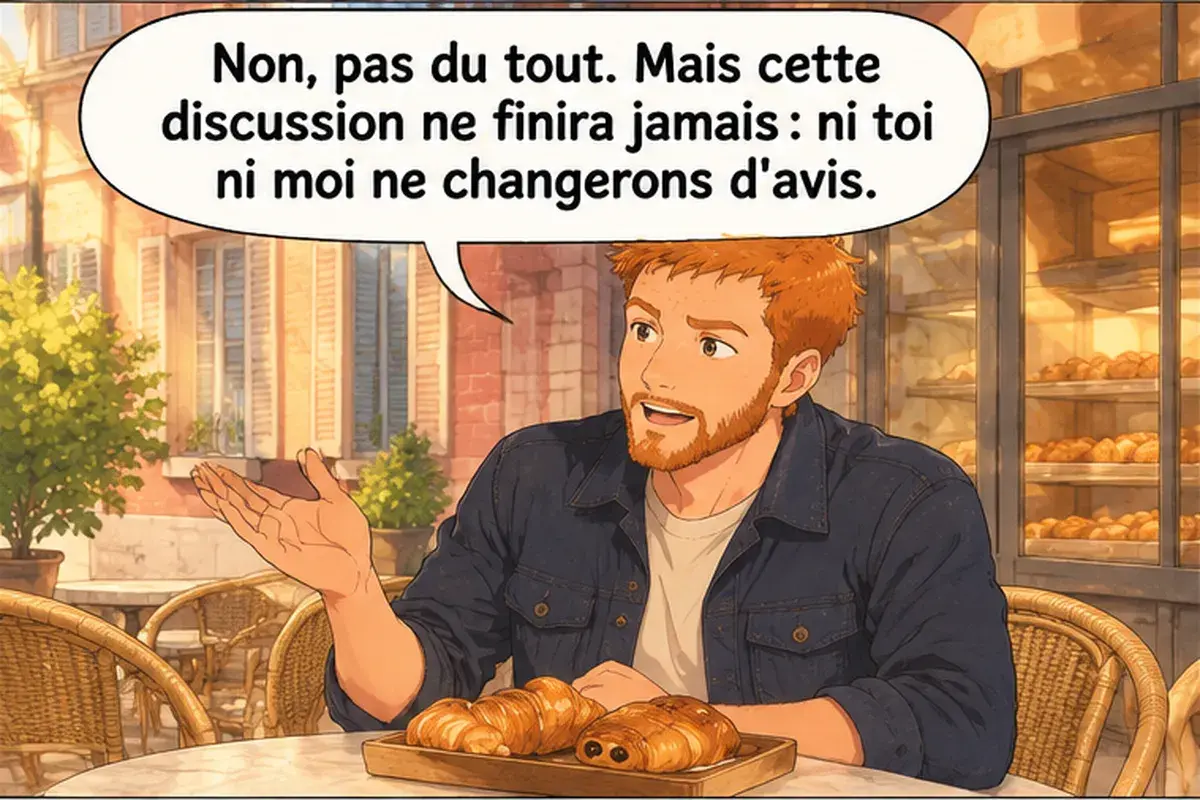
Non, pas du tout. Mais cette discussion ne finira jamais : ni toi ni moi ne changerons d'avis.
No, not at all. But this discussion will never end: neither you nor I will change our minds.
- Pacha
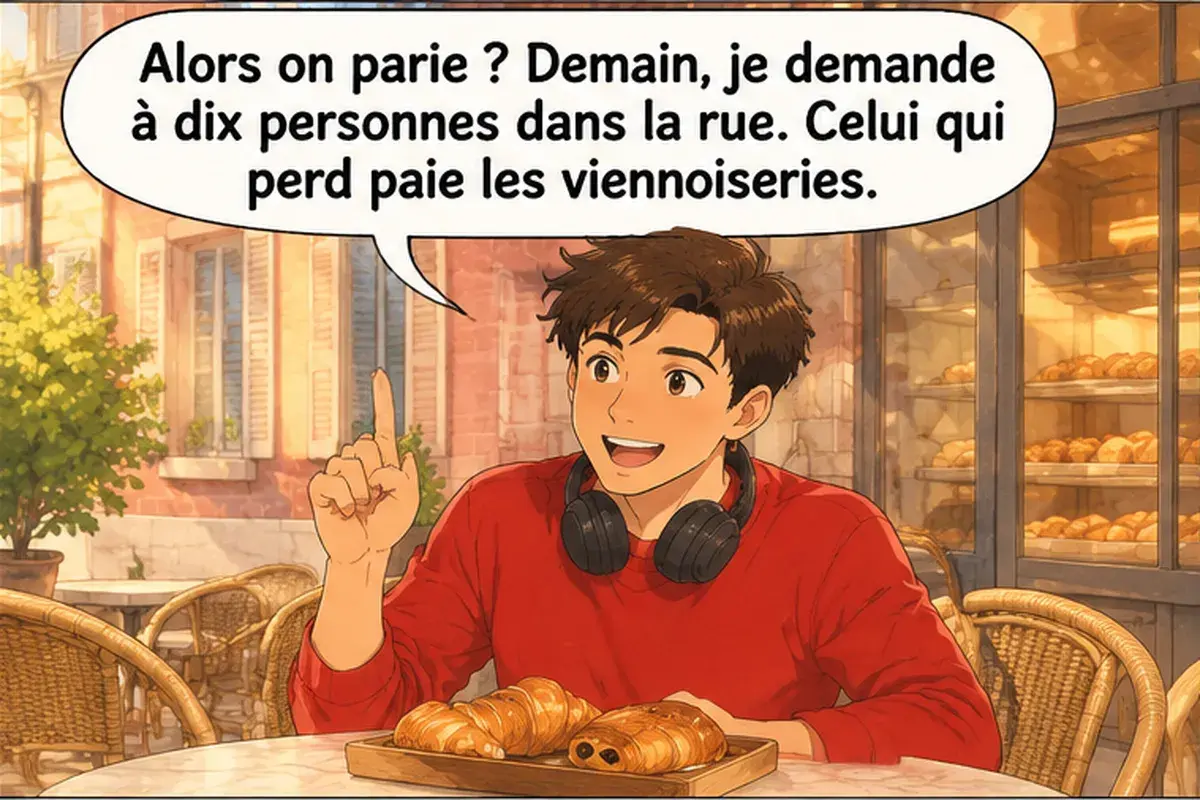
Alors on parie ? Demain, je demande à dix personnes dans la rue. Celui qui perd paie les viennoiseries.
So, shall we bet? Tomorrow I'll ask ten people on the street. The one who loses pays for the pastries.
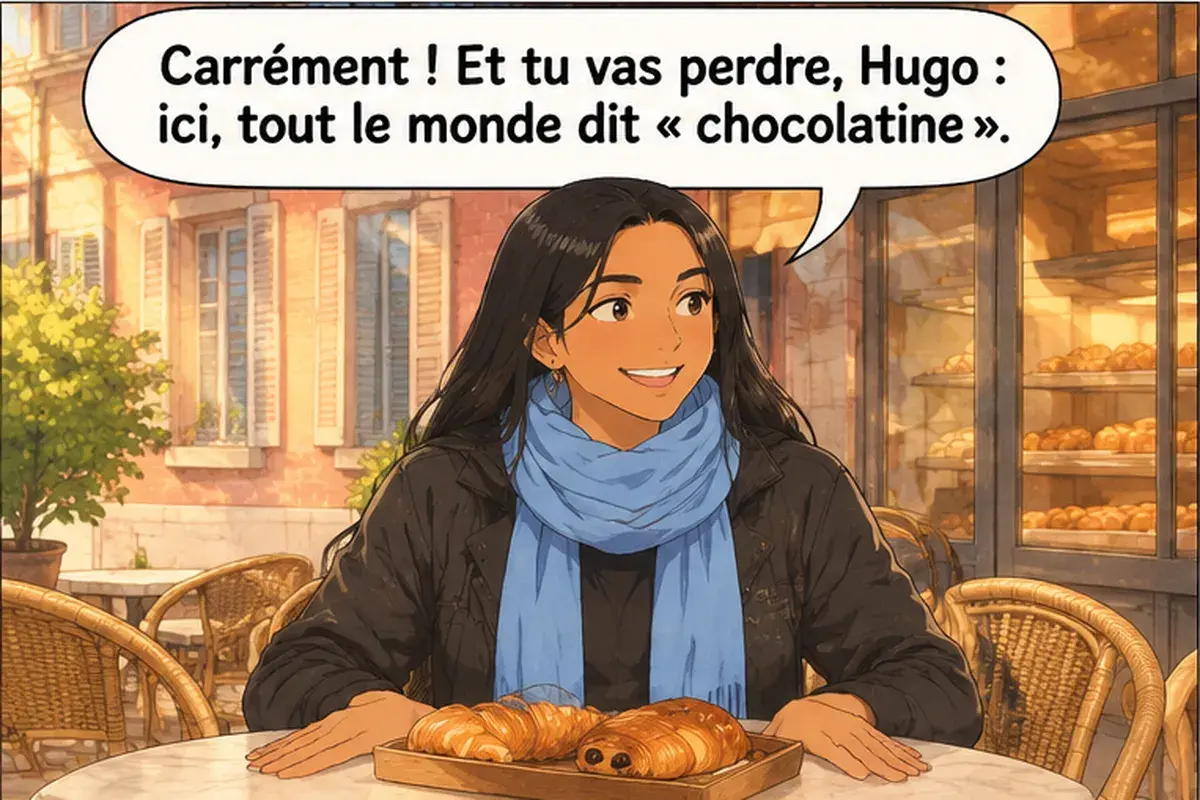
- Inès
Carrément ! Et tu vas perdre, Hugo : ici, tout le monde dit « chocolatine ».
Totally! And you're going to lose, Hugo: here, everyone says "chocolatine."
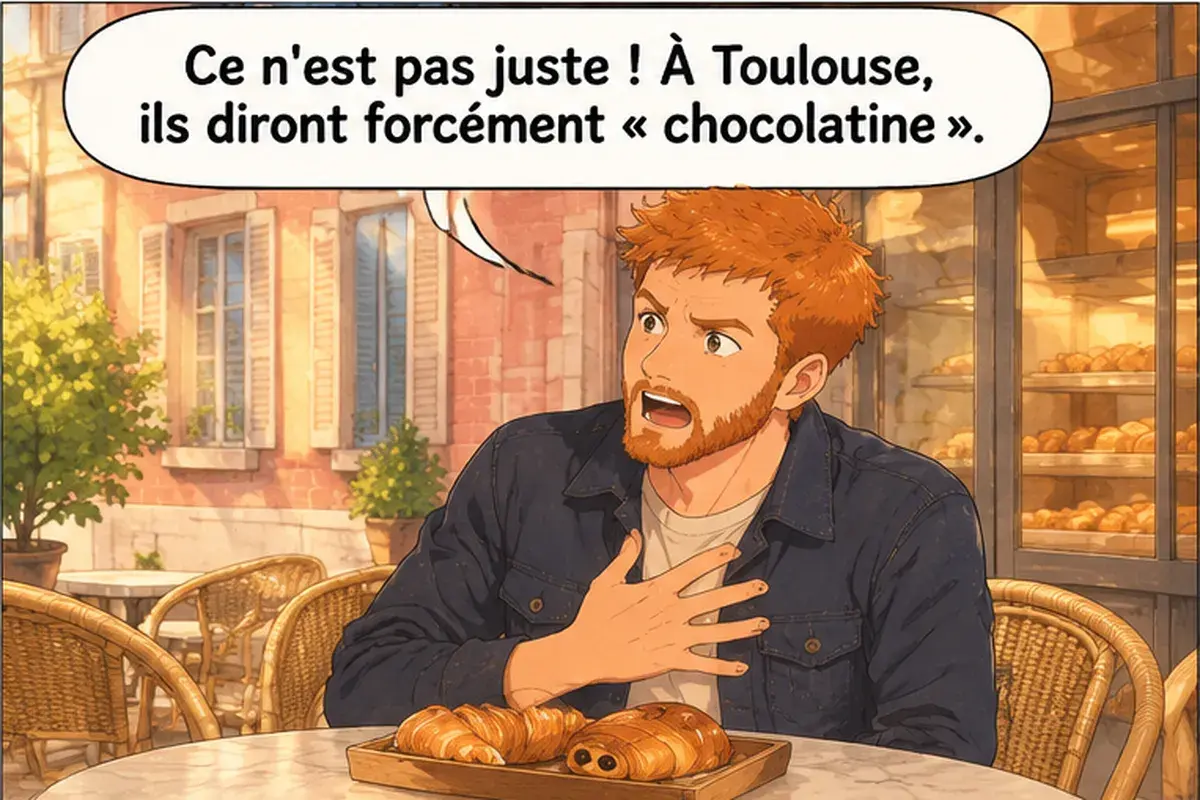
- Hugo
Ce n'est pas juste ! À Toulouse, ils diront forcément « chocolatine ».
That's not fair! In Toulouse, they're bound to say "chocolatine."
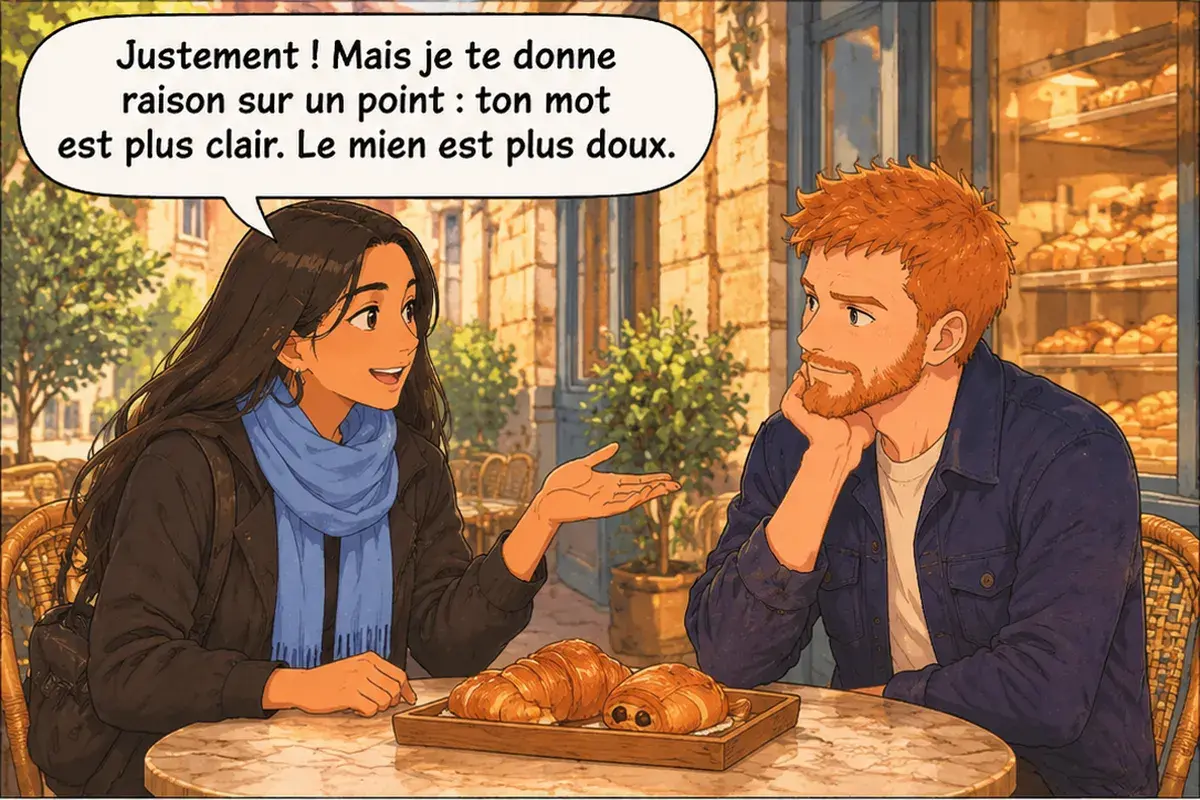
- Inès
Justement ! Mais je te donne raison sur un point : ton mot est plus clair. Le mien est plus doux.
Exactly! But I'll say you're right on one point: your word is clearer. Mine is softer.
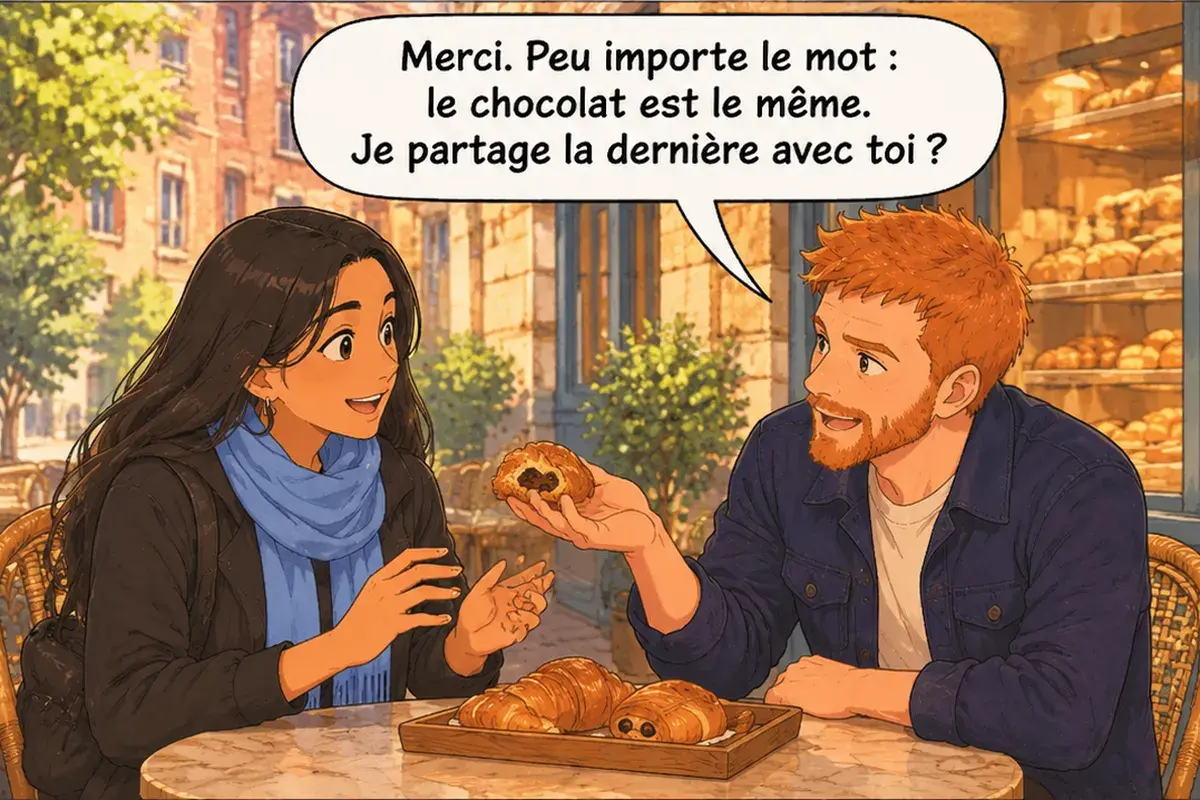
- Hugo
Merci. Peu importe le mot : le chocolat est le même. Je partage la dernière avec toi ?
Thanks. It doesn't matter what the word is: the chocolate is the same. Should I share the last one with you?
Grammar for this text
- Même si on dit « pain au chocolat » à Marseille —
même simeans "even if," followed by the normal tense. Tu défends la chocolatine alors que tu dis « pain au chocolat » —alors quemeans "whereas, even though";défendscomes fromdéfendre("to defend"): je défends, tu défends, il défend. - Ça se discute. — a polite "that's debatable," softer than "no." Non, ça ne se discute pas ! — "there's nothing to discuss."
- Tu es têtu comme un Breton — a joke about Bretons being stubborn (Hugo is from Brittany). It's fine with friends, but insulting to a stranger.
Un mauvais perdantis someone who loses badly, a "sore loser." - ni toi ni moi ne changerons d'avis —
ni… ni…withnebefore the verb (explained in the grammar).Changeronsis the future tense ofchanger;changer d'avismeans "to change your mind," with no article. - Celui qui perd paie les viennoiseries —
celui quimeans "the one who" (unit 5);paiemeans "pays," a form ofpayer(payeis also correct). - Carrément ! — casual "totally!", only with friends. Ils diront forcément —
forcémenthere means "for sure." Justement — "exactly." - je te donne raison —
donner raison àmeans "to admit someone is right";temeans "to you." Le mien est plus doux —le mienmeans "mine," instead of repeating the wordmot(unit 5).
Words and grammar of the unit: Argue and stay friends.
Learn the words from the texts with flashcards
In the app, you can tap any word in a text to see its translation, forms and examples, and new words stick with flashcards. 15 minutes a day.
Start for freeEverything is open for free. No card needed to sign up.