

French dialogue with translation · B1 · 18 lines
Ici, on dit « chocolatine » Here, people say "chocolatine"
Comic · 18 panels
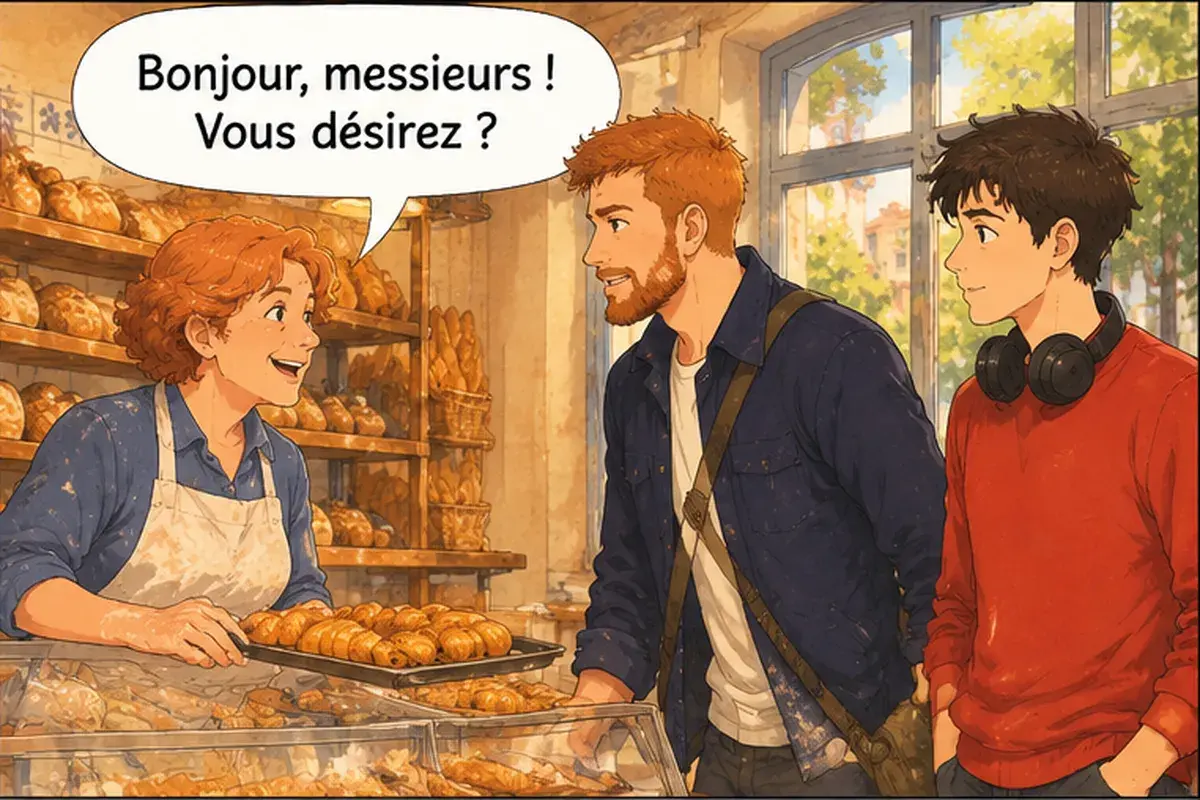
- Boulangère
Bonjour, messieurs ! Vous désirez ?
Hello, gentlemen! What can I get you? (to several people)
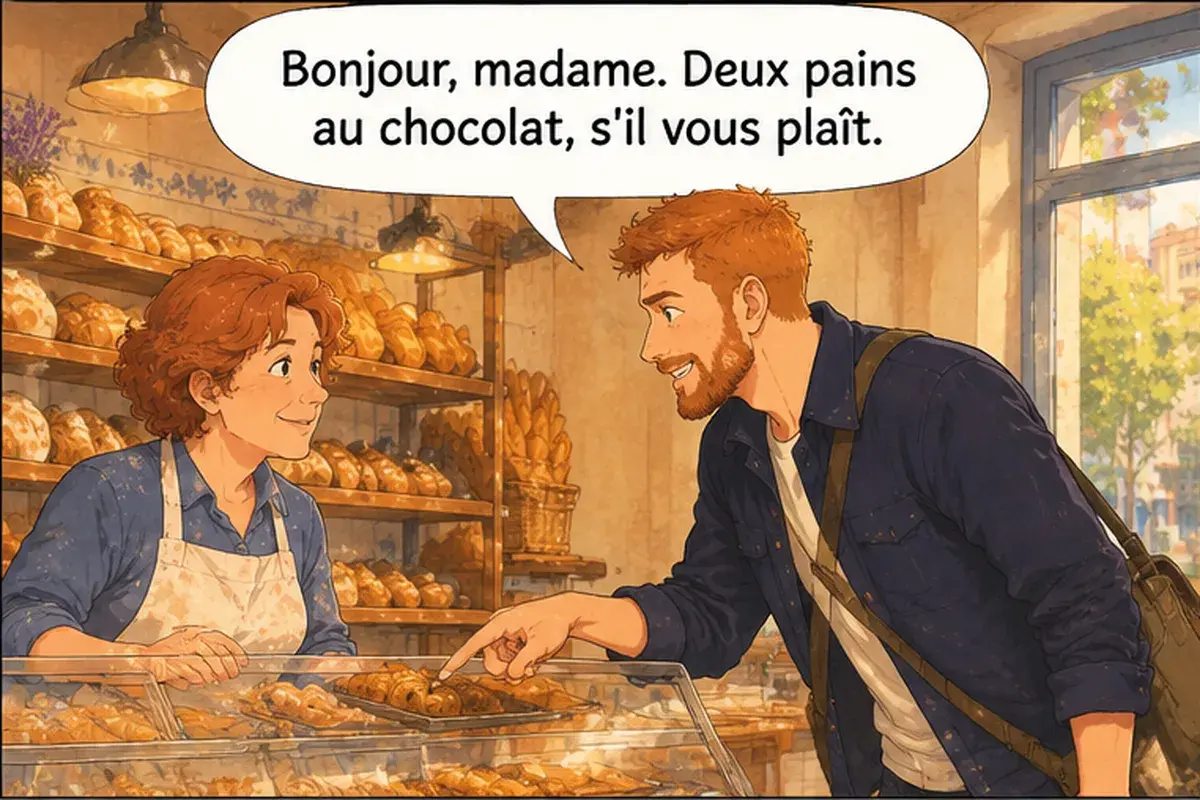
- Hugo
Bonjour, madame. Deux pains au chocolat, s'il vous plaît.
Hello, ma'am. Two pains au chocolat, please. (formal)
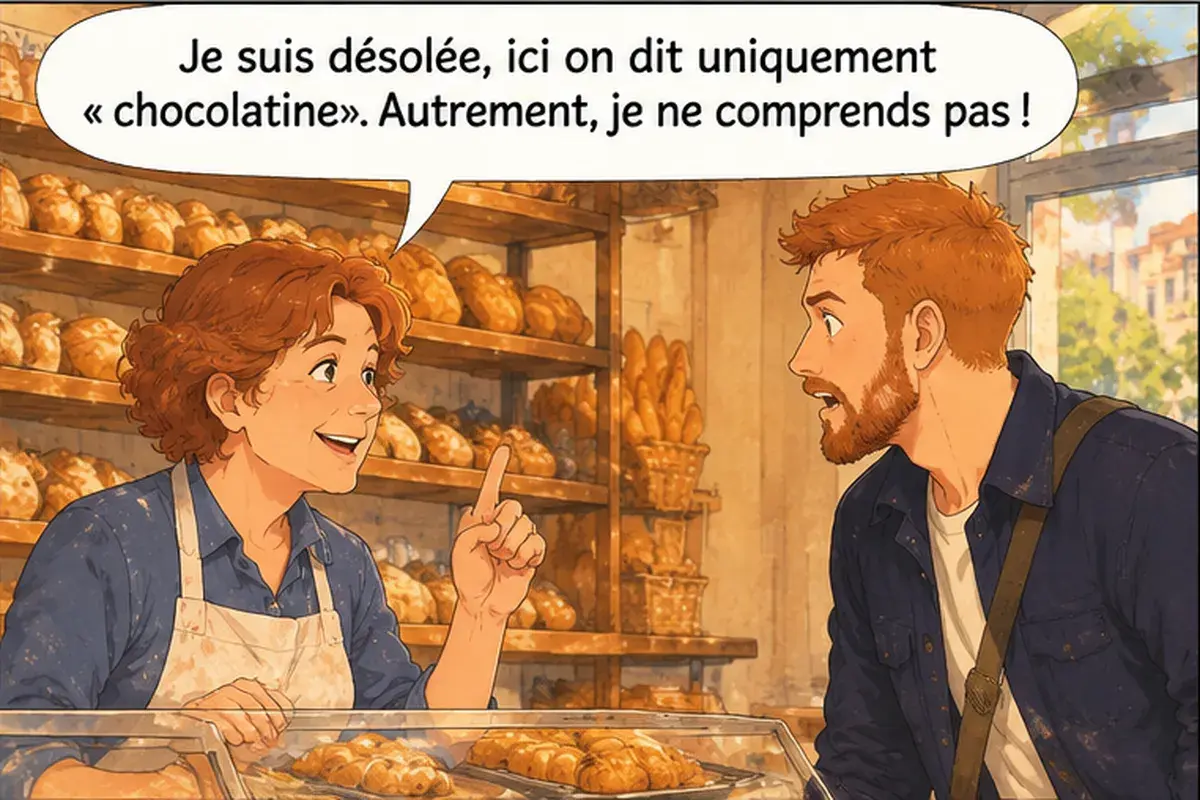
- Boulangère
Je suis désolée, ici on dit uniquement « chocolatine ». Autrement, je ne comprends pas !
I'm sorry (woman speaking), here people only say "chocolatine." Otherwise, I don't understand!
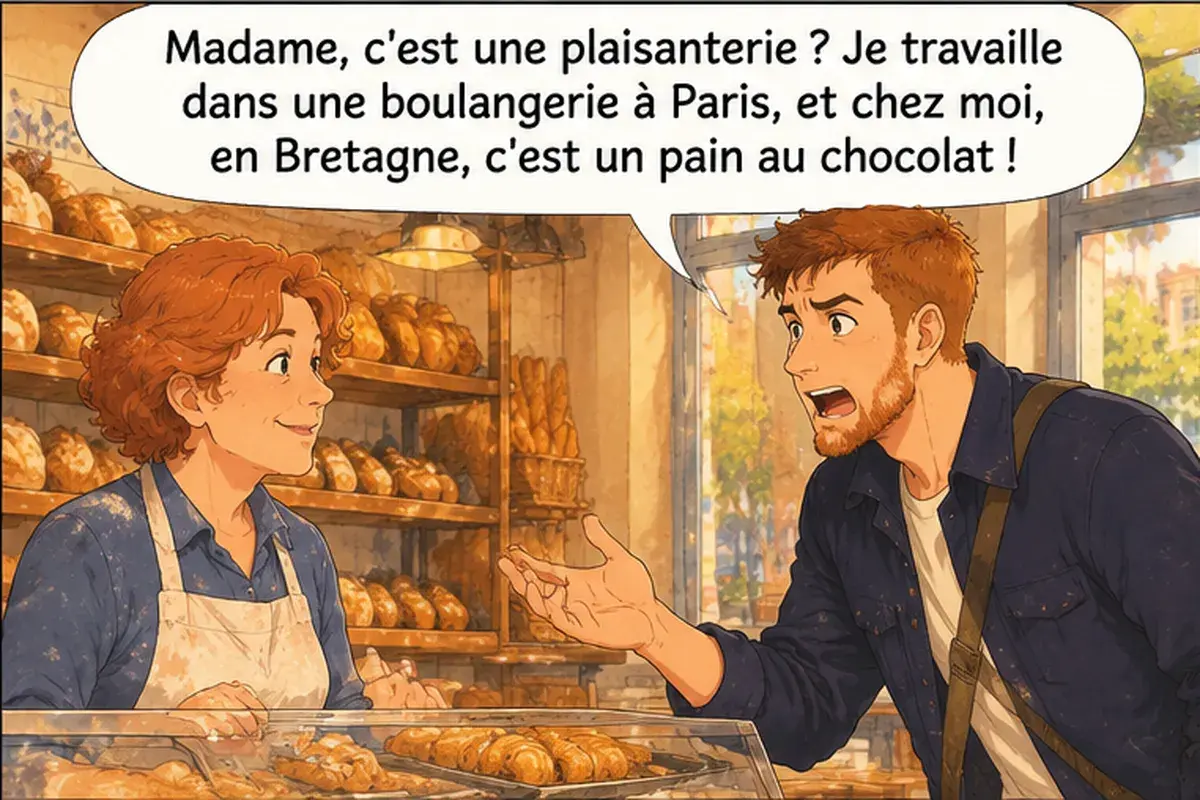
- Hugo
Madame, c'est une plaisanterie ? Je travaille dans une boulangerie à Paris, et chez moi, en Bretagne, c'est un pain au chocolat !
Ma'am, is this a joke? I work in a bakery in Paris, and back home in Brittany, it's a pain au chocolat!
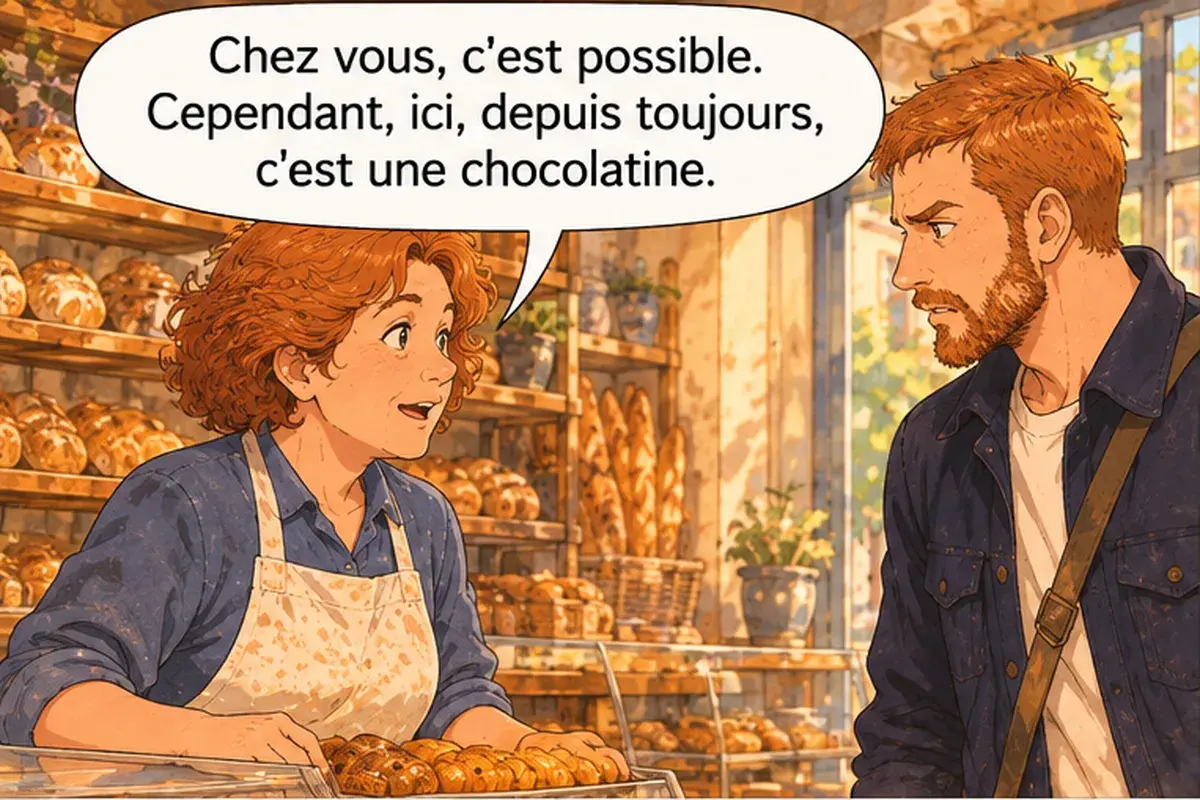
- Boulangère
Chez vous, c'est possible. Cependant, ici, depuis toujours, c'est une chocolatine.
Where you're from, that's possible. However, here it's always been a chocolatine. (formal)
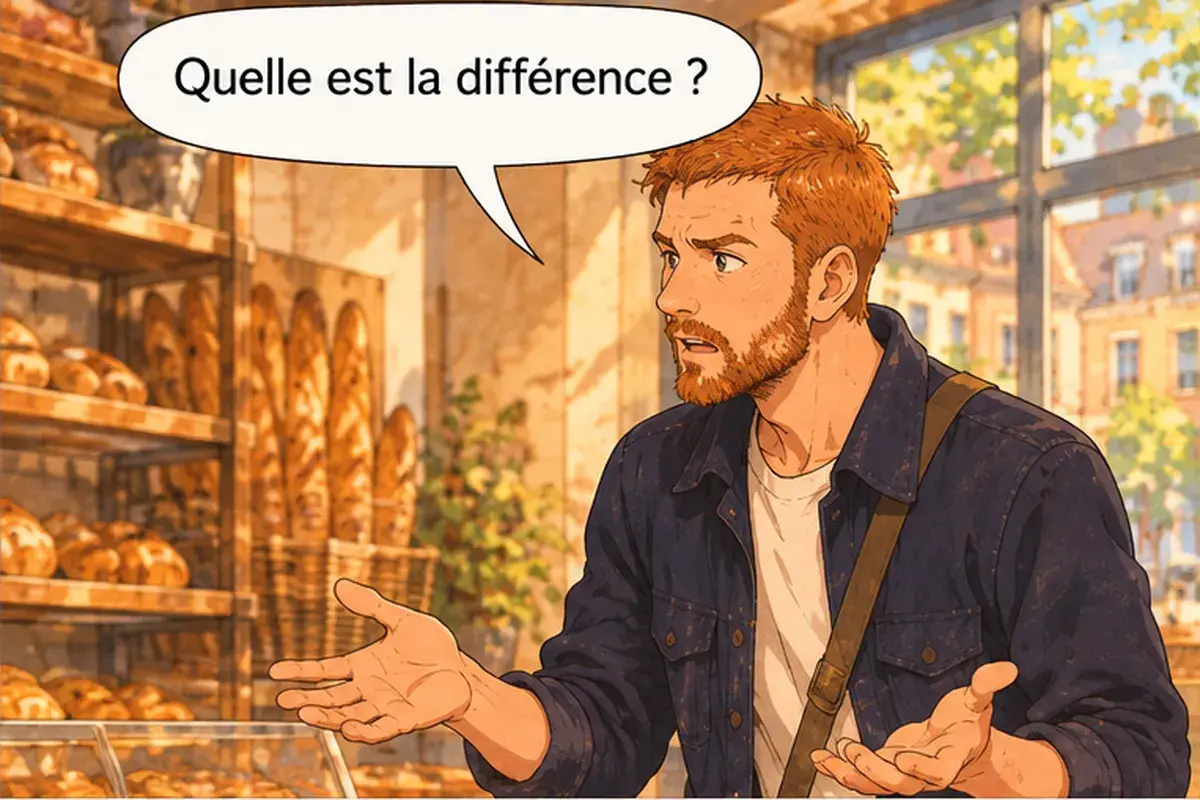
- Hugo
Quelle est la différence ?
What's the difference?
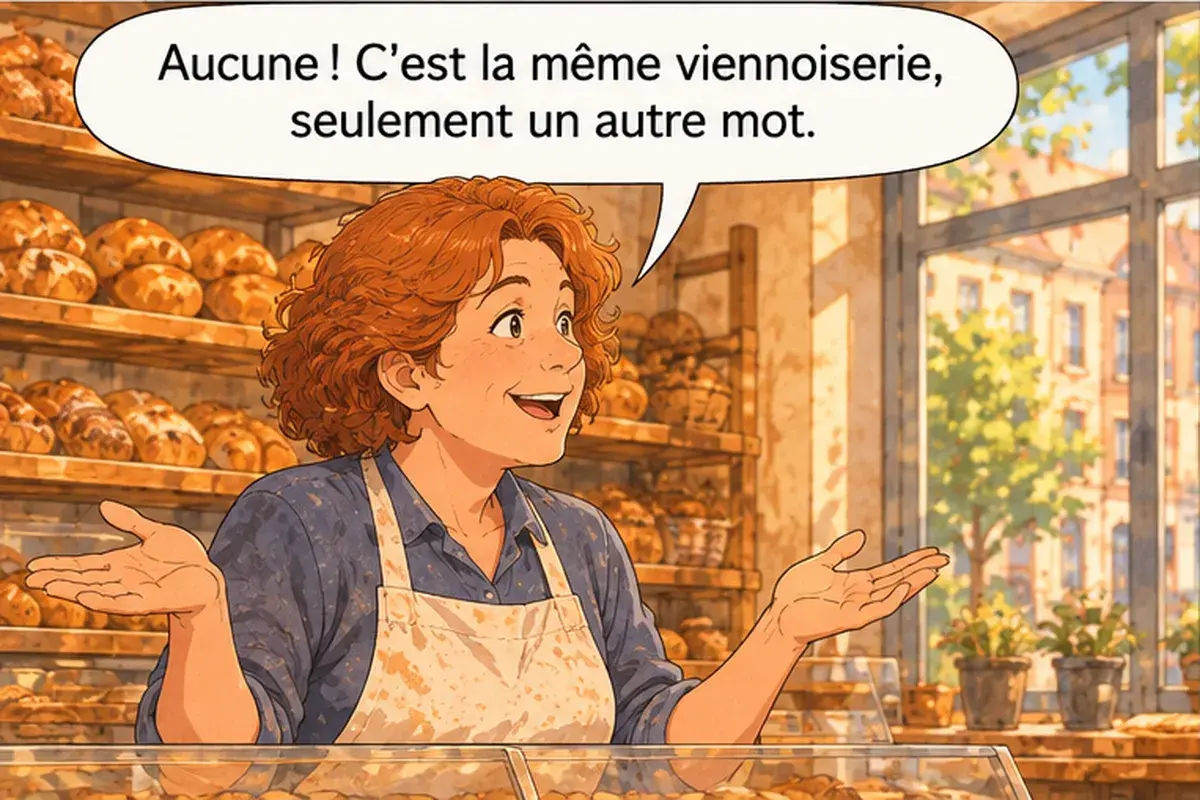
- Boulangère
Aucune ! C'est la même viennoiserie, seulement un autre mot.
None! It's the same pastry, just a different word.
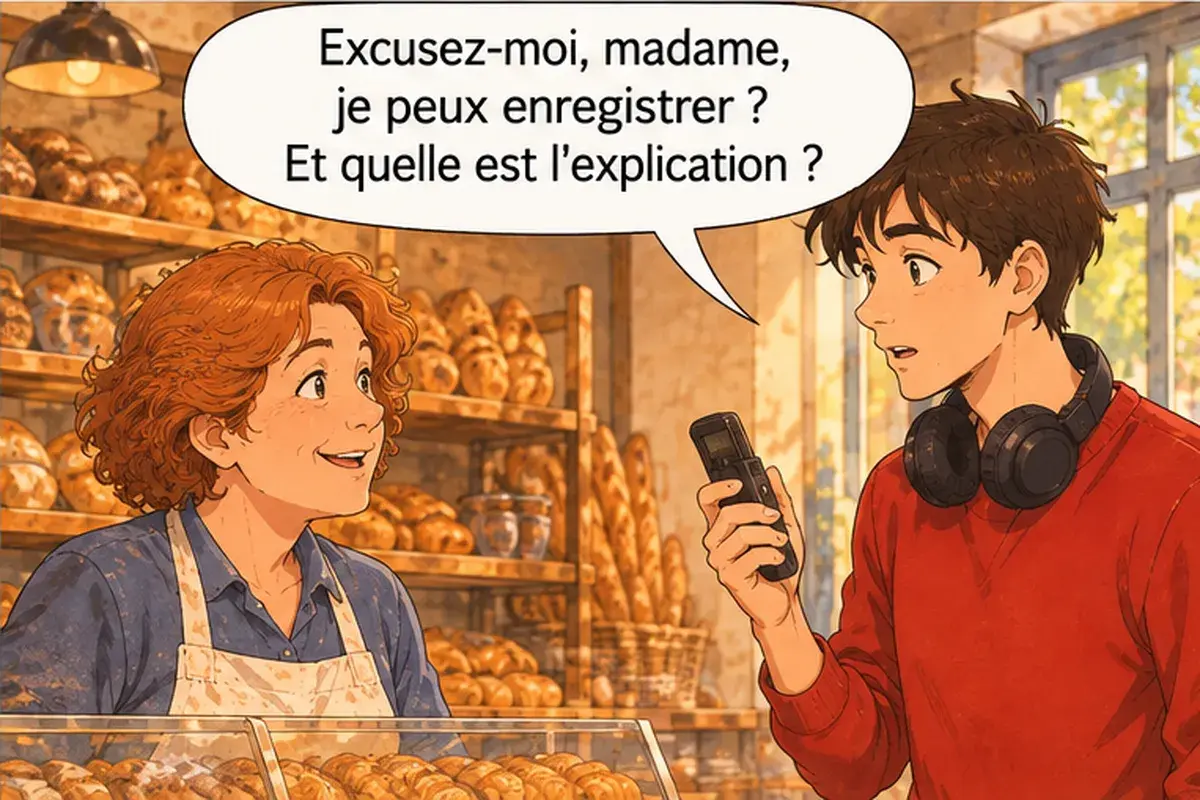
- Pacha
Excusez-moi, madame, je peux enregistrer ? Et quelle est l'explication ?
Excuse me, ma'am, can I record? And what's the explanation? (formal)
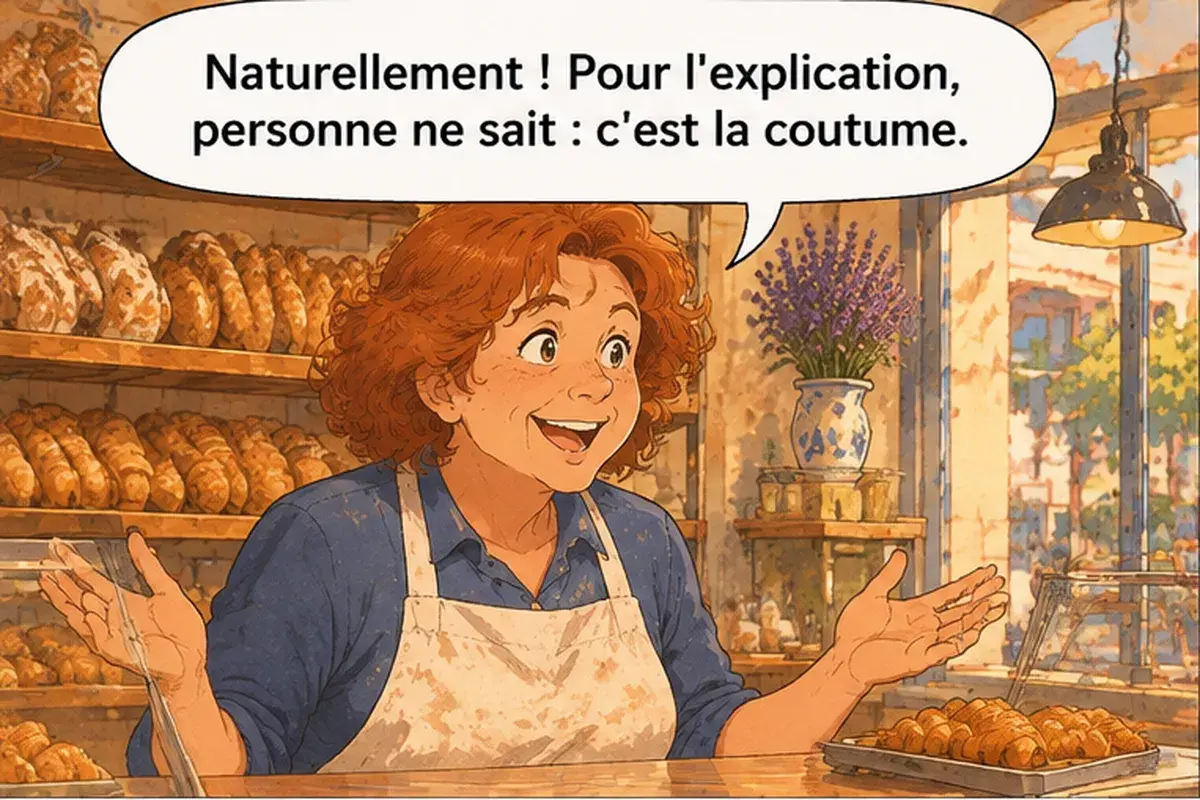
- Boulangère
Naturellement ! Pour l'explication, personne ne sait : c'est la coutume.
Of course! As for the explanation, nobody knows: it's the custom.
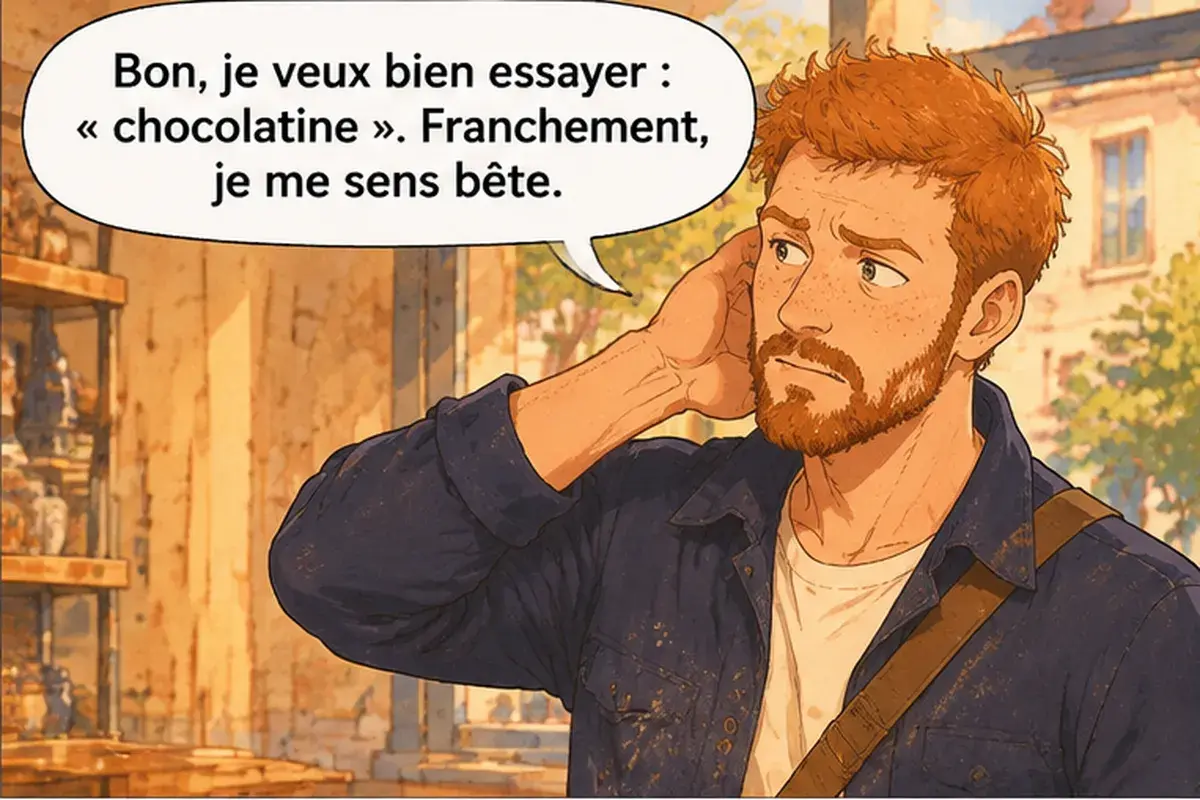
- Hugo
Bon, je veux bien essayer : « chocolatine ». Franchement, je me sens bête.
Well, I'm happy to try: "chocolatine." Frankly, I feel silly.
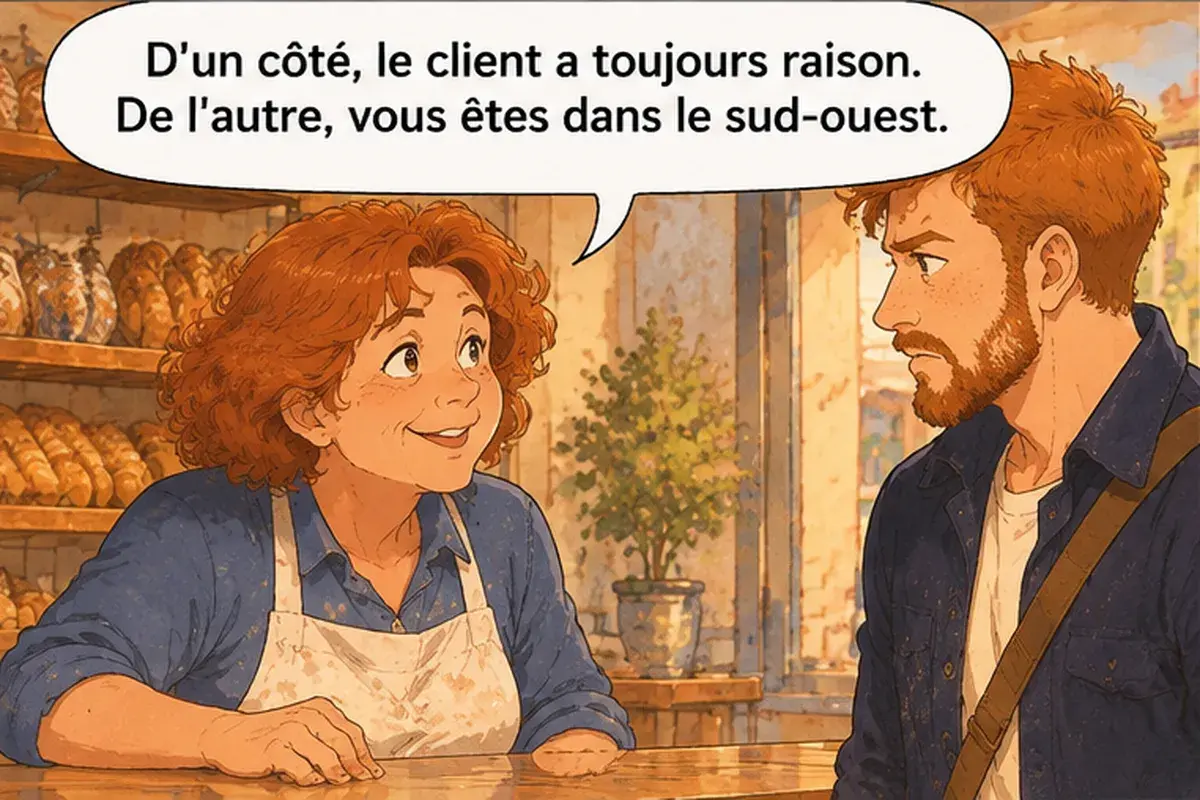
- Boulangère
D'un côté, le client a toujours raison. De l'autre, vous êtes dans le sud-ouest.
On the one hand, the customer is always right. On the other, you're in the southwest. (formal)
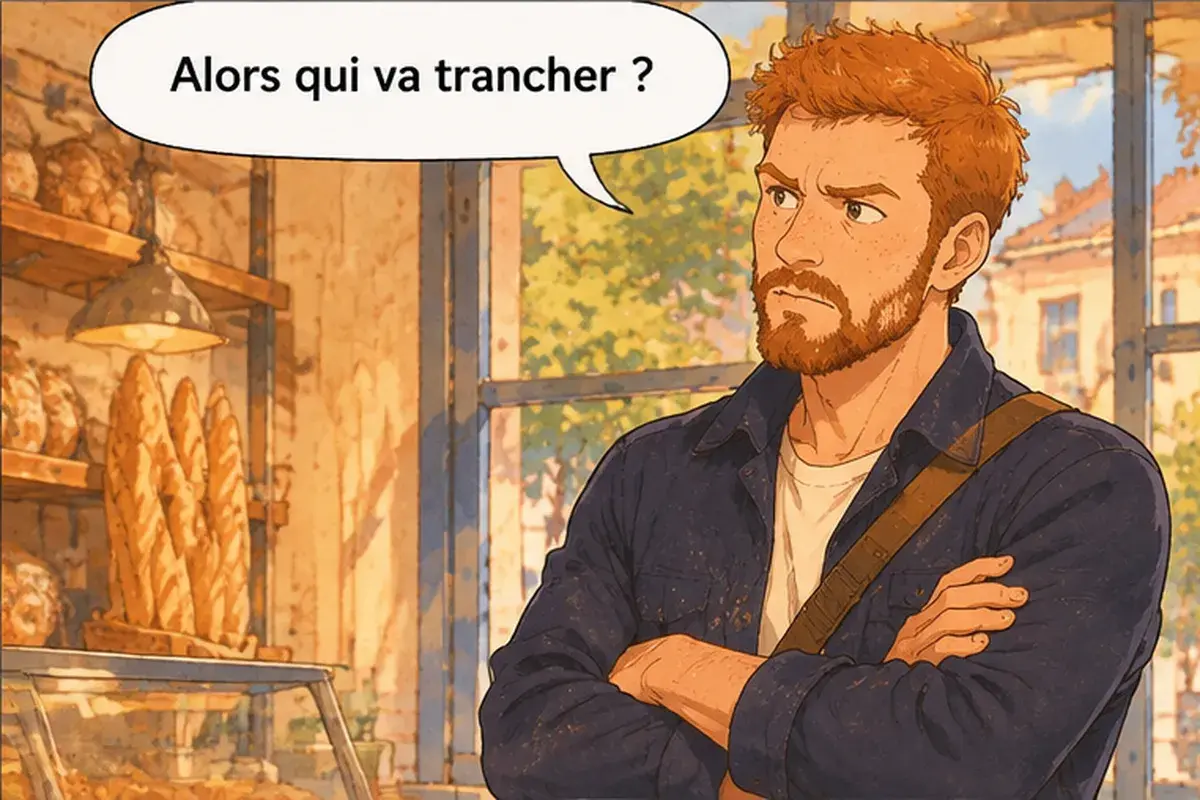
- Hugo
Alors qui va trancher ?
So who's going to settle this?
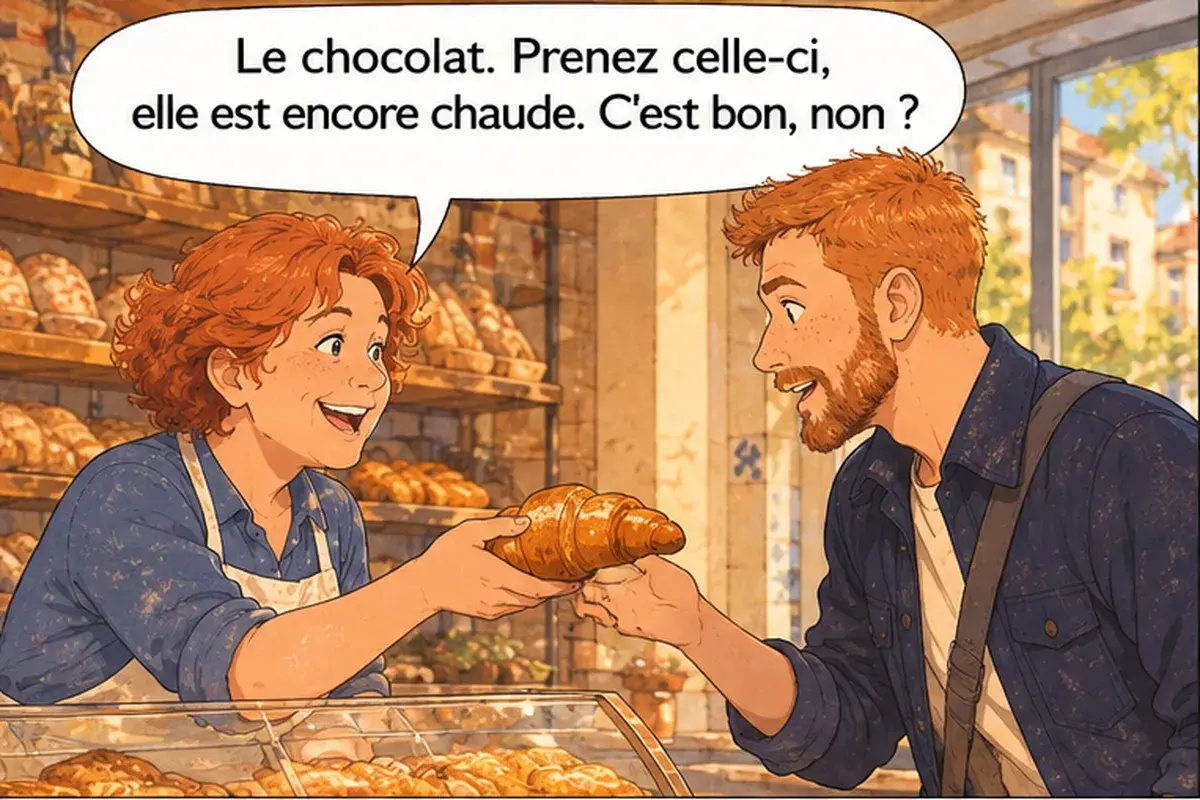
- Boulangère
Le chocolat. Prenez celle-ci, elle est encore chaude. C'est bon, non ?
The chocolate. Take this one, it's still warm. It's good, isn't it? (formal)
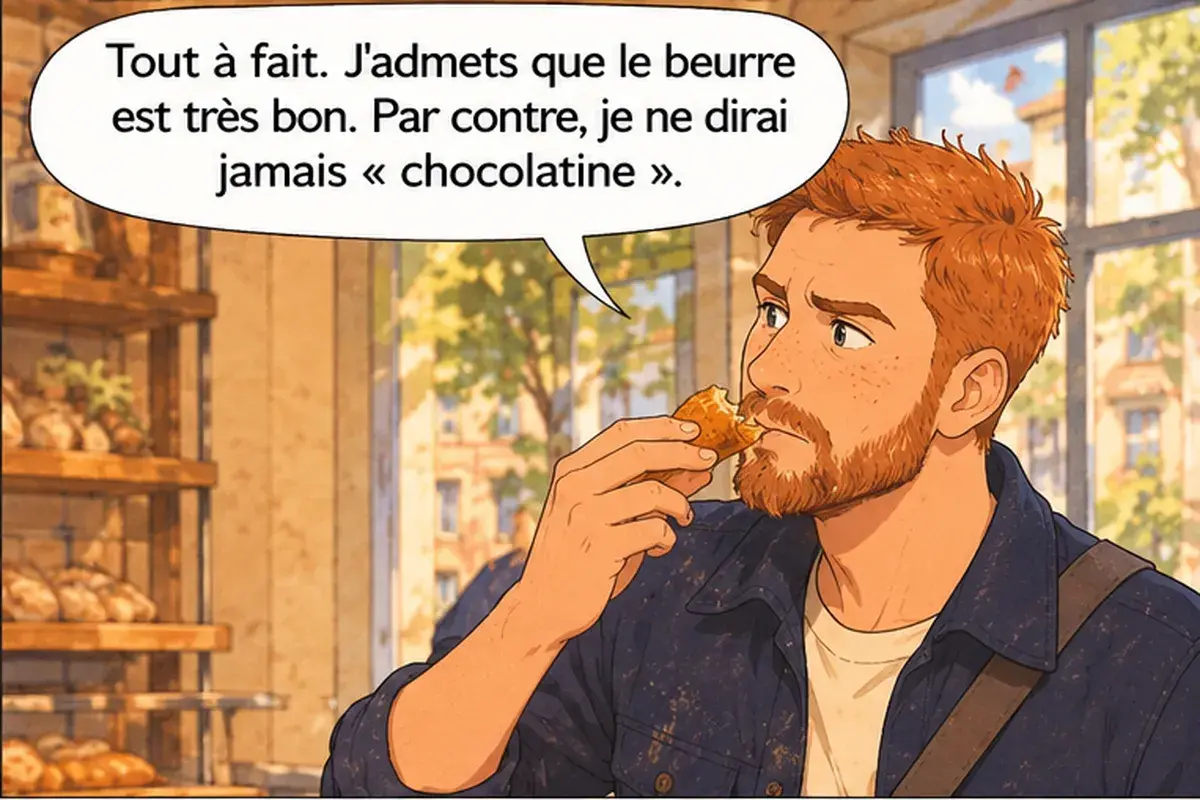
- Hugo
Tout à fait. J'admets que le beurre est très bon. Par contre, je ne dirai jamais « chocolatine ».
Absolutely. I admit that the butter is very good. On the other hand, I'll never say "chocolatine."
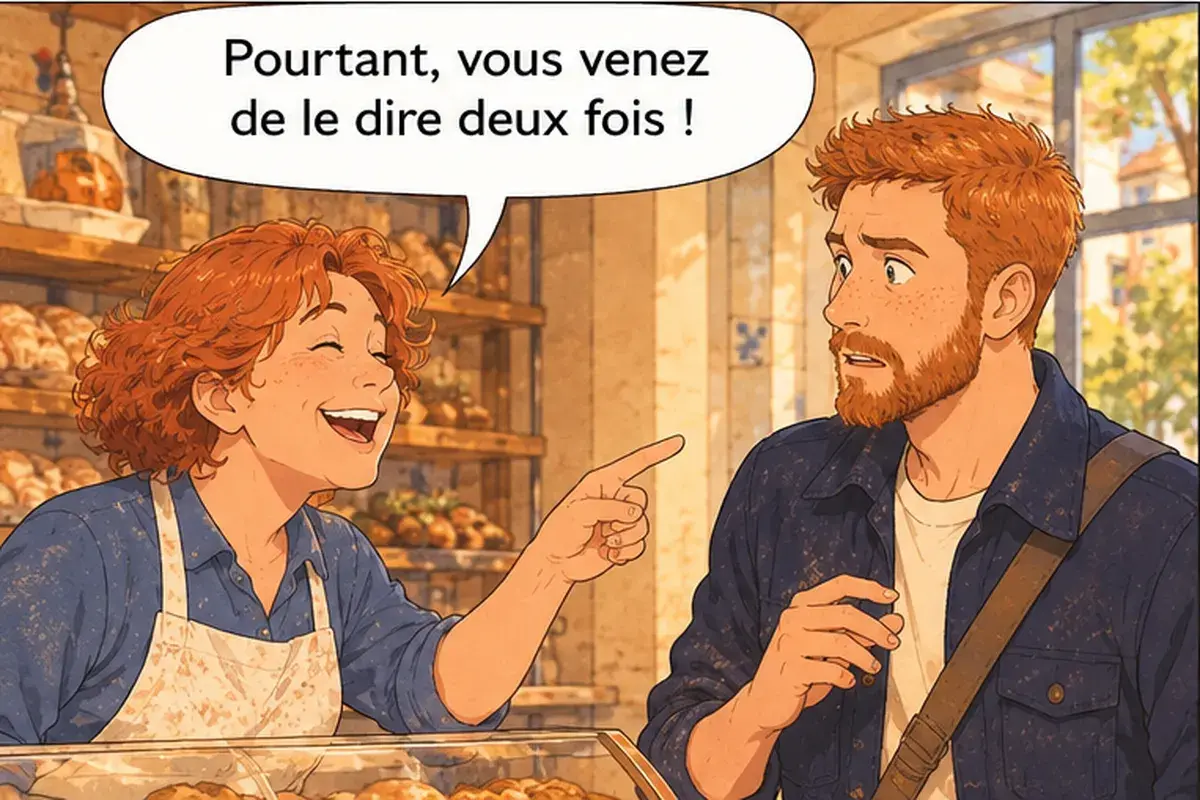
- Boulangère
Pourtant, vous venez de le dire deux fois !
And yet you just said it twice! (formal)
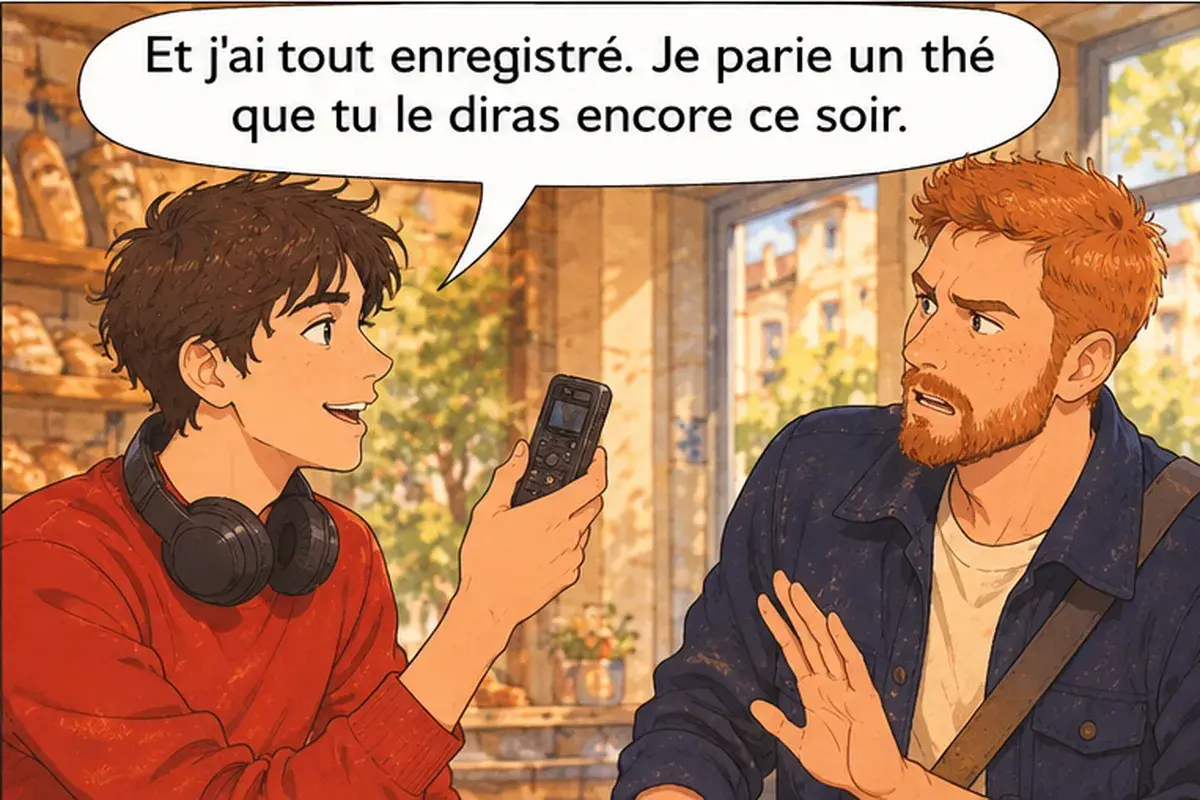
- Pacha
Et j'ai tout enregistré. Je parie un thé que tu le diras encore ce soir.
And I recorded everything. I bet you a tea that you'll say it again tonight.
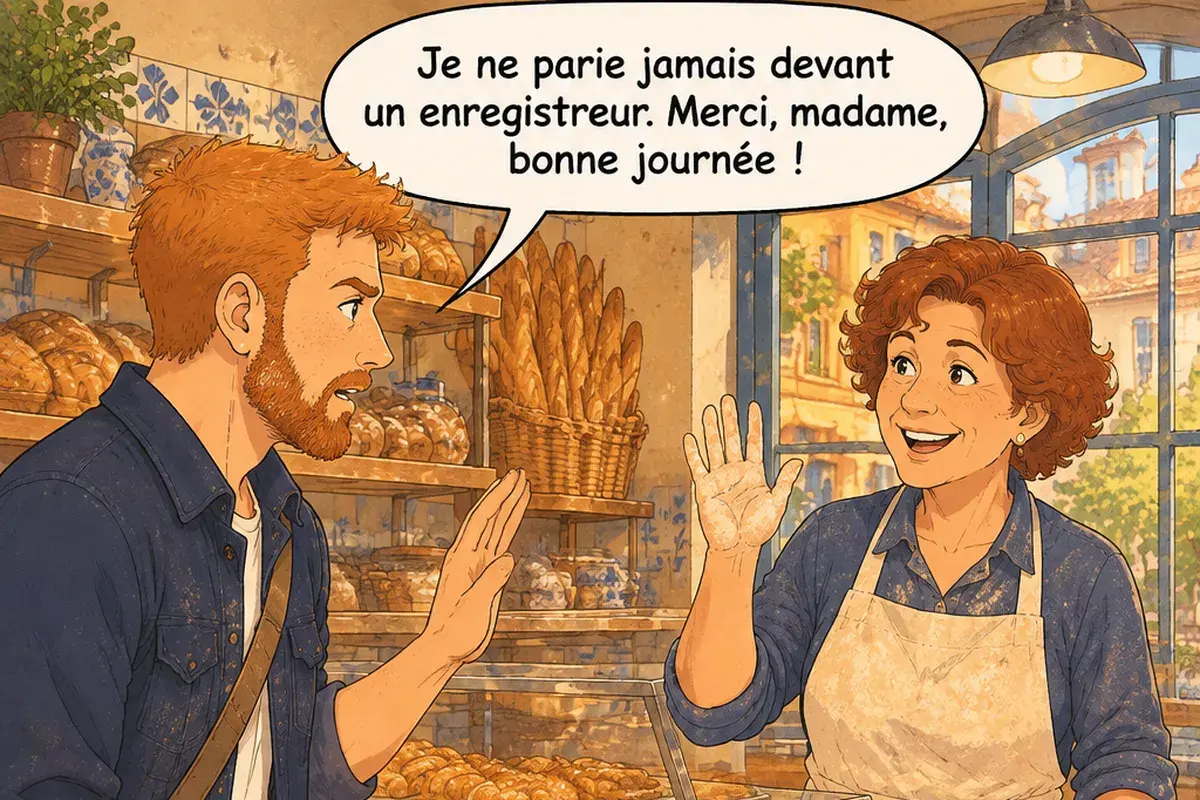
- Hugo
Je ne parie jamais devant un enregistreur. Merci, madame, bonne journée !
I never bet in front of a recorder. Thank you, ma'am, have a nice day!
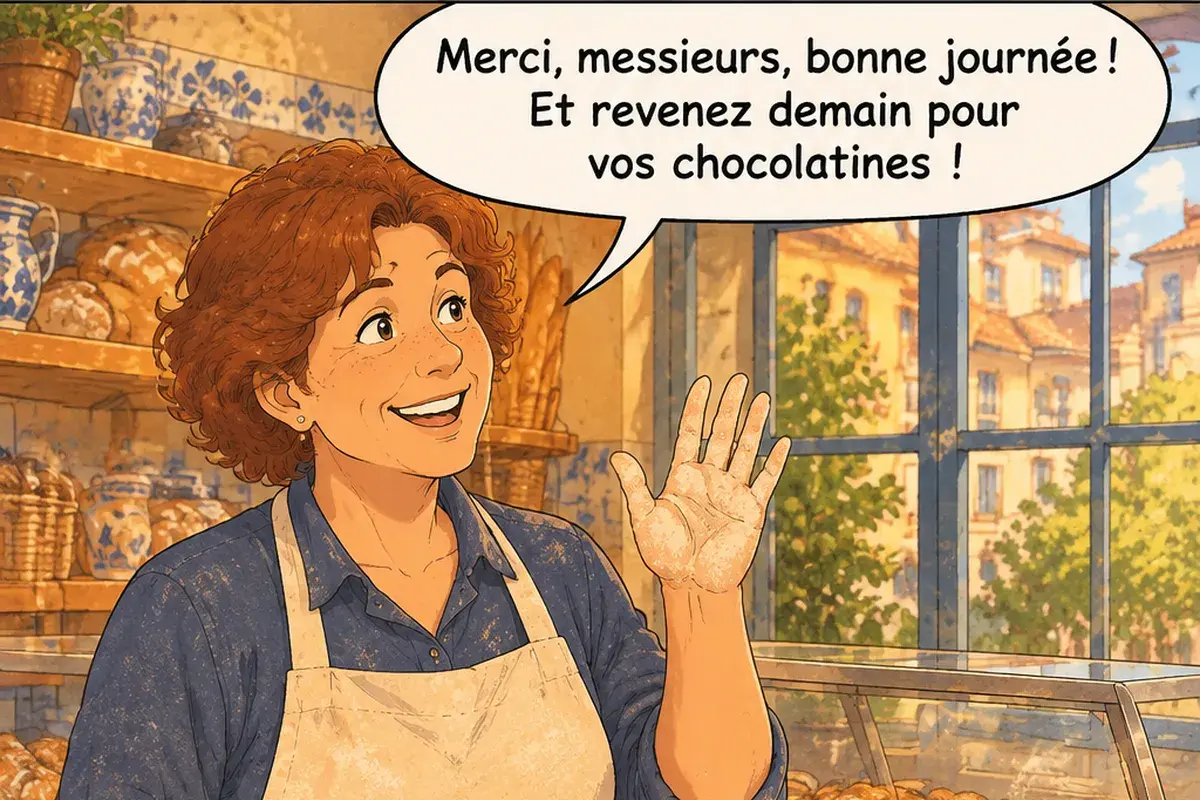
- Boulangère
Merci, messieurs, bonne journée ! Et revenez demain pour vos chocolatines !
Thank you, gentlemen, have a nice day! And come back tomorrow for your chocolatines! (to several people)
Grammar for this text
- Deux pains au chocolat —
pain au chocolatis a croissant-dough pastry with chocolate inside, literally "bread with chocolate."Chocolatineis the same thing, but that is what people say in the southwest. - ici on dit uniquement « chocolatine » —
on ditmeans "people say" (impersonal, like English "they say").Uniquementmeans "only." Autrement, je ne comprends pas —autrementhere means "otherwise"; the baker is joking. - Cependant, ici, depuis toujours, c'est une chocolatine —
cependantmeans "however": it is more polite and more bookish thanpourtant.Depuis toujoursmeans "always, for as long as anyone remembers." - Pour l'explication, personne ne sait —
pourhere means "as for."Personne ne saitmeans "nobody knows":personneis the subject,negoes before the verb, and you don't needpas. - D'un côté, le client a toujours raison. De l'autre, vous êtes dans le sud-ouest. — "On the one hand… on the other."
Le client a toujours raisonis the saying "the customer is always right." - Prenez celle-ci —
celle-cimeans "this one," instead ofcette chocolatine(unit 5);prenezis a polite command fromprendre. Tout à fait — "absolutely." - Pourtant, vous venez de le dire deux fois ! —
venir de+ verb means "just did" (A2, unit 1);lemeans "it," standing in for the wordchocolatine. Je parie un thé —pariermeans to bet on something.
Words and grammar of the unit: Argue and stay friends.
Learn the words from the texts with flashcards
In the app, you can tap any word in a text to see its translation, forms and examples, and new words stick with flashcards. 15 minutes a day.
Start for freeEverything is open for free. No card needed to sign up.