

French dialogue with translation · B1 · 18 lines
Quel est le vôtre ? What's yours? (to several people)
Comic · 17 panels
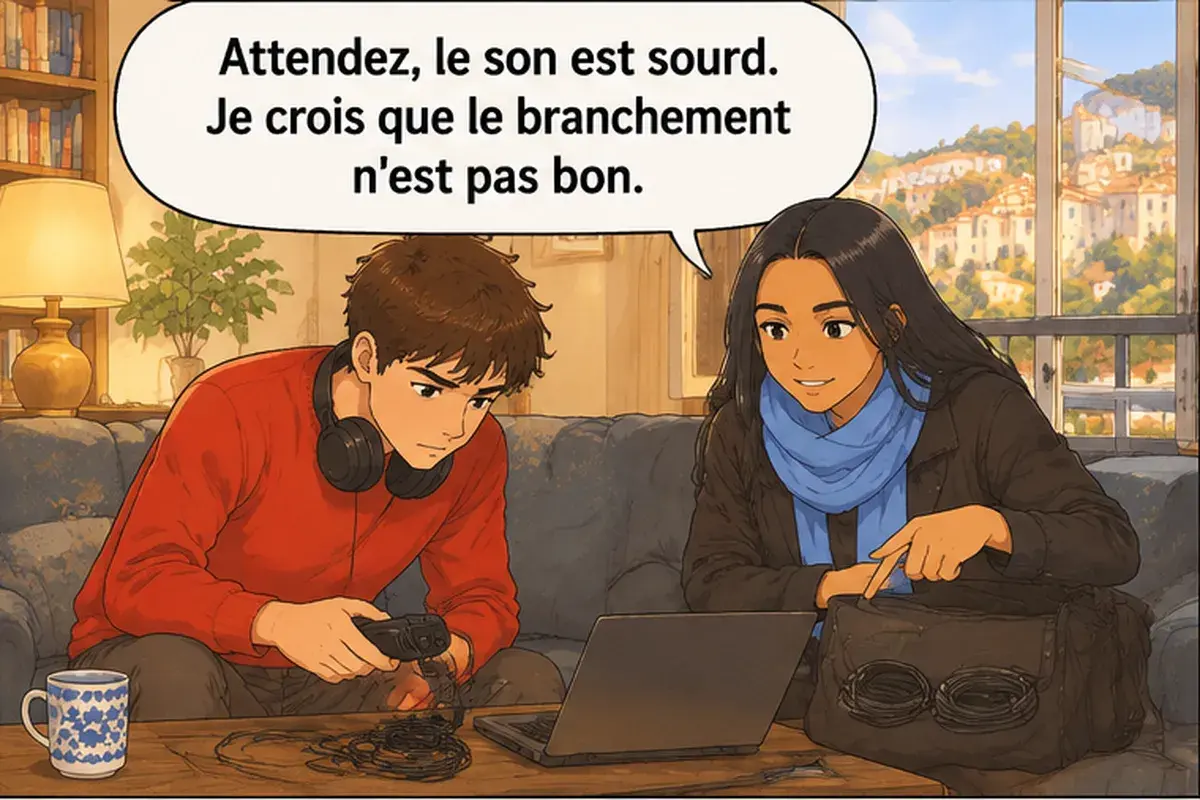
- Pacha
Attendez, le son est sourd. Je crois que le branchement n'est pas bon.
Wait, the sound is muffled (to several people). I think the connection isn't right.
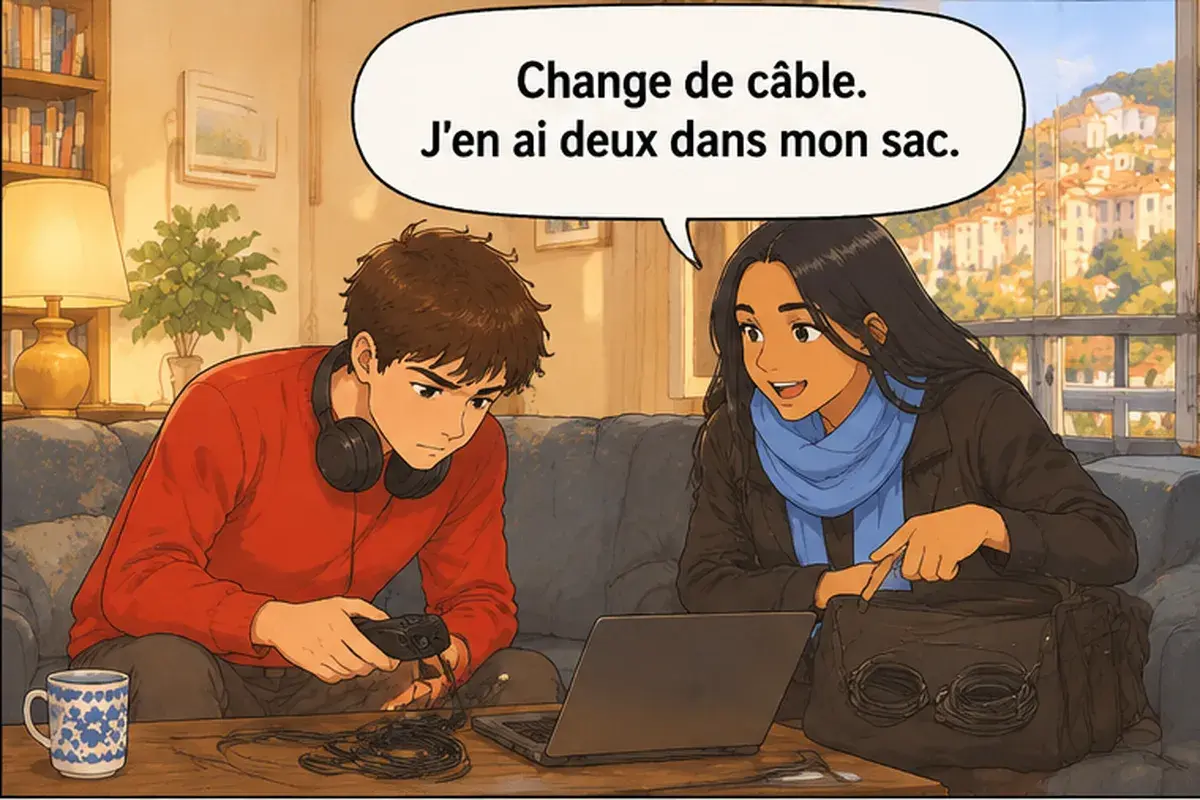
- Inès
Change de câble. J'en ai deux dans mon sac.
Change the cable. I have two in my bag.
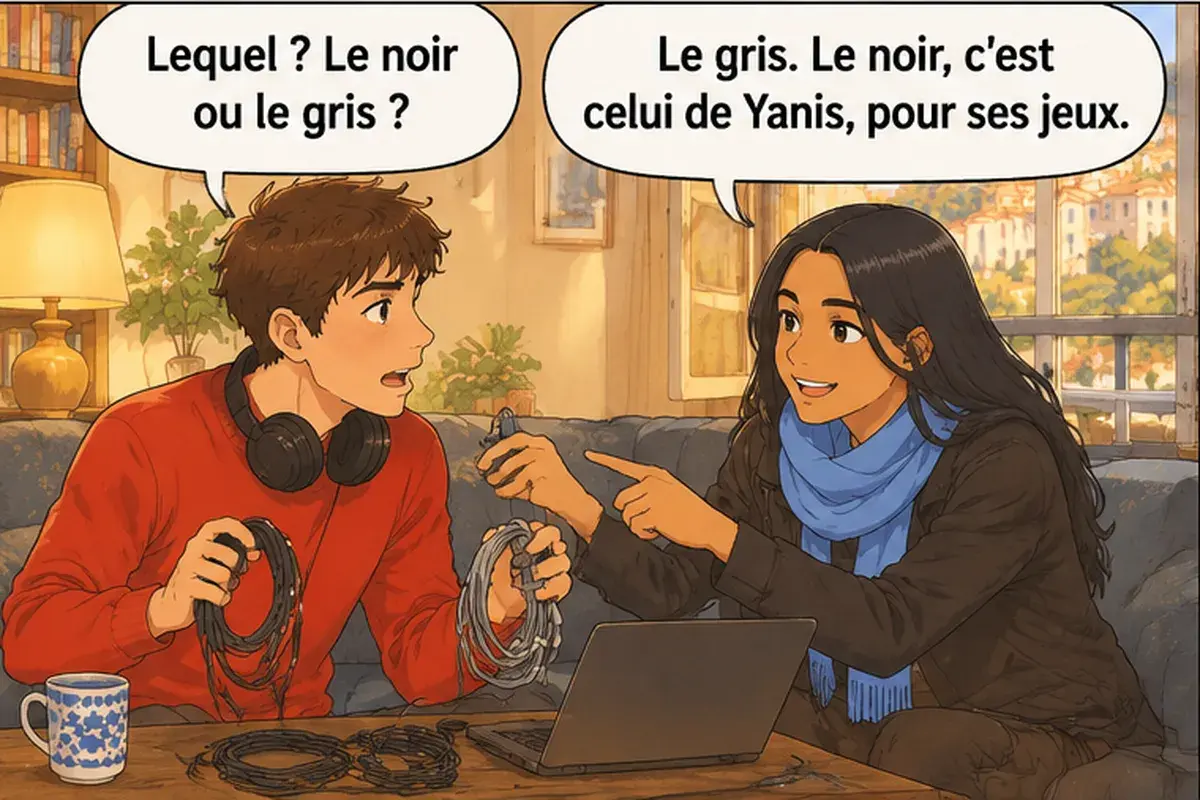
- Pacha
Lequel ? Le noir ou le gris ?
Which one? The black one or the gray one?
- Inès
Le gris. Le noir, c'est celui de Yanis, pour ses jeux.
The gray one. The black one is Yanis's, for his games.
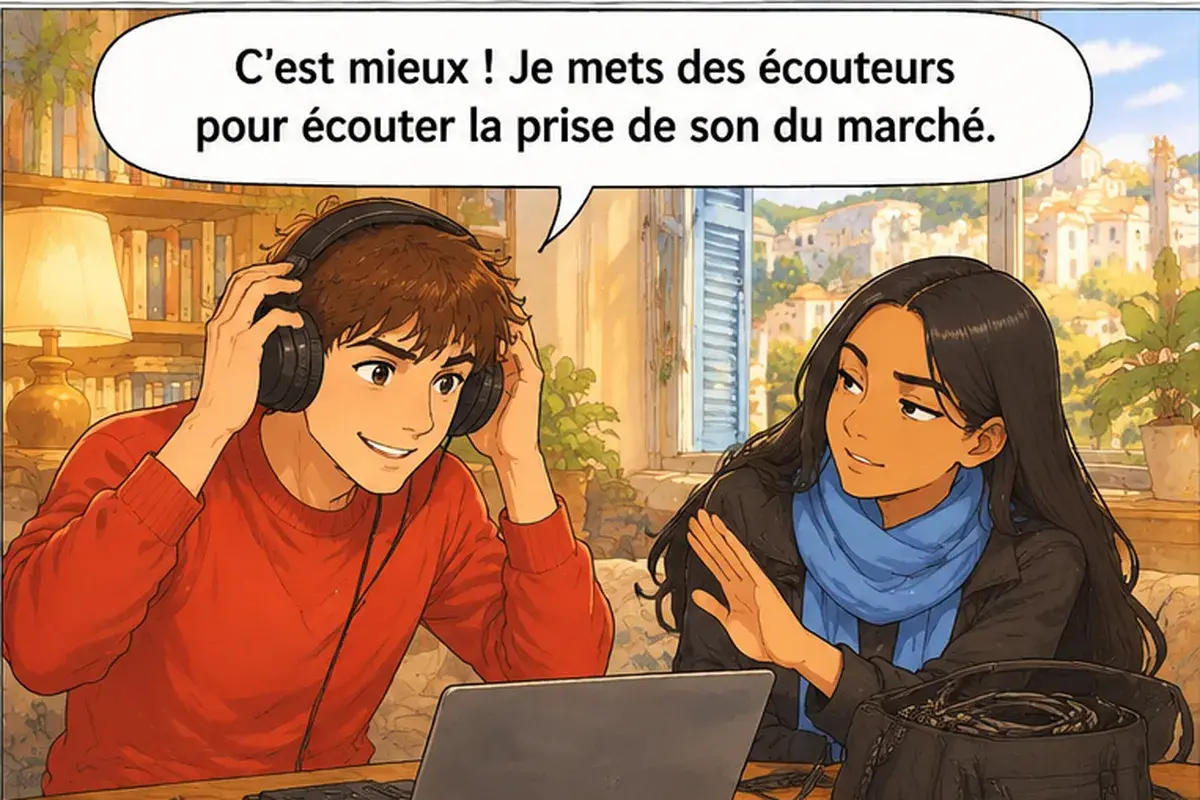
- Pacha
C'est mieux ! Je mets des écouteurs pour écouter la prise de son du marché.
That's better! I'm putting on earphones to listen to the sound recording of the market.
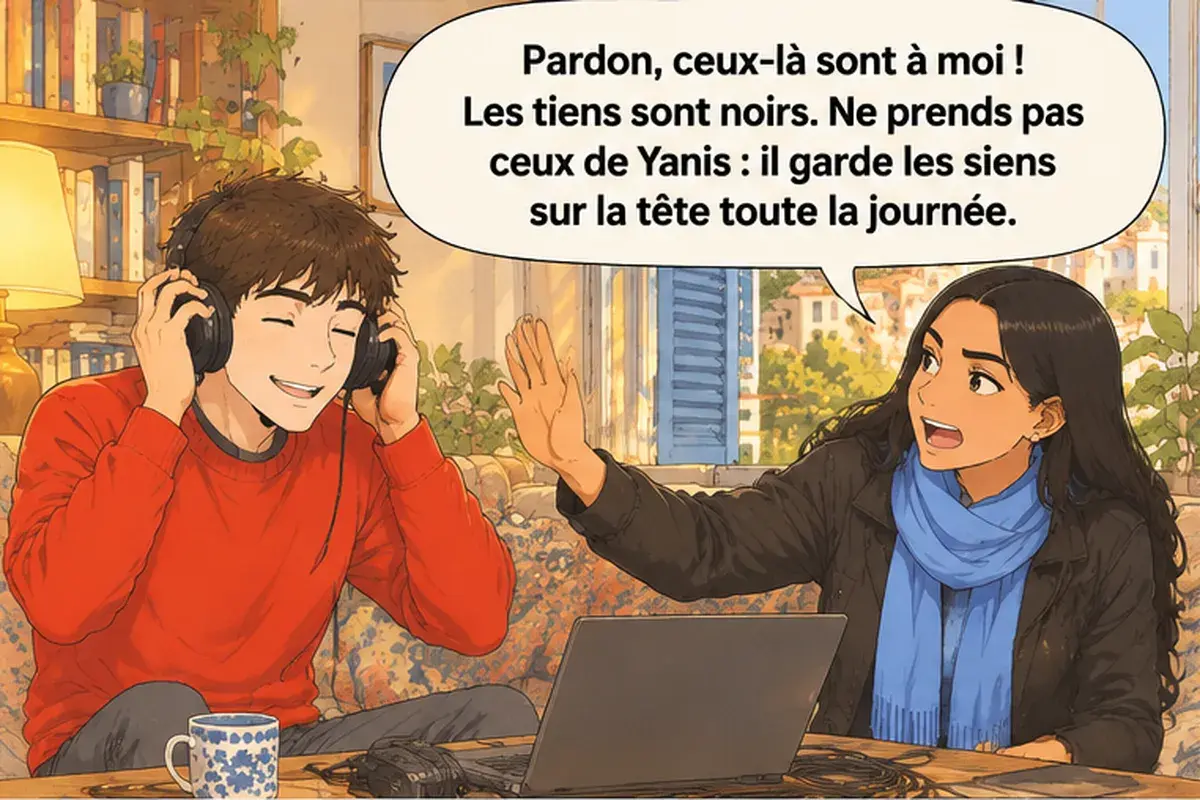
- Inès
Pardon, ceux-là sont à moi ! Les tiens sont noirs. Ne prends pas ceux de Yanis : il garde les siens sur la tête toute la journée.
Sorry, those are mine! Yours are black. Don't take Yanis's: he keeps his on his head all day long.
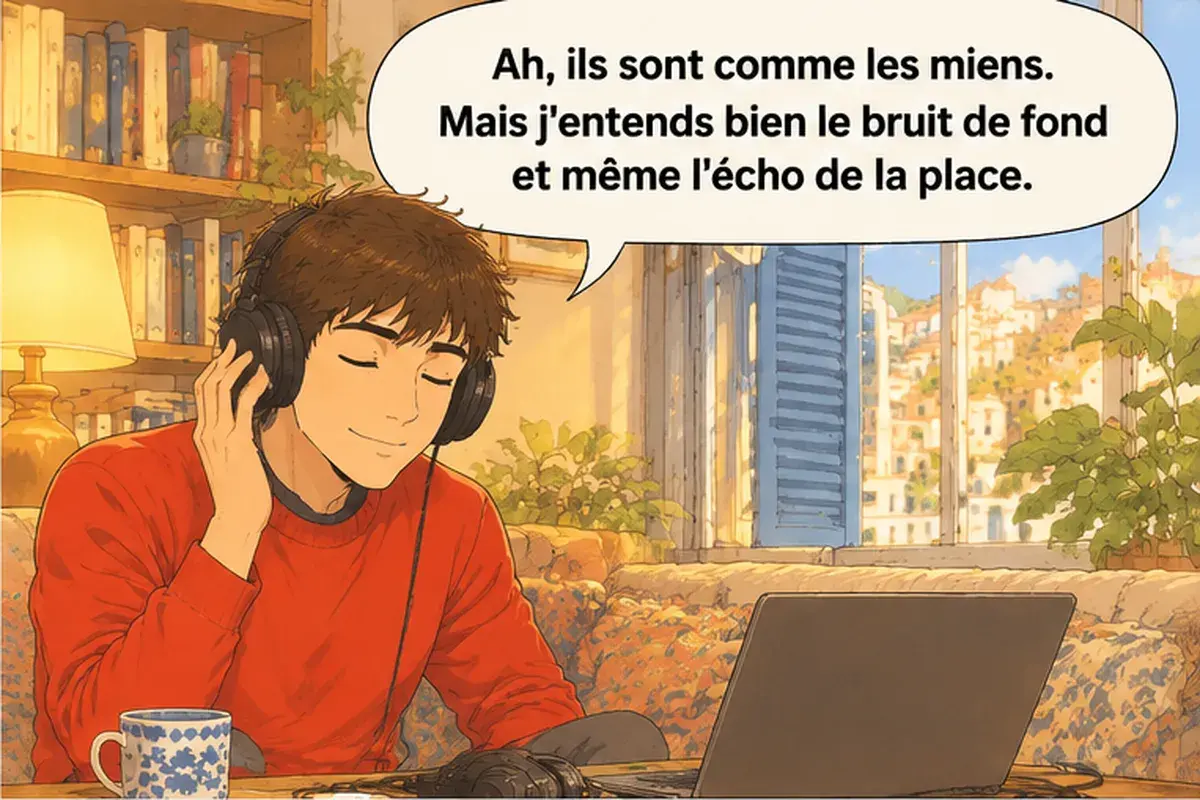
- Pacha
Ah, ils sont comme les miens. Mais j'entends bien le bruit de fond et même l'écho de la place.
Oh, they're like mine. But I can hear the background noise well, and even the echo of the square.
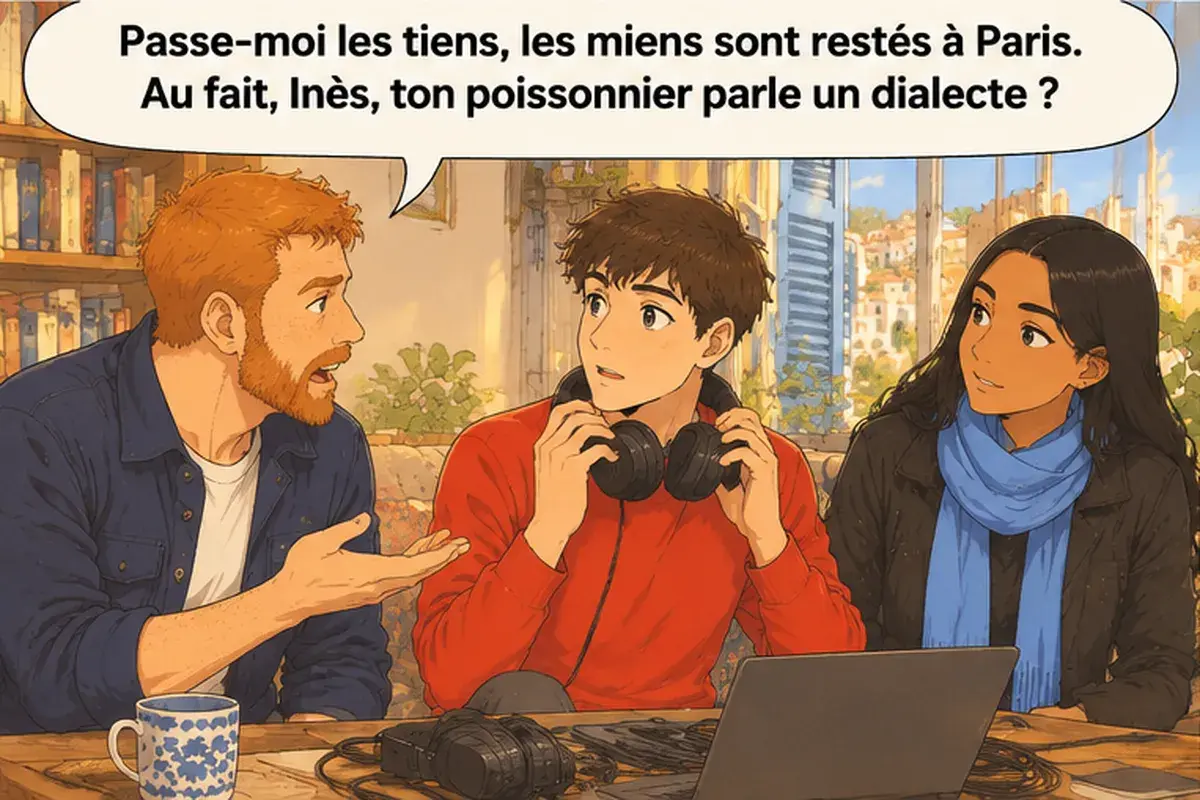
- Hugo
Passe-moi les tiens, les miens sont restés à Paris. Au fait, Inès, ton poissonnier parle un dialecte ?
Pass me yours, mine stayed in Paris. By the way, Inès, does your fishmonger speak a dialect?
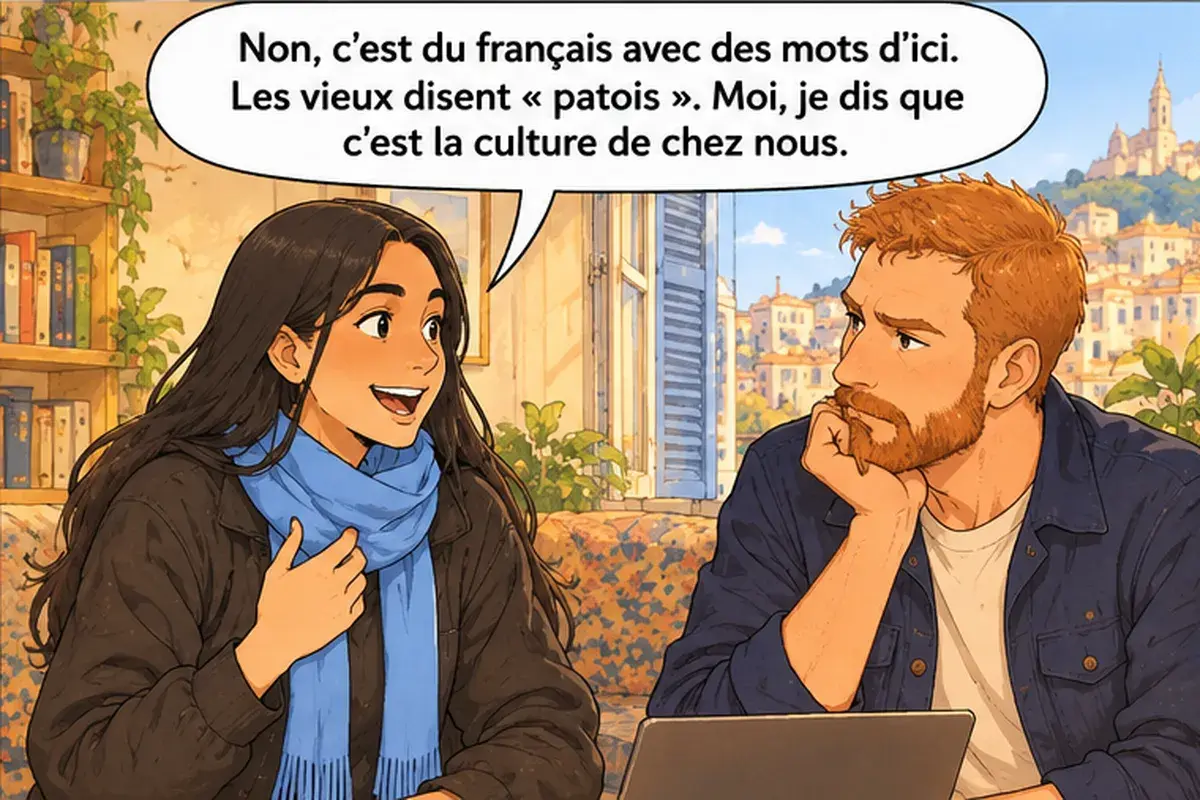
- Inès
Non, c'est du français avec des mots d'ici. Les vieux disent « patois ». Moi, je dis que c'est la culture de chez nous.
No, it's French with words from here. The old folks say "patois". As for me, I say it's the culture of where we're from.
- Pacha
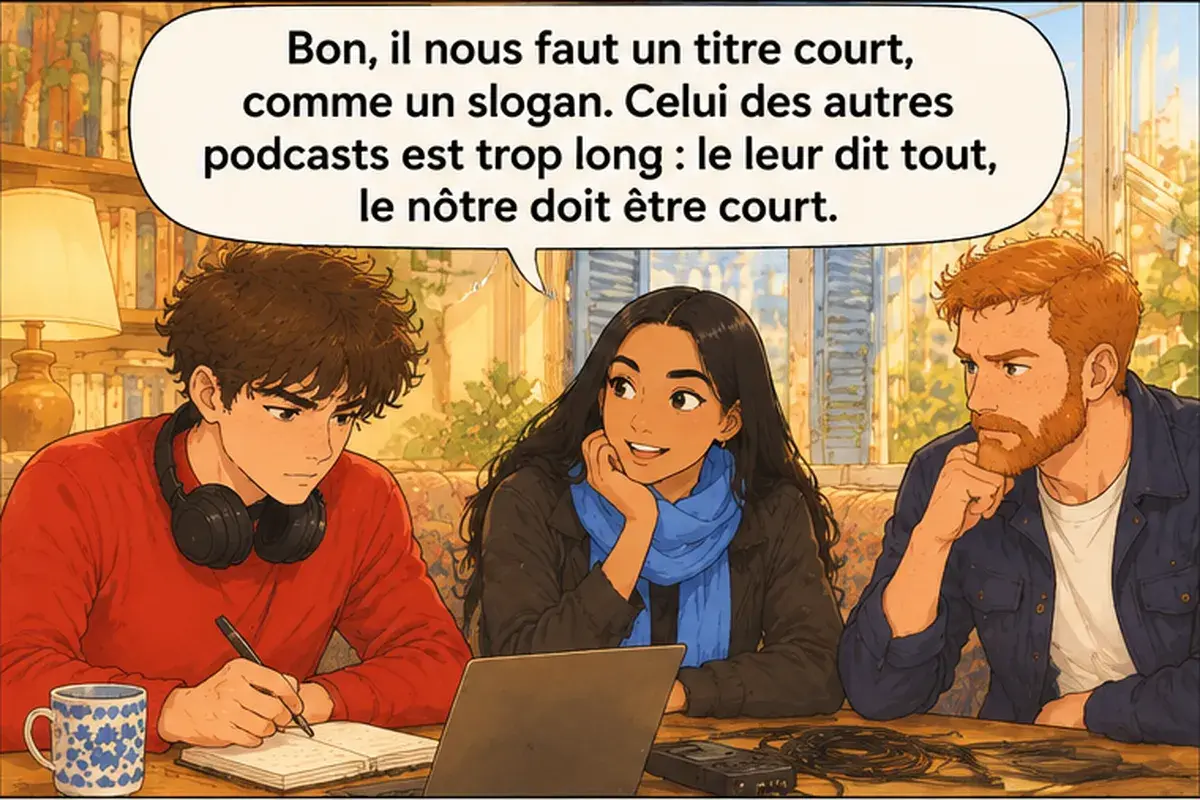
Bon, il nous faut un titre court, comme un slogan. Celui des autres podcasts est trop long : le leur dit tout, le nôtre doit être court.
OK, we need a short title, like a slogan. The other podcasts' title is too long: theirs tells everything, ours has to be short.
- Inès
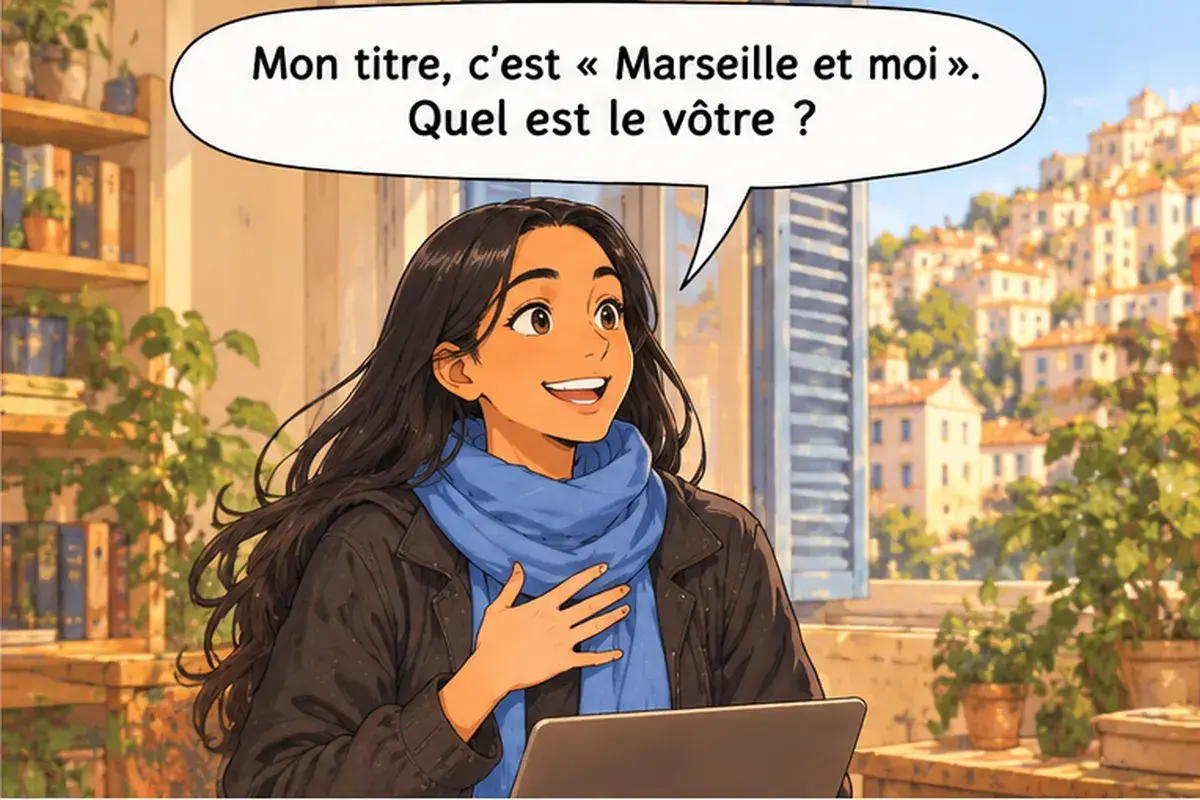
Mon titre, c'est « Marseille et moi ». Quel est le vôtre ?
My title is "Marseille and Me". What's yours? (to several people)
- Hugo
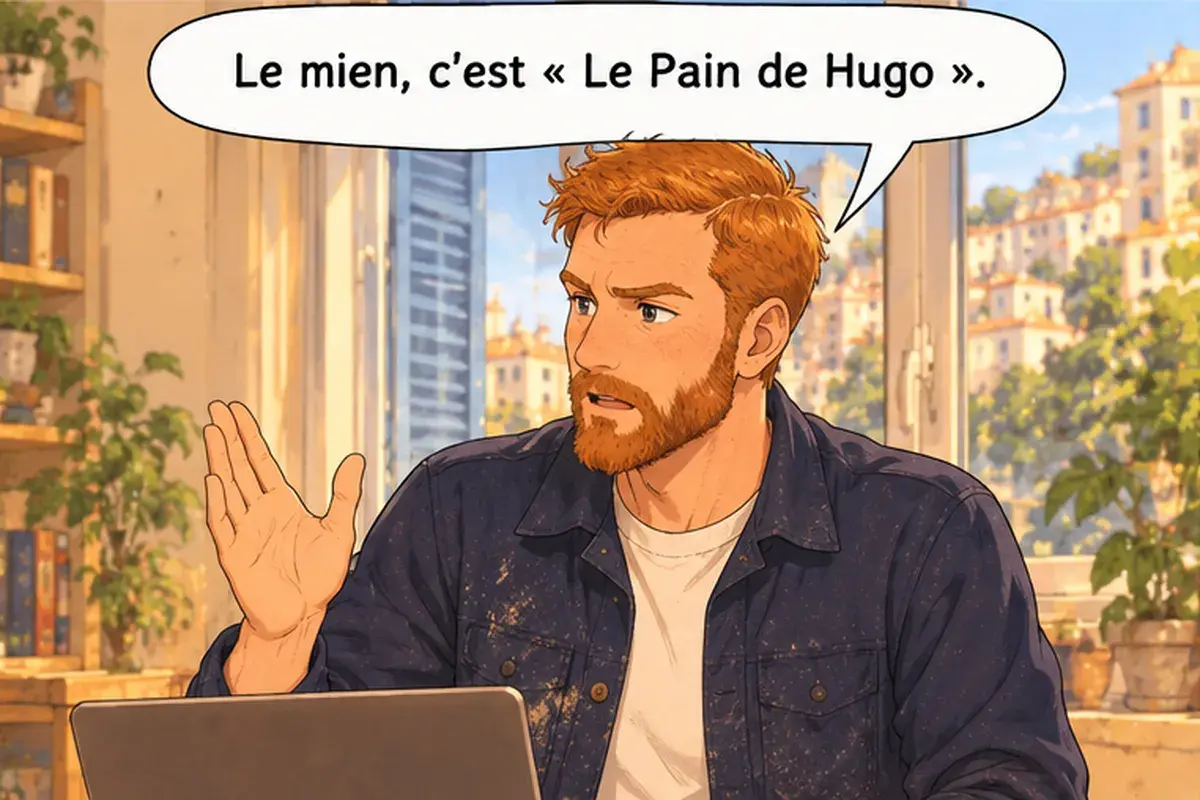
Le mien, c'est « Le Pain de Hugo ».
Mine is "Hugo's Bread".
- Pacha
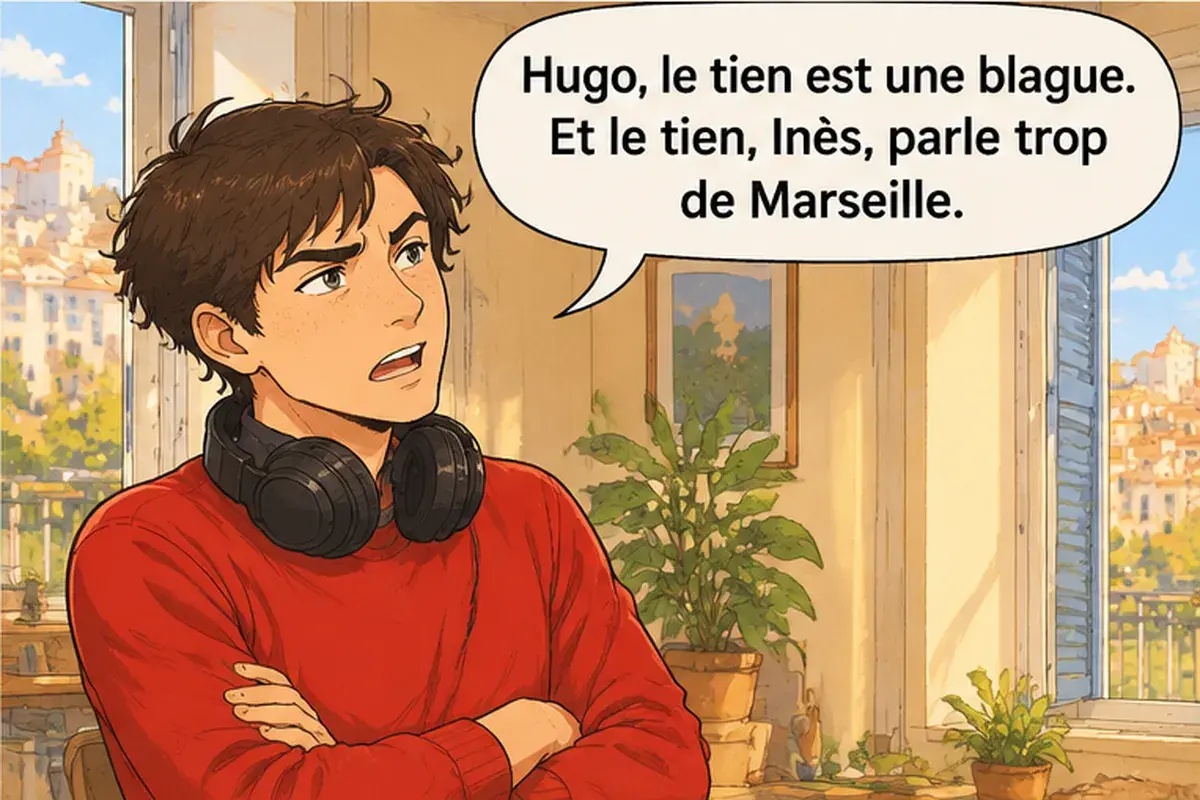
Hugo, le tien est une blague. Et le tien, Inès, parle trop de Marseille.
Hugo, yours is a joke. And yours, Inès, talks too much about Marseille.
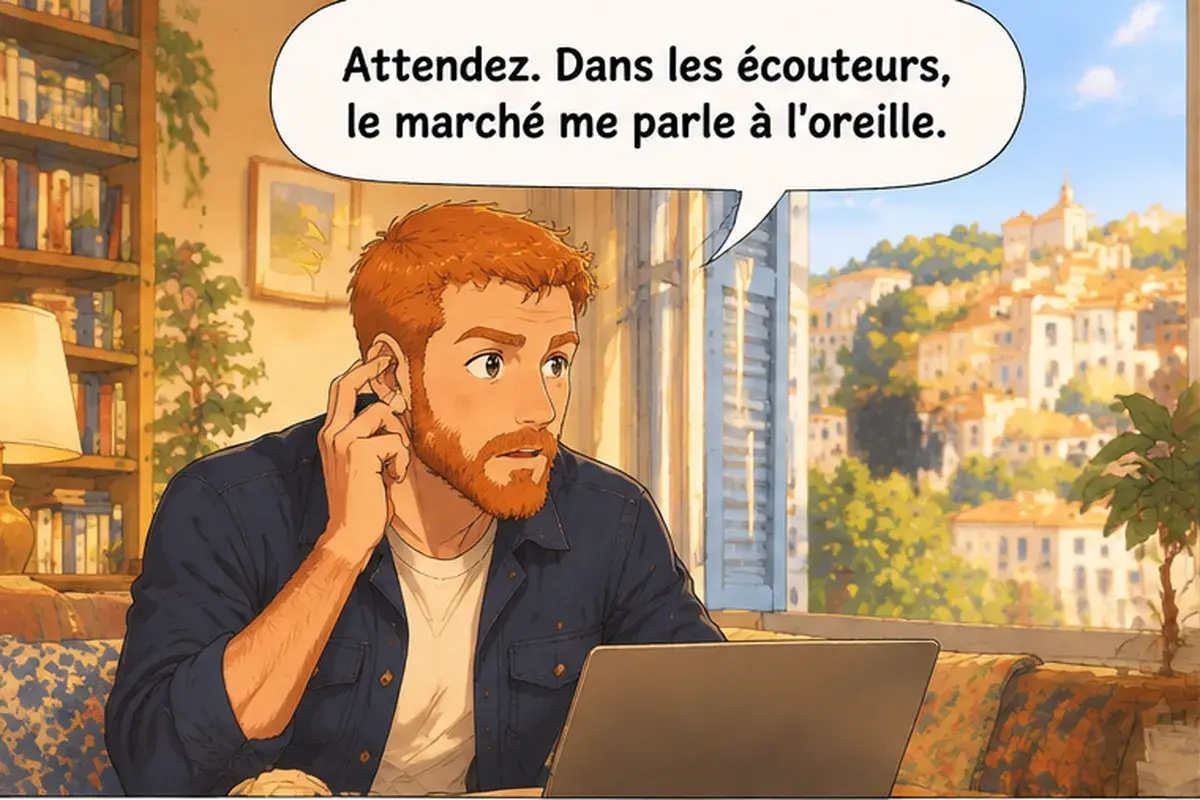
- Hugo
Attendez. Dans les écouteurs, le marché me parle à l'oreille.
Wait. (to several people) In the earphones, the market is talking into my ear.
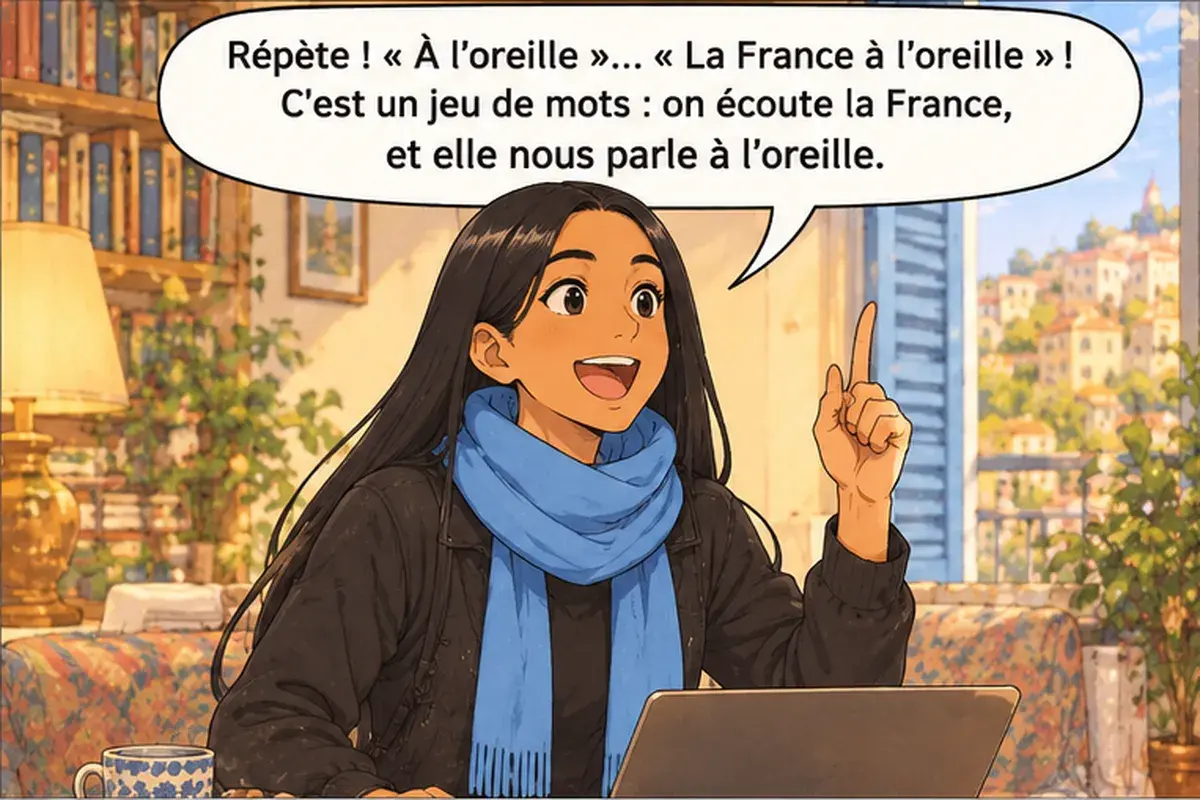
- Inès
Répète ! « À l'oreille »… « La France à l'oreille » ! C'est un jeu de mots : on écoute la France, et elle nous parle à l'oreille.
Say that again! "Into my ear"… "La France à l'oreille"! It's a pun: we listen to France, and it talks into our ear.
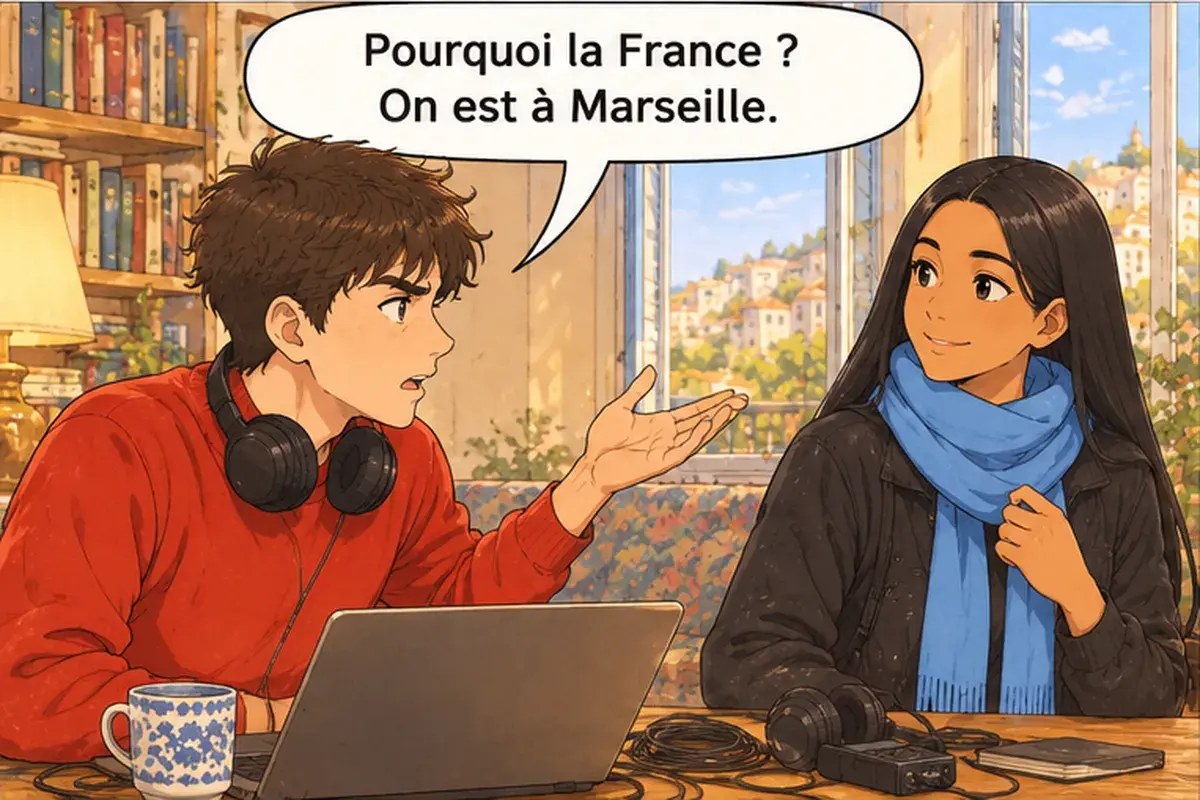
- Pacha
Pourquoi la France ? On est à Marseille.
Why France? We're in Marseille.
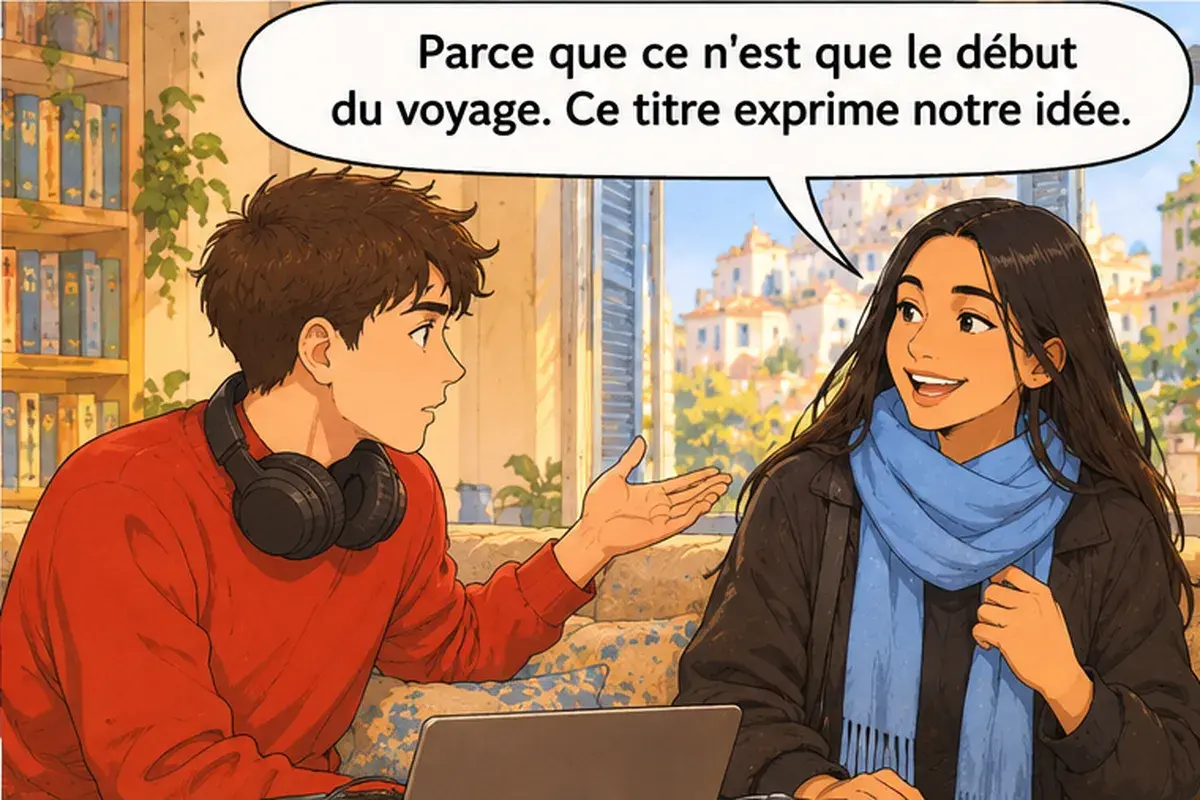
- Inès
Parce que ce n'est que le début du voyage. Ce titre exprime notre idée.
Because this is only the beginning of the trip. This title expresses our idea.
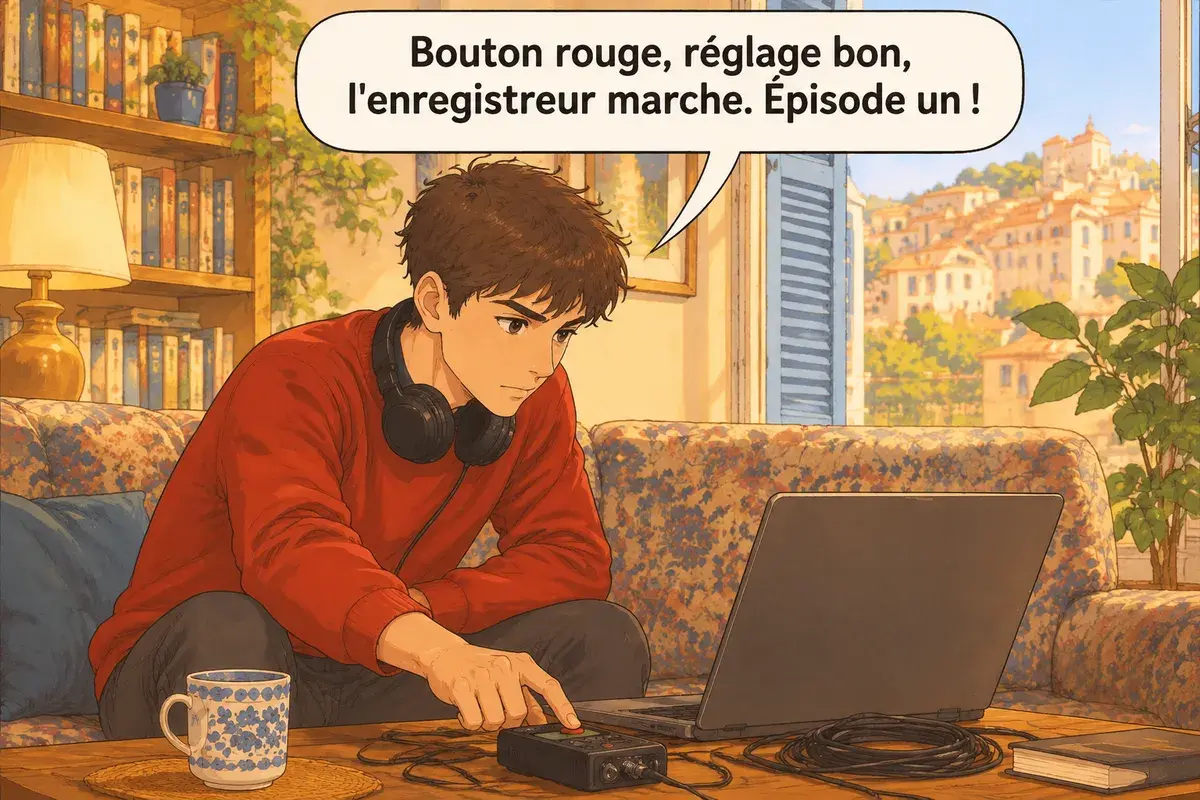
- Pacha
Bouton rouge, réglage bon, l'enregistreur marche. Épisode un !
Red button, setting's good, the recorder's working. Episode one!
Grammar for this text
- le son est sourd — about a sound, sourd means "muffled", as if behind a wall. le branchement — the connection (the plug in the socket).
- J'en ai deux — en stands for des câbles: "I have two (of them)" (A2, unit 5).
- Lequel ? Le noir ou le gris ? — "Which one? The black one or the gray one?" (see the unit grammar). le noir — "the black one" (cable).
- ceux-là sont à moi — ceux-là — "those" (the earphones); être à moi — "to be mine" (A1, unit 18). ceux de Yanis, les siens — "Yanis's", "his".
- ils sont comme les miens — "they're like mine": les miens stands for mes écouteurs.
- le leur dit tout, le nôtre doit être court — celui, le leur and le nôtre all stand for titre: the other podcasts' title is long, theirs tells everything, ours has to be short. Quel est le vôtre ? — "What's yours?" (Inès is asking two people, so vous).
- me parle à l'oreille — "talks into my ear". The name La France à l'oreille has two meanings: "France by ear" and "France talking into your ear".
Words and grammar of the unit: Ask what a word means and explain it.
Learn the words from the texts with flashcards
In the app, you can tap any word in a text to see its translation, forms and examples, and new words stick with flashcards. 15 minutes a day.
Start for freeEverything is open for free. No card needed to sign up.