

French dialogue with translation · B1 · 18 lines
Qu'est-ce que ça signifie, « minot » ? What does "minot" mean?
Comic · 18 panels
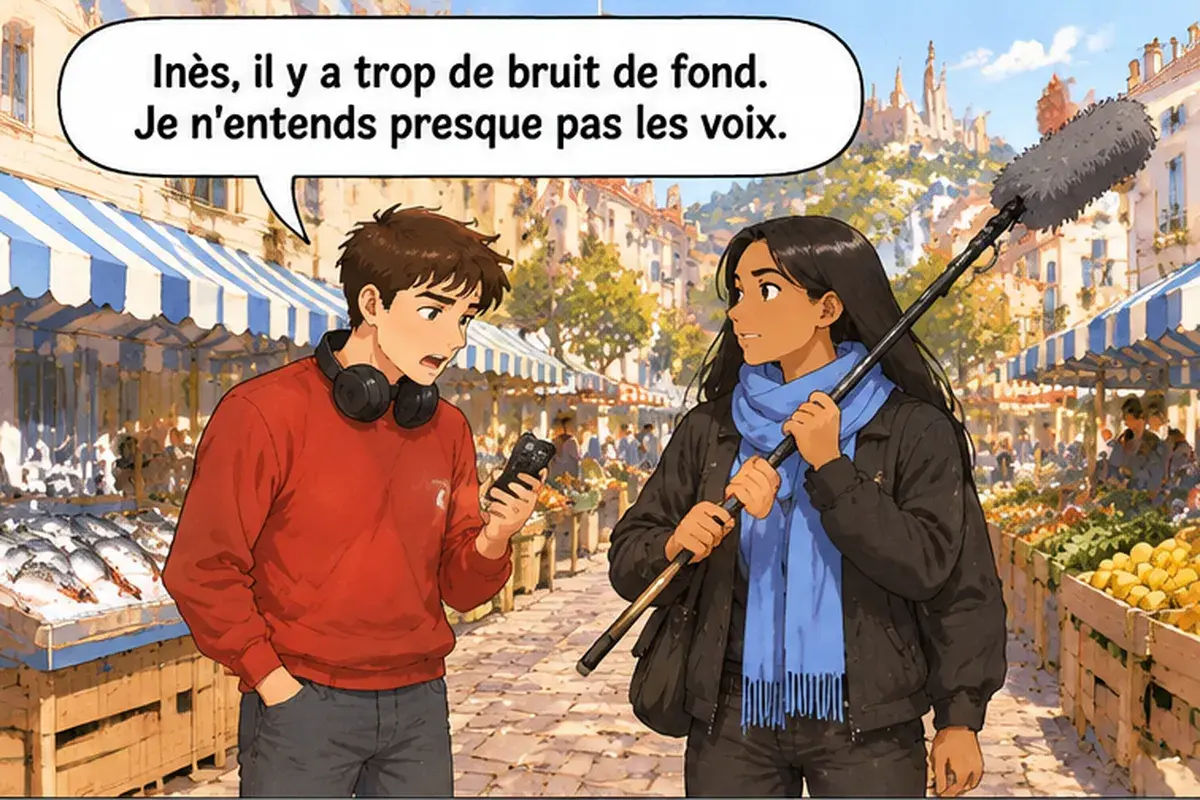
- Pacha
Inès, il y a trop de bruit de fond. Je n'entends presque pas les voix.
Inès, there's too much background noise. I can hardly hear the voices.

- Inès
Mais c'est ça, un marché ! Tiens bien la perche et laisse la bonnette travailler : avec le mistral, tu en as besoin.
But that's what a market is! Hold the boom steady and let the windscreen do its job: with the mistral, you need it.
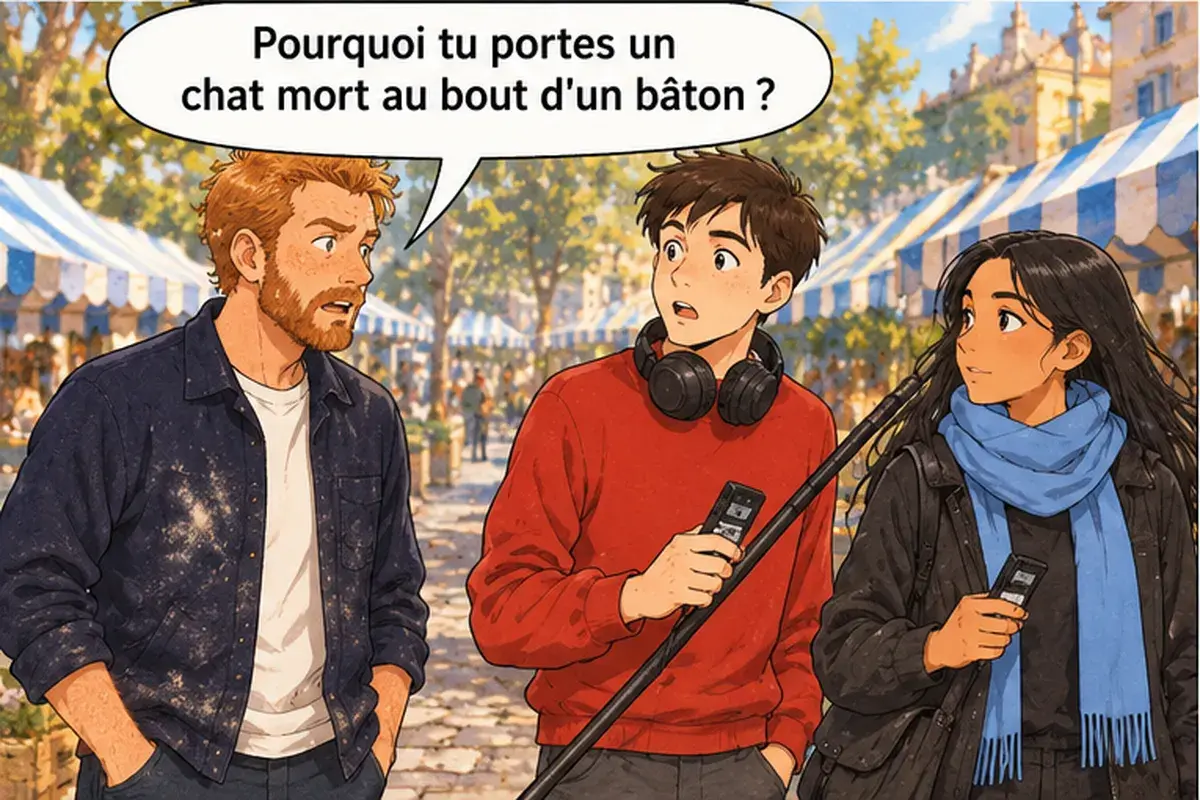
- Hugo
Pourquoi tu portes un chat mort au bout d'un bâton ?
Why are you carrying a dead cat on the end of a stick?
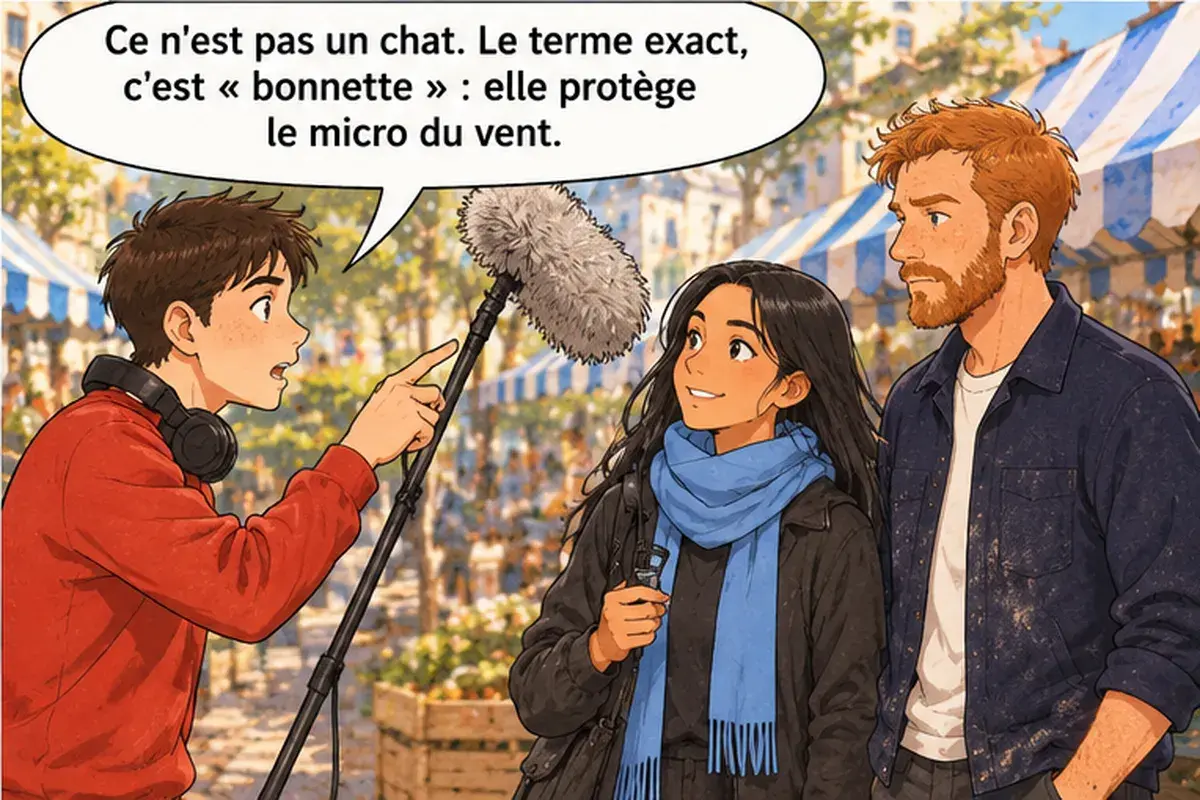
- Pacha
Ce n'est pas un chat. Le terme exact, c'est « bonnette » : elle protège le micro du vent.
It's not a cat. The exact term is "windscreen": it protects the mic from the wind.
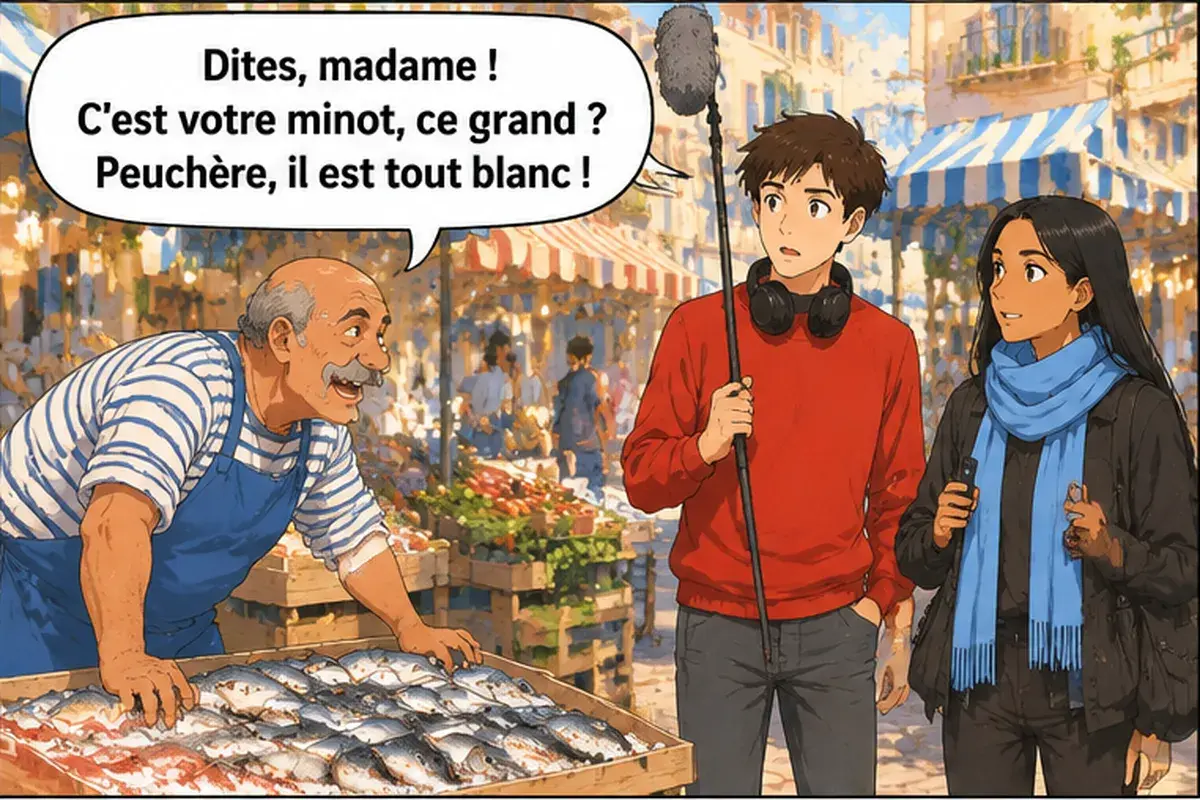
- Vendeur
Dites, madame ! C'est votre minot, ce grand ? Peuchère, il est tout blanc !
Say, ma'am! Is that your kid, the tall one? (formal) Poor thing, he's white as a sheet!
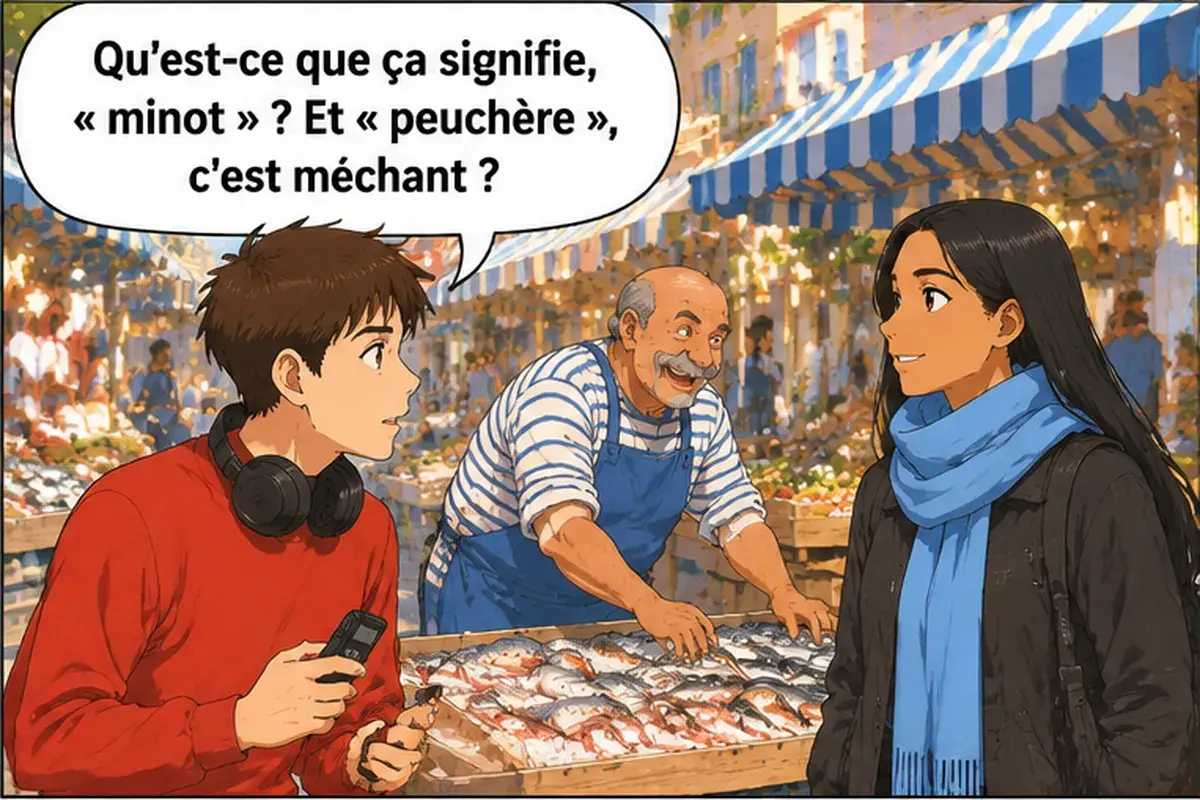
- Pacha
Qu'est-ce que ça signifie, « minot » ? Et « peuchère », c'est méchant ?
What does that mean, "minot"? And "peuchère", is it mean?
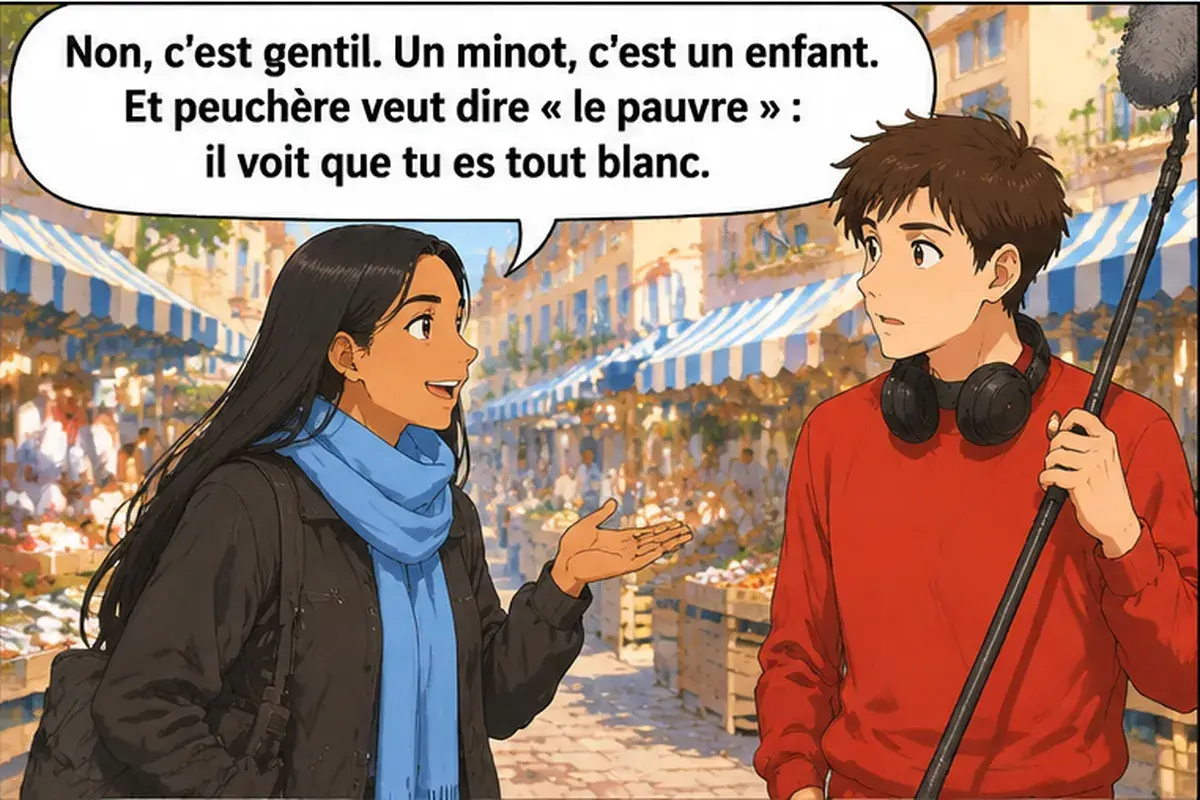
- Inès
Non, c'est gentil. Un minot, c'est un enfant. Et peuchère veut dire « le pauvre » : il voit que tu es tout blanc.
No, it's kind. A minot is a kid. And peuchère means "the poor guy": he sees you're white as a sheet.
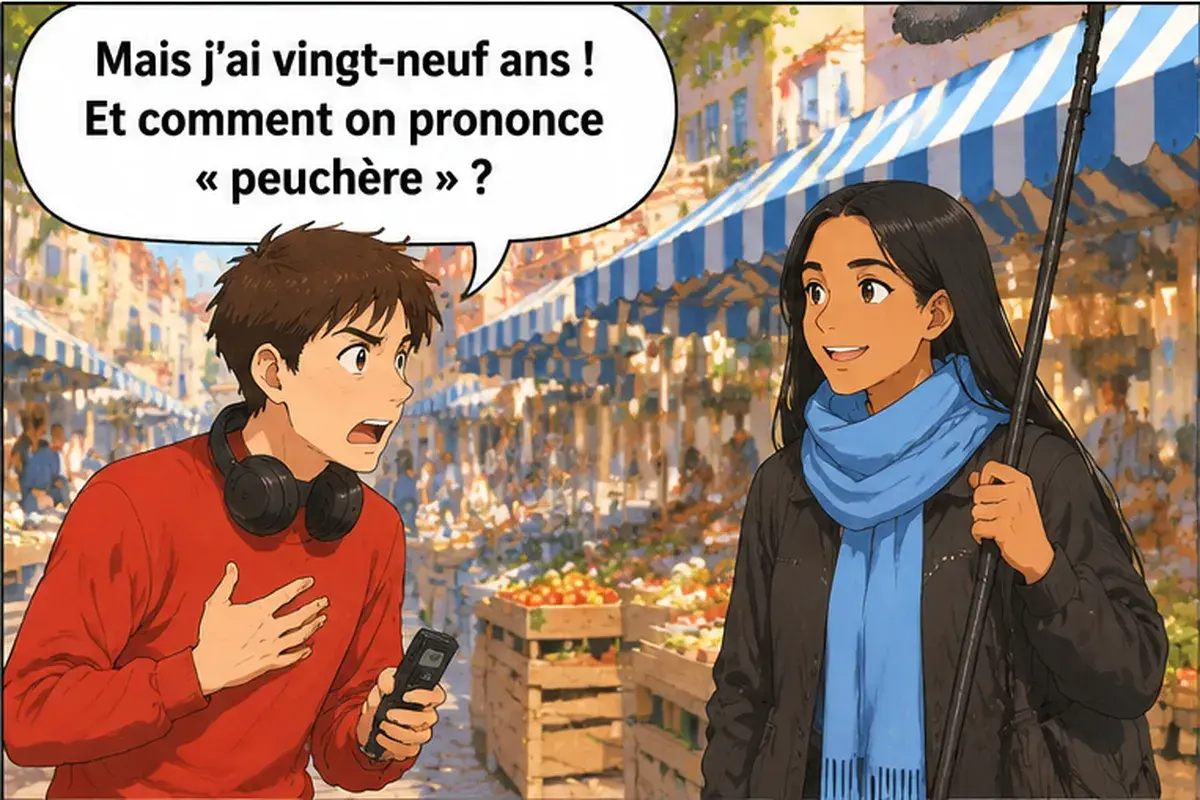
- Pacha
Mais j'ai vingt-neuf ans ! Et comment on prononce « peuchère » ?
But I'm twenty-nine! And how do you pronounce "peuchère"?
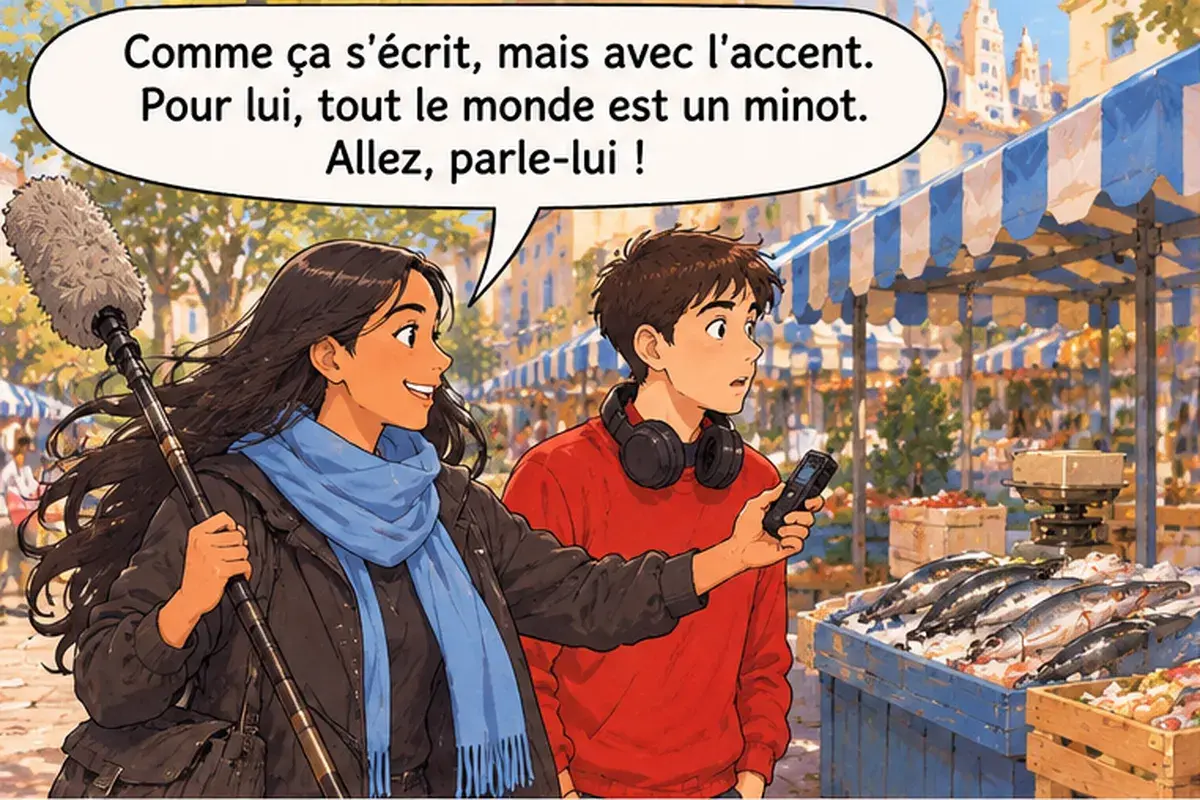
- Inès
Comme ça s'écrit, mais avec l'accent. Pour lui, tout le monde est un minot. Allez, parle-lui !
Just the way it's spelled, but with the accent. To him, everyone's a minot. Come on, talk to him!
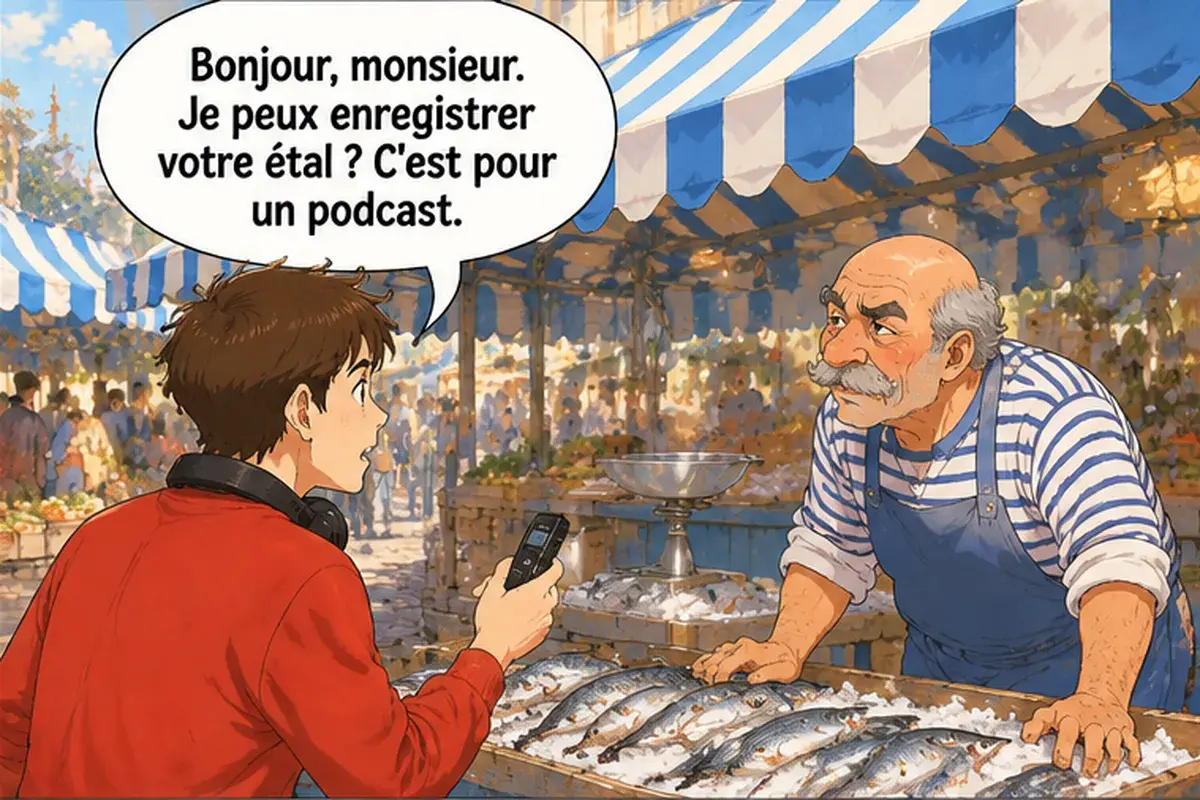
- Pacha
Bonjour, monsieur. Je peux enregistrer votre étal ? C'est pour un podcast.
Hello, sir. Can I record your stall? It's for a podcast. (formal)
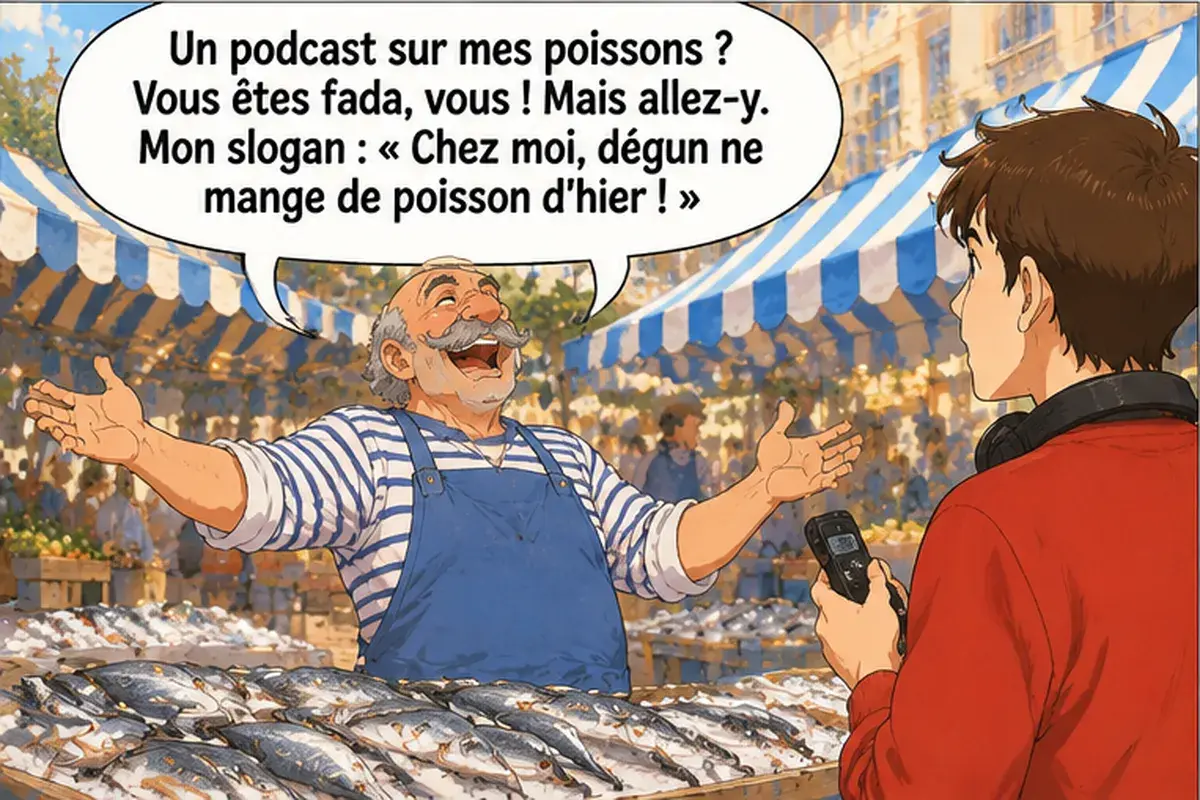
- Vendeur
Un podcast sur mes poissons ? Vous êtes fada, vous ! Mais allez-y. Mon slogan : « Chez moi, dégun ne mange de poisson d'hier ! »
A podcast about my fish? You're nuts, you are! (formal) But go ahead. My slogan: "At my place, nobody eats yesterday's fish!"
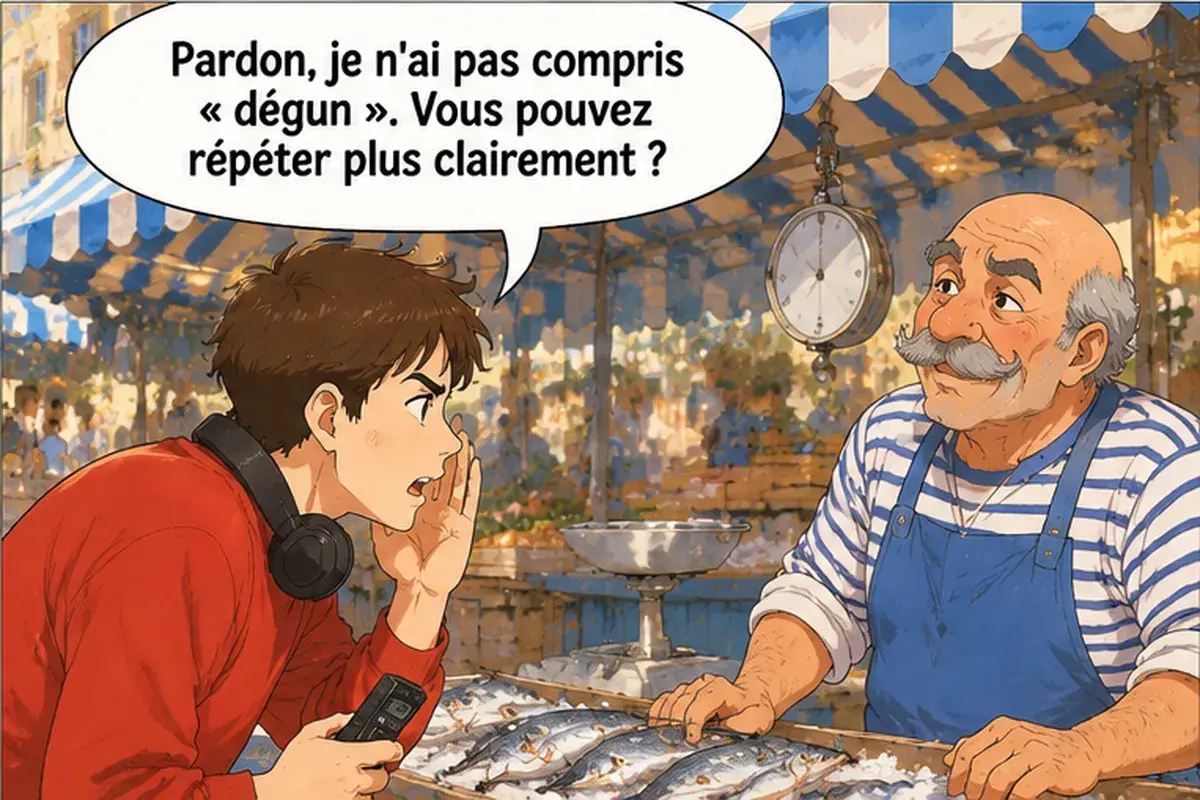
- Pacha
Pardon, je n'ai pas compris « dégun ». Vous pouvez répéter plus clairement ?
Sorry, I didn't understand "dégun". Can you repeat it more clearly? (formal)
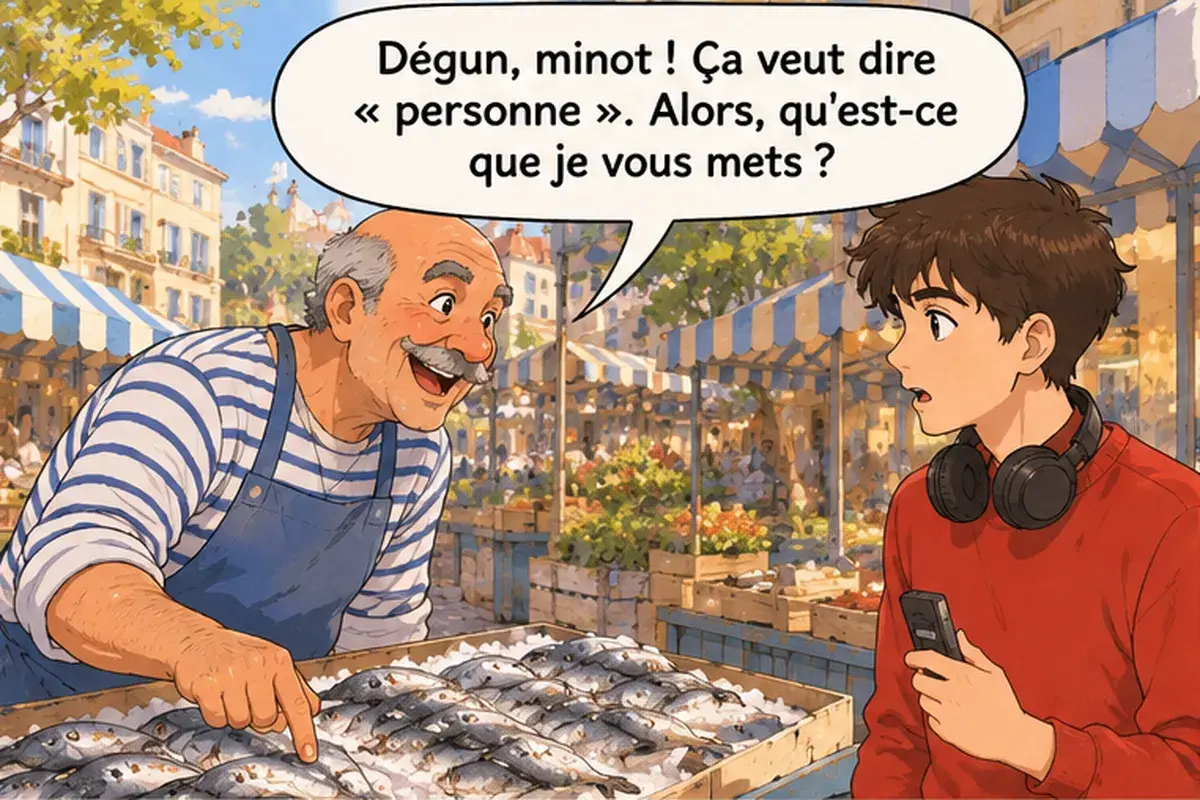
- Vendeur
Dégun, minot ! Ça veut dire « personne ». Alors, qu'est-ce que je vous mets ?
Dégun, kid! It means "nobody". So, what can I get you? (formal)
- Inès
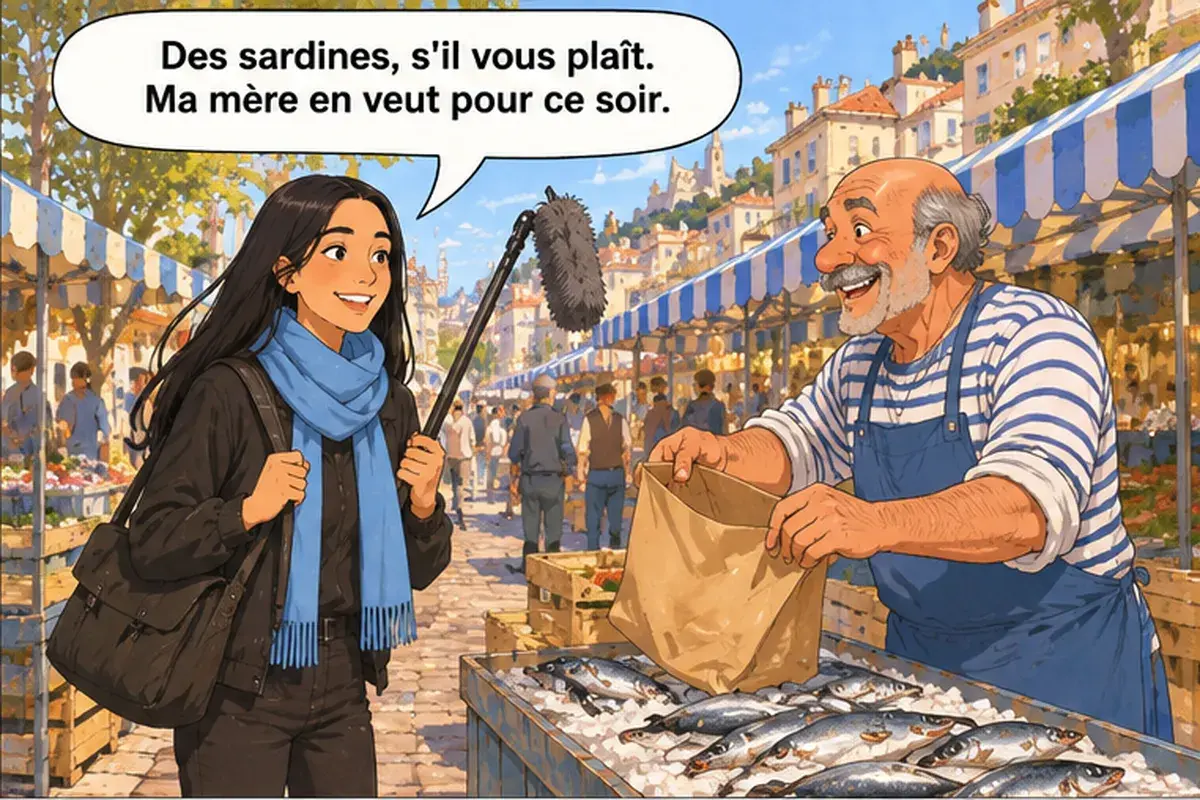
Des sardines, s'il vous plaît. Ma mère en veut pour ce soir.
Some sardines, please. (formal) My mom wants some for tonight.
- Vendeur
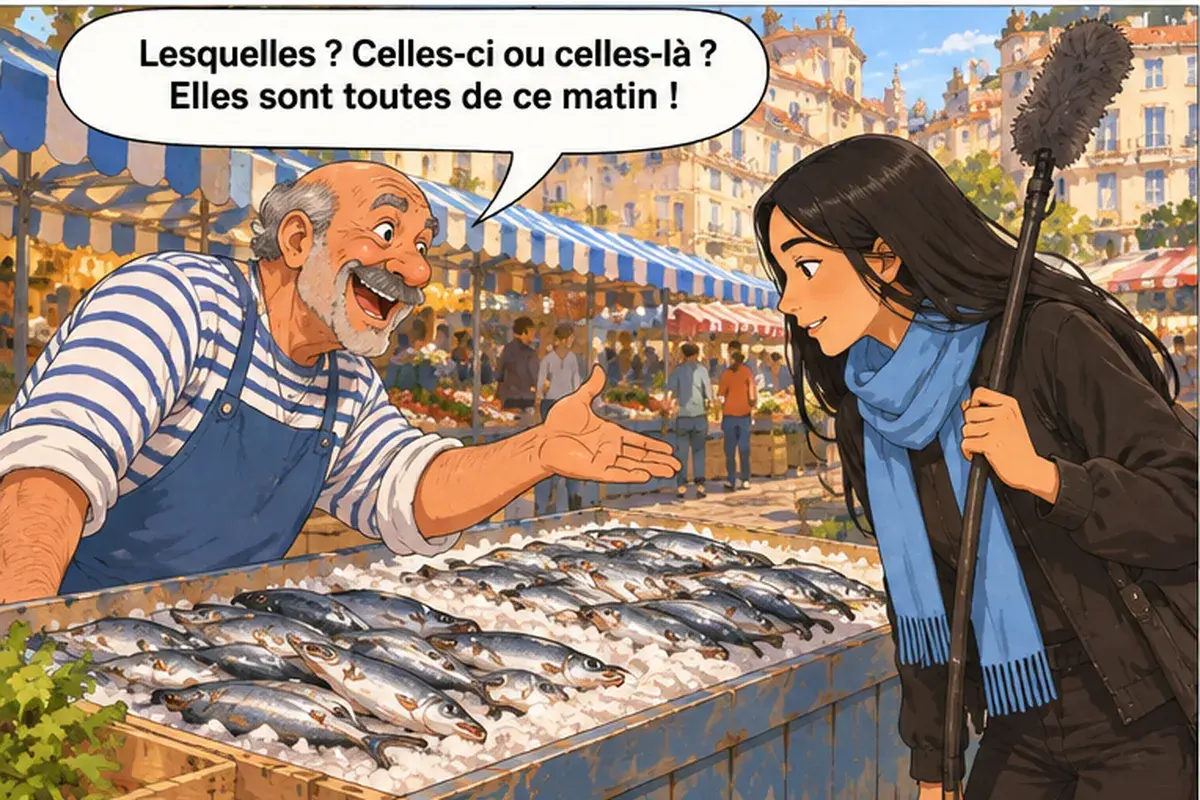
Lesquelles ? Celles-ci ou celles-là ? Elles sont toutes de ce matin !
Which ones? These or those? They're all from this morning!
- Inès
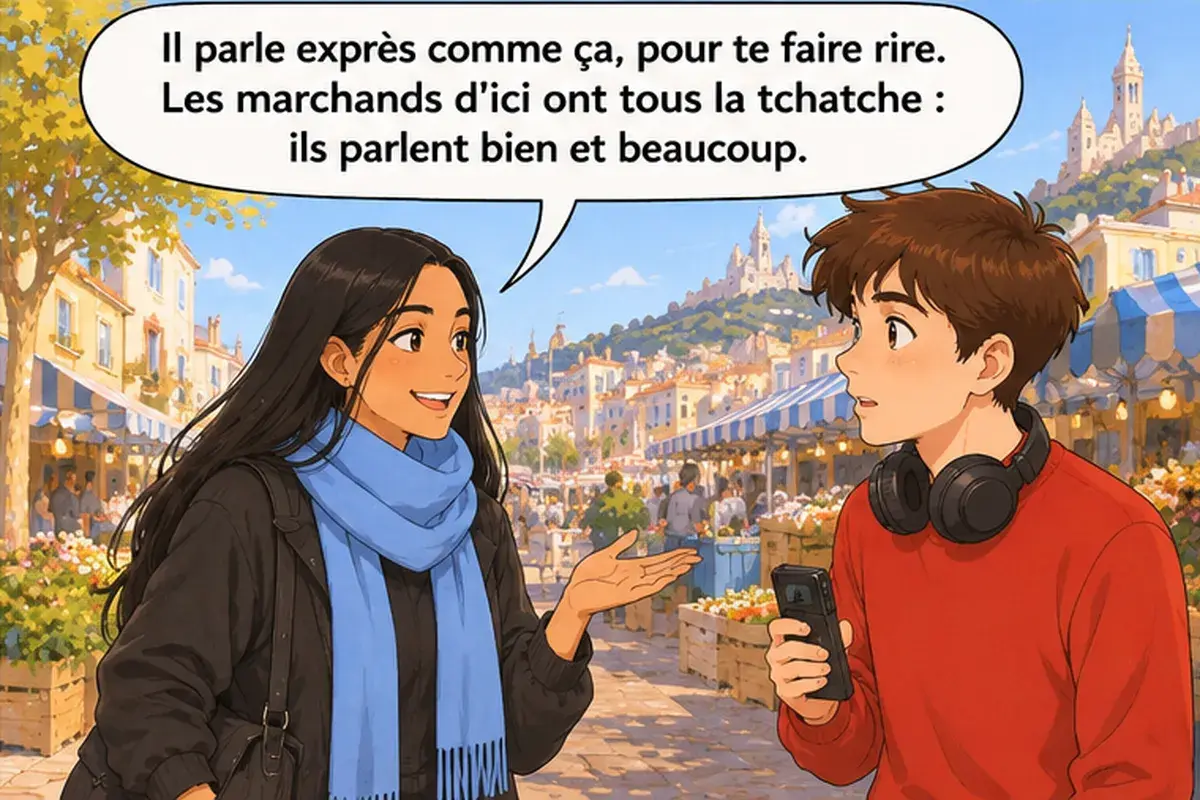
Il parle exprès comme ça, pour te faire rire. Les marchands d'ici ont tous la tchatche : ils parlent bien et beaucoup.
He talks like that on purpose, to make you laugh. The vendors here all have the gift of gab: they talk well and a lot.
- Pacha
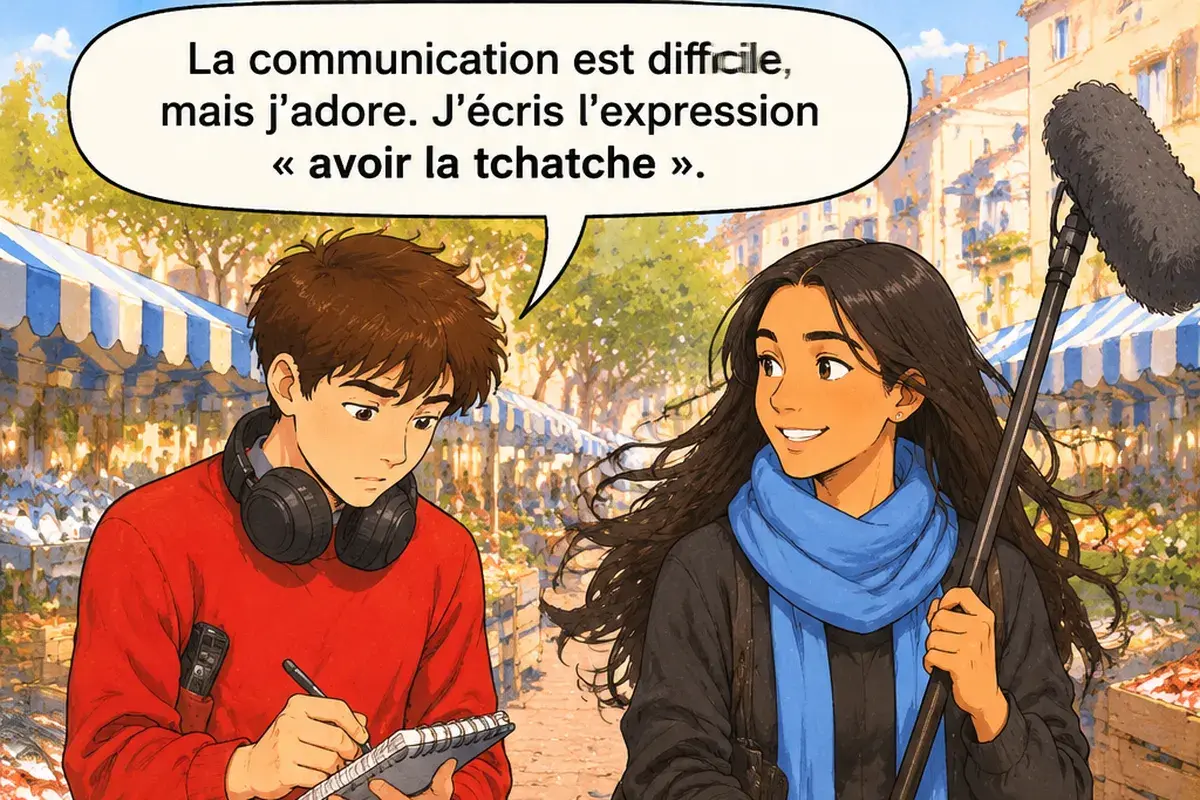
La communication est difficile, mais j'adore. J'écris l'expression « avoir la tchatche ».
Communication is hard, but I love it. I'm writing down the expression "avoir la tchatche".

- Inès
Et il faut tout traduire pour ceux qui nous écoutent. Chaque parole est importante.
And we have to translate everything for those who are listening to us. Every word matters.
Grammar for this text
- Qu'est-ce que ça signifie, « minot » ? — What does "minot" mean? This is how you ask what a word means. signifier — "to mean", the same as vouloir dire: Ça veut dire « personne » — It means "nobody".
- avoir besoin de — "to need", with en, which stands for de + la bonnette: tu en as besoin — "you need it". The same in Ma mère en veut — "My mom wants some".
- C'est votre minot, ce grand ? — the seller says vous (formal). ce grand — "that tall one": the adjective takes the place of the noun.
- dégun ne mange de poisson d'hier — dégun is Marseille slang for "nobody" and works like ne… personne (A2, unit 3). The verb has ne, so du poisson becomes de poisson, as after any negative.
- Lesquelles ? Celles-ci ou celles-là ? — "Which ones? These or those?" (see the unit grammar).
- Il parle exprès comme ça — exprès means "on purpose"; the final s is silent. avoir la tchatche — to have the gift of gab: to talk a lot and easily.
- pour ceux qui nous écoutent — ceux qui — "those who"; Chaque parole est importante — "every word matters"; here parole is a word said out loud.
Words and grammar of the unit: Ask what a word means and explain it.
Learn the words from the texts with flashcards
In the app, you can tap any word in a text to see its translation, forms and examples, and new words stick with flashcards. 15 minutes a day.
Start for freeEverything is open for free. No card needed to sign up.