

French dialogue with translation · B1 · 18 lines
C'est quoi, « relou » ? What's "relou"?
Comic · 18 panels
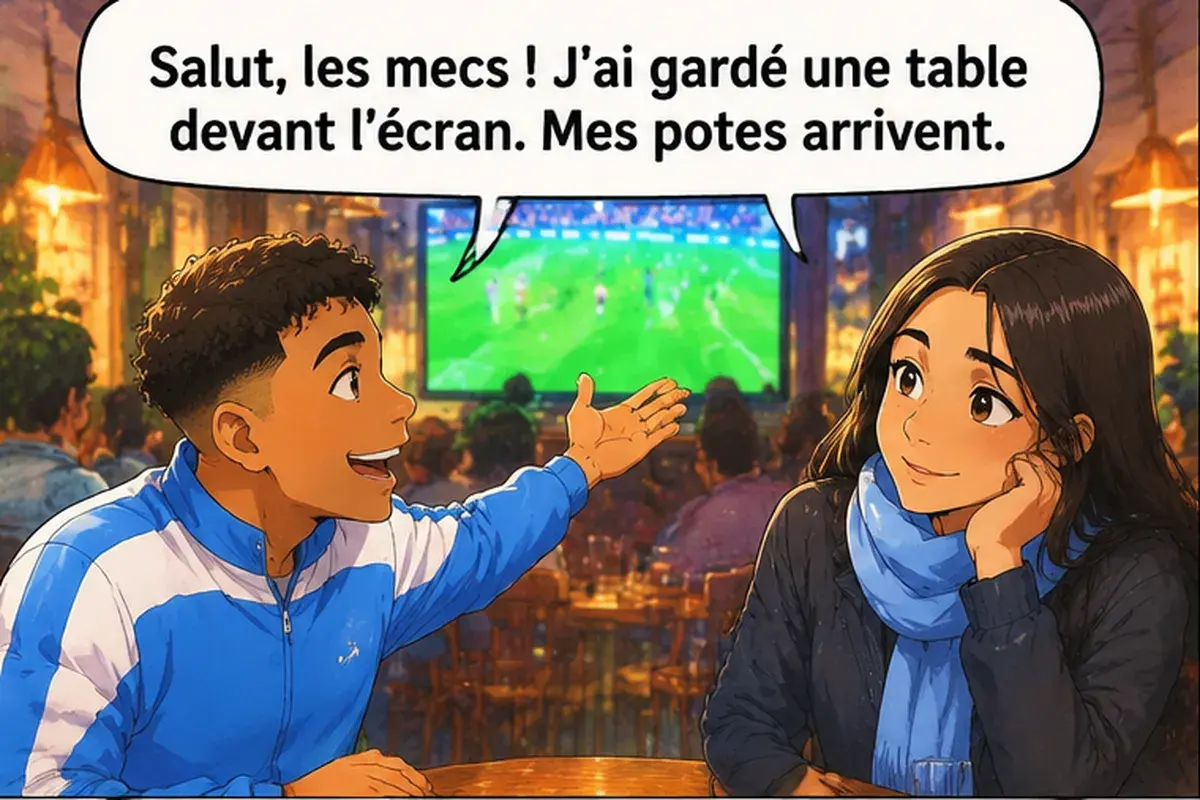
- Yanis
Salut, les mecs ! J'ai gardé une table devant l'écran. Mes potes arrivent.
Hi, guys! I saved a table in front of the screen. My buddies are coming.
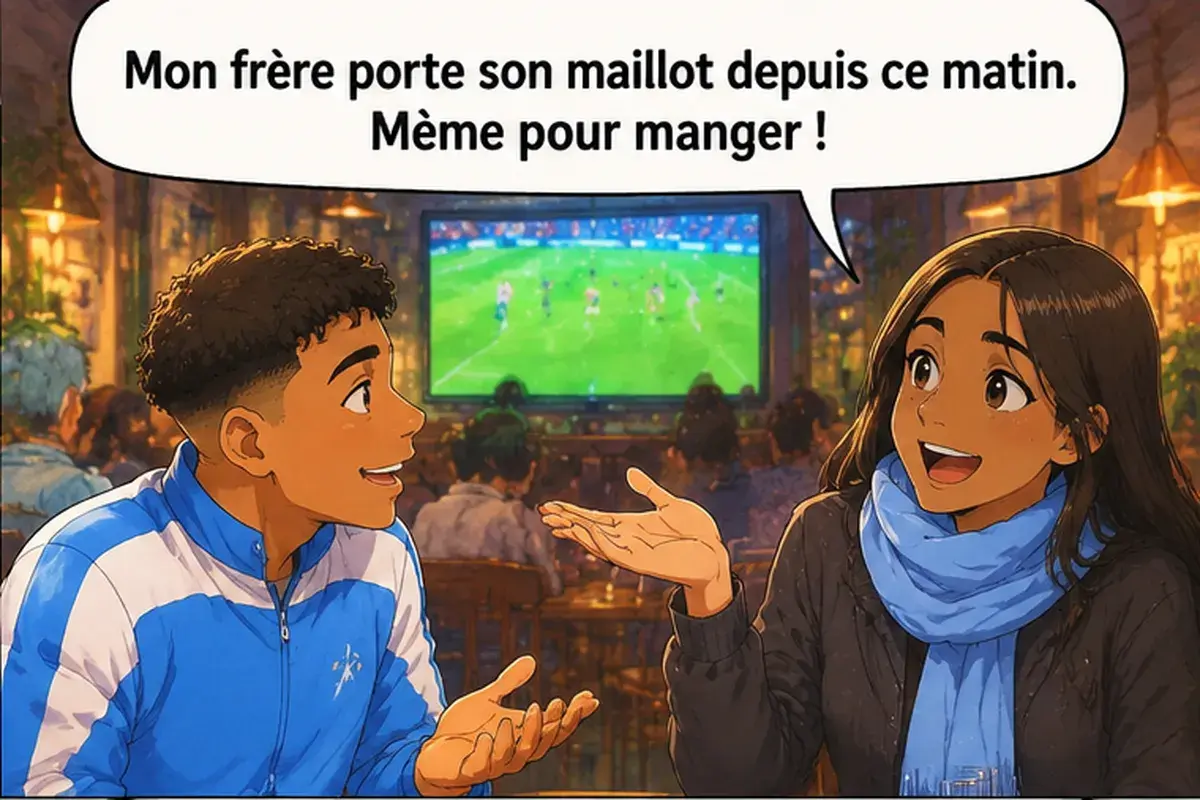
- Inès
Mon frère porte son maillot depuis ce matin. Même pour manger !
My brother has been wearing his jersey since this morning. Even to eat!

- Yanis
Normal ! Mon club, c'est l'OM, mais ce soir, c'est la France à la Coupe du monde. La plus grande compétition !
Of course! My club is OM, but tonight it's France at the World Cup. The biggest competition!
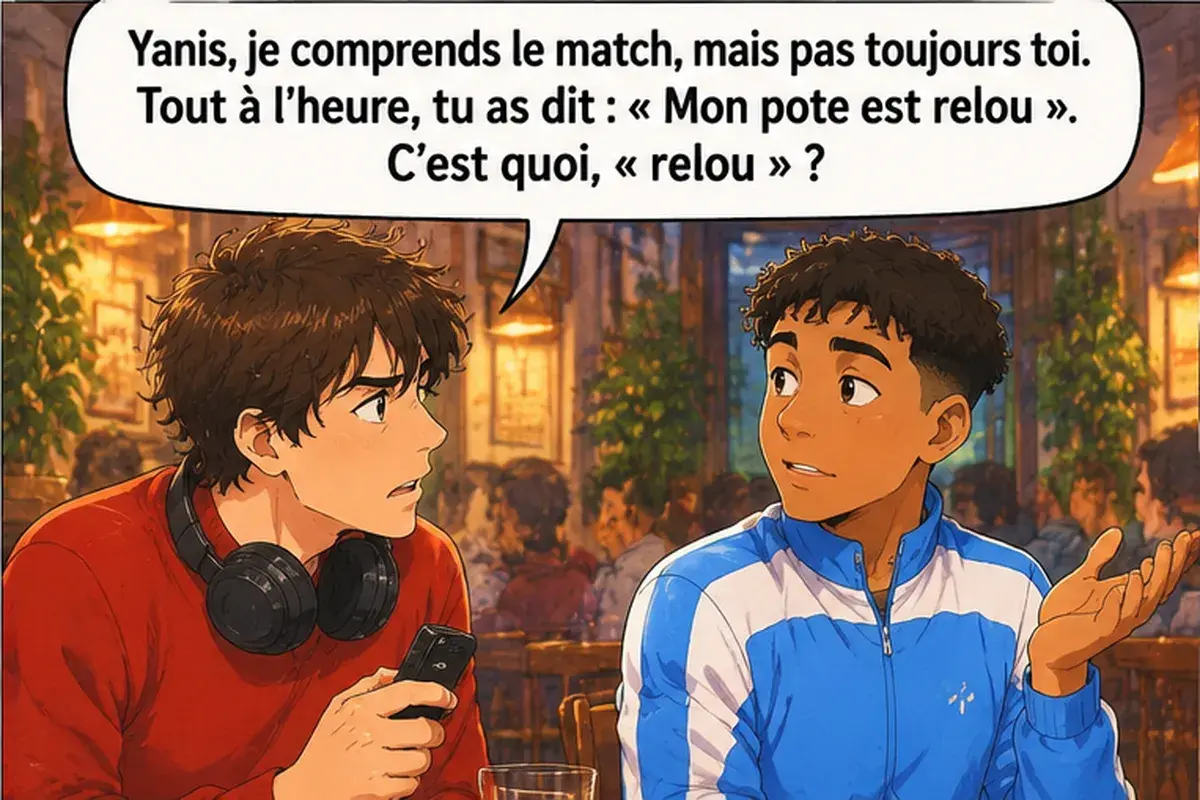
- Pacha
Yanis, je comprends le match, mais pas toujours toi. Tout à l'heure, tu as dit : « Mon pote est relou ». C'est quoi, « relou » ?
Yanis, I understand the game, but not always you. A while ago you said, "My buddy is relou." What's "relou"?
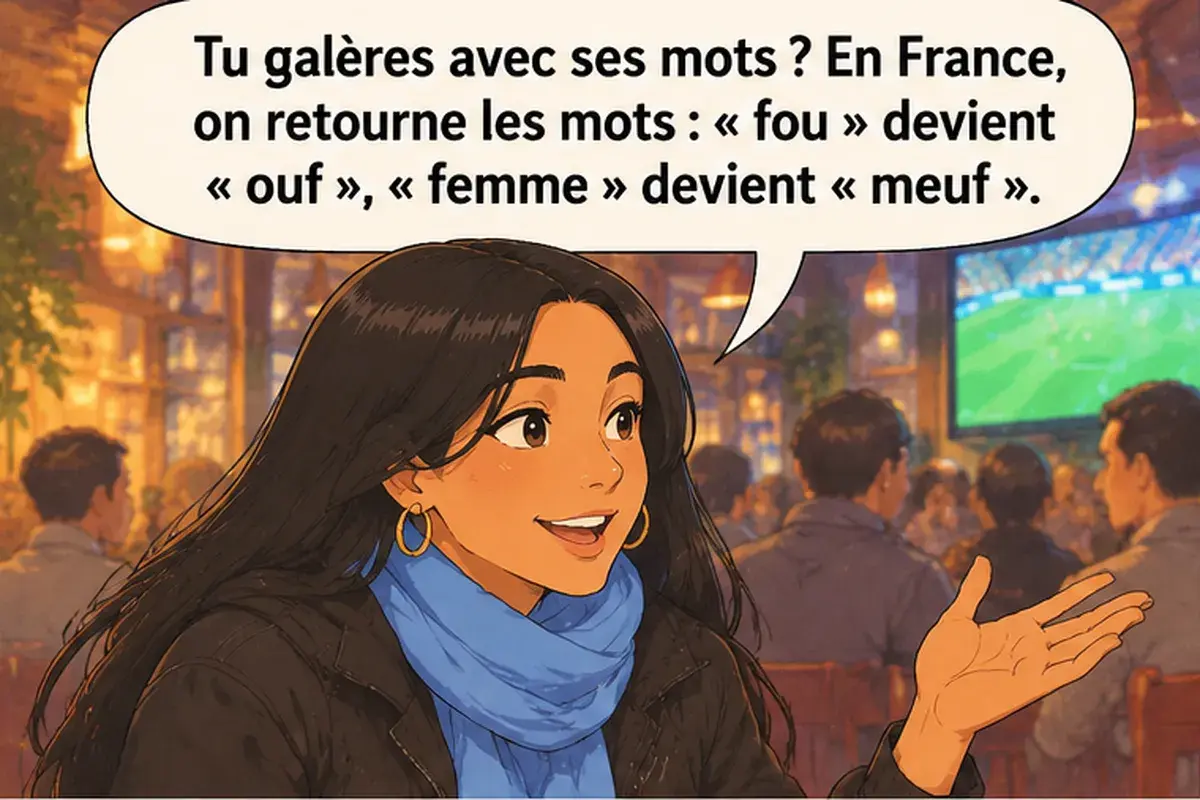
- Inès
Tu galères avec ses mots ? En France, on retourne les mots : « fou » devient « ouf », « femme » devient « meuf ».
Are you struggling with his words? In France, people flip words around: "fou" becomes "ouf," "femme" becomes "meuf."
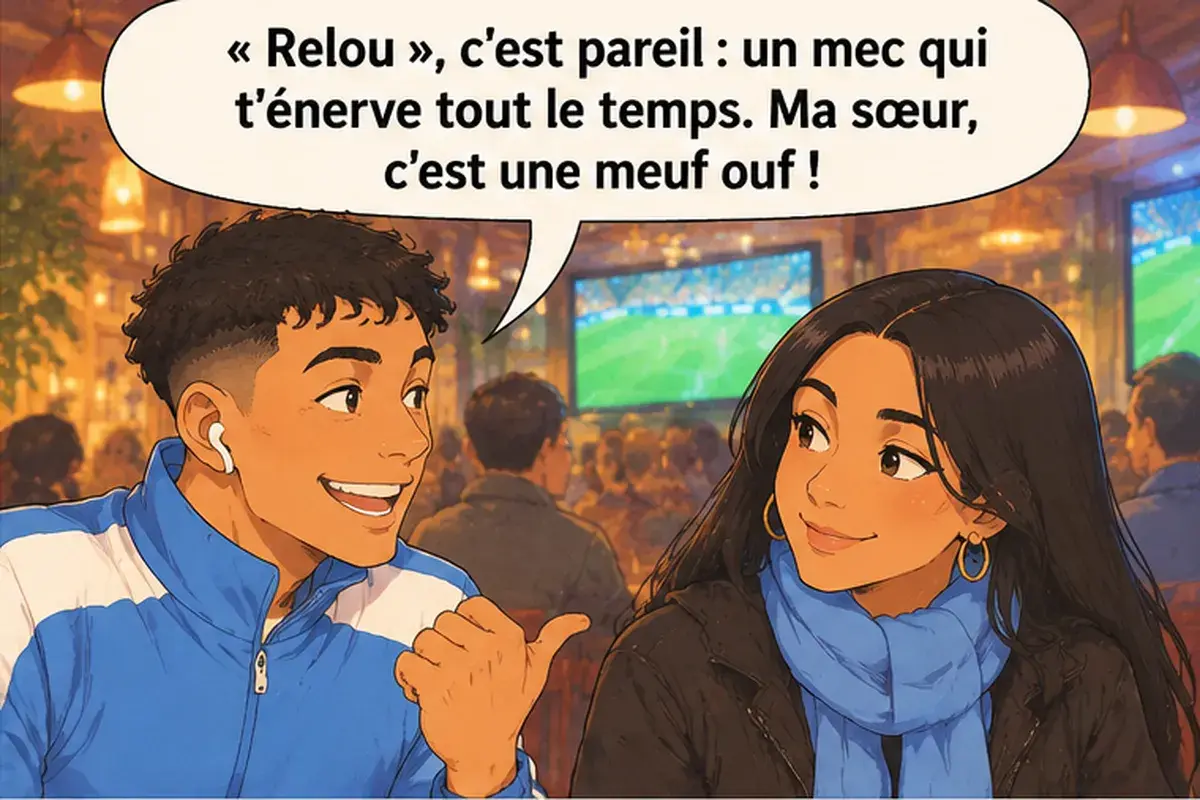
- Yanis
« Relou », c'est pareil : un mec qui t'énerve tout le temps. Ma sœur, c'est une meuf ouf !
"Relou" is the same: a guy who gets on your nerves all the time. My sister is one crazy girl!

- Inès
Merci, mon frère. Je crois que c'est gentil.
Thanks, brother. I think that's nice.
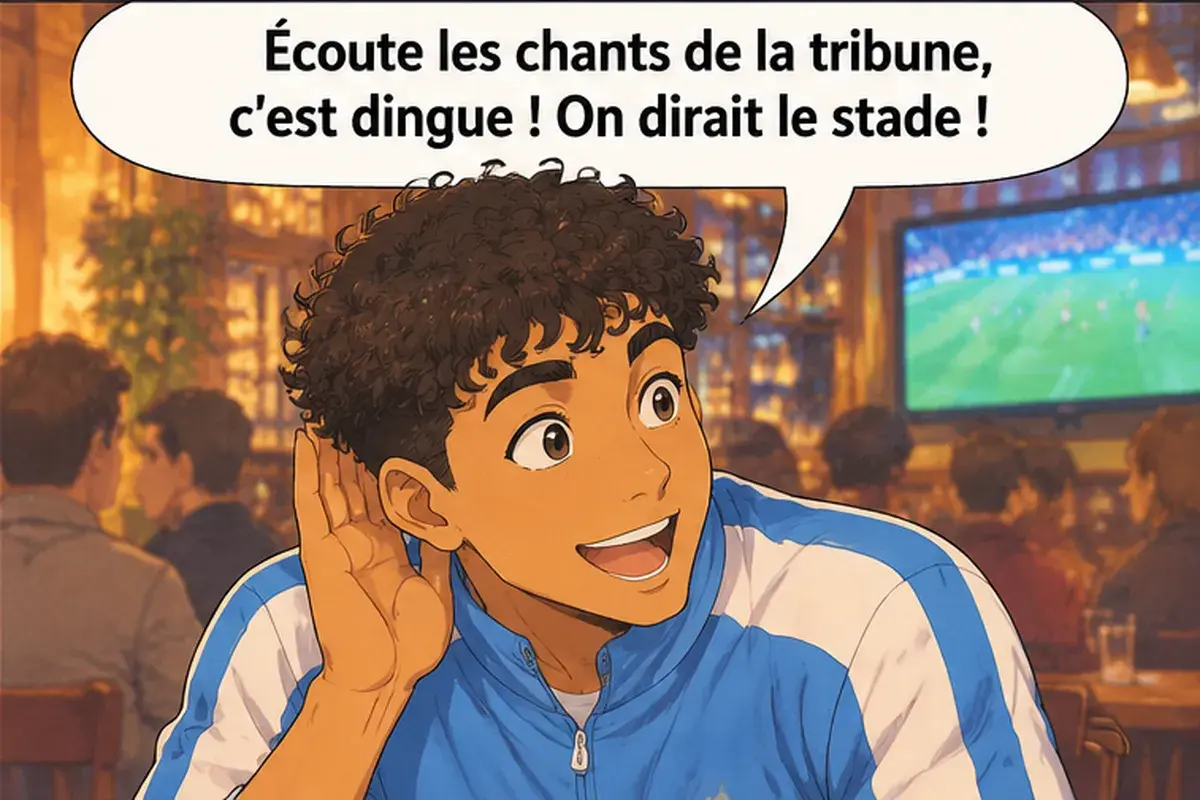
- Yanis
Écoute les chants de la tribune, c'est dingue ! On dirait le stade !
Listen to the chants from the stand, it's crazy! It sounds like we're at the stadium!

- Pacha
Je les enregistre déjà, pour le podcast. Ça fait un son magnifique.
I'm already recording them, for the podcast. It makes a great sound.
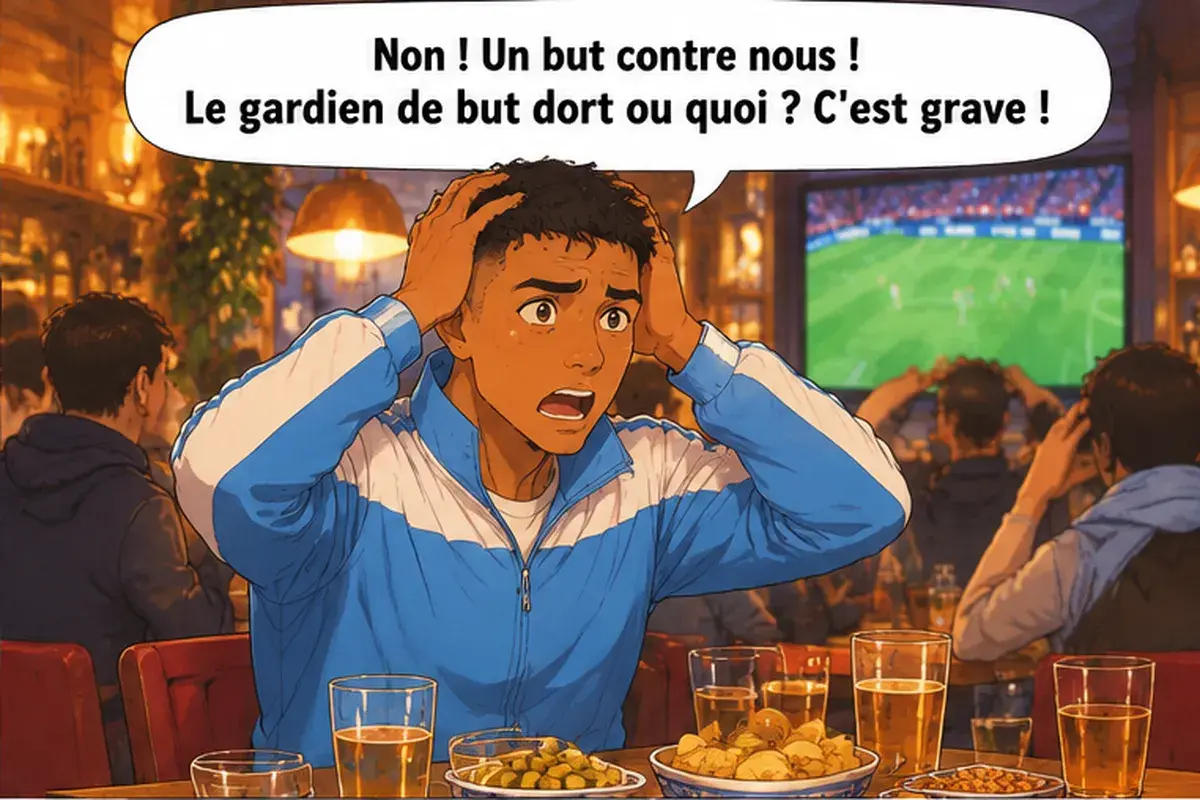
- Yanis
Non ! Un but contre nous ! Le gardien de but dort ou quoi ? C'est grave !
No! A goal against us! Is the goalkeeper asleep or what? This is bad!
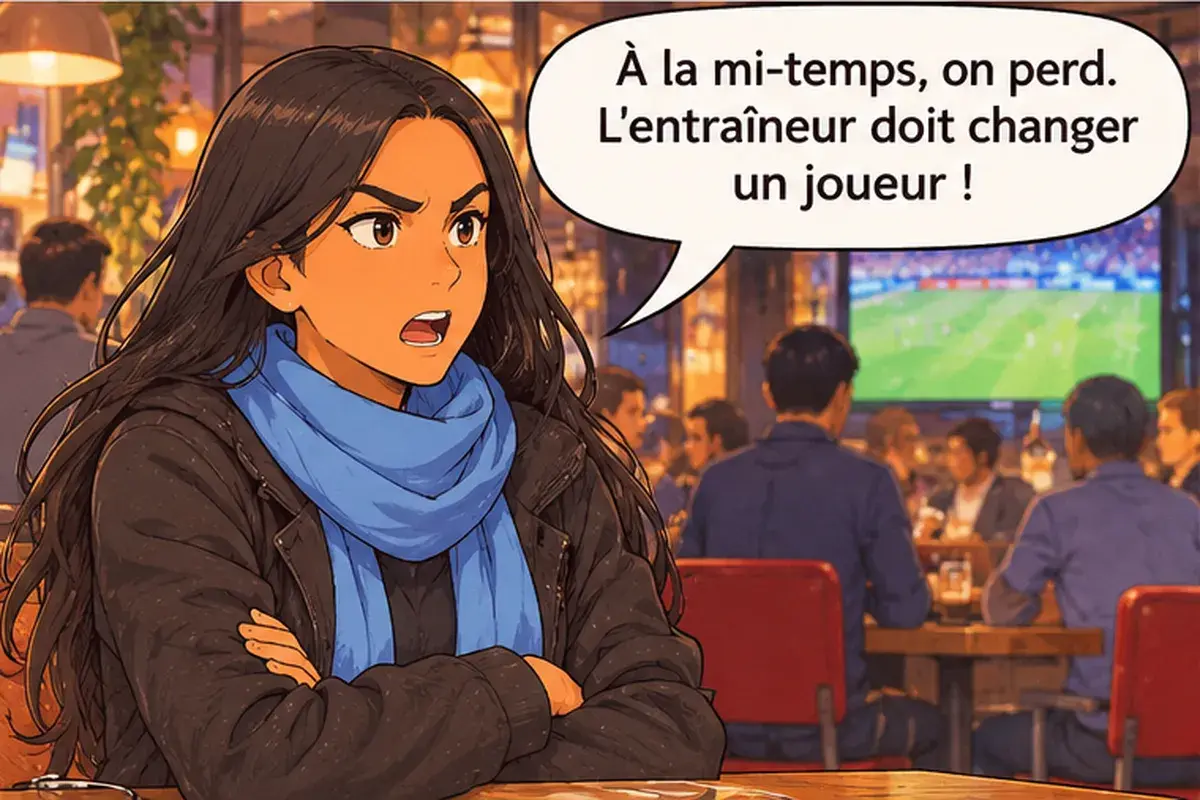
- Inès
À la mi-temps, on perd. L'entraîneur doit changer un joueur !
At halftime, we're losing. The coach has to change a player!

- Hugo
Ce soir, je ne me couche pas à neuf heures : c'est la France ! Et je peux jouer, je fais du vélo tous les jours.
Tonight, I'm not going to bed at nine: it's France! And I can play, I ride my bike every day.
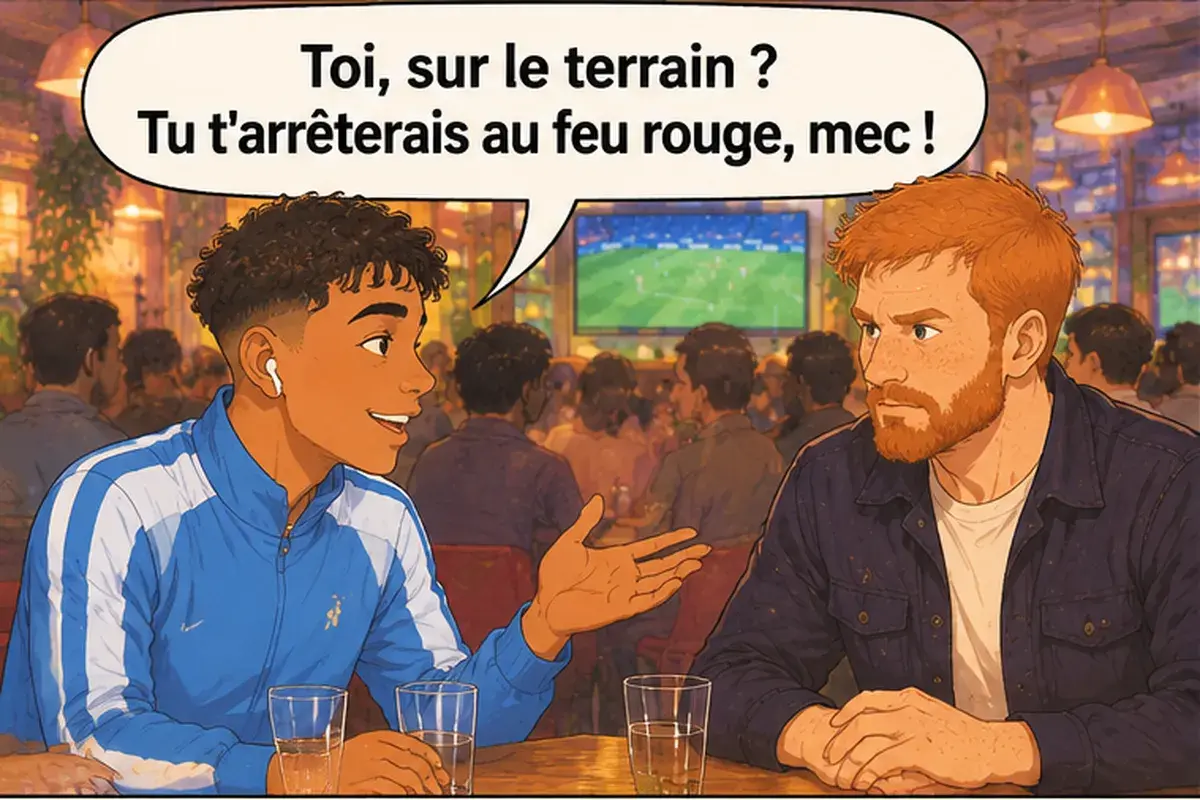
- Yanis
Toi, sur le terrain ? Tu t'arrêterais au feu rouge, mec !
You, on the field? You'd stop at a red light, dude!
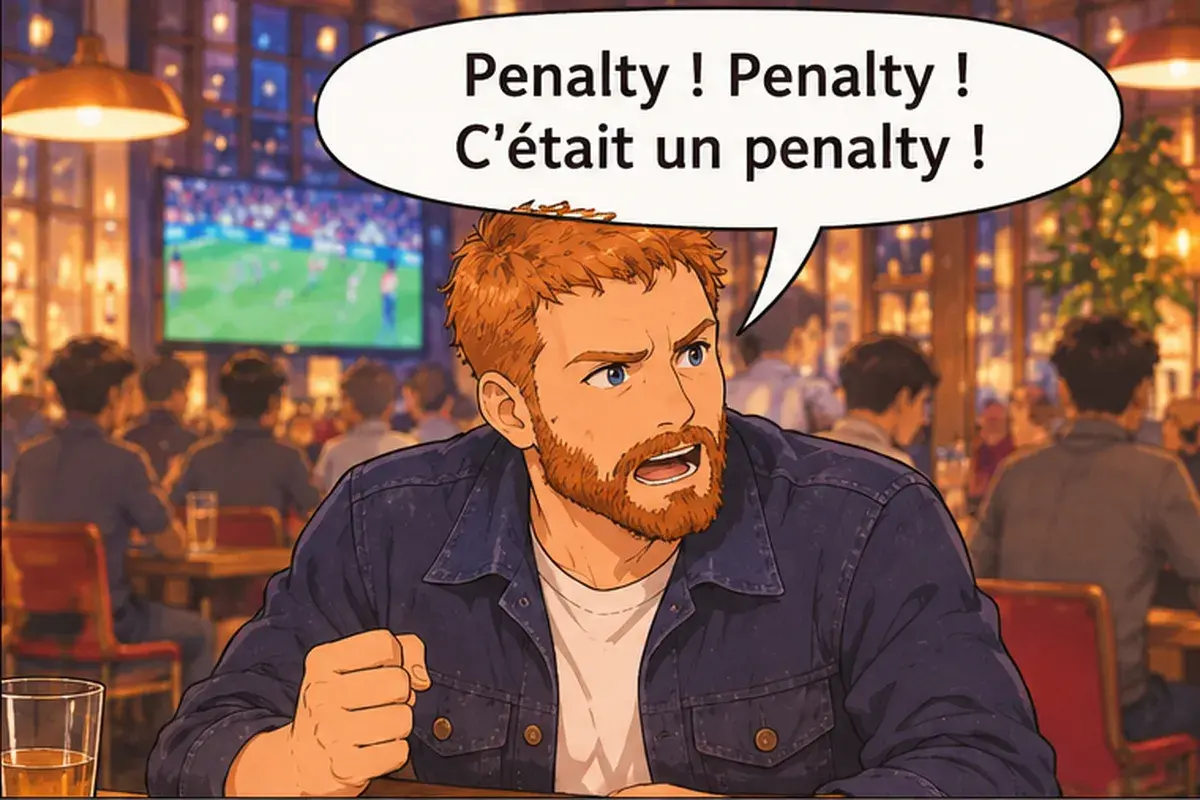
- Hugo
Penalty ! Penalty ! C'était un penalty !
Penalty! Penalty! It was a penalty!
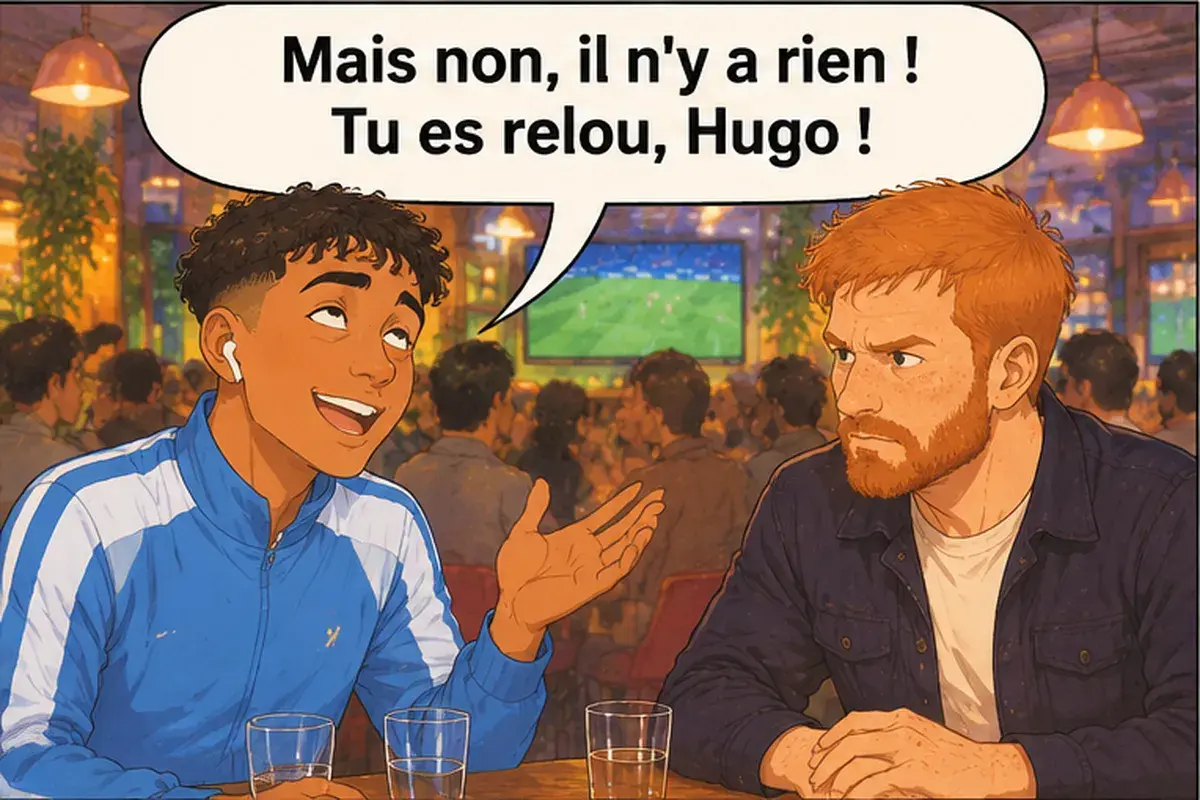
- Yanis
Mais non, il n'y a rien ! Tu es relou, Hugo !
No way, there's nothing! You're so annoying, Hugo!
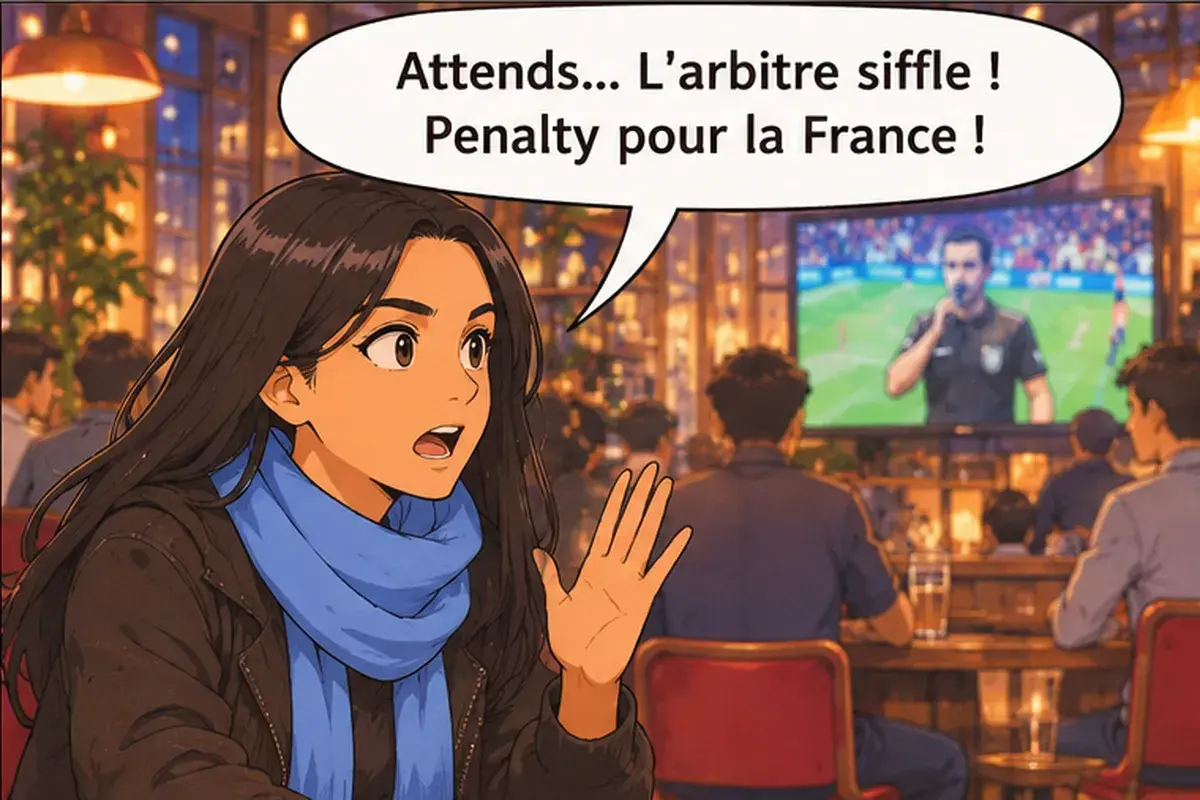
- Inès
Attends... L'arbitre siffle ! Penalty pour la France !
Wait... The referee's blowing the whistle! Penalty for France!

- Yanis
Le buteur marque ! On égalise ! C'est mortel !
The scorer scores! We equalize! That's awesome!
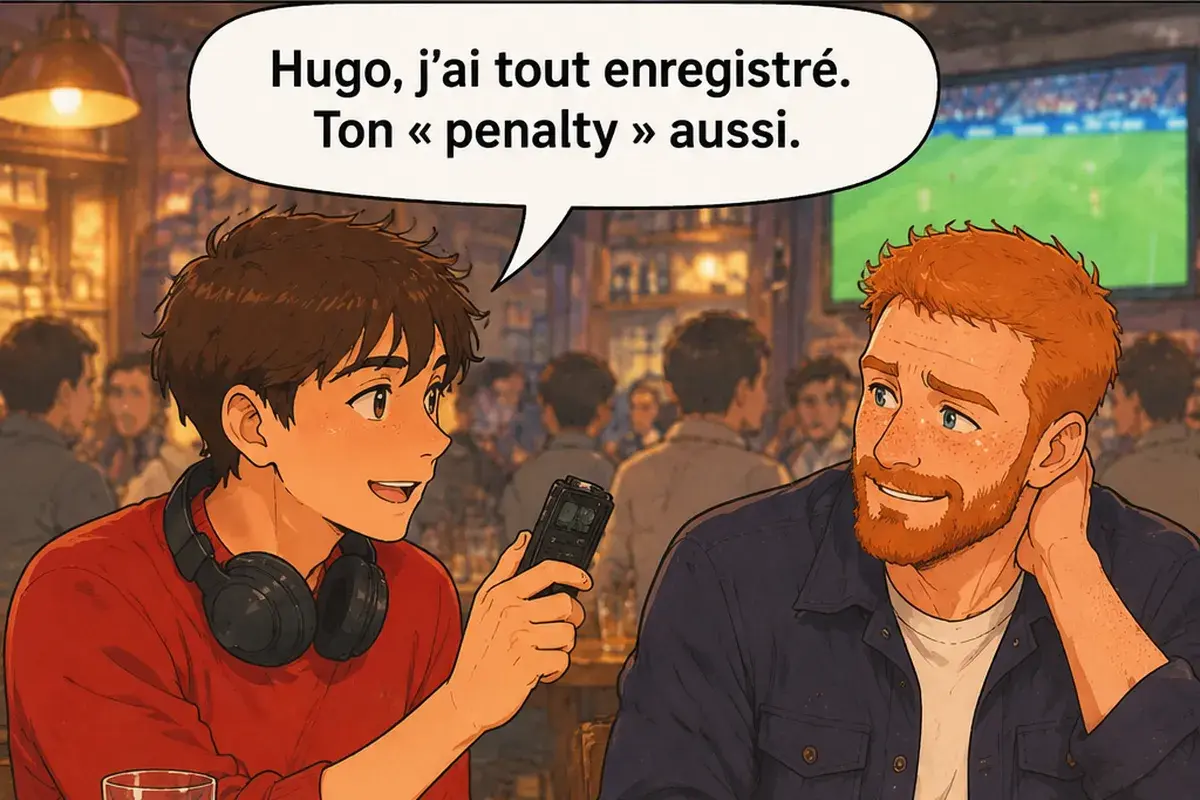
- Pacha
Hugo, j'ai tout enregistré. Ton « penalty » aussi.
Hugo, I recorded everything. Your "penalty" too.
Grammar for this text
- Mon pote est relou —
potemeans "buddy" (casual; the neutral word isami).reloumeans "annoying": it'slourd("heavy") with the pieces of the word swapped, likefou→ouf. Words like this are calledverlan; see the unit's grammar for more. - Tu galères avec ses mots ? —
galérermeans "to struggle";tu galèresmeans "you're struggling". It's a casual word that friends use. - En France, on retourne les mots —
onhere means "people in general";retournermeans "to flip": the sounds of a word are put in reverse order.fou→ouf,femme→meuf. - On dirait le stade ! —
on diraitmeans "it sounds like, it's as if"; it's a ready-made phrase, literally "you would say". For now, learn it as a whole. - Tu t'arrêterais au feu rouge, mec ! — the conditional (unit 3):
tu t'arrêteraismeans "you would stop"; the ending-aisis added tos'arrêter. The joke: Hugo follows the rules even on a soccer field.mecmeans "dude". - Le gardien de but dort ou quoi ? —
dortcomes fromdormir("sleeps");ou quoi ?at the end means "or what?" and sounds like a complaint.un but contre nousmeans "a goal against us". - On égalise ! —
onmeans "we".égalisermeans "to tie the score";mortelin friends' talk means "awesome", not "deadly". - Ce soir, je ne me couche pas à neuf heures — Hugo usually goes to bed at nine (since the start of the course), but tonight is the national team's match: this is the exception.
Words and grammar of the unit: Watch a match with friends and understand their slang.
Learn the words from the texts with flashcards
In the app, you can tap any word in a text to see its translation, forms and examples, and new words stick with flashcards. 15 minutes a day.
Start for freeEverything is open for free. No card needed to sign up.