

French dialogue with translation · A2 · 15 lines
Vous êtes partis à quelle heure ? What time did you leave?
Comic · 15 panels

- Maëlle
Bonjour, les voyageurs ! Vous avez bien dormi ?
Good morning, travelers! Did you sleep well? (to several people)

- Pacha
Oui, merci. Mais j'entends encore le train.
Yes, thanks. But I can still hear the train.

- Maëlle
Normal : le lendemain d'un long voyage, on entend toujours le train. Vous êtes partis à quelle heure ?
That's normal: the day after a long trip, you always hear the train. What time did you leave? (to several people)
- Hugo
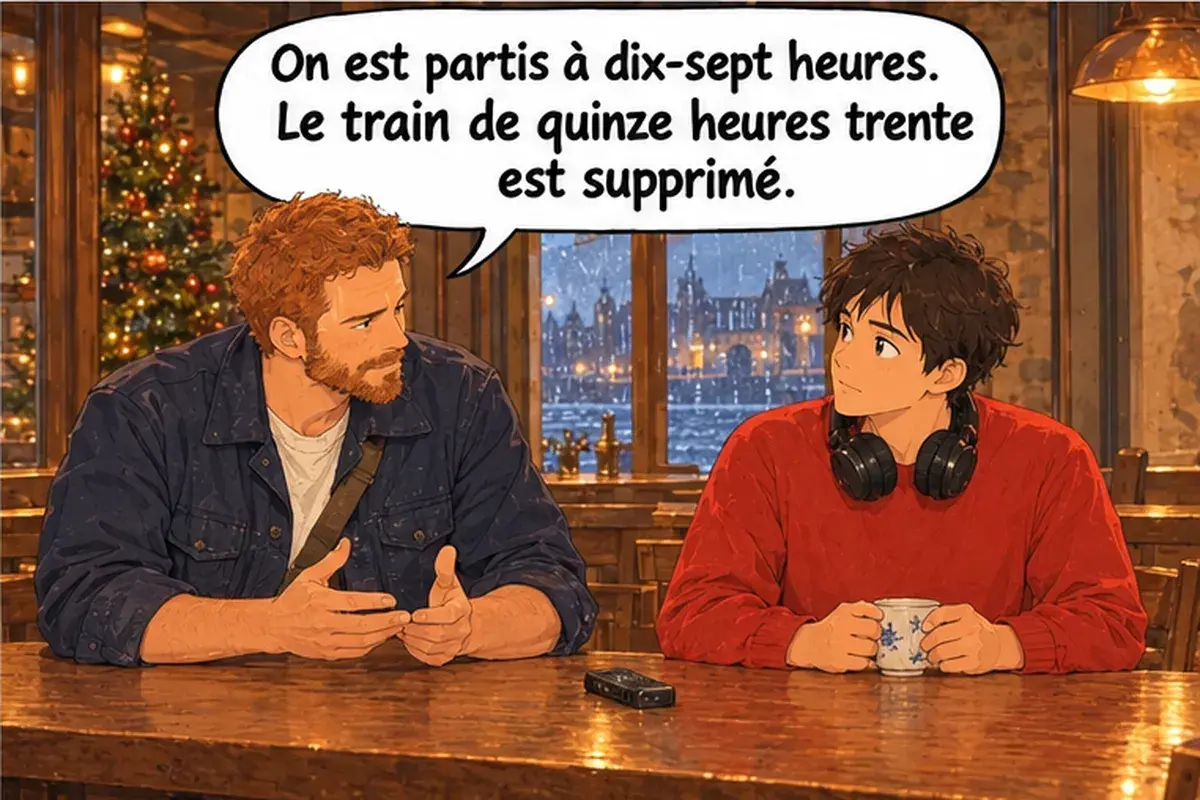
On est partis à dix-sept heures. Le train de quinze heures trente est supprimé.
We left at five p.m. The three thirty train is canceled.
- Maëlle
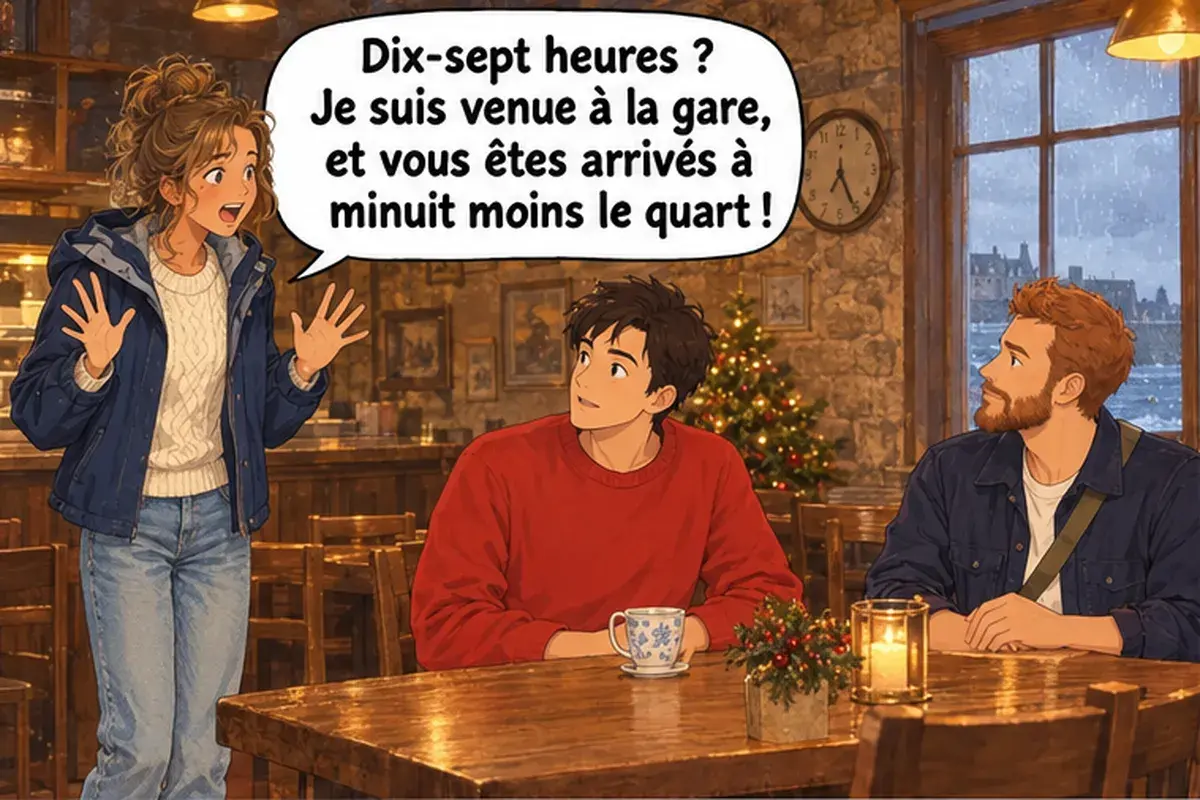
Dix-sept heures ? Je suis venue à la gare, et vous êtes arrivés à minuit moins le quart !
Five p.m.? I came to the station, and you arrived at a quarter to midnight! (woman speaking, to several people)
- Pacha
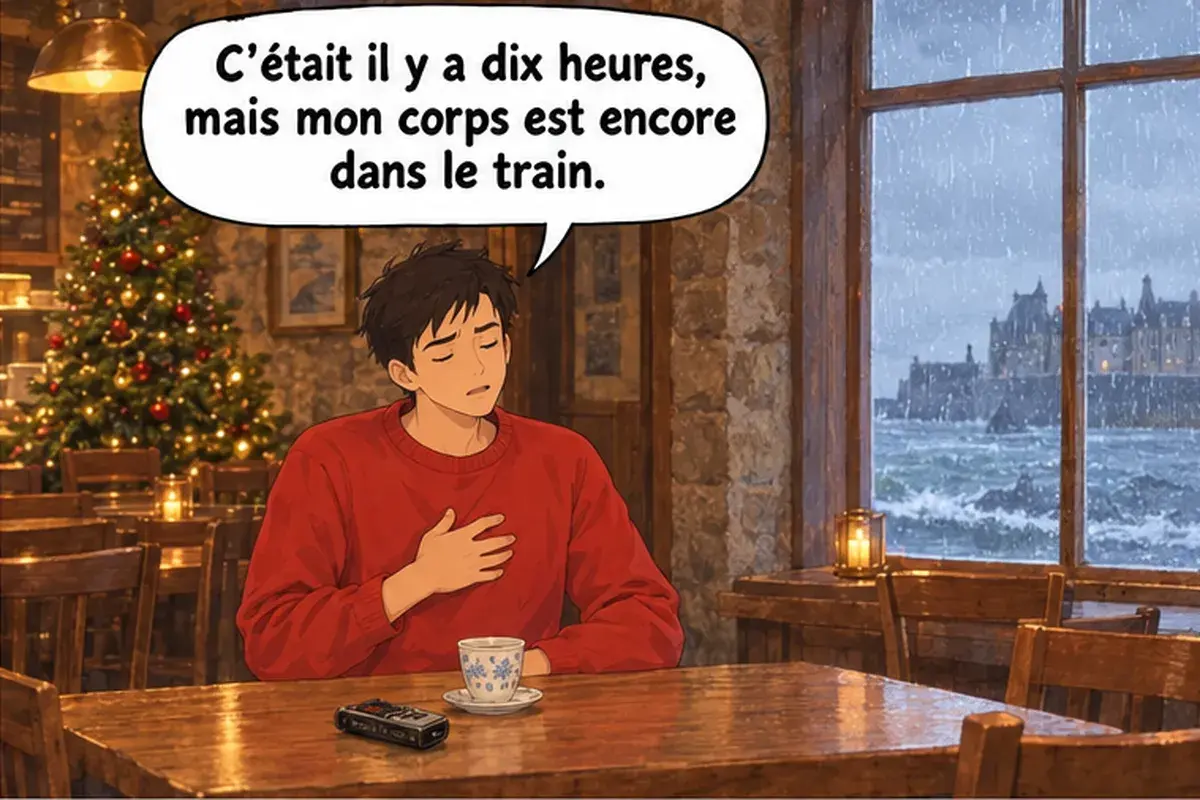
C'était il y a dix heures, mais mon corps est encore dans le train.
That was ten hours ago, but my body is still on the train.

- Maëlle
Et le train direct, c'est deux heures et demie !
And the direct train is two and a half hours!
- Hugo
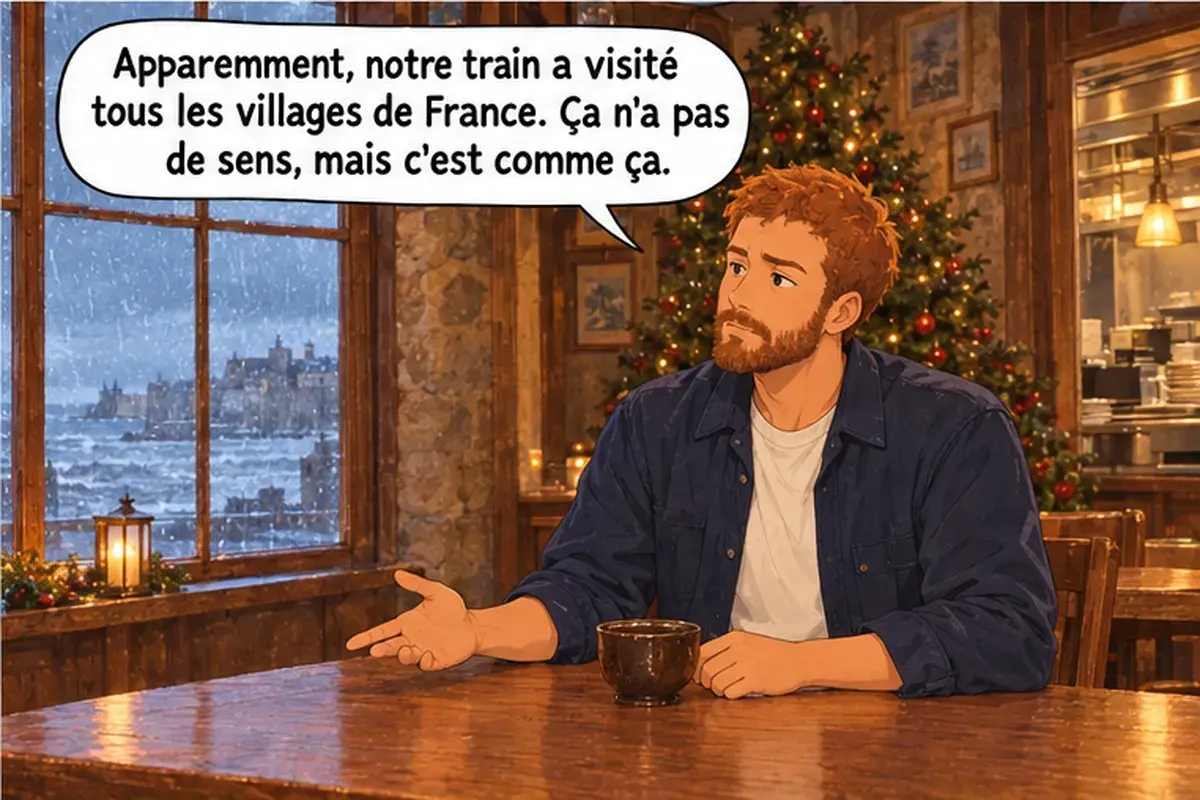
Apparemment, notre train a visité tous les villages de France. Ça n'a pas de sens, mais c'est comme ça.
Apparently, our train visited every village in France. It makes no sense, but that's how it is.

- Maëlle
Et à Rennes ? Vous avez attrapé le dernier train ?
And in Rennes? Did you catch the last train? (to several people)
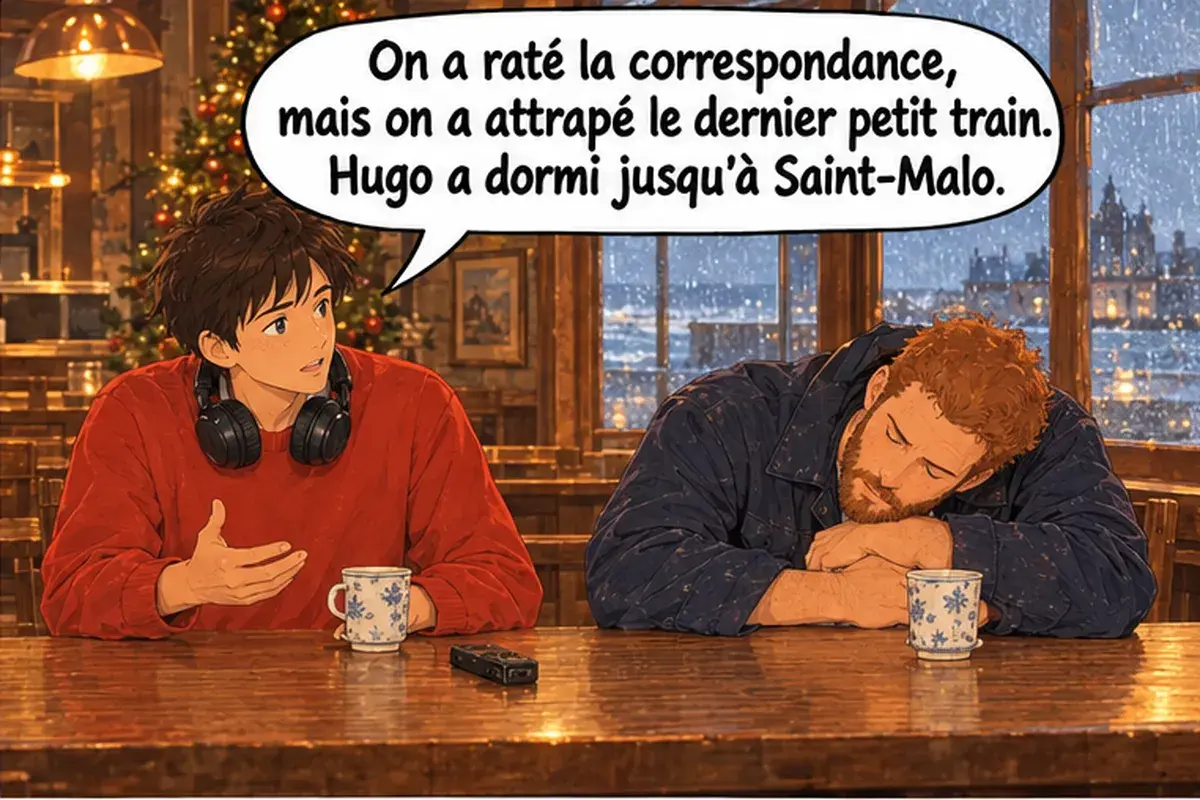
- Pacha
On a raté la correspondance, mais on a attrapé le dernier petit train. Hugo a dormi jusqu'à Saint-Malo.
We missed the connection, but we caught the last little train. Hugo slept all the way to Saint-Malo.

- Maëlle
Et Inès ? Elle n'est pas venue avec vous ?
And Inès? She didn't come with you? (to several people)

- Hugo
Non, elle est partie pour Marseille il y a quatre jours. Elle arrive le trente décembre.
No, she left for Marseille four days ago. She's arriving on December thirtieth.
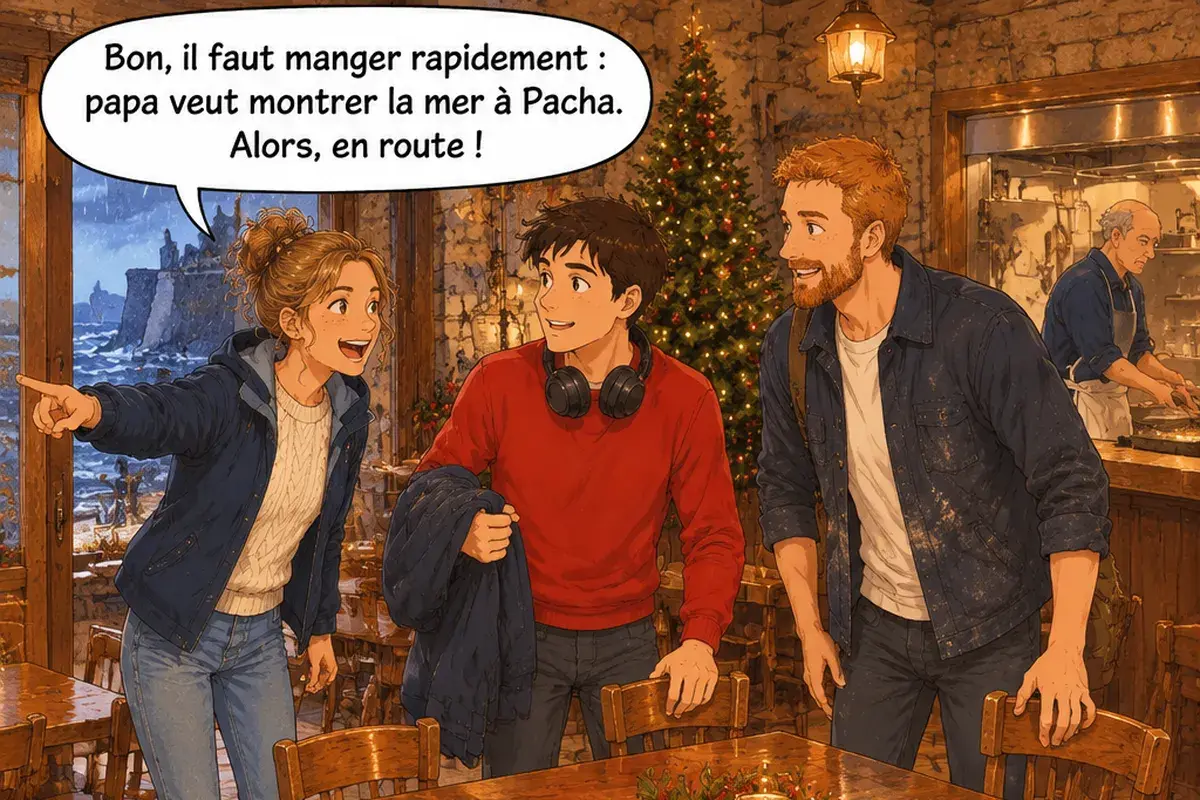
- Maëlle
Bon, il faut manger rapidement : papa veut montrer la mer à Pacha. Alors, en route !
OK, we have to eat quickly: Dad wants to show Pacha the sea. So, off we go!

- Pacha
Je me dépêche ! Tu montres le chemin ?
I'm hurrying! Will you show the way?

- Maëlle
C'est facile : au bout du couloir, tu descends l'escalier. Et voilà la crêperie.
It's easy: at the end of the hallway, you go down the stairs. And there's the crêpe restaurant.
Grammar for this text
- Vous êtes partis à quelle heure ? — "what time did you leave?" êtes partis is the passé composé with être. The -s at the end is there because "you" here is two people: Pacha and Hugo. à quelle heure — at what time.
- On est partis à dix-sept heures — in conversation on means "we", so the participle is plural too: partis. Two women would say on est parties.
- C'était il y a dix heures — c'était means "it was": a ready-made past form of c'est. For now, learn it as a whole; you'll see how it works in unit 4. il y a dix heures — ten hours ago.
- Ça n'a pas de sens — "it makes no sense". n'a = ne + a (from avoir). After a negative, du sens becomes de sens.
- Elle n'est pas venue avec vous ? — a question asked with the voice only. ne ... pas wraps around est, and the participle comes after it: n'est pas venue. The -e at the end is there because it's about Inès, "she". Maëlle says the same about herself: je suis venue à la gare, with -e because a woman is speaking.
- le lendemain d'un long voyage — le lendemain means "the next day"; d'un = de + un. All together: "the day after a long trip".
- Alors, en route ! — "so, off we go!" A set phrase; la route — the road.
Words and grammar of the unit: Tell how your trip went.
Learn the words from the texts with flashcards
In the app, you can tap any word in a text to see its translation, forms and examples, and new words stick with flashcards. 15 minutes a day.
Start for freeEverything is open for free. No card needed to sign up.