
French story with translation · A2 · 16 lines
Notre correspondance est déjà partie Our connecting train has already left
Comic · 16 panels

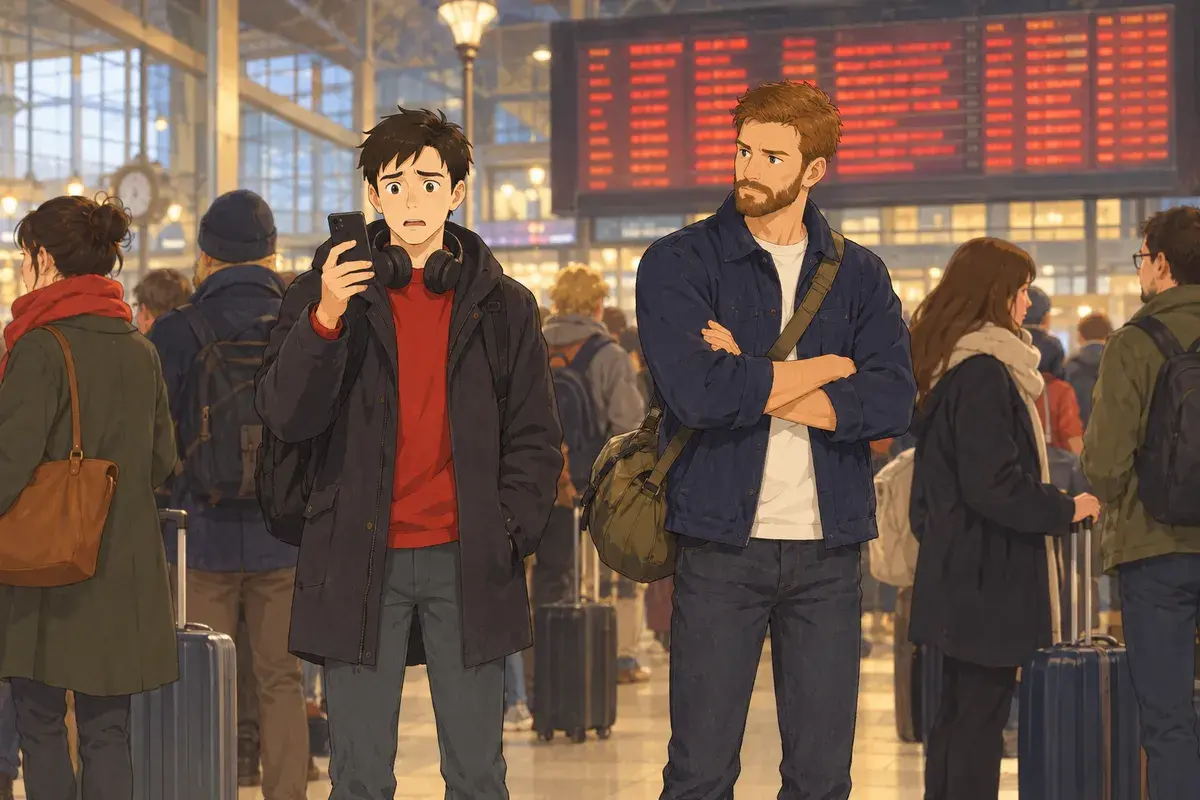
Le vingt décembre, Hugo et moi, nous sommes allés à la gare Montparnasse. Notre train pour Saint-Malo part à quinze heures trente.
On December twentieth, Hugo and I went to Montparnasse station. Our train to Saint-Malo leaves at three thirty p.m.

Dans l'appli, à côté de notre train, il y a un mot rouge : « supprimé ». Les grévistes ne travaillent pas aujourd'hui, et notre train non plus.
In the app, next to our train, there's a red word: "canceled." The strikers aren't working today, and neither is our train.

Hugo, sérieux : « Évidemment, c'est le premier week-end des vacances. »
Hugo, with a straight face: "Of course, it's the first weekend of the vacation."

Au guichet, l'attente est longue et tout le monde parle en même temps. Moi, j'ai demandé un renseignement au monsieur du guichet.
At the ticket window, the wait is long and everyone talks at the same time. I asked the man at the ticket window for information.
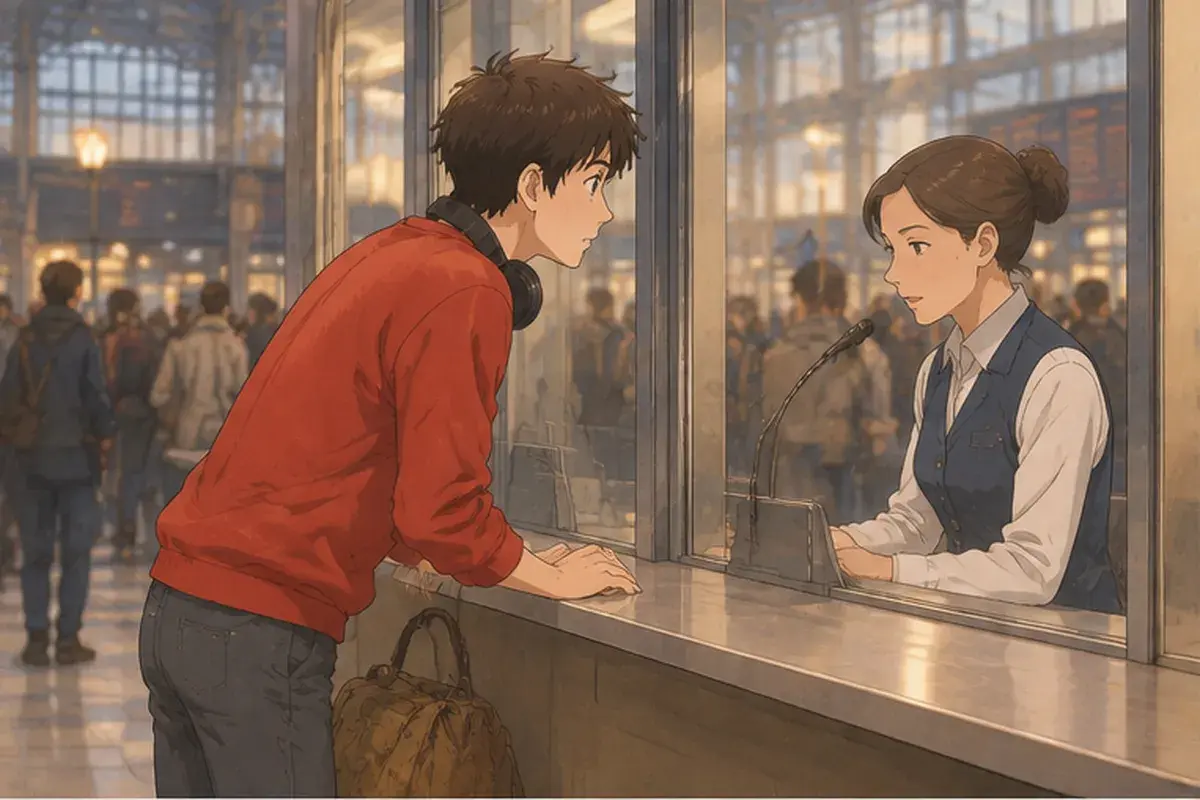
Il a répondu : « Malheureusement, ce train est supprimé. Je peux rembourser votre billet, ou vous pouvez prendre le train de dix-sept heures, avec une correspondance à Rennes. »
He answered: "Unfortunately, this train is canceled. I can refund your ticket, or you can take the five p.m. train, with a connection in Rennes." (formal)
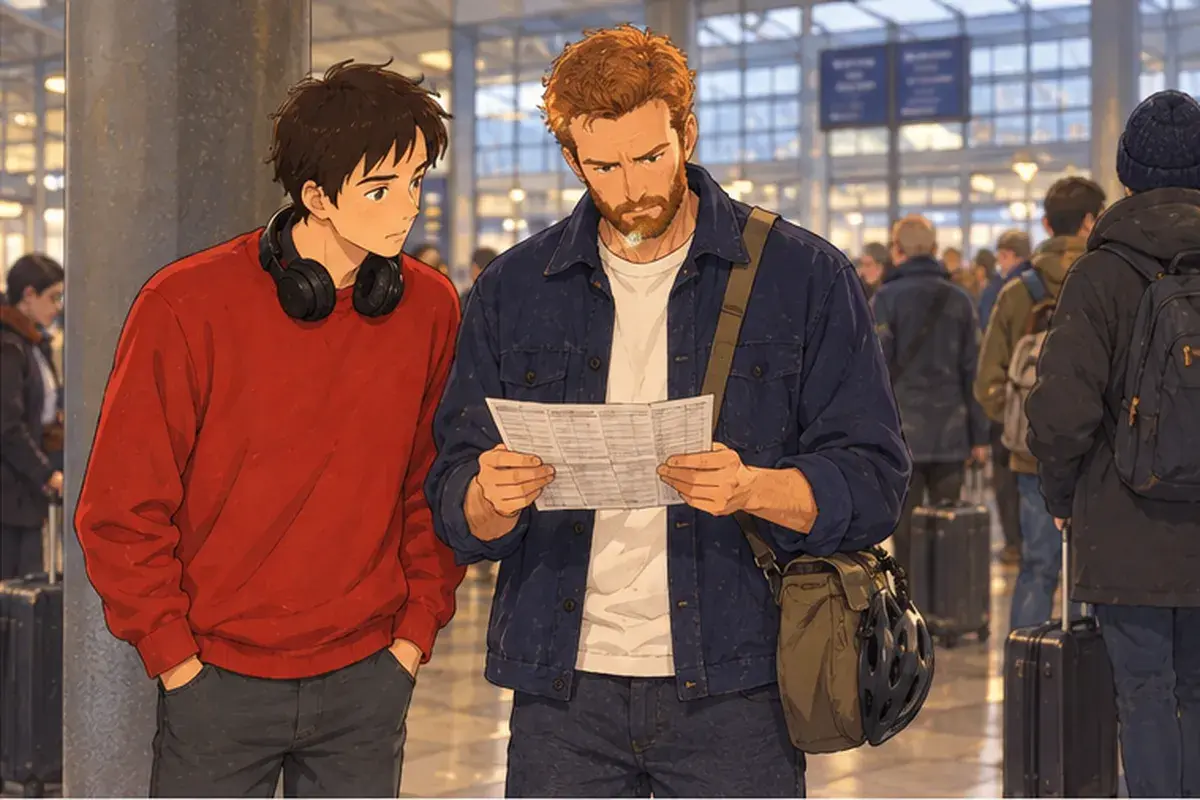
Hugo a regardé les horaires. Il veut partir aujourd'hui : sa mère prépare déjà le dîner.
Hugo looked at the schedule. He wants to leave today: his mother is already making dinner.

Nous avons échangé nos billets. Pendant l'attente, Hugo a mangé deux croissants d'hier.
We exchanged our tickets. During the wait, Hugo ate two croissants from yesterday.
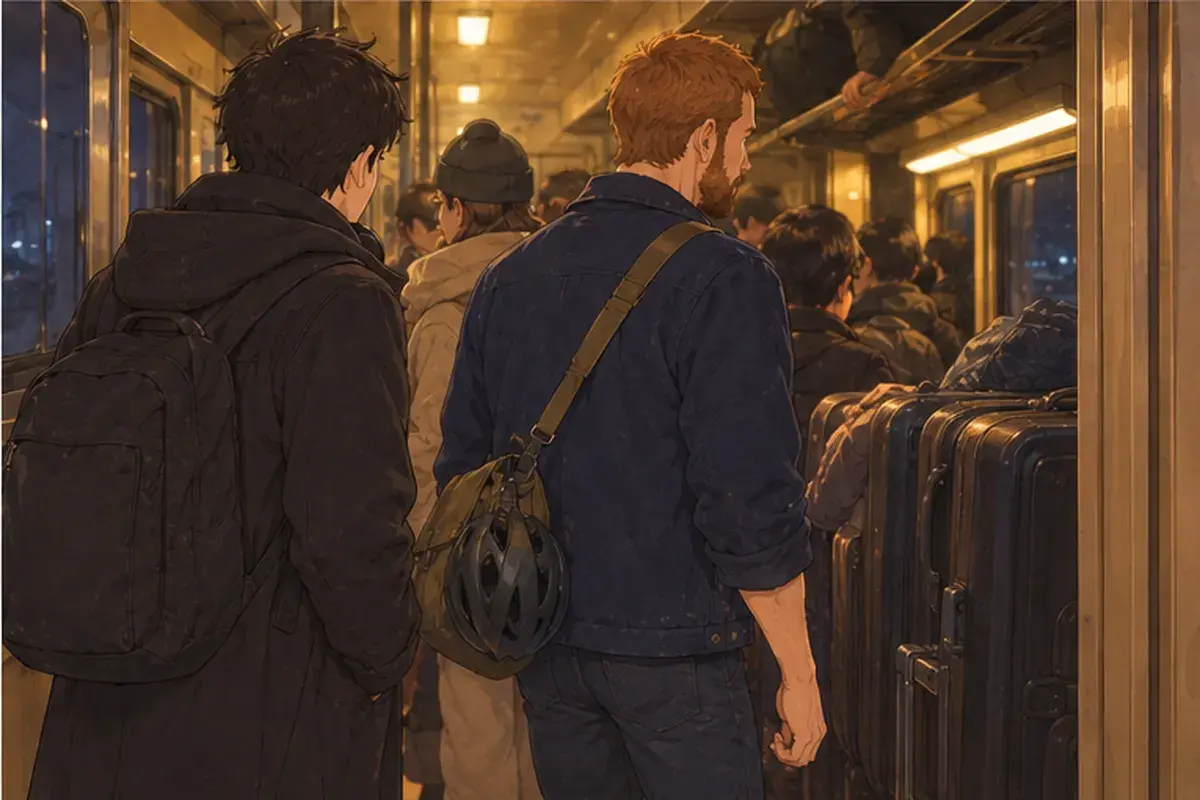
À dix-sept heures, nous sommes montés dans le train. Dans le couloir, il y avait des bagages partout.
At five p.m., we got on the train. In the aisle, there was luggage everywhere.
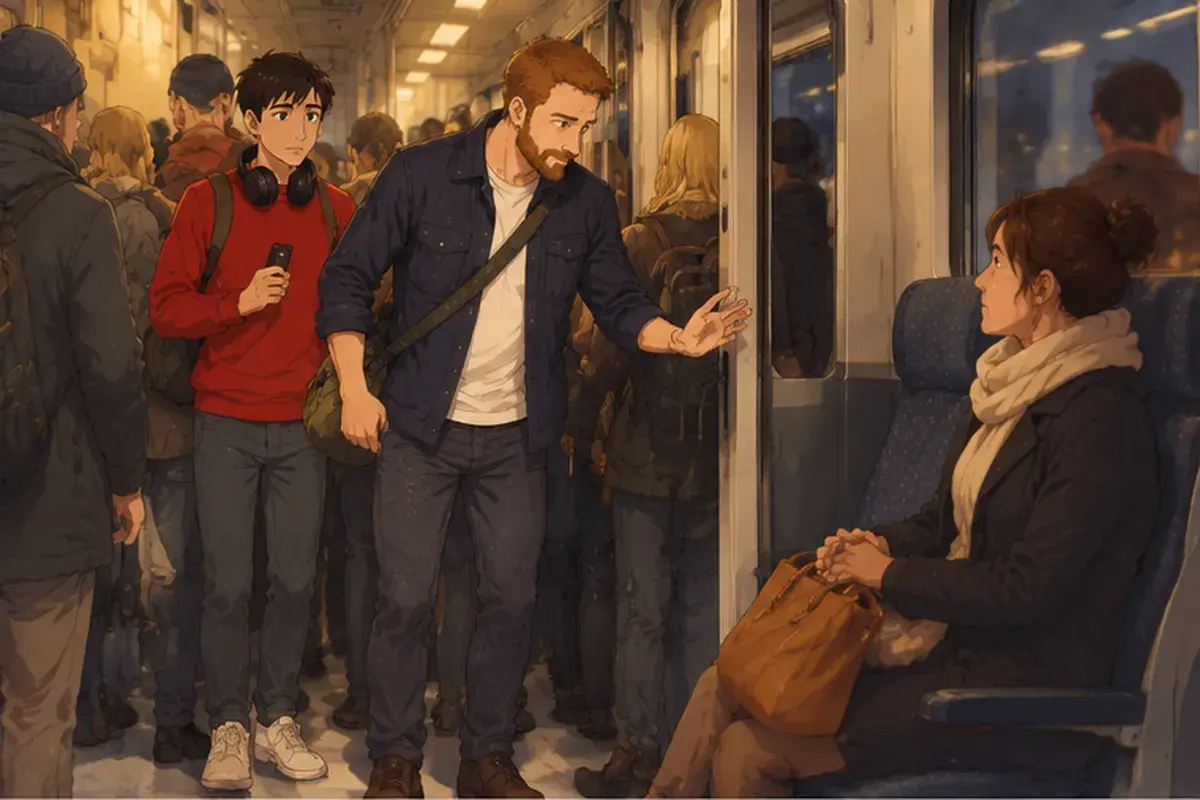
Hugo a demandé : « Pardon, madame, vous pouvez bouger un peu ? » Nous avons avancé très lentement.
Hugo asked: "Excuse me, ma'am, can you move a little?" (formal) We moved forward very slowly.

Enfin, deux sièges libres ! Mais Hugo a dit : « Tu te trompes de wagon : ici, c'est la première classe. »
Finally, two free seats! But Hugo said: "You're in the wrong train car: it's first class here."

Nous avons pris nos affaires et nous avons changé de wagon. Au revoir, première classe !
We took our things and changed train cars. Goodbye, first class!

Le train a pris beaucoup de retard. Pendant le trajet, la nuit est tombée. Nous sommes arrivés à Rennes à vingt et une heures.
The train ran very late. During the trip, night fell. We arrived in Rennes at nine p.m.
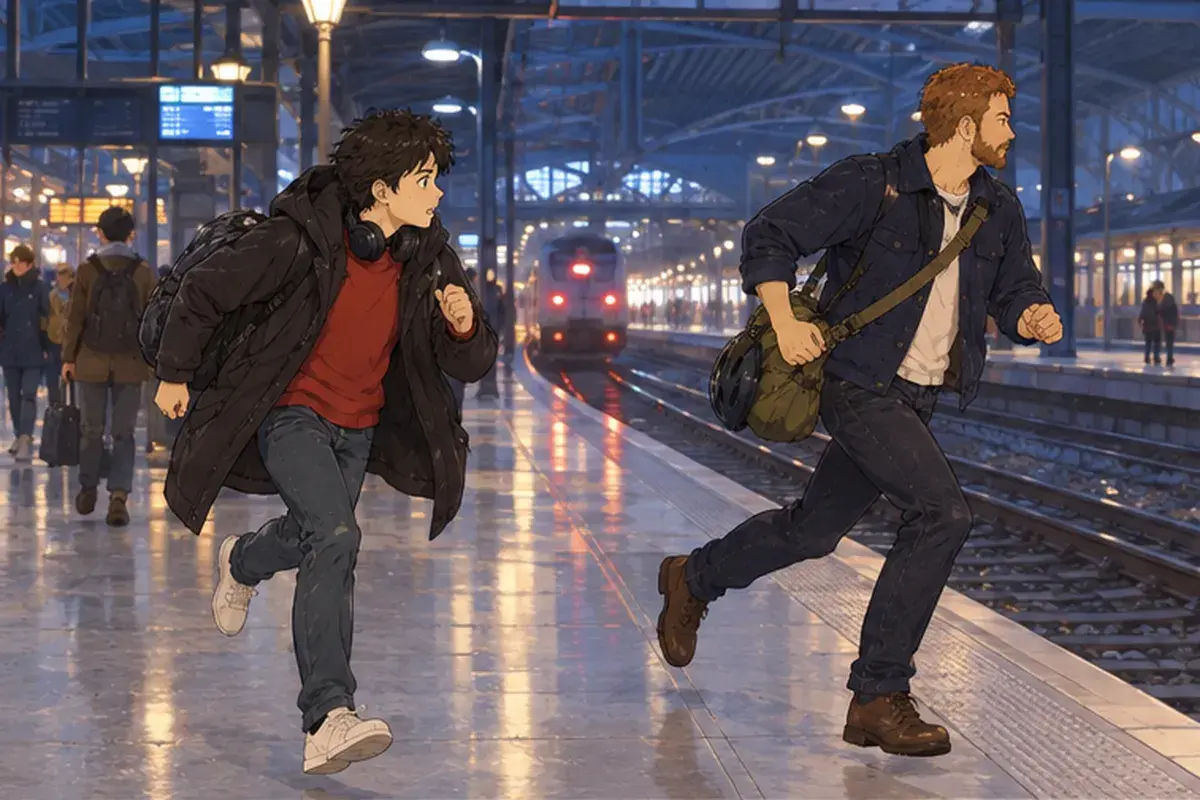
À Rennes, Hugo a dit : « Il faut se dépêcher ! » Nous avons couru dans le couloir, mais notre correspondance est déjà partie.
In Rennes, Hugo said: "We have to hurry!" We ran down the hallway, but our connecting train already left.

Nous sommes restés coincés à Rennes environ une heure et demie. Dans le dernier petit train, Hugo a dit : « Je m'endors toujours en voyage », et il a fermé les yeux immédiatement.
We were stuck in Rennes for about an hour and a half. On the last little train, Hugo said: "I always fall asleep when I travel," and he closed his eyes immediately.

À minuit moins le quart, on a entendu : « Saint-Malo, terminus ! Tout le monde descend ! » Hugo a dit : « Déjà ? »
At a quarter to midnight, we heard: "Saint-Malo, last stop! Everybody off!" Hugo said: "Already?"

Je n'ai pas vu le paysage, mais j'ai tout enregistré : le train, la grève et le sommeil de Hugo.
I didn't see the scenery, but I recorded everything: the train, the strike and Hugo's sleep.
Grammar for this text
- nous sommes allés à la gare Montparnasse — "we went to Montparnasse station". The passé composé with être: sommes (from être) + allés (from aller). Verbs like "go, arrive, leave, get on a train" take être, not avoir. The -s at the end is there because "we" here is two people (Pacha and Hugo).
- et notre train non plus — "and neither is our train" (it isn't working either). In a negative sentence, "too" is non plus, not aussi: like English "either" or "neither".
- Tu te trompes de wagon — "you're in the wrong train car", literally "you're mistaken about the car". se tromper de + a noun without an article: de wagon, de train. Present tense: je me trompe, tu te trompes.
- Nous avons couru dans le couloir — couru is the past participle of the irregular verb courir (to run). Not every verb of movement takes être: courir keeps avoir.
- notre correspondance est déjà partie — est partie: la correspondance (the connection) is feminine, so the participle gets an -e. déjà goes between est and the participle.
- la nuit est tombée — "night fell". tomber (to fall) takes être too; la nuit is feminine, so it's tombée.
- Je m'endors toujours en voyage — "I always fall asleep when I travel". m'endors = me + endors, from the verb s'endormir; the present is like dormir: je m'endors, il s'endort.
Words and grammar of the unit: Tell how your trip went.
Learn the words from the texts with flashcards
In the app, you can tap any word in a text to see its translation, forms and examples, and new words stick with flashcards. 15 minutes a day.
Start for freeEverything is open for free. No card needed to sign up.