
French story with translation · A2 · 16 lines
Je suis en train d'enregistrer la mer I'm recording the sea right now
Comic · 13 panels

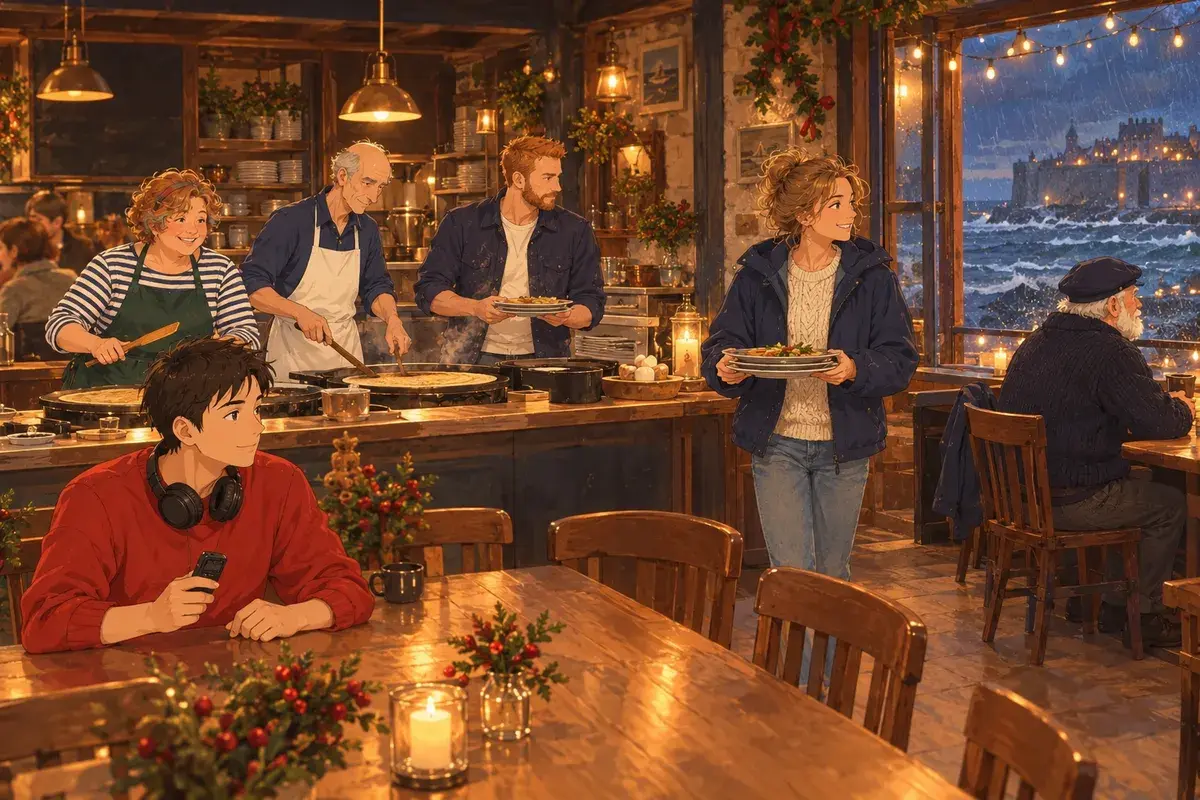
La crêperie « Le Gall » est dans la vieille ville de Saint-Malo, derrière les remparts.
The Le Gall crêpe restaurant is in the old town of Saint-Malo, behind the city walls.
Il est tard, mais on s'installe tous dans la salle : c'est la tradition de la maison, le premier soir, on mange ensemble.
It's late, but we all sit down in the dining room: it's the house tradition; on the first evening, we eat together.

Anne est en train de préparer des galettes avec un œuf et du fromage, et Hugo donne un coup de main à sa mère.
Anne is making galettes with egg and cheese right now, and Hugo is giving his mother a hand.

Loïc propose du cidre à tout le monde. Pour moi, il a gardé du thé : il est discret, mais il pense à tout.
Loïc offers everyone cider. For me, he saved some tea: he's reserved, but he thinks of everything.

Sur la table, il y a une photo de Hugo à cinq ans, avec ses cheveux roux : il est mignon !
On the table, there's a photo of Hugo at age five, with his red hair: he's cute!
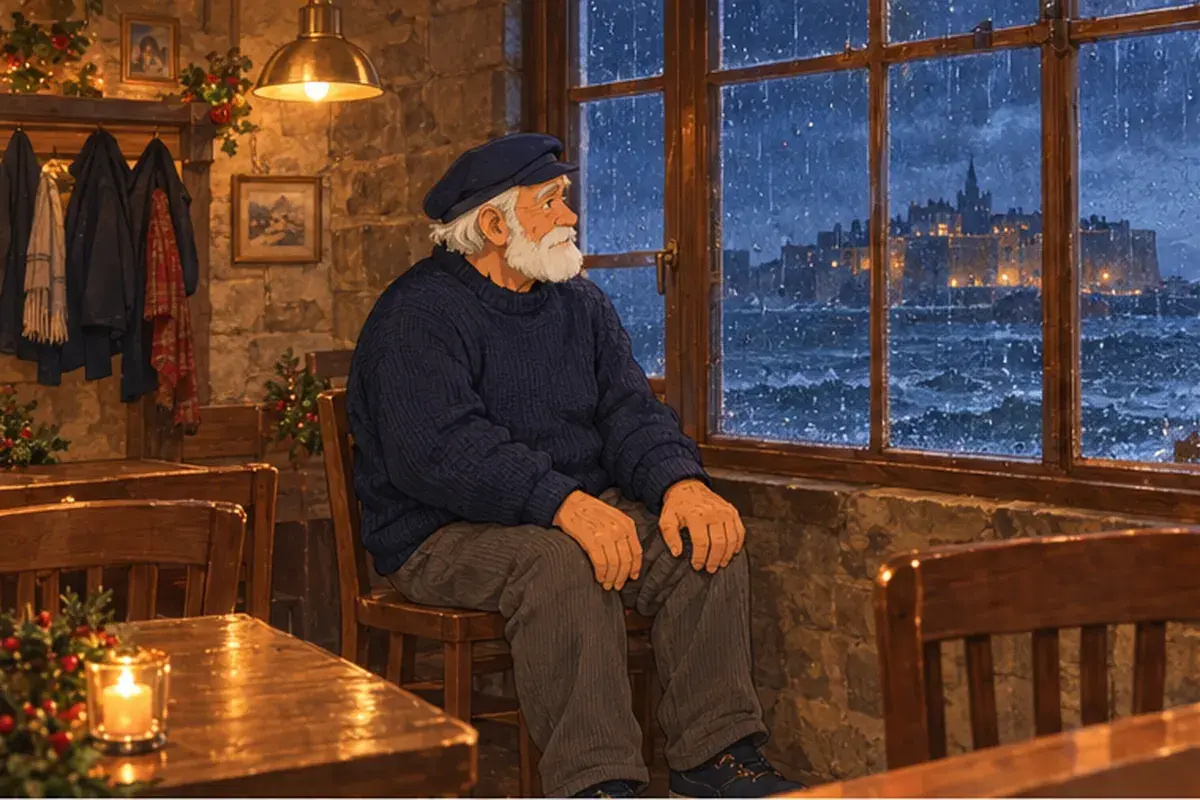
Dans un coin de la salle, Papy Yann est tout seul, à côté de la fenêtre.
In a corner of the room, Papy Yann is all alone, next to the window.
Il a quatre-vingt-quatre ans et des mains énormes. Il a travaillé sur un bateau toute sa vie, mais ce soir, il ne dit pas un mot.
He's eighty-four and has huge hands. He worked on a boat all his life, but tonight, he doesn't say a word.
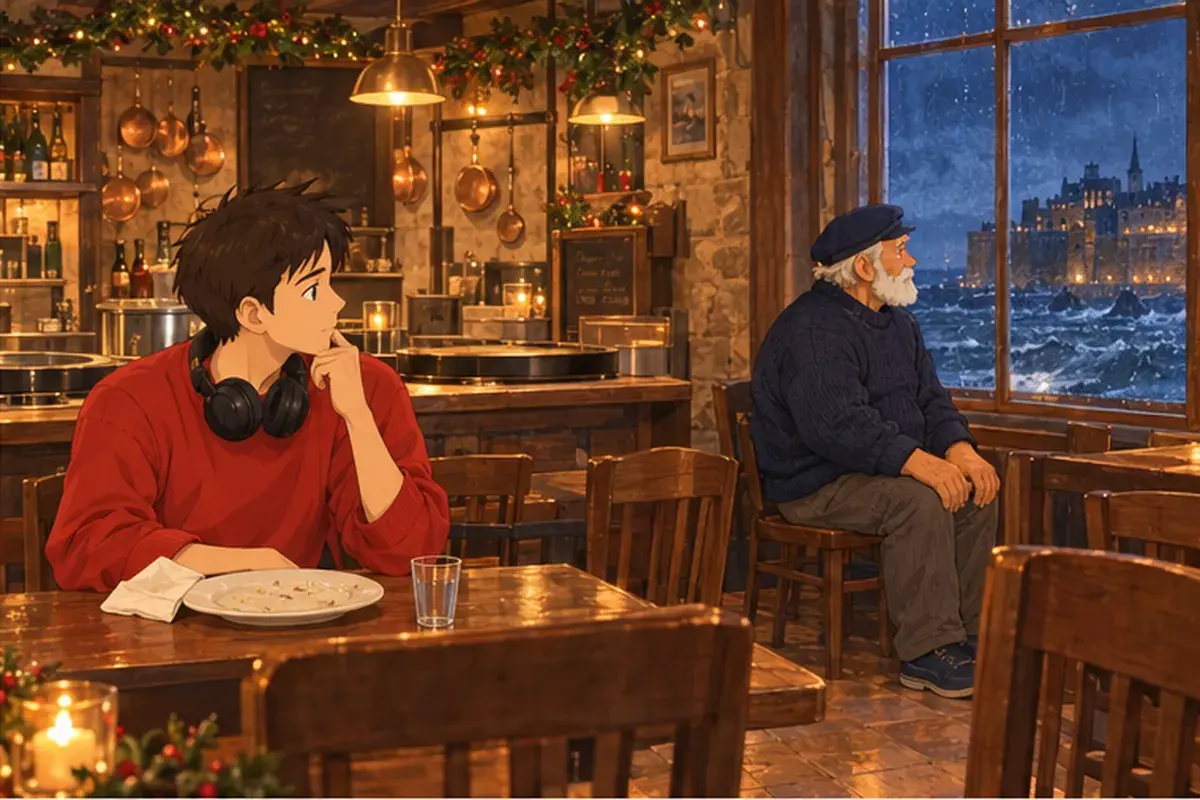
Chez moi, les grands-parents gardent les enfants et racontent des histoires. Ici, c'est pareil, mais Papy Yann, lui, ne parle pas.
Back home, grandparents look after the children and tell stories. It's the same here, but Papy Yann, he doesn't talk.

Son regard est calme et curieux : il observe mon dictaphone, mon casque et mon micro.
His gaze is calm and curious: he's observing my voice recorder, my headphones and my mic.

Par la fenêtre, on entend la mer : la marée monte, et l'eau arrive jusqu'au rempart.
Through the window, we can hear the sea: the tide is coming in, and the water reaches the city wall.

Alors je mets le micro au bord de la fenêtre : je suis en train d'enregistrer la mer.
So I put the mic on the edge of the window: I'm recording the sea right now.

Je suis tellement fatigué, mais cet endroit est incroyable : tout est proche, la crêperie, l'église, la mer, et au loin, une petite île.
I'm so tired, but this place is incredible: everything is close, the crêpe restaurant, the church, the sea, and in the distance, a small island (man speaking).
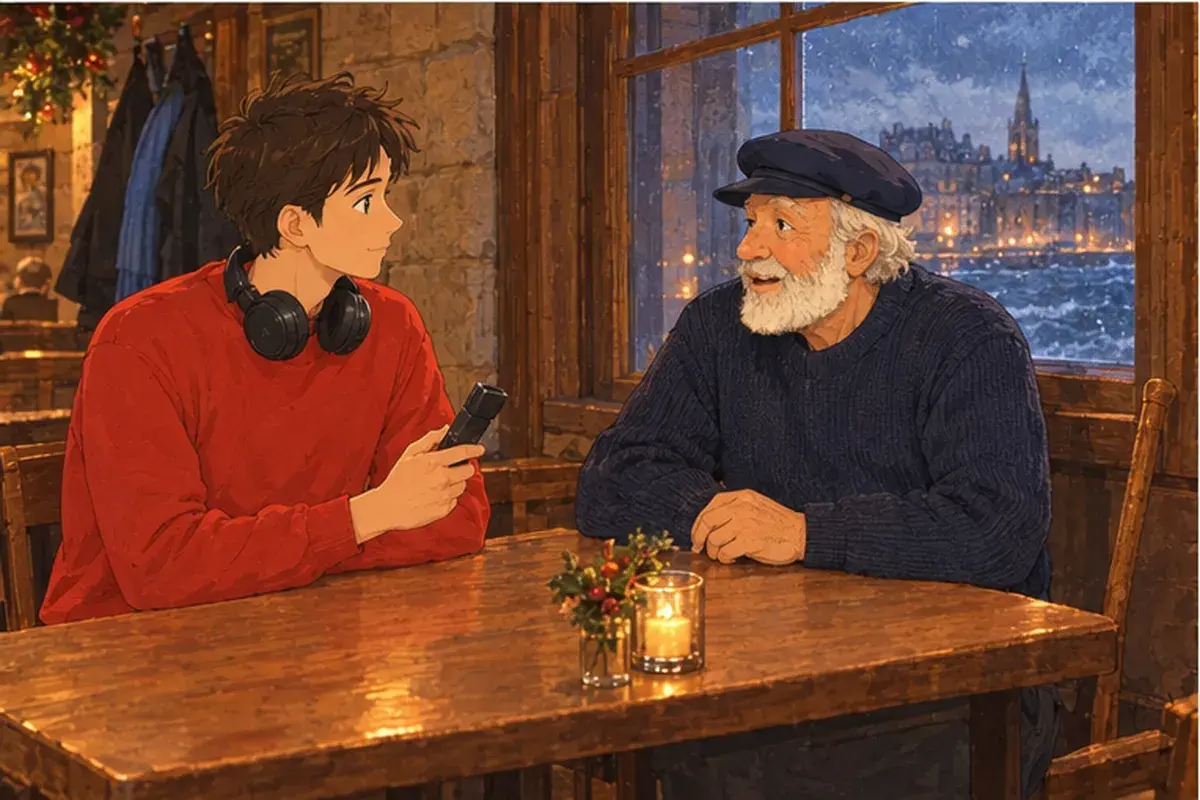
Pendant cinq minutes, Papy Yann et moi, nous ne parlons pas. Ce n'est pas un mauvais silence.
For five minutes, Papy Yann and I don't talk. It isn't a bad silence.
Puis il dit une seule phrase : « La mer parle mieux la nuit. »
Then he says a single sentence: "The sea speaks better at night."

Il parle lentement, alors je comprends tout. Hugo est fier de son grand-père.
He speaks slowly, so I understand everything. Hugo is proud of his grandfather.

Sur mon dictaphone, il y a maintenant trois choses : la mer, un silence et une phrase.
On my voice recorder, there are now three things: the sea, a silence and a sentence.
Grammar for this text
- Je suis en train d'enregistrer la mer — être en train de + infinitive: "I'm recording right now". de becomes d' before a vowel (see the unit grammar). The same in Anne est en train de préparer des galettes.
- Pour moi, il a gardé du thé — a gardé is the passé composé (the main past tense) with avoir (A1, unit 15); garder — to keep, to save for someone. In les grands-parents gardent les enfants the same verb means "to look after"; gardent sounds like garde: the -ent ending is silent.
- il pense à tout, Tout est proche, Papy Yann est tout seul — penser à — to think of, to think about; tout in the first two means "everything" ("he thinks of everything", "everything is close"), and in tout seul it means "completely" ("all alone").
- il ne dit pas un mot — "he doesn't say a word". pas un after ne — not a single.
- quatre-vingt-quatre ans — 84: quatre-vingt (eighty, literally "four twenties"; it ends in s only when it's a round number, quatre-vingts) + quatre.
- je mets le micro, il dit une seule phrase — mets is the je form of mettre (to put), dit is the il form of dire (to say); the final -t of dit is silent.
- La mer parle mieux la nuit — "the sea speaks better at night". mieux — better, with a verb (as in ça va mieux — I'm feeling better).
Words and grammar of the unit: Meet a friend's family.
Learn the words from the texts with flashcards
In the app, you can tap any word in a text to see its translation, forms and examples, and new words stick with flashcards. 15 minutes a day.
Start for freeEverything is open for free. No card needed to sign up.