

French dialogue with translation · A2 · 16 lines
Merci pour le cadeau, c'est magnifique ! Thank you for the gift, it's magnificent!
Comic · 16 panels
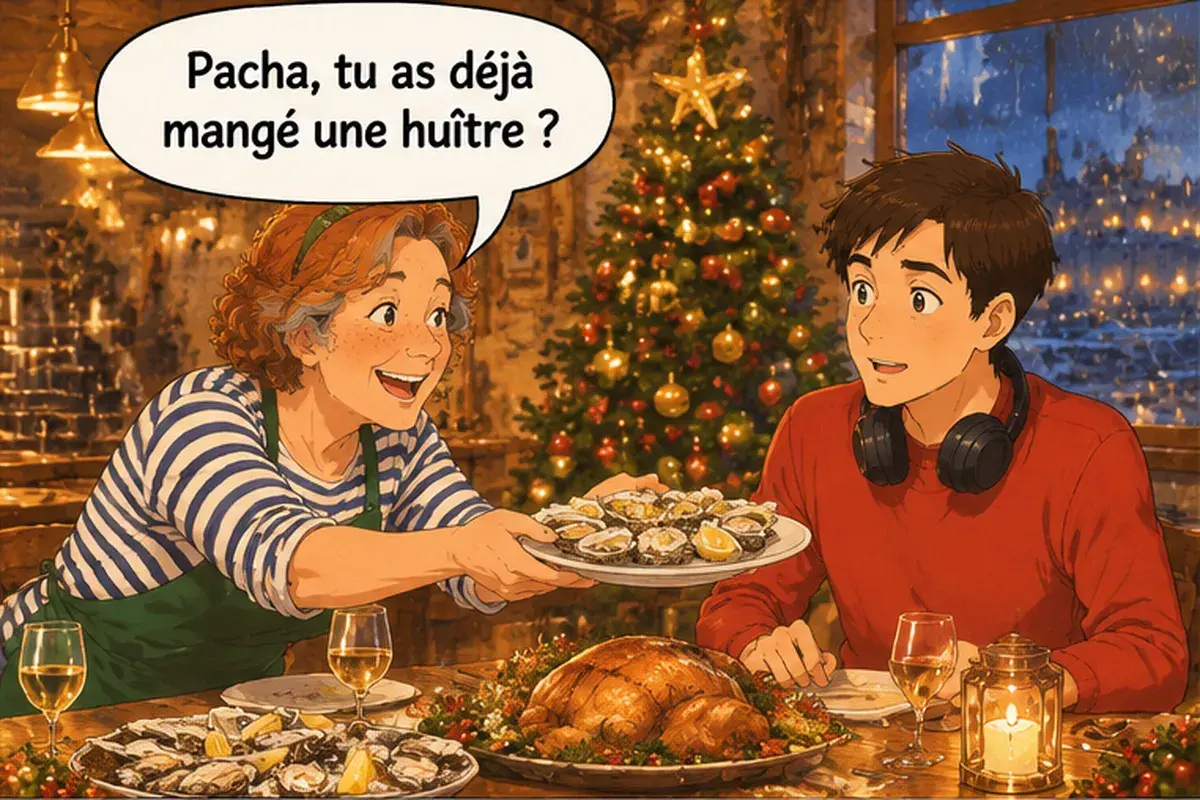
- Anne
Pacha, tu as déjà mangé une huître ?
Pacha, have you ever eaten an oyster?
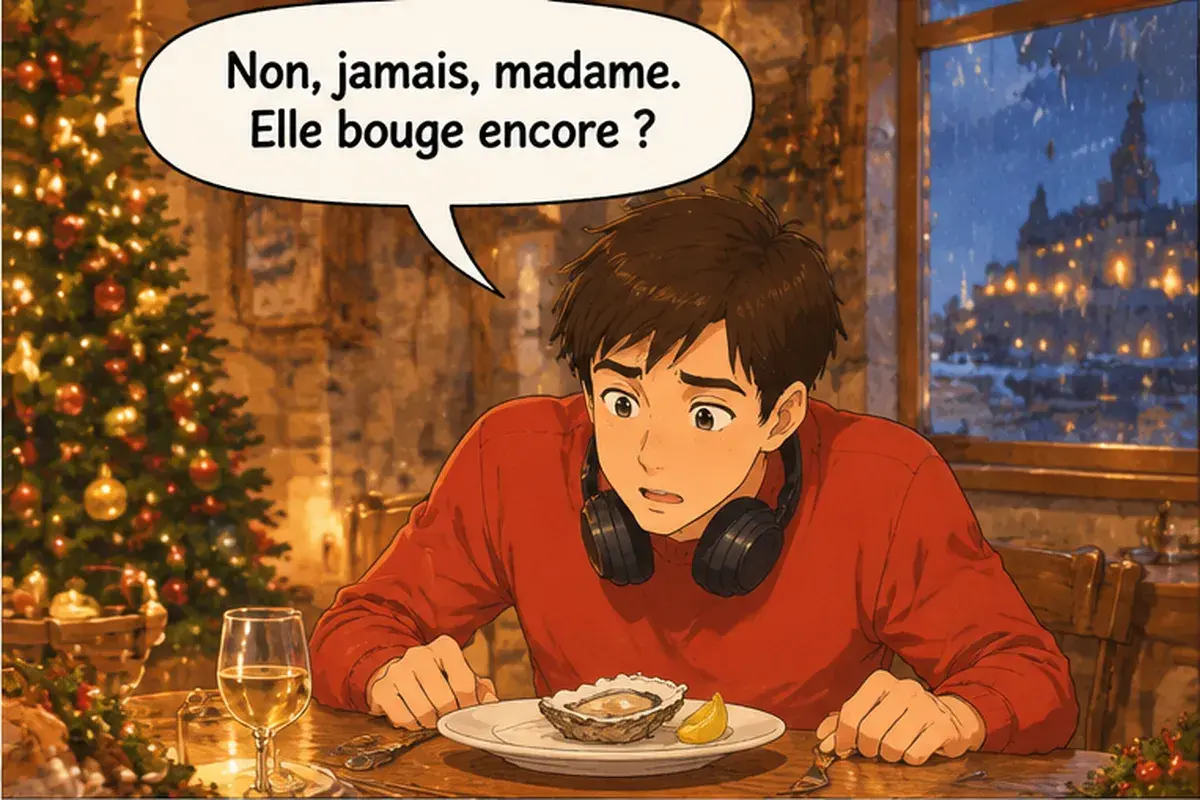
- Pacha
Non, jamais, madame. Elle bouge encore ?
No, never, ma'am. Is it still moving?
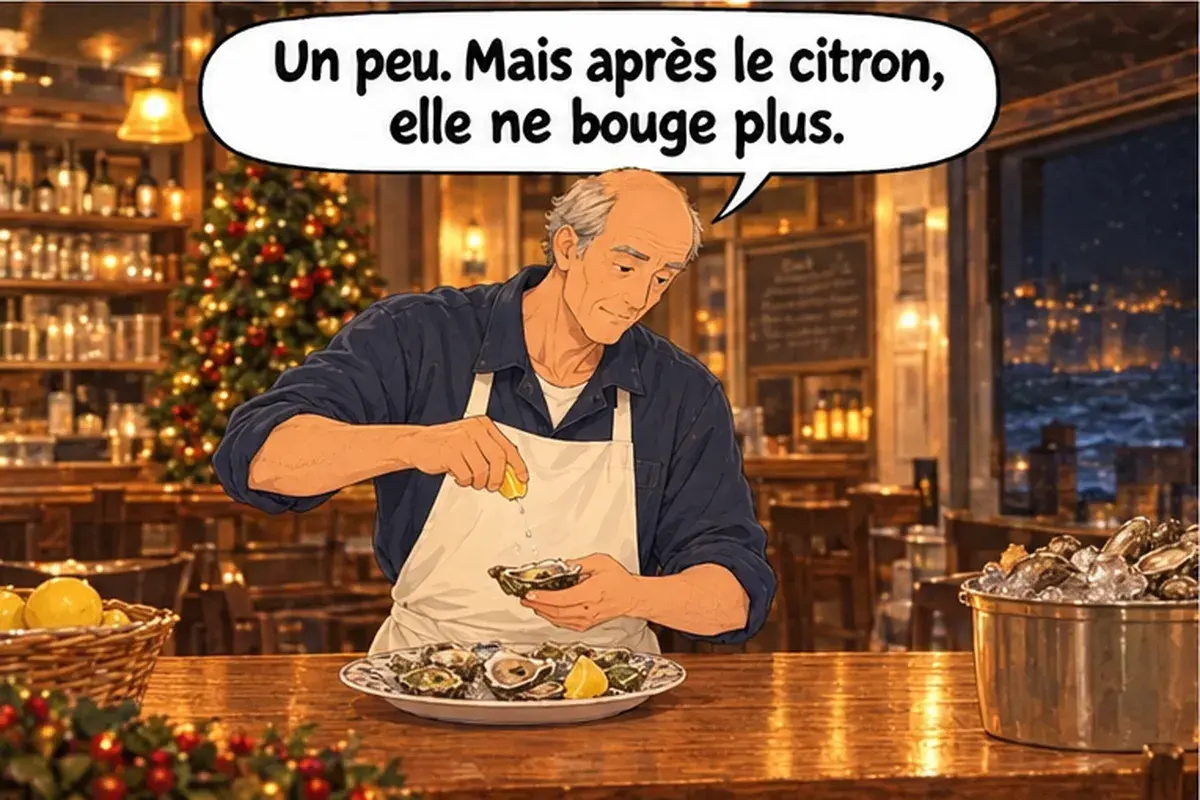
- Loïc
Un peu. Mais après le citron, elle ne bouge plus.
A little. But after the lemon, it doesn't move anymore.

- Hugo
Moi, je ne mange pas d'huîtres. Mais le citron est excellent.
I don't eat oysters myself. But the lemon is excellent.
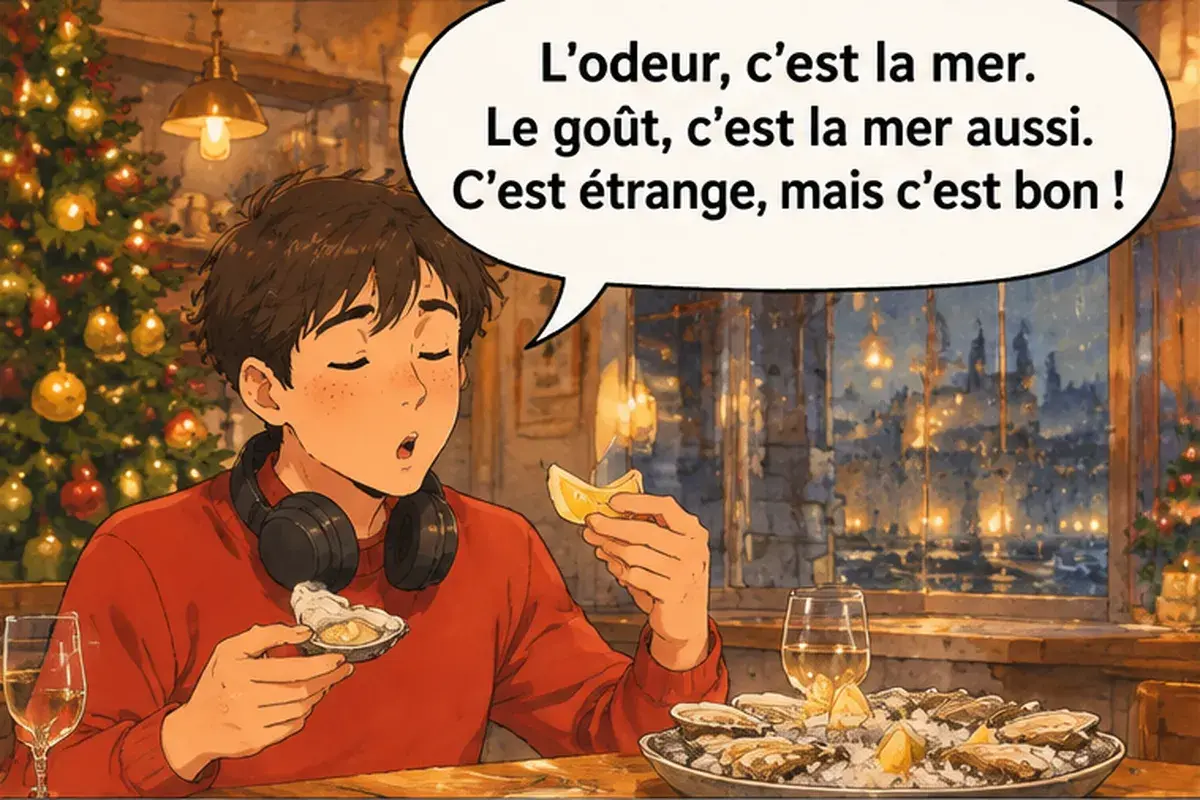
- Pacha
L'odeur, c'est la mer. Le goût, c'est la mer aussi. C'est étrange, mais c'est bon !
The smell is the sea. The taste is the sea too. It's strange, but it's good!
- Maëlle
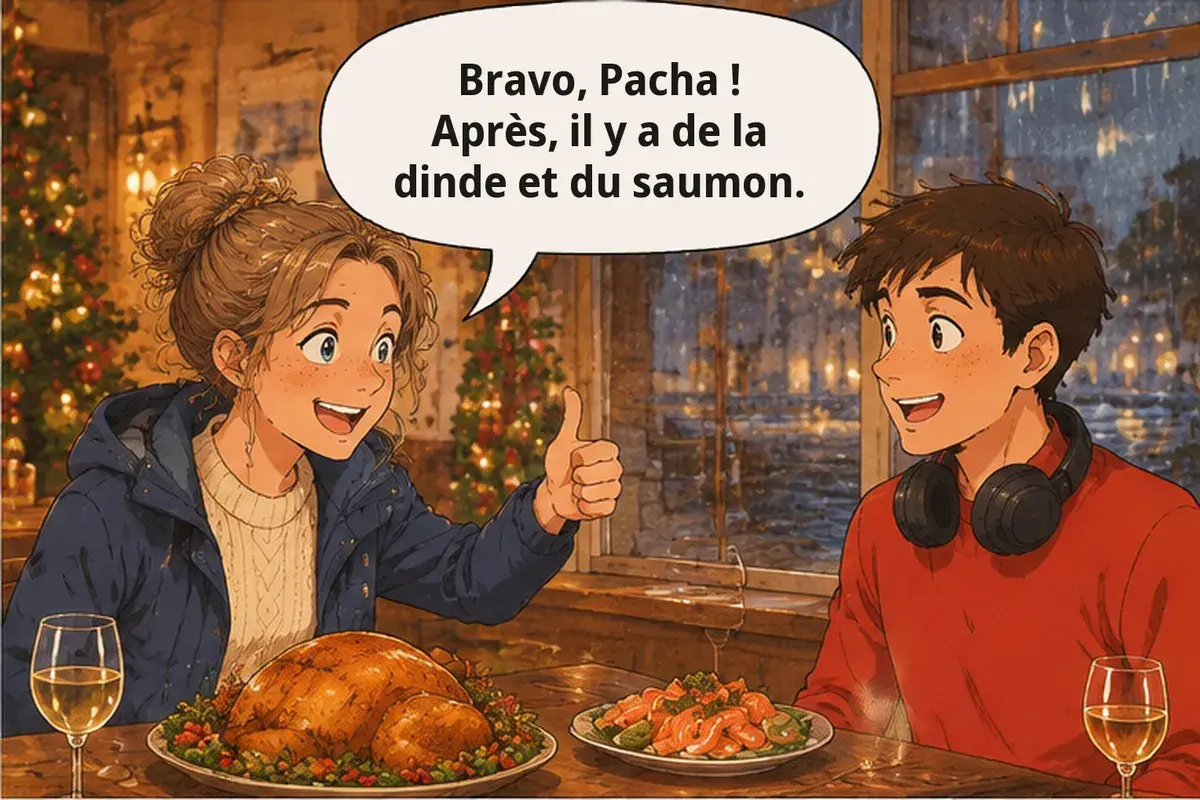
Bravo, Pacha ! Après, il y a de la dinde et du saumon.
Bravo, Pacha! After that, there's turkey and salmon.
- Pacha
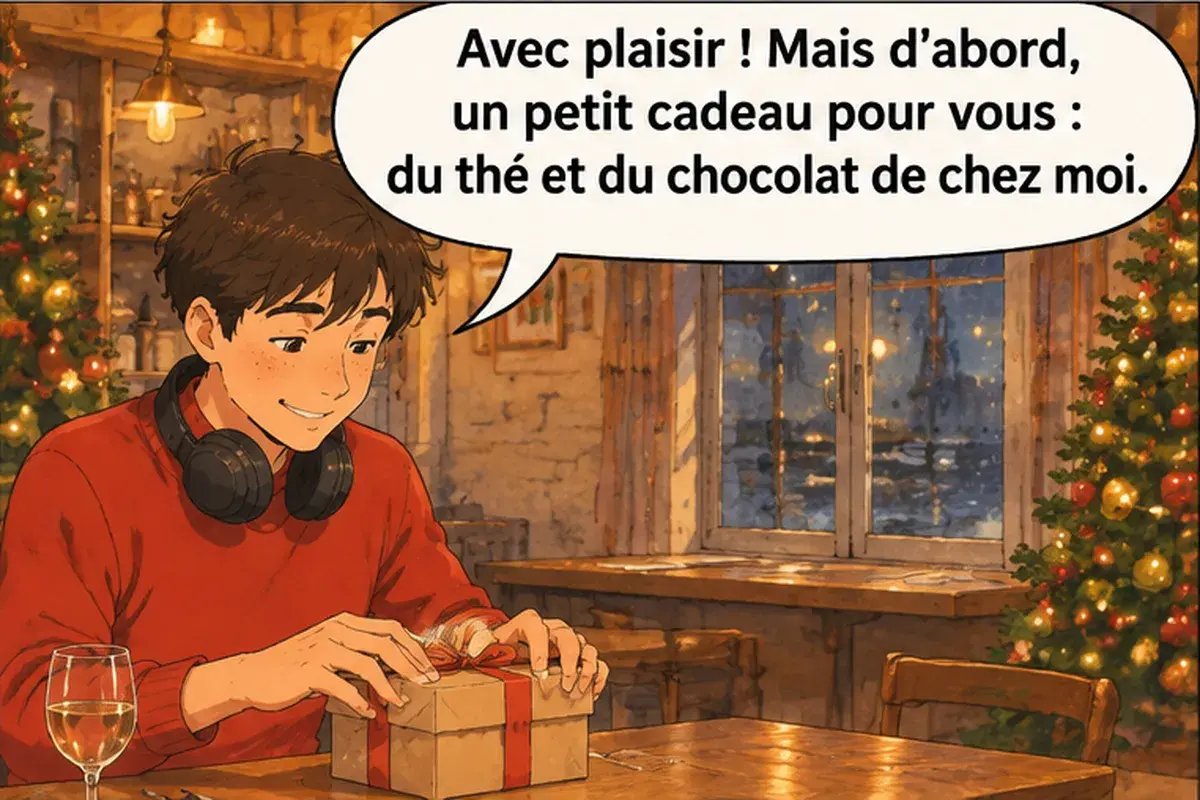
Avec plaisir ! Mais d'abord, un petit cadeau pour vous : du thé et du chocolat de chez moi.
With pleasure! But first, a little gift for you: tea and chocolate from back home. (to several people)
- Anne
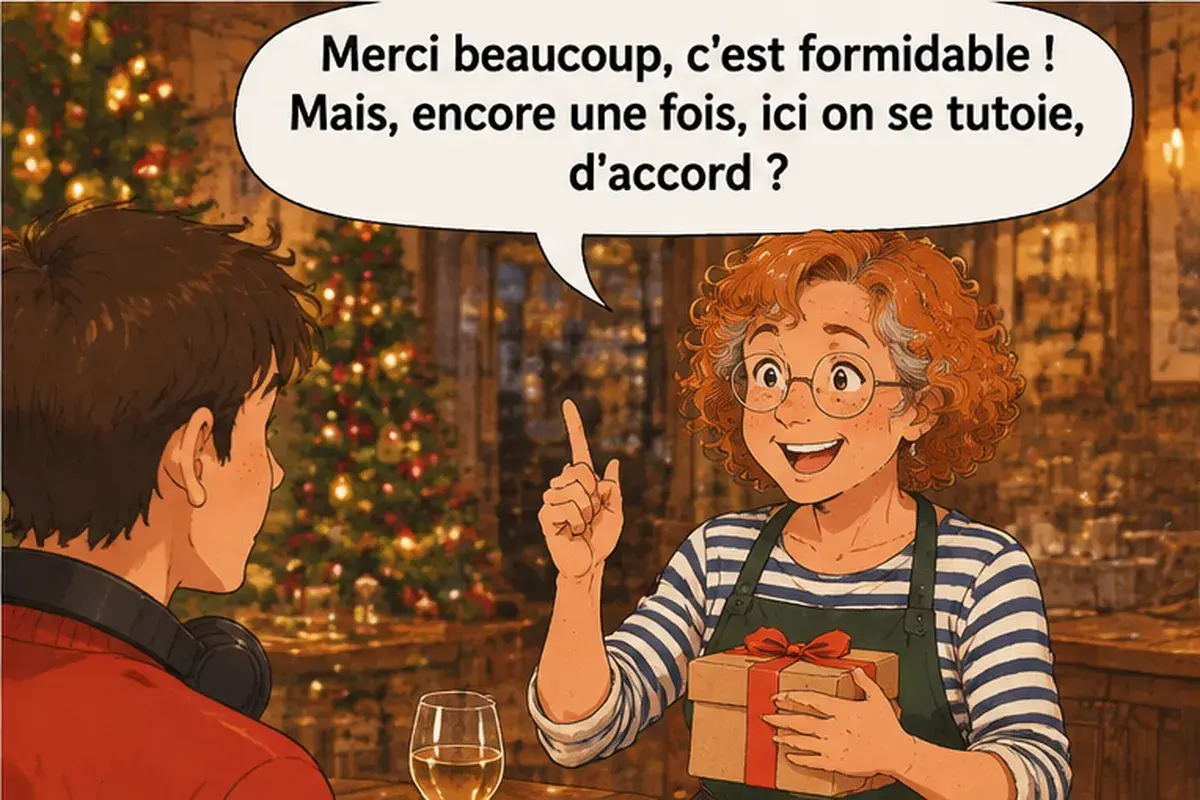
Merci beaucoup, c'est formidable ! Mais, encore une fois, ici on se tutoie, d'accord ?
Thank you very much, it's terrific! But once again, here we use tu with each other, OK?
- Pacha
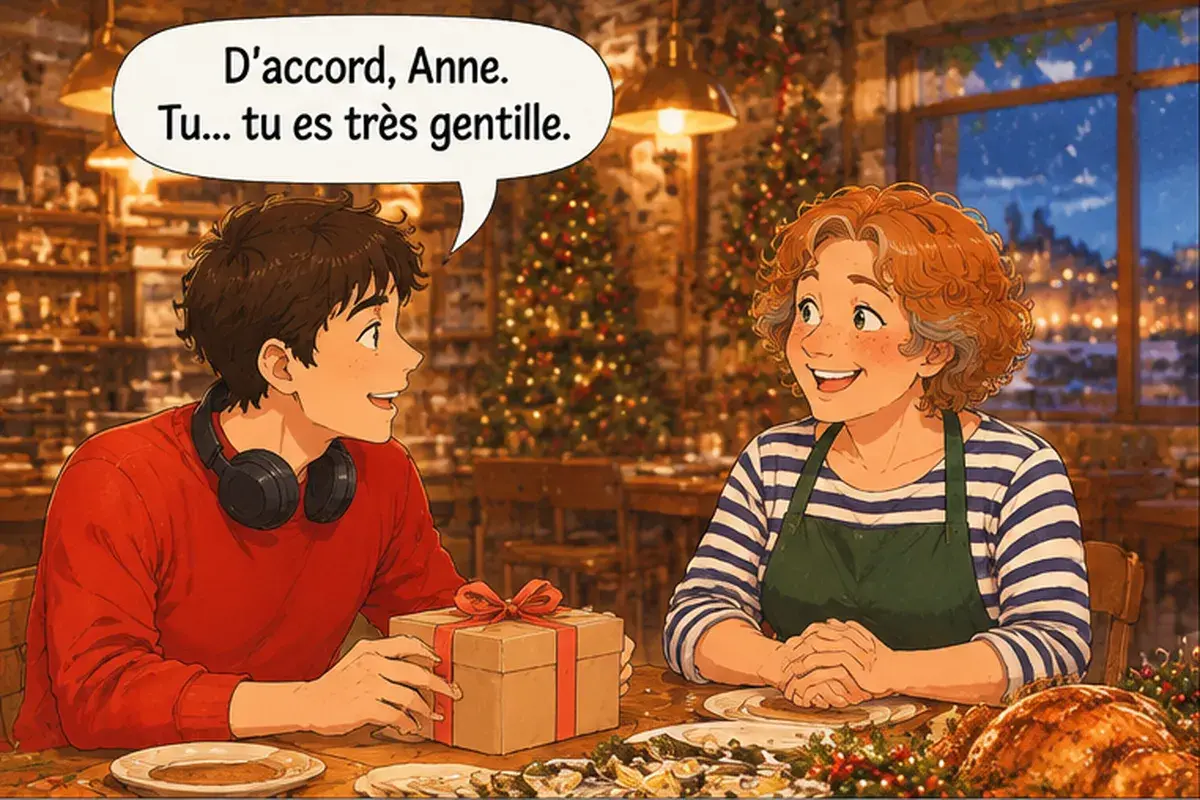
D'accord, Anne. Tu... tu es très gentille.
OK, Anne. You... you're very kind.
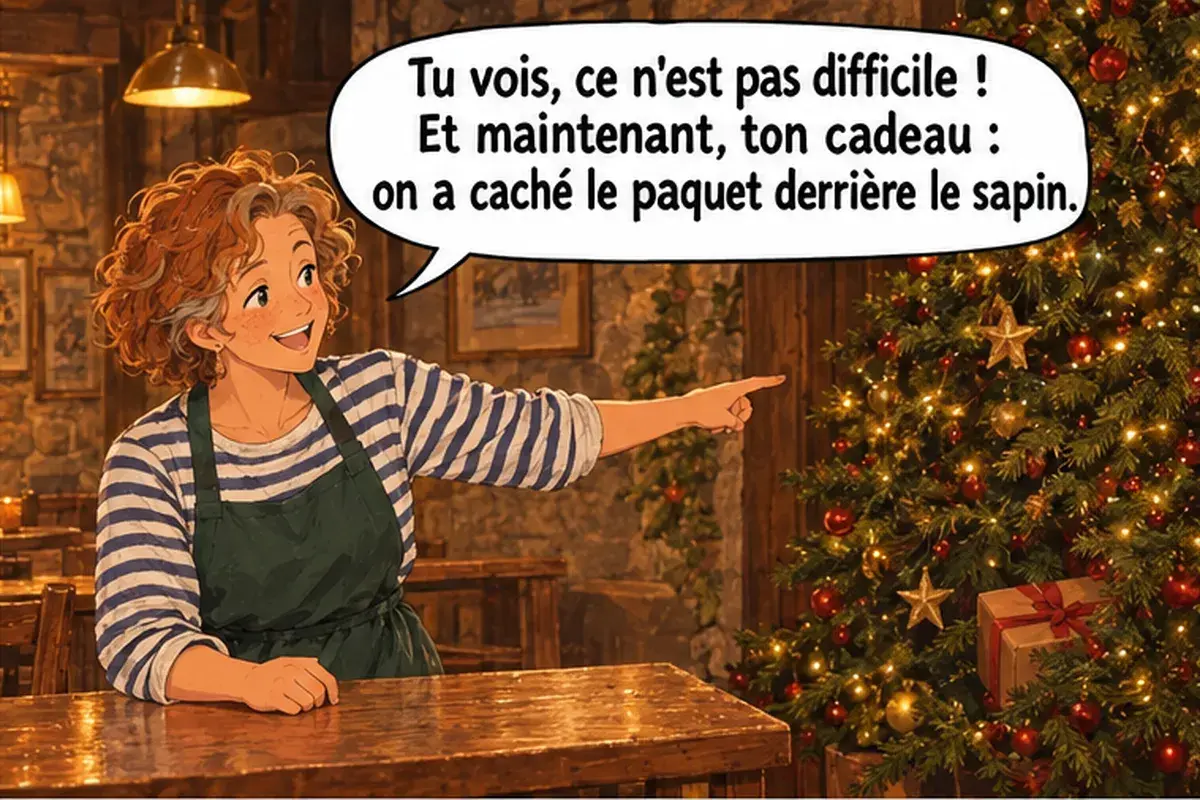
- Anne
Tu vois, ce n'est pas difficile ! Et maintenant, ton cadeau : on a caché le paquet derrière le sapin.
You see, it's not hard! And now, your gift: we hid the package behind the Christmas tree.
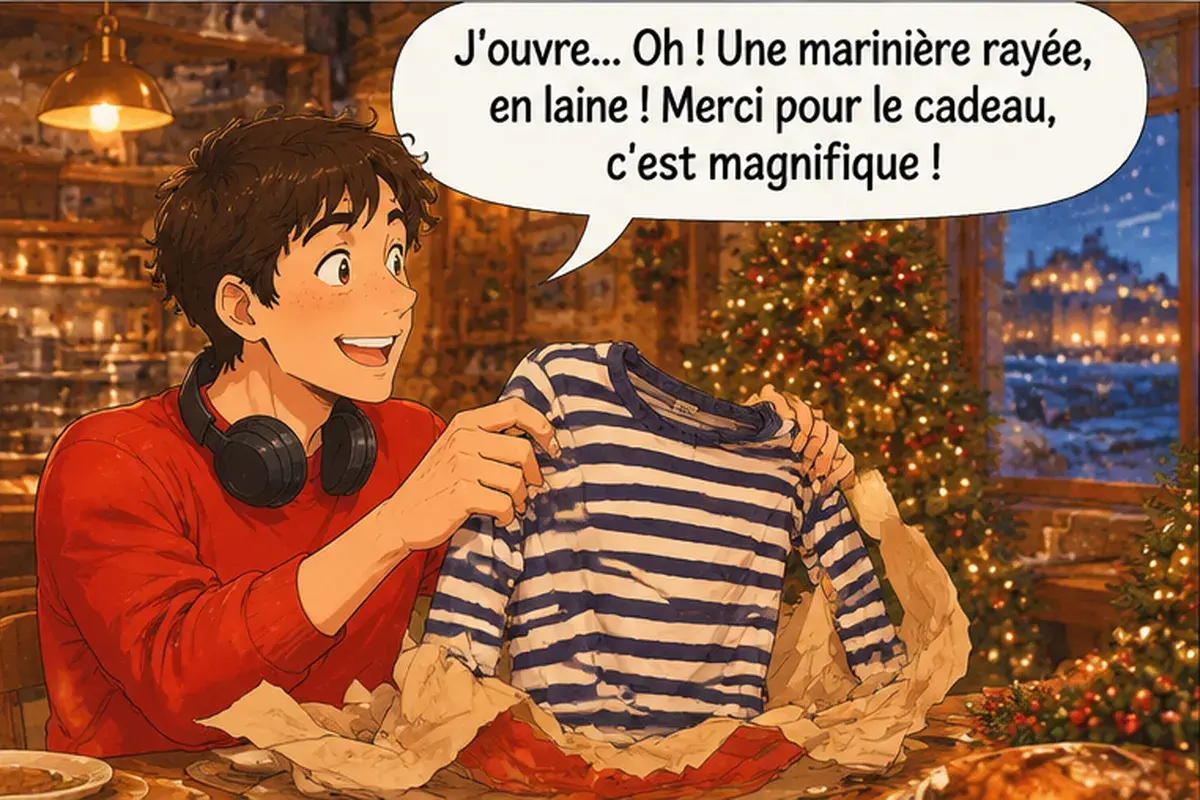
- Pacha
J'ouvre... Oh ! Une marinière rayée, en laine ! Merci pour le cadeau, c'est magnifique !
I'm opening it... Oh! A striped Breton shirt, made of wool! Thank you for the gift, it's magnificent!
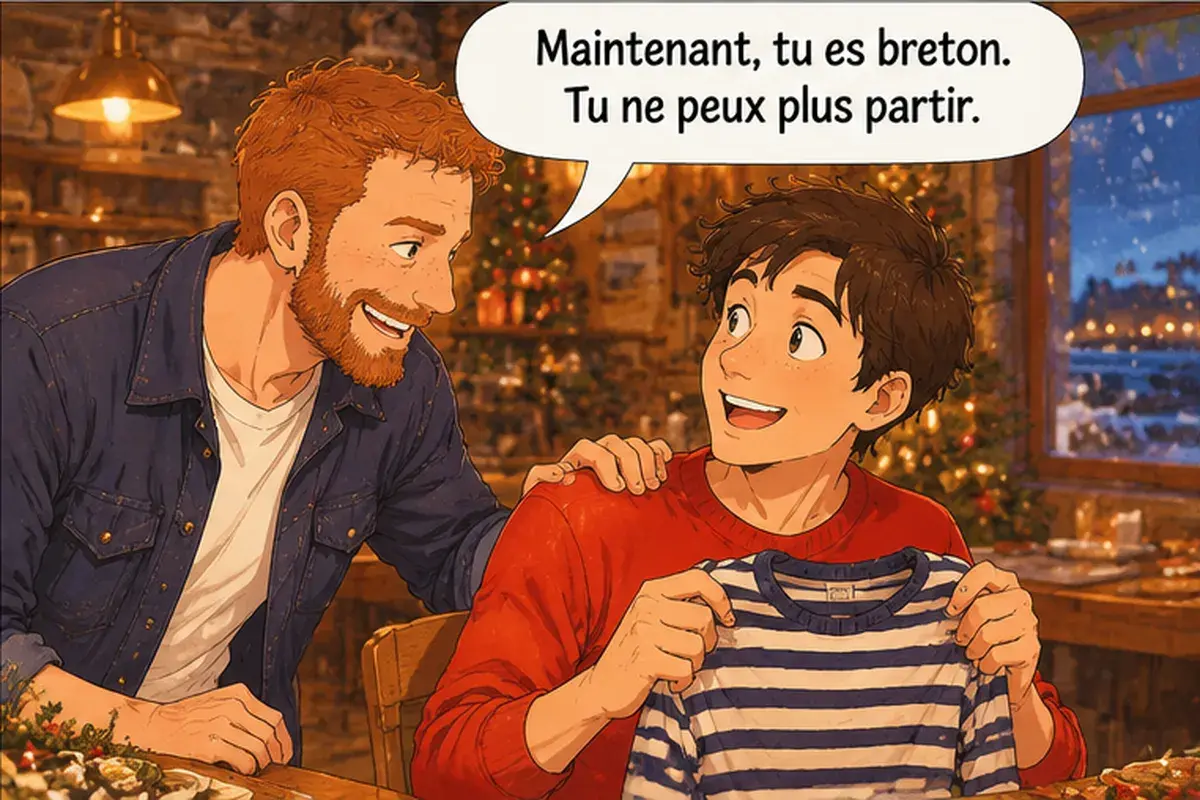
- Hugo
Maintenant, tu es breton. Tu ne peux plus partir.
Now you're Breton (to a man). You can't leave anymore.
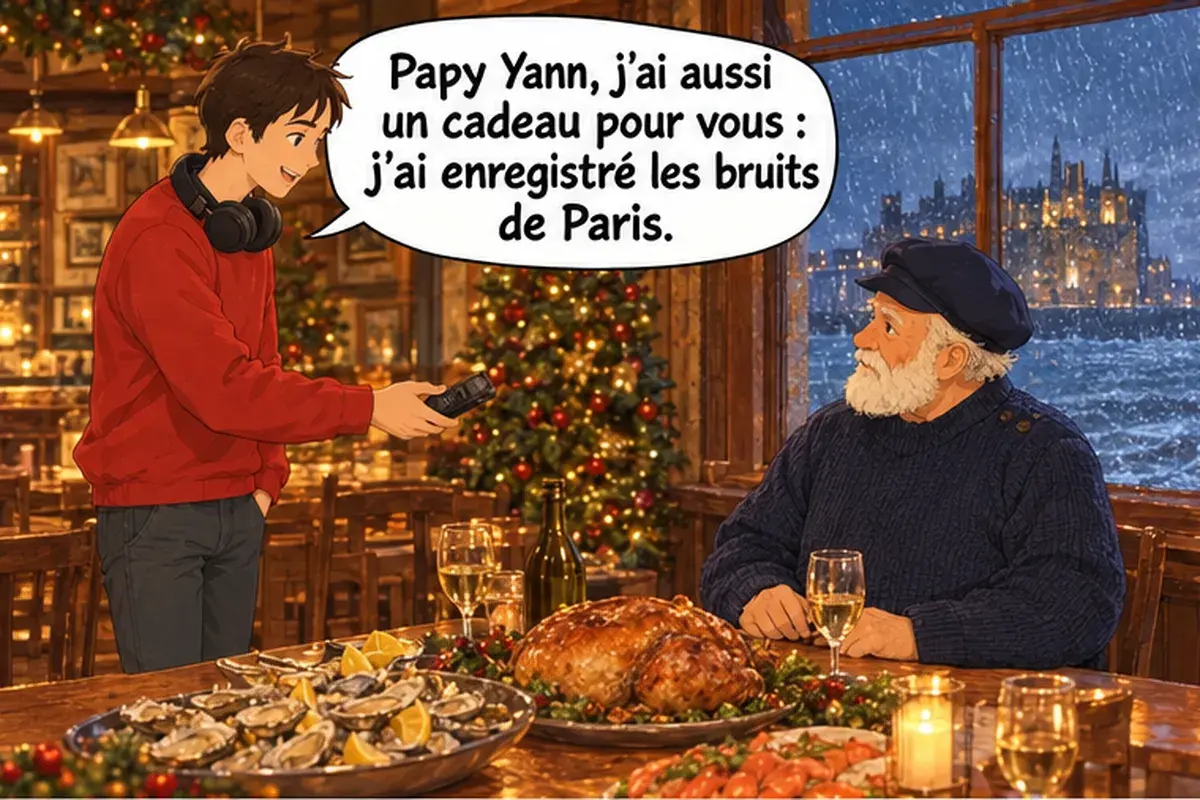
- Pacha
Papy Yann, j'ai aussi un cadeau pour vous : j'ai enregistré les bruits de Paris.
Papy Yann, I have a gift for you too: I recorded the sounds of Paris. (formal)
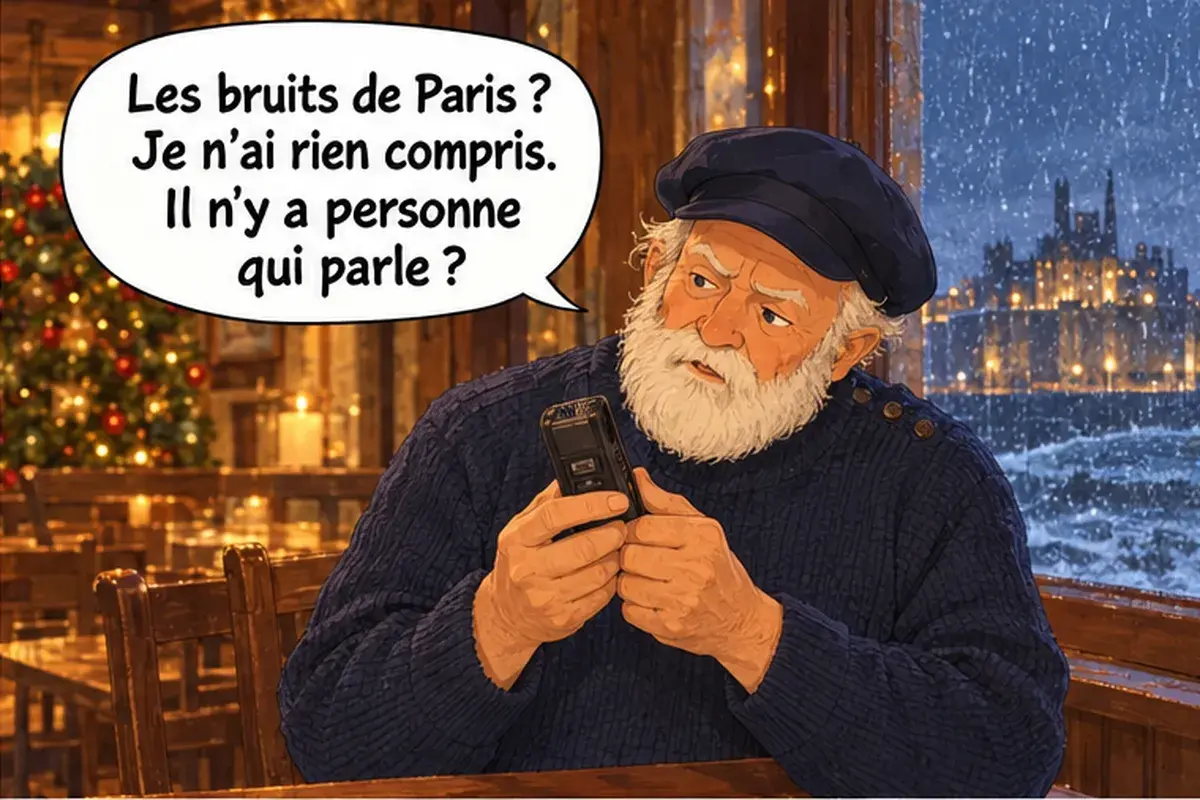
- Papy Yann
Les bruits de Paris ? Je n'ai rien compris. Il n'y a personne qui parle ?
The sounds of Paris? I didn't understand anything. There's no one talking?
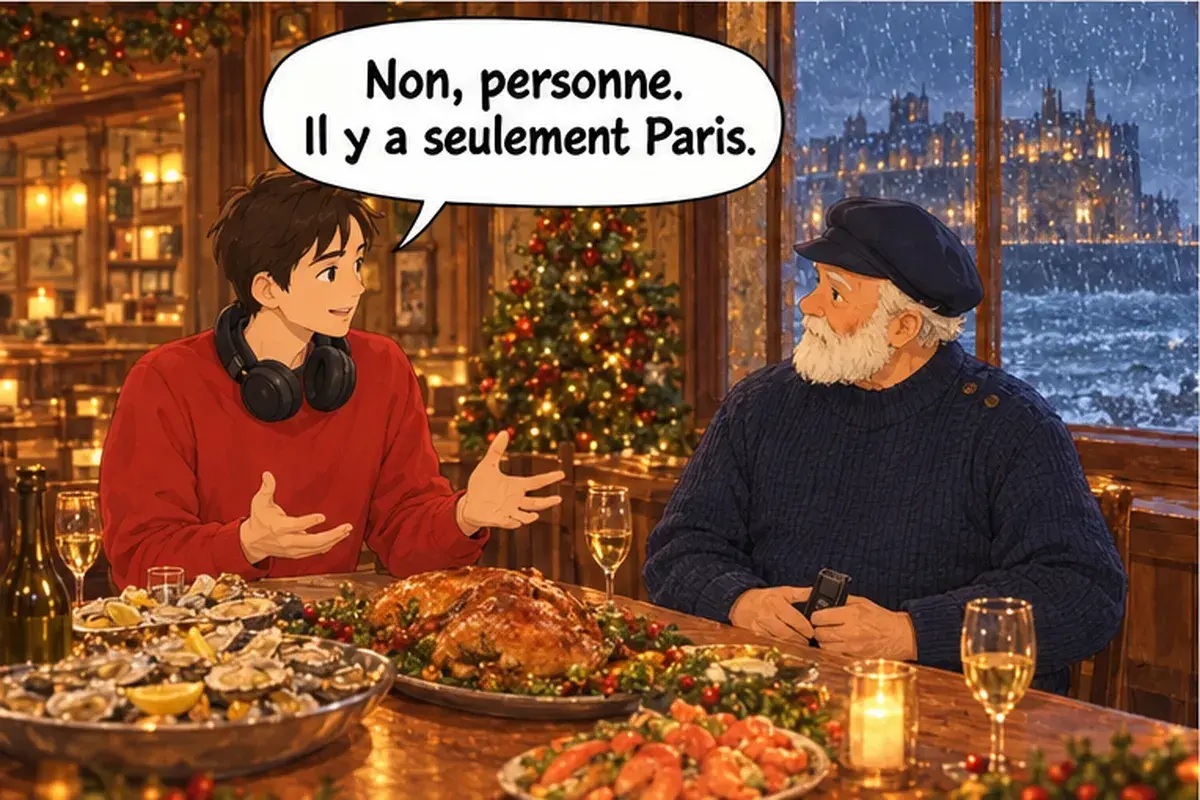
- Pacha
Non, personne. Il y a seulement Paris.
No, no one. There's only Paris.
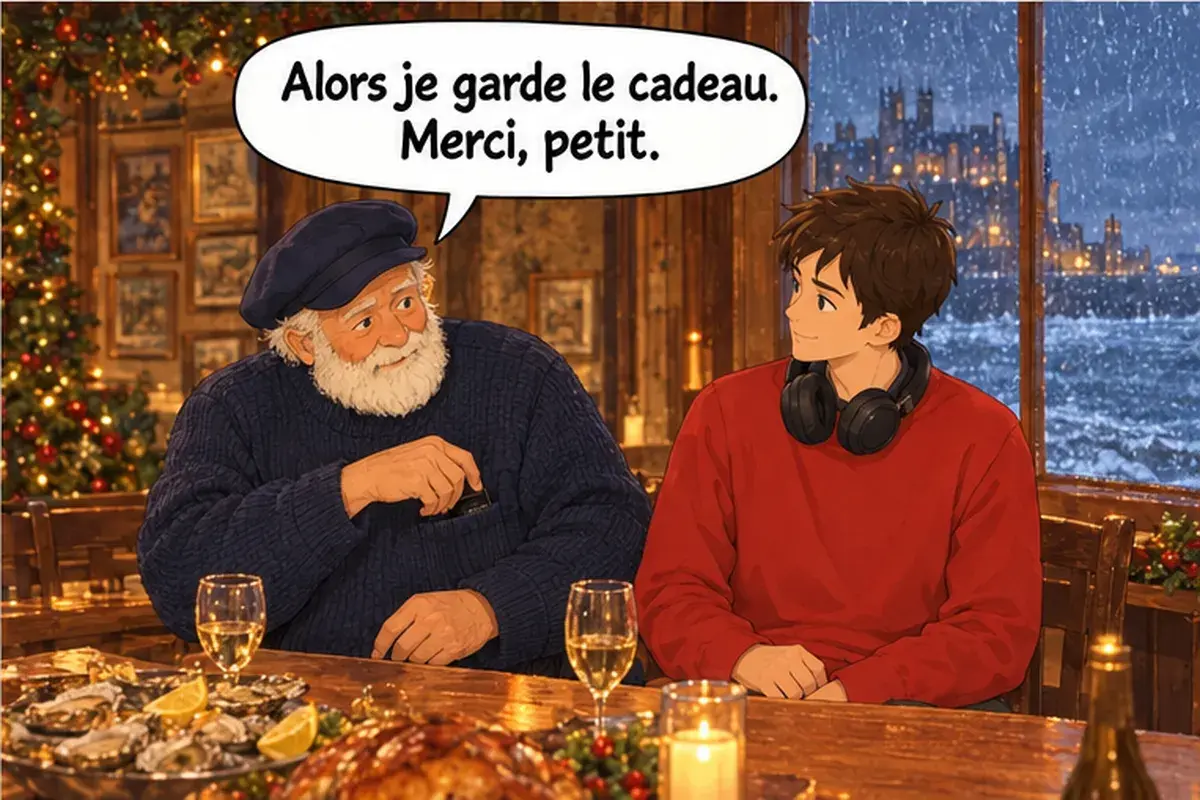
- Papy Yann
Alors je garde le cadeau. Merci, petit.
Then I'll keep the gift. Thanks, kid.
Grammar for this text
- Tu as déjà mangé une huître ? — "have you ever eaten an oyster?". as + mangé is the passé composé with avoir, and déjà (already, here "ever") goes between as and mangé. A short answer: Non, jamais — "no, never".
- Elle ne bouge plus. — "it's not moving anymore". ne… plus means "not anymore": ne before the verb, plus after it. bouge is from the verb bouger (to move); it's elle because huître is feminine.
- on se tutoie — "we use tu with each other". A set phrase: on here means "we", and se tutoyer means "to use tu with each other". It's a reciprocal verb (more on these in B1). Anne asks Pacha to switch to tu, and he answers: D'accord.
- on a caché le paquet derrière le sapin — "we hid the package behind the Christmas tree". on a caché is the passé composé with avoir: cacher → caché. on a here means "we".
- j'ai enregistré les bruits de Paris — "I recorded the sounds of Paris". enregistré is the past participle of enregistrer (to record), with the ending -é.
- Je n'ai rien compris. — "I didn't understand anything". rien goes before the past participle, between ai and compris (comprendre → compris).
- Il n'y a personne qui parle ? — literally "there's no one who's talking?". With ne in the sentence, personne means "no one", not "a person".
Words and grammar of the unit: Thank someone for a gift.
Learn the words from the texts with flashcards
In the app, you can tap any word in a text to see its translation, forms and examples, and new words stick with flashcards. 15 minutes a day.
Start for freeEverything is open for free. No card needed to sign up.