
French story with translation · A2 · 16 lines
Il y a deux heures, j'étais un homme heureux Two hours ago, I was a happy man
Comic · 16 panels
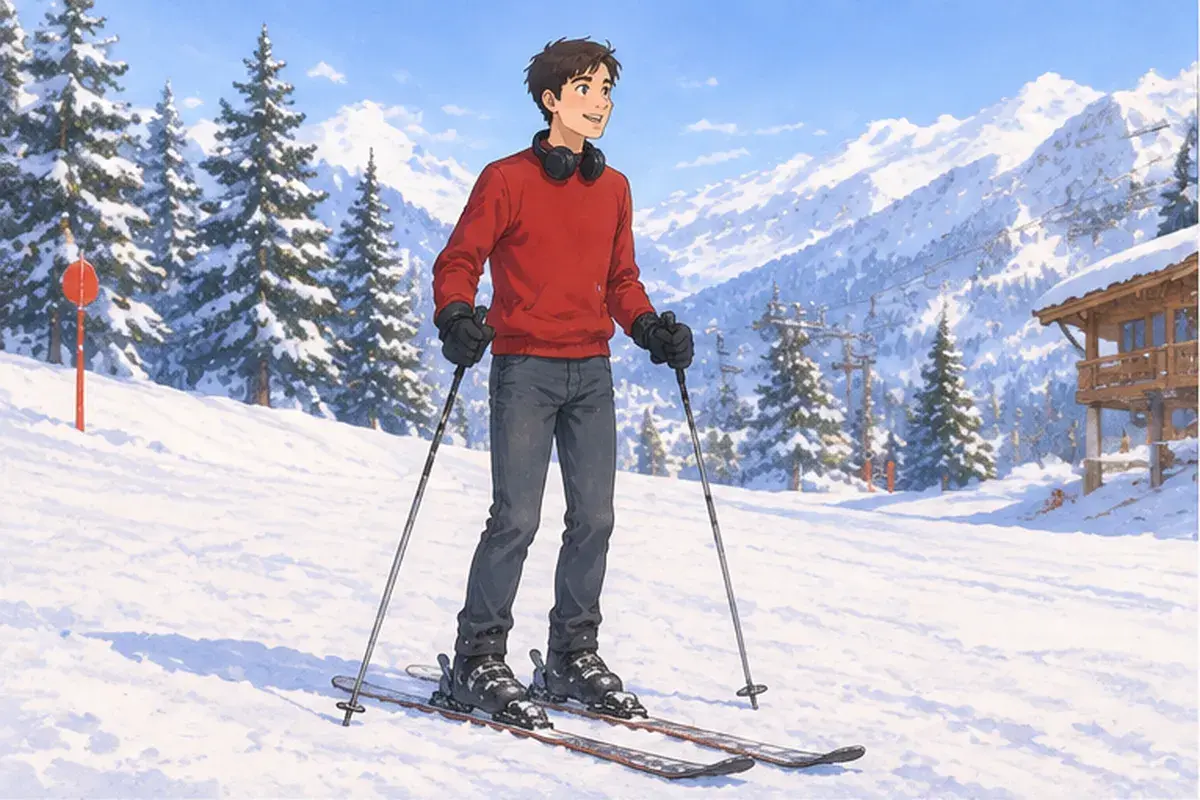
Il y a deux heures, j'étais un homme heureux. J'avais des skis, des gants et un masque.
Two hours ago, I was a happy man. I had skis, gloves and goggles.
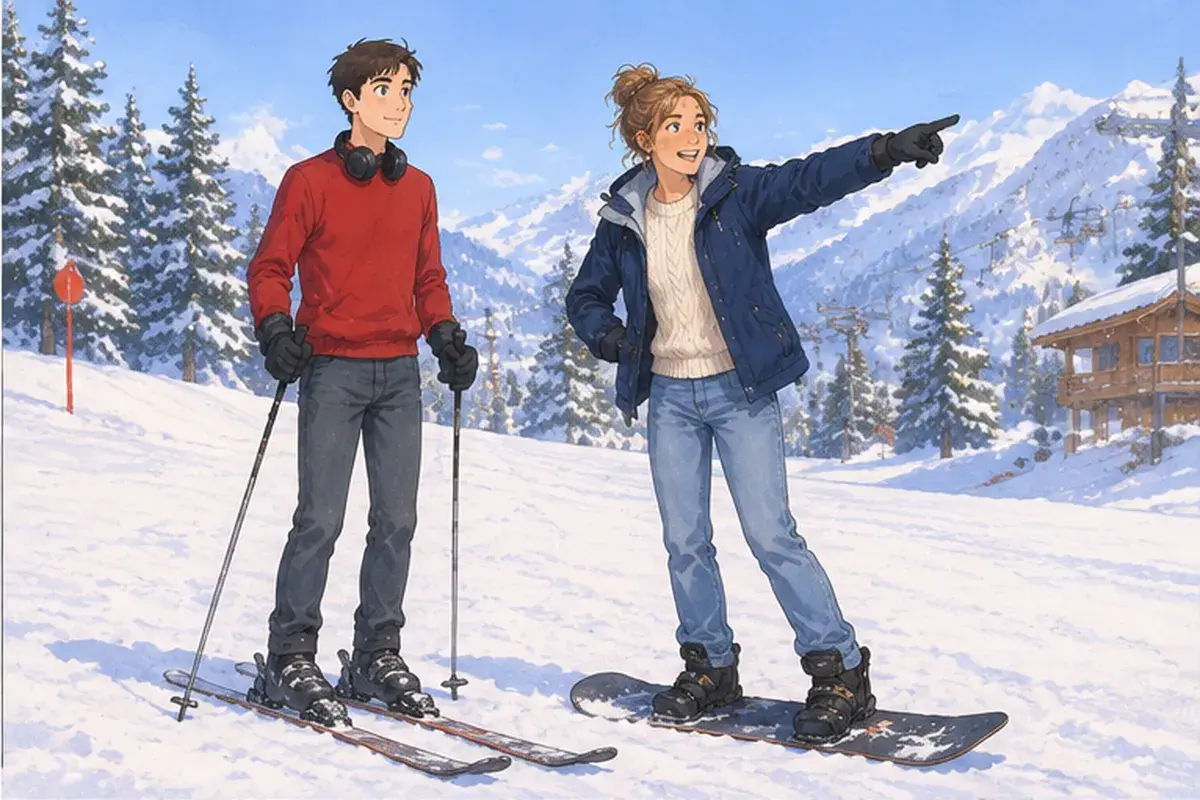
Maëlle m'a emmené en haut de la piste pour les débutants. Je respirais bien et je me sentais fort.
Maëlle took me to the top of the beginners' slope. I was breathing well and I felt strong (man speaking).
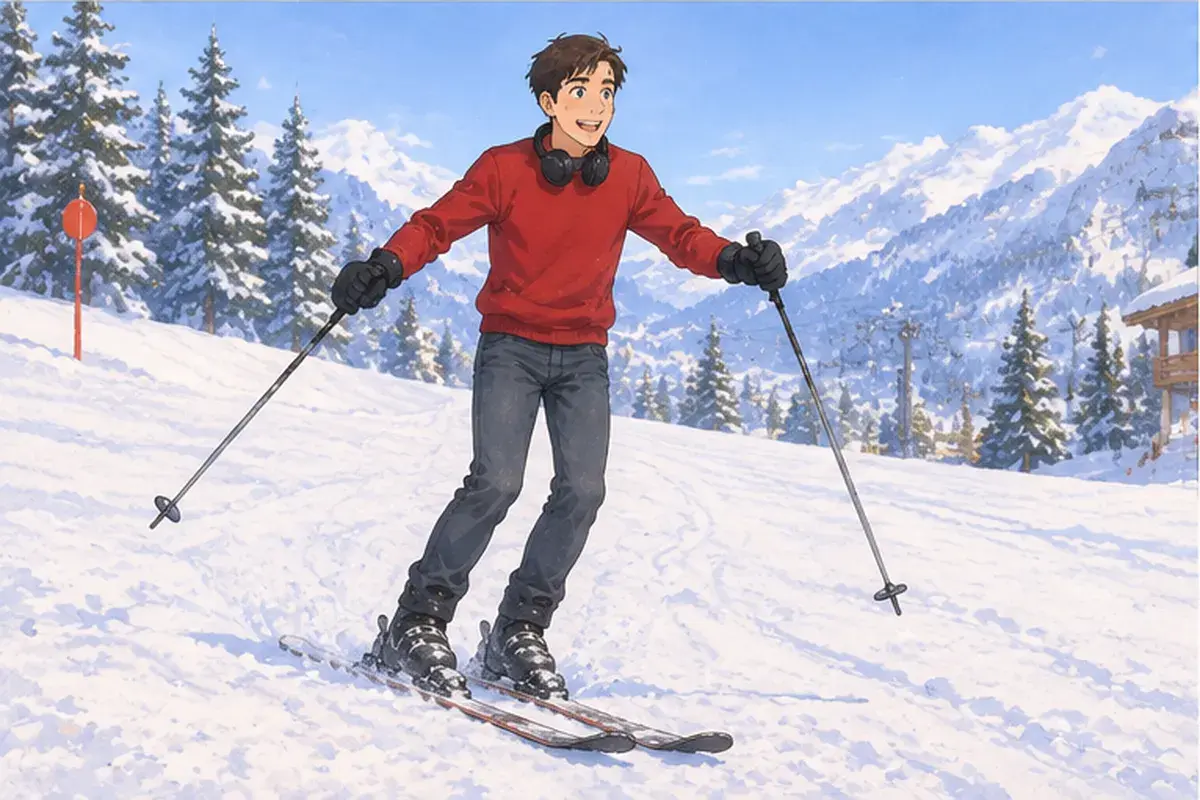
Je suis resté debout pendant une minute. Pour un débutant, c'est très bien.
I stayed on my feet for a minute (man speaking). For a beginner, that's very good.
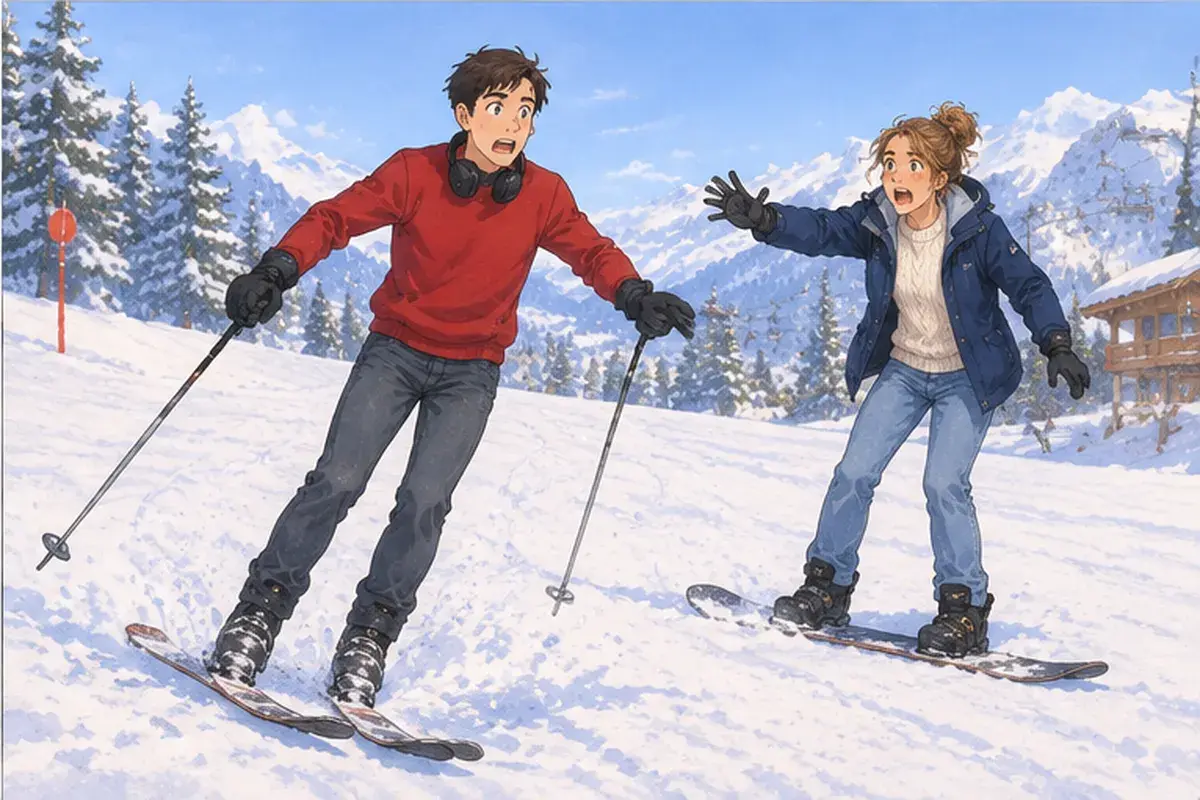
Après, mes skis ont glissé. Maëlle m'a dit : « Tourne ! », mais je ne sais pas tourner.
Then my skis slid. Maëlle told me, "Turn!" but I don't know how to turn.
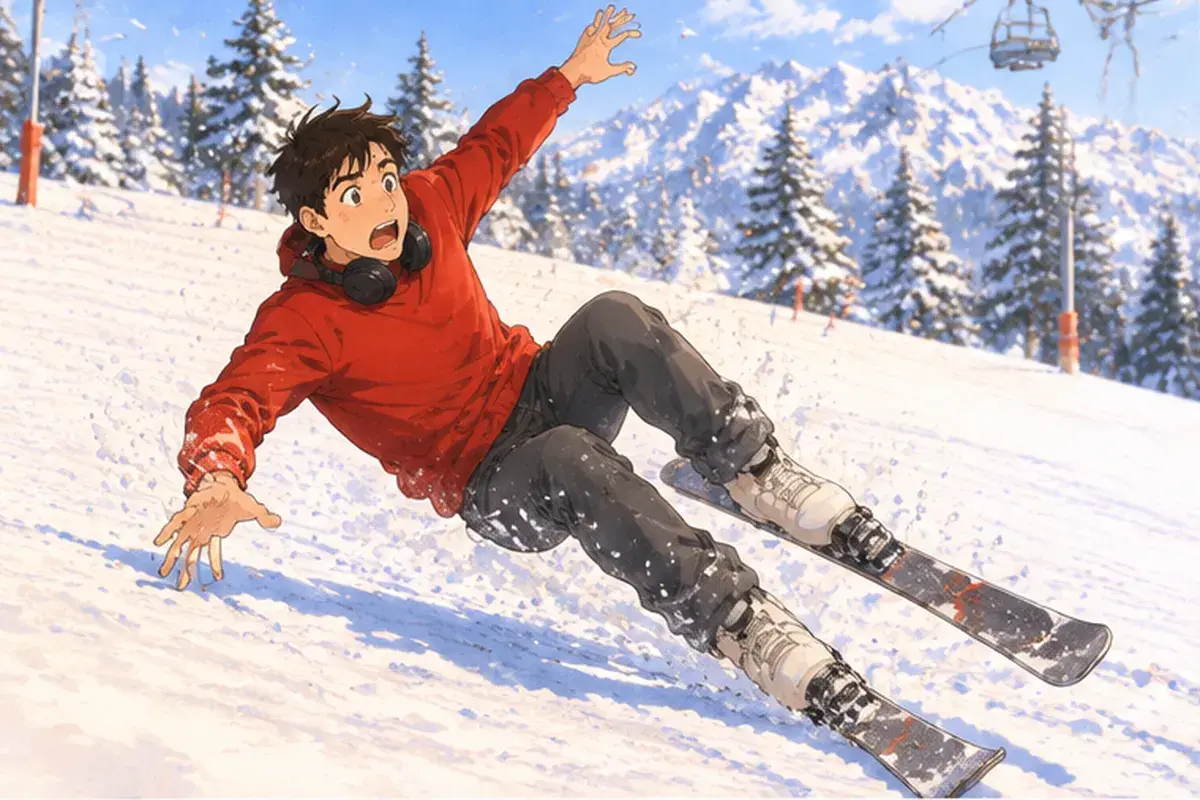
Alors je suis allé tout droit, de plus en plus vite. Puis je suis tombé sur la main.
So I went straight ahead, faster and faster. Then I fell on my hand (man speaking).
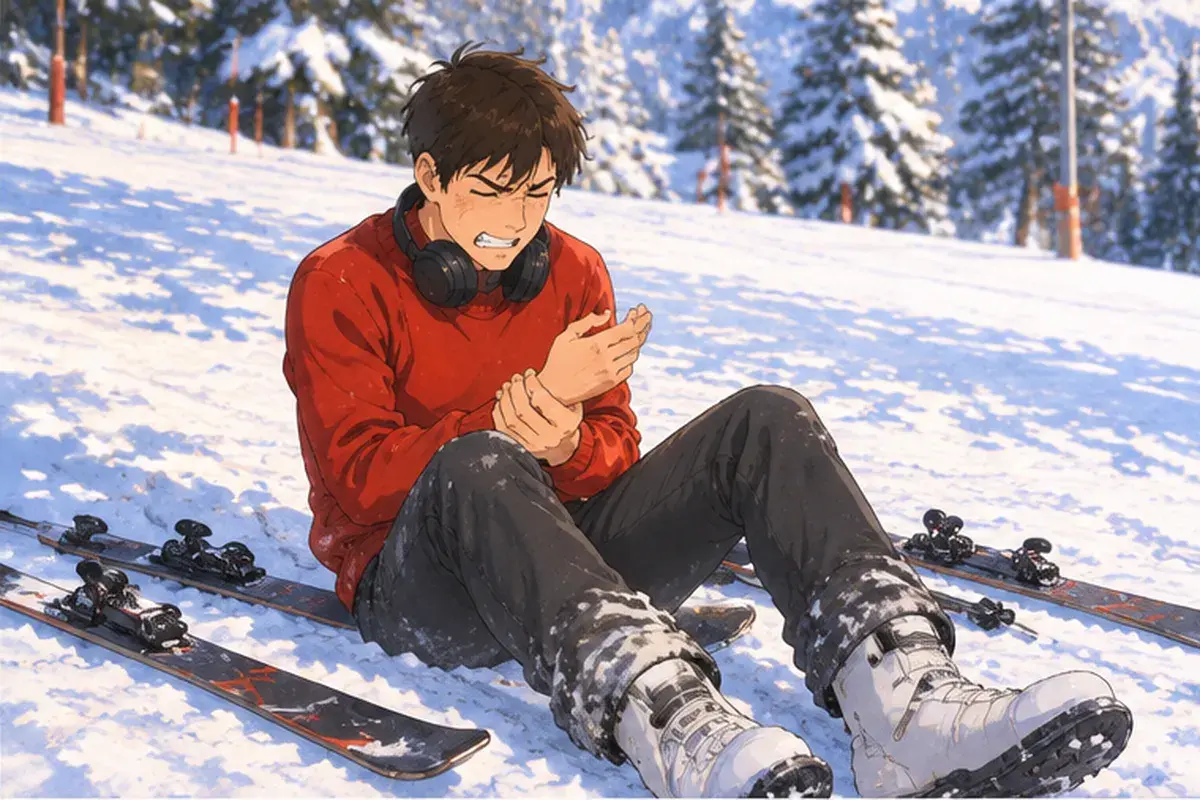
J'ai senti un gros coup au poignet. Je me suis assis dans la neige.
I felt a hard blow to my wrist. I sat down in the snow (man speaking).
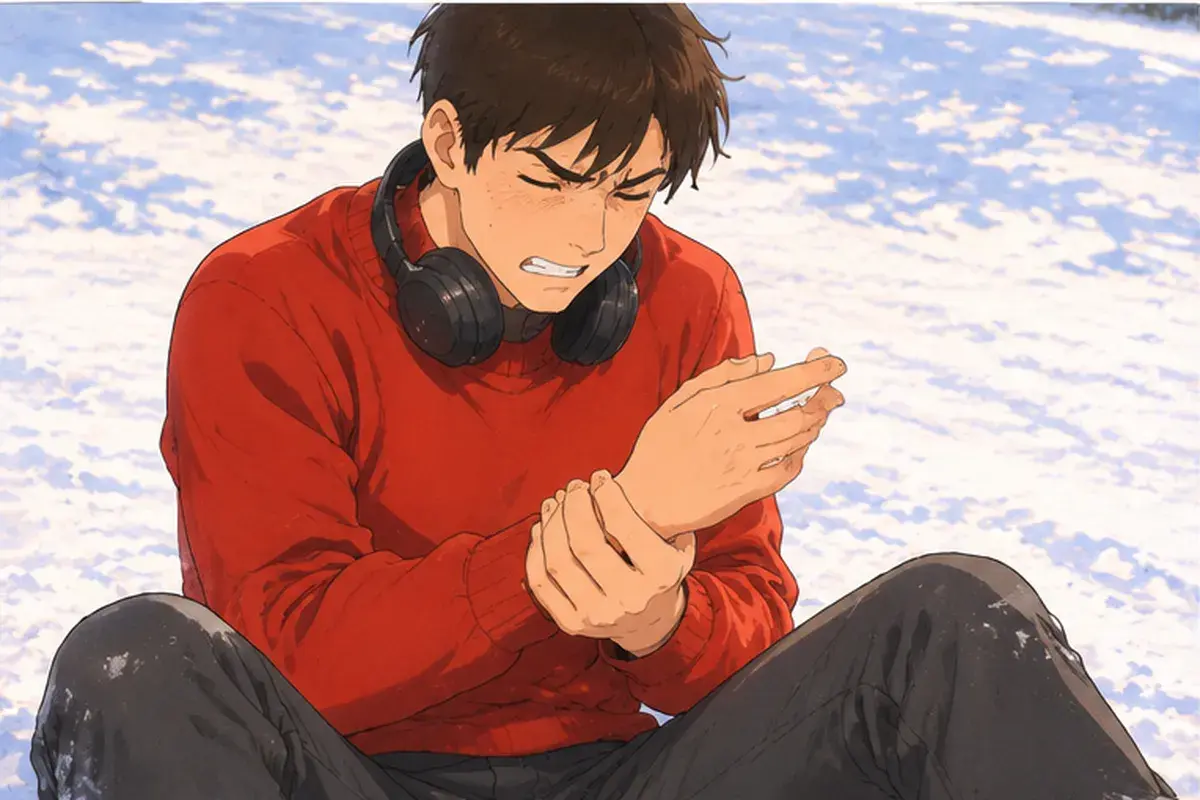
La douleur était terrible, et mon poignet gonflait déjà.
The pain was terrible, and my wrist was already swelling.
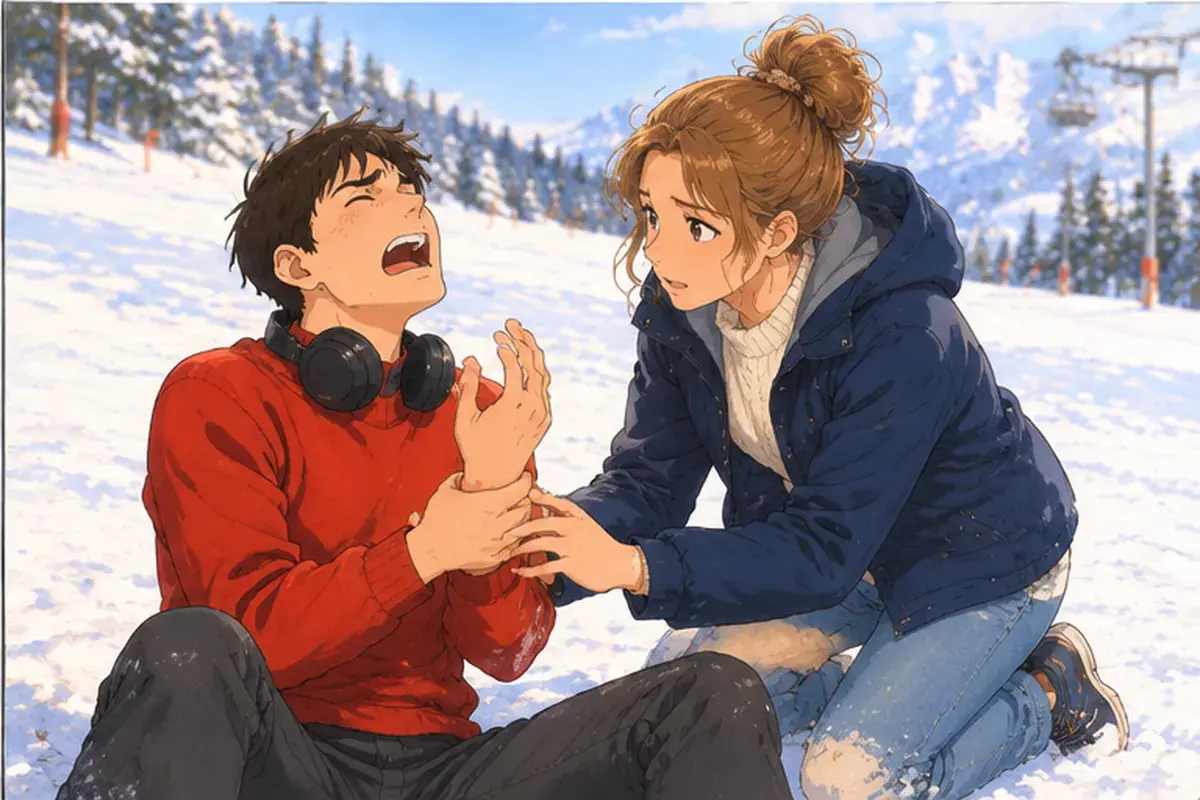
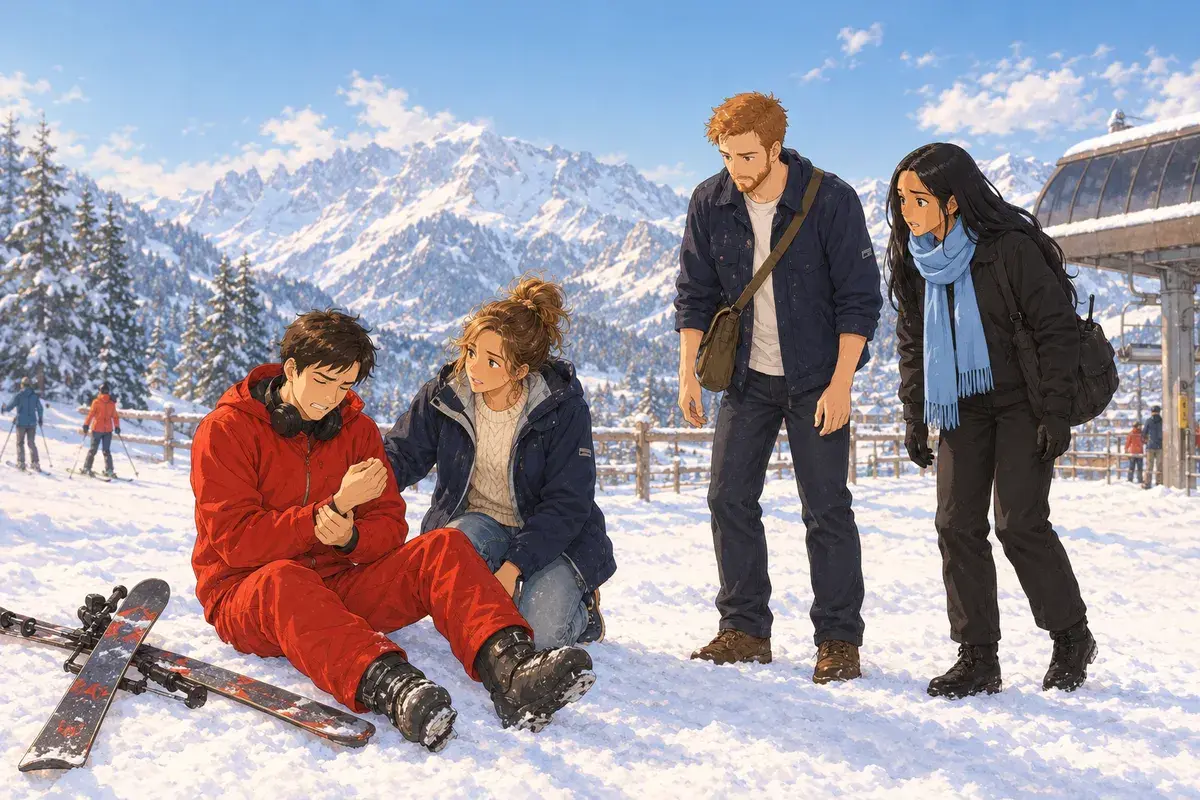
Maëlle est arrivée très vite. Elle a touché mon poignet, et j'ai dit : « Aïe ! »
Maëlle arrived very quickly. She touched my wrist, and I said, "Ouch!"
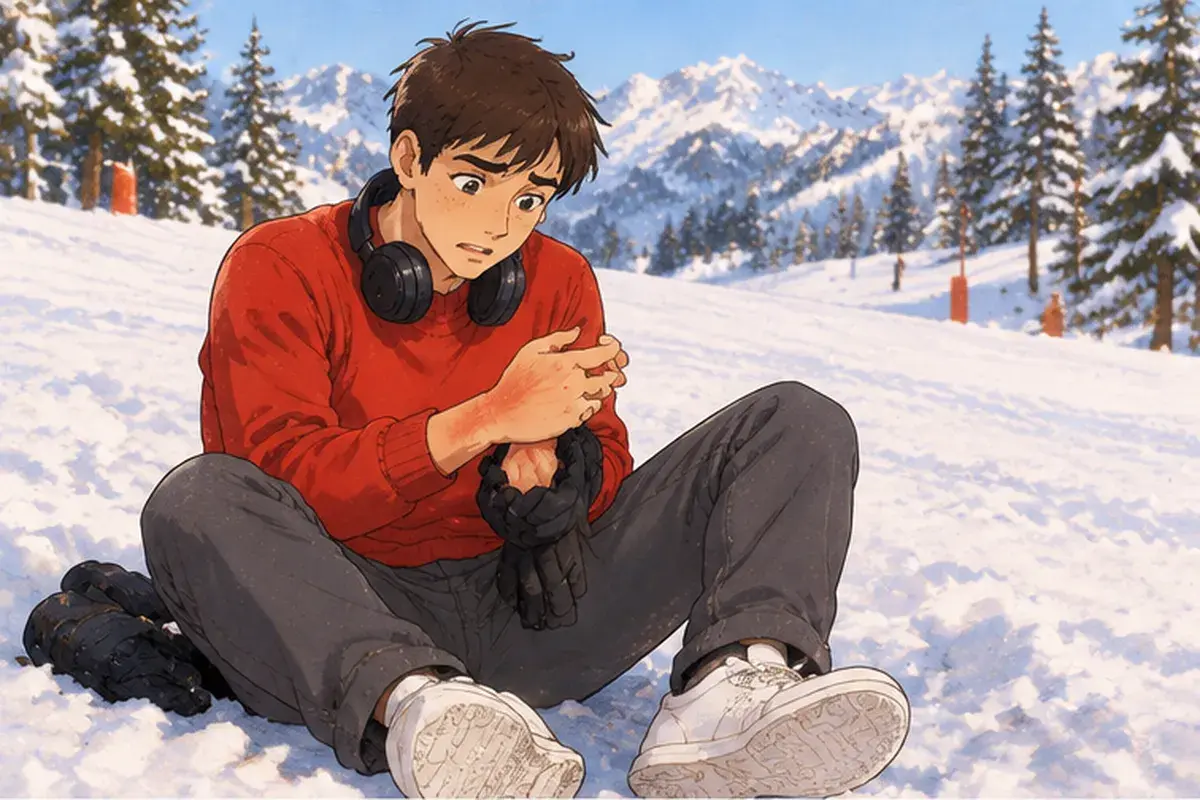
J'ai enlevé mon gant. La peau était rouge et chaude.
I took off my glove. The skin was red and hot.
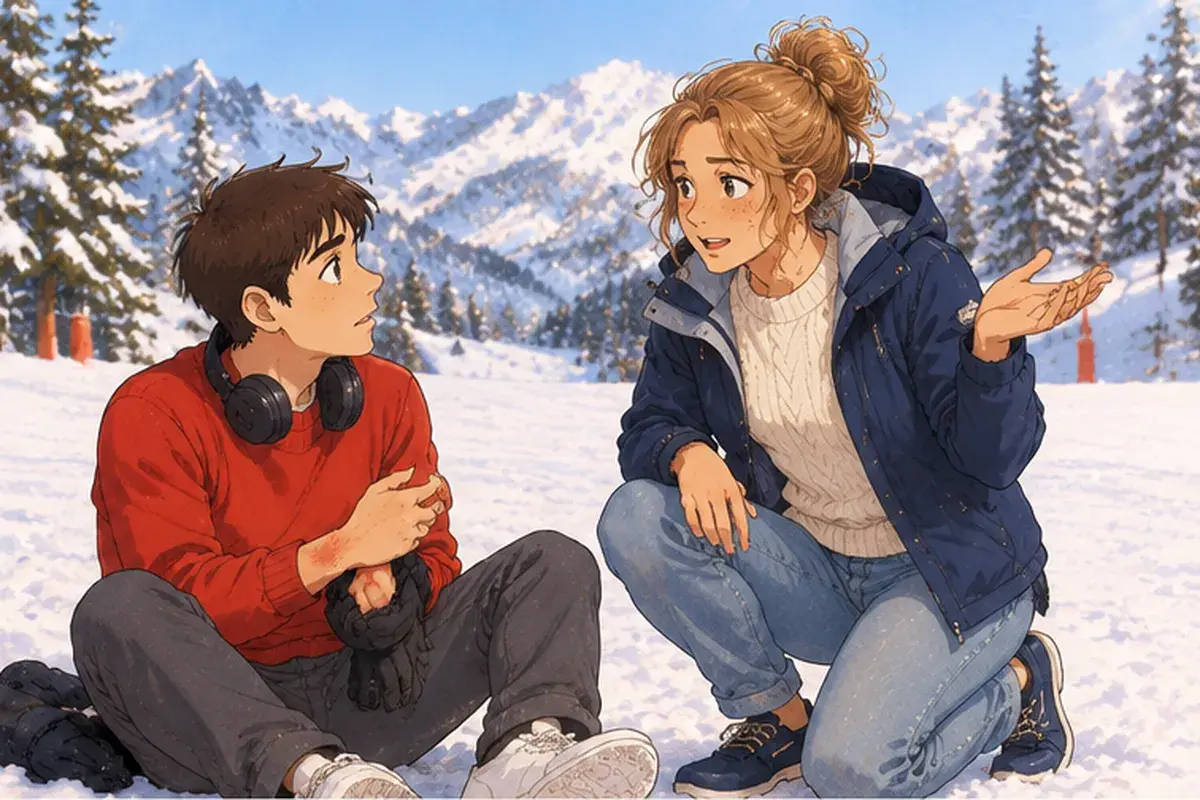
Maëlle a dit : « Je pense que tu t'es foulé le poignet. Moi, je ne me blesse jamais, mais ça arrive aux débutants. »
Maëlle said, "I think you sprained your wrist. Me, I never get hurt, but it happens to beginners."
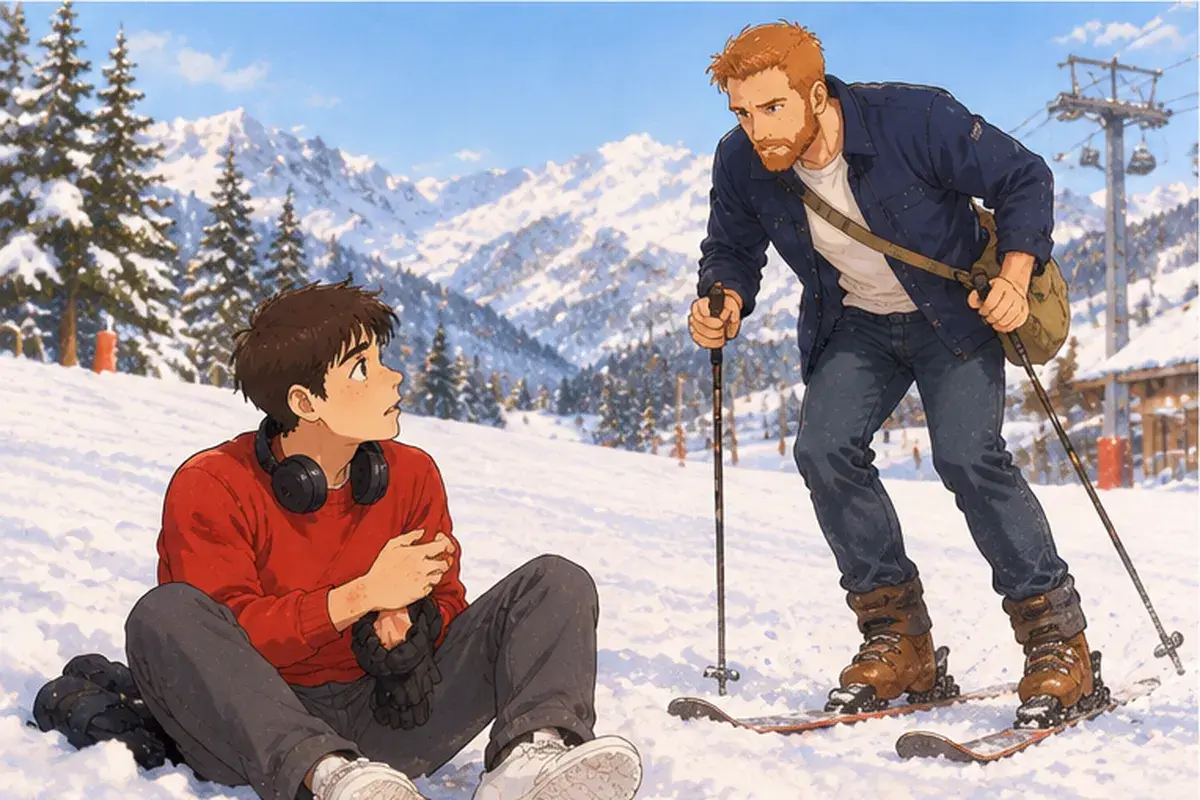
Hugo est arrivé lentement, avec un visage très sérieux. Il a demandé : « Tu t'es cassé quelque chose ? »
Hugo arrived slowly, with a very serious face. He asked, "Did you break something?"
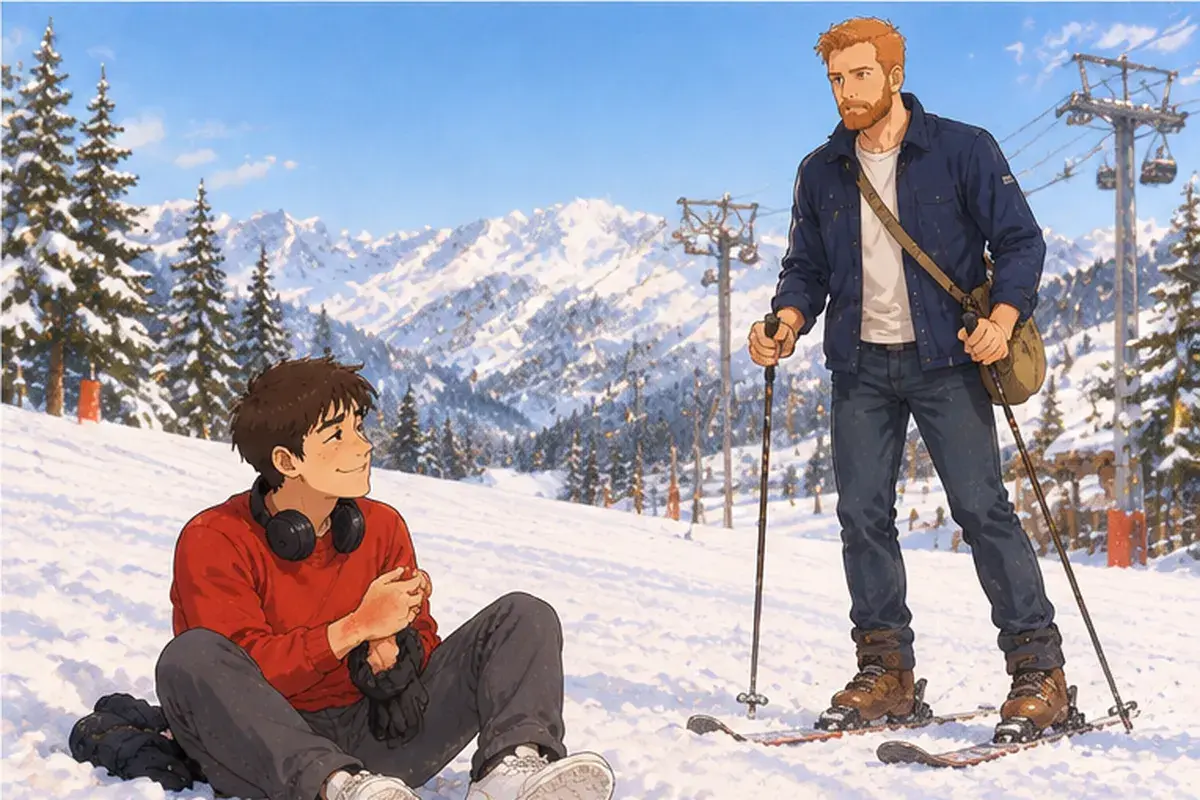
J'ai répondu que non. Hugo a dit : « Alors tu as une vie de pacha : assis dans la neige, et les autres font tout. »
I said no. Hugo said, "Then you have a pasha's life: sitting in the snow, and the others do everything." (to a man)
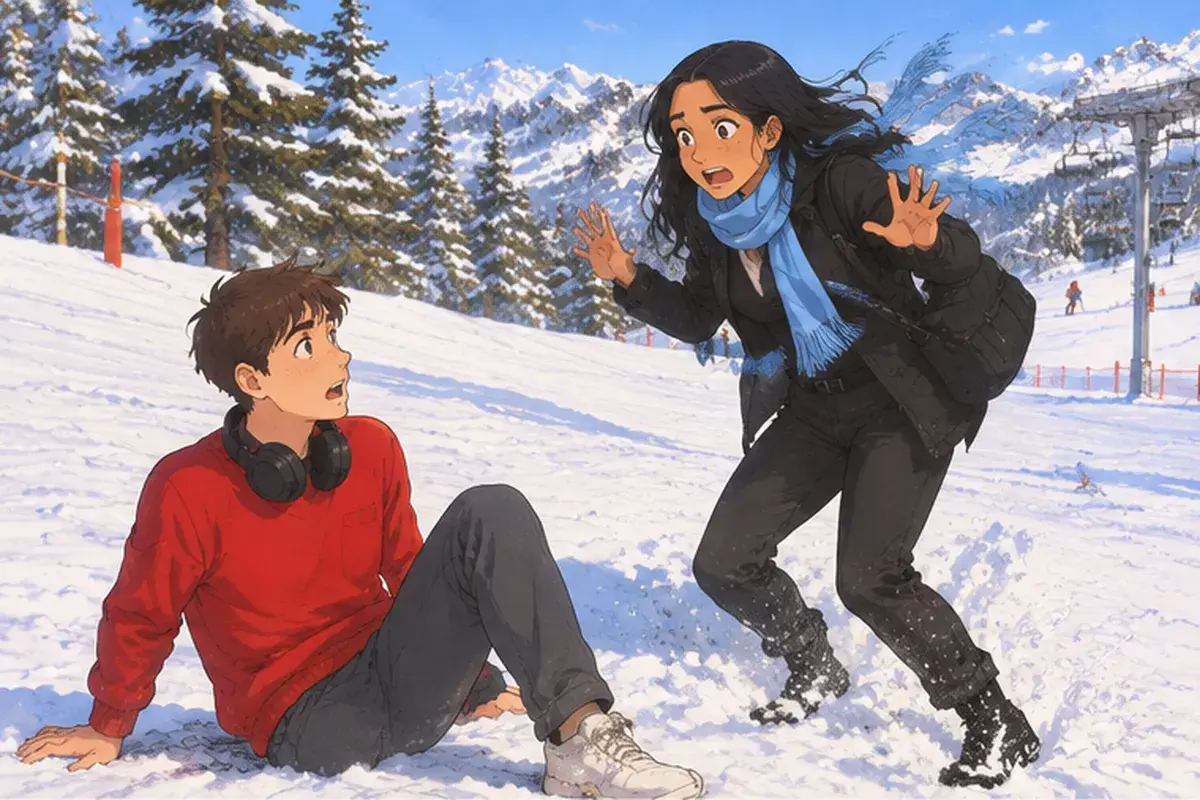
Inès est arrivée après tout le monde. « Il est dans un état terrible ! Il faut appeler une ambulance ! »
Inès arrived after everyone else. "He's in a terrible state! We need to call an ambulance!"
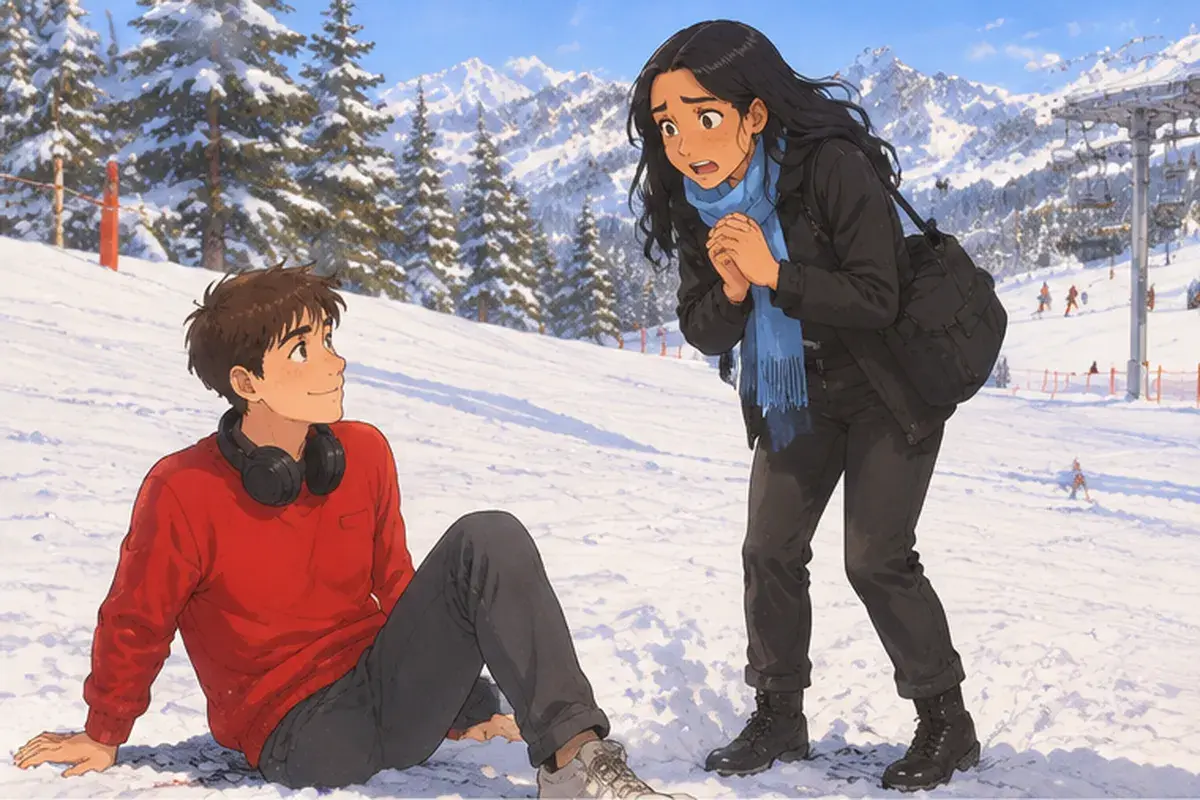
Elle avait l'air plus blessée que moi. J'ai répondu : « Je n'ai pas besoin d'une ambulance. J'ai besoin d'un thé. »
She looked more hurt than me. I said, "I don't need an ambulance. I need a tea."
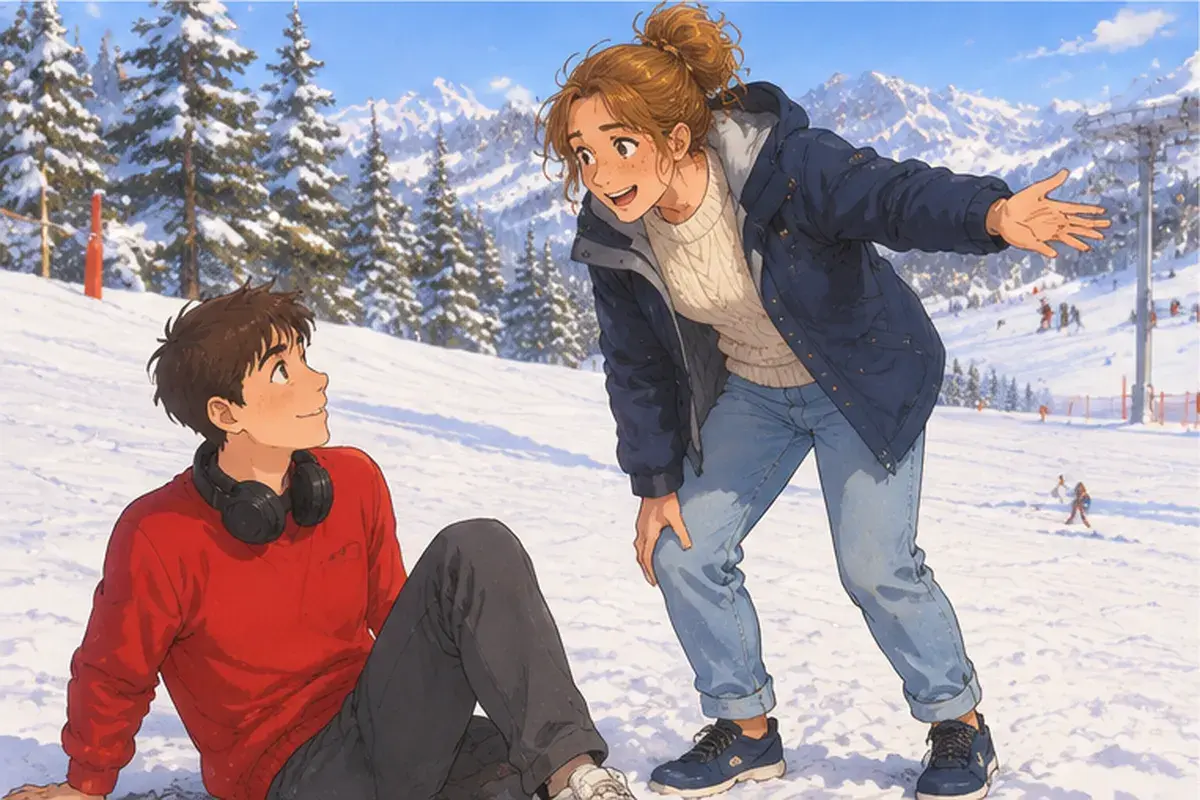
Maëlle a dit : « Pas besoin des urgences. En bas, un docteur va te soigner, et tu vas guérir vite. »
Maëlle said, "No need for the ER. At the bottom, a doctor is going to treat you, and you're going to get better fast."
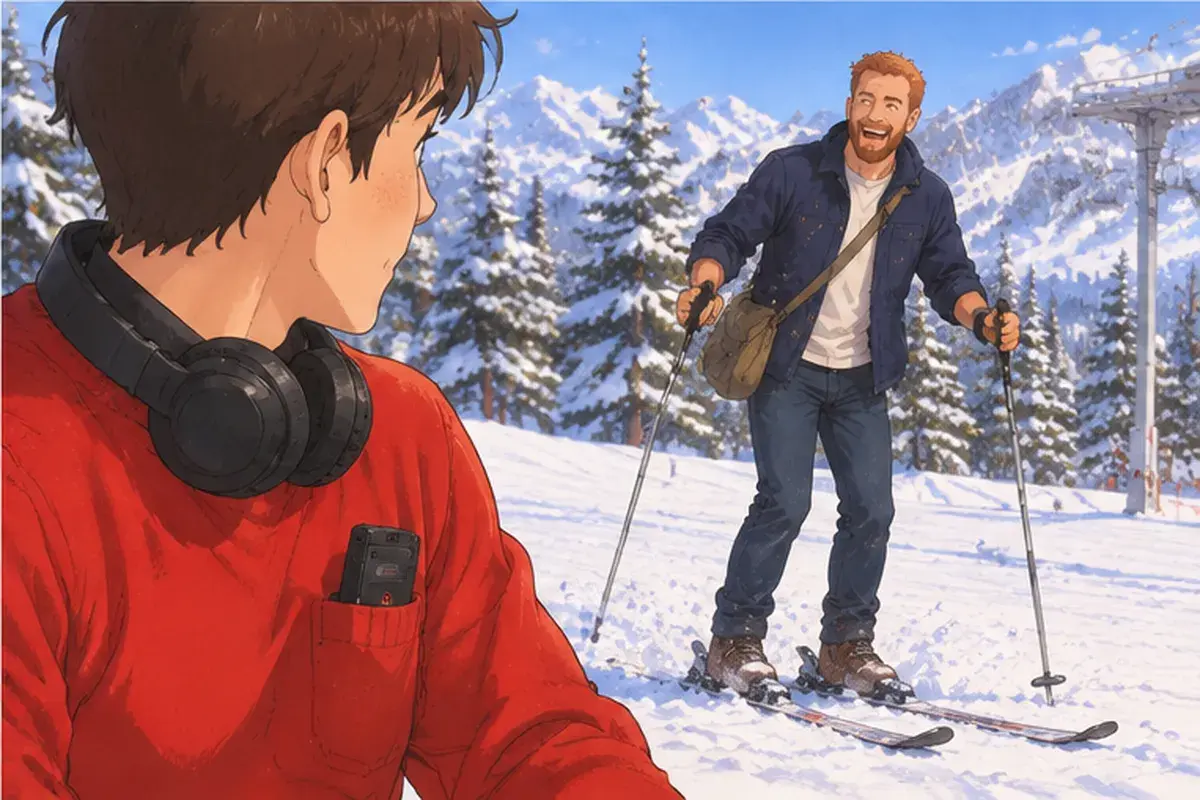
Mon dictaphone était dans ma poche. Il a tout enregistré : le vent, mon « aïe » et Hugo qui rigole.
My voice recorder was in my pocket. It recorded everything: the wind, my "ouch" and Hugo laughing.
Grammar for this text
- Il y a deux heures, j'étais un homme heureux —
il y a+ a length of time means "ago". j'étais, j'avais are imperfect forms of être and avoir (A2, unit 4): they describe how things were before something happened. The events themselves are in the passé composé with avoir and être. - Je me suis assis dans la neige — the passé composé of the reflexive verb s'asseoir: me suis + past participle. The participle is irregular: assis (a woman writes assise), "I sat down". tu t'es foulé = tu te + es; tu t'es cassé works the same way.
- Je suis resté debout pendant une minute — rester, tomber, arriver take être: je suis tombé, Maëlle est arrivée (for a woman, an extra -e). pendant une minute — for a whole minute.
- Je ne sais pas tourner — sais is from savoir: here "I know how to". Tourne ! — a tu command. de plus en plus vite — faster and faster.
- ça arrive aux débutants — ça arrive — it happens; aux = à + les. je ne me blesse jamais — ne … jamais: never.
- une vie de pacha — the French word pacha means a pasha, someone who lives in comfort; une vie de pacha is an easy life: you sit, and others do the work. Hugo is joking about Pacha's name and about him sitting in the snow.
- Elle avait l'air plus blessée que moi — avoir l'air + an adjective: to look; plus … que moi — more ... than me.
Words and grammar of the unit: Explain to a doctor what happened.
Learn the words from the texts with flashcards
In the app, you can tap any word in a text to see its translation, forms and examples, and new words stick with flashcards. 15 minutes a day.
Start for freeEverything is open for free. No card needed to sign up.