

French dialogue with translation · A2 · 16 lines
Je me suis fait mal au poignet I hurt my wrist
Comic · 16 panels
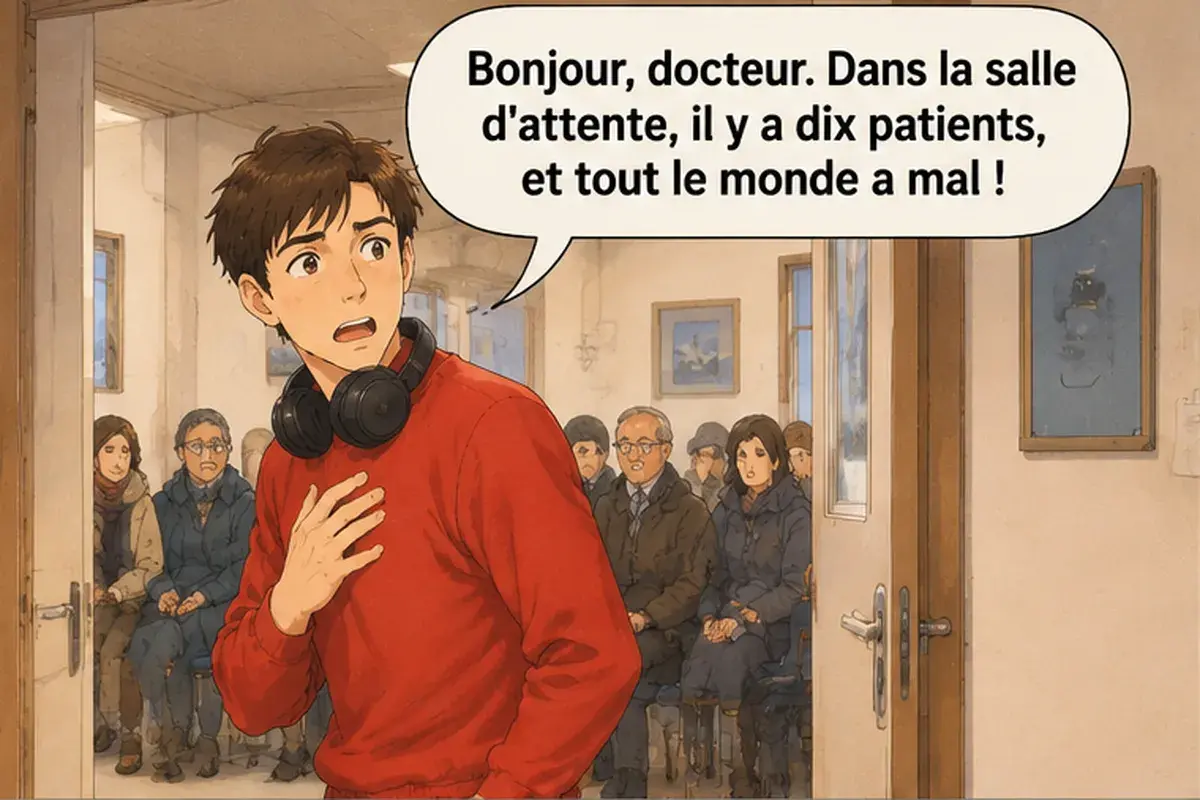
- Pacha
Bonjour, docteur. Dans la salle d'attente, il y a dix patients, et tout le monde a mal !
Hello, doctor. There are ten patients in the waiting room, and everyone's in pain!
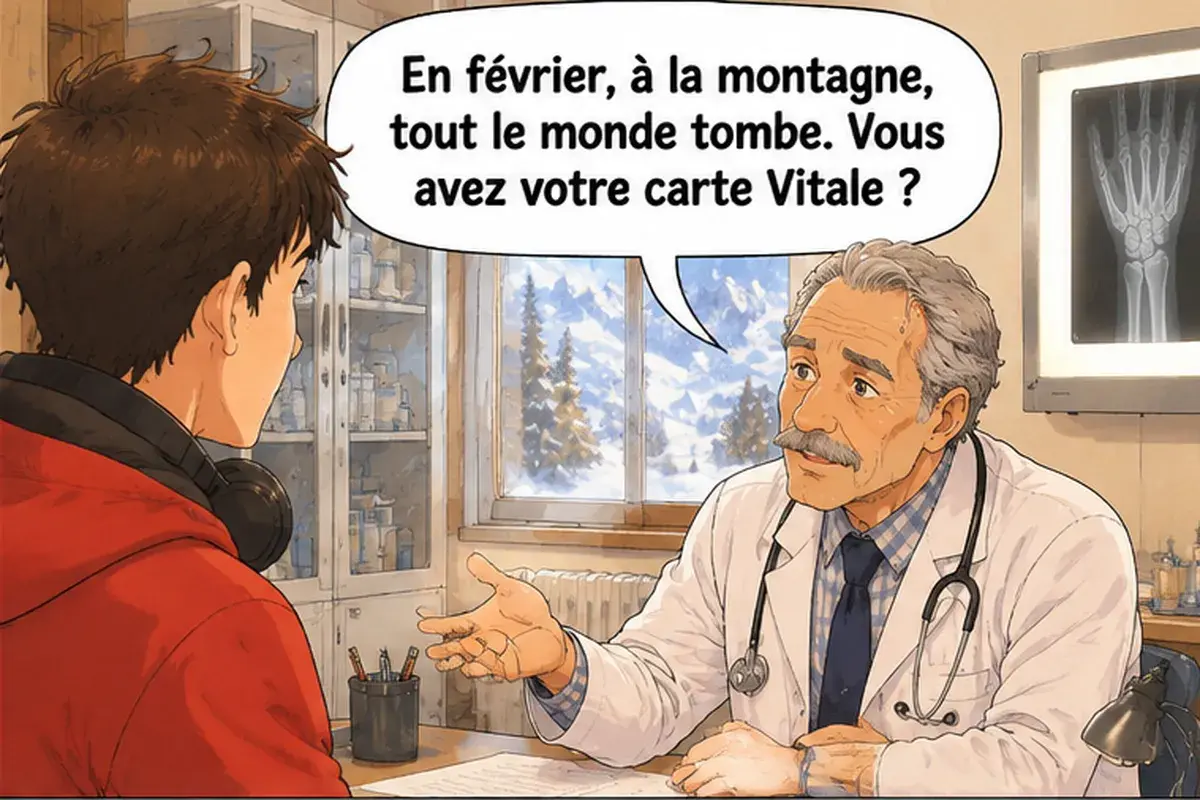
- Médecin
En février, à la montagne, tout le monde tombe. Vous avez votre carte Vitale ?
In February, in the mountains, everyone falls. Do you have your carte Vitale? (formal)
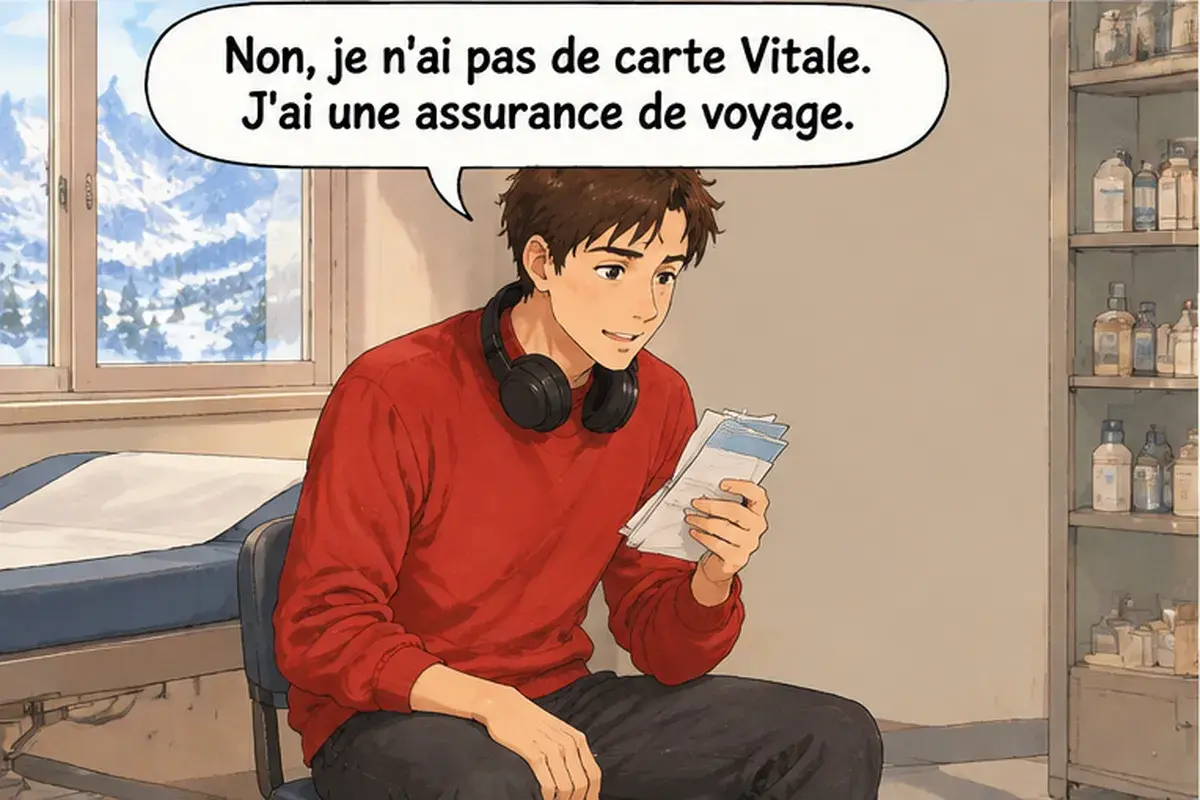
- Pacha
Non, je n'ai pas de carte Vitale. J'ai une assurance de voyage.
No, I don't have a carte Vitale. I have travel insurance.
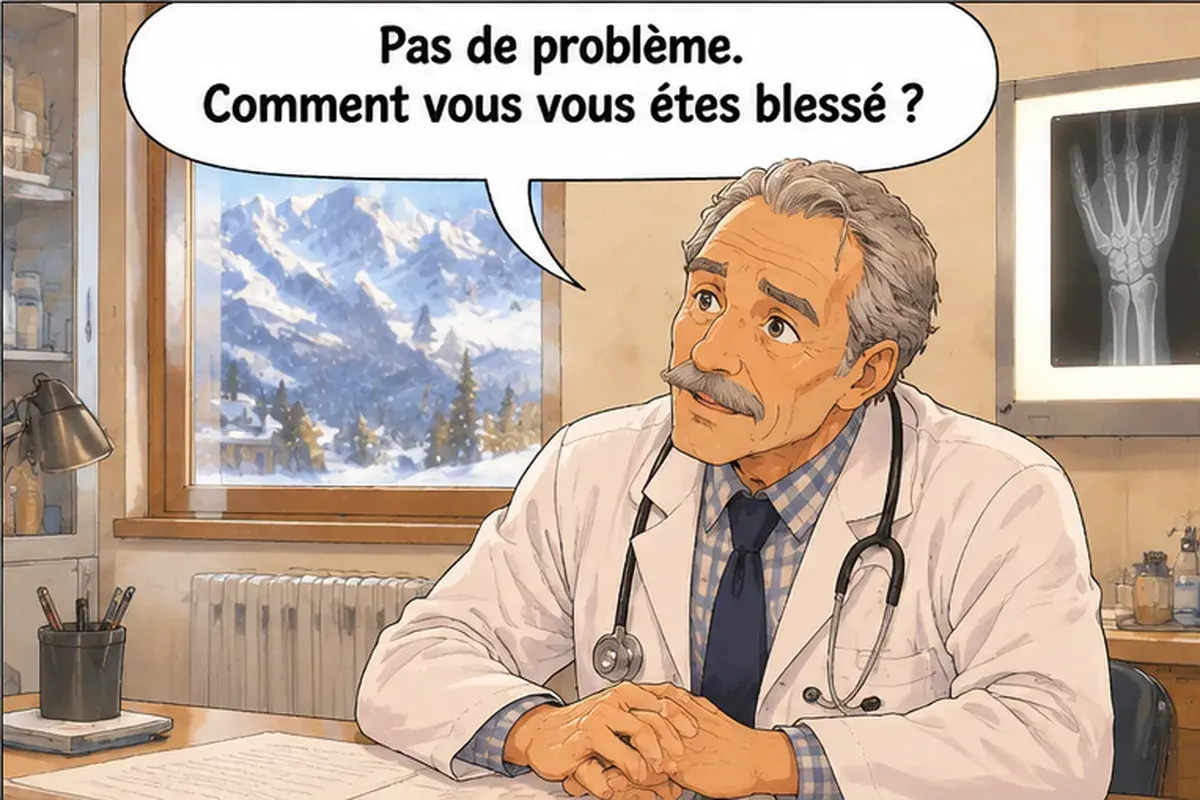
- Médecin
Pas de problème. Comment vous vous êtes blessé ?
No problem. How did you get hurt? (to a man, formal)
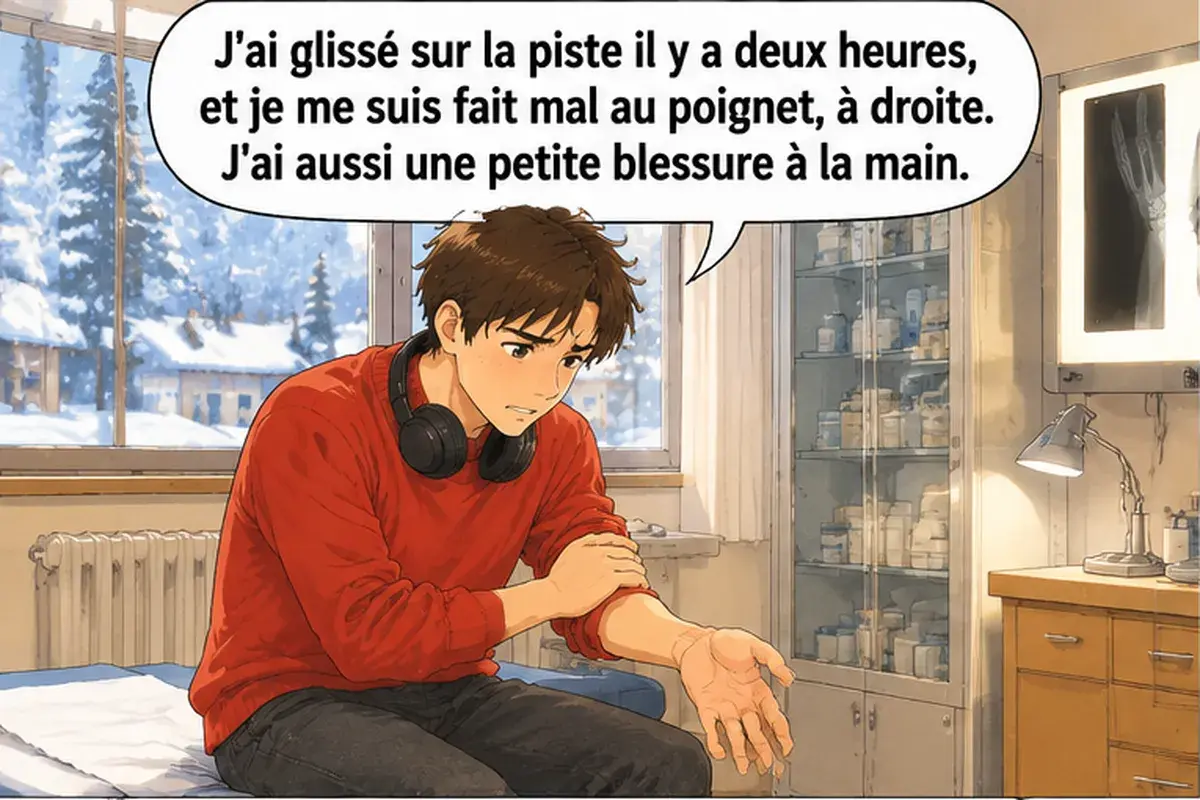
- Pacha
J'ai glissé sur la piste il y a deux heures, et je me suis fait mal au poignet, à droite. J'ai aussi une petite blessure à la main.
I slipped on the slope two hours ago, and I hurt my wrist, on the right. I also have a small wound on my hand.
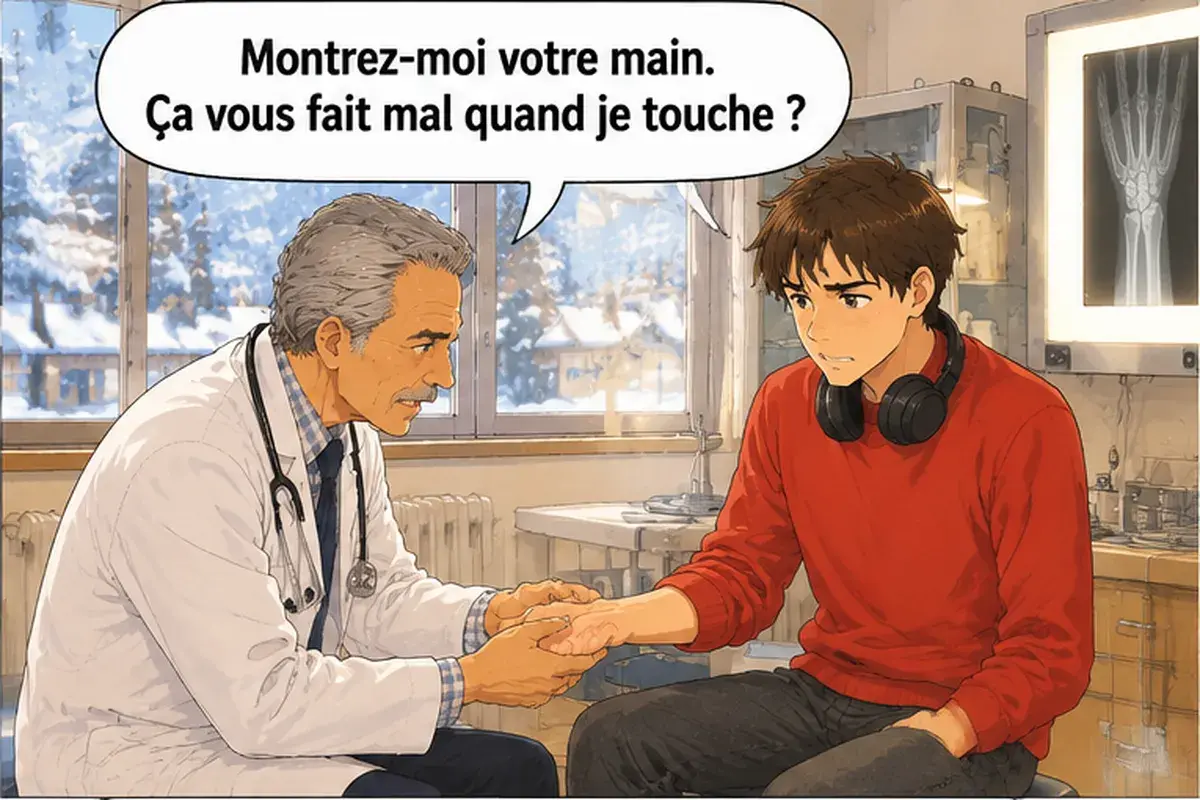
- Médecin
Montrez-moi votre main. Ça vous fait mal quand je touche ?
Show me your hand. Does it hurt when I touch it? (formal)
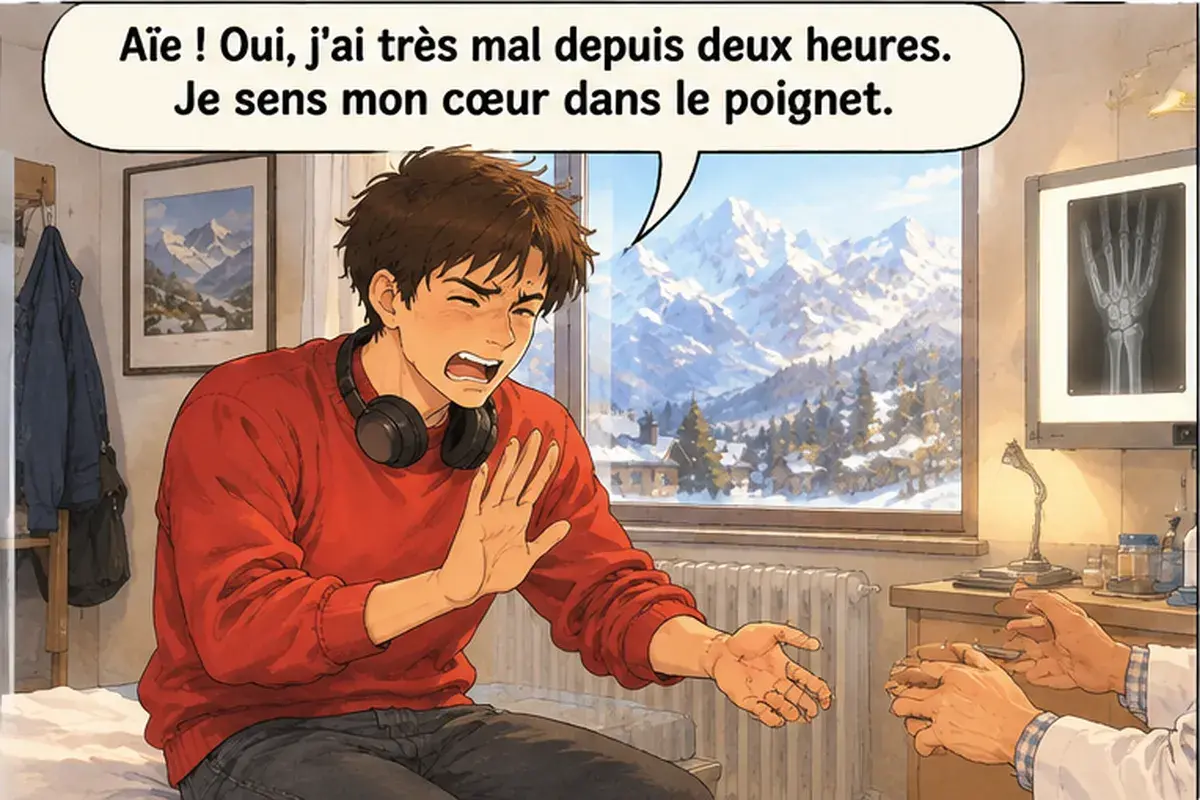
- Pacha
Aïe ! Oui, j'ai très mal depuis deux heures. Je sens mon cœur dans le poignet.
Ouch! Yes, I've been in a lot of pain for two hours. I feel my heart in my wrist.
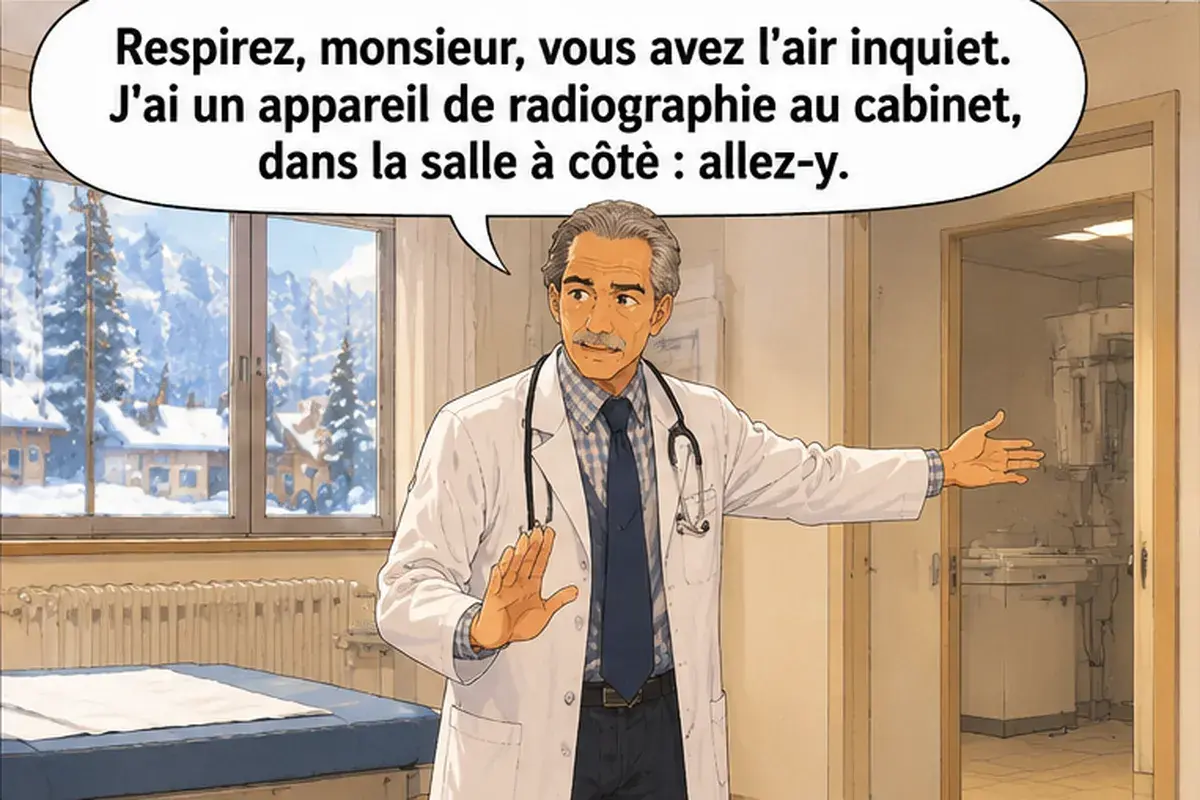
- Médecin
Respirez, monsieur, vous avez l'air inquiet. J'ai un appareil de radiographie au cabinet, dans la salle à côté : allez-y.
Breathe, sir, you look worried. I have an X-ray machine at the office, in the room next door: go ahead. (formal)
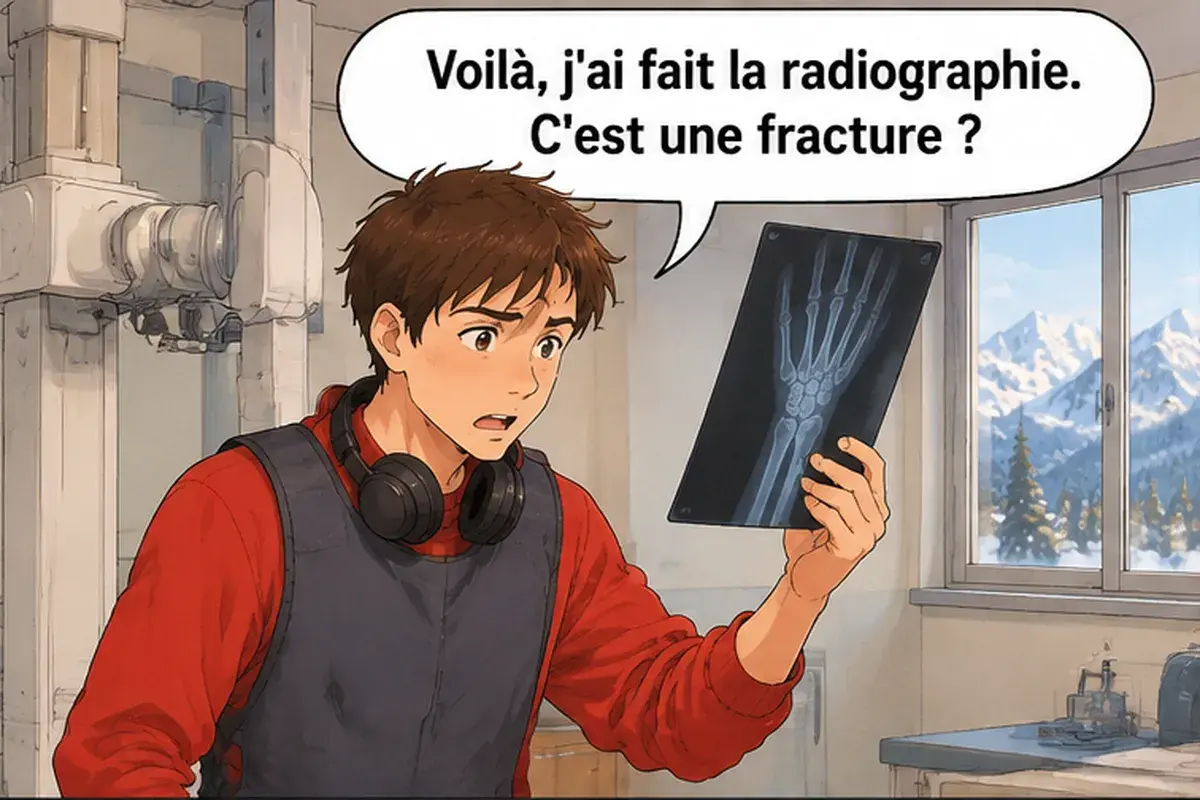
- Pacha
Voilà, j'ai fait la radiographie. C'est une fracture ?
There, I had the X-ray. Is it a fracture?
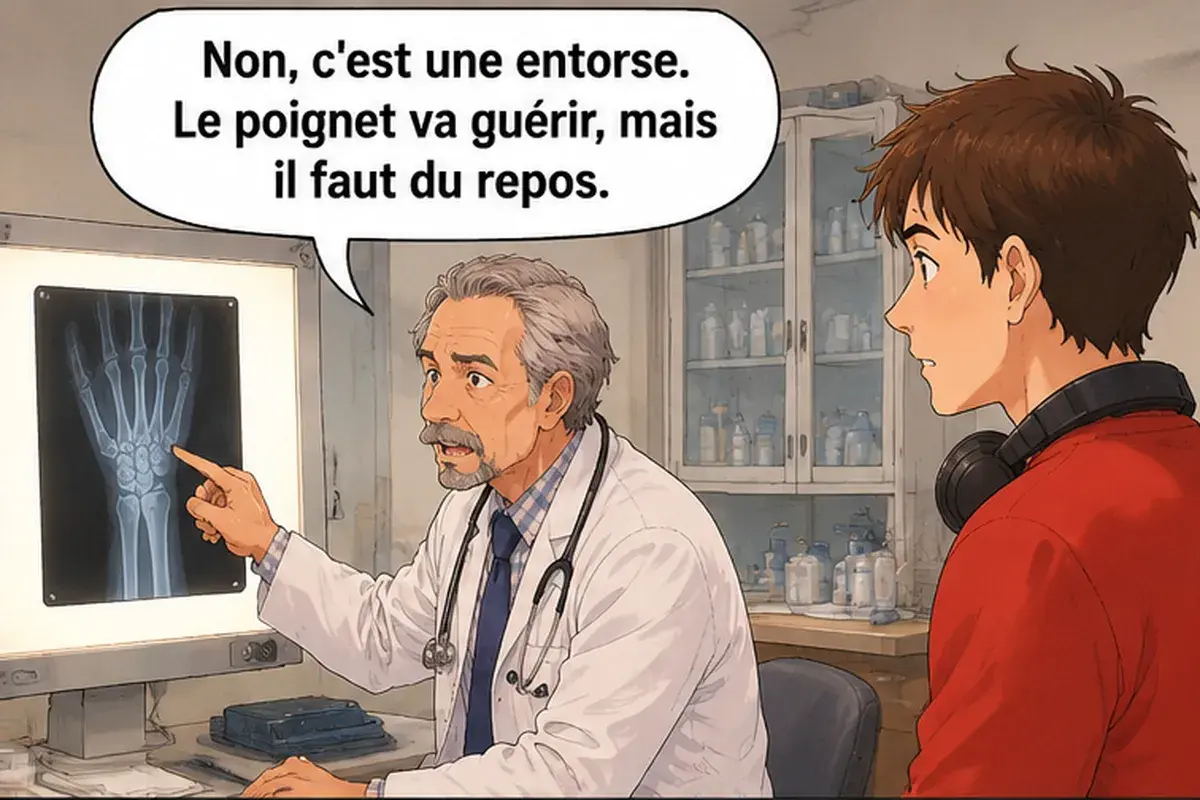
- Médecin
Non, c'est une entorse. Le poignet va guérir, mais il faut du repos.
No, it's a sprain. The wrist is going to heal, but you need rest.
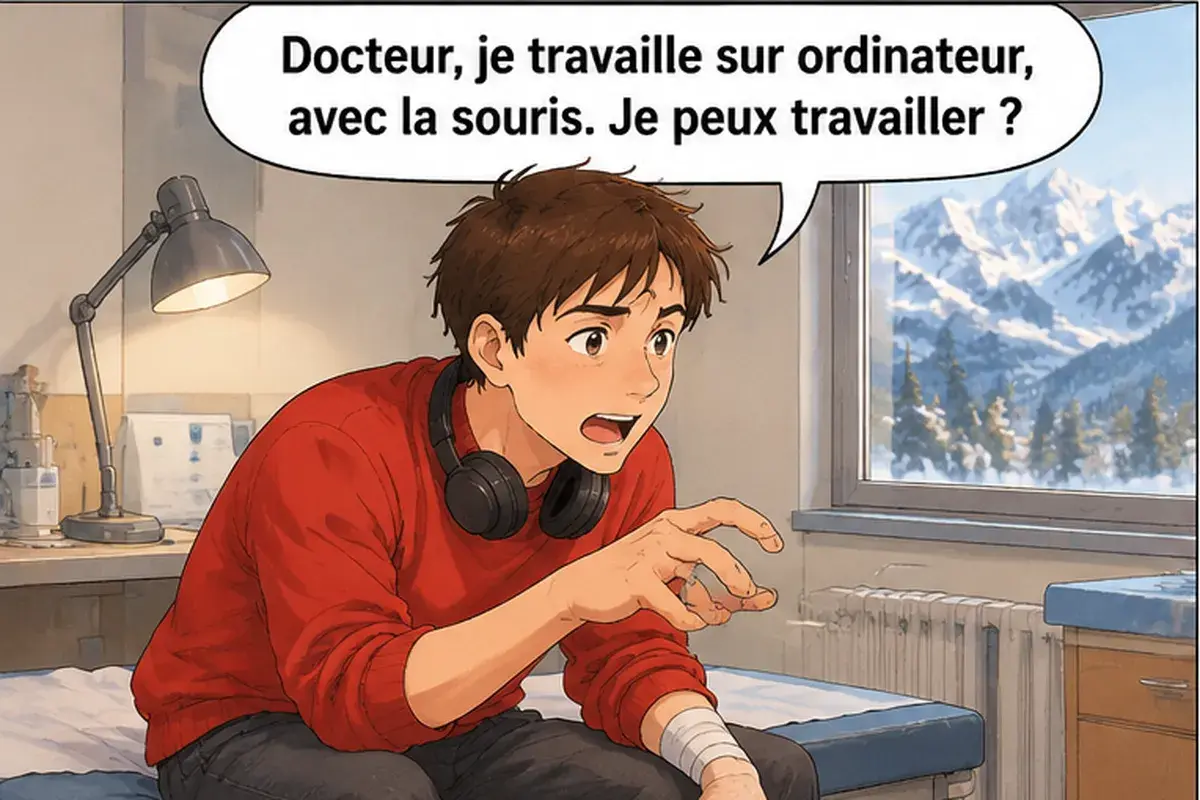
- Pacha
Docteur, je travaille sur ordinateur, avec la souris. Je peux travailler ?
Doctor, I work on a computer, with a mouse. Can I work?
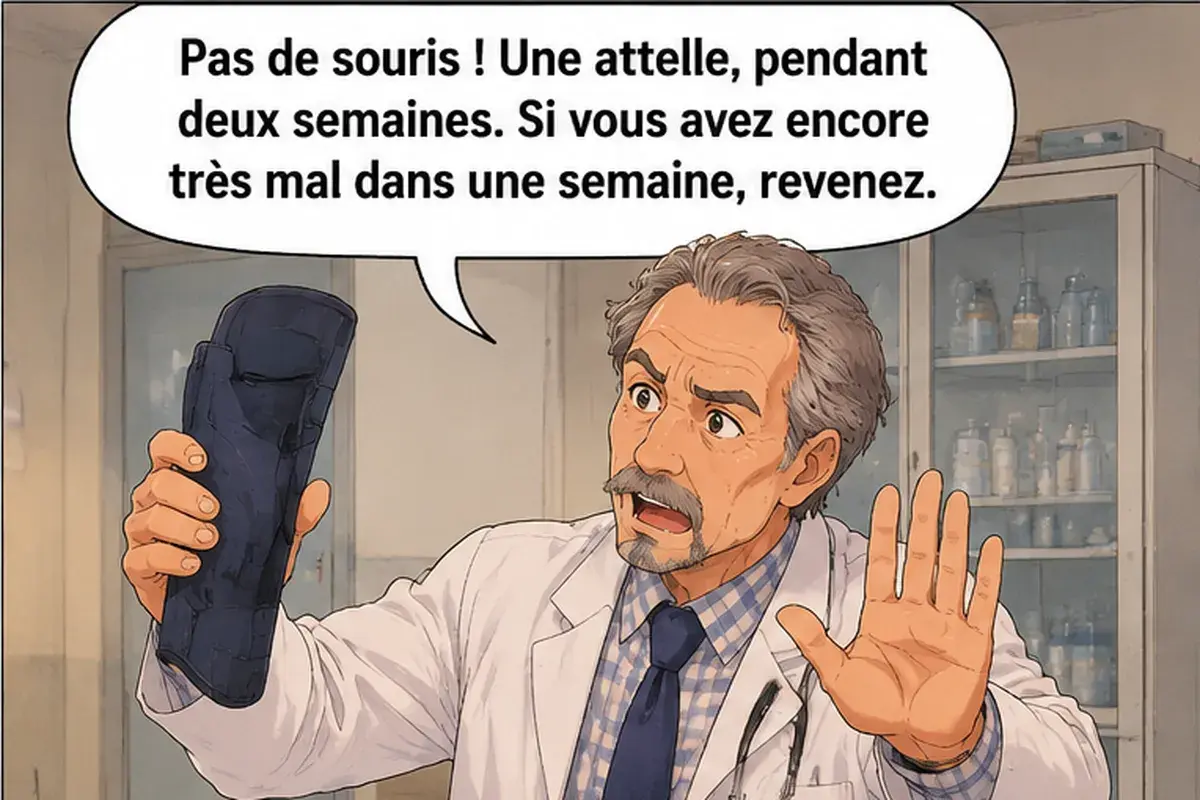
- Médecin
Pas de souris ! Une attelle, pendant deux semaines. Si vous avez encore très mal dans une semaine, revenez.
No mouse! A splint, for two weeks. If you're still in a lot of pain in a week, come back. (formal)
- Pacha
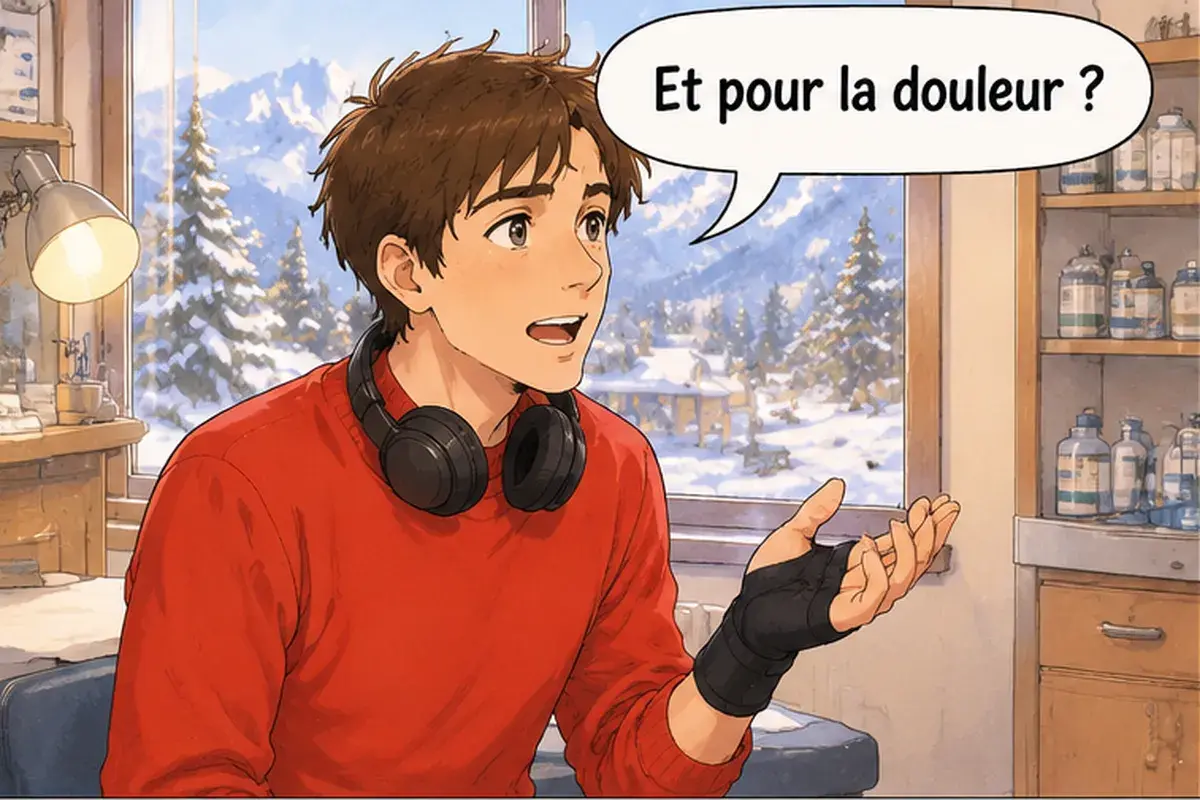
Et pour la douleur ?
And for the pain?
- Médecin
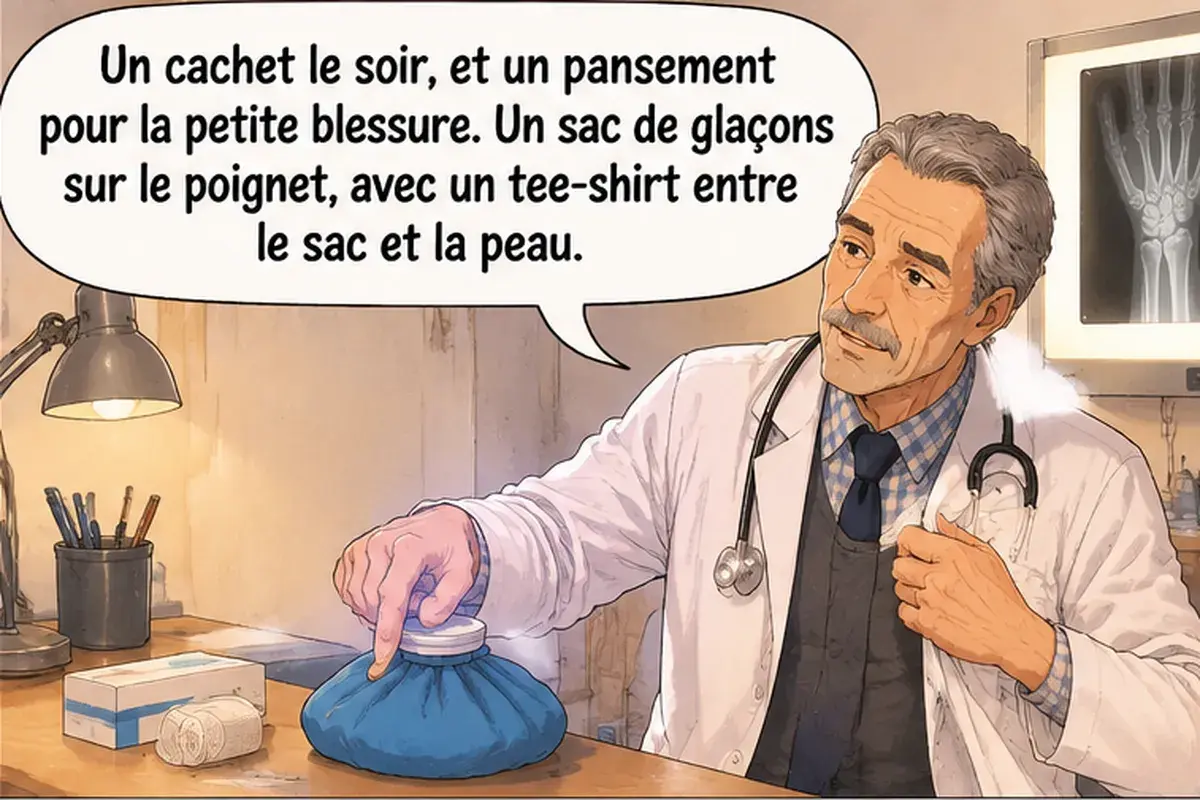
Un cachet le soir, et un pansement pour la petite blessure. Un sac de glaçons sur le poignet, avec un tee-shirt entre le sac et la peau.
A pill in the evening, and a bandage for the small wound. A bag of ice cubes on the wrist, with a T-shirt between the bag and the skin.

- Pacha
Merci, docteur. Je vous dois combien ?
Thank you, doctor. How much do I owe you? (formal)
- Médecin
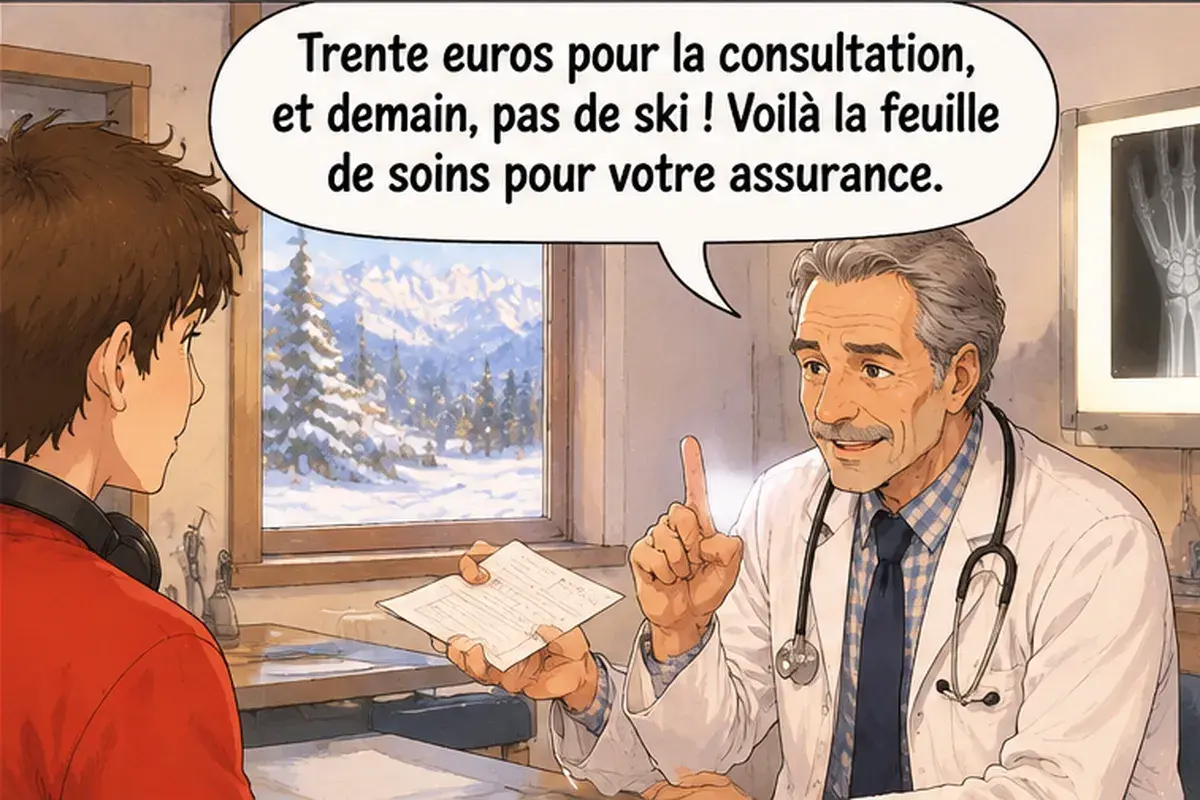
Trente euros pour la consultation, et demain, pas de ski ! Voilà la feuille de soins pour votre assurance.
Thirty euros for the visit, and tomorrow, no skiing! Here's the claim form for your insurance. (formal)
Grammar for this text
- Vous avez votre carte Vitale ? — people insured in France have a carte Vitale (health insurance card); a visitor usually doesn't. Then the doctor fills out a paper claim form, feuille de soins. The question is made just with a rising voice.
- Comment vous vous êtes blessé ? — the reflexive verb se blesser in the passé composé: "how did you get hurt". Je me suis fait mal au poignet — se faire mal à + a body part: to hurt (your wrist, your back); fait never changes.
- Montrez-moi votre main — "show me": a command + -moi with a hyphen (a set phrase, unit 5). Allez-y — "go ahead, go on in": y means "there"; with tu it would be vas-y.
- Ça vous fait mal quand je touche ? — literally "does it do you harm when I touch". j'ai très mal depuis deux heures — depuis + present: "it's been hurting for two hours". je sens — from sentir: I feel.
- Le poignet va guérir, mais il faut du repos — va guérir — is going to heal; il faut du repos — you need rest. Pas de souris — after pas, the article becomes de.
- Si vous avez encore très mal dans une semaine, revenez — si + present, then a command.
dans une semaine— in a week. The doctor asks him to come back if the pain doesn't go away: a first X-ray doesn't always show a fracture. - Je vous dois combien ? — devoir: to owe; vous goes before the verb: "how much do I owe you". You pay for the visit right away, and the claim form lets the insurance pay back part of the money later.
Words and grammar of the unit: Explain to a doctor what happened.
Learn the words from the texts with flashcards
In the app, you can tap any word in a text to see its translation, forms and examples, and new words stick with flashcards. 15 minutes a day.
Start for freeEverything is open for free. No card needed to sign up.