

French dialogue with translation · A2 · 16 lines
Vous venez d'où ? Where are you from? (formal)
Comic · 16 panels
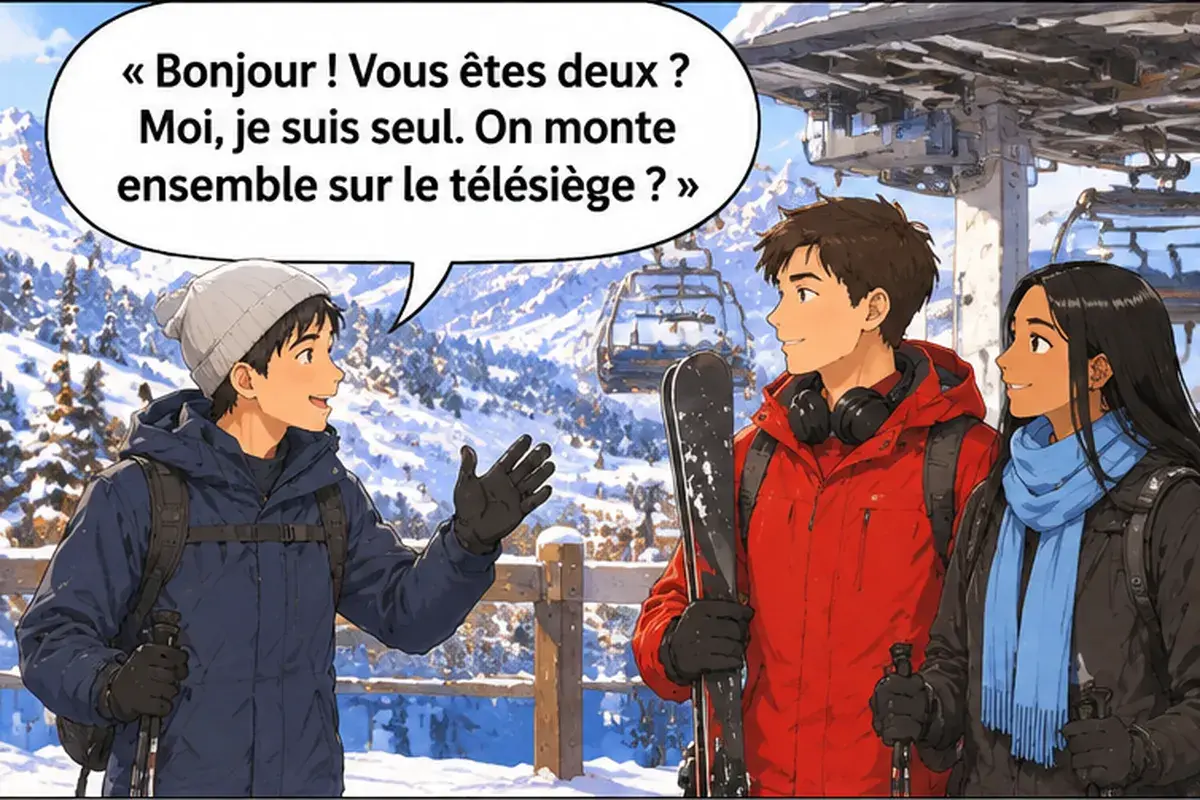
- Kenji
Bonjour ! Vous êtes deux ? Moi, je suis seul. On monte ensemble sur le télésiège ?
Hello! Are there two of you? I'm alone. Shall we ride up on the chairlift together?
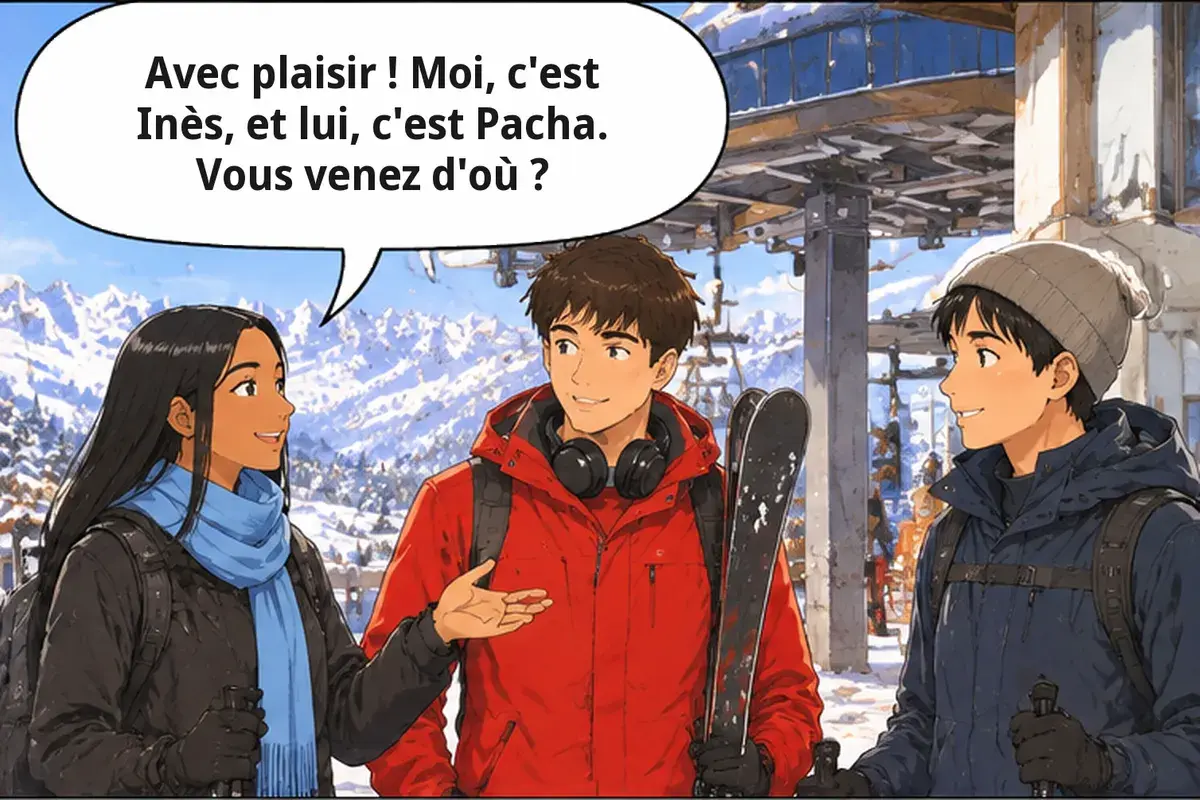
- Inès
Avec plaisir ! Moi, c'est Inès, et lui, c'est Pacha. Vous venez d'où ?
With pleasure! I'm Inès, and this is Pacha. Where are you from? (formal)
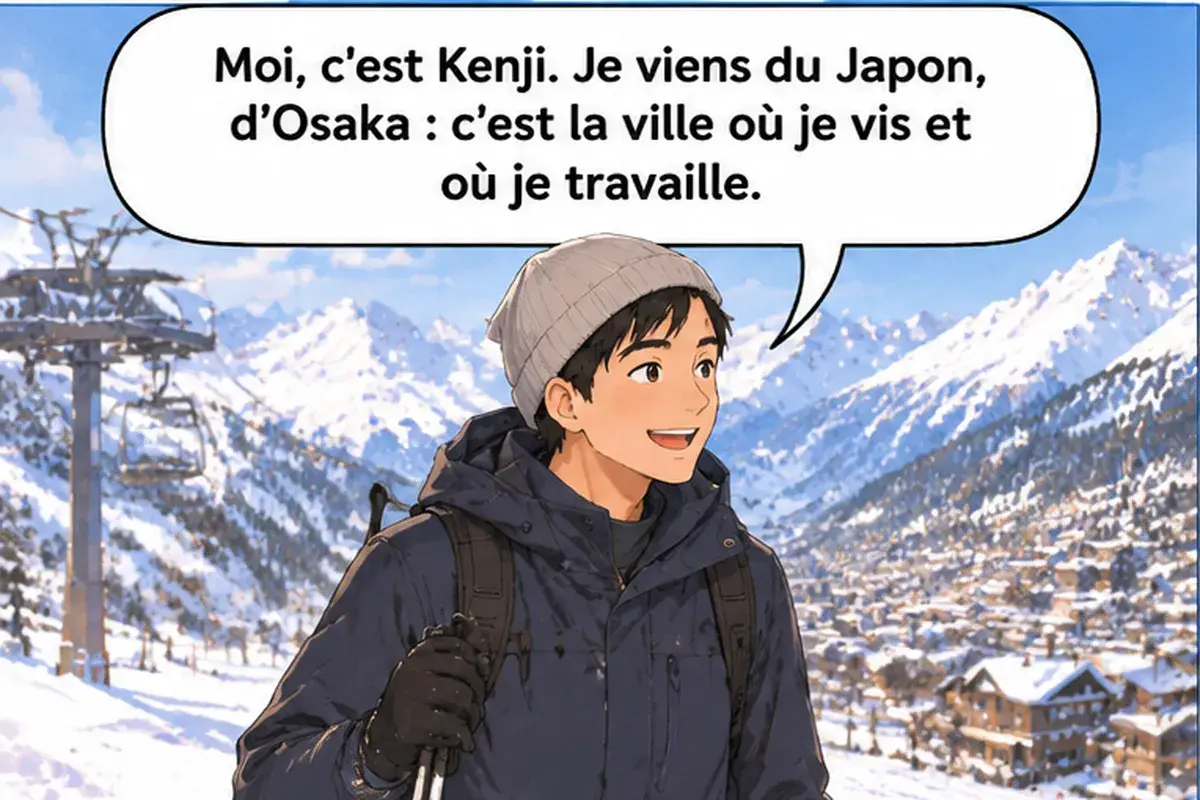
- Kenji
Moi, c'est Kenji. Je viens du Japon, d'Osaka : c'est la ville où je vis et où je travaille.
I'm Kenji. I'm from Japan, from Osaka: it's the city where I live and where I work.

- Pacha
Moi, je vis à Paris, comme Inès. On se tutoie ?
I live in Paris, like Inès. Shall we use tu with each other?
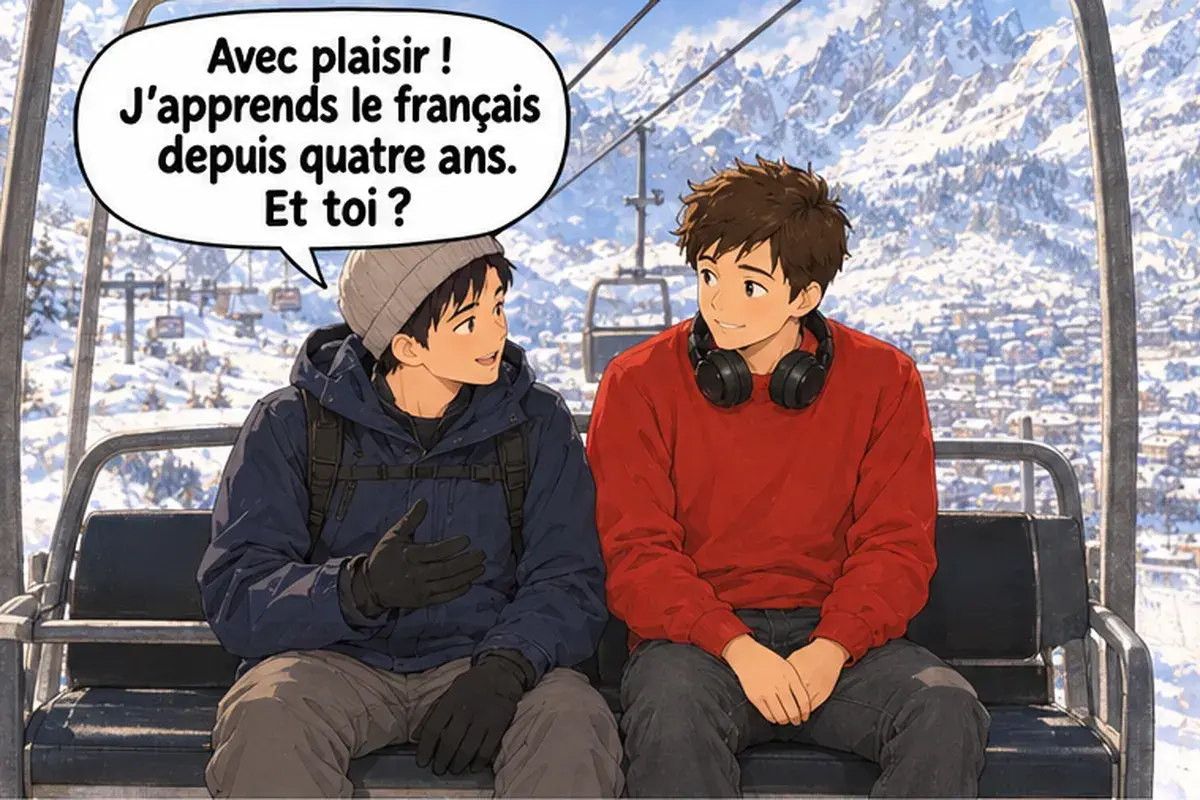
- Kenji
Avec plaisir ! J'apprends le français depuis quatre ans. Et toi ?
With pleasure! I've been learning French for four years. And you?
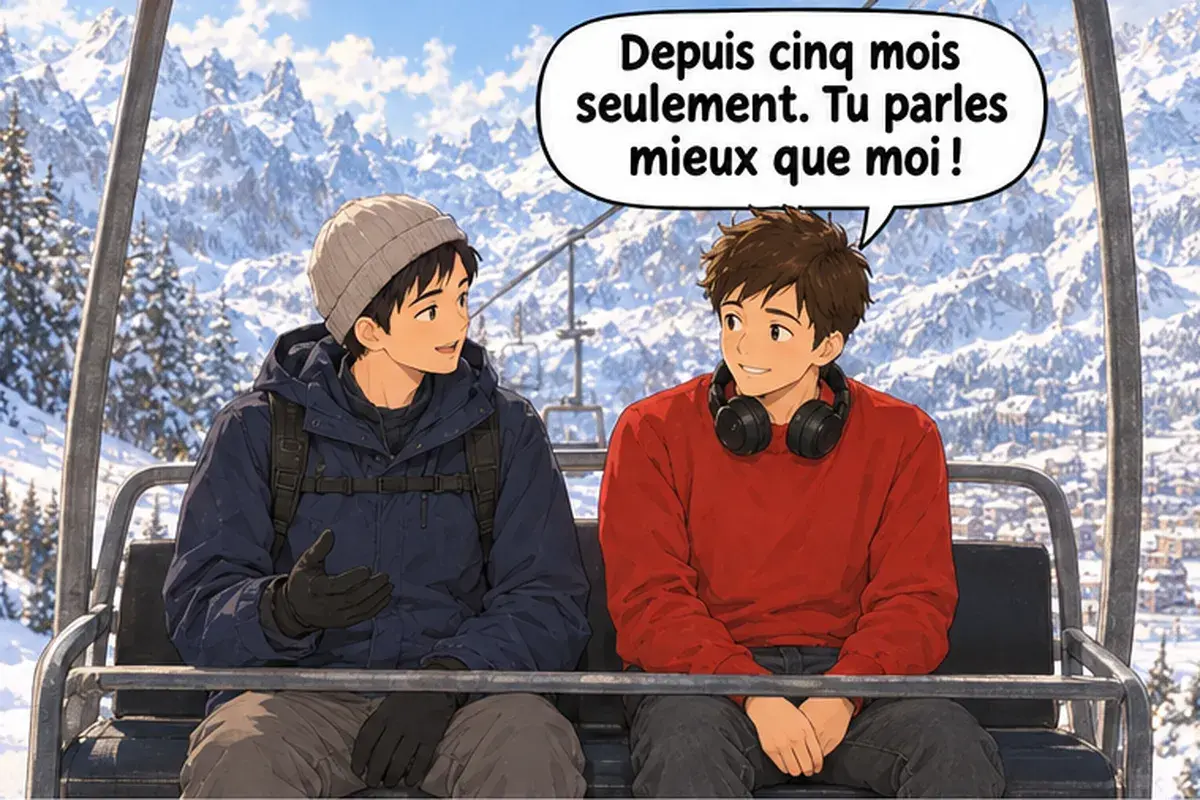
- Pacha
Depuis cinq mois seulement. Tu parles mieux que moi !
For only five months. You speak better than I do!
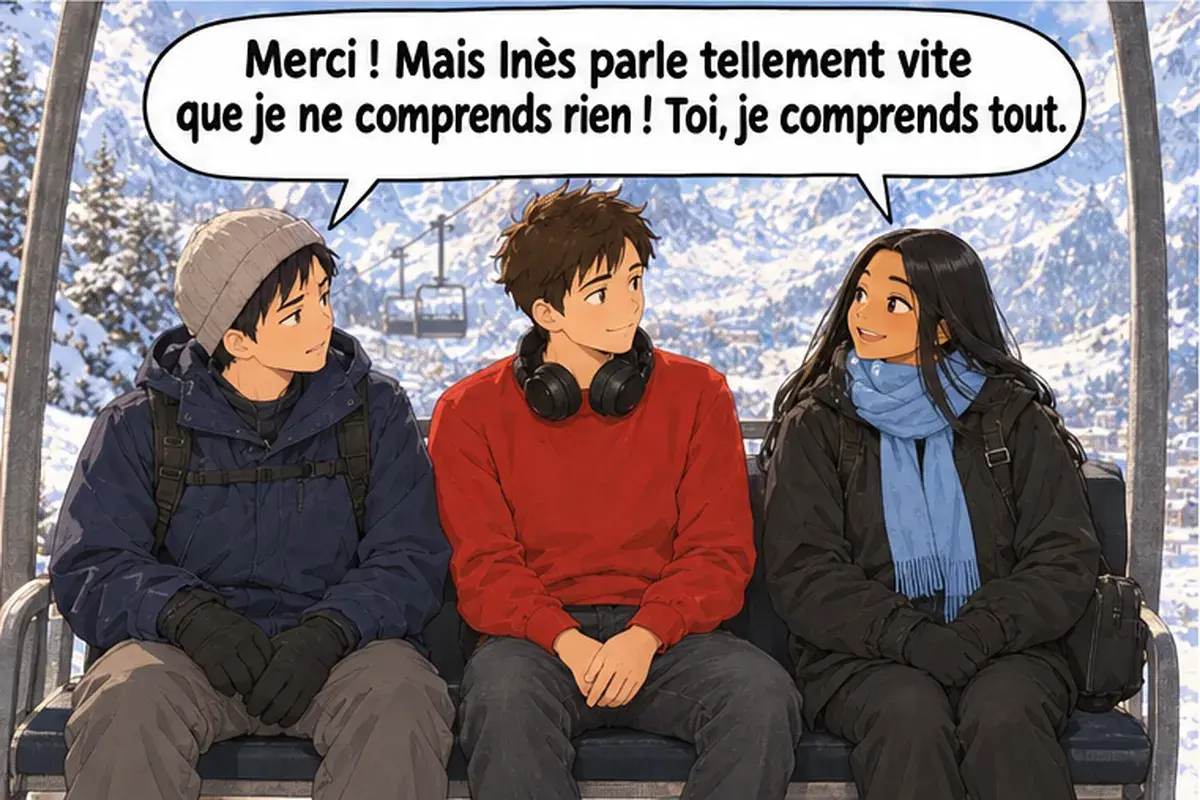
- Kenji
Merci ! Mais Inès parle tellement vite que je ne comprends rien ! Toi, je comprends tout.
Thanks! But Inès talks so fast that I don't understand anything! With you, I understand everything.

- Inès
Moi ? Je parle comme à Marseille, c'est tout !
Me? I talk the way people do in Marseille, that's all!

- Pacha
Enfin quelqu'un qui aime ma façon de parler ! Merci, Kenji.
Finally, someone who likes the way I talk! Thanks, Kenji.
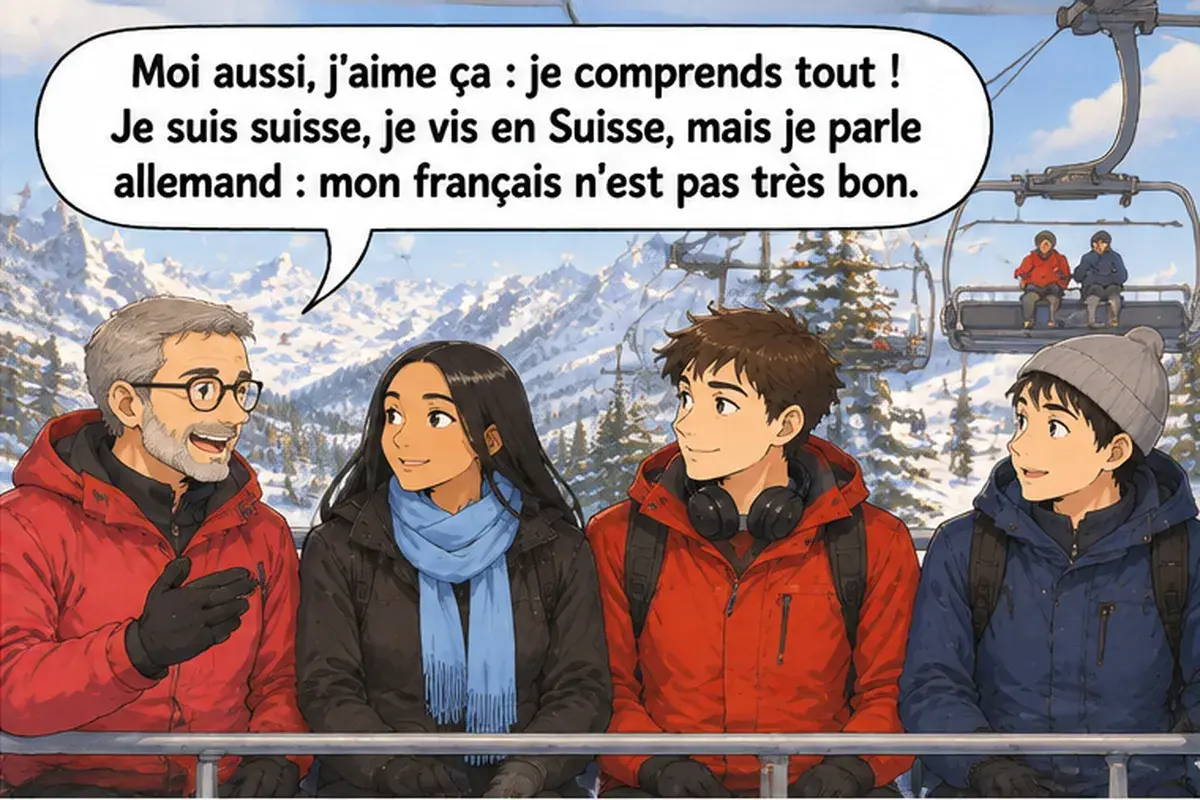
- Passant
Moi aussi, j'aime ça : je comprends tout ! Je suis suisse, je vis en Suisse, mais je parle allemand : mon français n'est pas très bon.
I like it too: I understand everything! I'm Swiss, I live in Switzerland, but I speak German: my French isn't very good.
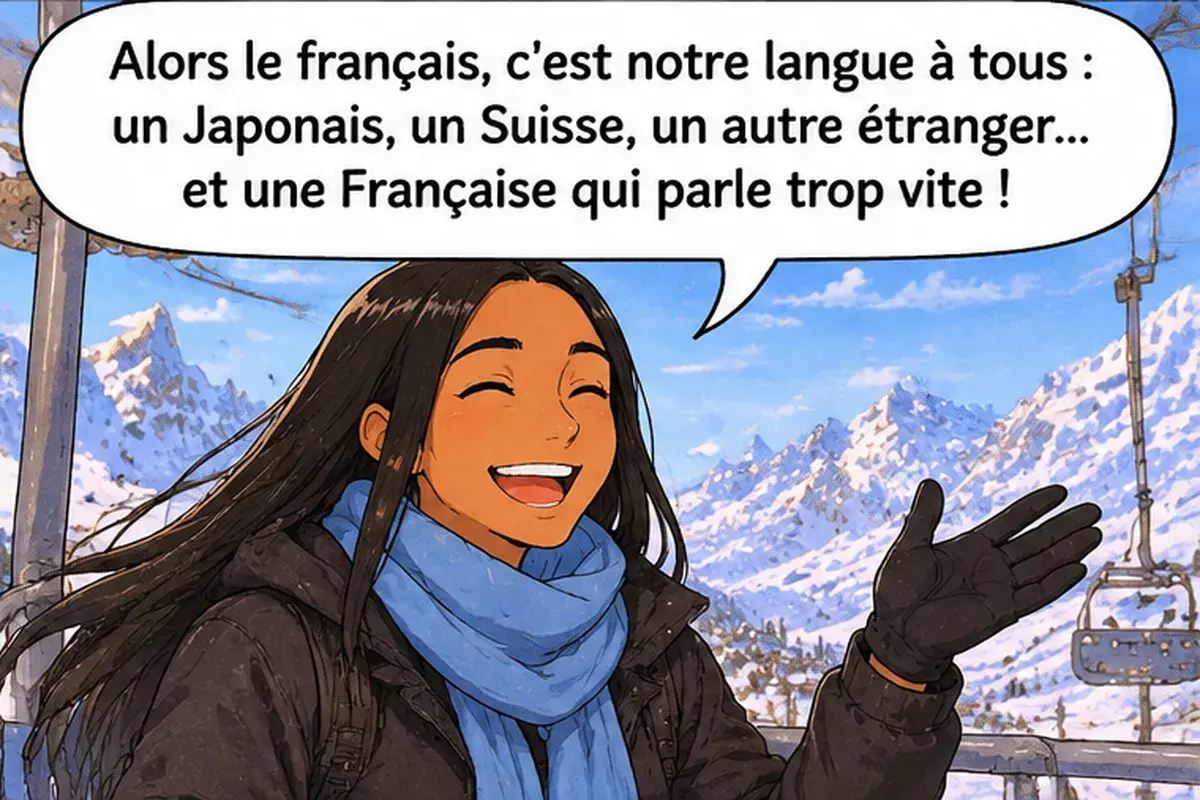
- Inès
Alors le français, c'est notre langue à tous : un Japonais, un Suisse, un autre étranger... et une Française qui parle trop vite !
So French is the language of all of us: a Japanese man, a Swiss man, another foreigner... and a Frenchwoman who talks too fast!
- Kenji
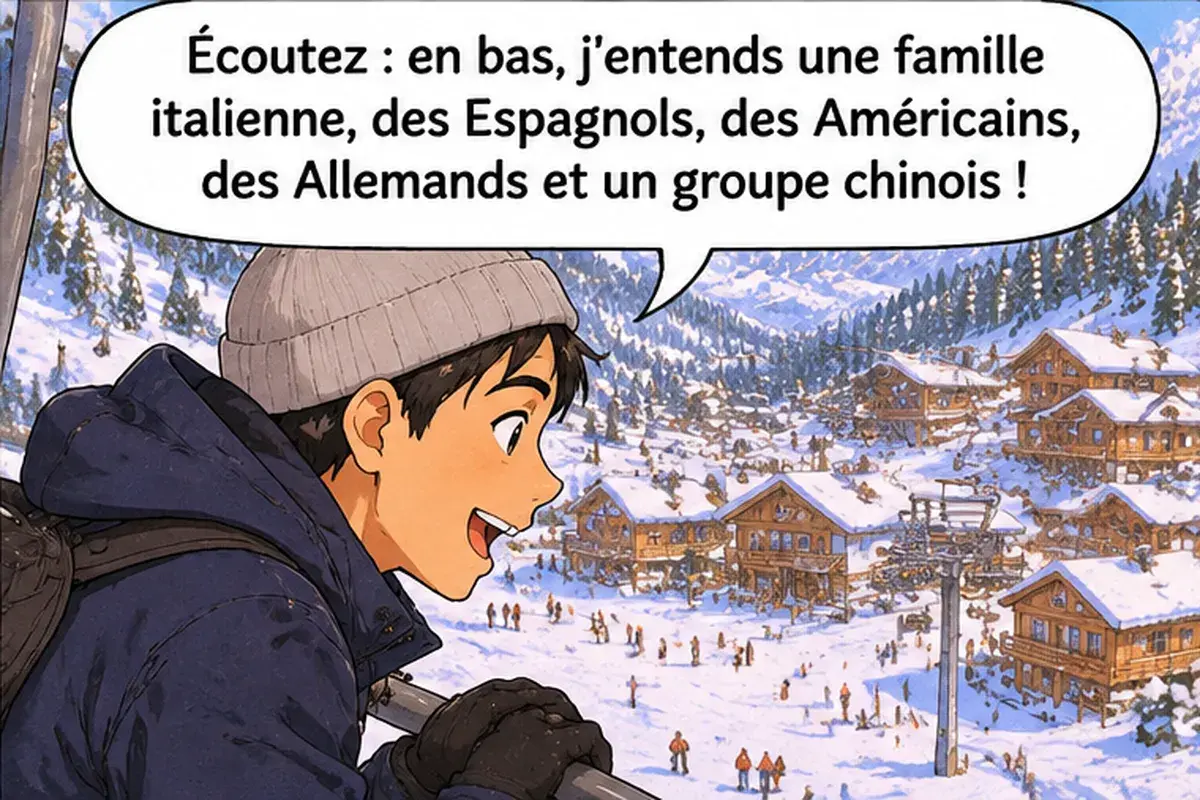
Écoutez : en bas, j'entends une famille italienne, des Espagnols, des Américains, des Allemands et un groupe chinois !
Listen: down below, I can hear an Italian family, some Spaniards, some Americans, some Germans and a Chinese group! (to several people)
- Pacha
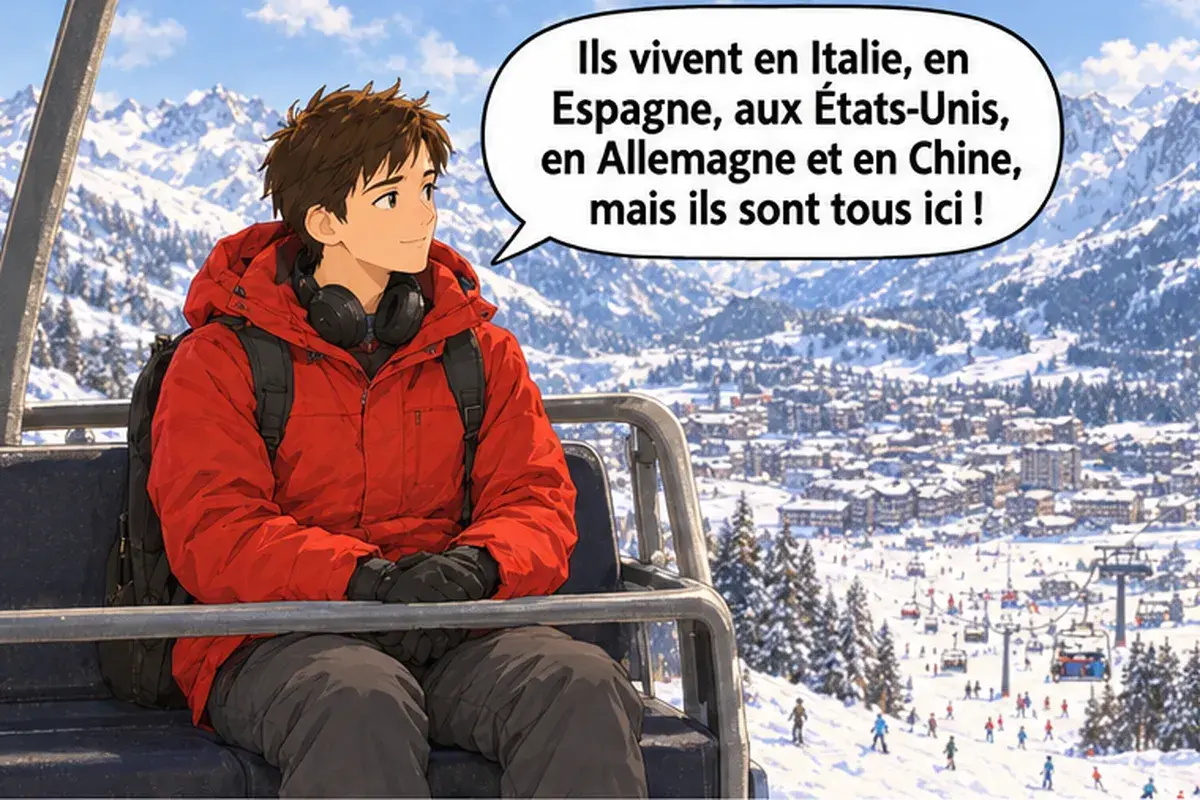
Ils vivent en Italie, en Espagne, aux États-Unis, en Allemagne et en Chine, mais ils sont tous ici !
They live in Italy, in Spain, in the United States, in Germany and in China, but they're all here!
- Inès
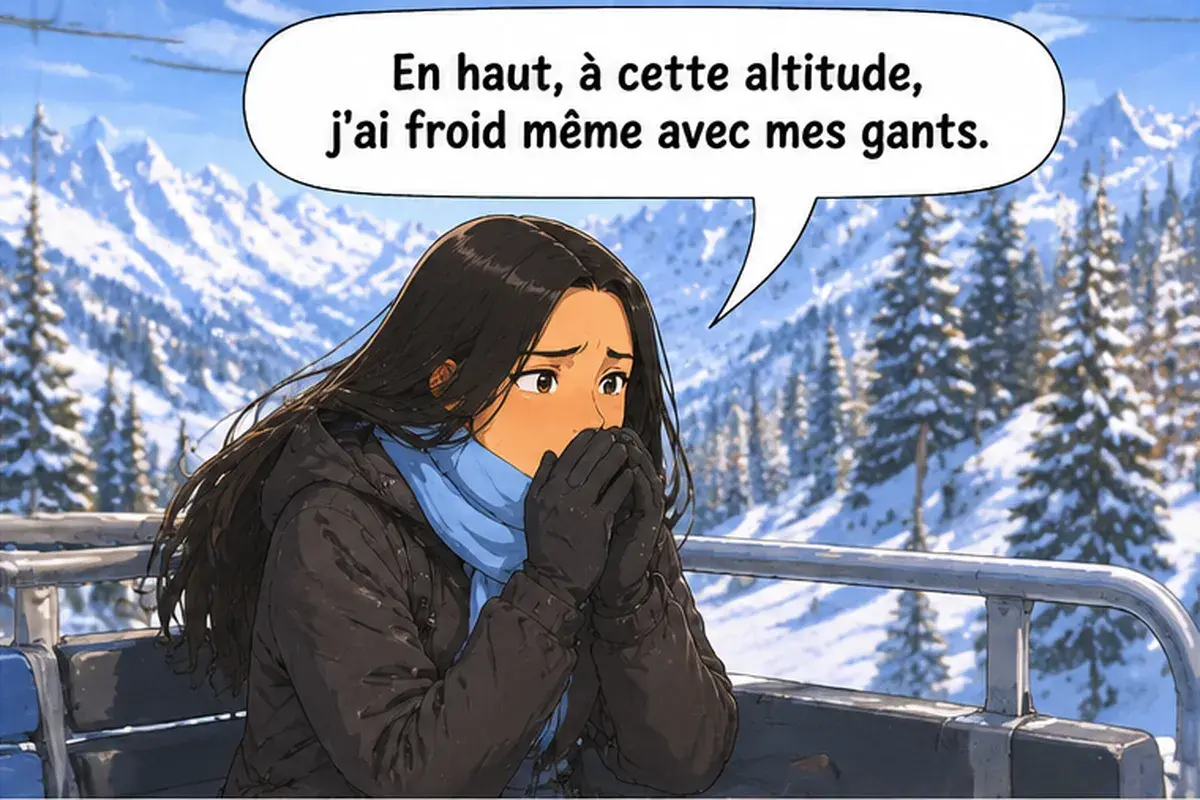
En haut, à cette altitude, j'ai froid même avec mes gants.
Up at the top, at this altitude, I'm cold even with my gloves.
- Kenji
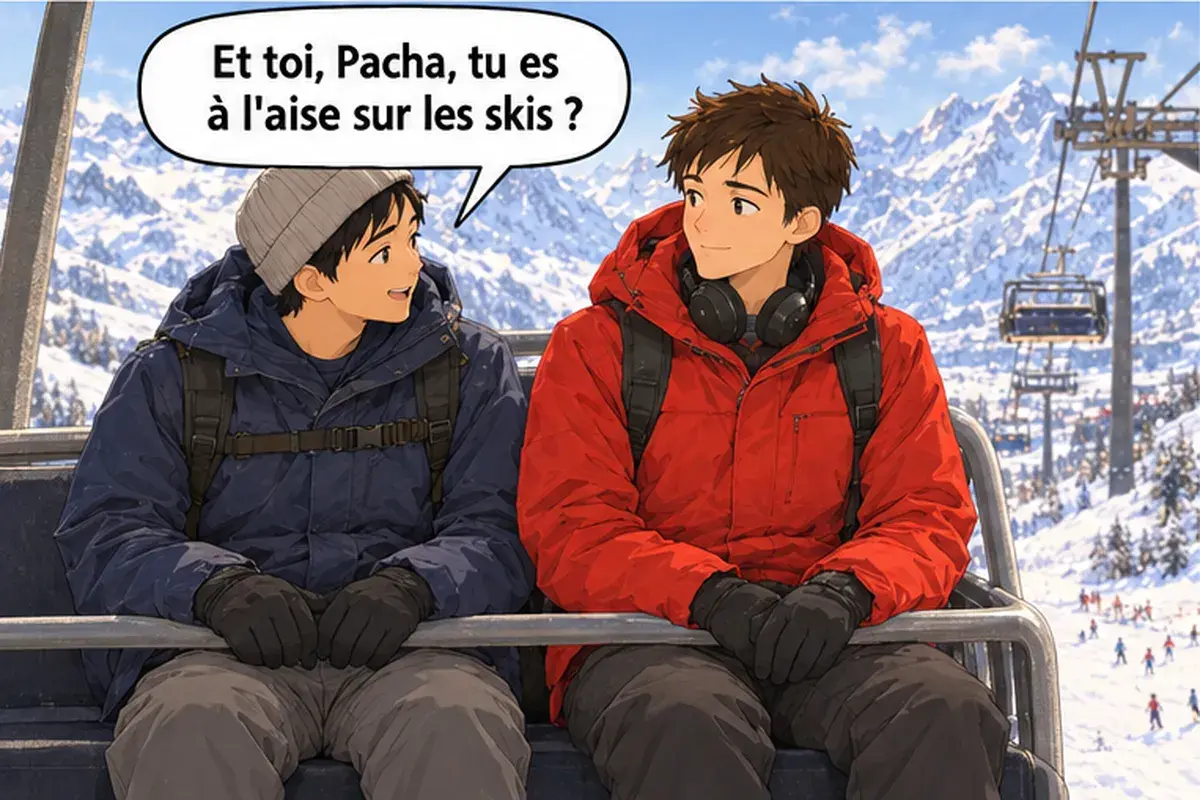
Et toi, Pacha, tu es à l'aise sur les skis ?
And you, Pacha, are you comfortable on skis?
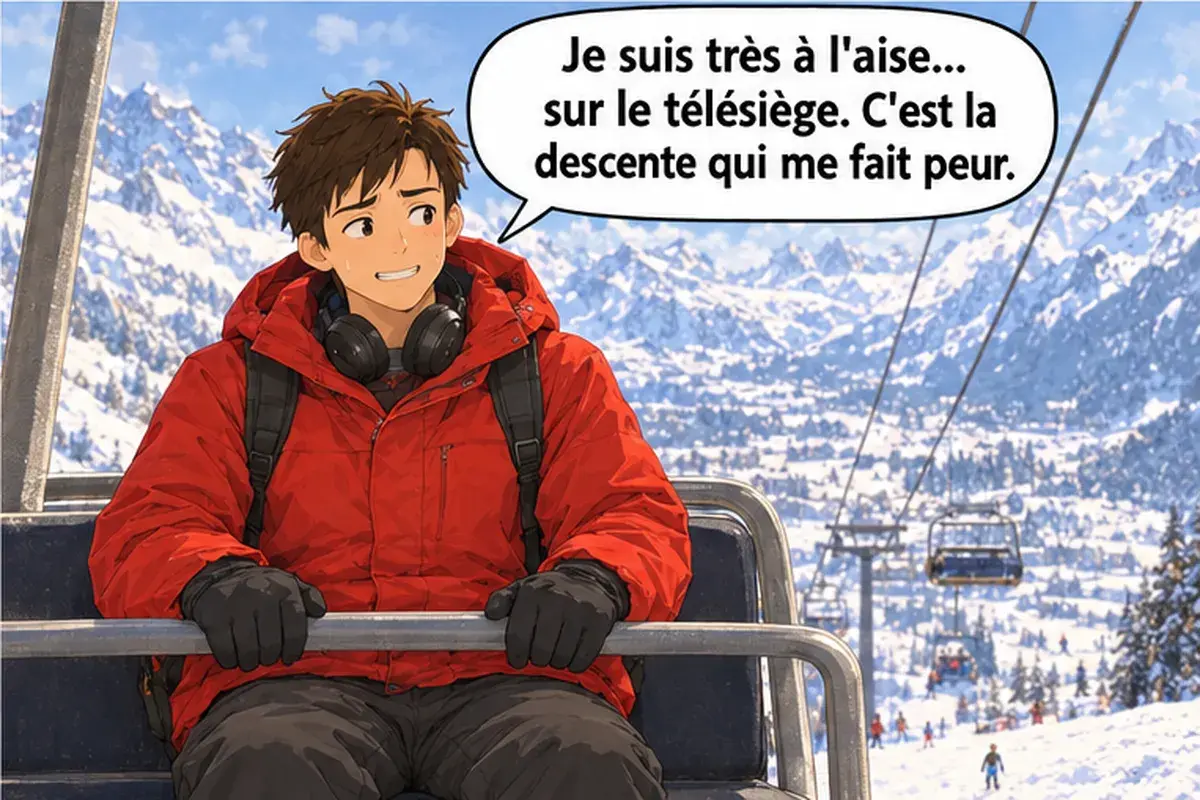
- Pacha
Je suis très à l'aise... sur le télésiège. C'est la descente qui me fait peur.
I'm very comfortable... on the chairlift. It's the way down that scares me.
Grammar for this text
- Vous venez d'où ? — d'où = de + où: "from where". The question is made with a rising voice only, without changing the word order. venez is the vous form of venir (A1, unit 18).
- Je viens du Japon… je vis en Suisse… en Italie… aux États-Unis — the preposition depends on the country's gender: du and au for masculine (le Japon), de and en for feminine (la Suisse, l'Italie), des and aux for plural (les États-Unis). More in the unit grammar.
- la ville où je vis et où je travaille — où (where) is repeated before each verb. vis is the je form of vivre (to live); it's the same as tu vis.
- On se tutoie ? — a set phrase: "Shall we use tu with each other?" Literally "Do we say tu to each other?" These "each other" verbs come at B1.
- Tu parles mieux que moi ! — mieux que — better than (unit 8). In Mais Inès parle tellement vite que je ne comprends rien, tellement … que means "so … that".
- un Japonais, un Suisse — a person gets a capital letter, but japonais as an adjective is lowercase: Kenji est japonais. In English both are capitalized.
- C'est la descente qui me fait peur — c'est … qui puts the main thing in focus: "it's the way down that scares me". me fait peur — scares me.
Words and grammar of the unit: Rent skis and say where you're from.
Learn the words from the texts with flashcards
In the app, you can tap any word in a text to see its translation, forms and examples, and new words stick with flashcards. 15 minutes a day.
Start for freeEverything is open for free. No card needed to sign up.