
French story with translation · A1 · 14 lines
Quelqu'un a retrouvé mon portefeuille ! Someone found my wallet!
Comic · 14 panels

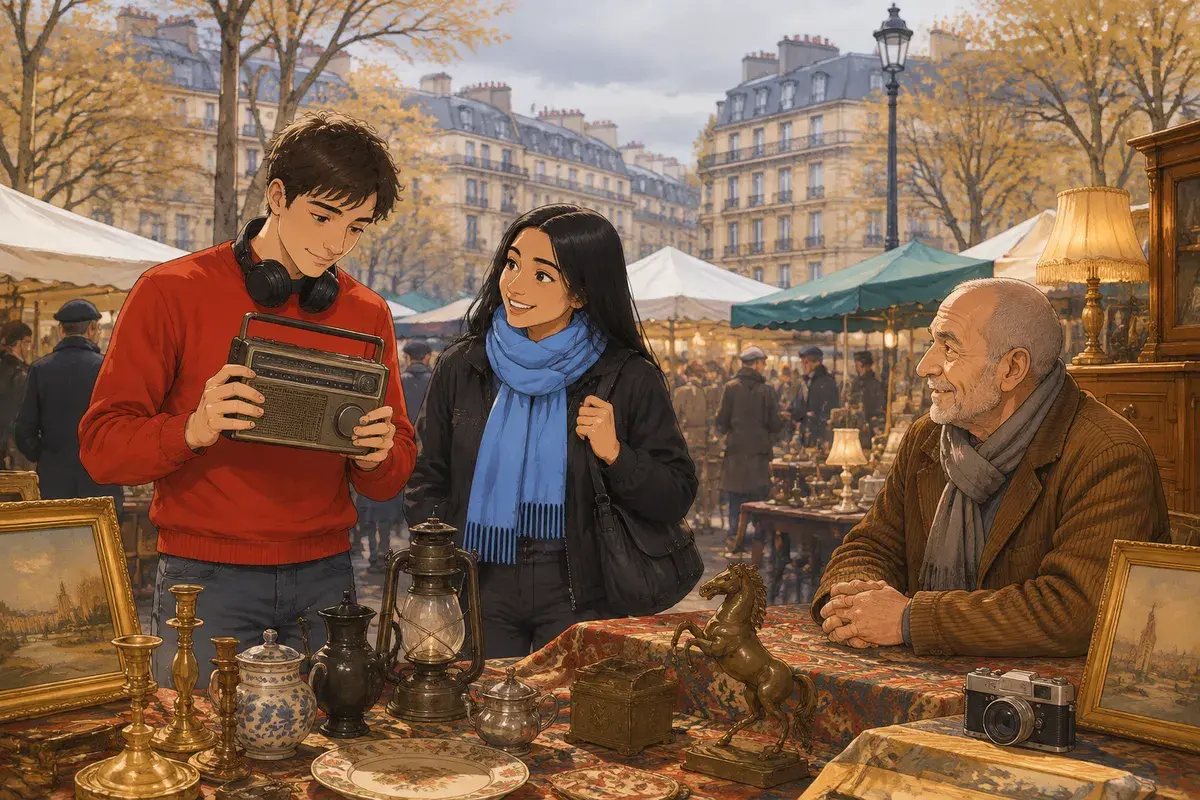
Dimanche, Inès et moi, nous avons visité une brocante. Il y avait des objets partout.
On Sunday, Inès and I visited a flea market. There were objects everywhere.

Inès a mis deux écharpes. Elle a dit : « Dix degrés ! À Marseille, il fait vingt degrés : c'est l'été ! »
Inès put on two scarves. She said, "Ten degrees! In Marseille it's twenty degrees: it's summer!"
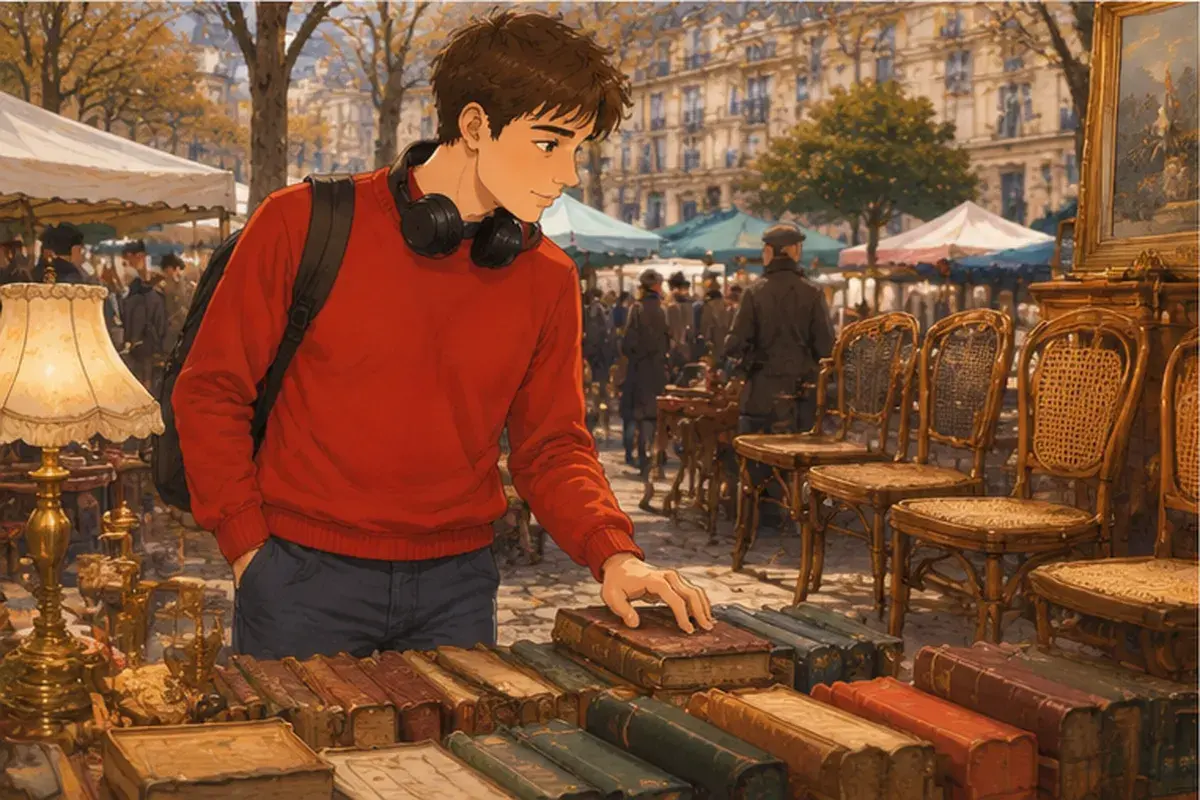
D'abord, j'ai regardé les livres. Ensuite, j'ai regardé les chaises.
First I looked at the books. Then I looked at the chairs.
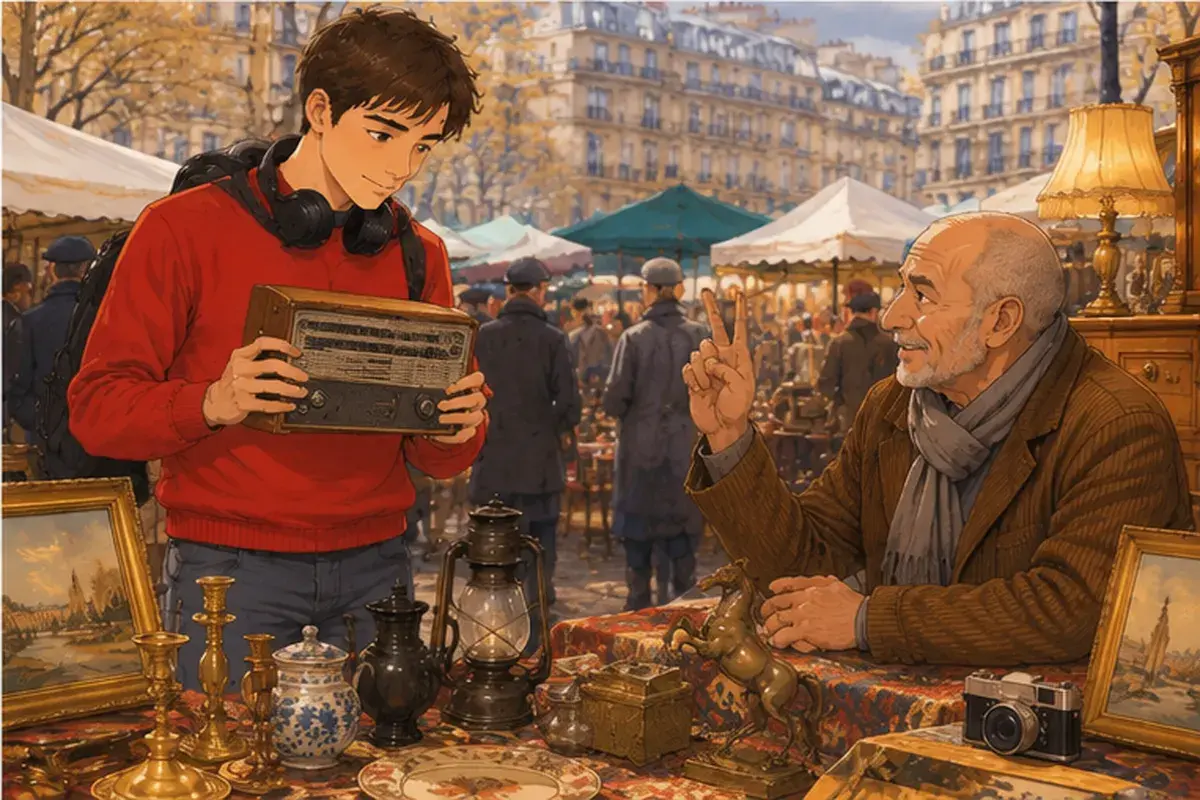
Enfin, j'ai vu une vieille radio. Le vendeur a demandé vingt euros.
Finally, I saw an old radio. The seller asked for twenty euros.

Inès a longtemps discuté avec le vendeur, et elle a gagné : douze euros !
Inès talked with the seller for a long time, and she won: twelve euros!
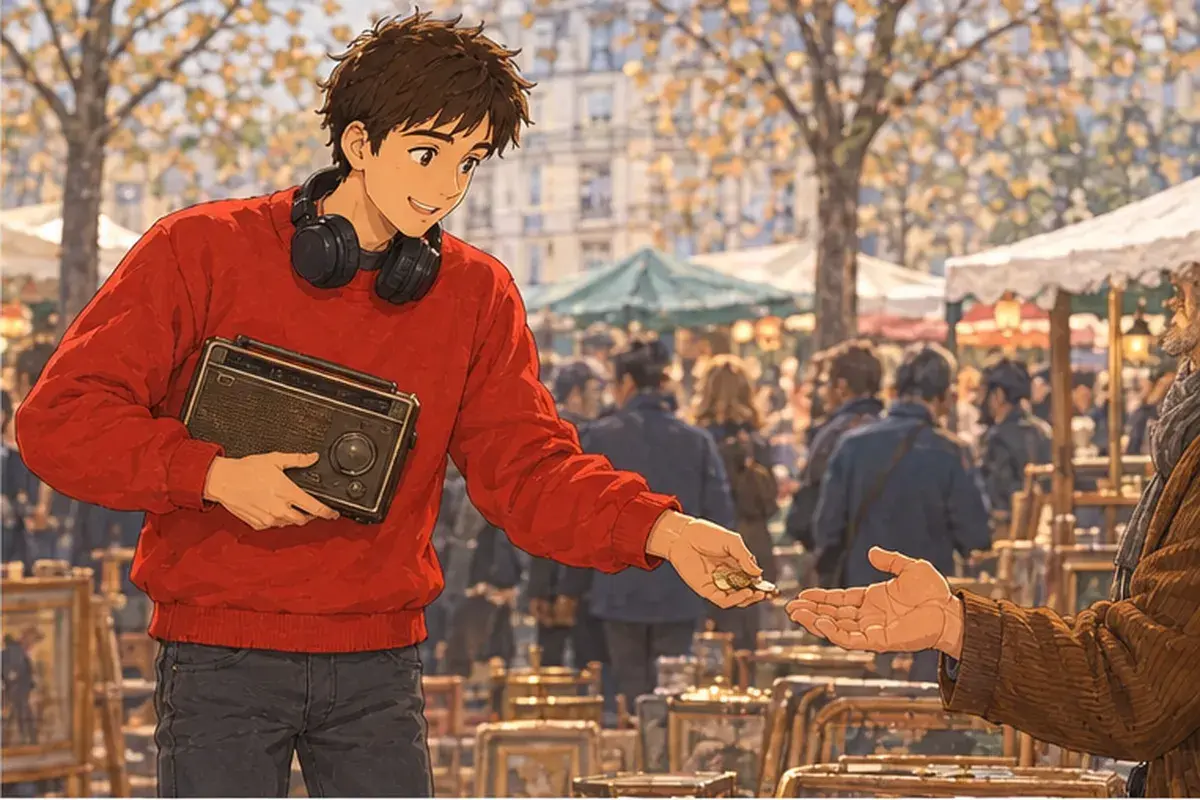
J'ai payé en espèces. Ça y est : la radio est à moi, et elle marche !
I paid in cash. That's it: the radio is mine, and it works!
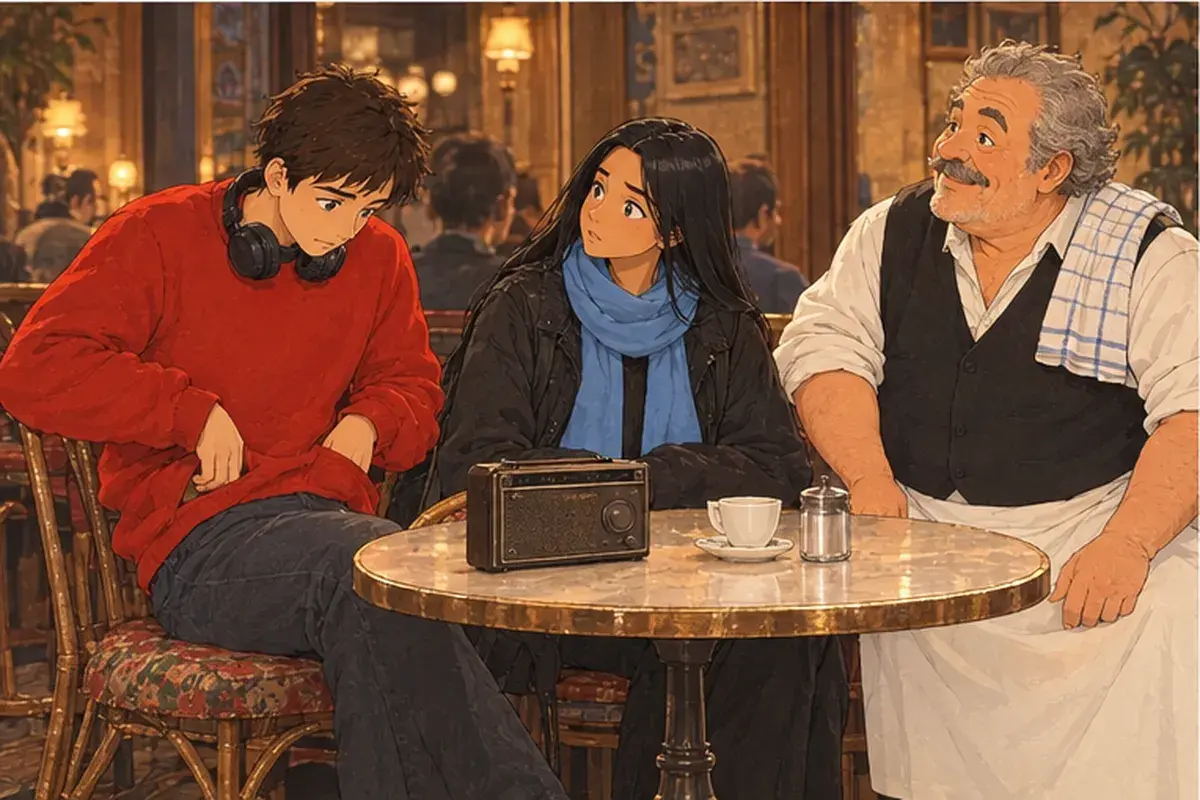
Après, nous avons pris un thé chez Momo. Au moment de payer, je n'ai pas trouvé mon portefeuille.
Afterward, we had tea at Momo's. When it was time to pay, I couldn't find my wallet.
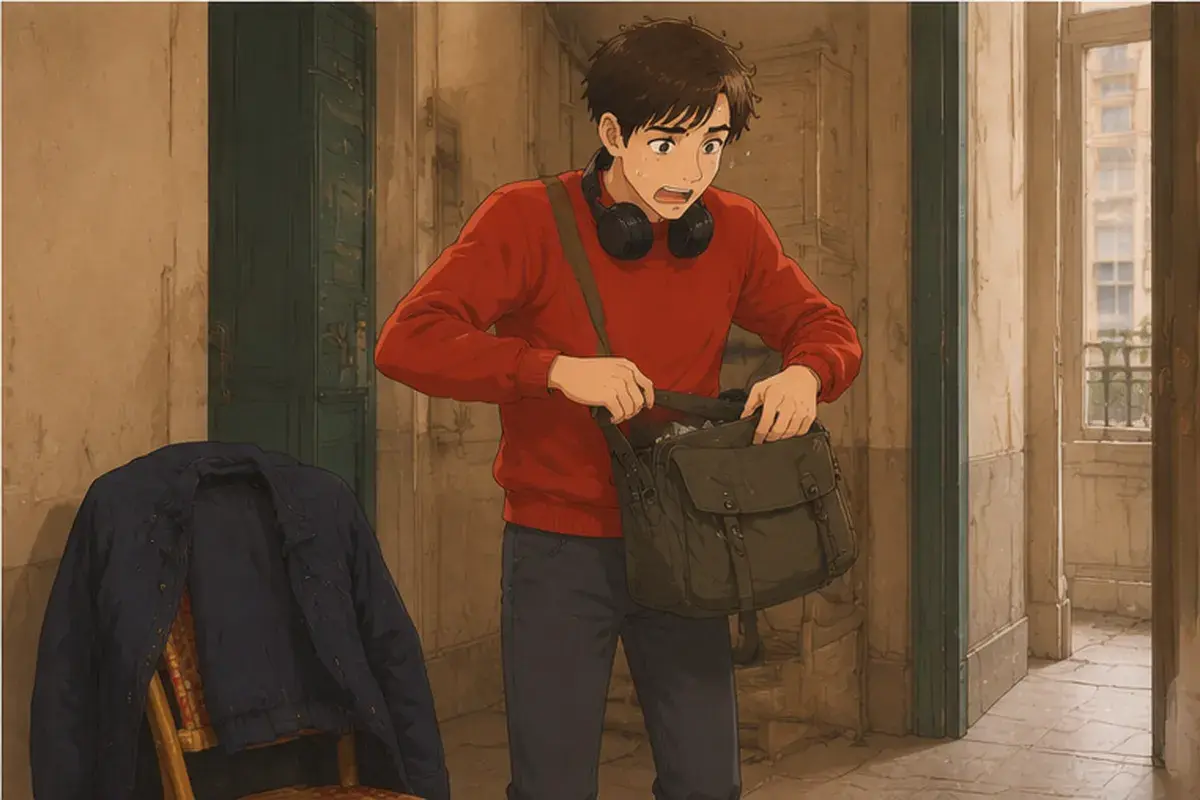
J'ai cherché dans mon sac, dans ma veste, dans mon pantalon. J'ai perdu mon portefeuille !
I searched in my bag, in my jacket, in my pants. I've lost my wallet!

Inès a payé le thé. Elle a rigolé : « Tu as laissé ton portefeuille à la brocante ! »
Inès paid for the tea. She laughed: "You left your wallet at the flea market!"
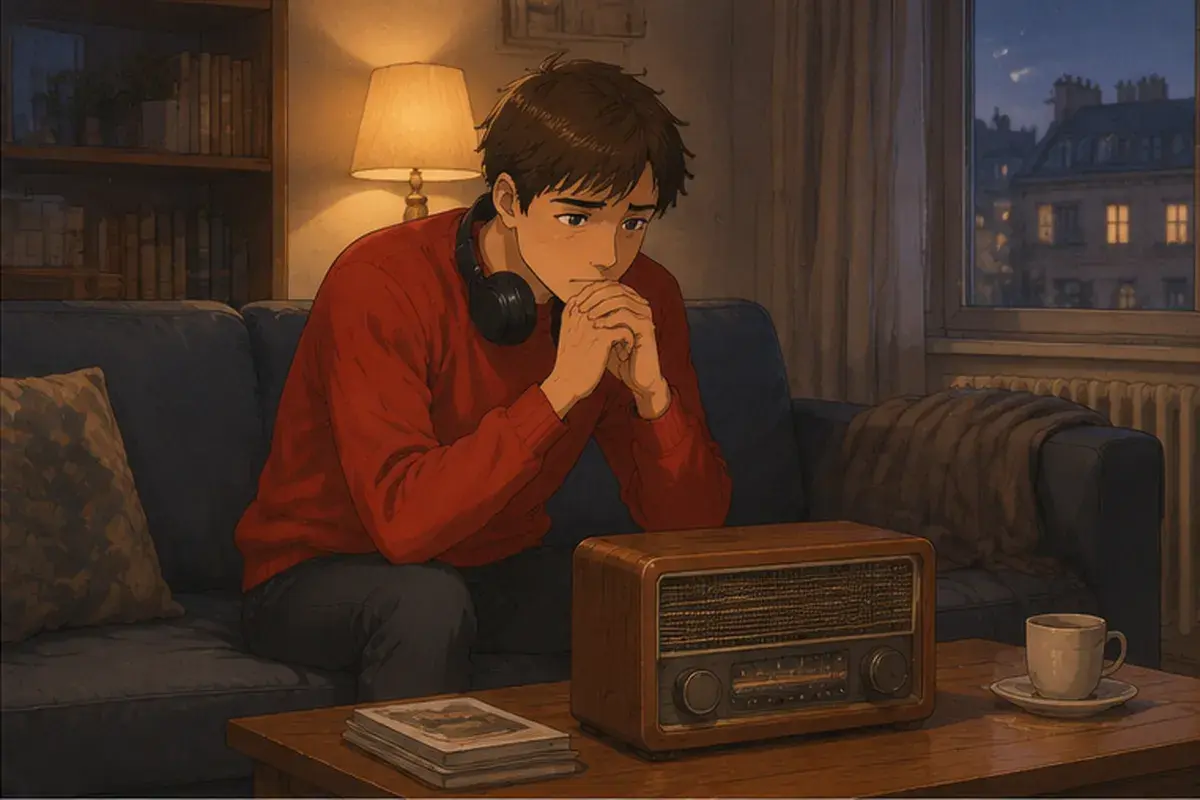
Mais la brocante a fermé à une heure. Le soir, j'ai eu peur.
But the flea market closed at one. In the evening, I got scared.
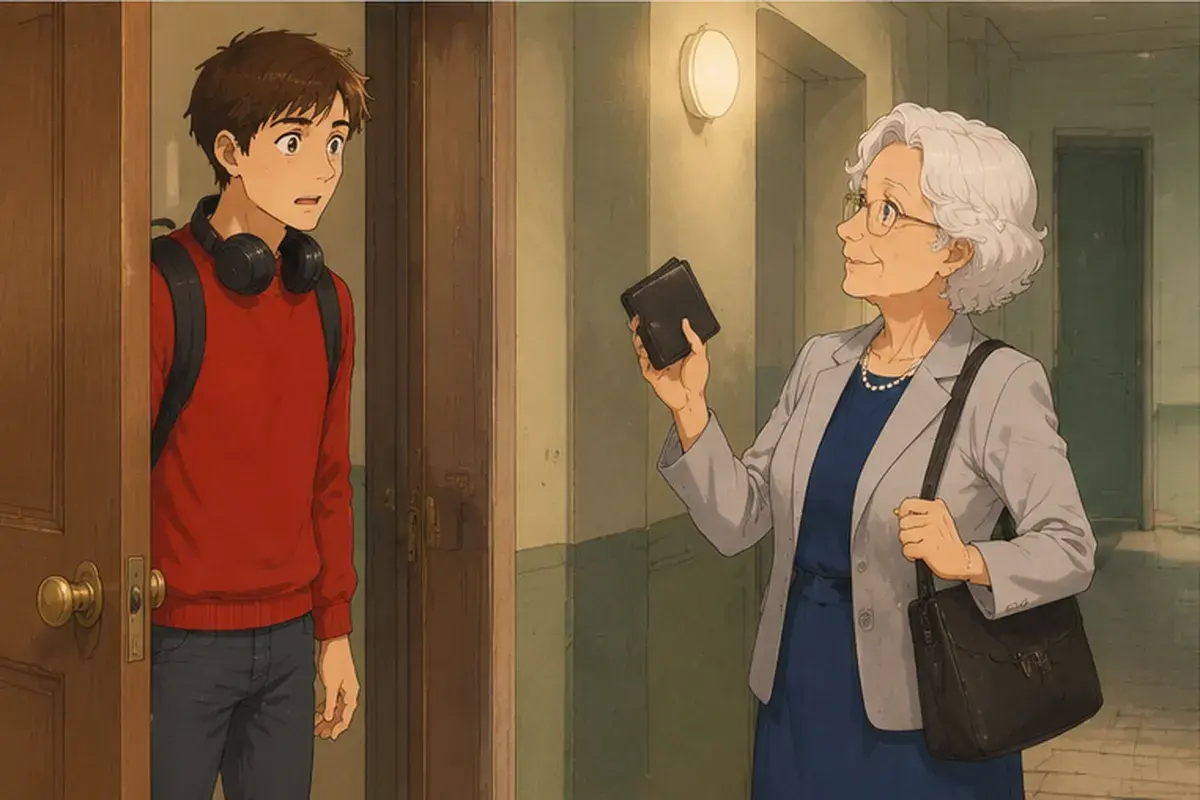
À huit heures, quelqu'un a sonné à la porte. Quelle surprise : c'était madame Morel, avec mon portefeuille !
At eight, someone rang the doorbell. What a surprise: it was Madame Morel, with my wallet!
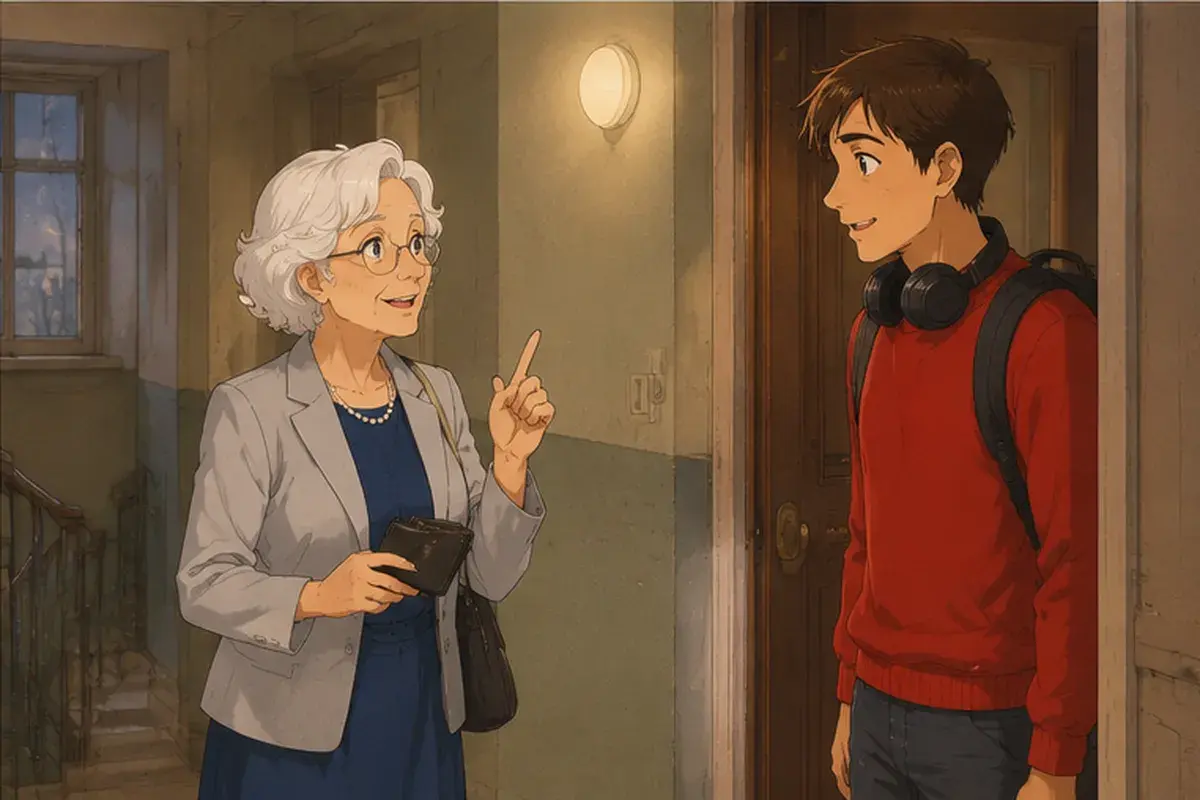
Elle a expliqué : « Un jeune homme a trouvé votre portefeuille à la brocante. Il a lu votre adresse, mais il a sonné à gauche, pas à droite. »
She explained, "A young man found your wallet at the flea market. He read your address, but he rang the bell on the left, not on the right." (formal)
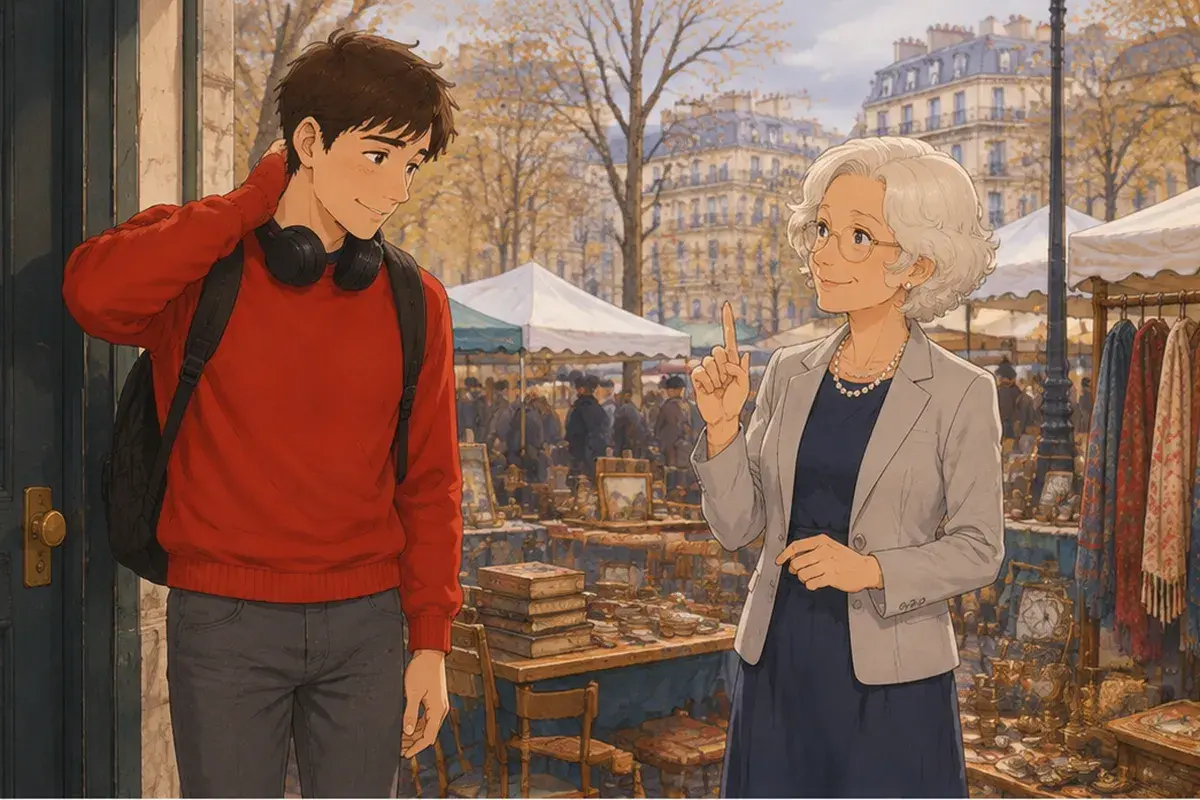
Puis elle a dit : « Attention, monsieur Pacha. On ne dit pas : j'ai perdu mon portefeuille. On dit : j'ai oublié mon portefeuille. »
Then she said, "Careful, Monsieur Pacha. You don't say 'I lost my wallet.' You say 'I forgot my wallet.'"
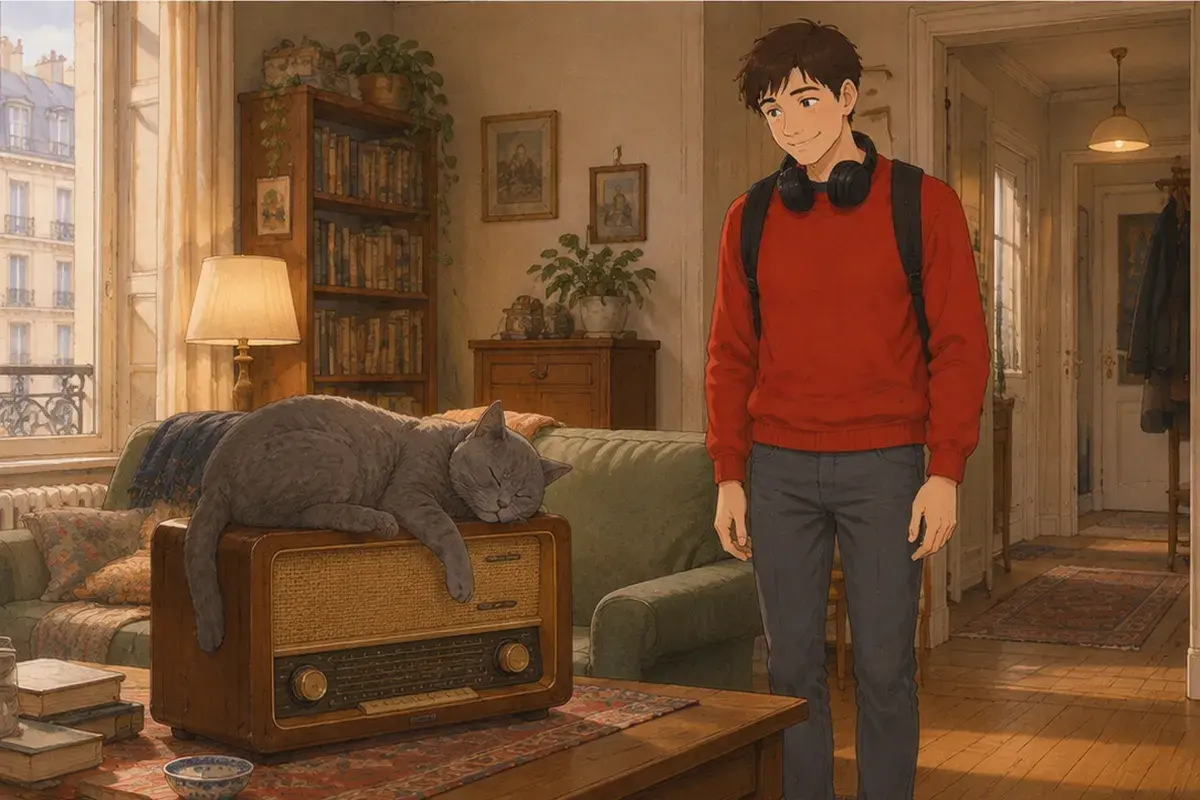
Finalement, quelqu'un a retrouvé mon portefeuille. Et maintenant, le chat Pacha dort sur ma radio !
In the end, someone found my wallet. And now Pacha the cat is sleeping on my radio!
Grammar for this text
- j'ai vu une vieille radio — vu is the past participle of voir (to see): "I saw". vieille is the feminine of vieux (old).
- nous avons pris un thé chez Momo — pris is the past participle of prendre (to take, to order); the s is silent. nous avons is the storytelling form; in conversation you'd hear on a pris.
- j'ai eu peur — eu is the past participle of avoir; it's one sound, the French u of tu. avoir peur — to be scared; in the past, "I got scared". Nearby: il a lu votre adresse: lu is the past participle of lire (to read).
- c'est l'été — l'été = le + été, summer. Here it's a noun, not the participle été (was). Inès is joking: in Marseille it's twenty degrees even in December, so it's summer.
- Ça y est : la radio est à moi — ça y est — there, done: learn it as one phrase; y comes at A2. être à moi — to be mine.
- On ne dit pas : j'ai perdu mon portefeuille — Madame Morel corrects him like a teacher: the wallet wasn't lost, it was left at the flea market, so oublier (to forget), not perdre (to lose). On ne dit pas… On dit… — "You don't say... You say...". She's being picky: in real life people say j'ai perdu mon portefeuille too.
- Quelqu'un a retrouvé mon portefeuille — quelqu'un — someone; the verb takes the il form. retrouver = re- + trouver: to find again.
Words and grammar of the unit: Talk about your weekend.
Learn the words from the texts with flashcards
In the app, you can tap any word in a text to see its translation, forms and examples, and new words stick with flashcards. 15 minutes a day.
Start for freeEverything is open for free. No card needed to sign up.