

French dialogue with translation · A1 · 14 lines
J'ai le mal du pays I'm homesick
Comic · 14 panels
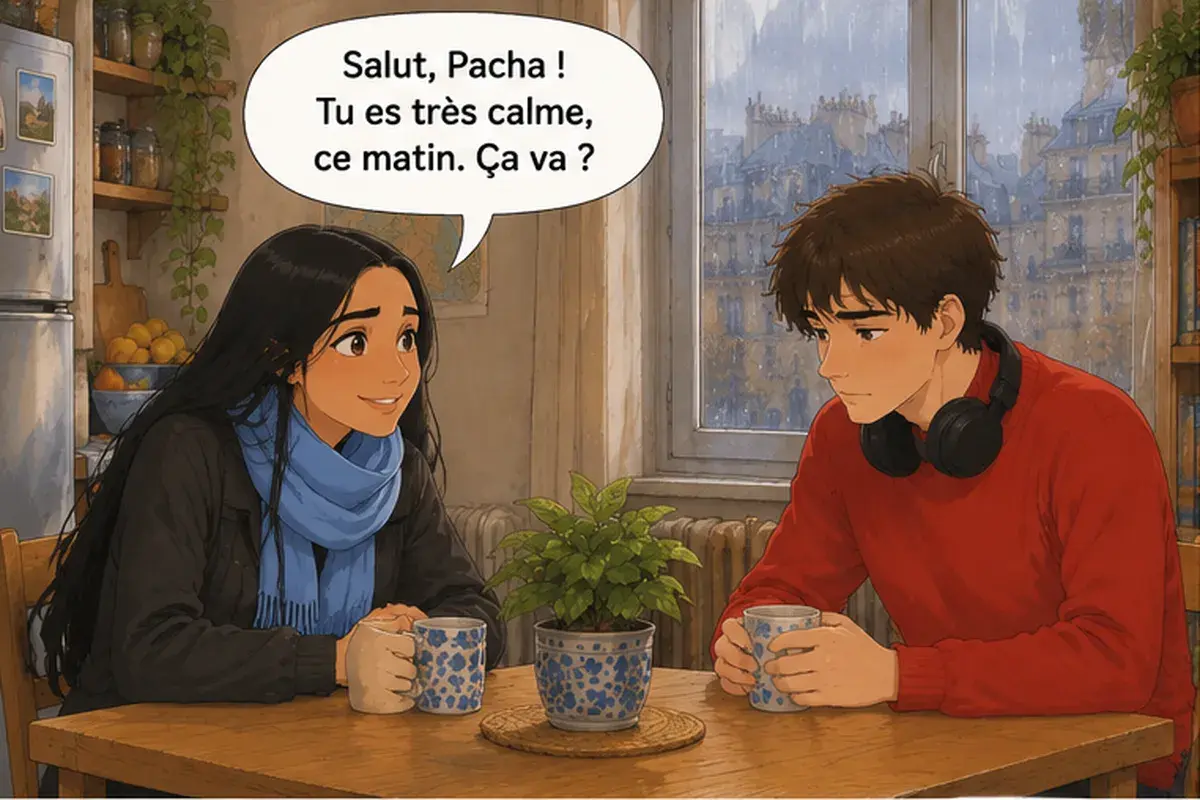
- Inès
Salut, Pacha ! Tu es très calme, ce matin. Ça va ?
Hi, Pacha! You're very quiet this morning. Are you OK?
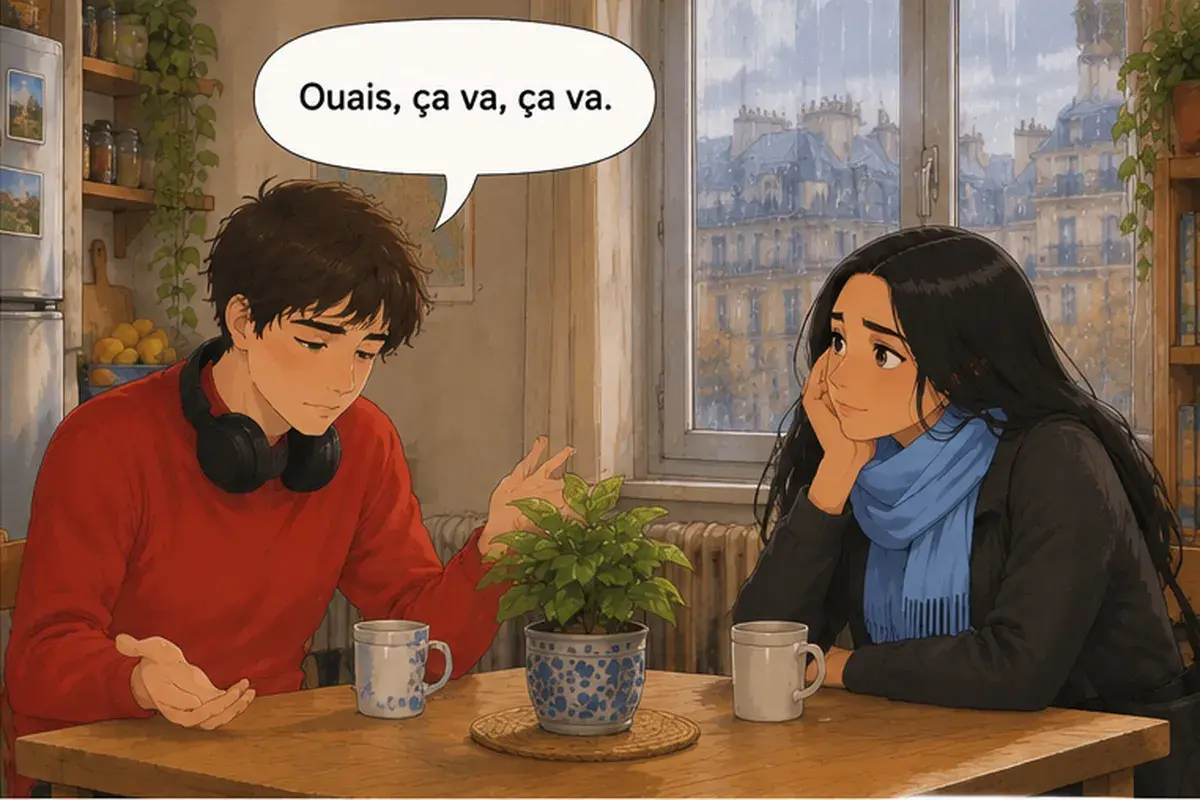
- Pacha
Ouais, ça va, ça va.
Yeah, I'm fine, I'm fine.
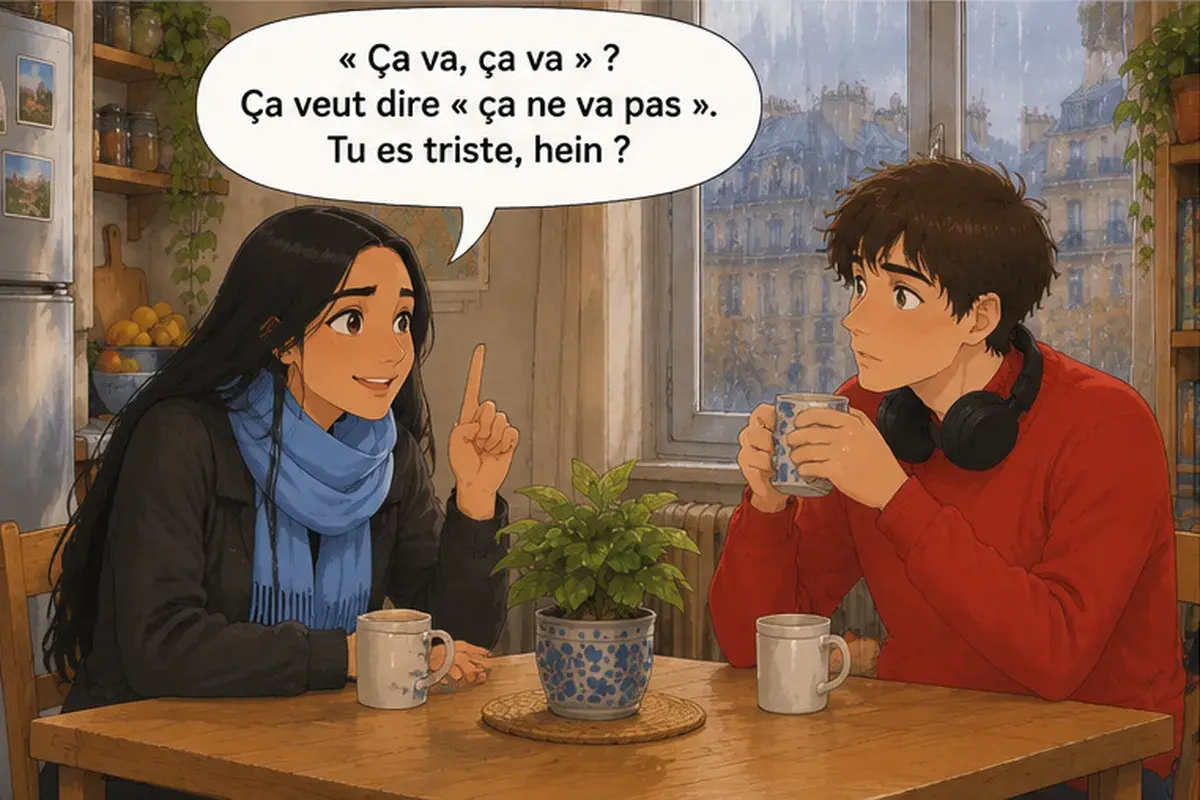
- Inès
« Ça va, ça va » ? Ça veut dire « ça ne va pas ». Tu es triste, hein ?
"I'm fine, I'm fine"? That means "I'm not fine." You're sad, right?
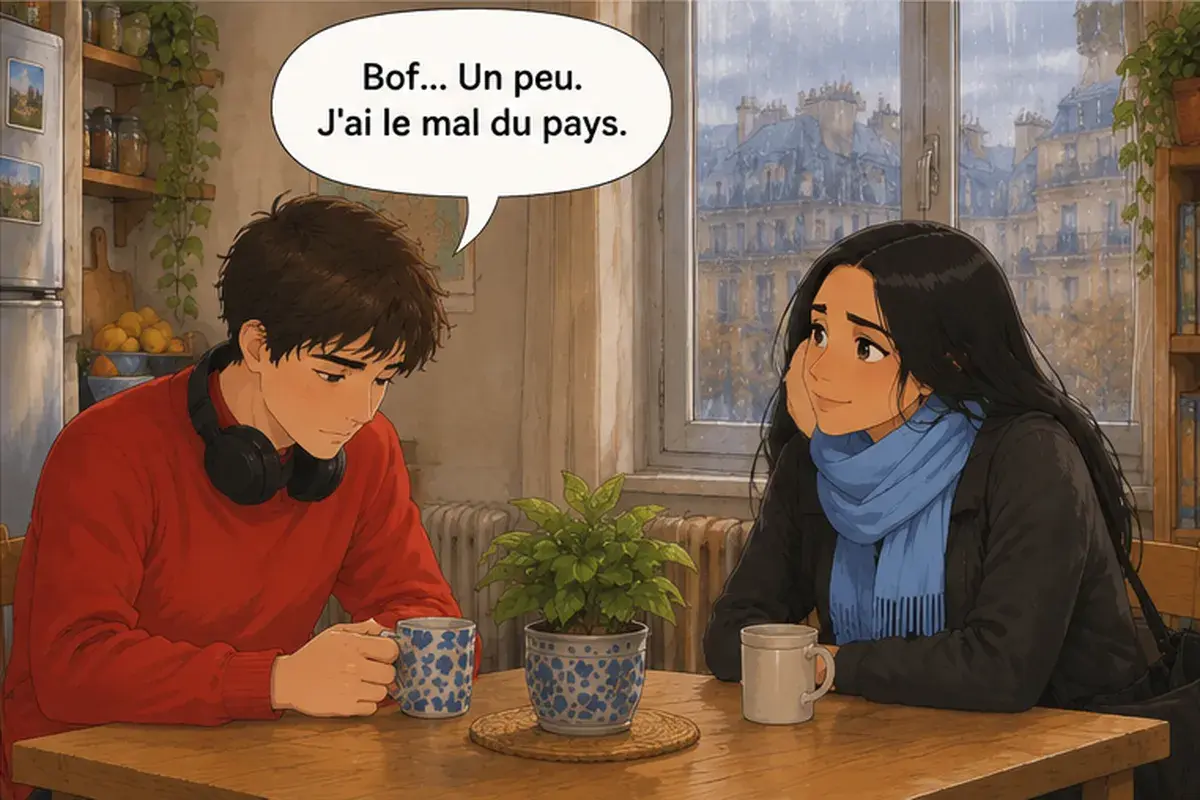
- Pacha
Bof... Un peu. J'ai le mal du pays.
Meh... A little. I'm homesick.
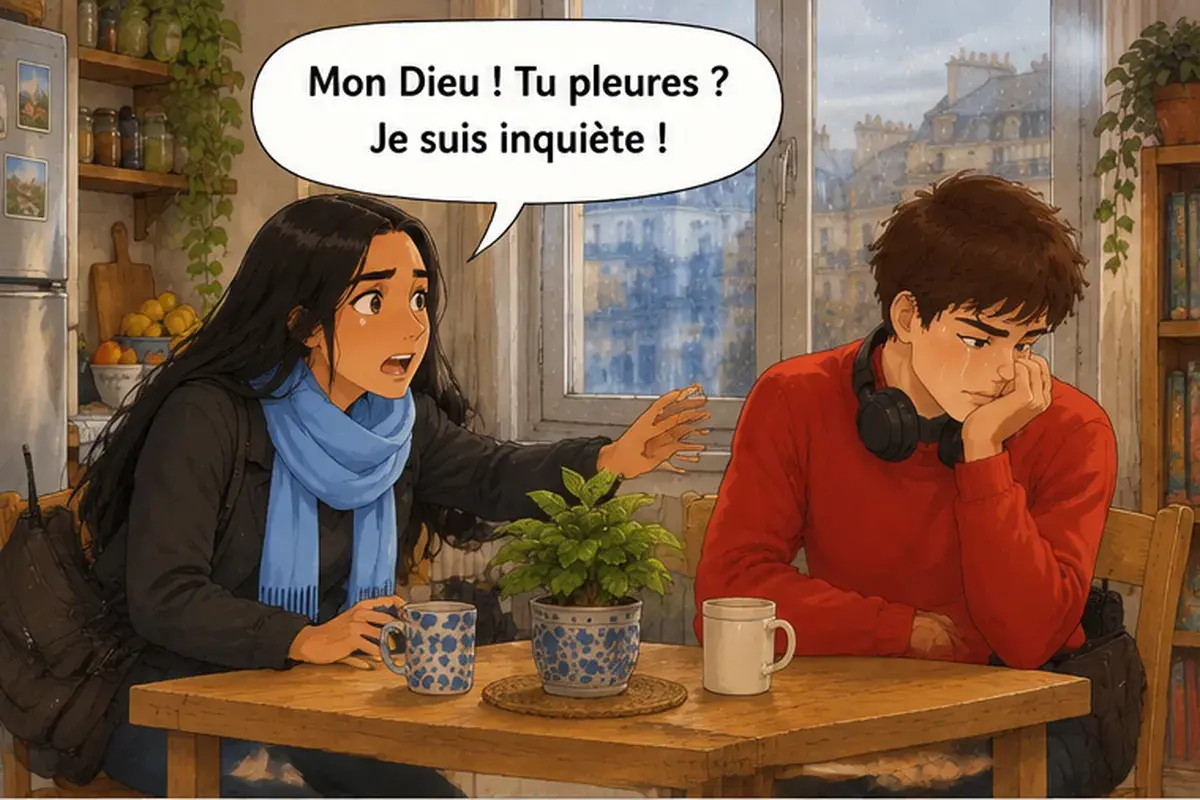
- Inès
Mon Dieu ! Tu pleures ? Je suis inquiète !
Oh my God! Are you crying? I'm worried (woman speaking)!
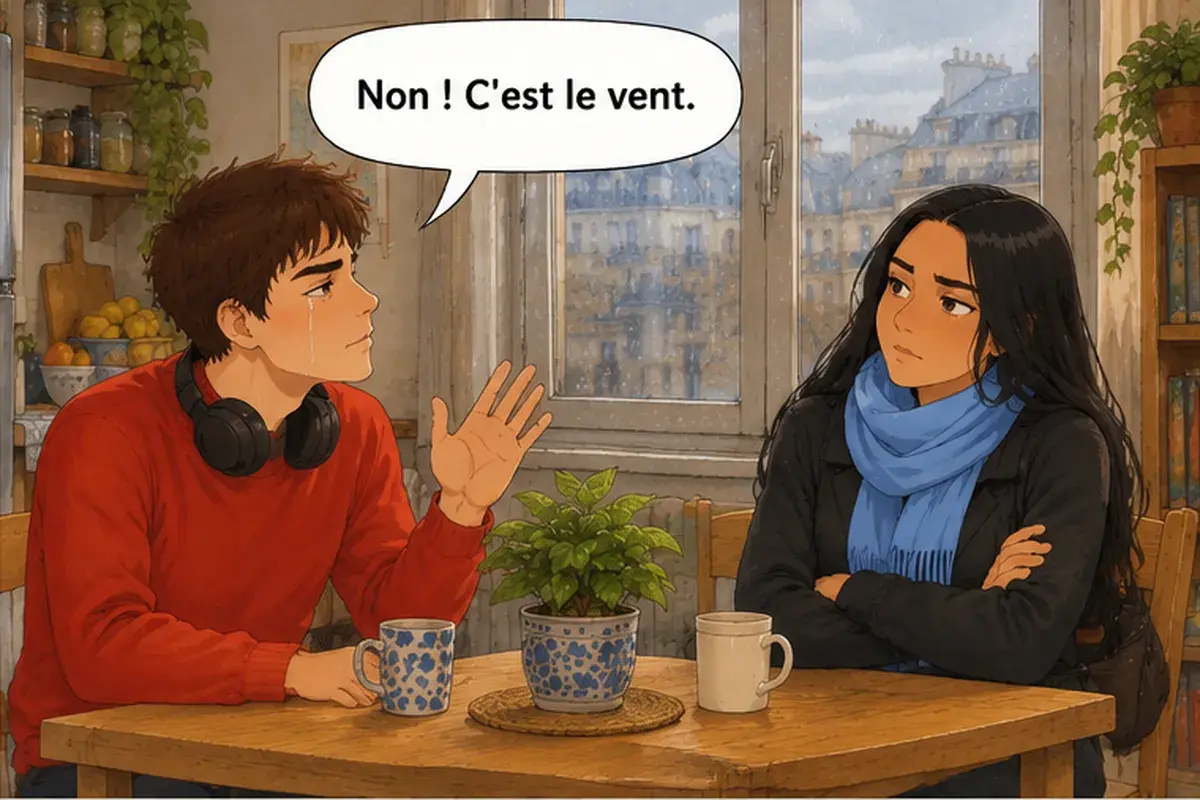
- Pacha
Non ! C'est le vent.
No! It's the wind.
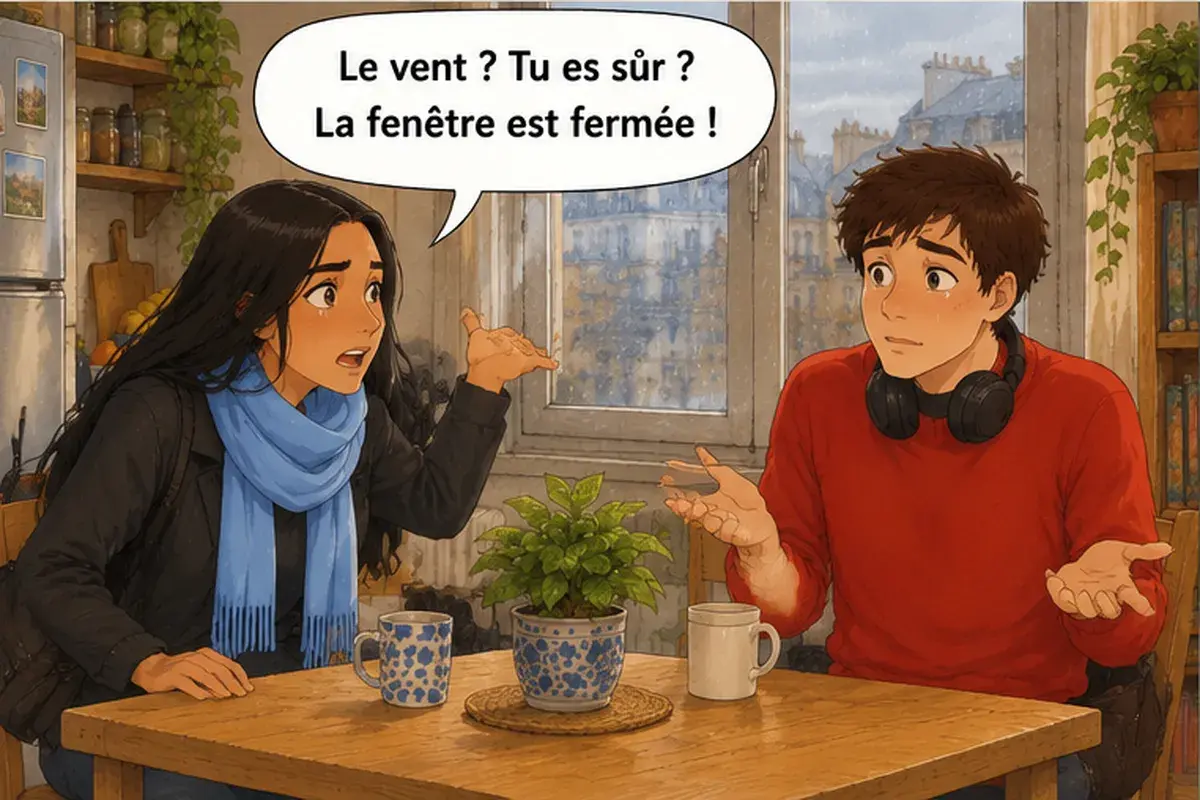
- Inès
Le vent ? Tu es sûr ? La fenêtre est fermée !
The wind? Are you sure? The window is closed! (to a man)

- Pacha
Bon, c'est vrai. Je suis ici depuis trois mois, et parfois, c'est dur.
Well, it's true. I've been here for three months, and sometimes it's hard.
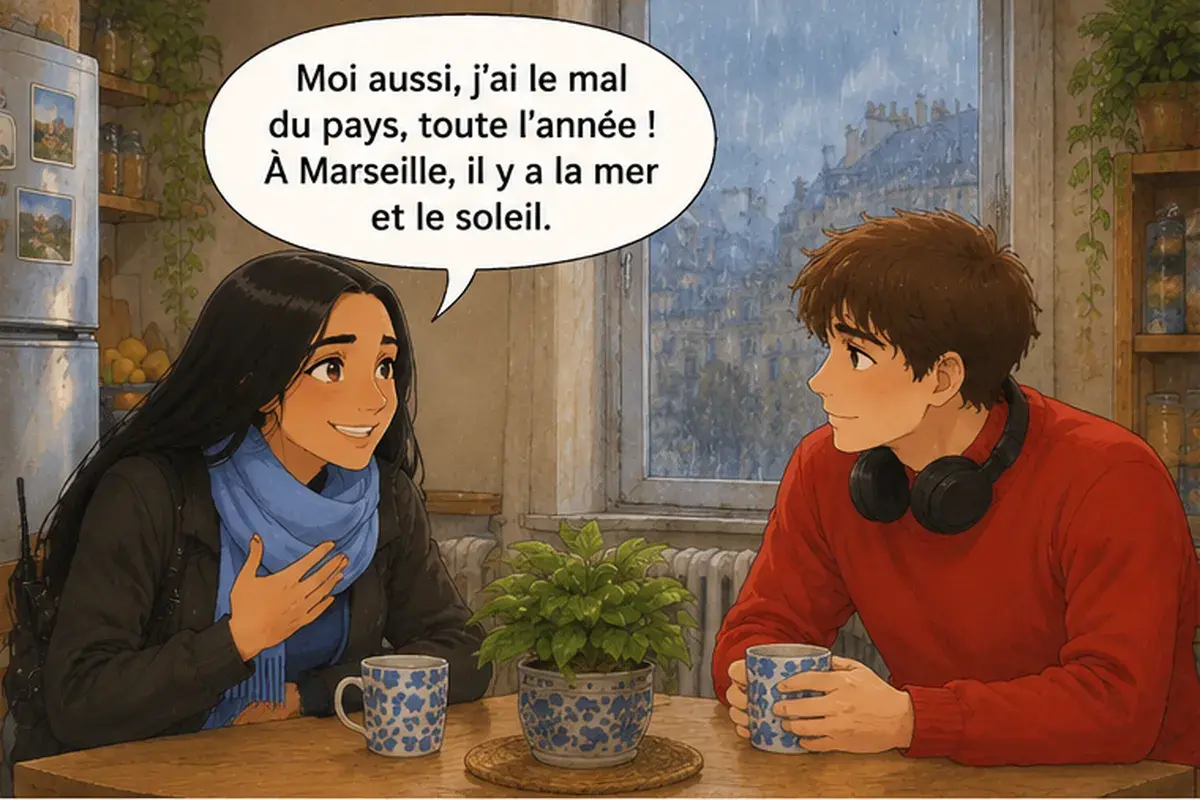
- Inès
Moi aussi, j'ai le mal du pays, toute l'année ! À Marseille, il y a la mer et le soleil.
I'm homesick too, all year long! In Marseille, there's the sea and the sun.
- Pacha
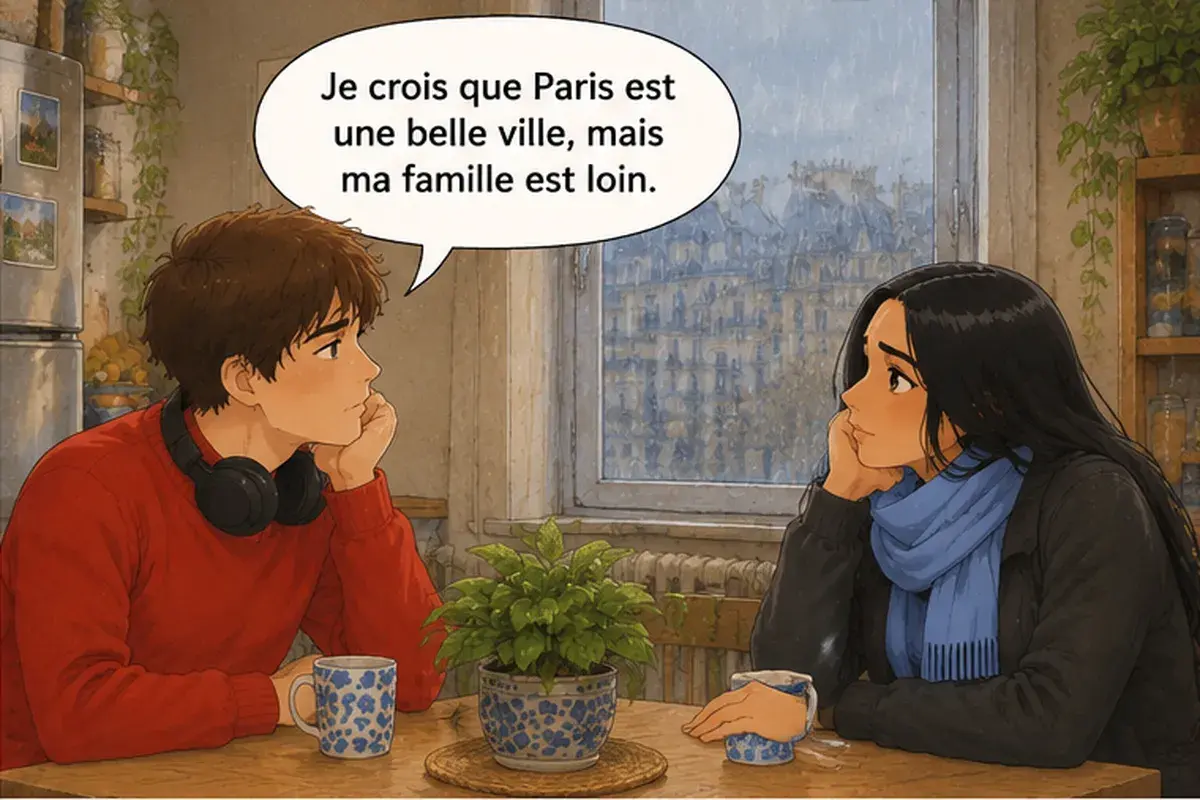
Je crois que Paris est une belle ville, mais ma famille est loin.
I think Paris is a beautiful city, but my family is far away.
- Inès
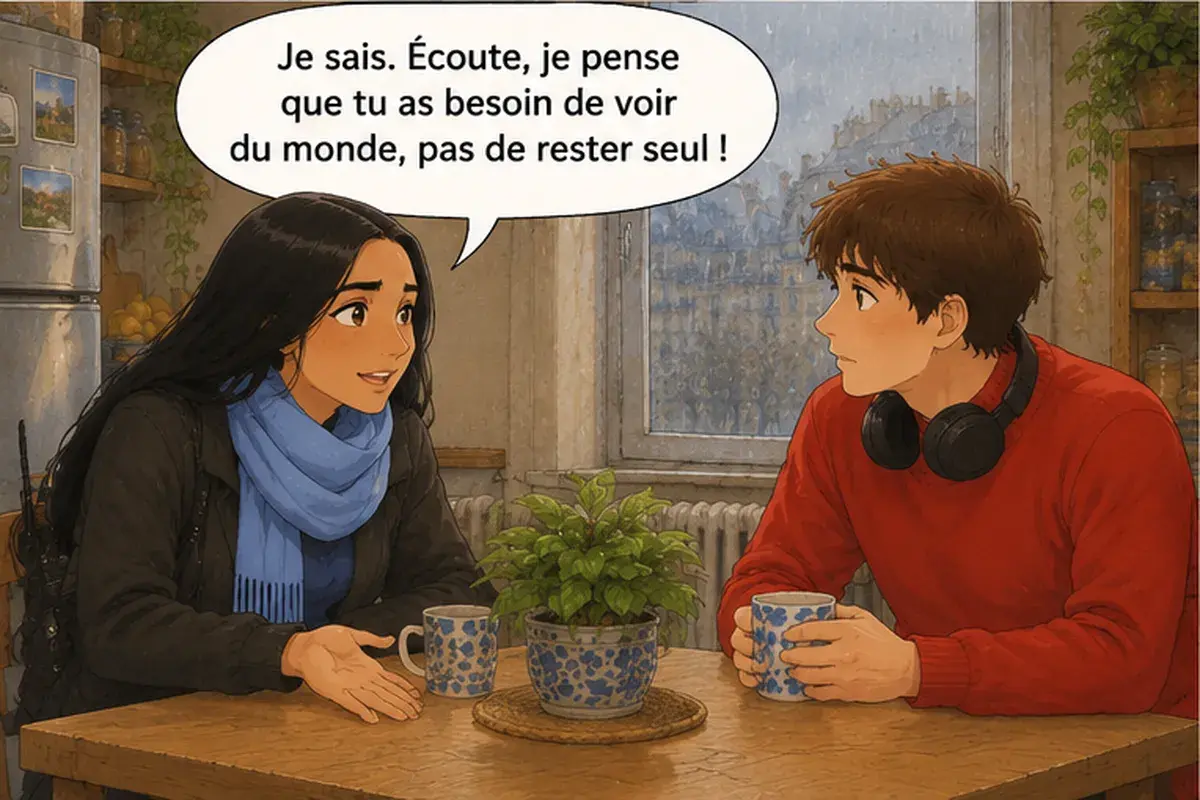
Je sais. Écoute, je pense que tu as besoin de voir du monde, pas de rester seul !
I know. Listen, I think you need to see people, not stay alone! (to a man)
- Pacha
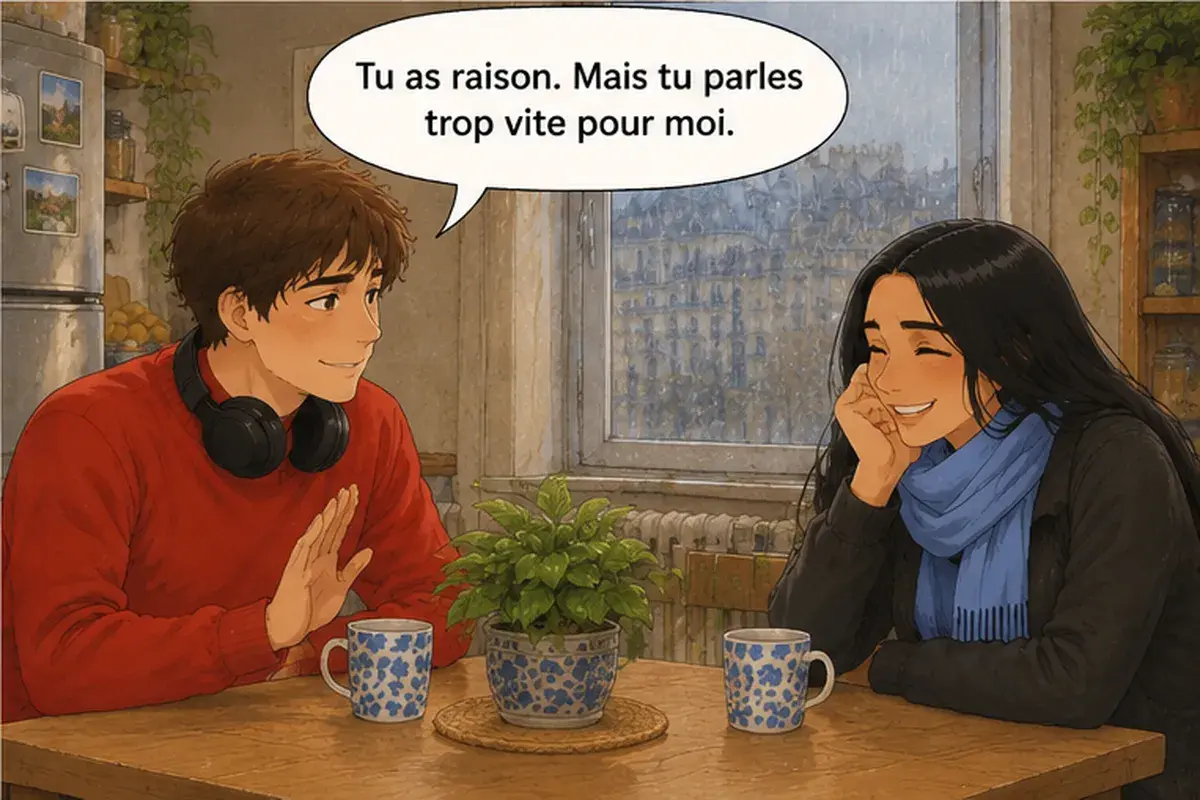
Tu as raison. Mais tu parles trop vite pour moi.
You're right. But you talk too fast for me.
- Inès
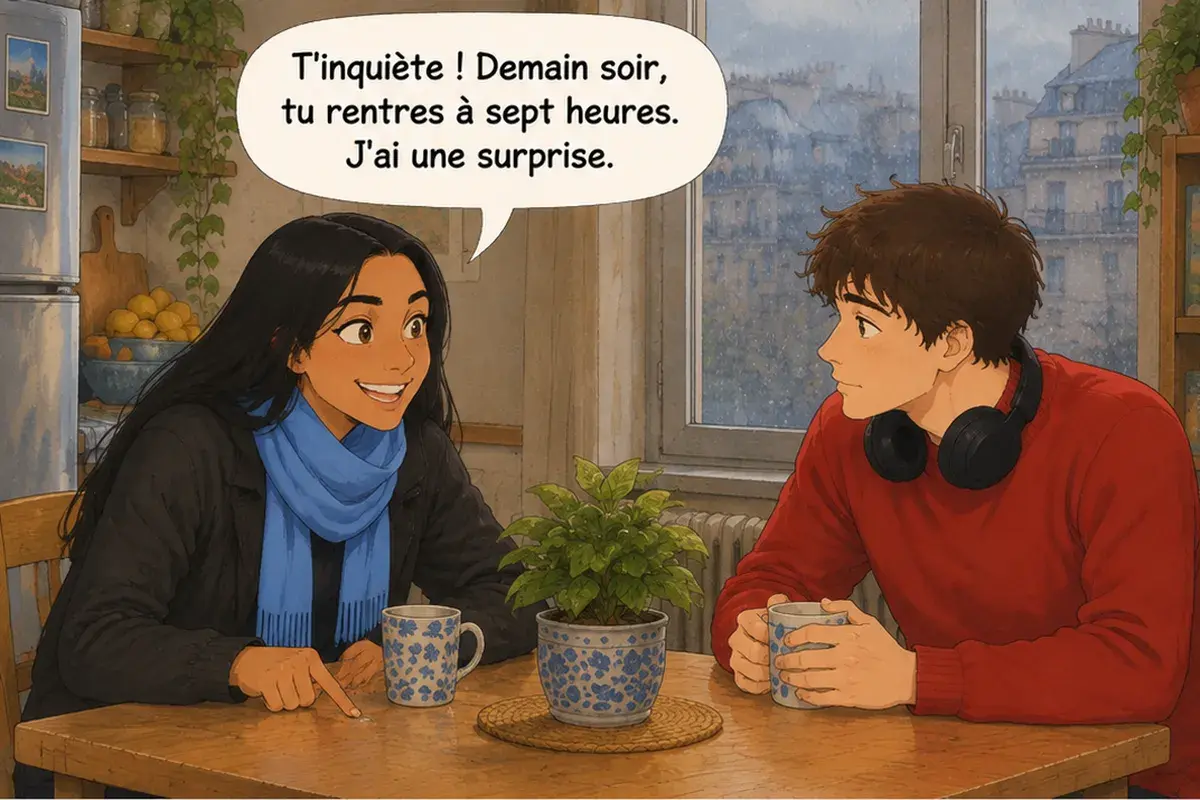
T'inquiète ! Demain soir, tu rentres à sept heures. J'ai une surprise.
Don't worry! Tomorrow evening, you're coming home at seven. I have a surprise.
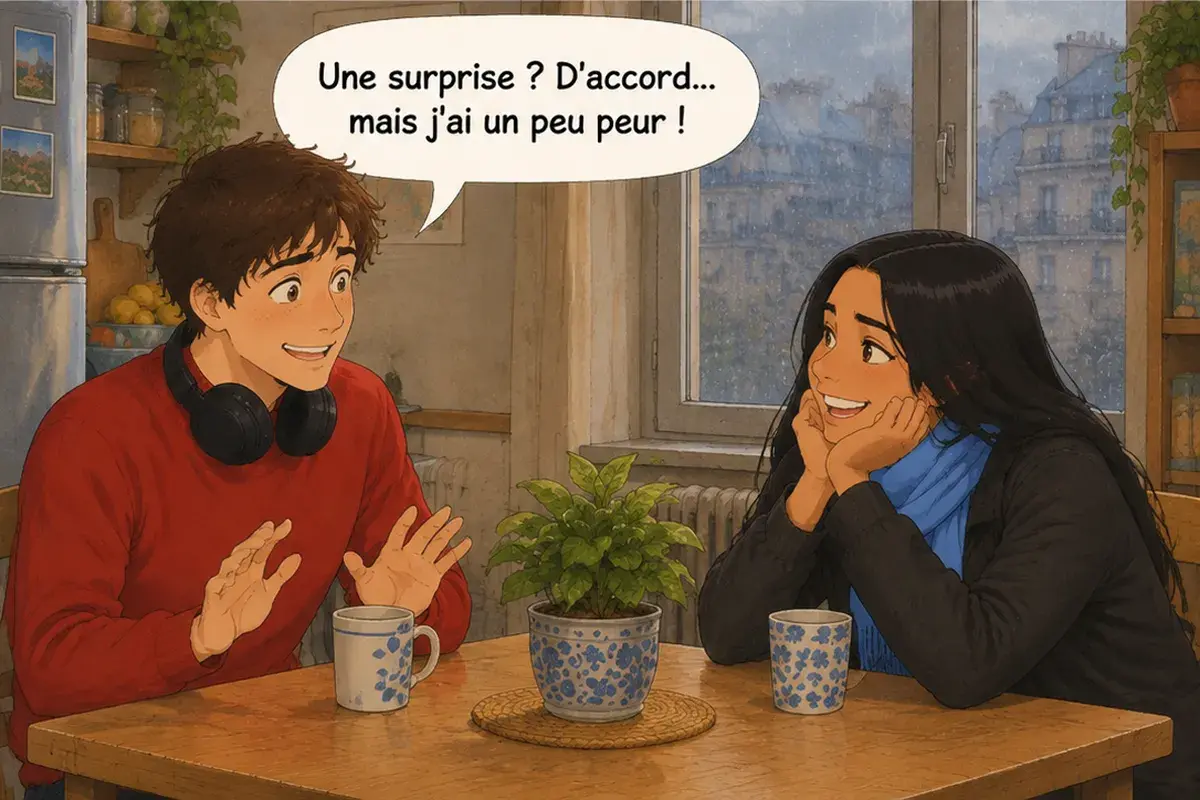
- Pacha
Une surprise ? D'accord... mais j'ai un peu peur !
A surprise? OK... but I'm a little scared!
Grammar for this text
- Je crois que Paris est une belle ville — crois is the je form of croire (to believe, to think). It's an irregular verb: crois and croit sound the same. Je crois que... — I think... In French you can't drop que (that), even though English often drops "that". The same goes for je pense que tu as besoin (penser — to think).
- tu as besoin de voir du monde —
avoir besoin de+ a verb: you need to... Du monde here means "people", not "the world". - Tu as raison — you're right: French uses avoir here, not être.
- J'ai le mal du pays — I'm homesick; du = de + le. Like j'ai faim (I'm hungry), it uses avoir.
- Ça va, ça va — the French way to say "fine, fine, don't ask". Inès spells it out: Ça veut dire « ça ne va pas ». Hein at the end works like "right?".
- T'inquiète ! — don't worry. The full form is ne t'inquiète pas. Among friends ne drops (also c'est pas grave, je sais pas); in writing and with people you don't know well, use the full form with ne.
Words and grammar of the unit: Talk about how you feel.
Learn the words from the texts with flashcards
In the app, you can tap any word in a text to see its translation, forms and examples, and new words stick with flashcards. 15 minutes a day.
Start for freeEverything is open for free. No card needed to sign up.