

French dialogue with translation · A1 · 14 lines
Qu'est-ce que tu as fait ce week-end ? What did you do this weekend?
Comic · 14 panels
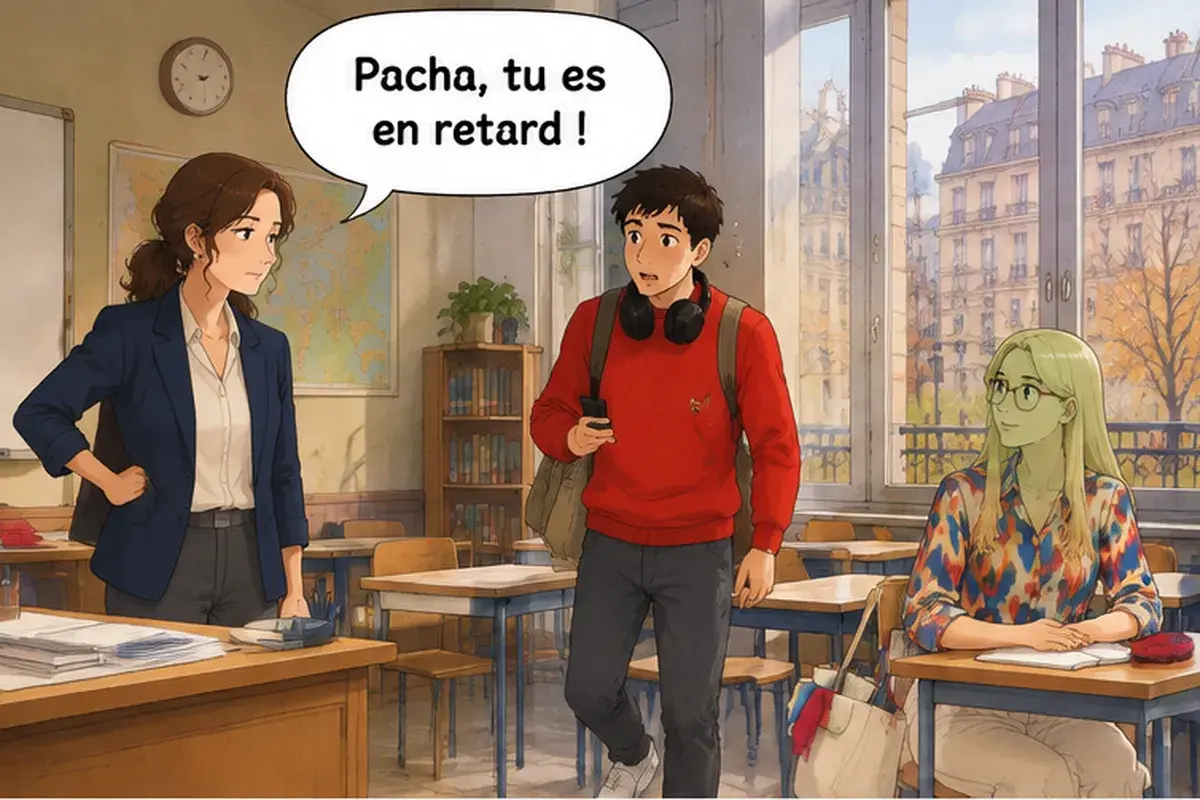
- Claire
Pacha, tu es en retard !
Pacha, you're late!
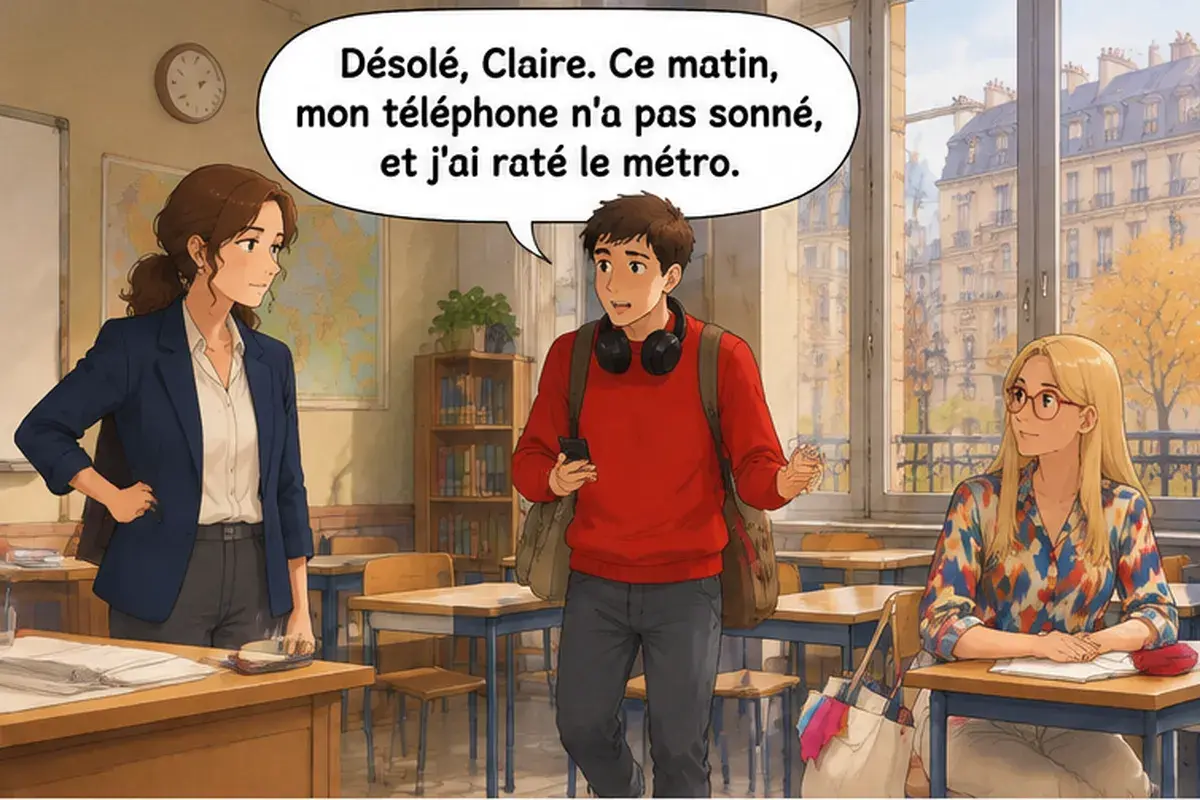
- Pacha
Désolé, Claire. Ce matin, mon téléphone n'a pas sonné, et j'ai raté le métro.
Sorry, Claire. This morning my phone didn't ring, and I missed the metro (man speaking).
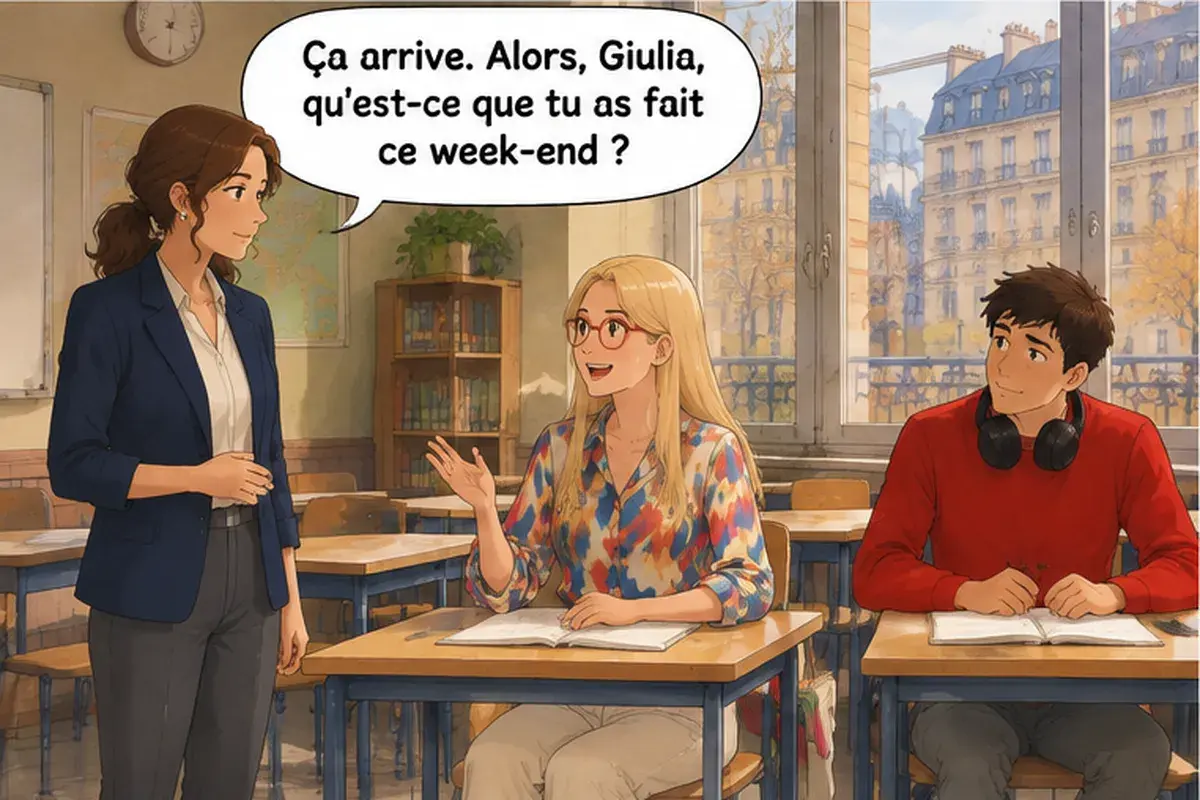
- Claire
Ça arrive. Alors, Giulia, qu'est-ce que tu as fait ce week-end ?
It happens. So, Giulia, what did you do this weekend?
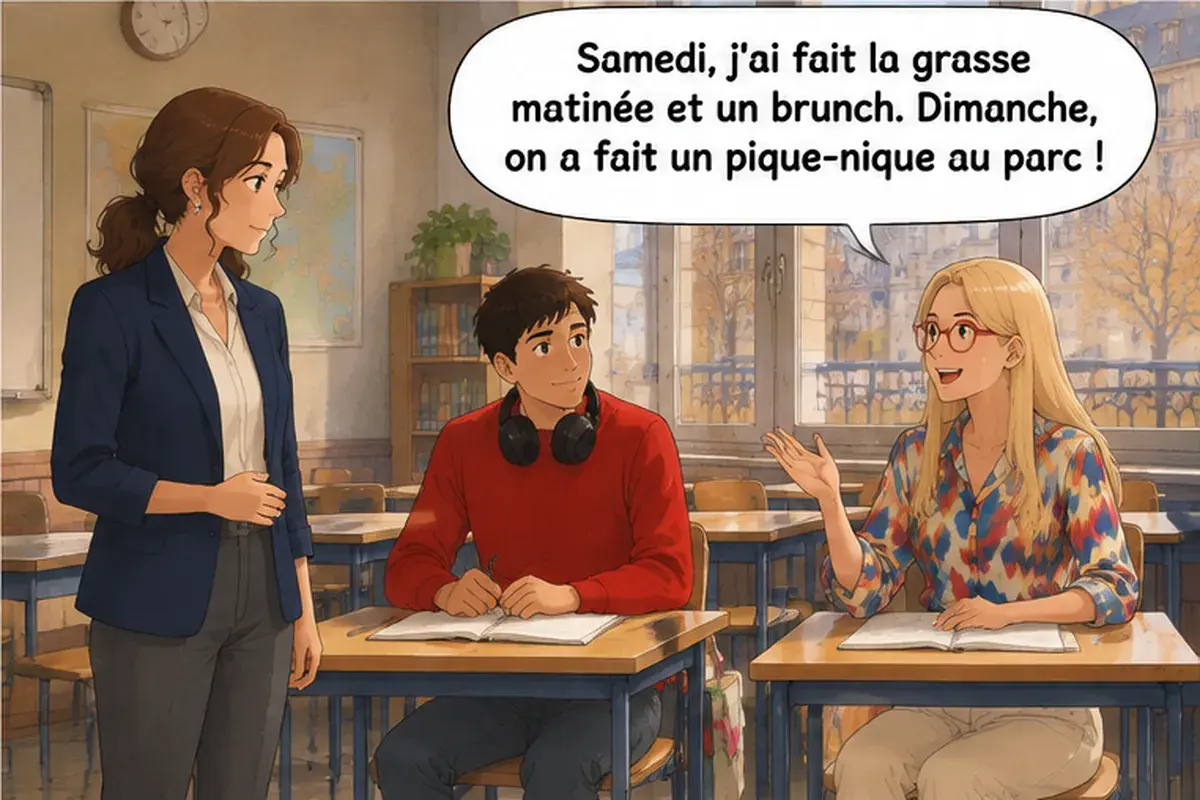
- Giulia
Samedi, j'ai fait la grasse matinée et un brunch. Dimanche, on a fait un pique-nique au parc !
On Saturday I slept in and had brunch. On Sunday we had a picnic in the park!
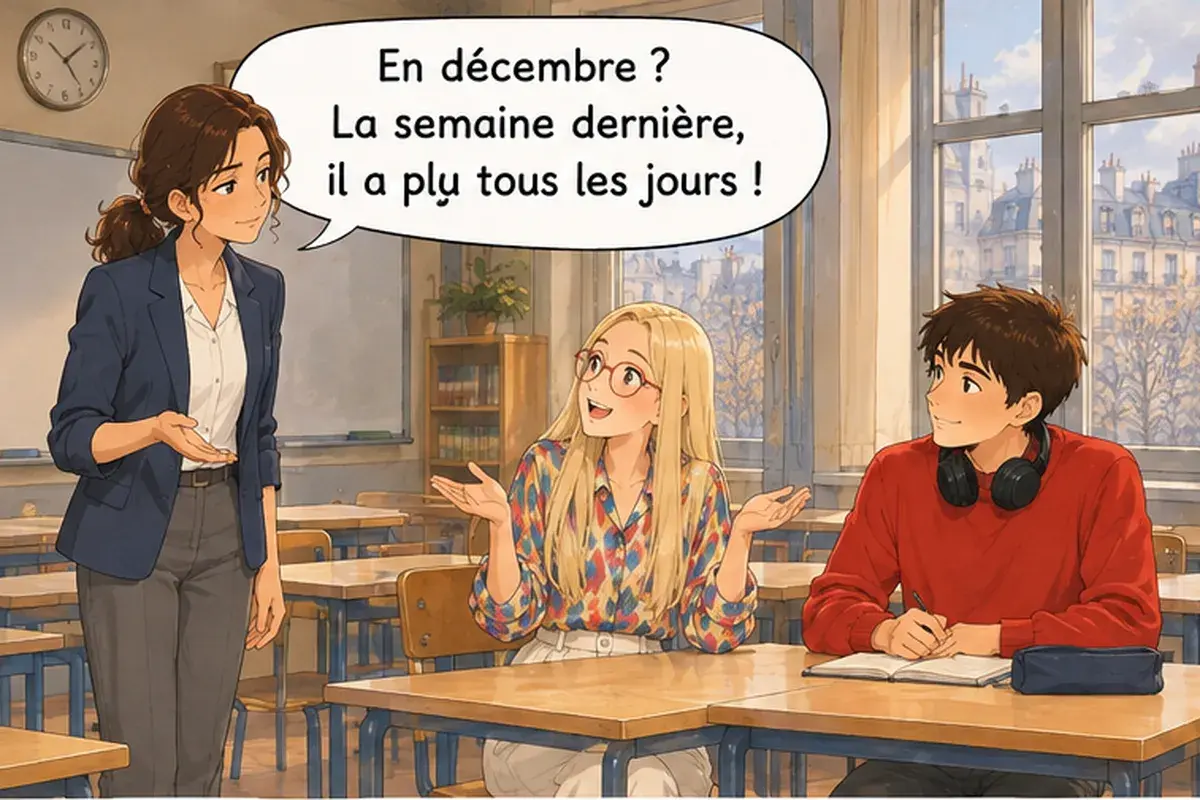
- Claire
En décembre ? La semaine dernière, il a plu tous les jours !
In December? Last week it rained every day!
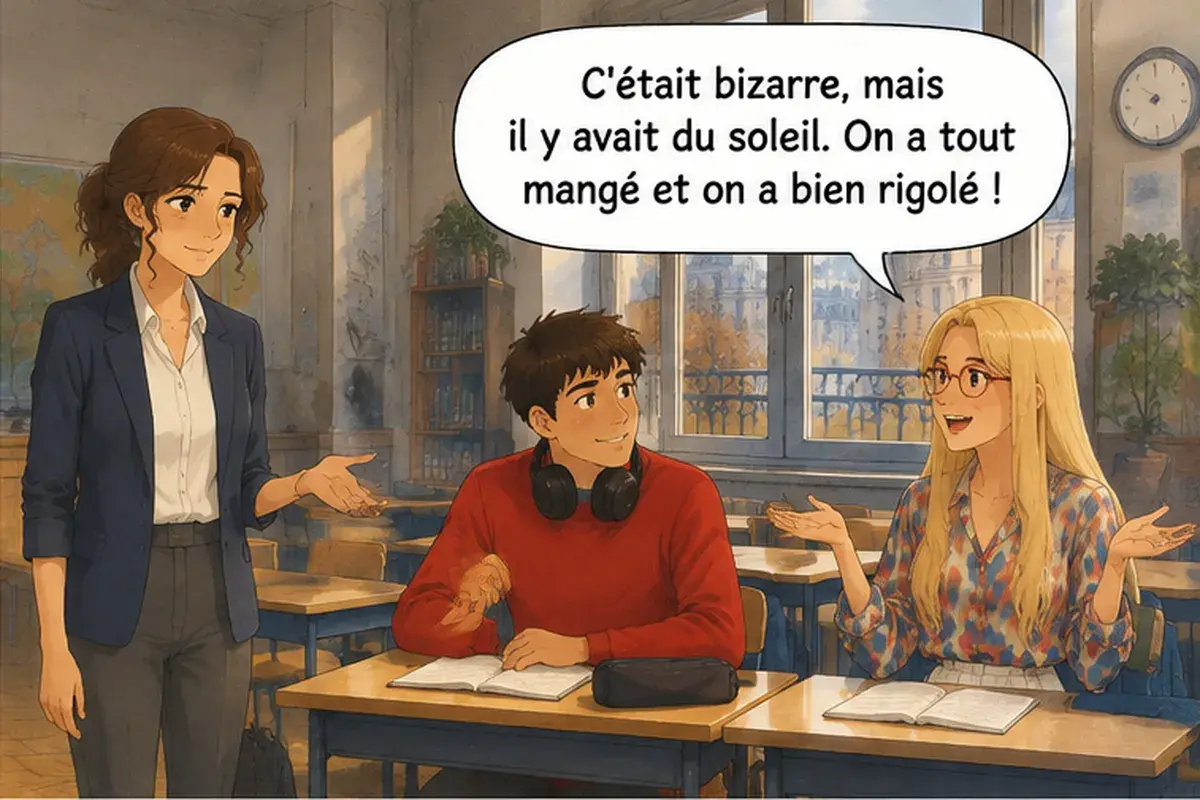
- Giulia
C'était bizarre, mais il y avait du soleil. On a tout mangé et on a bien rigolé !
It was weird, but it was sunny. We ate everything and had a great time!
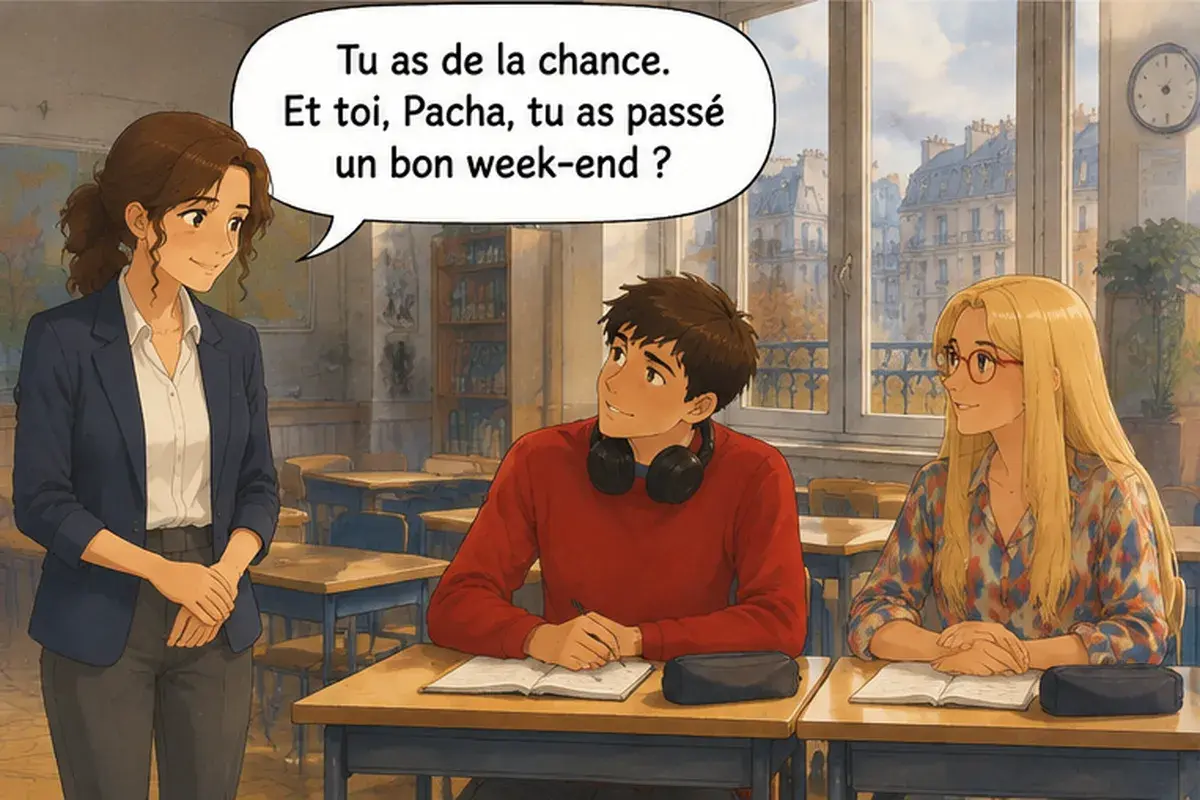
- Claire
Tu as de la chance. Et toi, Pacha, tu as passé un bon week-end ?
You're lucky. And you, Pacha, did you have a good weekend?
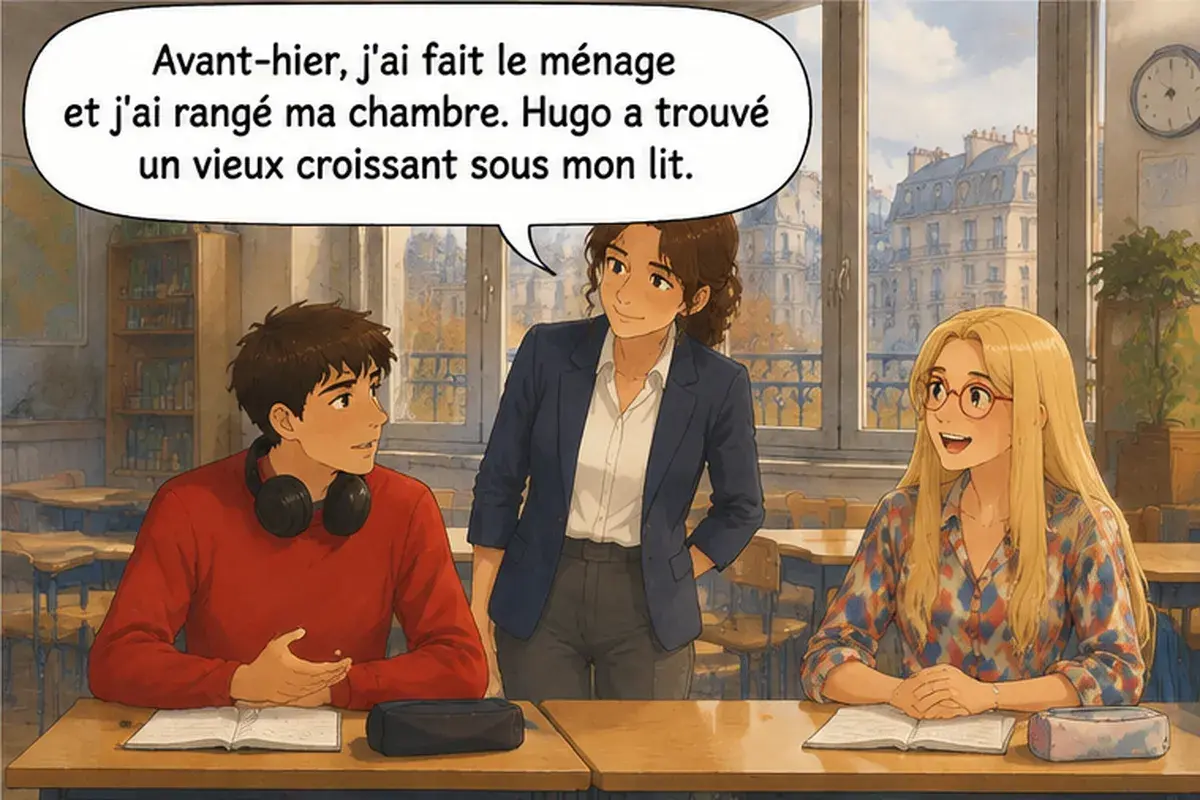
- Pacha
Avant-hier, j'ai fait le ménage et j'ai rangé ma chambre. Hugo a trouvé un vieux croissant sous mon lit.
The day before yesterday I cleaned the house and tidied up my room. Hugo found an old croissant under my bed.
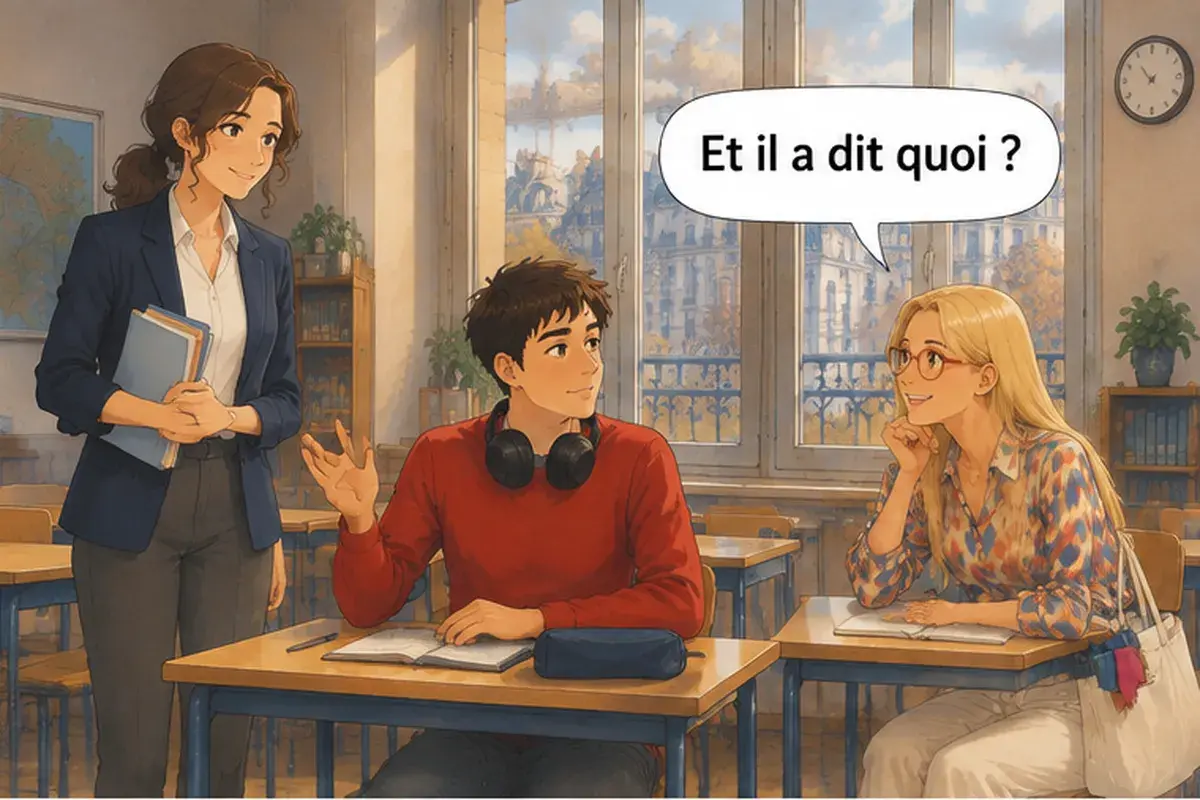
- Giulia
Et il a dit quoi ?
And what did he say?
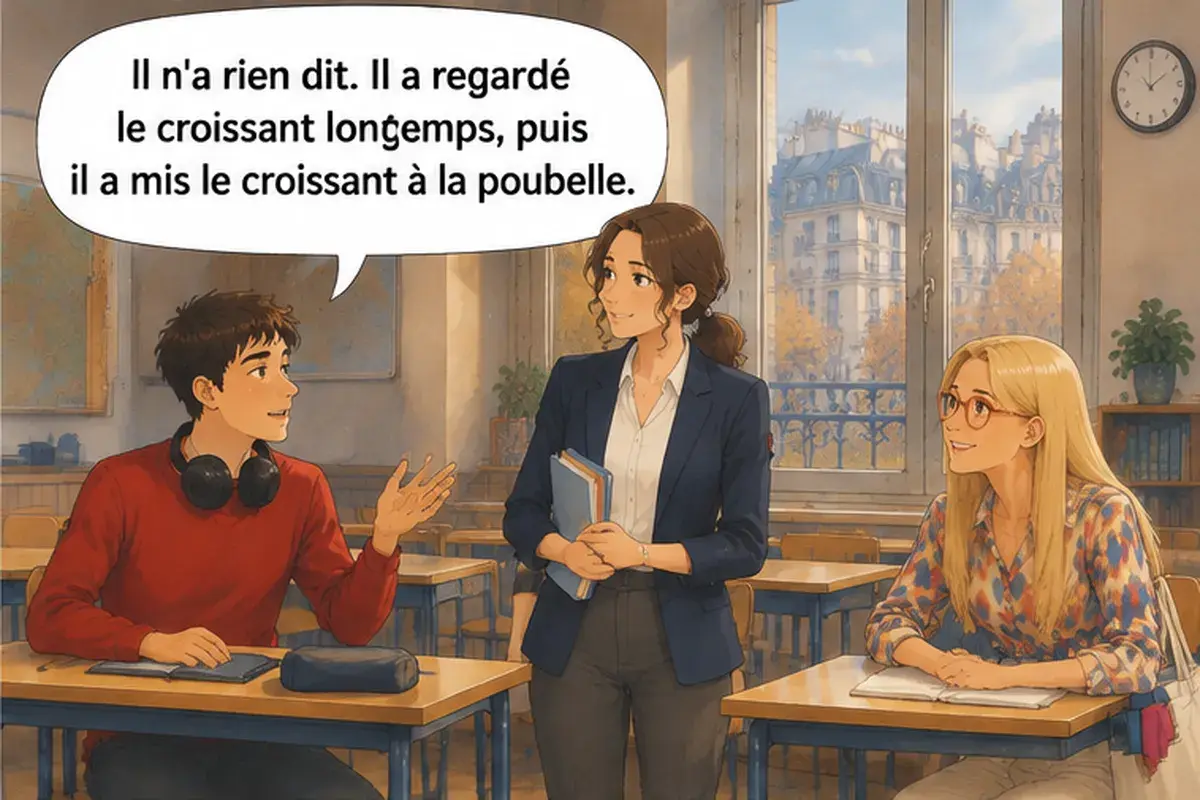
- Pacha
Il n'a rien dit. Il a regardé le croissant longtemps, puis il a mis le croissant à la poubelle.
He didn't say anything. He looked at the croissant for a long time, then he put the croissant in the trash.
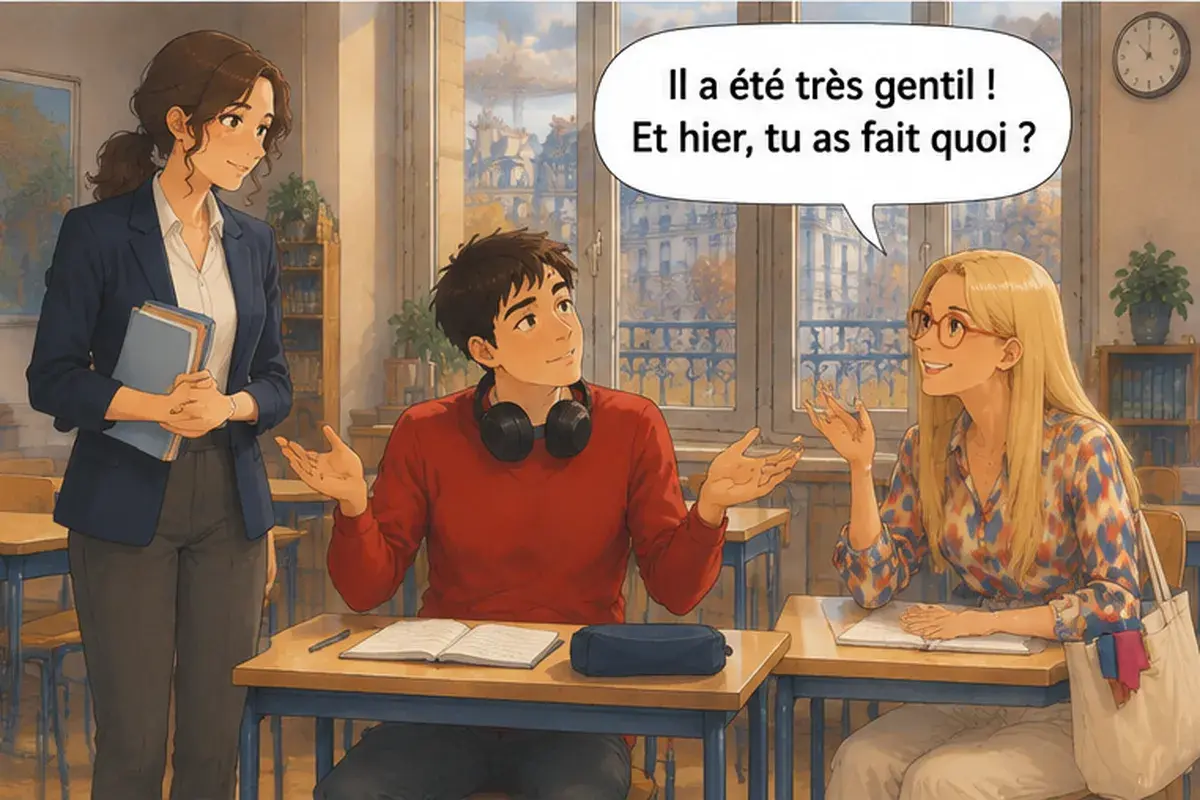
- Giulia
Il a été très gentil ! Et hier, tu as fait quoi ?
He was very nice! And what did you do yesterday?

- Pacha
Hier, j'ai visité une brocante. J'ai acheté un truc incroyable et j'ai oublié mon portefeuille.
Yesterday I visited a flea market. I bought something amazing, and I forgot my wallet.
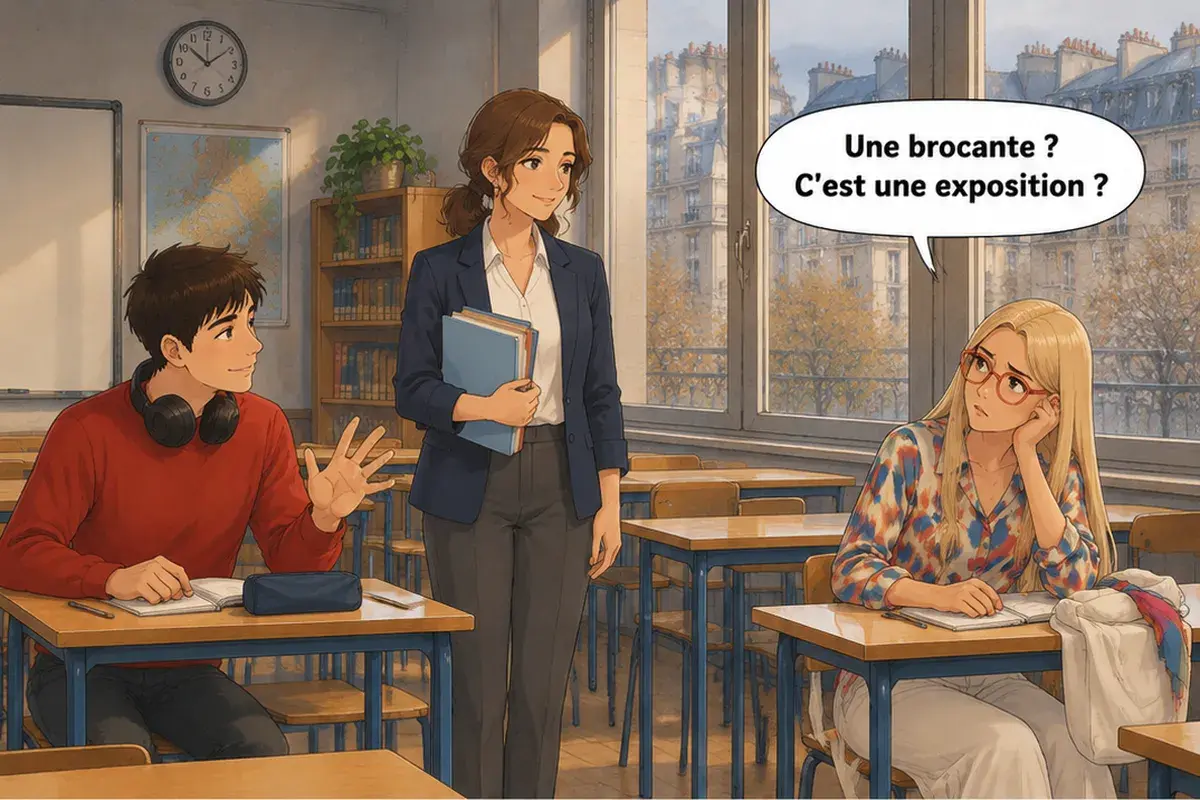
- Giulia
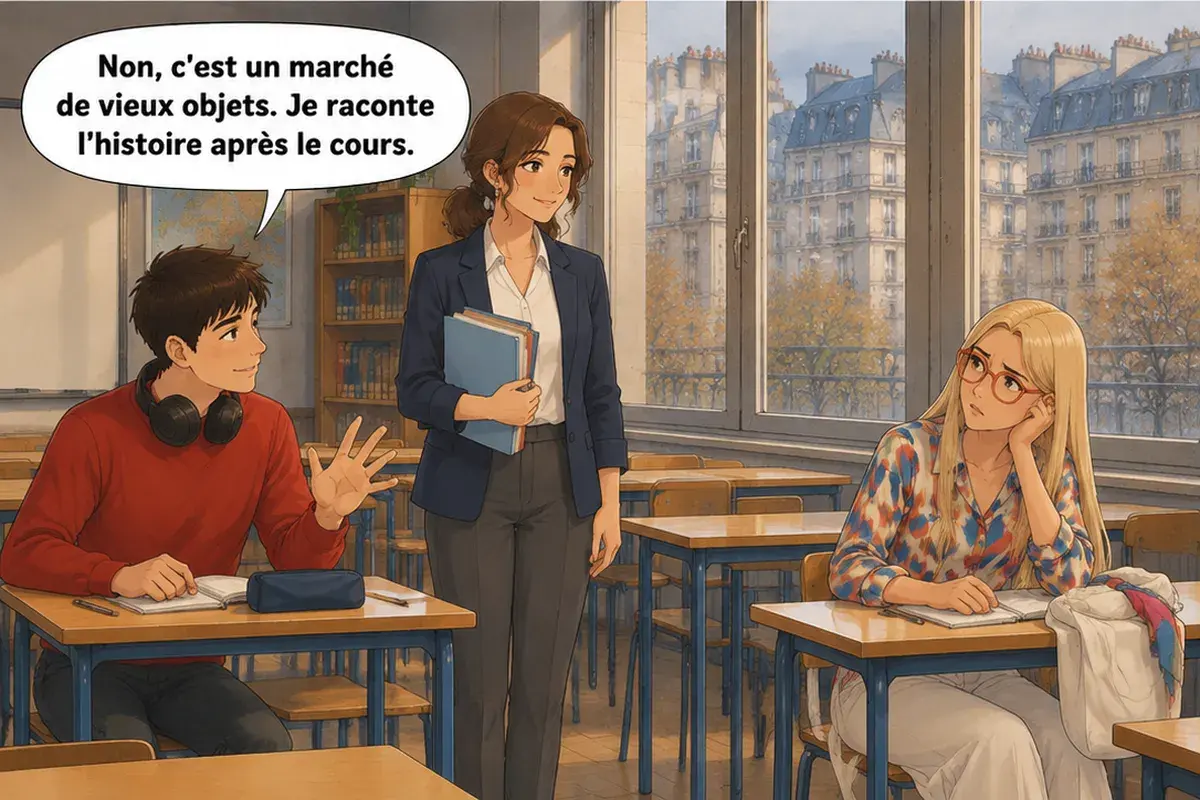
Une brocante ? C'est une exposition ?
A flea market? Is that an exhibit?
- Pacha
Non, c'est un marché de vieux objets. Je raconte l'histoire après le cours.
No, it's a market for old objects. I'll tell the story after class.
Grammar for this text
- qu'est-ce que tu as fait ce week-end ? — "what did you do this weekend?" tu as fait = tu as + fait. fait is the past participle of faire (to do); the t is silent. This is how the passé composé (the main past tense) is built: avoir + past participle (more in the unit grammar).
- Ce matin, mon téléphone n'a pas sonné — n'a pas sonné = ne + a + pas + sonné: the negative goes around a, not around the participle. sonner — to ring (an alarm or a bell). A ready-made excuse for being late.
- Il a été très gentil — a été — was: a from avoir + été, the past participle of être. It's spelled like été (summer), but here it's a verb.
- Il a mis le croissant à la poubelle — mis is the past participle of mettre (to put, to put on): "he put". Learn it as a whole.
- Il n'a rien dit — dit is the past participle of dire (to say). n'a rien dit — didn't say anything: rien takes the place of pas.
- il a plu tous les jours — plu is the past participle of pleuvoir (il pleut): "it rained". tous les jours — every day; here the s of tous is silent.
- C'était bizarre, mais il y avait du soleil — c'était (it was) and il y avait (there was / there were) are ready-made past forms of c'est and il y a. Learn them whole; how they work comes at A2.
Words and grammar of the unit: Talk about your weekend.
Learn the words from the texts with flashcards
In the app, you can tap any word in a text to see its translation, forms and examples, and new words stick with flashcards. 15 minutes a day.
Start for freeEverything is open for free. No card needed to sign up.