

French dialogue with translation · A1 · 14 lines
J'ai mal à la gorge depuis deux jours I've had a sore throat for two days
Comic · 11 panels
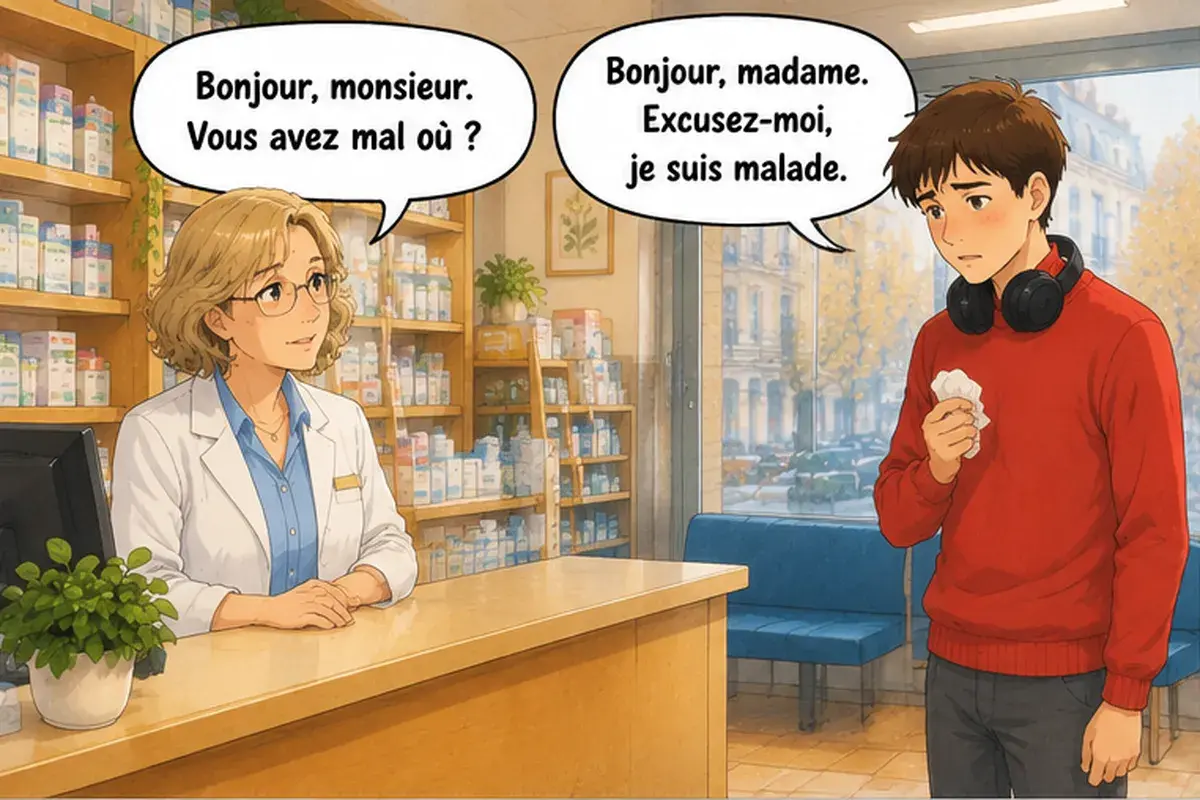
- Pacha
Bonjour, madame. Excusez-moi, je suis malade.
Hello, ma'am. Excuse me, I'm sick (formal).
- Pharmacienne
Bonjour, monsieur. Vous avez mal où ?
Hello, sir. Where does it hurt? (formal)
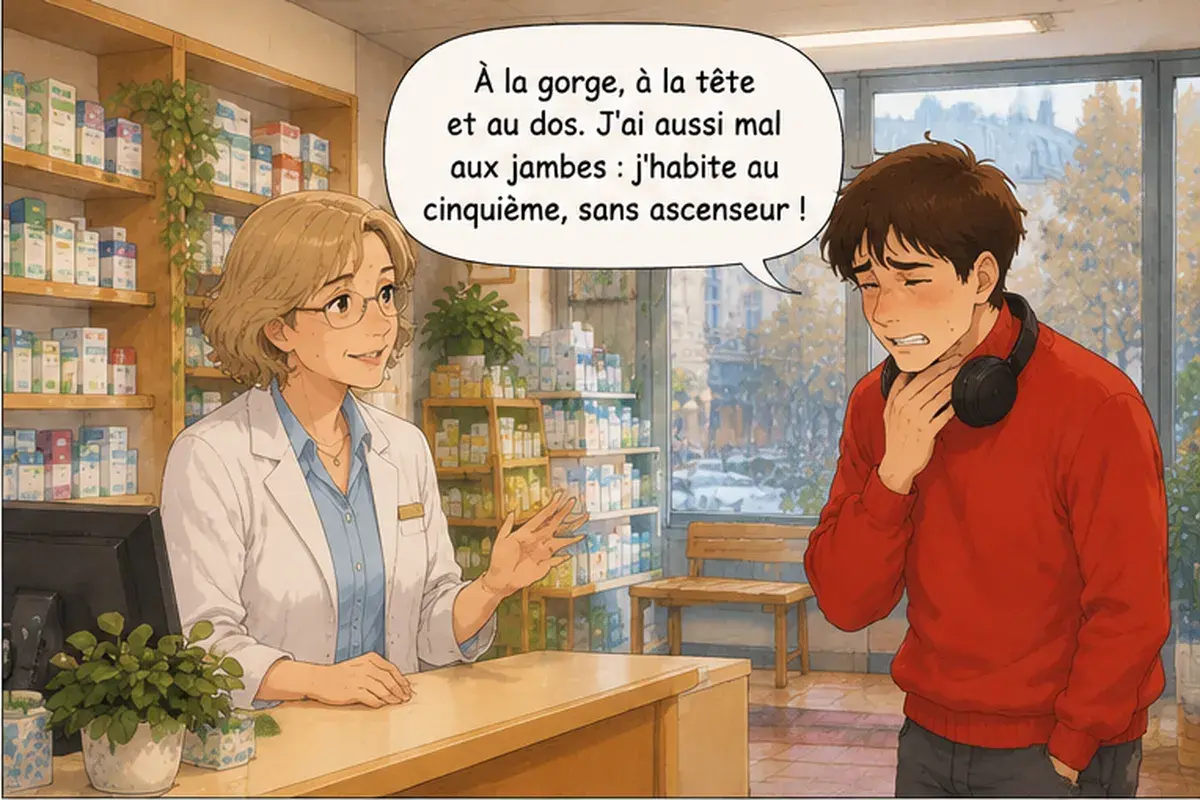
- Pacha
À la gorge, à la tête et au dos. J'ai aussi mal aux jambes : j'habite au cinquième, sans ascenseur !
My throat, my head and my back. My legs hurt too: I live on the fifth floor, with no elevator!
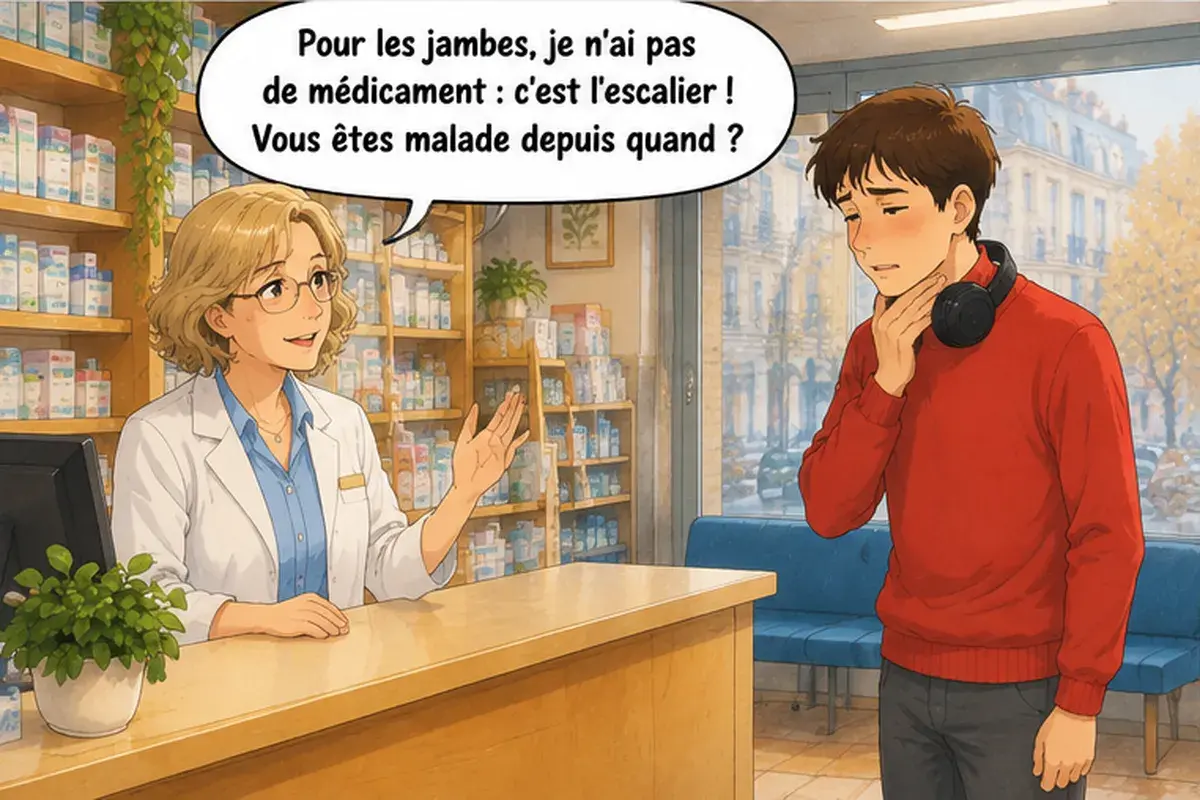
- Pharmacienne
Pour les jambes, je n'ai pas de médicament : c'est l'escalier ! Vous êtes malade depuis quand ?
For your legs, I don't have any medicine: it's the stairs! How long have you been sick? (formal)
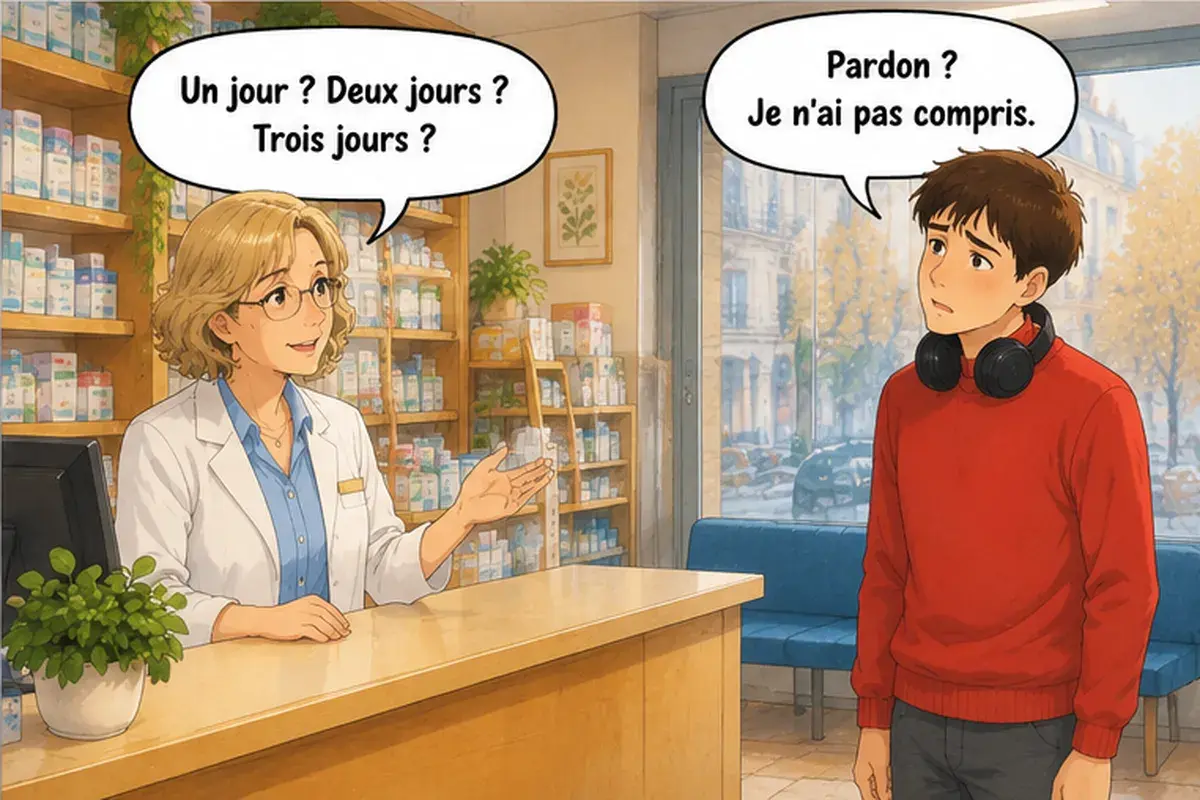
- Pacha
Pardon ? Je n'ai pas compris.
Sorry? I didn't understand.
- Pharmacienne
Un jour ? Deux jours ? Trois jours ?
One day? Two days? Three days?
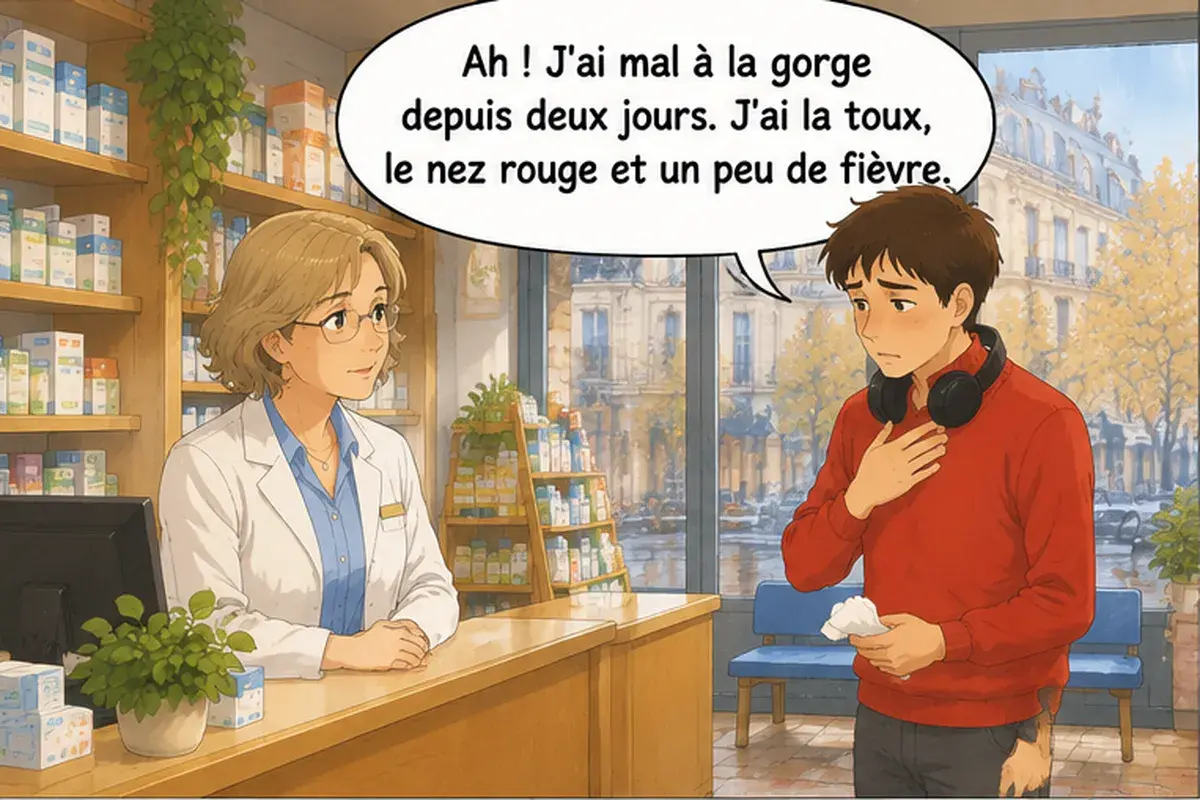
- Pacha
Ah ! J'ai mal à la gorge depuis deux jours. J'ai la toux, le nez rouge et un peu de fièvre.
Oh! I've had a sore throat for two days. I have a cough, a red nose and a bit of a fever.
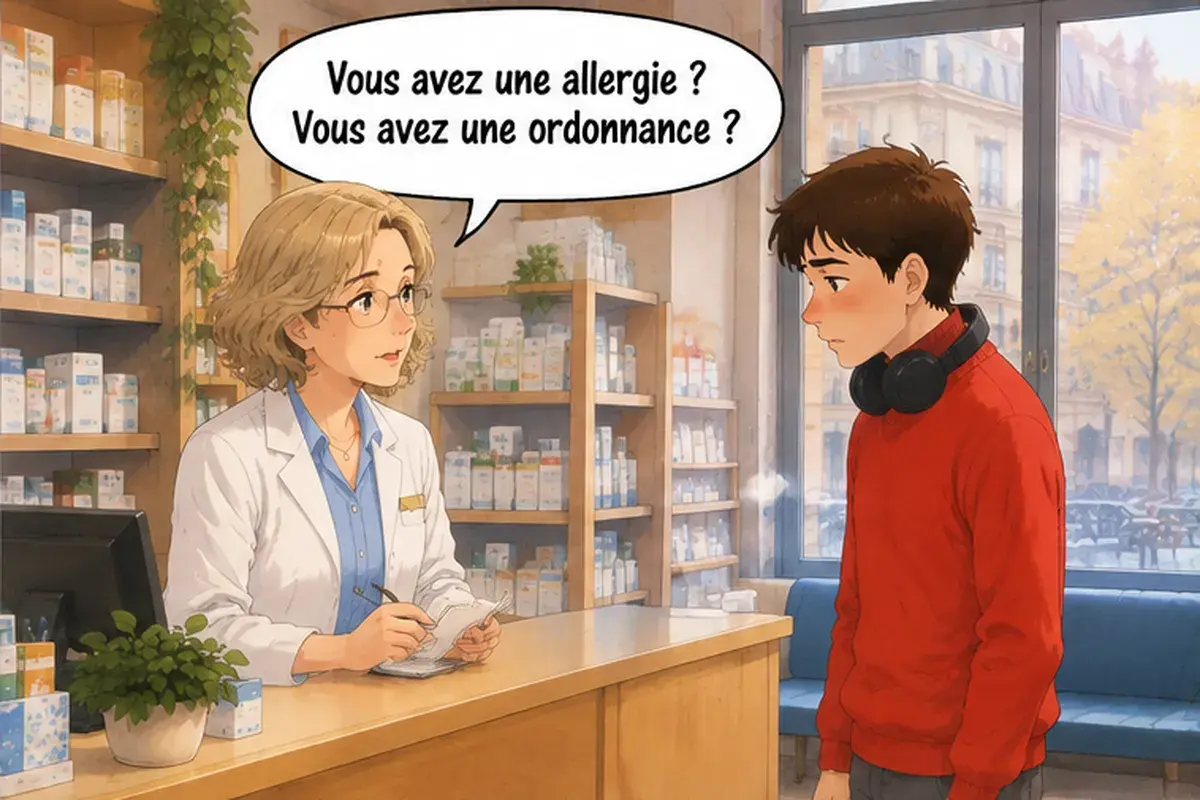
- Pharmacienne
Vous avez une allergie ? Vous avez une ordonnance ?
Do you have an allergy? Do you have a prescription? (formal)
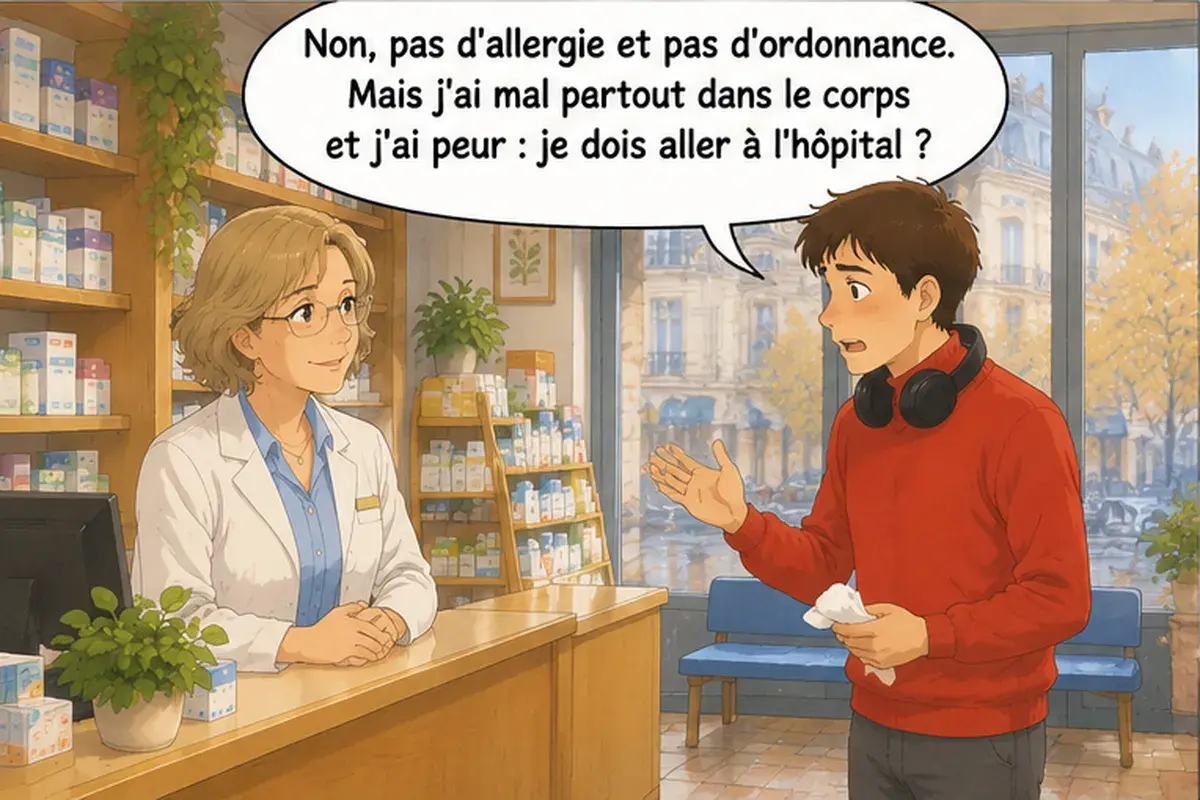
- Pacha
Non, pas d'allergie et pas d'ordonnance. Mais j'ai mal partout dans le corps et j'ai peur : je dois aller à l'hôpital ?
No, no allergy and no prescription. But my whole body hurts, and I'm scared: do I have to go to the hospital?
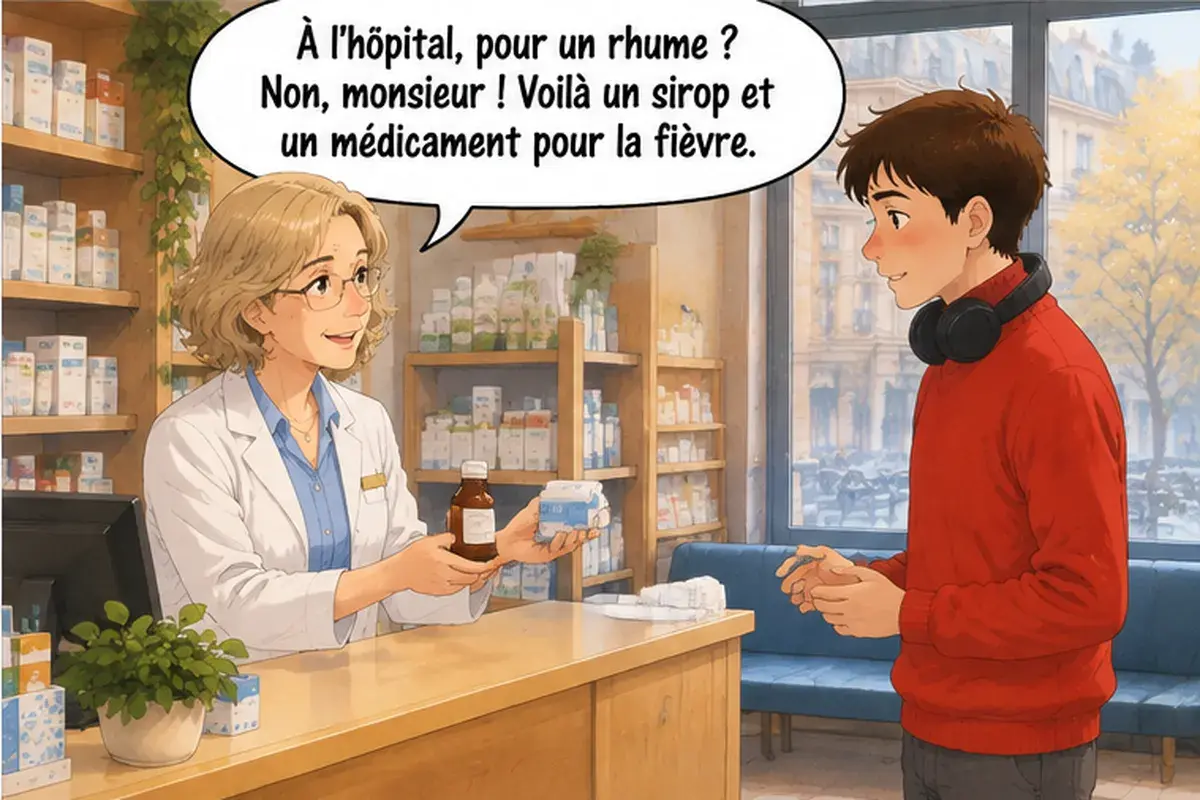
- Pharmacienne
À l'hôpital, pour un rhume ? Non, monsieur ! Voilà un sirop et un médicament pour la fièvre.
To the hospital, for a cold? No, sir! Here's a syrup and some medicine for the fever.
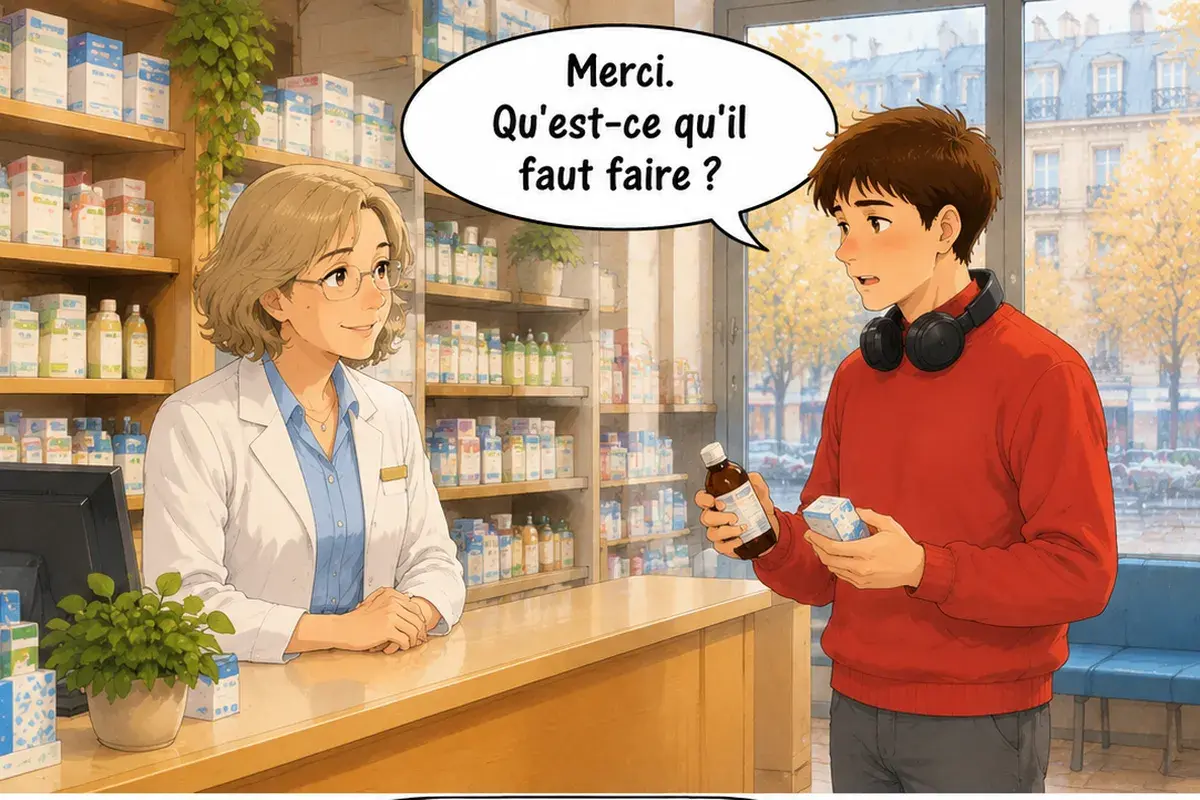
- Pacha
Merci. Qu'est-ce qu'il faut faire ?
Thank you. What do I need to do?
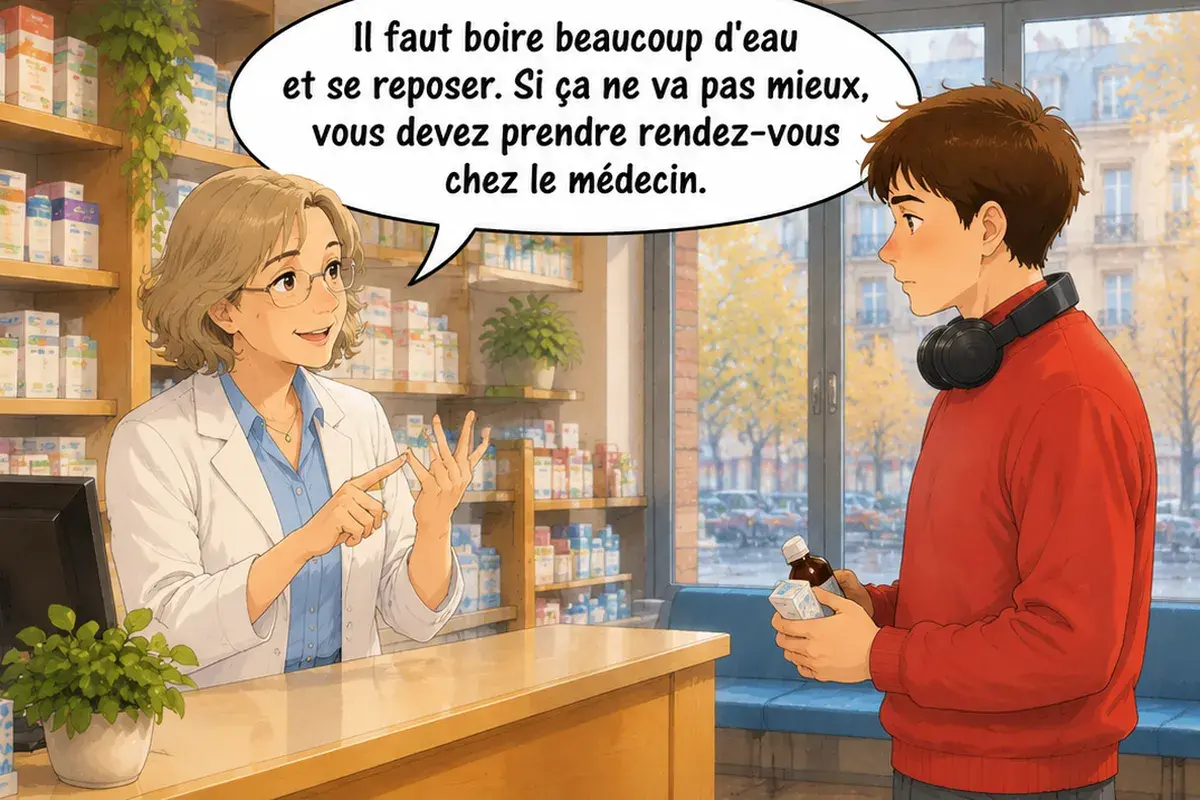
- Pharmacienne
Il faut boire beaucoup d'eau et se reposer. Si ça ne va pas mieux, vous devez prendre rendez-vous chez le médecin.
You need to drink a lot of water and rest. If it doesn't get better, you have to make an appointment with the doctor (formal).
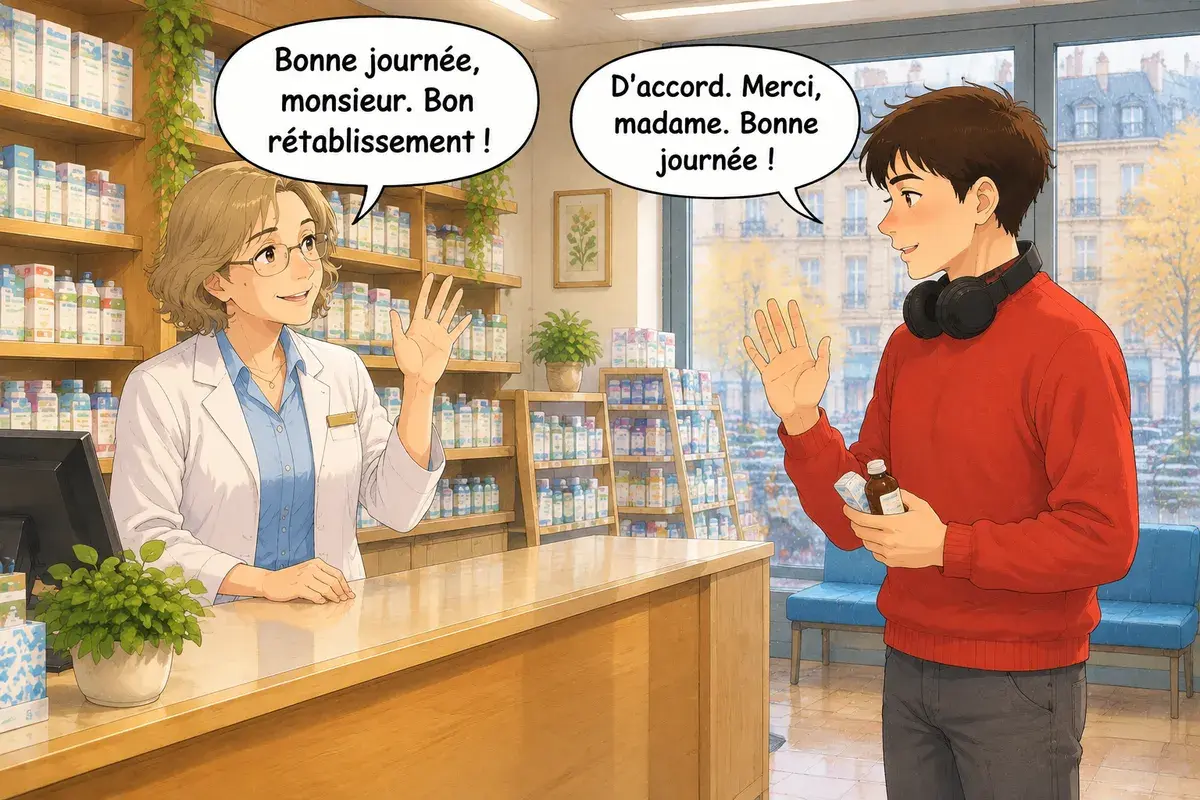
- Pacha
D'accord. Merci, madame. Bonne journée !
OK. Thank you, ma'am. Have a nice day!
- Pharmacienne
Bonne journée, monsieur. Bon rétablissement !
Have a nice day, sir. Get well soon!
Grammar for this text
- Je n'ai pas compris — "I didn't understand". This is the passé composé (the main past tense): ai (from avoir) + compris (from comprendre, to understand). You'll learn it in unit 15; for now remember it as a set phrase: j'ai compris — I understood, I got it.
- Qu'est-ce qu'il faut faire ? — "what do I need to do?" il faut is a form of falloir (to be necessary): it only exists with il, never changes, and is followed by an infinitive. il faut que... comes at level B1. qu'est-ce qu'il = qu'est-ce que + il: the e drops.
- Il faut boire beaucoup d'eau et se reposer — both verbs are infinitives. beaucoup d'eau — a lot of water: beaucoup de + eau, and de becomes d'.
- vous devez prendre rendez-vous — "you have to make an appointment": devez is a form of devoir. prendre rendez-vous — to make an appointment, literally "to take a meeting", with no article. Si ça ne va pas mieux — "if it doesn't get better": mieux means "better" (from bien).
- J'ai mal à la gorge depuis deux jours — after depuis French keeps the present tense, where English uses the present perfect: "I've had a sore throat for two days". Vous êtes malade depuis quand ? — "how long have you been sick?": quand goes at the end.
- c'est l'escalier — a joke: his legs don't hurt because he's sick, but because of the stairs.
- Bon rétablissement — a wish for someone who is sick, literally "good recovery": get well soon. The same with tu and vous.
Words and grammar of the unit: Say what hurts at the pharmacy.
Learn the words from the texts with flashcards
In the app, you can tap any word in a text to see its translation, forms and examples, and new words stick with flashcards. 15 minutes a day.
Start for freeEverything is open for free. No card needed to sign up.