

French story with translation · A1 · 14 lines
Et chez toi, quel temps ? And what's the weather like where you are?
Comic · 14 panels

Salut, Dacha ! Aujourd'hui, c'est le quatre novembre. Il pleut à Paris.
Hi, Dacha! Today is November fourth. It's raining in Paris.

Je dis à madame Morel : « Il fait de la pluie ! » Elle dit : « Non ! On dit : il pleut. »
I say to Madame Morel, "It's making rain!" She says, "No! We say: it's raining."

Novembre est un mois gris, et cette année, il est très gris.
November is a gray month, and this year it's very gray.
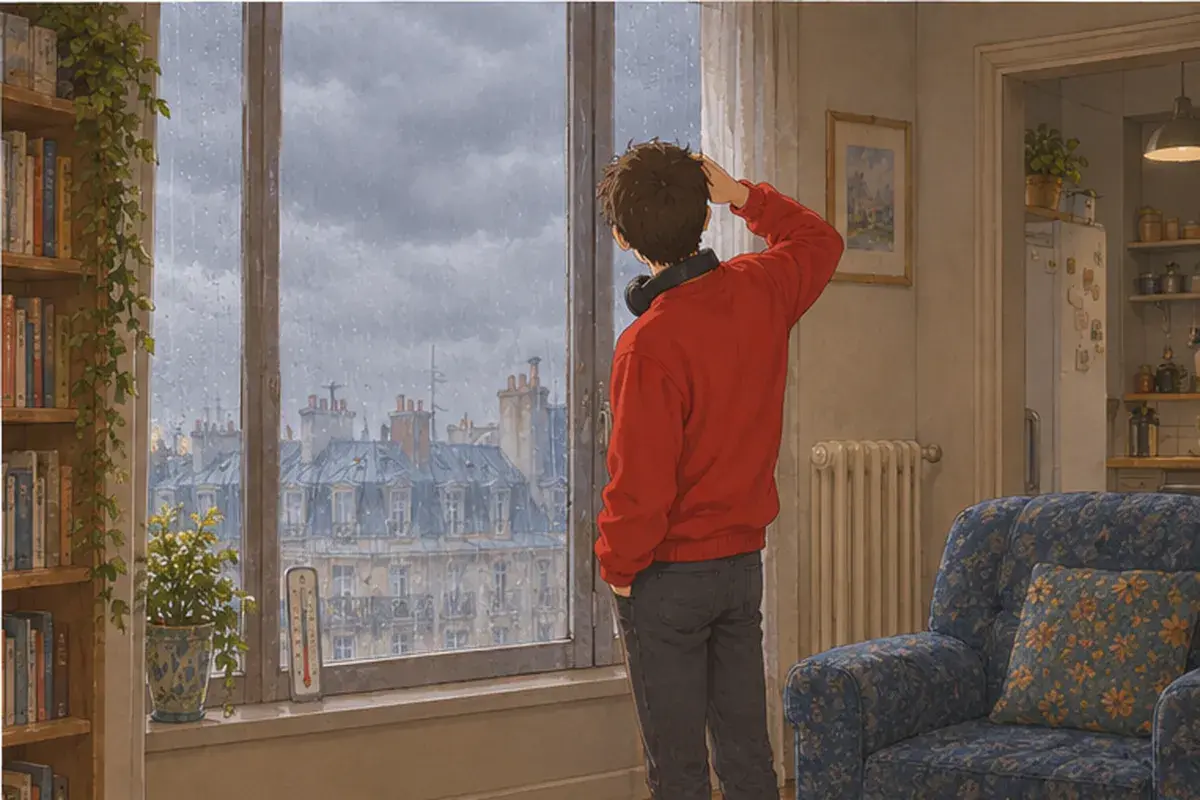
Dans le ciel, il y a beaucoup de nuages. La température : huit degrés ce matin, dix cet après-midi.
There are a lot of clouds in the sky. The temperature: eight degrees this morning, ten this afternoon.

Chez nous, il neige déjà. Dans notre pays, l'hiver commence tôt.
Back home, it's already snowing. In our country, winter starts early.

Toi, tu envoies une photo de la neige. Moi, j'enregistre le bruit de la pluie.
You send a photo of the snow. I record the sound of the rain.

Il y a quatre saisons : le printemps, l'été, l'automne et l'hiver. Mais Momo dit : « À Paris, il y a une seule saison. »
There are four seasons: spring, summer, fall and winter. But Momo says, "In Paris, there's only one season."

Janvier, février, mars, avril, mai, juin, juillet, août, septembre, octobre, novembre, décembre : il pleut !
January, February, March, April, May, June, July, August, September, October, November, December: it rains!

Et le soleil ? Peut-être le dernier jour d'août !
And the sun? Maybe on the last day of August!

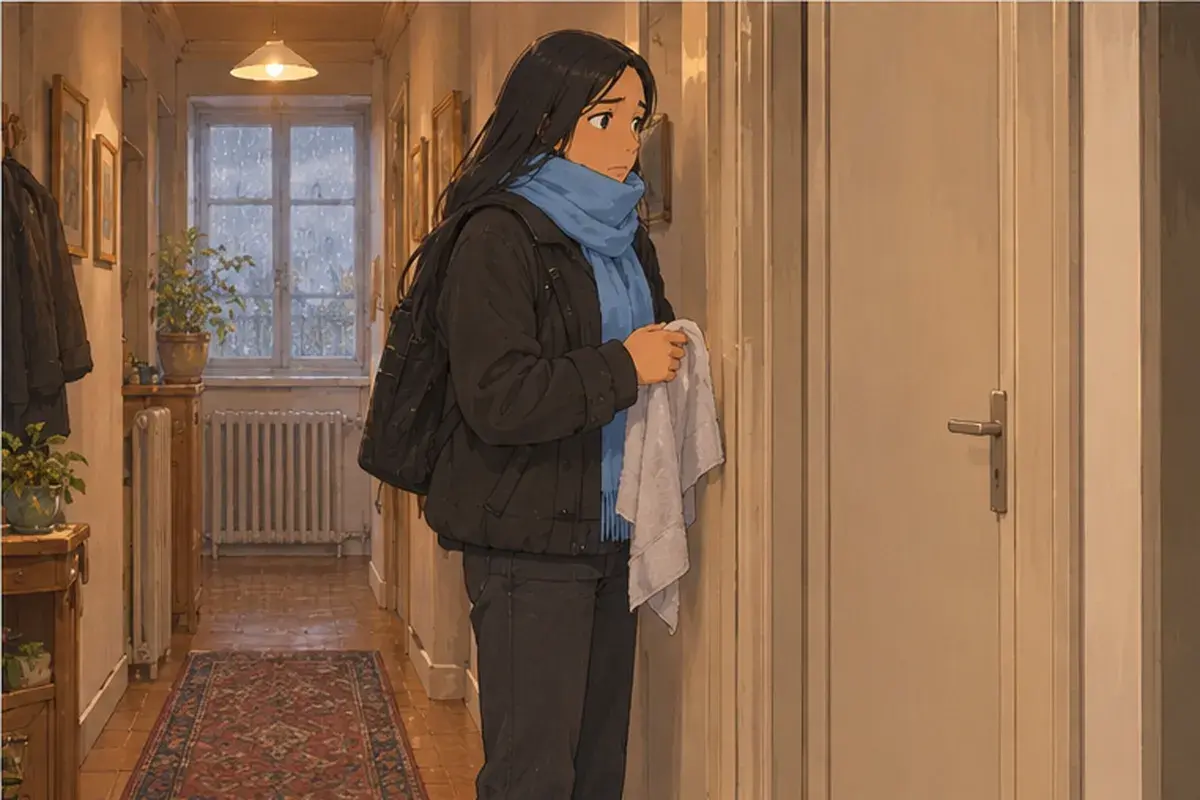
Dans l'appartement, le chauffage ne marche pas encore. Hugo dit : « Le chauffage commence le quinze novembre. C'est la date. »
In the apartment, the heat isn't working yet. Hugo says, "The heat starts on November fifteenth. That's the date."

Inès dit : « Il fait froid ! » Elle porte son écharpe dans la cuisine, dans le salon, dans sa chambre.
Inès says, "It's cold!" She wears her scarf in the kitchen, in the living room, in her bedroom.
Et sous la douche ? Peut-être, mais seulement cinq minutes !
And in the shower? Maybe, but only for five minutes!

Maintenant, je regarde la météo trois fois par jour. Je parle comme Momo !
Now I check the forecast three times a day. I talk like Momo!

À bientôt, Dacha ! Et chez toi, quel temps ? Combien de degrés ?
See you soon, Dacha! And what's the weather like where you are? How many degrees?
Grammar for this text
- Je dis à madame Morel : « Il fait de la pluie ! »: Pacha made a mistake: in French you don't "make" rain. Rain and snow have their own verbs: il pleut (pleuvoir) and il neige (neiger), always with an il that stands for no one. il fait is for cold, hot, nice weather and degrees. Madame Morel corrects him: on dit means "we say, that's how people say it" (on here means people in general).
- dix cet après-midi: cet is ce before a vowel. ce matin means "this morning", cet après-midi "this afternoon".
- À Paris, il y a une seule saison: Momo's joke: there are four seasons, but it rains all year. Then Pacha lists all twelve months in a row. In a list you don't need en, but in a normal sentence you do: en octobre (in October). Le dernier jour d'août: "the last day of August"; dernier means "last", d'août = de + août.
- le chauffage ne marche pas encore: ne… pas encore means "not yet"; encore comes right after pas.
- Le chauffage commence le quinze novembre: le quinze novembre is November 15: the article le, the number, the month, and no preposition (English says "on November 15").
- le printemps, l'été, l'automne et l'hiver: here l'été means "summer", not "been" (the past participle of être is spelled the same).
- Peut-être, mais seulement cinq minutes: peut-être means "maybe", with a hyphen. The joke: in Hugo's apartment, a shower lasts five minutes at most.
- Et chez toi, quel temps ?: quel temps means "what's the weather like?", a short question. chez toi here means "where you live".
Words and grammar of the unit: Talk about the weather.
Learn the words from the texts with flashcards
In the app, you can tap any word in a text to see its translation, forms and examples, and new words stick with flashcards. 15 minutes a day.
Start for freeEverything is open for free. No card needed to sign up.