

French dialogue with translation · A1 · 13 lines
Allez, on se dit tu ! Come on, let's say "tu" to each other!
Comic · 13 panels
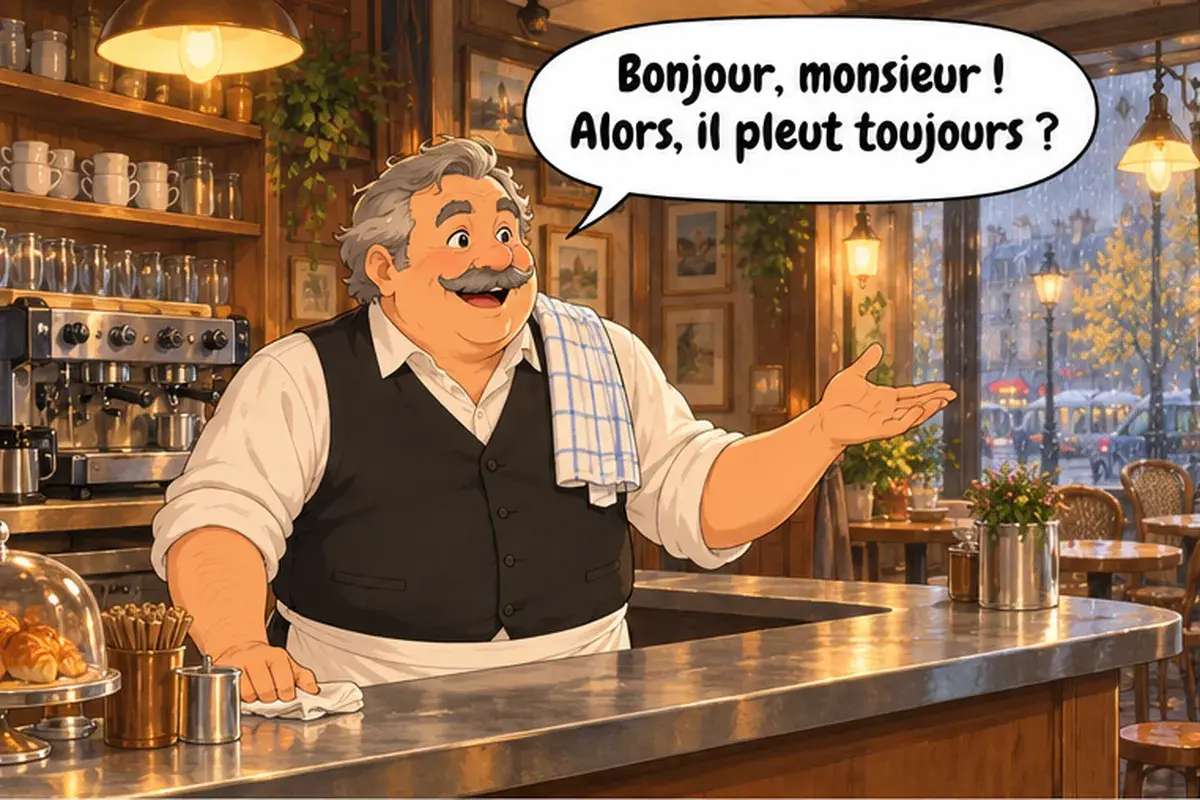
- Momo
Bonjour, monsieur ! Alors, il pleut toujours ?
Hello, sir! So, is it still raining?
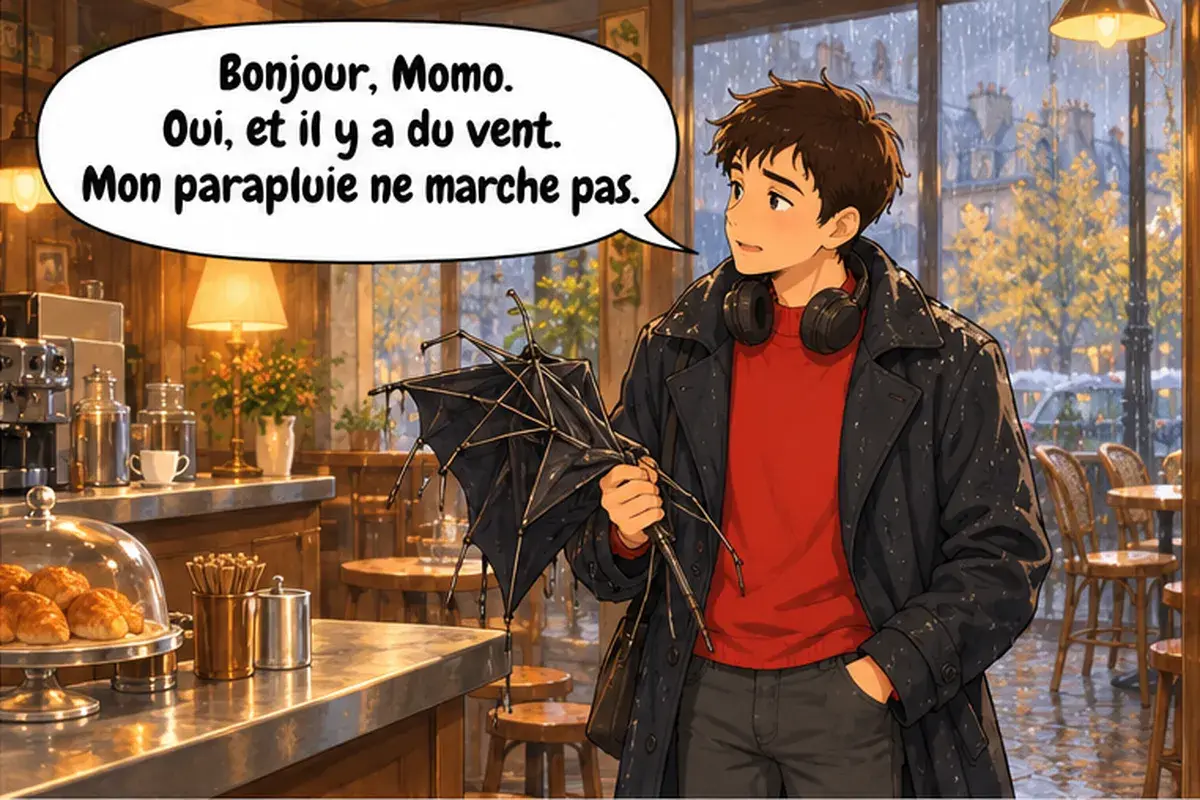
- Pacha
Bonjour, Momo. Oui, et il y a du vent. Mon parapluie ne marche pas.
Hello, Momo. Yes, and it's windy. My umbrella doesn't work.
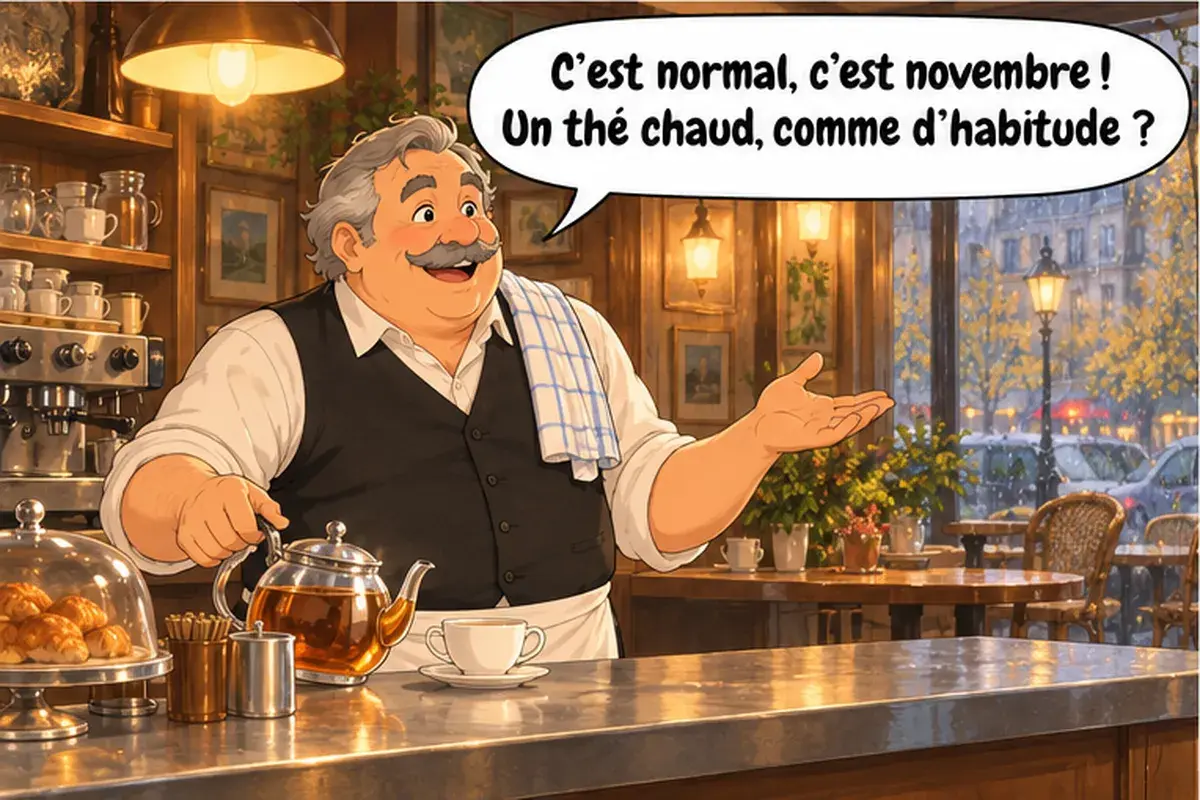
- Momo
C'est normal, c'est novembre ! Un thé chaud, comme d'habitude ?
That's normal, it's November! A hot tea, as usual?
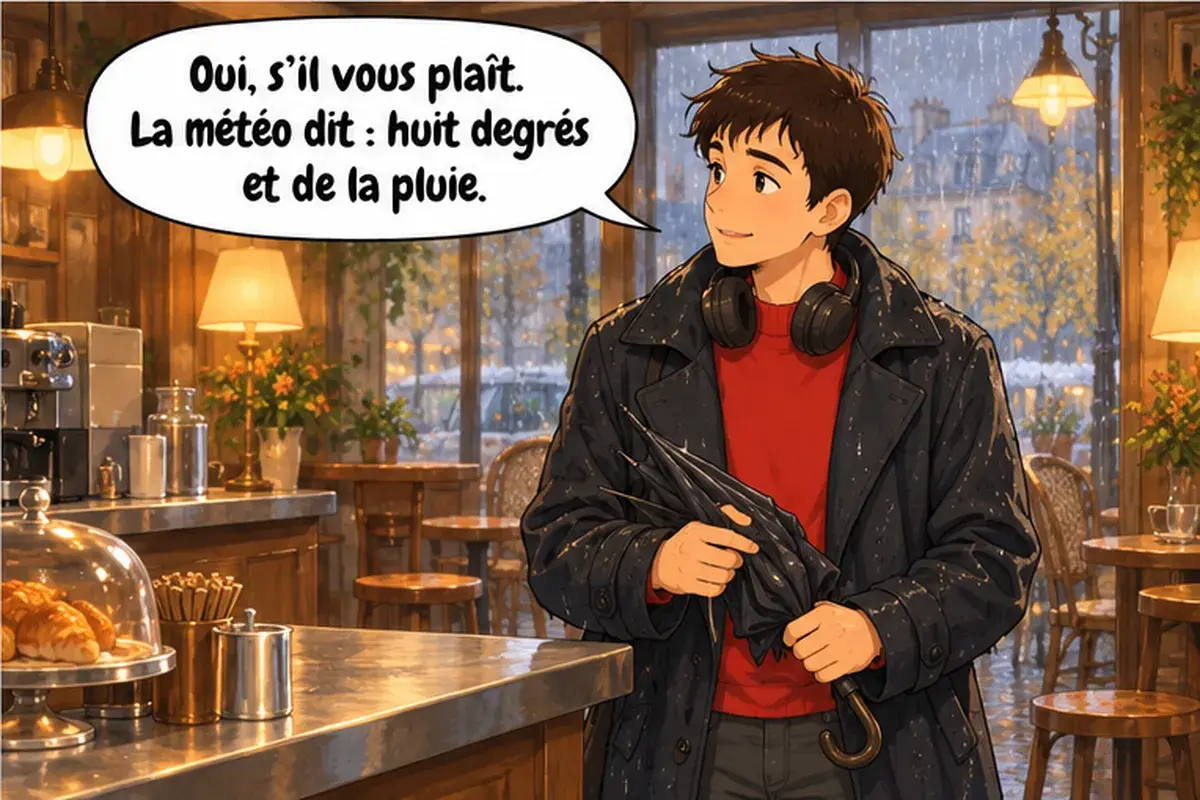
- Pacha
Oui, s'il vous plaît. La météo dit : huit degrés et de la pluie.
Yes, please. The forecast says eight degrees and rain. (formal)
- Momo
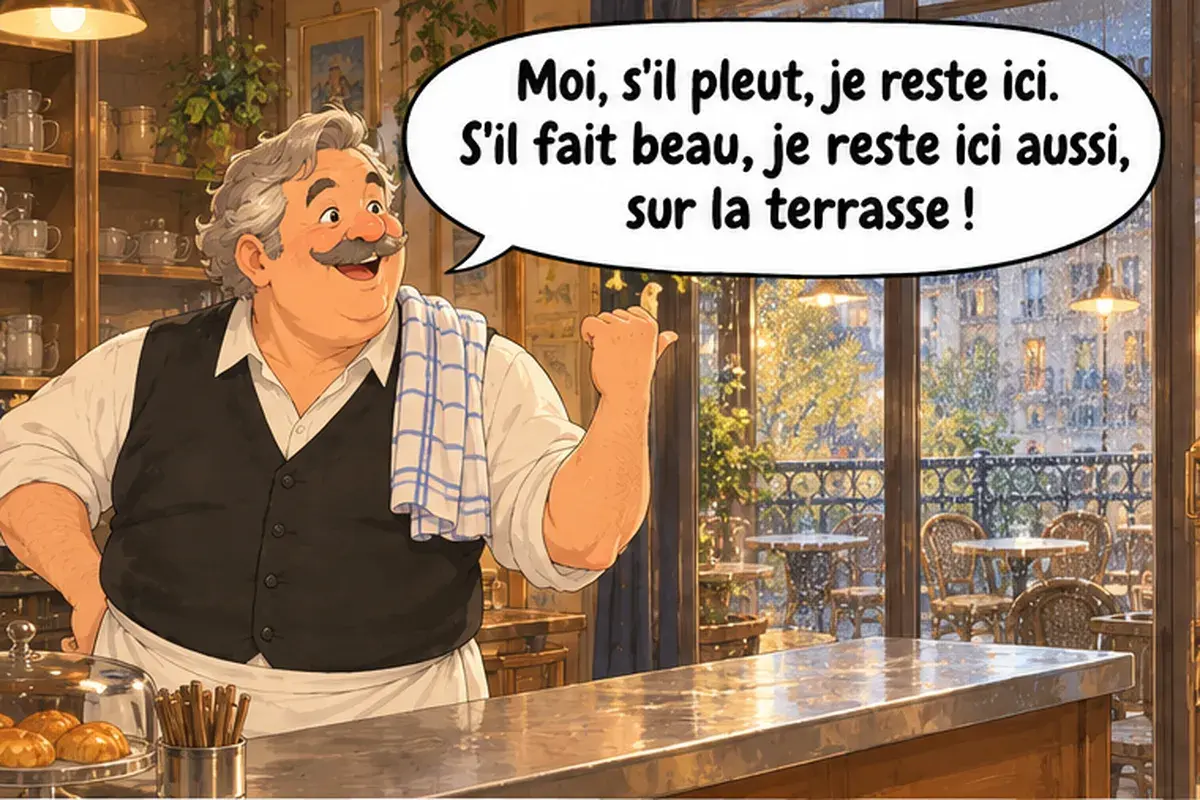
Moi, s'il pleut, je reste ici. S'il fait beau, je reste ici aussi, sur la terrasse !
As for me, if it rains, I stay here. If it's nice out, I stay here too, on the terrace!

- Pacha
Avec la pluie, avec le soleil, vous êtes toujours là !
In the rain, in the sun, you're always here! (formal)
- Momo
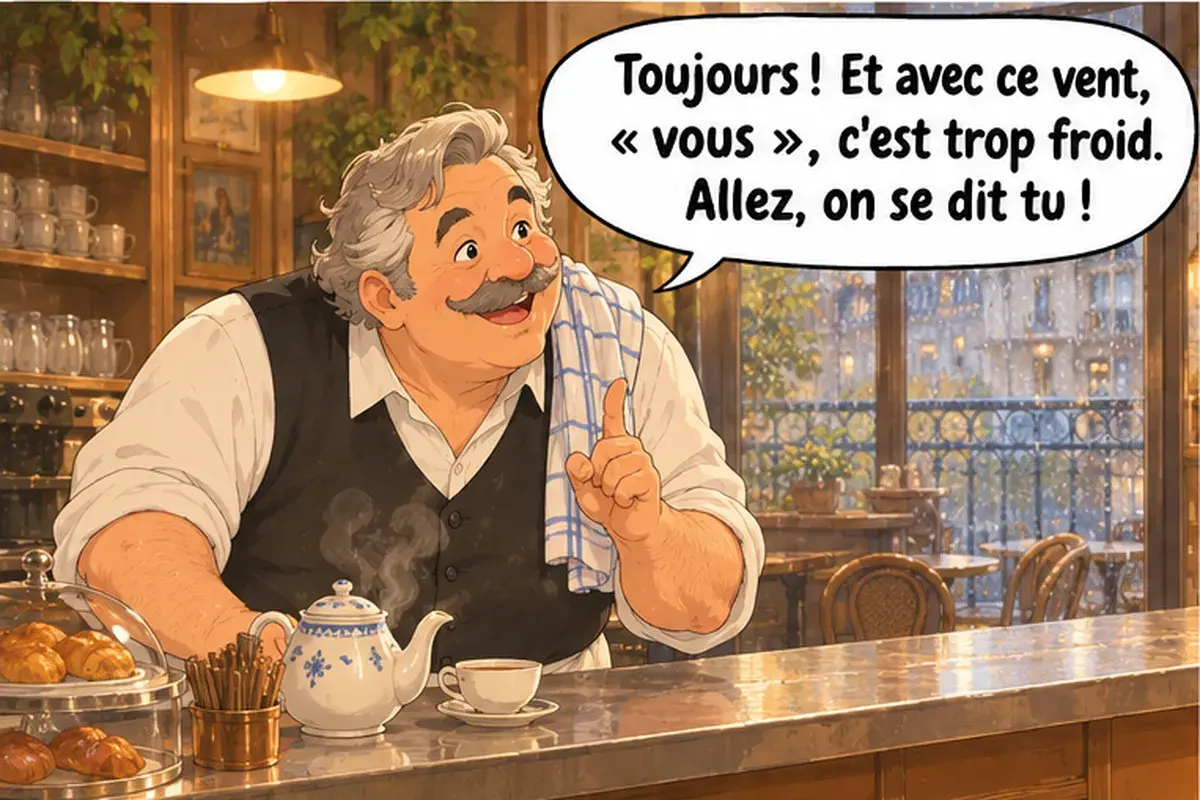
Toujours ! Et avec ce vent, « vous », c'est trop froid. Allez, on se dit tu !
Always! And with this wind, "vous" is too cold. Come on, let's say "tu" to each other!
- Pacha
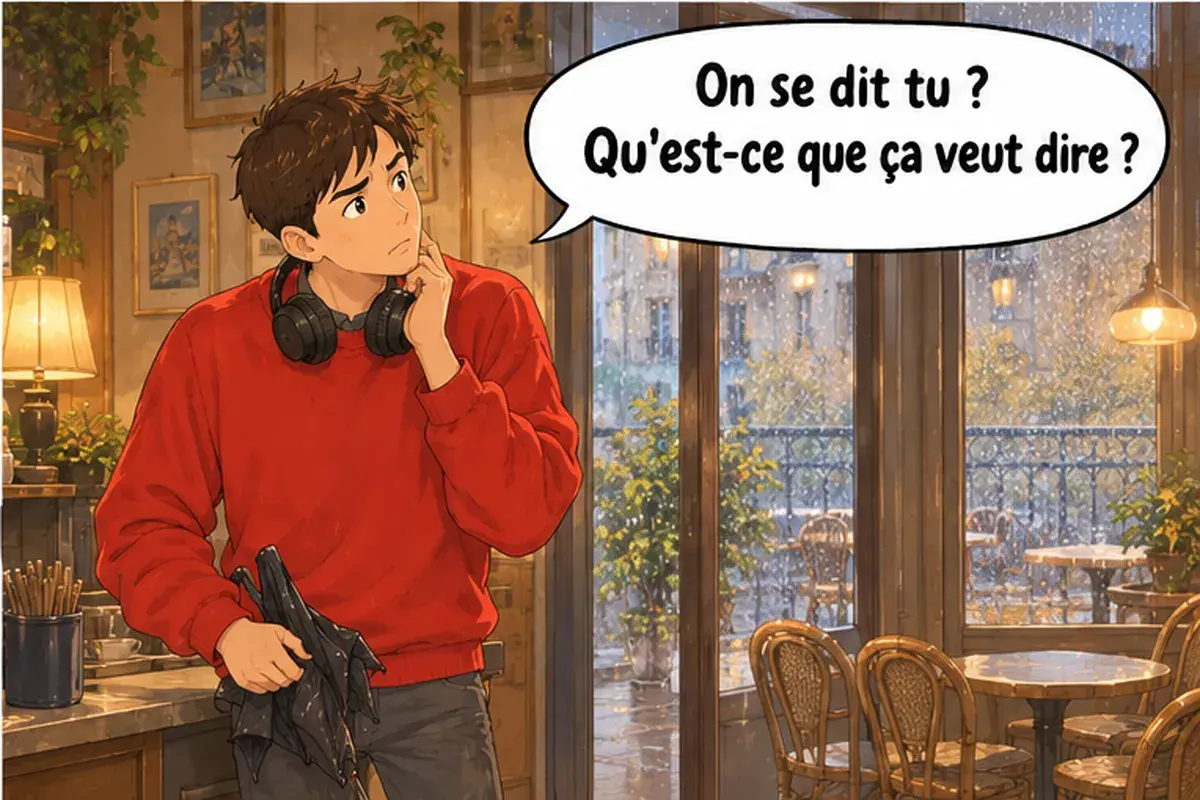
On se dit tu ? Qu'est-ce que ça veut dire ?
We say "tu" to each other? What does that mean?
- Momo
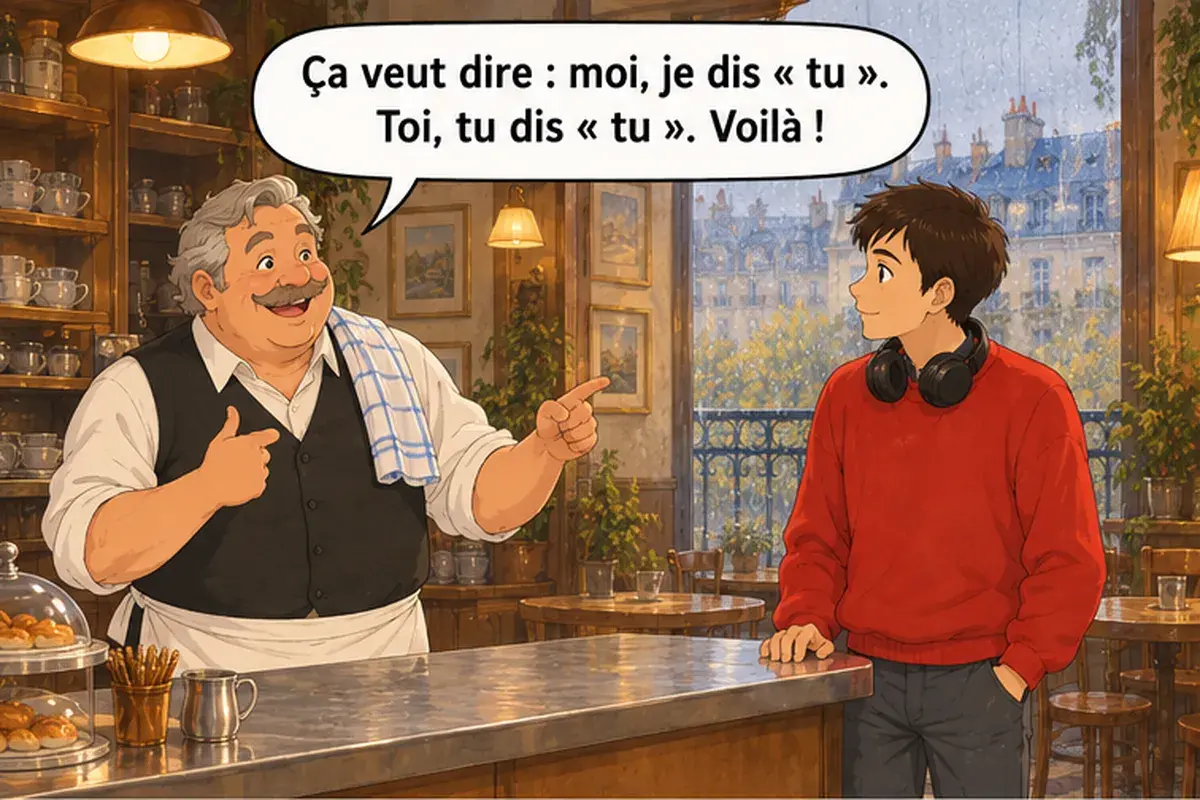
Ça veut dire : moi, je dis « tu ». Toi, tu dis « tu ». Voilà !
It means: I say "tu." You say "tu." That's it!
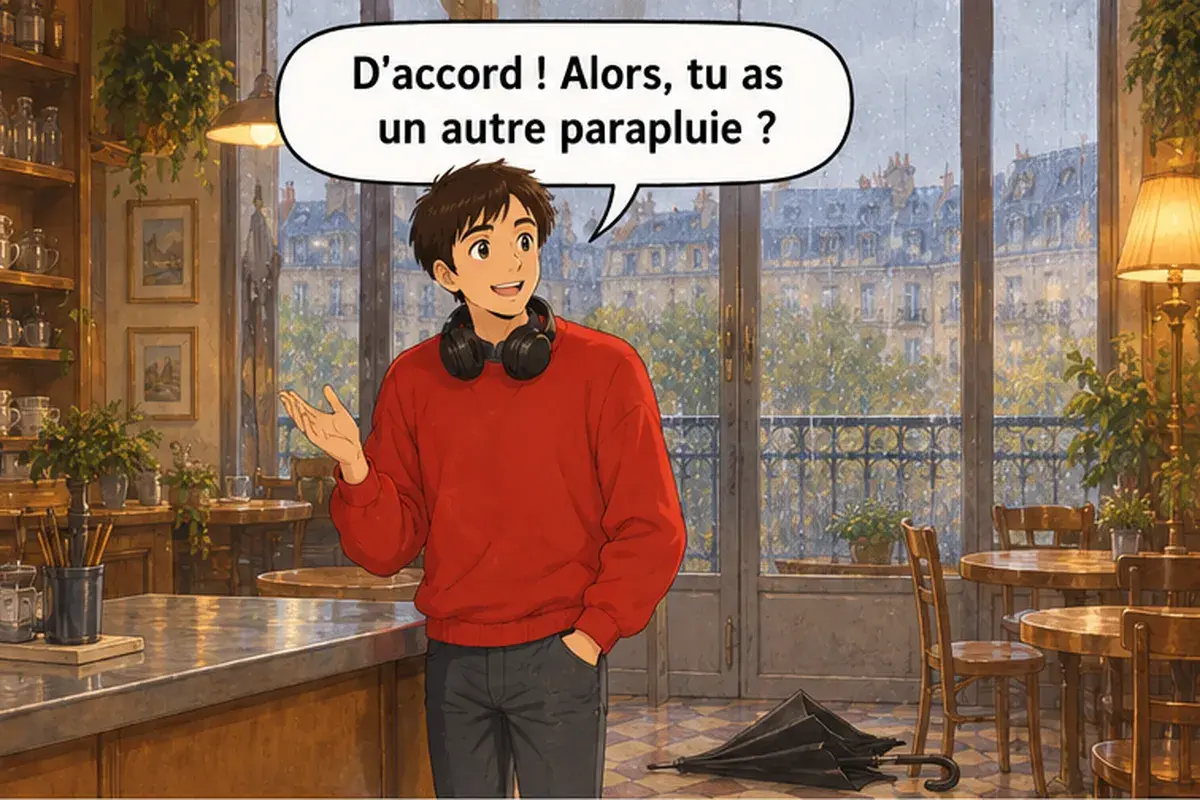
- Pacha
D'accord ! Alors, tu as un autre parapluie ?
OK! So, do you have another umbrella?
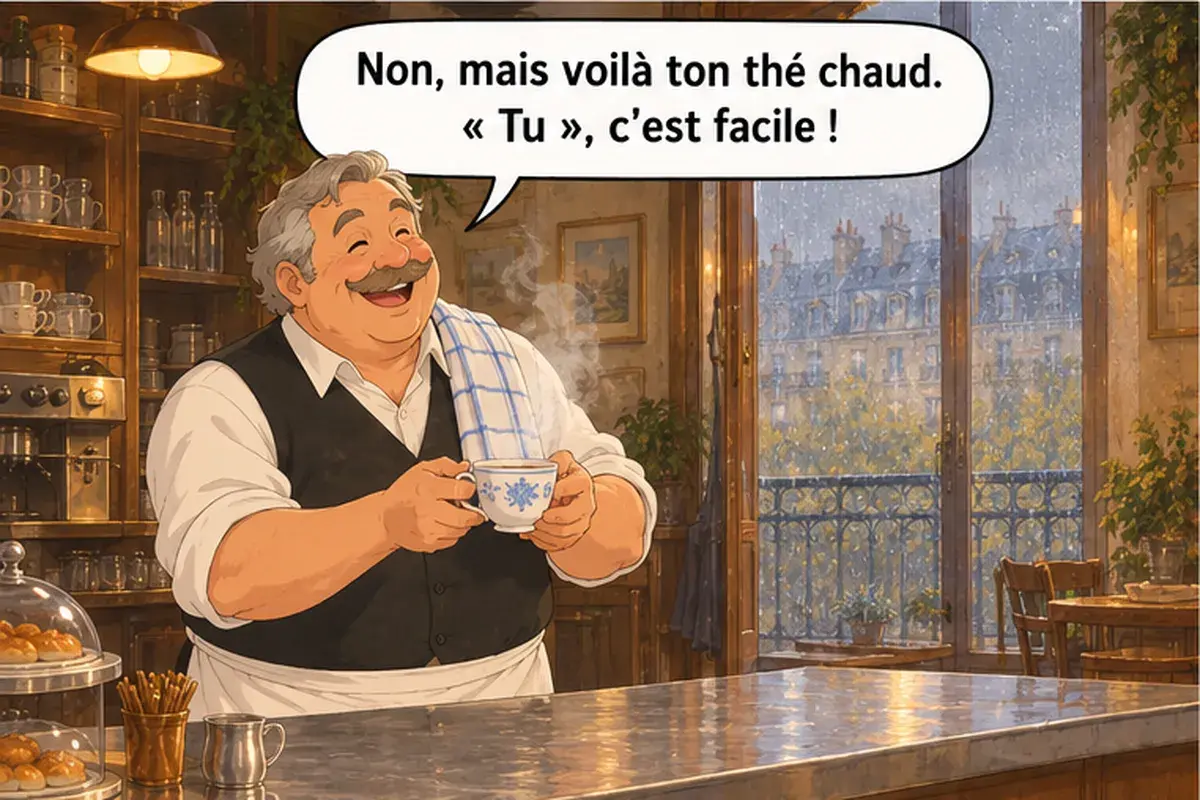
- Momo
Non, mais voilà ton thé chaud. « Tu », c'est facile !
No, but here's your hot tea. "Tu" is easy!

- Pacha
Merci, Momo. Bonne journée !
Thanks, Momo. Have a nice day!
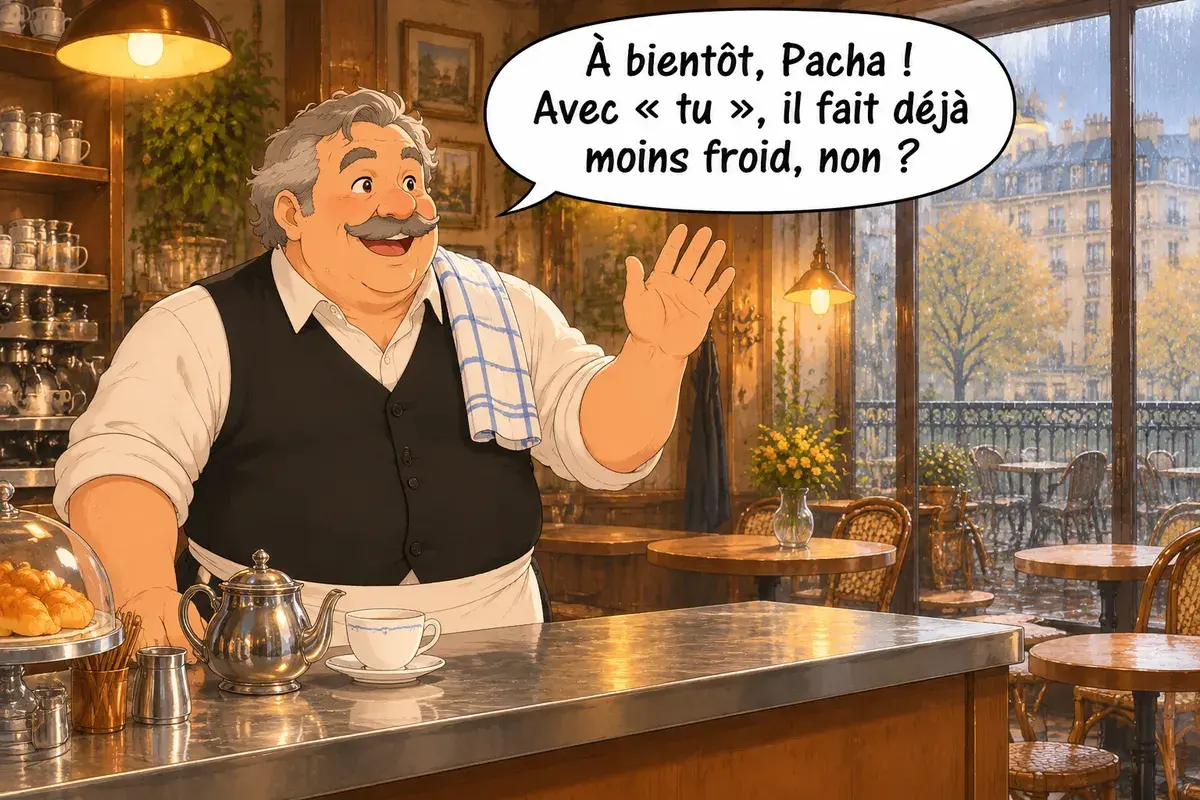
- Momo
À bientôt, Pacha ! Avec « tu », il fait déjà moins froid, non ?
See you soon, Pacha! With "tu," it's already less cold, right?
Grammar for this text
- Allez, on se dit tu !: "come on, let's say tu to each other". Literally "we say tu to each other": on means "we", dit is the il form of dire (to say), the form used with on, and se means "to each other" (more on this at B1). The word tu is quoted as a word, with no article. Allez means "come on" (it's the vous form of aller, used as a set phrase). Before this line, Pacha and Momo use vous (vous êtes); after it, they use tu (tu as).
- Moi, s'il pleut, je reste ici: s'il = si + il, "if". Il pleut means "it's raining": pleut is a form of pleuvoir, which only has the il form, and this il doesn't stand for anyone, just like "it" in "it's raining". After si comes the normal present tense, as in English.
- C'est normal, c'est novembre !: after c'est the month has no article and no preposition: "it's November".
- Avec ce vent, « vous », c'est trop froid: a joke on two meanings: vous sounds cold and distant, just like the weather. That's why at the end Momo asks if it feels less cold now.
- « Tu », c'est facile !: Momo jokes: he has no second umbrella, but tu costs nothing. C'est facile: "it's easy".
Words and grammar of the unit: Talk about the weather.
Learn the words from the texts with flashcards
In the app, you can tap any word in a text to see its translation, forms and examples, and new words stick with flashcards. 15 minutes a day.
Start for freeEverything is open for free. No card needed to sign up.