
French dialogue with translation · A1 · 12 lines
Je n'ai pas compris I didn't understand
Comic · 12 panels
- Pacha
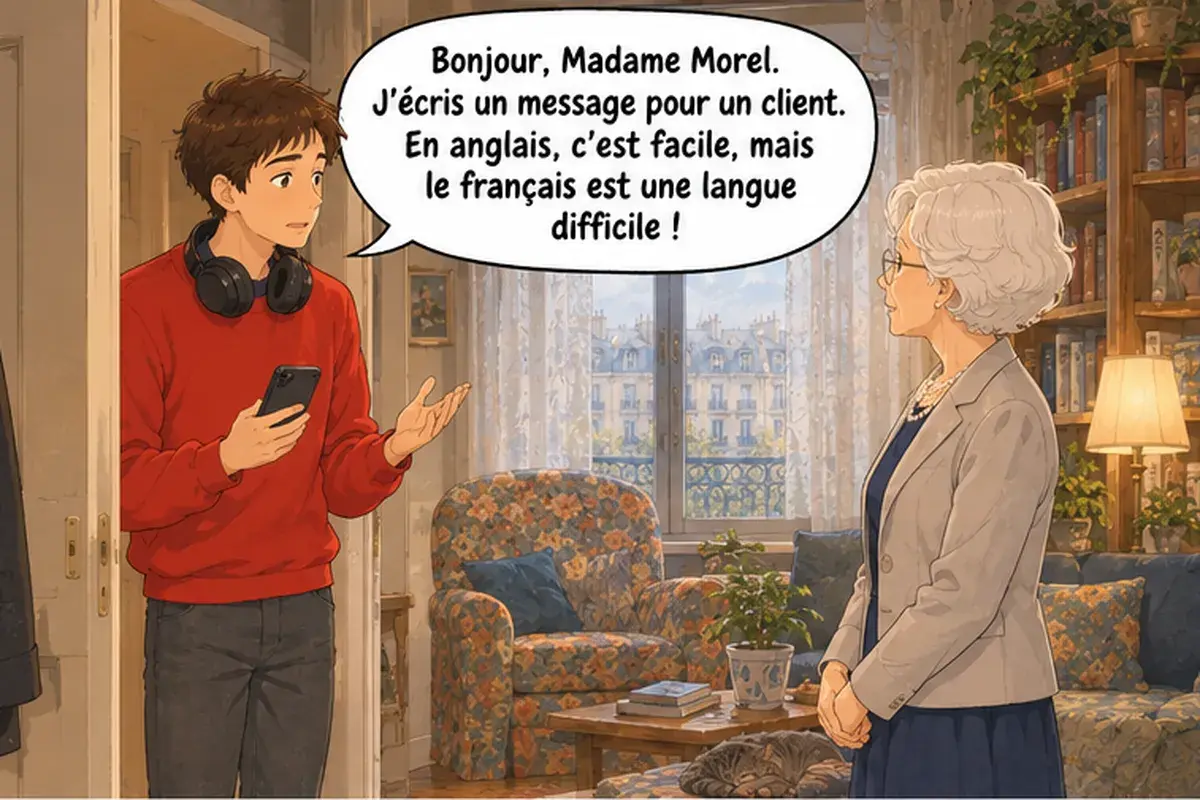
Bonjour, Madame Morel. J'écris un message pour un client. En anglais, c'est facile, mais le français est une langue difficile !
Hello, Madame Morel. I'm writing a message for a client. In English it's easy, but French is a difficult language!
- Madame Morel
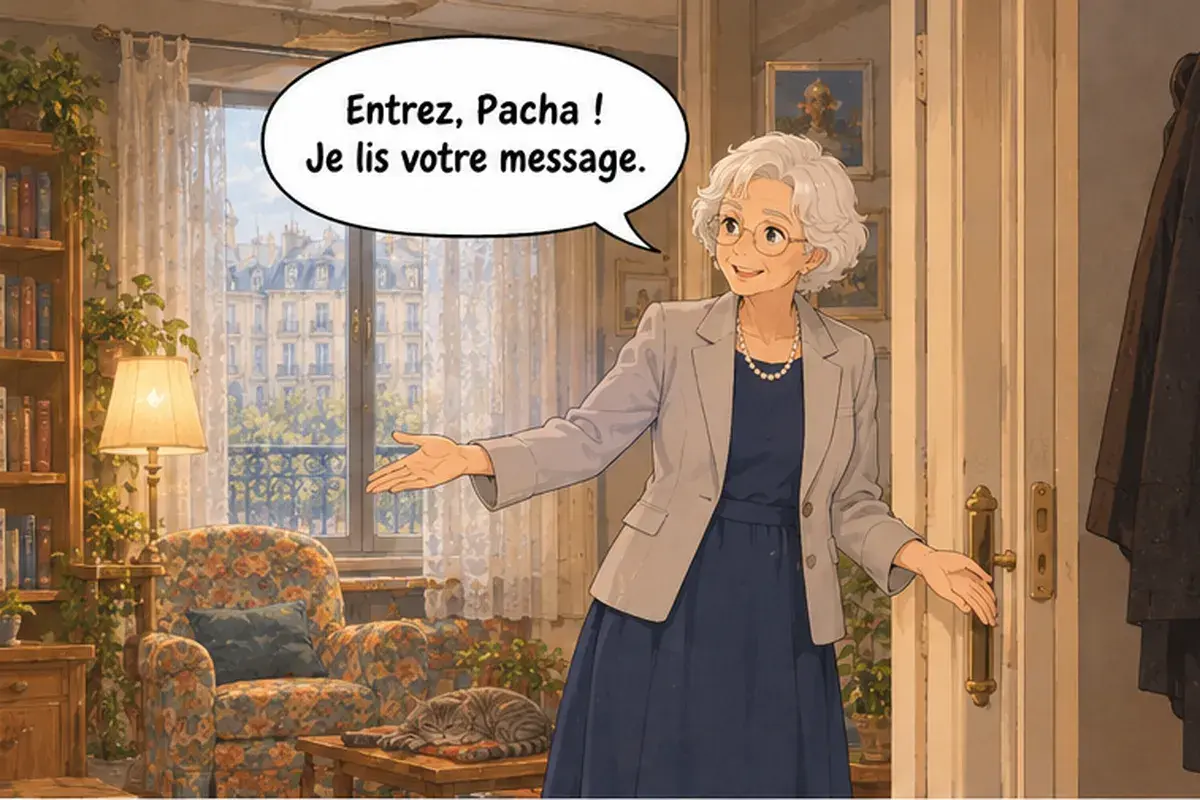
Entrez, Pacha ! Je lis votre message.
Come in, Pacha! I'll read your message. (formal)
- Pacha
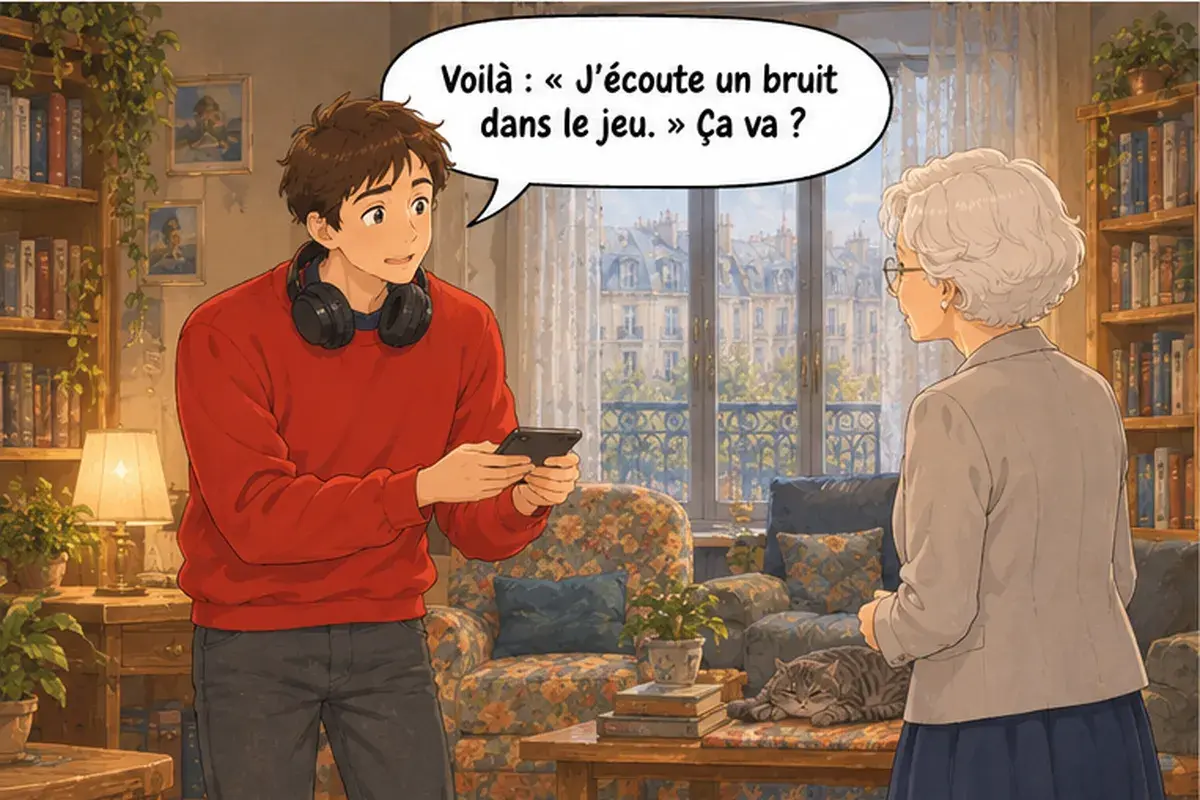
Voilà : « J'écoute un bruit dans le jeu. » Ça va ?
Here it is: "J'écoute un bruit dans le jeu." Is that OK?
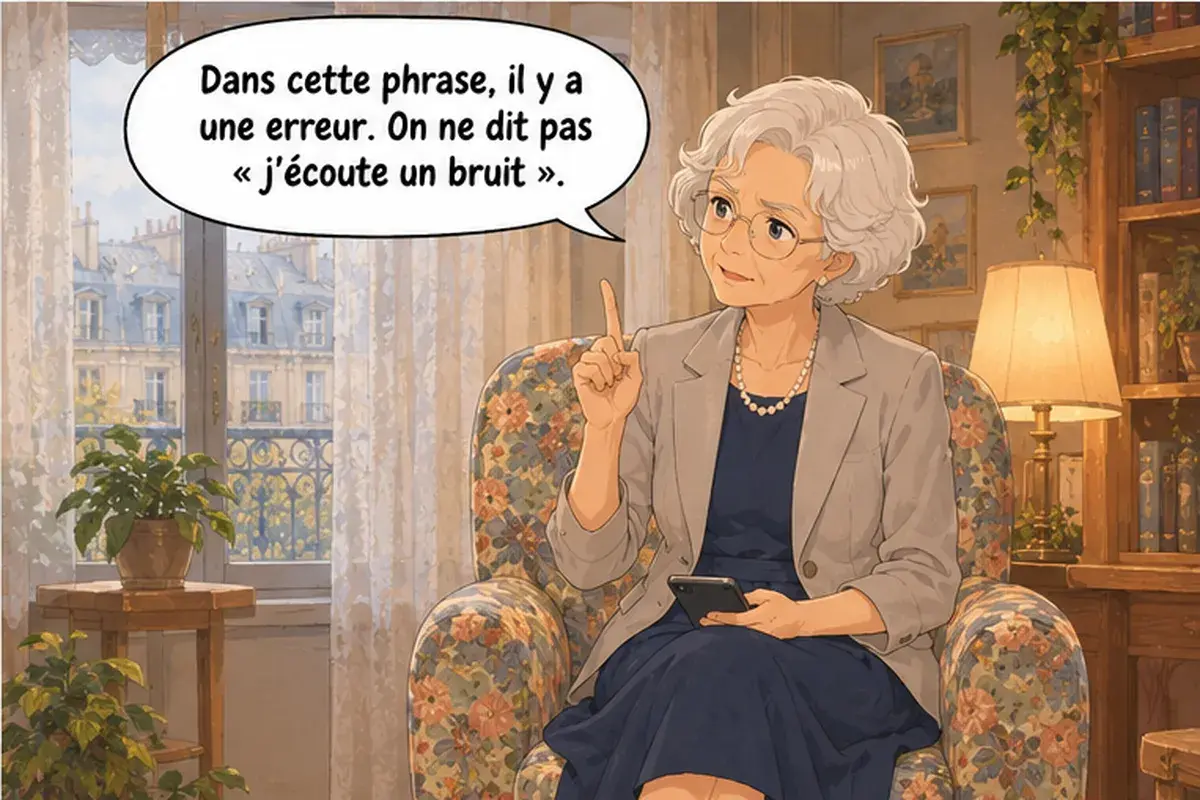
- Madame Morel
Dans cette phrase, il y a une erreur. On ne dit pas « j'écoute un bruit ».
There's a mistake in this sentence. We don't say "j'écoute un bruit."
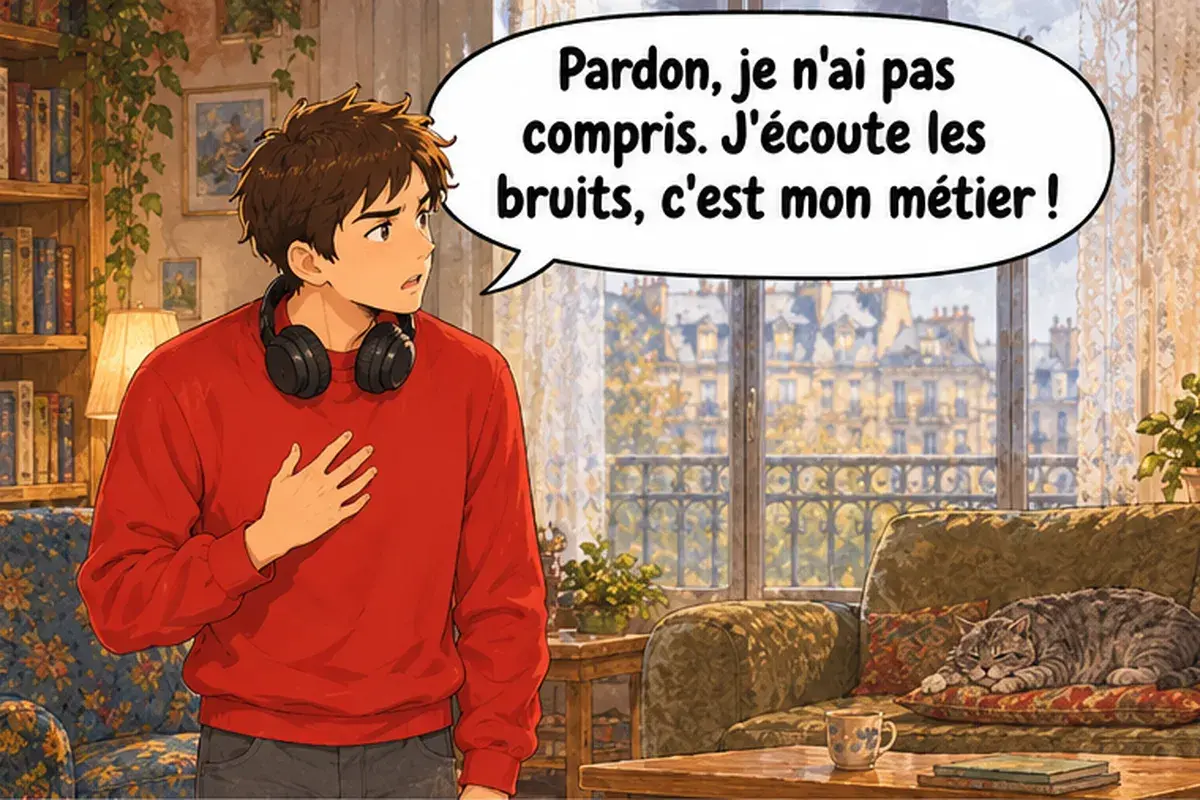
- Pacha
Pardon, je n'ai pas compris. J'écoute les bruits, c'est mon métier !
Sorry, I didn't understand. I listen to noises, that's my job!
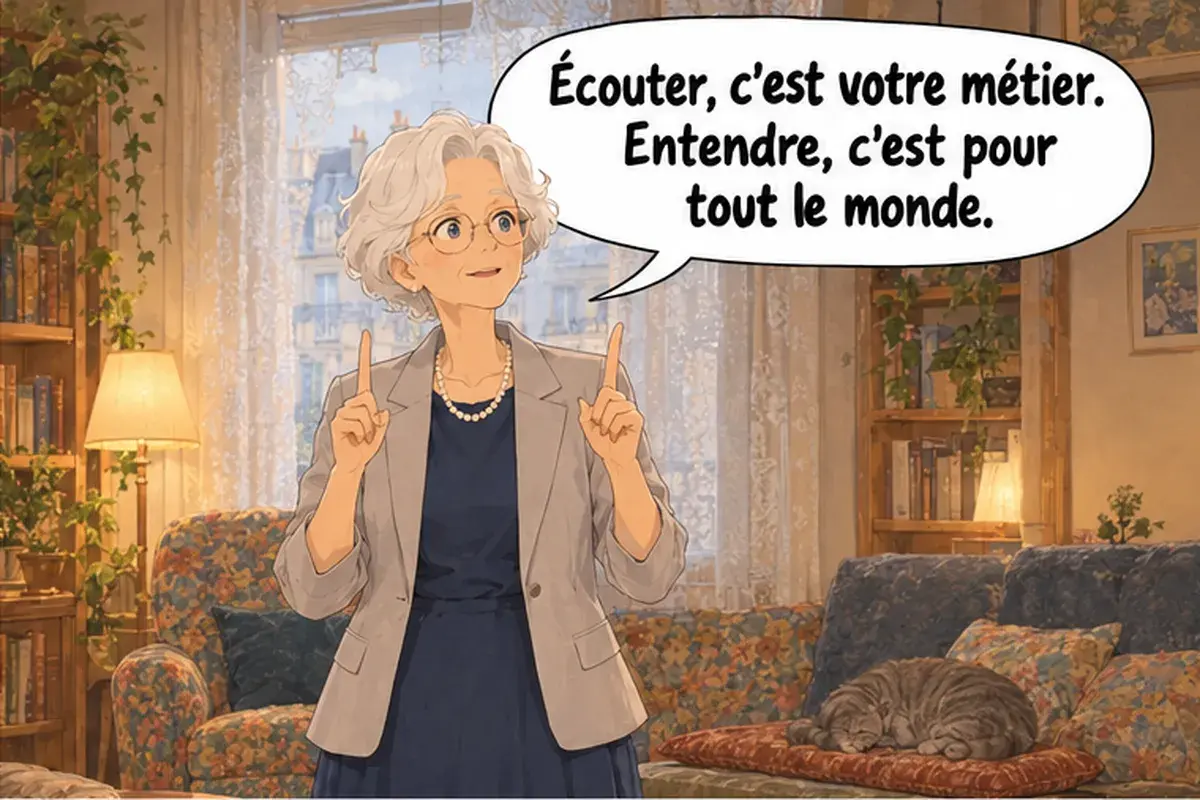
- Madame Morel
Écouter, c'est votre métier. Entendre, c'est pour tout le monde.
Listening is your job. Hearing is for everyone. (formal)
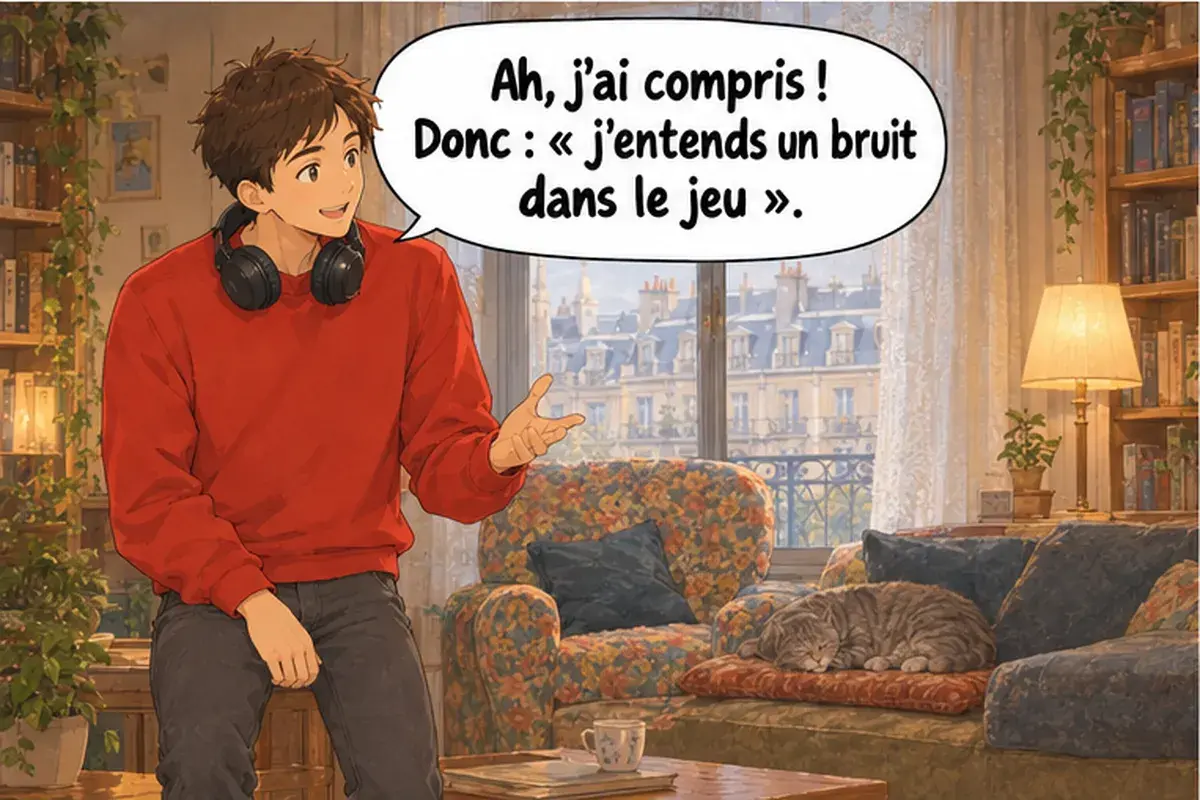
- Pacha
Ah, j'ai compris ! Donc : « j'entends un bruit dans le jeu ».
Oh, I've got it! So: "j'entends un bruit dans le jeu."
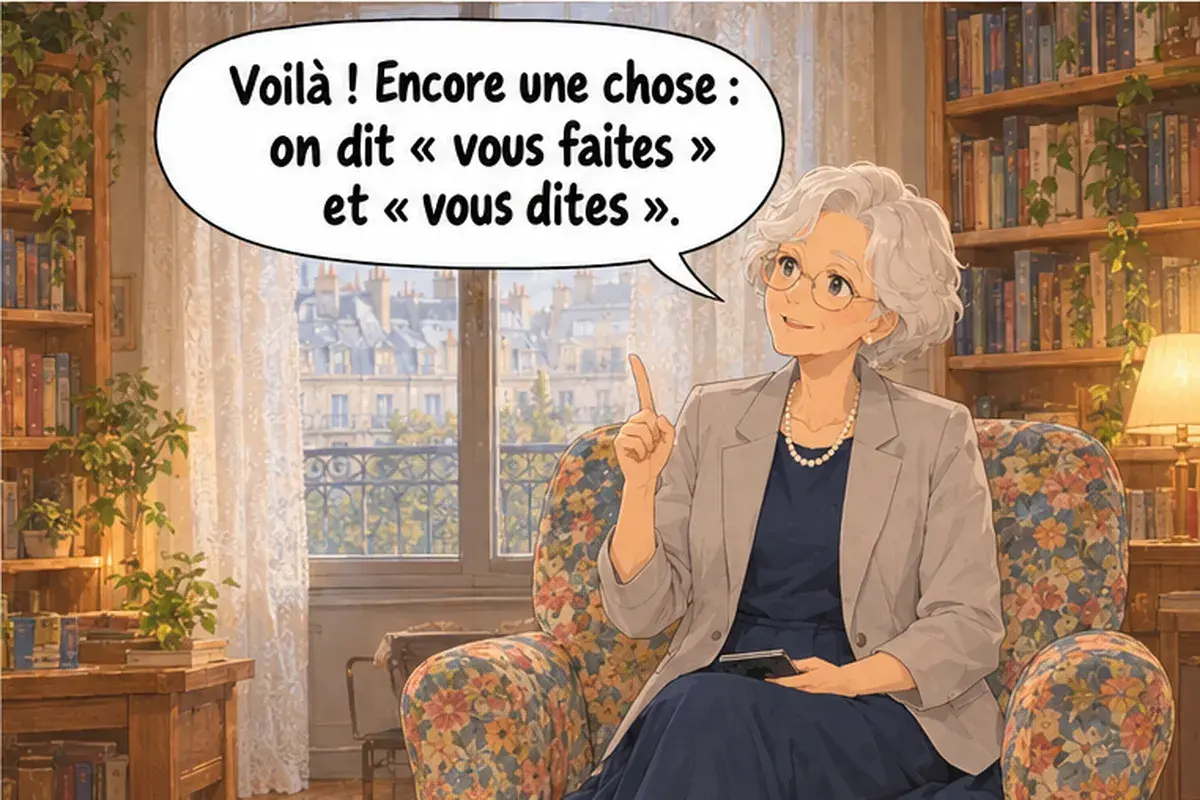
- Madame Morel
Voilà ! Encore une chose : on dit « vous faites » et « vous dites ».
That's it! One more thing: we say "vous faites" and "vous dites."
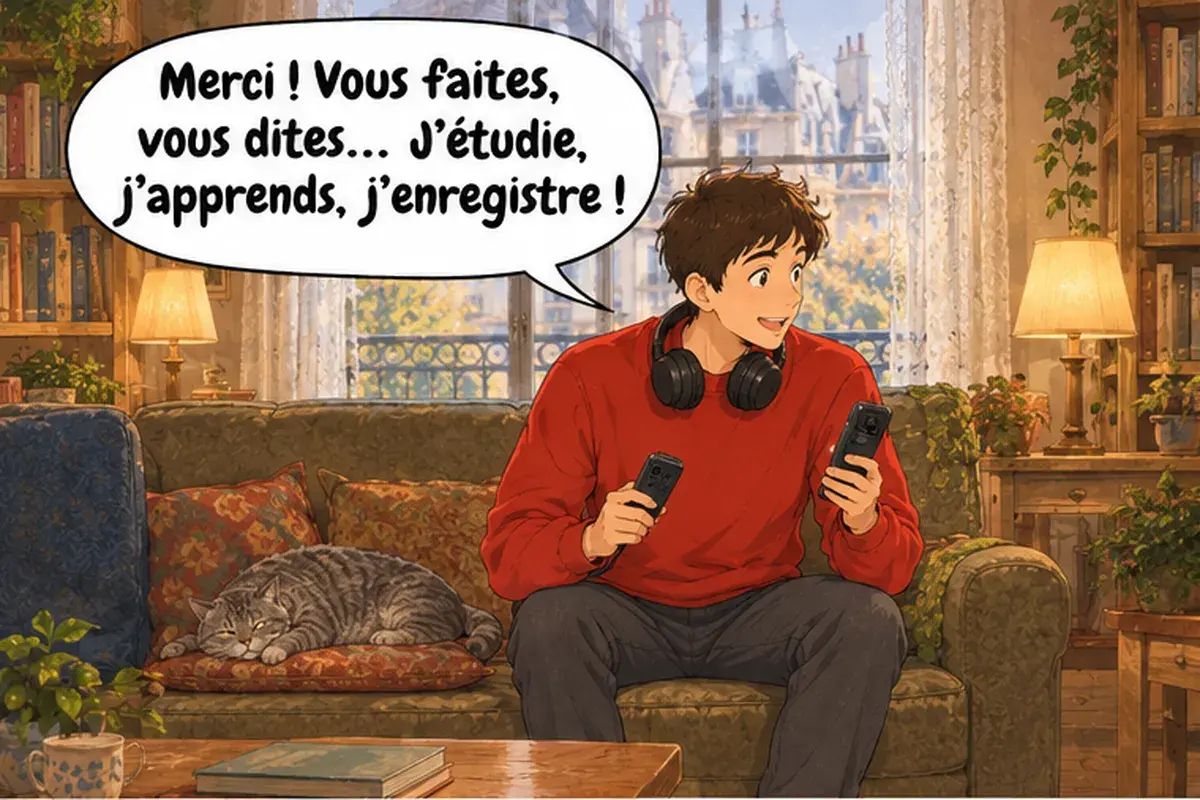
- Pacha
Merci ! Vous faites, vous dites… J'étudie, j'apprends, j'enregistre !
Thank you! Vous faites, vous dites… I study, I learn, I record!
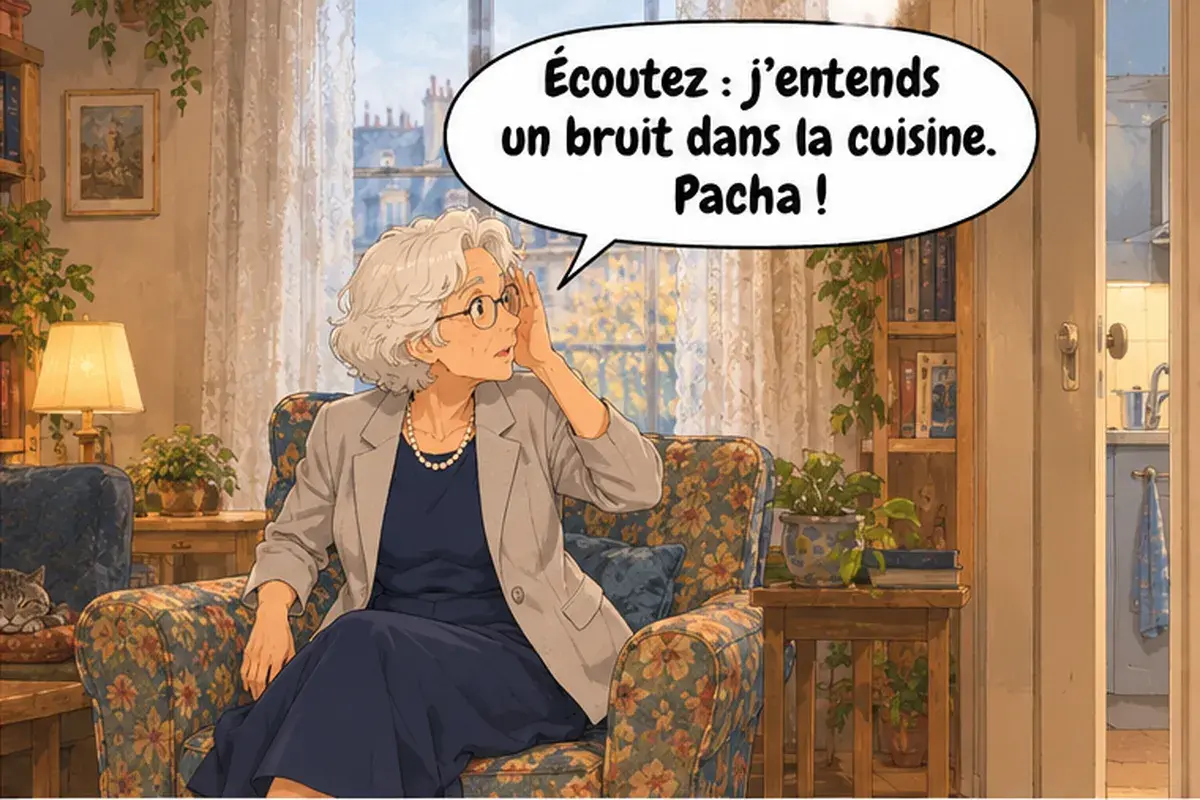
- Madame Morel
Écoutez : j'entends un bruit dans la cuisine. Pacha !
Listen: I hear a noise in the kitchen. Pacha! (formal)
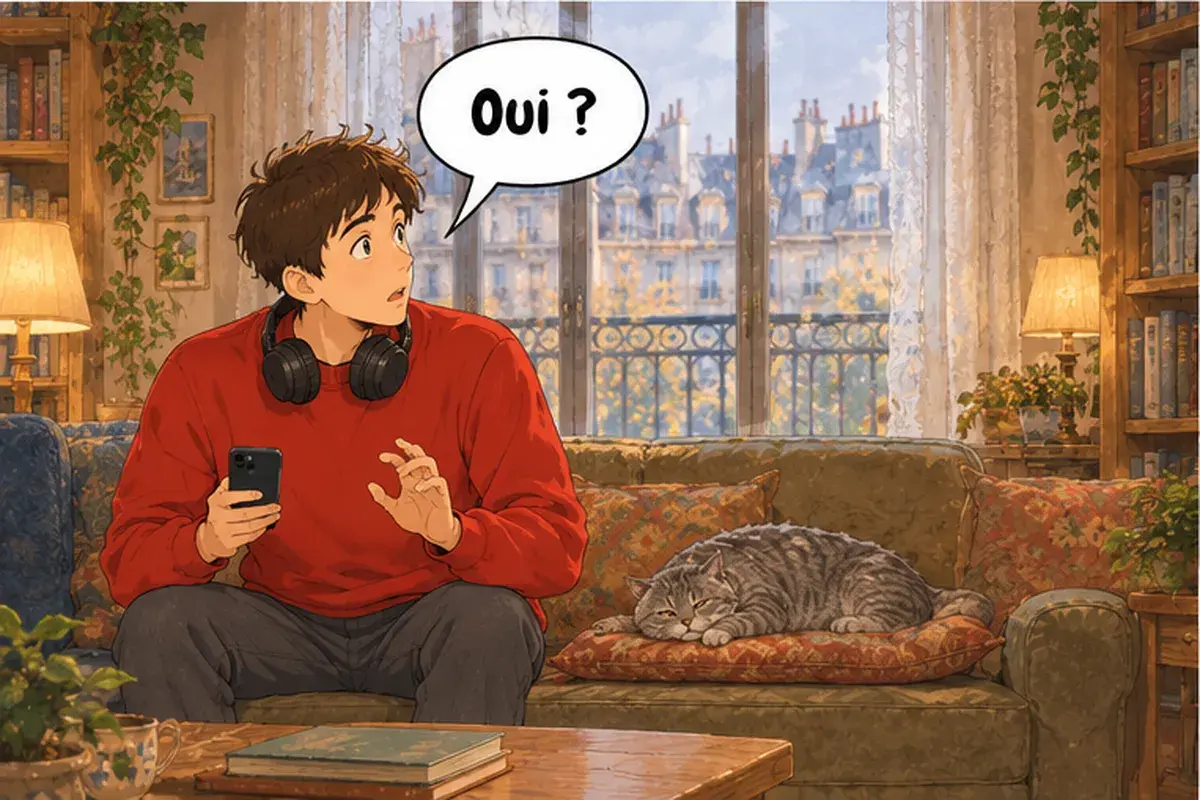
- Pacha
Oui ?
Yes?
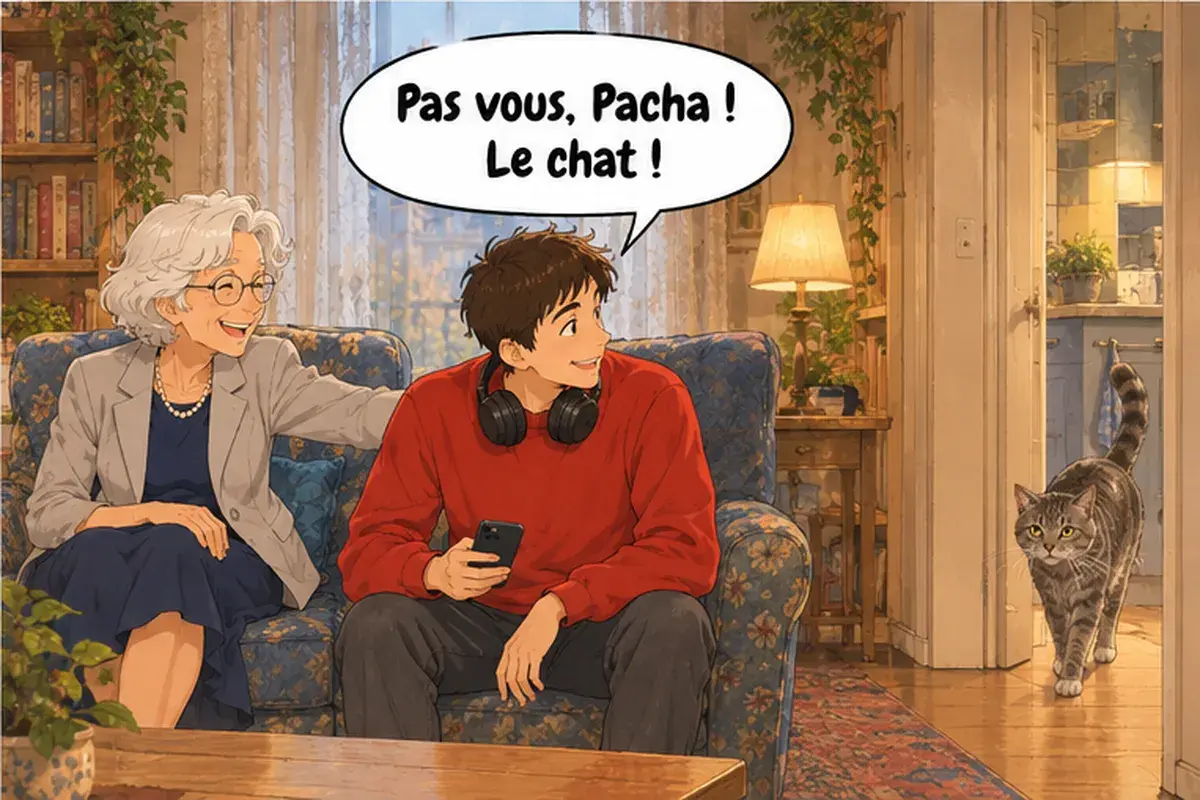
- Madame Morel
Pas vous, Pacha ! Le chat !
Not you, Pacha! The cat! (formal)
Grammar for this text
- Je n'ai pas compris: "I didn't understand". This is the passé composé (the main past tense) of comprendre: j'ai (je + ai, from avoir) + compris. In the negative, ne and pas go around ai: je n'ai pas compris (n' = ne). You'll see how it works in unit 15; for now learn it as a whole. J'ai compris: "I've got it, I understood".
- On ne dit pas: "we don't say that, that's not how you say it", Madame Morel's favorite phrase. The right version comes next: On dit… (we say…). dit is the on form of dire.
- Écouter, c'est votre métier. Entendre, c'est pour tout le monde: écouter is to listen on purpose, entendre is to hear, even when you don't try. An infinitive can start a sentence as its subject, where English uses -ing: "listening is…".
- vous faites, vous dites: for almost all verbs the vous form ends in -ez (vous parlez). faire and dire end in -tes instead, and you hear the t. Madame Morel adds this "while she's at it": she always adds one lesson to another. At the end Pacha repeats j'apprends, "I learn" (the je form of apprendre).
- Écoutez : j'entends un bruit: now Madame Morel uses the lesson herself: she listens on purpose (écoutez), and the noise just reaches her (j'entends).
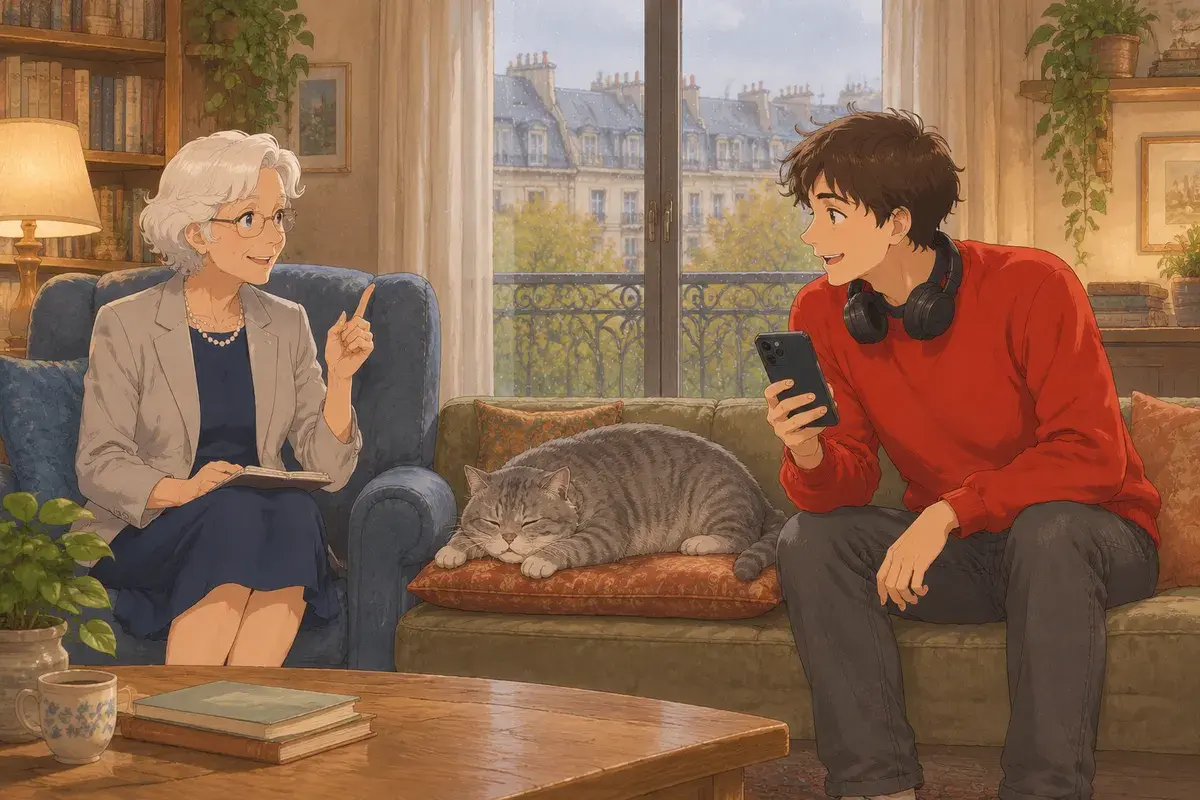
- Pas vous, Pacha ! Le chat !: Madame Morel's cat is also called Pacha. She's calling the cat, and Pacha the man answers. Pas vous: "not you".
Words and grammar of the unit: Talk about work and studies.
Learn the words from the texts with flashcards
In the app, you can tap any word in a text to see its translation, forms and examples, and new words stick with flashcards. 15 minutes a day.
Start for freeEverything is open for free. No card needed to sign up.