

French dialogue with translation · A1 · 14 lines
Je vous souhaite un joyeux Noël I wish you a merry Christmas
Comic · 14 panels
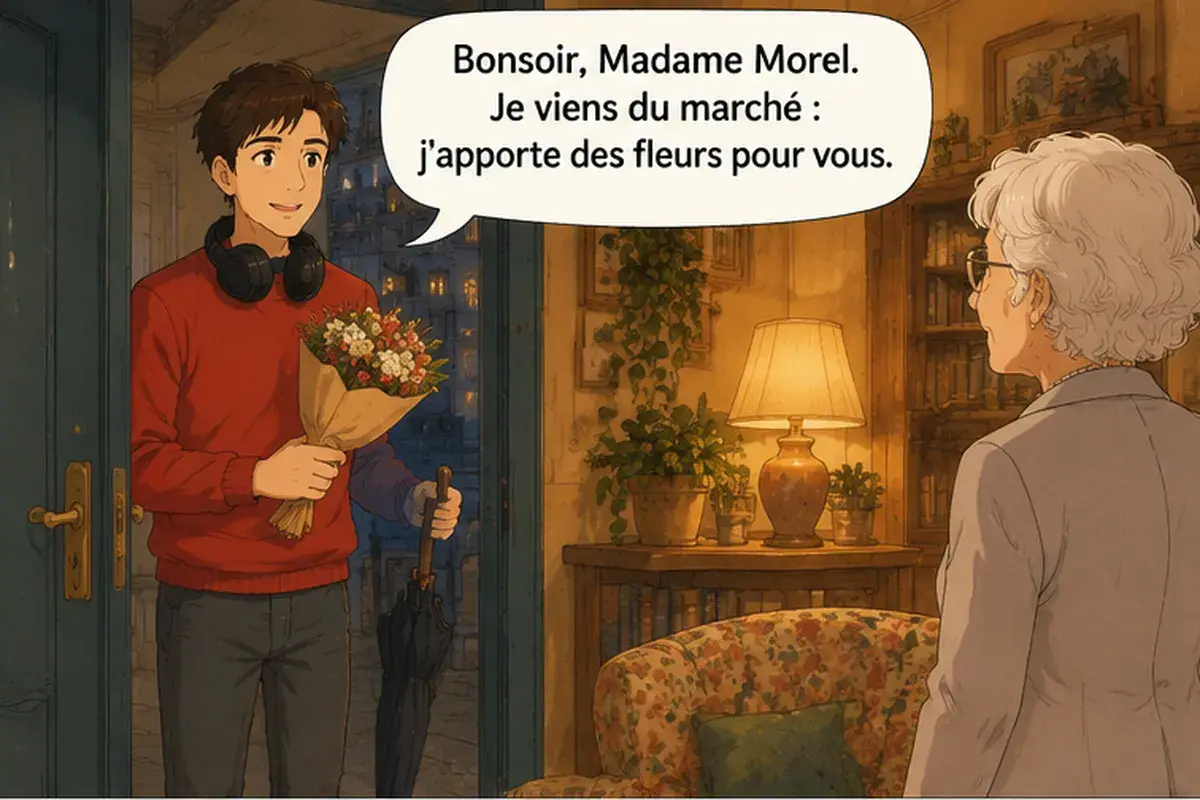
- Pacha
Bonsoir, Madame Morel. Je viens du marché : j'apporte des fleurs pour vous.
Good evening, Madame Morel. I'm coming from the market: I'm bringing flowers for you. (formal)
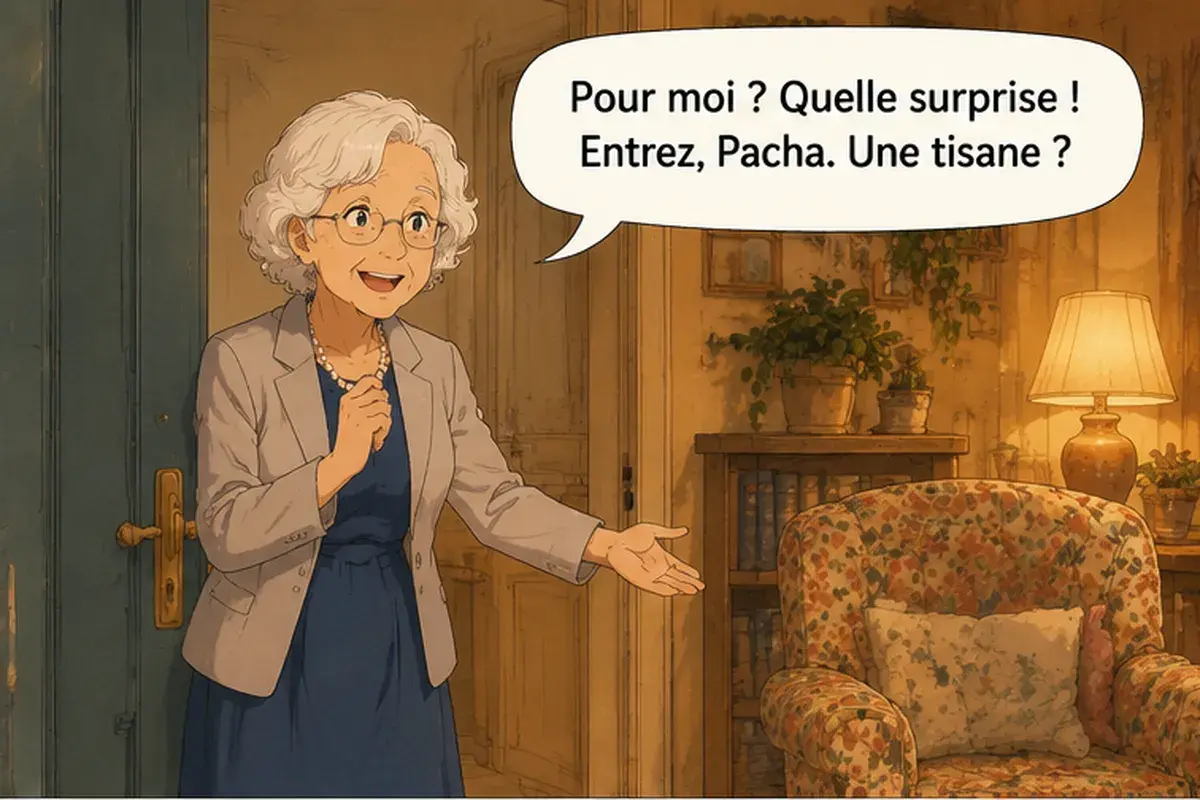
- Madame Morel
Pour moi ? Quelle surprise ! Entrez, Pacha. Une tisane ?
For me? What a surprise! Come in, Pacha. Some herbal tea? (formal)
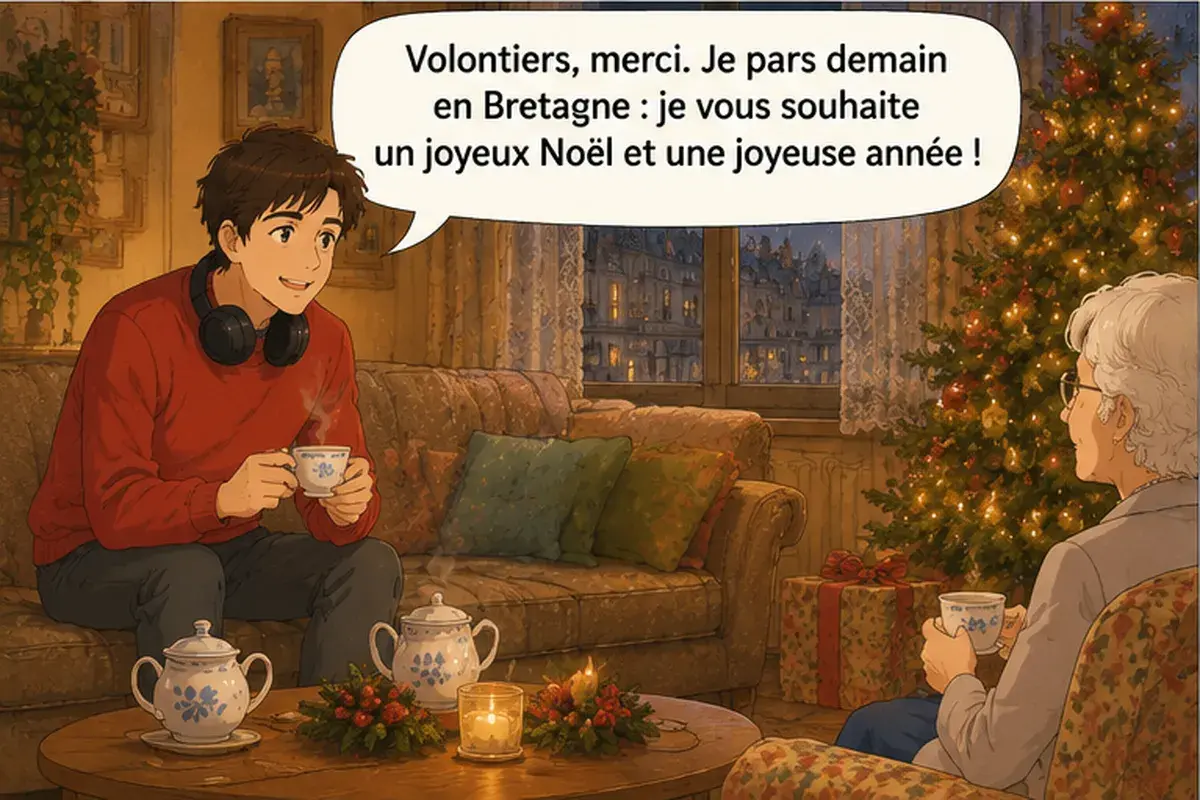
- Pacha
Volontiers, merci. Je pars demain en Bretagne : je vous souhaite un joyeux Noël et une joyeuse année !
Gladly, thanks. I'm leaving for Brittany tomorrow: I wish you a merry Christmas and a merry New Year! (formal)
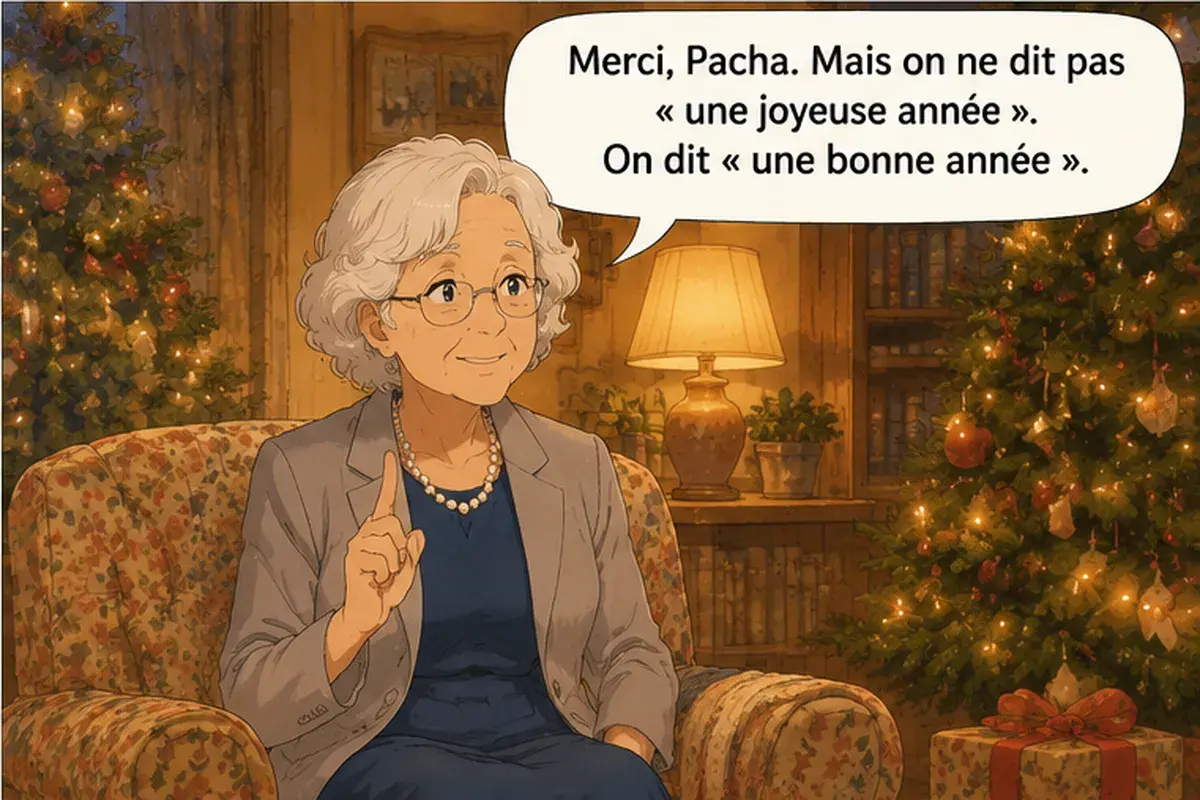
- Madame Morel
Merci, Pacha. Mais on ne dit pas « une joyeuse année ». On dit « une bonne année ».
Thank you, Pacha. But we don't say "a merry New Year". We say "a happy New Year".
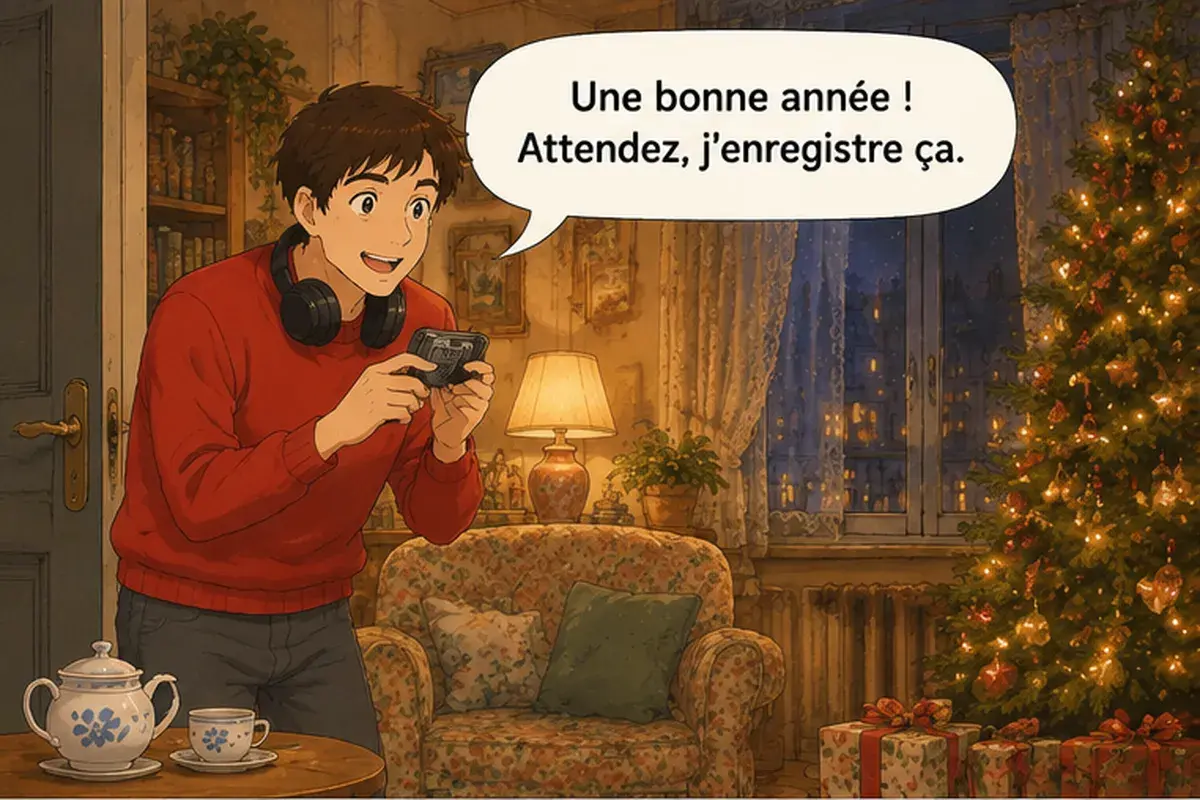
- Pacha
Une bonne année ! Attendez, j'enregistre ça.
A happy New Year! Wait, I'm recording that. (formal)
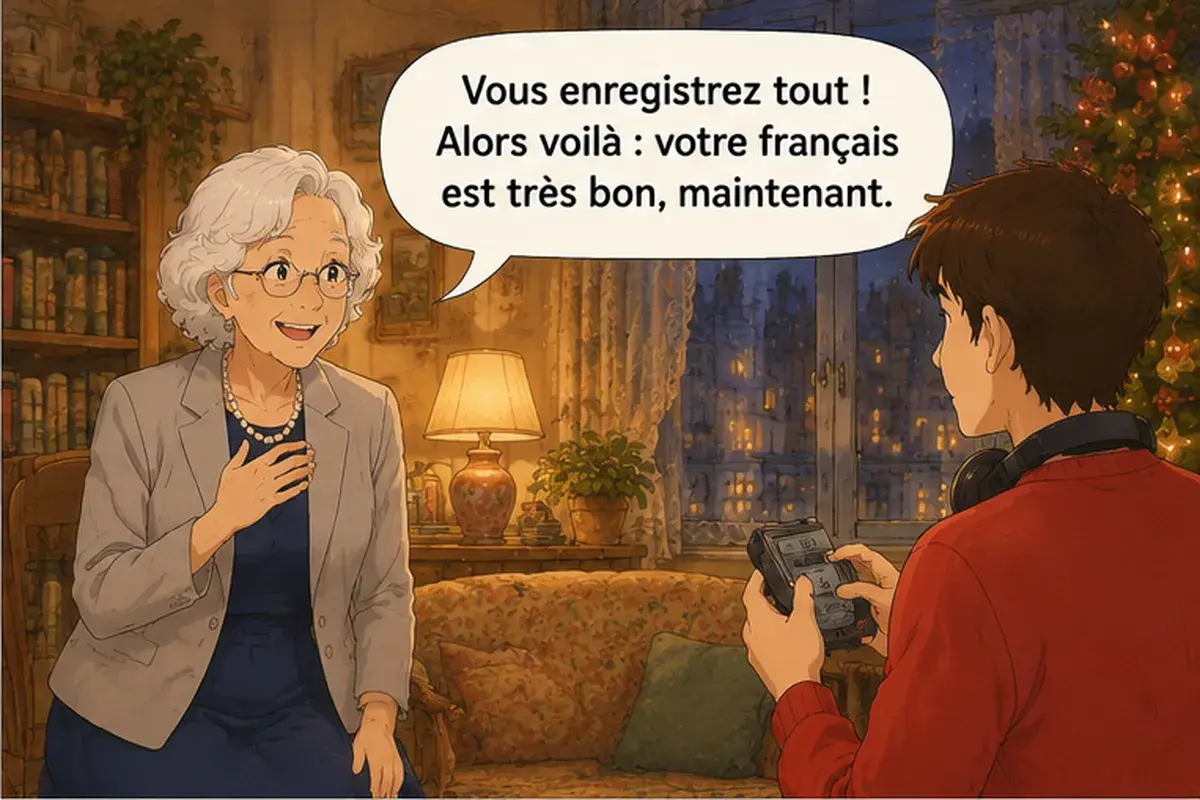
- Madame Morel
Vous enregistrez tout ! Alors voilà : votre français est très bon, maintenant.
You record everything! Well then, here you go: your French is very good now. (formal)
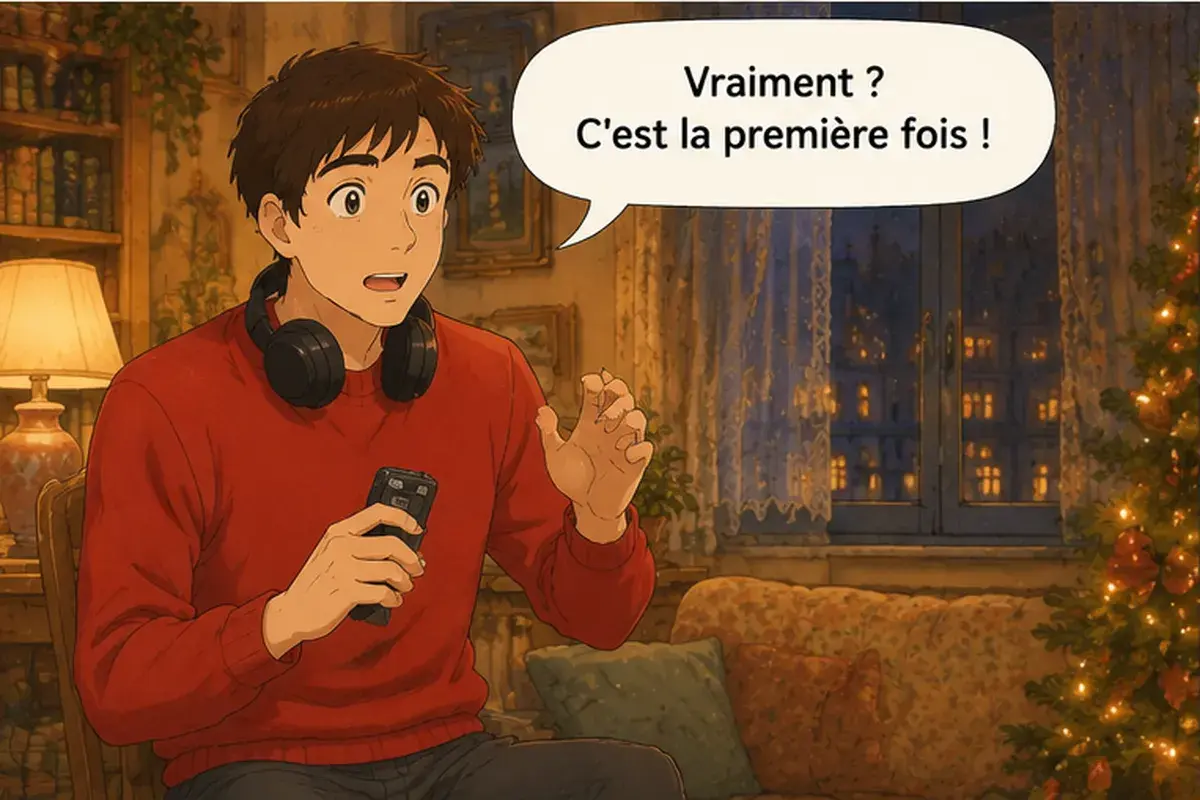
- Pacha
Vraiment ? C'est la première fois !
Really? That's the first time!
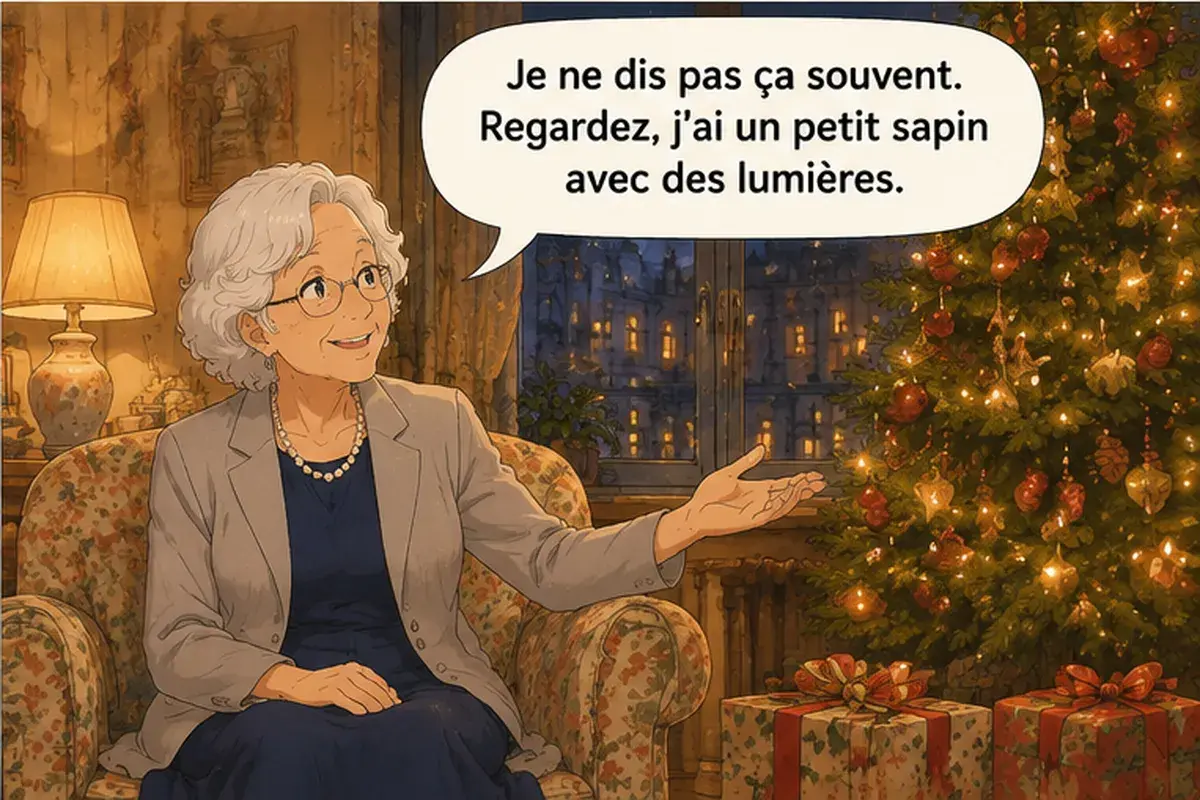
- Madame Morel
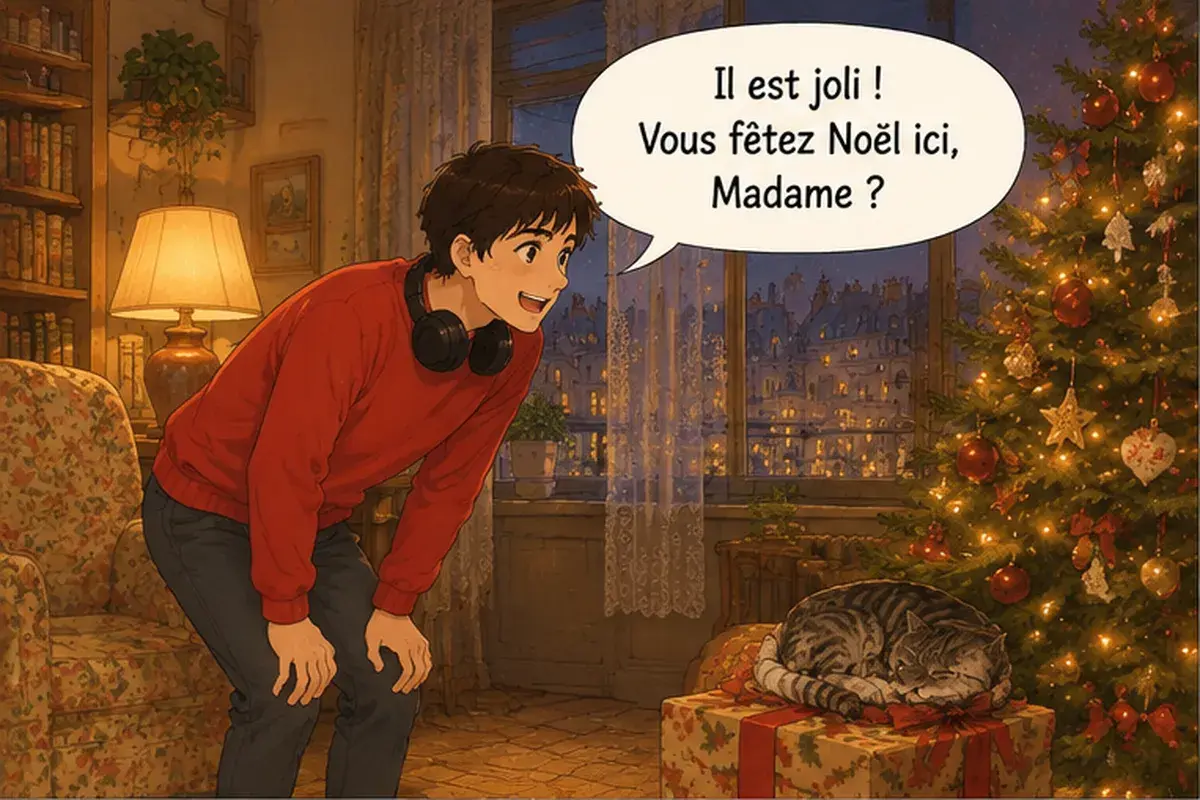
Je ne dis pas ça souvent. Regardez, j'ai un petit sapin avec des lumières.
I don't say that often. Look, I have a little Christmas tree with lights. (formal)
- Pacha
Il est joli ! Vous fêtez Noël ici, Madame ?
It's pretty! Do you celebrate Christmas here, ma'am? (formal)
- Madame Morel
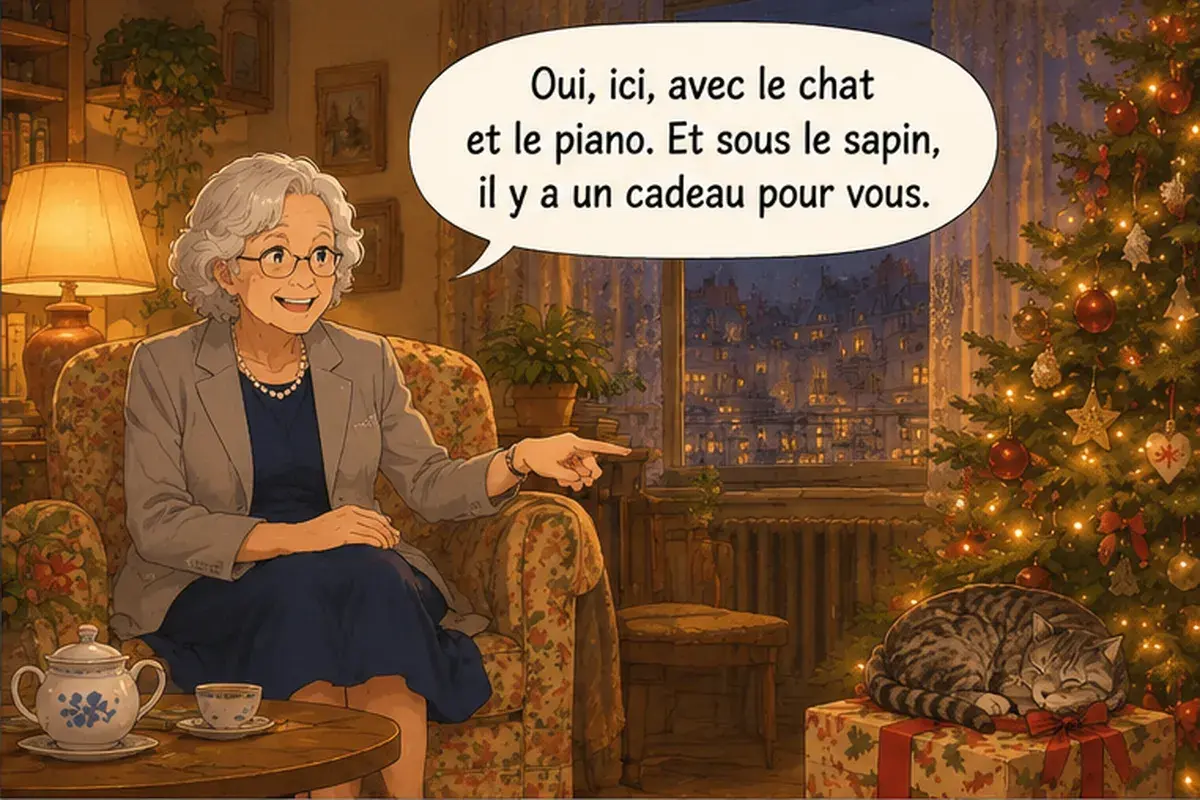
Oui, ici, avec le chat et le piano. Et sous le sapin, il y a un cadeau pour vous.
Yes, here, with the cat and the piano. And under the tree, there's a gift for you. (formal)
- Pacha
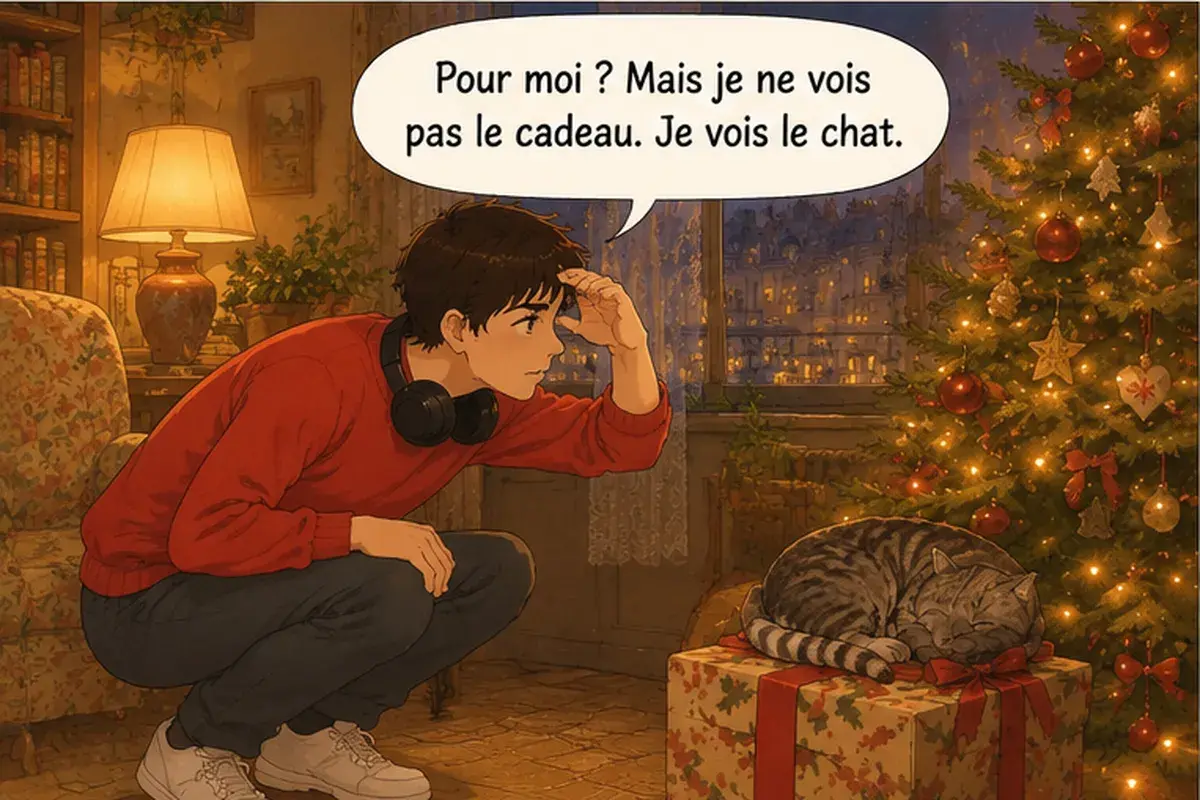
Pour moi ? Mais je ne vois pas le cadeau. Je vois le chat.
For me? But I don't see the gift. I see the cat.
- Madame Morel
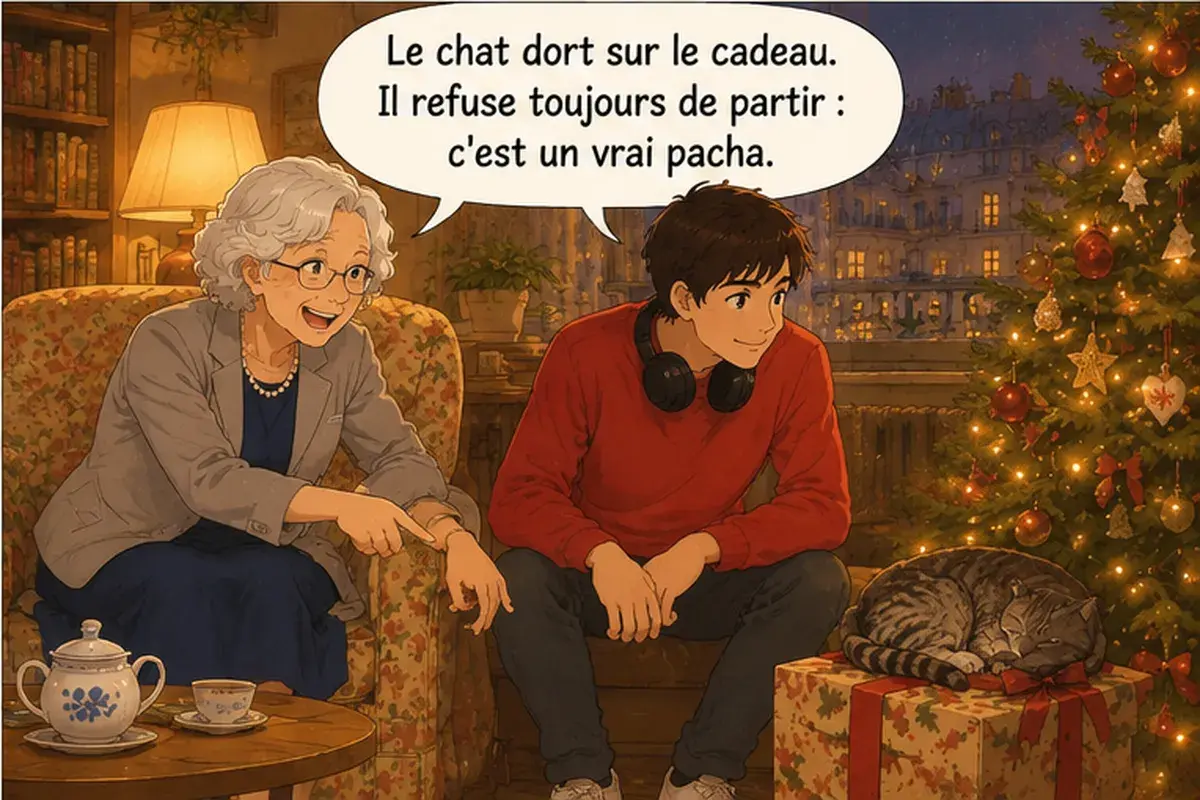
Le chat dort sur le cadeau. Il refuse toujours de partir : c'est un vrai pacha.
The cat is sleeping on the gift. He always refuses to leave: he's a real pasha.
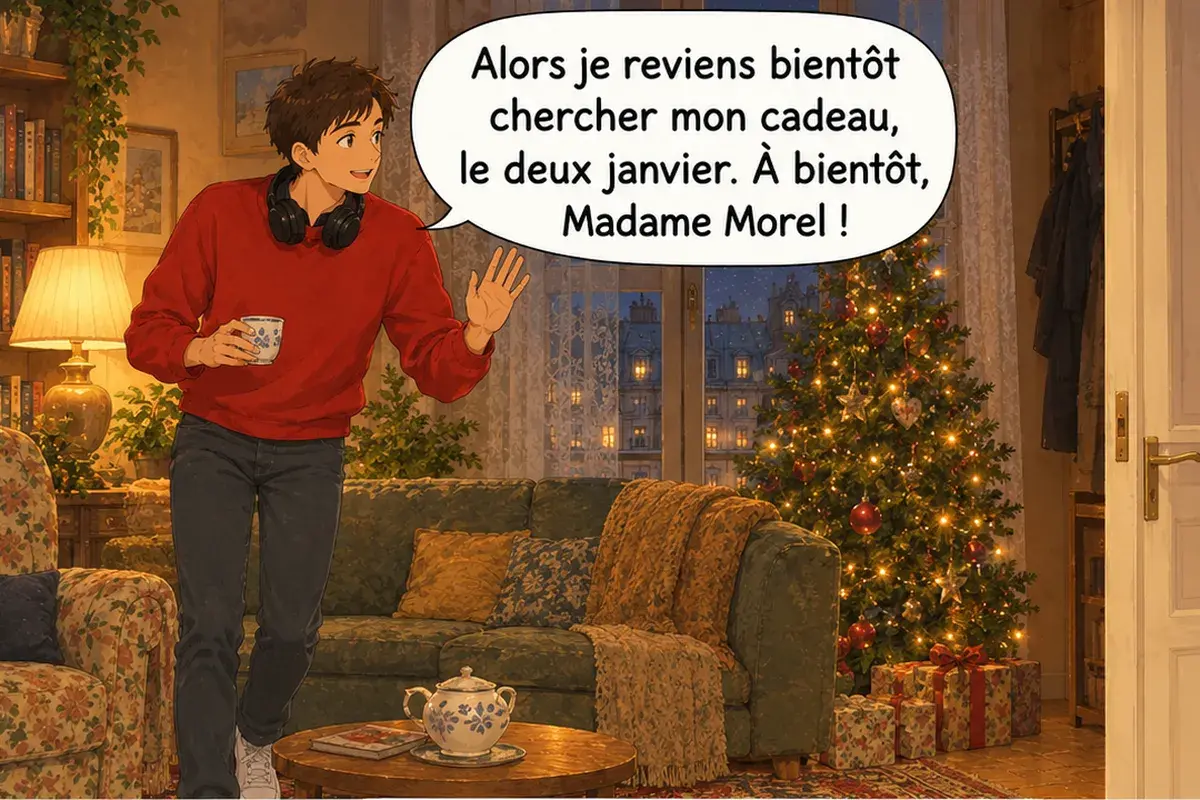
- Pacha
Alors je reviens bientôt chercher mon cadeau, le deux janvier. À bientôt, Madame Morel !
Then I'll come back soon to get my gift, on January second. See you soon, Madame Morel!
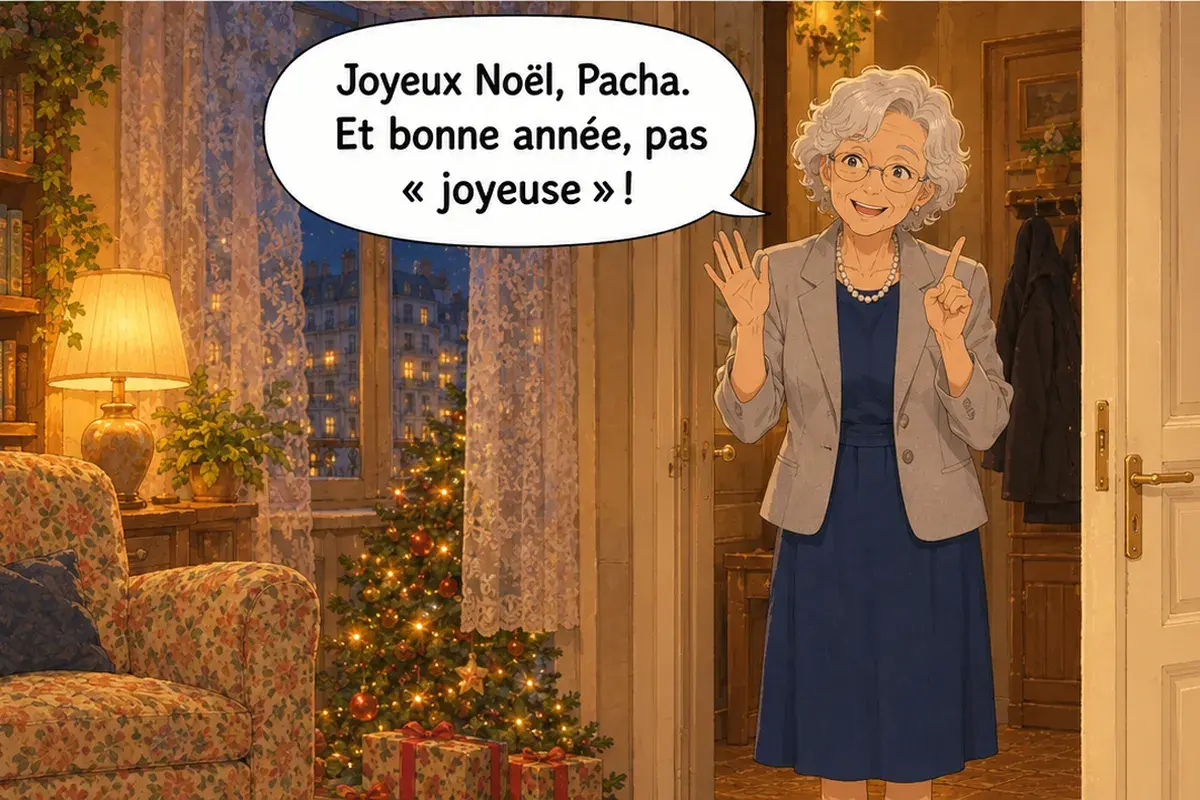
- Madame Morel
Joyeux Noël, Pacha. Et bonne année, pas « joyeuse » !
Merry Christmas, Pacha. And happy New Year, not "merry"!
Grammar for this text
- Je viens du marché: viens is the je form of venir (to come). venir de + a place answers "where from?": "I've come from the market". du = de + le.
- j'apporte des fleurs pour vous: apporte is from apporter (to bring, for things); j' = je. After pour comes the stressed form: pour vous, pour moi.
- Je vous souhaite un joyeux Noël: souhaiter means to wish. The short vous before the verb means "(to) you". Learn it as a ready-made wish for now; the rule comes at A2.
- on ne dit pas « une joyeuse année »: joyeux (merry) goes with Noël and anniversaire, but for the new year people wish bonne année, literally "a good year". on dit means "people say, we say". At the end Madame Morel jokes about her own correction: bonne année, pas « joyeuse ».
- Je reviens bientôt chercher mon cadeau: reviens is from revenir (to come back), conjugated like venir. chercher shows the purpose: "I'll come back to get".
- c'est un vrai pacha: here un pacha isn't a name but "a pasha", someone who lives in comfort; une vie de pacha is a life of luxury. The cat sleeps on the gift and does nothing, so he's "a real pasha". It's also a joke on the hero's name.
- Volontiers: "gladly". One word to accept an offer: Une tisane ? — Volontiers.
Words and grammar of the unit: Accept an invitation.
Learn the words from the texts with flashcards
In the app, you can tap any word in a text to see its translation, forms and examples, and new words stick with flashcards. 15 minutes a day.
Start for freeEverything is open for free. No card needed to sign up.