

French story with translation · A1 · 11 lines
Demain, je pars en Bretagne Tomorrow I'm leaving for Brittany
Comic · 10 panels
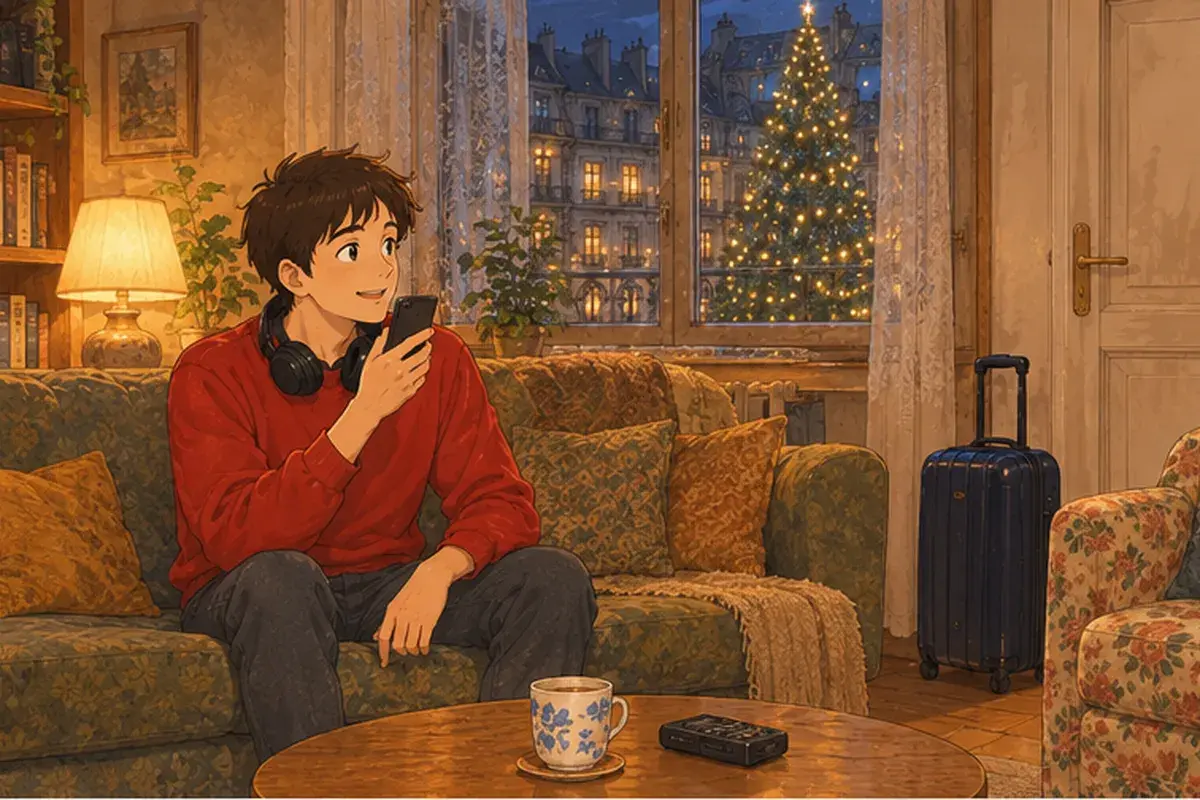
Dacha, c'est Pacha. Demain, je pars en Bretagne, chez les parents d'Hugo. Je reviens le deux janvier.
Dacha, it's Pacha. Tomorrow I'm leaving for Brittany, for Hugo's parents' place. I'll be back on January second.

Hugo vient de Saint-Malo. Cette région est célèbre pour ses crêpes.
Hugo is from Saint-Malo. This region is famous for its crêpes.

Pour le réveillon, ses parents mangent des huîtres. Hugo, lui, est végétarien : il prend des crêpes, sucrées ou salées.
For Christmas Eve dinner, his parents eat oysters. As for Hugo, he's a vegetarian: he has crêpes, sweet or savory.

Avec du beurre salé, bien sûr. Pour Hugo, un beurre pas salé, c'est une erreur. Il ne rigole pas !
With salted butter, of course. For Hugo, unsalted butter is a mistake. He's not kidding!

Ici, à Paris, c'est déjà Noël : il y a des lumières dans la rue et un grand sapin sur la place de la République.
Here in Paris, it's already Christmas: there are lights in the street and a big Christmas tree on place de la République.

Chez nous, le nouvel an est la grande fête.
Back home, New Year's is the big holiday.

Ici, on fête Noël en famille.
Here, people celebrate Christmas with family.
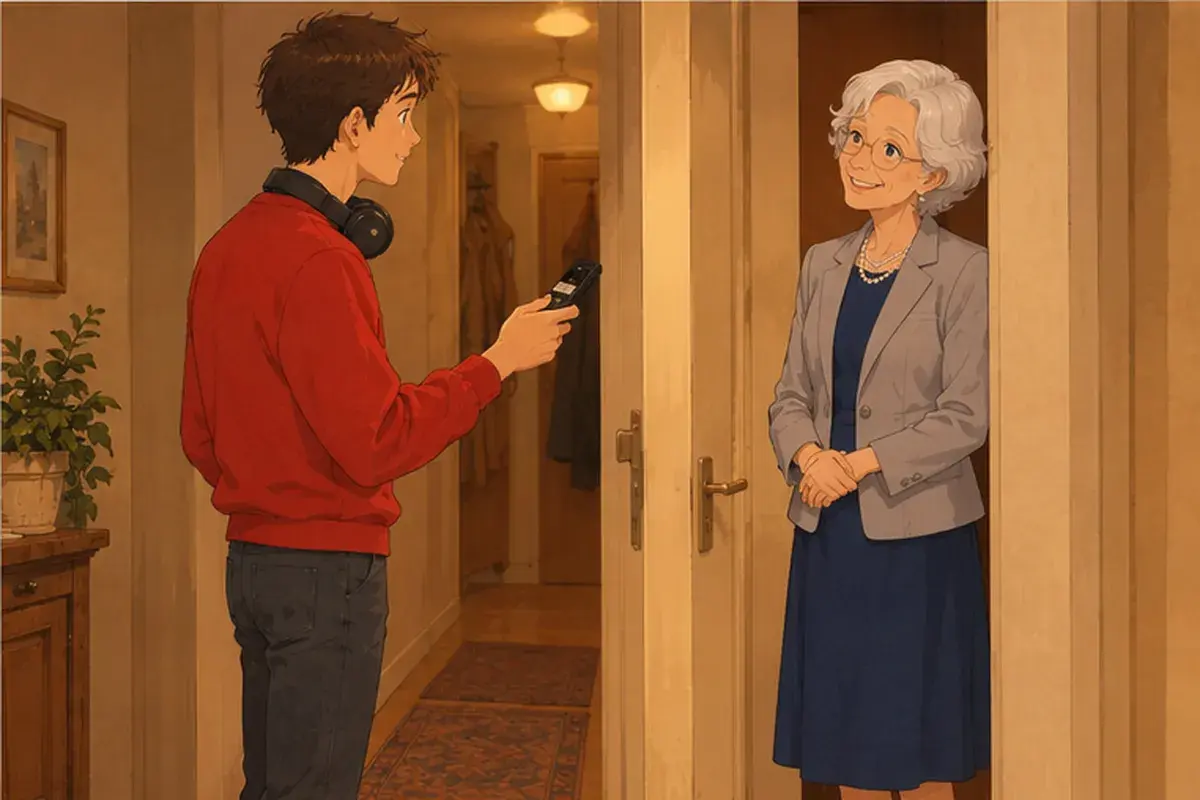
Je viens de voir Madame Morel : elle dit que mon français est bon, pour la première fois ! J'enregistre ça deux fois.
I've just seen Madame Morel: she says my French is good, for the first time! I'm recording that twice.
Elle dit aussi : « Félicitations, monsieur Pacha ! »
She also says: "Congratulations, Monsieur Pacha!"

Quand je dis « chez moi », je pense à ma famille. Et maintenant, un peu à la rue des Cascades.
When I say "home," I think of my family. And now, a little of rue des Cascades too.

Bisou, Dacha. Demain, j'envoie une photo de la mer, c'est promis !
Kisses, Dacha. Tomorrow I'll send a photo of the sea, I promise!
Grammar for this text
- Hugo vient de Saint-Malo: vient is the il form of venir: "he's from, he comes from". venir de + a city tells where from; before a city de has no article. Je reviens le deux janvier: reviens is from revenir (to come back), conjugated like venir: "I'll be back on January second".
- Hugo, lui, est végétarien: lui is the stressed form of "he". After a name it adds emphasis: "as for Hugo…". For "she" it's elle.
- des crêpes, sucrées ou salées: the adjectives agree with crêpes (feminine plural): sucrées, salées. But beurre is masculine, so it's un beurre pas salé, without -e.
- Il ne rigole pas !: rigoler is casual for "to laugh, to have fun". Literally "he isn't laughing", that is, "he's not kidding".
- Je viens de voir Madame Morel: venir de + infinitive means "have just": "I've just seen". Here de is followed by a verb, not a place.
- Ici, on fête Noël en famille: here fête isn't the noun "party, holiday" but the verb fêter (to celebrate) in the il / on form; on means people in general: "here people celebrate Christmas with family". There's no article before Noël. In the line before, la grande fête is a noun.
- Félicitations, monsieur Pacha !: "congratulations". This word is always plural, even for one person.
- Quand je dis « chez moi »: dis is the je form of dire: "I say". chez moi means "home, at my place".
Words and grammar of the unit: Accept an invitation.
Learn the words from the texts with flashcards
In the app, you can tap any word in a text to see its translation, forms and examples, and new words stick with flashcards. 15 minutes a day.
Start for freeEverything is open for free. No card needed to sign up.