
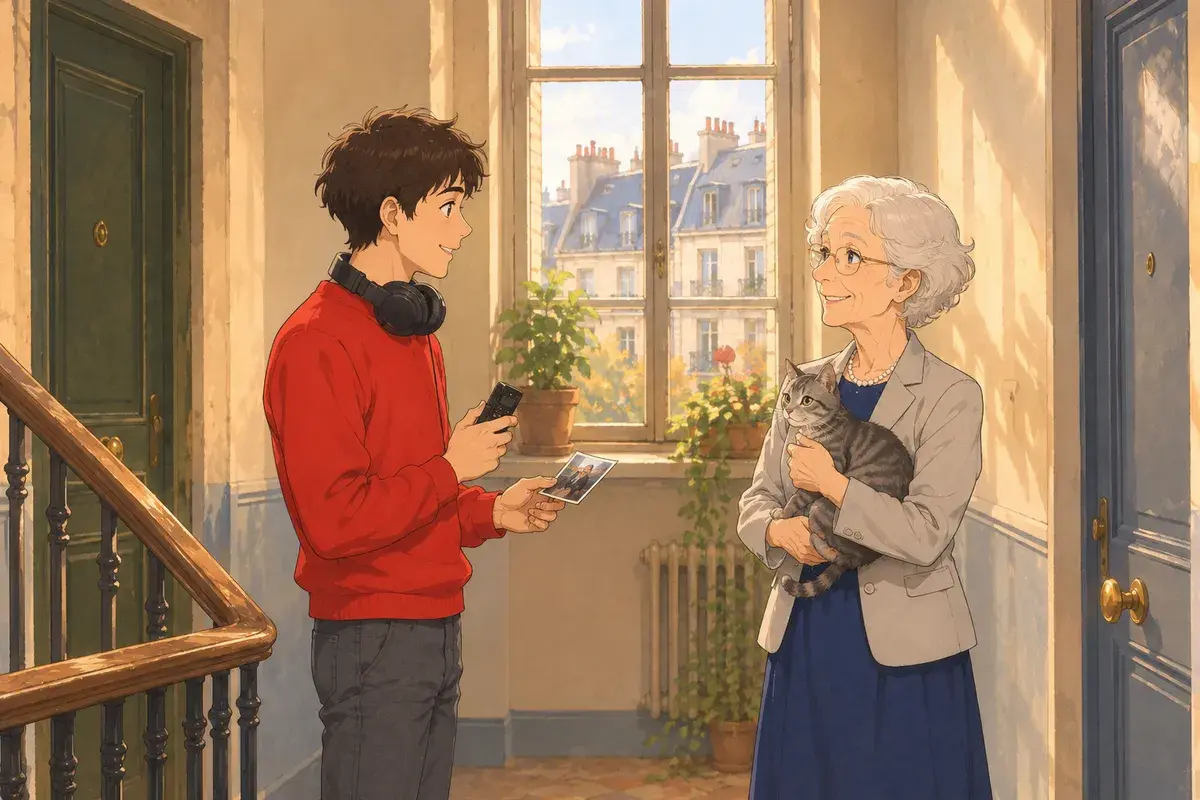
French dialogue with translation · A1 · 14 lines
Je suis célibataire I'm single
Comic · 11 panels
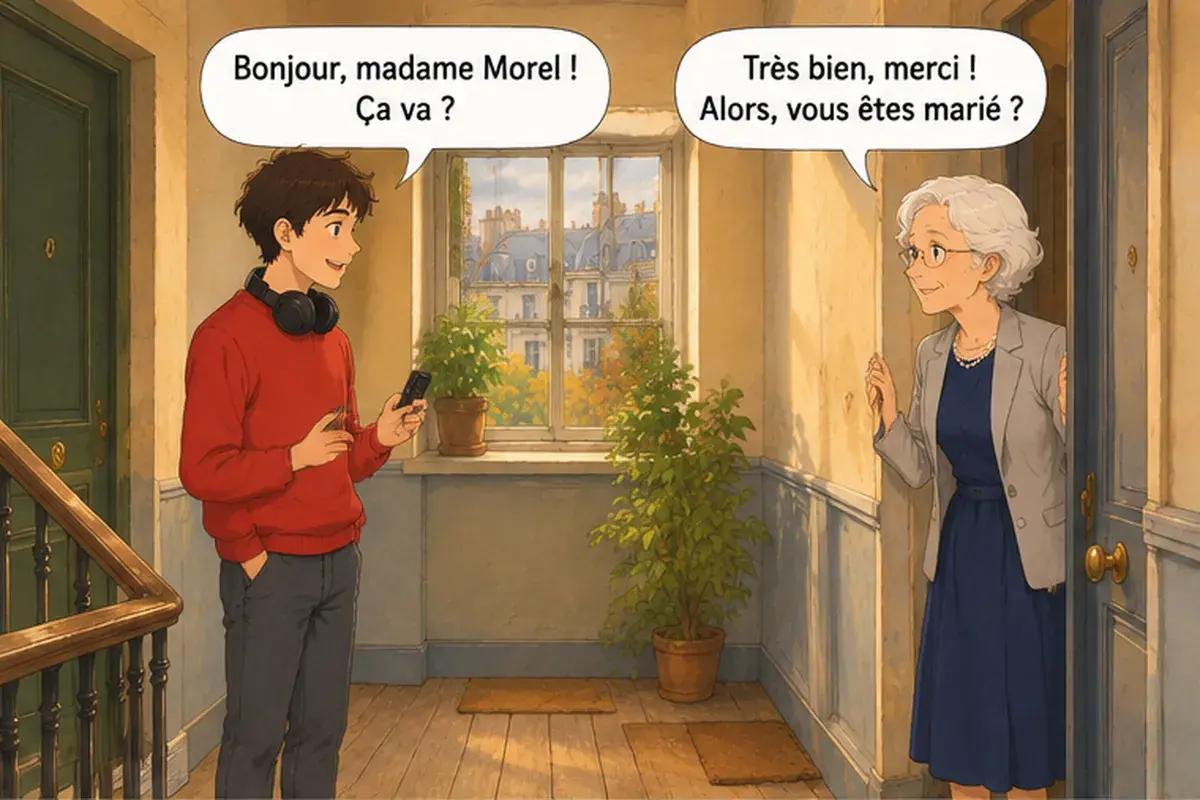
- Pacha
Bonjour, madame Morel ! Ça va ?
Hello, Madame Morel! How are you?
- Madame Morel
Très bien, merci ! Alors, vous êtes marié ?
Very well, thank you! So, are you married? (to a man, formal)
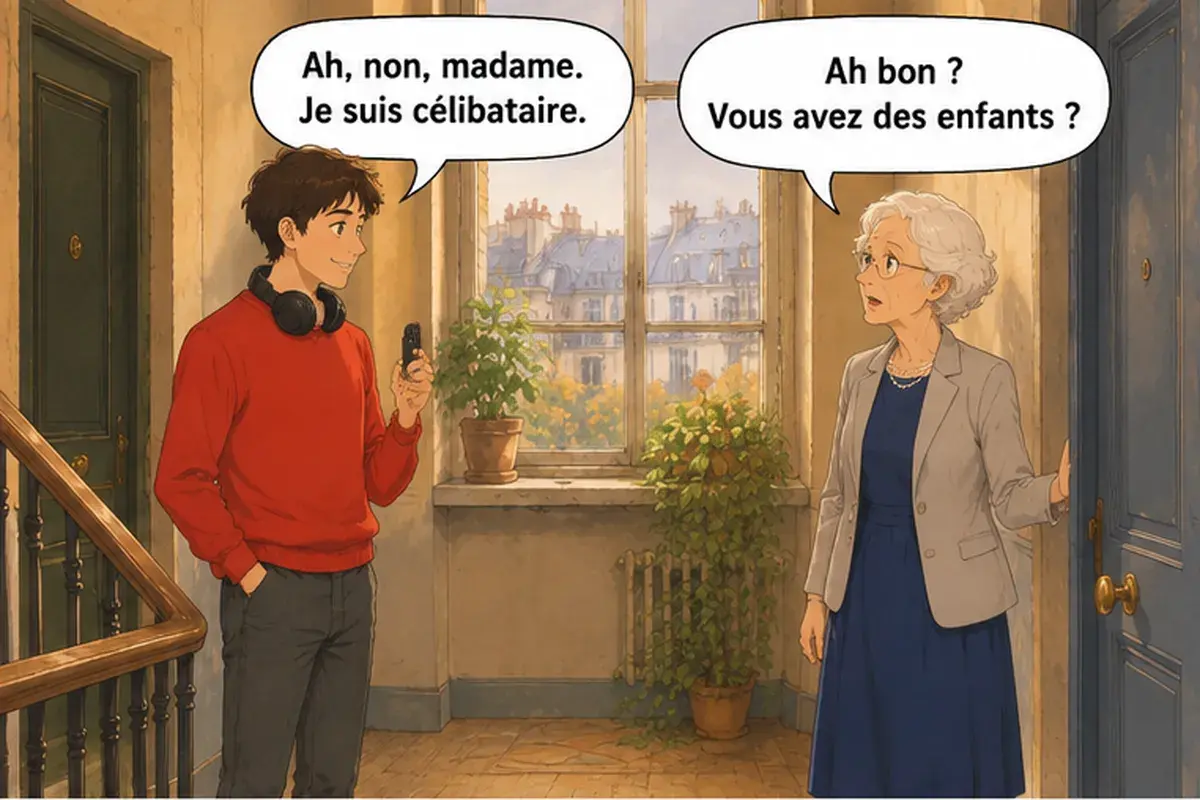
- Pacha
Ah, non, madame. Je suis célibataire.
Oh, no, ma'am. I'm single.
- Madame Morel
Ah bon ? Vous avez des enfants ?
Really? Do you have any children? (formal)
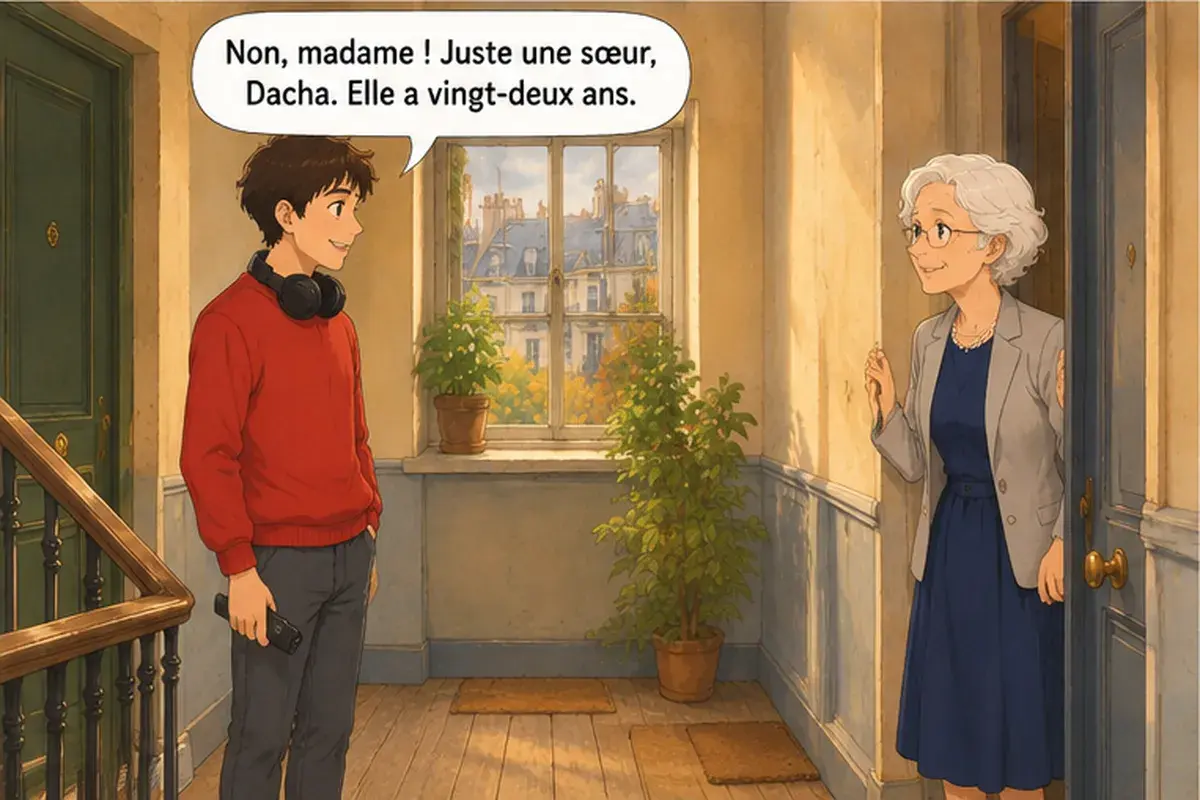
- Pacha
Non, madame ! Juste une sœur, Dacha. Elle a vingt-deux ans.
No, ma'am! Just a sister, Dacha. She's twenty-two.
- Madame Morel
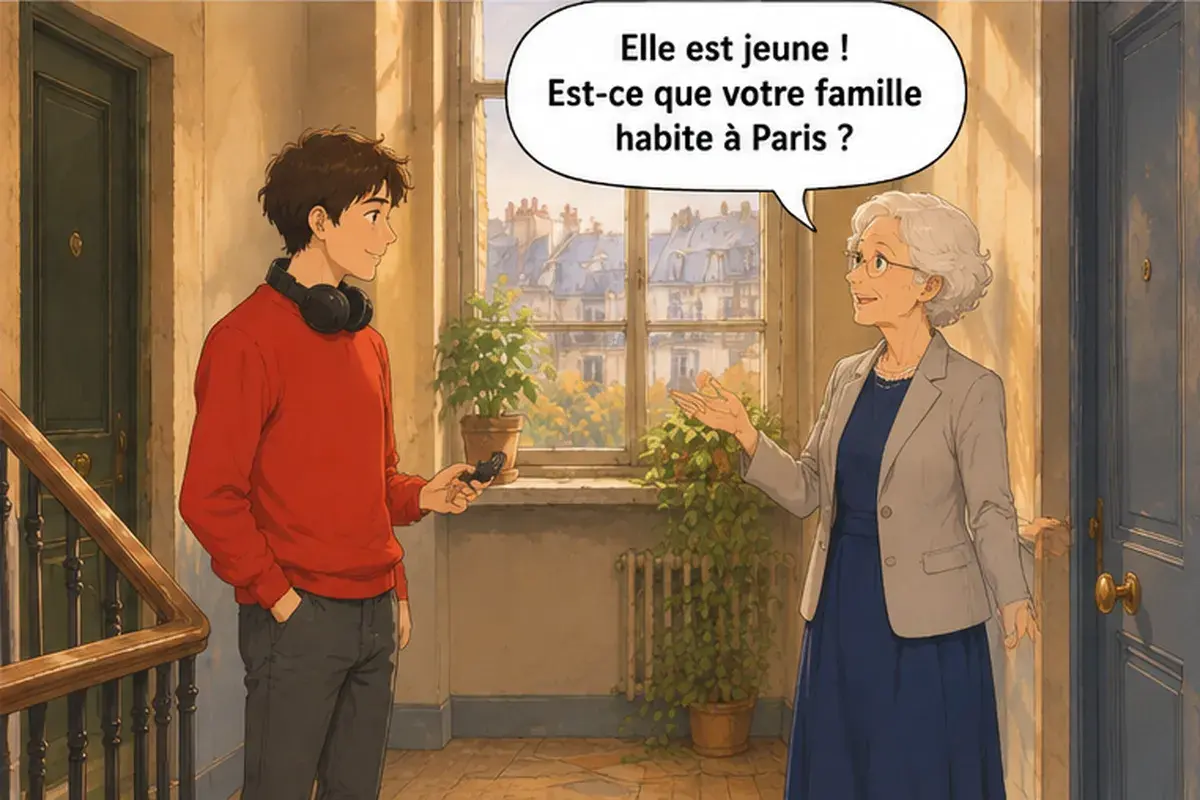
Elle est jeune ! Est-ce que votre famille habite à Paris ?
She's young! Does your family live in Paris? (formal)
- Pacha
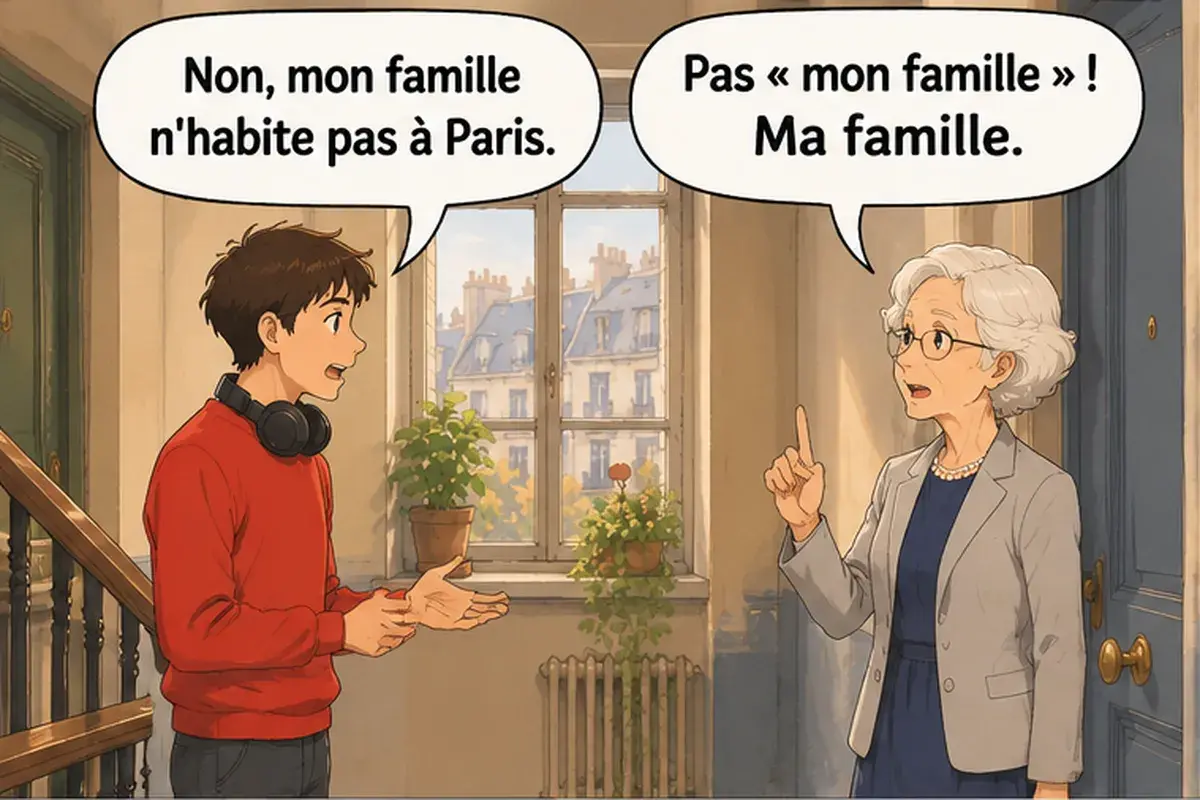
Non, mon famille n'habite pas à Paris.
No, my family doesn't live in Paris (mistake: "mon famille").
- Madame Morel
Pas « mon famille » ! Ma famille.
Not "mon famille"! "Ma famille."
- Pacha
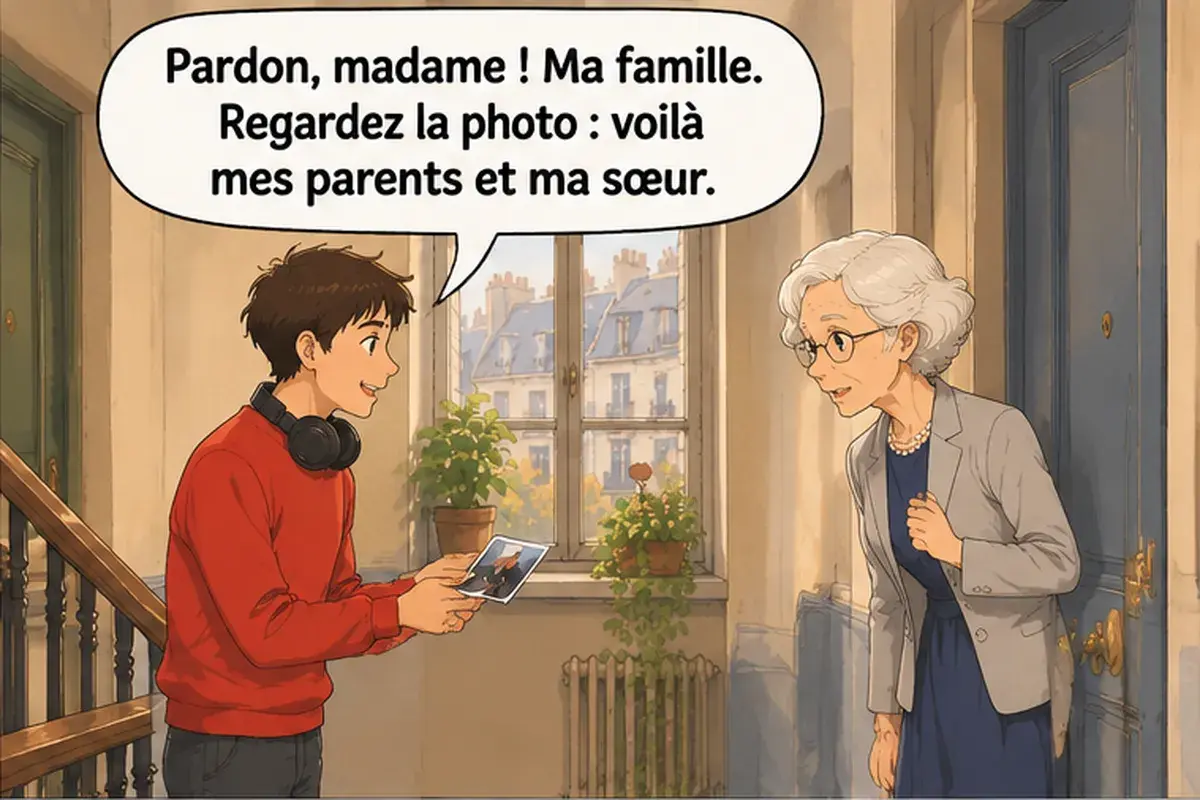
Pardon, madame ! Ma famille. Regardez la photo : voilà mes parents et ma sœur.
Sorry, ma'am! My family. Look at the photo: here are my parents and my sister (formal).
- Madame Morel
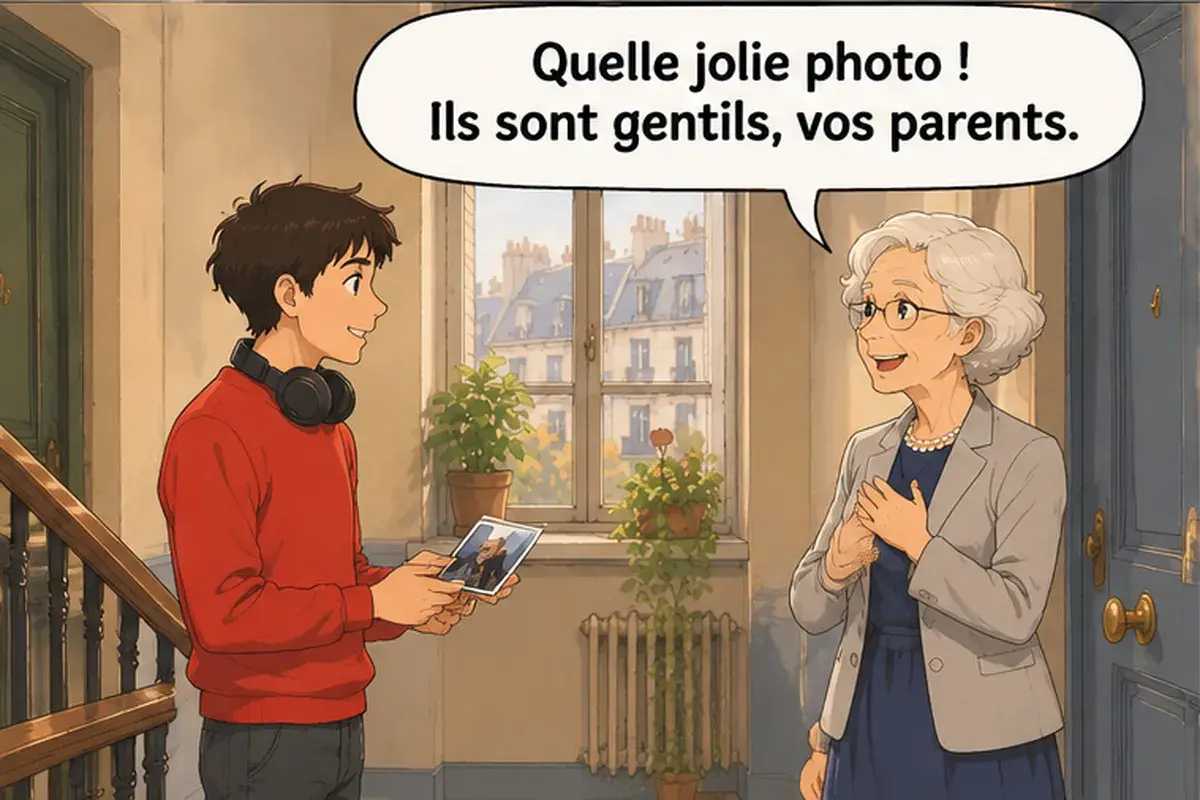
Quelle jolie photo ! Ils sont gentils, vos parents.
What a pretty photo! They're nice, your parents (formal).
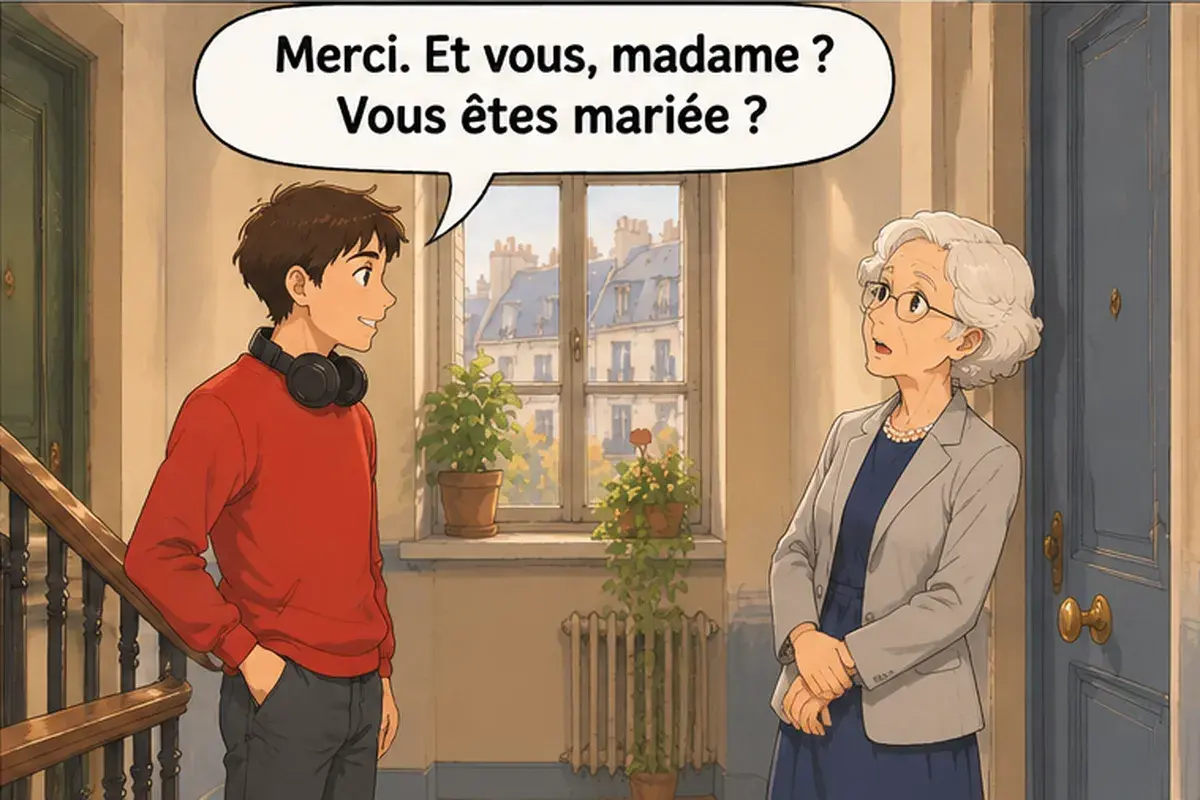
- Pacha
Merci. Et vous, madame ? Vous êtes mariée ?
Thank you. And you, ma'am? Are you married? (formal)
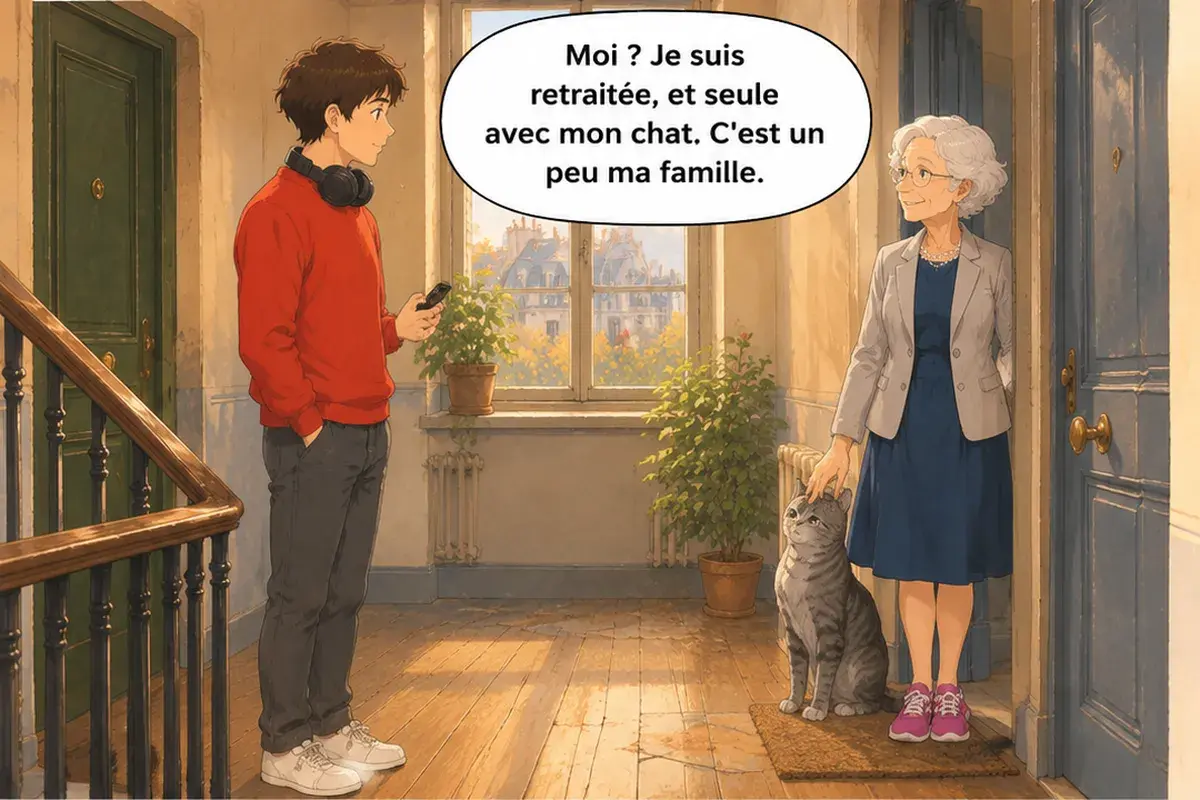
- Madame Morel
Moi ? Je suis retraitée, et seule avec mon chat. C'est un peu ma famille.
Me? I'm retired, and alone with my cat. He's sort of my family (woman speaking).
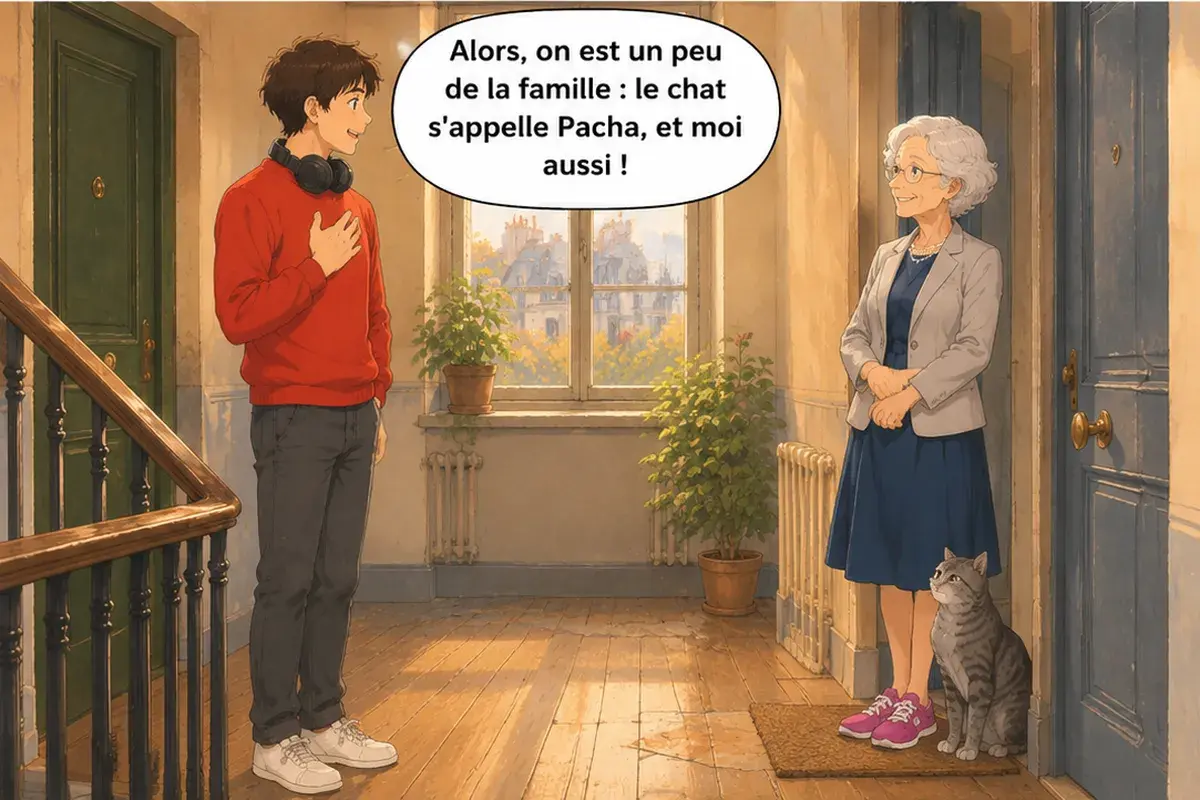
- Pacha
Alors, on est un peu de la famille : le chat s'appelle Pacha, et moi aussi !
Then we're sort of family: the cat is called Pacha, and so am I!
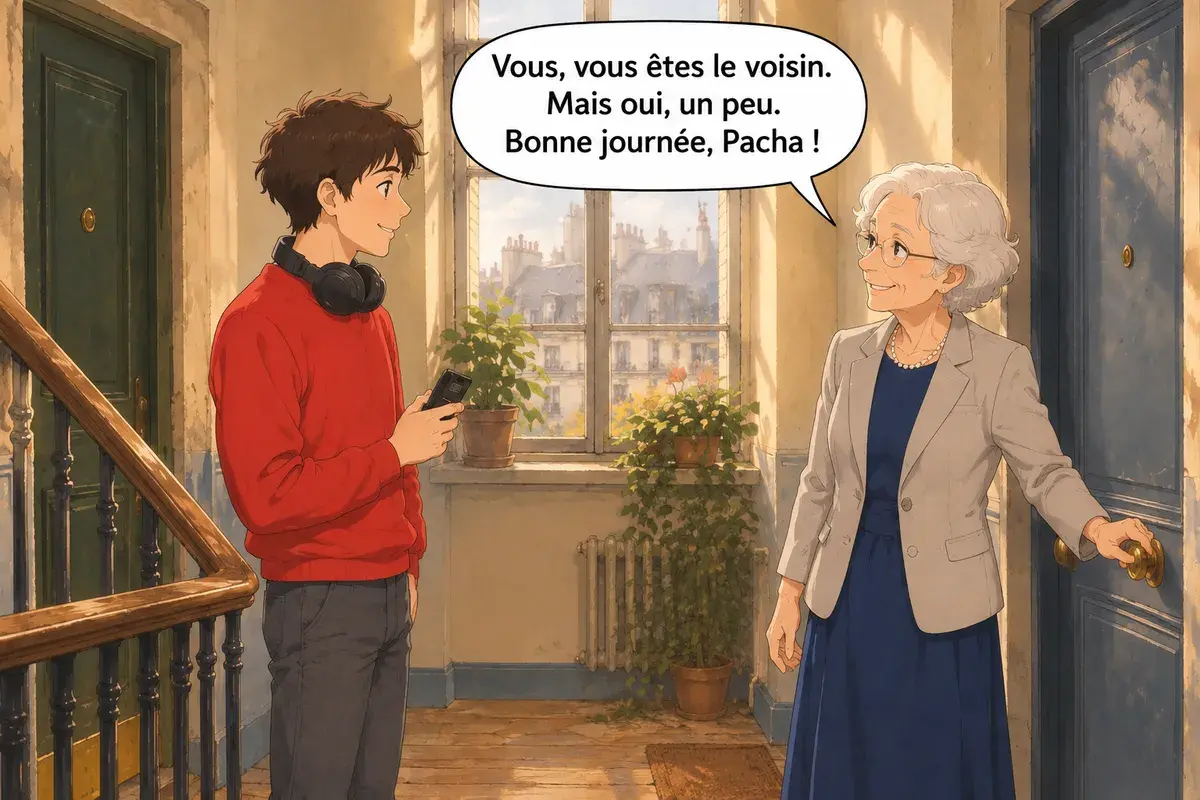
- Madame Morel
Vous, vous êtes le voisin. Mais oui, un peu. Bonne journée, Pacha !
You're the neighbor. But yes, a little. Have a nice day, Pacha! (formal)
Grammar for this text
- Vous êtes marié ? — a question made with the voice alone: the words are in normal order, and the voice goes up at the end. marié (married) is spelled differently for a woman: Vous êtes mariée ? — with an extra e. Célibataire is the same for a man and a woman.
- Pas « mon famille » ! Ma famille. — mon or ma depends on the noun after it, not on who is speaking. Famille is feminine, so it's ma famille, even when a man says it. Madame Morel corrects him, as a teacher would.
- Est-ce que votre famille habite à Paris ? — a question with est-ce que: after it the words go in normal order. Votre — your (to one person you call vous).
- Regardez la photo — "look at the photo". It's the command form of regarder (to look at), polite, for vous. To a friend you'd say regarde: no -ez ending, and no s either, although "you look" is tu regardes. Commands come at A2.
- Quelle jolie photo ! — "what a pretty photo!" Quelle is the feminine form of quel (what, which), as in the question about age in unit 2, and jolie has an e because photo is feminine.
- Ils sont gentils, vos parents. — spoken word order: first "they're nice", then who: "your parents". Sont is the ils form of être; vos — your (for several things or people).
- Alors, on est un peu de la famille — de la famille — "family, relatives"; on here means "we". The joke: the cat is called Pacha, so Pacha the person is "family" too. Madame Morel answers with dignity: "you're the neighbor". Bonne journée — have a nice day.
Words and grammar of the unit: Talk about your family.
Learn the words from the texts with flashcards
In the app, you can tap any word in a text to see its translation, forms and examples, and new words stick with flashcards. 15 minutes a day.
Start for freeEverything is open for free. No card needed to sign up.