

French dialogue with translation · A1 · 13 lines
Elle est belle, ta famille ! Your family is beautiful!
Comic · 13 panels

- Inès
Pacha, regarde ! Voilà la photo de ma famille.
Pacha, look! Here's the photo of my family.
- Pacha
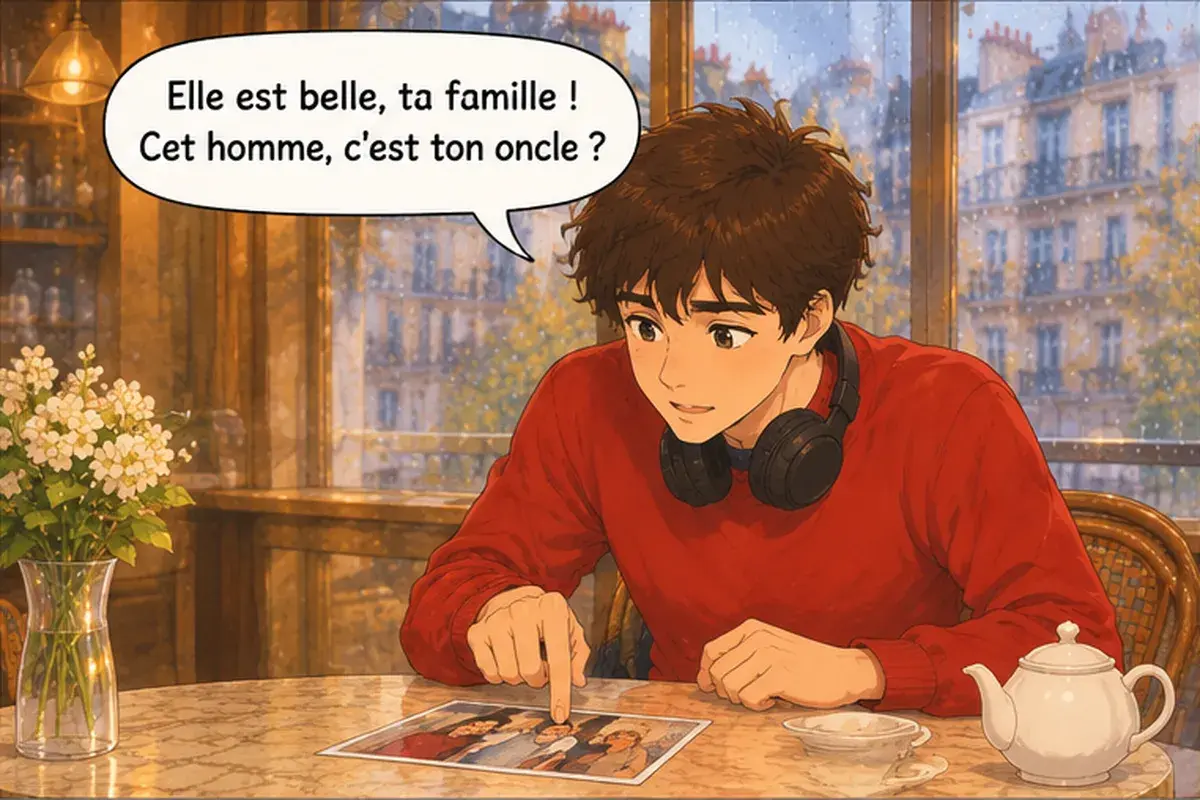
Elle est belle, ta famille ! Cet homme, c'est ton oncle ?
Your family is beautiful! Is this man your uncle?
- Inès
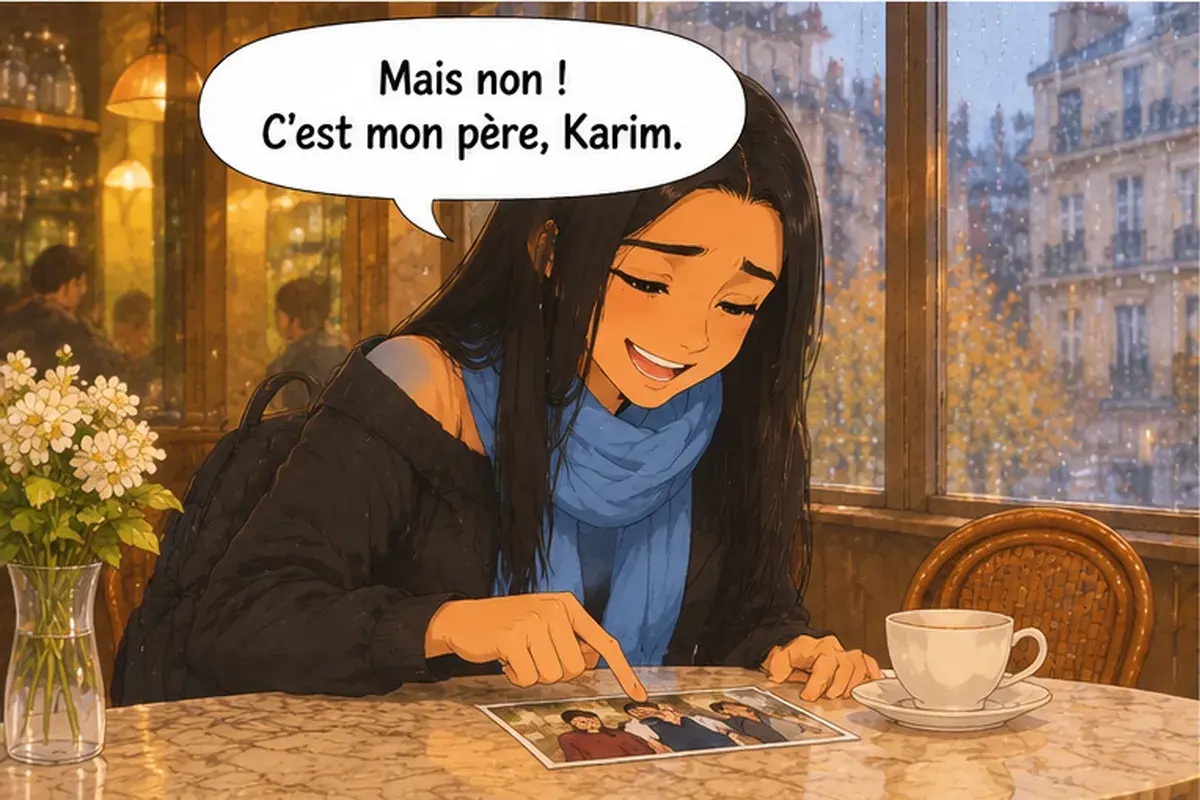
Mais non ! C'est mon père, Karim.
Of course not! That's my father, Karim.
- Pacha
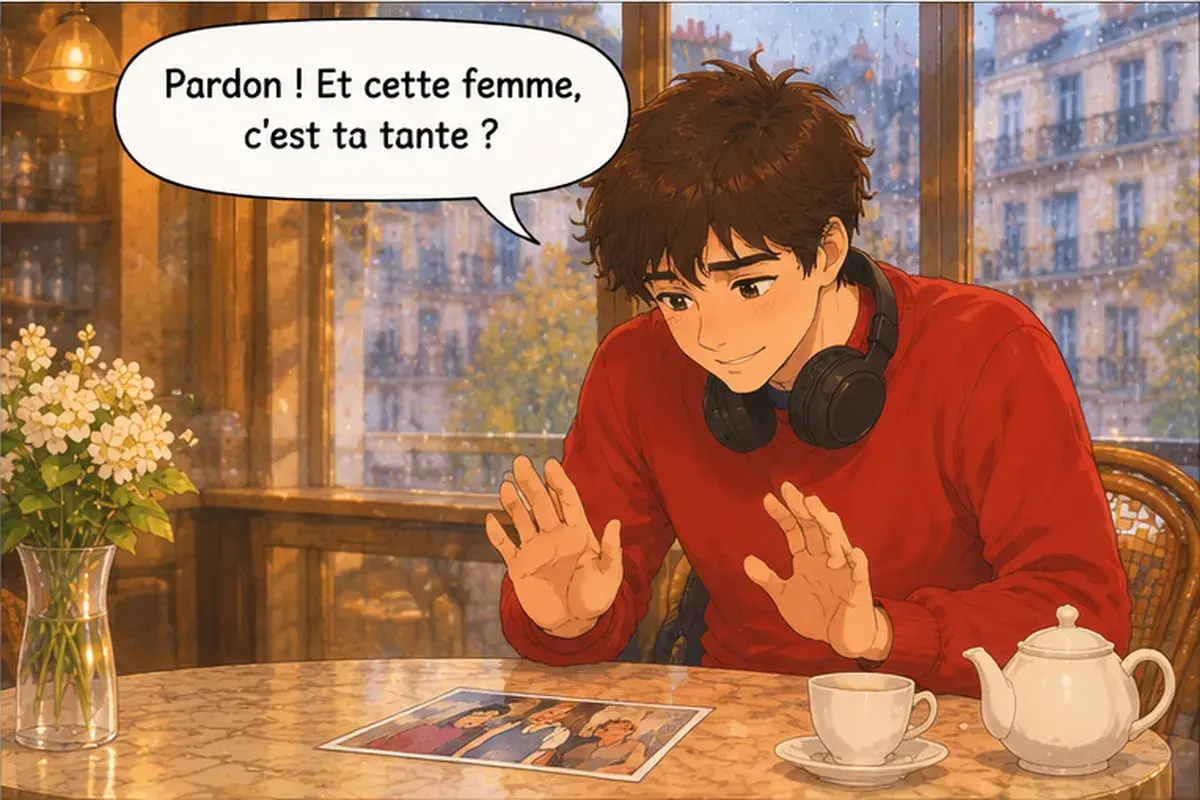
Pardon ! Et cette femme, c'est ta tante ?
Sorry! And is this woman your aunt?
- Inès
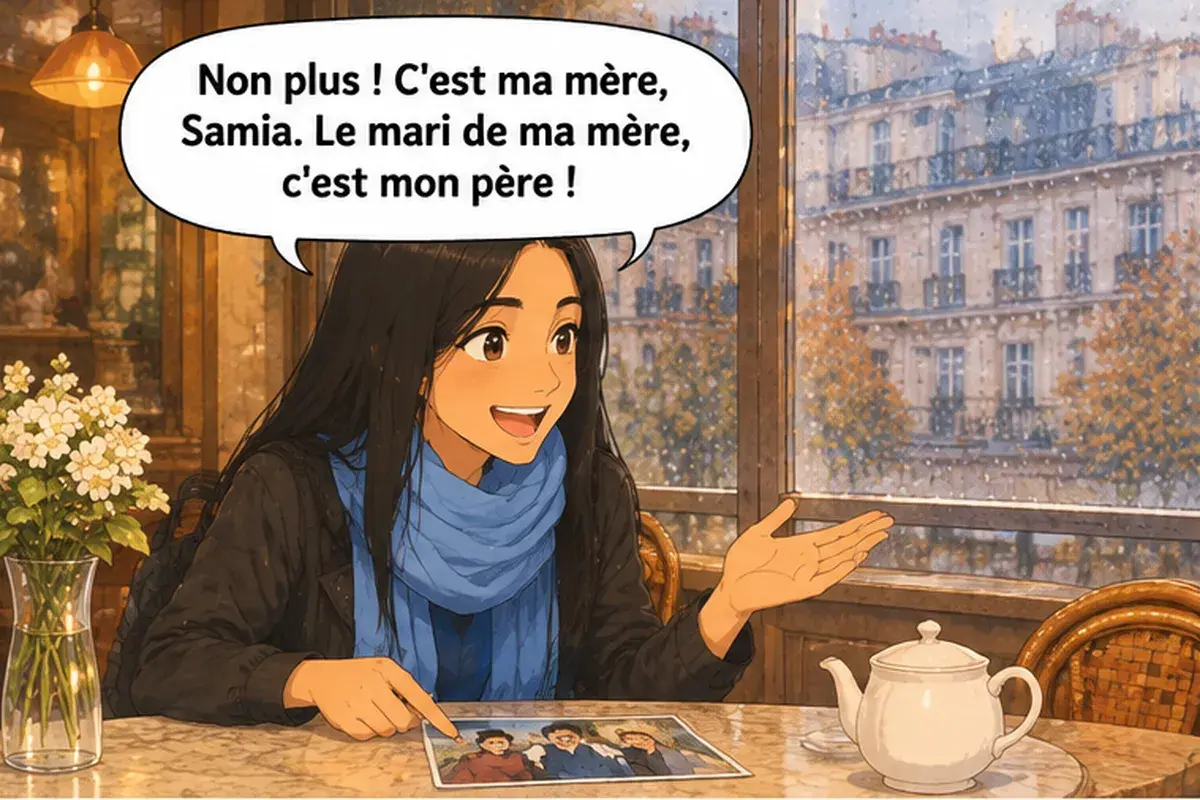
Non plus ! C'est ma mère, Samia. Le mari de ma mère, c'est mon père !
Not her either! That's my mother, Samia. My mother's husband is my father!
- Pacha
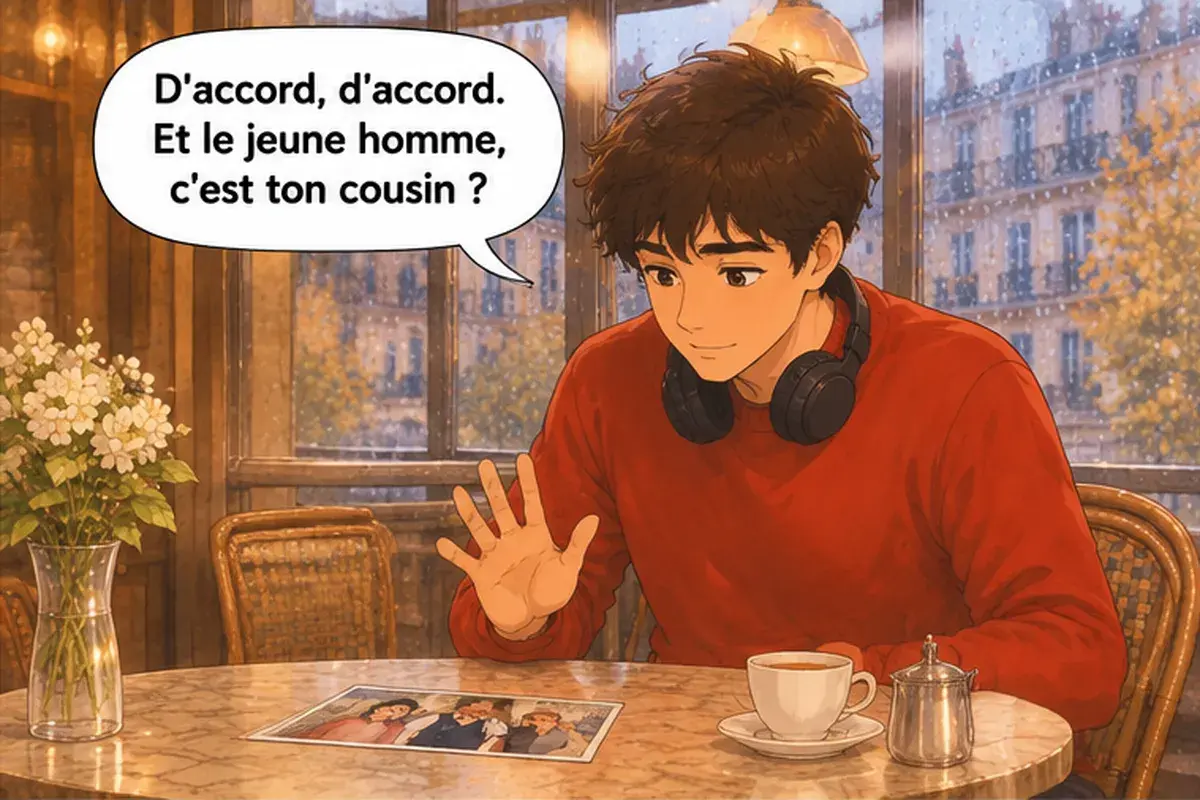
D'accord, d'accord. Et le jeune homme, c'est ton cousin ?
OK, OK. And is the young man your cousin?
- Inès
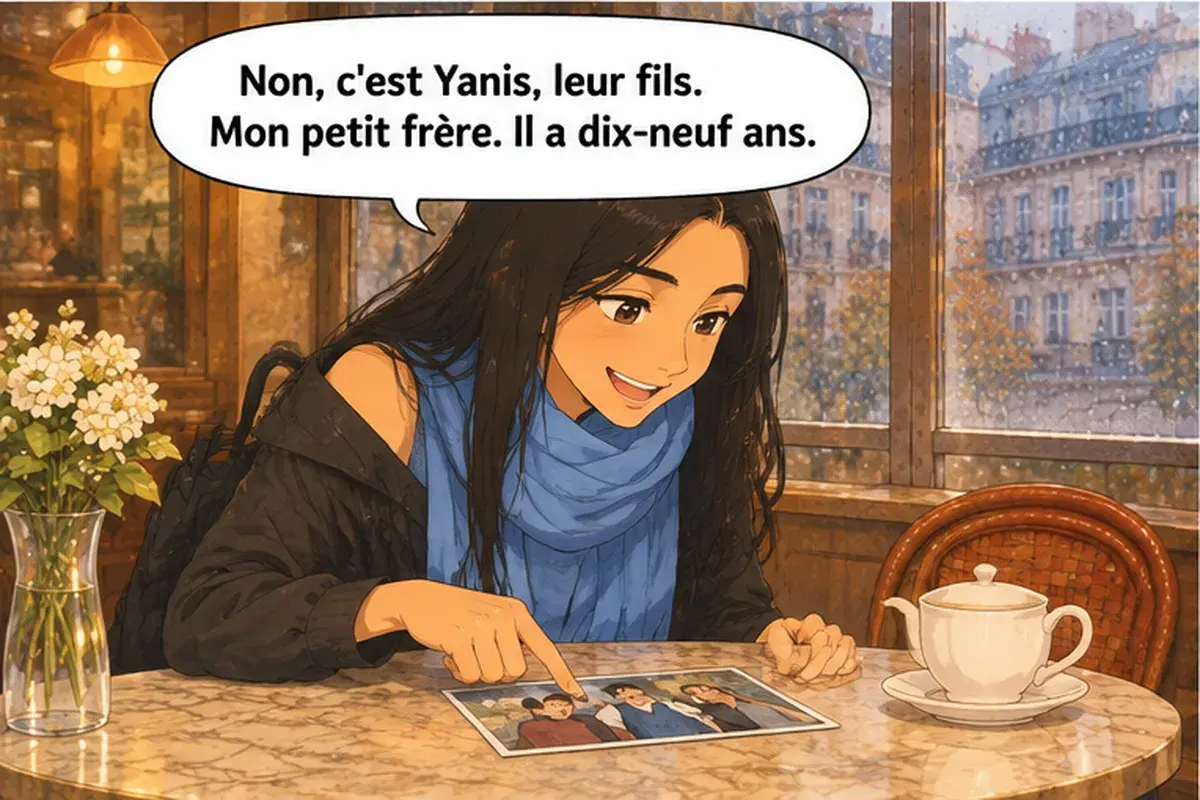
Non, c'est Yanis, leur fils. Mon petit frère. Il a dix-neuf ans.
No, that's Yanis, their son. My little brother. He's nineteen.
- Pacha
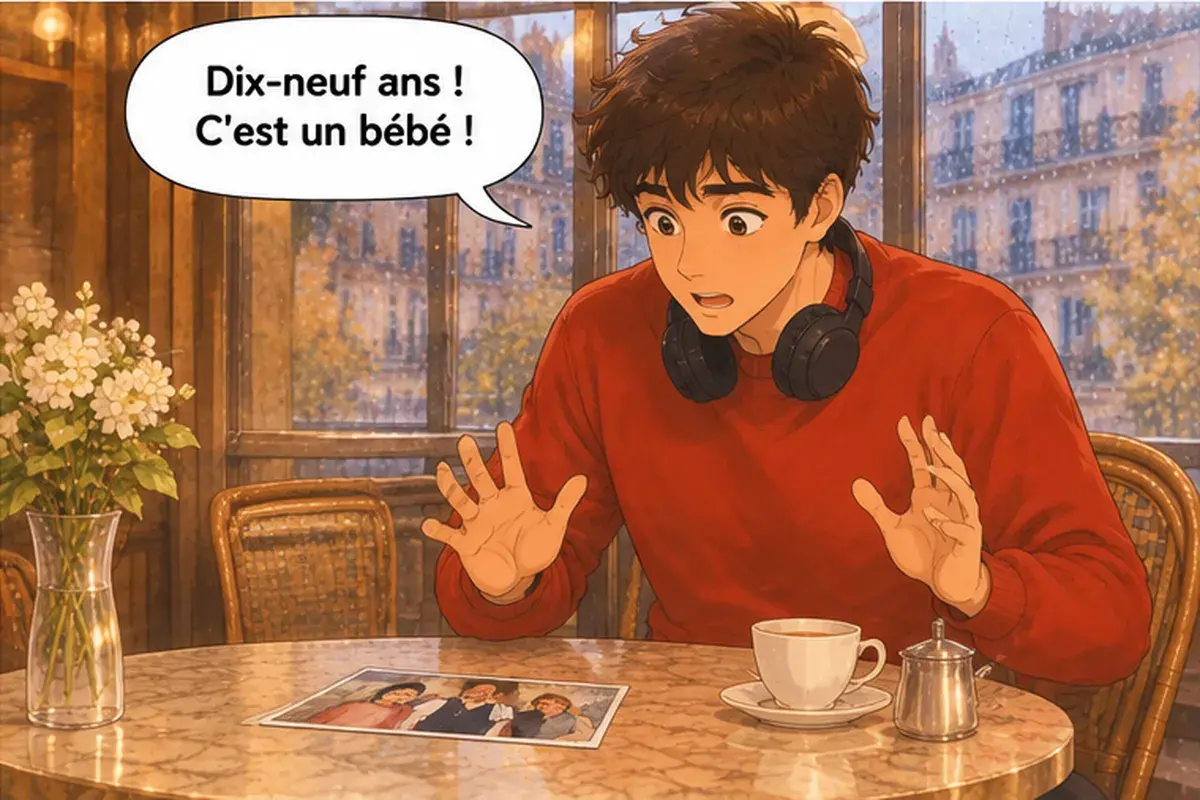
Dix-neuf ans ! C'est un bébé !
Nineteen! He's a baby!
- Inès
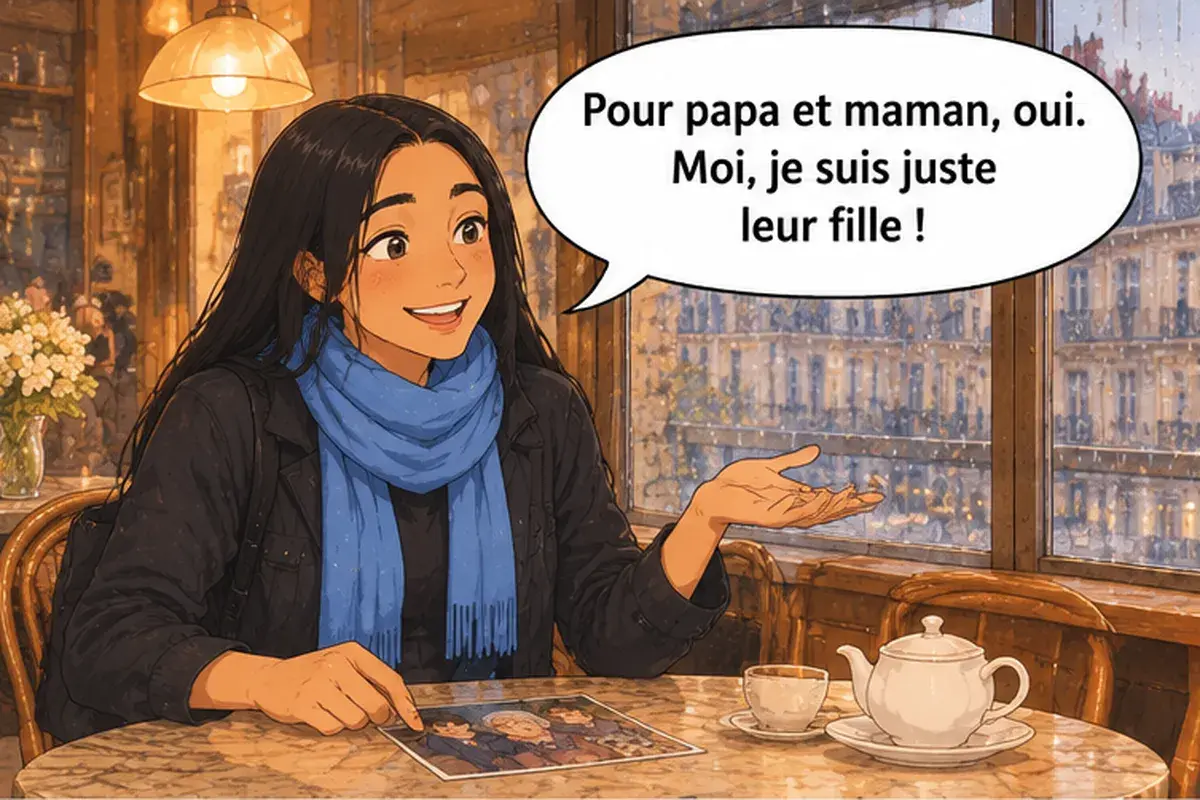
Pour papa et maman, oui. Moi, je suis juste leur fille !
To Mom and Dad, yes. Me, I'm just their daughter!
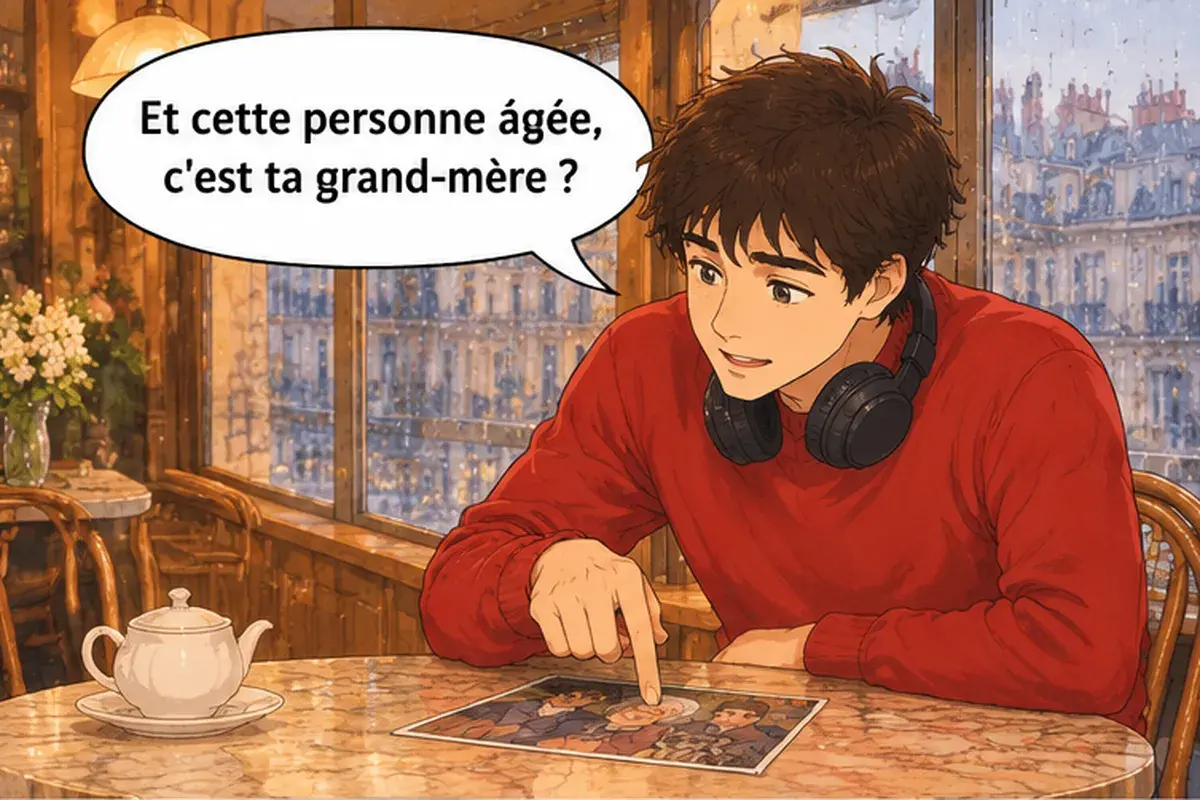
- Pacha
Et cette personne âgée, c'est ta grand-mère ?
And is this elderly person your grandmother?
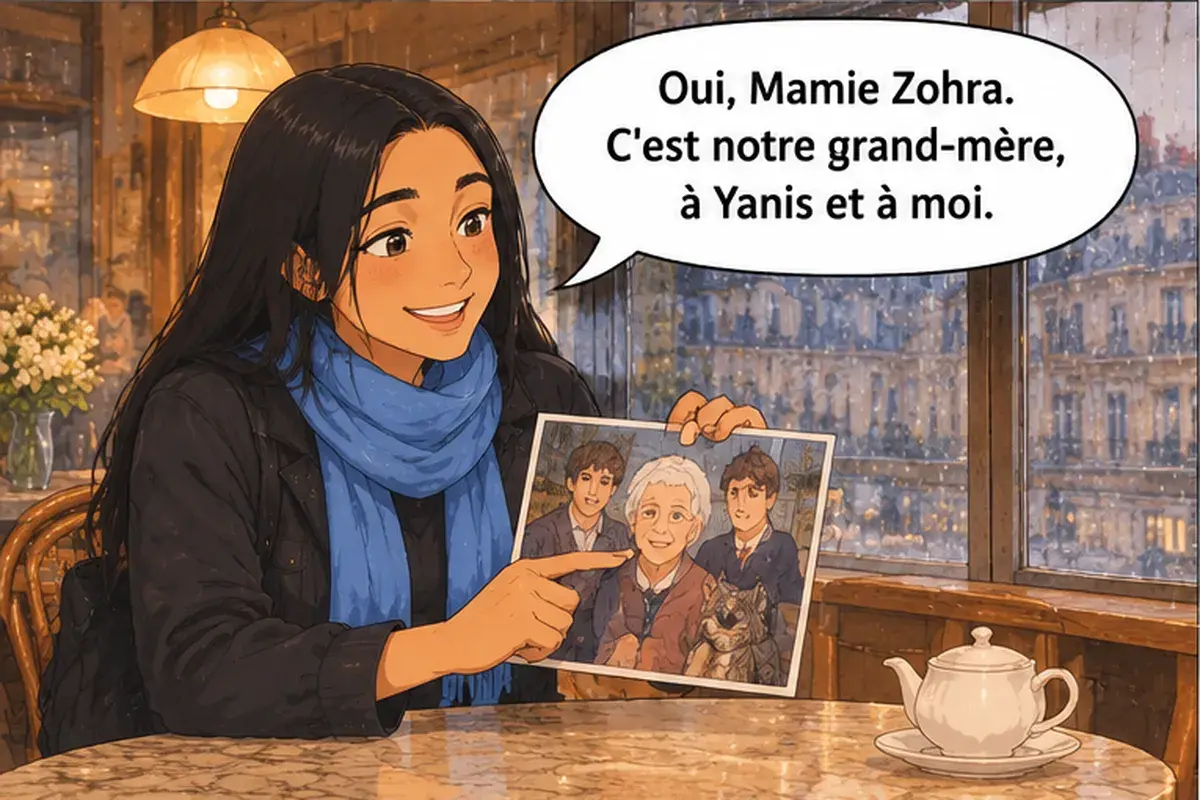
- Inès
Oui, Mamie Zohra. C'est notre grand-mère, à Yanis et à moi.
Yes, Mamie Zohra. She's our grandmother, Yanis's and mine.
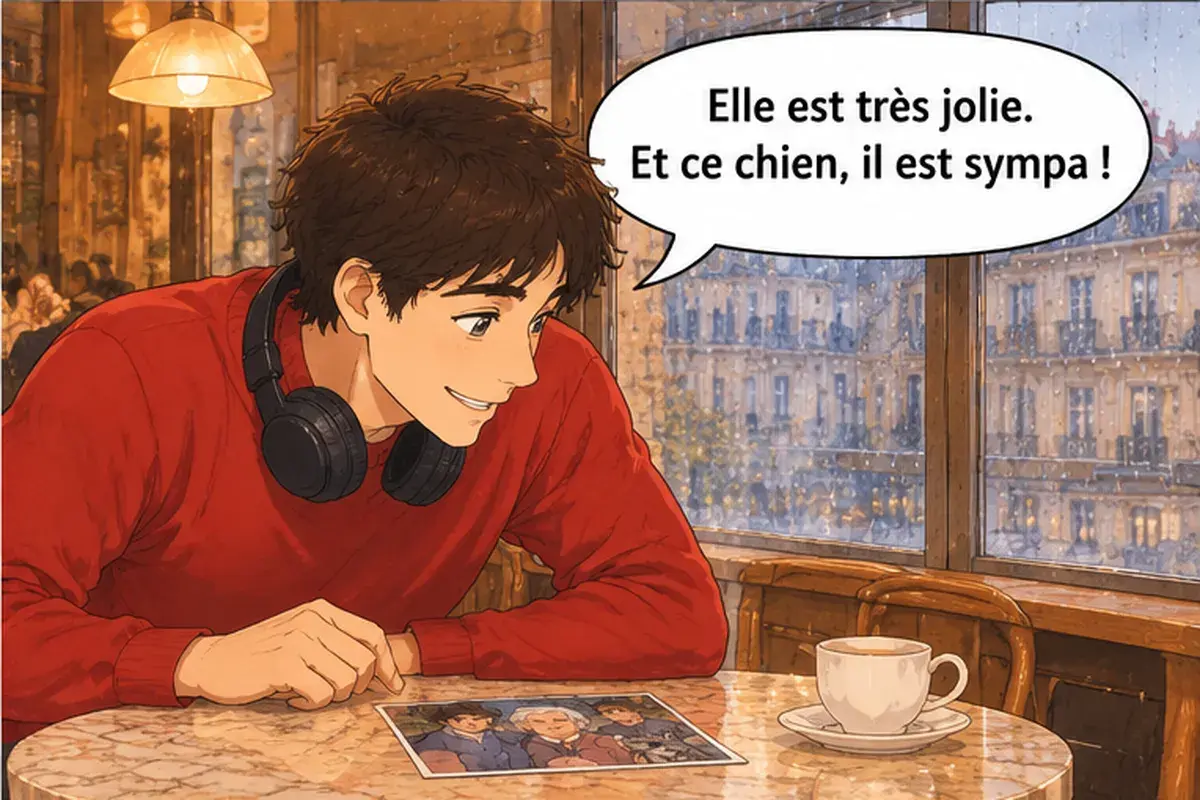
- Pacha
Elle est très jolie. Et ce chien, il est sympa !
She's very pretty. And this dog is nice!
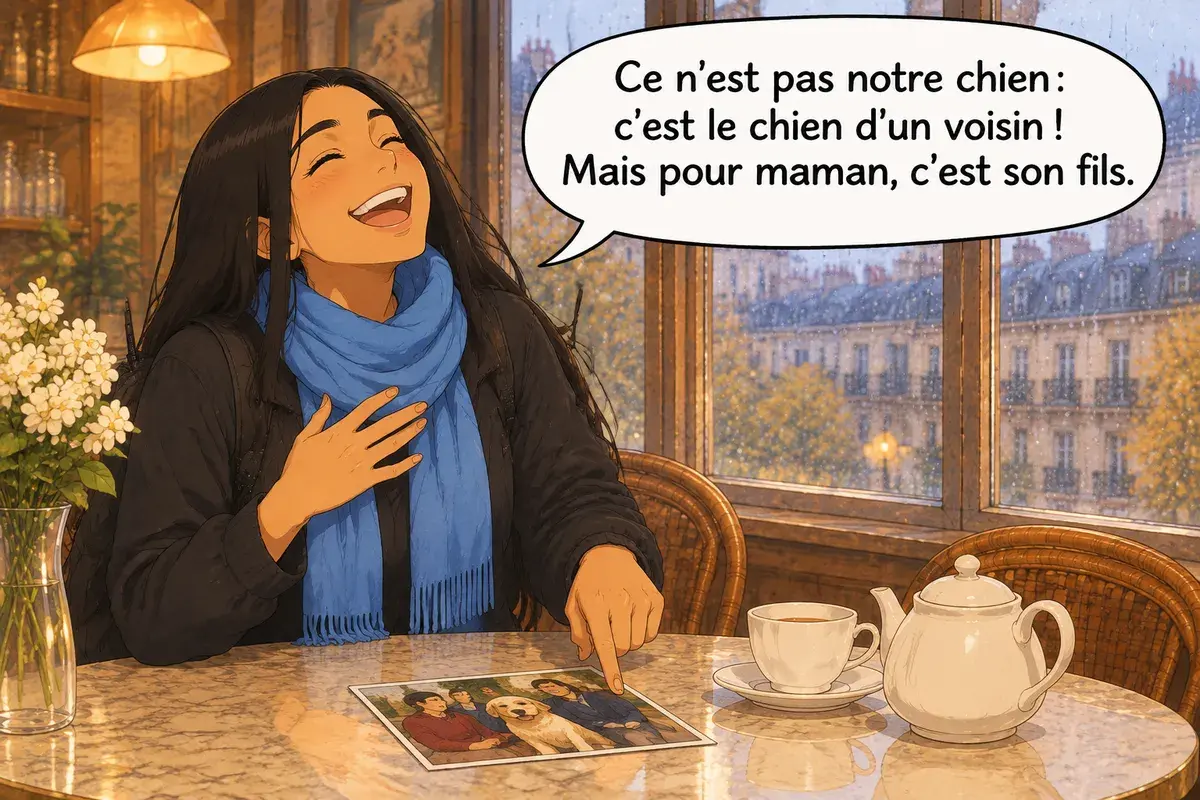
- Inès
Ce n'est pas notre chien : c'est le chien d'un voisin ! Mais pour maman, c'est son fils.
It's not our dog: it's a neighbor's dog! But to Mom, he's her son.
Grammar for this text
- Pacha, regarde ! — "Pacha, look!" Regarde is the command form of regarder (to look at) for tu. In -er verbs it has no s: "you look" is tu regardes, but "look!" is regarde. Commands come at A2.
- Elle est belle, ta famille ! — spoken word order: first "it's beautiful", then what: "your family". Belle is the feminine form of beau (beautiful): beau, bel, belle, beaux, belles.
- Cet homme and cette femme — "this man", "this woman". This is ce (this), which changes with gender. Before a masculine word starting with a vowel (or a mute h, as in homme) it becomes cet. More in unit 9.
- Non, c'est Yanis, leur fils — leur means "their" (Inès's parents') and goes before the noun; for one thing it has no s. A bit later: leur fille — their daughter. Juste here means "just".
- Non plus ! — "not her either": non plus means "not... either" after a first "no". Pacha got it wrong twice, and Inès answers with a joke: Le mari de ma mère, c'est mon père ! — "my mother's husband is my father!"
- Le mari de ma mère — "my mother's husband". De (of) shows the owner: the order is "thing + de + owner", where English says "my mother's husband".
- Pour maman, c'est son fils — here son means "her", even though it's about a woman: son goes with the masculine word fils (the l is silent, the s is pronounced). The choice depends on the noun after it, not on the owner.
Words and grammar of the unit: Talk about your family.
Learn the words from the texts with flashcards
In the app, you can tap any word in a text to see its translation, forms and examples, and new words stick with flashcards. 15 minutes a day.
Start for freeEverything is open for free. No card needed to sign up.