
French story with translation · A1 · 14 lines
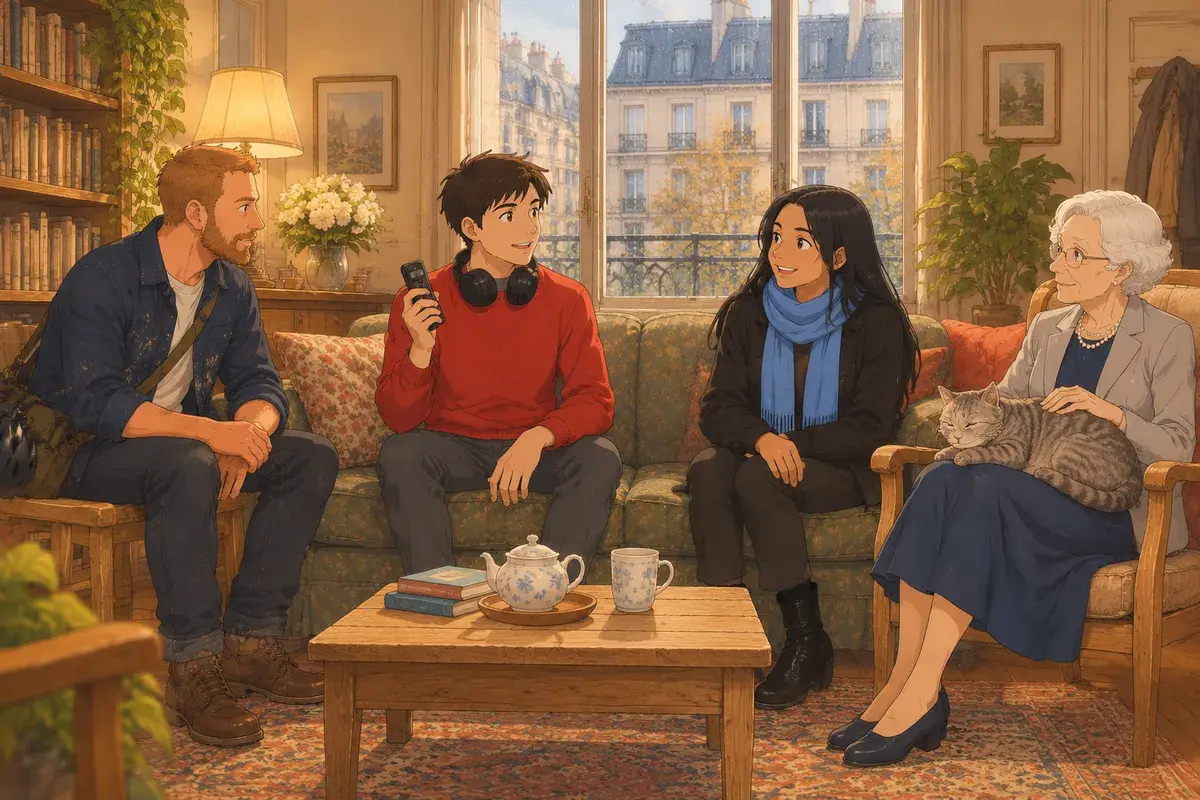
Voilà mes nouveaux voisins Here are my new neighbors
Comic · 10 panels

Salut, Dacha ! C'est Pacha, ton grand frère, de Paris.
Hi, Dacha! It's Pacha, your big brother, from Paris.

Voilà mes nouveaux voisins !
Here are my new neighbors!
Hugo a trente-deux ans. Il est de Saint-Malo, en Bretagne.
Hugo is thirty-two. He's from Saint-Malo, in Brittany.

Sa famille, ce sont ses parents, sa sœur Maëlle et son grand-père, Papy Yann.
His family is his parents, his sister Maëlle and his grandfather, Papy Yann.

Inès a vingt-sept ans. Elle est de Marseille.
Inès is twenty-seven. She's from Marseille.
Sa famille, ce sont ses parents, son petit frère Yanis et sa grand-mère, Mamie Zohra.
Her family is her parents, her little brother Yanis and her grandmother, Mamie Zohra.
Yanis a dix-neuf ans : c'est le bébé de la famille !
Yanis is nineteen: he's the baby of the family!
Mamie Zohra a neuf petits-enfants, et Inès, c'est l'aînée !
Mamie Zohra has nine grandchildren, and Inès is the eldest!
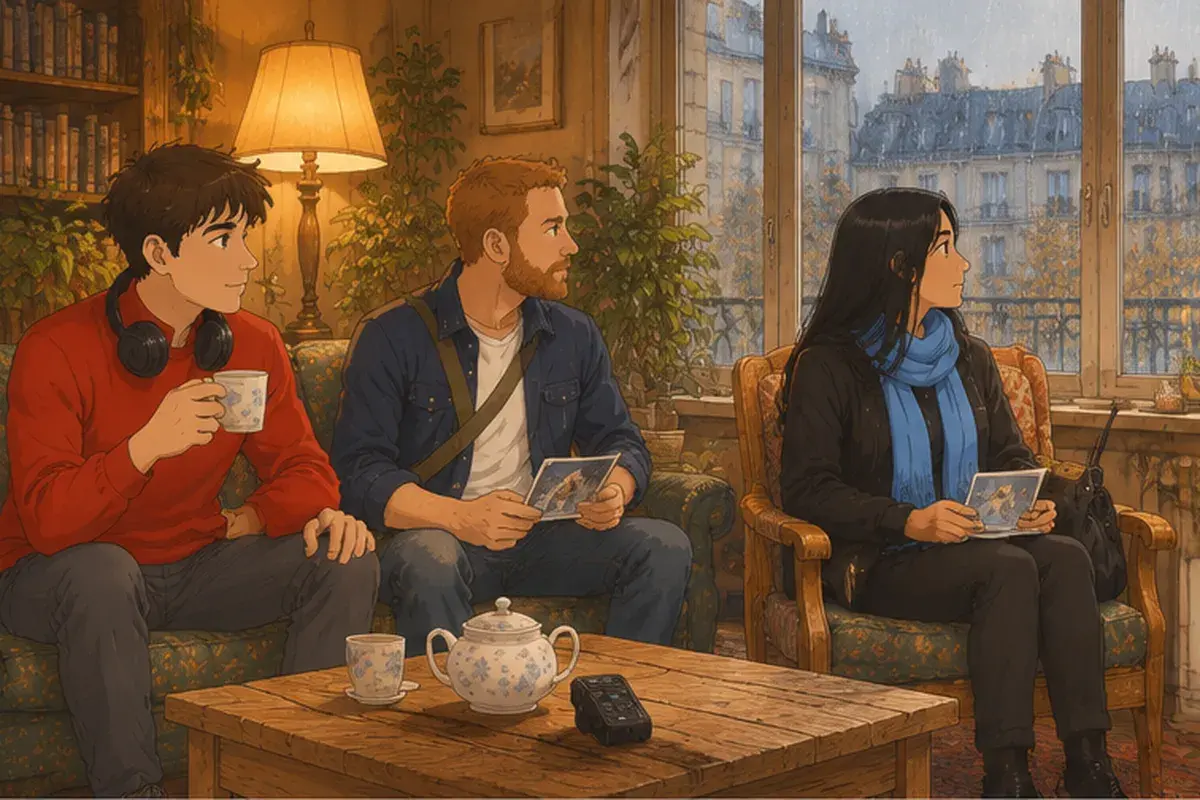
Leurs familles habitent à Saint-Malo et à Marseille. Alors ils sont un peu seuls à Paris, comme moi.
Their families live in Saint-Malo and in Marseille. So they're a little lonely in Paris, like me.
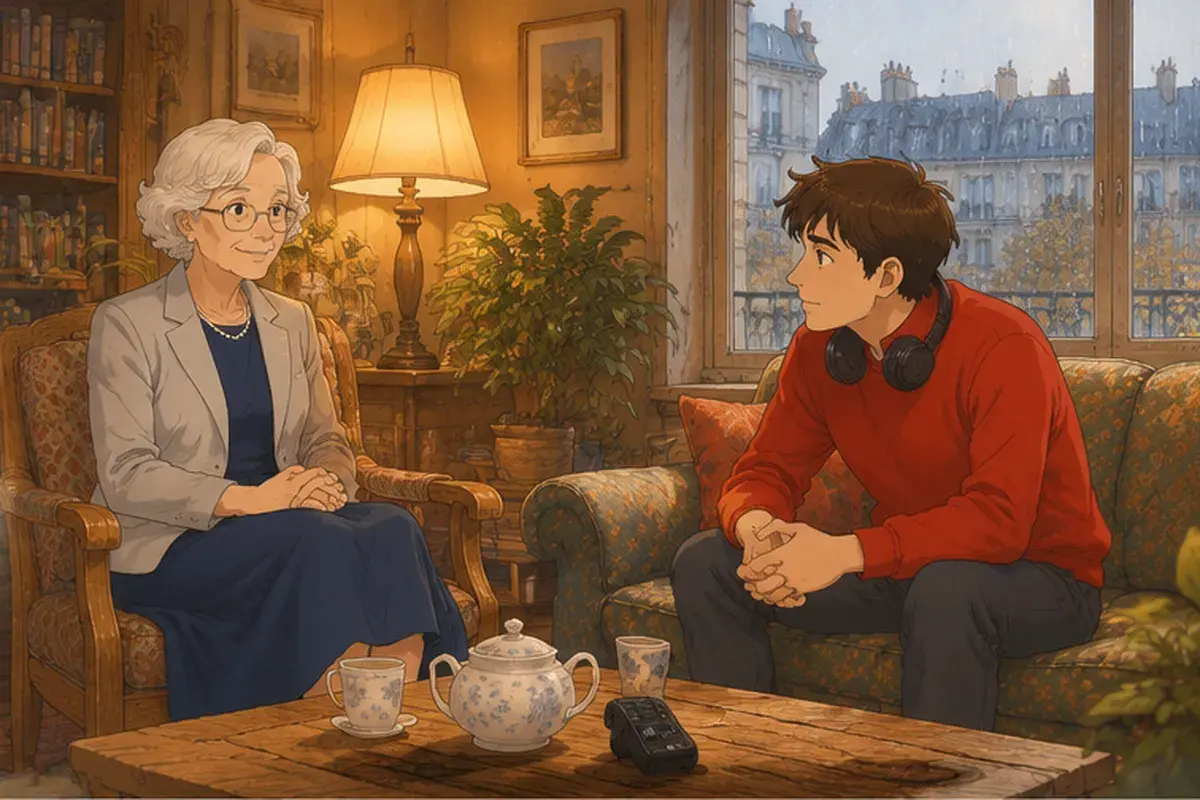
Madame Morel est notre voisine. Elle a plus de soixante ans, elle est retraitée et très gentille.
Madame Morel is our neighbor. She's over sixty, she's retired and very kind.
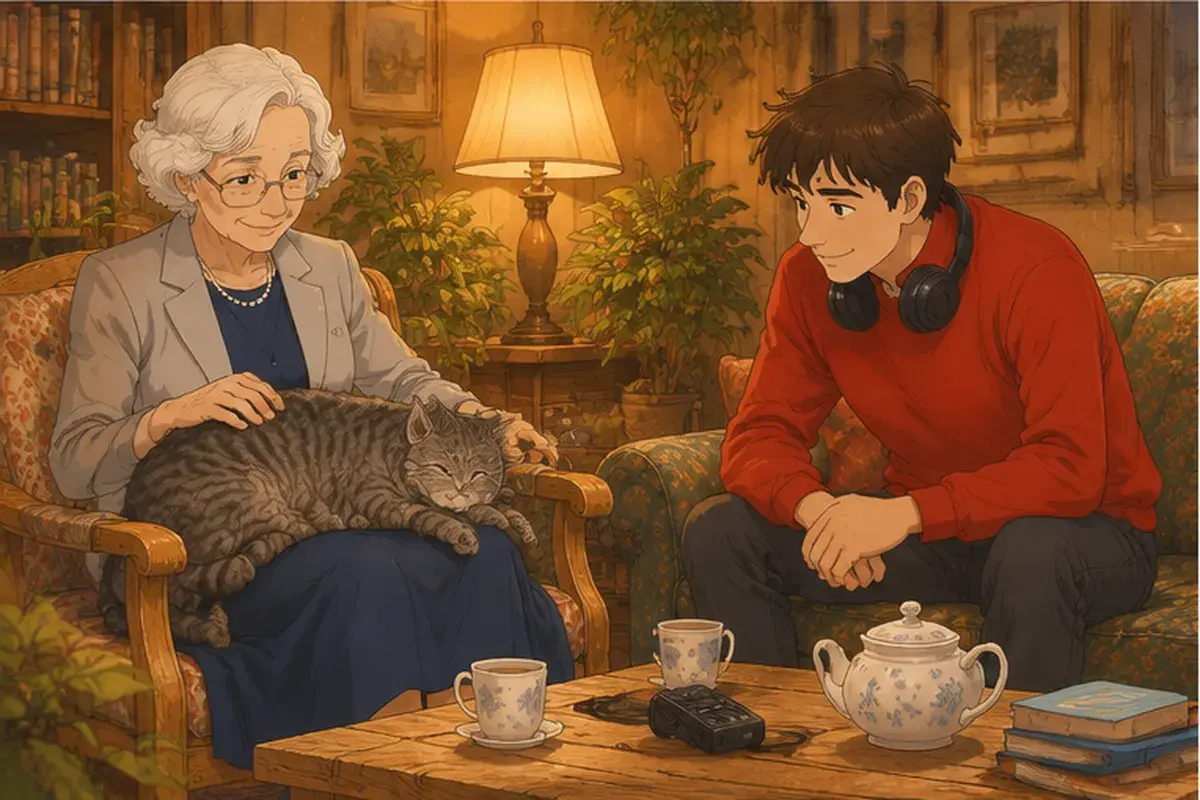
Elle est seule avec son chat : il s'appelle Pacha aussi !
She's alone with her cat: his name is Pacha too!
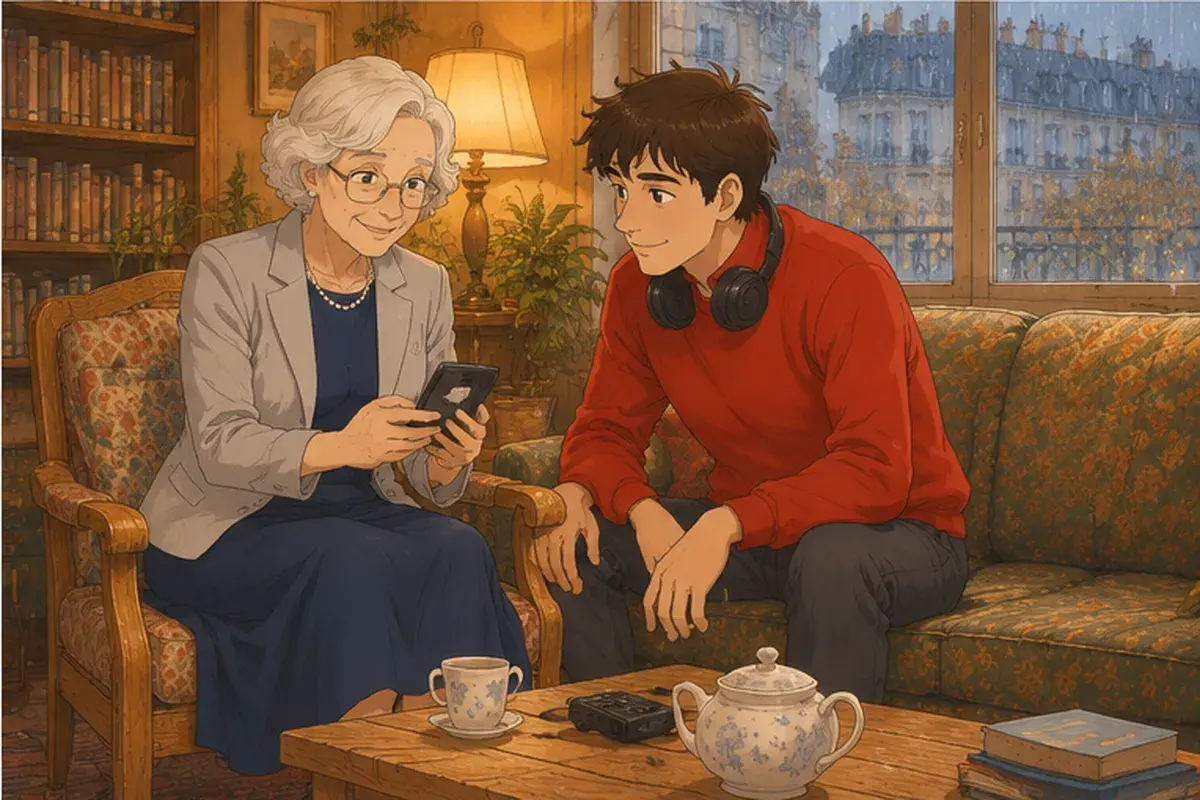
Elle est comme maman : elle regarde mes photos et elle parle de ma famille.
She's like Mom: she looks at my photos and talks about my family.

Ce ne sont pas encore mes copains, mais ils sont sympas.
They're not my friends yet, but they're nice.
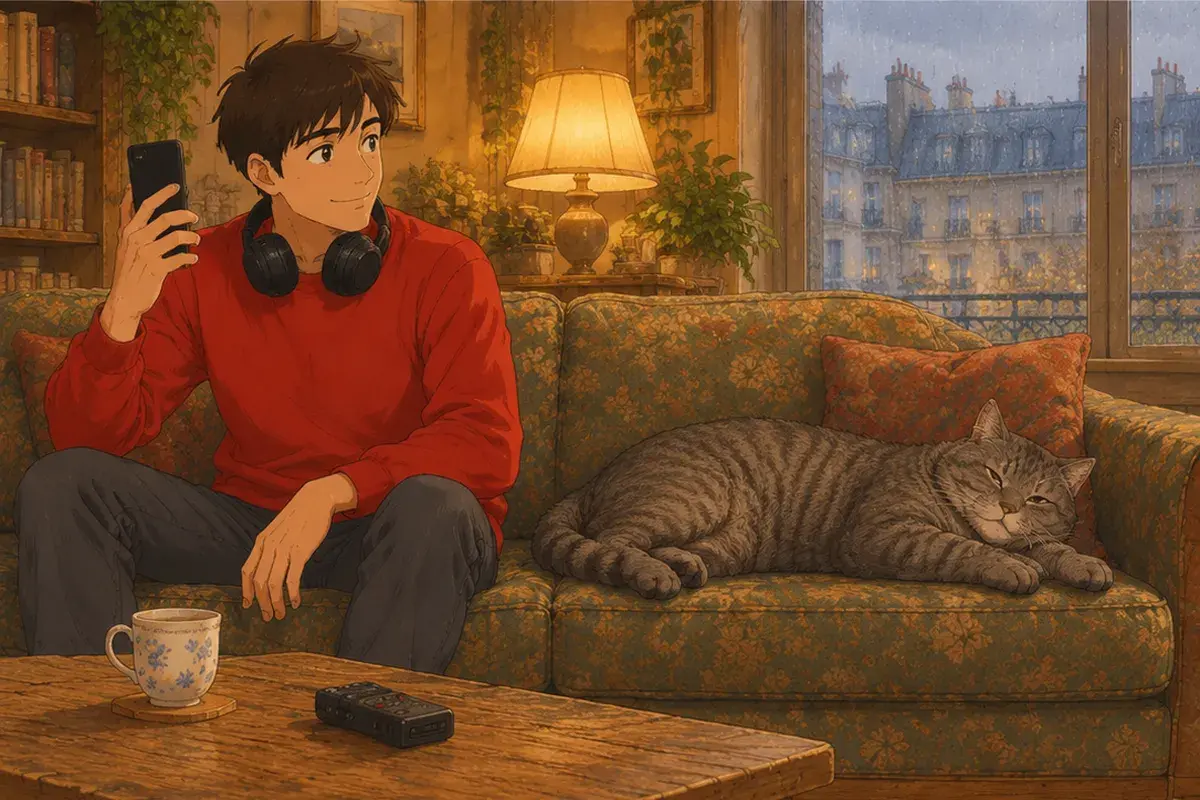
Mon seul copain, c'est le chat Pacha ! Coucou à maman et à papa, et à bientôt !
My only friend is Pacha the cat! Hi to Mom and Dad, and see you soon!
Grammar for this text
- Salut, Dacha ! C'est Pacha, ton grand frère — grand frère means "big brother, older brother": here grand isn't about size. Salut — hi, only with people you know well: fine for a sister.
- Sa famille, ce sont ses parents, sa sœur Maëlle et son grand-père, Papy Yann — sa, ses, son mean "his" here (it's about Hugo): the form depends on the noun after it. About Inès the same words mean "her": son petit frère, sa grand-mère. The word doesn't show whose brother it is; the story does. Papy — grandpa, mamie — grandma: affectionate family words, like papa and maman; they also go before a name: Papy Yann, Mamie Zohra. Ce sont — "it's, these are" for several people.
- Leurs familles habitent à Saint-Malo et à Marseille — leurs (their) takes an s because there are two families. The -ent of habitent is silent.
- Elle est seule avec son chat : il s'appelle Pacha aussi ! — son chat — "her cat" (Madame Morel's); seule has an e because it's about a woman. Il s'appelle — "his name is".
- Elle est comme maman : elle regarde mes photos et elle parle de ma famille — comme here means "like": "she's like Mom". Parler de — to talk about: elle parle de ma famille — she talks about my family.
- Ce ne sont pas encore mes copains — the negative ne... pas goes around sont; with a negative, encore means "(not) yet". Copain — friend, buddy.
- Mon seul copain, c'est le chat Pacha ! — before a noun, seul means "only": mon seul copain — my only friend. After the verb the same word means "alone": elle est seule. A bittersweet joke: Pacha doesn't count the people as friends yet, but the cat already is one.
- Yanis a dix-neuf ans : c'est le bébé de la famille ! — le bébé de la famille — jokingly "the youngest in the family", even though he's already nineteen.
- Mamie Zohra a neuf petits-enfants, et Inès, c'est l'aînée ! — petits-enfants — grandchildren, written with a hyphen. L'aînée — the eldest: la loses its vowel before a vowel, and the final e is there because Inès is a woman.
- Elle a plus de soixante ans — "she's over sixty": plus de + a number means "more than".
- Coucou à maman et à papa — coucou is the most familiar "hi"; coucou à… — "hi to…", as in a letter or a message to your family.
Words and grammar of the unit: Talk about your family.
Learn the words from the texts with flashcards
In the app, you can tap any word in a text to see its translation, forms and examples, and new words stick with flashcards. 15 minutes a day.
Start for freeEverything is open for free. No card needed to sign up.