

French dialogue with translation · A1 · 10 lines
Pour l'âge, c'est avoir, pas être For age, it's avoir, not être
Comic · 10 panels
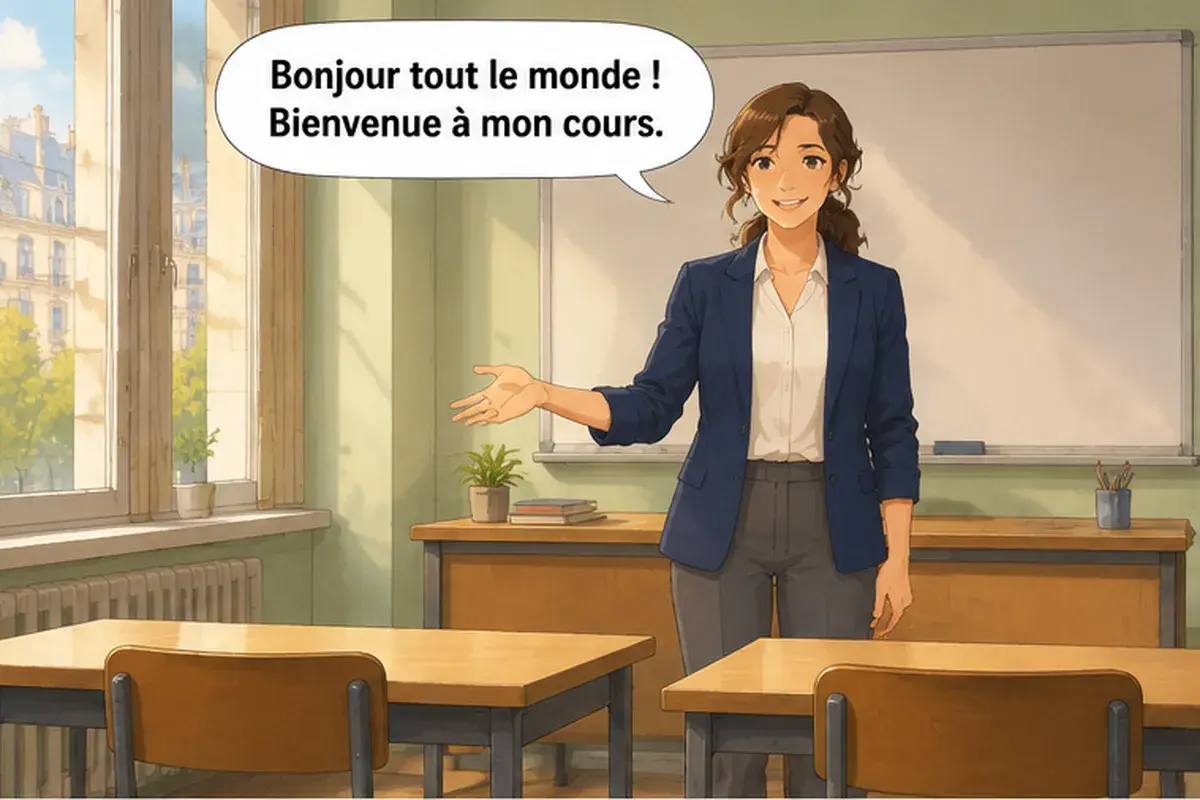
- Claire
Bonjour tout le monde ! Bienvenue à mon cours.
Hello, everyone! Welcome to my class.
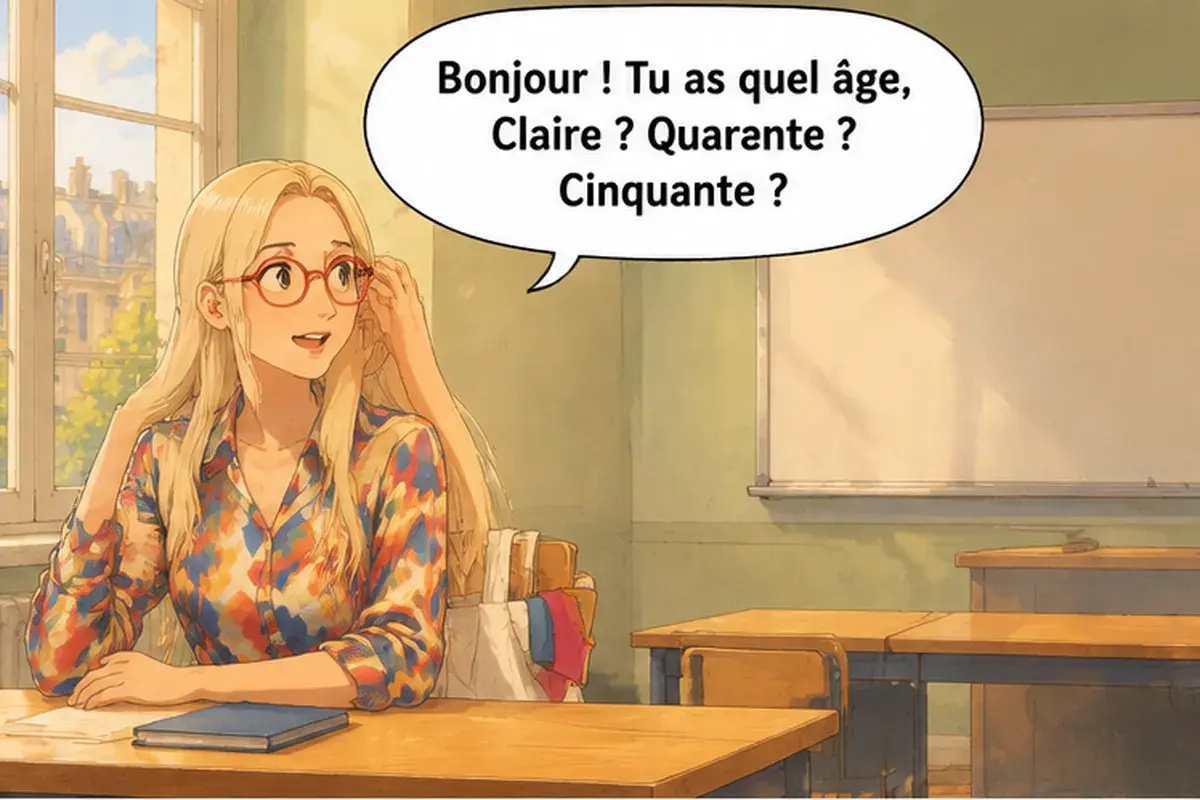
- Giulia
Bonjour ! Tu as quel âge, Claire ? Quarante ? Cinquante ?
Hello! How old are you, Claire? Forty? Fifty?
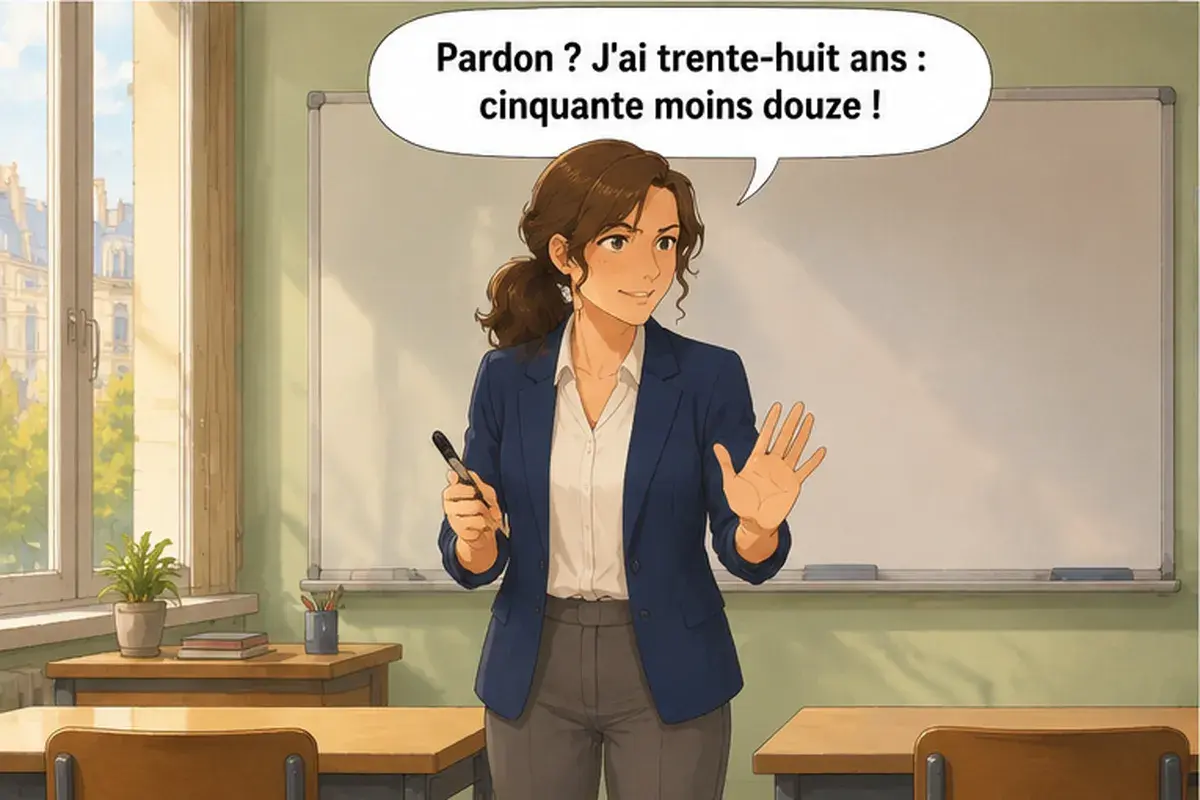
- Claire
Pardon ? J'ai trente-huit ans : cinquante moins douze !
Excuse me? I'm thirty-eight years old: fifty minus twelve!
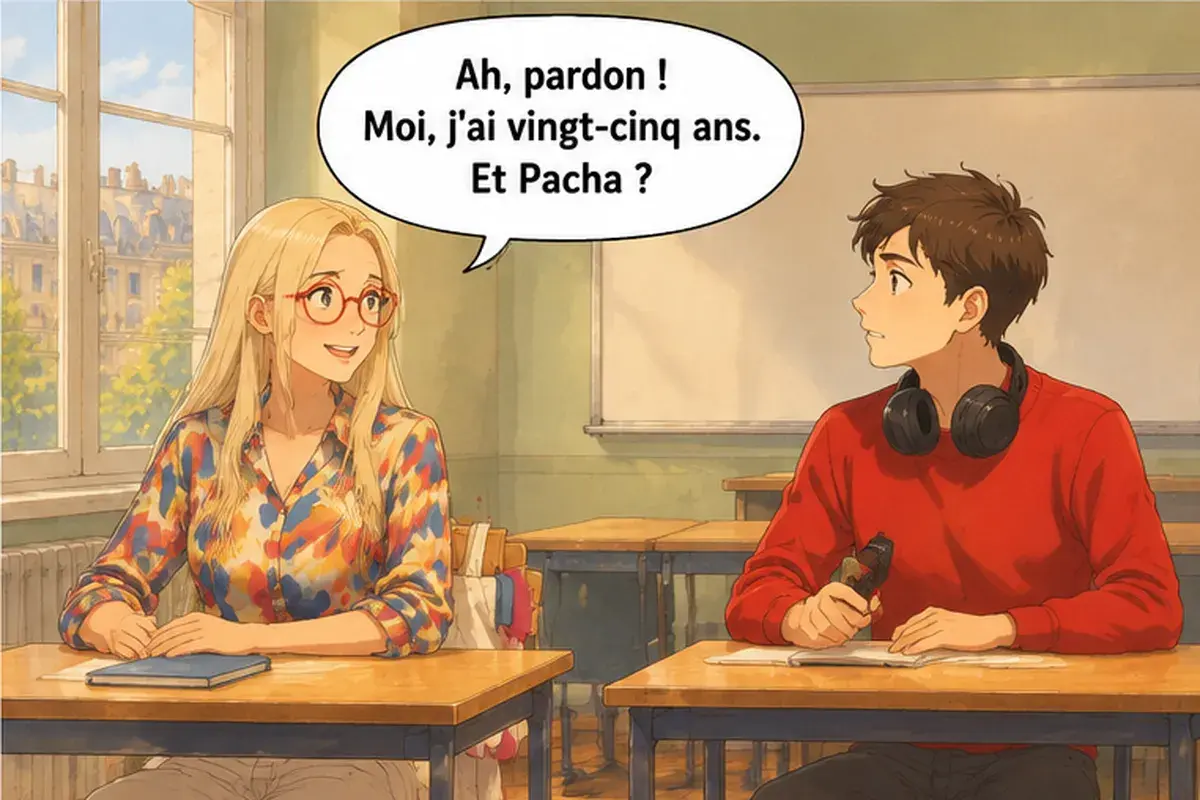
- Giulia
Ah, pardon ! Moi, j'ai vingt-cinq ans. Et Pacha ?
Oh, sorry! Me, I'm twenty-five years old. And Pacha?
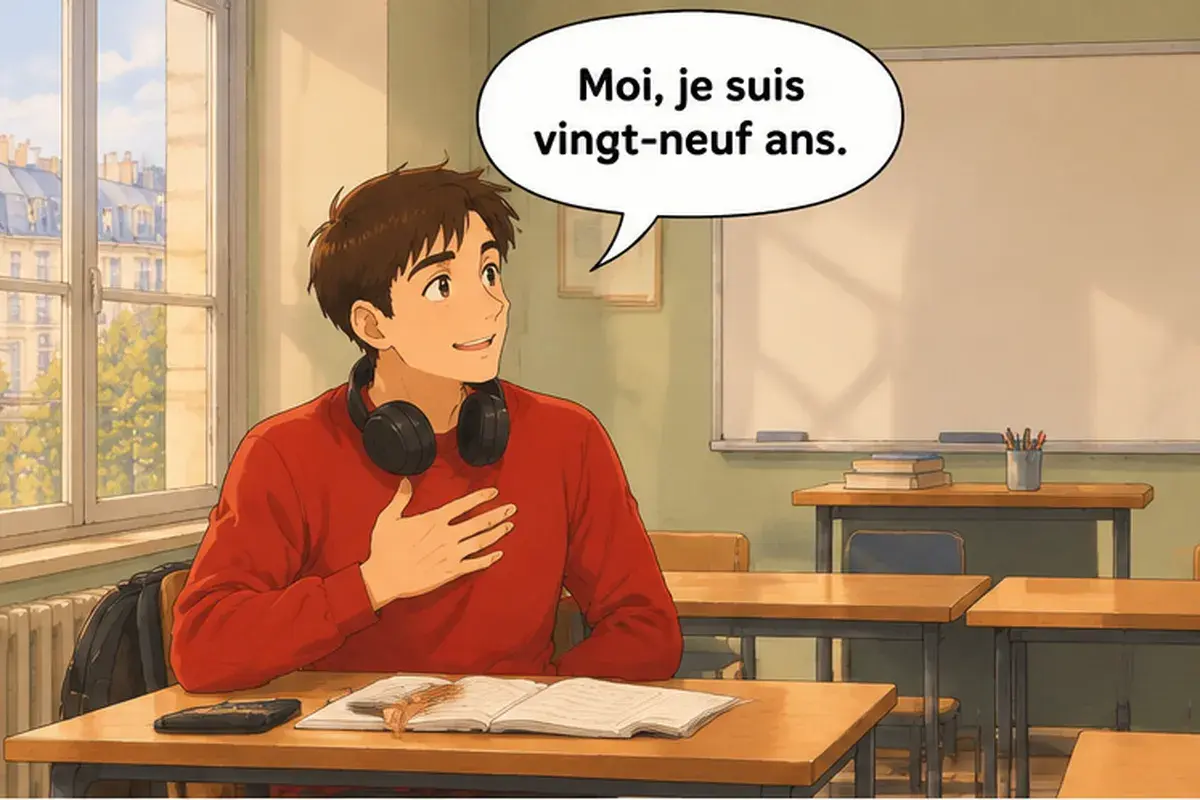
- Pacha
Moi, je suis vingt-neuf ans.
Me, I am twenty-nine years.
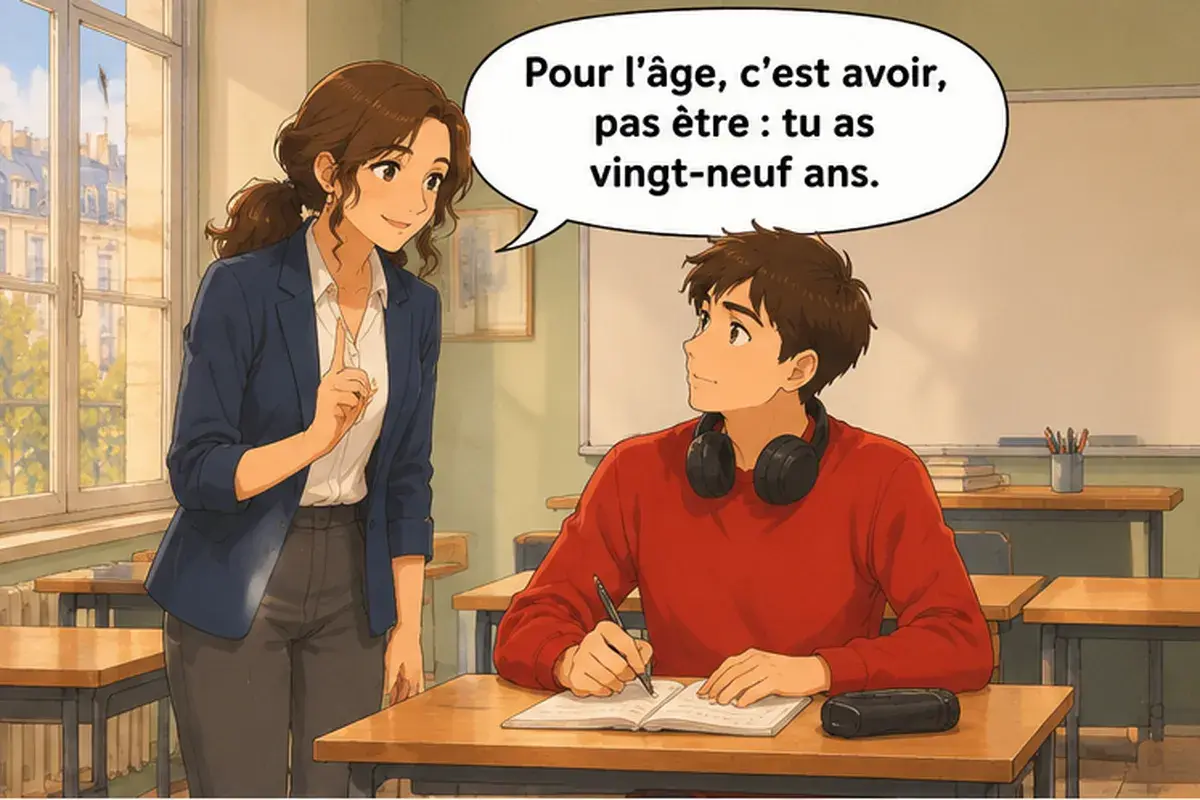
- Claire
Pour l'âge, c'est avoir, pas être : tu as vingt-neuf ans.
For age, it's avoir, not être: you're twenty-nine years old.
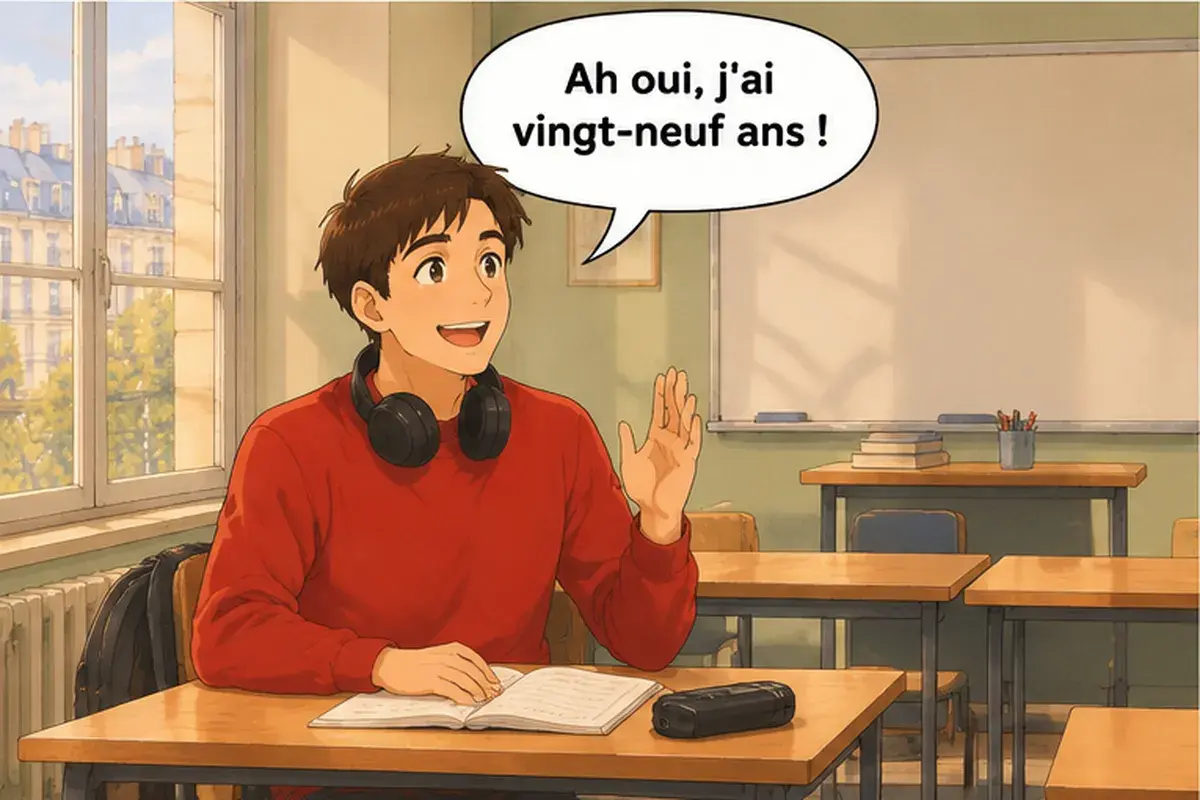
- Pacha
Ah oui, j'ai vingt-neuf ans !
Oh yes, I'm twenty-nine years old!
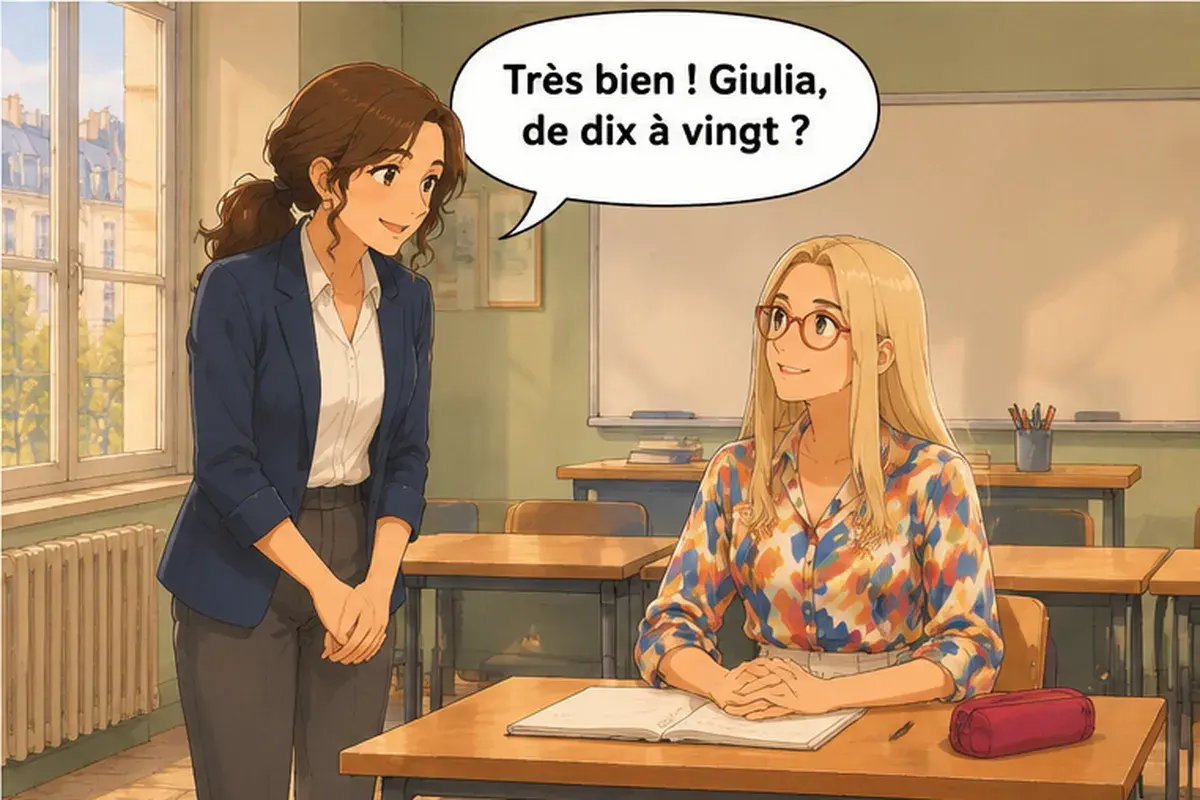
- Claire
Très bien ! Giulia, de dix à vingt ?
Very good! Giulia, from ten to twenty?
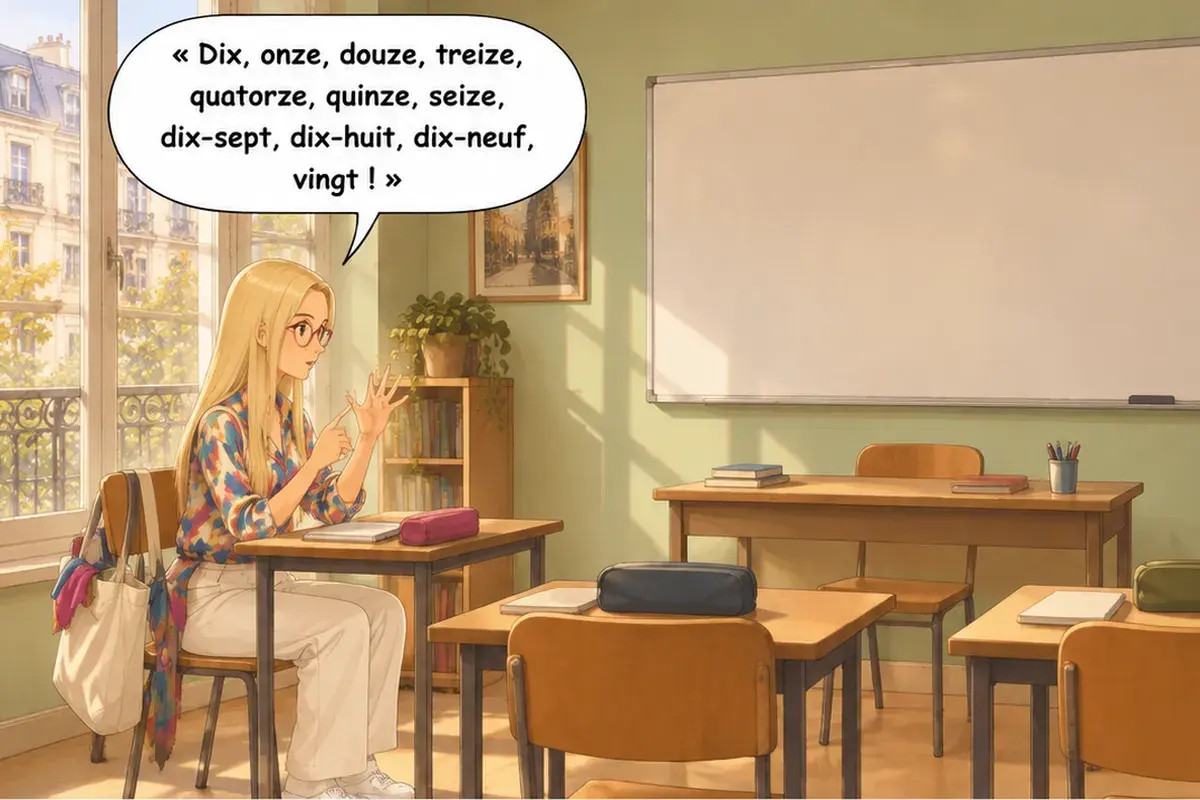
- Giulia
Dix, onze, douze, treize, quatorze, quinze, seize, dix-sept, dix-huit, dix-neuf, vingt !
Ten, eleven, twelve, thirteen, fourteen, fifteen, sixteen, seventeen, eighteen, nineteen, twenty!
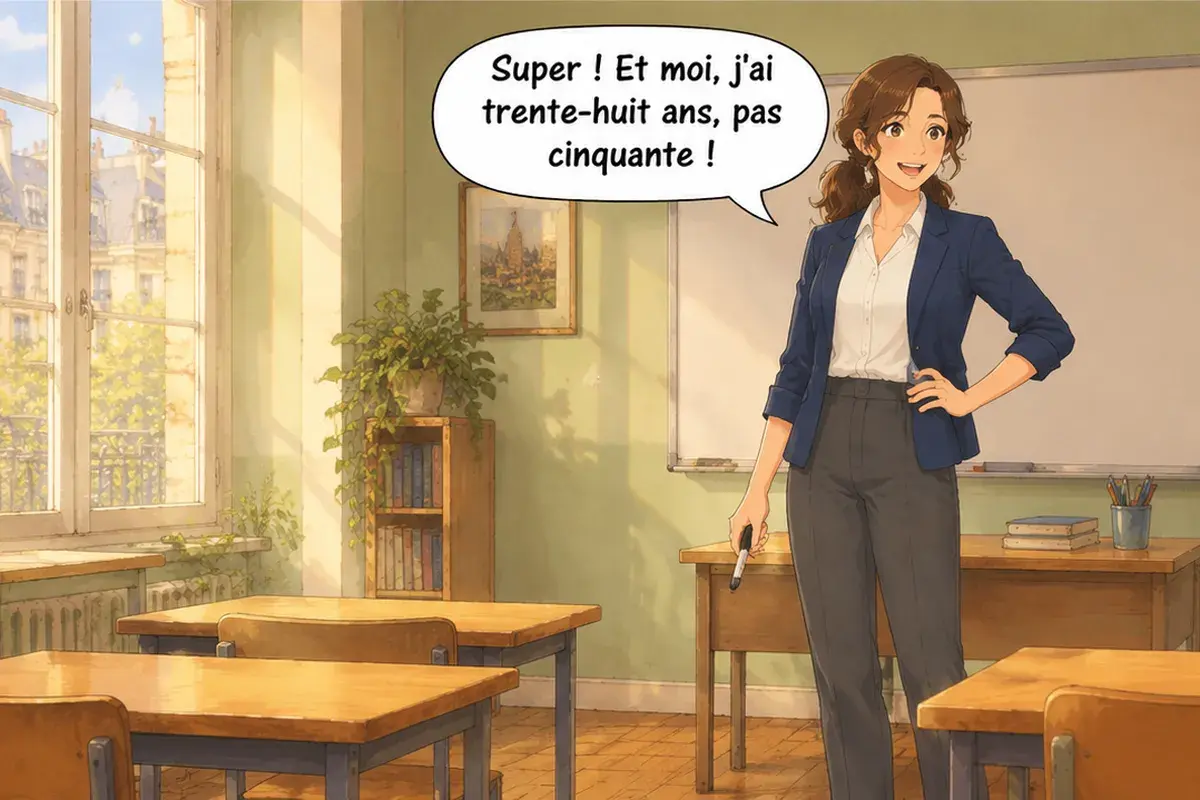
- Claire
Super ! Et moi, j'ai trente-huit ans, pas cinquante !
Great! And me, I'm thirty-eight years old, not fifty!
Grammar for this text
- ✗ Moi, je suis vingt-neuf ans — a typical mistake: English says "I'm 29", so it's tempting to say the same in French. In French you "have" your age: j'ai, tu as. That's why Claire corrects him.
- Pour l'âge, c'est avoir, pas être — l'âge = le + âge. avoir — to have, être — to be; both are in the infinitive.
- Tu as quel âge, Claire ? — as is the tu form of avoir: "you have what age?". The students and Claire use tu with each other.
- J'ai trente-huit ans : cinquante moins douze ! — in math moins is "minus" and plus is "plus": 50 − 12 = 38.
- Quarante ? Cinquante ? — one-word questions: it's all in the rising voice.
- Dix, onze, douze, treize — in dix-sept the x sounds like s; in dix-huit and dix-neuf it sounds like z; in vingt the t is silent.
- Bonjour tout le monde ! — tout le monde — everyone (literally "all the world"). It's how you greet a group.
Words and grammar of the unit: Say your age and phone number.
Learn the words from the texts with flashcards
In the app, you can tap any word in a text to see its translation, forms and examples, and new words stick with flashcards. 15 minutes a day.
Start for freeEverything is open for free. No card needed to sign up.