
Spanish dialogue with translation · B2 · 18 lines
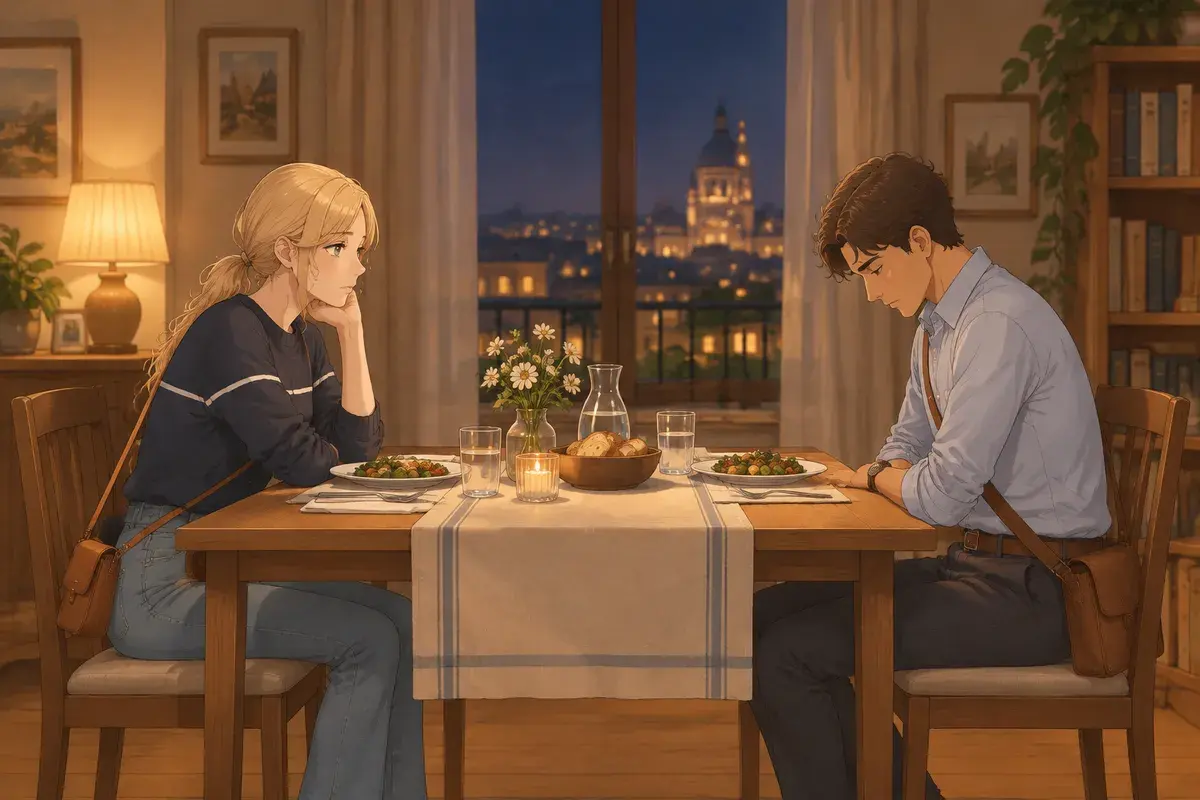
La cena que se enfrió The dinner that got cold
Comic · 18 panels
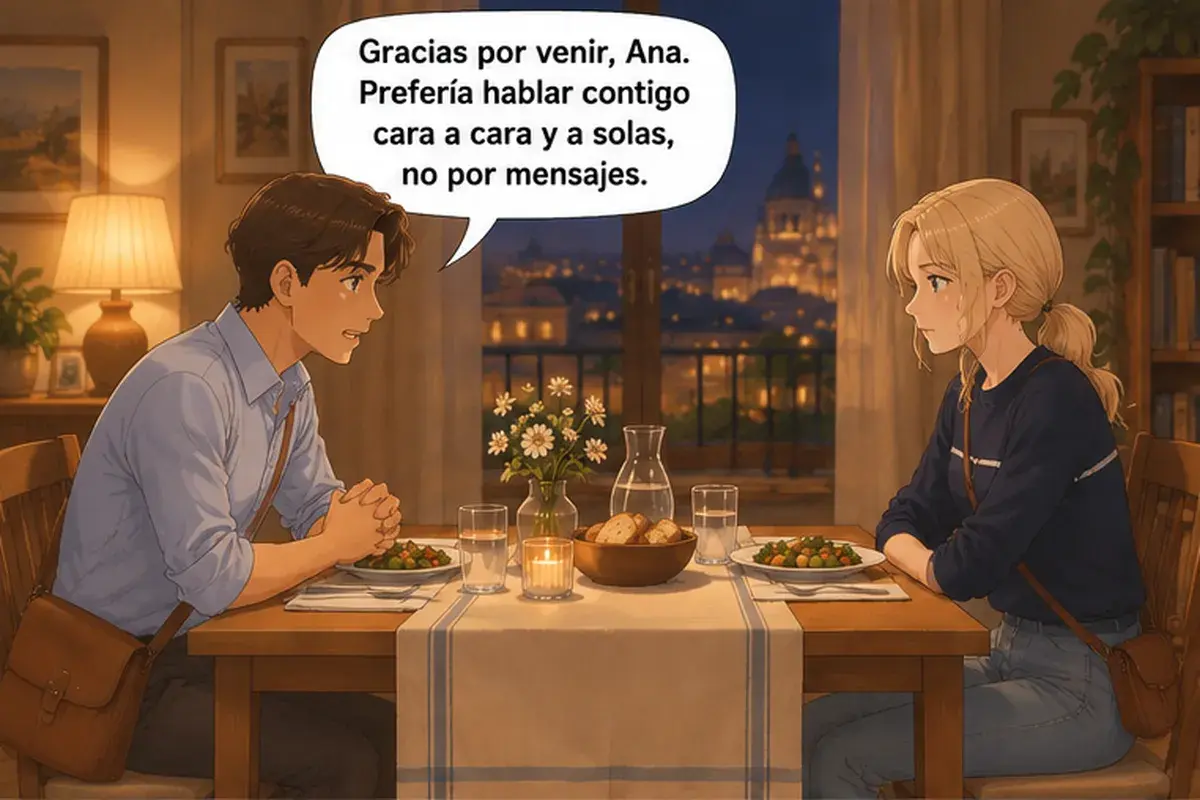
- Diego
Gracias por venir, Ana. Prefería hablar contigo cara a cara y a solas, no por mensajes.
Thanks for coming, Ana. I preferred to talk to you face to face and in private, not by text.
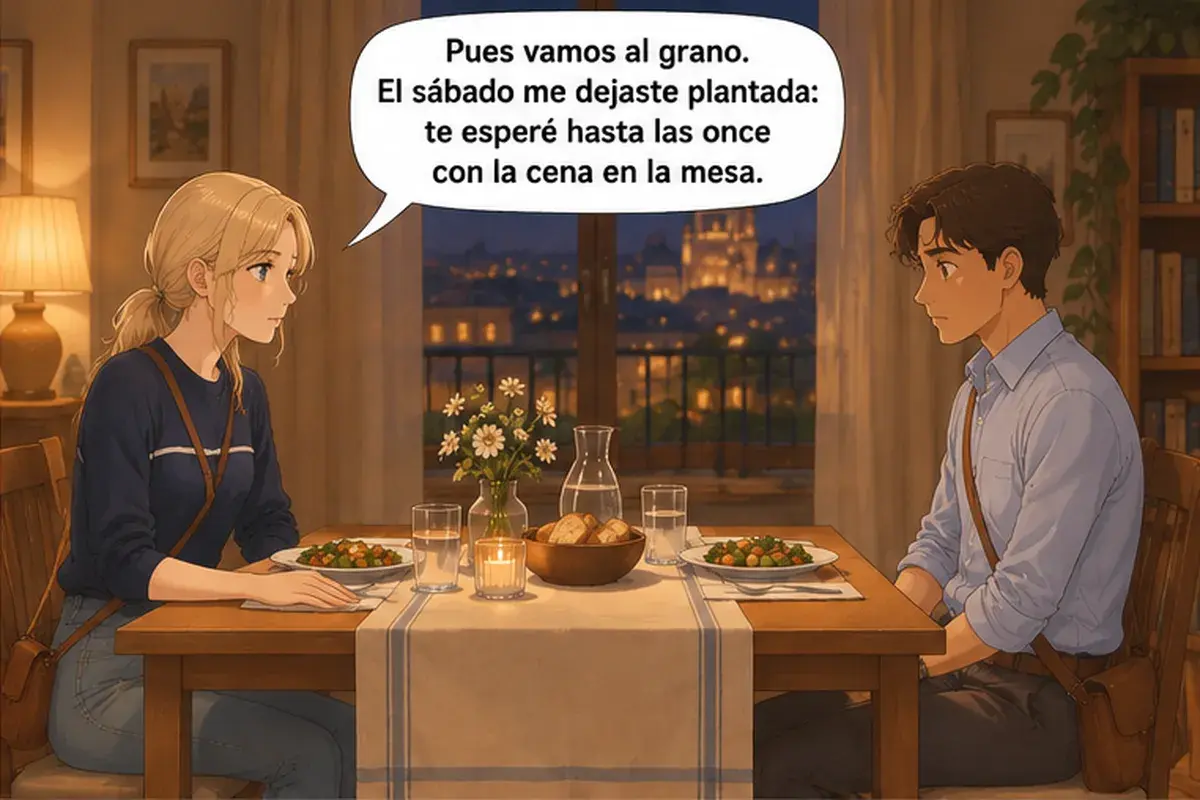
- Ana
Pues vamos al grano. El sábado me dejaste plantada: te esperé hasta las once con la cena en la mesa.
Then let's get to the point. On Saturday you stood me up: I waited for you until eleven with dinner on the table (woman speaking).
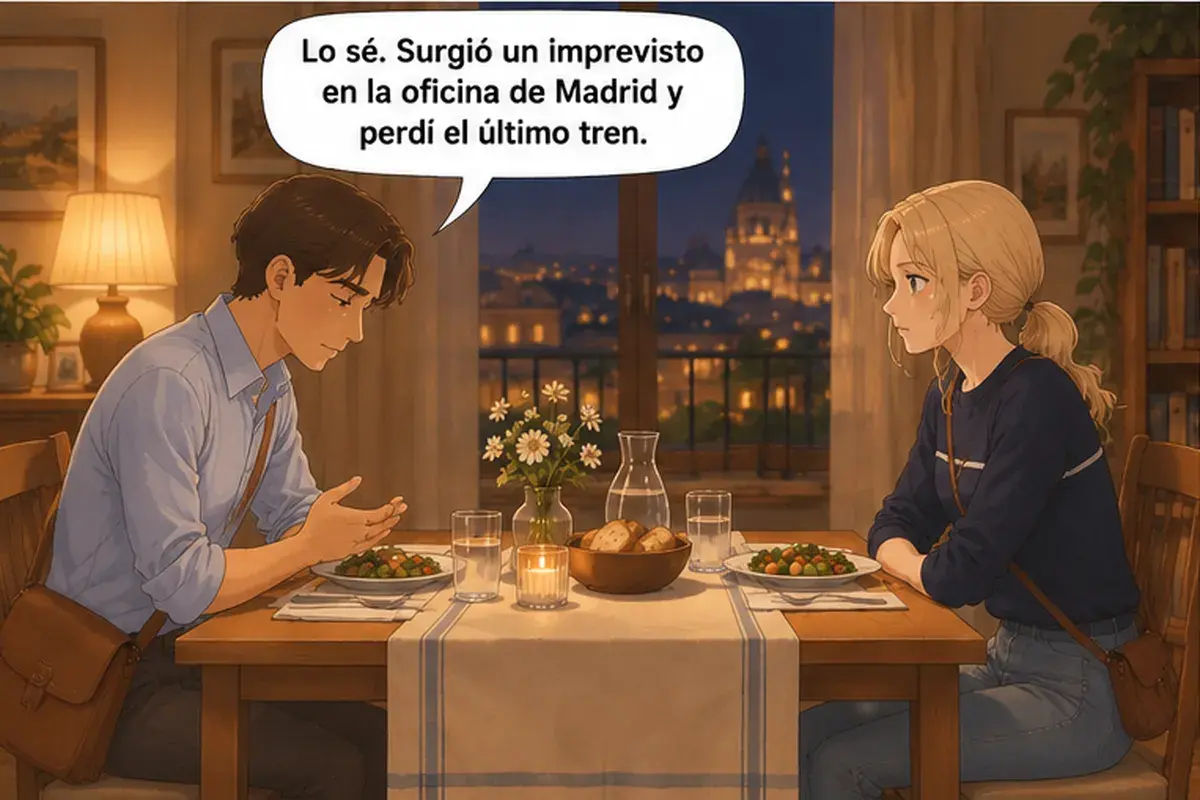
- Diego
Lo sé. Surgió un imprevisto en la oficina de Madrid y perdí el último tren.
I know. Something unexpected came up at the Madrid office, and I missed the last train.
- Ana
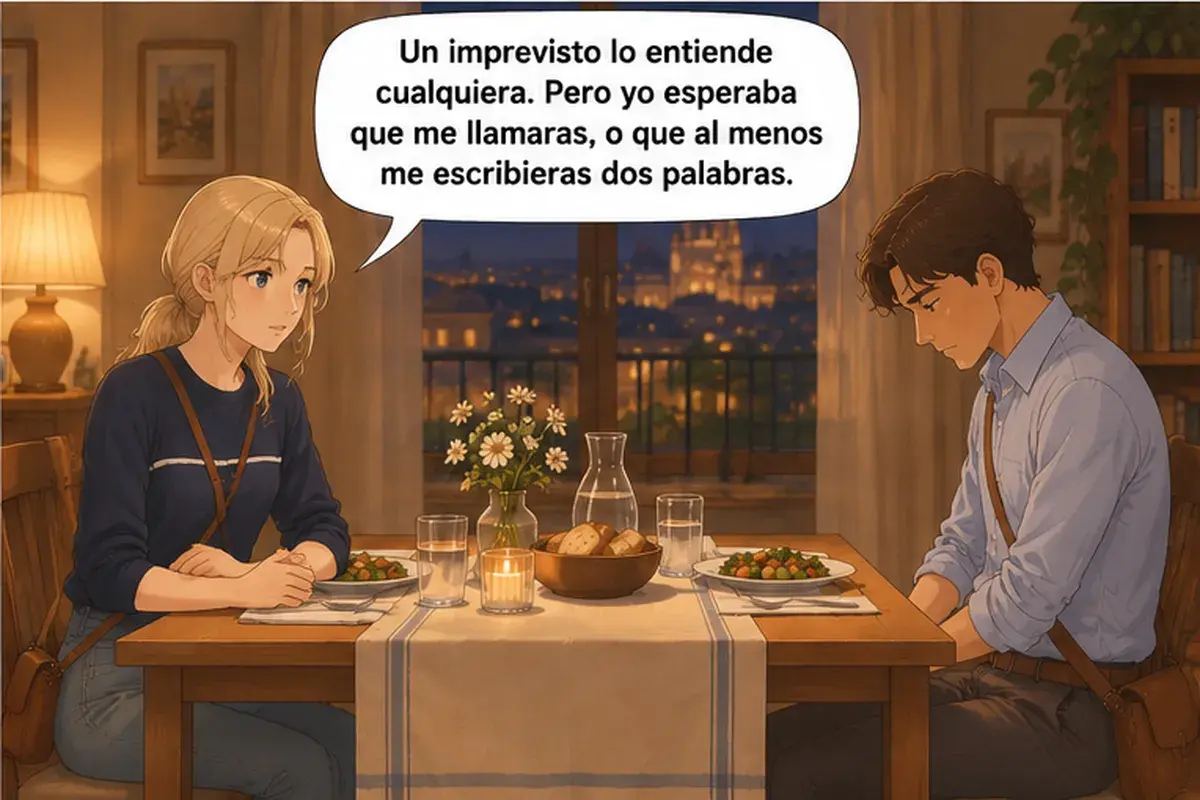
Un imprevisto lo entiende cualquiera. Pero yo esperaba que me llamaras, o que al menos me escribieras dos palabras.
Anyone can understand something unexpected. But I was expecting you to call me, or at least to write me a couple of words.
- Diego
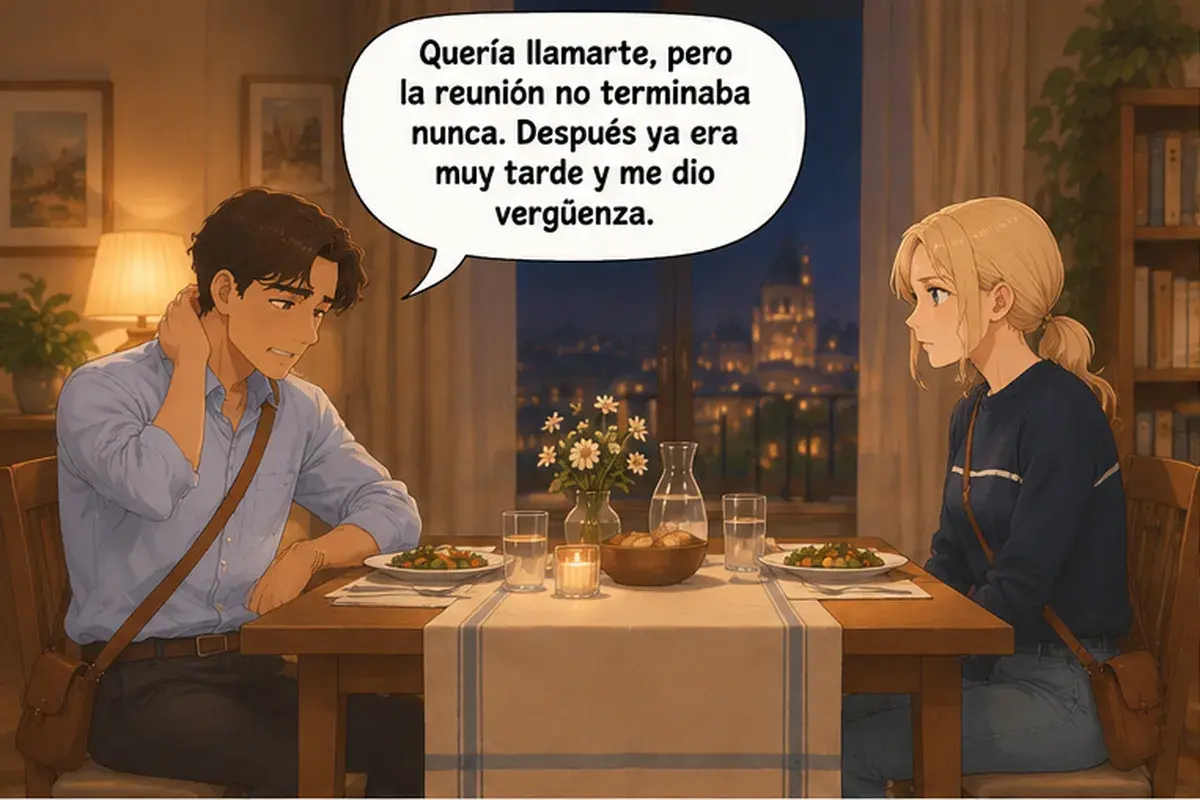
Quería llamarte, pero la reunión no terminaba nunca. Después ya era muy tarde y me dio vergüenza.
I wanted to call you, but the meeting just wouldn't end. Then it was already very late, and I felt embarrassed.
- Ana
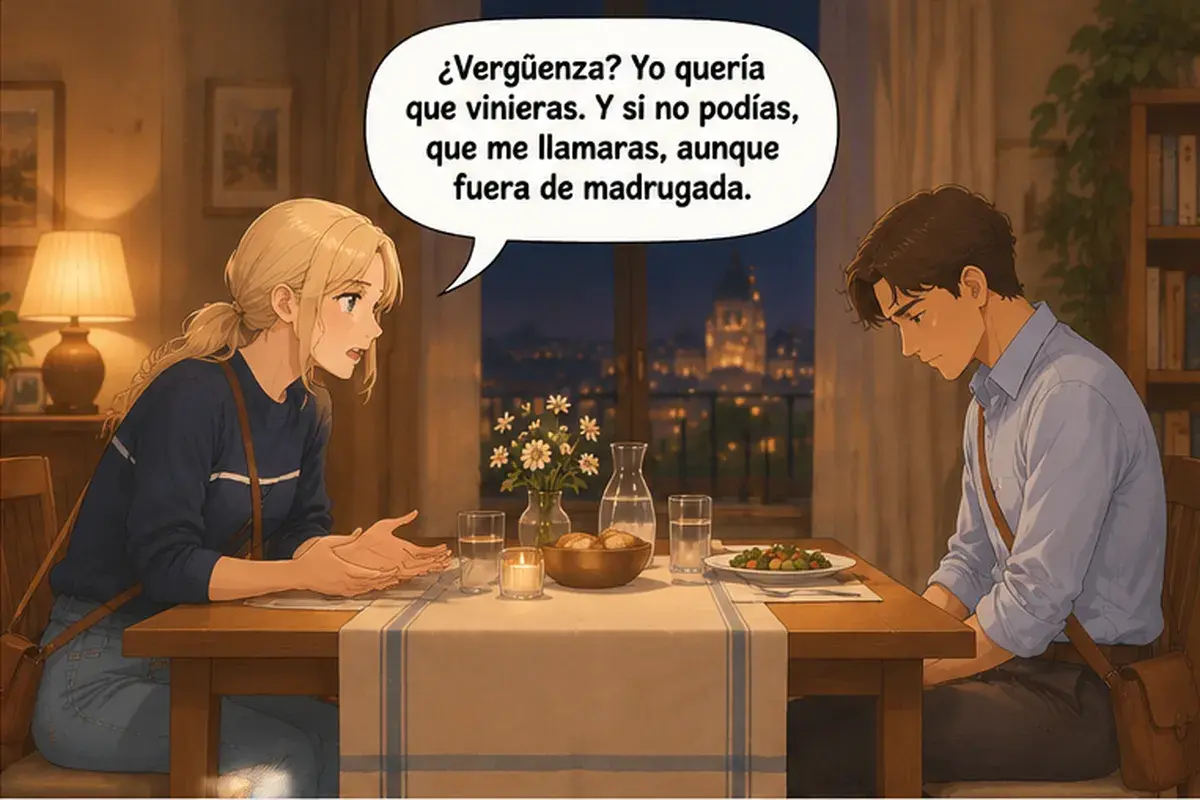
¿Vergüenza? Yo quería que vinieras. Y si no podías, que me llamaras, aunque fuera de madrugada.
Embarrassed? I wanted you to come. And if you couldn't, I wanted you to call me, even if it was the middle of the night.
- Diego
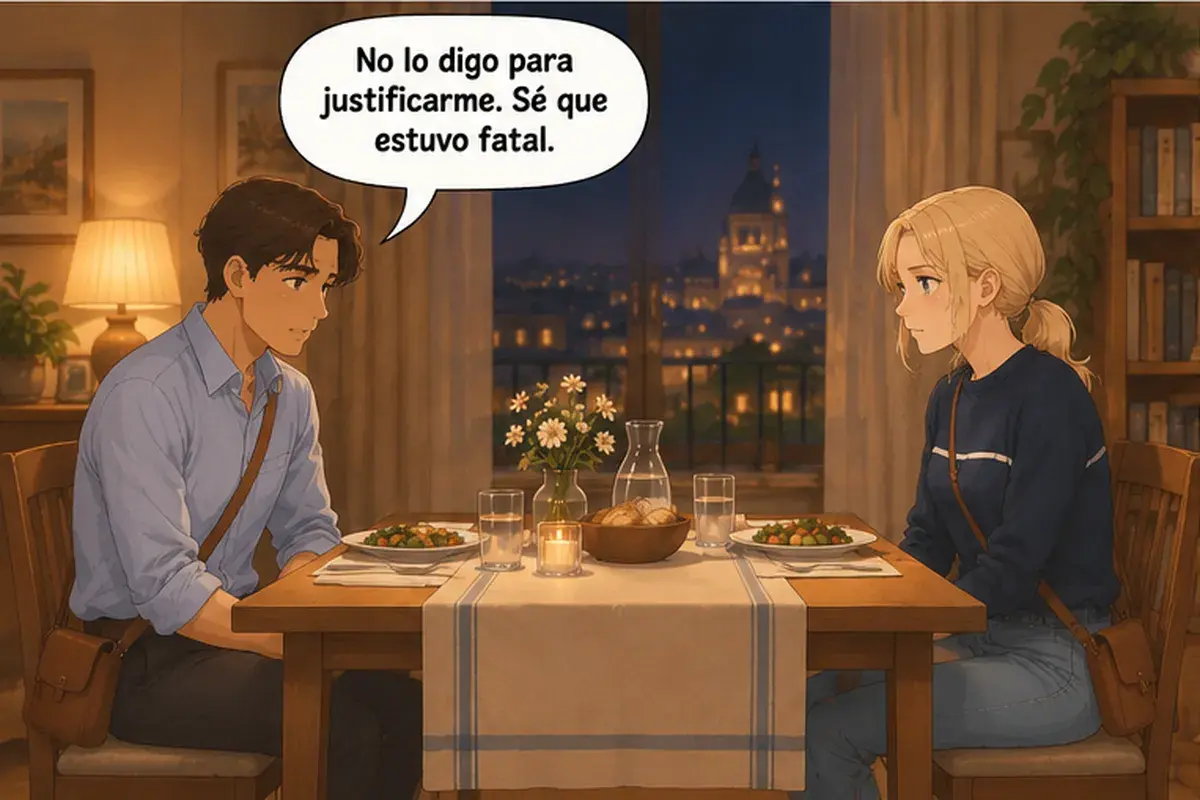
No lo digo para justificarme. Sé que estuvo fatal.
I'm not saying it to justify myself. I know it was awful.
- Ana
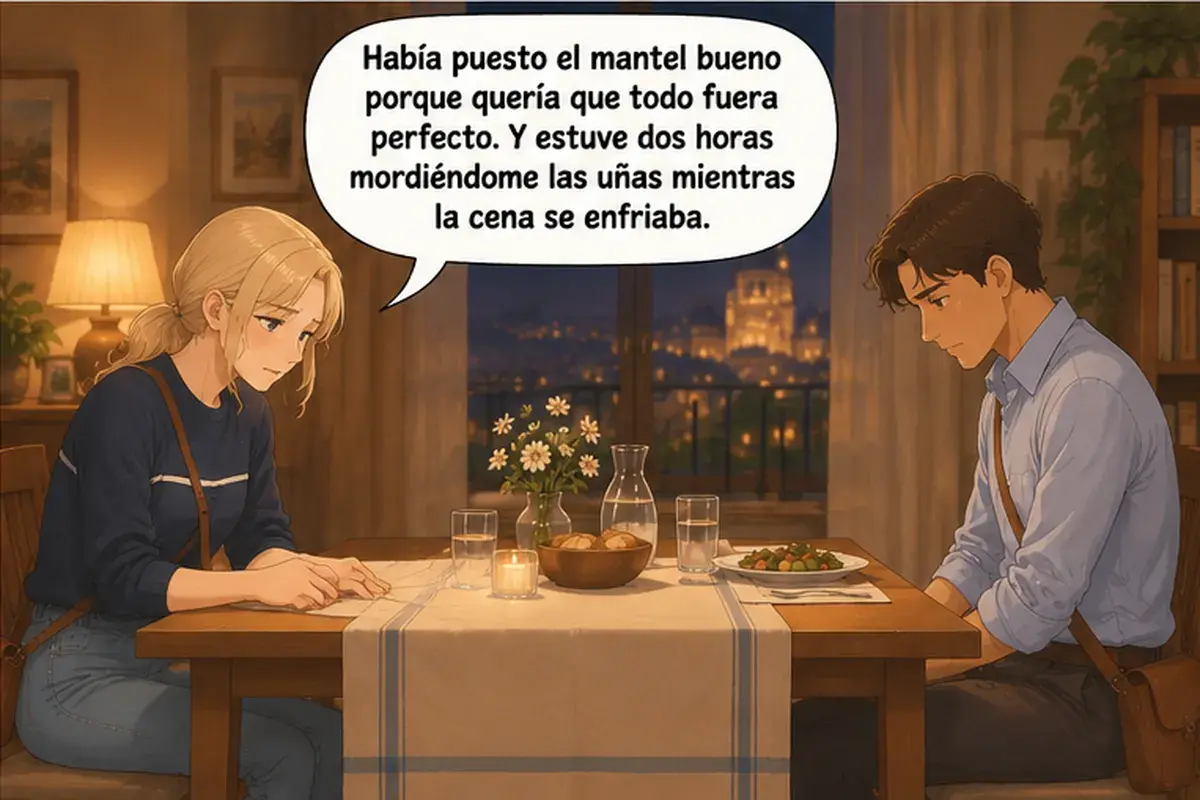
Había puesto el mantel bueno porque quería que todo fuera perfecto. Y estuve dos horas mordiéndome las uñas mientras la cena se enfriaba.
I had put out the good tablecloth because I wanted everything to be perfect. And I spent two hours biting my nails while dinner got cold.
- Diego
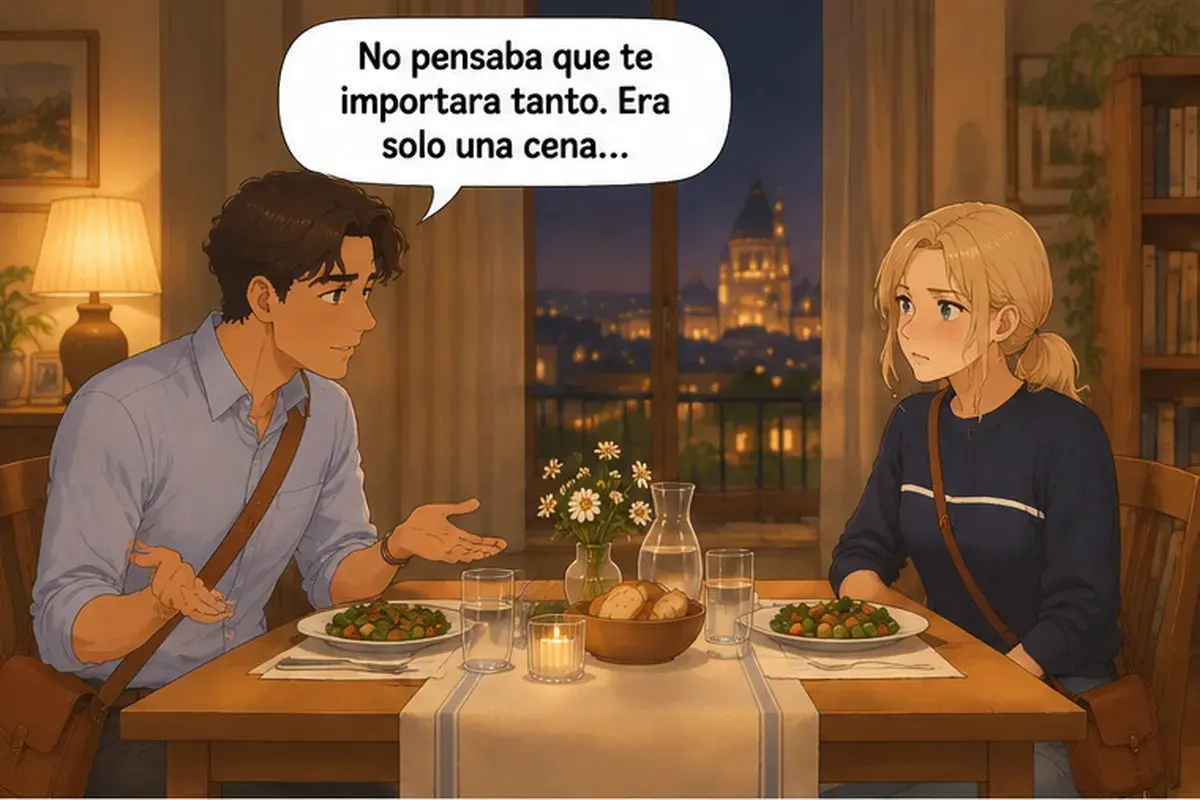
No pensaba que te importara tanto. Era solo una cena…
I didn't think it mattered so much to you. It was just a dinner…
- Ana
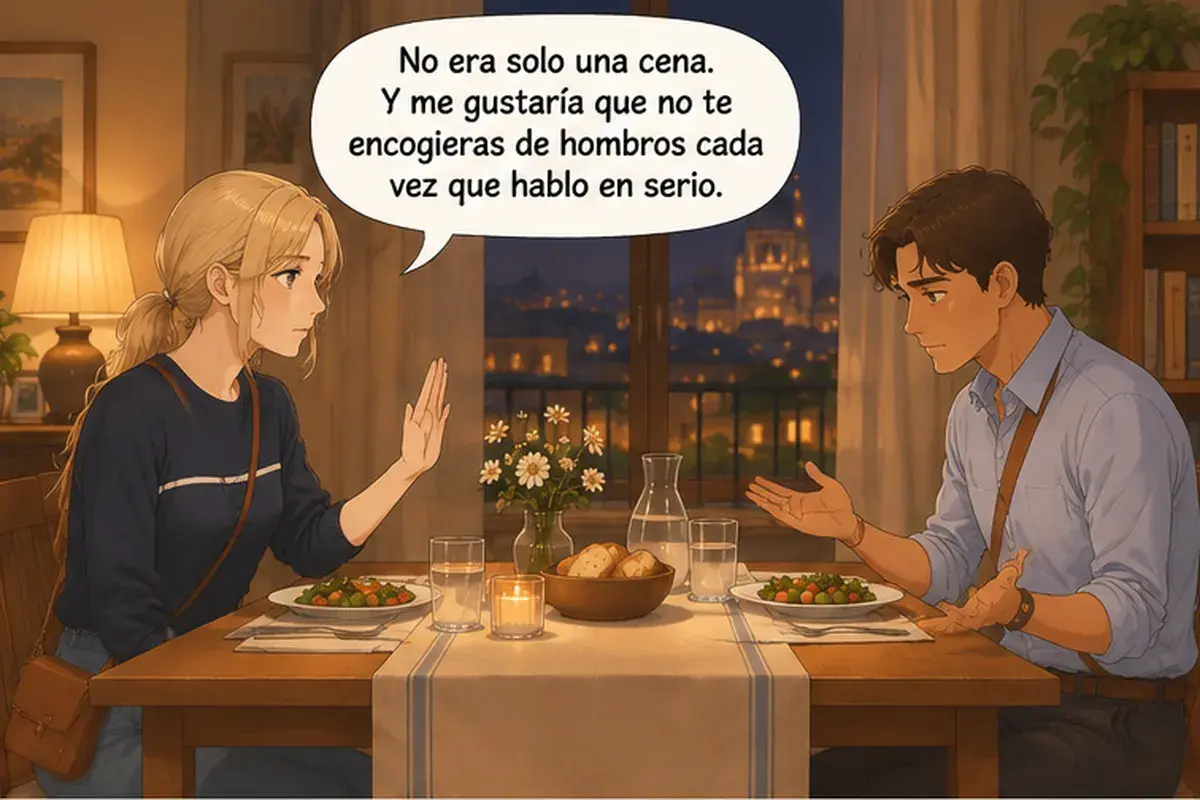
No era solo una cena. Y me gustaría que no te encogieras de hombros cada vez que hablo en serio.
It wasn't just a dinner. And I'd like you not to shrug every time I'm talking seriously.
- Diego
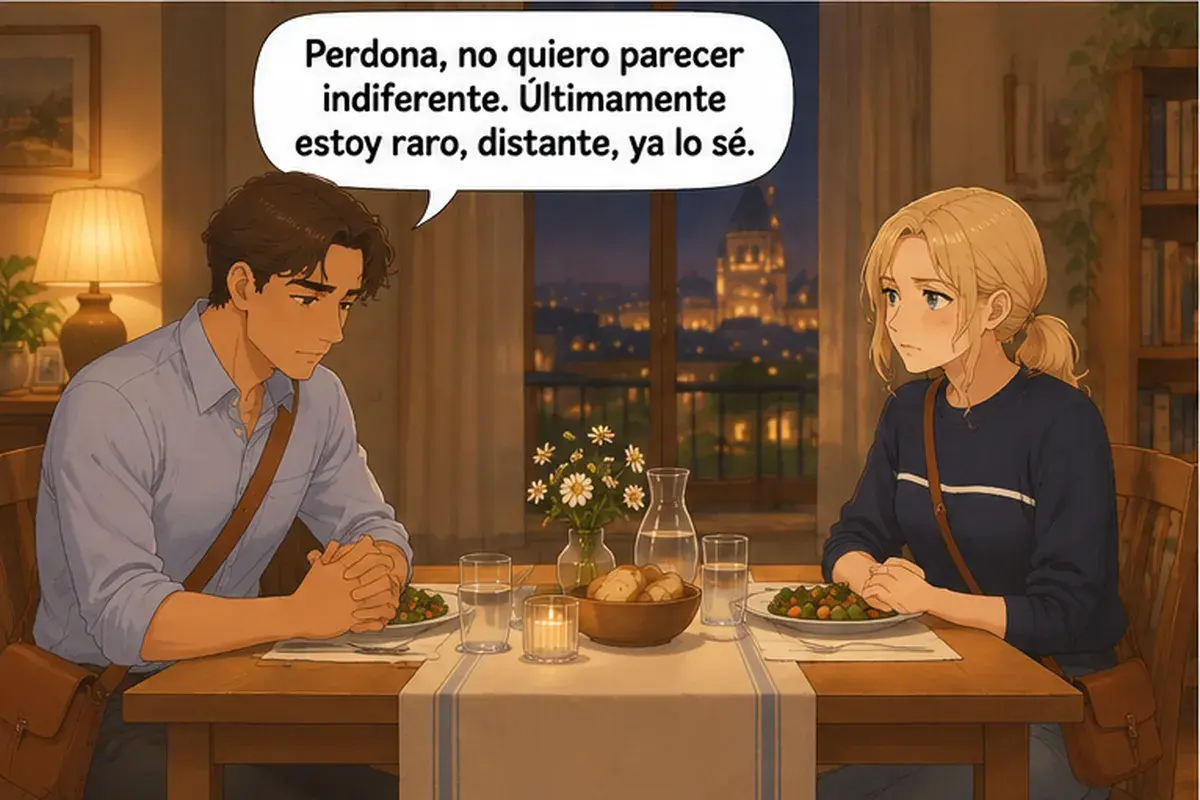
Perdona, no quiero parecer indiferente. Últimamente estoy raro, distante, ya lo sé.
Sorry, I don't want to seem indifferent. I've been acting strange lately, distant, I know (man speaking).
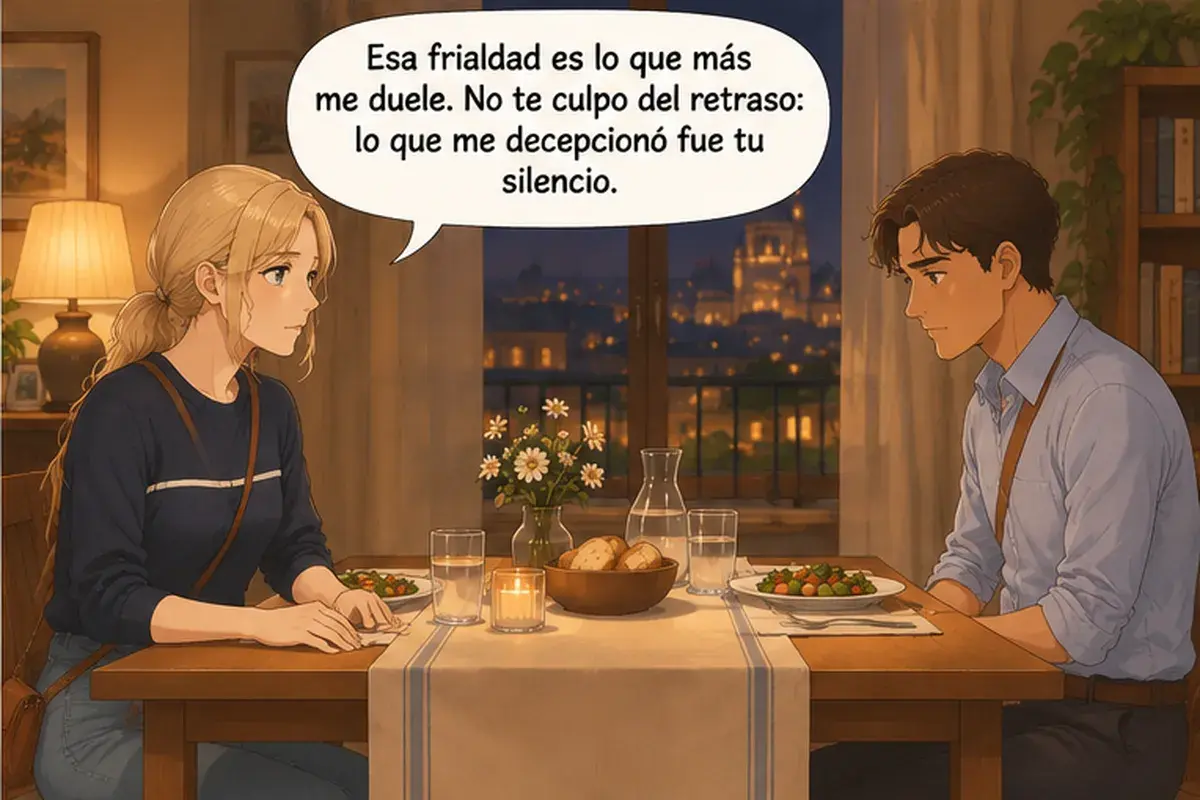
- Ana
Esa frialdad es lo que más me duele. No te culpo del retraso: lo que me decepcionó fue tu silencio.
That coldness is what hurts me most. I don't blame you for being late: what disappointed me was your silence.
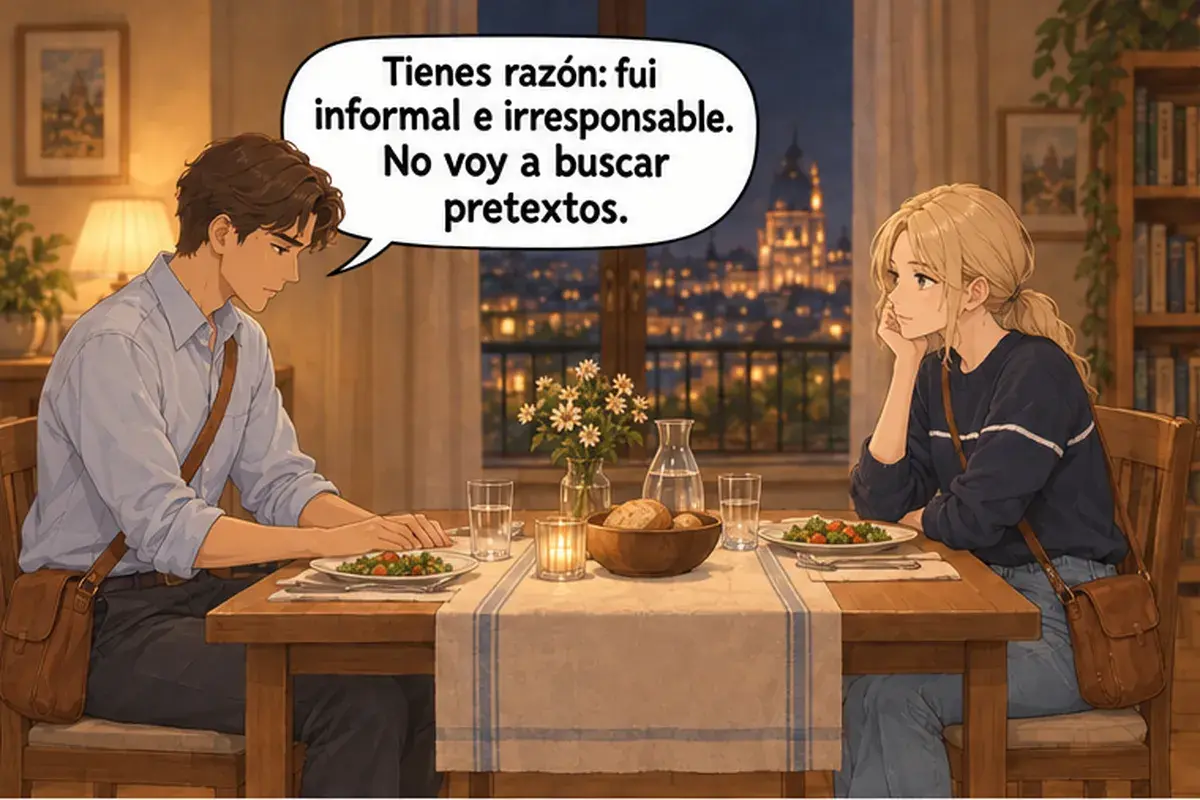
- Diego
Tienes razón: fui informal e irresponsable. No voy a buscar pretextos.
You're right: I was unreliable and irresponsible. I'm not going to look for excuses.
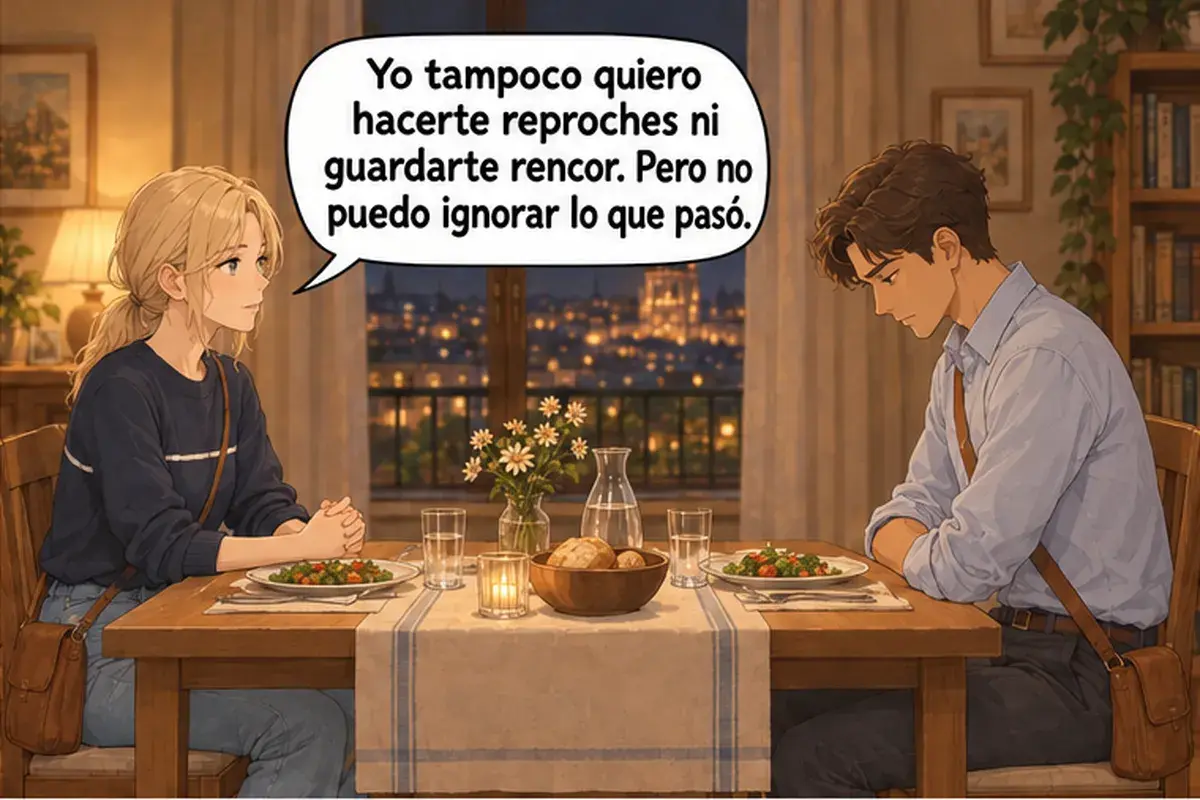
- Ana
Yo tampoco quiero hacerte reproches ni guardarte rencor. Pero no puedo ignorar lo que pasó.
I don't want to reproach you or hold a grudge against you either. But I can't ignore what happened.
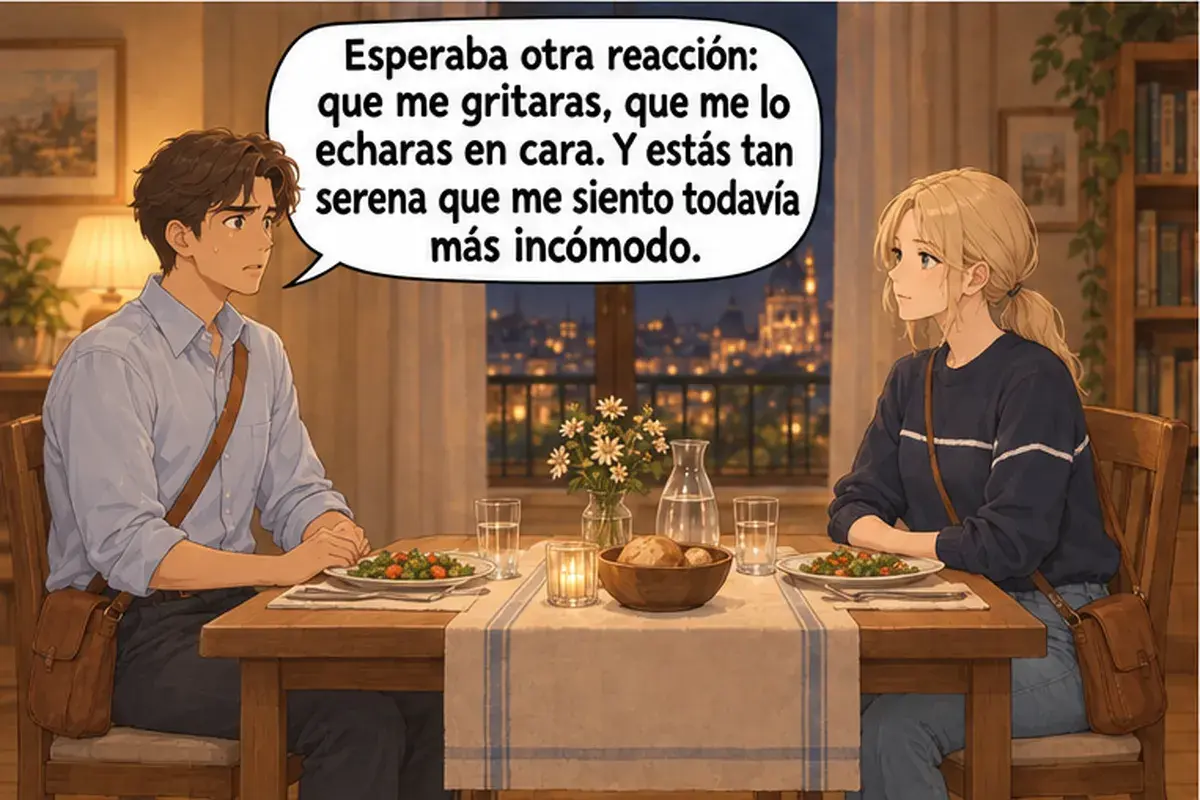
- Diego
Esperaba otra reacción: que me gritaras, que me lo echaras en cara. Y estás tan serena que me siento todavía más incómodo.
I expected a different reaction: for you to yell at me, to throw it in my face. And you're so calm that I feel even more uncomfortable (man speaking, to a woman).
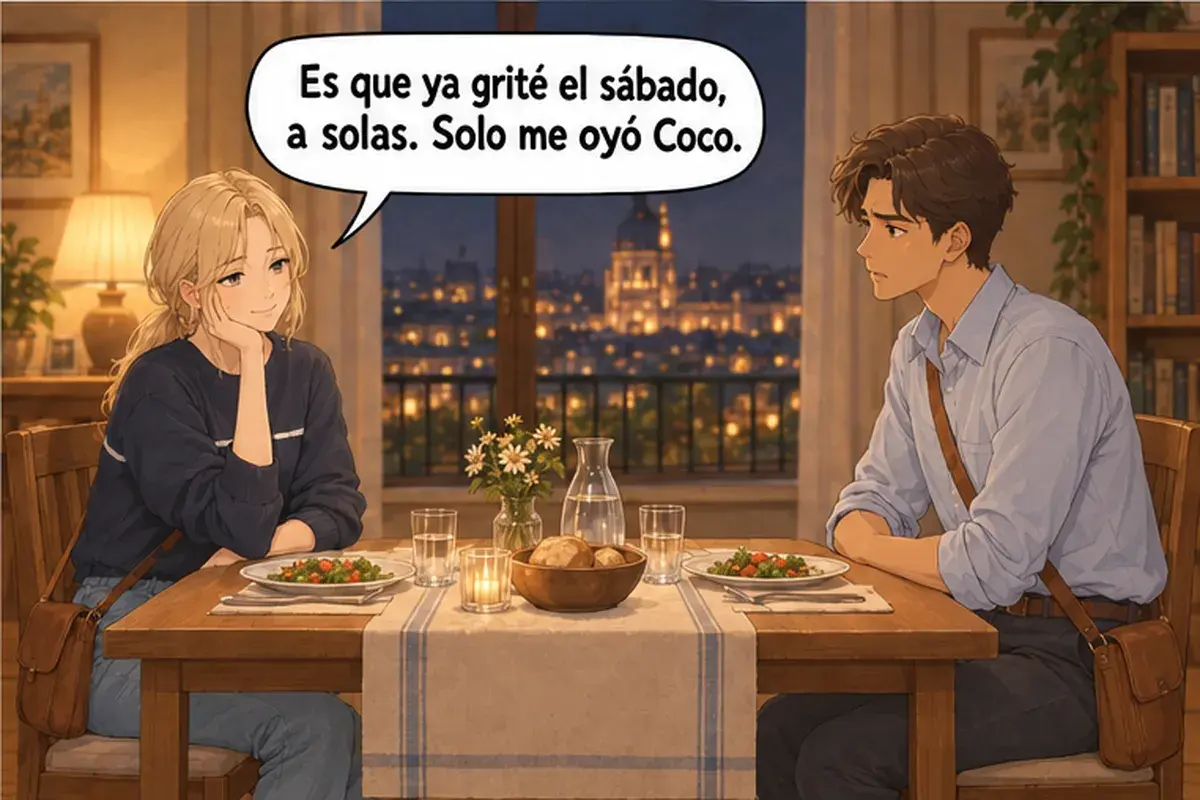
- Ana
Es que ya grité el sábado, a solas. Solo me oyó Coco.
The thing is, I already yelled on Saturday, alone. Only Coco heard me.
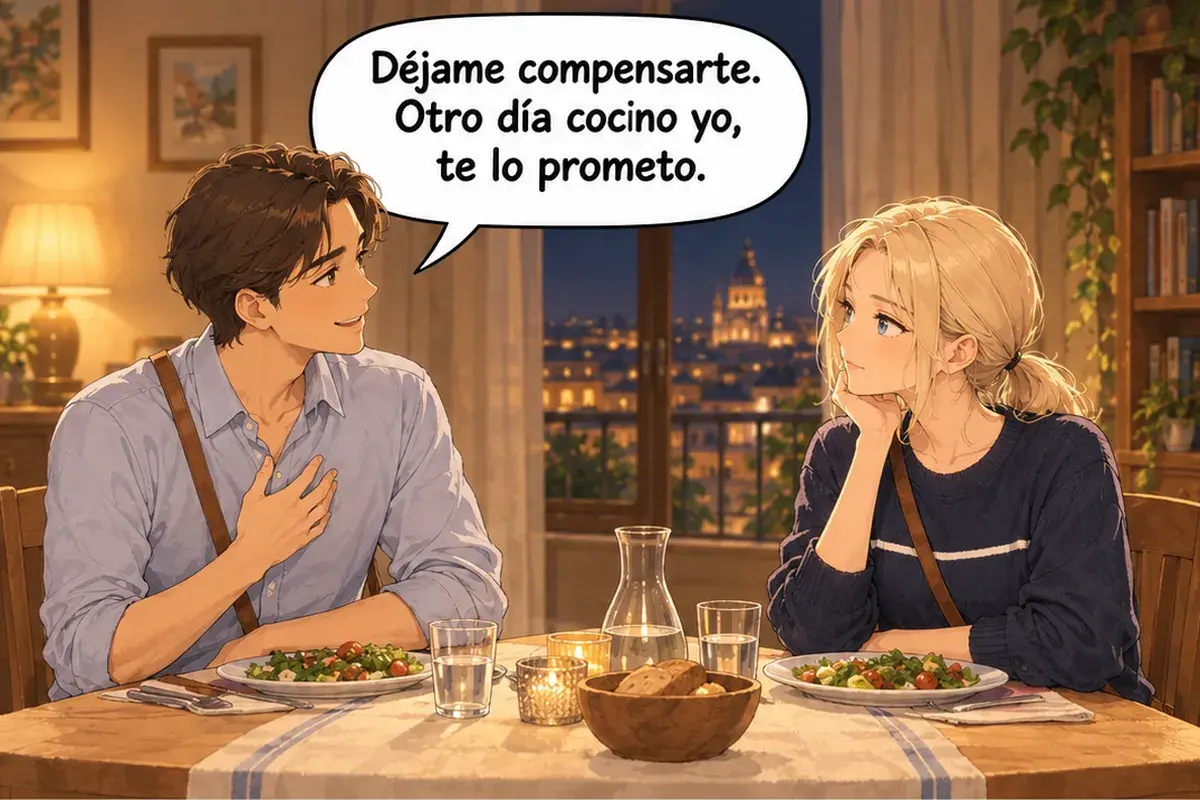
- Diego
Déjame compensarte. Otro día cocino yo, te lo prometo.
Let me make it up to you. Some other day I'll do the cooking, I promise.
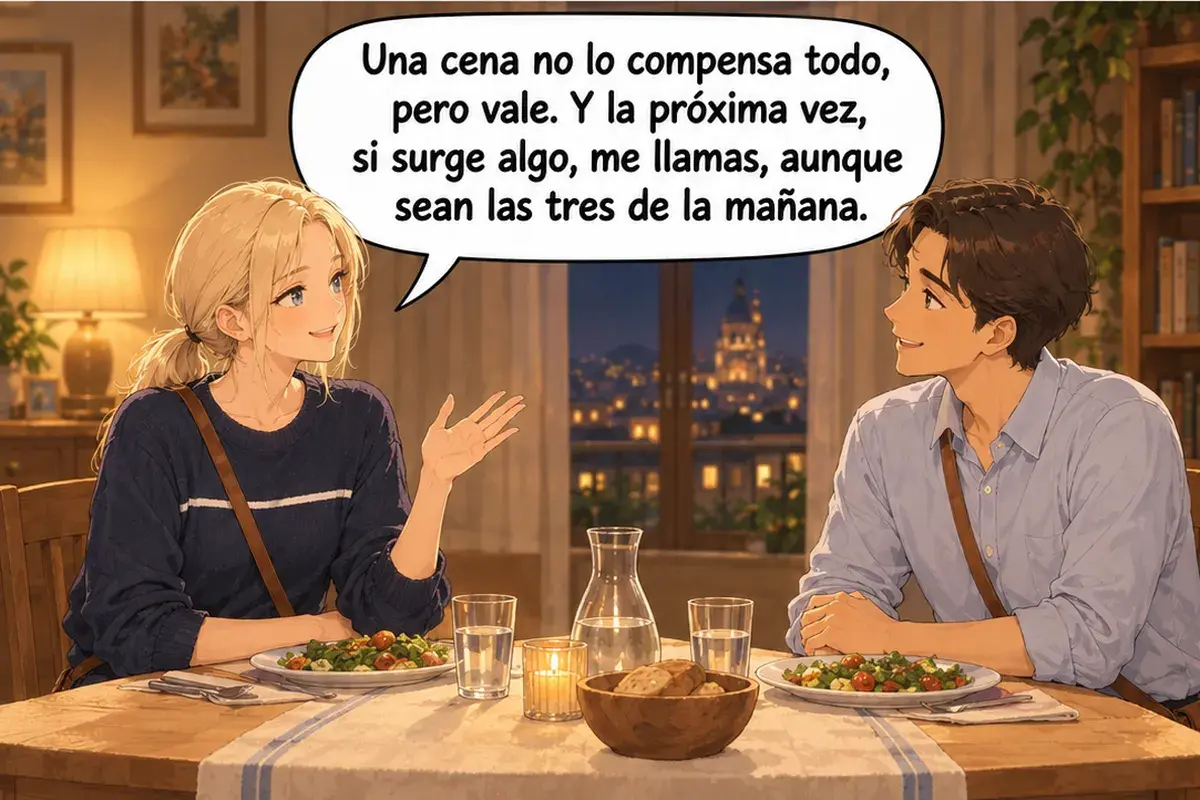
- Ana
Una cena no lo compensa todo, pero vale. Y la próxima vez, si surge algo, me llamas, aunque sean las tres de la mañana.
One dinner doesn't make up for everything, but OK. And next time, if something comes up, you call me, even if it's three in the morning.
Grammar for this text
Main verb in the past — imperfect subjunctive after que. Esperaba que me llamaras — "I was expecting you to call me"; quería que vinieras… que me llamaras — "I wanted you to come… to call me" (the second time quería isn't repeated, but the form is the same); no pensaba que te importara tanto — "I didn't think it mattered so much to you".
Si no podías — "if you couldn't": this isn't an unreal "if". It's about what really happened, so after si comes the normal past form.
Fuera in quería que todo fuera perfecto comes from ser: "for everything to be perfect", not "outside".
Me gustaría que no te encogieras de hombros — "I'd like you not to shrug": after me gustaría you also use the imperfect subjunctive, even though it's about the future.
Two kinds of aunque. Aunque fuera de madrugada — "even if it was the middle of the night": it's about the past, so the past form (fuera from ser). Aunque sean las tres de la mañana — "even if it's three in the morning": it's about the future, so the present form (unit 11).
Colloquial. Me dejaste plantada — "you stood me up" (plantada: a woman is speaking). El mantel bueno — "the good tablecloth", the one for special occasions.
Words and grammar of the unit: Say what you were hoping for.
Learn the words from the texts with flashcards
In the app, you can tap any word in a text to see its translation, forms and examples, and new words stick with flashcards. 15 minutes a day.
Start for freeEverything is open for free. No card needed to sign up.