

Spanish story with translation · B2 · 16 lines
Olvídate de dormir Forget about sleeping
Comic · 11 panels
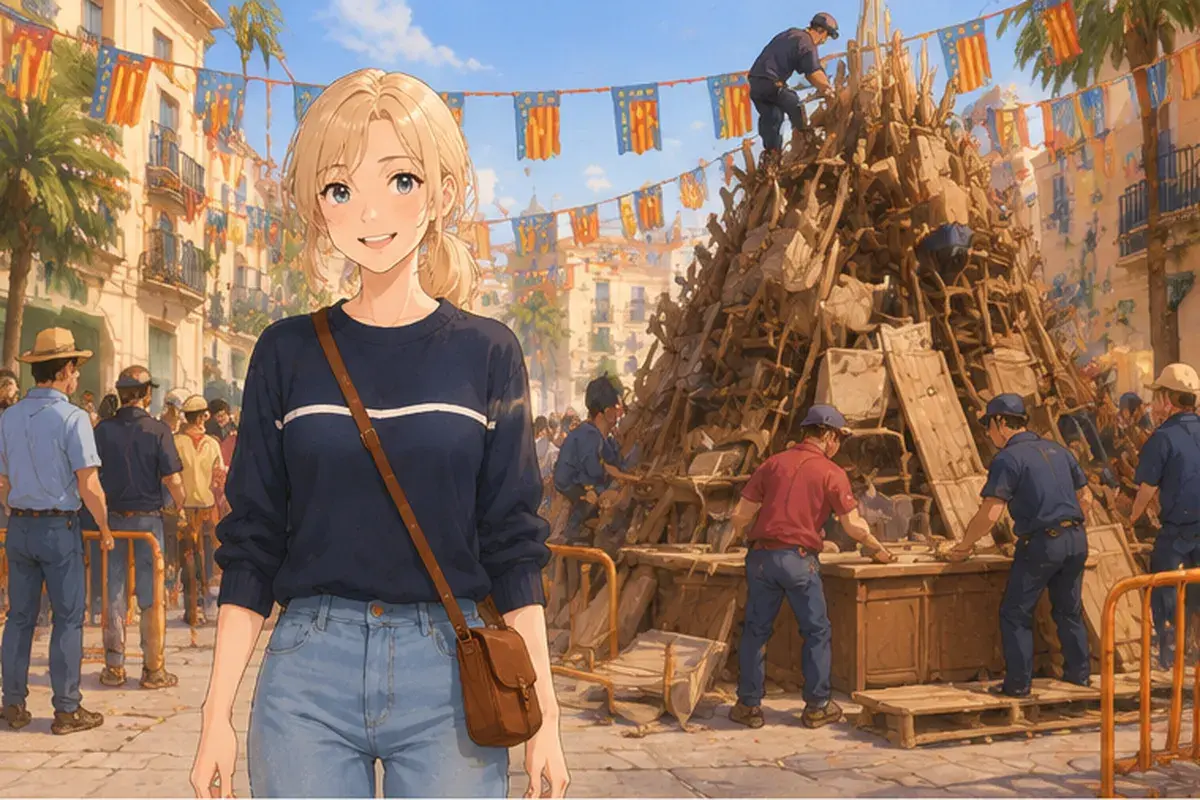
Si vienes a Valencia en marzo, ven preparado: las Fallas son la fiesta más popular de la ciudad, y aquí todo se hace a lo grande.
If you come to Valencia in March, come prepared: Fallas is the most popular festival in the city, and here everything is done in a big way.
Dicen que el origen de la fiesta está en las hogueras que se hacían en la calle al final del invierno para quemar madera y trastos viejos.
They say the festival has its origin in the bonfires that people used to make in the street at the end of winter to burn wood and old junk.
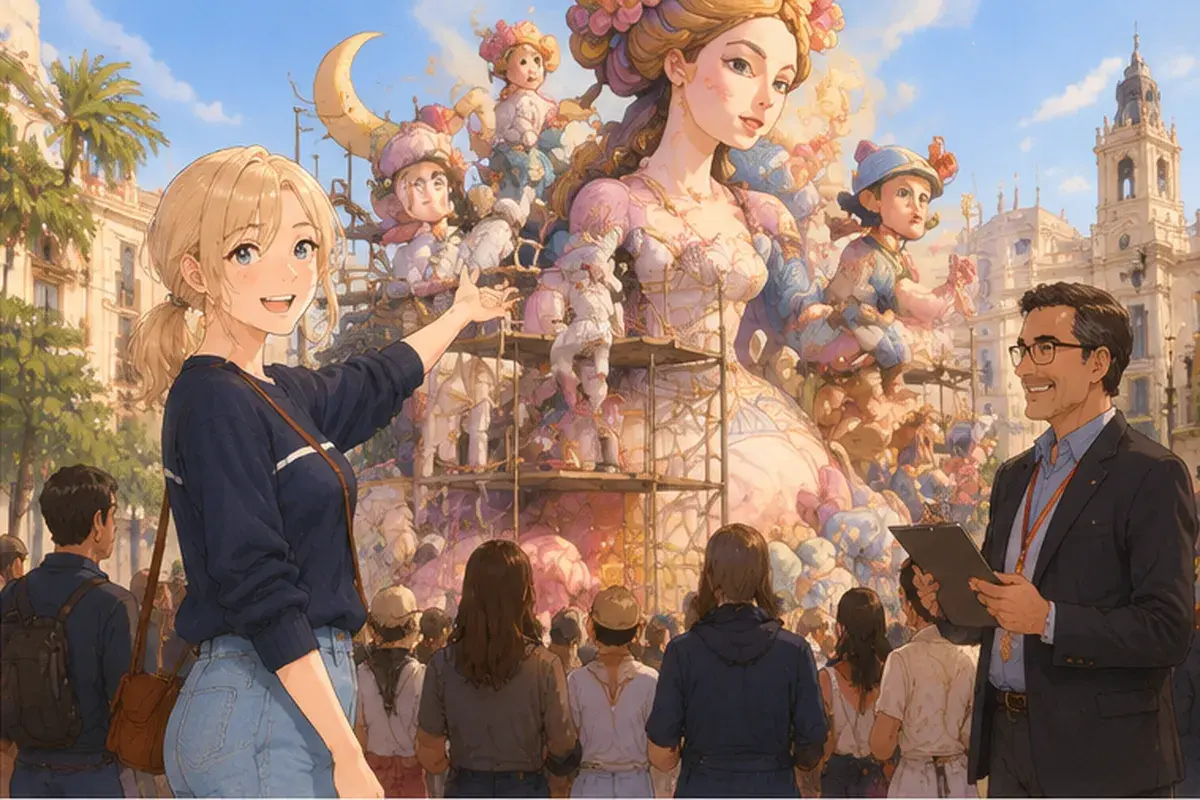
Hoy cada barrio tiene su falla: una figura enorme en la que varios artistas trabajan durante todo el año.
Today every neighborhood has its own falla: a huge figure that several artists work on all year long.
Hay un concurso, y ganar un premio es un exitazo para todo el barrio.
There's a contest, and winning a prize is a huge success for the whole neighborhood.
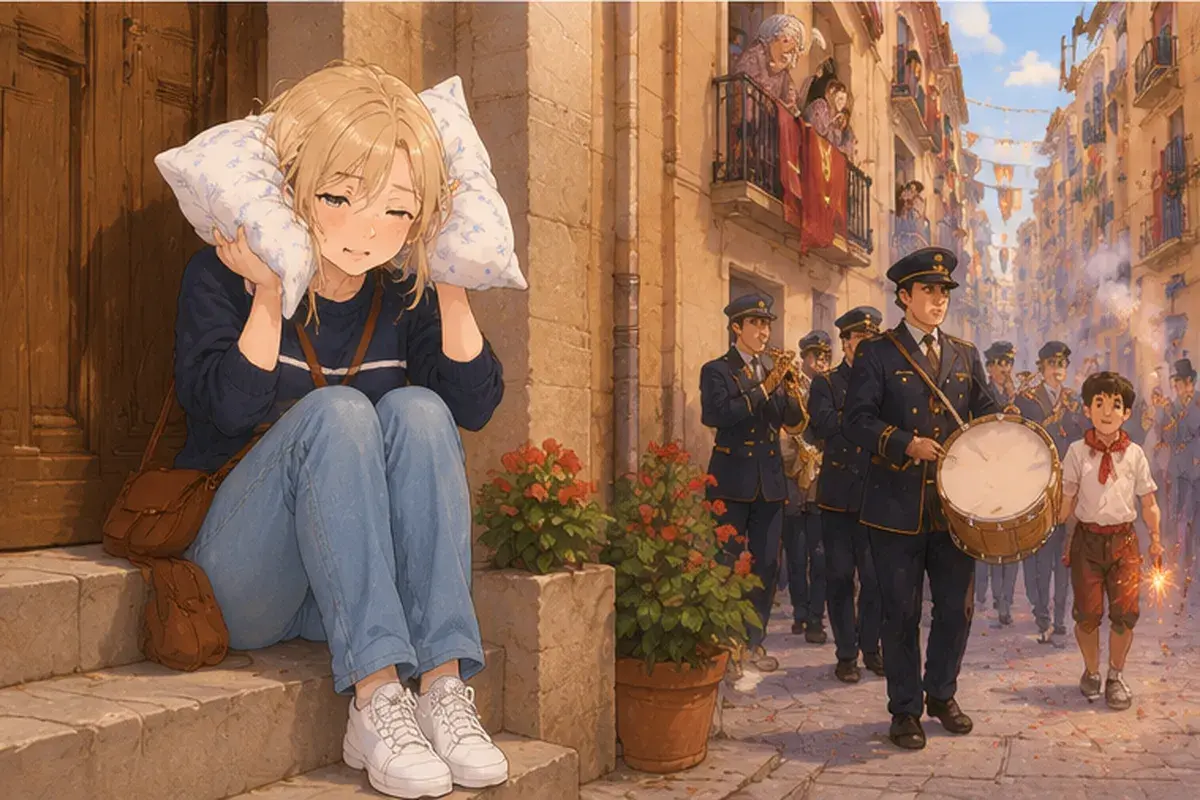
Primer consejo: olvídate de dormir. Aunque te acuestes tarde, a las ocho de la mañana pasan por tu calle con música y petardos: un madrugón seguro.
First tip: forget about sleeping. Even if you go to bed late, at eight in the morning they come down your street with music and firecrackers: you're sure to be up at dawn.

Del 1 al 19 de marzo, todos los días a las dos en punto, hay mascletà en la plaza del Ayuntamiento. Llega con tiempo: la multitud es enorme, y algún empujón te llevarás.
From March 1 to 19, every day at two o'clock sharp, there's a mascletà in Plaza del Ayuntamiento. Get there early: the crowd is huge, and you're bound to get shoved.
No esperes luces bonitas: la mascletà no se mira, se oye. Son unos minutos de explosiones, y luego toda la plaza huele a pólvora.
Don't expect pretty lights: you don't watch the mascletà, you hear it. It's a few minutes of explosions, and then the whole square smells of gunpowder.
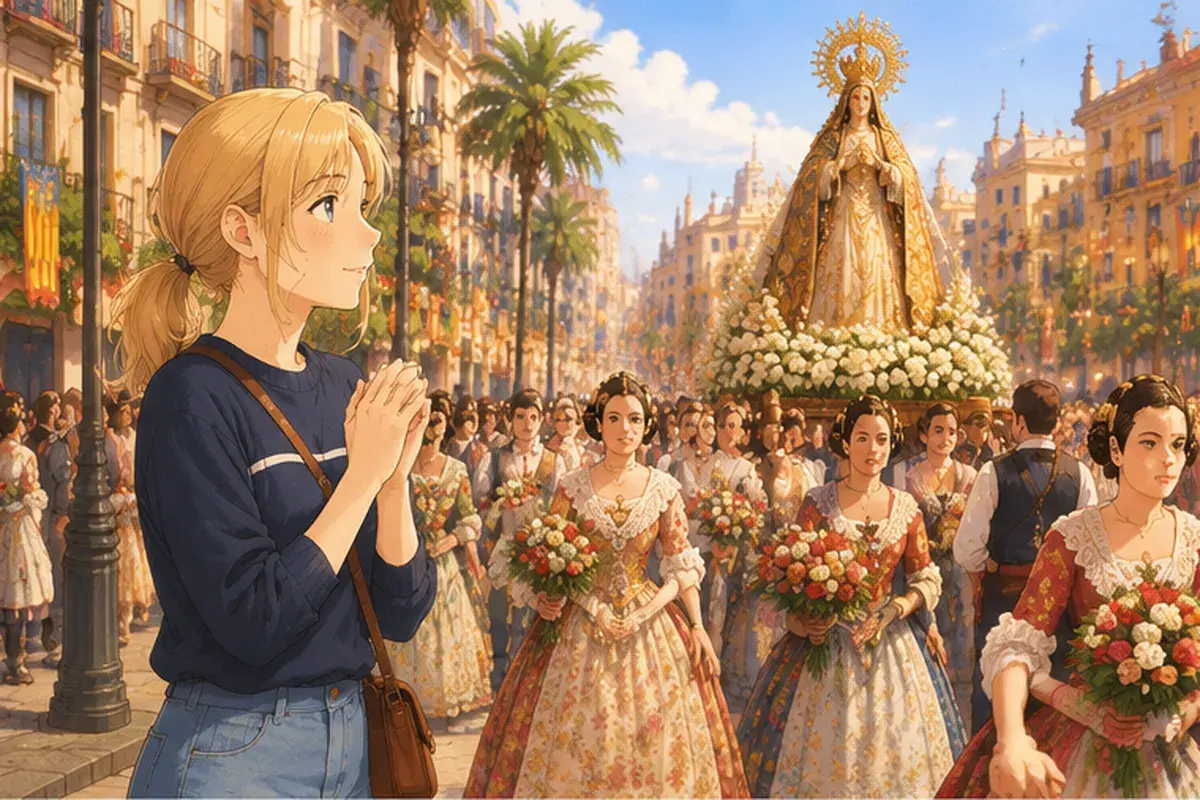
Los días 17 y 18 hay un desfile de lo más especial: miles de personas con ropa tradicional llevan flores a la Virgen, y en la plaza no cabe ni un alfiler.
On the 17th and 18th, there's a truly special parade: thousands of people in traditional clothes bring flowers to the Virgin Mary, and the square is packed.
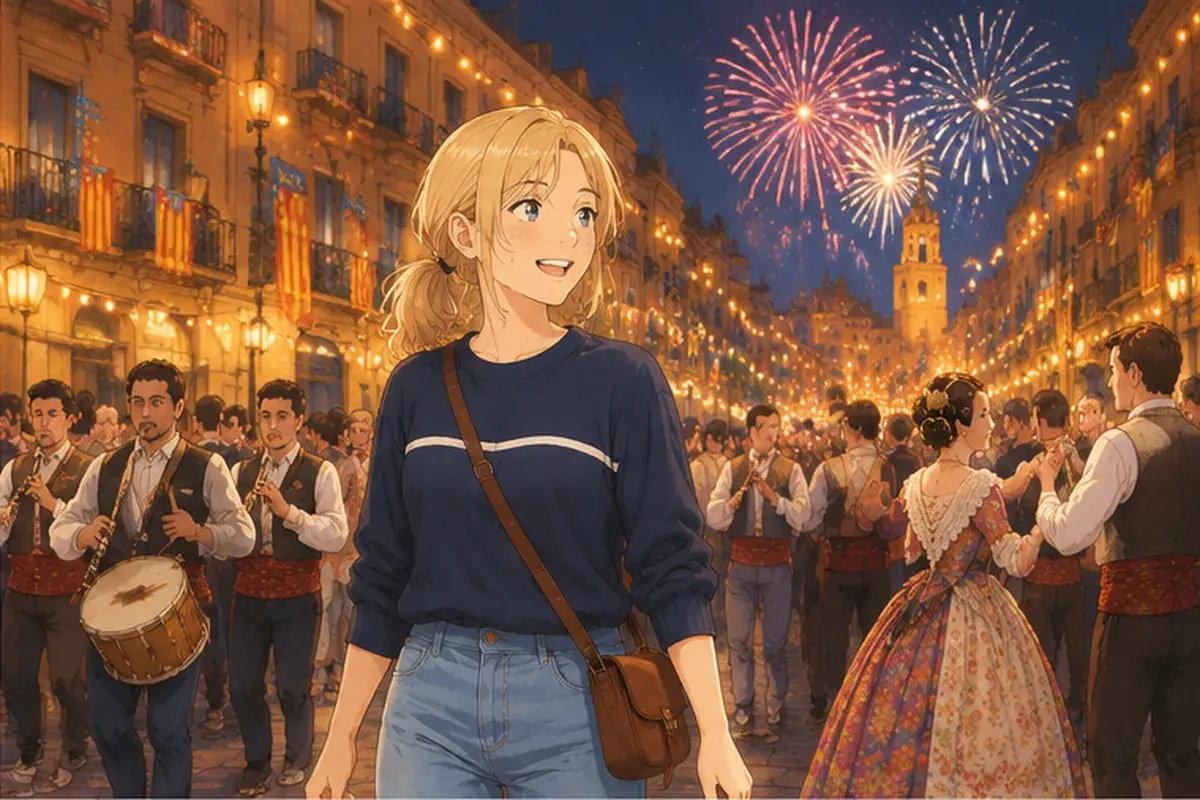
Por la noche hay cohetes en el cielo y música en cada calle hasta las tantas. Jaleo hay muchísimo, pero es parte de la fiesta.
At night there are rockets in the sky and music on every street until all hours. There's a huge racket, but it's part of the festival.
En muchos balcones verás banderas, y en algunos barrios, calles enteras llenas de luces de colores: te lo vas a pasar bomba.
On many balconies you'll see flags, and in some neighborhoods, whole streets full of colored lights: you're going to have a blast.

Come en la calle: churros o buñuelos con chocolate caliente por la tarde, y paella a la hora de comer: están la mar de ricos. Recuerda: aquí la paella nunca se pide para cenar.
Eat in the street: churros or buñuelos with hot chocolate in the afternoon, and paella at lunchtime: they're super tasty. Remember: here paella is never ordered for dinner.

Y lo más importante: la noche del 19 de marzo arden todas las fallas. En valenciano esta ceremonia se llama la cremà.
And most importantly: on the night of March 19, all the fallas burn. In Valencian, this ceremony is called the cremà.
Es triste y espectacular al mismo tiempo, como el final de un peliculón: un año de trabajo arde en unos minutos.
It's sad and spectacular at the same time, like the ending of a great movie: a year of work burns in a few minutes.
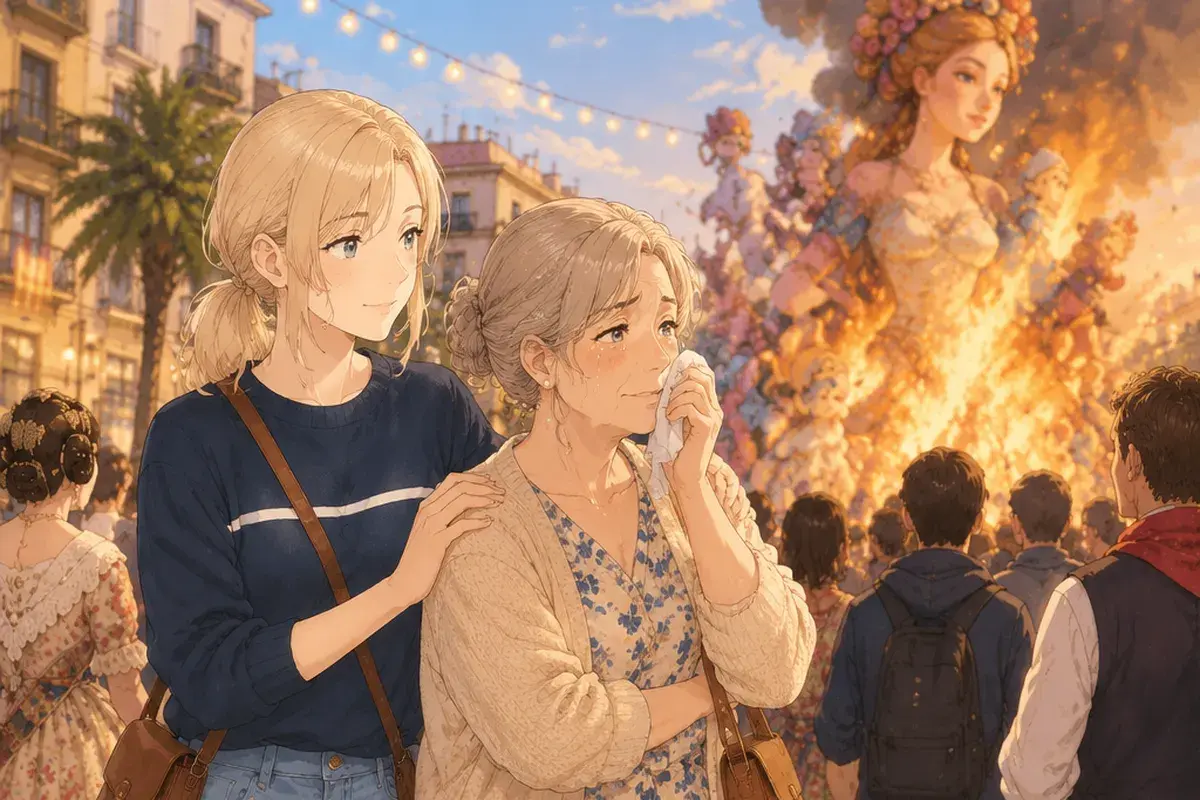
Mi madre lo ha visto este año por primera vez y casi llora.
My mother saw it for the first time this year and almost cried.
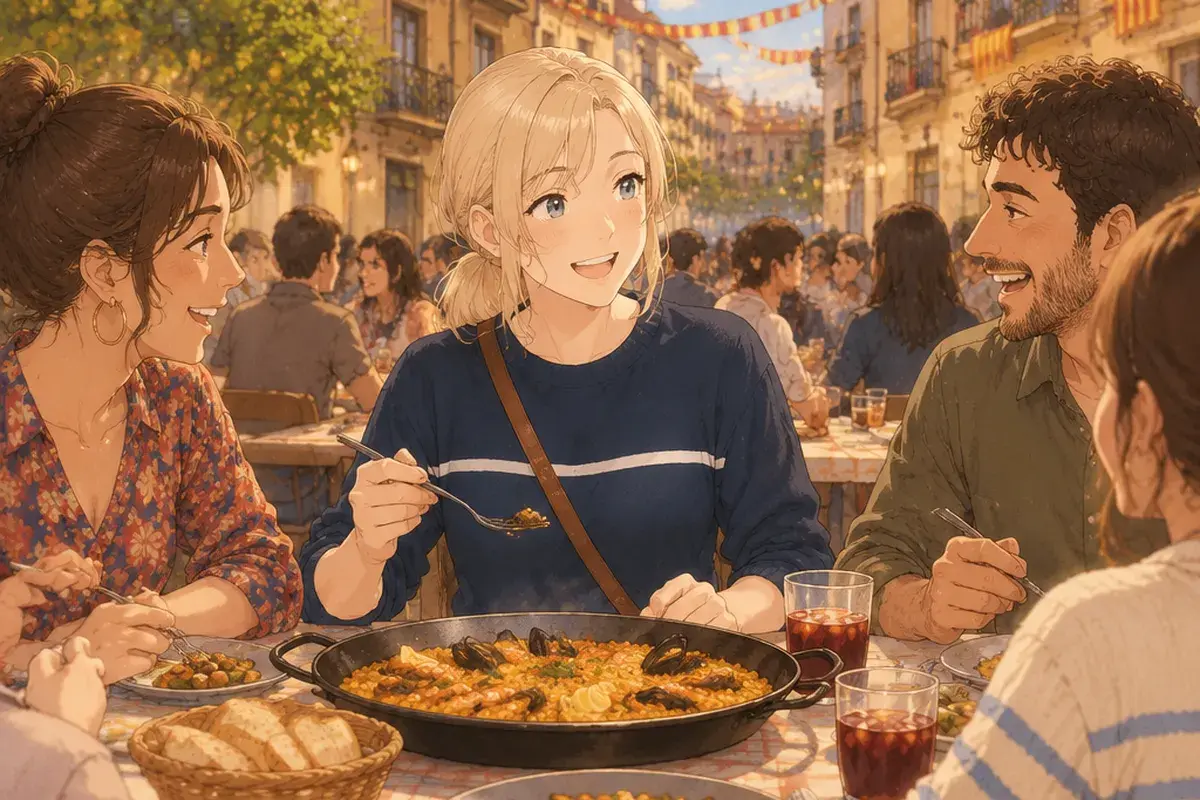
Último consejo: no intentes verlo todo. Elige un barrio, come con los vecinos y disfruta.
One last tip: don't try to see everything. Pick one neighborhood, eat with the neighbors and enjoy yourself.
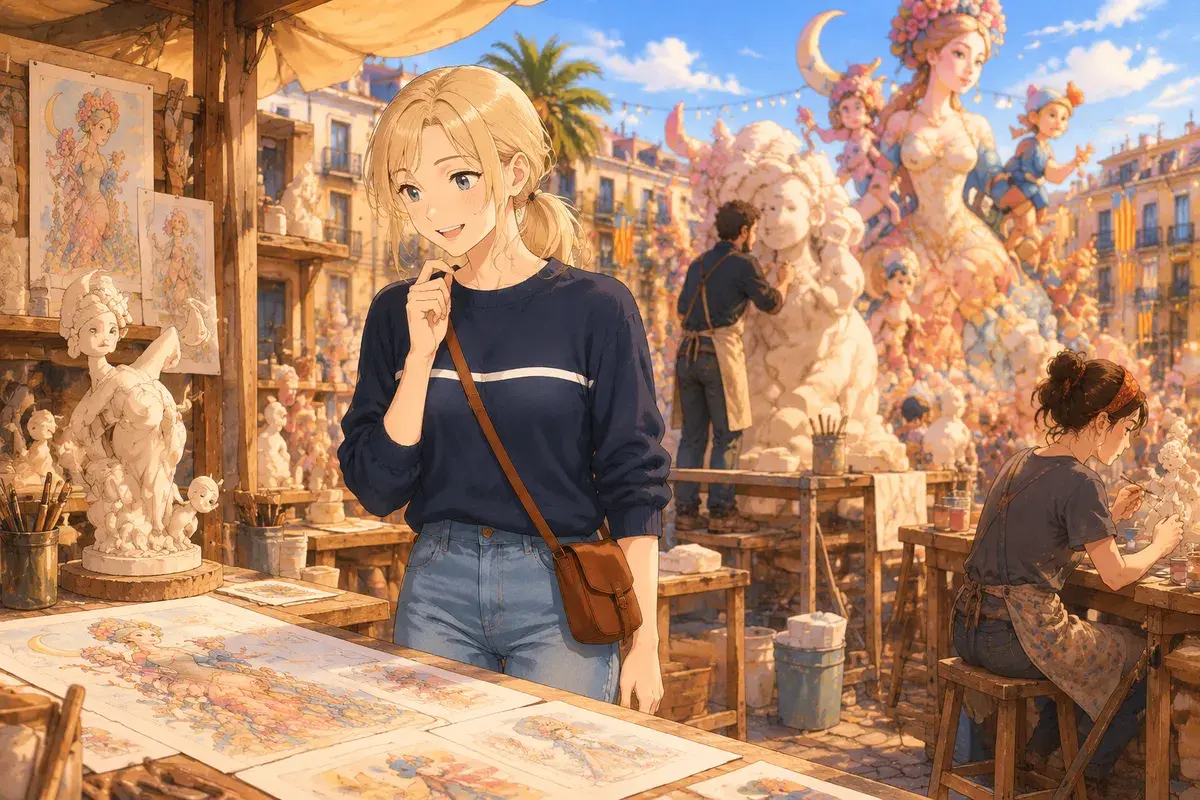
Y no te pongas triste por las fallas: cuando haya ardido la última, los artistas ya estarán pensando en el año que viene.
And don't get sad about the fallas: by the time the last one has burned, the artists will already be thinking about next year.
Grammar for this text
Words with -ón. madrugón (from madrugar — to get up early) — getting up at dawn; empujón (from empujar — to push) — a shove, llevarse un empujón — to get shoved; peliculón — a great movie. exitazo — a huge success. a lo grande — in a big way.
Grammar you know, in action. Aunque te acuestes tarde — even if you go to bed late: aunque + subjunctive (unit 11). Cuando haya ardido la última — by the time the last one has burned: haya + past participle, for something that will already have happened by then (unit 9). Casi llora — she almost cried: casi + present tense (unit 1). La mascletà no se mira, se oye — impersonal se: you don't watch it, you listen to it.
Local words. la cremà — the night the fallas are burned; the word is Valencian, like mascletà. valenciano is both a person from Valencia and the local language: en valenciano — in Valencian. la Virgen — the Virgin Mary: people carry flowers to her big figure in the square.
Colloquial. No cabe ni un alfiler — it's packed (literally, "not even a pin fits"); pasárselo bomba — to have a blast; la mar de ricos — super tasty.
Words and grammar of the unit: Talk about the Fallas festival.
Learn the words from the texts with flashcards
In the app, you can tap any word in a text to see its translation, forms and examples, and new words stick with flashcards. 15 minutes a day.
Start for freeEverything is open for free. No card needed to sign up.