

Spanish story with translation · B2 · 18 lines
Me alegra que estés cerca I'm Glad You're Close By
Comic · 9 panels
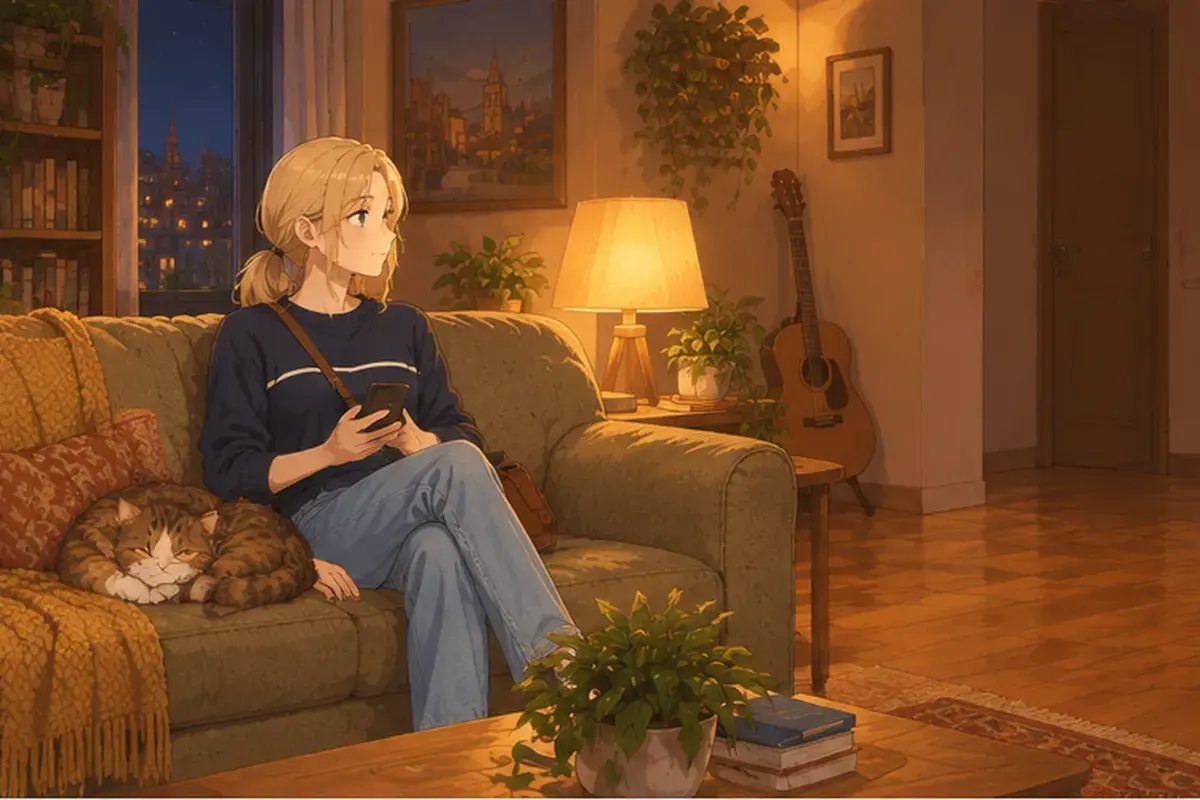
Querida Lucía: son las once de la noche y el piso está en silencio. Dani se ha ido esta tarde.
Dear Lucía, it's eleven at night and the apartment is quiet. Dani left this afternoon.
Después de dos años de noviazgo, se va a vivir con Noelia. Me alegro por él, de verdad.
After two years of dating, he's moving in with Noelia. I'm happy for him, really.
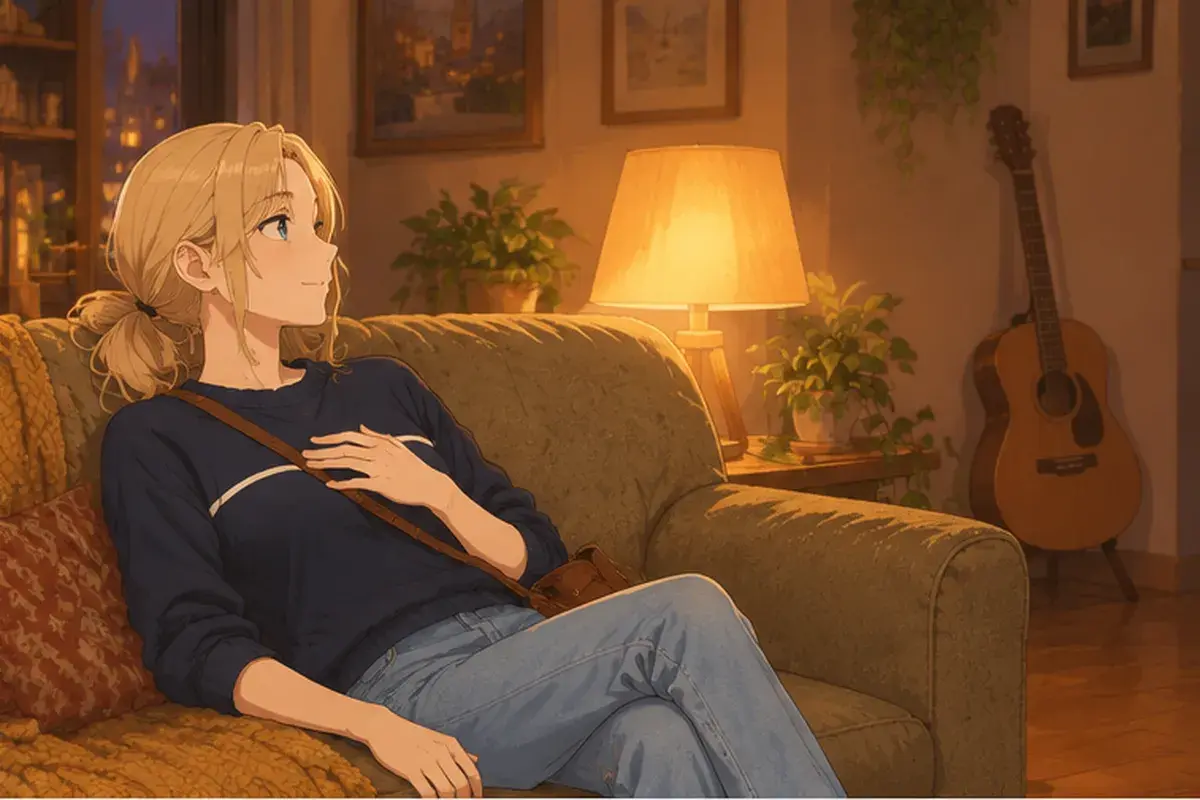
Pero no te voy a mentir: siento una tristeza rara, con un poco de melancolía.
But I'm not going to lie to you: I feel a strange sadness, with a bit of melancholy.
Me extraña que me afecte tanto: Dani nunca fregaba los platos y tocaba la guitarra cuando yo quería dormir.
I'm surprised it affects me so much: Dani never did the dishes and played the guitar when I wanted to sleep.
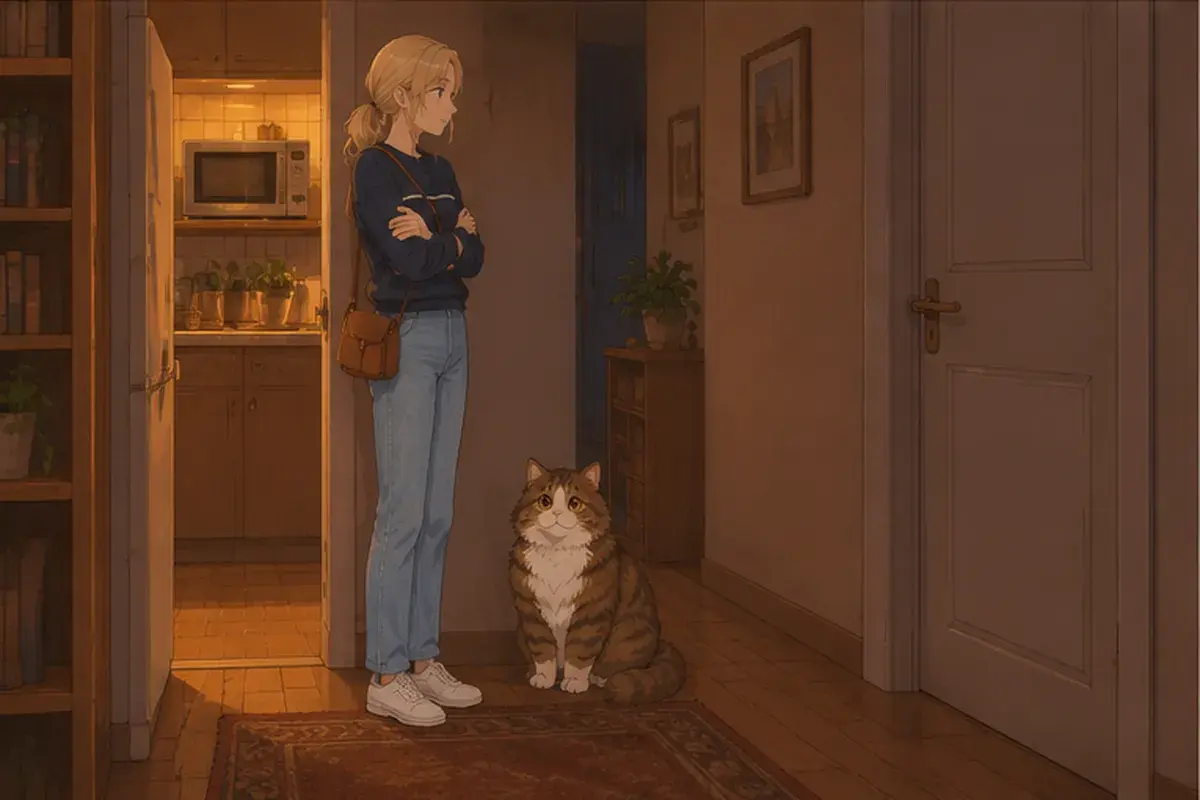
Y, sin embargo, ya echo de menos su presencia: sus canciones, su caos, hasta el ruido del microondas de madrugada.
And yet I already miss his presence: his songs, his chaos, even the noise of the microwave in the middle of the night.
Tengo la sensación de que se acaba una etapa. Siento que algo cambia y que yo no estoy preparada.
I have a feeling that a chapter is ending. I feel that something is changing and that I'm not ready (woman speaking).

Era inevitable, lo sé: Carmen ha vendido el piso y yo también me voy a finales de enero.
It was inevitable, I know: Carmen has sold the apartment and I'm leaving at the end of January too.
Pero una cosa es saberlo y otra muy distinta es hacerme a la idea.
But knowing it is one thing, and getting used to the idea is something else entirely.

Estos días estoy inquieta e insegura. Me da miedo sentirme sola en el piso nuevo.
These days I'm uneasy and unsure of myself. I'm scared of feeling lonely in the new apartment (woman speaking).
Y tengo miedo de que todo cambie: de que nos veamos menos, de que cada uno haga su vida.
And I'm afraid that everything will change: that we'll see each other less, that we'll each live our own lives.
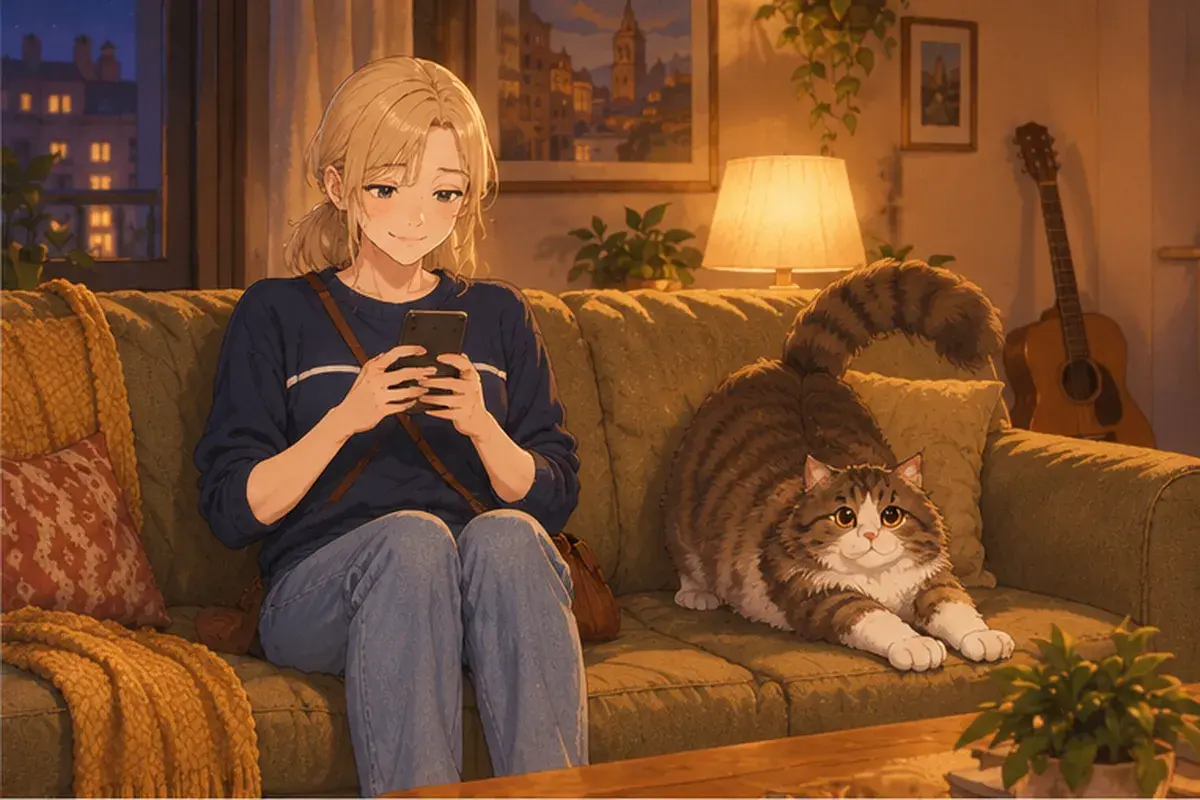
A veces los lazos entre amigos se rompen así, poco a poco, y me entristece que sea tan fácil.
Sometimes the bonds between friends break like that, little by little, and it saddens me that it's so easy.
Por eso te escribo. Me alegra que estés cerca y me alegra poder llamarte a cualquier hora.
That's why I'm writing to you. I'm glad you're close by, and I'm glad I can call you at any hour.

Eres mi amiga más íntima, y aprecio mucho el afecto con el que me tratas desde el primer día.
You're my closest friend, and I really appreciate the affection you've shown me since the first day (to a woman).
Me conmueve que siempre te acuerdes de preguntarme cómo estoy.
It touches me that you always remember to ask how I'm doing.

Ya sé que soy una adulta y que tengo que asumir los cambios y afrontar esta nueva etapa.
I know I'm an adult and that I have to accept the changes and face this new chapter (woman speaking).
Mi único temor es que un día solo nos escribamos por los cumpleaños.
My only fear is that one day we'll only write to each other on birthdays.

Perdona esta carta tan emotiva. Espero que no te moleste que te escriba a estas horas.
Sorry for such an emotional letter. I hope you don't mind me writing to you at this hour.
Un abrazo muy fuerte de Ana y de Coco, que también está nostálgico: duerme en la habitación vacía de Dani.
Big hugs from Ana and from Coco, who's feeling nostalgic too: he sleeps in Dani's empty room.
Grammar for this text
Feelings in a letter. Me extraña que me afecte tanto, tengo miedo de que todo cambie, me alegra que estés cerca, me conmueve que siempre te acuerdes — after a feeling word comes que + subjunctive. Then de que repeats: de que nos veamos menos, de que cada uno haga su vida.
I feel it and I do it myself — infinitive: me da miedo sentirme sola, me alegra poder llamarte.
Siento — two meanings. Siento una tristeza rara and siento que algo cambia mean "I feel" (normal form). "I'm sorry that…" would be siento que algo cambie.
With the normal form: tengo la sensación de que se acaba una etapa — "I have a feeling that…". It reports what Ana senses; it's not a feeling about a known fact.
Mi único temor es que… — "my only fear is that…": after a feeling noun, the subjunctive follows too (nos escribamos).
Words and grammar of the unit: Say how sad you are to see someone go.
Learn the words from the texts with flashcards
In the app, you can tap any word in a text to see its translation, forms and examples, and new words stick with flashcards. 15 minutes a day.
Start for freeEverything is open for free. No card needed to sign up.