

Spanish dialogue with translation · B2 · 18 lines
La última caja The Last Box
Comic · 18 panels
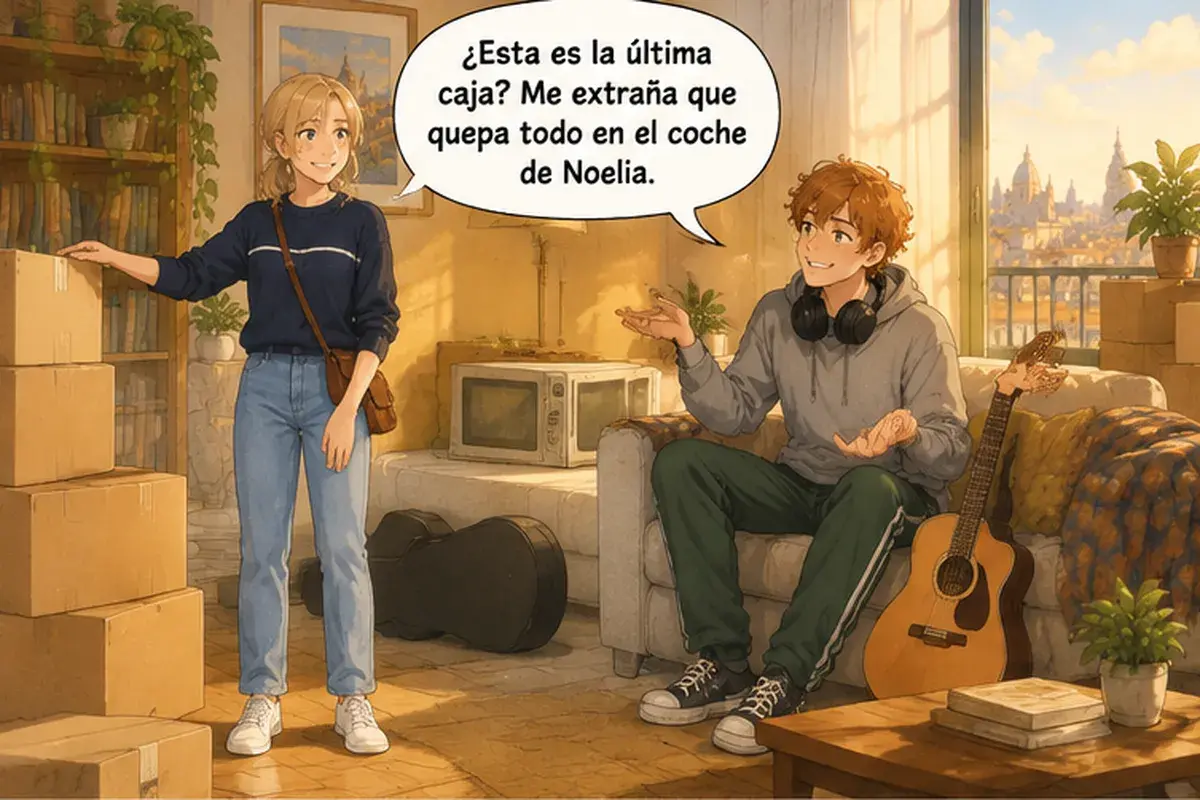
- Ana
¿Esta es la última caja? Me extraña que quepa todo en el coche de Noelia.
Is this the last box? I'm surprised everything fits in Noelia's car.
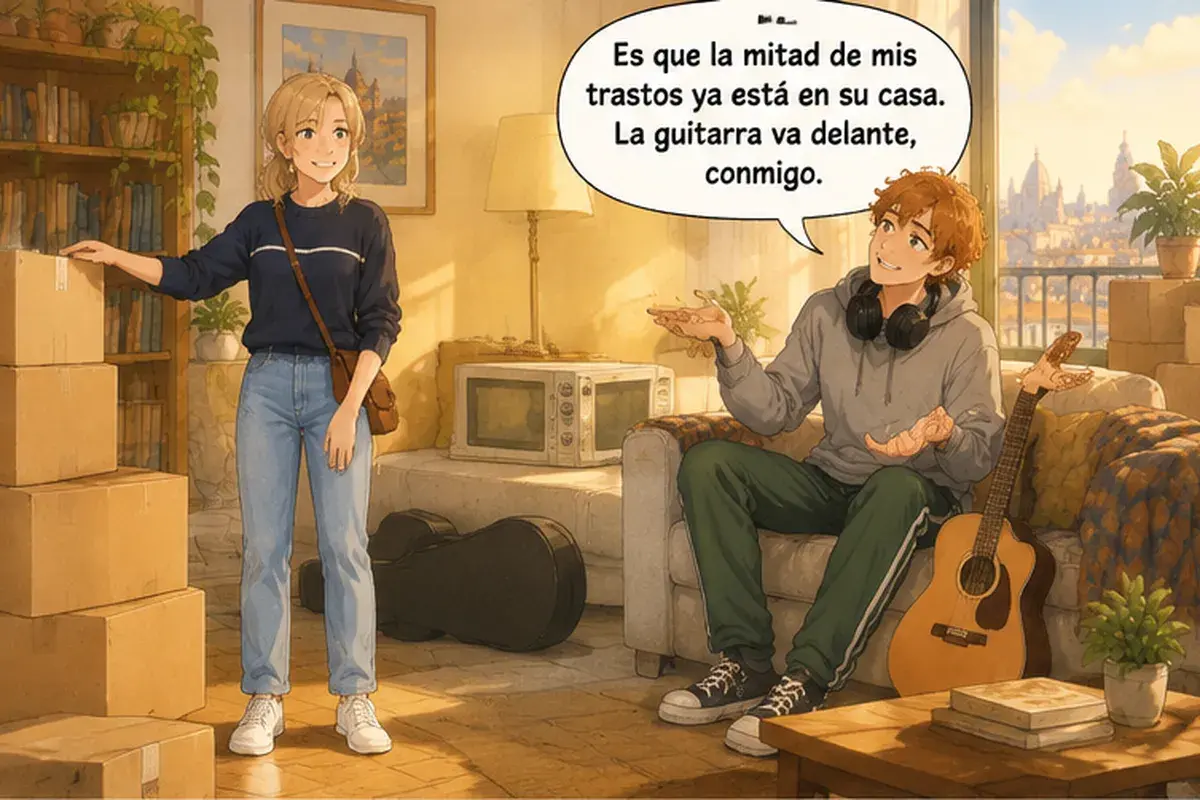
- Dani
Es que la mitad de mis trastos ya está en su casa. La guitarra va delante, conmigo.
The thing is, half my stuff is already at her place. The guitar goes in the front, with me.
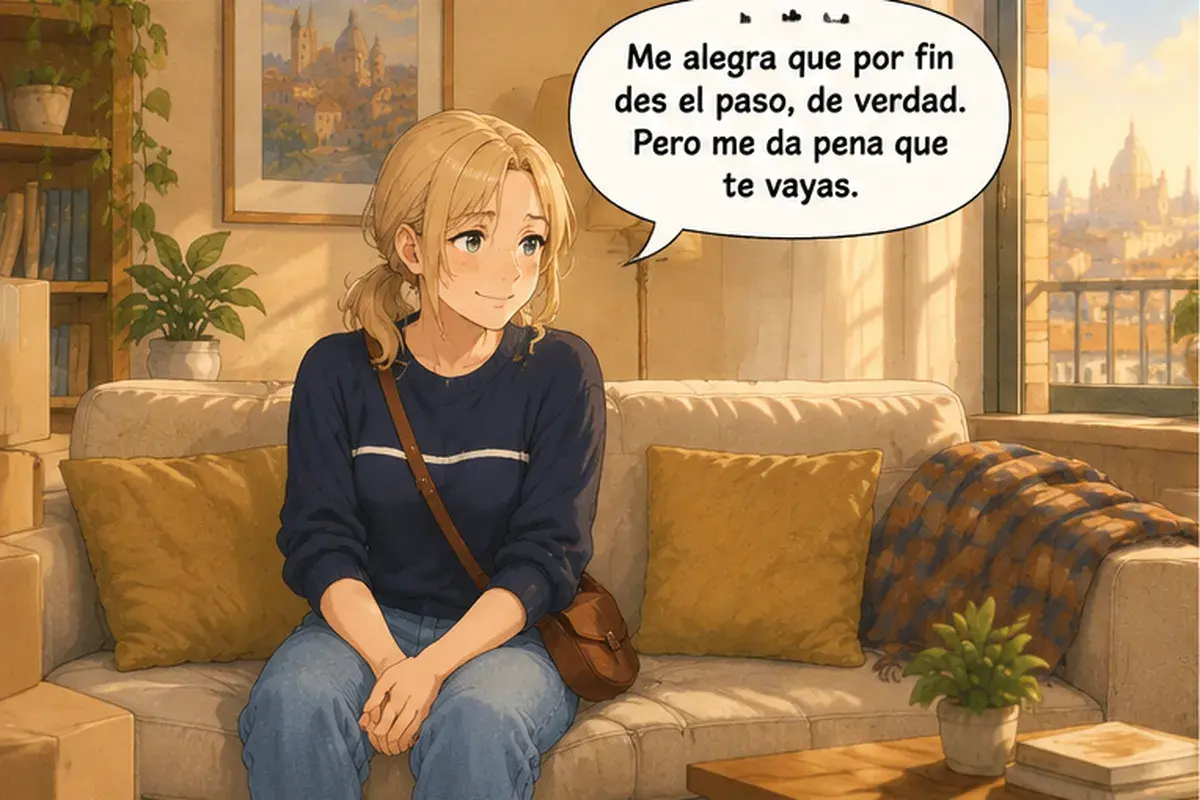
- Ana
Me alegra que por fin des el paso, de verdad. Pero me da pena que te vayas.
I'm glad you're finally taking the plunge, really. But I'm sad that you're leaving.
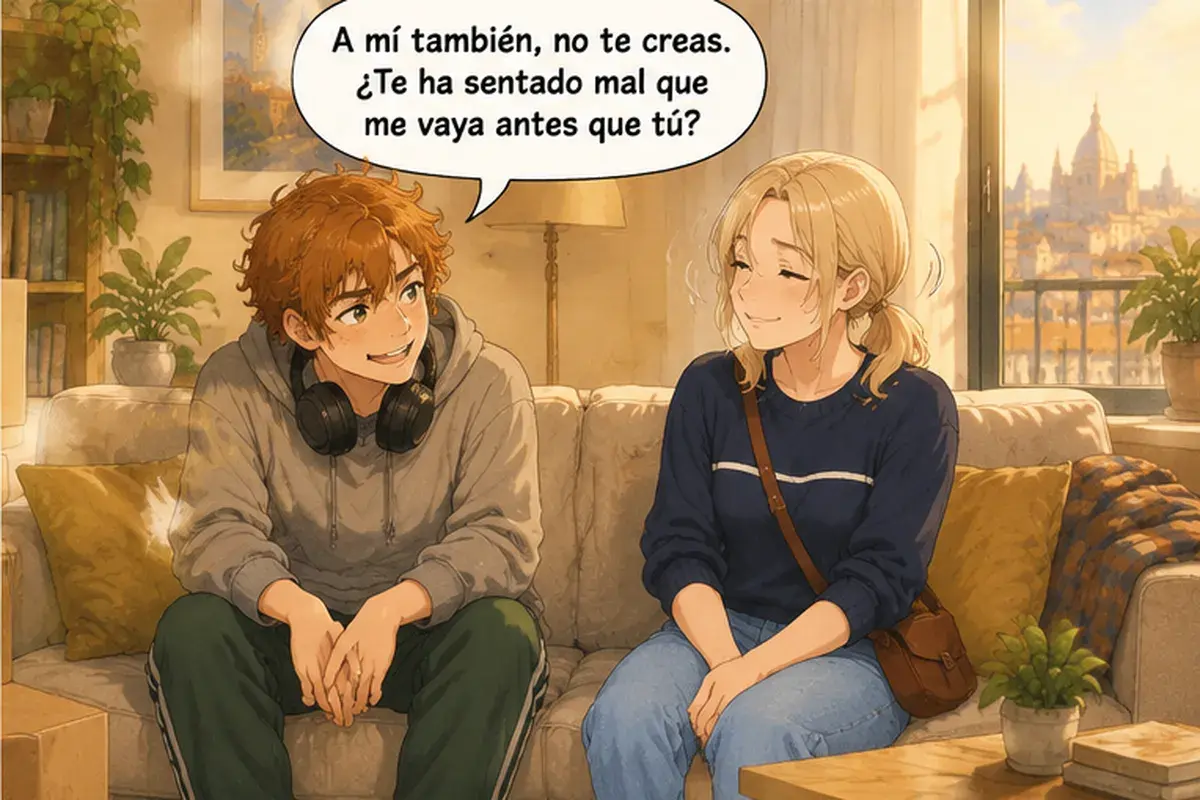
- Dani
A mí también, no te creas. ¿Te ha sentado mal que me vaya antes que tú?
Me too, believe me. Did it upset you that I'm leaving before you?
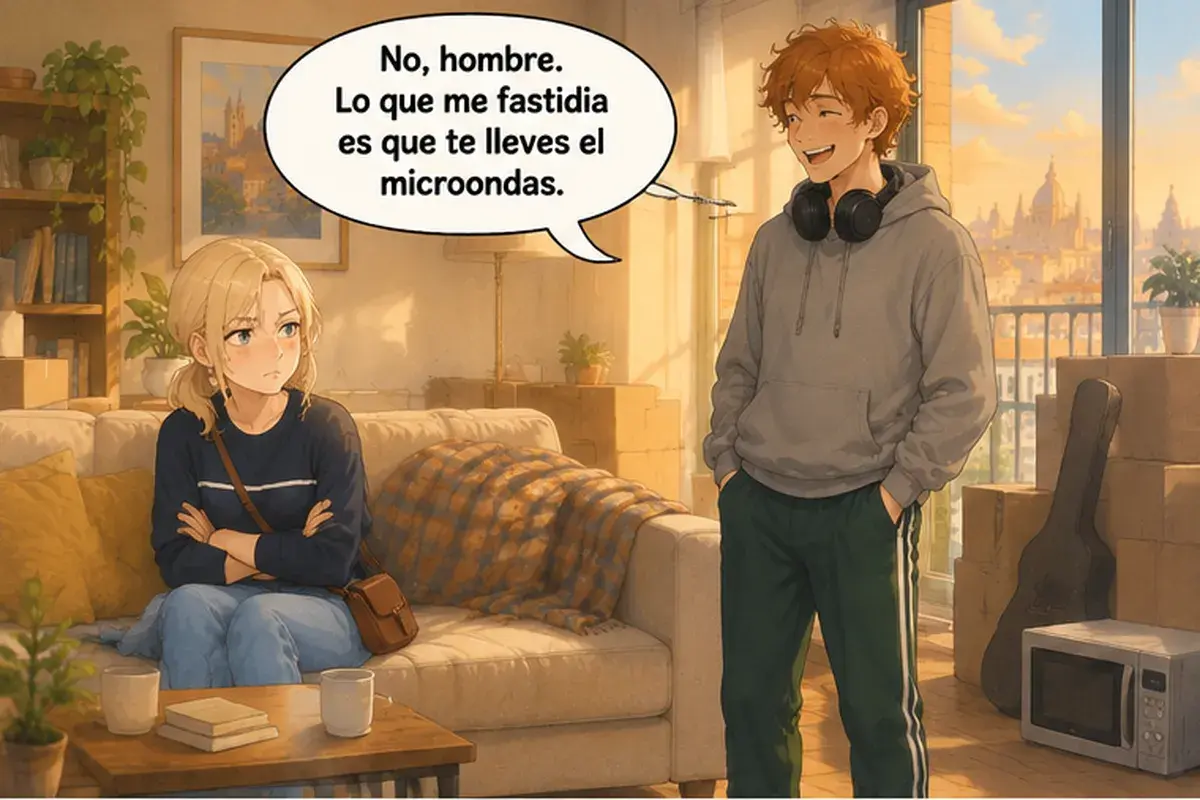
- Ana
No, hombre. Lo que me fastidia es que te lleves el microondas.
Of course not. What bugs me is that you're taking the microwave.
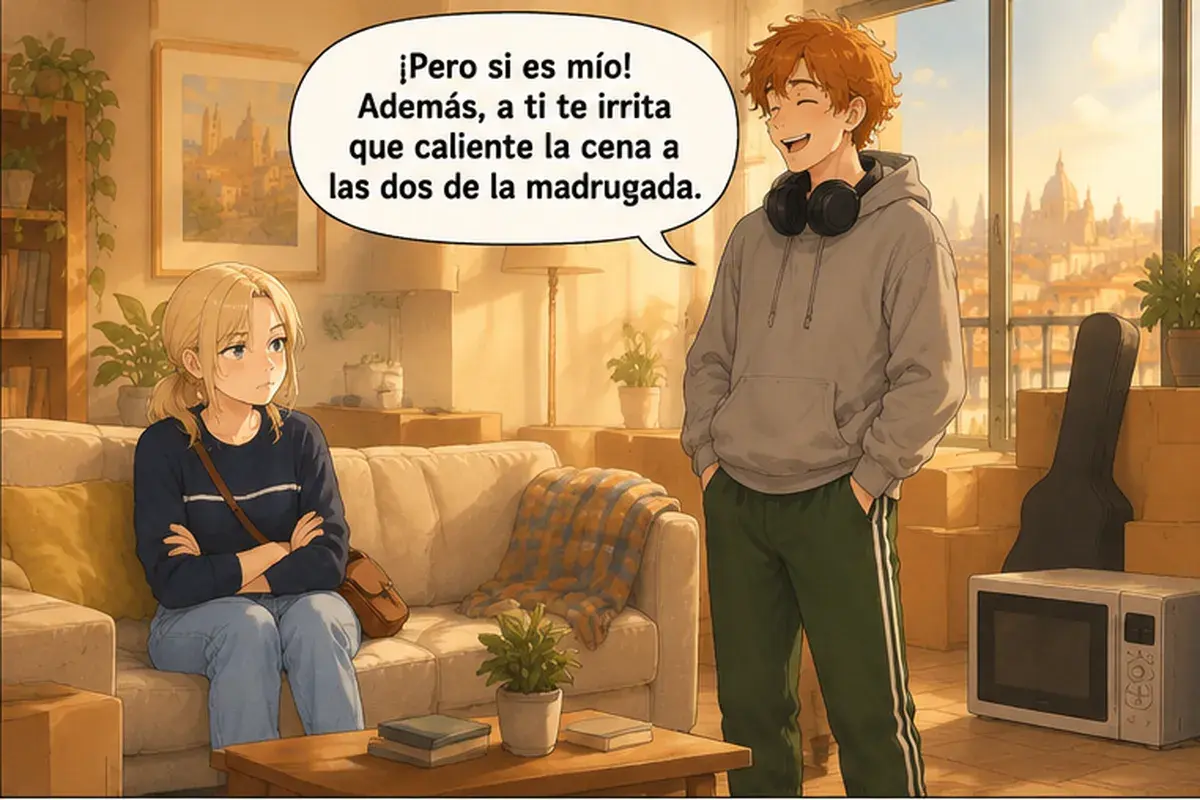
- Dani
¡Pero si es mío! Además, a ti te irrita que caliente la cena a las dos de la madrugada.
But it's mine! Besides, it irritates you that I heat up dinner at two in the morning.
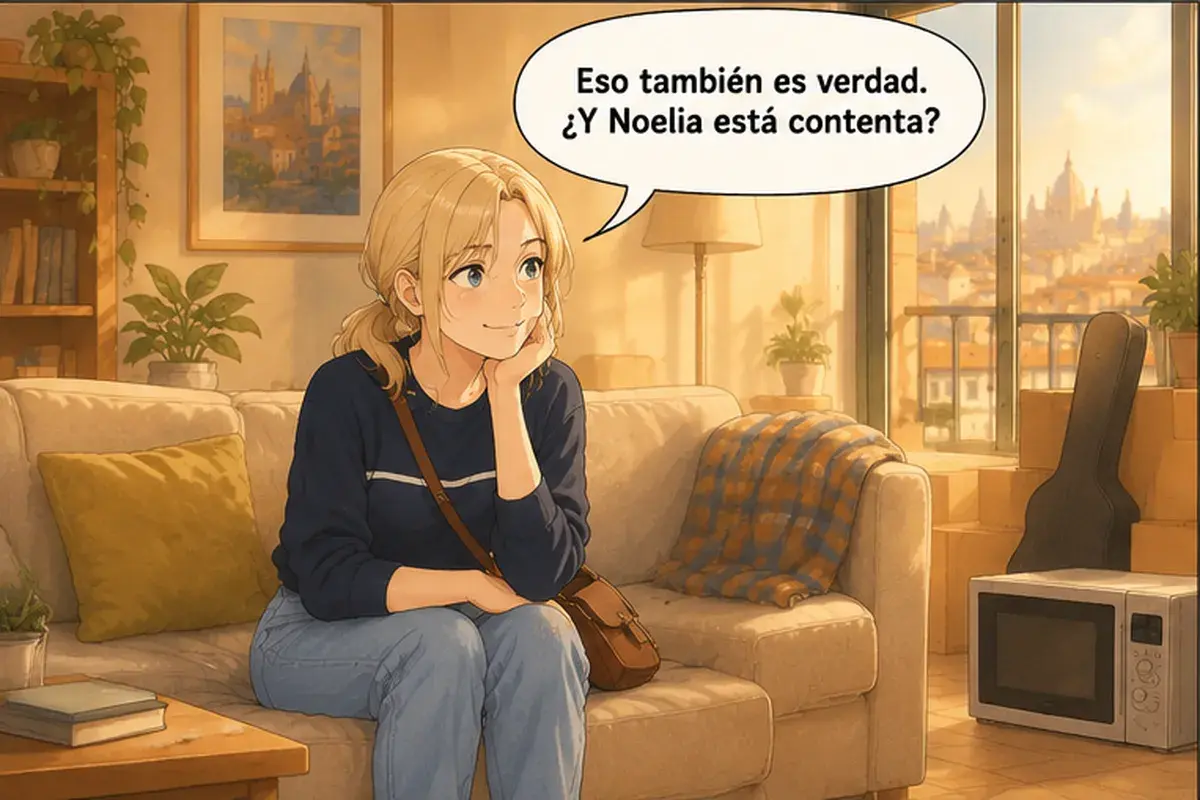
- Ana
Eso también es verdad. ¿Y Noelia está contenta?
That's true too. And is Noelia happy?
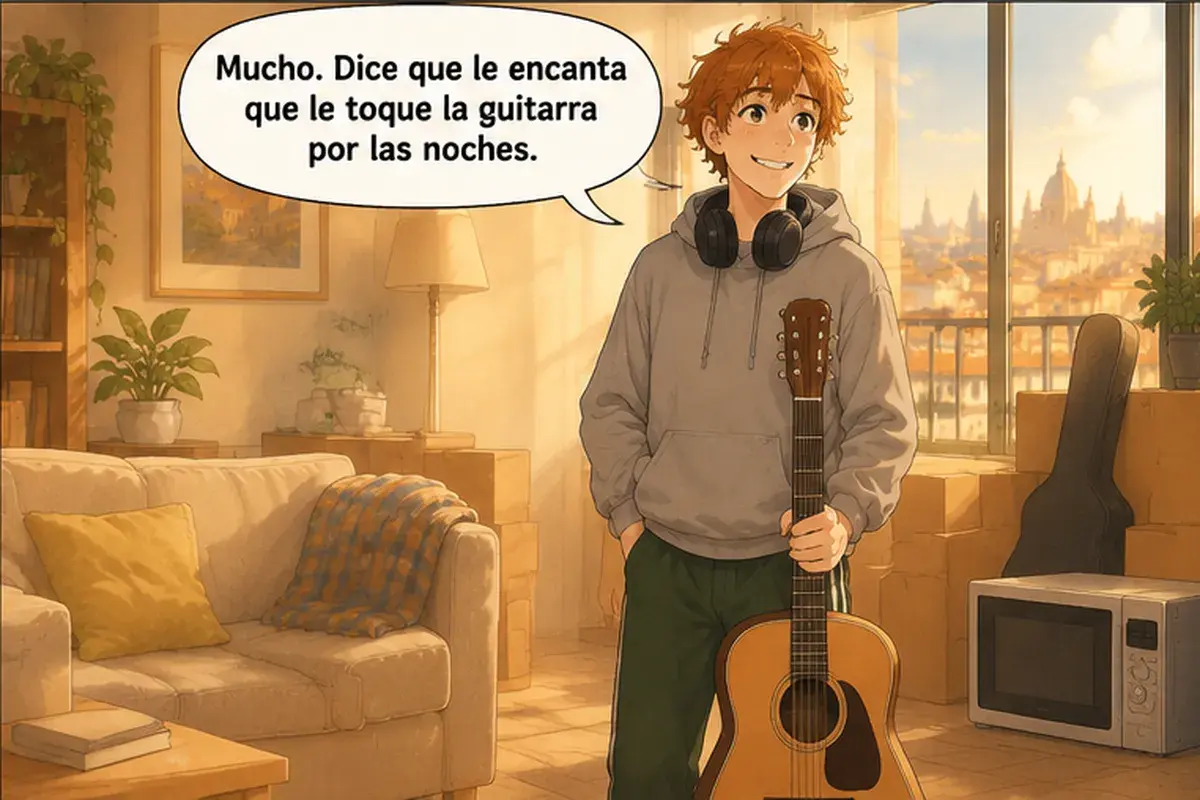
- Dani
Mucho. Dice que le encanta que le toque la guitarra por las noches.
Very. She says she loves it when I play the guitar for her at night.
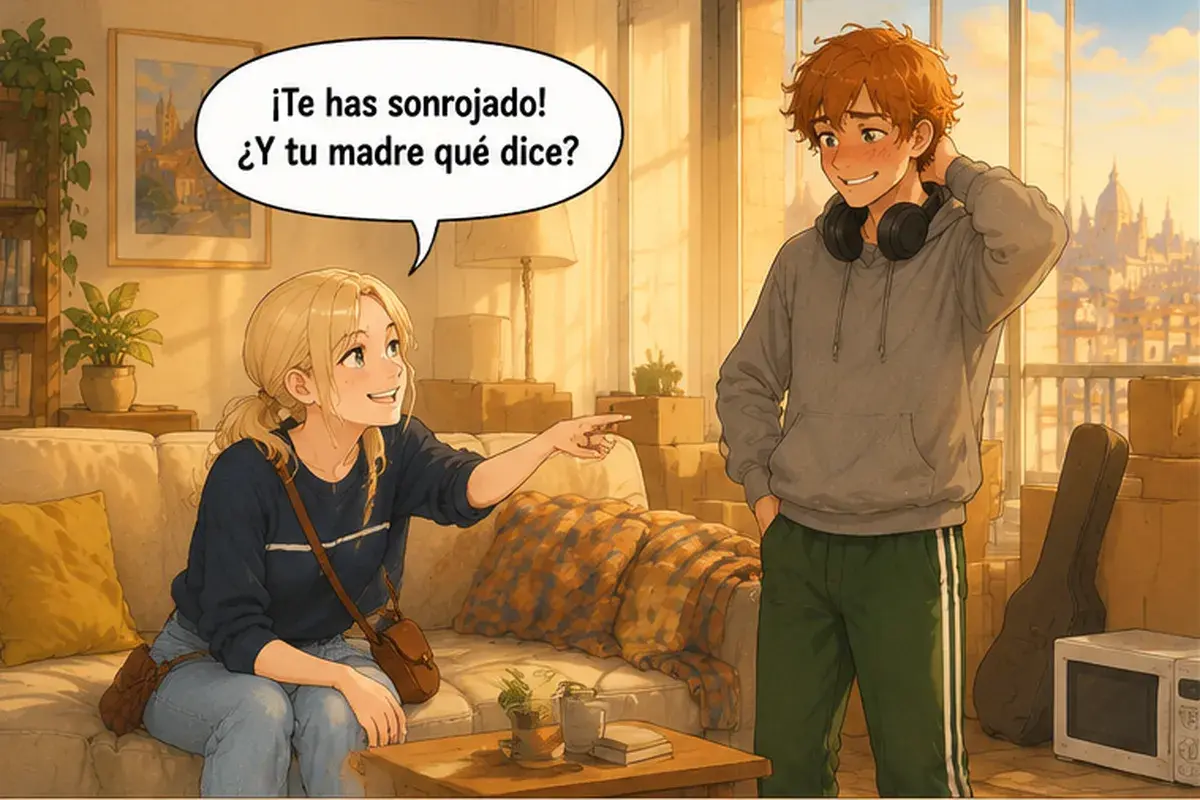
- Ana
¡Te has sonrojado! ¿Y tu madre qué dice?
You blushed! And what does your mom say?
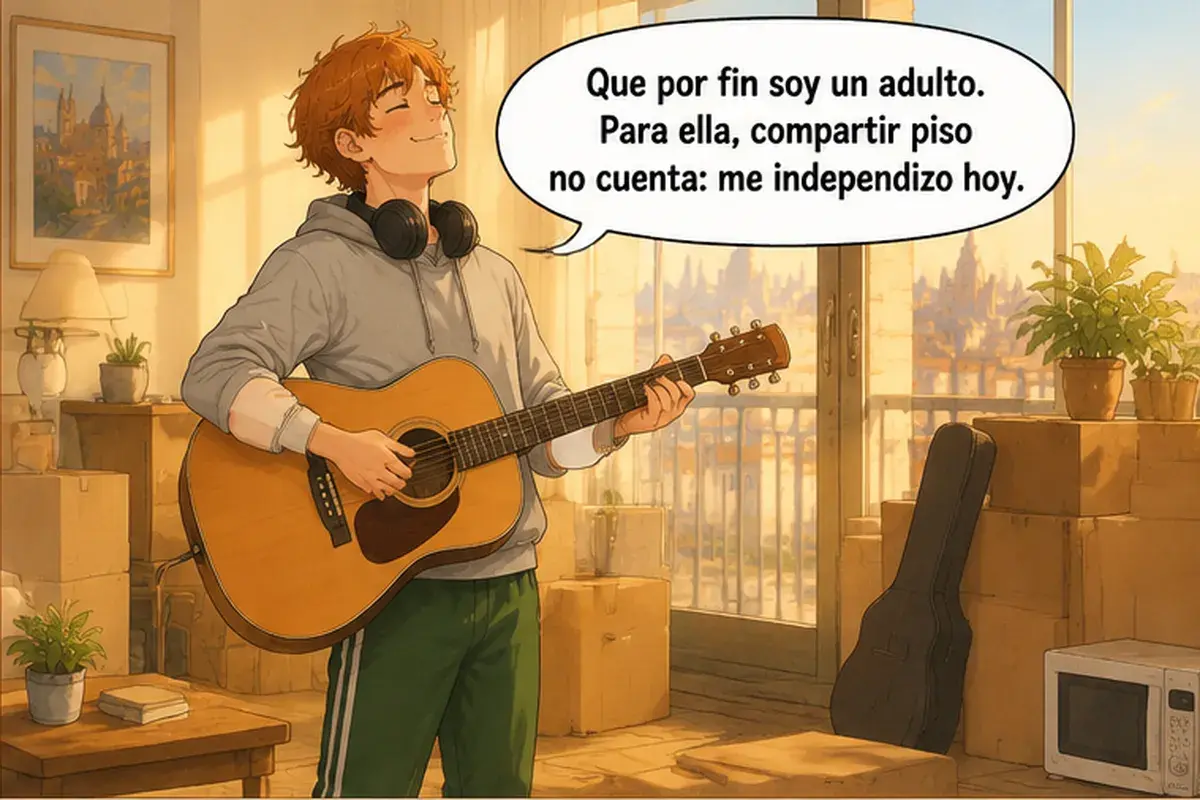
- Dani
Que por fin soy un adulto. Para ella, compartir piso no cuenta: me independizo hoy.
That I'm finally an adult. For her, sharing an apartment doesn't count: I'm moving out on my own today (man speaking).
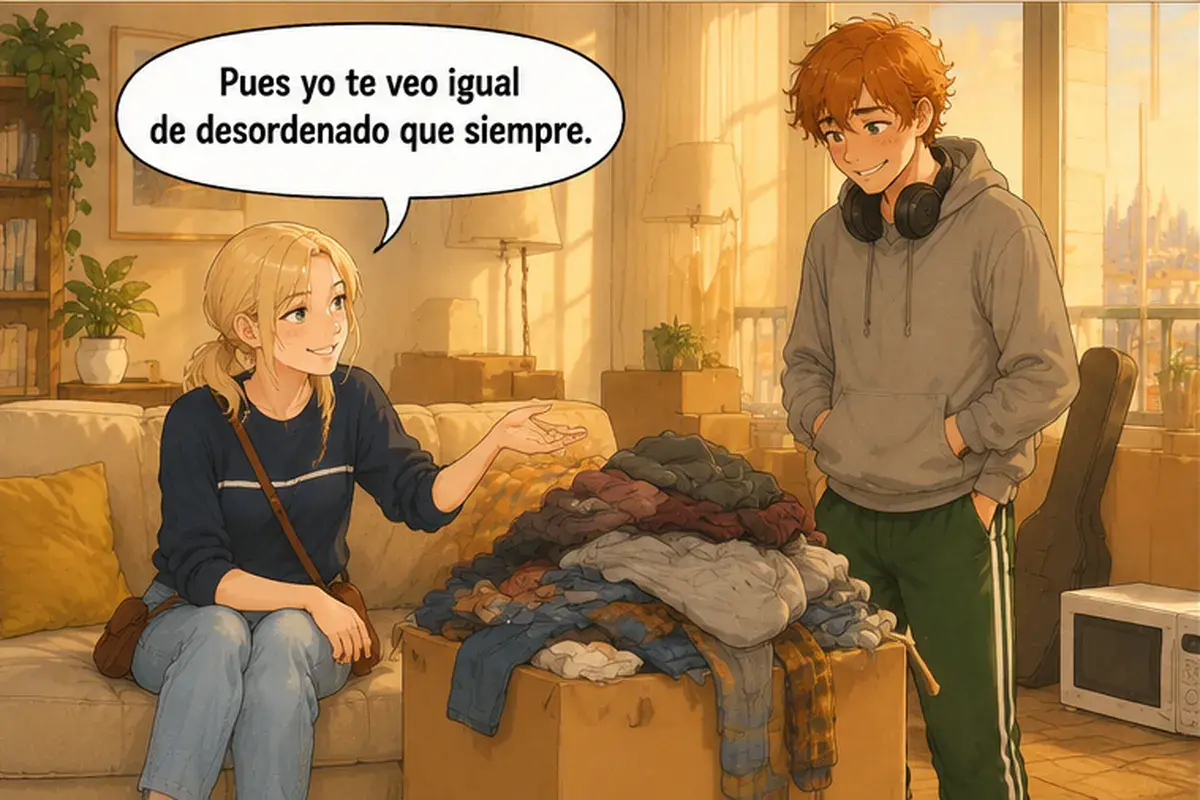
- Ana
Pues yo te veo igual de desordenado que siempre.
Well, you look just as messy as ever to me (to a man).
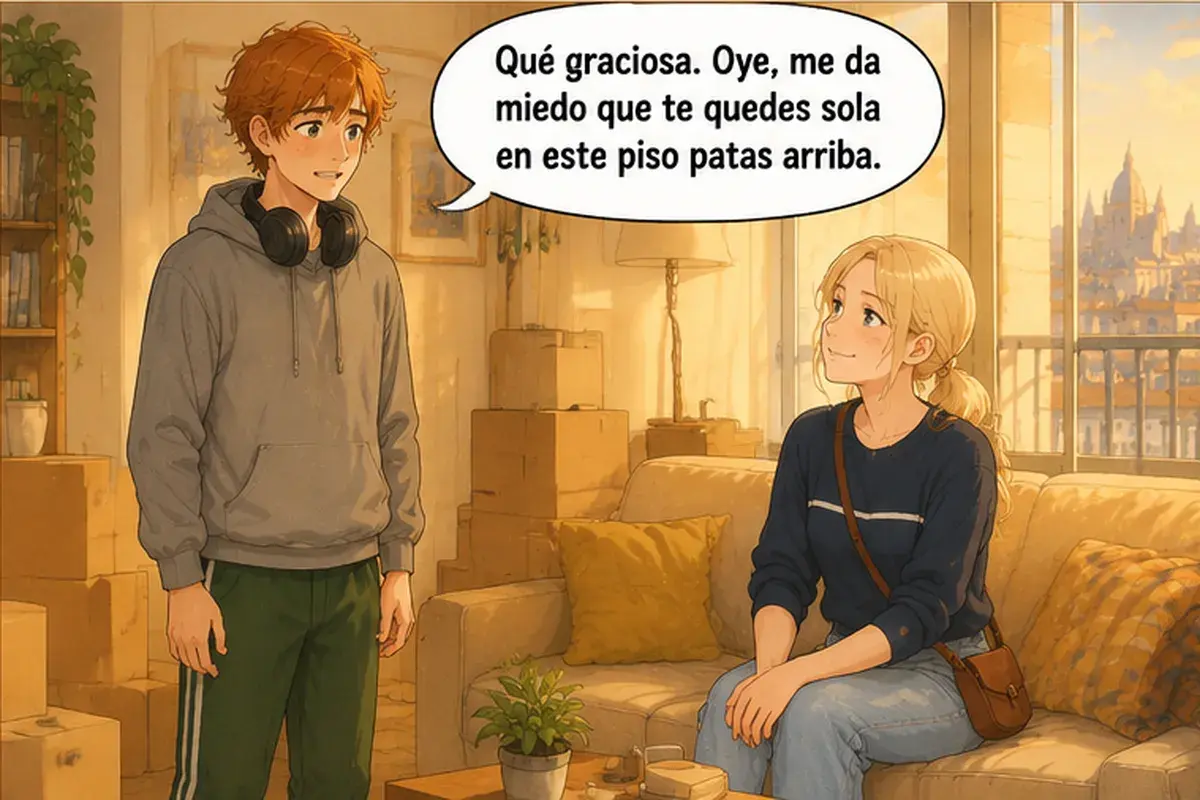
- Dani
Qué graciosa. Oye, me da miedo que te quedes sola en este piso patas arriba.
Very funny. Listen, it scares me that you'll be left alone in this apartment that's a total mess (to a woman).
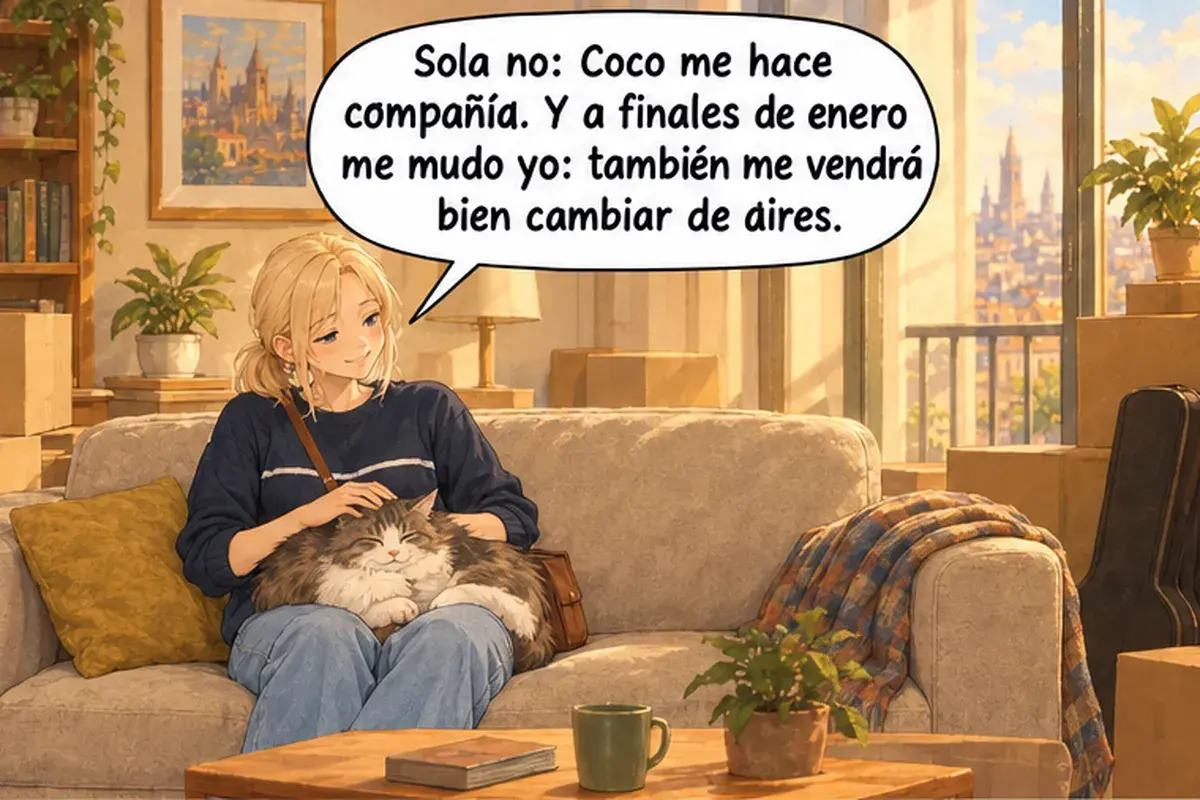
- Ana
Sola no: Coco me hace compañía. Y a finales de enero me mudo yo: también me vendrá bien cambiar de aires.
Not alone: Coco keeps me company. And at the end of January I'm moving too: a change of scenery will do me good as well.
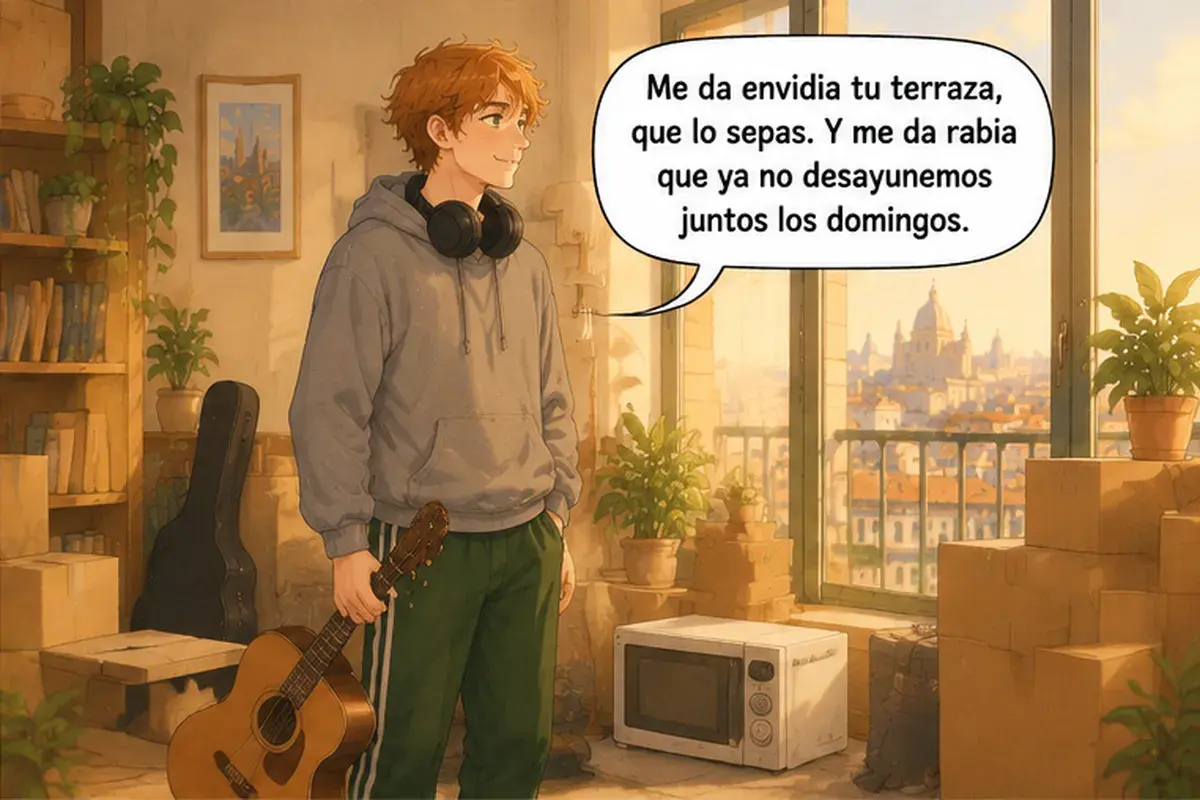
- Dani
Me da envidia tu terraza, que lo sepas. Y me da rabia que ya no desayunemos juntos los domingos.
I'm jealous of your terrace, just so you know. And it makes me mad that we won't have breakfast together on Sundays anymore.
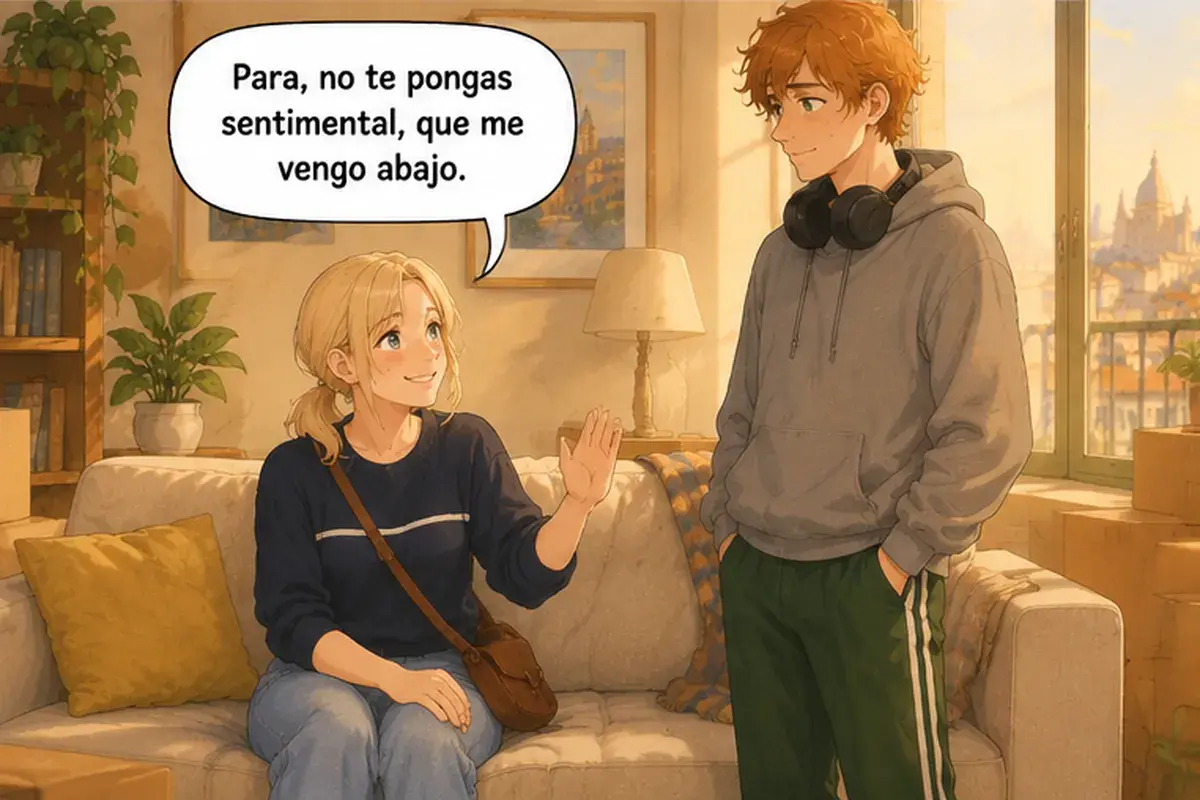
- Ana
Para, no te pongas sentimental, que me vengo abajo.
Stop, don't get sentimental, or I'll fall apart.
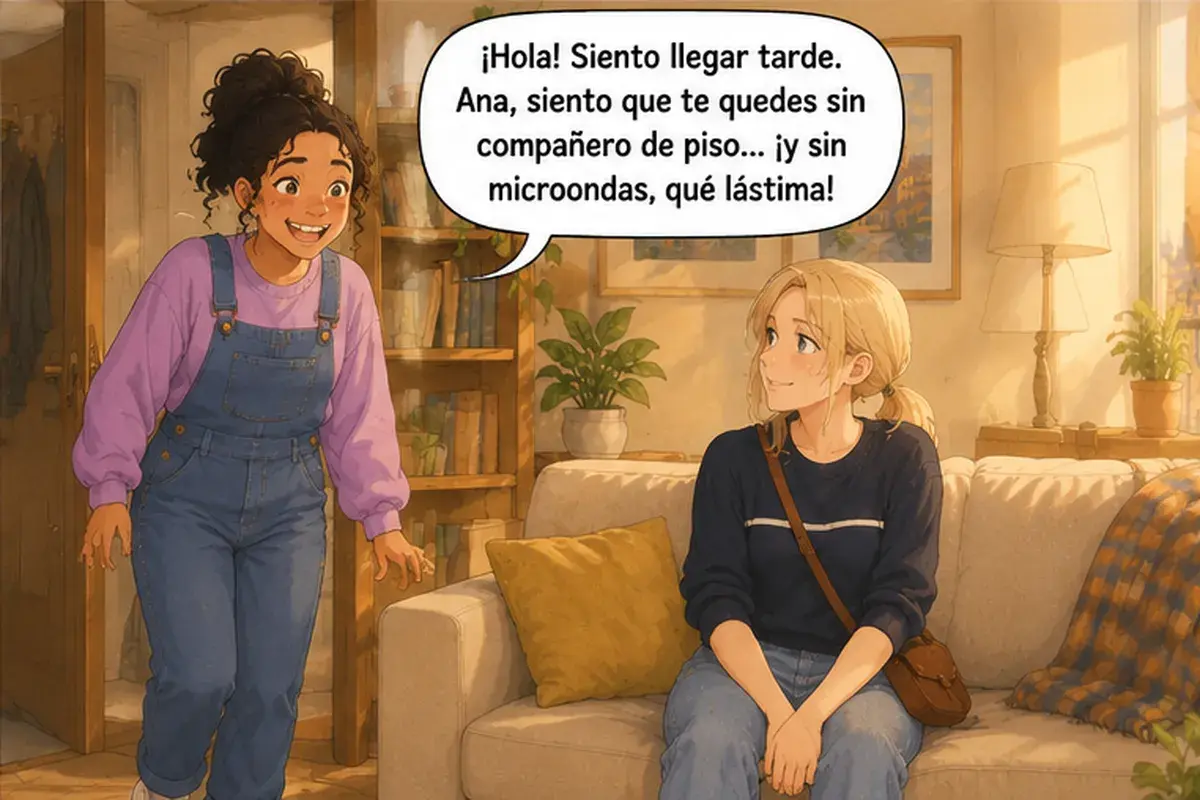
- Noelia
¡Hola! Siento llegar tarde. Ana, siento que te quedes sin compañero de piso… ¡y sin microondas, qué lástima!
Hi! Sorry I'm late. Ana, I'm sorry you're left without a roommate… and without a microwave, what a shame!
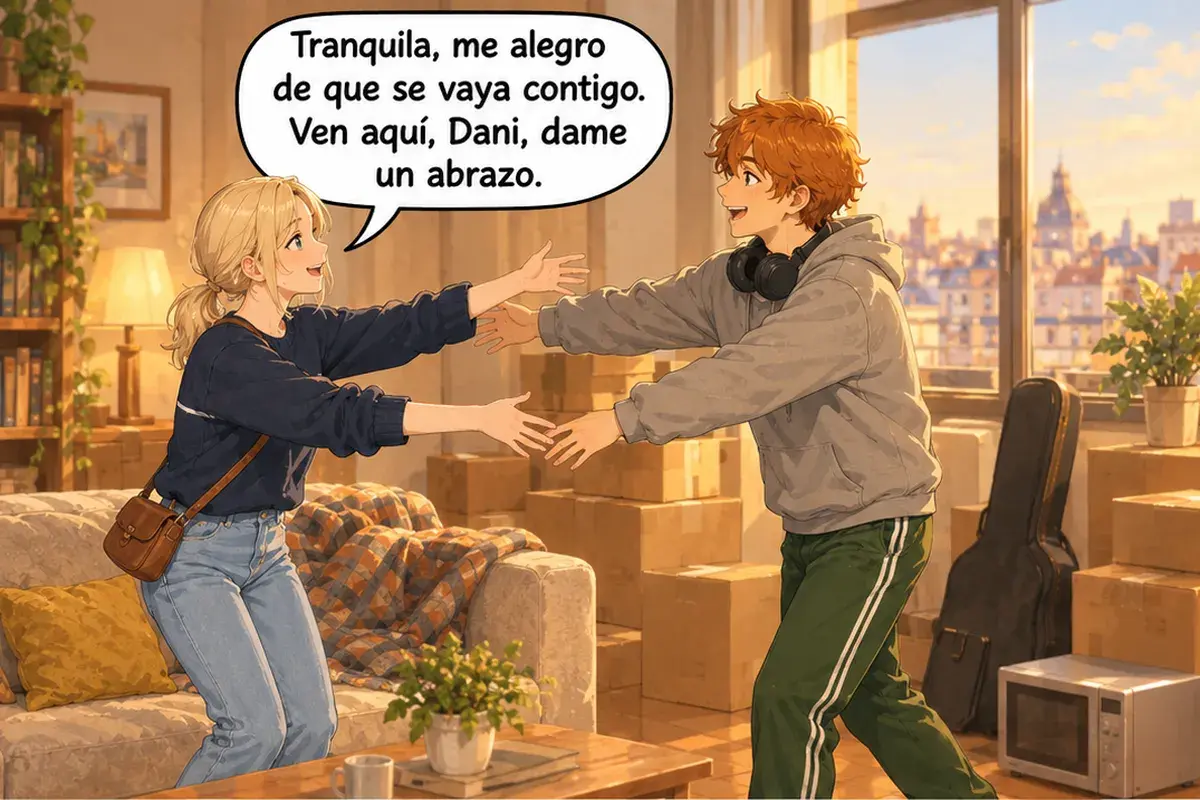
- Ana
Tranquila, me alegro de que se vaya contigo. Ven aquí, Dani, dame un abrazo.
Don't worry (to a woman), I'm glad he's going with you. Come here, Dani, give me a hug.
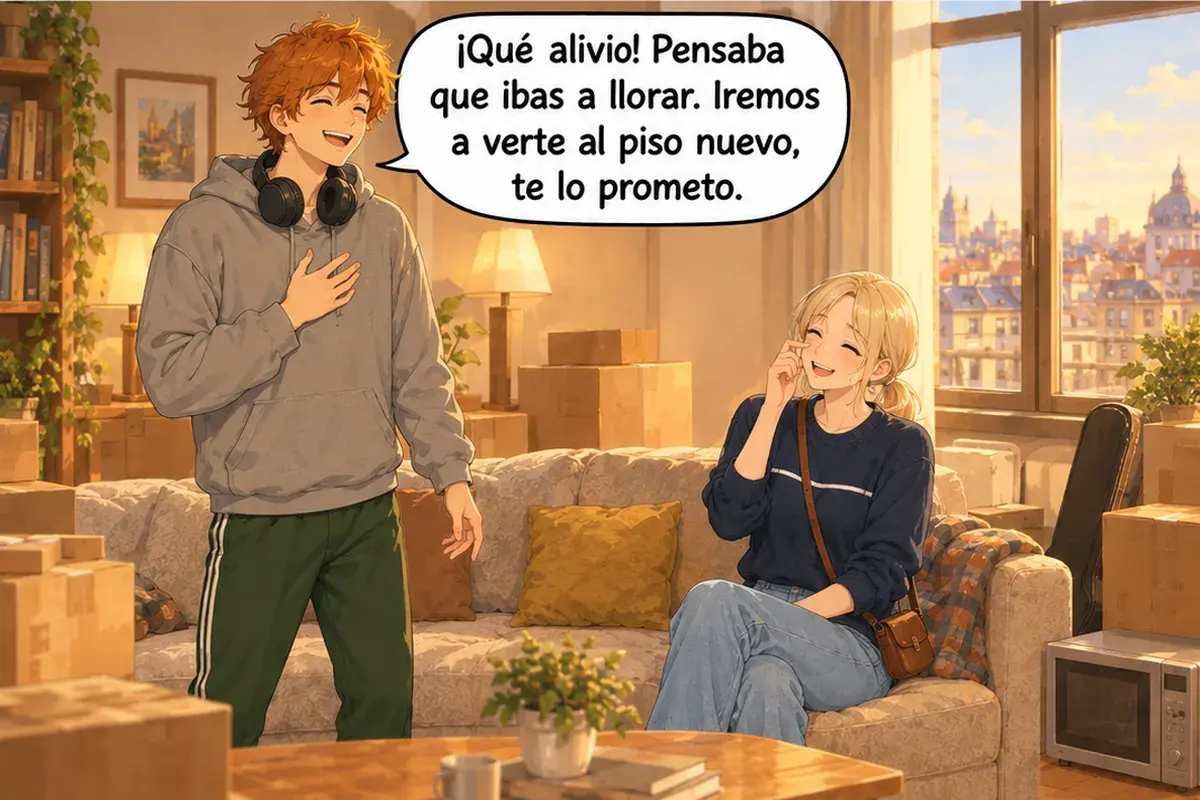
- Dani
¡Qué alivio! Pensaba que ibas a llorar. Iremos a verte al piso nuevo, te lo prometo.
What a relief! I thought you were going to cry. We'll come see you at the new apartment, I promise.
Grammar for this text
Feeling + que + subjunctive. The whole conversation is about feelings caused by what other people do: me alegra que por fin des el paso, me da pena que te vayas, lo que me fastidia es que te lleves el microondas, me da miedo que te quedes sola, me da rabia que ya no desayunemos juntos. Quepa comes from caber (to fit), des from dar.
Two forms look like other words. Que caliente la cena — "that I heat up dinner": here caliente isn't "hot" but the subjunctive yo form of calentar (to heat). Que le toque la guitarra — "that I play the guitar for her": toque is the same form of tocar (before e, the c is spelled qu).
One person — infinitive. Siento llegar tarde: Noelia herself is the one who's late. But siento que te quedes sin compañero — "I'm sorry you're left without a roommate": two different people.
Sentar mal — to upset, to hurt someone's feelings: ¿te ha sentado mal que me vaya? It's followed by the subjunctive too.
Colloquial. No te creas — "believe me", que lo sepas — "just so you know", ¡pero si es mío! — "but it's mine!" (about the microwave). In que me vengo abajo, que means "or else". Independizarse — to move out and live on your own; Dani's mom jokes that a room in a shared apartment doesn't count.
Words and grammar of the unit: Say how sad you are to see someone go.
Learn the words from the texts with flashcards
In the app, you can tap any word in a text to see its translation, forms and examples, and new words stick with flashcards. 15 minutes a day.
Start for freeEverything is open for free. No card needed to sign up.