

Spanish dialogue with translation · B2 · 14 lines
Lucía llama Lucía Calls
Comic · 14 panels
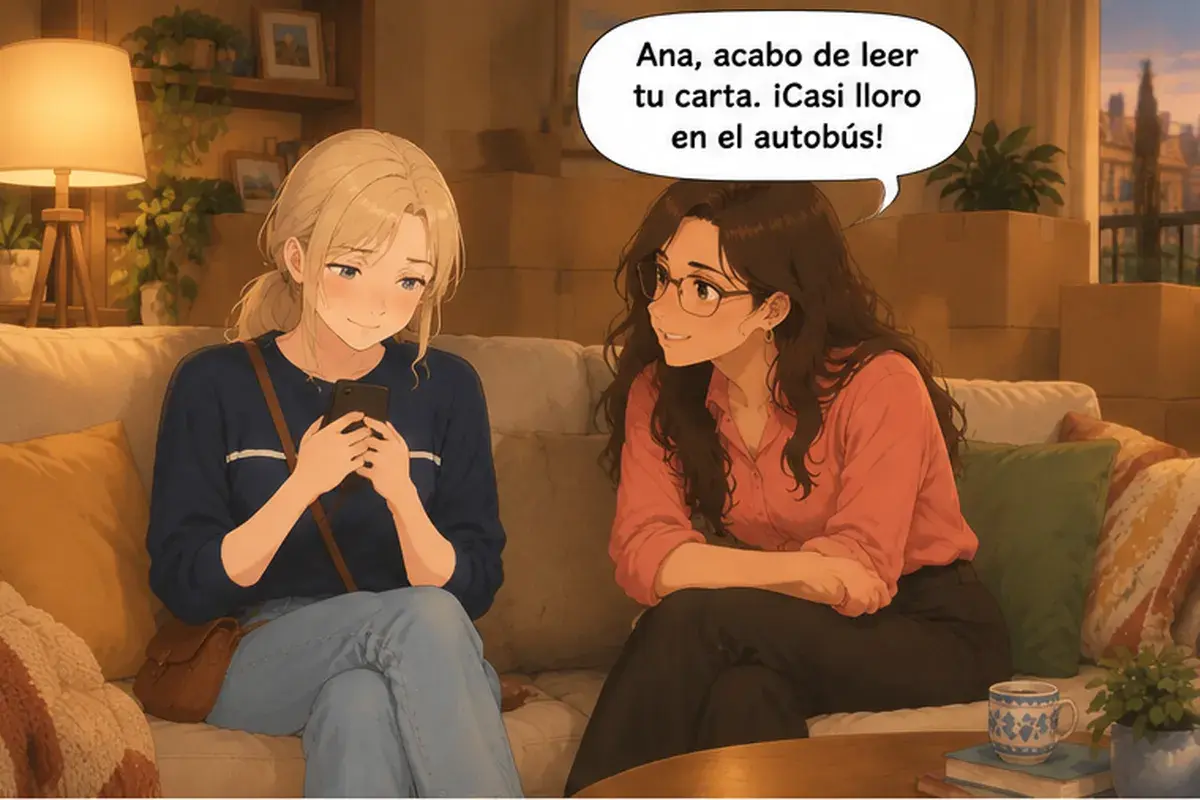
- Lucía
Ana, acabo de leer tu carta. ¡Casi lloro en el autobús!
Ana, I just read your letter. I almost cried on the bus!
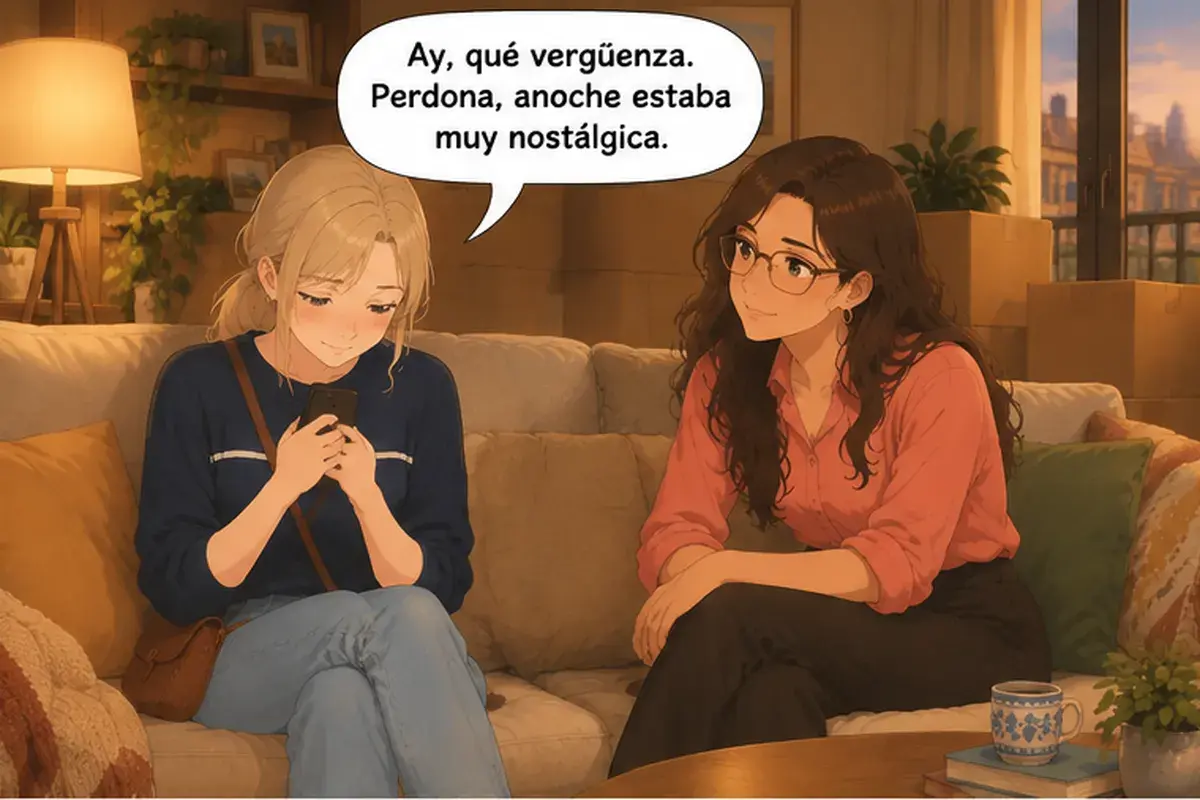
- Ana
Ay, qué vergüenza. Perdona, anoche estaba muy nostálgica.
Oh, how embarrassing. Sorry, I was feeling really nostalgic last night (woman speaking).
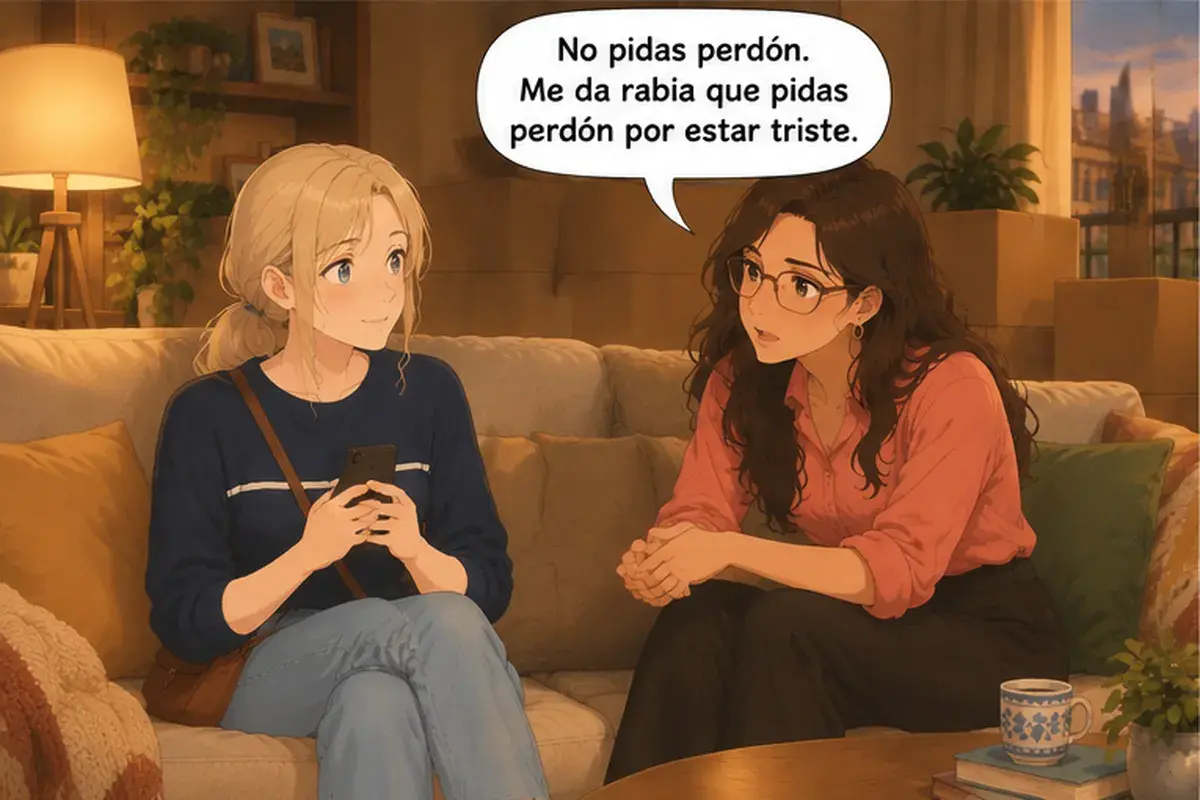
- Lucía
No pidas perdón. Me da rabia que pidas perdón por estar triste.
Don't apologize. It makes me mad that you apologize for being sad.
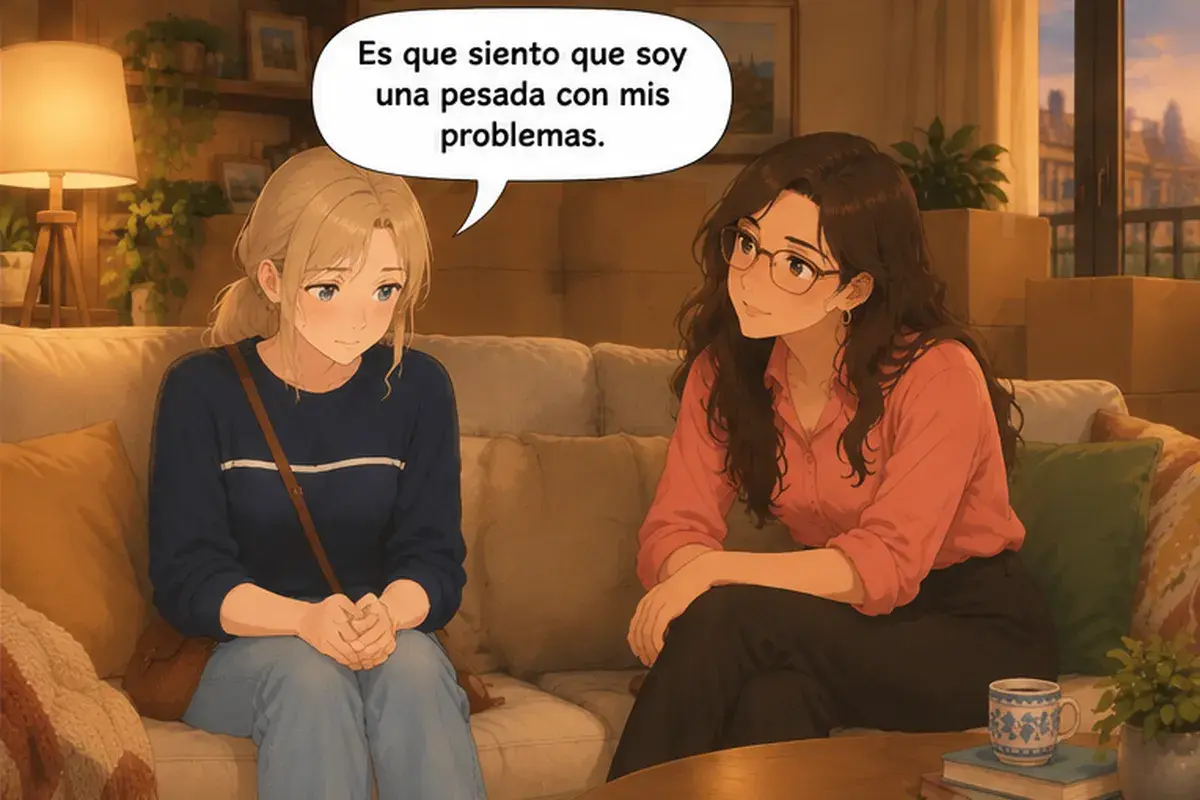
- Ana
Es que siento que soy una pesada con mis problemas.
It's just that I feel like I'm a pain with my problems (woman speaking).
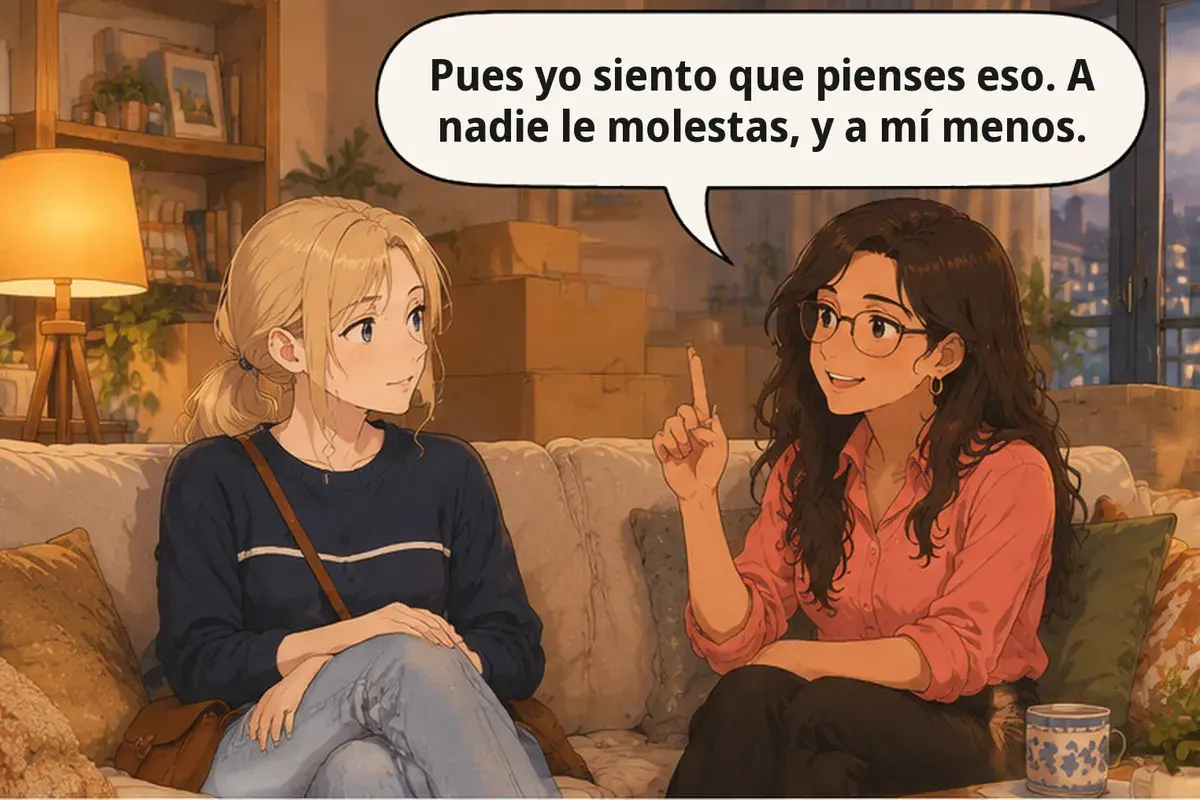
- Lucía
Pues yo siento que pienses eso. A nadie le molestas, y a mí menos.
Well, I'm sorry you think that. You don't bother anyone, and me least of all.
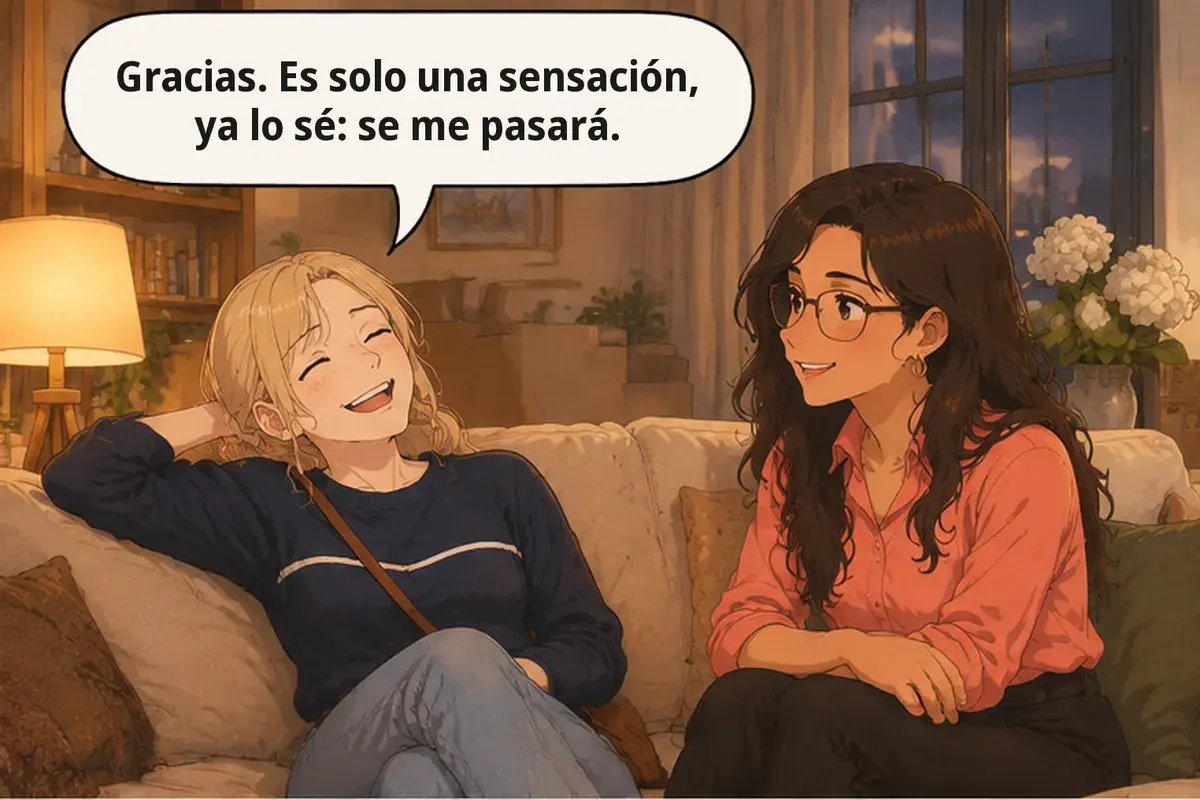
- Ana
Gracias. Es solo una sensación, ya lo sé: se me pasará.
Thanks. It's just a feeling, I know: it'll pass.
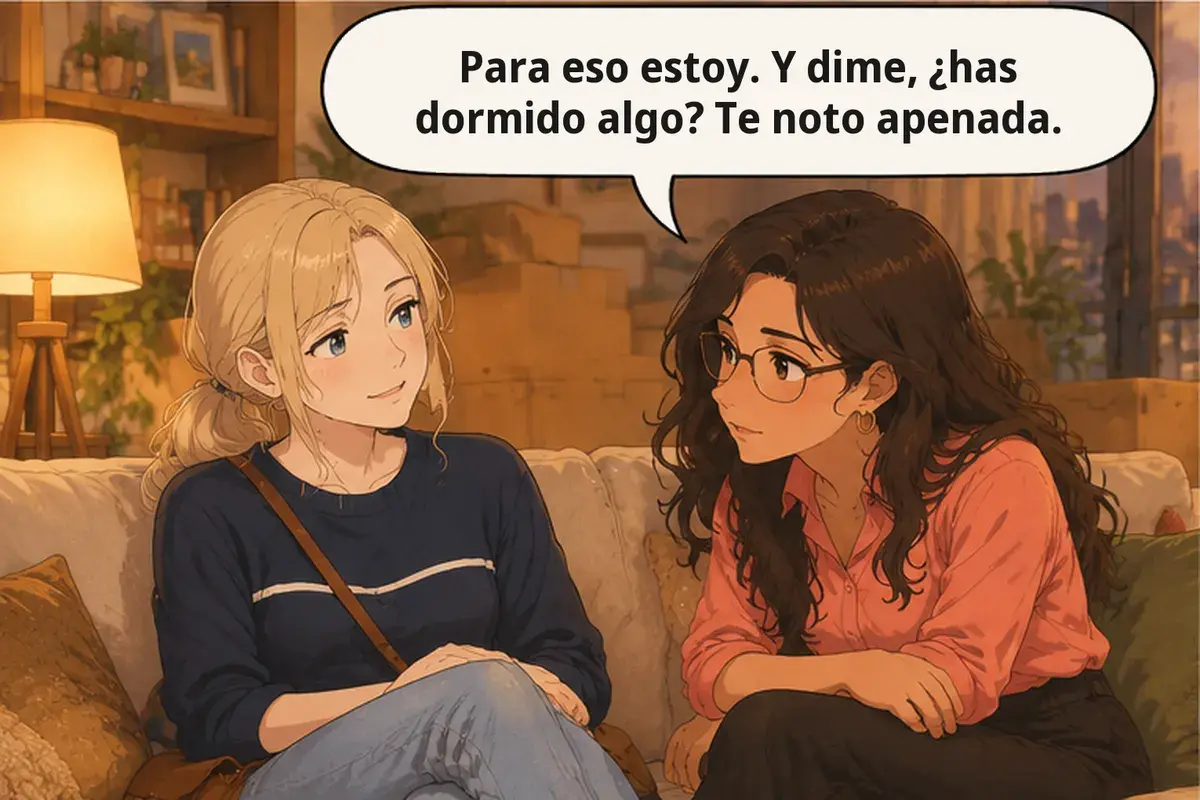
- Lucía
Para eso estoy. Y dime, ¿has dormido algo? Te noto apenada.
That's what I'm here for. So tell me, have you slept at all? You sound upset (to a woman).
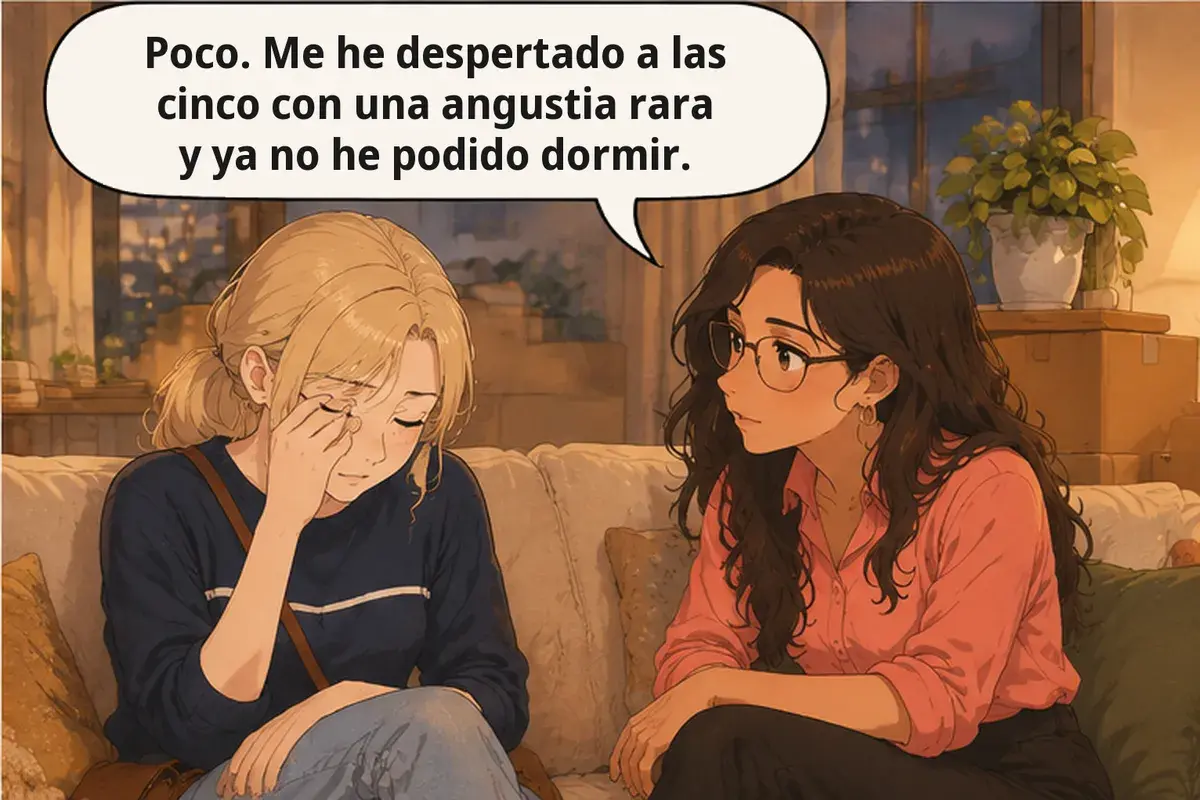
- Ana
Poco. Me he despertado a las cinco con una angustia rara y ya no he podido dormir.
Not much. I woke up at five with a strange feeling of distress and couldn't get back to sleep.
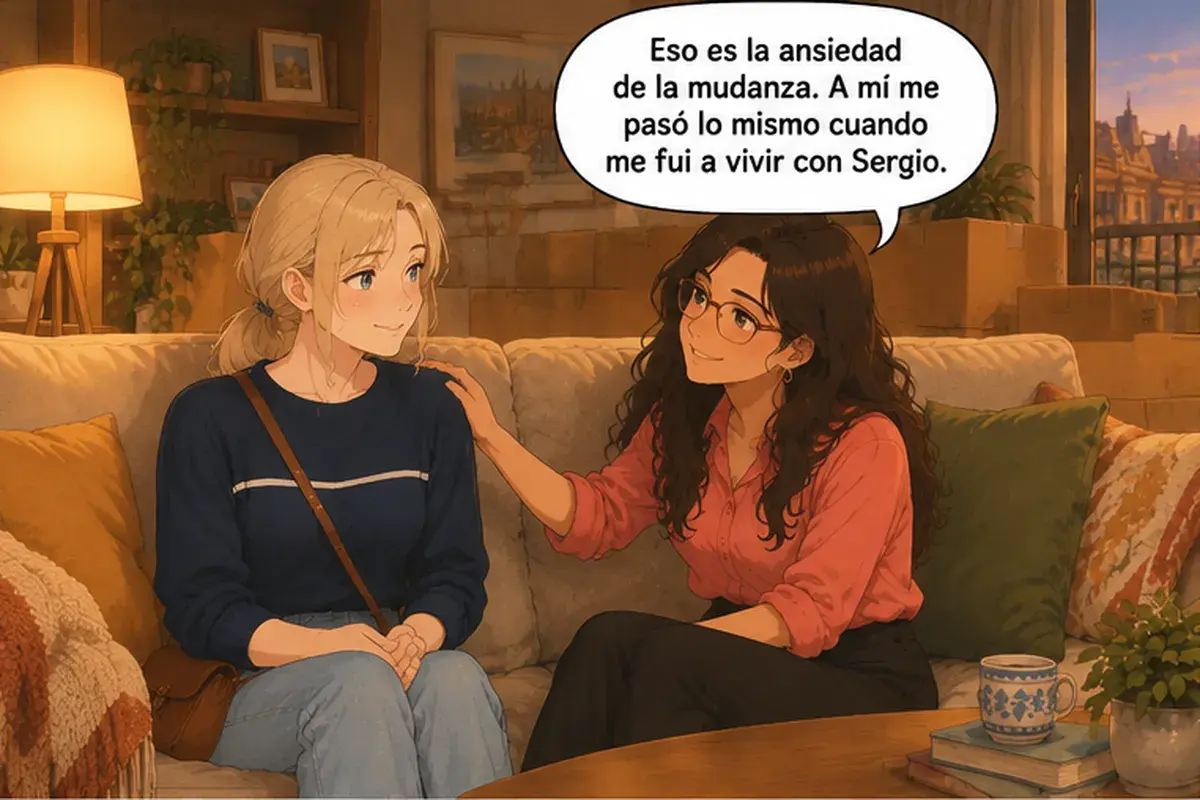
- Lucía
Eso es la ansiedad de la mudanza. A mí me pasó lo mismo cuando me fui a vivir con Sergio.
That's anxiety about the move. The same thing happened to me when I moved in with Sergio.
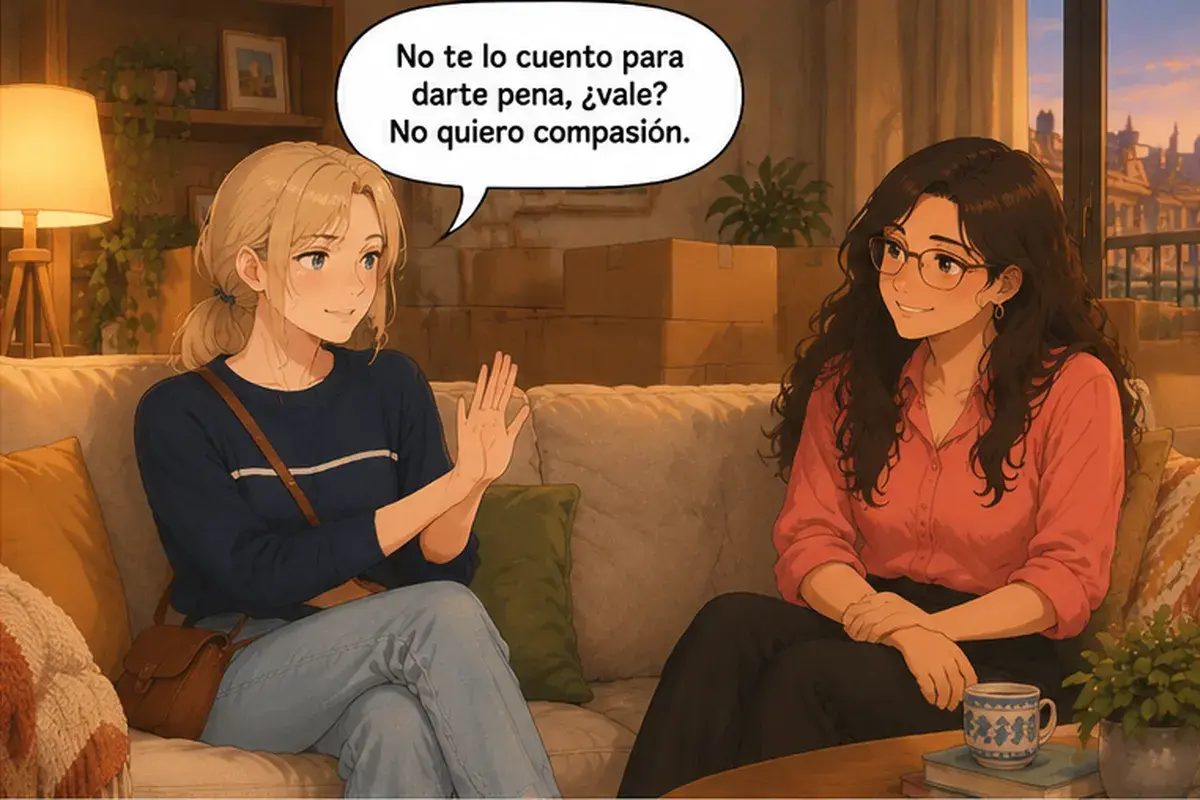
- Ana
No te lo cuento para darte pena, ¿vale? No quiero compasión.
I'm not telling you this so you'll feel sorry for me, OK? I don't want pity.
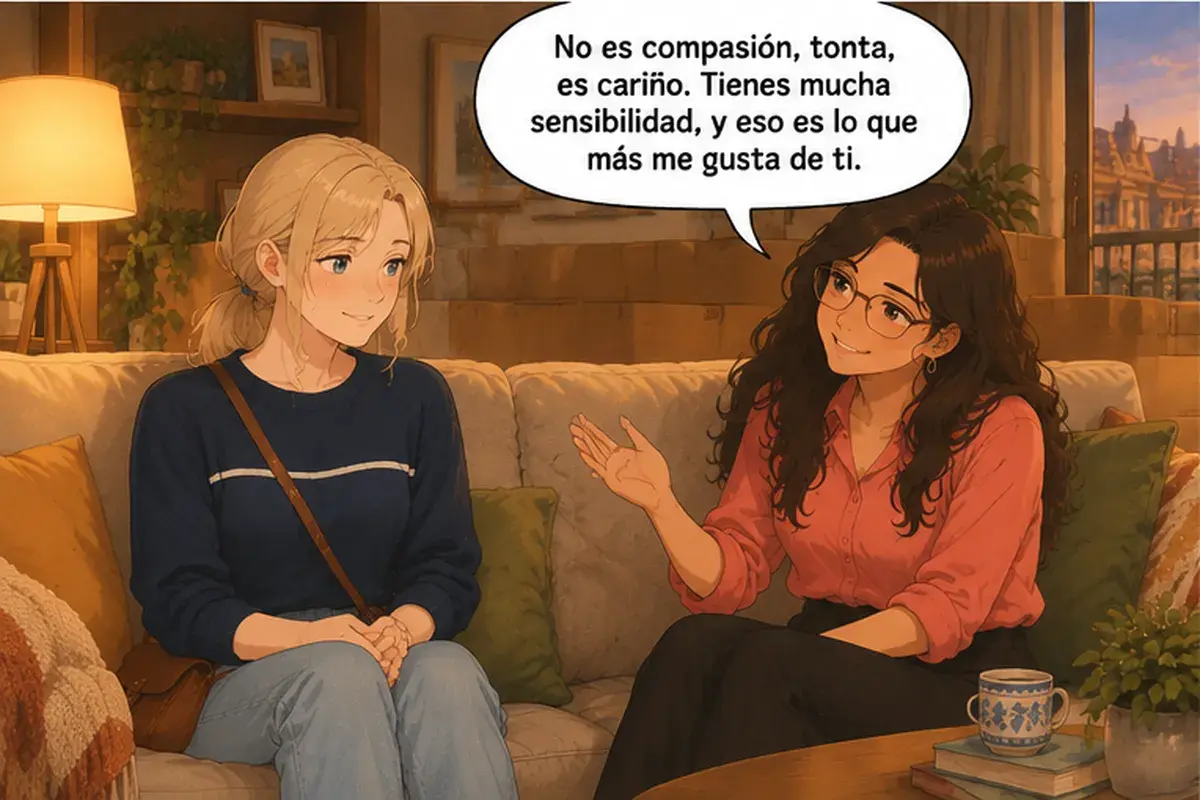
- Lucía
No es compasión, tonta, es cariño. Tienes mucha sensibilidad, y eso es lo que más me gusta de ti.
It's not pity, silly, it's affection. You're very sensitive, and that's what I like most about you (to a woman).
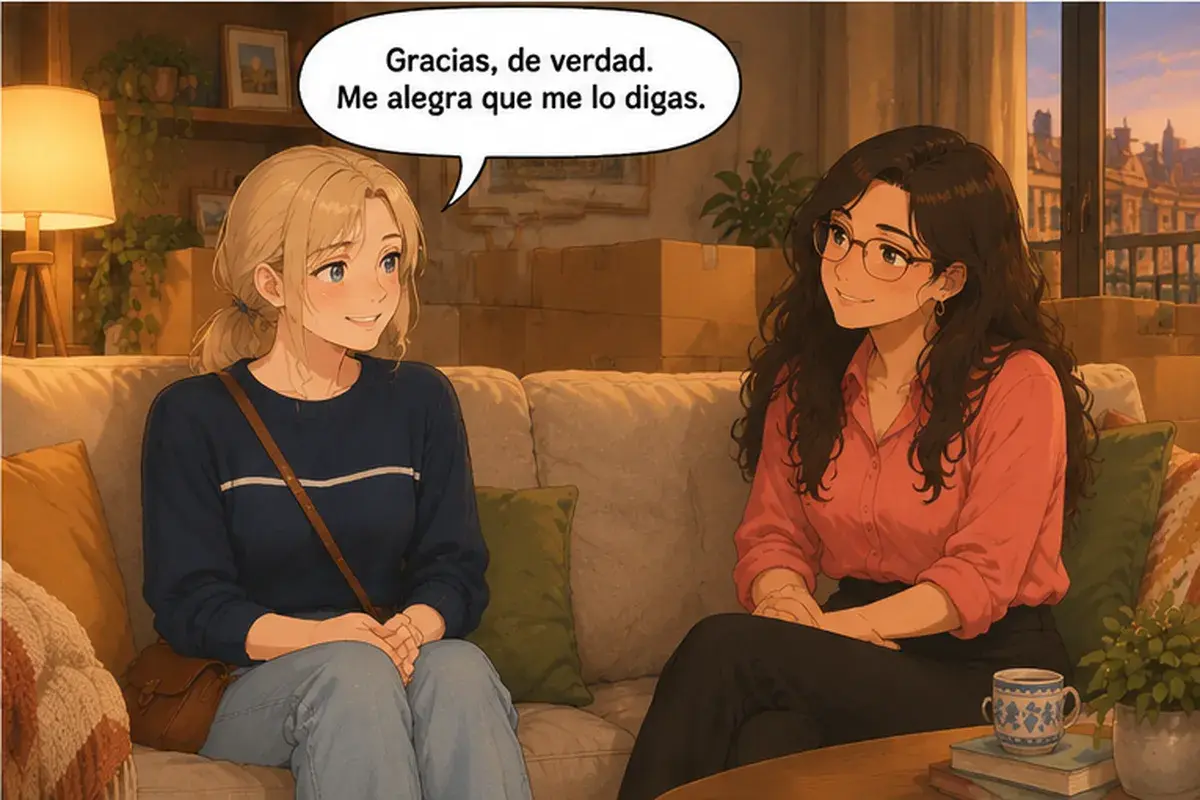
- Ana
Gracias, de verdad. Me alegra que me lo digas.
Thanks, really. I'm glad you're telling me this.
- Lucía
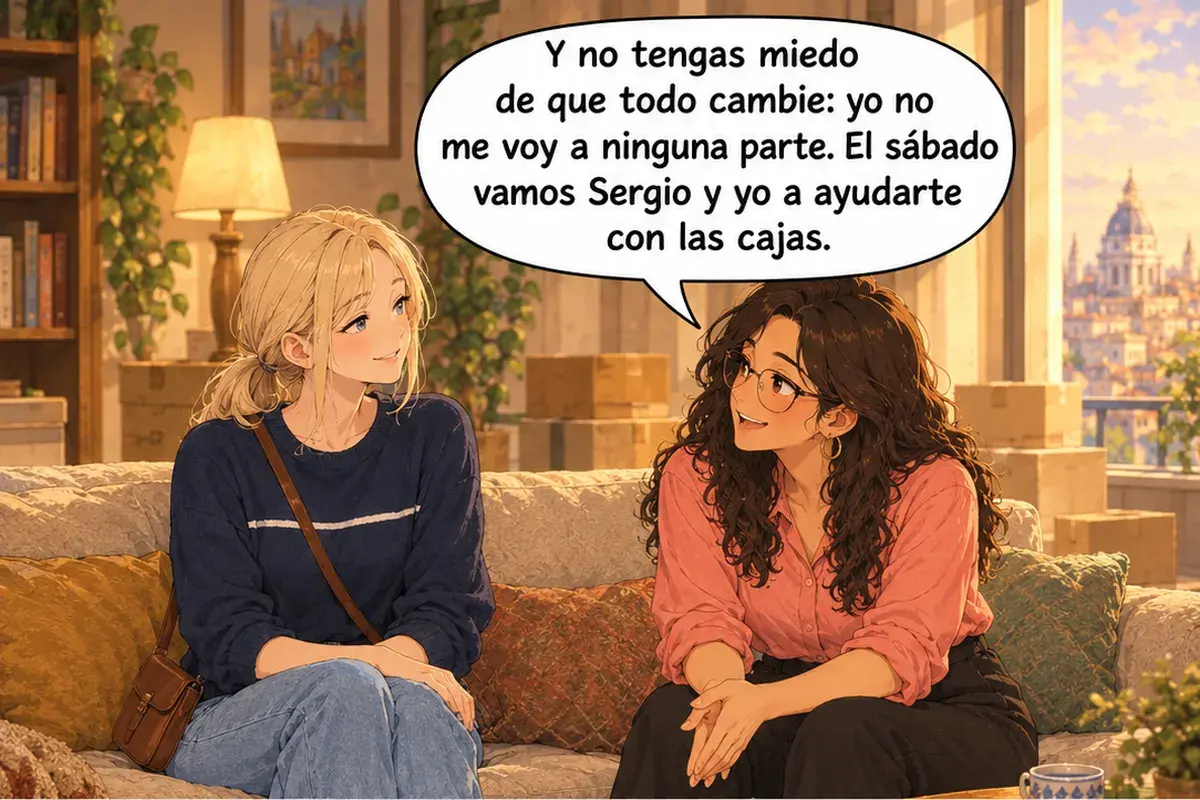
Y no tengas miedo de que todo cambie: yo no me voy a ninguna parte. El sábado vamos Sergio y yo a ayudarte con las cajas.
And don't be afraid that everything will change: I'm not going anywhere. On Saturday Sergio and I are coming to help you with the boxes.
- Ana
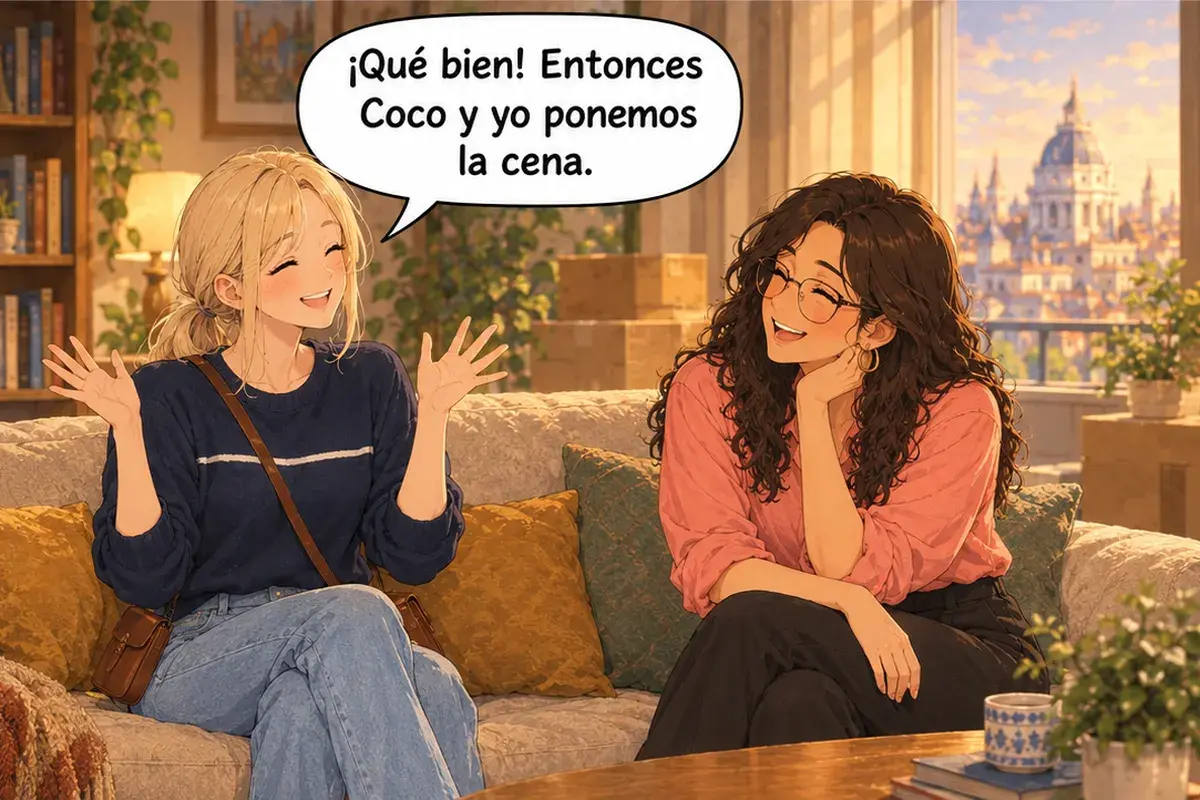
¡Qué bien! Entonces Coco y yo ponemos la cena.
Great! Then Coco and I will make dinner.
Grammar for this text
Sentir que: two meanings in back-to-back lines. Ana: siento que soy una pesada — "I feel like I'm a pain" (normal form). Lucía: siento que pienses eso — "I'm sorry you think that" (subjunctive). The verb form after que is the clue.
Feelings: me da rabia que pidas perdón, me alegra que me lo digas, no tengas miedo de que todo cambie.
Casi lloro — "I almost cried": casi + present tense about something that nearly happened (unit 1).
Te noto apenada — "you sound upset": notar + adjective. Darte pena — to make you feel sorry for me. Ser un pesado — to be a pain, to be annoying.
Words and grammar of the unit: Say how sad you are to see someone go.
Learn the words from the texts with flashcards
In the app, you can tap any word in a text to see its translation, forms and examples, and new words stick with flashcards. 15 minutes a day.
Start for freeEverything is open for free. No card needed to sign up.