

Spanish dialogue with translation · B2 · 18 lines
A lo mejor solo está liado Maybe he's just busy
Comic · 18 panels
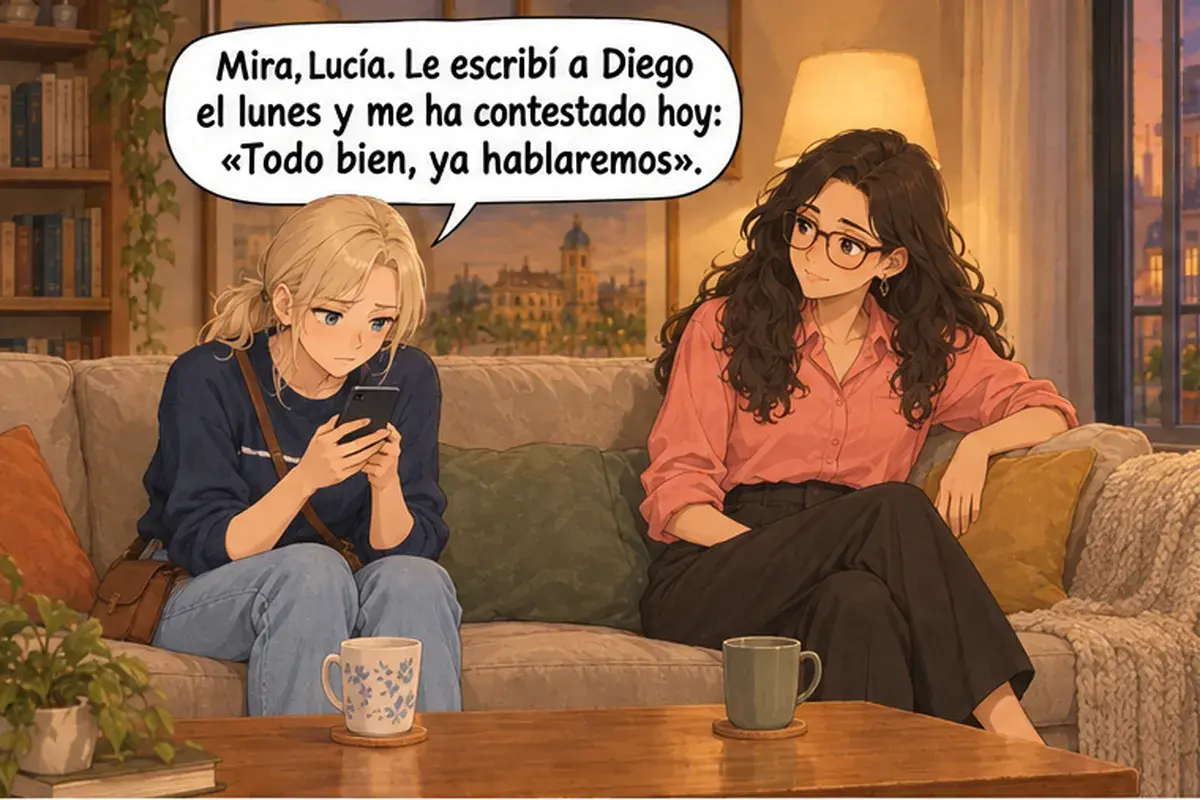
- Ana
Mira, Lucía. Le escribí a Diego el lunes y me ha contestado hoy: «Todo bien, ya hablaremos».
Look, Lucía. I wrote to Diego on Monday and he answered today: "All good, we'll talk."
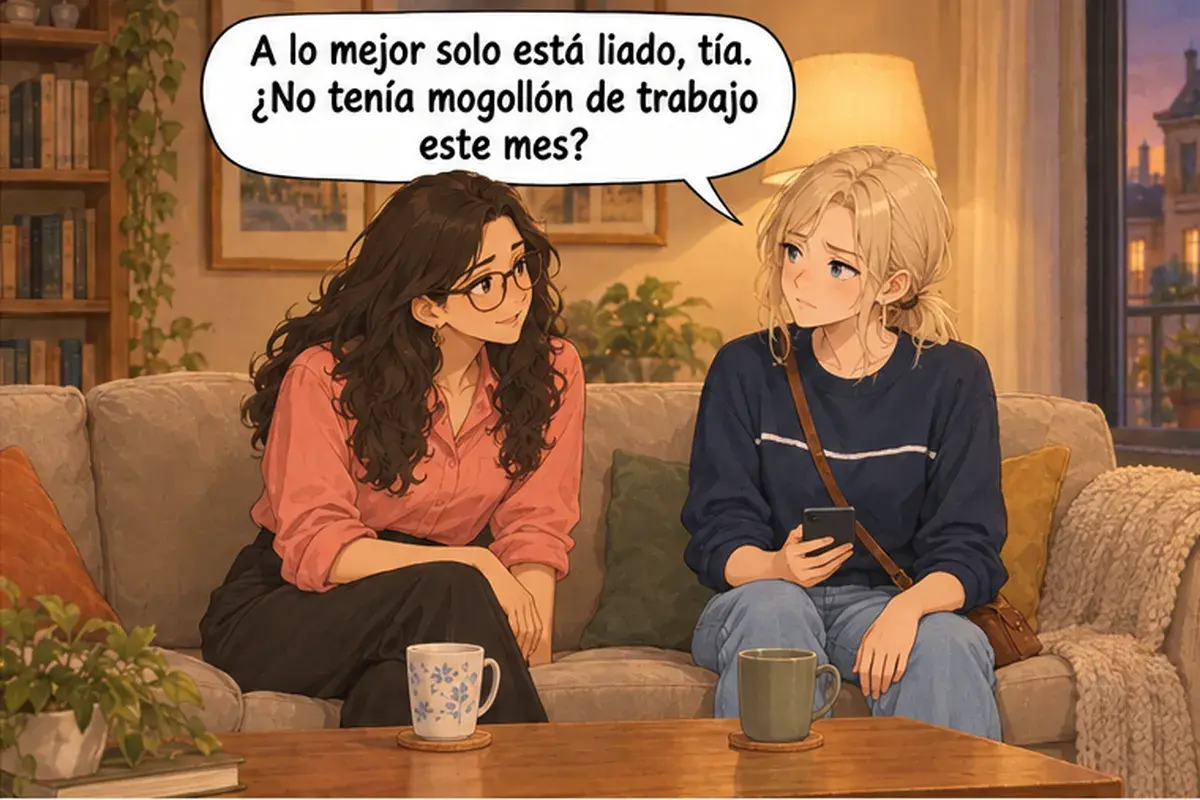
- Lucía
A lo mejor solo está liado, tía. ¿No tenía mogollón de trabajo este mes?
Maybe he's just busy, girl. Didn't he have a ton of work this month?
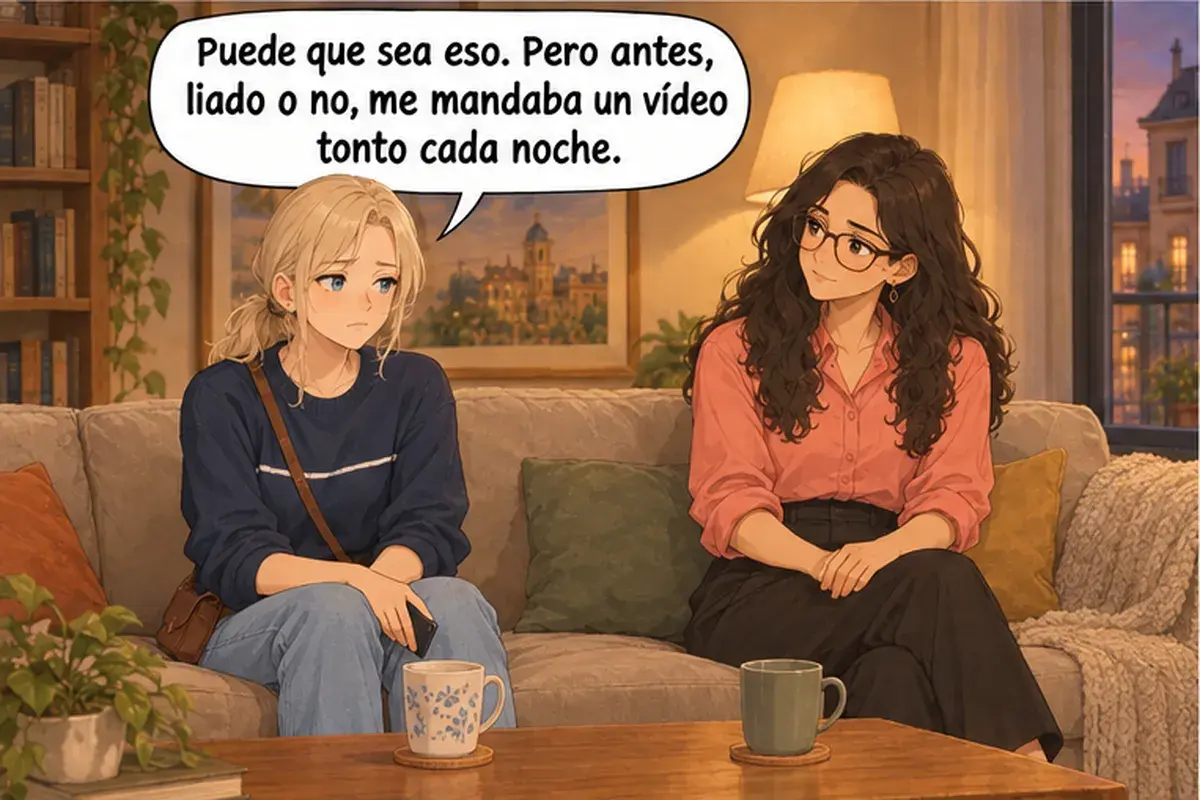
- Ana
Puede que sea eso. Pero antes, liado o no, me mandaba un vídeo tonto cada noche.
That might be it. But before, busy or not, he used to send me a silly video every night.
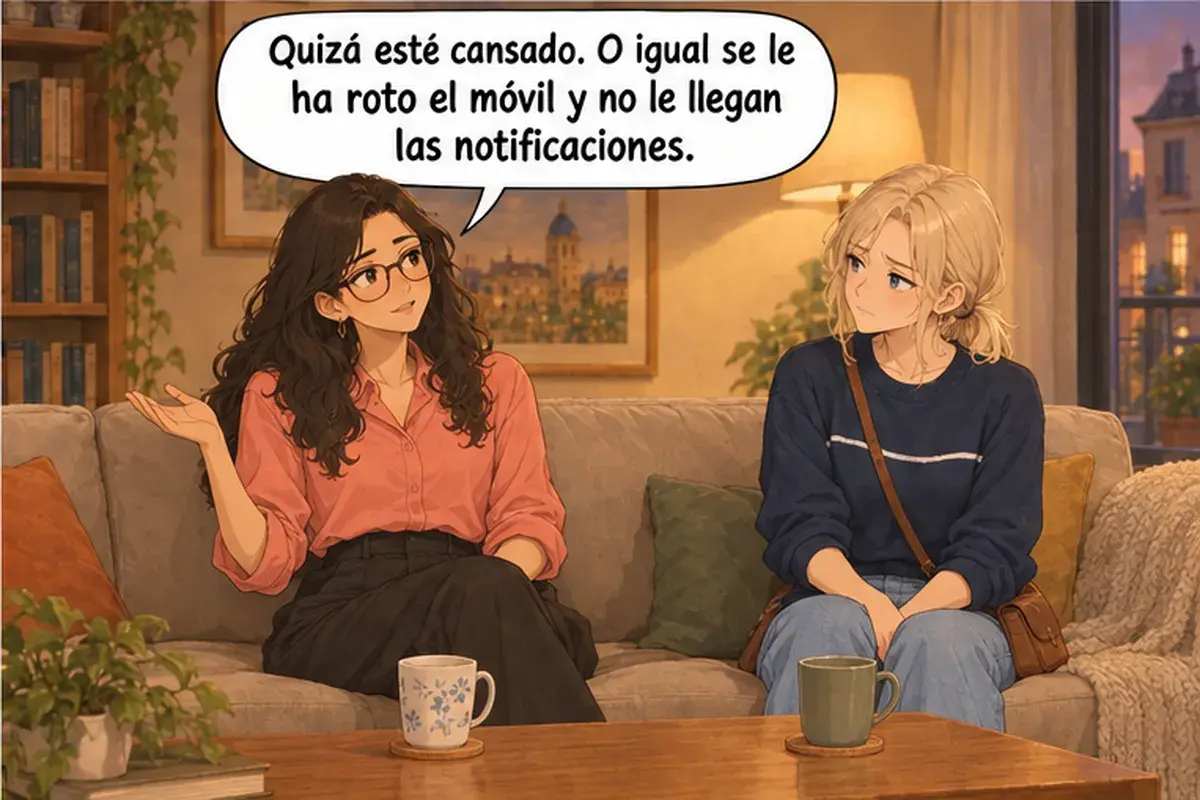
- Lucía
Quizá esté cansado. O igual se le ha roto el móvil y no le llegan las notificaciones.
Maybe he's tired. Or maybe his phone broke and he isn't getting the notifications.
- Ana
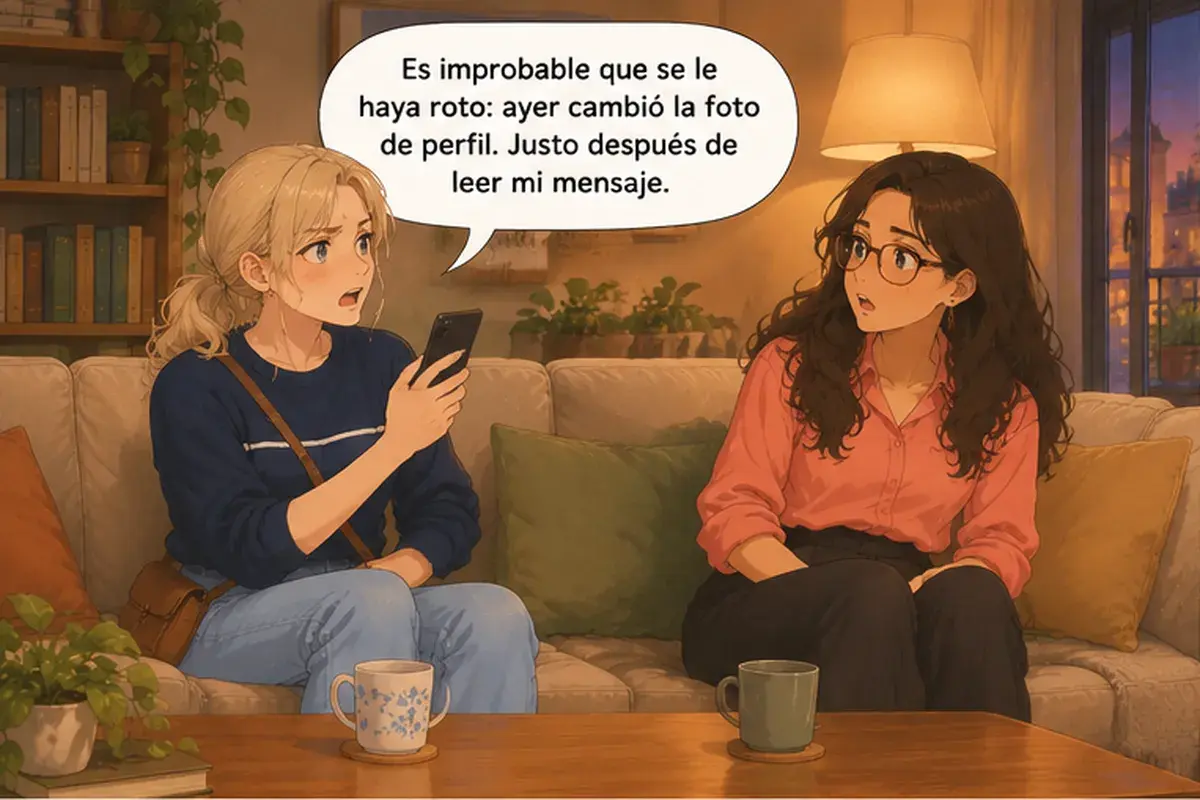
Es improbable que se le haya roto: ayer cambió la foto de perfil. Justo después de leer mi mensaje.
It's unlikely it broke: yesterday he changed his profile picture. Right after reading my message.
- Lucía
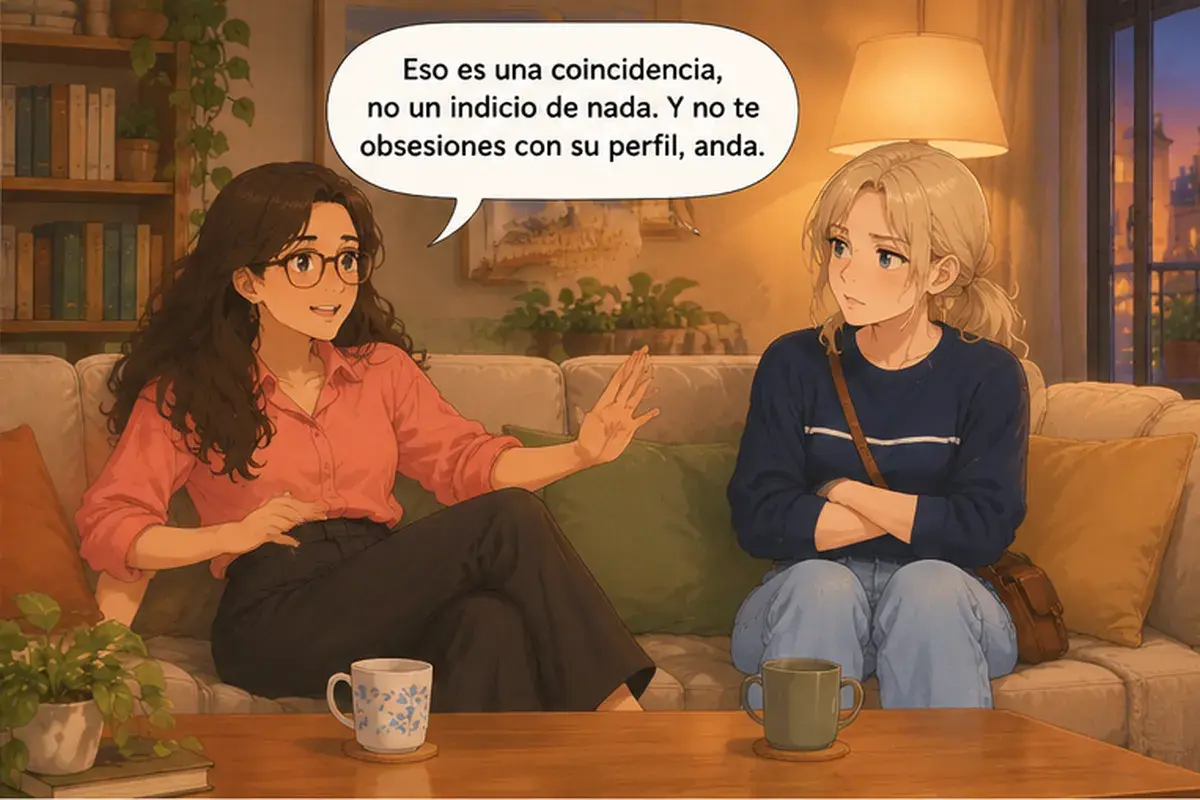
Eso es una coincidencia, no un indicio de nada. Y no te obsesiones con su perfil, anda.
That's a coincidence, not a sign of anything. And don't obsess over his profile, come on.
- Ana
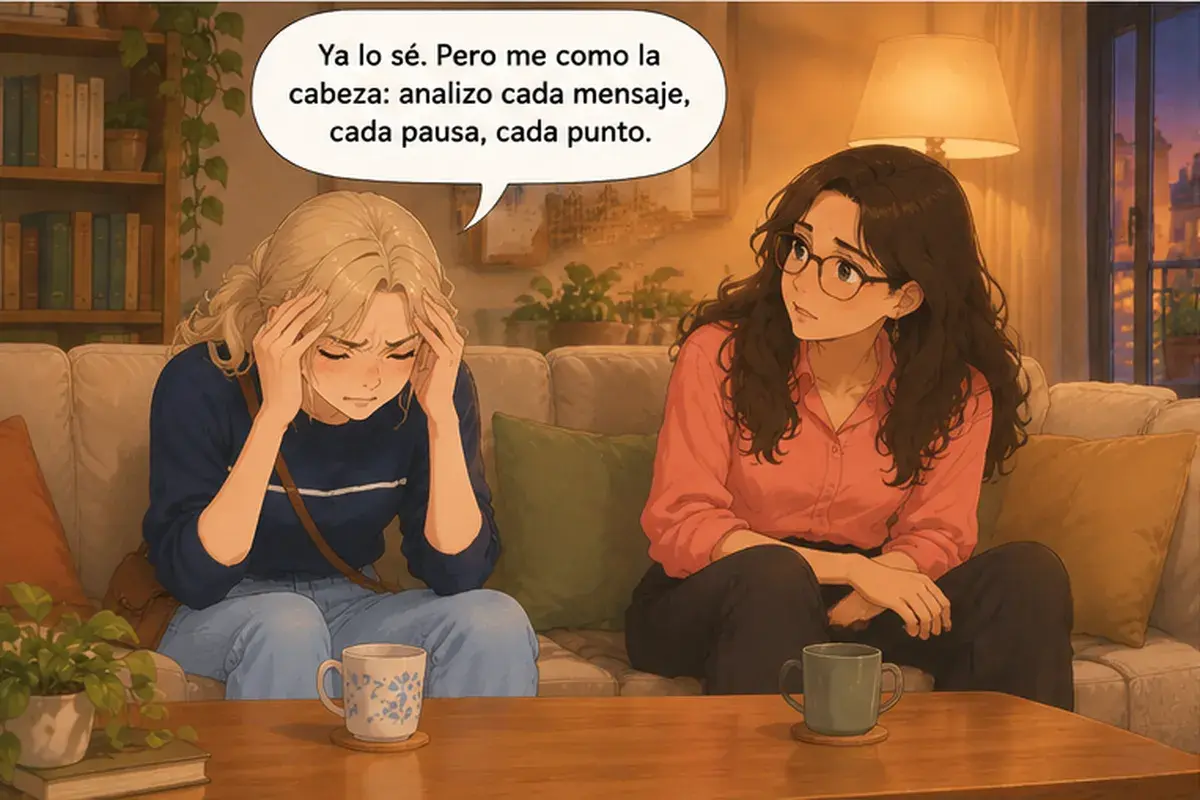
Ya lo sé. Pero me como la cabeza: analizo cada mensaje, cada pausa, cada punto.
I know. But I keep overthinking: I analyze every message, every pause, every period.
- Lucía
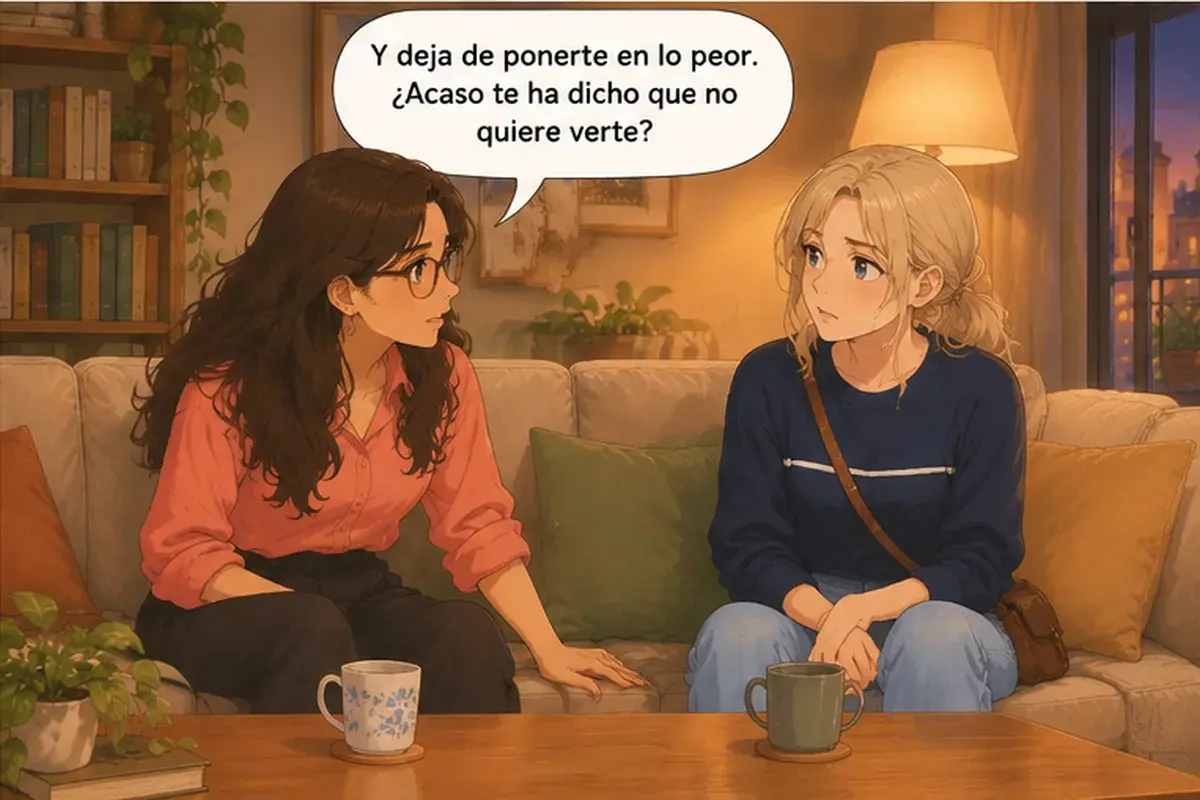
Y deja de ponerte en lo peor. ¿Acaso te ha dicho que no quiere verte?
And stop assuming the worst. Has he actually told you he doesn't want to see you?

- Ana
No. En principio, íbamos a vernos el sábado, pero no ha vuelto a decir nada. Tengo un presentimiento raro.
No. In principle, we were going to see each other on Saturday, but he hasn't said anything since. I have a strange feeling.
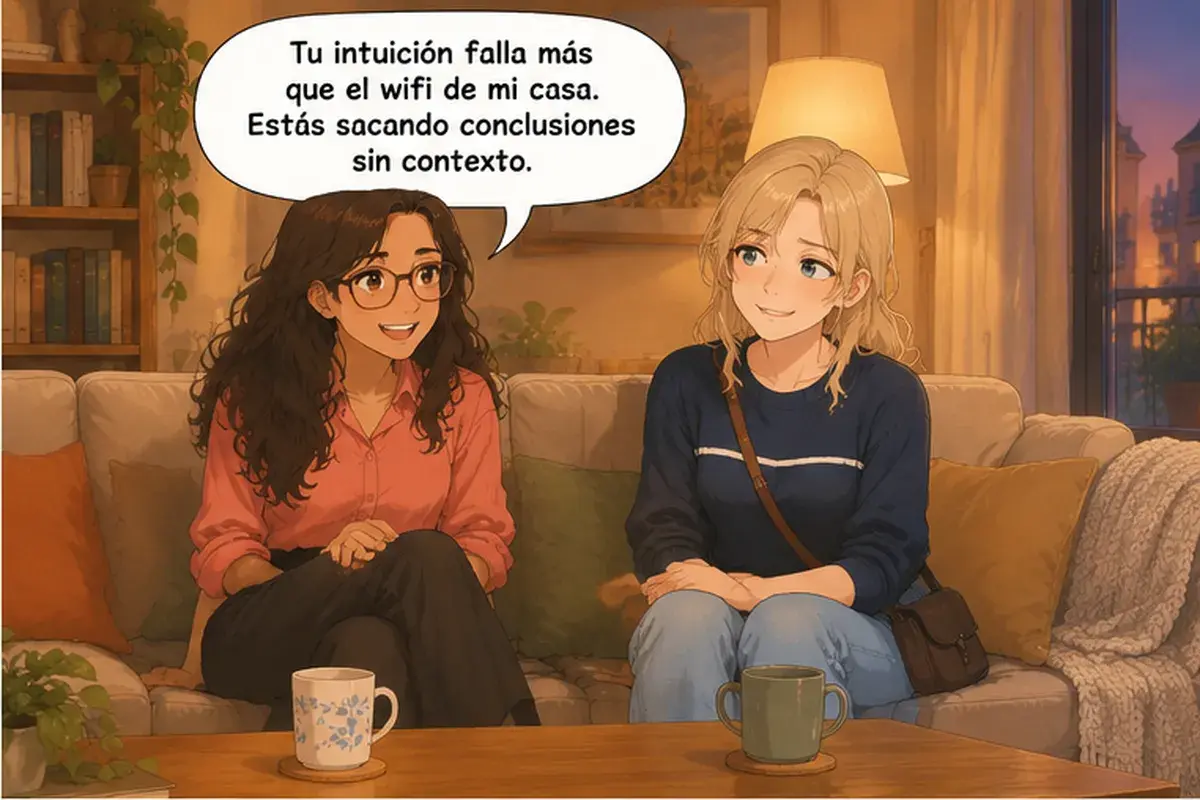
- Lucía
Tu intuición falla más que el wifi de mi casa. Estás sacando conclusiones sin contexto.
Your intuition fails more often than the Wi-Fi at my place. You're drawing conclusions without context.
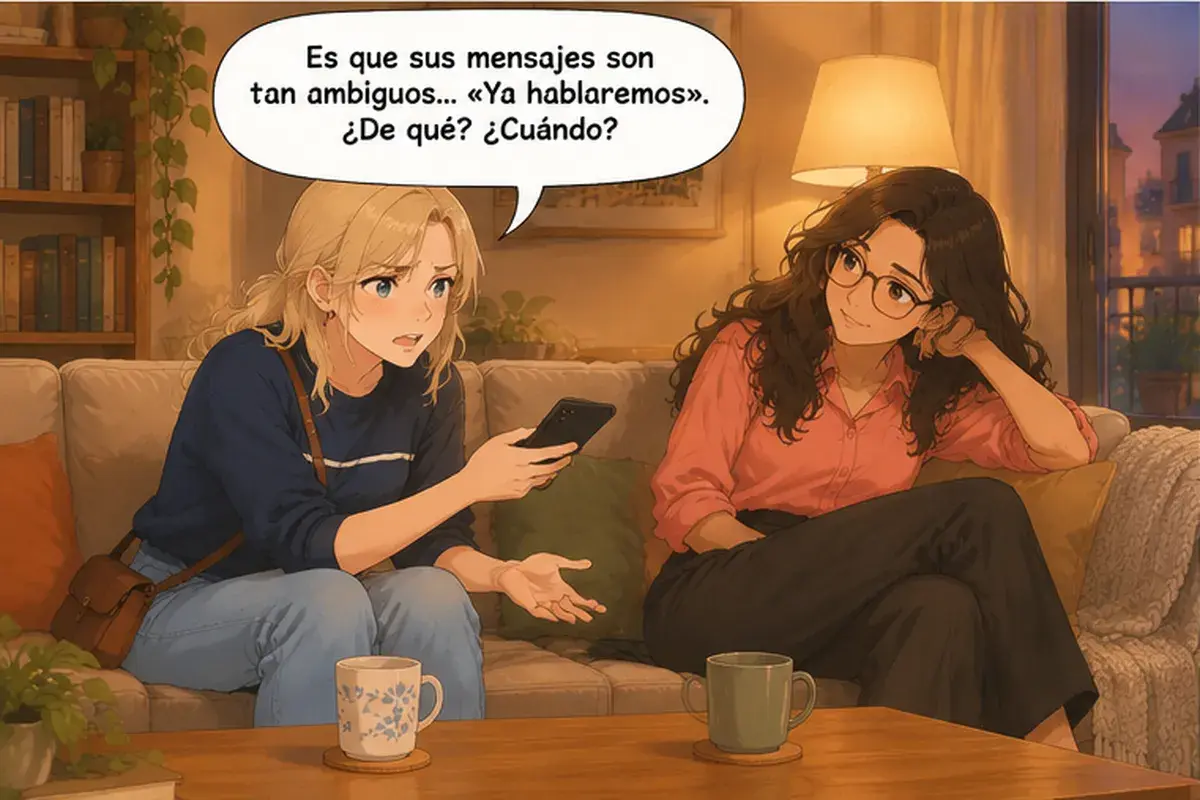
- Ana
Es que sus mensajes son tan ambiguos... «Ya hablaremos». ¿De qué? ¿Cuándo?
It's just that his messages are so ambiguous... "We'll talk." About what? When?
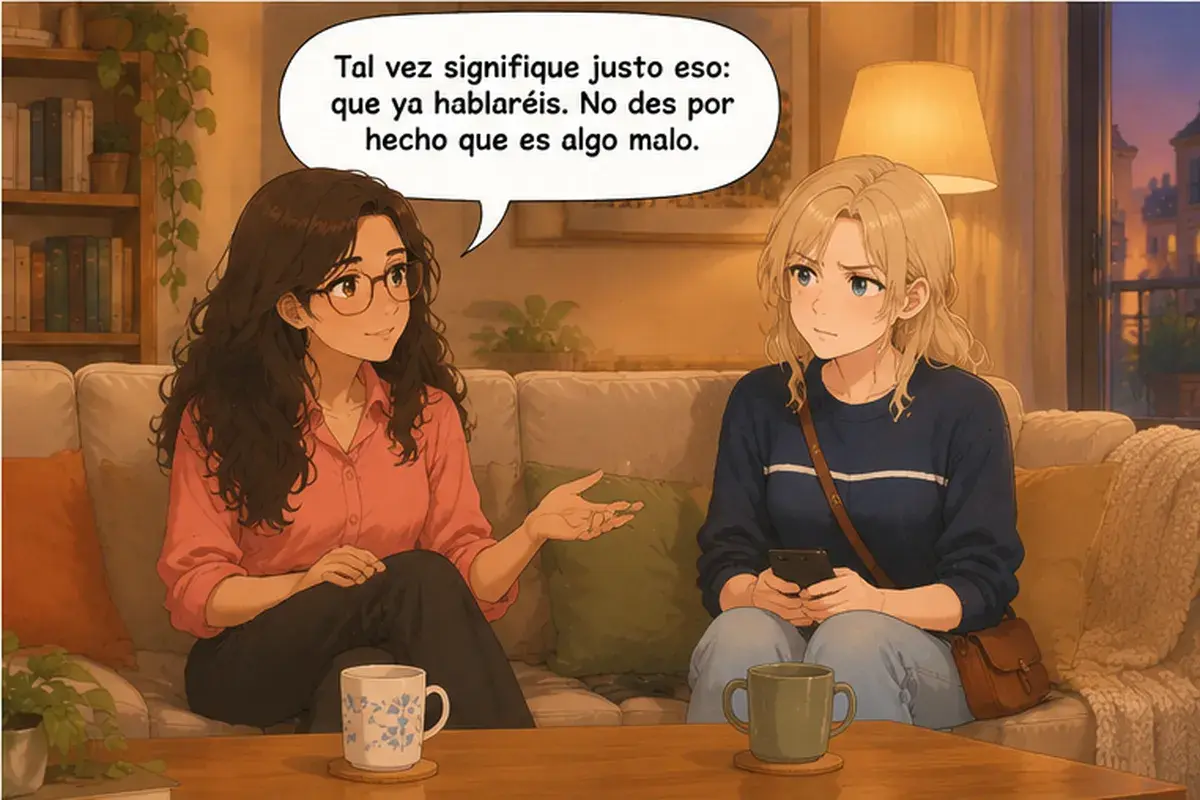
- Lucía
Tal vez signifique justo eso: que ya hablaréis. No des por hecho que es algo malo.
Maybe it means exactly that: that you two will talk. Don't assume it's something bad.
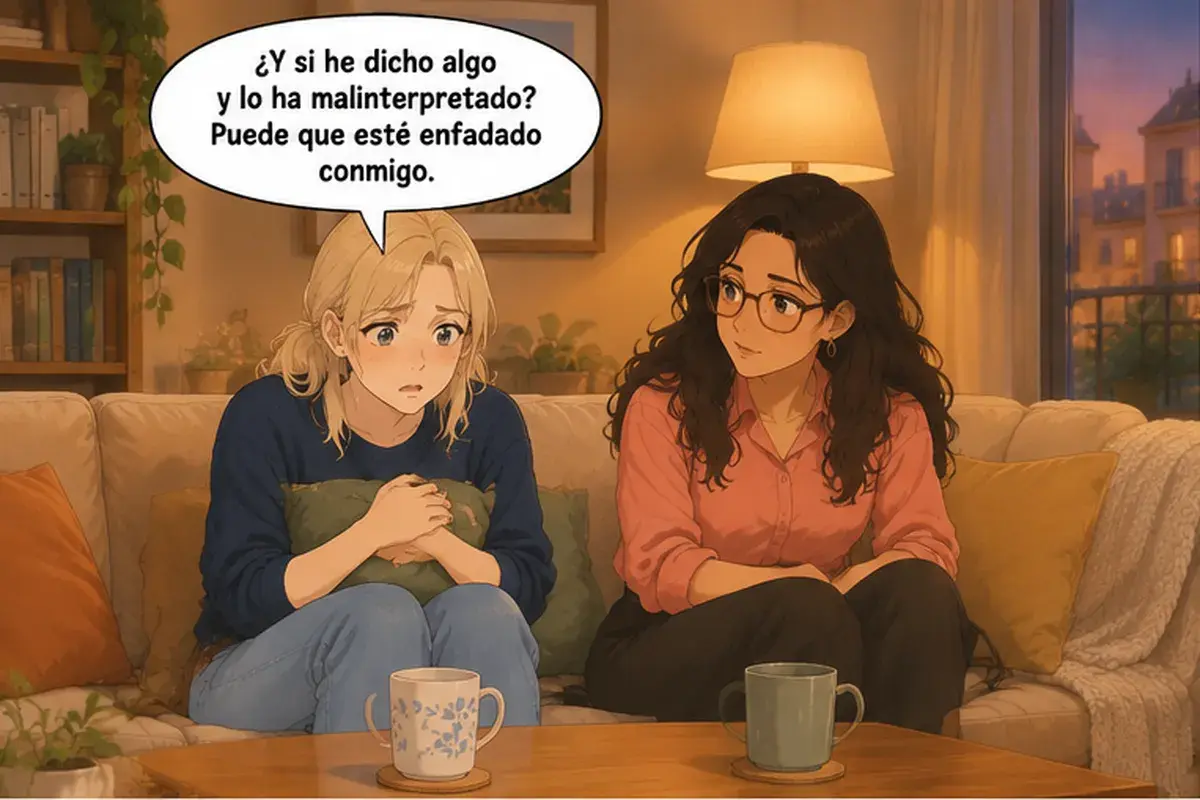
- Ana
¿Y si he dicho algo y lo ha malinterpretado? Puede que esté enfadado conmigo.
What if I've said something and he's misinterpreted it? He might be angry with me.
- Lucía
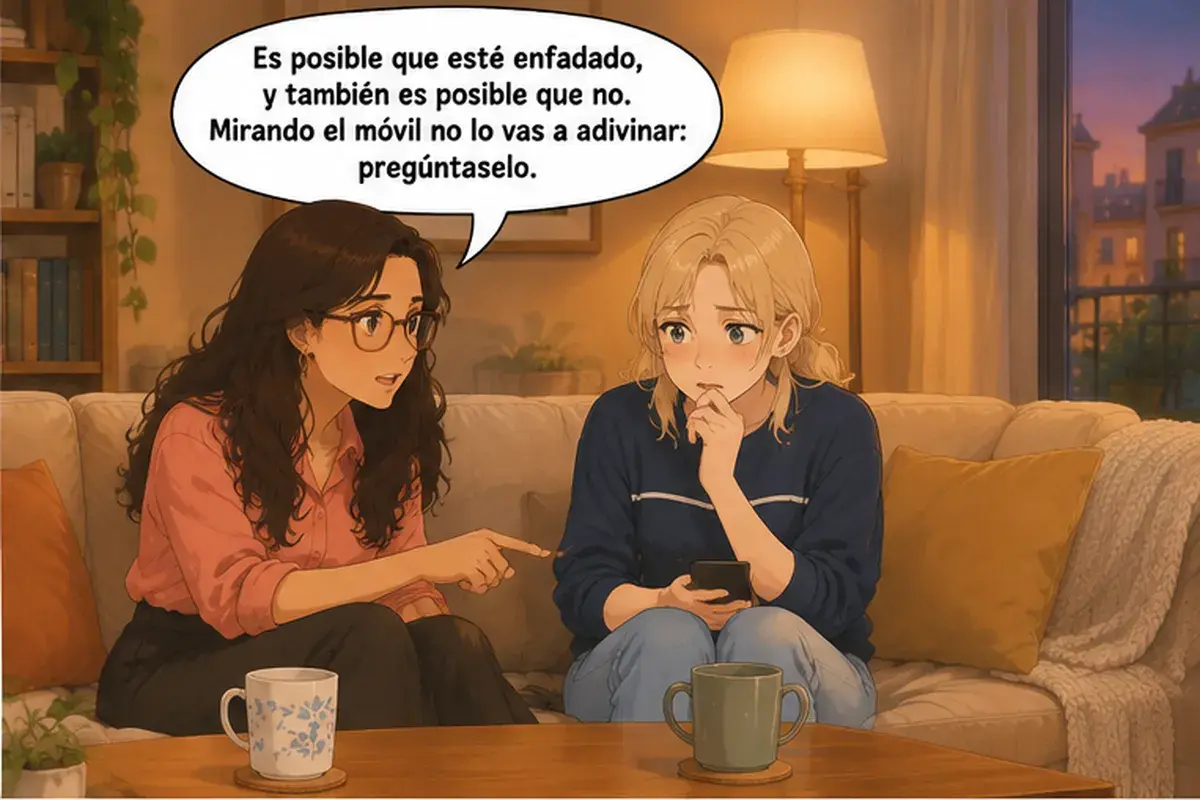
Es posible que esté enfadado, y también es posible que no. Mirando el móvil no lo vas a adivinar: pregúntaselo.
It's possible he's angry, and it's also possible he's not. You won't figure it out by looking at your phone: ask him.
- Ana
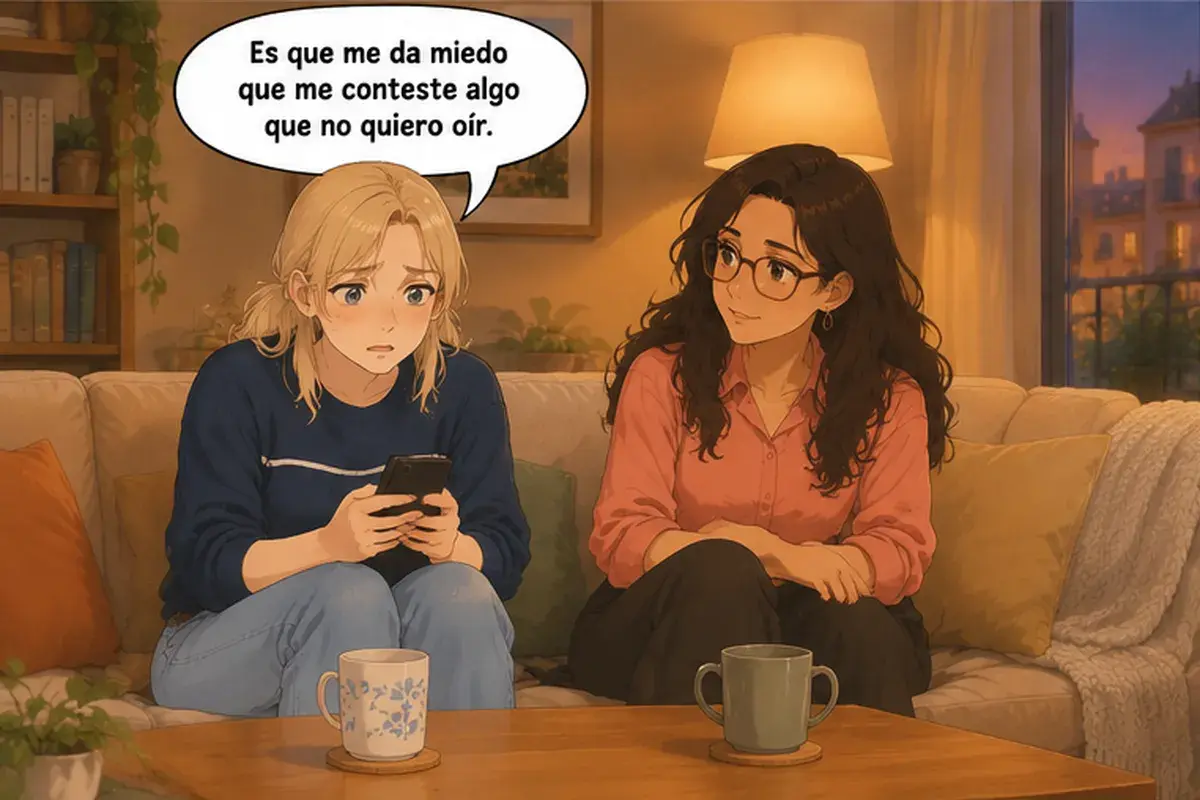
Es que me da miedo que me conteste algo que no quiero oír.
It's just that I'm afraid he'll tell me something I don't want to hear.
- Lucía
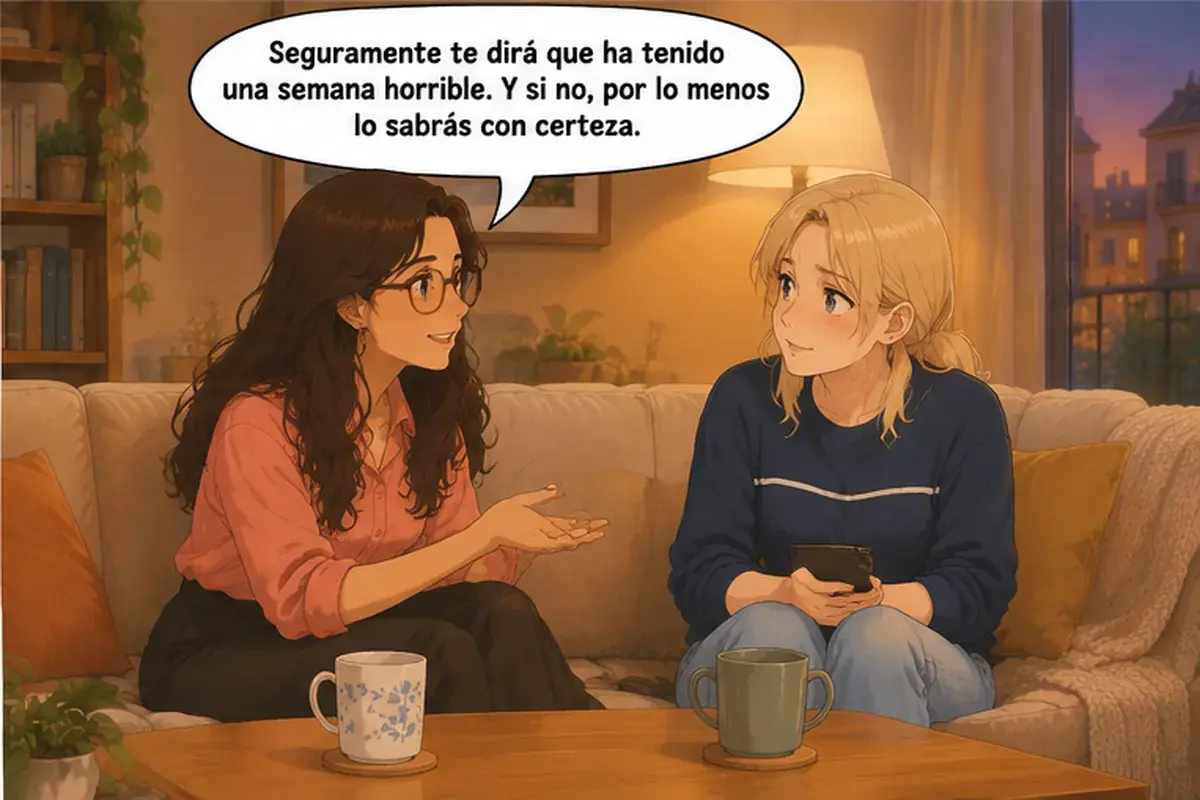
Seguramente te dirá que ha tenido una semana horrible. Y si no, por lo menos lo sabrás con certeza.
He'll probably tell you he's had a horrible week. And if not, at least you'll know for sure.
- Ana
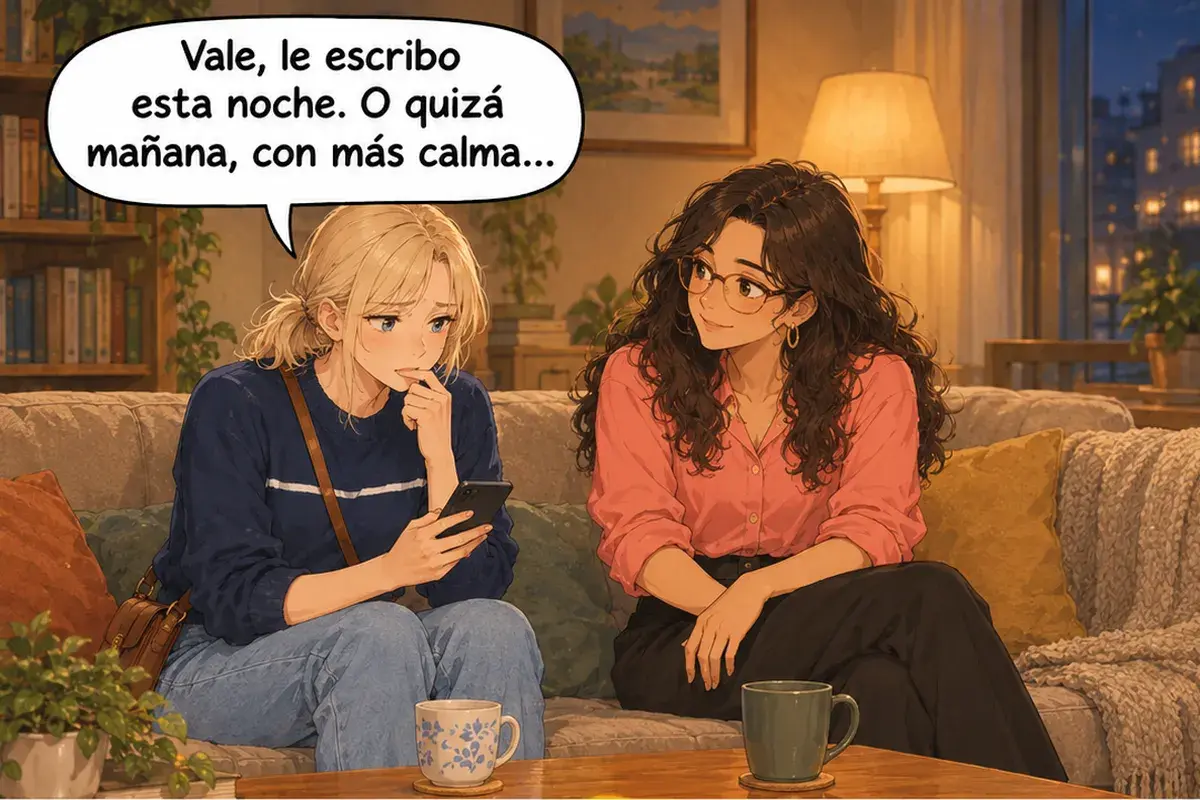
Vale, le escribo esta noche. O quizá mañana, con más calma...
OK, I'll write to him tonight. Or maybe tomorrow, when I'm calmer...
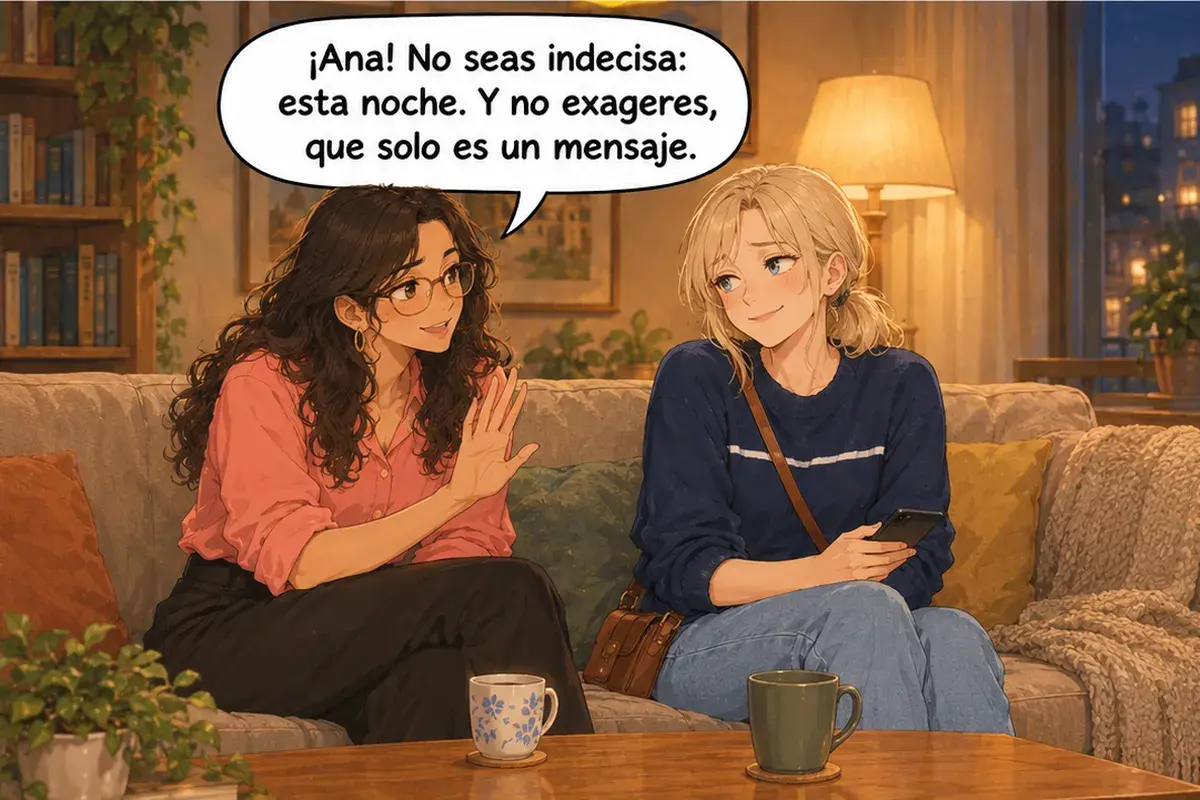
- Lucía
¡Ana! No seas indecisa: esta noche. Y no exageres, que solo es un mensaje.
Ana! Don't be indecisive: tonight. And don't exaggerate, it's just a message.
Grammar for this text
All the "maybes" in one conversation. Look at the verb form after each word:
- a lo mejor solo está liado, igual se le ha roto el móvil, seguramente te dirá — the normal form (indicative);
- puede que sea eso, es improbable que se le haya roto, es posible que esté enfadado — the subjunctive, always;
- quizá esté cansado, tal vez signifique — also the subjunctive: Lucía is guessing and doesn't know herself.
Se le ha roto — "his (phone) broke" (unit 1). After que the same phrase becomes se le haya roto (unit 9).
¿Acaso te ha dicho…? — "has he actually told you…?": a reproachful question, and the expected answer is "no". En principio — "that was the plan, unless something changes". Liado, comerse la cabeza, mogollón (a ton) and tía (girl, a friendly way to address a woman) are words for friends only.
Words and grammar of the unit: Say how likely something is.
Learn the words from the texts with flashcards
In the app, you can tap any word in a text to see its translation, forms and examples, and new words stick with flashcards. 15 minutes a day.
Start for freeEverything is open for free. No card needed to sign up.