

Spanish dialogue with translation · B2 · 17 lines
¿Qué dijo Nuria el viernes? What did Nuria say on Friday?
Comic · 17 panels
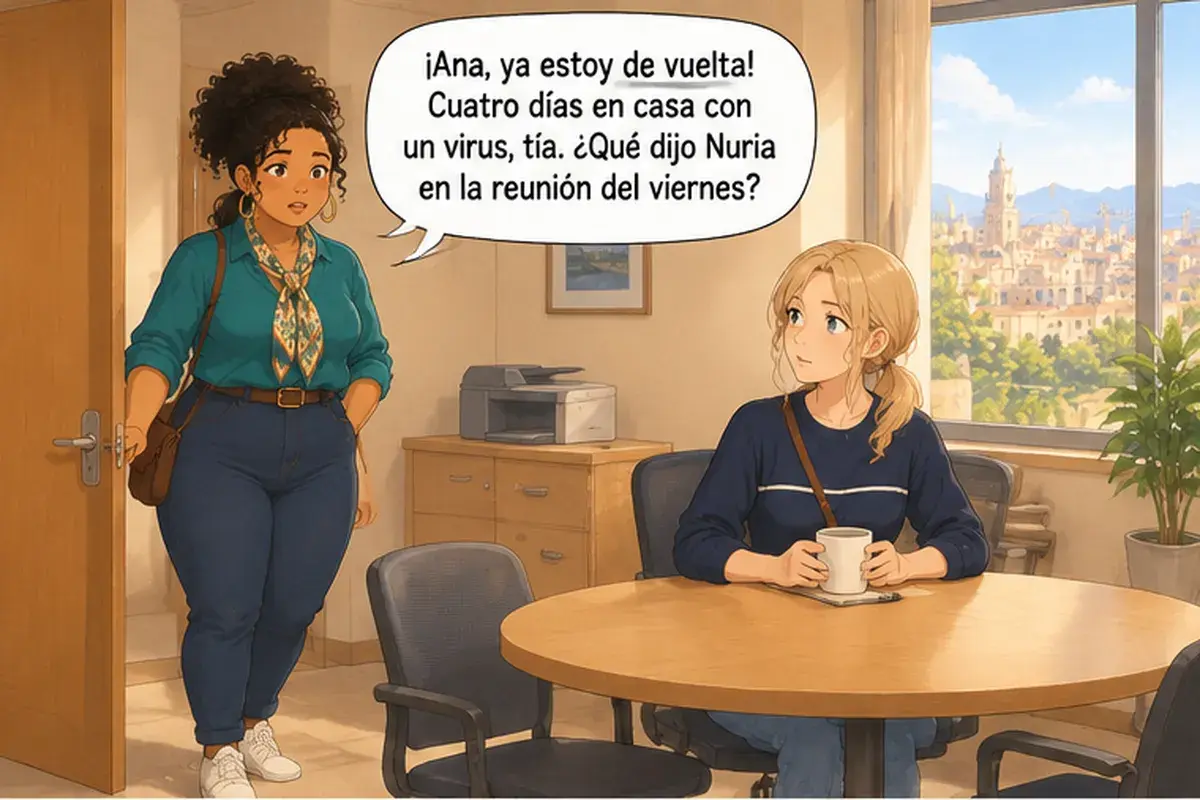
- Sonia
¡Ana, ya estoy de vuelta! Cuatro días en casa con un virus, tía. ¿Qué dijo Nuria en la reunión del viernes?
Ana, I'm back! Four days at home with a virus, girl. What did Nuria say at Friday's meeting?
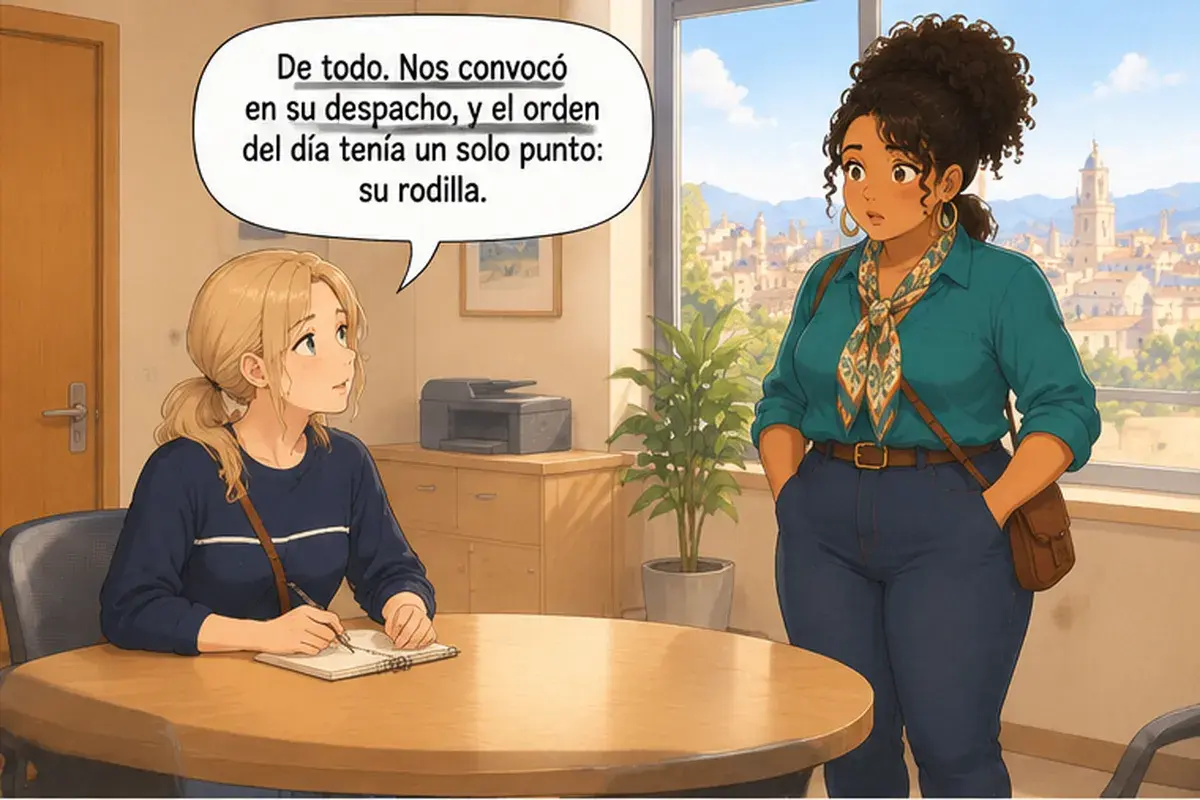
- Ana
De todo. Nos convocó en su despacho, y el orden del día tenía un solo punto: su rodilla.
All kinds of things. She called us into her office, and the agenda had just one item: her knee.
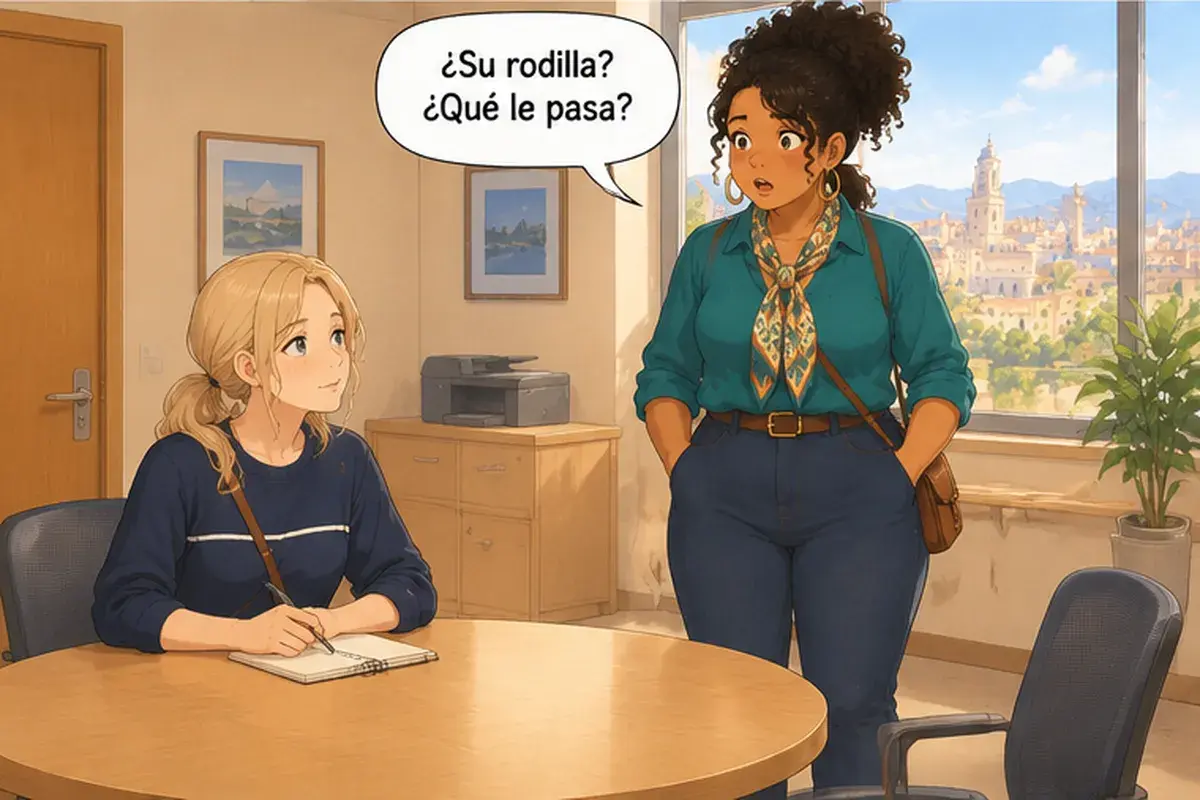
- Sonia
¿Su rodilla? ¿Qué le pasa?
Her knee? What's wrong with it?
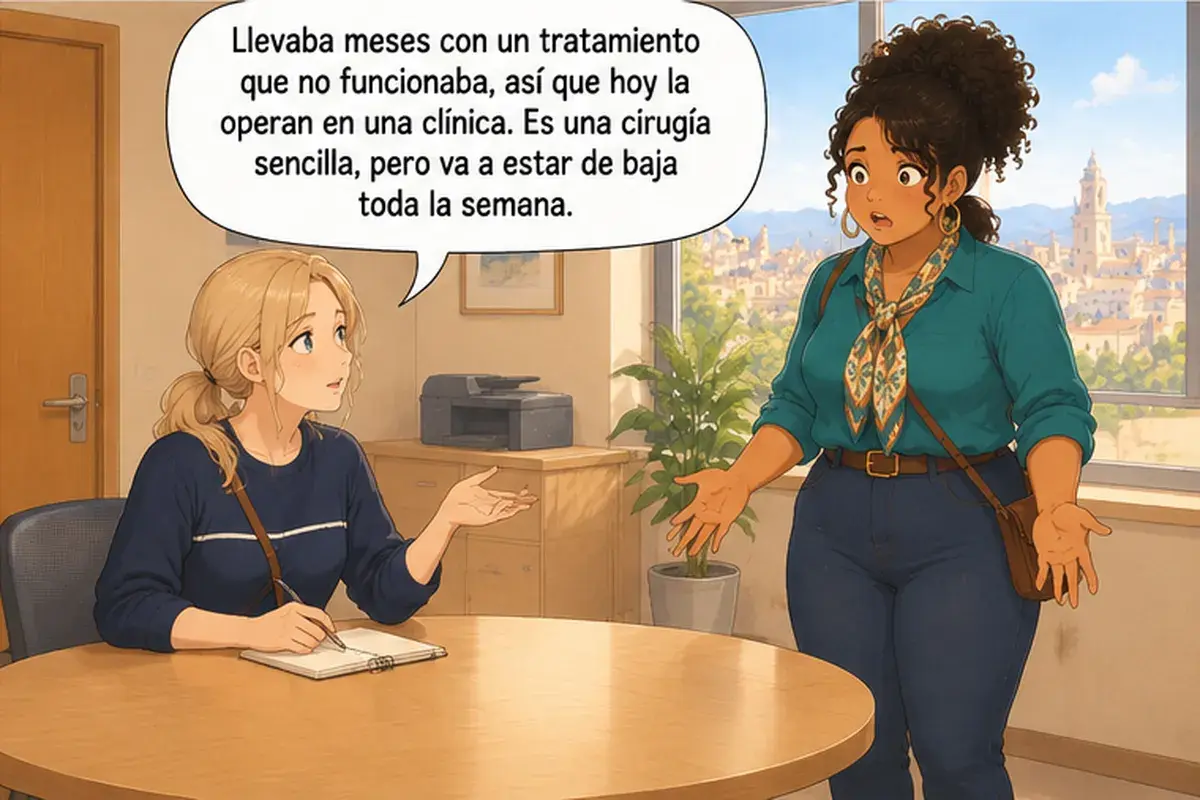
- Ana
Llevaba meses con un tratamiento que no funcionaba, así que hoy la operan en una clínica. Es una cirugía sencilla, pero va a estar de baja toda la semana.
For months she'd been on a treatment that wasn't working, so today they're operating on her at a clinic. It's a simple surgery, but she's going to be on sick leave all week.
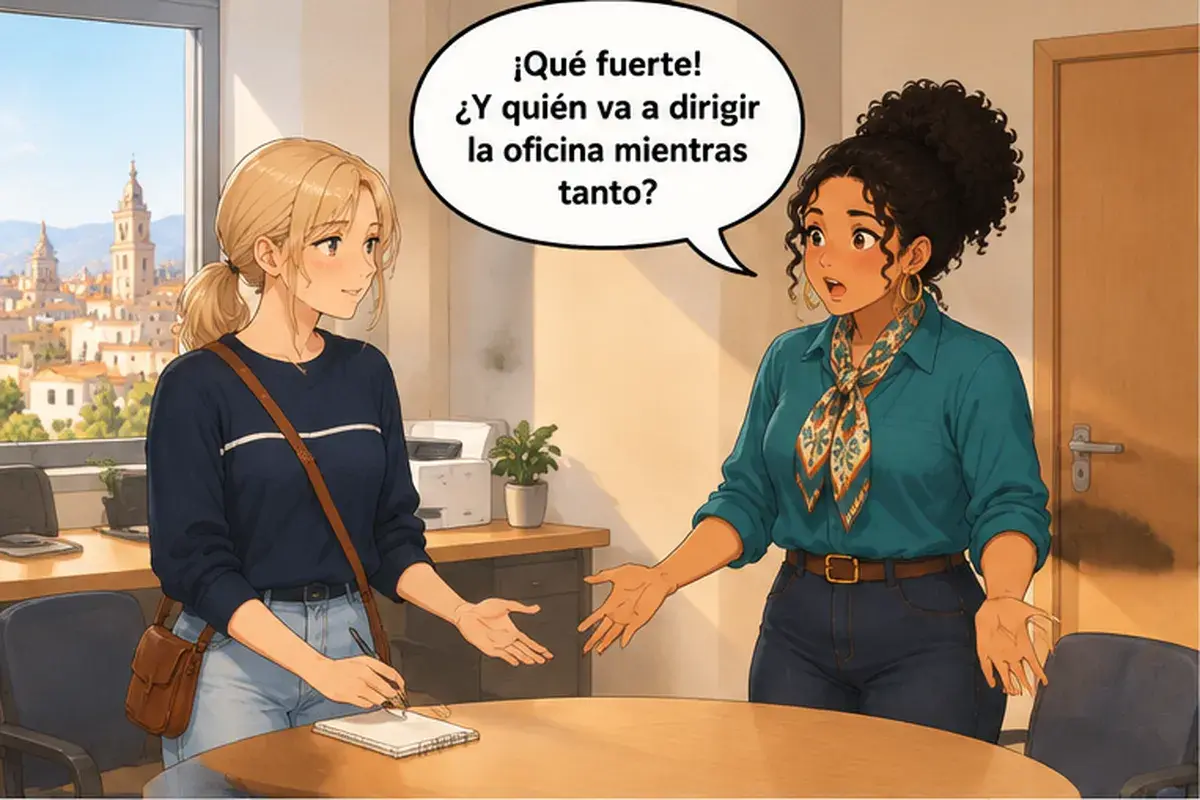
- Sonia
¡Qué fuerte! ¿Y quién va a dirigir la oficina mientras tanto?
Wow, that's intense! And who's going to run the office in the meantime?
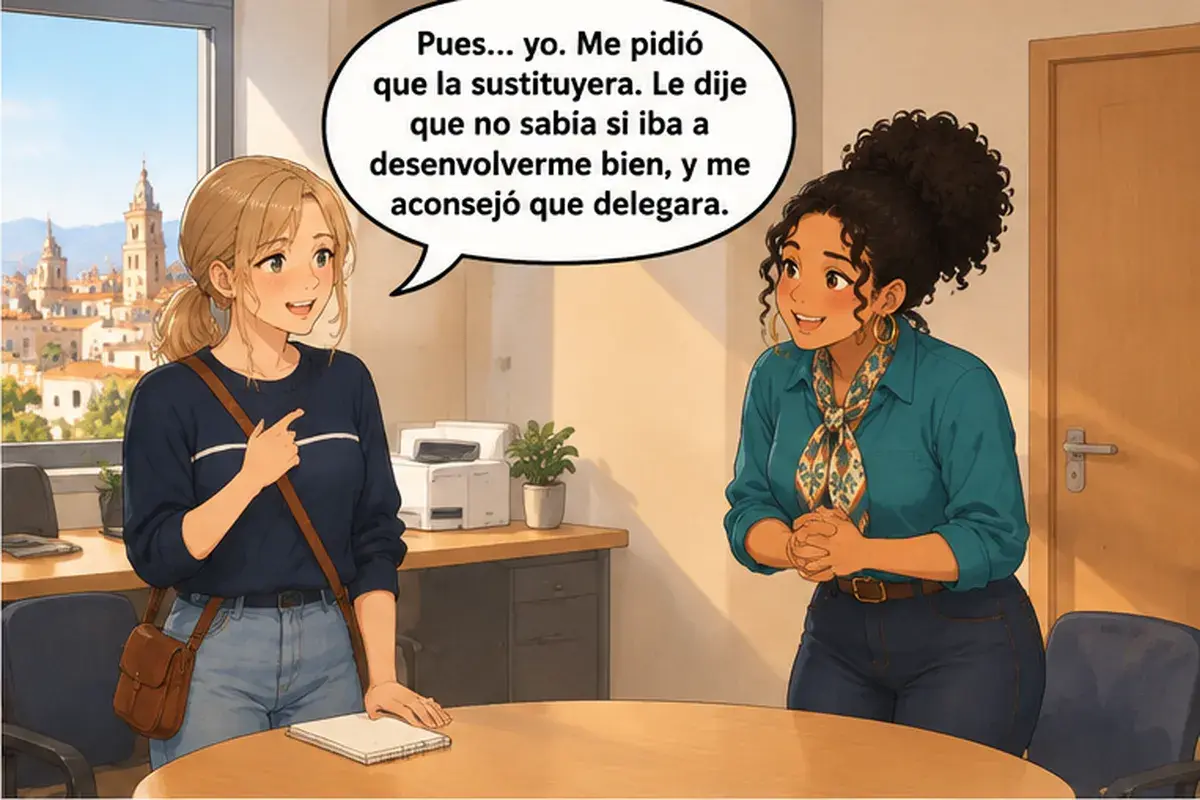
- Ana
Pues… yo. Me pidió que la sustituyera. Le dije que no sabía si iba a desenvolverme bien, y me aconsejó que delegara.
Well… me. She asked me to fill in for her. I told her I didn't know if I was going to manage well, and she advised me to delegate.
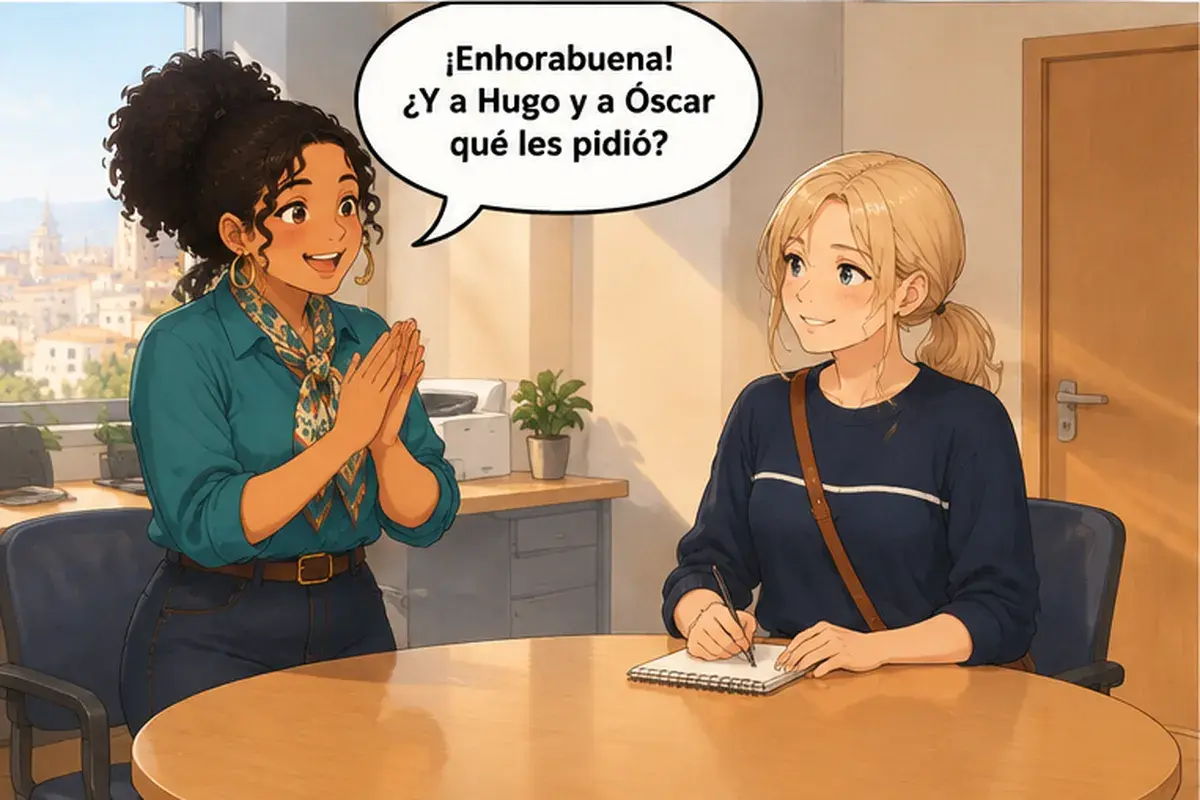
- Sonia
¡Enhorabuena! ¿Y a Hugo y a Óscar qué les pidió?
Congratulations! And what did she ask Hugo and Óscar to do?
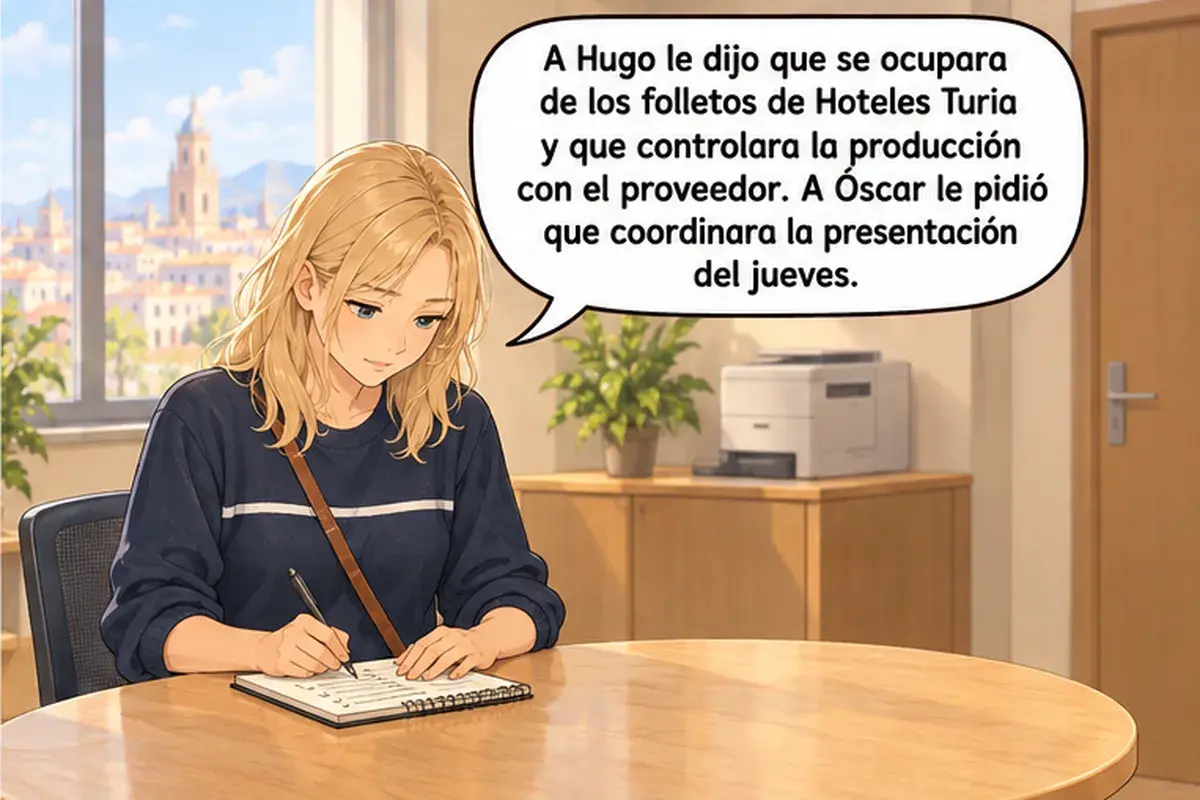
- Ana
A Hugo le dijo que se ocupara de los folletos de Hoteles Turia y que controlara la producción con el proveedor. A Óscar le pidió que coordinara la presentación del jueves.
She told Hugo to take care of the Hoteles Turia brochures and to keep track of production with the supplier. She asked Óscar to coordinate Thursday's presentation.
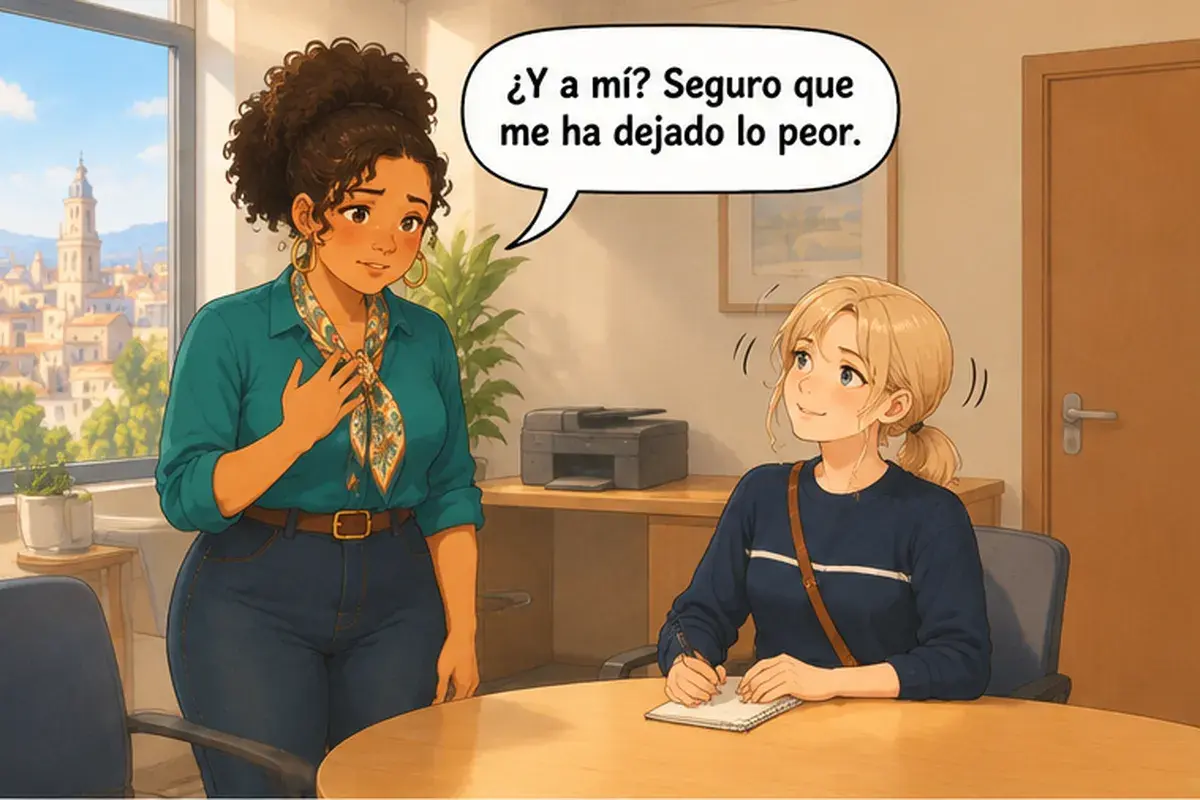
- Sonia
¿Y a mí? Seguro que me ha dejado lo peor.
And me? I bet she's left me the worst part.
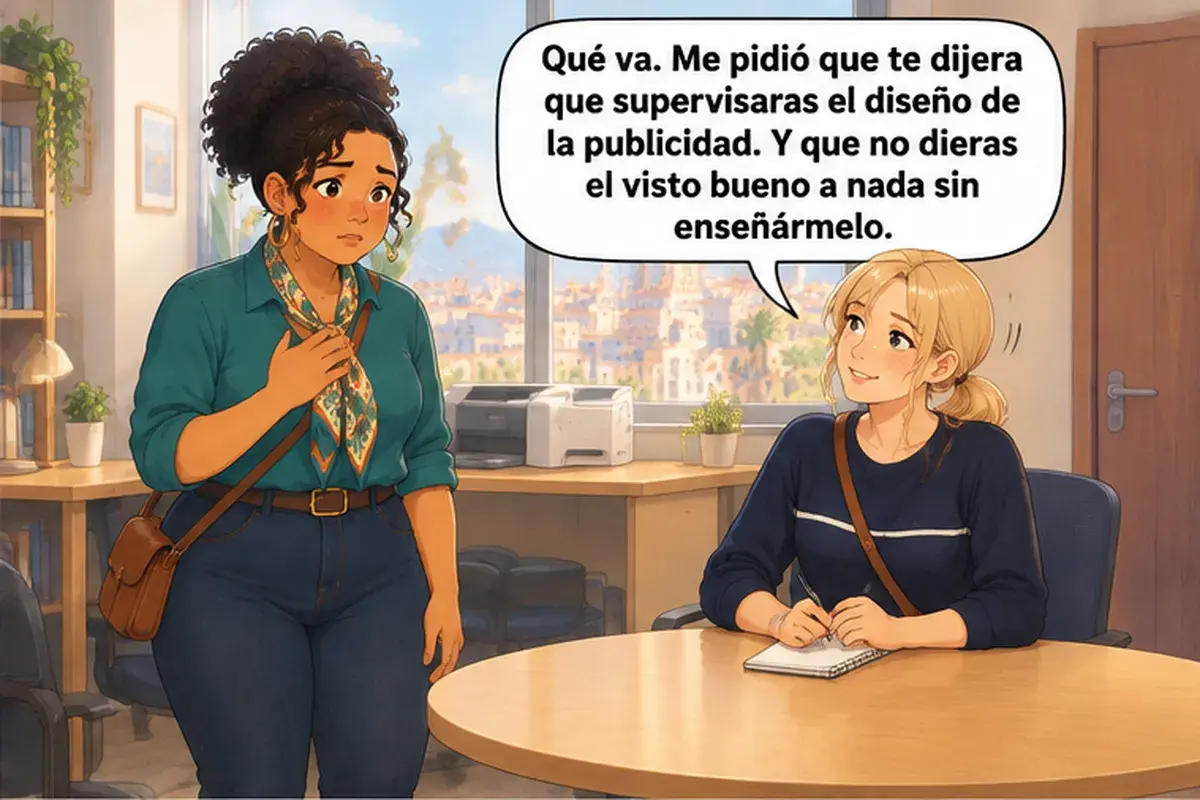
- Ana
Qué va. Me pidió que te dijera que supervisaras el diseño de la publicidad. Y que no dieras el visto bueno a nada sin enseñármelo.
Not at all. She asked me to tell you to oversee the advertising design. And not to give the go-ahead to anything without showing it to me.
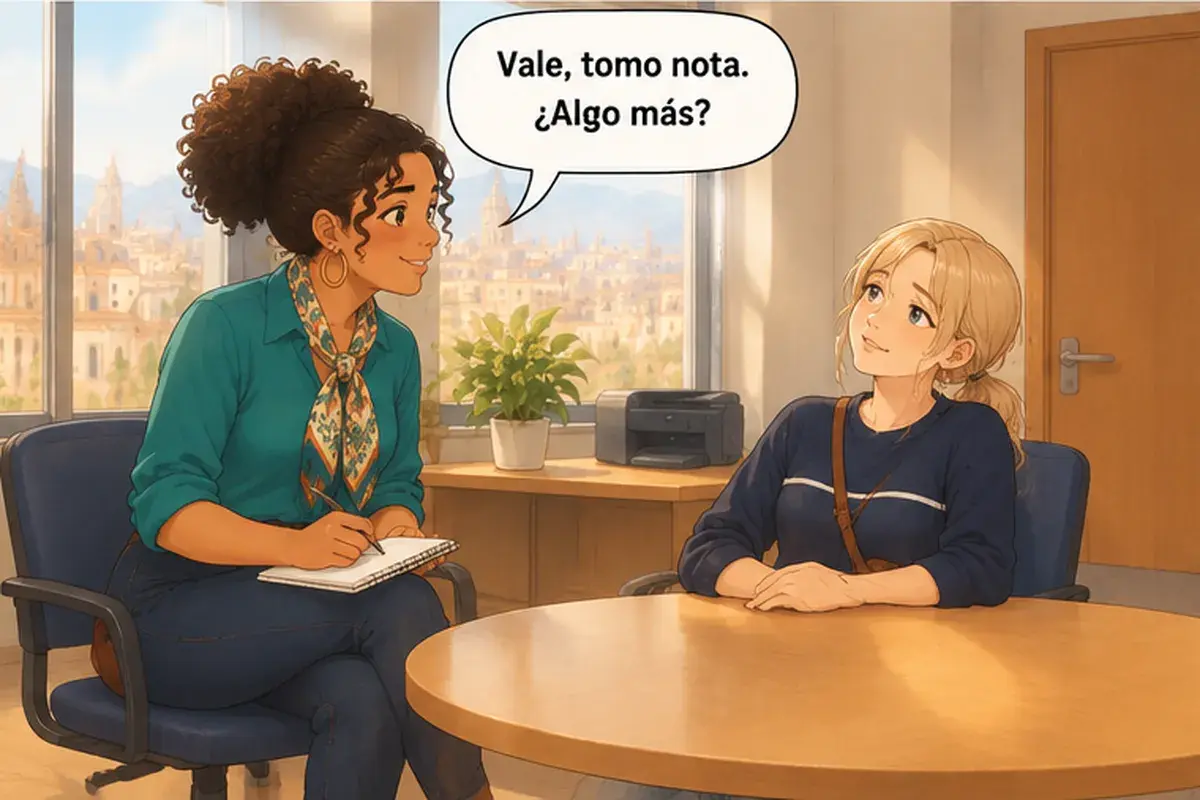
- Sonia
Vale, tomo nota. ¿Algo más?
OK, noted. Anything else?
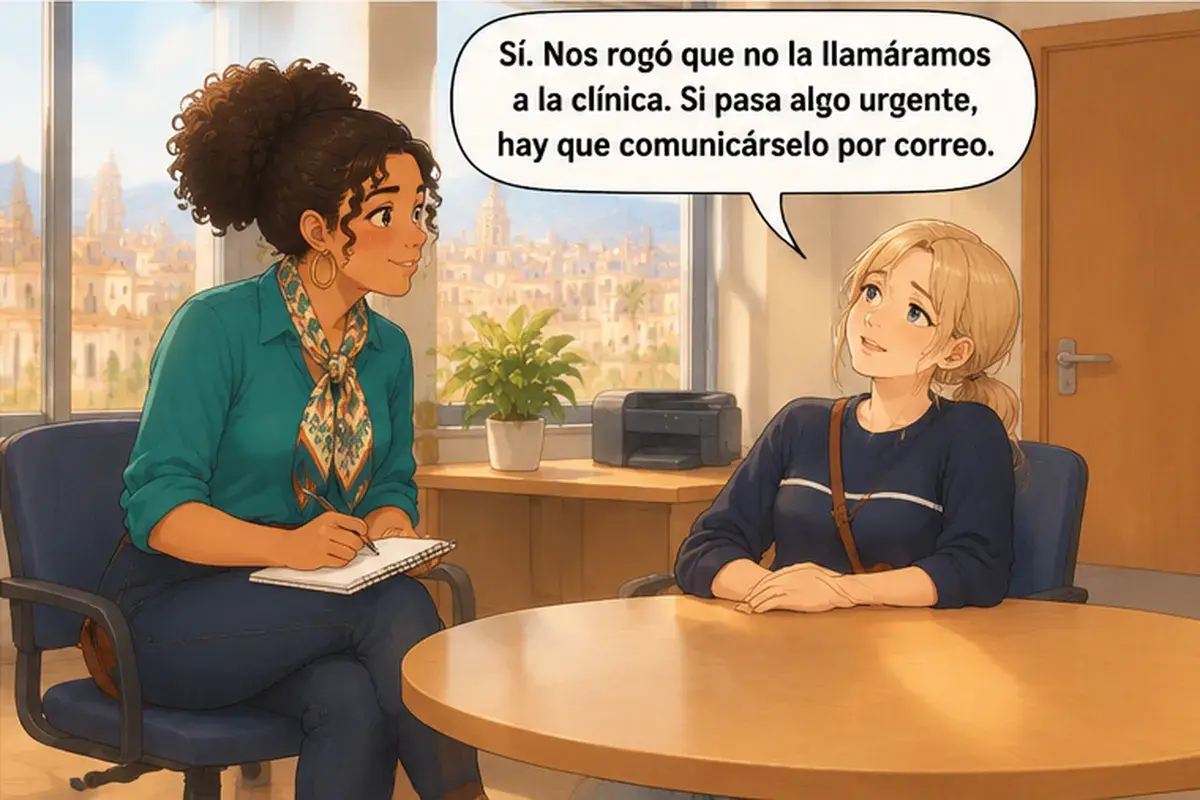
- Ana
Sí. Nos rogó que no la llamáramos a la clínica. Si pasa algo urgente, hay que comunicárselo por correo.
Yes. She begged us not to call her at the clinic. If something urgent happens, we have to let her know by email.
- Sonia
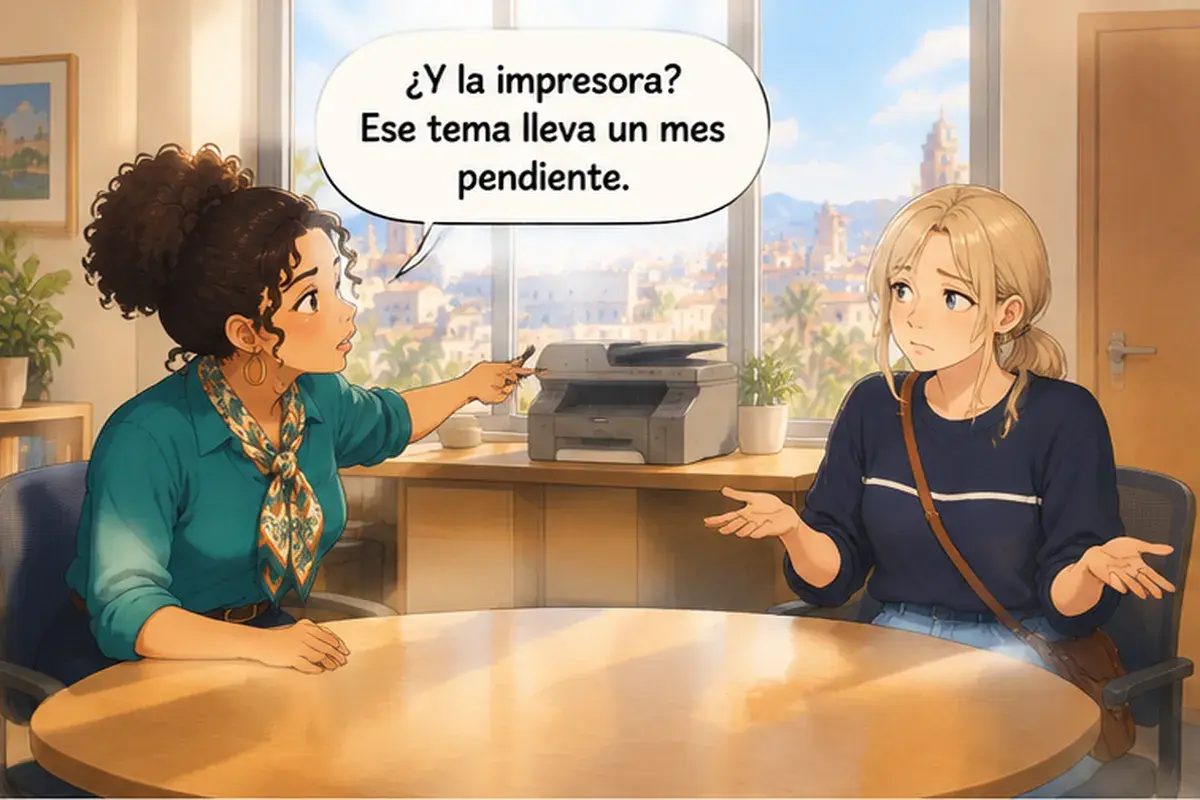
¿Y la impresora? Ese tema lleva un mes pendiente.
And the printer? That issue has been pending for a month.
- Ana
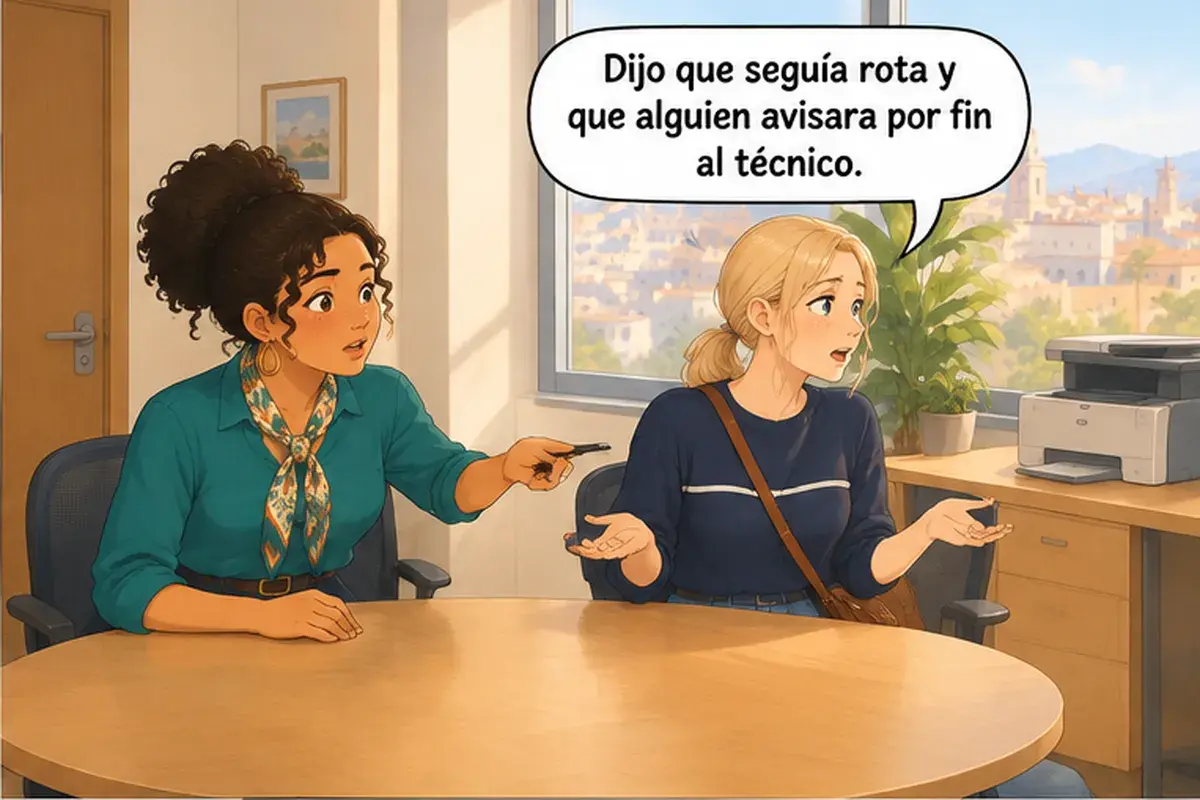
Dijo que seguía rota y que alguien avisara por fin al técnico.
She said it was still broken and that someone should finally call the technician.
- Sonia
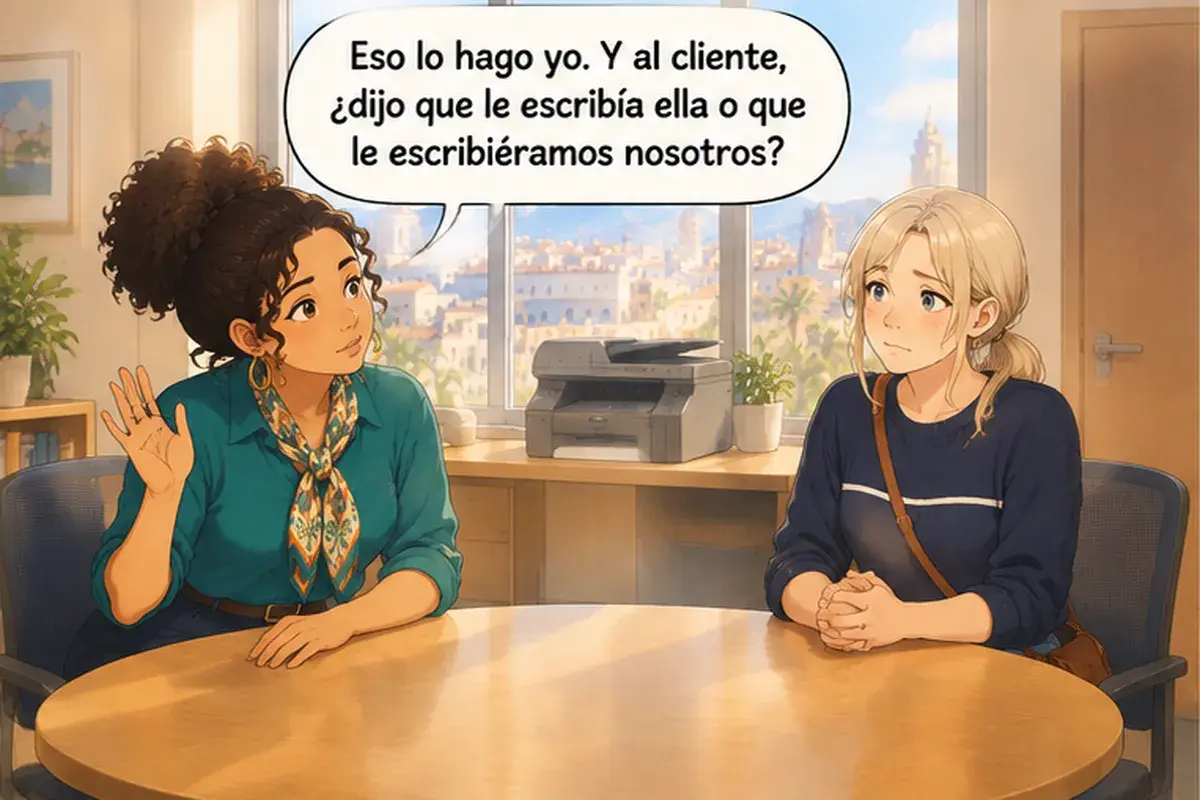
Eso lo hago yo. Y al cliente, ¿dijo que le escribía ella o que le escribiéramos nosotros?
I'll do that. And the client: did she say she'd write to him herself, or that we should write to him?
- Ana
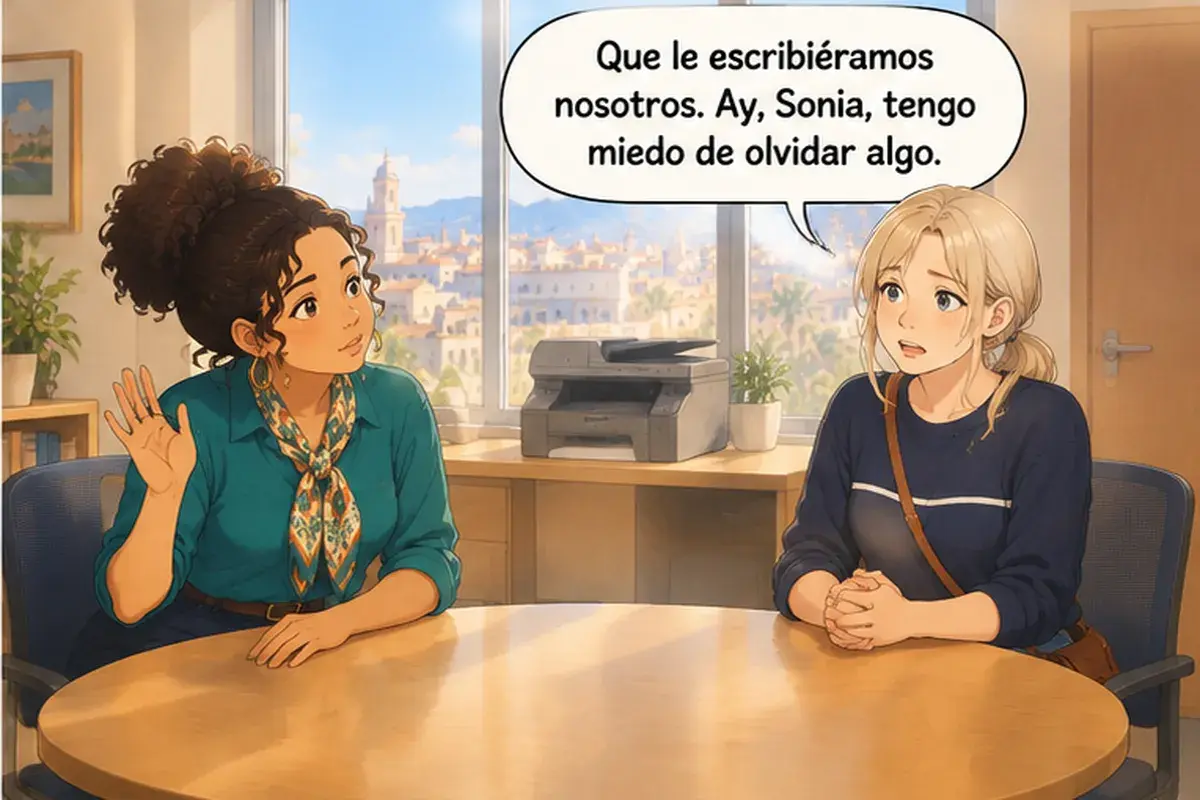
Que le escribiéramos nosotros. Ay, Sonia, tengo miedo de olvidar algo.
That we should write to him. Oh, Sonia, I'm afraid of forgetting something.
- Sonia
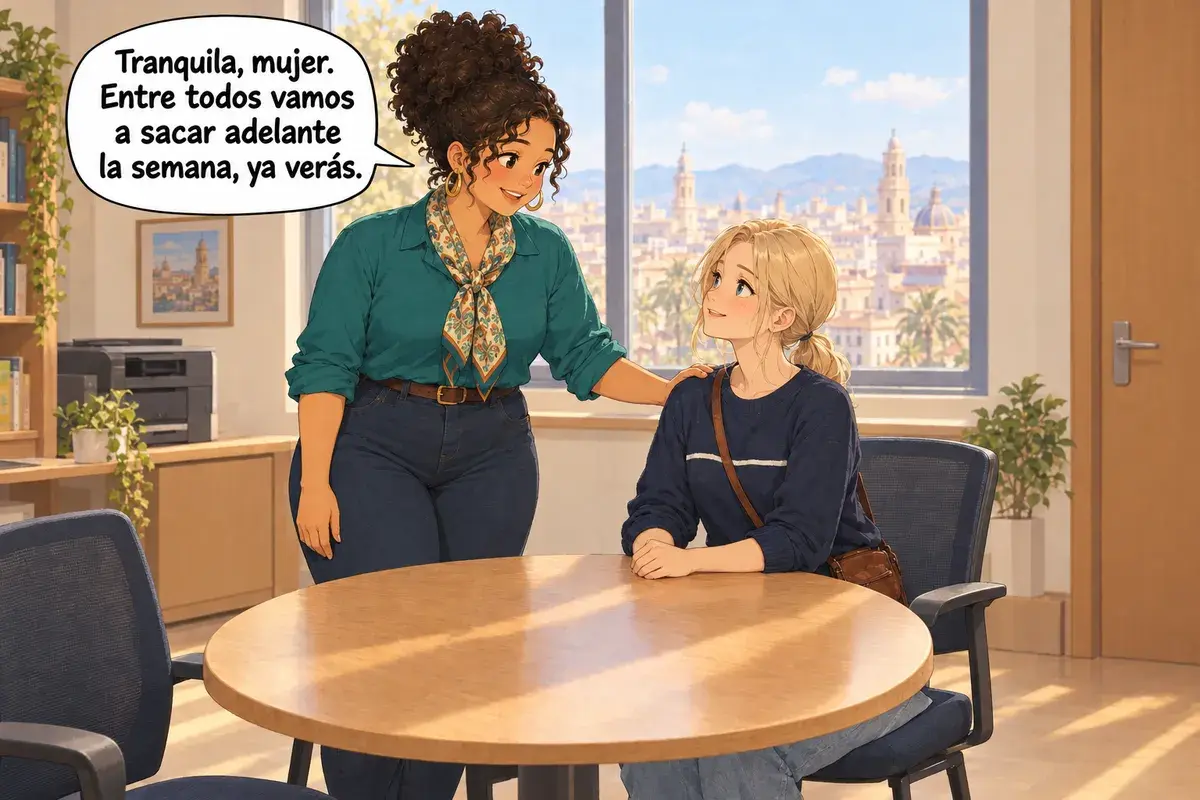
Tranquila, mujer. Entre todos vamos a sacar adelante la semana, ya verás.
Relax. Between all of us, we're going to pull off this week, you'll see (to a woman).
Grammar for this text
Reporting a request. Nuria spoke on Friday, so after que the verb is in the imperfect subjunctive: me pidió que la sustituyera ("she asked me to fill in for her"), me aconsejó que delegara ("she advised me to delegate"), nos rogó que no la llamáramos ("she begged us not to call her").
A request inside a request: me pidió que te dijera que supervisaras el diseño — "she asked me to tell you to oversee the design". Both verbs are in the subjunctive, because both "tell" and "oversee" are instructions.
A fact or an order. Dijo que seguía rota is a fact, so it takes the normal form: "she said it was still broken". Y que alguien avisara por fin al técnico is an order, so it takes the subjunctive: "and that someone should finally call the technician". Sonia's question works the same way: ¿dijo que le escribía ella ("did she say she'd write to them herself") o que le escribiéramos nosotros? ("or that we should write to them?").
Colloquial. Tía is a casual way to address a female friend, like "girl"; qué va means "no way, not at all". La operan — "they're operating on her": Spanish uses an impersonal "they" here.
Words and grammar of the unit: Pass on what your boss asked.
Learn the words from the texts with flashcards
In the app, you can tap any word in a text to see its translation, forms and examples, and new words stick with flashcards. 15 minutes a day.
Start for freeEverything is open for free. No card needed to sign up.