

Spanish dialogue with translation · B1 · 18 lines
Quiero que seas sincero I want you to be honest
Comic · 18 panels

- Ana
Diego, llevas tres semanas sin llamarme. Quiero aclarar las cosas contigo.
Diego, you haven't called me in three weeks. I want to clear things up with you.

- Diego
No pasa nada, Ana. He tenido mucho trabajo, nada más.
It's OK, Ana. I've had a lot of work, that's all.

- Ana
Te pido que me digas la verdad. ¿Te ha herido algo que he dicho?
I'm asking you to tell me the truth. Did something I said hurt you?

- Diego
No, mujer, tú no me has hecho daño. No eres tú, soy yo.
Oh no, of course not, you haven't hurt me. It's not you, it's me (to a woman).

- Ana
Entonces quiero que seas sincero conmigo. Para eso están los amigos.
Then I want you to be honest with me. That's what friends are for (to a man).

- Diego
Vale, voy a hablar claro. Lo estoy pasando mal: en Valencia casi no tengo amigos, excepto tú.
OK, I'm going to speak plainly. I'm having a hard time: in Valencia I have almost no friends, except you.

- Ana
¿Y tus amigos de Madrid?
What about your friends from Madrid?
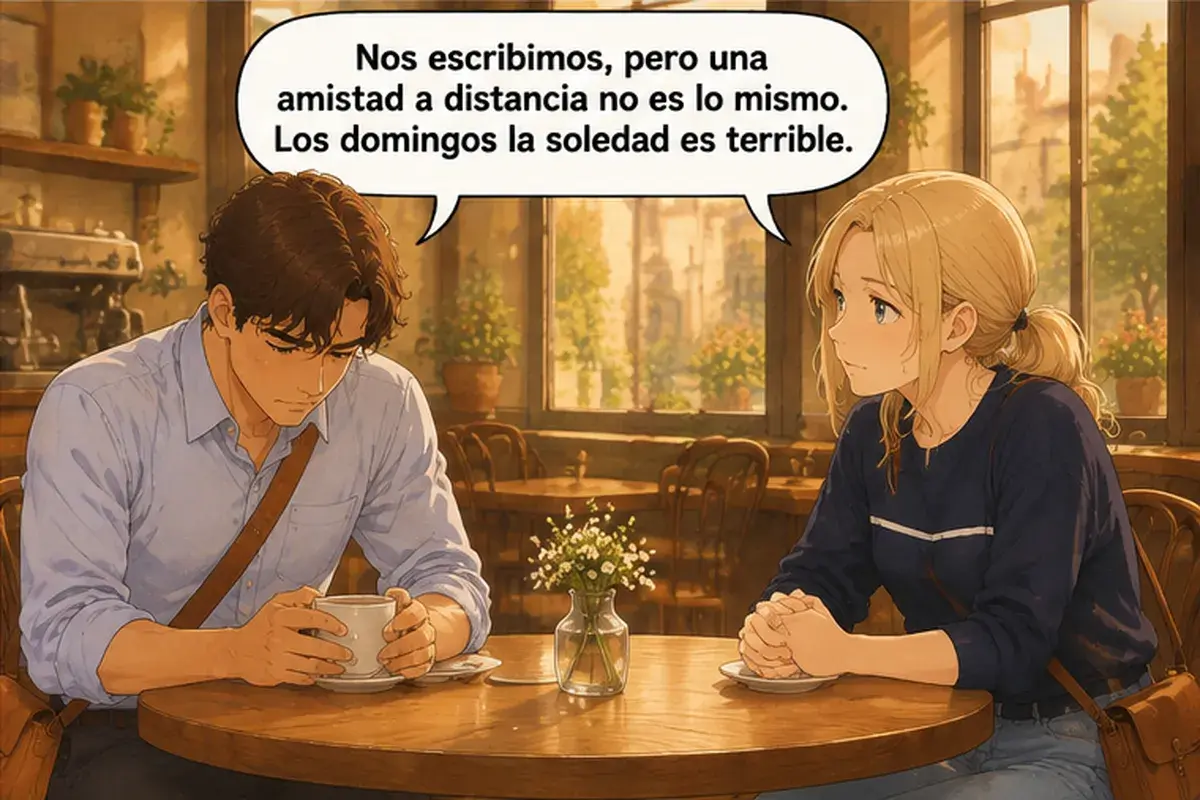
- Diego
Nos escribimos, pero una amistad a distancia no es lo mismo. Los domingos la soledad es terrible.
We write to each other, but a long-distance friendship isn't the same. On Sundays the loneliness is terrible.
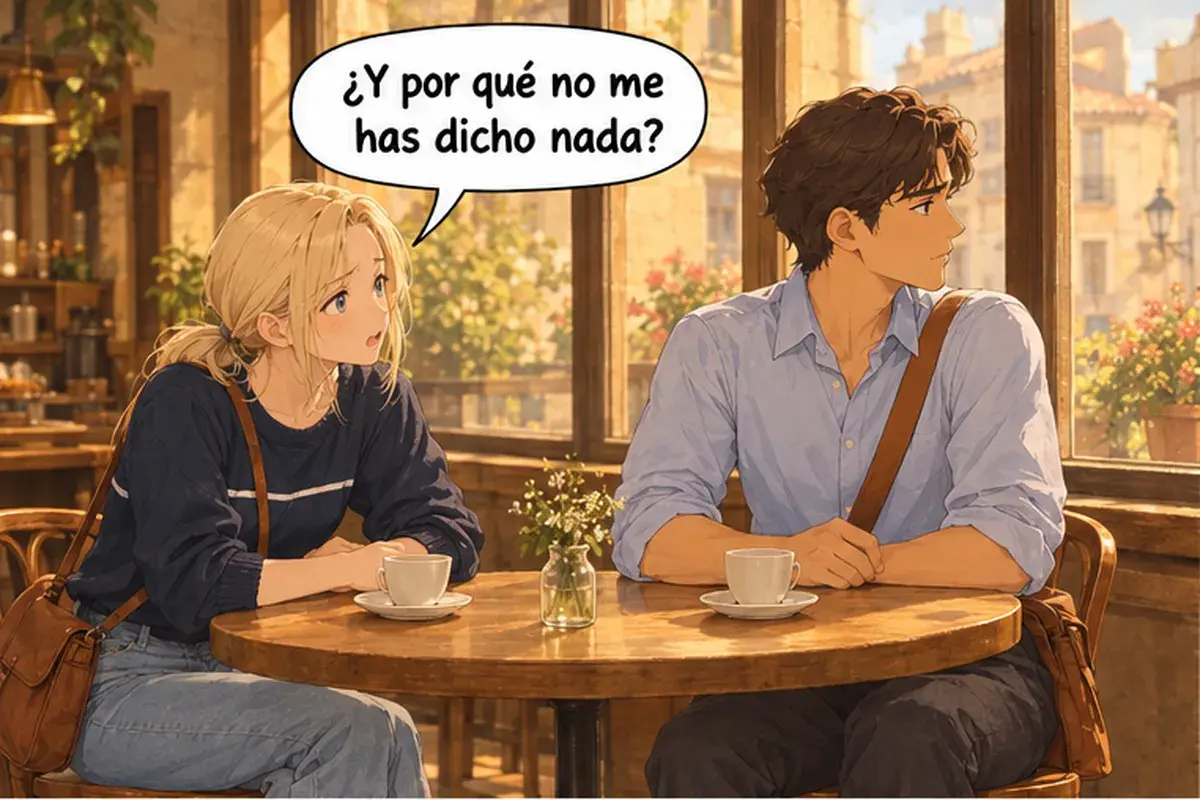
- Ana
¿Y por qué no me has dicho nada?
And why haven't you told me anything?
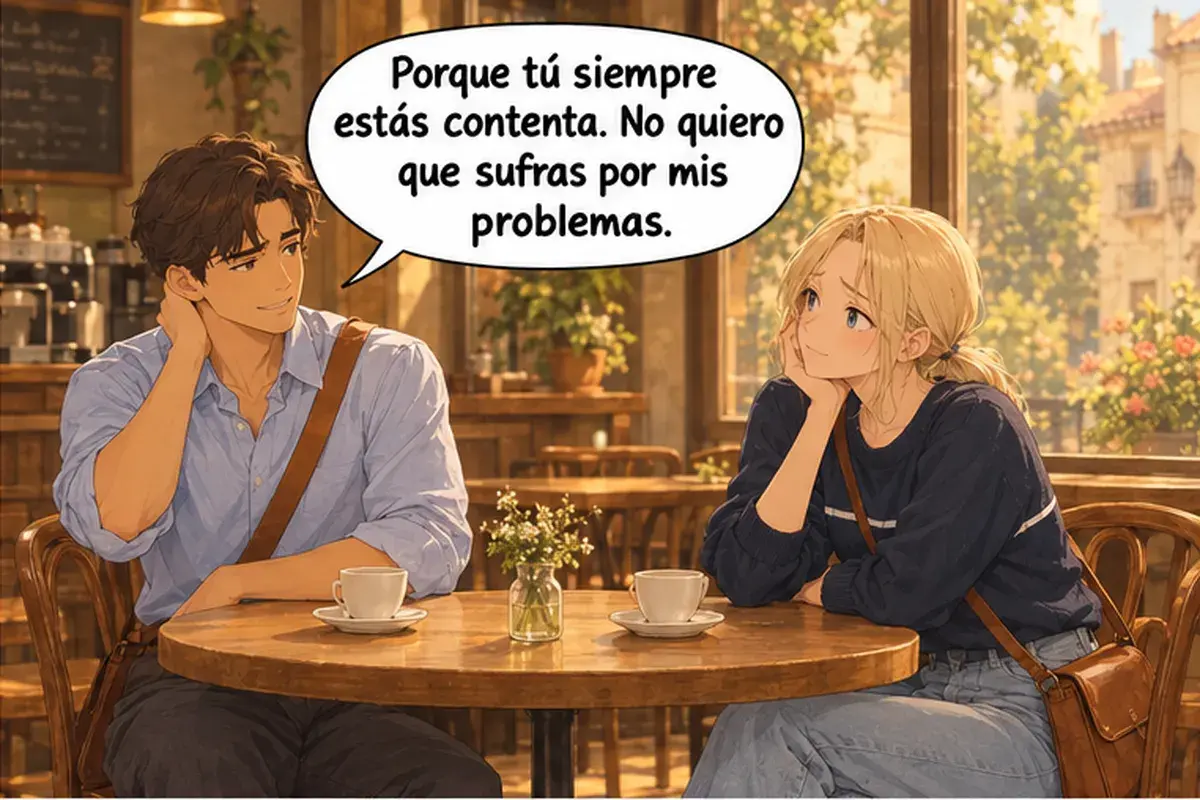
- Diego
Porque tú siempre estás contenta. No quiero que sufras por mis problemas.
Because you're always happy. I don't want you to suffer over my problems (to a woman).

- Ana
¡Qué tonto eres! Te comprendo muy bien: mi primer año aquí fue igual de duro.
You're so silly! I understand you very well: my first year here was just as hard (to a man).
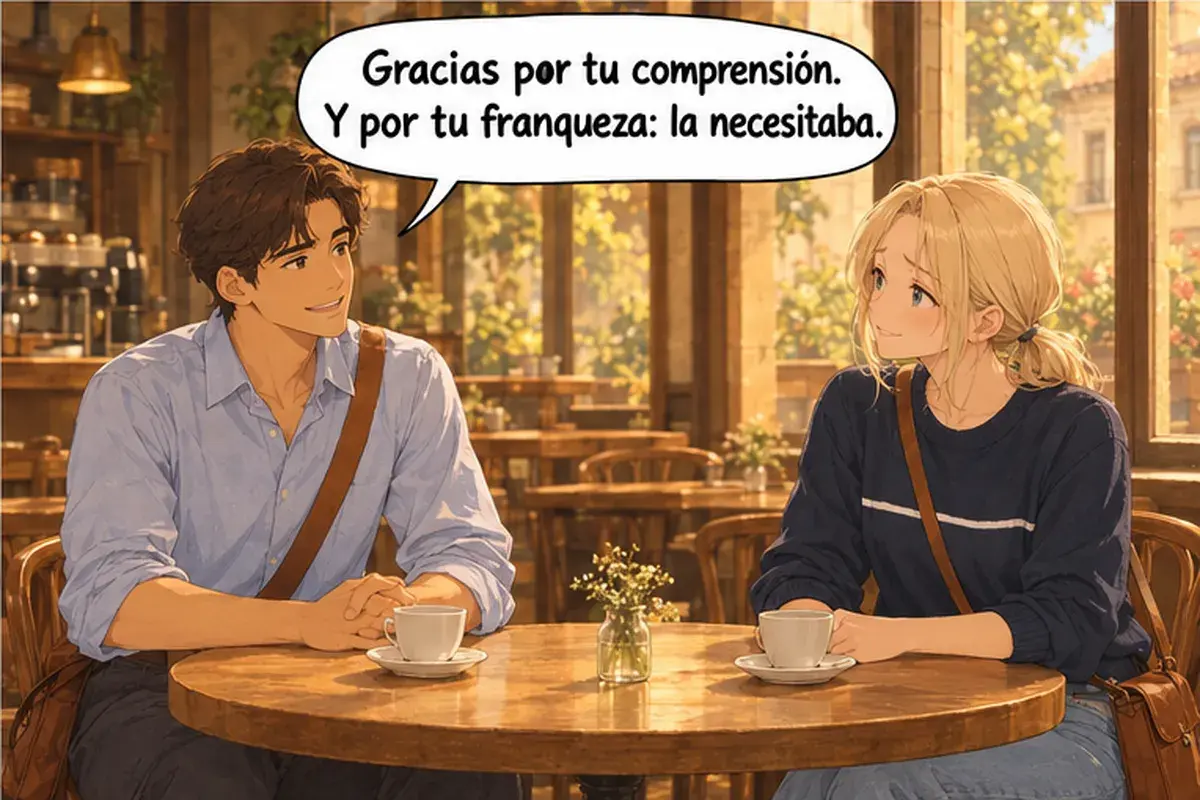
- Diego
Gracias por tu comprensión. Y por tu franqueza: la necesitaba.
Thanks for your understanding. And for your frankness: I needed it.

- Ana
Si un día estás mal, quiero que me llames, a cualquier hora. Y te aconsejo que salgas más.
If you're ever feeling down, I want you to call me, any time of day. And I advise you to go out more.
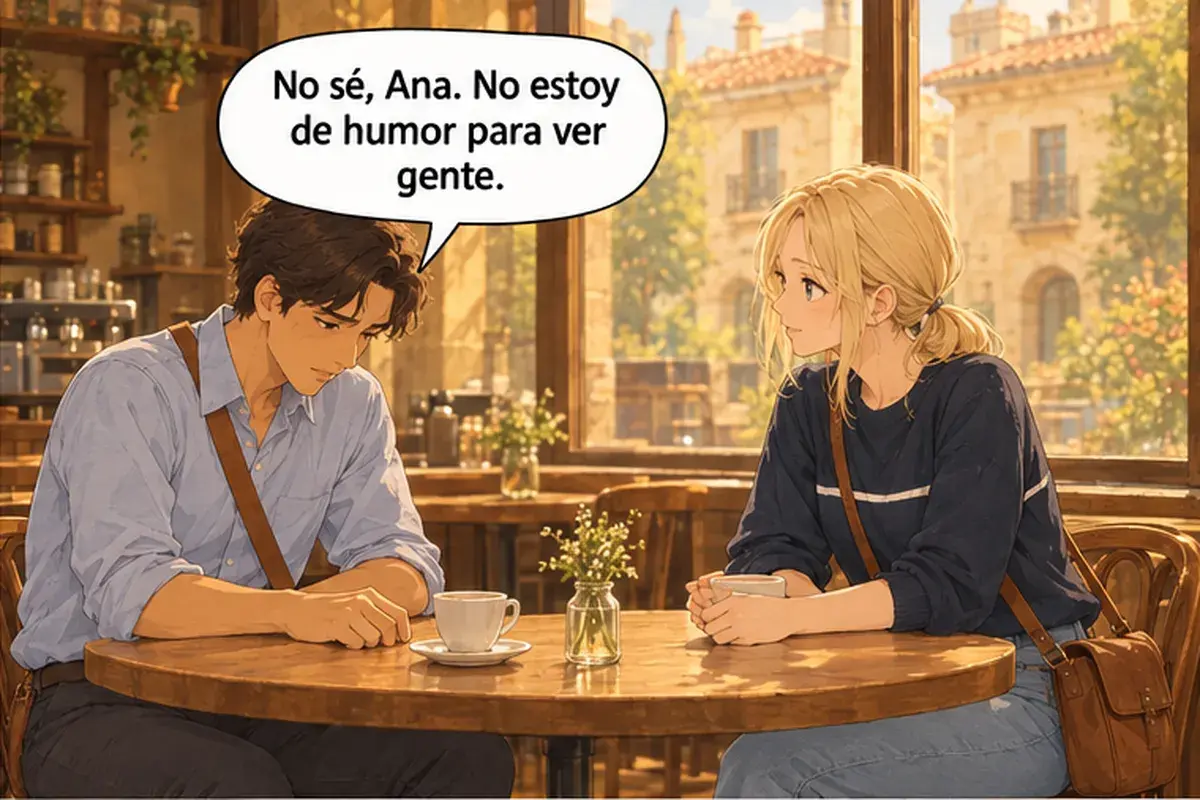
- Diego
No sé, Ana. No estoy de humor para ver gente.
I don't know, Ana. I'm not in the mood to see people.

- Ana
El sábado ceno con Pablo y Lucía. ¡Te ruego que vengas! Vamos a animarte, te lo prometo.
On Saturday I'm having dinner with Pablo and Lucía. I'm begging you to come! We're going to cheer you up, I promise you.

- Diego
Está bien, iré. Gracias por tu apoyo. Me alegro de que estés aquí.
All right, I'll go. Thanks for your support. I'm glad you're here.

- Ana
Y yo espero que la próxima vez te desahogues antes. Gracias por sincerarte conmigo.
And I hope that next time you vent sooner. Thanks for opening up to me.

- Diego
Prometido. Eres una amiga muy leal. Ojalá no cambies nunca.
I promise. You're a very loyal friend. Hopefully you'll never change (to a woman).
Grammar for this text
One person or two. Quiero aclarar las cosas — Ana wants it and will clear things up herself, so it's the infinitive. Quiero que seas sincero, quiero que me llames — Ana wants it, but Diego has to do it: que + subjunctive (seas comes from ser).
Requests and advice work the same way: te pido que me digas la verdad, te aconsejo que salgas más, te ruego que vengas. Rogar is stronger than pedir: "I'm begging you".
Hopes and wishes: espero que la próxima vez te desahogues antes, ojalá no cambies nunca. With a negative: no quiero que sufras — "I don't want you to suffer".
A ready-made phrase: me alegro de que estés aquí — "I'm glad you're here". The subjunctive follows it too; the rule comes later.
Llevas tres semanas sin llamarme — "you haven't called me in three weeks". You know llevar + a period of time (unit 1); sin + infinitive after it shows how long someone has not done something.
Colloquial Spanish. No, mujer — "oh no, of course not": people say this to a woman they know, and it isn't rude (to a man: hombre). Lo estoy pasando mal — "I'm having a hard time" (compare pasarlo bien). Prometido — "I promise".
Words and grammar of the unit: Share wishes and requests with loved ones.
Learn the words from the texts with flashcards
In the app, you can tap any word in a text to see its translation, forms and examples, and new words stick with flashcards. 15 minutes a day.
Start for freeEverything is open for free. No card needed to sign up.