

Spanish dialogue with translation · B1 · 14 lines
¡Qué día! What a day!
Comic · 14 panels
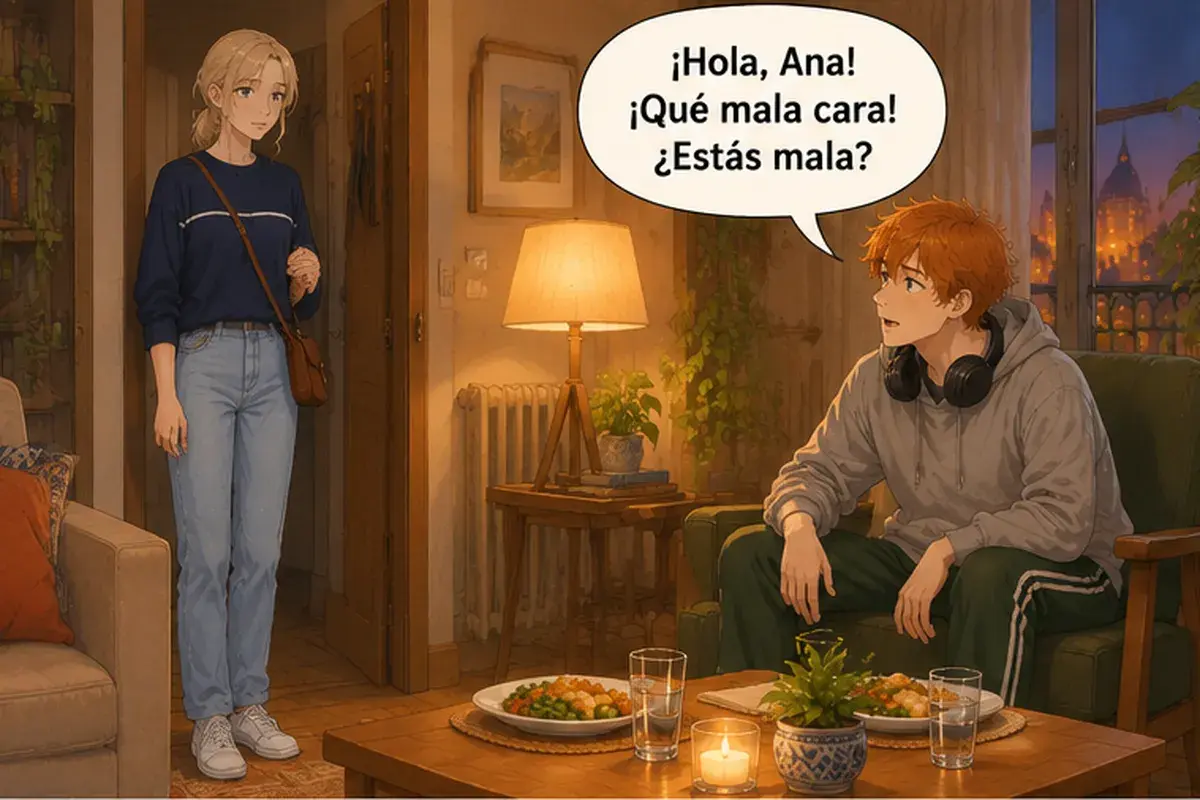
- Dani
¡Hola, Ana! ¡Qué mala cara! ¿Estás mala?
Hi, Ana! You look awful! Are you sick? (to a woman)
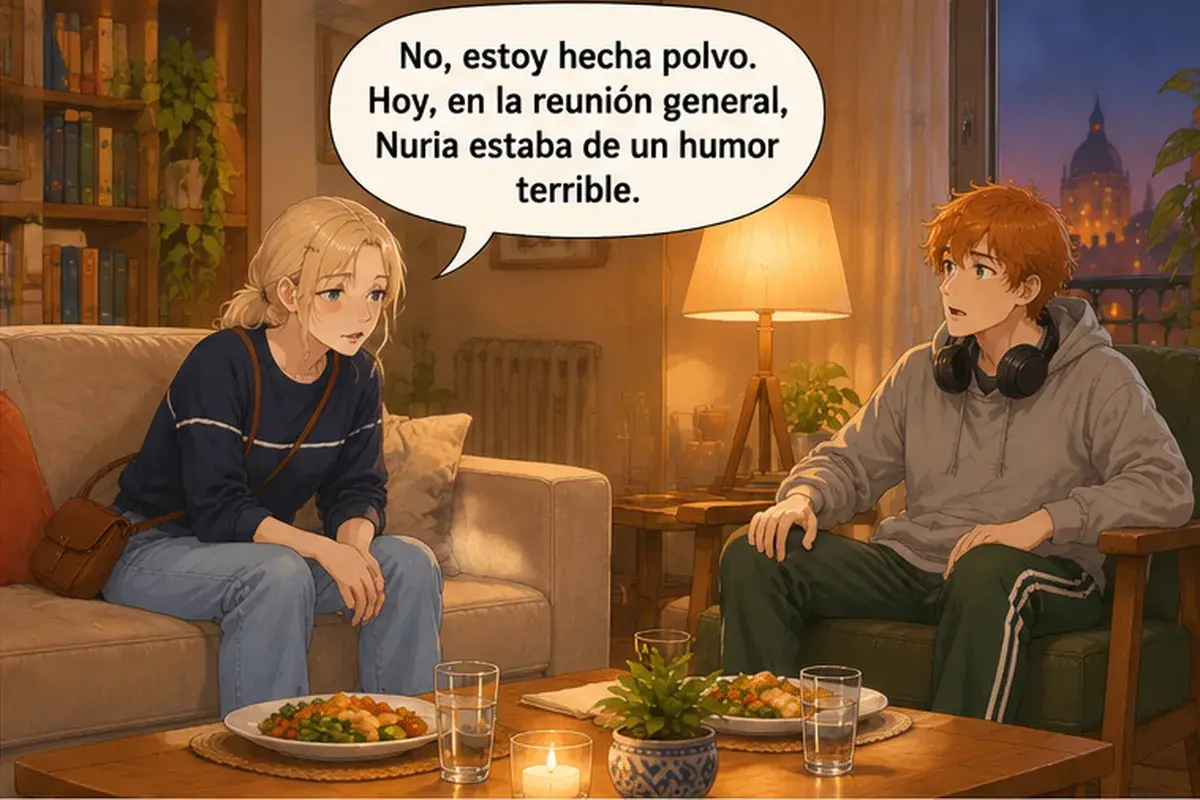
- Ana
No, estoy hecha polvo. Hoy, en la reunión general, Nuria estaba de un humor terrible.
No, I'm wiped out. Today, at the general meeting, Nuria was in a terrible mood (woman speaking).
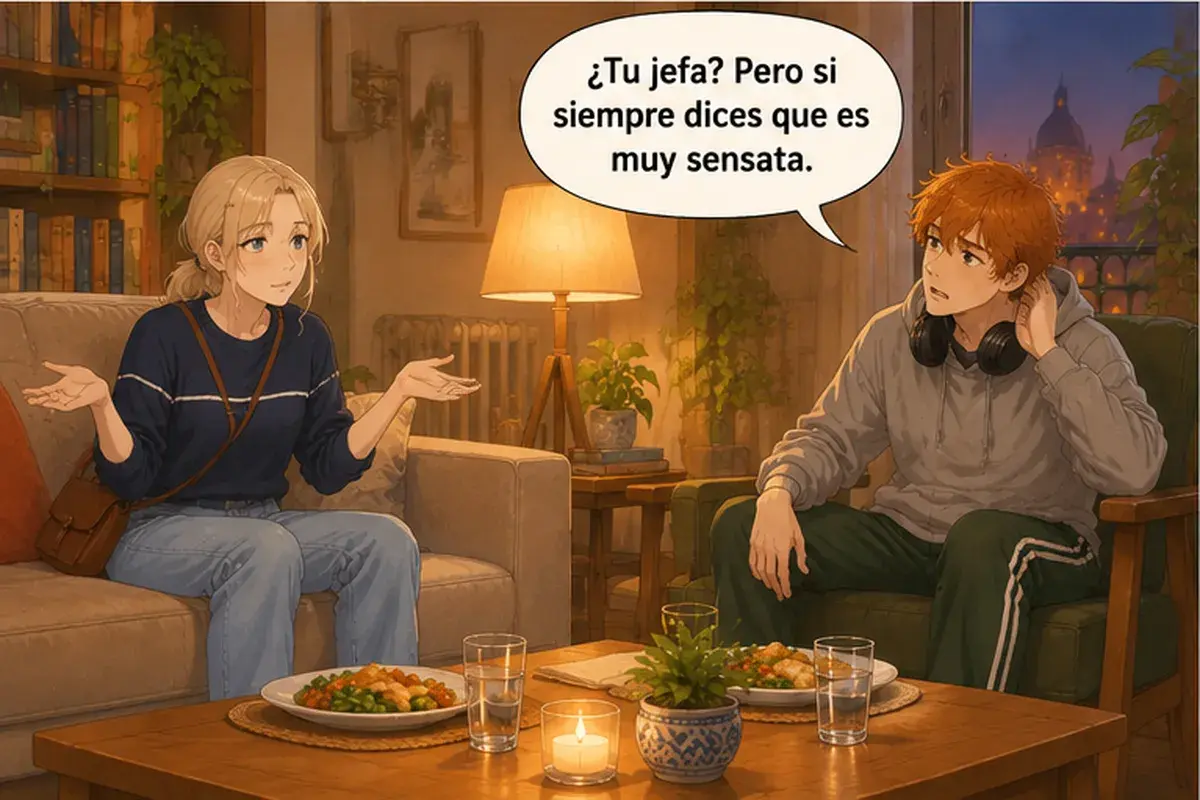
- Dani
¿Tu jefa? Pero si siempre dices que es muy sensata.
Your boss? But you always say she's very sensible!
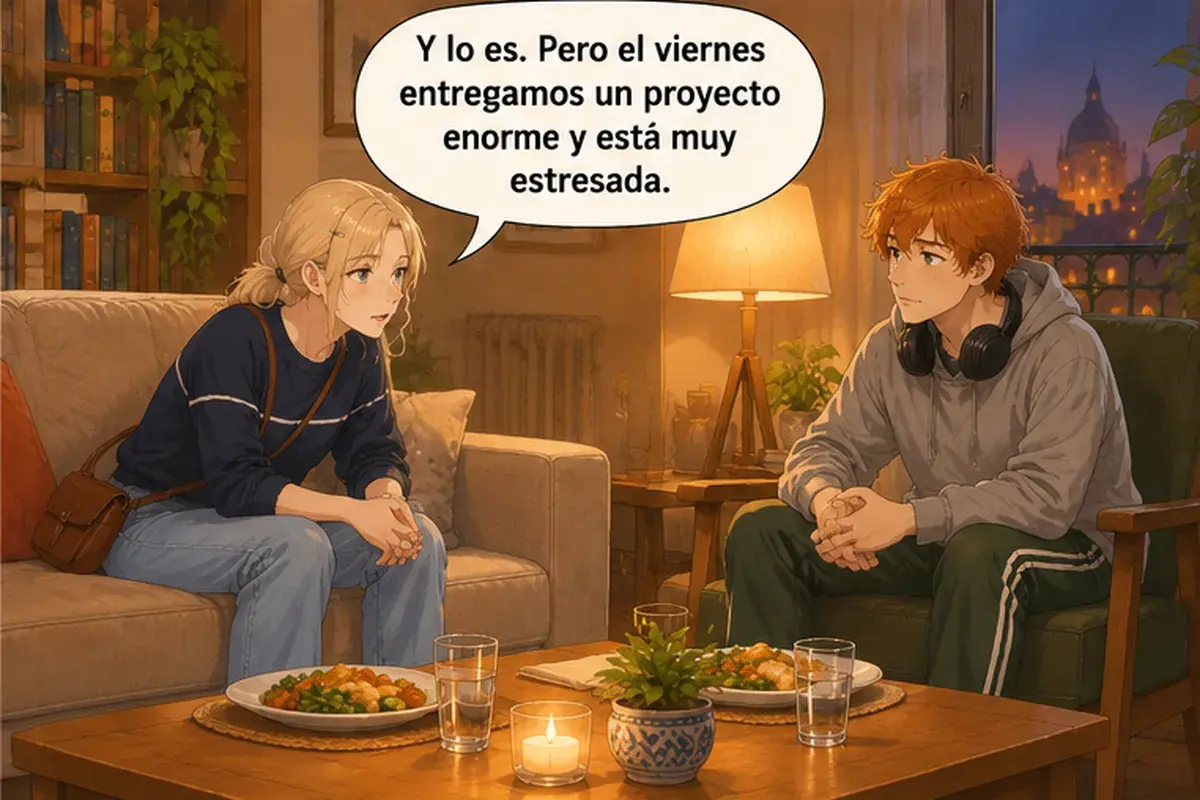
- Ana
Y lo es. Pero el viernes entregamos un proyecto enorme y está muy estresada.
And she is. But on Friday we're turning in a huge project, and she's really stressed.
- Dani
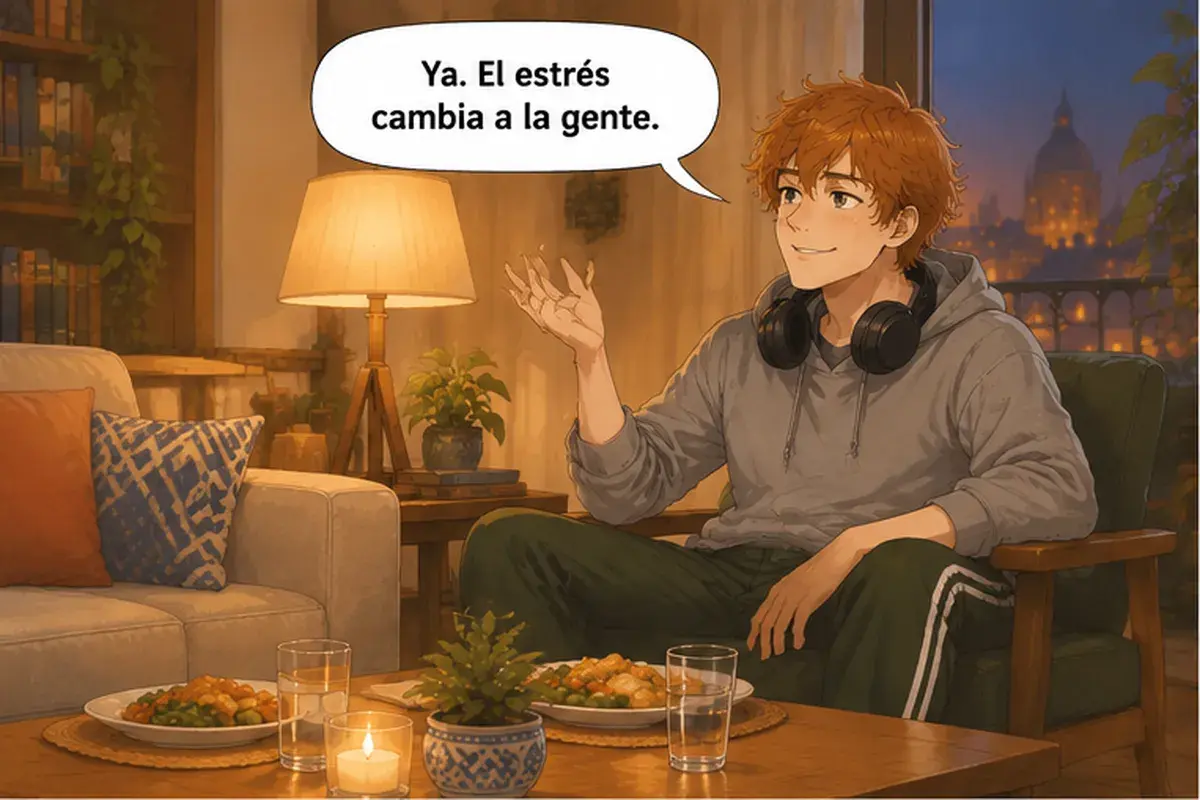
Ya. El estrés cambia a la gente.
I see. Stress changes people.
- Ana
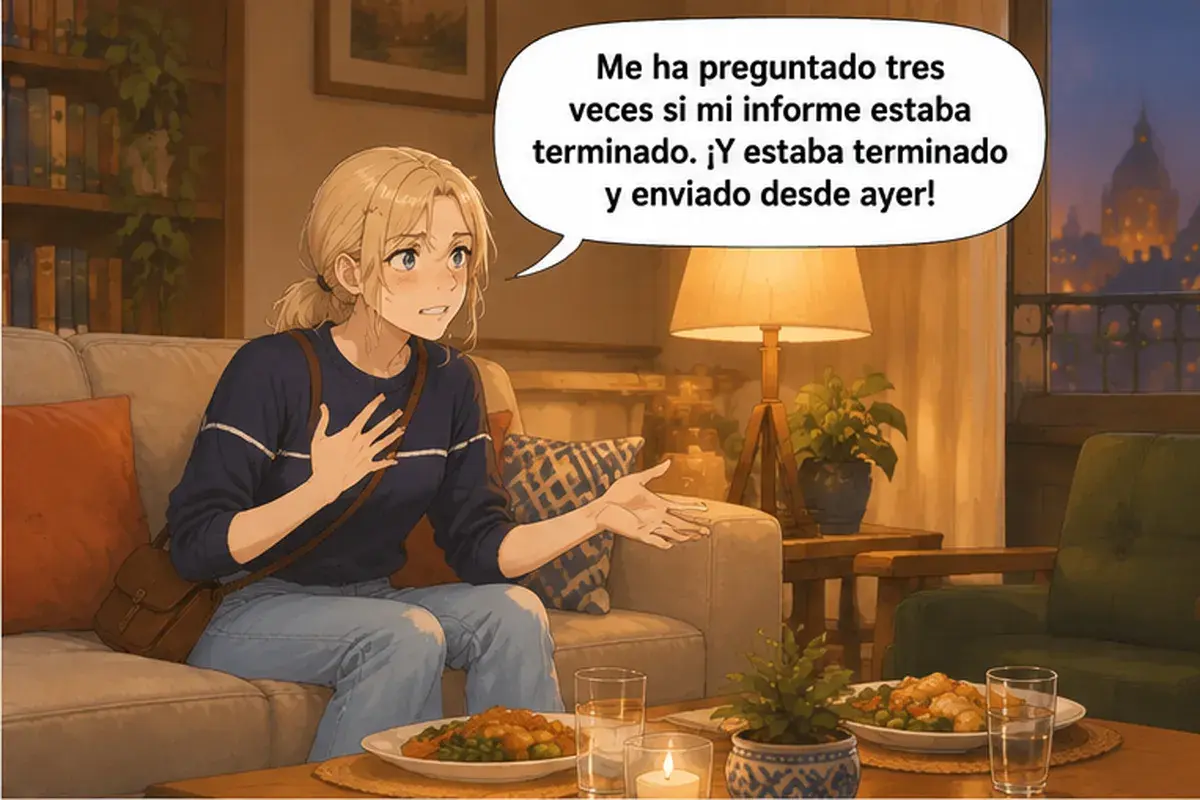
Me ha preguntado tres veces si mi informe estaba terminado. ¡Y estaba terminado y enviado desde ayer!
She's asked me three times if my report was finished. And it had been finished and sent since yesterday!
- Dani
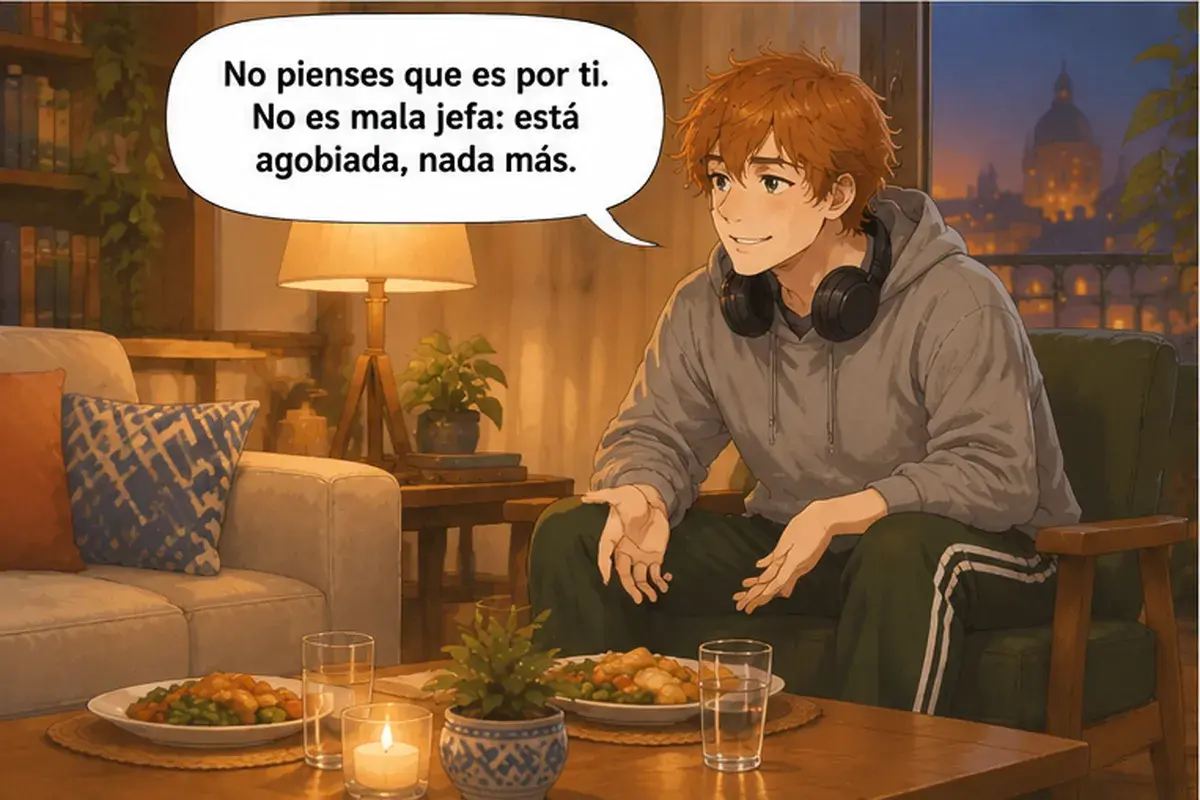
No pienses que es por ti. No es mala jefa: está agobiada, nada más.
Don't think it's because of you. She's not a bad boss: she's overwhelmed, that's all.
- Ana
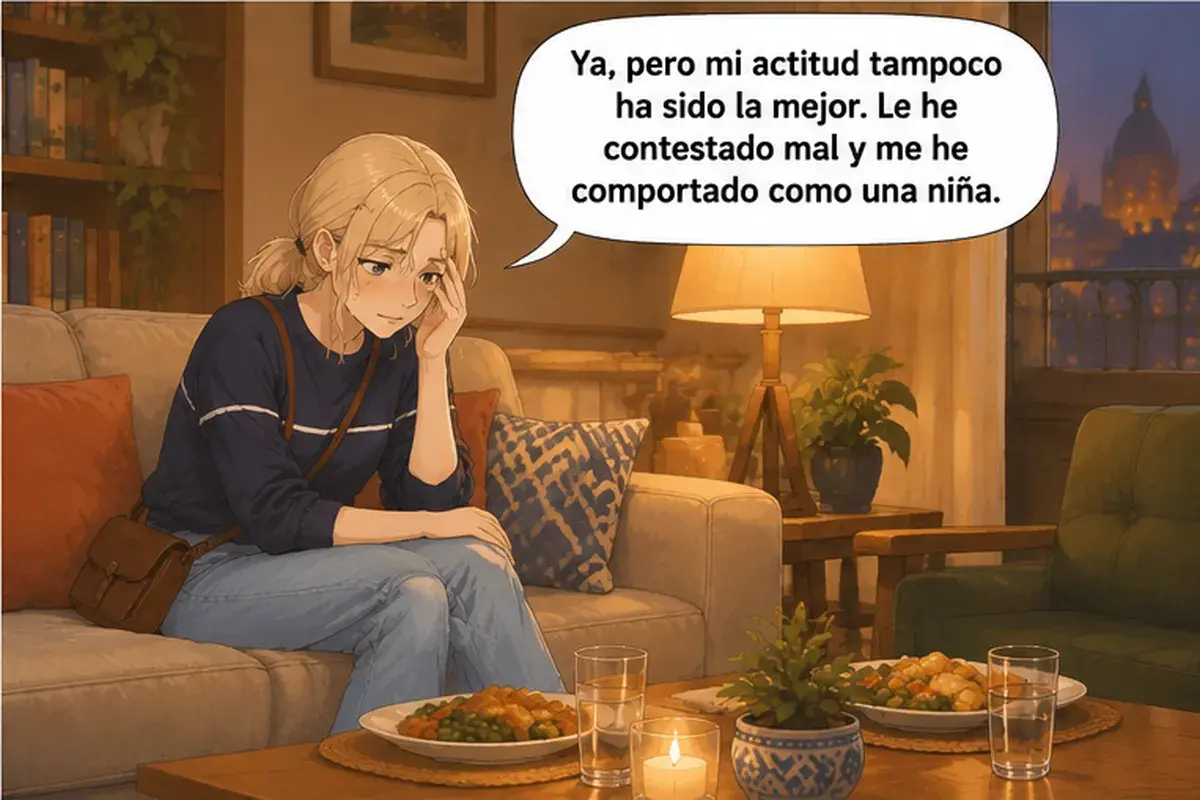
Ya, pero mi actitud tampoco ha sido la mejor. Le he contestado mal y me he comportado como una niña.
I know, but my attitude hasn't been the best either. I answered her rudely and behaved like a child (woman speaking).
- Dani
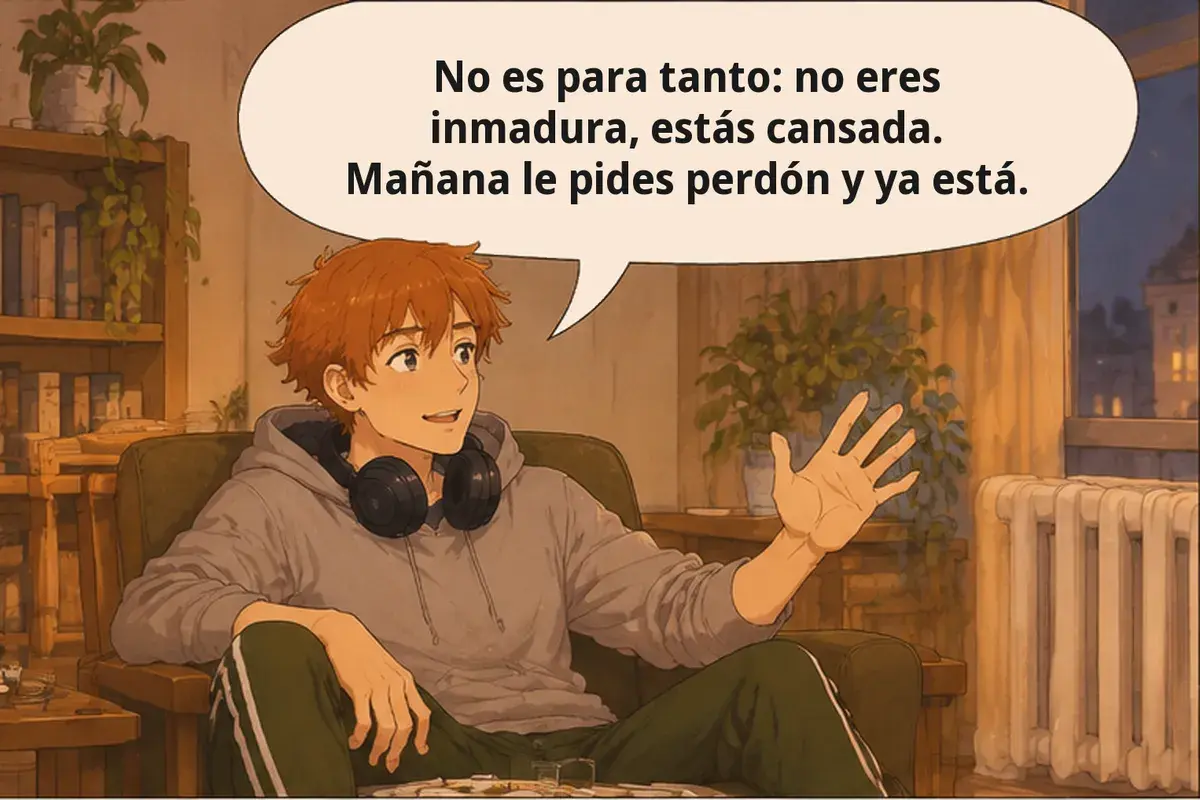
No es para tanto: no eres inmadura, estás cansada. Mañana le pides perdón y ya está.
It's not that big a deal: you're not immature, you're tired. Tomorrow you apologize to her, and that's it. (to a woman)
- Ana
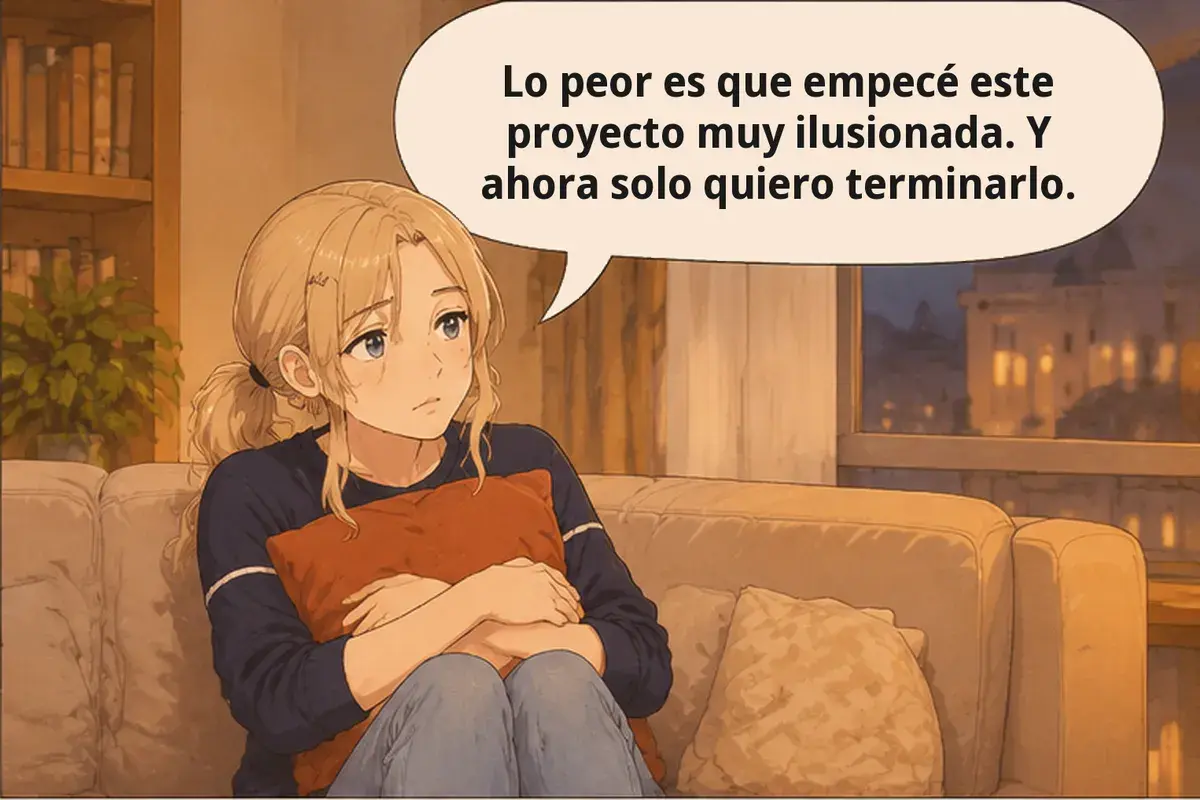
Lo peor es que empecé este proyecto muy ilusionada. Y ahora solo quiero terminarlo.
The worst part is that I started this project really excited. And now I just want to finish it (woman speaking).
- Dani
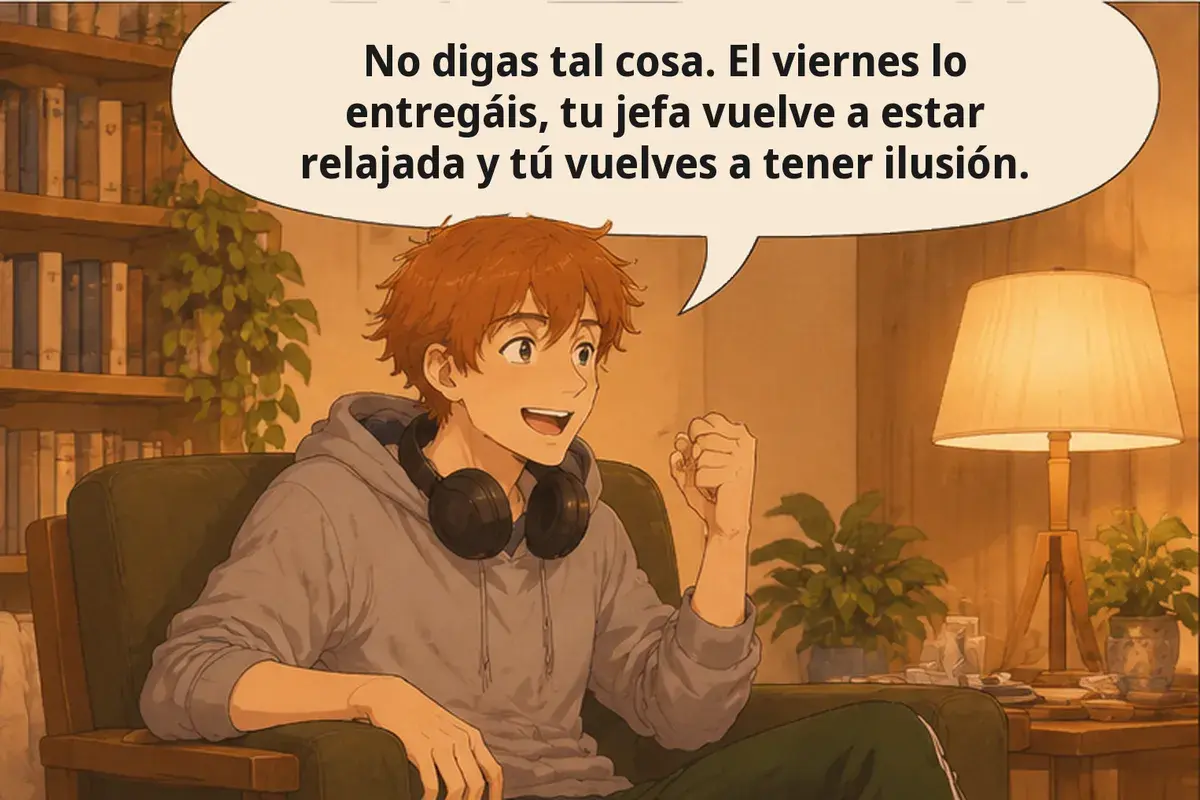
No digas tal cosa. El viernes lo entregáis, tu jefa vuelve a estar relajada y tú vuelves a tener ilusión.
Don't say such a thing. On Friday you guys turn it in, your boss is relaxed again, and you're excited again.
- Ana
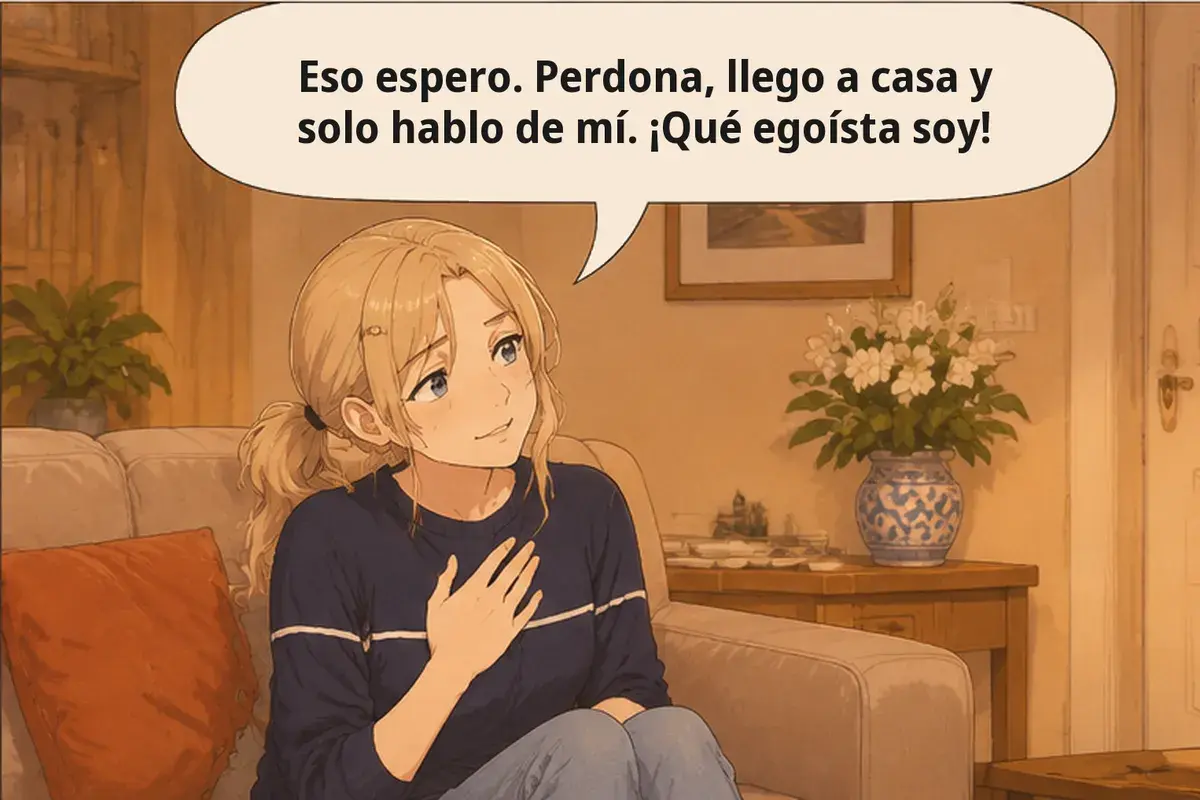
Eso espero. Perdona, llego a casa y solo hablo de mí. ¡Qué egoísta soy!
I hope so. Sorry, I get home and I only talk about myself. I'm so selfish!
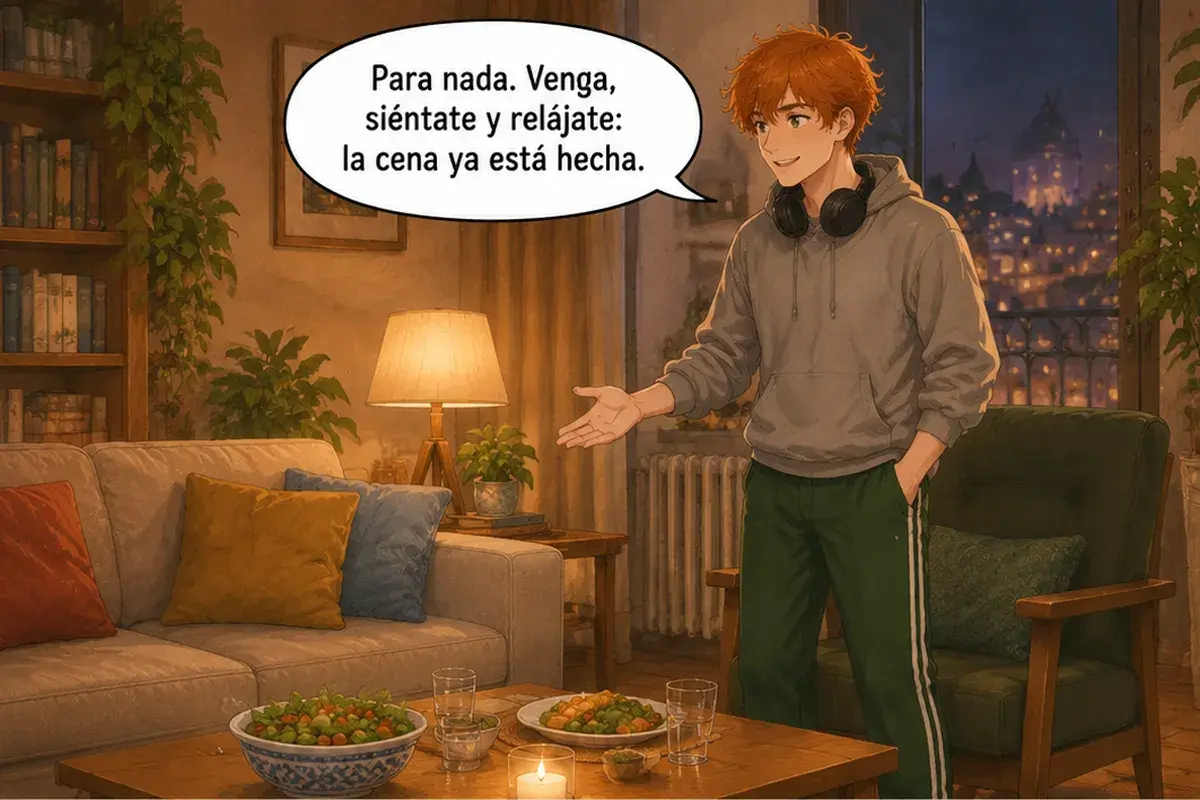
- Dani
Para nada. Venga, siéntate y relájate: la cena ya está hecha.
Not at all. Come on, sit down and relax: dinner is already made.
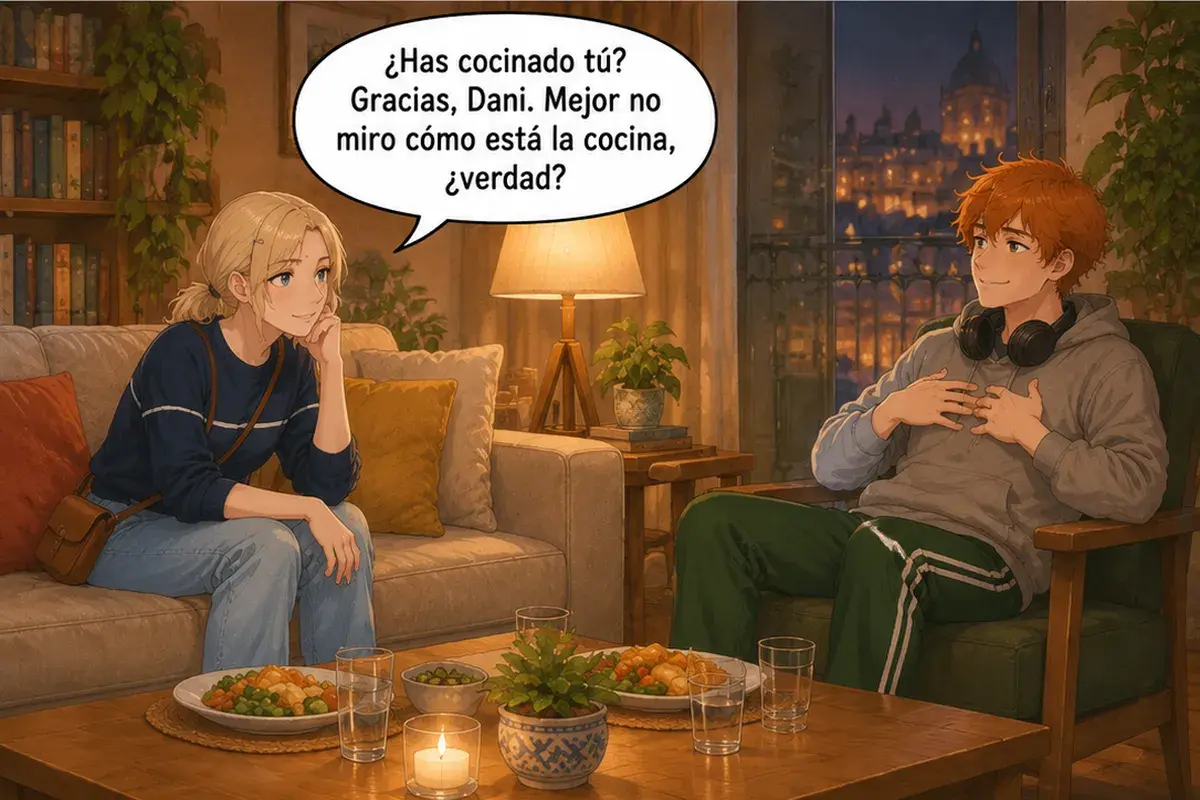
- Ana
¿Has cocinado tú? Gracias, Dani. Mejor no miro cómo está la cocina, ¿verdad?
You cooked? Thanks, Dani. I'd better not look at what the kitchen looks like, right?
Grammar for this text
Twice Dani calms Ana down with the same pair: it's not about personality (ser), it's about today (estar).
- No es mala jefa: está agobiada — she's not a bad boss, she's overwhelmed;
- no eres inmadura, estás cansada — you're not immature, you're tired;
- ¿Estás mala? — are you sick?
Estar + past participle is a result: estaba terminado y enviado desde ayer (the report had been finished and sent since yesterday), la cena ya está hecha (dinner is already made).
No es para tanto — "it's no big deal, don't exaggerate". Y lo es — "and she is": lo replaces the word sensata, so it isn't repeated.
No pienses, no digas tal cosa — negative commands from unit 16; tal cosa — "such a thing".
Colloquial: Venga — "come on" (Venga, siéntate y relájate): a fixed form of venir that people use even when they say tú; Pero si… — a surprised "but…"; …y ya está — "and that's it"; de un humor terrible — "in a terrible mood".
Words and grammar of the unit: Describe personality and mood.
Learn the words from the texts with flashcards
In the app, you can tap any word in a text to see its translation, forms and examples, and new words stick with flashcards. 15 minutes a day.
Start for freeEverything is open for free. No card needed to sign up.