

Spanish dialogue with translation · A1 · 12 lines
¿Qué tal estás? How are you?
Comic · 11 panels

- Lucía
Hola, Carlos. ¿Qué tal estás?
Hi, Carlos. How are you?
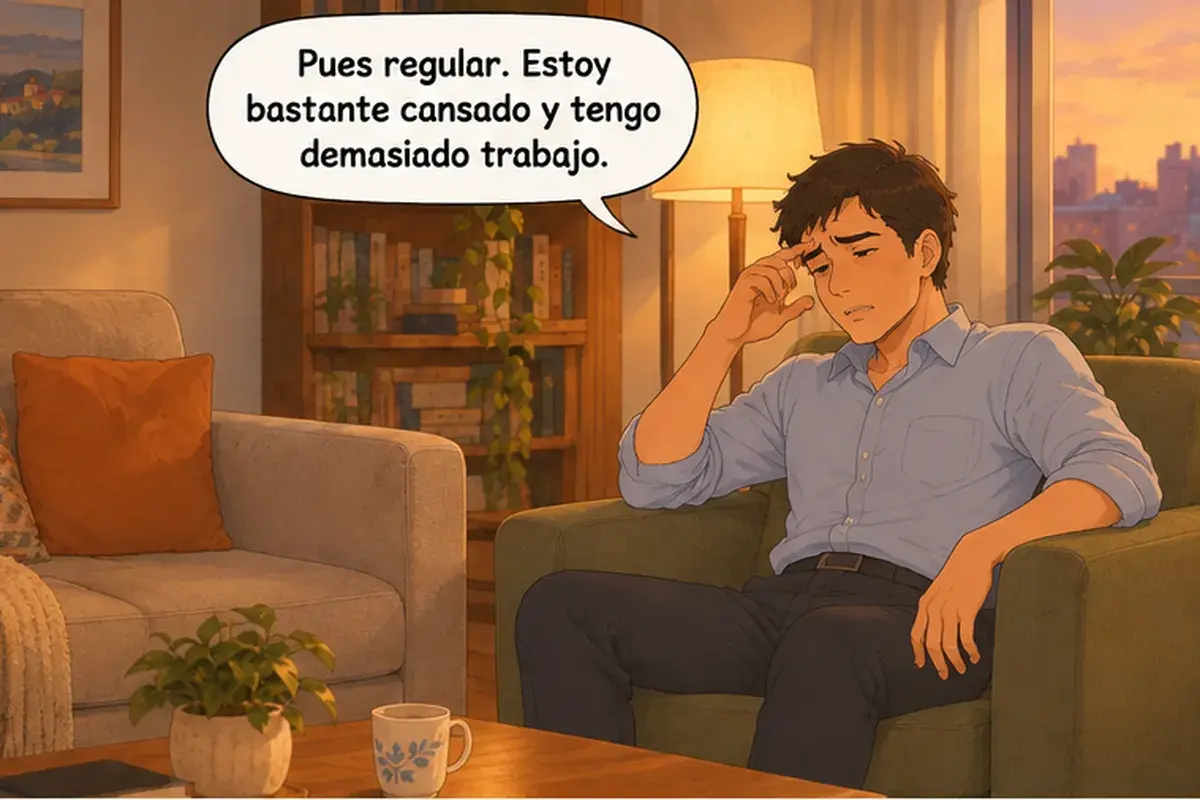
- Carlos
Pues regular. Estoy bastante cansado y tengo demasiado trabajo.
Well, so-so. I'm pretty tired and I have too much work (man speaking).
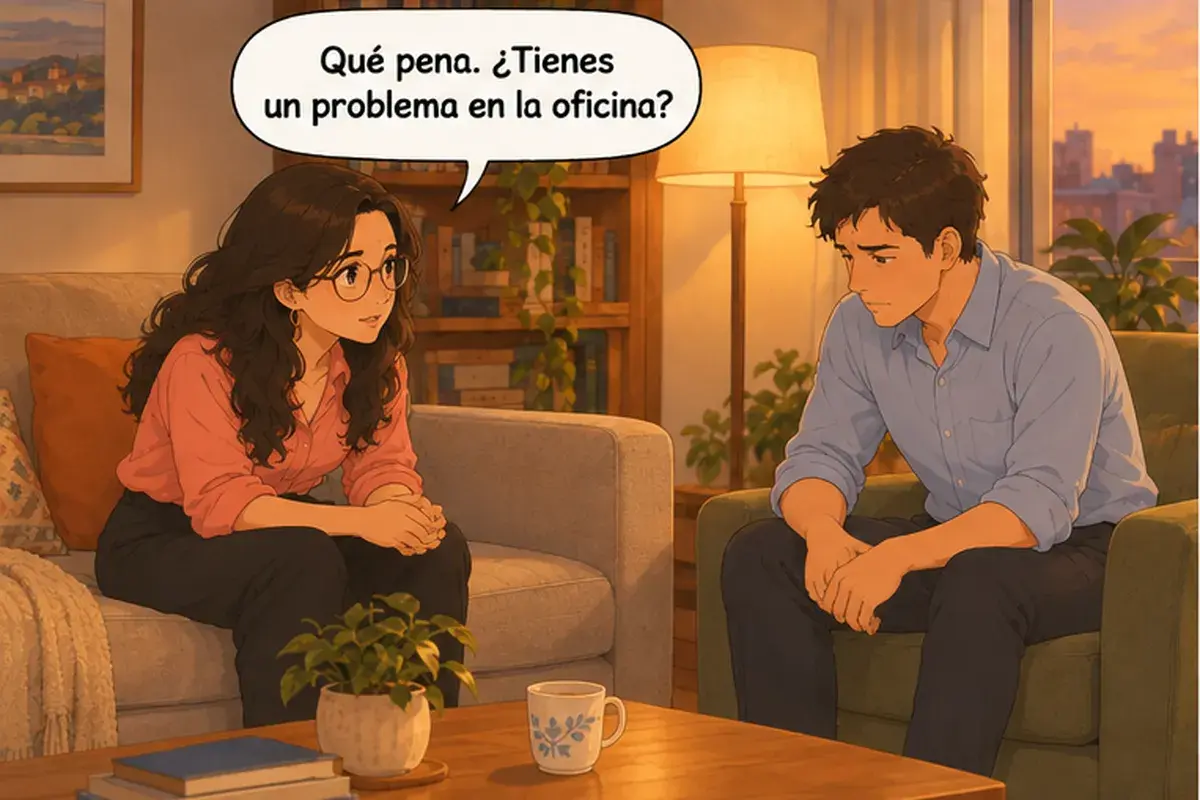
- Lucía
Qué pena. ¿Tienes un problema en la oficina?
What a shame. Do you have a problem at the office?
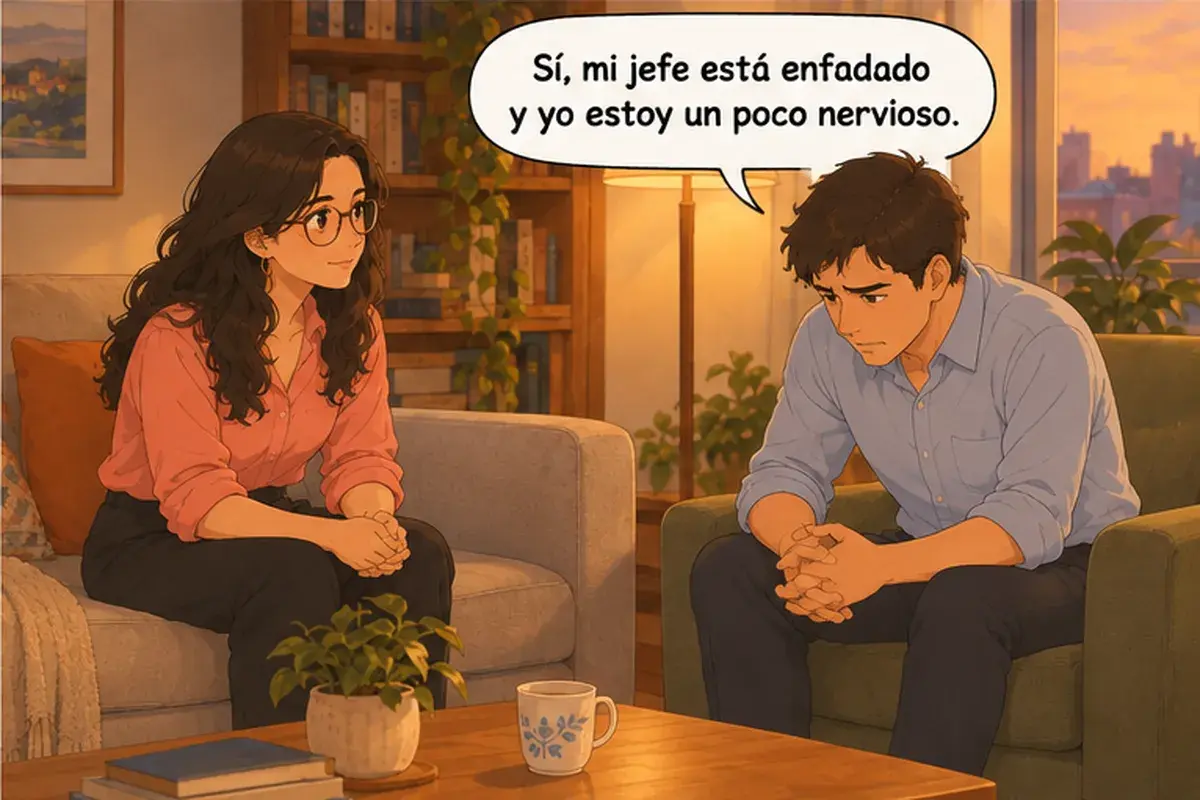
- Carlos
Sí, mi jefe está enfadado y yo estoy un poco nervioso.
Yes, my boss is angry and I'm a little nervous (man speaking).

- Lucía
¡Tranquilo! Quizás no es importante.
Relax! Maybe it's not important. (to a man)
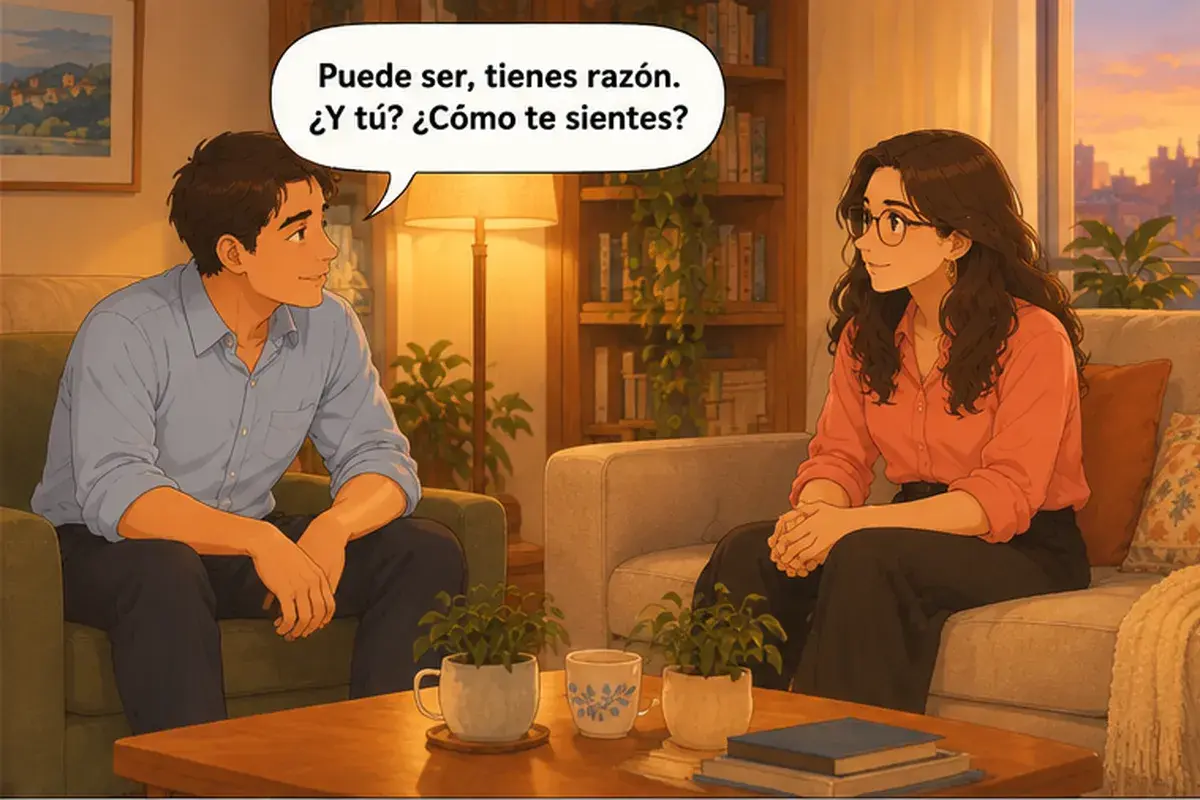
- Carlos
Puede ser, tienes razón. ¿Y tú? ¿Cómo te sientes?
Could be, you're right. And you? How do you feel?

- Lucía
Muy contenta. Tengo una noticia: ¡mi hermana va a tener un bebé!
Very happy. I have some news: my sister is going to have a baby! (woman speaking)
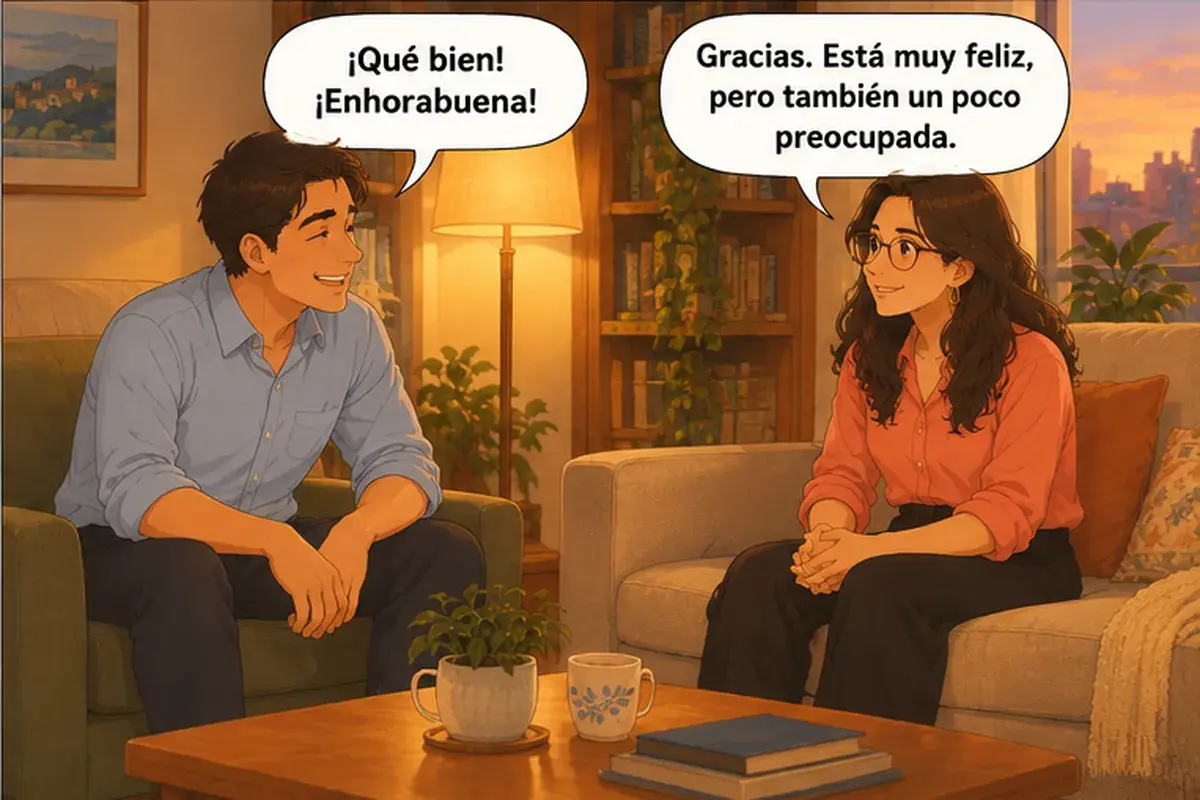
- Carlos
¡Qué bien! ¡Enhorabuena!
How nice! Congratulations!
- Lucía
Gracias. Está muy feliz, pero también un poco preocupada.
Thanks. She's very happy, but also a little worried.

- Carlos
Creo que todos los padres están nerviosos.
I think all parents are nervous.
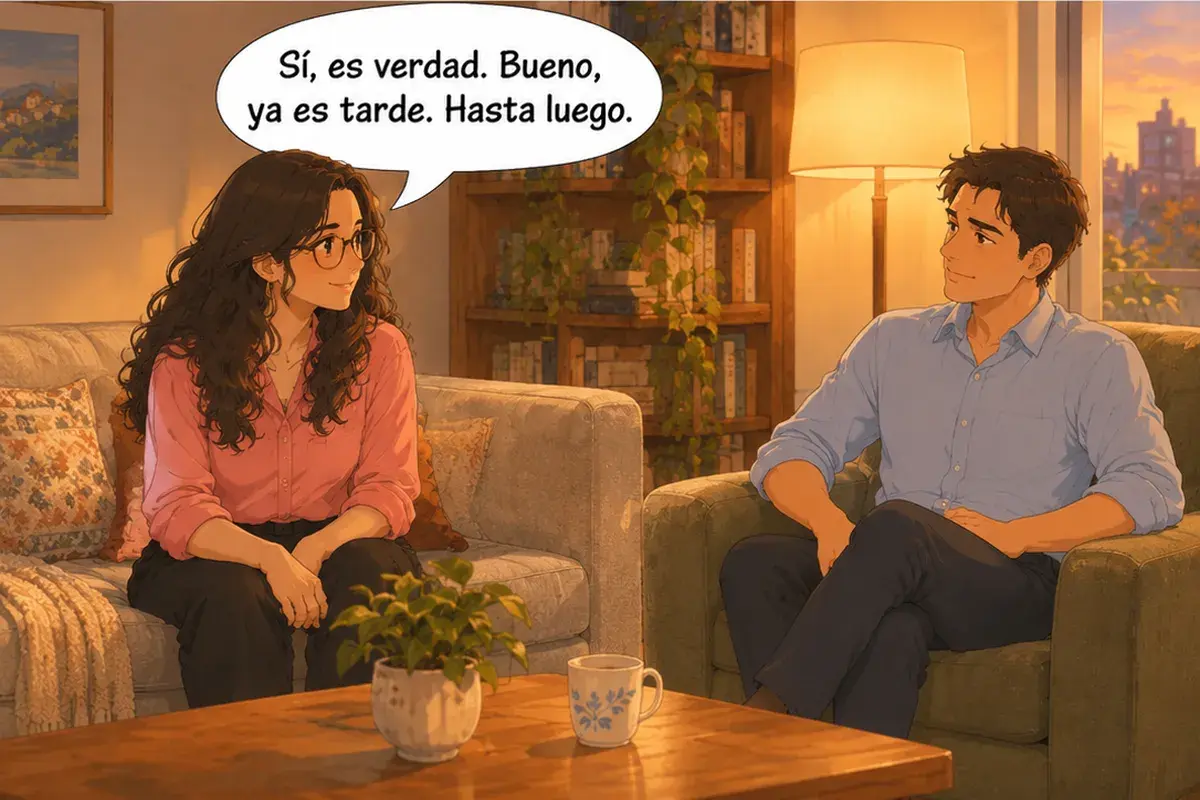
- Lucía
Sí, es verdad. Bueno, ya es tarde. Hasta luego.
Yes, that's true. Well, it's late already. See you later.

- Carlos
De acuerdo. ¡Mucha suerte para tu hermana!
OK. Good luck to your sister!
Grammar for this text
How are you: estar. ¿Qué tal estás? — "how are you?". Your mood and how you feel right now go with estar: Estoy bastante cansado, mi jefe está enfadado, yo estoy un poco nervioso, Está muy feliz. The adjective agrees with the person: Carlos is cansado, Lucía's sister is preocupada, and in todos los padres están nerviosos it's plural.
Muy contenta, ¡Tranquilo! Lucía answers about herself: Muy contenta ends in -a, and the verb estoy is left out. ¡Tranquilo! ("Relax!") ends in -o because she's talking to a man.
How much: bastante, un poco, muy, demasiado. bastante cansado — "pretty tired", un poco nervioso — "a little nervous", muy feliz — "very happy". Before a noun, demasiado means "too much": demasiado trabajo — "too much work".
Opinions and doubt. Creo que todos los padres están nerviosos — "I think (that)…". Quizás no es importante — "maybe it's not important". Puede ser — "could be". tienes razón — "you're right", word for word "you have reason". es verdad — "that's true". De acuerdo — "OK, agreed".
¿Cómo te sientes? "How do you feel?": the verb sentirse. English just says "feel"; Spanish adds te (yourself). The stem changes e → ie.
va a tener un bebé. ir a + infinitive is for something that's going to happen, just like English "going to": "she's going to have a baby".
Words and grammar of the unit: Make small talk.
Learn the words from the texts with flashcards
In the app, you can tap any word in a text to see its translation, forms and examples, and new words stick with flashcards. 15 minutes a day.
Start for freeEverything is open for free. No card needed to sign up.