

Spanish story with translation · A1 · 13 lines
¿Qué haces los domingos? What do you do on Sundays?
Comic · 11 panels

Me llamo Pablo y me gusta mucho el deporte.
My name is Pablo, and I really like sports.

Los domingos por la mañana paseo con Ana por el parque.
On Sunday mornings I go for a walk in the park with Ana.

Después juego al fútbol con mi equipo.
Then I play soccer with my team.
Casi siempre jugamos bien, pero a veces el partido es difícil.
We almost always play well, but sometimes the game is hard.

Después del partido, normalmente vamos a un bar.
After the game, we usually go to a bar.

Por la tarde Ana y yo vemos una película.
In the afternoon Ana and I watch a movie.
Ana siempre quiere ir al cine, pero yo prefiero la televisión.
Ana always wants to go to the movies, but I prefer television.

Nunca voy al teatro, porque no es muy interesante.
I never go to the theater, because it isn't very interesting.
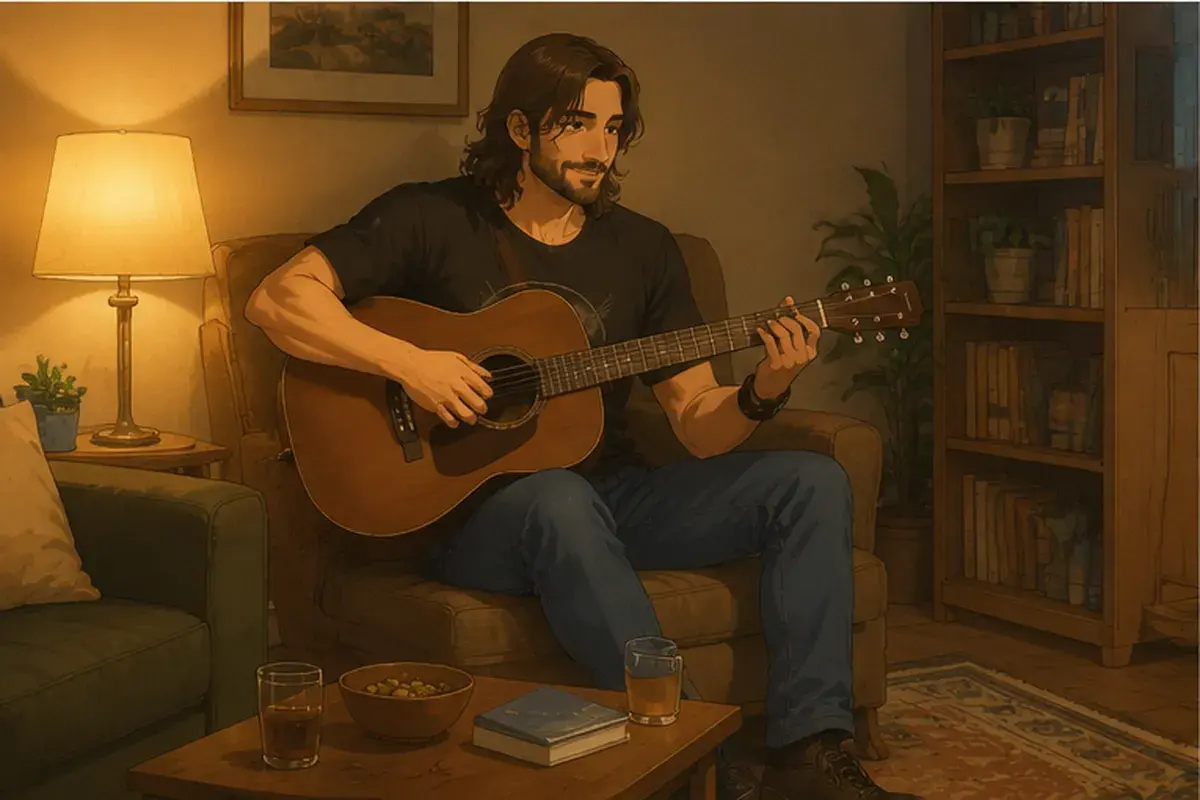
Mi hermano Carlos toca la guitarra. ¡Toca muy bien!
My brother Carlos plays the guitar. He plays very well!

Ana a veces corre en el parque. Yo voy al gimnasio cada día y en verano nado en el mar.
Ana sometimes runs in the park. I go to the gym every day, and in the summer I swim in the sea.

Mi música favorita es el rock. Escucho conciertos en internet.
My favorite music is rock. I listen to concerts online.

Mañana invito a mis amigos a casa y vemos el partido juntos.
Tomorrow I'm inviting my friends over, and we're watching the game together.

¿Y tú? ¿Qué haces los domingos?
And you? What do you do on Sundays?
Grammar for this text
When and how often. Los domingos por la mañana — on Sunday mornings: los before a day means "every," like English "on Sundays." Casi siempre — almost always, a veces — sometimes, normalmente — usually, cada día — every day. In Nunca voy al teatro, nunca comes before the verb, so you don't need no.
juego, jugamos, toca. Juego al fútbol — I play soccer, but jugamos bien — we play well: u changes to ue only when it's stressed, so the nosotros form keeps the old stem. Games take al. For an instrument it's another verb, tocar, and no al: Mi hermano Carlos toca la guitarra.
Where to: al cine, al gimnasio, a un bar. a + el = al: ir al cine, voy al gimnasio. Nothing merges with un: vamos a un bar. In the same way, de + el = del: Después del partido — after the game.
paseo con Ana por el parque. "I walk in the park with Ana": por here means moving around inside a place. Compare: corre en el parque — she runs in the park.
Ana y yo vemos. Just like English "Ana and I," and the verb is in the nosotros (we) form: vemos — we watch.
invito a mis amigos a casa. The first a goes before the people the action is aimed at (who do I invite?). The second a means "where to": a casa — home, to my place. Mañana invito… y vemos el partido juntos talks about tomorrow's plans in the present tense, like English "I'm inviting… we're watching."
Words and grammar of the unit: Talk about your hobbies and invite a friend.
Learn the words from the texts with flashcards
In the app, you can tap any word in a text to see its translation, forms and examples, and new words stick with flashcards. 15 minutes a day.
Start for freeEverything is open for free. No card needed to sign up.