

Spanish dialogue with translation · A1 · 12 lines
¿Quedamos el sábado? Shall we meet up on Saturday?
Comic · 12 panels
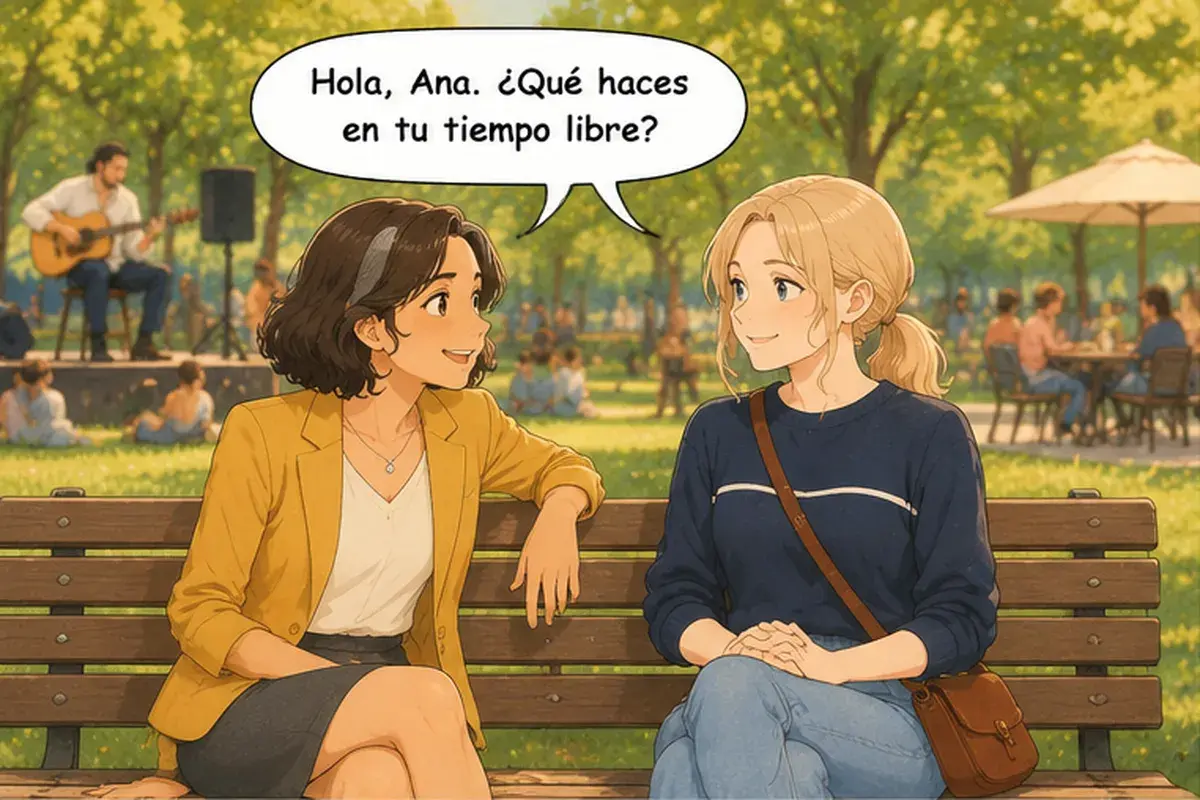
- Marta
Hola, Ana. ¿Qué haces en tu tiempo libre?
Hi, Ana. What do you do in your free time?
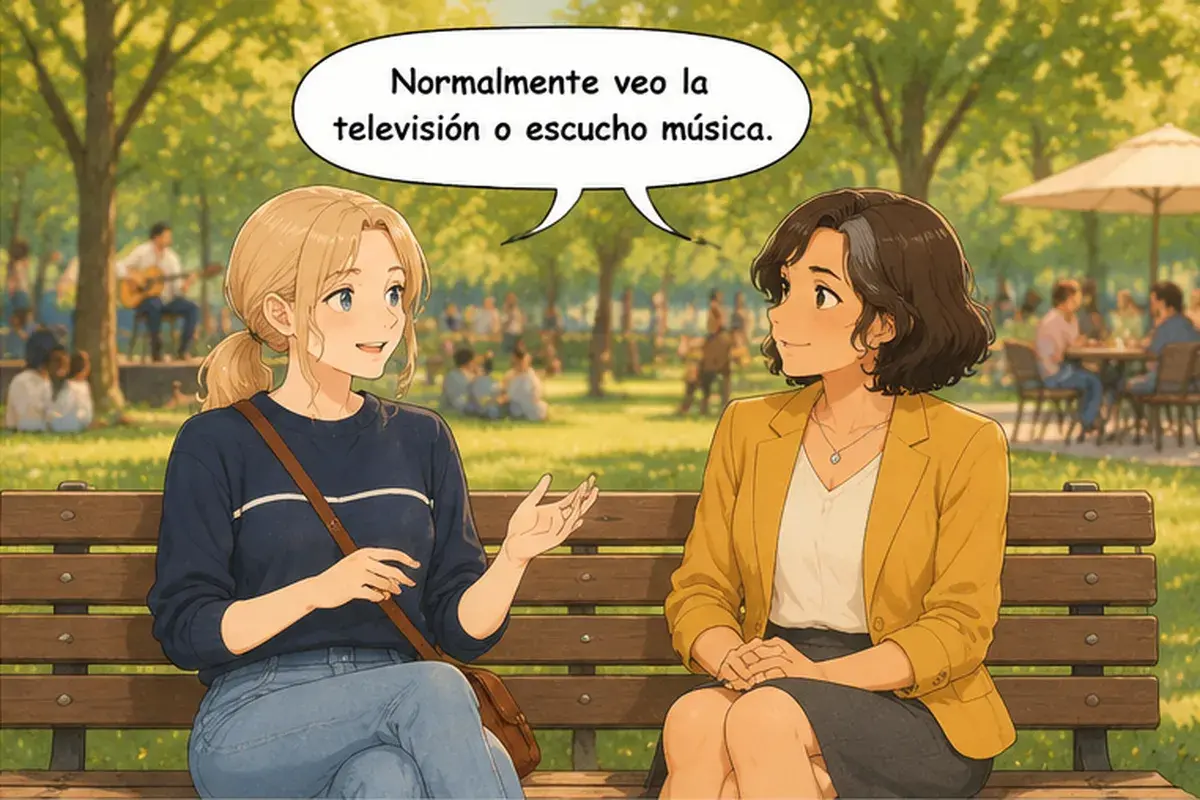
- Ana
Normalmente veo la televisión o escucho música.
I usually watch television or listen to music.
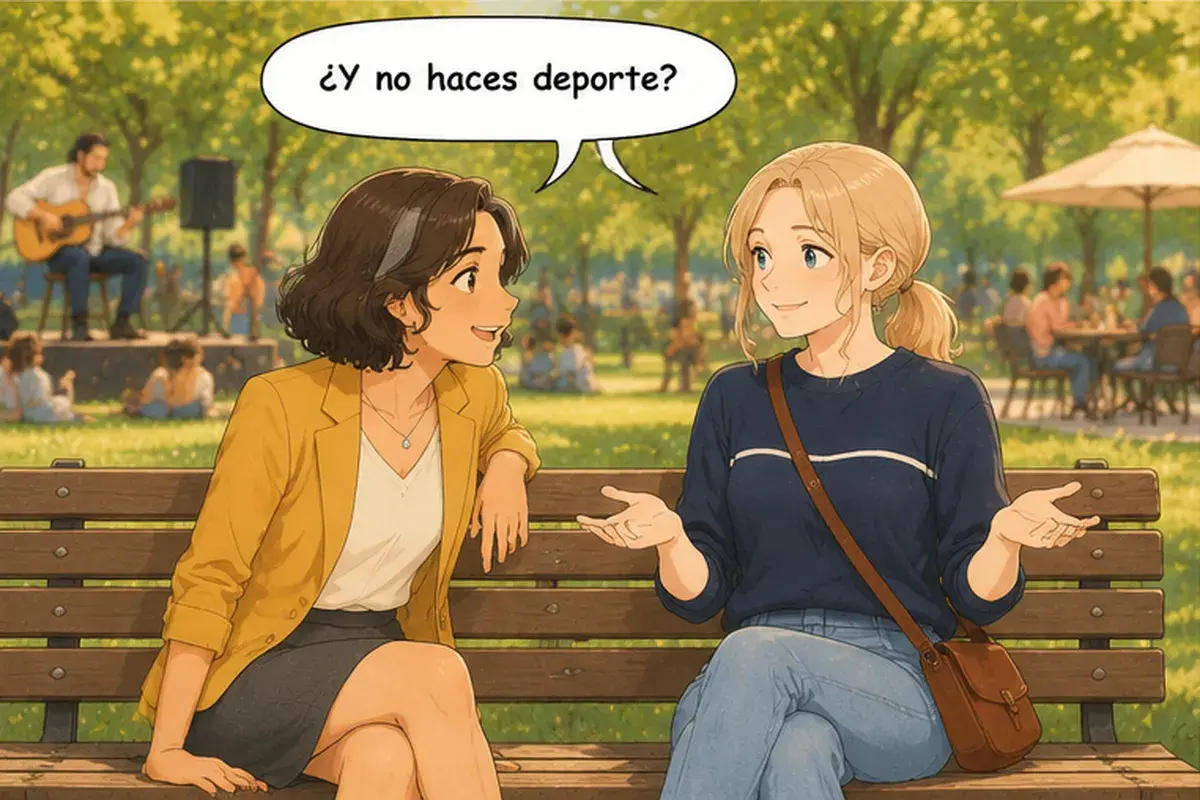
- Marta
¿Y no haces deporte?
And you don't play sports?
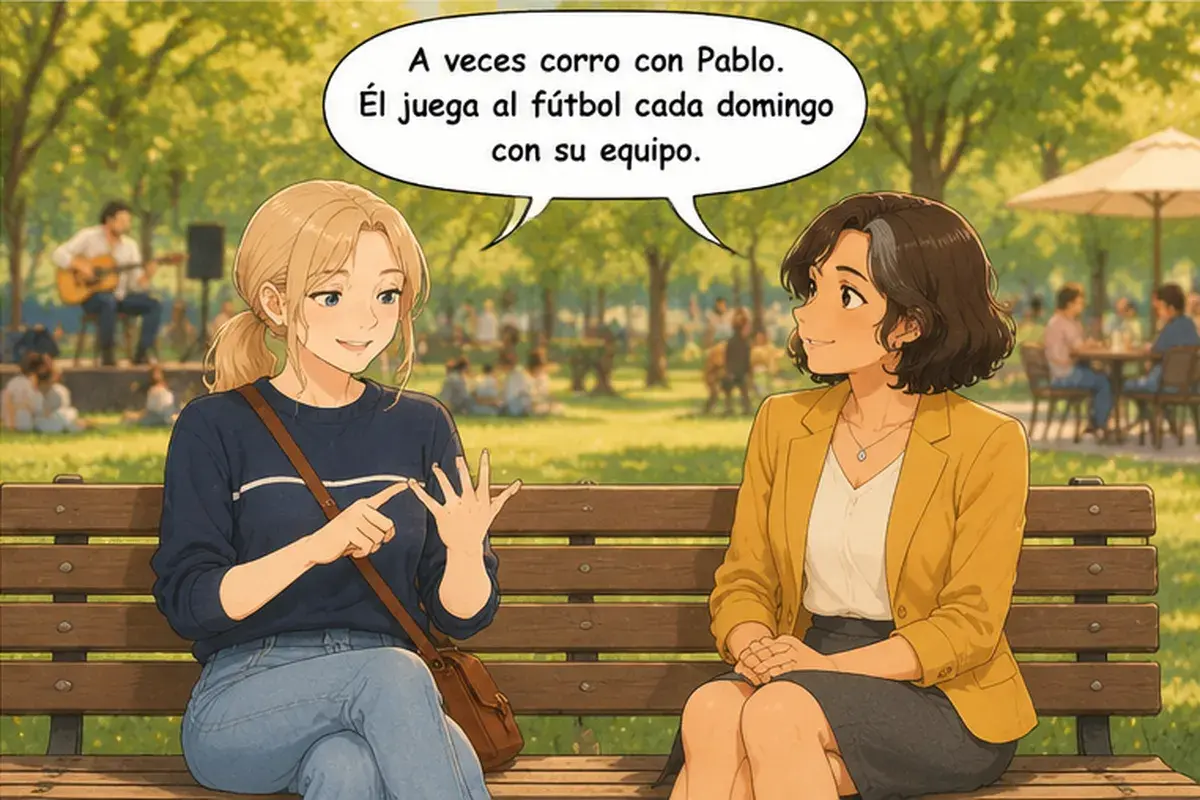
- Ana
A veces corro con Pablo. Él juega al fútbol cada domingo con su equipo.
Sometimes I run with Pablo. He plays soccer with his team every Sunday.
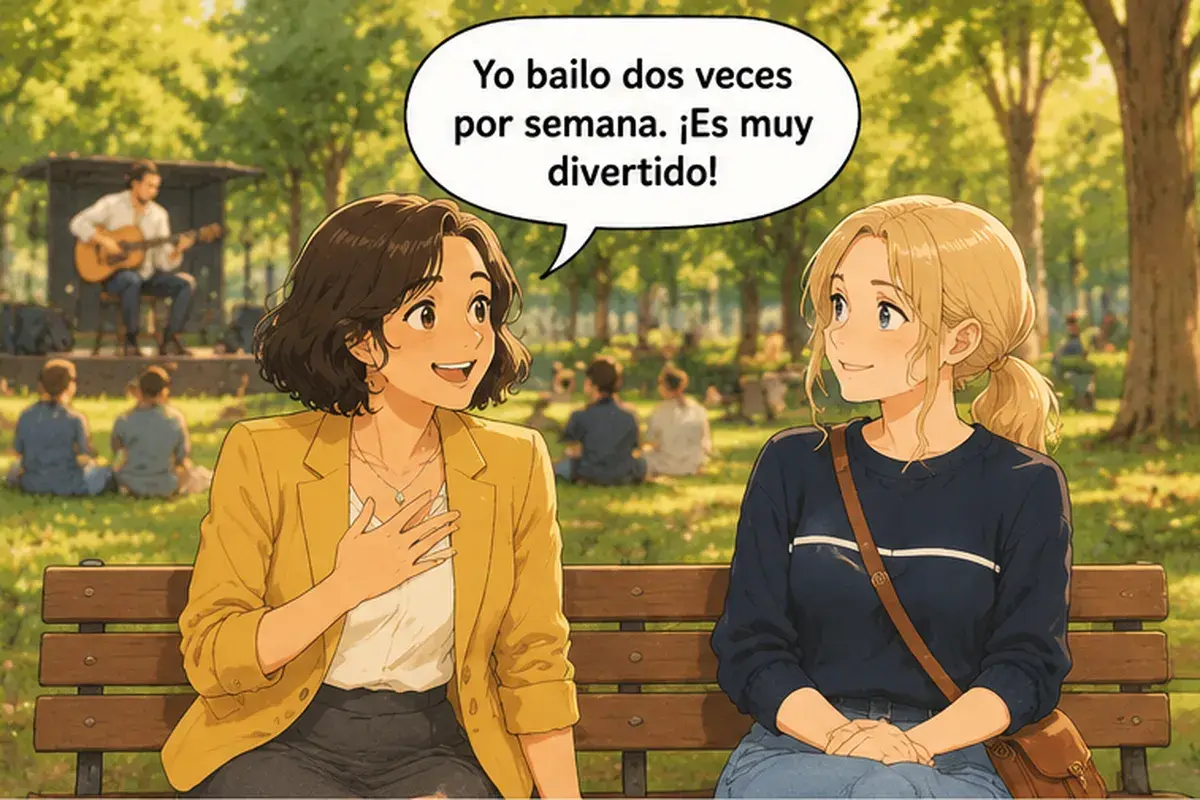
- Marta
Yo bailo dos veces por semana. ¡Es muy divertido!
I dance twice a week. It's really fun!
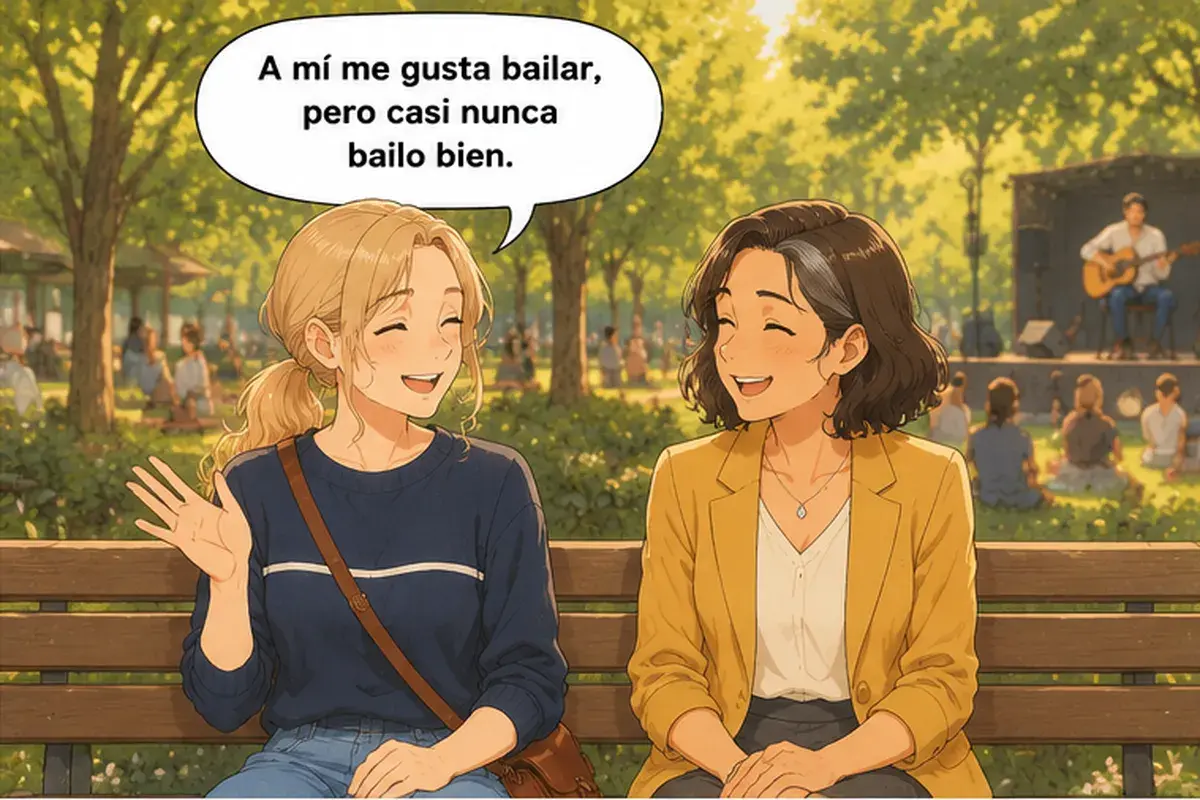
- Ana
A mí me gusta bailar, pero casi nunca bailo bien.
I like dancing, but I almost never dance well.
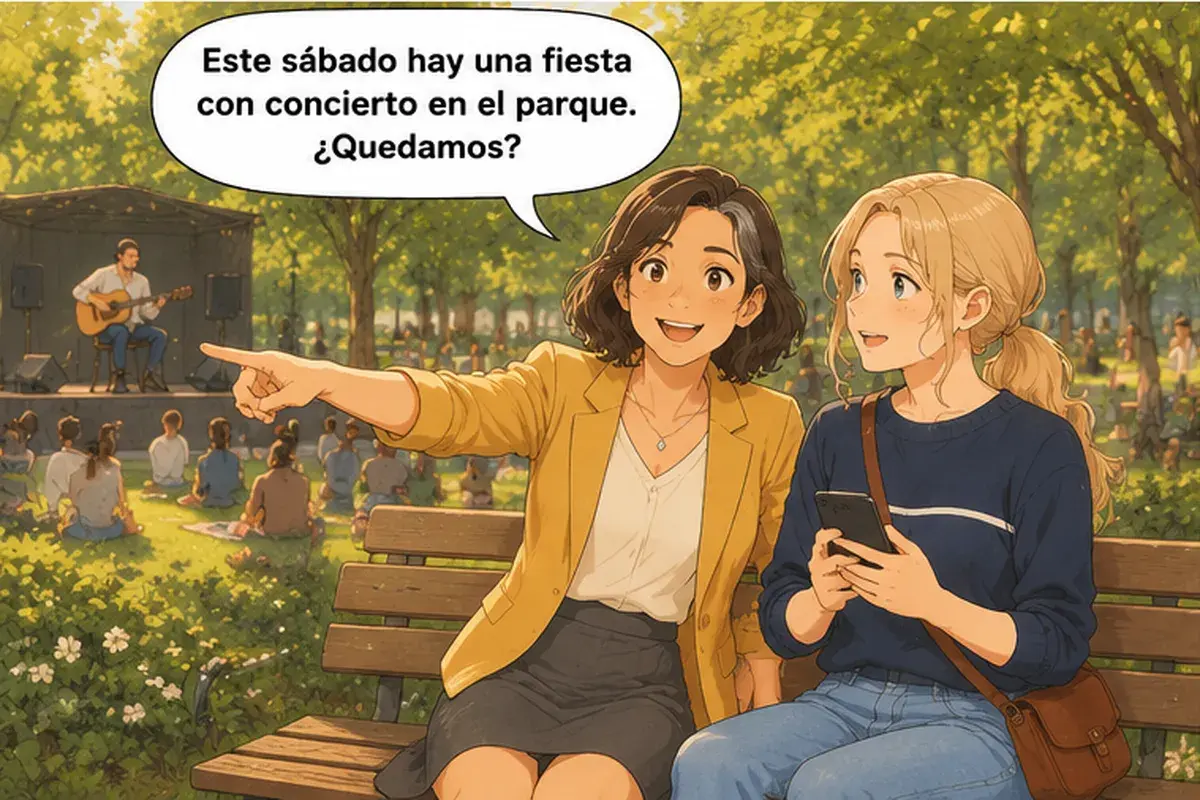
- Marta
Este sábado hay una fiesta con concierto en el parque. ¿Quedamos?
This Saturday there's a party with a concert in the park. Shall we meet up?
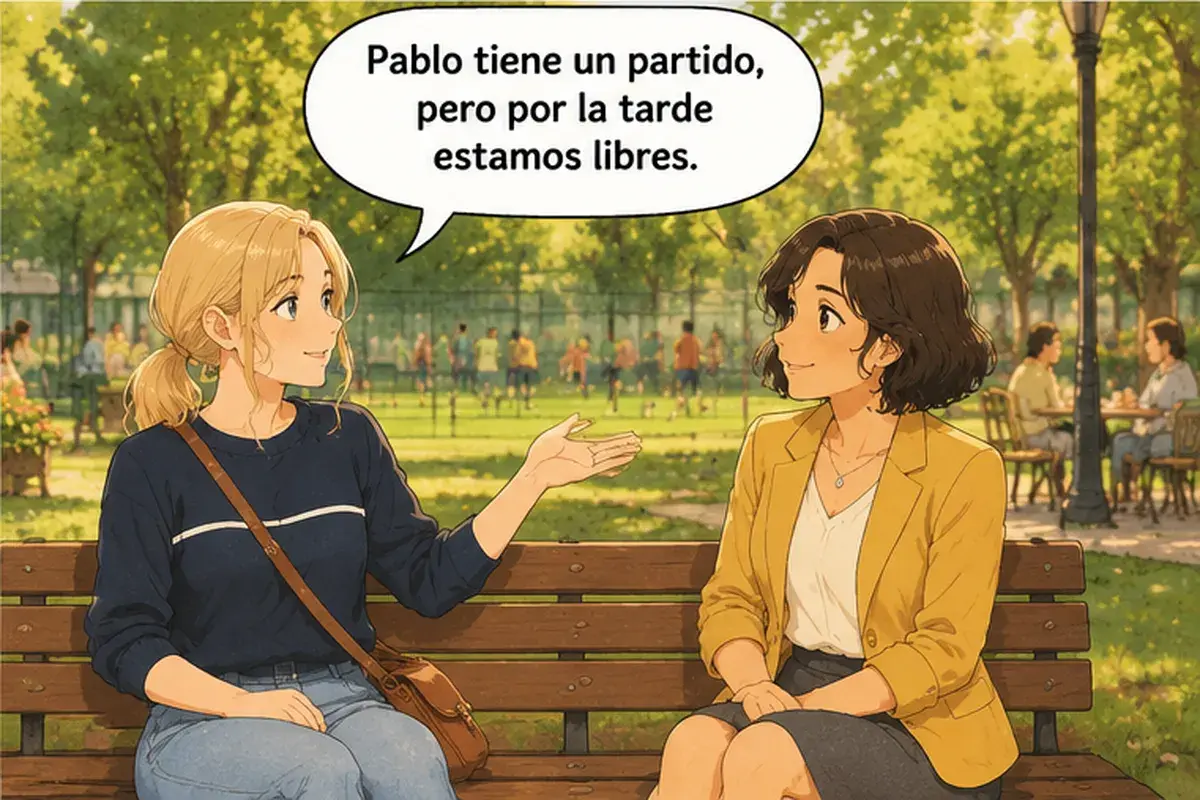
- Ana
Pablo tiene un partido, pero por la tarde estamos libres.
Pablo has a game, but in the afternoon we're free.
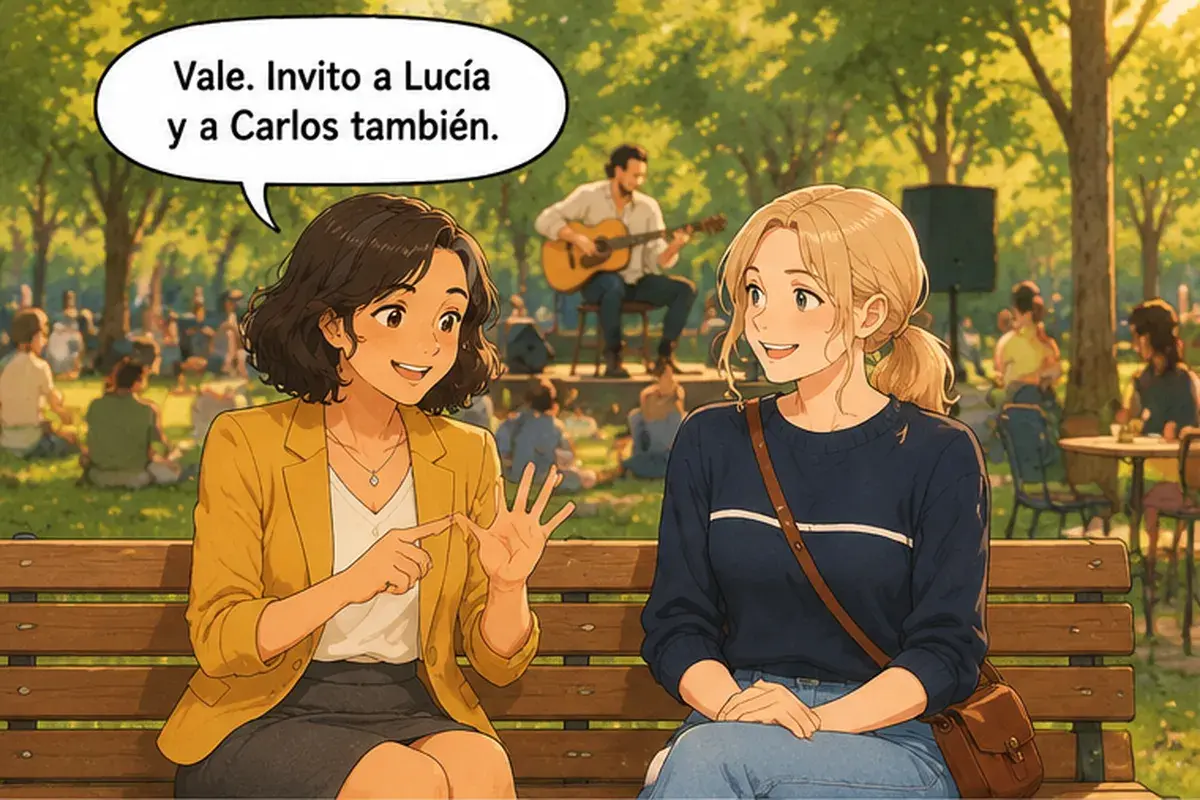
- Marta
Vale. Invito a Lucía y a Carlos también.
OK. I'm inviting Lucía and Carlos too.
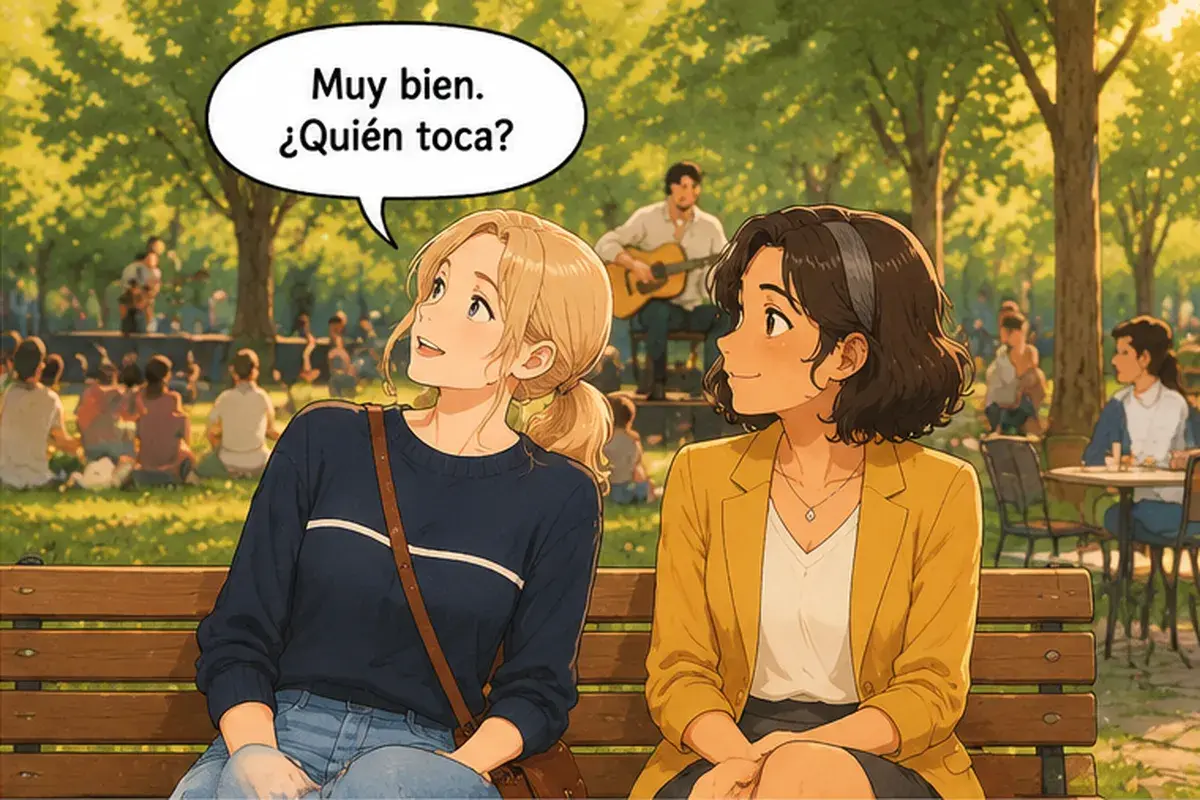
- Ana
Muy bien. ¿Quién toca?
Very good. Who's playing?
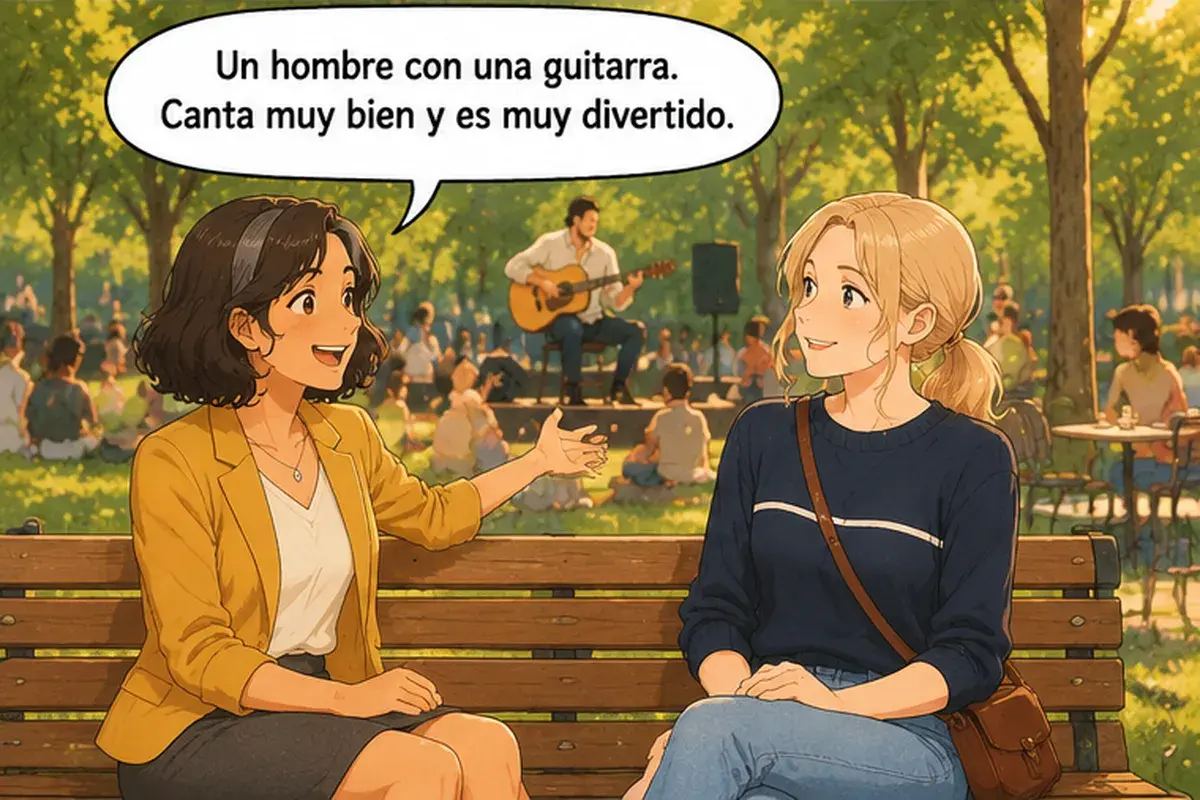
- Marta
Un hombre con una guitarra. Canta muy bien y es muy divertido.
A man with a guitar. He sings very well and he's a lot of fun.
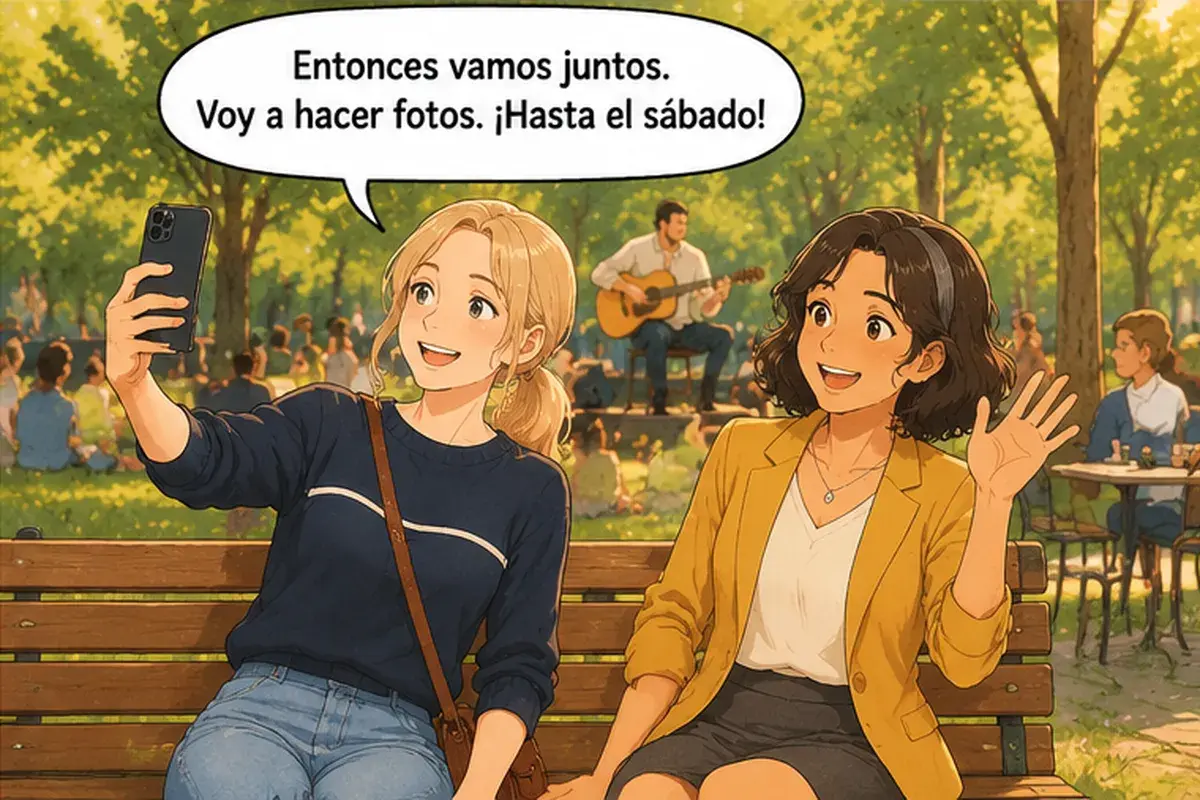
- Ana
Entonces vamos juntos. Voy a hacer fotos. ¡Hasta el sábado!
Then we're going together. I'm going to take photos. See you on Saturday!
Grammar for this text
How often. Normalmente veo la televisión — I usually watch television; A veces corro con Pablo — sometimes I run with Pablo; cada domingo — every Sunday; dos veces por semana — twice a week. In casi nunca bailo bien (I almost never dance well), nunca comes before the verb, so you don't need no.
juega al fútbol and ¿Quién toca? In English you "play" soccer and you "play" the guitar, but Spanish uses two different verbs. For a game or a sport it's jugar a: Él juega al fútbol (a + el = al; the stem changes u → ue). For music it's tocar: ¿Quién toca? — Who's playing (at the concert)?
haces, veo. ¿Qué haces en tu tiempo libre? — What do you do in your free time? Hacer means "to do" and "to make." To play sports is hacer deporte, word for word "to do sport": ¿Y no haces deporte? The same verb is in hacer fotos — to take photos. Veo means "I watch," a form of ver.
me gusta bailar. In A mí me gusta bailar, you like an action, so the verb after gusta is an infinitive. A mí adds emphasis: "as for me, I like…"
Invito a Lucía y a Carlos. When an action is aimed at a person, Spanish puts a before that person (the personal a). English has no word for it: "I'm inviting Lucía and Carlos."
¿Quedamos? Quedar means "to meet up (by arrangement)." The nosotros form in a question works as a suggestion: "Shall we meet up?" It's the same in Entonces vamos juntos — then we're going together. And Voy a hacer fotos is ir a + infinitive: "I'm going to take photos."
Words and grammar of the unit: Talk about your hobbies and invite a friend.
Learn the words from the texts with flashcards
In the app, you can tap any word in a text to see its translation, forms and examples, and new words stick with flashcards. 15 minutes a day.
Start for freeEverything is open for free. No card needed to sign up.